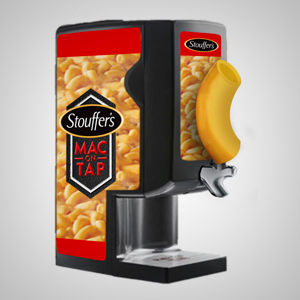
[00:00:04] Ray Latif: Hello, and thanks for tuning in to Taste Radio Insider. I'm Ray Latif, and you're listening to episode 91. This is a special edition of the podcast, which highlights interviews with six founders, creators, and experts who joined us on the show during the first half of 2020, including Truff Hot Sauce founders, Nick Guillen and Ajluni Ajluni, Anouck Gotlib, the CEO of Belgian Boys, Nona Lim, the founder and CEO of Nona Lim, GT's Living Foods founder and CEO, GT Dave, Ashley Thompson, the co-founder and CEO of Mush, and Lee Robinson, Director of Dairy and Beverage for Whole Foods Market. A quick request, if you like what you hear on Taste Radio Insider, please share the podcast with friends and colleagues, and of course, we'd love it if you could review us on the Apple Podcasts app or your listening platform of choice. Well, making the rounds this morning on BevNET's random Slack channel is a weird device that's called Stouffer's Mac on Tap. Apparently, it is a system where you pull a tap handle and out comes macaroni and cheese. This is one of the strangest things I've ever seen, and I hope never to see it in person. Thank you, Stouffer's. Really, Rae? I'm kind of there for mac on tap. I mean, macaroni and cheese is just like a bowl of golden goodness. That said, on Stouffer's Twitter feed, they asked what you would put mac and cheese on, and the choices are pizza, hot dogs, french fries, or a funnel cake. And for me, a funnel cake is just one step too far. I would not ride a roller coaster after that smack. I'm looking forward to the day when John Craven installs this into our, into the bed net live bar tap right between the health aid and GT's kombucha and uh, I'm not sure. Right. Who do you think? Adam Stern, perhaps be the first person to put his head under the tap for mac and cheese. Although, no, it has to be gluten free for him.
[00:02:01] Belgian Boys: That's true.
[00:02:02] Ray Latif: I'm Jon Landis on this one. This has Jon Landis all over it. Jon Landis would be first. That is a very, very accurate answer, Melissa. It would be Jon Landis and no one else that would put his head underneath that tap. All I can think of is how 7-Eleven has free slushy day where you can bring in whatever vessel you want and fill it with slushies. Is this going to happen with mac and cheese where we just see boots full of mac and cheese or a Stanley Cup trophy filled with mac and cheese? Yes, what's the best vessel? I want like Kohr Brothers soft serve style where it swirls. So I want like the GTs and the mac and cheese to just like swirl together. I want like GTs lemonade and mac and cheese. I think I'm a bigger fan of someone from this podcast, Truff Swirled with Mac and Cheese, Mike. Yes. Good call. Spot on, Carol. Spot on. Although I'm going to try the GTs too. I'm not going to lie. I'm going for it. Okay, well, I've been going back and forth because trough with mac and cheese sounded really good. It made me feel good. And then kombucha mixed with mac and cheese made me feel really queasy. So I might have to step away from this. Mike, if I step away, can you take over? Yes, Ray, I'll be happy to take over. Well, thank you very much, Mike. I appreciate that. You know, I don't think anyone from Stouffer's signed up to attend our BevNET and Nosh Virtually Live event, which was held over the past couple of days, but we had a bunch of other brands, hundreds of other brands participate, over a thousand attendees of the show, which was really amazing. The content was really exceptional, you know, from start to finish, beginning with our first panel presentation of the show, which focused on the experience of black entrepreneurs and executives in the packaged food and beverage industry. And then we had a great end cap with Tom Colicchio, who discussed food insecurity in America and how brands can be part of that solution. I learned a lot in the first panel. We clearly have a long way to go in the industry when it comes to equality, inclusion, diversity. I learned a lot about what people have to go through to feel included in the industry. The term code switching, I knew it was a thing, but I didn't know the term for it. And there's a lot that needs to be done. I thought that the Black experience in the food and beverage business tied into Tom Colicchio's presentation. So we started with talking about systemic racism within the industry, and then Tom Colicchio brought up that more brands are leading with what they believe in because consumers now, and especially millennials and Zoomers, they really care about what you believe in. So that extends to transparency and ingredient sourcing, sustainability, and where you stand on issues like this. Well, both presentations are available for everyone to watch on bevnetandnosh.com. The remainder of the presentations and the breakout sessions from the event, of which there are over 30, are only available For Subscribers of BevNET and Nosh, and there is a ton of outstanding and timely content in those panel discussions and the expert-led conversations. I particularly enjoyed one that was focused on best practices for building a digital brand platform and e-commerce business, which featured leaders from Spotify, Recess, the CBD brand, and Multiply. One of my favorite presentations was Crisis in Culture, Maintaining Work Culture and Standards Remotely. We spoke with Koya, Simple Mills, and Noon, and they discussed how to keep up morale and motivation during the pandemic when everybody's working remotely. in a way that's compassionate and enjoyable, which I thought was a really great point. And then Kevin from Noon had a really good tip that I thought was interesting, where he'll call somebody on his team that he doesn't normally speak with every day just to find out how they're doing, to get a temperature check. And not only does that help him understand how that person is doing, but gives him a better gauge on how everybody's doing. But after our event, I realized not only is it important to figure out how to work and collaborate remotely, but how do you celebrate remotely? Mike, I thought that your happy hour was a really good example of how we might do something like that. I wish I had had a mac and cheese tap for that. I don't know if that pairs with whiskey though, Mike. I think it does. I think it's hard to find something that doesn't pair with whiskey, especially in a pandemic. It's a good base for the whiskey, for sure. A little carbon's a little fat. The happy hour was fun. It was good to have the Cooper Spirits team. Chad and Christy did a great job teaching us about cocktails, and it was fun to interview them. I missed you guys, though. It's so much better to have a happy hour in person and be able to clink glasses and laugh it up and talk about the things that went right and the things that went wrong during the day in person. I was definitely laughing it up. I thought you did a great job, Mike. It was fun to see you behind the bar. You were getting great tips from the folks from Cooper Spirits who are fantastic, sharing ideas about how to mix cocktails in particular, old fashions and whiskey-based cocktails. But yes, seeing you behind that counter, you were just Dr. Bunsen Honeydew in full effect. Nice Muppet reference, Ray. This is the second time we've used that reference, and the last time we used it, I was Beaker, so I guess that's an upgrade. I'm not being set on fire. Muppets are key. But speaking of being trolled, John Craven was trolling me because I was using a knife to stir my Boulevardier, and apparently, I'm actually standing at the bar recording right now, and... Oh, yeah, there it is. There... There's a full cocktail kit here at the bar. It was right at my feet. So I could have had a proper stir. I could have had proper shaker. I could have had everything I wanted. I was mixing it in a pint glass. Well, you know, a minor regret, I would say, from the show. But, you know, at least with the presentations and the panel discussions, you can go back and watch all of them. I did miss a really awesome presentation or one that I think is going to be really awesome for a lot of entrepreneurs. which was focused on how innovative brands can build outside of incubator cities like New York, LA, San Francisco, and Austin. And because we meet so many entrepreneurs who are building brands outside of those cities, I can imagine the content is pretty compelling. I am definitely going to watch that one. Ray, that was a great session. And two of my breakouts were really fun and engaging as a viewer to watch. We had one on telling cultural stories through food and beverage that really gave me a lot of excitement for where our industry is going and embracing new flavors that are maybe unfamiliar. And then also another session was on working with registered dietitians, which you know, maybe doesn't sound quite as glamorous, but I know Mike has discussed this often, you've discussed this with podcast guests, working with influencers, and especially as we see wellness influencers rise in popularity, it was interesting to hear registered dietitians talk about this marketing tactic and what the benefits of an actual registered dietitian can bring to your company or even just marketing your product to them so they're aware of your better for you, healthier product. I think good nutrition Was Always glamorous. One of my favorite breakout sessions was by David Lemley from Retail Voodoo. He had a main stage presentation where he reimagined brand marketing to put consumer education first, and then he followed it up with a breakout session with Emily Griffith from Lil Bucks. where he went through kind of point by point, points of parity and points of difference, and went through all of her branding, her packaging, her social, her PR, and talked about what was going really well, and what could be improved. I think it's a session that everybody could benefit from, but certainly brand owners, entrepreneurs, CEOs, I thought it was great. Once again, to get access to all the presentations from BevNET and Nosh Virtually Live, subscribe to BevNET and Nosh. It's really easy to do so. Upper right-hand corner of either site, look for the subscribe button. You will have access to everything immediately. Guessing your margins? That's risky. Belay Financial gives CPG brands the clarity to scale smarter, faster, stronger. Get your free inventory ebook by texting TASTE to 55123 and start making data work for you. Tune in at the end of this episode for an exclusive interview with Matt Lin of Belay Solutions. He sits down with Melissa Traverse to break down the biggest inventory and accounting mistakes CPG founders often make. You'll learn how to bring clarity to your numbers so you can scale with confidence. All right, it's time to get to the interview portion of our show, which features clips from six episodes of Taste Radio Insider, published in the first half of 2020. Let's kick things off with Nick Guillen and Ajluni Ajluni, the founders of Truff, a fast-growing brand of upscale truffle-infused hot sauces. In the following clip, pulled from episode 70 of Taste Radio Insider, the Nicks discuss their approach to product development, working with influencers, and the importance of community management and exceptional customer service. Did you start with the idea of a brand, or did you start with the idea of the liquid itself, or the product itself? I guess what I'm asking is, what came first, formulation, branding, package?
[00:12:13] Belgian Boys: I think what came first was the knowledge and our learnings of studying Instagram and studying CPG over the last, I don't know, four years before this, and just really seeing the difference in a brand like Surrock. You know, creating like a high-end luxury lifestyle vodka. And then another brand that maybe has a good product, but isn't positioned as well, isn't branded as well, doesn't really connect to their target consumer. And I think what we wanted was kind of to take everything that we saw in the hot sauce space really to the next level. Amazing formula, like sourcing ingredients from the best, the best. creating custom packaging, custom cap, truffle-inspired lid, custom bottle, and really just doing everything to the best of our ability. Our mentality, I think, is instead of trying to influence the consumer, it's trying to influence the influencer. And in doing that, you really have to not try to be cool, but be cool. When you see people at a very high level that organically enjoy your product, it starts to trinkle down. Whereas you can pay someone to post and target a certain group of people, but in the long run, that's not really scalable and that's not how you build a legacy, long-living brand.
[00:13:39] Ray Latif: Did you think the opportunity was scalable at the outset? Because I think someone might say, OK, well, if it's a luxury hot sauce brand, it's only for a few people, which makes it inherently niche. But did you think there was a real opportunity to scale this and make it sort of a brand for everyone?
[00:13:53] Belgian Boys: 100%. And the great part about Truff is it's still very attainable to the average consumers. We're not selling a $200 bottle of hot sauce. It's an $18 bottle of hot sauce.
[00:14:03] Ray Latif: That's still kind of pricey for most consumers, though, no?
[00:14:06] Taste Radio: In a world where people are spending $500 on a t-shirt. Or an almond milk latte is six bucks. Yeah.
[00:14:11] Belgian Boys: That's a fair comparison, sure.
[00:14:12] Taste Radio: And it lasts, what, 10 minutes?
[00:14:13] Belgian Boys: Yeah.
[00:14:13] Taste Radio: Yeah. It looks like it's its own category, as opposed to just kind of, I mean, if you look, we see pictures all the time of, like, 30 hot sauces lined up, and we, like, we stand out, because it just, it doesn't look like the other bottles. And so we didn't want to look like the other ones. What we did want it to look like was nice and upscale, engineered for social media. trough down the front is because you can't miss that if someone posted on social media. It could have been like trough at the top, kind of smaller font, but like we wanted it to be very clear what it was and who we are.
[00:14:42] Ray Latif: How did you learn about the actual business, the sort of nuts and bolts of selling a brand and particularly selling a brand online?
[00:14:49] Belgian Boys: So I think a lot of maybe two or three years, like I mentioned, Nick and I studying social and these online brands, we learned a lot about e-commerce at the same time. And I learned a lot previously at the business that I had. It was a hat business. I learned a lot about e-com and digital media buying, building brands through Facebook and Instagram. Community management. Yeah, community management.
[00:15:12] Taste Radio: He had the best customer service in the world, and he was doing it by himself. It was the things people would say, this brand's so amazing, I love these hats, they're so quick to respond. He was doing it all by himself. He was literally start to finish, and he realized how far that went. And so one of the things we've always focused on since then was having as good of customer service as possible, and literally talking to people like they're people, and not, we're very much so like, involved with every one of our customers. Every question we get on Facebook, we respond immediately. And our email support is as good as it can be. We're very focused on that.
[00:15:46] Belgian Boys: And building a community was, I think, one of the biggest things. And a lot of brands, you can have a great following, and you could build this big digital thing, but they're not really connecting emotionally with their customers. For example, we have what's called a Truff VIP group. It's a closed invite-only group on Facebook. And some of our biggest cult customers who are our friends now join this group and everyone's sharing recipes and what they have in common is our product. And it's really great to be like a part of that. And they're like our family now.
[00:16:21] Ray Latif: Next up is Anouck Gotlib, the CEO of European breakfast and snack food brand Belgian Boys. Within our interview from episode 73, Anouk explained how she's cultivated strong relationships with retail buyers, why she believes there's a big opportunity for breakfast foods in America, and how Belgian Boys is expanding its presence in Walmart.
[00:16:44] Nick Guillen: our core consumer, he buys method cleaning, he buys Kleenex, he wears Nike sneaker shoes. What's really important with a buyer is first of all, that you understand what's on their shelf, right? So before you go into a meeting with a buyer, go and look at the shelves. Don't just go into a meeting and never go to the stores, right? And I think a lot of people do that. Just expect, oh yeah, I'm going to present my brand. And then, you know, no, you need a strategy behind it. You need to make sure that what you sell to the retailer makes sense for the retailer. Walk the aisles of the supermarket, walk near the register and see who's there. What are they spending? What are they buying? Why are they buying it? What's a certain demographic? And this way, I think you can relate to the buyer and even find a way together with the retailers to set your brand up for success at their chain and not for failure, which is really how we try to convert someone from just being introduced to the brand to becoming a consumer and a fan.
[00:17:53] Ray Latif: It would seem to me that Belgian Boys or you'd like Belgian Boys to be sort of a ubiquitous brand, be seen everywhere. I mean, you're already in the air, you're already in a lot of different retail chains, in different places throughout the store. But how do you determine when an opportunity isn't the right opportunity for Belgian Boys? How do you figure out when it's not in line with the product strategy or brand strategy?
[00:18:14] Nick Guillen: Well, right now, actually, we're looking, we've been working on incubating the breakfast into a fresh segment of the store. Your frozen breakfast. Our frozen breakfast into the fresh segment of the store. This is a concept that in Europe exists for long. When you go into a supermarket, in the breakfast section, there's tons of option. In America, there's yogurt. Millions of brands, millions of flavor. I have nothing against yogurt, but there has to be something else for breakfast as well, right?
[00:18:42] Ray Latif: I agree.
[00:18:43] Nick Guillen: And there's something about that fresh breakfast. We have now proven concept at Costco that it works. So it worked in Costco. We brought it to the deli in fresh instead of to the frozen. The consumer reacted very well to buying that breakfast that he can just like, oh, put in the fridge and get out of your breakfast and get out of the fridge, just heat it up. It's ready made.
[00:19:06] Ray Latif: And it's like a pancake.
[00:19:07] Nick Guillen: It's a pancake and a crepe. We have both of ours. And this is something that with the proven success at Costco, we also want to bring to the rest of America. And we're working with our retail partners on bringing it to that next level because we believe that America is ready for fresh breakfast. We want to pioneer that category because there really isn't a lot there. In 2019, we entered the Walmart incubator set, actually.
[00:19:33] Nick Ajluni: Wow.
[00:19:34] Nick Guillen: Yes. And we were happy to learn that we are a great performer there. And, you know, if Walmart's consumer is ready, that means America is ready, in my opinion.
[00:19:45] Ray Latif: You must have to do a lot of planning in advance, thinking about if and when you graduate to that core mod. Because if you don't have product for say 3,000 stores, it's never going to work.
[00:19:56] Nick Guillen: I think 3000 stores is really key to what you said. Don't go out too fast. The way we view it with buyers is we want to make this a success. Don't give us too big, too fast, because then we're set up for failure. I think a lot in our business, when you start out, you're like, oh my God, a thousand stores. And it gets exciting when you just start out. But very fast, you see that you can't be successful in all those thousands or 2000 or 3000 stores. I rather work with the buyer and say, hey, give me 200 store where I know I'm going to perform in the right markets where we know we have proven concept where our brand awareness is big. and that we can succeed and grow gradually, slowly, at a slower rate, slower pace, but really monitor each store and make sure that the consumers in that community are aware of Belgian Boys, where to get it, because now there is also that shift of I'm not buying the breakfast in the frozen aisle, I'm finding it fresh. And there's a lot of education to do to the American consumer because he's just not used to shopping that aisle for fresh, but he's been super receptive at finding it there.
[00:21:18] Ray Latif: Let's continue with Nona Lim, the founder of namesake brand Nona Lim, which markets a variety of better-for-you and convenient Asian-inspired foods. In episode 71, Nona explained why she describes venture capital as, quote, a double-edged sword, and why she jokes that a partnership with an investor is, quote, worse than getting married. So I was reading something about you, and you were talking about VC money, and you called it a double-edged sword. Why did you call it that? I think we've all been told that growth needs cash, and so fast growth needs even more cash, right? I think VCs offer that source of capital, which can be extremely helpful to entrepreneurs. But at the same time, when there's so much cash in the market, and if you're in the category that is really, you know, trending, all of that cash creates a lot of competition, right? So, if you don't take cash, you could be left behind. For example, you know... Were you afraid of being left behind? I mean, it felt like you had a pretty You know, I think that's a good question. Was I afraid of being left behind? I think for me, honestly, back in 2016, 2017, there were a lot of, even 2015, right? I think 2015 to 2018 is where you're seeing a lot of new VCs on the scene. A lot of them are flush with cash. A lot of strategics also set up their own VCs. And so it felt like there was a lot of cash, and so I was definitely being approached at trade shows. Why I call it double-edged sword is that I think that many entrepreneurs don't always think about it from, let's say, a VC's perspective, which is at the end of the day, many VCs maybe not family offices, but many VCs, they had to raise their fund, right? So in order to raise their fund, they had to promise their investors a return. So whether it is maybe, you know, an IRR of whatever, 35%, over five years, right, that's kind of common, and I'm sure there's some variations of that. But in order for them to be able to generate those returns, they need to make sure that their investment in you, can realize a certain return for them. And then at the same time, the entrepreneur on the other hand, in order to attract VC money, has to have a pretty attractive proposition. You know, whether it is an attractive growth rate, et cetera, built into the financial model. And I think some of the times, all of those are aligned and everyone is really happy. But, you know, if you have some sort of merchandising friction, or if competition changes in the marketplace, or if you're still working through some channel friction and so on and so forth, and you don't achieve the growth that you're looking for, for a variety of different reasons, now you're under pressure, right? You're under pressure to chase that top line. And so then that could lead you to making decisions that might be different if you didn't have all of that pressure. And so, you know, it couldn't be a double-edged sword in that sense, right? So then at some point in time, you may find that, oh, you know, you're not being capital efficient because you were chasing capital because it was premature to spend all of that money. So those are things that, you know, I've seen. And I would say that with some other brands, you know, I've learned some of those lessons myself in the last few years. And that's why I call it a double-edged sword, you know? So in hindsight, if you knew all this, but when was the right time for you to take VC money? It's funny, I would say that there's three different factors to look at when taking VC money. Again, this is 2020, on hindsight, pun pun. That was very good. I like that, Nona. Well done. And one is, you know, where the business is at. Is it the right time for the business, right? Are we at the position where we have a clear strategy where we can, you know, replicate it and quickly take that money and grow rapidly? Have we taken away, you know, all the different friction that might exist for that, right? And one is also the VC climate, the industry climate, right? You know, is money shrink? Is money going to disappear soon? If so, maybe you need to take money out now, right? And where's the economy going, right? Are we going to go through a recession? So I think that you have to consider all those different things to figure out what is the right time to take money. But I think who to take money from is also important. That was my next question. How did you vet these investment partners, these potential investment partners? Because you said, I'm sure you met a bunch of them at these trade shows and had their business cards. How did you decide on the partners that you ended up with? I think it's definitely still a learning process for me over the years. I think when I first started, I started off with really alignment and strategy and values. I think that those are still really important to make sure that there's clear alignment in vision, mission, strategy and values. Once you have that in place, I think you also want to consider what is the value add that they bring to the table, because likely they want to have more seats. Are they bringing mostly capital, or will they be able to bring other sorts of expertise? Those are things that you want to consider as well. And then finally, actual terms, right? It is one thing for an investor to be really effusive and supportive in every way, shape or form and then you get a set of term sheets that could be different, right? And so I feel that all those things need to align and sometimes you have to go with your gut as well. I think it's kind of like getting married, or it's worse than getting married. It's worse than getting married. It is worse than getting married. Because, you know, if you go into a marriage, you don't like it, you get a divorce. Right? I think with an investor, if you don't like it, it's not easy to get a divorce, or the divorce could cost you a lot. Next is GT Dave, the founder and CEO of GT's Living Foods, the maker of GT's Kombucha. In an interview from episode 86, GT spoke about why founders should celebrate their idiosyncrasies to better connect with consumers, why he's embraced a more public persona, and how he steered a positive outcome following a provocative Forbes profile of him. Let's talk about rolling out a rebrand. It's easy, of course. I mean, you just throw a bunch of new labels on a package and it's done, right? Right. Not so much. And you know what, because it's not easy, it's an incredible opportunity to rekindle or start a conversation with your fans. Because that's also something that I've noticed in recent history is that there are a lot of products in the marketplace, kombucha and otherwise, but not a lot of them are truly anchored by a founder. a founder that's as crazy and neurotic and as passionate as I am. And hey, listen, every founder doesn't have an owl. I don't think so. Thank you. And so, you know, I've learned, and I even said this in a recent Bloom story that we did about not hiding and not disguising yourself for the desire of fitting in. It's actually doing the reverse. It's celebrating what makes you unique. Your quirks, your idiosyncrasies, your weird ways of expressing yourself, your weird ways of seeing the world, and just celebrate that. Because I guarantee you, and I've learned this, that if you do that and you own it unapologetically, that people stand up and say, I relate. Or if they don't say I relate, they say, I respect you. And that those relatable, respectable qualities, in my mind, is what makes you, your brand, and your consumer have a feeling of emotion. And that you cannot buy. And I said this before, people barely remember what you said, they'll sometimes remember what you did, but they'll Was Always remember how you made them feel. So it's having that emotional connectivity is really important. So as you've probably noticed, even on the company and my own personal social media handles, I've made this intentional effort to step forward and in front of the camera, and speak to my fans because the one other thing that I realized, and I was really embarrassed about, is people didn't even know that GT was a guy, that was a human being. They thought it was GTS, which sounds like some kind of sports car acronym or something like that. And they also didn't know who I was. Those that knew that there was a person thought that I was this 80-year-old chanting monk that's praying over a cauldron every night and that's it. But in reality, I'm young, I'm fit, I'm a certain type of personality that I think in many ways embodies my brand and my brand embodies me. And I think pairing us together is really like you know, this husband and wife, this father, daughter, father, son type of relationship that people, it almost feels like family, right? Parent, child. I think people really gravitate to that. But this took, this took a long time for you to become the face of the brand and what light flipped on or switch flipped somewhere that caused you to, to start speaking on behalf of the brand I know that you've always talked to people about the brand and you've always been a person who cares about what people think about it and have been innovating based on the feedback that you get, but what was it like to step out from behind the curtain and put yourself out there? Well, it was hard, to be honest, and I'll explain why. So, you know, I intentionally did not want to be in front with the brand or even in front of the brand, because one, I never wanted to be perceived as this guy that was just trying to get famous, right? Number one. Number two is the product's the hero, not me, right? I am the conduit. I am the servant. I am the steward of the brand. I am not the brand is what I was thinking. But when that started to change was two things. One is when I was in the Forbes article, which I know we talked about earlier offline, I was portrayed in a very peculiar way. And it was jarring for everyone, including me, when they saw that video. And because I did not do a well enough job of establishing my image and my philosophy and my values and my purpose as the owner, founder, creator, it was so easy for people to believe that false depiction that the Forbes video and article did of me. And, you know, people, I'm going to be honest, people turned really quickly. They're like, oh my God, he's a freak. I'll never buy that product again. I was so close to designing a shirt, Mike, that said, don't read the comments because when you're called the gay Tony Stark, I mean, there's only really one way that can go. This is something that I experienced at an early age, being a young gay boy growing up in a very straight and homophobic environment in the 90s, is for the first decade or two of my life, I was hiding, right? I was trying to be something that I wasn't. for fear of ridicule. And the Forbes thing felt very similar to that experience. With the Cody Code kind of twist of things, it was like, well, if you can incorporate humor into this and laugh at yourself and even play into it, then I think everybody wins because you're now laughing and they're laughing and it's not a mean-spirited type of situation, which is what it was previously. So to be honest, I jumped in the driver's seat and I steered that vehicle in the right direction and I had a blast. And the good news And this is ultimately what kind of spearheaded me into having the confidence that I need to be more out there, is that there really is this younger generation, right? Call them what you want, millennials, Generation Z, whatever the name is these days. and all of the above is, you know, they're looking for guidance. Because like I said, the health and wellness space isn't as clearly defined as we all think it is, right? You have all these trends, you have keto, you have all these different ways. I mean, there's too many to name. But a lot of consumers and a lot of young consumers really don't know what works for them. So that's number one. And number two, and believe me, I'm not patting myself on the shoulder when I say this, So take it for what it's worth. But a lot of times they're looking for somebody to inspire them. Scaling a beverage brand into major retail comes down to operational readiness. From packaging lead times to co-manufacturing strategy, the details can make or break a launch. In a new e-book in collaboration with Octopi and Asahi Beer USA, industry leaders share what they've learned in helping brands scale. Download it now at Taste Radio slash octopi. Do you need to scale your team faster without compromising on talent? Join Oceans for a live webinar on April 20th and learn how leading companies are hiring top global professionals who are ready to grow with your business. Register for the webinar now at Taste Radio slash oceans. That's Taste Radio slash oceans. We'll continue with Ashley Thompson, the co-founder and CEO of Mush, an innovative brand of ready-to-eat oatmeal. We spoke with Ashley in episode 81, and in this clip she explained why she set out to create, quote, a best for you product, why she likes having a polarizing brand name, and how she prepared for her first meeting at Whole Foods. How did you assess the most critical aspects of the brand when you were deciding to commercialize this idea? You know, what were the most important parts and how did you incorporate them into the final product?
[00:35:40] Nick Ajluni: Yeah, that's a great question. When we were first coming up with the product, we had a strict vision of what we wanted. We wanted really a best-for-you product, not a better-for-you product, but a best-for-you product, a product that delivered on taste, quality, and nutrition. And we really wanted to make a healthy item convenient. That's really why we started the business, to make oatmeal more accessible and more convenient for people to eat more of it. And so in the beginning, we really just did things that absolutely didn't scale. For the first nine months of the business, we started in farmer's markets, collecting a ton of anecdotal information about what consumers wanted and cared about, where they thought the value proposition was, and then did more of that and less of what didn't work. It was a really great experience and has undoubtedly helped lead to the overall success of the product.
[00:36:37] Ray Latif: So how did you end up on Mush as the name? I'm sure you had a bunch of names that could have been that of the brand. How'd you land on that one?
[00:36:48] Nick Ajluni: The first thing that comes to mind is it's really a nod to my father. So as a younger kid, I, again, was pretty type A and I always made my breakfast the night before and would soak my cereal overnight and every morning my dad who would be up reading or working when I came down the stairs would ask, what's in your mush this morning? So that kind of stuck with me. The product that I was making early on as a kid has kind of come full circle. It looks very different nowadays. So it's a nod to my father. It's also a very polarizing name, which I like. It's super memorable. Some people think that it's distasteful. but they still remember it. And ultimately, that's what I think will help carry the brand along. And now it's actually an acronym for mankind's ultimate source of health, which hopefully will serve as a greater platform for the business in the future.
[00:37:48] Ray Latif: So how many Whole Foods stores were you in? What region? And what did that experience teach you about scaling, not just within that retailer, but scaling the brand across the country?
[00:38:00] Nick Ajluni: Wow, so many learning lessons launching in those first 10 stores. I think the biggest one is that merchandising is just such a huge component to winning in the space. You can have the most amazing product, but if people don't see it because it's in the wrong spot or it's next to something that triggers a different sentiment or doesn't necessarily make sense, you won't necessarily get that trial and it'll just sit on the shelf. And you know a lot of buyers point to this when you first launch with them. They stress that you will need a full on marketing platform to help get the product off the shelf once they put it on. And it's so true. And a huge aspect of that is merchandising. So We have a great merchandising partner that helps us across the country, get us new placements, secondary placements, etc. You know, being in retail, that's really your biggest marketing opportunity as a brand. So make sure you take advantage of it and put the necessary resources behind it to make it a true success.
[00:39:08] Ray Latif: How do you find that merchandising partner? And you know, how do you determine that that was the right one for your company?
[00:39:15] Nick Ajluni: We vetted a couple, you know, I'm a huge proponent of reference checks. So when I met a couple at Expo West one year, and then I asked the brands who partner with the two merchandising teams that we were vetting what their experience had been previously. And we went with the partner who we felt would be best suited to merchandise our particular product, because it's really not a one size fits all.
[00:39:46] Ray Latif: Wrapping up this episode is Lee Robinson, the director of dairy and beverage for Whole Foods Market. In an interview featured in episode 82, Lee discussed best practices for engaging with retail buyers, why vulnerability is key when navigating the terms of a successful relationship, and how he evaluates disruptive concepts. The number one question we get is, how do I get a meeting with a buyer? You know, people will say, okay, I've called, I've walked into the store, I've emailed, I've left products at the store and I still can't get a meeting. You know, I would say that there are, it's not hard to land something in someone's inbox or a sample in an office. And I don't think everyone's going to love to hear The Answer, but like, we're getting that correspondence. We're getting the sample. We have visibility to it. It's not from a lack of communication. We frequently kind of, you know, revisit this and we say, is anyone having trouble getting ahold of us? And we say, no, it really doesn't feel like it. That's, that's usually not the issue. I think the issue of course, that you're asking about is, you know, how do they get the response that they want? And there are so many different ways that sometimes this happens. there can be something that's just hot and someone is tracking, meaning a category manager is saying, Yeah, I've been following that brand. I like what they're doing. I'm watching. And you may not actually have heard from that buyer. Even though they know who you are, they know your brand, they're watching. Maybe it's someone that you're just starting to do business with Whole Foods. Maybe it could be in one or two regions. And they're thinking, how do I get a meeting with the global category manager? And believe it or not, we have a team that is there watching. They're taking a look at all this stuff. And so they're tracking to it. Sometimes it does work through email. I understand that can be an easy way. And you say, I don't get the response I want, or I'm not getting a response at all. Hopefully, that's not the case. I know our team is pretty good at getting back to everyone. If I could just give a pointer on tone and something I'll probably touch upon a lot here is really a sincere tone in how you approach it. The team gets so many sales pitches. And if you send a blanket can sales pitch, if you grab someone on a trade show floor and you just start blurting out everything that you do with everyone else, while sometimes that information can be exactly what they hear, I would say, or what they want to hear more often than not. What they're really looking for is, how do I work with this person? Is there an authentic relationship? Do they have a great product? Do I feel like we can actually have a two-way street dialogue that can turn into something really great? And so I think that the cornerback is just be sincere, be authentic in how you're coming to the table. and what you really have to offer. And that actually can be enough to engage someone in a conversation. I'd say that's pretty great advice. I can imagine that you've had long-term relationships with entrepreneurs from many brands for many years. How do you navigate the terms of a successful relationship? I think there are a couple different ways to look at that. And it kind of depends on how the brand evolves with the business. So success could be something as simple as the product, the brand that you carry, that we're carrying and you sell to Whole Foods is something that really works for our customers. And it doesn't need to grow a lot. Not everyone wants to hear that, right? But sometimes that's the truth and things can kind of hum along and be kind of status quo. And dare I say, the relationship is a little transactional, but maybe it doesn't need to grow beyond that. that can be really successful. And I think it can be hard for brands and suppliers to hear that sometimes because it's, you know, everyone always wants to grow. And how do I be bigger? How do I get more line extensions? Sometimes it's actually a blessing in disguise that you're not growing. There are times when a brand can grow too quickly and overextend themselves. And it doesn't always feel like it, but Whole Foods retailer could actually have the best interest in mind for that So there's successful piece there where it could just be status quo business, right? Of course, it's going to change. Everything always changes. There's, you know, status quo doesn't usually last very long because things just move quickly. But I would say like when you get into a little bit more of an elevated relationship, you start to break beyond that transactional relationship. And I think what's interesting is that there is absolutely a level of trust. And you don't really get that until you're vulnerable. And when you show your vulnerability, and this is two ways sometimes, right? Like there's that trust that can then be built. So brands may want to know, well, how do I, you know, how do I plan out further with my retailer with Whole Foods? Like, how do I do this so that it actually becomes a longer term relationship I can count on. And that's when you need to get away from that sort of just one-off transactional piece and actually share something. Like, what are your intentions, right? So what's your strategy? What's your plan with your channel strategy? And if a brand keeps their cards too close to their chest and doesn't share that, then there's that sort of lack of trust built. And again, sometimes that's okay, if that's the relationship that can have a healthy place in the assortment as well in the category. But if you want to kind of go beyond that, and you kind of got to read the signs from ourselves from the buyer and have them come back to you and share a little bit about what they're trying to do with the category. And you can... This is the tough part. You got to take an honest look at each other and say, Are we trying to go the same direction? And if you are, great. Then you should be able to do some really great things. If you're not, you got to have an honest discussion around, can we reconcile any differences? And of course, you'll enter into some sort of negotiation, right? And so it could be around channel strategy, exclusivity, et cetera. You know, you want to know kind of where they can expect, where we can expect the brand to take the business and what's that going to go and do in the future. And that will greatly improve that relationship because then you can both navigate that together. You know, bringing something different to the category. Everyone always says, I think I'm bringing something different. I have a disruptive concept. My thing is totally new. It's going to completely change this entire category. Nay, the entire food and beverage industry. Yeah, we've heard that a few times. So disruptive. I want to, I want to home in on that word. How do you define or identify a disruptive concept? Oh, man. How long is this interview? Because we have a lot to talk about. You know what? We're digital. We can record for hours. Well, identifying it upfront Was Always tough. You can take a couple different angles at it. I mean, you can look at it and say, Wow, that is a concept I have never seen before. And that could mean it's a really great concept or a really terrible concept. And sometimes terrible ones at first seemingly terrible or not very plausible end up being quite successful. Or sometimes something will make waves at first and then just kind of sit quietly on the shelf. That actually is probably one of the paths I find to be super interesting. There can be products out there that have been introduced to the market. Maybe you thought, eh, I don't know, it's not so hot. We'll see if it does okay. You kind of throw it out there and it kind of incubates. And it can actually be that the product wasn't as disruptive as it ends up being in the long haul, because maybe the customer base wasn't ready for it. Maybe the media trend wasn't there. Maybe sort of the a special ingredient diet, that couldn't have been the flavor of the day. But when it comes along and that brand is ready, they might actually have a leg up on someone else who's trying to enter the market later. And it could be a day late and a dollar short for someone who's trying to capitalize on something that's already got a groundswell. So it'Was Always pretty fascinating to see how that happens. There are other trends that hit the market like a big bang, right? I mean, we've seen it. Oat clearly has made a big stance and you can just see that by the sheer number of products that contain it now. So, sometimes that works. Sometimes that inspiration comes from another part of the global market that maybe the domestic US didn't really tap into. There might be other things that can seem disruptive because they don't have a big presence here. But when you peel back a little bit of the data, maybe there's an analogous product that they'll hear in the domestic US that maybe they don't sell overseas. And so what seems disruptive when you bring it here already has a replacement need state. And so it actually doesn't really scratch that itch. So there's all sorts of different ways to approach it. It's hard to tell. I mean, obviously, we stay out front and we like to take chances and risks and support emerging trends. And that's worked very well for us. But There'Was Always going to be some chances that you take that don't pan out. That brings us to the end of episode 91. Thank you so much for listening. And thanks for our guests, Nick Guillen and Ajluni, Anouck Gotlib, Nona Lim, GT Dave, Ashley Thompson, and Lee Robinson. Please subscribe to Taste Radio on the Apple Podcasts app, Spotify, Stitcher, or Google Podcasts. Was Always, for questions, comments, ideas for future podcasts, please send us an email to ask at Taste Radio. On behalf of the entire Taste Radio team, thank you for listening, and we'll talk to you next time. Hello, I am Melissa Traverse here for the Taste Radio podcast, talking about some of the biggest tension points that CPG brands and founders face when they're scaling a brand, and those are financial accounting and inventory management. I am joined by Matt Lynn, inventory accounting guru from Belay Solutions, and he is going to shed some light on all of this that is going to help everybody out quite a bit. Matt, thank you so much for joining us today.
[00:50:52] Anouck Gotlib: Thank you for having us, Melissa. It's great to be out here at Expo West and it's great to sit down and be able to chat this because it's kind of a passion project of ours, working mainly with CPG brands and hoping to help them scale.
[00:51:03] Ray Latif: It's been such a pleasure chatting with you and the team and learning all about what you do over there at Belay Solutions. Can you tell us a little bit about yourself and what your role is and the kinds of solutions that Belay gives to CPG brands and founders?
[00:51:19] Anouck Gotlib: Yeah, absolutely. My role with Belay, I'm actually our inventory accounting manager. I run our inventory department, so we work with CPG brands, taking them from spreadsheets, putting them on inventory management systems, and really helping connect their tech stack between their sales online marketplaces to that inventory management system, even down to their financial systems like QuickBooks. But Lay overall is kind of an outsourced accounting firm. And with that, we're helping teams. We have different levels with bookkeeping, controller level work, even high level into CFO type items. So we really help those brands in any way that they need financially. And then I just have a subset of a department where we're really just laser focused on inventory.
[00:52:02] Ray Latif: It's certainly a complex topic and there are plenty of places to go wrong. Let's start by going right and start super simple. Can you tell us what some of the biggest red flags are that would help a founder understand or, you know, the person running a brand understand that it really is time to get some help with some of these areas?
[00:52:22] Anouck Gotlib: Yeah, absolutely. I think some of the early red flags is just everything is chaos. So when they're looking in their financial software, maybe they don't really have an accounting background and they're kind of just piecing it together and doing their best. And what they'll see is that reconciliations take forever, if they even happen. they have a lot of transactions that don't get coded or they just put them into placeholders to just get rid of it so it's not an eyesore. They'll notice they have revenue but no cash or they notice that they have a good amount of cash but their blind spot is really seeing the vendor invoices that are sitting there just needing to be paid and so they just lack that clarity that's going to really be around the corner.
[00:52:59] Ray Latif: You know, you were talking about one of the red flags that comes up that I think makes so much sense. When somebody asks you what your numbers are and you can't come up with the right number, that's a big problem because that's something that you really should be able to share with decision makers who you're ideally looking to do business with. What should you be able to call up at a moment's notice?
[00:53:24] Anouck Gotlib: Really at any time, you should be able to know an accurate margin. It's amazing how many founders we end up talking to that they can tell you their revenue numbers, they can tell you their selling price, and then the minute you start talking about cost or their cost of goods sold, they just get a deer in headlights look. So really it's very hard to tell, am I even making money? or if you don't know your entire landed cost. Maybe you know what the freight cost is, the duties separately, but you're not really getting that as part of your unit cost. So it's really hard to tell. Am I even making money or am I losing money from the very beginning?
[00:53:57] Ray Latif: And do you recommend that founders are able to call up a margin by channel?
[00:54:01] Anouck Gotlib: Absolutely. And depending on the number of products and channels, you kind of want to know what are your best sellers, which ones are making the most and which ones maybe you're not making as much. But especially if you're branching out and you're doing D to C with B to B, absolutely want to know that.
[00:54:18] Ray Latif: Gotcha. You mentioned that when things feel really chaotic, that's probably a red flag. I would say that it probably Was Always feels chaotic if you're running a CVG brand. And I know this may be hard to quantify, but is there a revenue number? Is there a number of doors number that would help a brand understand whether or not it makes sense to bring on a partner like Belait? Understanding that so many brands are bootstrapped or they might be tight for cash. What is that friction point?
[00:54:51] Anouck Gotlib: a little bit different for everybody depending on where you're at in your process and sometimes just your level of understanding of financial aspects. You know, when you're first starting and you really cash conscious and don't want to spend that much money, you may keep it on yourself. But as you're growing, as you're getting to those six-figure revenue numbers, and especially as you're approaching seven, you want to make sure you've got good financials. Because as you scale to that point, most likely you're going to be looking to raise capital. And investors, the first thing they're going to look at is your books. And are they clean? And do they show a clear picture of your business?
[00:55:21] Ray Latif: You know, another area that folks might look to to organize some of the chaos are their systems. So many folks stick with Excel spreadsheets for a good amount of time. How do you know that you need to outsource some of your accounting to an organization like Belay Solutions versus maybe signing on to a SYN7 or a NetSuite or something like that?
[00:55:44] Anouck Gotlib: Well, that's actually something we really help with when it comes to that cost question. That's something that trips people up. And sometimes if you just have a turnkey business, you buy and sell a finished good, you can maintain with spreadsheets. And we've had clients with million dollar revenue that can do that. But we see so many brands nowadays are using contract manufacturers. and they're just sourcing certain parts of their product. So when you start talking cost, they have no idea exactly what their unit cost is. So that's where we come in and we kind of understand, we'll speak with the customers and the clients and get their needs. And then if we think they're ready for a system, then we'll help put them on that system so they can get some of that clarity. And it's not something we force on anybody. There are plenty of times where founders come to us and we'll tell them bluntly, you're not ready for it right now, but we'll let you know when we think you are.
[00:56:30] Ray Latif: That sounds like excellent advice. What should a founder or somebody running a brand look for in an outsourced accounting partner? Are there certain checklist items that they should make sure that their partner be able to execute or be able to help them understand?
[00:56:47] Anouck Gotlib: Absolutely. I think one of the keys, there's, there's a lot of outsourced accounting firms out there. Some focus on service-based SaaS companies, but if you're a CPG founder, you really want to make sure that your accounting firm has CPG experience. I would ask them, you know, what kind of brands have they worked with and even beyond that industry specific, because there's so many subsets of CPG. And that's something that I think is great about what we do with Belay is that we kind of run the gamut. It's kind of like the insurance commercial. We know a thing or two because we've seen a thing or two across a broad spectrum.
[00:57:17] Ray Latif: Probably getting references Was Always helpful, right? Absolutely. All right, so this all sounds great. I think we have a really good understanding of would it make sense to hire an outsourced partner? You know, what some of the things you should be looking for are. What does offloading this kind of work mean for the brand? What can this do for lightening the load of a founder or lightening the load of a brand operator? Like, how does that help them in their everyday business?
[00:57:46] Anouck Gotlib: It just tries to really help quiet the chaos. So what we're looking to do is just take some of the weight off that founder's shoulder. Let them focus on building the brand, building the business, getting that exposure. If you don't have sales, you really don't have anything. So we want them to be able to focus on that while we take care of your back-end office work. And we can just present that to you on a monthly basis. You can help make decisions. You can take that to investors. And really, you can just focus on growing your business.
[00:58:11] Ray Latif: I feel like I felt founders and the folks who are running brands collectively sigh a breath of relief just hearing that. How can people learn more about Belay Solutions?
[00:58:23] Anouck Gotlib: So people can text TASTE to 55123 for their free inventory guide to get started.
[00:58:28] Ray Latif: Matt Lynn, inventory accounting guru at Belay Solutions. Thank you so much for joining me here at Expo West. It's been such a pleasure to chat with you and learn about what you all do over there to help founders and brands with their financial accounting and inventory management. For everybody else out there, thank you for listening to the Taste Radio podcast. I am Melissa Traverse and we'll see you next time.