[00:00:04] John Craven: Hello and thanks for tuning in to Taste Radio Insider. I'm editor and producer Ray Latif, and you're listening to episode 92 of the podcast. I'm joined by my BevNet and Nosh colleagues, John Craven, Mike Schneider, and Melissa Traverse. In this episode, we feature an interview with Emily Kanter, the co-owner and CEO of Boston-based natural food chain, Cambridge Naturals. A quick request, if you like what you hear on Taste Radio Insider, please share the podcast with friends and colleagues. And of course, we'd love it if you could review us on the Apple Podcasts app or your listening platform of choice. Cambridge Naturals, definitely a retailer that all four of us have shopped at. Melissa, you mentioned it's pretty near and dear to your heart.
[00:00:46] Mike Schneider: I am such a big fan of Cambridge Naturals. I think of it almost like the Erewhon of New England, back in my macrobiotic days, which were many, many years ago. I remember going in there for the first time and looking for stuff that you couldn't find anywhere else, like ume plum vinegar, twig tea, just stuff that you really couldn't find. And I remember walking in and there's that smell of like natural food store co-op that I just find so exciting. And I think now it's certainly a place where brands will launch their products. And I think it's still a place where people go to look for new, interesting stuff that's about to scale. One more thing that I just discovered to tie it all back to macrobiotics. I didn't realize this until just recently, but Michio Kushi, who's credited with bringing macrobiotics to the United States, he and his wife founded Erewhon, which is kind of odd to me.
[00:01:48] John Craven: It all comes full circle. That smell of a natural food store slash co-op, that's not like a new car smell. I'm trying to picture this or kind of like, get some context around this smell, but I'm not, maybe I need to go back in there soon.
[00:02:03] Mike Schneider: I think it's a mix of like patchouli, bulk herbs, and something else that I can't put my finger on.
[00:02:10] John Craven: I think Cambridge Naturals would definitely push towards Erewhon status if there was any space in Cambridge. I mean, the problem with the Boston area is just that we have no room for that sort of thing. Totally. So if you go there, you definitely see a lot of great products just packed into a very small space. And I think they do a great job of just curating that place, because it's always very interesting. And you always, like Melissa said, you find the latest and greatest stuff.
[00:02:43] Mike Schneider: That's such a great point. When I was over at Whole Foods Market, the footprints of the stores in the North Atlantic region were always so much smaller than those, for example, in California. Because of exactly that, there just isn't the room. So it's impressive when a place like Cambridge Naturals can do what they do.
[00:03:01] John Craven: I mean Wegmans in Buffalo is the size of Costco here. It's crazy. Our Wegmans stores, again, much smaller footprints, really super highly curated. However, they don't have all the features of, say, Buffalo where they've got endless land for retail. Yeah. Well, I speak with Emily a lot about new products and their product selection and how they determine what's going to appear on their shelves in our interview. And it was kind of interesting because she mentioned, you know, with the trade shows, a lot of trade shows on hold, where she looks to find new products is BevNET and Nosh. How about that? I want to encourage folks who are listening that the summer doesn't stop for us, even though we're getting into full gear here with the fourth coming up. If you have news or new products that you want to promote or showcase to the industry, please let us know. Easiest way to do that is to send us a note at BevNET.com slash submit slash news or Nosh.com slash submit slash news. We'll get it, we'll get back to you and hopefully we'll be able to feature it on our sites, social media or otherwise. If you're looking to amplify that news, Ray, I suggest talking to Melissa or Jon Landis or Andrew Brayton about how you can do that through an advertising campaign.
[00:04:28] Mike Schneider: That's right.
[00:04:29] John Craven: Melissa, how do you get in touch with you? It seems pretty easy, isn't it?
[00:04:32] Mike Schneider: It's really not that hard. You could just e-mail me at mtraverse at BevNET.com or you could e-mail sales at BevNET.com and we will get right back to you.
[00:04:42] John Craven: Excellent. Another way that we feature new brands and ones that are established on the market is through our Elevator Talk livestream series, which gives entrepreneurs a chance to share their stories in their own words and receive feedback, advice, and guidance from our co-hosts, who are industry experts and veterans in distribution, retailing, and investment. This past week, we were honored to have Kari Pedreana, who's the co-founder and CEO of Greenspoon, a national broker that works closely with Whole Foods on the show. We had a great conversation with five different entrepreneurs. It was a really great show, and we're looking forward to doing a lot more of these shows throughout the summer. If you are a brand that's interested in applying, and I don't know why you wouldn't be, head to BevNET.com slash Elevator Talk and apply. I hadn't heard a lot about Greenspoon since the Ricky Schroeder days. Oh my goodness. Weirdo. See, you not only dated yourself, you dated yourself with a dad joke that, wow, wow. A lot of people aren't going to get this reference. You definitely got to cut that.
[00:05:51] Mike Schneider: Oh, that's a lead balloon.
[00:05:53] John Craven: I'm definitely not cutting that. That is incredible. Mike is referencing a TV show from the 80s called Silver Spoon about this rich kid who was played by Ricky Schroeder. And his best friend on the show was none other than Carlton Alfonso Ribeiro. And it's a great show. I love that show. I wanted to be Ricky Schroeder when I was growing up. His name's not Carlton. Come on. What? No, his real life name's not. It's weird that you were like, talking about a character, and then he was played by a character from The Fresh Prince of Bel-Air.
[00:06:30] Mike Schneider: I would totally do that.
[00:06:33] John Craven: And then other than Carlton, who is Alfonso Ribeiro, which is what Ray said. Yeah. I mean, that is like, that would, in the 80s, that would be like next level. If the premise of The Fresh Prince of Bel-Air was that Carlton was a childhood actor who was on Silver Spoon. Oh, my God. This is incredible stuff.
[00:06:52] Melissa Traverse: No one can handle that.
[00:06:53] John Craven: No one. But do you remember how Carlton, how Alfonso Ribeiro was originally discovered? No. In a Pepsi commercial. Yeah, wasn't he with Michael Jackson? Michael Jackson, yes. Yeah.
[00:07:05] Mike Schneider: Wow.
[00:07:06] John Craven: Really? Yes. Impressive.
[00:07:07] Mike Schneider: That's some esoteric knowledge you've got there.
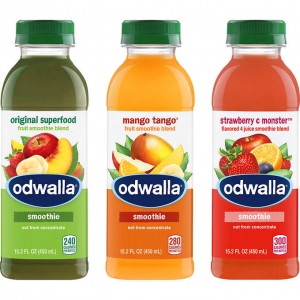
[00:07:10] John Craven: Yeah, that's like, wow. If only you used that brain space for something useful. I was going to say, thanks for saying what I couldn't say, Craven. Two words. Prior to joining BevNET, Mike was the founder of Wikimike, which was a site that had a lot of random knowledge about 80s TV shows and movies. Our motto was the fountain of useless knowledge. Okay, well, speaking of the 80s, there was a brand that was launched in the 80s, 1980, more specifically, that has become a widely known one in the industry and beyond, that's Odwalla. But interesting news in the beverage business this week that Odwalla is going to be discontinued by the Coca-Cola Co. After 40 years, the brand that was co-founded by Califia Farms co-founder and CEO, Greg Steltenpol, coming to an end. Yeah, definitely. Um, pretty crazy how much that brand kind of had an impact on really, I mean, it was one of the earliest like kind of perishable beverages along with, I suppose, Naked Juice, uh, fresh Samantha going back there to that time where fresh juice was, you know, that was like a cutting edge, innovative products.
[00:08:33] Ray Latif: And you know, that company, uh, obviously got snatched up by Coke and, you know, I think went on to certainly expand into being a national player, thanks to Coke. And, you know, at this point, I guess it looks like it's a move both to retire the brand and, uh, some cold chain distribution. And yeah, I don't know, kind of interesting to look back on that. And obviously, you know, the founder of Odwalla, Greg Steltenpol, who's now at the helm of Calafia, you know, repeat entrepreneur. Always great to see that. But yeah, I don't know.
[00:09:10] John Craven: Interesting news to hear that yesterday. And I guess I've heard rumblings of it for a little bit, so. Sad to see Odwalla disappearing off shelves. But hey, you know, as Greg mentioned in an article about the discontinuation, you know, a 40-year run ain't bad. Not at all.
[00:09:26] Mike Schneider: Rest in peace, Odwalla.
[00:09:28] John Craven: Certainly a brand that inspired other brands, too. You might recall that in past interviews, for instance, with GT, he often mentions how Odwalla was an inspiration for him to do something else. And that's what happens when you build a brand that was as big as Odwalla. People, they look at it, they're inspired by it, they want to do something that's similar but different or something along those lines. And Odwalla was certainly a brand that inspired a lot of entrepreneurs. Definitely. They did, and I'm probably going to say something that's going to put a damper on all this, but maybe Ed Wallace should never have come out with Smoo Bucha. I think that's a huge mistake. Oh man, I forgot about that one. That was an odd, uh, yeah, it's an odd one. I mean, you know, it's interesting though, to look at something like that where, you know, you have a brand that has a certain, you know, sort of place in the Coke portfolio and,
[00:10:23] Ray Latif: it's kind of hard to twist and turn it into new things.
[00:10:26] John Craven: And I think that's kind of where Odwalla was at, you know, it can't really be taught new tricks and the consumer is kind of always going to look at it in a certain light, which, you know, it was interesting.
[00:10:39] Ray Latif: I mean, I just, I posted or shared the, uh, the story from our site about it on LinkedIn and,
[00:10:47] John Craven: You know, there were definitely some some comments poking fun at it and it's high sugar and kind of calorie count and you know, things that Again, I mean, when that product first came out, it wasn't even like really kind of part of the equation then. So, you know, it just kind of ran its course. I mean, smoo-bucha, bad execution, good idea though. I mean, we started to see kombucha as an ingredient in beverages, and I just think the timing was bad. And again, you know, the sugar in the Odwalla really held that back. Well, to read the full story about Odwalla and Coca-Cola's decision to discontinue the line, head to BevNET.com to get access to the full story. You need to be a subscriber, easy way to do that. Hit subscribe in the upper right-hand corner of the site, and you will get not just access to that one article, but all the articles that we have on the site and on Nosh.com, along with our education platform, videos from our virtually live event, and much, much more.
[00:11:47] Cambridge Naturals: Guessing your margins? That's risky. Belay Financial gives CPG brands the clarity to scale smarter, faster, stronger. Get your free inventory ebook by texting TASTE to 55123 and start making data work for you.
[00:12:07] Emily Kanter: Tune in at the end of this episode for an exclusive interview with Matt Lin of Belay Solutions. He sits down with Melissa Traverse to break down the biggest inventory and accounting mistakes CPG founders often make. You'll learn how to bring clarity to your numbers so you can scale with confidence.
[00:12:25] John Craven: All right, I think it's time to get to our interview with Emily Kanter, who, as I mentioned earlier, is the co-owner and CEO of Cambridge Naturals. A two-store chain focused on nutritional supplements, body care products, and organic foods and beverages, Cambridge Naturals has cultivated a loyal customer base within the Boston area and is praised for its unique and constantly rotating product selection. As part of our conversation, Emily spoke about the history and evolution of the retailer, the factors that determine its selection, how she develops relationships with brand owners, sifting through emerging trends, how she evaluated the opportunity to carry CBD-infused products. Hey folks, it's Ray with Taste Radio. I'm gonna call right now with Emily Kanter, who's the co-owner and CEO of Cambridge Naturals. Emily, how are you?
[00:13:16] Melissa Traverse: I'm good. Thanks for having me. Pleasure to be here.
[00:13:19] John Craven: Thank you so much for joining us. Big week for you guys. Yeah. You just reopened your stores for in-store shopping. How long was that decision in planning?
[00:13:29] Melissa Traverse: Yeah, we've probably since we closed our doors on March 16th, we've been planning to reopen gradually. But really in the last few weeks, as more and more retail stores began opening, we actually could have been open this whole time. We're technically a grocery store at both stores. But we just felt our stores were very small and the risk felt significant. And we wanted to make sure we are protecting our staff at all costs. And we were lucky to have an online website set up for curbside pickup and delivery. So we kept it closed as long as we could. But for a lot of reasons, it was necessary to reopen. And we're very excited to do so. We opened one store yesterday. And Porter Square, our flagship store, is opening today.
[00:14:18] John Craven: I'm curious as to the reception, did you have the kind of foot traffic you were expecting?
[00:14:23] Melissa Traverse: So yesterday, you know, thunderstorming and kind of chilly and we did have a decent amount of customers. I think a lot of people are sort of waiting to see how busy it's going to be and, you know, not wanting to rush over if there's going to be a crush. So I think we had one of those Yogi Berra situations where, you know, nobody goes there anymore. It's too crowded. So not as many people as we were expecting. I think we'll see more people today at Porter Square and that store just tends to be a lot busier. foot traffic wise in general. But I think also over time more people will head to the Boston Landing store too because it's a little bit more of a quiet shopping experience and a little bit more hands on because we'll have more staff to customer ratio. So I think it will balance out over time.
[00:15:10] John Craven: Well, I'm looking forward to popping into your stores. I've been there a number of times. I've been to the Boston Landing location a number of times, and you do have a pretty impressive selection of food and beverages. I'd love to hear about the history of Cambridge Naturals and how you got involved with the company. Obviously, it's a family business, but you weren't always the CEO of the company.
[00:15:32] Melissa Traverse: Yeah, that's true. My parents started the business in 1974. They were 23 years old. I don't think they knew what the hell they were getting into, but who does at 23? And in our inception, it was a full line grocery store. So we used to carry everything from meat and cheese to fresh local produce, lots of organics before there was even an organic certification, lots of bulk foods. you know, trail mix. We made our own trail mix before there was prepackaged trail mix. So, you know, very much in 1970s, early 80s, hippie crunchy granola health food store. And then over the years, we grew and expanded and evolved and increased our supplement selection and our herbal medicine selection and our body care selection. And then eventually we shifted the model to focus more on that sort of community natural pharmacy model. rather than the grocery store model, which traditionally has very low margins, lots of product shrinkage, you know, lots of challenges in terms of refrigeration, staffing, that kind of store is very expensive. And at the time, we were in a location that didn't have much parking available. And in that era of the 90s, it was a shift towards big box stores. We have six Whole Foods in a three mile radius of us and they're all, you know, massively larger than we are. So we shifted our model to be really focused on education and customer experience and providing that natural alternative pharmacy for our customers. And then gradually we've started increasing the grocery selection back over time. We still don't really have fresh produce, although we did bring in apples to our Boston store recently. I grew up in the business. I'm now almost 35 and have been at the dinner table for every conversation. Every dinner table conversation was about the business. I grew up very much immersed in it. But I did many other things in my early career and eventually ended up out in Portland, Oregon with my now husband, Caleb, where we both went to business school. It's a business school focused on sustainability and the idea that business can be a force for good. I was reading all of these case studies of businesses that were very much like my parents' business, maybe larger in scale or different scope. or a different industry, you know, businesses like Patagonia, for example. driven purpose that led every decision within the business. And I thought, you know, this is my family's business. And simultaneously, my parents started talking about their eventual transition. At that time, they were in their early mid sixties and thinking, you know, maybe they didn't want to do this forever into their nineties or perhaps even longer. And running a retail store is in many Anyways, a young person's game, it's long hours, it's exhausting, it's lots of different staffing dynamics. So Caleb and I, my husband and I moved back in 2014, and we've really been focused on how to grow the business, how to expand it, how to shift the culture and really bring the business into the next era of the natural foods industry.
[00:19:06] John Craven: I'd love to explore this decision to pivot away from grocery. Obviously, as you mentioned, there was a lot of competition between Whole Foods and other independents coming to market, expansion of natural sets in conventional grocery stores. Was timing a key factor in your decision to reintroduce food and beverage products. And when I say timing, I'm talking about the timing of new and emerging brands coming to market. There's been an explosion of innovative concepts that we've seen, innovative ingredients that we've seen over the past decade. And how much of that factored into your decision to reintroduce grocery?
[00:19:47] Melissa Traverse: Yeah, so, you know, I think when we shifted away from grocery, it was a financial decision and it was a decision to reduce the complexity of the business because, you know, at that time and still today running a full line grocery store is incredibly complex and financially draining and also wonderful. But, you know, certainly with challenges. And I think that for my parents, especially for my dad, his heart has always been is what inspired him, the politics of food are what inspired him to get into this business in the first place. So we gradually brought back new and exciting grocery products very quickly. And, you know, we might've, when the transition happened, we might've sort of been limited to chocolates and snacks and tea and a few other items. But I think very quickly we started reintroducing special and unique grocery items. And that's been true. And that's been our model, you know, since day one, certainly, but even after that transition, we really try to seek out those interesting and innovative grocery items that will speak to customers today, that have lasting power, that have a wonderful story behind them. And certainly there has been an explosion in natural foods grocery, but I don't think that our expansion of it is related to that so much as it's what we've always been doing. We've always been an access point, an early partner of many of these young change the world brands. They will offer and start out in a store like ours and then grow and grow and grow and, you know, eventually take over the marketplace. And then at that point, we might decide whether or not we're going to continue stocking that brand on our shelves because it's no longer as unique. Maybe it's been sold to a large conglomerate and maybe it doesn't have the same story to tell. And so we'll free up the shelf space for new, emerging, exciting brands beyond that. you know certainly it's been very exciting to see so many amazing new brands emerge and at the same time we're now having to sift through hundreds and hundreds of brands some of which are really telling an interesting story and some of which are sort of just jumping on the trend and so we have to be very careful to not just go with a product that has trendy brand, Instagrammable branding, but actually genuinely has an interesting story to tell, is a really unique product and fills a need for our customers.
[00:22:32] John Craven: What really moves you when it comes to brand story? Because everyone's got a brand story, you know, and so many of these new brands also have a social mission that is incorporated into what they do. So what really stands out for you when you're looking at these stories and looking at these social missions?
[00:22:52] Melissa Traverse: That's a great question. It's a combination of factors. So, you know, ultimately it has to be a product that we think our customers are going to want to buy or that we can do a good enough job ourselves telling the story in a way that convinces the customer that this is something they would really want and need. And, you know, we don't do hard selling, but we try to communicate the value of these products to our customers. And often they look to us to be, as my father says, the vanguards of access. So, you know, it's a holistic approach to what that story is. Is it a unique founder story in the sense that the person who owns the company and launched the company is a person of color? Are they a woman owned brand? You know, do they have some other element to the story that is unique? I think I get a little bit tired of hearing the quote unquote founder story of, you know, I was walking along and, you know, my shoes were hurting and I realized that nobody had come up with this fabulous shoe concept. And, and most of that's bullshit. It was, you know, excuse my language. Can I say that on this podcast? Um, most of it is, you know, a fabrication created in business school and having been in business school, I know how that works. But I think there are some genuine founder stories in the sense that there's a really passionate person often creating the products in a grassroots environment and then starting to grow their brand gradually. We work with a lot of local companies and so we're able to actually meet the founders and have deep and meaningful conversations with them before we even bring in their products. And we do the same when we go to Expo West and Expo East, and we really value those in-person connections. It's one thing to be approached by email from a brand, and it's another thing to actually have the connection with the founder or the owner or someone high up in the company in person. So we're holistically vetting these products for, are they unique? Are they interesting? Is the product itself amazing? Again, you know, it has to be something that's not just a me too product. It has to taste, especially if it's grocery, it has to taste delicious. It has to have ingredients that meet our standards. It has to ideally have packaging that's compelling on the shelf. It doesn't need to be the hottest, most Instagrammable packaging. That certainly helps in this era, but that's not the primary driver behind why we'll choose to bring in a product. There's a difference, I think, between something that's a fad and something that's trendy and something that genuinely is embedded in a current trend. It's going to last more than the next year in terms of people's consciousness. So that, you know, A product The Coconut Cult, for example, fits all of those criteria of it has a really interesting founder story. The company itself did sort of have this like quirky, very Instagrammable approach to marketing, but it was a little bit more out of the box than your usual brand marketing approach. And the product was genuinely phenomenal. And, you know, we had the opportunity to be the first retail store I think in the Boston area, if not in New England, to carry it. And so we became the access point for this product that people had heard so much about. But if Coconut Cult had tasted terrible, nobody would have wanted to buy it. Or if it was just so-so, it wouldn't have been worth the price point and the hype would have quickly died out. We're very careful to have multiple people on our team taste test the product, multiple people weigh in on whether or not they think it's going to be a hot seller. I was even on the fence about that one. I thought, is someone really going to pay $25 for a jar of yogurt? Lo and behold, it's really delicious and people will pay $25 a jar. Fortunately, the price has come down significantly. But we're always, you know, I'm getting multiple opinions that are not my own in order to make the best decision.
[00:27:13] John Craven: How many different food or beverage categories do you stock? What's your criteria for expanding shelf space for each? So for example, you know, kombucha. Kombucha is a great example. 10, 15 years ago, there might have been one kombucha brand on shelf. There might have been just one SKU on shelf. Today, if you go to your stores, you have at least four different brands and two to three SKUs per brand. So when do you determine the right time to expand shelf space for a category? And what goes into that decision?
[00:27:45] Melissa Traverse: I would say it's a fairly holistic decision-making process in that we don't, the more honest way to say that is we don't have a specific process or criteria. It's a lot of, the collective years of experience that exist on our team coming together to make a decision based on what. you know, both, both from the data, like what's selling already, and what do we have space to get rid of? And then what could we bring onto the shelf that will put some fresh energy back into that category. So in the case of kombucha, GTs is going to sell, it's the number one kombucha everywhere. But I think people are also excited when they see new brands and maybe they'll pick up a GTs, but maybe they'll try that new brand or maybe they're sick of GTs and they want to try, you know, one of the many new and unique kombucha brands. Maybe they want it in a can. Maybe they want one that's less sweet than GTs. Maybe they want one that's a little bit more effervescent. And so there's a lot of, there's a lot of differentiation within each sort of product category that, you know, not obviously not all kombuchas are created equal and everyone has their favorites. So we recognize that our customer base is very diverse, their wants and needs are very diverse, and we genuinely try to have a diverse enough selection that there's something for almost everyone. So when we're looking at our shelves and we generally it's we get product ideas first and then we think, okay, how can we fit this in? Is there enough space? The biggest pain point is our cooler because we just only have in both stores, we only have one cooler for grocery. So anything that's highly perishable has to live in that cooler and we can't put stuff on tops of shelves and kind of like MacGyver things around. It really all just has to fit. So when we're looking at the cooler and we have this product that we're interested in bringing in, we start thinking about, okay, what's, what's maybe a slower seller. What's also just, you know, they can get it at the star market next door. And we're not really drawing people in for this one product. They're not coming to us because they can get this product. There may be picking it up, you know, once they're in here. But what could we put on the shelves that would help draw people in because we're the only access point for that product within a certain radius? So the walk-in customer really does determine our product selection, and that's obviously changed in the pandemic. What we're thinking to stock, we've actually started stocking more of those staple goods because the data suggests that people are more brand agnostic right now. You know, they just want kombucha or they just want oatmeal, and they're not as concerned whether it's Bob's Red Mill or GT's or Aquavite. They just, they want kombucha and they're willing to buy whatever one we have. So we're being a little bit more generous with our brand selection right now and what types of products we're stocking. But in general, and once we reopen, we are also committed to having lots and lots of new and unique items on the shelf that are the reason somebody would walk into our doors and shop with us. And it's that element of discovery that's so important in brick and mortar retail, that element of experience. that we think is one of the reasons for our grocery department and our store in general success. So yeah, we tried to, you know, holistically think about the selection and figure out the gaps based on the data, but also based on our own experience of being on the floor in the store and also customers ourselves.
[00:31:50] Emily Kanter: Do you want more repeat buyers on Amazon? Well, this free resource in collaboration with Straight Up Growth will help your brand turn first-time buyers into long-term subscribers. Download Winning the Repeat Purchase Game on Amazon now at Taste Radio slash SUG. That's Taste Radio slash S-U-G to start building retention-driven growth for your brand on Amazon. Scaling a beverage brand into major retail comes down to operational readiness. From packaging lead times to co-manufacturing strategy, the details can make or break a launch. In a new ebook in collaboration with Octopi and Asahi Beer USA, industry leaders share what they've learned in helping brands scale. Download it now at Taste Radio slash octopi. Do you need to scale your team faster without compromising on talent? Join Oceans for a live webinar on April 20th and learn how leading companies are hiring top global professionals who are ready to grow with your business. Register for the webinar now at Taste Radio slash oceans. That's Taste Radio slash oceans.
[00:33:01] John Craven: When you are bringing new brands into your store, do you try to develop a relationship with those brand owners? Or is the connection, as would be expected, primarily through brokers and distributors?
[00:33:13] Melissa Traverse: It certainly depends. I think whenever possible, we try to build a relationship with the company founders or the owners. Obviously, we work with some really wonderful brokers with whom we have longtime relationships with. And, you know, sometimes the reason we bring in products is simply because of that relationship with that broker and our trust in them to understand our store really deeply and what will work really well for us. But we also, even in those instances, want to know, OK, who's running this company? What's their story? What's their mission? Who do these products benefit? Who's making the products? Not just who owns it and who reaps the large financial benefit from it, but also who are the workers involved? We're a very team-led company, and it's important to us that whatever brand we're working with treats their employees well, has a really healthy supply chain, engages in fair trade, fair labor, et cetera, et cetera, all the way down the supply chain. So we want to know all of that, regardless of whether or not the entry point to that product and the deeper relationship is with a broker.
[00:34:29] John Craven: When you're thinking about trends, how do you determine which ones have staying power? How do you determine which ones will resonate most in your stores?
[00:34:38] Melissa Traverse: I think I said we tried to be on the cutting edge, but not the bleeding edge of trends. And so generally the trends that we're paying attention to are ones that have already been swirling around for a bit of time. I mean, CBD was one of those ones that we were pretty early to market with, and there weren't that many other retailers. We might've been the first natural foods retailer in the Boston area to bring CBD to our shelves. I might be wrong about that too, but certainly one of the first, you know, we are already familiar enough with CBD, the research behind it, the benefits of it. And we were trying the products ourselves and really liking the results. So that was one that was maybe like just almost on the bleeding edge, but not quite. And it was the right timing to bring it in. And of course we've seen the explosion in the CBD category that's been phenomenal. But a lot of the things that are quote-unquote trends are actually, you know, have their origins in ancient traditional practices. And so they're trends in the sense that they're becoming popular now, but maybe there are cultures around the world who have been utilizing these foods or these ingredients for centuries, thousands of years, and we in the West are just now becoming aware of it and When we look back at the historical uses of those products and see the benefits to people over hundreds and thousands of years, then it becomes sort of obvious, well, why wouldn't we, you know, if this is a really great product, want to use it for our own health and wellness? And again, you know, making sure the sourcing of that ingredient is is high quality, or those ingredients are high quality, that the people are paid well, that there's a really good brand story behind it. Another drink that fits into that would be Waku. You're probably familiar with Waku. They're a local company. They're two really wonderful guys, Juan and Nico from Ecuador. They make a phenomenal beverage that's been consumed traditionally in Ecuador for hundreds of years. and it's made with a wide variety of herbs and it's really good for digestion, for gut health, overall immune support, but most importantly, perhaps, it just tastes delicious. Their beverage isn't necessarily in and of itself, I don't think it's going to be the next kombucha, but it fits into this overall macro trend of people wanting to feel well in terms of gut health, wanting to feel well, you know, in terms of overall digestion and immune health, maybe wanting to shift away from alcoholic beverages. So looking for tasty drinks that fit the sort of mock cocktail mixer criteria, wanting to shift away from caffeine, so shifting to a product that doesn't have caffeine. So in and of itself, Waku's blend of herbs or particular product type might not be the next kombucha or the next kefir soda or the next CBD, but it fits all of these other needs that people are looking for. And I think that's true of, again, like all these trend categories. CBD in and of itself was interesting because it comes from the marijuana plant, and that's kind of like sexy and has cachet. But in and of itself, the reason why CBD was so successful is because it really works for stress. It really works for sleep. It really works for inflammation. And those are three categories that were already just booming. Our stress support, our sleep support, and our inflammation support were probably our top selling categories in the supplement section before CBD even came around. So there's a reason, I think, why those trends have staying power, and it's because they relate to deeper trends on a macro scale.
[00:38:46] John Craven: As you mentioned, you guys were ahead of the curve on CBD-infused food and beverages. How did you evaluate the opportunity for CBD brands, and what factor did the lack of FDA guidance play in your decision?
[00:39:02] Melissa Traverse: Because we're a store that focuses on supplements, we've been working with our brands around new FDA guidelines for decades now. And my sense is that the direction this is going in, the FDA will at some point produce some kind of thoughtful regulation around CBD in food. I don't think it's going away. I think there's enough momentum behind CBD as an ingredient in food, but whether or not it becomes something that's more regulated, like you have to have an ID to purchase CBD food, ultimately that would be fine. We don't sell CBD products to anyone under CBD food products to anyone under 18 anyway. And we'd certainly welcome some kind of regulation around that. But I think ultimately, we're sort of just being as cautious as we can. We've brought in a limited number of CBD food products. We know stores that have brought in hundreds of CBD food products. We sort of try to keep the same criteria for CBD food products that we would working with any brand, you know, are the ingredients really high quality? Is the founder story or, you know, the brand story unique and interesting? Does this particular product fill a category need? We don't need 25 different CBD chocolate brands. You know, we can work with three or five that are really excellent and have lasting power. And I think the general public is thoughtful and cautious when it comes to CBD, especially in food. Certainly it's something fun to try and as more and more people are shifting away from alcohol consumption or at least perhaps as much alcohol consumption as they were doing before, CBD sort of fits that gap in terms of a product that you can take or enjoy that's relaxing, that's calming, that perhaps allows you to be more present in a social situation. And so I do think that CBD and food will stick around, but again, we're being cautious. We've taken that same approach we took with bringing in CBD in general, which is to be cautious and thoughtful and not bring in every single brand that crosses our doors, but look out for those really, really well-made products that are going to make you feel good and that have the certificates of analysis to prove their efficacy and prove that there's no other icky ingredients, heavy metals or pesticides or, you know, higher levels of THC than are supposed to be in there. Massachusetts did sort of create some rumblings about a year ago that had us all a little bit nervous about CBD in food, but that seems to have dissipated largely and I think the FDA has enough other crises to deal with. Certainly in the midst of a pandemic, I don't think there's going to be any particular ruling on CBD in food, but I'm sure down the road it will become some kind of regulated ingredient and we'll just sort of have to adjust when that happens.
[00:42:09] John Craven: Emily, I'm sure that there are folks listening right now who are saying, you know what, I think Cambridge Naturals would be the right fit for my brand, for my products. How do they get in touch with you? And, you know, what's the process for sending product to your stores for potential inclusion on your shelf?
[00:42:26] Melissa Traverse: Yeah. So the best way to get in touch with us is to go to our website and there's a form on there and it's called partner with us. I think it's under the about tab in the navigation bar on our website. And if you click on that, it's a form that you can fill out and it asks all the questions that we are going to ask anyway. So oftentimes brands try to circumvent that form and we make them go back and fill it out anyway, because we're going to ask those same questions regardless. And that form goes to our buying team, including myself, and has all of the different criteria that we are vetting based on. And then, of course, we love to try samples. Obviously, that's a bit more challenging in the midst of a pandemic, depending on what your product is. But if you're able to ship us some samples, we'd be happy to try them out. And then we'll, you know, determine whether or not it's the right fit. And sometimes we really love the product and we really see the value in it, but it's not the right timing. And so, you know, we're always kind of putting things in the back burner and saying, maybe we can come back to that at some point. So yeah, the partner form is a great place to start and a great place to connect with us.
[00:43:40] John Craven: Fantastic. You know, Emily, I can't thank you enough for taking the time to be with me. It's so great to speak to retailers who are at the forefront of our industry and introducing new and innovative products and brands to consumers. Thank you so much for what you're doing and please stay in touch. I'd love to follow up and see what new products are on your shelves in the coming months.
[00:44:03] Melissa Traverse: Likewise. Yeah, it was really a pleasure to talk with you and thanks so much for having me and I hope that you stay healthy and well in the midst of all of this and that we all make it through and can keep growing the natural products industry and hopefully natural foods will take over.
[00:44:21] John Craven: Indeed. Now if I'm shopping your shelves, I'm sure I'll be healthy and safe or at least a lot healthier and safer than I would be otherwise. Emily, thanks so much again and good luck with everything going forward.
[00:44:33] Melissa Traverse: Thank you. Likewise.
[00:44:34] John Craven: All right. That brings us to the end of Episode 92 of Taste Radio Insider. Thank you so much for listening, and thanks to our guest, Emily Kanter. Please subscribe to Taste Radio on the Apple Podcasts app, Spotify, Stitcher, or Google Podcasts. As always, for questions, comments, ideas for future podcasts, please send us an email to ask at Taste Radio. On behalf of the entire Taste Radio team, thank you for listening, and we'll talk to you next time.
[00:45:08] SPEAKER_??: you
[00:45:13] Mike Schneider: Hello, I am Melissa Traverse here for the Taste Radio podcast, talking about some of the biggest tension points that CPG brands and founders face when they're scaling a brand, and those are financial accounting and inventory management. I am joined by Matt Lynn, inventory accounting guru from Belay Solutions, and he is going to shed some light on all of this that is going to help everybody out quite a bit. Matt, thank you so much for joining us today.
[00:45:43] Ray Latif: Thank you for having us, Melissa. It's great to be out here at Expo West and it's great to sit down and be able to chat this because it's kind of a passion project of ours, working mainly with CPG brands and hoping to help them scale.
[00:45:55] Mike Schneider: It's been such a pleasure chatting with you and the team and learning all about what you do over there at Belay Solutions. Can you tell us a little bit about yourself and what your role is and the kinds of solutions that Belay gives to CPG brands and founders?
[00:46:11] Ray Latif: Yeah, absolutely. My role with Belay, I'm actually our inventory accounting manager. I run our inventory department, so we work with CPG brands, taking them from spreadsheets, putting them on inventory management systems, and really helping connect their tech stack between their sales online marketplaces to that inventory management system, even down to their financial systems like QuickBooks. Belay overall is kind of an outsourced accounting firm. And with that, we're helping teams. We have different levels with bookkeeping, controller level work, even high level into CFO type items. So we really help those brands in any way that they need financially. And then I just have a subset of a department where we're really just laser focused on inventory.
[00:46:53] Mike Schneider: It's certainly a complex topic and there are plenty of places to go wrong. Let's start by going right and start super simple. Can you tell us what some of the biggest red flags are that would help a founder understand or, you know, the person running a brand understand that it really is time to get some help with some of these areas?
[00:47:14] Ray Latif: 3 3 3 3 they have a lot of transactions that don't get coded or they just put them into placeholders to just get rid of it so it's not an eyesore. They'll notice they have revenue but no cash or they notice that they have a good amount of cash but their blind spot is really seeing the vendor invoices that are sitting there just needing to be paid and so they just lack that clarity that's going to really be around the corner.
[00:47:51] Mike Schneider: You know, you were talking about one of the red flags that comes up that I think makes so much sense. When somebody asks you what your numbers are and you can't come up with the right number, that's a big problem because that's something that you really should be able to share with decision makers who, you know, you're ideally looking to do business with. What should you be able to call up at a moment's notice?
[00:48:16] Ray Latif: really at any time, you should be able to know an accurate margin. It's amazing how many founders we end up talking to that they can tell you their revenue numbers, they can tell you their selling price, and then the minute you start talking about cost or their cost of goods sold, they just get a deer in headlights look. So really it's very hard to tell, am I even making money? or if you don't know your entire landed cost. Maybe you know what the freight cost is, the duties separately, but you're not really getting that as part of your unit cost. So it's really hard to tell. Am I even making money or am I losing money from the very beginning?
[00:48:49] Mike Schneider: And do you recommend that founders are able to call up a margin by channel?
[00:48:53] Ray Latif: Absolutely. And depending on the number of products and channels, you kind of want to know what are your best sellers, which ones are making the most and which ones maybe you're not making as much. But especially if you're branching out and you're doing D to C with B to B, absolutely want to know that.
[00:49:10] Mike Schneider: Gotcha. You mentioned that when things feel really chaotic, that's probably a red flag. I would say that it probably almost always feels chaotic if you're running a CVG brand. And I know this may be hard to quantify, but is there a revenue number? Is there a number of doors number that would help a brand understand whether or not it makes sense to bring on a partner like Belay? Understanding that so many brands are bootstrapped or they might be tight for cash. What is that friction point?
[00:49:40] Ray Latif: 3 3 3 3 3 3 3 3 3 3 3 But as you're growing, as you're getting to those six-figure revenue numbers, and especially as you're approaching seven, you want to make sure you've got good financials. Because as you scale to that point, most likely you're going to be looking to raise capital. And investors, the first thing they're going to look at is your books. And are they clean? And do they show a clear picture of your business?
[00:50:13] Mike Schneider: You know, another area that folks might look to to organize some of the chaos are their systems. So many folks stick with Excel spreadsheets for a good amount of time. How do you know that you need to outsource some of your accounting to an organization like Belay Solutions versus maybe signing on to a Synth7 or a NetSuite or something like that?
[00:50:36] Ray Latif: Well, that's actually something we really help with. When it comes to that cost question, that's something that trips people up. And sometimes, if you just have a turnkey business, you buy and sell a finished good, you can maintain with spreadsheets. And we've had clients with million-dollar revenue that can do that. But we see so many brands nowadays are using contract manufacturers. and they're just sourcing certain parts of their product. So when you start talking cost, they have no idea exactly what their unit cost is. So that's where we come in and we kind of understand, we'll speak with the customers and the clients and get their needs. And then if we think they're ready for a system, then we'll help put them on that system so they can get some of that clarity. And it's not something we force on anybody. There are plenty of times where founders come to us and we'll tell them bluntly, you're not ready for it right now, but we'll let you know when we think you are.
[00:51:22] Mike Schneider: That sounds like excellent advice. What should a founder or somebody running a brand look for in an outsourced accounting partner? Are there certain checklist items that they should make sure that their partner be able to execute or be able to help them understand?
[00:51:39] Ray Latif: Absolutely. I think one of the keys there's, there's a lot of outsourced accounting firms out there. Some focus on service-based SaaS companies, but if you're a CPG founder, you really want to make sure that your accounting firm has CPG experience. I would ask them, you know, what kind of brands have they worked with? And even beyond that industry specific, because there's so many subsets of CPG. And that's something that I think is great about what we do with Belay is that we kind of run the gamut. It's kind of like the insurance commercial. We know a thing or two because we've seen a thing or two across a broad spectrum.
[00:52:09] Mike Schneider: Probably getting references is always helpful, right? Absolutely. All right. So this all sounds great. I think we have a really good understanding of would it make sense to hire an outsourced partner? You know, what some of the things you should be looking for are. What does offloading this kind of work mean for the brand? What can this do for lightening the load of a founder or lightening the load of a brand operator? Like, how does that help them in their everyday business?
[00:52:38] Ray Latif: It just tries to really help quiet the chaos. So what we're looking to do is just take some of the weight off that founder's shoulder, let them focus on building the brand, building the business, getting that exposure. If you don't have sales, you really don't have anything. So we want them to be able to focus on that while We Talked care of your back end office work. And we can just present that to you on a monthly basis, you can help make decisions, you can take that to investors. And really, you can just focus on growing your business.
[00:53:03] Mike Schneider: I feel like I felt founders and the folks who are running brands collectively sigh. Breath of relief just hearing that. How can people learn more about Belay Solutions?
[00:53:14] Ray Latif: So people can text TASTE to 55123 for their free inventory guide to get started.
[00:53:20] Mike Schneider: Matt Lin, Inventory Accounting Guru at Belay Solutions. Thank you so much for joining me here at Expo West. It's been such a pleasure to chat with you and learn about what you all do over there to help founders and brands with their financial accounting and inventory management. For everybody else out there, thank you for listening to the Taste Radio podcast. I am Melissa Traverse and we'll see you next time.