[00:00:04] Ray Latif: Hello, and thanks for tuning into episode 98 of Taste Radio Insider. I'm Ray Latif, the editor and producer of Taste Radio, and I'm with my BevNET and Nosh colleagues, John Craven, Mike Schneider, and Jon Landis. In this episode, we're joined by Mark Samuel, the founder and CEO of protein-centric snack brand, Vive Organic. Just a reminder, if you like what you hear on Taste Radio, please share the podcast with friends and colleagues, and of course, we'd love it if you could review us on the Apple Podcasts app or your listening platform of choice. I just, I feel like I just sounded like that guy, Kai, what's his name? Kai Rizdol?
[00:00:40] Mark Samuel: From Marketplace?
[00:00:41] Ray Latif: From Marketplace, yes.
[00:00:43] Mark Samuel: You are a supercharged version of Kai.
[00:00:46] Ray Latif: Kai has that sort of, that kind of, da-ba-ba-ba-do-ba-da-ba, vibe when he's speaking. If you ever listen to Marketplace, which is a fantastic daily show on the economy and other financial news, you should check it out.
[00:01:05] Mark Samuel: I used to listen to it every day when I would drive the one mile from my house to my office in Watertown.
[00:01:11] Ray Latif: and it's no longer in Watertown. That is, as we mentioned last week, our new office is in Newton, Mass. Just a quick reminder for folks to update their address, folks. We talked about this last week with our new address. That's 65 Chapel Street in Newton, Mass, 02458. You're going to be sending us samples. Please send it to that address. We will have some things being forwarded from Watertown, but not for much longer. So please update your address books.
[00:01:38] Mark Samuel: It's different. I don't listen to Marketplace anymore because it's on at three o'clock over here now. And I used to listen at six o'clock and living on the West Coast, your whole schedule changes. It's like I was just talking to my wife about it yesterday. We've been here a year now and I never got up this early when I lived in the East Coast for 33 years. It's 810 where you are.
[00:02:00] Whole Foods: Is that early for you? God, that is like so true, though. Now that you say it, I remember like being like, is Landis going to be in the office today or what's up?
[00:02:10] Mark Samuel: Around this time of year, we would be selling, you know, tickets for Santa Monica and I'd be talking to people on the West Coast all day. Working the late shift, yeah. I'd roll in at 1030 and I'd stay until six or seven o'clock and, you know, it's the complete opposite here, but, you know, it's got its own perks.
[00:02:27] Ray Latif: You roll in at 1030? I guess I missed that because it was in my office most of the time. Well, I'm assuming you're speaking to a lot of folks about our upcoming Supercharge Your2C event, Landis, as well as you, Mike. This is an exciting, exciting event for us. It's a new type of programming that really speaks to how brands are addressing the opportunities available to them by going direct to consumer. Mike, Can you talk a little bit about sort of the formation of this event and what folks can expect?
[00:03:01] Supercharge Your: Sure, Ray. I mean, it's our next virtual event. Again, it's called Supercharge Your2C. It's on September 29th. We've got industry experts who will be talking about building your presence on Amazon and the difference between doing that and building it on your own website. We'll talk about selling on social, adapting your supply chain for D2C, which is, you know, it's very different. We're going to have some great networking opportunities afterwards after those presentations with round tables and one-to-one meetings.
[00:03:32] Ray Latif: Fantastic. We have over 200 people signed up right now as of this recording, right?
[00:03:37] Supercharge Your: So far, 200 people signed up.
[00:03:40] Ray Latif: Very cool. For the networking opportunities, I think that's such an important part of what we're doing. How's that going to work?
[00:03:47] Supercharge Your: We're going to be offering attendees the opportunity to meet with our experts one-to-one or to ask questions via our roundtables in an effort to try to make our virtual events as close to normal as possible.
[00:03:58] Ray Latif: I know those one-on-one conversations are so important, and a lot of folks are going to be looking forward to that. If you want to sign up for the events, Jon Landis, how do you do it?
[00:04:07] Mark Samuel: Well, you gotta be a subscriber. So if you're not a subscriber, just subscribe today and you'll get access to this virtual event. But I think more importantly, you're gonna get access to a lot of different virtual opportunities, interactive content, networking, speed dating, round table sessions. We're committed to doing this regularly and moving forward, we're gonna have a lot of this for our subscribers.
[00:04:35] Supercharge Your: You can see it all in our brand new content calendar if you want to see what's coming up. As Landis said, there's tons of value for our subscribers and great opportunities for business building, learning, networking.
[00:04:46] Mark Samuel: I think that when we launched a subscription, everyone was saying, oh, it's $375 to get kind of access to the content that I used to read for free. And we're really trying to make sure that people understand, like, you're paying for something that didn't exist before. You're paying for content and essentially services that we're creating now for you. So subscribe and then talk to us because, you know, we're building this for you, for our subscribers. We're taking your feedback. reach out, you know, like we want to talk to everybody.
[00:05:20] Supercharge Your: And in the spirit of continuous improvement, we'd love to hear from you. We're constantly trying to figure out better ways to navigate these virtual waters, to bring brands and partners together. So email us at askatasteradio.com if you have ideas for how we can do that better.
[00:05:36] Ray Latif: And as we are improving our content with new products and new ways to engage with our audience, our coverage of the food and beverage industry is as great as ever going into a story deeper than anyone else in the industry. A great example of that is the recent article about Partake Brewing, a non-alcoholic beer company that recently raised $4 million in a Series A round led by Circle Up. Congratulations to Ted Fleming and his team. To read the story, head to BevNET.com or Brewbound.com because it is non-alcoholic beer and find out how the deal came together.
[00:06:13] Mark Samuel: Ted is just such a genuine good person. I mean, he's just so smart. And I mean, every time I talk to him, he just seems to be kind of like a sponge taking in everything that everyone's saying. It's really great to see people who've put so much effort and of their own blood, sweat and tears into something, you know, seeing success like this. So congrats, huge congrats to Ted. I think his product to at 10 calories is like he packs a lot of flavor into a 10 calorie can.
[00:06:45] Ray Latif: Yeah, it was nice to have Ted come into the office earlier this year, which feels like it was about 10 years ago. But, you know, amazing to see the development of that company. I think we first met Ted right around, I would say, I want to say it was about three years ago at Brewbound live events, where he was participating in our Pitch Slam competition. And amid the explosive growth of this non-alcoholic beer segment, I mean, the companies that were ahead of the game seem to be doing the best right now.
[00:07:10] Mark Samuel: Yeah, I think that, you know, Ted had a really good head start, you know, himself being a consumer of this beer many years before he launched a brand, or let me say a consumer of non-alcoholic beer. He was an e-retailer in Canada of non-alcoholic beer and, you know, really became a student of the product before he decided to create his own product, which is, definitely different than the other beers that he would sell on his website. It has its own purpose. So I think that the product is really smart and it's really well thought out and kudos to him and his team.
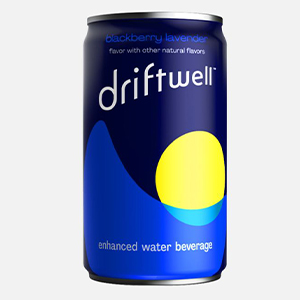
[00:07:50] Ray Latif: And from beer to relaxation drinks, can we make that transition? I drink beer to relax. Yeah, there you go. Interesting to see PepsiCo get into the business of relaxation beverages with a new brand called Driftwell. They describe it as an enhanced water beverage and uses the tagline, sip into relaxation, uses L-theanine as its key ingredient. John Craven, I think when I, right around the time I started at BevNET, relaxation drinks were of pretty big interest to the industry. And we saw them, the segment kind of die and fade away around 2014, I feel like. And it seems to be making a comeback.
[00:08:31] Whole Foods: Yeah, I mean, it's interesting. I think the relaxation drinks of many years ago were putting some pretty strong stuff in it, like melatonin and whatnot. And, you know, those things are still out there in the form of, uh, shots like Dream Water, for example. But, you know, I think this is the first time where we're seeing, you know, one of the big players go into this category with something that's clearly aimed at the mainstream. So pretty curious to see how it does this time around where I think consumers probably do have a little more awareness of some of these ingredients. And I don't know, I guess, you know, right now the function seems more timely than ever.
[00:09:13] Supercharge Your: John Craven, is it a good thing or a bad thing for, for the first movers in this category, the ones who've been there before a giant like Pepsi comes into the category?
[00:09:24] Whole Foods: I think always good. Just, you know, these guys are going to spend a lot of time and money to build awareness for it. And I think, that might disrupt what some existing brands are doing or force them to have to rethink it a little bit. But it'll be great if it expands the category and allows the brands that have been doing it an opportunity to find a niche within that and piggyback on someone else's bigger budget.
[00:09:51] Ray Latif: Well, as you mentioned, John Craven, the key ingredient for a lot of the past relaxation brands had been melatonin. Today, a lot of them seem to be using CBD as that key functional ingredient. Recess is a good example. They promote their products as calm, cool, collected, using hemp extract and adaptogens. You know, we saw Brew Doctor Kombucha recently roll out a new line of CBD products under the subline Tranquil. Meanwhile, New Bedward Showdown 19 winner Moment, which uses the tagline, Drink Your Meditation, which has a lineup of ingredients that are made with adaptogens.
[00:10:28] Supercharge Your: Yeah, don't forget another favorite of mine from that same competition, Ray, formerly known as Dew Drop. It's now called Droplet. There you go. Yes. Tasty stuff.
[00:10:38] Ray Latif: Yeah, from the upstart tiny brands to massive conglomerates like PepsiCo, this is definitely a category to keep an eye on, or at least an emerging segment to keep an eye on.
[00:10:49] Mark Samuel: I mean, if you think about it, it kind of makes sense, right? Because energy is this behemoth of functionality and there's only so many functionalities that, you know, we need physically. And like John Craven was saying earlier, today's day and age with all the anxiety and stress and homeschooling and working from home and not being able to go out and socialize, it seems like there might be a larger market for these products today than there ever was.
[00:11:17] Supercharge Your: We need a teleportation beverage right now. I want to teleport to Hawaii. I need some surf.
[00:11:23] Mark Samuel: Well, I'll tell you Coco Mio would claim to be that beverage for you.
[00:11:28] Ray Latif: There you go. Nice.
[00:11:31] Mark Samuel: Guessing your margins? That's risky. Belay Financial gives CPG brands the clarity to scale smarter, faster, stronger. Get your free inventory ebook by texting TASTE to 55123 and start making data work for you. Vibrant Ingredients is the natural ingredient partner powering food and beverage innovation, delivering flavor, function, and protection through a science-backed portfolio. Vibrant delivers purpose-driven solutions that help brands create extraordinary experiences. Discover what's possible with Vibrant today. Visit VibrantIngredients.com.
[00:12:18] Ray Latif: Jon Landis, I heard you say the name John Craven when you were speaking earlier. Do you need to say John Craven? Or, you know, if you if you didn't, would people think you're speaking in the first or the third person?
[00:12:29] Mark Samuel: No, I don't know. I just, you know, it was following conventionality. Everybody else has seemed to call us by our full names in this episode.
[00:12:38] Ray Latif: It would be kind of funny because if you were like, as John mentioned earlier, and you were speaking about yourself, that'd be kind of funny.
[00:12:43] Then Chill: Yeah.
[00:12:44] Ray Latif: That'd be weird. Well, I will ask you, Jon Landis, about some updates to a fantastic product that we have called Brand Spotlight. A lot of new and exciting aspects to Brand Spotlight. What are they?
[00:12:59] Supercharge Your: And Linus, when you're doing this, I want you to talk about yourself in the third person.
[00:13:06] Mark Samuel: So there's this really, really, really smart person on our staff, Jon Landis, who came up with a great idea a few months ago. Essentially, you know, we want to make promotion easier for the brands in our audience. Now it's kind of like version 2.0 of the products where we have a self-service portal You can upload a bunch of different images. You can make tweaks to your headline. You can change your images. You can change all this stuff in real time all week long. And it's just a fantastic way to get your product in front of our audience guaranteed for a week. We'll talk about it here on the podcast. We're going to send an email about it. And it's going to live on our website for an entire week. So it's really fantastic way to get your product out there and you have full control over it. It couldn't be simpler to create. So we're really excited about it.
[00:13:58] Supercharge Your: A great way to test into brand awareness for the industry. It's a pretty cool product. Totally.
[00:14:04] Mark Samuel: Yeah, brand awareness is something that's difficult too, because You're out here pitching all these retailers. You have your brokers out there. You're spending a lot of money and a lot of energy getting these products in front of these retailers so that they can take them on and order more. And a lot of the times, they're not returning your emails. They're not returning your broker's emails. But they're reading BevNET, they're reading Nosh, so you can get your product in front of them and remind them to follow up with you. You know, it's not something that you should be expecting all the retailers to click and send you their personal information because that's not how this industry works. So you just advertise and they get in front of them to remind them about how awesome you are.
[00:14:44] Ray Latif: The value is crazy. I mean, you know, everything that Landis talked about, but also just that prime placement on BevNET and Nosh near center of the screen. I don't know, can't beat it. I'm looking at the Vive Brand Spotlight now on BevNET and SunScoop on Nosh. Just great stuff, great product. If you want to get involved with BevNET or Nosh in terms of the Brand Spotlight, Jon Landis, how do you do so?
[00:15:07] Mark Samuel: Yeah, you can email me, just sales at BevNET, jlandis at BevNET.com. You can get in touch with us, ask at Taste Radio. I don't care. Just, you know, reach out.
[00:15:17] Ray Latif: There you go.
[00:15:19] Mark Samuel: Nice and easy.
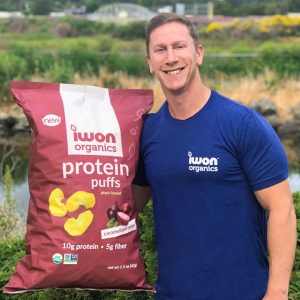
[00:15:20] Ray Latif: I think that's a good point. Just reach out. There are a lot of different ways to connect with us personally and as a company. I love hearing from folks on LinkedIn. You can get me, just look up Ray Latif on LinkedIn or Instagram. It's BevTrade, B-E-V-T-R-A-Y-D-E. I got a nice DM the other day from Kelly McShane, who's a co-owner of Granny Squibb Ice Tea. She recently connected with me. Fantastic products. Great to hear from her. She's a fan of Taste Radio and I just mentioned that she really enjoyed our last, our most recent episode with CJ Rapp, who is the founder and CEO of Karma Water and the creator of Jolt Cola. That was a good episode. They are all good episodes, really. All right, it's time to get to our featured interview for this episode. As I mentioned at the top of the show, Mark Samuel is the founder and CEO of Iwan Organics, a brand of protein-infused snacks, including puffs and crispy sticks. A serial entrepreneur, Mark founded several businesses in the fitness and finance industries prior to launching Iwan in 2016. The brand is sold in nearly 5,000 locations nationwide, including at Kroger, Safeway, Sprouts and Whole Foods stores. Company revenue grew by 300% from 2018 to 2019, and while the pandemic has impacted growth in 2020, iWant has continued to expand its retail and distribution footprint over the past year. Mark has chronicled the brand's win, losses, opportunities, and challenges via LinkedIn, where he has amassed an audience of over 20,000 followers as of the published date of this podcast. Known for his upbeat and motivational posts, Mark has become a highly influential voice within the food and beverage community, and in the process, expanded awareness of I1 to industry gatekeepers and amplified its message as a differentiated brand within a crowded space for protein snacks. In the following interview, I spoke with Mark about his experience as an entrepreneur, what he defines as the why for launching I1, and why patience is a virtue, especially after hearing the word no. He also explained how he built such a large following on LinkedIn and the most effective ways to engage with his audience. Hey folks, it's Ray with Taste Radio. I'm going to call right now with Mark Samuel, the founder and CEO of Vive Organic. Mark, how are you?
[00:17:48] Ted Fleming: I'm doing great. Thanks for having me, Ray.
[00:17:51] Ray Latif: Thank you so much for joining me. It's so great to have you on the show. You and I have chatted in the past, and you just have a great presence in our industry, such a supportive figure, and we'll get to that shortly. But in your personal life, I'm sure that support is something that, like most people these days, would be nice to have, especially when school is back in session, so to speak. You have two kids, right? I have two kids, yeah.
[00:18:17] Ted Fleming: Gianna and Mason, four and six.
[00:18:20] Ray Latif: Four and six, oh my goodness. How are you managing remote learning?
[00:18:25] Ted Fleming: You know, it is definitely a tough one. And I feel for all the parents out there, we are lucky that Gianna, who's four, is able to go to the preschool, which is right in our neighborhood, because that's open. And then as far as Mason, he's in first grade, and he's doing remote learning actually here at my office. Starts at home, of course, in the morning, and then he finishes up here at the office.
[00:18:48] Ray Latif: So do you have dedicated hours for family and work life, or does everything just overlap and intertwine at this point?
[00:18:55] Ted Fleming: We try to stay committed to certain disciplines in the house. As far as waking up, there's a lot of routines. The kids come into the bed. I recently got engaged. So that's a whole other thing. But we have that. We get up in the morning. We get the kids It's breakfast together and then we get a workout in and then we're off to work. I'd say part of this is the story with regards to my fiance and how she's been able to help, especially with Mason as far as schooling and those things that need to get done in the morning so that I can get in here in the office and then they come here. As far as post work, I'd say around four o'clock is when we kind of try to start getting back towards home. And then from there, there's also some disciplines in place about trying to put phones away and having pure family time.
[00:19:44] Ray Latif: Well, that sounds like a pretty good routine that you have. You recently got engaged, as you mentioned. Congratulations on that. Prior to getting engaged, you were a single dad to your children. I cannot imagine that. How have you managed it over the years?
[00:19:57] Ted Fleming: Yeah, that was a tough one. And shout out to all the single parents. Shout out to all the parents, but single parents, it is a whole other animal. And I feel for those that are having to not only manage that, but when COVID hit, that brought on a whole other scenario and other things that needed to take place. And it's very, very difficult if you are working and specifically if you are operating a business. But again, I would say this just carte blanche, as far as any working single parent who's dealing with this right now, it's extremely difficult. And I don't think we talk about it enough. I don't think that there's enough voices out there that's bringing this to light. I think we vaguely touch on it and we just sort of are going through the motions, but it's a very difficult thing to do. It's hard to manage. But I'd also say that through that sort of resilience, there's a lot of things that become part of your makeup that you can be utilizing in all aspects of your life, specifically with work. Again, I think that's a whole other topic, a whole other show we could have as far as all the tools that are learned when you're put into a scenario like that. And again, shout out to all the single parents, shout out to all the parents who are dealing with this right now. Kudos to you.
[00:21:16] Ray Latif: Well, it's almost like you had two kids when your four-year-old was born, because that's when you launched Vive Organic back in 2016, which, you know, a lot of people compare their businesses to a child or their children. But prior to launching iOne and prior to getting into the food industry, you had quite a career in fitness and tech. Can you talk a bit about your work experience?
[00:21:39] Ted Fleming: Yeah, since the early 20s, basically, when I got out of school, I had always done my own thing, as far as starting up companies. So I started in real estate finance, had a couple companies there, then had invented a few household products, got into the cannabis industry for a short period, then got into health and fitness, which is really my lifestyle. I'm a big, big health and fitness enthusiast. I've been living that lifestyle for 20 plus years. So founded a gym in San Francisco, and then from there founded two bag companies, sport and meal management bag companies, prior to founding Vive Organic.
[00:22:16] Ray Latif: Just about every job that I saw on LinkedIn, on your LinkedIn profile, includes the word founder or co-founder. Did you ever work for anyone else?
[00:22:25] Ted Fleming: That is a good one. Have I ever worked for anyone else? Early, I would say I worked for, you know, through college, I worked for a different, you know, a hotel, had done a few different things that I would consider working for someone else, but they were often short-lived. Not for any reason per se, I would just say that I definitely am more of the person who's going to be working for myself. I just have learned that over some time, of course, and probably recognized that really early on in my life.
[00:22:58] Ray Latif: You worked at a hotel?
[00:23:00] Ted Fleming: Worked at a hotel, yeah. When I was 19 years old, worked at a hotel, did front desk. That was actually a great opportunity because I was able to earn more than what the flat rate offering was because they allowed us to earn upsell income. So I was the number one sales guy by leaps and bounds. as far as being able to upsell every guest who was coming into the hotel and putting them into a higher rate room. So they allowed us to earn commissions. So it was actually part of the way that I put myself through school was I was able to basically triple up my income by using that opportunity.
[00:23:36] Ray Latif: Did you realize at that point that you were a good salesman, that you just had a knack for sales? No, it was far before that.
[00:23:41] Ted Fleming: I had been selling things since middle school. I have one of those, you know, I often say they're kind of cliche stories. I knew when I was, you know, 13, that I was going to be an entrepreneur. I wouldn't say it's really like that for me, but, but looking back, I definitely had always had an entrepreneurial spirit selling things to other kids in, in middle school. And then in high school, I was buying and selling cars. and then was still doing that through my first and second year of college. I would buy used cars and then resell them within the week and just turn profits that way as far as earning income.
[00:24:16] Ray Latif: Interesting. I actually spoke with another entrepreneur who did that, who flipped cars. It seems like it could be kind of lucrative if you know what you're doing.
[00:24:24] Ted Fleming: And remember, this is back, you know, now I'm aging myself, you know, this is 25 years ago. And so it was very different. I'll just give you kind of the storyline of how it worked is, you know, there wasn't digital, it was in the paper. So I would buy a newspaper every Sunday, whether it was San Francisco Chronicle or the Marine Independent Journal, and I would look for any car that was under $500 and then from there I would call, sort of approach that seller, I would negotiate from there and then I would relist the car within the same day after I did certain things like cleaned it up or did whatever and usually I'd turn a profit of $100 to $200 which back then was a lot of money for me.
[00:25:08] Ray Latif: Well, you do have to be persistent to do so, I think. You know, $100, $200, it may be a lot of money, but that only adds up when you sell a lot of cars.
[00:25:19] Ted Fleming: Yeah, but at the same time also, my rent was $200. So if you match it all up, the story definitely makes sense. Again, in those early years, there was only a couple bucks in the pocket, right? And so the budget was X and I just made sure that I had that and was able to get through week to week.
[00:25:42] Ray Latif: $200 rent in the Bay Area. Yeah, that was a while ago.
[00:25:47] Ted Fleming: If you saw where I was living, you would understand why. And I think I've noted it before, but I was living in the rear area of my cousin's apartment on McCoppin Street in San Francisco. It was a seven foot room that was used normally for laundry. So the $200 made a whole lot of sense. It probably makes sense even now, that's how bad it was. But as far as where we're sitting now in the Bay Area, yeah, you'd probably 4X that and you'd be getting a decent deal.
[00:26:20] Ray Latif: For sure. I imagine that if you had some I want organic snacks, that would have been helpful back then. Protein snacks, certainly something that anyone living in, I'm not going to call it poverty, but it sounds like a pretty impoverished place you're living in could have used. Were you always interested in food? I mean, you own a food company now, but was it always something that was important in your life?
[00:26:44] Ted Fleming: That was found, the nutritional piece to my puzzle was found when I was about 19. And I actually just wrote about this. I put together this, I call it a small book that I'm going to release in a month or so that describes when I found nutrition, which was when I was about 18, 19, when it was at the same time that I had found the weight room. And so I had found nutrition because I wanted to you know, assist, I wanted to do something that was going to help with what I was doing in the weight room. And so that was where I found chicken and some rice at the time, again, all on a lower budget, as far as trying to find things that I was going to be able to afford, but was still going to give me a nutritional boost. And so I would say it was about 20 years ago that I really honed in on that. And then I've been working on that. As I even say now, I work on it daily, as far as still trying to get better on the nutritional parts.
[00:27:42] Ray Latif: So why start a food company? It's one thing to appreciate food and nutrition. It's another thing to start a company. It seems like you could have stayed focused on fitness or tech or one of your other endeavors.
[00:27:53] Ted Fleming: You know, this is actually bigger than a food company. I often talk about it as a health and wellness platform. And it just so happens that we have launched snacks and we will continue to be pushing forward with food that is better for you. The platform is really built on so many different facets that have to do with winning. People often ask, you know, what is I want? I want is I'm winning on nutrition. And I could go on for days as far as what the storyline is and what does this look like in 5, 10 or 25 years. But really the platform is health and wellness. And I mean that in all ways. I'm really big and you touched on it earlier and we'll probably touch on it. I'm just big on pushing out positivity and things that I believe can help others. And so there's parts of this that have to do with balance, and that's why our snacks are balanced in nutrition. You know, we're made of real foods that provide a balanced nutritional profile, and that will always be the case. But it's far greater than that, and that's why, you know, going back to it, it's not just about food. It's really about the things that I've been able to implement in my life and I want to share them with people.
[00:29:08] Ray Latif: It's not just about food, but you do sell snacks to drive revenue at this point anyway. This is a tough business. We've talked about it a thousand times on the podcast. What's been the steepest part of the learning curve for you getting into food?
[00:29:23] Ted Fleming: Besides the hundred that I could list, there's a few good ones. I mean, I joke often, right? This is a very, very difficult business. I've been lucky enough to be involved both on product and service side businesses, and I've been lucky enough to win a couple, and I've been also lucky enough to have lost many times. And I know that's a unique way to say it, but those are just learning points, right? We often hear about that failures are what sort of move us forward, and they provide us context and direction for how we're going to get around the next hurdles. And in this particular case, food and beverage is very difficult. on so many different levels. Number one is some of the things that you know most aren't aware of it's a very expensive business. You need cash and I can talk in two parts but to surmise is you could build it very slowly you know you could go brick by brick and go into your local store or your regional store or even direct to consumer on a small level and try to build that way. Or you can sort of push the envelope and go regionally and then try to push and expand from there. But in order to do that, in order to do the latter, you need money. And it's expensive. There are things that often many don't know, and I didn't know specifically when I started this, was there are things like promotions and TPRs and demoing, things that are going to help get the product off the shelf that you're almost required to do again unless you're willing to go brick by brick. So I would say cash is one of the things that was learned early. Distribution and how to work and how to be successful at that is very important. Understanding who your customer is. and why they are your customer is important and it's almost difficult to find out early on especially if you were specific or had some sort of thought of who your customer was. Oftentimes as entrepreneurs we sort of push and push in our own way of thinking but in reality we need to take a step back and we need to just test and discover and then take those discovery points and implement better plans and better attacks ahead. So I would say those are a couple of the key points that were found early.
[00:31:43] Then Chill: Do you want more repeat buyers on Amazon? Well, this free resource in collaboration with Straight Up Growth will help your brand turn first-time buyers into long-term subscribers. Download Winning the Repeat Purchase Game on Amazon now at Taste Radio slash SUG. That's Taste Radio slash S-U-G to start building retention-driven growth for your brand on Amazon. Scaling a beverage brand into major retail comes down to operational readiness. From packaging lead times to co-manufacturing strategy, the details can make or break a launch. In a new ebook in collaboration with Octopi and Asahi Beer USA, industry leaders share what they've learned in helping brands scale. Download it now at Taste Radio slash octopi. Do you need to scale your team faster without compromising on talent? Join Oceans for a live webinar on April 20th and learn how leading companies are hiring top global professionals who are ready to grow with your business. Register for the webinar now at Taste Radio slash oceans. That's Taste Radio slash oceans.
[00:32:54] Ray Latif: It's a difficult business, but I'm sure you love it at times. I'm sure you hate it at times. You're four plus years in. What do you love most about what you do?
[00:33:02] Ted Fleming: I love everything that we're doing because it's the first time that I have found something as far as a venture that really connects with my why. I talk a lot about the why, the W-H-Y and the discovery moments in someone's life, figuring out, you know, why are they doing something, whether it's work or family or health or nutrition or social media, like you really need to be able to discover the why and implement that into your life. And if it crosses into your living, meaning what you're doing for a living, it's a really amazing thing. and I can with all honesty say that I have found that and so I don't really have the bad days other than what most have at work, you know, whether they're in sales or marketing or they're an admin for a high level executive where you just have things that come at you that aren't great. You know, you lost a deal. Your boss wasn't great that day. There's a bad mojo happening. Like we all get affected by that. But for me, I can say that I enjoy all of this. and I enjoy it because it's me. The whole platform, the food, the balanced nutrition, the positivity, the why, everything that we're doing is something that makes me feel good. And because of the fact that we get to put this out there as a team and hope that others are receiving it the same way we're putting out, makes it for a really good feel-good moment all day, every day. So, you know, I'm lucky. I'm blessed. And I just, I can't wait to see where we can take this.
[00:34:54] Ray Latif: I want to ask you about persistence because you just talked about it. Some days you're just not going to win. Some days you're going to walk into that retailer or speak with that buyer, that investor, that distributor, and they're just going to say no. you know, just knowing you and speaking with you now, it feels like you're the kind of person who doesn't like taking no for an answer. There's a lot of people who don't like taking no for an answer, and I'm sure that word has ended conversations on a few occasions, but when have you been able to convince someone to say yes when you heard no for the first time?
[00:35:27] Ted Fleming: In this business and in any sales environment, you hear no, and you hear it all the time. I've been doing this for so long that it doesn't resonate the same way that it might with others. You know, sometimes we utilize or use the phrase of no just means no for right now. And I'm a big believer in that. You know, if our story, if our product wasn't ready for that particular buyer or that opportunity at the time, that's okay. And if they're giving feedback maybe as to why or maybe they're not and they're just saying it's a no for now, that's okay. We have to continue to just move forward and not dwell. And it's easier said than done. There's no doubt about that. But once you've trained yourself to do that, it makes for a world of difference and provides you an opportunity that's limitless. So, when there is a no, my associates and I just get together and discover, all right, well, when can this turn into a yes? And then we plan for it. You know, if that means that we're going to sit in front of that person in three months, great. If it's six months, okay. And if it's even a year, which took me a long time to understand in this business, because sometimes that is the lead time, then so be it. You can't change some things. You only go after and attack the things that you can. So those are sort of the things that I live by.
[00:37:00] Ray Latif: Patience is a virtue for sure. Is there an example of a moment where you walked into a retailer or talked to a buyer and got that first no? How did you convince them to say yes?
[00:37:13] Ted Fleming: We got what I would consider one of the biggest no's last year. at a time and a specific instance that I didn't believe would happen. I felt that the meeting was so polished. I felt that we had the right market fit. I felt that the communication between everyone in the room was so on point that there was no way that there was going to be a no. But there was, you know, we found out, I want to say maybe four or five weeks later, which was the expected date that we didn't get it. And all that you can do is in this particular case, ask, you know, could we get a couple points? And we were, you know, blessed to receive that again, sometimes you don't, but we got those notes. And even though we didn't necessarily agree with some of them, or even all of them, that's okay. You have to respect the person or people on the other side of the table. That is rule number one. And they can feel that, right? If you receive that no, your communication back needs to be dialed in. And it's okay to be a bit forward in it, meaning, all right, we'll see you next year. We'll make it happen for you. I think those are some key drivers that people should always sort of follow and dive deeper into and lean into. And that's just it. We have yet to turn this one opportunity into a yes, but I can tell you, Ray, it will be. and it will be in due time. And do I believe it will be this year? I don't know. Do I believe it will be yes next year? It's very, very possible that we will make that happen by next year.
[00:39:09] Ray Latif: You know, going back to the why of what you're doing, it's a really crowded and competitive market for protein-centric brands like yours. So buyers have a range of options to choose from, and they can only pick a handful. So what's been your best way to stand out? What's been the best way for iWantOrganics to stand out and say, hey, we're different, we belong on your shelf?
[00:39:32] Ted Fleming: Well, I'm gonna say something that's pretty to the point. I don't believe anybody has a bigger why than us. I don't believe there's anyone in our entire set that has a bigger why than us. And now I will follow that up with saying it's not that I don't respect the other brands because I do. And there's some of them that I respect even more because I understand the types of products that they are putting out, right? Ones that resonate a little bit more towards my own dealings, my own feelings about nutrition being better for you. But the reality is the why, the passion, the communication that I'm able to invoke in a meeting cannot be duplicated. and they can see it. They can feel it and they can hear it. And that is something that I know we can lean into every single opportunity.
[00:40:39] Ray Latif: How often has someone told you that the way you communicate is very distinctive? You communicate with a confidence and a way of enunciating your words that is very specific. Have you worked on that? Is that something that is learned or is that just something that was intuitive to you?
[00:40:58] Ted Fleming: I've been selling for so long that I believe it's just part of me. You're right. As some people have often said back, well, that was really well articulated. I don't necessarily hear myself saying it. This is all off the cuff. That's what makes the magic. It oftentimes leans back into the whole why aspect. You can't duplicate this. When I'm talking about winning on nutrition or our snacks or positivity, it's because I feel it. I'm putting it out there as such. without discriminating on any specific word or content. It's just real and raw. And so it makes it really easy for me to articulate, which in turn sometimes comes off that way, which is, wow, you sound really confident. And my answer is, why would I not be? This is as real as it gets.
[00:42:05] Ray Latif: It certainly feels that way. And it certainly comes across that way in our conversation. Going back to LinkedIn, you know, I mentioned you have a really influential voice on the site. Entrepreneurs who are listening, I'm sure are familiar with you or follow you on the site. And you have this great presence in terms of motivation, tips for how to succeed in the industry, etc. But I also get this vulnerable vibe from you. And someone might say, well, if you're vulnerable, you can't be confident. Can you be? I mean, how do you reconcile the two?
[00:42:42] Ted Fleming: That's a great question. When I committed to doing LinkedIn, which I believe was maybe less than a year and a half ago, I'd almost have to look back. There was a point when I got on LinkedIn and said, all right, I'm going to commit to this platform. I liked what I was seeing. I was reading other people's posts. I recognized that I could get value from it. It was all the things that I believe we need from a social platform, especially now. We can talk about the social dilemma and that movie that just came out on a whole other topic, but LinkedIn has an opportunity to put out so much goodness. And it all does tie into the professional and those that are on the platform. And that's what I love about it. So as far as my commitment, when I said that I was going to do a post a day, I not only committed to that, I committed to the fact that I would be honest and transparent about the past and about what I was living in now. And I really haven't even scratched the surface yet. Again, out in the beginning of it, I can probably discover some posts that were a little bit more, you know, edgy or that were a little too honest or whatever that may be. But in the discovery of it, as I've gone to where I am now, I realized that it's helping others, which, again, connects directly to my why. All of this again with I won myself where I want to be and where I want to be in the future all has to do with helping others and I believe LinkedIn. and the content that I can put out there can do that. And so I'm okay to talk about the five or six different categories that I believe I have experienced and still experience and put that content out. Work experience, health, fitness, nutrition, family, social media, I've been through it all. I've been through the ups and I've been through many, many, many downs. And it's the downs that we oftentimes don't want to talk about. And I'm just not cut like that. I will talk about it because there are a lot more people like me, those that have been kicked and punched and had to experience failures on all different levels. All the things you can see me talking about that need to hear from someone else and need to hear it in a positive way, which is it's okay. Yes, I've been through it too. It's okay. And here's why. And because I have found that, and I've discovered it and I'm okay with it, I'm going to keep continuing to push out that content each and every day.
[00:46:01] Ray Latif: You share content about being there and having done that, but you're right in the thick of it. I mean, you are on the ground in the trenches with a lot of the folks that you interact with. And you said this, you know, you post a lot about a variety of topics. daily motivation, investment, sales. You have a video show, which is great, called Let's Eat. But what type of content gets the biggest response from your followers?
[00:46:27] Ted Fleming: I'd say there's a few different ones. There's the parts about positivity. I often like to throw out something that just encourages the sales people out there, again, prospecting and things of that nature, just because I've been doing it for so long. I may not be doing it the same way today with I1, but I've done it for so long and I just know how difficult it is to be a man or woman who is prospecting and selling daily. So that's probably one of them. I'd say another one would be when I've touched on alcohol and mental health. Although there may not be as much engagement as someone could see as far as likes or a comment, I can tell you that I receive direct messages that are very personal. And again, connecting back with the why, that is what the purpose is for. When I'm able to say, I used to drink too much, right? In my own ways, those were my own truths. I never drank a lot, but when I drank, I drank too much. And most would be like, yeah, I can only imagine with your personality. And I tell them, yes, because that's how I'm cut. I'm cut a certain way that alcohol is not good for me. And when I say that, It could be people listening right now. There's going to be a group of people, a man or woman, who says to themselves, I relate. I understand what Mark's talking about, and I appreciate his vulnerability. And that is the point of all this. That's the purpose is we're trying to connect and provide value. And so along with that, though, the touch points after is what did I do to help myself? And what are the things that I'm doing in my life today on a daily where is that I need to address it? And I try to provide those instances as well. But again, this is a long term platform, this is something that I will touch on this, you know, over time. And again, over time, it will probably reach more eyes and more ears. And that's the goal. So I would say those two facets. And then the third one being the fact that we are building something that we love here at Iowan organics. And because we're putting out content about the ups and downs, it relates to a lot of people. And the Let's Eat show was really about that, too. I wanted to interview people who were going through that, some just starting, some who had midsize businesses. And I've had some interviews that have some really great big businesses. There's just so much value to be had in those interviews. And I believe, again, that sort of like rounds it all about as far as the content delivery.
[00:49:44] Ray Latif: You have a very big following on LinkedIn, nearly 20,000 followers on the site. I'm sure there are a lot of folks who would love to have that kind of presence. How did you achieve your audience? And you said you started taking this seriously a year and a half ago. So that means that in 18 months, you have done something that social media experts only dream of. Or I guess social media, quote unquote, experts could tell you how to do, but how did you do it?
[00:50:12] Ted Fleming: I just wrote about it today because I didn't even know that I had 20,000 until somebody had messaged me and said, congrats. And in my response, and in my post today, I talk about that I'm excited about it. I'm excited about not just where it's gotten to now, but where we can take this. Because this is a we thing. This isn't a Mark thing. This is about connecting with others and sharing these experiences in order to help to provide value. And that is the foundation to what works. And it's been talked about before about providing value. Those that have a strong following on any network, and we're talking specifically about LinkedIn, it's because they're offering value to others. And that's what I want to do. I'll say that, again, I'm more excited about where this can go. I am so excited about the platform that's being built here at I1 and it connecting with things like personal advancement. And if that means a platform like LinkedIn can help us get there sooner, then I'm all about it because I have big dreams, big dreams about where this could go. And some of them are often looked at oddly. You know, if I were to say something like, I firmly believe I can help big CPG. And that is because the platform we're building here can be assisted by that platform that big CPG already has, right? Most of the time when a company or brand is being built in our space, they're looking at a big company like that and pushing away and saying, we're fighting them. No, we're not. Those are opportunities of a lifetime. if you can connect and be able to assist them in achieving something that might be greater than the platform that they have right now. And so I'll circle back to it about a LinkedIn. If my voice can get heard louder, and like you mentioned, specifically in the CPG world, that's fantastic. Because I believe over time and commitment and focus, I believe I can get in that big network, that big CPG space and help.
[00:53:14] Ray Latif: Has LinkedIn, though, helped your business? You know, I think that's one reason a lot of people use the site is to build awareness for their brands as much as they are, you know, talking about notable parts of the industry or highlighting, you know, a win here or there. Has it helped you to connect with those big CPG folks that you're talking about?
[00:53:34] Ted Fleming: I would say that it hasn't helped as far as big CPG yet. Where it has helped, though, is on the buyer side. It's on the, hey, I've heard of you side. I like what you're building side, direct messages from people who are working currently at what most would consider competitors and then saying, are there opportunities that your company recruiting? There are five to 10 different things that we've been able to see as a good thing. And we weren't certain at first if that was what was going to take course. Again, I had just done it. And then now we are kind of seeing what results come from it. And so the short answer would be we are definitely seeing a lot of great things and will continue to see opportunities from the platform.
[00:54:41] Ray Latif: One thing I haven't seen you post much about is anything related to politics. And LinkedIn has become rather politicized like every social media platform. I think there are some things that folks see on there that they'd rather not see, whether it be a post that represents their political views or doesn't, or they just don't want to have anything to do with politics on LinkedIn. That lends itself to a question of, do you have to be very careful about what you post on there? Do you avoid certain topics? And if so, what are they?
[00:55:12] Ted Fleming: I hate divisiveness, and there is nothing greater right now that's doing that than politics.
[00:55:22] Ray Latif: Do you ever use LinkedIn to just, you know, get things off your chest? Like that retail buyer experience that you had, where you thought, you know, for sure you were going to win the deal, you were going to land the deal, and you didn't. Is that something you'd share on LinkedIn? I know you shared it here on the podcast, but do you ever use the platform to just get things off your chest?
[00:55:43] Ted Fleming: I shared it the day we found out it was a no. That shows, again, the transparency and the road that I'd like to travel on that platform. And you can imagine the engagement was high. And it again relates to the fact that we all here know a lot. We've all been down a lot. And so when we can tell those stories and be honest about them, it's really providing a platform and an opportunity for people to discover you and what you're going through, and most importantly, the things that you're saying to turn yourself around, because that is a key point, right? That is what needs to occur in the same breath. It's, hey, we lost, but dot, dot, dot. And it's that type of information that I believe is really going to be what sets us apart moving forward.
[00:56:52] Ray Latif: Mark, once again, it's so good speaking with you. I feel like we could continue this conversation for another hour or two, and perhaps we will in the future. You know, one of the things that I get from your LinkedIn profile all the time is positivity and reinforcement. And even for someone like myself, who's not an entrepreneur, It's really nice to see and it's really motivating and I appreciate it. I just wanted to let you know. So thank you for all you do for our industry. Congratulations on everything with iOne to this point. I have a feeling that there's a great runway forward for the brand and for you personally.
[00:57:26] Ted Fleming: Ray, I appreciate having me on. Thank you so much.
[00:57:33] Ray Latif: That brings us to the end of episode 98 of Taste Radio Insider. Thank you so much for listening and thanks to our guest, Mark Samuel. Please subscribe to Taste Radio on the Apple Podcasts app, Spotify, Stitcher, or Google Podcasts. As always, for questions, comments, ideas for future podcasts, please send us an email to ask at Taste Radio. On behalf of the entire Taste Radio team, thank you for listening. We'll talk to you next time.