[00:00:04] Ray Latif: Hello, and thanks for tuning in to episode 99 of Taste Radio Insider. I'm Ray Latif, the editor and producer of Taste Radio, and I'm with my BevNET and Nosh colleagues, John Craven, Mike Schneider, and Brad Avery. In this episode, we're joined by Jason Barrett, the founder and CEO of fast-growing spirits maker, Black Buttonwhen Distilling. Just a reminder, if you like what you hear on Taste Radio, please share the podcast with friends and colleagues. Of course, we'd love it if you could review us in the Apple Podcasts app or your listening platform of choice. We're in the cusp, in the cusp of 100 episodes of Taste Radio Insider. As I mentioned, this is episode 99, which reminds me of Wayne Gretzky. Does that date me or is Wayne Gretzky just, is his number 99 known by all? He's a legend, man. It's a great one. You're old. He is a great one. Brad, do you know of Wayne Gretzky? You're a little bit younger than the three of us, as in John, me and Mike.
[00:00:56] Jason Barrett: I mean, yes, I'm well aware of Wayne Gretzky in the way that I'm aware of Babe Ruth. What?
[00:01:04] Ray Latif: Oh my gosh. Brad's kind of like Wayne Gretzky. Instead of chasing the story, he goes where the story will be. Oh, I like that. That's the way to put it. Well, I don't know if Brad got that reference, but he did. He definitely did. And we'll, we'll tell him later. Well, the famous line is don't go where the puck is, go where the puck will be. Or is that what it is? That's pretty much his philosophy.
[00:01:26] Jason Barrett: He's also, you miss a hundred percent of the shots you don't take.
[00:01:28] Ray Latif: Right. Ah, that might've been Wayne Gretzky too. Yes. That's sort of like the lottery. You know, you can't win if you don't play.
[00:01:36] Jason Barrett: Keep buying those scratch tickets.
[00:01:38] SPEAKER_??: Right.
[00:01:38] Ray Latif: I will because, well actually no, I haven't bought a scratch ticket in how long?
[00:01:43] Jason Barrett: Ryan, I picture you in the scummy convenience store somewhere in Brookline, so it's probably not that scummy. Every morning buying your scratch ticket, scratching it off, giving a little, damn it, guess I got to go record that stinking podcast. one of these days you're gonna hit it big and then we'll be here still talking about beverages and you'll be off on your jet ski somewhere with Richard Branson, you know, living it up. We'll just be trying to start the podcast and everyone will be like, where's Ray? Where's Ray? How do we do this without Ray? No one else knows how to do it.
[00:02:19] Ray Latif: Well, only if there were a billion-dollar scratch ticket could I jet ski with Richard Branson, but I don't think there is one yet. Plus, I don't really like scratch tickets because you have to get a coin and then all that little metal or whatever it is that like foil gets all over you. It's disgusting. I'm not into that.
[00:02:35] Jason Barrett: Ray doesn't want to get his hands dirty. I don't. What is wrong with a good scratch ticket? It's the simple pleasures in life.
[00:02:43] Ray Latif: No, it's the same thing when you get like a gift card from like Target or Starbucks, you have to scratch off like the secret code in the back to like use it. I'm like, please, come on. Safe to say, we'll never see Ray Latif digging ditches. No, not anytime soon. Aside from scratch tickets, And I like this idea of making money with scratch tickets, but it's probably far easier to make money in the internet these days selling direct to consumer. And hey, in the days, we have this amazing event called Supercharged DTC, Tuesday, September 29. It is an event that we haven't done before, and it's going to be fantastic. We're curating the content to The Food Omni Beverage entrepreneurs develop, refine and energize their approach to the Direct to Consumer channel. It's exclusive this event to BevNET and Nosh subscribers and will address strategic operational and marketing practices around D2C and provide opportunities for networking, which is something we talked about last week. One great piece of content that we'll be showcasing at the event is a discussion with entrepreneurs that are in the ground and in the trenches, including Dean Eberhardt, who's the co-founder and CEO of Hoplark Hop, and Krishna Kalanan, who's the founder and CEO of Catalina Crunch, which makes cereal and cookies. Really excited to hear from those folks. Big thanks to Dean for sending us some of your limited release, Hoplark Hop. Really enjoying that. For sure. Now, if you want to join us for Supercharged D2C, all you need to do is become a subscriber to BevNET or Nosh. If you already are, then you can just register for the event. If you're not, head to BevNET or Nosh, the homepages of either, go to the upper right-hand corner, click on that subscribe button, you'll be done in the minutes. It's that easy, it's that simple, and you will be happy you did. This event is one you cannot miss. Now, last week was quote-unquote Negroni week, and I did partake in a Negroni. John Craven, I'm sure this is one of your favorite weeks of the year or was one of your favorite weeks of the year. Was it? Did you partake in a Negroni or two?
[00:04:48] Jason Barrett: I in the whole pandemic's been Negroni week, but I have to admit that that's normally an event that is about the on-premise world, bars and restaurants, and not really spending a lot of time in the. I guess the time I do spend being outside on their sidewalk patios. I kind of forgot about it until, I don't know, it must have been Saturday, and it was just, you know, I tried to make up for lost time and catch up, but just, yeah, it didn't work out. How hard did you try? It got blurry. No, I didn't Try The hard. I wouldn't do that. I wouldn't go that far. No Negroni IV for you? I'm kind of bummed that I didn't get behind it like I normally do.
[00:05:42] Ray Latif: I actually watched a couple seminars that were sponsored by, I believe it was Campari and a couple other brands. And one was about mastering the Negroni. It was tips and tricks to perfecting the classic at home. You know, I've always thought that a classic Negroni was just a liquor-only cocktail. Apparently, you can make it with other things as well. I guess I'm just kind of an idiot like that.
[00:06:07] Jason Barrett: There are about a million variations, Ray.
[00:06:10] Ray Latif: I had no idea. I thought Negroni was a Negroni. I don't even know what to say to you right now, Ray. Well, I did know what a Boulevardier is, and that is sort of a play on a Negroni, but it's not a Negroni.
[00:06:21] Jason Barrett: I love Boulevardiers. There you go, Greg. That's my go-to.
[00:06:24] Ray Latif: Yeah? I can see that.
[00:06:25] Jason Barrett: Great, delicious cocktail.
[00:06:27] Ray Latif: Brad and the Boulevardier. You could start a TV show called Brad and the Boulevardier.
[00:06:31] Jason Barrett: I would love to have one of The Food network shows where all I have to do for work is I just go to different restaurants and make me your best Boulevardier, and then I just riff. I would love that. If you are listening and you work for The Food Network, get in contact. I will take that meeting. At Brad's local, they have a variation called the Boulevardiervery.
[00:06:54] Ray Latif: Ooh. Dad joke number one of the show. Don't quit your day job, Mike. It was either that or the Bradivartier, so Boulevardiervry was better.
[00:07:03] Jason Barrett: Yeah, I like Boulevardiervry.
[00:07:07] Ray Latif: We are definitely going to name this banter Boulevardier. What is it again? Boulevardiervry?
[00:07:13] Jason Barrett: Yeah, it's up to you to figure out how that's spelled.
[00:07:15] Ray Latif: It's a tongue twister. I'll help you out with that one, Ray. All right. Well, speaking of alcoholic beverages and Beer Companies that make them, Brad, you've been writing quite a bit about Molson Coors, which has done a lot in the non-alcoholic sector of Laid.
[00:07:30] Jason Barrett: I think what's most interesting about Molson Coors last year, they rebranded to Molson Coors Beverage Company in the intent to diversify their product portfolio and get more in the non-alcoholic sector. What I think is most surprising in the speed with which they're now executing on that. In November, they took a minority stake in LA Libations, the beverage incubator out in California. They had the intent that LA Libations would help them develop a sort of new slate of non-alcoholic drinks and brands that they could roll out with. And just this month, they've now announced four new products that are going to be coming out, including the first of which is a probiotic seltzer called Huzzah. They've also got a better for you soda brand that will be called Madvine, a barley milk product called Golden Wing, and a yet-to-be-named energy drink that's sort of targeted at the gamer subculture. So I think this is a real new slate of innovation. And just when you thought, OK, well, they've got this whole portfolio now they're going out with. Just this past week, they announced a minority stake in Lance Collins' new brand, Zenwater.
[00:08:44] Ray Latif: A lot going on for sure. I in the name of the probiotic drink though is Huzza. Huzza? Huzza. I don't know, how would you pronounce that? H-U-Z-Z-A-H.
[00:08:54] Jason Barrett: I was pronouncing it Huzza!
[00:08:57] Ray Latif: That's how you pronounce that one.
[00:09:00] Jason Barrett: It's got the explanation point in the. Actually, if you go and if you read the article, you'll see the picture and it's got a big old explanation point right in the center of the can. It is huzzah.
[00:09:12] Ray Latif: It is very much that. Listeners, you should go to that article because it is extremely well-written and extremely informative about how Molson Coors is working in tandem with LA Libations to create beverages that are relevant to retailers and their consumers. As always, Brad really covered this well.
[00:09:32] Jason Barrett: What's really interesting is, you know, there's sort of two stories here. There in the bigger, broad diversification of Molson Coors' portfolio, the real intent that they're going to become a strong player, given their resources or distribution network, that they're going to be targeting this sector of the beverage industry now with a real strategy in place. I think also you're seeing the maturation of LA Libations. That company has been around for some time now, but this partnership has really given them the ability to strengthen their in-house product development. They've launched an internal incubator program that is focused on finding other young brands and really building them up beyond what they would do before, which would be in the sales and marketing and brand growth, and really now working one-on-one with them in six-month programs. You're seeing that company really start coming into its own as well through this partnership. And most important, I think, is they're going to work with them in order to leverage that relationship to the mutual benefit of them both.
[00:10:41] Ray Latif: For sure. And you know, this is or seems to represent a continuation of seeing more beer and spirits conglomerates getting in the non-alcoholic business. We've been seeing this with Anheuser-Busch, InBev, and of course with Molson Coors. And a little bit of this from one side to the other, you know, think about Coke with its tiny, tiny move into alcoholic beverages with the news that they'll be introducing a Hard Seltzer under its Topo Chico line of products. John Craven, I mean, do you see this as being a sustainable trend, you know, that Beer Companies Making sell probiotic drinks and Coke can sell Hard Seltzer?
[00:11:20] Jason Barrett: Yeah, for sure. I think it's interesting to see Beer Companies Making on to emerging trends maybe a little earlier than they might have in the past. But yeah, those are two distinct things. I mean, I think in the latter, the Hard Seltzer, I mean, we have a whole site covering the beer industry in Brewbound that talks about, I mean, it has been talking about Hard Seltzer for, geez, I don't know, years at this point. So, you know, you have a bunch of brands that have already gone out and kind of captured that sort of Topo Chico drink that was being made on premise and, you know, it makes sense for them to offer their own if they can. I'm really interested in seeing the implementation of the Tapachico Hard Seltzer as it's very widely known for what it is right now. You obviously don't want someone to pick it up and be shocked by what's inside the bottle when they drink it, so I'm really interested in seeing that label. I think it's interesting that, you know, Coke is sort of taking these small steps into alcohol, whereas Molson Coors is taking a real giant leap into non-alcoholic. You know, I in the other thing is, you know, talking about LA Libations, I mean, you can't discount that they're now in partnership with Lance Collins, who I think we all know his track record for brands. Zenwater is a pretty new venture. It just launched this year, so they're taking a pretty early stake in the company to prepare for that. It's a sustainably packaged water brand. He's built a water brand before with Core and now he's going at it again with Zenwater. So I think it's a really interesting partnership there as well. And it shows Molson Coors is sort of identifying the talent that they want to be in bed with as they make this move into a new sector. This is one of those products, Zenwater, which is, it's interesting because if they're successful in the mission, it can no longer exist because it has the saddest call out in the label, which is 100% recycled ocean plastic.
[00:13:18] Ray Latif: The bottles are made from post-consumer resin from marine environments. It is also amazing to see Lance Collins just continue to pump out brands that have really big growth potential, or at least in the case of Zenwater, Molson Coors sees really high growth potential. We talked to Lance way back in episode 107 of Taste Radio. And I feel like this is straight out of his playbook in terms of creating a brand that, I don't know, it just sounds really interesting. Zenwater, I mean, maybe it just sounds interesting because it's a Lance Collins product. Maybe if it came out from a, maybe if it was just, you know, a first time entrepreneur, it'd be like, Oh, this, you know, this doesn't make a lot of sense, but I don't know. It's something he's got this magic. He's got this spark that, uh, that everything he touches seems to turn to gold. I wonder what year Zenwater Essentials was actually trademarked. If you listen to that podcast interview, it seems like it's one of a thousand that he has in the bank. Who knows? He keeps that pad and paper right by his bed, ready to come up with his next trademark that he's going to work on in the morning.
[00:14:25] Black Buttonwhen: Indeed. Guessing your margins? That's risky. Belay Financial gives CPG brands the clarity to scale smarter, faster, stronger. Get your free inventory ebook by texting TASTE to 55123 and start Making Soda work for you.
[00:14:47] Richard Branson: Tune in at the end of this episode for an exclusive interview with Matt Lin of Belay Solutions. He sits down with Melissa Traverse to break down the biggest inventory and accounting mistakes CPG founders often make. You'll learn how to bring clarity to your numbers so you can scale with confidence.
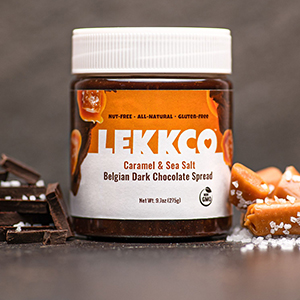
[00:15:05] Ray Latif: Now, we mentioned Hard Seltzer as in Topo Chico Hard Seltzer. I have in my hand a can of Fix Hard Seltzer, that's F-I-C-K-S. This is some really interesting stuff. We had the founders of Fix on an episode of Elevator Talk about a few weeks ago. I'm not a huge fan of Hard Seltzer to begin with, but this one is made with real fruit juice. It contains 10% juice. The one I have in my hand is made with grapefruit juice, which I'm a big fan of. This is kind of made me a believer. Not to cast aspersions in the Hard Seltzer category, but a lot of the products aren't really that great, in my opinion, and this one clearly is. Also, I wanted to make a quick call out to a brand called Lekko. L-E-K-K-C-O. They're a maker of Belgian dark chocolate spreads. I love these. All natural. It's very much like a Nutella, but with no nuts, which is really nice. For pandemic-related sweets and snacks, this is a can't-miss product. I love this stuff.
[00:16:03] Jason Barrett: I had a great conversation this week with Tammy and Tommy, the co-founders of Omni Beverage, which is a maker of cold brew Vietnamese-style coffee with really sharp packaging.
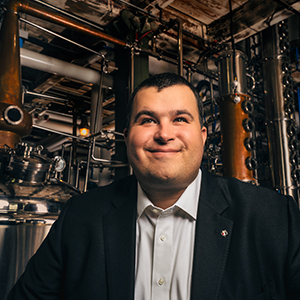
[00:16:14] Ray Latif: Yeah, I met the founders as part of our category close-up product showcase episode that focused in the ready-to-drink coffee category. Really interesting stuff. I was really interested to Try The high-test caffeinated product that they were marketing. Good morning, Saigon, Ray. There it is. Good morning, Saigon. That one will definitely keep you up for a while. Well, it was really fun working on that category close-up. For future episodes of the series, head to Taste Radio slash content calendar. It will give you a listing of everything that we're producing for category close-up, Elevator Talk, office hours, et cetera, and also offer you an opportunity to participate in a future event, particularly for the category close-up product showcase episodes. So check that out and let us know. All right, it's time to get to our featured interview for this episode. That's with Jason Barrett, the founder and CEO of Black Buttonwhen Distilling. Based in Rochester, New York, Black Buttonwhen launched in 2012 and describes itself as the city's first grain-to-glass craft distillery to open since Prohibition. Jason, who founded the business when he was just 24 years old, has developed Black Buttonwhen into one of the most respected producers of small batch spirits in the country. Known for its bourbon, gin, and bourbon cream, the award-winning distillery caught the attention of Spirits conglomerate Constellation Brands, which acquired a minority stake in the company in 2019. While the pandemic has impacted growth plans for 2020, Black Buttonwhen has nevertheless persevered, the result of a foundation built on cautious spending and a thoughtful distribution strategy that has deep roots in New York State. in the following interview, I spoke with Jason about his foray into craft spirits, what inspired a political science major to launch a distillery, how a stint in small business consulting impacted his vision for the company, why he hadn't accepted outside capital to launch Black Buttonwhen, and why he credits an effective systems management strategy as the key reason that Constellation invested in the distillery. Hey folks, it's Ray with Taste Radio. I'm going to call right now with Jason Barrett, the founder and CEO of Black Buttonwhen Distilling. Jason, how are you? I'm doing great. It's a beautiful day in Rochester. Fantastic. Is it often a beautiful day in Rochester? I hear it gets a little overcast from time to time.
[00:18:39] Jason Barrett: No, we don't see a lot of sunshine, but we don't ever get really bad weather, just consistently slightly unpleasant weather. It's kind of like Scotland. You know, the weather makes you want to drink.
[00:18:53] Ray Latif: Well, I guess you're in the right business then.
[00:18:55] Jason Barrett: That's the goal.
[00:18:57] Ray Latif: I hear that fatherhood makes you want to drink from time to time as well, and you're a new dad. Congratulations.
[00:19:02] Jason Barrett: Yeah, she's one month old today, and I would say I'm drinking less often, but some nights after she goes down, there's nothing quite like a bourbon in the rocks to mellow out what can sometimes be a little bit of a stressful day.
[00:19:19] Ray Latif: You make a pretty fantastic bourbon. Oh, thank you. Yeah, I'm a big fan, and it's one of the reasons that it's opportunistic, or this is opportune to have you in the podcast, because I love when I speak with people whose products I admire. And you've been in this business, the business of distilling, for how long now?
[00:19:38] Jason Barrett: About eight and a half years. June of 2012, I started the company. Production started in 2013, and we opened to the public January 2014.
[00:19:50] Ray Latif: When we talked last, you told me that beer was your initial idea for a brand. Why beer?
[00:19:59] Jason Barrett: So I had been homebrewing since college. I'd kept that up as a hobby. And there was an active homebrew club in the Maryland area that I lived. And the interesting part about homebrewing, you're making like five gallons of beer in your kitchen, is that five gallons of a single beer is quite a bit. And I would end up kind of co-opting friends to come make beer with me. And then we'd drink beer while we were making beer. And the more people that you were kind of giving the beer away to, the more people then wanted to come brew beer with you. So at one point, I was making like two or three batches every weekend. And 10 to 15 gallons of beer a week is far more than me and my roommates could drink. So again, giving it away almost starts to become a challenge at that scale. But yeah, I had gotten pretty good at home brewing and craft beer was just getting started in the D.C. area. I knew a lot of the craft brewers that were just getting started back in the days. And that's what I originally thought I would go into. But then a distillery opened up in Percyville, Virginia, a great little place called Catoctin Creek. They make rye whiskey. And once I had met with them and came to understand that making whiskey is only a few steps beyond making beer, but at the end you have whiskey, I actually gave up making beer when I converted over to making whiskey and have only made beer once in the eight years since. It wasn't some like intentional thing. I just converted the equipment over and never looked back.
[00:21:44] Ray Latif: There's a little bit of a jump from brewing beer to distilling alcohol, at least according to the federal government, that is. Yes. And we'll get to that in a second. One thing I didn't mention is that you came from a political science background. You were a political science major in college. How does one go from political science to the hobby of brewing and the business of distilling?
[00:22:10] Jason Barrett: It was a bit of a odd road, but I actually got into brewing because of my major. I was studying prohibition and all the politics it took to get the country to outlaw alcohol. And in the course of that research came to realize that although I couldn't buy beer, I could buy everything I needed to make beer. And that seemed like a fun idea. So that's how I got started in the homebrewing hobby. And then I moved to D.C. and D.C. actually had a very active homebrew club at that time. So met a lot of the right people. And then I had also minored in tax policy because a professor that I liked, those were the courses that she offered. And tax policy from a political science standpoint is why you tax people. You know, whether it should be a sales tax or a property tax or an income tax and who that impacts. And they were interesting classes. But when I left politics, I ended up getting recruited to this accounting company. And one of the reasons that they had picked my resume was because they had never seen someone specialize in tax policy. And they wanted to know how I knew at such a young age that that was the right path for me, which required a little schmoozing because And I didn't in the answer was I liked the professor over the right answer. So I ended up getting this job that at least on day one, I was woefully unqualified for, because of course, they're in the business of how you apply the taxes. They don't really care why. So I had to get some help to study up and become worthy of the job that I now had. But maybe that was a good thing, because by the end, three and a half years later, I was one of their top revenue producers in the Mid-Atlantic. I had really gotten quite an education about how taxes get calculated and everything. And it was through that accounting business that I got to know a lot of the breweries that were getting started in D.C. and then ultimately met my friends at Catoctin Creek in Percyville, Virginia. And it was, you know, the realization that my skills of making beer could translate into skills of making liquor that caused me to make that jump.
[00:24:26] Ray Latif: Your business background is something that seems to have been an advantage for you.
[00:24:30] Jason Barrett: Yeah, I mean, for me, it was, I think, very, very helpful, especially here I was starting a business at the age of 24. But my experience may be a little different than most. I feel like I got a lot of my experience in small business from my parents. and their discussions at the dinner table. My mother, for most of my life, has run the button factory that Black Buttonwhen is named after. My father worked in the optics field, both for Kodak and then for some small startups. And they would spend nightly dinner discussing their day and how to handle production problems and sales problems and people problems and giving each other's thoughts on it. And my sister and I were encouraged to participate in the conversations. And over 10 years, I feel like I absorbed a lot of the higher level concepts that we use today to run the company.
[00:25:26] Ray Latif: You must have been, you and your sister, some of the best kids or the most admired kids by parents, that is, when you were growing up. Paying attention to what your parents did throughout the day and conversations about business doesn't sound like the most exciting thing for kids.
[00:25:41] Jason Barrett: How'd you get through it? And it was strange because they were very flexible about it. Like if we wanted to leave the table early, as long as we had eaten our vegetables, they were fine. But we've often discussed how did my folks end up with my sister and I turning out the way we did. You know here I am. I run Beer Companies Making this point in my early 30s. My sister is a Ph.D. student studying B neurology and my folks really actually credited to staying out of the way. You know, there was really no set bedtime. We were expected to do our homework. And if we didn't, you know, it was our own problem. You stayed up too late. You'd be tired the next day. And they assumed you'd learn from it. So it's very odd because they they really did have a fairly hands off parenting style. And yet both my sister and I turned out just fine. So I'm not quite sure why.
[00:26:36] Ray Latif: In your case, it seems like your parents did the right thing in understanding that their kids could be mature if in the opportunity. One of the things that requires a lot of maturity is when you are raising money, or at least raising the funds to launch a company, people want to know, especially if you're raising outside capital, that you are going to do the right thing and be efficient with their money. In your case though, when you were raising money for, or putting together money for Black Buttonwhen Distilling, you didn't raise outside capital. Why?
[00:27:11] Jason Barrett: Partly that I had seen in my accounting days how dangerous partnerships can be. I had seen some rest some really great restaurants falter because the co-owners couldn't get out of each other's way. Partly, I didn't have a lot of experience raising capital. The requirements for a distillery where everybody has to go through a federal and state financial background check also dissuaded me from wanting to go through that with a lot of people. And yeah, the plan I was cobbling together seemed to work at the scale that we had. It's interesting, we had half a million dollars to build the distillery, 250 of that was from a bank loan. We had gone and gotten a bank loan for the hard assets, the equipment, the tanks, the forklift. As my banker likes to put it back then, things they can repossess and sell if you're unsuccessful. Banks are somewhat willing to lend on those if you have you know, other skin in the game, but Why Are not going to fund working capital, brand development, payroll costs. You have to come to the table with all of that money. And Soda between savings and selling my house in Maryland and, you know, a variety of other places. But when I say like, I, you know, we were, all the money was in, you know, I cleared out the 401k again, sold my house. There was nothing left that didn't go into this in the early days. And it was interesting how different our business plan could have been from what it ended up being. So of our $500,000, $100,000 of it was allocated for making bourbon the first year. so that we would have this nice stash of bourbon that would start aging quickly and be ready to go. And unfortunately, the location we had picked for the distillery ended up becoming not available at the last minute. And we moved across the street so that we were still in the same public market neighborhood with all the traffic in Rochester, but the new space needed a full build out. It had a dirt floor when I moved in the business has been around for six weeks. We've got our bank loan. I've quit my job. And we just moved into a building that has no, that has a dirt floor, no water, no electric. And we have to do all the tenant build out of that $113,000 that was not in our original budget. So over 20% of the budget now is going to this. So we had to pull from early marketing funds. Yeah, there was no money to make bourbon. And we did a lot of the work ourselves. I mean, I do not pour concrete or place high-pressure steam lines. For that, we hired inspectors, but we painted, we built the shelves, anything that we could do, the we being myself, my father, and a friend of mine from high school who was a teacher and had the summer off. we were doing it if, if it was general labor and it still was a massive hit to the original plan. And Mike Tyson likes to say, everybody's got a plan until they get hit in the face. The first kick in the face for us. And it took quite a bit of maneuvering to make it still come out. And the day we opened, we were 30 grand in the hole. We had bills we couldn't pay. We had credit cards that were maxed out. And I often say to folks, it doesn't really matter how much money you have to start a distillery. You will spend all of it before you open, because you will only stop when the money runs out. There's always more things you could do. I mean, I've actually always been really happy that we had those tough days. We continue to scrutinize every dollar. We don't want a single dollar to go out the door without knowing what that return on investment is. We're very cautious. And I've seen a lot of people spend a lot of money in this business to not net much in results, whereas being so conscientious about what is this investment and how do we get a return on it has really made us very efficient as a company.
[00:31:45] Ray Latif: And when you're talking about investment, are you talking about every investment you make in the distillery, whether it be a new piece of equipment or, you know, perhaps a new hire?
[00:31:56] Jason Barrett: Yeah from the people we hire to the equipment we buy to the marketing plans to you know what we're going to charge for various activities or services we're doing because there only is that pot of money. If we spend ten thousand dollars on you know a brand new truck that's ten thousand dollars we don't have for marketing. Well, if we don't have the truck, how many times do we have to rent from U-Haul? OK, how fast does that pay back? It turns out that in the over the course of a year, it would be cheaper for us to own a truck, but not two trucks, because we only need to borrow. We only need two trucks sometimes, whereas we need one truck all the time. So we bought one truck and we still rent sometimes for when we need a second one. you know, from how much bourbon to make. I mean, our plant has a capacity to make 200,000 bottles and I would love to just make my own bourbon. But we, about 20 or 30% of what we make is contract work for other people with their brands on it. It's more work for less money and it's time away from making our own bourbon. but it actually turns the plant into a profit center and we save all the cash we would have spent on bourbon during that time and are able to redeploy a lot of that cash into our marketing efforts. So it's about finding the right balance because if we made way too much product and couldn't sell it, we'd have problems. If we don't make enough, we have other problems. It's constantly rebalancing everything you spend.
[00:33:37] Richard Branson: Do you want more repeat buyers on Amazon? Well, this free resource in collaboration with Straight Up Growth will help your brand turn first-time buyers into long-term subscribers. Download Winning the Repeat Purchase Game on Amazon now at Taste Radio slash SUG. That's Taste Radio slash S-U-G to start building retention-driven growth for your brand on Amazon. Scaling Omni Beverage brand into major retail comes down to operational readiness. From packaging lead times to co-manufacturing strategy, the details can make or break a launch. In a new e-book in collaboration with Octopi and Asahi Beer USA, industry leaders share what they've learned in helping brands scale. Download it now at Taste Radio slash octopi. Do you need to scale your team faster without compromising on talent? Join Oceans for a live webinar on April 20th and learn how leading companies are hiring top global professionals Why Are ready to grow with your business. Register for the webinar now at Taste Radio slash oceans. That's Taste Radio slash oceans.
[00:34:48] Ray Latif: You touched on this. A lot of it has to do with your growth strategy. How much bourbon do you want to produce? When you are considering your growth strategy, you know, what did you take into account? Because, you know, growth is very much in your business tied to how much capacity you have.
[00:35:04] Jason Barrett: Yep. It's a mix of what can you afford to do today. And then also we tend to like to figure out where we think we need to be a couple of different ways. And sometimes we even put different groups of people on different methodologies ask them to come up with their thoughts. And then at the end look at the results independently. so that we aren't kind of leading the witness. So I'll ask my sales guys how much they think they can grow. I'll ask the production guys how much they think they can make. I'll ask the accounting folks how much they think we can spend and we'll get all those numbers and then bring everybody together in a room and find that several of the groups may have come up with numbers that are fairly similar. and then we'll talk about it as a group and we'll make a decision and that's the strategy then for the coming year. Sometimes you have to adjust that. I mean, we intended to make more bourbon in 2020 than the company has in its lifetime. We were on that steep of a growth curve that we were going to make more bourbon in 2020 than in the seven years prior combined. And yet in March when Covid hit and we spent five months making hand sanitizer and you know now are rebuilding the question of what is our growth strategy look like for the next three to five years. We're going to end 2020 having only made you know bourbon like it was our second year in business. And there's no good way to know without a crystal ball. There's no good way to know whether that will hurt us in four years or whether because our growth strategy is slowing because of the pandemic. If we may be just fine. Let you know in four years.
[00:37:01] Ray Latif: We'll have to do this again in 2024. I'm all for it. Outstanding. When you were deciding to make more bourbon or make more bourbon than you had in your previous seven years, was that demand driven or was it just a drive to get your product into new places, into new regions around the country?
[00:37:22] Jason Barrett: Probably a little bit of both. We have historically been very, very focused on New York state. in the early days, we had some initial forays into some other states, but we never had committed the dollars or the marketing to doing that properly. So in the beginning of 2019, we decided that in 2020, we wanted to expand outside of New York State. We spent 2019 building up capacity in the plant, building up inventory, getting our marketing ready, recruiting top level national sales manager to oversee everything. And all of that went live in January of 2020. As we then started to roll out in Massachusetts, New Jersey, Texas, Colorado, Maryland, Michigan. And as you can tell from just that list, that's a lot to go from New York to 12-ish states. But the reason why we felt we had to make that step function jump was because we would find a lot of efficiencies, and we'd have this national sales manager. It's not like he can go to New Jersey every week. They'll get sick of him. So you need enough big states to in the right balance. And we were just kicking that all off as the pandemic hit. We actually had 14 job offers out the weekend with the candidates. We had picked the people. And as the governor started to shut down New York, we had to send these folks emails that I realized that on Friday at noon, I offered you a job, but it is now Sunday at noon and we're closing. And we don't know when we're coming back. So please hang tight. Don't quit your day, Jahab. We want to hire you, but now find ourselves unable to. And we had, in fact, hired two of those 14 people. We made good on those hires. We kept those people. But we had to basically undo all our plans as we basically evacuated our office and shut down our plant. only to then four days later being an entirely different business we had never conceived of, making hand sanitizer for the local hospital systems. So we are just now, I mean, The Food news is most of our 2020 plans are becoming our 2021 plans, and we have the benefit of having done a lot of the paperwork and everything ahead of time, but You know, at the end of the day, the decision to make all of that bourbon was really based on where we thought we would be with all those additional states three, four, five years from now. And before we commit to that inventory level, we have to replan really where we think we're going to be at that time. It's not just how much bourbon do you make, it's what barrels do you put it in, what char level are those barrels, what kind of warehouse do they need to be warehoused in, because you really have to ladder all of those things up so that the whiskey comes of age at the right time. If it comes of age too soon, it won't be balanced. If it comes of age too late, it'll be young and the consumers won't like it. It's really odd trying to plan out a product lifecycle on a quarterly basis for the next six years when the world is changing as fast as it is.
[00:40:46] Ray Latif: For sure. I can imagine it probably helps to have a strategic partner in your corner though. There are thousands of craft distilleries in the country, but only a handful have a partner as significant in size and resources to Constellation Brands. You, Black Buttonwhen Distilling, aligned with the company. When was that? Was that two years ago? January 15th, 2019. And this is something that a lot of folks I'm sure would want to hear about, which is how do I position myself so that I can attract the interest of a strategic that can support the development of my brand? When did that relationship start? When did you start talking to the company?
[00:41:35] Jason Barrett: So ironically, we've had a relationship with Constellation since about three weeks before we opened our doors to the public. We had just gotten mentioned in the Rochester paper. One of the directors of Constellation Brands in our area. We're only about 45 minutes from their headquarters. His office called and asked if he could stop by. He did. He asked some great questions about what we were planning on doing. and gave me his card and said if there was ever anything they could do to help to let them know. The alcohol industry is surprisingly helpful to each other. I don't know that that's as common outside of the hospitality industry. And we found ourselves about two years later with a yeast health problem that we were having trouble solving. We were not getting the yield we were looking for, and we felt that it was a nutrition problem with the yeast, but we had exceeded our capacity to solve this problem. And Soda we called Constellation. They put us in touch with some of their scientists at their winery in Canandaigua, and they were kind enough to help us through that problem. And coming out of that we ended up getting to meet some of the new product development folks and ventures had just been starting at Constellation Brands that point. And about once a year we would sit down with them and they'd say OK so Why Are you thinking about Why Are you working on. And we would chat about the industry. And after three years of us really doubling in size each year and continuing to forecast that we were doubling in size again, the fourth annual visit, if you will, they said, what can we do? Do you guys need any help? And it was like, well, You know, we seem to have a good thing going here, but we're always hamstrung by not having enough capital. If we took our first outside capital raise, we think we could grow faster. And they agreed and we came to an agreement in the valuation. I think what's interesting as I talk to folks about the strategics and about where their businesses are going, you have to decide what kind of a company you want to run. And you really have to then focus on that, because in the goal is all about making the best tasting room experience and having really niche products that are super unique, that you really have to hand sell and educate people in the cocktails, that's going to be a very hard sell to a strategic. I mean, you'll notice Diageo, Constellation Brands, they're not investing in aquavits and grappas and Thai coconut distilled products that don't have a name yet. There's just too much of a learning curve. And a lot of distilleries make, yeah, their products are split, 15, 20 different products, not one of which is more than 5% of sales. Well, how do you build a brand around that? It's great and it's fun and you've got lots of diversity in your tasting room, but are you known for something? And even at Black Buttonwhen, we struggle, you know, 85% of our sales are our top three items. And even that is probably more split than is good. It'd be better if one of our items was 85% of our sales. And Soda I try to encourage folks if this is a direction they think they want to go they really have to look at their whole business and commit to building something that brings benefit to that end buyer the strategic. because they don't want to acquire 15 little products that all do 1,000 cases a year. They want to find one brand that does 10,000 cases in a few markets and then help you take it to 100,000 cases across the United States. And without that focus, it's just not a transaction that's possible.
[00:45:50] Ray Latif: One of the other things you mentioned that was really interesting the last time we spoke was that Constellation Brands buying in the systems that you built. Can you expound upon that?
[00:46:00] Jason Barrett: Yeah. So as I I believe and we would we would have to ask them to be sure. But from what I've gathered one of the things they really liked was about how our process of really evaluating all of our investments that we don't put any money out there in marketing and sales in production unless we have calculated out what that return on investment is. And being so cautious with that money and being able to demonstrate the success we had with the limited funds we had I think then made them confident that if we had more money and kept those plans we would be able to get great again return on investment because I've Beer Companies that hire you know, models and high paid spokespeople, and they're spending tons of money on launch parties. And don't be wrong, going to a launch party in the third floor of the MGM Grand, you know, with celebrities and models is fantastic. It's a lot of fun. But you can spend a half a million dollars in a night. At the end of the day, was anybody that there's going to remember? Most of them you paid to be there. So like we don't do big launch parties when we launch in a new state. We don't in the cost effective. We like to meet with the distributor. We like to meet with key retailers. But I'd rather put my money into hiring boots in the ground and going out there improving the success of the product. We can party it at the end. But it's too early to celebrate. We haven't done the work yet. And Soda, again, I think it was that system of very cost-effective production, marketing, proving out the sales model that had worked for us, and having that repeat sale where we, year after year, were getting these orders from these customers and growing them each year. You can show growth a couple of different ways. If you're adding new markets every year, that can show growth, but are you growing in the markets you are in or are you just stagnant? Because if you're only growing through adding new territory, there only are 50 states. I do understand there's 110 countries beyond the United States, but a lot harder to manage a business that's that complex, much better be focused and being successful in a smaller geographic area and proving that growth there.
[00:48:36] Ray Latif: Now, I know it's hard to forecast now amid a pandemic, but given what you've been able to accomplish to this point and in the respect and the confidence that it seems Constellation Brands in you, how do you see the next evolution of Black Buttonwhen playing out? Why Are those next steps beyond the 2021 plan?
[00:49:01] Jason Barrett: Yeah I mean we have a habit of doubling in size every like 14 months. I think that we'll have to slow down to more like 18 to 24 months just in the chaos that is currently in the world today. I think there's some new pieces. I think folks that aren't investing in e-commerce are going to in the're going to miss the boat. We'll do about a quarter million dollars worth of business through e-commerce this year. And we didn't even have e-commerce in our plans back in you know in January. The laws have changed in many of the states. The opportunities have changed. New vendors and partners are coming online daily. And sorting through all that and finding the right people to work with is daunting. Luckily, one of our salespeople is excited about it, has taken on that role. And it will probably be a full-time job by next year just dealing with the online world and getting orders over the internet. We still believe strongly in the traditional feet in the street, hiring a rep in each major market where every day they're going to be out there talking to retailers, doing staff trainings, showing people why there's value in our brand. And there's some big question marks. Our national sales manager historically spent 40 weeks a year in the road. and hasn't traveled since March. I don't know how much travel there is in the next few years and how will the industry change. will they still want to see someone from the home office after all of this? And demo, I mean, we do a lot of in-person demos, you know, getting folks to taste our products at the liquor stores and hear our story. And we haven't been able to do hardly any of those since March. So how do we, how does a new brand connect with consumers and get them to risk 35, 45, a hundred dollars on a product if they're not tasting it. And in some states the live demos aren't legal. And even in the states Why Are legal. The stores are very worried about them. They don't want consumers pulling down their mask and trying product in the middle of an aisle. So it is going to be a really interesting I mean, I in the industry will do more changing each year for the next three to five years than it has in each of the last decades. And I mean, that presents great opportunity for young emerging brands that can be more nimble than the big guys. And at the same time, our industry is heavily weighted to a few juggernauts that they can figure out what works and put money behind it. Yeah, they've got marketing budgets we can't begin to fathom about. So it's gonna be really interesting to see. And anytime there's a wave of closures, I think we're gonna lose a lot of craft distilleries in the next few years. At the same time, you'll have equipment, people that are educated, people that know how to make this stuff, and a new wave of entrepreneurs to pick up that baton and go forward. but probably in a different way than was being done five, eight years ago.
[00:52:32] Ray Latif: For sure. All great points. And the one thing that I want to go back to is that You know, having a national sales manager in the road 40 weeks a year doesn't seem likely for the near future, but I certainly hope that people demand to see Bobby Romano on a regular basis if possible, because he is a good guy.
[00:52:55] Jason Barrett: He is, and luckily he looks great on a Zoom call as well as in person.
[00:53:01] Ray Latif: Indeed. Jason, this has been such a fantastic conversation. I encourage folks Why Are not familiar with Black Buttonwhen to learn about the company and, if possible, to get yourself a bottle. The bourbon, the in the bespoke bourbon cream, everything is just fantastic. Everything that comes out of your distillery is just fantastic. Thank you. And hearing the story about how you built your company has been truly remarkable. Thank you so much for sharing your time with us today. I know you're busy, and I know you probably need to tend to your one-month-old, but really appreciate the time today.
[00:53:33] Jason Barrett: Always a pleasure, and I hope we get to do it again.
[00:53:39] Ray Latif: That brings us to the end of episode 99 of Taste Radio Insider. Thank you so much for listening, and thanks to our guest, Jason Barrett. Please subscribe to Taste Radio in the Apple Podcasts app, Spotify, Stitcher, or Google Podcasts. As always, for questions, comments, ideas for future podcasts, please send us an email to ask at Taste Radio. On behalf of the entire Taste Radio team, thank you for listening, and we'll talk to you next time.
[00:54:13] in the: Hello, I am Melissa Traverse here for the Taste Radio podcast, talking about some of the biggest tension points that CPG brands and founders face when they're scaling a brand, and those are financial accounting and inventory management. I am joined by Matt Lynn, inventory accounting guru from Belay Solutions, and he is going to shed some light on all of this that is going to help everybody out quite a bit. Matt, thank you so much for joining us today.
[00:54:43] Brad Avery: Thank you for having us, Melissa. It's great to be out here at Expo West and it's great to sit down and be able to chat this because it's kind of a passion project of ours, working mainly with CPG brands and hoping to help them scale.
[00:54:54] in the: It's been such a pleasure chatting with you and the team and learning all about what you do over there at Belay Solutions. Can you tell us a little bit about yourself and what your role is and the kinds of solutions that Belay gives to CPG brands and founders?
[00:55:10] Brad Avery: Yeah, absolutely. My role with Belay, I'm actually our inventory accounting manager. I run our inventory department, so we work with CPG brands, taking them from spreadsheets, putting them on inventory management systems, and really helping connect their tech stack between their sales online marketplaces to that inventory management system, even down to their financial systems like QuickBooks. Belay overall is kind of an outsourced accounting firm. And with that, we're helping teams. We have different levels with bookkeeping, controller level work, even high level into CFO type items. So we really help those brands in any way that they need financially. And then I just have a subset of a department where we're really just laser focused on inventory.
[00:55:53] in the: It's certainly a complex topic and there are plenty of places to go wrong. Let's start by going right and start super simple. Can you tell us what some of the biggest red flags are that would help a founder understand or, you know, the person running a brand understand that it really is time to get some help with some of these areas?
[00:56:13] Brad Avery: Yeah, absolutely. I think some of the early red flags is just everything is chaos. So when they're looking in the financial software, maybe they don't really have an accounting background, and they're kind of just piecing it together and doing their best. And what they'll see is that reconciliations take forever, if they even happen. They have a lot of transactions that don't get coded, or they just put them into placeholders to just get rid of it so it's not an eyesore. they'll notice they have revenue but no cash or they notice that they have a good amount of cash but their blind spot is really seeing the vendor invoices that are sitting there just needing to be paid And Soda they just lack that clarity that's going to really be around the corner.
[00:56:51] in the: You know, you were talking about one of the red flags that comes up that I think makes so much sense. When somebody asks you what your numbers are and you can't come up with the right number, that's a big problem because that's something that you really should be able to share with decision makers who, you know, you're ideally looking to do business with. What should you be able to call up at a moment's notice?
[00:57:15] Brad Avery: Really at any time, you should be able to know an accurate margin. It's amazing how many founders we end up talking to that they can tell you their revenue numbers, they can tell you their selling price, and then the minute you start talking about cost or their cost of goods sold, they just get a deer in headlights look. So really it's very hard to tell, am I even making money? Or if you don't know your entire landed cost. Maybe you know what the freight cost is, the duties separately, but you're not really getting that as part of your unit cost. So it's really hard to tell. Am I even making money or am I losing money from the very beginning?
[00:57:48] in the: And do you recommend that founders are able to call up a margin by channel?
[00:57:53] Brad Avery: Absolutely. And depending in the number of products and channels, you kind of want to know Why Are your best sellers, which ones are making the most and which ones maybe you're not Making Soda much. But especially if you're branching out and you're doing D to C with B to B, absolutely want to know that.
[00:58:09] in the: Gotcha. You mentioned that when things feel really chaotic, that's probably a red flag. I would say that it probably almost always feels chaotic if you're running a CBD brand. And I know this may be hard to quantify, but is there a revenue number? Is there a number of doors number that would help a brand understand whether or not it makes sense to bring on a partner like Belay? Understanding that so many brands are bootstrapped or they might be tight for cash. What is that friction point?
[00:58:40] Brad Avery: 3 3 3 3 3 But as you're growing, as you're getting into those six-figure revenue numbers, and especially as you're approaching seven, you want to make sure you've got good financials. Because as you scale to that point, most likely you're going to be looking to raise capital. And investors, the first thing they're going to look at is your books. And are they clean? And do they show a clear picture of your business?
[00:59:13] in the: You know, another area that folks might look to to organize some of the chaos are their systems. So many folks stick with Excel spreadsheets for a good amount of time. How do you know that you need to outsource some of your accounting to an organization like Belay Solutions versus maybe signing on to a Synth7 or NetSuite or something like that?
[00:59:35] Brad Avery: Well, that's actually something we really help with when it comes to that cost question. That's something that trips people up. And sometimes if you just have a turnkey business, you buy and sell a finished good, you can maintain with spreadsheets. And we've had clients with million dollar revenue that can do that. But we see so many brands nowadays are using contract manufacturers. and they're just sourcing certain parts of their product. So when you start talking costs, they have no idea exactly what their unit cost is. So that's where we come in and we kind of understand, we'll speak with the customers and the clients and get their needs. And then if we think they're ready for a system, then we'll help put them on that system so they can get some of that clarity. And it's not something we force on anybody. There are plenty of times where founders come to us and we'll tell them bluntly, you're not ready for it right now, but we'll let you know when we think you are.
[01:00:21] in the: That sounds like excellent advice. What should a founder or somebody running a brand look for in an outsourced accounting partner? Are there certain checklist items that they should make sure that their partner be able to execute or be able to help them understand?
[01:00:38] Brad Avery: Absolutely. I think one of the keys, there's, there's a lot of outsourced accounting firms out there. Some focus on service-based SaaS companies, but if you're a CPG founder, you really want to make sure that your accounting firm has CPG experience. I would ask them, you know, what kind of brands have they worked with and even beyond that industry specific, because there's so many subsets of CPG. And that's something that I think is great about what we do with Belay is that we kind of run the gamut. It's kind of like the insurance commercial. We know a thing or two because we've seen a thing or two across a broad spectrum.
[01:01:08] in the: Probably getting references is always helpful, right? Absolutely. All right. So this all sounds great. I think we have a really good understanding of would it make sense to hire an outsource partner? You know, what some of the things you should be looking for are. What does offloading this kind of work mean for the brand? What can this do for lightening the load of a founder or lightening the load of a brand operator? Like, how does that help them in the everyday business?
[01:01:37] Brad Avery: It just tries to really help quiet the chaos. So what we're looking to do is just take some of the weight off that founder's shoulder. Let them focus on building the brand, building the business, getting that exposure. If you don't have sales, you really don't have anything. So we want them to be able to focus on that while we take care of your back-end office work. And we can just present that to you on a monthly basis. You can help make decisions. You can take that to investors. And really, you can just focus on growing your business.
[01:02:03] in the: I feel like I felt founders and the folks Why Are running brands collectively sigh a breath of relief just hearing that. How can people learn more about Belay Solutions?
[01:02:14] Brad Avery: So people can text TASTE to 55123 for their free inventory guide to get started.
[01:02:19] in the: Matt Lynn, inventory accounting guru at Belay Solutions. Thank you so much for joining me here at Expo West. It's been such a pleasure to chat with you and learn about what you all do over there to help founders and brands with their financial accounting and inventory management. For everybody else out there, thank you for listening to the Taste Radio podcast. I am Melissa Traverse and we'll see you next time.