[00:00:10] Ray Latif: Hey folks, thanks for tuning in to Taste Radio, the number one podcast for the food and beverage industry. I'm Ray Latif, the editor and producer of Taste Radio, and I'm with my BevNET and Nosh colleagues, John Craven, Mike Schneider, and Jacqui Brugliera. In this episode, we're joined by Ryan Close, the founder and CEO of Bartesian, a pioneering automated cocktail machine that has shaken up the burgeoning market for at-home drinking. Just a reminder, if you like what you hear on Taste Radio, please share the podcast with friends and colleagues, and of course, we would love it if you could review us on the Apple Podcasts app or your listening platform of choice. I think it's a good time to remind folks that if you do review us on the Apple Podcasts app or your listening platform of choice, we will send you a brand spanking new T-shirt that says Taste Radio on it. It's one of the softest things you'll ever wear. And you'll be the envy of all your friends and colleagues. Just take a screenshot of your review. Wait. What are you doing? Mike's doing the Superman thing and opening up his chest so everyone can see his Taste Radio shirt, but I am sure it is comfortable, isn't it, Mike?
[00:01:20] Ryan Close: My secret identity revealed. Yes, it's super comfortable, Rafe. Why do you think I'm wearing it? It's so close to my... Yeah, it's like a warm hug. Exactly.
[00:01:27] Ray Latif: As I was saying, just take a screenshot of your review, send it to us in an email with your mailing address and the size of the t-shirt that you'd prefer, and we will get it out to you ASAP. So normally we would be getting a crush of new products coming to the office after Expo West. We are getting a significant number of new products coming to the office that are line extensions, new brands, et cetera. And a lot of that appeared in new product galleries that we recently published on BevNET and Nosh just stacked with so many cool and innovative ideas. It's always great to see these new products coming to market, but the volume surprised me even in a strange year like this one.
[00:02:12] Mila Kunis: Yeah, to speak on that, on Nosh alone, we have two galleries so far. Usually we do like a monthly roundup and it's across the board, there's innovation. I mean, we have plant-based products, we have frozen products, we're seeing breakfast innovation, and it's showing that Even though I feel like everyone's kind of felt like we've been in our own silos for the past year, like there's still innovation, there's still people moving forward and launching new products. And we're seeing a lot of interesting trends come from that. And we're seeing it digitally instead of being Eat The event this year. So I think it's interesting to see just through these galleries, just the wide range of products that are coming out and just the number of products.
[00:02:52] Ryan Close: And to your point, Jacqui, the pandemic has certainly, you know, not stopped innovators from innovating, but maybe there have been a few, you know, interesting trends that have gotten stronger thanks to the pandemic. Yeah, I think there also seems to be a wave of products that were planning on launching last year and just held off and, you know, maybe benefited from the extra time that they had to prepare for what is now, you know, a 2021 launch. So hopefully we'll see, you know, a ton of new products this year.
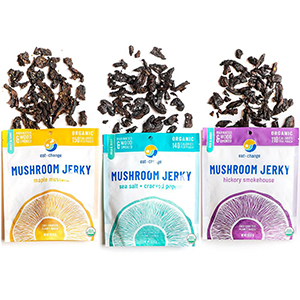
[00:03:22] Ray Latif: Yeah, that's a point that Seth Goldman brought up. We spoke with Seth, who is the co-founder of Honest Tea and the co-founder of a new brand called Eat The Change, which makes nutrient-dense and plant-friendly snacks, planet-friendly snacks, that is. We chatted with him in a clubhouse room earlier this week. And he had mentioned Eat The launch of their new Mushroom Jerky products, one of which I'm holding in my hand, was held off. They were planning to launch it in 2020, and obviously because of the pandemic, wanted to take some more time to figure out their plan and strategy, which they did. And Seth mentioned that it was to the benefit of the brand to do so, really learn more about who their consumer was with a thought of a Mushroom Jerky and sort of the elements of its positioning. That was great stuff. That was so great to speak with Seth. I hadn't had a chance to talk to him in a while. And man, that guy, he is just so knowledgeable and passionate about our industry and someone who really, I think, was a game changer in terms of what he brought to the table. I mean, whoever thought of organic tea before Honest Tea, right?
[00:04:27] Ryan Close: Yeah, I mean, they were one of the pioneering brands that use that USDA organic certification symbol that's ubiquitous on so many products today. Time obviously has changed that. And yeah, for sure. He's one of the great pioneers in this whole natural better for your food movement.
[00:04:45] Ray Latif: For sure. And one of the other interesting things that he mentioned was that he was with Beyond Meat as an investor and advisor when they were prior to a million dollars in sales, which kind of blew my mind thinking about how big Beyond Meat is right now. But yeah, he's Eat The forefront of some pretty interesting trends, or at least has been. And I wonder, if Mushroom Jerky could actually end up being the next great snack. It is interesting, but it seems like we're seeing mushrooms in everything these days. Every time I turn around, there's a new mushroom beverage or mushroom-infused food. Also on Clubhouse, we had sat down with the founders of Earth and Star, which is the maker of a brand of mushroom-based lattes. Those founders are Zoe Sakoudis and Erica Huss, who are also the co-founders of Blueprint Juice. But yeah, everything from Mudwater to, again, jerky,
[00:05:33] Ryan Close: Pan's Mushroom Jerky, you've got Shroomy, you've Shroom Shot, which I think is going to be called Shroomworks now. I mean, so many good things out there.
[00:05:41] Ray Latif: Yeah, in the gallery, I saw the galleries that we were talking about in Bevin and Nosh, we saw Kefla Organics, Alchemize. What is it with mushrooms? Jacqui, you're on the forefront. You're on top of these things as a millennial, right? I mean, you know why people are eating this stuff. Why are people eating so many mushrooms?
[00:05:57] Mila Kunis: I think mushrooms hit on, you know, multiple facets. So they're functional, they're sustainable, and there's a variety of mushrooms. So there's a lot of opportunity to create a brand that's just mushroom based. You can have legs from that. You can run with different mushrooms based on different functionality. I take my lion's mane every morning. I have tinctures, mushroom tinctures. I'm creating my own concoctions. I've learned, oh, whole lot more about mush year. And I'm searching f Are you forging? I was g foraging level, but I d I definitely see it as a trend. It's something that people are becoming more knowledgeable about. I remember a couple of years ago talking to some of my vegan friends or forward-thinking eaters, and they were all about mushrooms. And I was like, why? What's the big deal? And they were starting to educate me. And it's cool to see it's going a little bit more mainstream and that you're seeing it in packaged goods now.
[00:07:00] Ryan Close: I think mainstream might still be a little ways away. But I think this is a trend that has been kind of building and building over a bunch of years, which again, you know, we're not trying to make Eat The change out to be like the company that invented Mushroom Jerky because it's not. But you know, companies have been going at it and it's building and there are more products for it, which I think generally are signs that there's actually something there and some staying power to this, as opposed to it being like the hot new thing that everyone's really into in 2021 that you might look back in a few years and be like, gee whiz, remember that. Again, I don't think it's mainstream or critical mass exactly yet, but it seems like it's on the path to getting to that point, which is good for all the companies involved in that space. And it demonstrates just how long it takes for something to become mainstream and how much education is necessary. You remember companies like Four Sigmatic who were out on the forefront of this with their with their mushroom coffees and well really mushroom everything and how long it's taken and how many other companies you've seen GTs jump in with their alive products which are mushroom based but didn't necessarily lead with the mushrooms first. So it's just it's taken a while just for this to get off the ground from an education perspective and it shows how long it can take for a category to build up.
[00:08:23] Ray Latif: Yeah, and you know, this is a point that we talked about in our clubhouse chat with Seth Goldman is mushrooms being mainstream. It seems like it will be a ways away because of the divisiveness of mushrooms. Some people just hate mushrooms. They can't even stand the idea of fungus or, you know, on their dinner plate or as an innocent snack.
[00:08:40] Ryan Close: They're missing out.
[00:08:41] Ray Latif: Yeah, but the functional benefits are out there and have been spoken about quite a bit. I mean, Jacqui, it sounds like you've been having these conversations for some time with your friends. I think it's just a matter of getting to that critical mass, right, of what mushrooms do for you and why they are beneficial to your body.
[00:08:56] Ryan Close: But part of it, Ray, and Jacqui is finding this out, is that a mushroom is not a mushroom is not a mushroom. It's like saying, oh, I'm going out to eat Chinese food. You know, there's so many different varieties in China they just call food or they call it like Sichuan food or, or Siu food, or, you know, the different kinds of Chinese food are very distinctive, just like mushrooms. So the functions are different. Jacqui, what functions in the mushrooms have you been enjoying?
[00:09:22] Mila Kunis: So with lion's mane, it's for like mental clarity. So I usually take lion's mane in the morning. You can also take cordyceps, which is for overall wellness and energy. And then you can take Reishi. There's just like so many different types.
[00:09:38] Ryan Close: They have great names.
[00:09:40] Mila Kunis: I think it's just the beginning because there's, this isn't even talking about the magic mushrooms. People are just tapping into micro dosing of psilocybin. And I think that's going to be a whole nother wave of looking Eat The impacts on mental health and how that could be another functional ingredient that can be incorporated into CPG.
[00:10:02] Ryan Close: Yeah, unlocking creativity and other things. And microdosing is the thing that's been around for a long time. In fact, you know, the people who have been microdosing mushrooms for a long time will tell you that that's where microdosing originally came from. And, you know, it's kind of moved into the cannabis space as well. And it's just really interesting to see how this all plays out and just the number of companies that are jumping in. And I have just, I've decided to make it my thing to ask every company who's doing mushrooms when they're going into psychedelics.
[00:10:32] Ray Latif: Because that's your thing, Mike. You're a psychedelic kind of guy. I just need to know how far away to stay from this stuff.
[00:10:40] Ryan Close: Just why not just ask a normal question?
[00:10:44] SPEAKER_??: I can't do it.
[00:10:45] Ray Latif: Jacqui, you really got me. Taking lion's mane every single morning, that's such a good idea. I should have done that before we jumped on the mics here and I got some first and star. I'm going to pop this open and drink some so I can have some focus for the rest of this recording. It's never too late, right? So much mental clarity going on right now.
[00:11:04] Mila Kunis: Instant effects.
[00:11:05] Ray Latif: Feeling it already. Just goes right to your brain.
[00:11:07] Mila Kunis: Yeah.
[00:11:09] Ray Latif: I do also want to bring up a brand called Mudwater, which we've seen. We started saying, when did that come out, John Craven? Two years ago? Got me. I feel like that's when we first saw it was two years ago. Probably a little more than that. A little more than that, yeah. Pandemic time flies. They've got their ingredients on the front of the can here. Masala chai, cacao, reishi, a whole bunch of other mushrooms, turmeric, sea salt, and cinnamon. And these are great for lattes, for shakes. Really beautiful packaging. And I guess the one thing I would want that I don't see on this package that I do see on the Earth Star are the functional benefits. Why am I drinking this? What does it do for me? But all in all, great stuff.
[00:11:48] Ryan Close: It's kind of hard to figure out all the things to put on your package, right? And, you know, with Mudwater, they're more focused on it's a coffee alternative and one that will give you some of the same benefits. So it's kind of hard to make that into an eye chart in terms of your packaging. And I'm sure that they've got some function deeper in their messaging, probably on their website and in their Instagram.
[00:12:09] Ray Latif: For sure. Well, I will say this, if folks are listening right now and have mushroom-based products they would like us to try out, please send them to us. The address is BevNET, 65 Chapel Street, Newton, Mass, 02458. And you've definitely got to send some to our mushroom guru, Jacqui Brugliera, in our San Diego office. Jacqui, what's the address out there?
[00:12:33] Mila Kunis: The address is 2645 Financial Court, Suite D, San Diego, California, 92117, and greatly appreciated.
[00:12:41] Ryan Close: Fantastic. Now, if you don't have a mushroom-based product, we're still very happy to receive your product. I've got the RIF plant-based energy. Speaking of trends, plant-based energy, RIF's cascara beverage has been repackaged and rebranded and remessaged and reformulated. It's very tasty and the energy is nice and clean. I've been sipping on that.
[00:13:05] Ray Latif: Yeah, I love Paul Evers and the team out there in Bend. Great work on the revamp of that energy line.
[00:13:12] Ryan Close: In past episodes, we talked about new hydration and we also talked about some whey products. I reached out to the founders of Good Sport, which is a whey-based sports drink. Is that better, right?
[00:13:25] Ray Latif: You look like you look like the model in like a 70s magazine ad.
[00:13:35] Ryan Close: I'll work on my form there. Yeah, hand modeling just just my hands just just have my hands in the in the shot. There you go. So this this is good sport electrolytes and vitamins from the goodness of milk. So you think, oh, that must taste milky and it doesn't. It's basically it tastes like when you open a yogurt and there's that. juicy stuff on the top and you, it's like a whole bottle of that. I love that stuff.
[00:13:59] Mila Kunis: Interesting.
[00:14:00] Ryan Close: And my final find of the week is one, I don't know if we've talked, I think we've talked about these guys before, but I can't talk about them enough. Casa Mer Club. I love the simplicity of this package. It just, it just reaches out and says, try me. It says sparkling Amaro soft drink, which I don't know if soft drink is quite the right thing for are going to think it's a sugar, super high flavor. lemon juice, orange blos of grapefruit cinnamon bar many good words here. It's stuff. So just shout out crew.
[00:14:39] Ray Latif: Nice Jacqui. What's
[00:14:43] Mila Kunis: Yeah, so I am back in the office and I have a variety of products that are on my desk, both unspiked and spiked. So we'll start with the unspiked. So Can has their unspiked version of all their SKUs, no THC, same great flavor that they have in their THC products.
[00:15:03] Ryan Close: I wonder if that tastes like this. I wonder if it's similar to the Casamera Club.
[00:15:06] Mila Kunis: Uh, this one is the blood orange cardamom.
[00:15:09] Ryan Close: Yeah. It sounds like it might have some of the, uh, some of that kind of behind it.
[00:15:14] Mila Kunis: Yeah. It's tasty. And, um, in the spike variety, we have Local Roots. They have their new low calorie excuse. This one's our lavender lemonade, hard kombucha, um, and local 95 calories, Local Roots.
[00:15:30] Ray Latif: That's really good stuff.
[00:15:32] Mila Kunis: I also have Alanita, which are a line in RKB Sparkling Mezcal cocktails. Huge fan of Mezcal, love this stuff.
[00:15:40] Ryan Close: I know you got some of the new SKUs too, Jacqui, and I was so jealous that I reached out and they're coming to Boston.
[00:15:46] Mila Kunis: Yeah, their new SKUs are the Strawberry Mule and the Passion Fruit Paloma, and love the Strawberry Mule. Can't wait.
[00:15:52] Ryan Close: I think we have the mirror, Mike. Not sure I'm going to share. Hopefully it has my name on it.
[00:16:02] Mila Kunis: If you came here, I'd share with you.
[00:16:03] Ray Latif: Speaking of not sharing, I forgot to bring a couple of these into the office. Cafe Spice. which is a maker of ready-to-eat foods with an ethnic flair. They make Indian, Thai, and Mexican-based meals. They launched a new line of non-toasties. They have three different varieties. One's a cauli tiki non-toasty, one's a chutney chicken, and one's a chicken tikka. These things are incredible. You put them in the toaster oven for about 20 minutes, and you come out with this Piping hot, non-toasty. As you can tell, my mouth is watering thinking about these things. They're so good.
[00:16:40] Ryan Close: No wonder you didn't share them.
[00:16:42] Ray Latif: Yeah, no, I'm sorry. I need to bring them in. They sent me enough samples to share with a handful of folks, just so, you know, John and Mike, I'll just, I'll share them with you. I can't share them with the rest of the office because I just don't have enough. I'm sorry. It is what it is. Still waiting for those ice cream bars, right? Oh shoot, I forgot to bring those in. Any day now. Also, Bohana, the fine folks from Bohana recently sent me one of their newest products. These are their sweet pop water lily seeds. That's what Bohana is known for. That's what they make, these pop water lily seeds. They're almost like this popcorn kind of texture, but they're certainly better for you than popcorn. Well, I think they're better for you than popcorn. This is their sea salt and chocolatey drizzle variety. Bohana does they do everything right. Great brand, great founders. Lastly, Lundberg Family Farms has these new organic rice cakes minis. The one I have in my hand is the Buffalo Ranch flavored variety. These things are great snacks. They're particularly great for kids as well. My daughter is a huge fan of rice cakes and rice cakes. Minis are really perfect for her lunchbox. She doesn't have a lunchbox. She has like a lunch like tote.
[00:17:48] Ryan Close: Do they have lunchboxes anymore? Is that anyone besides you carry a lunchbox, right?
[00:17:52] Ray Latif: Manchester United lunchbox lunchboxes came back into style. I think what was it maybe, you know, 10 or 15 years ago, like people had like their, you know, lunchboxes with the TV show on the front. I mean, when we were growing up, that was the big thing. You'd have the hazard, the 18 lunchbox. Then they went away. Then they came back for a minute. Now they're just, they don't exist anymore. As far as I can tell.
[00:18:14] Ryan Close: I had the Muppet show. Chill, dude. Shocking.
[00:18:18] Ray Latif: Yeah. Who was your favorite Muppet? Were you Fozzie? I can see you as a Fozzie. Probably Gonzo. Gonzo, okay.
[00:18:25] Ryan Close: I was going to say, he's like, you just take all the weird parts of each one and merge it into one.
[00:18:31] Ray Latif: That's how Gonzo was made.
[00:18:32] Ryan Close: Numpty Muppet.
[00:18:33] Ray Latif: This is definitely not the first time that we've talked about the Muppets on this program.
[00:18:38] Ryan Close: But John, saying numpty Muppet is just like saying Muppet Muppet.
[00:18:42] Ray Latif: I know, it's sort of an oxymoron.
[00:18:45] Ryan Close: I get it.
[00:18:46] Ray Latif: No, this is not the first time we've talked about Muppets on this show, because we've talked about Beaker and Dr. Bunsen Honeydew, and I think that, you know, John mentioned that if he were Dr. Bunsen Honeydew, Mike would be Beaker.
[00:18:58] Ryan Close: He would set me on fire, yes.
[00:19:00] Ray Latif: Yes, setting his head on fire, making him try different funny things.
[00:19:02] Ryan Close: That's kind of how it is at Expo West, when the secret vial comes out, John turns into Dr. Bunsen Honeydew, and he's like, oh, my assistant Beaker.
[00:19:10] Ray Latif: Then all of a sudden, you see Mike running around the aisles with his hair on fire.
[00:19:15] Oprah Winfrey: Guessing your margins? That's risky. Belay Financial gives CPG brands the clarity to scale smarter, faster, stronger. Get your free inventory ebook by texting TASTE to 55123 and start making data work for you. Vibrant Ingredients is the natural ingredient partner powering food and beverage innovation, delivering flavor, function, and protection through a science-backed portfolio. Vibrant delivers purpose-driven solutions that help brands create extraordinary experiences. Discover what's possible with Vibrant today. Visit VibrantIngredients.com.
[00:20:02] Ray Latif: Last product I want to bring up is Blake's Seed-Based Rice Krispie Treats. These things are amazing. I had the opportunity to speak with Blake Sorensen, who's the founder and CEO of Blake's Seed-Based on a recent episode of Elevator Talk. Super nice guy. Absolutely. And it's so, you know, it's interesting because we talked about all the, you know, the great health benefits of eating flax seeds and pumpkin seeds and sunflower seeds, all of which are included in this product, but the taste itself is amazing. And it would make you not want to eat a regular Rice Krispie Treat made by Kellogg's ever again. And that's no slight to Rice Krispie Treats or the regular ones. But these things are just phenomenal. And yeah, I don't know if I'm ever going to go back.
[00:20:42] Ryan Close: I love their mission, trying to make snacking just really tasty and better for you. And what a humble and just kind founder. For sure. All right, well, since everyone else is sharing new products that have been interesting, I suppose I'll share a few. First of all, we didn't talk about April Fool's Day. I thought there'd be a lot of hard seltzers, knockoff products. I guess the one that did stand out, the Ithaca Hummus hard seltzer. Sounds delightful. And then there was the Hendrix Gin Pickles. I don't know if anyone saw that. Instagram both. Yes. Yeah. In a real product. And I don't have samples of these. I don't know. I just, I guess, well, first of all, this one's alcohol. It's from a Amass Spirits. They're a hard seltzer. They primarily make like botanical gin and whatnot, but they made a, you know, a hard seltzer I might actually drink. Yeah, it's really cool. The flavors are obviously botanical flavors because it's on brand for them. Yeah, and it's neat to see products coming out of distilleries that just have a different approach to them. The other one that we just got in the office that give props on their rebrand is Sound Sparkling, super tasty product. It's like fancy sparkling water, which is, there you go, Mike's got it. So tasty stuff, love the rebrand. Wish those guys well.
[00:22:07] Ray Latif: Absolutely. Salim and Tommy did a great job. We featured them on Elevator Talk a few episodes back, and just great to see the persistence and the hustle that they've shown in putting together this revamp, because it took some time, and it looks great. It's a really, really nice-looking can. And the product, as you mentioned, John, just tastes great. Definitely. Earlier, I mentioned Elevator Talk. As I always mention on this show, if you're interested in participating, you have a new, innovative, disruptive brand or concept, please apply for Elevator Talk. We'd love to feature you on the show. Just head to BevNET.com and look for the drop-down menu that says Features. Look for Elevator Talk and you can apply from there. Plenty of other things going on that you can see in the drop-down menu. Jacqui, what's on tap for events for BevNET and Nosh in the next few weeks?
[00:22:53] Mila Kunis: Mm-hm, so last month we had a successful supercharged sales and operations virtual event, which the content is available for replay on Babnett and Nosh, so check that out. The next event will be focused on marketing and branding, and that will be on April 20th. It's a one-day virtual event, and it's going to provide a concise but impactful look Eat The key trends influencing marketing and branding and how that applies to food and beverage businesses. And then we also have another speed dating event. So we have our retail speed dating this month. The application is closed for that, but we have another opportunity. We have investor speed dating, which is going to take place on May 20th. So check out both supercharged speed dating. You can find that on our sites under upcoming on our calendar on BevNET and Nosh.
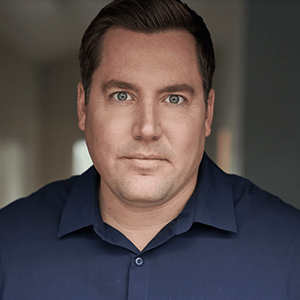
[00:23:42] Ray Latif: Indeed, great stuff. Apply today because those spots are limited for speed dating. All right, it's time to get to our featured interview for this episode. That's with Ryan Close, the founder and CEO of Bartesian, an innovative countertop machine that comes with a simple, straightforward tagline, premium cocktails on demand. Similar to a current coffee machine, Bartesian uses capsules, aka pods, that contain pre-blended liquid mixers. A push of a button and the machine blends the mixers with Amass Spirits that are preloaded into the unit to make a variety of high quality cocktails. 2020 represented a breakout year for Partizan on the heels of its inclusion in Oprah's acclaimed Favorite Things of 2019 list and amid a pandemic that saw a boom in at-home drinking occasions. The fast-growing company, which according to Ryan, now has hundreds of thousands of customers, is backed by several high-profile investment partners, including food-centric venture capital firm Cleveland Avenue, Chicago Cubs chairman Tom Ricketts, and Spirits conglomerate Beam Suntory, all participating in a $6 million funding round for Partizan in 2019. It took a few years for the company to get to this position, and in the following interview, I spoke with Ryan about how he identified the potential for an automated cocktail machine, mapping out a strategy that encompassed appliance technology, mixology, and marketing, and why he says that he's not trying to put bars out of business. Hey folks, it's Ray with Taste Radio, and right now I'm on a call with Ryan Close, who is the founder and CEO of Bartesian. Ryan, how are you? Doing great, Ray. Thanks for having me on. Thanks so much for joining me. I imagine that it's quite busy in your household. Before we got on the mics, you mentioned that you and your wife are sharing your home, which is doubling as an office right now. And for both of you, that is, and have three kids running around the house, which is COVID era normal, I guess.
[00:25:40] Favorite Things: Exactly. You know, my wife's actually doing mindfulness meditation through a zoom meeting right now. And you can imagine, you know, I'm trying to make calls in the other room and we got three kids screaming and yelling for, uh, for their videos, game screens and stuff like that. So it's, it's a bit of a wild one, but people have it a lot worse than having a lot more challenges than we are. So we just roll with it.
[00:26:02] Ray Latif: Well, what would we do without technology today? I think that's kind of the amazing thing about all this is if COVID hit, say 30 years ago, 25 years ago, the ability to do this call, the ability to do mindful meditation on Zoom, kids playing video games, a lot of this would not be possible. So, you know, there are certainly some downsides to technology, but at least we have this.
[00:26:26] Favorite Things: That's right. I mean, that's what I say to my kids. They don't care, right? You say, you know, back when I was a kid, you stuck at home, you're watching terrible soap operas, you know, you don't even understand what's going on. You now have pretty much every show at your fingertips. It's not even fair. So you got nothing to complain about. But then I just catch myself being that old guy, right?
[00:26:44] Ray Latif: your business relies quite a bit on technology. Partizan, an automated cocktail machine, a countertop cocktail machine, which is the first of its kind and pretty remarkable to use. I had an opportunity to play around with it, and playing around with it makes it sound like it's a toy, and it's definitely not. It's a very sophisticated machine that makes very sophisticated cocktails. So let's start from the beginning. What were you doing before you launched the company and what compelled you, what inspired you to launch this business?
[00:27:21] Favorite Things: Yeah, I mean, I was working at a job managing corporate sales and operations for, you know, middle to small companies, you know, the 50 to 100 million that were struggling. And I would go in and work with the team and we would try to flip them around, you know, working 1000 hours, commuting three hour windshield time. My wife was was pregnant with our first. It just wasn't sustainable. The money was great but the lifestyle wasn't. And so I had a couple side hustles. I'm doing air quotes right now that you know I was trying out and none of them were worthy of quitting my day job. Right. Until I met a couple of engineers Eat The same incubator. So I had I had actually joined an incubator called Communitech which is a part of Velocity in Waterloo, which is a spinoff of University of Waterloo. And I started working on a concept for a FinTech business that just wasn't going to go anywhere. Legislation was holding it up. And this was kind of my side hustle I was going to try to work on. And I'd met a couple of fellows who were, one of them had just got a job at Apple and he was leaving, he was flying out. And the other guy kind of had his hands in his face saying, what am I doing here? Is this thing going to go anywhere? And I thought there was a great option. It was basically a concept idea of, hey, could this go into a hotel room? We've got coffee makers in hotel rooms. Why not a cocktail maker? And that was the concept.
[00:28:45] Ray Latif: I think like any idea, you were probably not the first to think of this idea of a cocktail machine in a hotel or at home, but you did pursue it and you pursued it in a way that, as far as I can see, has worked out really well. But it's a very complicated idea. There's a lot that goes into this. This isn't like coming up with an idea for a beverage and putting in a bottle, which, you know, doesn't require a heck of a lot of investment. There's a lot of people out there that do that kind of work as in co-packers and co-manufacturers. But what you built is from scratch. Where did you start?
[00:29:25] Favorite Things: Yeah, you're exactly right. And when I came in, you know, I had this idea that, you know, this is relatively simple. We've got engineering expertise. I can find some people to help us get juice in a cup and away we go. Right. And it's going to be just like that. We're going to get going. Well, four years later and, you know, hundreds of thousands of dollars later. a lot of hours trying to find the right people and work with, you know, we realized it is it was very, very complex. The appliance itself, you hear a lot of people say hardware is hard. And the reality is, it's just working with China can be very challenging if you don't have the experience and the network in there, which we didn't. So, you know, we were cutting our teeth. We didn't hire on someone really with with a ton of experience there, or that was necessarily effective with working with China. But, you know, we had people on that here and there we would have them come aboard or we use a consultant agency and we would just move the football just a little farther down the field a little farther and that was really the mantra and the strategies just let's just move this thing yard by yard and then you know let's look up every few yards and see where we are. and do an assessment and a self assessment. But there was never not one time a question whether it was going to get off the ground or if it was if it was going to be a win with a consumer, we just were certain of it. We had this like, overconfidence, I would say, you're looking back, we were way overconfident. But the reality is we were right. So, you know, there's a confidence when you're right. But it's hard. And then obviously, you know, the hardware is a huge element in itself. And then we realized Eat The software, again, back to my air quotes, which we would call the food science, and the capsules and the shelf life, and ensuring, you know, ambient stability over a certain amount of time, you know, for the capsules to endure the supply chain was extremely complicated. And without putting in ingredients that are, you know, you can't pronounce, you don't know what they are, having a clean label that we can sell within Williams Sonoma. There's a lot of stiff regulations they have the product on the shelf. And when we checked all those boxes, you know, working with a company like beam Centauri loans, Jim Beam and makers mark, you know, having them invest in and supporting and helping guide those touch points.
[00:31:41] Ray Latif: You mentioned you were overconfident. I think you can be confident if you have the data and the research to back your hypothesis or your theory about the need for a particular product. How much research did you do about the need for partition and the opportunity, the white space that was available for an automated cocktail machine?
[00:32:05] Favorite Things: Yeah, we did a lot, you know, obviously, you know, I was making, like I said, really good money, and it was tough to walk away. And I had done my research to understand how big the market was with the opportunity, you know, would someone from general public go in and put down $350 for this device, and then brag about it to their friends, and a year later, still brag about it, and showcase it. And that was like, the gut check question. would someone put their money down? And not only would they just buy it and then, you know, a month later have buyer remorse, but truly be a proponent of the product and, and advocate for us. Because, you know, we, we didn't have a lot of money and we were like, every customer is our, is that's our marketing budget. And when we get that first customer, they're our new marketing team. That's how we approached it. I mean, I personally did a ton of research. You know, we looked at things from Intel talking about, and this is back six years ago. you know, looking at folks who, who just didn't want to go out as much anymore. There was a massive trend and we were aware of it, that folks would rather stay home, you know, the Netflix and, and make dinner. And, you know, that was, it was starting to burgeon at that point. And obviously it's continued.
[00:33:12] Ray Latif: There's the at-home component of demand, but you mentioned earlier that you saw some big opportunity in hotels. That being said, that's a whole other side of your business is sales. When you're talking about consumer sales versus B2B sales, I mean, I'm thinking about your business and it feels so widespread and so broad in terms of where you could spend your time and money. Eat The outset, how did you identify the appropriate sales channels for Bartesian based on the research that you did?
[00:33:53] Favorite Things: Right. I mean, and that's where it really was. You know, I was a traveling salesman for two years. Right. I mean, it was me and my my cardboard box. And I think every founders probably had that stage or they at least should have probably had that stage where that's what they were doing, knocking on doors, taking any meeting they could get with a device that works 30 percent of the time. And the other 70, you know, it was malfunctioning. I had to describe how it would work if everything was functioning as it should. Because, you know, this was where we hadn't fully tooled up, we were getting shots from China, we're manually assembling parts that weren't even approved. We were, you know, hand ironing capsule lids, like literally in a hotel room, I would batch and then iron on, right? I mean, just to show the concept of how this product would work. to get folks in the commercial side. So the hotels and stadiums, arenas to say, Hey, is this again, this is how it's going to work. Are you interested? Is there interest? And then once we would get that, yes, then it's take that. Yes. Maybe get it in writing and then go and find some angel money and say, Hey, listen, we've got these people that are very interested. Help us get to stage six so we can make this thing work. we still take that approach where it's not the ironing approach, but we take the approach of let's prove the concept out and ensure that we have customers before we go and spend a ton of our time on that channel. So for instance, like we haven't even hired, even pre COVID, we didn't hire someone to run our commercial business. We had our head of finance who has never been in sales, right? He's a worked in M and a previously. And it's like, Hey, Henry, You're great with people. You're now running our commercial business. You now go to all these stadiums and arenas and hotels and trial these with the customers and do that basically after you've done your day job on finance. Go do that, right? And that's what we were all doing. We were doing multitasking. And if we basically don't make any headway there, then we're glad we didn't hire someone. And if you make headway, then we scramble, we hire someone.
[00:35:58] Cleveland Avenue: Do you want more repeat buyers on Amazon? Well, this free resource in collaboration with Straight Up Growth will help your brand turn first-time buyers into long-term subscribers. Download Winning the Repeat Purchase Game on Amazon now at Taste Radio slash SUG. That's Taste Radio slash S-U-G to start building retention-driven growth for your brand on Amazon. Scaling a beverage brand into major retail comes down to operational readiness. From packaging lead times to co-manufacturing strategy, the details can make or break a launch. In a new ebook in collaboration with Octopi and Asahi Beer USA, industry leaders share what they've learned in helping brands scale. Download it now at Taste Radio slash octopi.
[00:36:48] Ray Latif: I can imagine the machinery at first came with a few flaws. Would you say 30% of the time it was working, 70% of the time it wasn't?
[00:36:56] Favorite Things: I mean, this is pre like fabrication, you know, hand assembled parts that weren't, you know, so it would get jiggled in an airplane. And, you know, once I got there, the components would be loose inside and yeah, it wouldn't turn on. These kinds of things would happen all the time.
[00:37:12] Ray Latif: This is sort of that, okay, one part is making sure the machine works and the other part is making sure the cocktails taste great. So it just feels like everything in your business is everything has to go right. Everything has to work according to the way that you envisioned it to work. But Eat The end of the day, it's really about the liquid. It's really about the cocktail. If you can deliver a consistently great high quality cocktail, people will believe in your brand and believe in the usefulness of your machine. How much of your research and your planning was about not just the machine, but crafting a fantastic cocktail, the ingredients that you would need to make a really great tasting drink?
[00:37:59] Favorite Things: Yeah, right. Well, you nailed it. And we realized early on, so as I had been taking the product that, you know, we had assembled in Canada, that would work some of the time, we realized that we were neglecting the consumable, the cocktail capsule. And although we knew Eat The few capsules that we had created tastes really great, we knew that for this thing to be a real winner, a game changer, it needed to have an extensive library and we needed to be able to add and create new cocktails quickly. And obviously hardware is expensive. So not only the tooling and we had tooled up and it was a lot of money, but the working capital. So the cost just to place orders, we were getting orders for 5,000 machines. So we're looking at hundreds and hundreds of thousands of dollars of cash being tied up to send it into retail. And, you know, who knows when you get that money back, right? We just couldn't afford it. And so what we did was we talked to some manufacturers and distributors in the States and essentially licensed. We did, we licensed the hardware. to a company that has done it for 100 years and does it very well and, and has that working capital, the cash to be able to execute. And the cherry on top for us is they also have a network and a distribution set up throughout North America, where they're already in the retail environments already on shelves. So it's very, it was turnkey. That allowed us to your point, to turn our focus away from the machine, which we had already got to, let's call it 90%. We were 90% there. So there wasn't a ton of work left, but just some fine tuning and refinement of the product. And then obviously overseeing the factory and ensuring quality, we would have had to gone and hire all those people out. And we didn't have the money to do it. At that point, it seemed like it was a choice or a decision. Looking back, there was no choice or decision. It had to be that way, or else we wouldn't be here. So then again, we were able to turn around and put our focus wholly into that capsule development and build out that food science team and work with professional bartenders throughout the country and create gold standard cocktails to essentially reflect in our capsules.
[00:40:10] Ray Latif: Let's talk about your decision to partner with another very significant company, which Jim Beam Centauri. That decision came or that partnership came in 2017 when the company was still relatively young. We've seen beverage alcohol conglomerates of late make small investments in emerging companies and emerging concepts. Did they approach you or were you looking at partners that you could work with that had the kind of capacity and had the cachet that a Beam Centauri does?
[00:40:43] Favorite Things: We had been talking to to really all the big spirit brands, pure companies and beam ended up approaching us for a meeting. And, and I, I was kind of shying away and we went and I did the whole Silicon Valley thing for fundraising. And everyone I talked to were like, we love it. But most of the answers were come talk to us after you've proven it out more. And also, I'd rather you focus just on commercial and not consumer. So make the commercial device because your cost of acquisition is lower, the lifetime value is higher. So all those kind of obviously sexy metrics, which VCs are going to look Eat The wanted those. And for me, I said, OK, I don't disagree with all those points. However, I do believe Eat The consumer wants this product and it's not just going to be some, you know, a few here, a few there, it is going to be a household name and household brand. People are going to want to use it regularly. So I didn't want to go to the VC and the VCs really didn't want to invest in us. I mean, we had one VC come in with a little bit, but we also wanted to control our destiny. And really I wanted to run the business the way I saw it going. And I wanted to be able to be flexible. So to that end, you know, talking to a strategic was always the strategy. Let's get a strategic in here. For one, we likely can get a higher valuation to be honest, right? Because there's intrinsic benefits to the partnership other than just an ROI on the growth of the business. So that's one. And then the other obviously is they can help us expand in this channel and get some awareness and they have deep pockets. So working with them, you know, talking to the beam folks, I really got along well with them. I actually ended up hiring one of the people on the other side of the table to come on our team. We just really got along well. They agreed the exact offer that we put out there and they said, we'll take it and we'll do it. And they moved quick. And so that was exciting for us to obviously have those guys come on board. And then we signed a licensing deal with them that allowed them to put their brands on some of our capsules.
[00:42:54] Ray Latif: Talk about your pitch. You're pitching me on the fact that your cocktails were made with all natural ingredients. They didn't contain any junk. They were clean label. You talked about the convenience of having cocktails Eat The push of a button, but Was that enough? I mean, was that enough information for people to make the sale, to make that sort of long-term commitment that a consumer would need, a hotel would need, to keep your products in rooms, on kitchen counters? I guess what I'm asking in a nutshell is, how do you convince folks, not just to make that one purchase decision, but to be longtime consumers, to be loyal consumers of the brand, and moreover, probably more importantly, advocates and ambassadors for Partizan.
[00:43:44] Favorite Things: Every new customer for us, we treated them as our new ambassadors. And, you know, we recognized early on that once folks had this set up in their house, They loved it. And that's not a sales pitch. That's not, you know, you can look at our Amazon, you know, over 3,000 five-star reviews, our website, thousands more, you know, unsolicited five-star ratings continuously. We're getting emails early on, people thanking us for creating this product, folks who just love cocktails, but didn't want to have all the ingredients on hand. wasn't sure how to make it, just didn't want to make it, but didn't want to sacrifice quality. Still wanted something that they would say, this was exactly what I would expect at a premium restaurant, quality lounge. So really back to that point is the early customers, early adopters, you know, we had a marketing team of thousands. We didn't have any in-house marketing. I was, and still am, basically our CMO, we're recruiting now, but We didn't have a social media. I was doing posts. I was going to millennials and be like, how do I post this on Instagram? I don't even know how to, how to do this. And I'm making posts on Instagram. No clue what we were doing. So we weren't trying to be super salesy or, you know, we weren't some cutting edge marketing geniuses. We had an incredible product and the customers loved it so much. They would then advocate for us.
[00:45:05] Ray Latif: Ryan, it may seem like I'm beating a dead horse here, but I want to go back to the opportunity. Because this is a question that comes up when we speak with other entrepreneurs in the food and beverage industry is, how big can this opportunity get? How big can this brand be? And I'm sure you're thinking about the future in the same way is, how can I get a Bartesian in as many homes, in as many hotel rooms, in as many B2B locations as possible? So that being said, what do you see as the opportunity to scale from here? How many homes can you actually be in, given that there are probably some folks that already know how to make cocktails well at home, and then there are plenty of others who don't drink cocktails at all?
[00:45:50] Favorite Things: I use this analogy to my team, and I've done it since launch. In November 2019, we were named Oprah's Favorite Things, and at that time, you weren't sure what kind of impact you'd have. And my argument to investors in terms of, hey, how are you going to expand and grow this thing out? I would say, hey, listen, if you ask 100 people in the 50 biggest cities in the country what partition is, no one will know about it. Well, I thought after Oprah, it would be maybe five or 10 would know about it. It was still, after that stage, zero people. If you went to 50 biggest cities, yes, 100 people. What about Partesian? Zero people. And at that point, that would almost get me frustrated. I'd be like, oh man, how do we just get awareness? Because as soon as we got awareness, we would see just a massive spike in sales and then a massive spike of happy customers. And so after this year, 2020, which we blew out all our forecasts, we sold millions and millions of capsules, we shipped across the country. to tons of customers. And even now, and so now I don't look at it as a bad thing. I still say to my team, which is true, you ask a hundred people in 50 cities of Vartisian, they still don't know about it. That's exciting. It was the opportunity, right? So all we need to do is create awareness. And we know this thing is going to skyrocket. So I think how big is the opportunity? I mean, I think that we could be as big or bigger than an espresso. I can in my lifetime imagine this thing being anything less than a multi-billion dollar organization that's a household brand. We're creating an experience. It's not just a way to get a quick cocktail or an easy cocktail. It's a way to create a home experience and create a setup in an area, a nice small area in your house where you can have a lounge cocktail experience with your significant other, yourself, your neighbors, friends in. just like you know folks did in the past where they would create these big basement bars or man caves or right it wasn't just about the bar it was about creating an area where they could enjoy something together and so that's what partizans building how much of the fact that there are already countertop machines
[00:48:09] Ray Latif: like a Keurig, like an espresso that are already out there and can produce on-demand beverages Eat The push of a button. How much of that helped educate the consumer as to what your product was and what it could be?
[00:48:23] Favorite Things: They definitely play a part. That's a quick way when we build that user experience, you know, and we see people even in early days, and we just say to the consumer, okay, I'm not going to tell you how to work this thing. It's going to be set up in front of you and we would just watch and videotape after getting consent, the customers make a cocktail. And for us, it was how do we ensure we've got something right is when they don't have to ask me any questions and they don't need to read a manual. And so we'd be lying to say there wasn't an impact on previous countertop devices that operated in a similar manner.
[00:49:01] Ray Latif: And one of those brands that I referenced has a similar product to yours. Is competition a good thing for Partizan?
[00:49:11] Favorite Things: Absolutely. And I'm not just saying that I was genuinely psyched when I found out, you know, they were going to come out with something. One is there's that ego centric, you know, being fired up is I knew I was on to something. You know, I've been preaching this for years. You know, now we've got multibillion dollar companies. following suit, right? You feel pretty good about knowing that you were onto something, even though we hadn't had sales yet, right? So it was like, okay, we're not crazy here. But then in addition, you know, we had no money, absolutely none to create any brand awareness. And we were, you know, not to sound bigger than we are, we were trying to build a category, which we always still are building a category, not just putting a new countertop device. No one's ever had anything that where they could make a cocktail at home that tasted like they did at you know, Ritz Carlton lounge. And now you can for 250, right? So, you know, the ability to do that and have that experience and have fun with it was huge. So, you know, I was happy. So they were going to help us build awareness in that category. And obviously they reinforced the opportunity and the size of the market.
[00:50:19] Ray Latif: You mentioned price, which is something we didn't talk about. For $2.50 a cocktail and getting the same quality that you would at a Ritz-Carlton, you know, Ritz-Carlton old-fashioned and old-fashioned might cost you $18. So if you're saying that you can make one at home for $2.50, I think a lot of people would be interested in that, but price is only one component. It's the experience, right? There's an experiential part of watching a bartender make a cocktail, shake it in front of you, start in front of you, and serve it to you in this beautiful glass, and there's a sophistication about that. And I mentioned that I had a very sophisticated experience with your machine, but it's different.
[00:51:00] Favorite Things: What we are trying to do and you touched on that is create an experience. We didn't want just to have something where I'm going to put this capsule in this machine and then I'm just going to slam back this drink because it's all about just getting this drink in my stomach. Right. This was about. end to end experience to the customer. So it's got to look sexy and sleek on your counter. And we achieve that and people love the look of it. And then further to that, you know, having the ability to put in your own spirit in the reservoirs, we realized very early through a ton of customer research that folks are not brand agnostic, like they like a certain vibe, but they like a certain rum. And they're proud of liking that brand. And they, and they boast about it. And it's important to them. And so, you know, I'm a maker's mark girl. I'm a Tito's vodka guy, right? I mean, people want to have these brands. And so that was a big one is, okay, you put your own liquor in here, you load it. And then a couple other points were being able to select that strength selection. We, again, talked to a lot of people, researched, videotaped, And what we found was, I think it was about over 78% of folks didn't select regular. So you have the option when you put the capsule in to do a mocktail, light, regular, strong. 78% approximately did not select regular. You know, they wanted to customize. They wanted to be in control of the experience. And then once they hit go, so they've, they've put in their spirits, they've customized their strength. And then there's the play. You, you see the bubbles, you're seeing the liquor. be pulled in. So you're making a Long Island iced tea. I mean, three reservoirs are dancing in front of you and mixing. The LCD screen is telling you what's going on. It's saying, you know, there's this mixology in progress. We're finding the experience for you. And, you know, 20 seconds later, this drink is complete. This craft cocktail is ready to go. You put in your own garnish and send it to a friend. I mean, literally 20 seconds, all this has happened. You know, it's pretty incredible. I've yet to see someone who tried it for the first time and not smile and be pretty fired up about it. Even bartenders.
[00:53:04] Ray Latif: Yeah, I can imagine. I'm sure that bartenders would love to cut down on some of the work that they do if they can make the exact same cocktail by pressing a button.
[00:53:13] Favorite Things: We're never trying to supplant or position ourselves as better than a professional bartender making a drink Eat The bar and a better experience. What we're saying is, you know, Hey, if you want to keep those jogging pants on or lemons, you want to stay home and you want to hang out and have a great drink. Don't sacrifice. You don't need to drink some RTD that's been sitting on a shelf for nine months, you know, on the sediments on the bottom. And, you know, it's pretty lackluster just pouring over ice. You can create that cocktail lounge experience at home. So, to that end, I would say, you know, an RTD is probably the closest thing to our competition, you know, ready to drink cocktail and they're getting better and I'm glad they are. There's some strong, ready to drink cocktails that are coming into the market every day. It's a very busy category, but Eat The end of the day, I just personally, it's not an exciting experience and we're creating that experience. That's where we differentiate.
[00:54:11] Ray Latif: Outstanding. Well, Ryan, we first chatted with you, I think it was in 2017 for our Elevator Talk series. And it's always remarkable to me to see brands that are at an early stage evolve into, I'm going to call your brand a successful brands or companies. And I'm so encouraged to see how you went from really not knowing a lot about manufacturing or the business of beverage alcohol into something that encompasses both in a really sleek and sophisticated way. So congratulations on everything you've accomplished with Partizan to this point, and good luck with everything going forward. Thanks so much, Ray. I appreciate that. That brings us to the end of this episode of Taste Radio. Thank you so much for listening, and thanks to our guest, Ryan Close. Please subscribe to Taste Radio on the Apple Podcasts app, Spotify, Stitcher, or Google Podcasts. As always, for questions, comments, ideas for future podcasts, please send us an email to ask at Taste Radio. On behalf of the entire Taste Radio team, thank you for listening, and we'll talk to you next time.