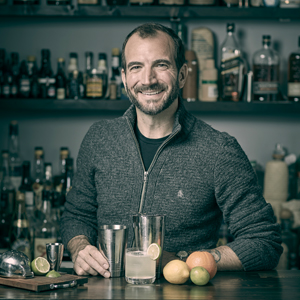
[00:00:10] Ray Latif: Hey folks, I'm Ray Latif and you're listening to the number one podcast for the food and beverage industry, Taste Radio. This episode features an interview with acclaimed mixologist Charles Joly, who is the co-founder of pioneering ready-to-drink cocktail brand, Craft Crafthouse Cocktails. Just a reminder to our listeners, if you like what you hear on Taste Radio, please share the podcast with friends and colleagues. And of course, we would love it if you could review us on the Apple Podcasts app or your listening platform of choice. Their primary competitors are multinational corporations with massive marketing budgets, highly experienced sales teams, and distribution reach that stretches from coast to coast. So how is it that Craft Crafthouse Co-founder Charles Joly and his team are beating the giants at every turn? Founded in 2013, Craft House helped pioneer what is now a booming ready-to-drink cocktail category. At the time, Charles was a celebrated bartender based in Chicago and an influential figure in the emerging international cocktail movement. With Krafthaus, his aim was to create a brand of small-batch, bottled cocktails made with all-natural and high-quality ingredients that could replicate the quality of drinks served at the world's best bars. In the nine years since its debut, Krafthaus has expanded distribution of its products, which include a Moscow Mule, Paloma, Pineapple Daiquiri, Rum Old Fashioned and Smoky Smoky Margarita, to 23 states. Available in 200ml screw-top cans, 750ml swing-top bottles, and a 1.75L bag-in-box package, Crafthouse Cocktails are carried by Walmart, Wegmans, Total Wine and More, Benny's Beverage and Whole Foods, among other retailers. The brand is also available at several theme parks and outdoor venues, and the brand's Gold Rush variety is available at Amtrak dining cars across the U.S. Amid rising consumer demand for ready-to-drink cocktails and an increasingly crowded category, Craft House is distinguishing itself via quality, consistency, and variety—factors that Charles spoke about in our interview. As part of our conversation, he also discussed the impact of his experience and reputation in the brand's development, how a focus on quality helped establish and cement the company's relationships with retail buyers, and his perspective on the parallels between bartending and entrepreneurship. Hey folks, it's Ray with Taste Radio. Right now I'm in New Orleans at Tales of The Cocktail 2022, the 20th anniversary of this incredible event. And sitting with me right now is Charles Joly, who is one of the co-founders of Craft Crafthouse Cocktails. Charles Joly great to see you.
[00:03:09] Charles Joly: Yeah, thanks for taking some time to catch up. I appreciate it.
[00:03:12] Ray Latif: Yeah, this isn't the first time we've spoken. I think it was about six years ago that we chatted for a magazine article that I was writing about Well, the very early days of ready-to-drink cocktails and ready-to-serve cocktails, a business you're intimately familiar with.
[00:03:27] Charles Joly: Yeah. Yeah. We were, by happenstance, one of the first, if not the first, kind of premium, like really composed cocktail. We conceived the idea in 2011 and then, you know, had our first bottles on shelves in 2013. So, uh, very early, we didn't know there was going to be a trend. We didn't know there was going to be a pandemic where the entire category is going to explode. If we did, I would have bought some Tesla stock, but no crystal ball. But yeah, we were, we were very early. Uh, and, and I think that's part of the beauty of our brand is that we didn't We weren't chasing any trends. We were literally just filling a need that we heard from our guests who wanted composed quality cocktails when they weren't at our bars.
[00:04:12] Ray Latif: Yeah. By your guests, you're referring to the folks that did come to your bars. You've been in this industry for how long at this point?
[00:04:19] Charles Joly: Well over 20 years now, and yeah, I've been behind the bar my entire adult life and in every capacity you can imagine. Started as a busboy for one day, bar backed for several years before I ever touched a drink, bartended, managed. open places, closed places, now have moved on to some entrepreneurial pursuits and then some other ways in the business with our The Cocktail, with some bar tools, even recently been consulting with a craft ice startup, which has been fun. So yeah, I've got my hands on all kinds of stuff.
[00:04:53] Ray Latif: Very cool. Craft ice as in like specialty ice for cocktails.
[00:04:57] Charles Joly: Yeah, Sexy Ice for cocktails or NAs or iced coffee or whatever it is that you want. It's a company called Abstract Ice out of Northern California, based in Petaluma. And we're just getting our feet under us and branching down to San Francisco and kind of democratizing. gorgeous ice so people can go to a liquor store or grocery store and buy a box of dope ice cubes and bring them home for your The Cocktail too.
[00:05:26] Ray Latif: Well, pretty cool. I can certainly say for myself, that sounds like a dope idea. That sounds like a pretty incredible idea.
[00:05:32] Charles Joly: Cocktails enthusiasts and others. Yeah, it's been a lot of fun so far. So just, yeah, I keep myself, I like to keep, you know, a lot of different things rolling and keep myself busy. It's maybe part of the, the disease, the hospitality folks have. We, uh, we like full plates.
[00:05:48] Ray Latif: I'll stay on that tangent of ice for one more second. Ice can ruin The Cocktail. You know, you have bad ice at home. That's like been sitting in your freezer for like even a few days. Sure. It's trash. Like your The Cocktail, all that good spirit that you used all the time you, you know, you took to prepare this wonderful cocktail is ruined by bad ice.
[00:06:09] Charles Joly: It's an interesting, you know, we as bartenders, it goes without saying to us, but you consider when you shake or stir The Cocktail, you might add 25% dilution, 30% dilution, depending on what you're, what you got going on. That's a significant, I mean, it's a quarter to a third of your drink is now the diluted water added by that ice. So. it's a major percentage. So you don't want ice that's been picked up a bunch of off aromas in your in your freezer, whatever, you know, it's fine. It's not that you don't, you know, to use what you have in your freezer. But yes, if it's been open to the air in your freezer, and it's been absorbing the smell of whatever else is in there, or is freezer burned, it's worth picking up some decent ice if you so desire. Personally, if I'm, you know, I'll just serve something up, chill the glass, serve it up as opposed to on the rocks. If I've got ice that's going to melt super quick, or is You know, not up to our standards of ice, you know? Life is too short to have stanky ice. That's my motto.
[00:07:08] Ray Latif: That is a bumper sticker waiting to be made. Or a t-shirt. They should have that t-shirt here at Tails.
[00:07:14] Charles Joly: They should. I want 3% and we're going to donate it all to charity.
[00:07:19] Ray Latif: There you go. I asked you before we hopped on the mics how many Tails this is for you.
[00:07:23] Charles Joly: Yeah, I was thinking back on it. I think it's 15 or 14 years that I've been coming down.
[00:07:29] Ray Latif: So if this is the 20th anniversary, you've been to almost Tales of The because we skipped two years because of the pandemic.
[00:07:34] Charles Joly: We did. So including those years. So it was probably 07 was probably my first. The very, very early ones. I was talking to some, some of my friends that were at the first and second, you know, where there's eight and 20 people or something at those respectively. When I first started coming, it was quite small too, maybe 1,500 or something. But it's grown and it's great. I'm so excited to be back. The crew that's running it's doing a beautiful job. There's been just a lot of great insights added to the event. It's such an important and wonderful little class reunion that we all have down here. You know, opportunity to reconnect, an opportunity to learn, an opportunity to see new products, opportunity to see what people are doing, and an opportunity to visit New Orleans, which is, you know, thanks to Tails, introduced me on a regular basis to New Orleans, one of my favorite cities in the world. I'd love to get down here, you know, at least a couple, two, three times a year. I love this place. Yeah, it's an amazing city. It's a special one-of-one. There's no place like it on earth. One-of-one? I said one-of-one. Oh, one-of-one for sure. One-of-one for sure. It's, uh, you know, and I don't know if the world could take two New Orleans.
[00:08:48] Ray Latif: Yeah, I'm going to butcher this, but I saw some graffiti. I think it was yesterday when I was in a walk and it said, you can choose any city in America, but New Orleans is the only one that chooses you. I think that's what it was. I think that's very true. It's got a draw to it.
[00:09:05] Charles Joly: It's a magnetic city for sure. There's a lot to do, you know, if you've never been down to New Orleans or you've only been for the big parties, you know, you got to come back down in off time, get out of the quarter, explore the city. It's a beautiful city, all of its corners. You know, just some great, get into, go get where the locals go, you know, get off Bourbon Street, you know, and it's fun to go hit, there's some lovely joints down there too. But it's, there's a lot of ways to enjoy New Orleans. Yeah. Besides what people I think associate offhand, such amazing history, food, hospitality, wonderful people.
[00:09:41] Ray Latif: Charles, am I wrong in saying that you've seen some things in your life? I feel like you've experienced quite a bit.
[00:09:46] Charles Joly: I feel like I've lived several lives in my time on this spinning rock.
[00:09:52] Ray Latif: Yeah. In The Cocktail context of that word, or the phrase, or how I'm describing what we're talking about, You know, The Cocktail scene has changed quite a bit in 20 years.
[00:10:04] Charles Joly: The Cocktail scene is, yeah, it exists. It didn't exist 20 years ago in the same way that it does today.
[00:10:12] Ray Latif: Am I wrong or would I offend you if I called you a godfather of this industry?
[00:10:17] Charles Joly: I would say I was like second gen in, you know, I really always tip my hat to the kind of first generation, you know, the Dale DeGroff'Tales of The world. Tony Abou-Ghanem, you know, the guys over in Europe, Salvatore and Peter Dorelli, and he's got, you know, people that really bridge the dark days and that were doing stuff even back into the 90s or even before. I mean, because even, you know, turn of the century, in the early 2000s, you're hard-pressed to find somebody squeezing a lemon, let alone making composed cocktails, you know, and there's nothing wrong with that. We all serviced, played an important role and we made people very happy. Even, you know, pouring sour mix off of a gun and making cocktails that way. It was absolutely, you know, I wouldn't trade learning that speed and efficiency and growing up in high volume bars and in that early era, you know, we all made great livings and people came out and filled those bars too. It's cool now that there are many ways to be a bartender, whatever you choose to do.
[00:11:19] Crafthouse Cocktails: Guessing your margins? That's risky. Belay Financial gives CPG brands the clarity to scale smarter, faster, stronger. Get your free inventory ebook by texting TASTE to 55123 and start making data work for you. Vibrant Ingredients is the natural ingredient partner powering food and beverage innovation, delivering flavor, function, and protection through a science-backed portfolio. Vibrant delivers purpose-driven solutions that help brands create extraordinary experiences. Discover what's possible with Vibrant today. Visit VibrantIngredients.com.
[00:12:06] Ray Latif: Well, I feel like this goes to the heart of why you launched Craft House in that, you know, there were ready-to-serve, ready-to-drink cocktails that existed before the great ones that we're seeing today, including Craft House. You know, they served a purpose, but they weren't great. You know, they introduced people to a way of consuming spirits, you know, for better or for worse. Yes.
[00:12:29] Charles Joly: You said it.
[00:12:30] Ray Latif: But Craft House, which launched in 2013, really, I think, changed the way people considered a packaged, bottled, canned, whatever you want to call The Cocktail. It was, and it continues to be, something that respects the spirit and respects the consumer.
[00:12:53] Charles Joly: Yeah, I appreciate that. Thank you for saying so. We think so. It's so simple and it's so complex. It was so simple for us. We asked, this started because quite literally, one of our guests, whom I had given The Cocktail recipe to that we made behind the bar and had on our menu, made it for a party and then reached out to us on a call on the phone during shift and was like, hey, this drink's not coming out right. And I was trying to walk through and see what may have happened to get the balance right, you know, over the phone. And then that night, we're like, well, you know, people want drinks and when they're not at the bar, they want these type of cocktails, composed cocktails. which aren't complicated to make, three, four, five ingredients, whatever. But it does take, you know, there's a craft involved in balancing a drink and getting it right every time and making it consistently. And so we had that skill set. We were bartenders, we were hospitality folks. And we're like, how come nobody just takes this, what we do behind the bar, and puts it in a bottle? Everything on the market at that point was made to taste like The Cocktail, to simulate The Cocktail. It wasn't the actual ingredients that were just in The Cocktail. And we couldn't figure it out. And we did find out why. We figured out why people didn't do it. It was more difficult and more expensive. And so when big companies were making bottled drinks, they're just looking at bottom line, bottom line, that's it. And so they go the easiest, quickest way to do it and use corn syrup instead of simple syrup. They use flavoring instead of using the real thing. They use malt liquor or a flavored spirit, if you're lucky, instead of using a tequila or a gin or whatever it might be. And it was just, you know, it was harder and more expensive and they take the shortest path. And it's not coming from bartenders, it's coming from food scientists, you know, in a lab. So we just, we did what we did. And it was really hard in the beginning to find, even find a co-packer, which is the, you know, bottling facility that, that batches everything up for you and then bottles it. that would do it our way. They thought we were nuts. They couldn't wrap their head around it. We ended up having to go to Canada. Our first production facility was outside of Montreal, in the suburbs of Montreal, because no one in the US would take a small startup and then wanted to see bags of sugar showing up for a simple syrup, wanted to see ginger juice showing up to make our Moscow Mule, to make our ginger beer. They thought we were nuts. And they all had ways to preserve, and they all wanted to use preservatives. We're like, we're not doing it. Like, you don't get it. Like, why? Because I'm like, that's why everything you did. That's why when you see a RTD, it makes you like turn your nose up because they're not great at that point. So it was fun. And we've done it since day one. Our idea was, If anybody asks any questions, we'll be able to answer them honestly and proud, whatever. You want to know what's in it? Great, we'll tell you. And we're proud. We work with great producers to source our spirits. We work with great producers to source our ingredients, our citrus, or anything else that's in Crafthouse Cocktails. So it's been a fun journey. It's been a journey. We spent the first Six years just explaining to people that The Cocktail didn't have to suck one at a time. And then, you know, liquid to lips, liquid to lips. And as they tasted, everyone who tasted it was like, oh, great. Yeah. And they brought it in to their stores or whatever it might be.
[00:15:59] Ray Latif: So when you saw the success that Skinny Girl Cocktails had, was that discouraging to you or did you see an opportunity, you know, to reach people in a different kind of way?
[00:16:11] Charles Joly: We never even looked at them as competition. They did. Skinny Girl was the only thing that was out when we launched. But we're so different. They're low ABV. I mean, not to knock any competition. No, go ahead, knock it. But just, I mean, flat out. I mean, taste it. Just taste it and make your own decision. There's a celebrity brand, you know what I mean, that got started. So it is what it is. It wasn't even, it's not even the same thing. So, you know, it's like the hard seltzers of the world. That's great. They serve a purpose, they're a convenience and they're, you know, easy and crack and go. Like, we're not that. And I think a lot of people, like, when they see something in a can or in a bottle, they think that we've done, because hard seltzers had such a moment, too, recently. This is, like, what we do is a fully composed cocktail. It's like getting an a la minute margarita or whiskey sour or, you know, like a hand-shaken cocktail by a bartender a la minute. Like, that's what we do. It's a little different with real ABVs. You know, it's something like just that small thing. It's interesting, when you look at brands that are, You can tell who's run by bartenders and who's run by corporations to some extent. You look at their ABVs and they're all 6% across the line. Like, this is not the real world. If I make you cocktails, I make you six different cocktails behind a bar right now, they're going to have six different ABVs slightly or drastically, depending on the drink. We've never stepped on our cocktails once to water it down to save a couple bucks or whatever it comes out to when I make the recipes, what it comes out to, we put in a bottle.
[00:17:38] Ray Latif: It's challenging to do that.
[00:17:40] Charles Joly: It's easier to do that than to water them down and have them taste off. It makes them taste right, you know? So it is getting right. You know, it's challenging. It's maybe not the best business model.
[00:17:51] Ray Latif: Well, it's funny you say that.
[00:17:52] Charles Joly: It makes slimmer margins for sure.
[00:17:53] Ray Latif: I mentioned the magazine article that I wrote six years ago, and the opening line was, by his own estimation, Charles Joly makes the world's largest Moscow Mule. A few Tales of The traditional recipe notwithstanding.
[00:18:05] Charles Joly: Yeah, big in the batching tanks, for sure. And we're making 1,000 cases or something at a time. many liters of Moscow Mule, indeed. And now eight different cocktails that we have, which is fun. So we've expanded the line quite a bit in several formats. We launched about a year and a half, two years ago now, the bag and box, like cocktails on tap, which is cool. 15 cocktails, and you tap them or straight out. Smaller carbon footprint, so cheaper to ship, cheaper to package, and it's the best value for the end user as well, because they get the The Cocktail for their buck. Once they find their favorite, they can get the big box.
[00:18:43] Ray Latif: When you launch the bottles or spring top bottles, as you mentioned, the brand has evolved quite a bit since then. You have the bag and box, you have single serve offerings as well. Cocktail culture, again, has changed quite a bit. The pandemic has changed the way people think about at home consumption of beverage alcohol. The industry has become much more, and I'm talking about the packaged cocktail industry, that is, or packaged cocktail category, has become much more competitive. Very. It has become inundated with corporate brands, independent brands, international brands. How are you as a pioneer of this category navigating all the changes that are happening in this space?
[00:19:27] Charles Joly: I mean, I've always welcomed quality brands. We were excited when the first few brands came out onto the market. We're like, awesome, because now we can have a section. And the liquor stores didn't know where to put us. Like, you don't put us next to the margarita mix. They didn't know where to put us. So they're like, do we put you next to the, do we put your margaritas next to the nice tequila? Do we put your South Side next to the gins? And so at least there was able to be a section. Now there's whole aisles when you go to liquor stores. It's crazy. So we welcomed all high quality stuff. It's great. It's good for the category. When the boom happened, it turned a corner where people, all of a sudden, the light bulb went on, and there was this acceptance to drinking, like, oh, we can get decent drinks out of a packaged product. We're not trying to replace bartenders. We want people to get into bars, like, support your local bar, support your local bartender, for sure. But at times when you're not there, or places where speed of service just simply won't allow it, you're at a theater, you're at an Amtrak, whatever it is, you know, you're going on a picnic, whatever, having a party, You know, you've got, you have options. So we were poised and ready to go. And then a lot of people had jumped in the market because they saw an opportunity and were playing catch up. So we were in a great place. We already had a lot of partnerships. And it warms an old bartender's heart. We hear it time and time again from our partners who choose us. They've tried, you know, truly tried 150 or we've tried 200 different products. And, and- Just nuts to be able to say that, right? Yeah, it's nuts to be able to say that. And you are one, you know, you're one of our top three and we've, we've decided to go with you. Like that's, that's the best feeling. And that's just like. proofs in the pudding there, that's it. And that to me, we don't have the marketing budgets that some of our competition have. We don't have, there's about 11 of us that run the whole company. And we're in 40 plus states, we're sizable for our small and scrappy crew. But it's great, and I think cream will rise to the top, and there'll be some good things. And I just encourage folks, Taste, you know, don't buy off of a billboard, buy off of Taste Radio drink what you like at the end of the day. If it's us, awesome. We're like, thank you. If it's one of our competitors, great, good for them too. There's room for everybody, but taste, taste around and. You know, we want people to have a good experience. That's the only thing. I don't want people to get turned off if they try a brand that's like quick to market and they try it and it's off and it doesn't taste great. And then they look at the whole category as that again, because we're going backwards to where we were 10 years ago, where there's, you know, overly sweet stuff or artificial stuff or stuff not even made with real spirits. So just read your labels. You do a little jump on our website, jump on other brands' websites, do a little research. Like people want to know, people want to peel back layers. That's great. And there should be transparency. It's something that we've always been proud about.
[00:22:13] Ray Latif: I've spoken with a lot of entrepreneurs who have been ahead of a trend, who are the trendsetter. And then when the trend hits, they find themselves behind the eight ball. And I feel like that might be where you guys were at some point, you know, in this boom.
[00:22:28] Charles Joly: I guess we've had ups and downs. You talk about like being behind, well, holy cow. I mean, if you have a startup business and we've been around 10 years, which just that, you know, to survive 10 years in the spirits business as an independent is, I'll pat my team on the back. And you know, that's, it's incredible, but it is more work now. There's an acceptance so people are ready for the category, but yes, there's a lot, they're like, Oh, there's one new one coming every day. I'm like, cool, no problem. Again, just taste, pour them all out side by side, blind taste us all day long and carry four or five. You don't need to carry 30 at your liquor store. Carry five that sell, you know, and five that you're proud to sell your customers at your liquor store or at your venue or at your concert or wherever it is that you're going to carry us, you know.
[00:23:13] Ray Latif: Tasting is so important, and it really does, at the end of the day, make probably the biggest impact on the decision of a consumer or a customer to buy the product, the brand.
[00:23:23] Charles Joly: It's the biggest for them to buy it twice, that's for sure.
[00:23:26] Ray Latif: But it also costs a lot of money to get to that trial. It costs a lot to get people to be aware of the brand and the products. If you don't have a multinational behind you, and you do have the multinational screaming on billboards, in TV advertisements that you should be trying our canned cocktail at the beach and whatnot. How do you found that off? I mean, how do you approach that as a small brand?
[00:23:48] Charles Joly: We worry about what we're doing and we have really amazing partnerships that I think the big brands would love to have, quite honestly. And it's because we've been able to find the beverage directors or whomever's making the decision makers and sit down with them. We're real people and they hear our story, great. They look at the product, it's packaged well, it looks great, a nice selection, everything they need, and then they just taste it. And we get in front of those people and they try the competition out there, to be quite honest. I mean, not to blow smoke or whatever, but we stand out in terms of that. And they wanna offer their guests, again, whether it's a liquor store or whether it's a venue that people are going to, a concert venue, a sporting venue, or a festival. And it's, people have a high expectation of cocktails now. Like the general public has been exposed The Cocktail now for the last 15 years, you know, since The Cocktail movement started. So people know, and I mean, look at the pandemic. People, I have a line of barware that also shares the Craft House name. It's called Craft House by Fortessa. And I thought, I'm like, well, you know, we're probably going to see a slowdown during the pandemic because bars aren't open. So like bars and restaurants aren't buying our stuff. And it ticked up because Tales of The Cocktail enthusiasts at home were making drinks. They made sourdough one day and they were making Manhattans the next day. So it's cool. So I love to see our cocktail enthusiasts at home making drinks. And I, you know, even though we make about, we have a The Cocktail company, we make The Cocktail. I'm always encouraging people to learn how to make these on your own as well. There's time and a place for everything. There's room for a la The Cocktail. There's room for your Crafthouse Cocktails bar.
[00:25:21] Co-founder Charles: and there's room for ready-made drinks too. Scaling a beverage brand into major retail comes down to operational readiness. From packaging lead times to co-manufacturing strategy, the details can make or break a launch. In a new e-book in collaboration with Octopi and Asahi Beer USA, industry leaders share what they've learned in helping brands scale. Download it now at Taste Radio slash octopi.
[00:26:15] Ray Latif: Getting in front of the buyers, getting in front of the decision makers, getting in front of the people who matter, easier said than done. How much of your reputation, how much of your experience was instrumental or impactful in getting those meetings, landing those meetings?
[00:26:29] Charles Joly: It is difficult to get in front of these decision makers, even to get a meeting, to get your emails returned. Sometimes you just pop in and cold call. You know, it's like you just gotta, you have to really pound the pavement. Like all industries, this is so relationship based and driven. It's like we're here at Tales of The Cocktail, right? Like there's people from all over the planet here. And so you have a lot of relationships over a couple of decades. And so this definitely helps with a few placements for sure, or at least to get the, meeting or at least to get people down there's like, okay, like this is actual bartenders. This is not a marketing story. And so yeah, it's, it helps my business partner, Matt, or the other co-founder, Matt Linder. He and I ran bars together for years and years. He's been in, he's been a bar owner, restaurant owner for his entire adult life as well. So we got hospitality guys, so it was easy. Especially when you go into the distributors too. The people that are actually delivering your booze. There's that pesky three tier system we have. And so we don't sell direct, we have to sell to a distributor who then sells it to the bar or the retailer. We were buying booze from them too. They were servicing our bars. So we had some of those relationships, so it was nice.
[00:27:39] Ray Latif: Did you cold call Amtrak?
[00:27:42] Charles Joly: Matt handles a lot of the national accounts, and I don't recall exactly how he got in front of them, but he managed that relationship, and that's awesome. Yeah, we're really happy. We were first on that line between, you know, Boston, D.C., New York, which is awesome. That's very much a commuter line, which I think if you live in other parts of the country, you might not think of Amtrak as like that sort of train. But it's very much a commute for a lot of people. We'll ride it daily or many times a week. And now we've expanded nationally on Amtrak, which is awesome. So we're very proud of that.
[00:28:13] Ray Latif: Yeah, I was taking the train to New York about a month ago. And I know you're not supposed to do this, but I had refrigerated some canned cocktails that I was going to bring with me for the trip because I didn't know Amtrak at the time. I didn't know Amtrak had Gold Rush.
[00:28:27] Charles Joly: Get to that. Get to that booze cart. Yeah. Yeah. Gold Rush. It's banging right now. We got our Gold Rush is on fire right now. It's delicious.
[00:28:34] Ray Latif: Yeah. And I was so happy when I did forget my little can of cocktails that I brought because I went to the dining car and I saw a Gold Rush there and it was amazing. And I was really enjoying it throughout the trip. It was such an easy, sippable, but complex cocktail to have literally over a three-hour period. I mean, you could take, I mean, it was, it's essentially how many ounces, 10 ounces?
[00:28:54] Charles Joly: There are 200 ml. So you get about The Cocktail and a half out of it, which is, that breaks down to, About six, but you got to understand these are between 11% and 17% plus alcohol. So, you know, it's like drinking... It's not a tequila seltzer. Yeah, it's like drinking two or three of the highball style or the hard seltzer The Cocktail in Tales of The ABV. So you get a good couple of pours out of it. Yeah, you pour it over ice and you can get a couple of drinks out of it for sure. It definitely lasts longer than you think. Gold Rush, if people don't know, it's what we would call a contemporary classic. We did not invent it. It came out of New York. is a bourbon whiskey sour with honey in Tales of The simple syrup. And then we dash it with Angostura bitters as well. So it's real simple, like delicious bourbon, lemon juice, honey syrup, Angostura bitters, a little shake. You don't have to shake it, shake it, but we add a little kiss of that dilution to get it balanced right. So you pour it over ice and go, or just drink it straight from the can.
[00:29:52] Ray Latif: Yeah. You've been at this for a bit, as you mentioned, since 2013, when you initially launched the brand, brand new to the packaged food and beverage category, at least as an entrepreneur. What surprised you most about this industry and, you know, trying to be ahead of the curve and trying to make sure that you're all buttoned up every time you go to market?
[00:30:14] Charles Joly: Well, that's an assumption that I'm all buttoned up every time I go someplace.
[00:30:17] Ray Latif: You got three buttons coming down your shirt right now.
[00:30:20] Charles Joly: I do. It's New Orleans in late July. You got to keep cool here. But we figured stuff out. There's no class, you know, you take to figure it out. And it was a whole new adventure for us to get on the, you know, packaged goods, I guess, side of things. We had done everything else in the business aside from being on the manufacturing and distribution side and whatnot. So, but we just use the same, They're life skills that you learn in the hospitality industry. Treat people like humans, you know, do things intentionally, do what you love, do what you know. And so we, you know, those transfer into building the new relationships that you need to build to run a brand. And of course, you know, there's things that we, and we brought people in who were very good and things that we didn't know, like these distributor relationships or like opening up every, like doing business in the United States. It's like doing business in 50 different countries because each state has their own individual laws. So it's like opening up all of Europe, kind of, you're going to go into a new country every time you go to a new state. So that was definitely some hurdles there. And we've been learning as we go, you know, and like, always, always start seeking to you know, we're always on our toes. So finding the best co-packer, finding the best suppliers for our ingredients, always tweaking. I mean, we're always tasting and making sure that stuff's right. And if we make little micro changes to keep things dialed in and not sit back, make sure that we're always out there pounding the pavement.
[00:31:55] Ray Latif: Can I separate the two things that you mentioned? Do what you love and do what you know. Do what you love. There are plenty of people who get into the food and beverage industry loving whatever it is that they're releasing to the world, but they don't necessarily know the business and they don't necessarily know the ins and outs. They're not experts in that field. I guess you were an expert, not I guess, you were an expert in the field of making cocktails and the hospitality industry. I don't think there's any question about that, but you weren't necessarily an expert in making bottles cocktails?
[00:32:28] Charles Joly: No, not at all.
[00:32:30] Ray Latif: So do what you know. Was that something where you felt like you needed to be an expert in the business that you're in now?
[00:32:38] Charles Joly: Well, I mean, I'm a bartender by trade, so I know how to make The Cocktail delicious. If I can make The Cocktail delicious, then I can multiply that times however many I need to make to batch and do that. And then we, you know, of course, there's a little more to it than that. You have to scale it up and for production and things. And you learn, you learn some new techniques, you figure out like some of the, you know, you work with people that, understand packaging and whatever it is, like bottling and getting the carbonation right and things like that. It's not our expertise, but we've become, and as we grow, we bring in more people to hand off some of those jobs, whether it's inventory control or like finding the raw goods and making sure that we have all that at our facility. That's not Matt and I's world. And so as we've grown, we've been able to hand that off to some other people so we can do what we're good at, which is making cocktails, working on new recipes, you know, being out there and talking about the brand. thing with bartenders is we're front of house. We've always been face to face with the guests. So it's a little different than chefs who are tucked away in the kitchen and have come out of the kitchen, obviously, in the last couple of decades, you know, the burgeoning celebrity chef world. You know, we've always been there. So that's where we want to be. We want to be chatting up people. We want to be hosting people. And yeah, it's good.
[00:34:02] Ray Latif: It sounds like the one area that you cannot compromise on and the one area that you know more than anything else is taste. And I think this is true across packaged food and beverage, which is that no one can get away with bad taste anymore. No one can get away with sort of mediocre taste. And I think it speaks to Well, I mean, there's a limit, right? You can get away with it for a time, but eventually we found out. I did an interview a while back with someone who wanted to know my thoughts on the hard seltzer category. I think this was four years ago. And I was like, one of a handful of people was like, I don't think this, I think there's some really dark times for hard seltzer ahead because people are eventually going to find out that this is bad water. bad flavors and bad alcohol. And there's nothing more to it than that. And I'm not, I don't want to paint a broad brush, you know, across the hard seltzer industry, but, you know, most of it is just that.
[00:34:57] Charles Joly: Yeah. And it sells millions of cases a year. It's still crushing. But when you look at the data, the growth is happening in the refined kind of premium, if you will. composed cocktail category, like the higher end stuff, the, you know, that is better quality is what's where the growth is, is showing everyone, you know, is every piece of data you see shows that that top tier that we, you know, we would be in, in some of our, and some other brands is where the growth is happening, which is a great sign because it means that people are making more discerning choices.
[00:35:32] Ray Latif: And willing to spend money for those discerning choices.
[00:35:36] Charles Joly: Yeah, willing to spend a few bucks more because it's still a fraction of a price of what it would take you if you bought all the ingredients yourself and then made a Gold Rush. It'd be more expensive for you to go buy lemons and honey and whiskey and bitters and make the Gold Rush than it would be just to buy our bottle and The real trick is it's not necessarily that barrier, it's getting it right. You're getting the balance right, getting the flavor right and the consistency there. So there's obviously the convenience and the consistency and the bit of expertise that we bring to the table when we do it for you.
[00:36:10] Ray Latif: The role of an entrepreneur is one where I think it starts out in this idea that you are going to control the direction of your life, that you're going to do something that makes you happy first and foremost, do something that makes you financially stable and do something that improves whatever category industry that you're entering. Do you think you're accomplishing those things at this point? I mean, do you feel like you're, uh, And I guess I'm making an assumption about an entrepreneur. I've never been an entrepreneur, but I assume those are the things that entrepreneurs want to see out of their brain, want to see out of their career.
[00:36:45] Charles Joly: I think some of us thrive on energy, the excitement, the uncertainty, the winds, you know, the heartache, the relationships that you form, seeing people enjoy something you've created. I mean, that's, you get that as a bartender, you get that as a chef, you get that as a creative individual, an artist, whatever it is that you do. You get real instant gratification as a bartender. You make somebody a drink, you put it across the bar, you get to see them immediately sip it. And that's like, it's always really fun. I know all bartenders have this, you know, right away, whether regardless of what they say to you, you can read their face, you know, whether they like that drink or not immediately, their eyes light up a little bit or whatnot. So you get some instant gratification for it. So we're definitely, it gets our fix. I'm sure it releases some little chemicals in their brain. It makes us smile a little bit.
[00:37:32] Ray Latif: If only you had been sitting next to me on that Amtrak car when I was traveling in June, you would have seen my eyes light up because I really enjoyed what I drank.
[00:37:40] Charles Joly: Oh, man. Yeah. No, thank you for that. It always, it makes me giggle all the time. Like maybe if I see people in the, I'll be in a liquor store and if I'm ever in a liquor store that we're sold at, I'll be straightening shelves and stuff. And you see people in the aisle looking around, I'm like, I always, People actually, I don't know, they must read it on me or something. For some reason, I'm the person at the liquor store when I'm shopping, people always ask if they're not sure. Probably because I have all these weird bottles in my cart typically, not just the stuff you would normally buy. I've got a bottle of sherry or Pinot de Chiron or something weird in there. So they're like, hey, this guy looks like he knows what he's doing. Or you got the tattoos. It might be. I do have all the bartender tells. Yeah, beard, tattoos. Yeah, I've got a grizzled old bartender look.
[00:38:23] Ray Latif: Charles, you know, from having met a few bartenders in my lifetime, there are ones that you remember, and for certain reasons, and I think this conversation has been really memorable for me in so many ways, because I've really appreciated the evolution of coxiel culture, and you've had such a strong hand in it, and you've had such a strong hand in the creation of this Bottled, canned, ready to drink, cocktail category as well. And I got to thank you for both because it's been amazing, you know, as a consumer to be part of it and to see the democratization of better products, you know, whether it be at the bar or on the shelf.
[00:39:00] Charles Joly: Yeah, no, thank you for saying so.
[00:39:02] Ray Latif: And it's been fantastic. And this conversation has been really rewarding and made me really happy. Thank you so much.
[00:39:07] Charles Joly: Thank you, and thanks for listening in, and get out there, support your local businesses, get to your restaurants, get to your bars. Remember, everybody is still short-staffed. Be patient, be kind. Tip 5% more than you think you should, 10% more if you can.
[00:39:24] Ray Latif: So what's 10% more than you typically tip?
[00:39:25] Charles Joly: I would say, I mean, if you think it's 20, tip 25%. If you can, if you can do it, I understand, but you know, people are, people are working hard out there. These people are working extra shifts, they're working more hours than they typically would. So just be kind to your hospitality people, whether you're at a coffee shop or a bar or at the checking in for a flight, you know, but it's good out there. Get out there, support your local businesses, go buy a craft house. My, my rescue puppy and I would thank you.
[00:39:50] Ray Latif: I was just going to say. If you haven't tried Craft House yet, and folks know, listening to this podcast, that we love our canned cocktails. We love our bottle of cocktails. If you haven't tried Craft House yet, especially if you're on an Amtrak train and, you know, going from Boston, New York or Boston, DC, make sure you make your way to the dining cart because you'll be happy you did.
[00:40:10] Charles Joly: Yeah. Thank you. Thank you so much for that.
[00:40:12] Ray Latif: And thank you so much. Enjoy the rest of Tales. Yeah.
[00:40:13] Charles Joly: Cheers. Happy Tales, man.
[00:40:14] Ray Latif: Thanks. That brings us to the end of this episode of Taste Radio. Thank you so much for listening, and thanks to our guest, Charles Joly. As always, for questions, comments, ideas for future podcasts, please send us an email to ask at Taste Radio. On behalf of the entire Taste Radio team, thank you for listening, and we'll talk to you next time.