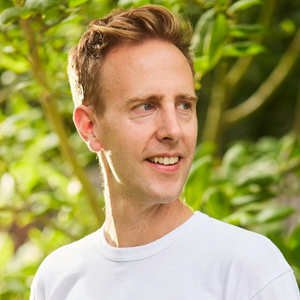
[00:00:10] Ray Latif: Hello, friends. I'm Ray Latif, and you're listening to the number one podcast for anyone building a business in food or beverage, Taste Radio. This episode features an interview with Luke Boase, the founder of Lucky Saint, a fast-growing UK-based brand of non-alcoholic beer. Luke Boase launched Lucky Saint in 2018, but the brand's future, 100 years from now and beyond, has always been top of mind. The leading dedicated non-alcoholic beer brand in The Lucky, Lucky Saint is sold in over 10,000 points of distribution in the country, including more than 1,000 pubs and restaurants. That number includes its own bar, aptly named The Lucky Saint, which is located in London and operates at the base of a building that also houses the company's office. Last year, Lucky Saint raised a £10 million Series A round that included funding from VC firm Jam Jar Investments. Led by a mission to become, quote, the world's defining alcohol-free brand, Lucky Saint is resonating with both sober and moderate drinking consumers, according to Luke. A key theme of the company's marketing and communication strategy is inclusivity, whereby the quality of the beer and its appeal as a beverage for anyone who isn't drinking are the lead messages. In the following interview, Luke talks about how his interest in entrepreneurship sparked the idea for Lucky Saint and why he has a long-term vision for the brand. He also explains how the company incorporates consumer insights and data into its retail and buyer pitches, how he views Lucky Saint's role in the non-alcoholic beer category, and how he thinks about competing with strategically owned and aligned beer companies. Hey, folks, it's Ray with Taste Radio. Right now, I'm honored to be sitting down with Luke Boase, who is the founder of Lucky Saint. Luke, great to see you.
[00:02:08] Luke Boase: Great to see you too. Good to have you here, Ray.
[00:02:10] Ray Latif: Yeah, and thanks so much for having me. And thanks so much for having the team. We're about T minus an hour and a half or so away from an event here at your amazing pub in London. Yeah, we're hosting a few folks in the area, food and beverage entrepreneurs, operators, et cetera. And you've provided a wonderful space for everyone to get together and sip some Lucky Saint and other libations, I think as well.
[00:02:34] Luke Boase: Yeah, for sure. No, it's great. Great to have everyone. And that's why we built a pub in the first place. So we could host people and make social connections. And yeah, it's an important part of our industry, I think.
[00:02:45] Ray Latif: Yeah, I'm familiar with non-alcoholic bars or bars that are specifically pouring non-alcoholic drinks. I don't think I've ever heard of a brand that has its own bar or a non-alcoholic brand that has its own bar. Are you the first? I mean, maybe the first in England?
[00:03:02] Luke Boase: In terms of a regular bar that sells, you know, all drinks, alcoholic, non-alcoholic, you mean?
[00:03:08] Ray Latif: Right. I guess that's true. You sell a variety of drinks, but as a non-ALC brand, you have your own pub.
[00:03:13] Luke Boase: Yeah, it's a good question. I don't know the answer to it, but I think we're the only one. Yeah. But it was always an important decision for us that we weren't building a non-ALC pub.
[00:03:22] Ray Latif: Right.
[00:03:23] Luke Boase: We were building a great pub. and we'd have the office upstairs and then we could live out this kind of belief that the greatest reward of drinking is the social connection and you should be able to come to our pub and enjoy our hospitality whether you're drinking, not drinking, drinking a little bit.
[00:03:39] Ray Latif: When people come in, are they surprised that you sell quote-unquote regular beer and other things like that?
[00:03:46] Luke Boase: There are some people who assume that it's going to be non-alcoholic, but equally there's a whole bunch of people who come in here actually without even knowing that it's attached as a pub, it's attached to a non-alcoholic beer brand. The idea was always that it's a great local pub.
[00:04:01] Ray Latif: Yeah, that's a great beer too. We've had samples in our office and you have great branding. It just feels like you guys did a lot right. But let's back up for a second because before you have to do anything right, you have to have the idea, you have to have the business plan and you have to have the passion to follow on both. Talk to me about your interest in non-alcoholic beer and why it became this important part of your life.
[00:04:26] Luke Boase: I discovered or started thinking about non-alcohol beer actually in the context of starting my own business. So I had this chance meeting with two founders of a technology business and I remember I was sitting with them and they were explaining to me this idea that they had around building a tech platform to change the face of retail. And they were like wildly excited about this. And they had so much passion and so much belief in what they were building. And it was completely infectious. I sat across the table from them thinking, I need to be sitting on that side of the table. I need to be sitting in a chair with, you know, in a role that I'm as excited about as they are. Just the entrepreneurship bug. Exactly. Yeah. And so it got me thinking about, well, you know, if I started a business, what, you know, what would it be? And a few ideas came and went, but the idea of taking the most maligned and sort of hated part of the beer, overall beer, like non-out beer, and bringing that to a place where it was something to be proud of, this idea of changing perceptions of the most hated part of the beer category was, it just sort of got me emotionally.
[00:05:43] Ray Latif: In what year was this?
[00:05:44] Luke Boase: So this idea was in 2016. My view on it was like, on paper, non-alcohol beer, what an amazing proposition. For the right time, for the right occasion, for the right person. All of the beer experience minus the alcohol. But in reality, I wasn't even a consumer of alcohol-free beer. And so I started thinking, well, I wonder, you know, why is that? And I boiled it down to two things. Firstly, there wasn't a beer in a bottle that was good enough to kind of bring me into the category. And then secondly, there wasn't a brand that made me feel positive about that choice. I think the world's changed a lot now, but if you go back, you know, six, seven, eight years, you used to apologize if you're not drinking. Sure. You meet someone, you know, on Tuesday, I'm sorry.
[00:06:35] Ray Latif: Or you feel out of place.
[00:06:37] Luke Boase: Yeah. Yeah. And so it really came about around this idea is I wonder if it'd be possible to changed the way people feel about not drinking. And a little bit naively I thought, well, I wonder how hard it would be. And then ended up spending the next two years working with six different breweries in three different countries. trying to figure out how to brew great-tasting non-alcoholic beer. And that took me through The Lucky, Belgium, and then ultimately to Germany, where I managed to build a relationship with this incredible 450-year-old brewery who brew amazing lager in their own right, but also have the technology to brew non-alcoholic lager, or non-alcoholic beer, and ended up built this relationship and developed the beer with them. And we still brew our beer in Germany today. Not a bad place to brew beer. Well, it's the heart of particularly lager brewing. They are like hands down, I think the best lager brewers in the world. And they have some incredible breweries over there.
[00:07:49] Ray Latif: I've spoken with another founder in the space of non-alcoholic beer and He had a similar idea. He's like, I'm going to do something that's never been done before, at least hasn't been done in the beer space, modern beer space, which is create a great tasting non-alcoholic beer. He got laughed out of every brewery and finally found someone that was willing to work with him. They made great beer. The question still remained, how am I going to sell it? How am I going to market this? Because public perception of non-alcoholic beer was that it was terrible. Nothing really tasted good. You know, you might as well just drink water. So was there a thirst, so to speak, for non-alc beer in England the way it is today? Because again, there's a lot of interest and demand it seems like in 2024, but 2018 or so, did you launched in 20, was it right in 2016 or?
[00:08:41] Luke Boase: No, no, no. So it took me two years. So then it was back end of 2018 when we launched, so actually six years ago this month.
[00:08:48] Ray Latif: When you started going to retail shops and to bars and said, hey, I have this really great tasting non-alcoholic beer, were you welcomed with open arms? Were you kicked on your way out? Or I mean, was it somewhere in between?
[00:09:00] Luke Boase: Well, just one of those two things.
[00:09:02] Ray Latif: Okay.
[00:09:04] Luke Boase: But not consistently, like it depends who you're talking to. So there were absolutely people who believed in it and who saw the opportunity and understood the need to redefine quality within the category. And then there were others who systematically said, well, I think the sort of one of the responses would be, we don't sell any non-alcoholic beer. So I don't see why we need to change anything or put Lucky Saint in the fridge. And it sort of begs the question is why are you not selling any non-alcoholic beer at the moment?
[00:09:43] Ray Latif: pick and choose your spots or did you just go make a blanket attempt to go after, you know, every place that you thought non-alcoholic beer could succeed?
[00:09:52] Luke Boase: No, we were definitely choiceful about where we went and working with the most influential venues. There's a sort of this classic model of building a drinks brand, which is to work with generally like the most sort of high-end or influential venues we worked with and continue to work with you know lots of high-end but actually we've never been we think quality is something that runs through like it doesn't marry up necessarily with like premium or high-end venues it's just actually it's about finding the venues Who want to serve the highest quality? So that could be a burger joint or it could be a Michelin star restaurant. So we we spend as much as much time working with the 84 Michelin star restaurants, I think we work with now as we do with you know, the best bits of casual dining and the best pubs and
[00:10:47] Ray Latif: when you're making that presentation, how do you incorporate consumer insights into what you're talking about? Because on its own, you could say, hey, we have a great liquid, we have great branding, we have some traction, but what's the potential for this category? Why are consumers not only going to drink this today, but you know, for the long term? Why should someone take a beer off their tap and put a Lucky Saint? Or why should they make space in their coolers for a Lucky Saint? You know, what kind of research, what kind of consumer insights do you incorporate into that pitch, if any at all?
[00:11:20] Luke Boase: Yeah, I guess there's quite a bit of data and insight. The single most powerful thing is taking an operator's own data and letting them see what the commercial impact of having Lucky Saint on their bar. That's the most powerful thing. So, you know, it's why we run, you know, we'll run trials in groups of sites to create a level of understanding and so that they can then understand what the positive impact The Lucky Saint has on their P&L.
[00:11:50] Ray Latif: I've talked to a bunch of founders in the alcohol-free space, whether it's beer, spirits, wine, and I hear from a bunch of them that dry January, sober October, things like that get a lot of people interested in the space for the first time. If I'm being really honest, Luke, I kind of feel like we're hitting a ceiling with those months. I feel like people who were going to do them have done them or tried it and didn't like it. You know, how does that kind of marketing, how does that kind of group think and perspective impact your business? And, you know, do you still rely on it as being an important part of consumer adoption and getting folks aware of Lucky Saint?
[00:12:36] Luke Boase: It's certainly a big moment in the year to drive trial for the category but we know and we've seen you know there used to be certain spikes during the year around things like dry January and now consumption of non-alcohol beer throughout the year is much more aligned to consumption of overall beer, which shows that we're maturing as a category and it's just falling in line. So summer is bigger than January. It used to be that January was the biggest month, but it's not now. Summer will be much bigger, as will Christmas. So I think you're right. The long-term success of the category is all around getting non-alcoholic beer into people's psyche and consciousness and getting them consuming it regularly. I always think for the category the big opportunity is that when you walk into a pub you tend to have a repertoire of drinks that you'll go to and non-alcoholic beer is not in many people's repertoire. Because when you walk into a pub, you're, you know, there's the instant pressure to make the order. And actually, if you haven't already, you know, kind of got it in your repertoire, then you're probably not going to order it. And so the big change that we can make for the category is to get more people having non-alcohol beer mentally available to them like more of the time. And when that happens, we'll start to see, I think, continued growth.
[00:14:08] Ray Latif: Yeah, I was kind of shocked because a couple of good friends of mine came over here about a year ago and they had Sunday roasts. I'm like, oh, very nice. And, you know, I asked what they were drinking and they were drinking non-alcoholic beer. It might've been Lucky Saint, actually. And they were just overjoyed at, you know, the optionality they have now. You know, speaking of which, I think, There are a lot of brands that have come into this space since 2018. And there are international conglomerates that have put a ton of money behind non-Alc beer. There are upstart American brands. I think we can just mention Athletic, you know, that is already here in The Lucky. And I wonder for, you know, a brand like Lucky Saint, how you assess that competition, big, small, and, you know, coming to the market in the context of your own growth strategy.
[00:14:59] Luke Boase: So there's two parts to this. One is the, I guess if we look at category and, you know, the category is still in a period of growth and establishing itself. So, you know, particularly with the mainstream brands, which are putting the most amount of marketing money behind the category. That's only growing awareness and helping to do the job, which I was just talking about, like growing mental availability. And, you know, if we can double, triple, quadruple the size of the category, that's an overwhelmingly positive thing for everyone.
[00:15:32] Ray Latif: And when you say we, you're talking about everyone that's involved in this space. Yeah, I think that would be inherent in your answer. I don't know why I even said that because it's not Lucky Saint on its own. Helping to create three, four times growth of the category.
[00:15:45] Luke Boase: No, yeah, no, no, exactly. The job is for the category as a whole and the power of those larger brands is, you know, is meaningful. And then I guess there's the piece for sort of me as a founder in the space where you have to kind of rationalize and stay sane. And, you know, I always think that for me this is, and for LuckySane, it's about really understanding what's our ambition, what role do we want to play within the category and what's our job and remain super focused on that because no one is ever going to have 100% share of a category. But it's understanding and sort of winning within, I guess, the positioning that you're going after and the opportunity that you're going after for yourself. It's interesting because if you look back five or six years ago, non-Alk beer was just non-Alk beer. that now, and venues might stock one, that now venues might stock two or three of different styles. So they might stock a stout, they might stock a parallel, and they might stock a lager. You know, even within five years, you've had kind of almost like segmentation within the category. So that's how I think about things. And we have, you know, our own ambitions and our own strategy. And, you know, we have to kind of focus on that. What is your ambition? The ambition is to build the world's defining alcohol-free brand. Today, we're only in The Lucky. I think for certain consumers, we are probably the first brand that they think about in the category. And that's amazing. But we'd like to continue to do that in The Lucky, but then also think about international as well.
[00:17:30] Ray Latif: I noticed you didn't use the word beer when you said the leading alcohol-free brand. Does that mean you're considering or you would consider other beverage alcohol analogues?
[00:17:41] Luke Boase: So we've built a specialism in beer and I think that's really important, like the heritage of the way that we brew and the provenance of the beer and the love that goes in. We've built an enormous amount of credibility in that space. Actually to go and sort of suddenly go off and do a wine or a spirit I think would be quite difficult. So I didn't say beer, but it's hard to imagine us doing anything other than beer.
[00:18:06] Ray Latif: I totally get you. Selfishly, I wish you did create a non-alcoholic wine. I've been talking about this in the podcast a lot. I'm a big wine drinker, love wine. I would love a non-alcoholic wine from time to time. The quality just isn't there, unfortunately. There are some exceptions. Sparkling in particular, there's some good exceptions. But I think I'm having a hard time and people are going to hear this and be like, you know what? Screw Taste Radio. I'm never listening to that show again. And I'm not there to criticize anyone's efforts or their brands. I just think that if you're going to call yourself wine, it should taste like wine. If you're going to call yourself a beer, it should taste like beer. And I think that's the concerning part for me about the progress that we've seen in the non-alc space, is that if the quality declines, it's going to hurt the entire category. You mentioned some of the conglomerates out there. I think some of them make decent beer. I think some don't. When you're thinking about those bigger brands, how much do you really want to align yourself with them as part of the category versus say, that's training wheels, don't put them in the same bucket as us.
[00:19:17] Luke Boase: Can I ask one question? You said, if you're going to do wine, it needs to taste like wine.
[00:19:21] Ray Latif: Yes.
[00:19:22] Luke Boase: Do you think it needs to taste like wine or do you think it just needs to deliver everything that a wine experience delivers?
[00:19:30] Ray Latif: Fair question. I think that if you're going to market something as a Cabernet Sauvignon, it has to be bold, and I think it has to pair well with food. It's hard to say that something can help me experience the moment that I'm in when I am drinking an alcoholic beverage, more specifically an alcoholic wine. But independent of the experience, I think there's just expectations I have with liquid. It has to perform the way I've expected it to perform since I've been drinking wine. If it doesn't, I'm kind of in the boat where I'm in now. And you know, someone like me who's you know, following beverages and has been for the past 14 years, it's not something I'm seeking out. I am seeking out non-alcoholic beer, but just wine I don't think is there yet. And what I've seen so far has kind of turned me off to the category. Another convoluted way of speaking here, but I don't know if that answered your question or not.
[00:20:32] Luke Boase: Yeah, I think the wine one is really interesting because I think that when you think about what wine delivers in the occasion with food and the kind of the way that it pairs with food so well, some of those things you can kind of isolate. Well, it's the, you know, it's the tannins, it's the acidity, those sorts of things. Those don't have to come from grapes. For me, I find it sort of like a stimulating kind of topic of conversation, because you can tip things on their head a little bit and say, well, does it actually need to be, you know, technically a wine or could it be something else, but which delivers the elements of what wine delivers?
[00:21:12] Ray Latif: Yeah, I think what you're asking is about language. You know, can you call yourself a wine if it's not? you know, wine that you've come to know as wine. And certainly, you know, you can make wine out of apples and all kinds of other fruits, but the wine I'm referring to is grape-based wine. And I think that's the expectation most people have when they're tasting a non-alcoholic analog. But getting back to the question of, are you at all concerned about quality and the quality of others? other brands impacting the momentum that the category has and specifically The Lucky Saint has?
[00:21:50] Luke Boase: I don't think so. I think there's probably two threads to this. There's absolutely an importance around like food safety standards, you know, that's critical to the success of any category. So ensuring that, but I think your question is probably more around flavor profile. And I think we've gone beyond the point of poor tasting products having the ability to sort of derail the category.
[00:22:19] Ray Latif: Well, I ask it because, again, there are a lot of people who have not tried alcohol-free beer yet. And so there's a huge number of people who have still yet to taste their first non-alcoholic beer. If it ends up being something that's not great, they may say, well, screw it. You know, I'm not going to try anything else. It happens a lot. We saw that kind of thing in kombucha. We continue to see it in kombucha where And maybe it's not low quality, but it's just that the flavor is so off-putting to someone that they're never going to go back to it. So I think that's kind of where I'm at. Like if you, if you're still in the low single digits in terms of percentage of people who drink non-alcoholic beer on a regular basis, that means there's a huge opportunity to reach the rest of those beer consumers.
[00:23:02] Luke Boase: Yeah, I do think there's enough people out there and the conversation is very much live in terms of consumers talking about all, you know, which ones are good, like what you should be drinking. And sure, someone might try one and have a not not great experience. But I think the category has enough momentum now that they'll put that down to, I did try, you know, that product, it wasn't for me. I just need to find the ones or the one or the ones that are for me. I'm a maybe I'm sort of glass half full on this stuff. I think, you know, of course, like having great tasting products in the category is that, you know, that's the single most important thing. But I don't think having a few people who don't like something, I don't think that derails us.
[00:23:50] Ray Latif: We're almost out of time here, but I do want to ask one more question about marketing, which is, I guess, inherent to the future of any business, but I think in particular yours, in that talking to the consumer in a way that's going to be inclusive versus exclusive is important for your brand, I would imagine, and for the category as a whole. What's been the message that resonates most with consumers that are new to the brand?
[00:24:19] Luke Boase: Our pub is probably a good representation of how we view the drinks category. Drinking, not drinking and non-alch in that we're kind of like we're a broad church. We serve everything in our pub from full strength beer and 40% ABV spirits. through to Non-Alk and Lucky Saint and many other brands besides. And for us as a brand, it's always been really important that most of the consumers of Non-Alk beer also drink full-strength beer.
[00:24:56] Ray Latif: When you say most, is it over 50%? Is it 90%? Is it
[00:25:00] Luke Boase: Yeah, so like 80% plus. Wow, okay. So this is about being inclusive. So that's probably one of the fundamental things that we've done in terms of comms. And then in terms of the brand that we're building, I grew up in a family full of people who all worked in advertising. So I spent the 1990s watching the greatest TV commercials of all time on a TV channel called UK Gold, which basically showed reruns. And so I'm obsessed by the way that brands and beer brands in particular were built, and the kind of amazing creative that went into them. I think they've created these unbelievable, iconic brands. My head and my heart The Lucky Saint is all around building a brand that will be here in a hundred years' time, that stands for the right things, and does things creatively that connect with people and that make people feel positive. you know, just make the corners of your mouth just turn up a little bit. We're definitely not like a laugh out loud brand, but we do things visually and kind of tone of voice wise, which have a kind of rye whip to them. So that's the ambition. And it kind of all goes back to this point around like non-alcoholic beer was a less than part of the beer category. And so my belief was and is that We need to not just build the best non-alcoholic beer brand, we need to build a brand regardless of category that is the best it possibly can be and one that people will feel proud to order. So we spend as much time thinking about and executing brand as we do around the beer itself and distributing it and all of that.
[00:27:02] Ray Latif: I love it. Build a brand that's going to be around for a hundred years. I would imagine that's everyone's goal. Or more. Or more. After the century mark, it's all over. No, but I think that's something that all brands should strive for. And I think if you think that way, building a lasting brand, building a sustainable business, it'd probably be easier and more fruitful and more fun than saying, We're going to sell this brand in five years because that puts a whole different kind of spin on what you're doing. I think we're seeing the elements of that in Lucky Saint, the former that is, you know, really focusing on something that is going to be a long-term brand that exists. in supermarkets, liquor stores, pubs, restaurants across the world. I really do see that potential. And it's one of the reasons I wanted to sit down with you today, Luke. Thank you so much for the time. Really appreciate it. Thank you so much for your hospitality and hosting us here today. And good luck with everything going forward.
[00:28:06] Luke Boase: Thanks very much, Ray. Thanks for coming. And yeah, pleasure to spend this interview with you. And we look forward to this evening. Absolutely.
[00:28:13] Ray Latif: Thanks again. That brings us to the end of this episode of Taste Radio. Thank you so much for listening. Taste Radio is a production of BevNET.com, Incorporated. Our audio engineer for Taste Radio is Joe Cracci. Our technical director is Joshua Pratt, and our video editor is Ryan Galang. Our social marketing manager is Amanda Smerlinski, and our designer is Amanda Huang. Just a reminder, if you like what you hear on Taste Radio, please share the podcast with friends and colleagues. And of course, we would love it if you could review us on the Apple Podcasts app or your listening platform of choice. Check us out on Instagram. Our handle is bevnettasteradio. As always, for questions, comments, ideas for future podcasts, please send us an email to ask at Taste Radio. On behalf of the entire Taste Radio team, thank you for listening, and we'll talk to you next time.
[00:29:07] Lucky Saint: you