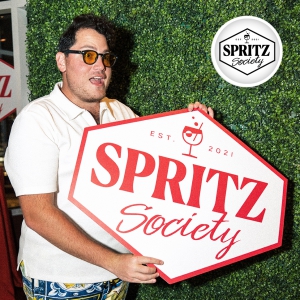
[00:00:10] Ray Latif: Hey, everyone, I'm Ray Latif, and you're listening to the number one podcast for the food and beverage industry, Taste Radio. This episode features an interview with Instagram celebrity Ben Soffer, who recently broke into the beverage business as the founder and CEO of upstart wine-based cocktail brand Spritz Society. Just a reminder to our listeners, if you like what you hear on Taste Radio, please share the podcast with friends and colleagues. And of course, we would love it if you could review us on the Apple Podcasts app or your listening platform of choice. These days, so-called Instagram influencers are a dime a dozen. Legions of perky yoga instructors, keto, diet diehards, and foodie fanatics claim influence on the social media platform, but few reach the level of attention and engagement of the account Boy With No Job. Operated by marketing executive Ben Soffer, Boy With No Job features a daily flow of witty memes and side-splitting videos to an audience of 1.6 million followers. The popular feed also incorporates Sofer's passion for cocktail spritzes, the combination of which is the foundation for Spritz Society, his new brand of sparkling, wine-based canned cocktails. Launched in August, Spritz Society comes in four flavor varieties, each containing 6% alcohol by volume and 120 calories per 8.4-ounce can, and is sold direct to consumer via its website. Amid an increasingly crowded and competitive market for RTD cocktails, Soffer states that one of Spritz Society's main advantages is that it was born out of an organic connection between him and his audience, quote, a brand by the people, for the people, as he puts it. In the following interview, Soffer expounds on the development of Spritz Society, how he leveraged his expertise in influencer marketing into the business strategy, why authenticity is a common theme in everything he does, and how he got up to speed as a first-time beverage entrepreneur. Hey, folks, it's Ray with Taste Radio. Right now, I'm honored to be sitting down with Ben Soffer, the founder and CEO of Spritz Society. Ben, how are you? Hey, Ray, I'm great. How are you? I'm doing fantastic. I think folks might not know your name, or maybe they do, but they're probably more familiar with your Instagram handle or your famous Instagram handle, as it were, boy with no job. Where did that come from? Because clearly you have a job now, and I'm looking at your LinkedIn profile. You've had a job for a long time. How'd you end up with that one?
[00:02:44] Ben Soffer: Yeah, I've had a job forever. I came up with that with my wife. So my wife is girl with no job. And that sort of came, she has a wildly popular Instagram account. Mine is just semi-popular. Always constantly chasing her up that hill. But that came through consistency, wanting to be the boy with no job to the girl with no job. And they both just came from very naturally. She had an internship. then did not have an internship. So when she was employed, she was a girl with a job. And then when she wasn't, she was a girl with no job. So it really just came from circumstance. And it's funny, people ask all the time, how did it come to be? And really, it just was a product of the times and doing things that we love to do, posting authentic content. And we're fortunate enough that over the last eight years, it really blew up into something really special.
[00:03:40] Ray Latif: It definitely has, and I've been perusing your Instagram account over the past few weeks, and you've got some really, really interesting and hilarious content. One of the things that really struck me was a repost of a video that was produced by Tony Baker, who is a comedian, and it was about the brown Listerine. The brown Listerine, if folks recall, is like the original old school Listerine. If you recall, like way back in the day, it used to come in this like wide cylinder glass bottle. Do you remember those days or were you always like Listerine was always in plastic for you?
[00:04:20] Ben Soffer: No, no, no. I fully remember it, and I fully remember Brown Listerine, and I thought that video was so funny. Our entire vibe and mantra and what we try and do every single day, whether it's an original post, a story, a repost, is relatable humor. So that video like struck both of those chords. It's like, can I enter your mind and remind you of something that you completely forgot about? You have that aha moment and then you're like, oh my God, brown Listerine. Yeah, that was a great video. Great video.
[00:04:52] Ray Latif: I was talking to my brothers about this because we grew up on the Brown Listerine. And they were like, I thought that was discontinued. And I'm like, I need to go to CVS and check it out because I haven't seen it in a while either. But man, if you have ever tried that product or actually swished around with it, It is vicious, but you feel it. It's like you feel like it's actually doing what it's supposed to do. It's not like that minty fresh Listerine. This will kill any terms in your mouth, probably in your throat, stomach, yourself, everything. The brown Listerine will take care of everything for you. So yes, I definitely related to that video. I'm glad you reposted it because I was I watched about 10 times and I laughed my ass off about 10 times. So thank you for that.
[00:05:33] Ben Soffer: It's funny you mentioned vicious. Honestly, Listerine in general is vicious. You don't realize until you don't cut it with water, like when you go to a hotel or if you go to like a gym and you do a swish afterwards, it's like kind of pleasant because they cut half of it with water. It's like what your mom used to do when you were young and drinking Gatorade. Like she put half of it with water, half with or at least that was my mom. But yeah, when you have regular Listerine, it's It's harsh. It stings, regardless of if it's brown or not.
[00:06:03] Ray Latif: That is true. I didn't know they did that at hotels and gyms. I always thought it was like Scope, because Scope isn't as harsh. This is interesting to me that they're cutting Listerine with water.
[00:06:11] Ben Soffer: I could be completely lying, Ray. I thought that it was cut with water, but maybe it's Scope, so I'm not sure who's right, but it's certainly less intense outside of the one that's sitting in my bathroom.
[00:06:25] Ray Latif: For sure. Now, we're talking about two products that you swish but don't consume. You don't drink Scope or Listerine. You certainly drink Spritz Society's products. One of the things before we actually get into the genesis of this brand that really amazed me was your Instagram handle for that brand. It's just spritz, at spritz. How'd you get that?
[00:06:47] Ben Soffer: Ray, I can't divulge my secrets fully.
[00:06:50] Ray Latif: Okay.
[00:06:51] Ben Soffer: What I can say is that I have been admiring the handle for a long time and through my charm, I was able to acquire it. Okay, fair enough. That's just really like the hand which we'll dive into in idea of spritzes even b I've always loved spritzes is like something that I If I'm drinking any kind of spritz at a restaurant, it's spritz season. And so when I saw this handle was really not being used, I made it my life's work to make sure that I got my hands on it. So it was a dedicated long journey, but we have the handle.
[00:07:41] Ray Latif: Well done. Well done. You know, I interviewed the founders of a hot sauce brand called Truff, T-R-U-F-F. Are you familiar with the guys? Yeah. Yeah. And they talked about how they acquired the handle Sauce, at Sauce. And they were like, what can we do with this? And that eventually turned into the brand Truff. Pretty amazing story. They also didn't divulge exactly how they got the handle as well. There are some rules that Instagram has about how you can acquire or trade and things like that. So I'm sure. Exactly. That's a story for another time. For another time. You have been known as an expert in influencer marketing, and that is a really relevant term to our audience. But I'm not sure if you have the same definition that other folks do. How do you define influencer marketing?
[00:08:27] Ben Soffer: Influencer marketing is typically paying somebody for their authentic influence to talk about your product in a way that is relevant to their audience, as opposed to the way that it's relevant to your brand's brand book. So really tapping into an audience authentically to either sell product or deliver on any KPI.
[00:08:51] Ray Latif: So in the beverage industry, one of the original influencers or one of the most well-known influencers in contemporary beverage history. It was 50 Cent when he aligned with vitamin water. This was before social media. This was before a lot of things really related to social marketing. How have things evolved since that time?
[00:09:12] Ben Soffer: Sure, so I consider celebrity marketing, true celebrity marketing and influencer marketing to be two completely separate things. So when you do a celebrity endorsement deal, if you do, you have Ryan Reynolds with Aviation Gin, or if you have 50 Cent with Vitamin Water as you brought up, those are not, to me, they're not as authentic because the reason why they have social followings is not because of what they've done on social, it's because of what they've done off social. So a key difference with influencers, so if you think of, pick any influencer, I guess we'll just use myself for this example, but. Please do. I've created an audience because of the stuff that I post, because of my humor, because of my voice, and created an entire community that never existed outside of social. 50 Cent, is famous for movies, for rapping, for, I mean, for everything. He's a monster celebrity. And the people that follow him on social are following him because they loved him, they loved his music, or they loved him in the movies, not necessarily because of the stuff that he posts on social. So I think that there's a varying level of engagement And also it's far more expensive to work with a celebrity to get them to post on social. So a key thing in influencer marketing historically has been how do we leverage these audiences that are super super authentic get them for a better price and ultimately have them have better conversions. So in a 50 cent. deal, he'll be far more effective in traditional media. So in an out of home ad, in a TV ad, which is really how they used him for vitamin water, right? On the social side, it's like a decent press opportunity. But I think that more traditional influencers, YouTubers, Instagrammers, people that were born on platform, I think are more effective.
[00:11:06] Ray Latif: So as you mentioned, 50 Cent became an influencer as a result of his celebrity. How do you become an influencer if you're not a celebrity?
[00:11:14] Ben Soffer: One, you time the platform really well. So you'll notice there's no coincidence that, like you look on TikTok, you have Addison Rae, you have Charli D'Amelio, you have all of these massive stars, and they were early, early adopters of the platform, did it right, created content that people wanted to see. But it really is all about timing it, for sure. You have to have great content. You have to strike a very authentic chord with your audience and do something that garners an audience. But you also have to time it right. It's very, very difficult to grow an audience on Instagram today. It was significantly easier eight years ago, the same way that I assume it'll be very difficult to grow an audience on TikTok in five years. But it was very easy a year and a half, two years ago. If you're trying to become an influencer today, My advice would be, don't try to become an influencer. Post content that's authentic to you, knowing that if the content is something that resonates with people, it will absolutely catch on.
[00:12:12] Ray Latif: Are you on TikTok?
[00:12:14] Ben Soffer: I am on tech talk. I wouldn't go through it. It's rather embarrassing because I'm a little I just my humor is a little bit too old for that platform. It's just videos don't hit quite like the kids videos do. But I am on tech talk. I do enjoy it. I certainly love scrolling tech talk. I think it's a it's just such a different platform. Right. Are you a tech talk user.
[00:12:35] Ray Latif: I'm not. No, it's one of the things that, like you, it's hard for me to get into because I think my concept or my idea of humor and that of most of the content on TikTok are two different things.
[00:12:47] Ben Soffer: So what I will say, I was very down on TikTok. I did not think that it was for me at all. I don't think it's for me posting, but I do think that they have one of the most advanced algorithms I've ever seen on a social platform. And they really do cater your entire feed to everything else that you like in your life, which is terrifying. Like I'll mention something out loud and all of a sudden it will be on my TikTok feed. It's definitely scary and I'm sure that they're listening to me. But the feed is really, really catered to everything that I love. So I love golf. I'm getting golf tutorial videos. I love any kind of humor. They're showing me stand-up comedy sketches, or they'll show me UGC. That, to me, is the most powerful part of TikTok. It's making anyone feel like an influencer. people can just go viral at any time. And I think that that leads to far more risque content that ends up being really funny. So I would recommend it.
[00:13:47] Ray Latif: OK, before we continue, I want to ask. So you say the word golf while on TikTok, and then all of a sudden you get golf videos appearing in your feed. Is that what you said?
[00:14:00] Ben Soffer: I'm not going to start creating conspiracy theories, but I am positive that they're listening to me. I will talk about something. It's happened numerous times. I'll mention something just in passing. I'll hop on TikTok six hours later and something related to that will be there.
[00:14:17] Ray Latif: So it's not even when you're on the app? Nope. Oh my goodness. Okay, so that makes me even less high on TikTok. I think I'm probably going to avoid that for a bit, even though as a journalist, as a podcaster, it's probably something I should be paying a little bit more attention to. But I do know that And the videos that you shared, the content that you shared on your Instagram account, some of that stuff is really hilarious and attention-grabbing. In terms of engagement, you're seeing comments and you're seeing other reposts from your account and whatnot. But I wonder for you, what is more important? Is it attention-grabbing? Is it attention or is it engagement? Or is it this mix of both?
[00:15:02] Ben Soffer: I would say that it's both. And one thing that people often forget to talk about as it relates to engagement. So engagement isn't just likes and comments. For me the most powerful form of engagement which nobody can see but me is shares. So shares are you are loving this Listerine post and you sent it directly in messages to five of your friends. That's the highest form of engagement to me. And so I always look for things that are shareable. I always look to create content that's authentic. And then I look to create content ultimately that's on brand. So the brand of Ben and Boy With No Job is food, drinks, memes, weirdly Mrs. Doubtfire references. That is the ethos that I play in, and I try not to go too far outside of that. Oh, also making fun of the keto diet. Those are things that are relevant to me. Optimizing for engagement and authenticity is the most important.
[00:16:04] Spritz Society: Guessing your margins? That's risky. Belay Financial gives CPG brands the clarity to scale smarter, faster, stronger. Get your free inventory ebook by texting TASTE to 55123 and start making data work for you. Vibrant Ingredients is the natural ingredient partner powering food and beverage innovation, delivering flavor, function, and protection through a science-backed portfolio. Vibrant delivers purpose-driven solutions that help brands create extraordinary experiences. Discover what's possible with Vibrant today. Visit VibrantIngredients.com
[00:16:51] Ray Latif: I think people know what on-brand means. Authenticity is one of those words that gets used a lot. And I think that some people might have a different perspective on what authenticity is than others do. How do you define authenticity?
[00:17:05] Ben Soffer: I would say that, and I'd love that you brought that up, most people that say that they're authentic are authentically inauthentic. So what authenticity means to me is that if you meet me in real life, which fans can attest when they've met me on the street or at any function, I'm identical to how I am on this interview and to how I am on social. Like now I'm a little bit more, buttoned up. I mean, I'm not wearing a nice colored shirt like you, but I'm a little bit more buttoned up.
[00:17:36] Ray Latif: They pay me for this.
[00:17:37] Ben Soffer: So don't worry about it. But in general, it's just not wavering. It's being yourself through and through. It's not creating this false environment that people see online and then meet you in person. It's totally different. And I'm not talking about editing photos like that's not do. I'm a big proponent of do whatever you want to do. People create multiple personalities and one exists on social and one exists off social. And I think that the key to authenticity is making sure that they're woven.
[00:18:07] Ray Latif: I think what you're saying is, you know, some of those Instagram models that you see who are sucking in their gut for the photo, you know, to show what appears to be a six pack or close to that doesn't really exist in reality is what I'm hearing. That's certainly one big piece of it.
[00:18:23] Ben Soffer: The other is just like. click baby stuff that isn't even real. Like there's just, my favorite thing, I don't know if you've seen these memes, but there was like a popular meme trend where it was YouTubers taking very plain situations, but creating really eye grabbing titles for them. So like a YouTuber would see a woman crossing the street and five seconds later a bus would pass. And then the title for the YouTube video would be, elderly woman almost gets smashed by a bus and it's like click here to watch. And like that was like a very popular, hilarious meme trend. But those videos are very real. And so it's authenticity is not distorting reality in any way.
[00:19:08] Ray Latif: Okay.
[00:19:08] Ben Soffer: How much time do you spend on social media? Less now that I have a large company. A job per se. Yes. Even if I had a job, at least I had more time to be on social. Running Spritz Society and being the CEO of this company is the most time-consuming endeavor I've ever had. I do still find time for social, but probably at this point, it's like an hour a day.
[00:19:33] Ray Latif: Really? That's it? Wow. I think I spend more time on social than that. That's interesting. And you have a million six followers. I think I have like 1,500.
[00:19:40] Ben Soffer: The million six came a while ago. We have our base now. I don't expect my audience to grow too much over the next bit of time. We're really happy with each other, me and my audience. We're in a good place.
[00:19:52] Ray Latif: Well, I assume you'd want to increase the size of your Instagram audience for Spritz Society, which I don't know how many followers you have at this point, but it's probably not 1.6 million. Hopefully you'll get there at some point. Let's talk about Spritz Society. As you mentioned, you were really interested in the beverage form, the beverage category, whatever you want to call it. Why start a brand?
[00:20:16] Ben Soffer: So it all plays back into this topic of authenticity, which is the theme of our podcast. Selling others' products, regardless of how much you like it, is not authentic. We can try and make it as authentic as possible, right? Like brands can come out with collabs with influencers. At the end of the day, they're being paid to promote a product that is not theirs. And it's always been an absolute dream of mine to use my audience, my wife's audience, her sister's audiences. They have a really popular podcast called The Morning Toast. It gets 1.2 million listens a week. The goal was create something that we love, that we can really proudly stand behind and say, we need this. It's delicious. There is no paid partnership here. That was the reason why I wanted to start it. Making sure that there was something that we could create, that we could sell to our audience that wasn't, for lack of a better term, bullshit. Like a lot of influencer marketing is just pay for play. And we wanted to make sure that our audiences knew that what we were making was the real deal.
[00:21:24] Ray Latif: Yeah, we've seen other influencer-based beverage and food concepts come to market. Some, frankly, are better than others. I think what you have with Spritz Society is pretty great. How long has this been in planning? Because when I'm looking at your package, when I'm looking at the positioning, when I'm looking at how you've designed the website and gone to market with this brand, it all looks like it's pretty slick, and slick in a good way, not slick in any kind of negative way.
[00:21:50] Ben Soffer: Thank you, I appreciate it. This is, at this point, about two years in the making. It's been, as any entrepreneur will say, an absolute grind, highs and lows, but it's been about two years. It all started with an idea. It all started with sort of a path that we saw. The RTD market was exploding. The RTD market, though, is exploding because of convenience, not because of taste, which is something that's incredibly important to me when I consume alcohol. I like tasting something that tastes good. Otherwise, I'll take a shot of tequila. I don't want to drink 350 ml of something that doesn't taste good. That's just the end result.
[00:22:37] Ray Latif: I bet you're not a big fan of hard seltzer.
[00:22:39] Ben Soffer: I'm not a big fan of hard seltzer simply because it was a land grab. There's zero transparency. Everything about hard seltzer is the complete antithesis for society. So the lack of transparency in the space, the reason why, and again, I don't need to tell you or your listeners this, but hard seltzer exploded because they're malt-based and they're able to be sold with beer distributors in locations next to beer with incredible velocity that the liquor industry simply doesn't have. So it was a complete land grab. It wasn't because it tastes good. It was because it tastes different than beer. You have beer drinkers that love beer. You have this entire community that we're now seeing of people that actually probably don't like beer. And maybe we thought that they did, but clearly they like something convenient and different more. So the goal was, don't make a malt-based beverage, make a wine-based beverage. Make something that is, of course, low calorie or 120 calories, but the alcohol industry is not healthy. There is no, like this whole sort of mantra that's come out of one carb, 100 calories. L that may seem healthy, bu know the liquor or the al in your drink and you don' what does health mean? So it was incredibly important to us to have all natural ingredients, be wine-based, be very transparent. If you look at the back of our can, everything is listed. In the wine category, you don't even have that necessarily with all of your brands. We're vegan, and most people don't know that a lot of wines use meat products. A lot of wine-based spritzers use meat products. It was incredibly important to us to create a beverage that is absolutely delicious. No joke, for sure, my favorite drink. I would hope so, but it really is. It's just really, really unbelievable. And that was probably the part that took the longest, making sure that the flavors are perfect and look perfect when poured out or taste perfect when consumed out of the can. And then that piece with authenticity, just making sure that we were really selling something that we were proud of.
[00:24:58] Ray Latif: How do you get up to speed on formulation, packaging, go-to-market strategy, execution? I mean, all of these things from a decade of hearing from founders and entrepreneurs is not an easy thing to do, even if you are experienced in the beverage industry.
[00:25:16] Ben Soffer: It's incredibly, incredibly difficult. The first piece, in terms of formulation, worked with a world-class mixologist out of Vancouver and beverage scientist. And that's, again, a theme of sort of this entire production, it's just, I know what I know, and I don't know what I don't know, and making sure that I surrounded myself with the best advisors in the wine and spirits industry, with the best formulators, introductions to the best packaging partners. I could not have done it without the strategic team that I put together, which, unfortunately, for confidentiality purposes, I can't mention. But I can just say that we have some real titans of industry across the entire spectrum. So that made things, I don't want to use the word easier, but it made them doable. Because I certainly could not have come up with world class cocktail recipes in my kitchen. So it was something that we outsourced and we worked on for months and months and months. One thing that I will mention is I said that it's from Vancouver. And based on the timeline, you can tell that we did most of this during the pandemic. And I can tell you or anybody that's listening that if you've ever tried to do a taste test through the mail, Internationally, I mean, nobody's ever done that before. It was the most, that's what took so long, honestly. It took us about seven months to get the formulas right because he would make a batch, he would send it over the mail, it would get stuck at Canadian Customs for two and a half, three weeks. It would then get sent over, we would try it, we would get feedback and we would do it again. So the process that could have taken a month took seven. That is how the formulation piece came to be and how the team came to be. In terms of the go to market strategy, I've been a marketing executive for the last nine years. So from a marketing perspective, I fortunately have worked with some fantastic beer and spirits brands over my tenure at various agencies. Probably most notably would be VaynerMedia, where I ran their influencer marketing department for a number of years and worked on brands, many Diageo brands, many Anheuser-Busch brands. And so it really did give me great insight into how to launch this product.
[00:27:43] Ray Latif: And VaynerMedia owned by Gary Vaynerchuk, who I'm sure listeners are familiar with. Your formulator, you described as a mixologist. And it's interesting because the way you refer to this product in marketing and promotion is as a canned cocktail. Is that the easiest point of reference? Is that the easiest way for folks to understand what you're selling versus calling it something else?
[00:28:06] Ben Soffer: It's a great question. So we didn't want to call it a wine spritzer because that, as of right now, has a connotation that it's just old news. Wine spritzers are things that have been done before. Being a wine-based canned cocktail, I think, accurately positions us because we're not just flavored wine. It's funny, as I'm explaining it, there is a stark difference between flavored wine and sparkling wine with natural flavors. And we wanted to make sure that people knew that this was a substantial beverage that when you drink it, it has a lot of depth. It's well-balanced, all of the flavors. So we have grapefruit, pineapple, blood orange, and lemonade. I would say that the grapefruit is probably my favorite, but they're so well-balanced is the best word to describe them. And sparkling wine cocktails sounded like the best entry point for consumers to understand what we were doing and that it was new. When you see the can cocktail space, the real can cocktail space, the ABV is so much higher. Like these can cocktails are in the eight, 10, 12, they're not sessional whatsoever. And that's fine, but that does not lead to strong velocity and reorder rates. And so we positioned ourselves at 6% so that we're higher than what people are experiencing in hard seltzer, but lower than what people are experiencing in the can cocktail world. And I just think that from a, not only an EBV perspective, but also how beautiful they look poured. Like I would also recommend if you have a nice wine glass poured into a wine glass and see that it's, it looks like an Aperol Spritz, the blood orange one does at least.
[00:29:49] Ray Latif: Now, whether you're talking about canned wine or whether you're talking about canned cocktails, both segments are exploding. Both segments are getting really, really crowded. It feels like some of the brands that had launched two to three years ago are the ones that are sort of ahead of the curve, as might be expected. No offense, but it feels like Spritz Society might be a little behind the trend. Do you feel that way? And if so, how do you catch up?
[00:30:13] Ben Soffer: I, and no offense taken, I don't feel that way at all. I feel that once one has tried the product, they'll understand that it does taste significantly better than everything else in market. It's not all about taste, it's also about marketing. But thankfully, we have a very, very significant owned marketing engine behind us, plus a successful seed round that allows us to really blow this thing out of the water. So the things that will allow us to succeed, one, we had a very successful launch because of my Instagram, my wife's Instagram, her sister's Instagrams, and I mentioned the morning toast. The Morning Toast is probably the most popular female millennial morning show and podcast. It runs five days a week. And their listeners are really, really wonderful and unbelievable. And they tried the product. Thousands and thousands of them have tried the product already and really, really love it. We've had fantastic reception. And we have not spent any money yet on paid media advertising. Over the next two weeks to a month, we're hiring a VP of sales, a VP of supply chain, and really making a major push into wholesale. So focusing on building our brand and building our voice digitally and socially, and then flipping it into wholesale, as opposed to going all at the same time, I think is a main difference for us, besides the product, besides the marketing. We know where our consumers are already. I know that when I enter the California wholesale market when we enter the Illinois wholesale market the New York wholesale market the Florida wholesale market that there are tens of thousands of people waiting to purchase this product as opposed to a brand that doesn't necessarily have that data takes a risk enters a market. and fails. You're only going to fail if you have no velocity, right? Like the main thing in wholesale is how quickly can you sell? Are the stores excited about having your product and being able to come in with an owned marketing network that has such power and influence? There's a difference between follower count and influence, which isn't something that we spoke about, but as it relates to influencers, There are people with a million followers that convert better than people with 30 million followers. Is that audience treating you like a print magazine? Or is that audience where they're just looking through, enjoying your content, but buying nothing? Or is your audience really committed to not only supporting you, but trying the things that you've recommended to them? So we have a really, really engaged audience. I've mentioned a couple of different ways, but I think that all of those, plus you mentioned the social handle in the beginning, but the biggest thing for an early stage startup is education as to what your product is. What is this product? We don't have that problem. Being verified and being spritz, when you look us up, we're the first spritz company to pop up. We pop up before any of the other ones that you may be familiar with. So through organic search on Instagram and on social, through press, we have an amazing PR team in Align PR. We just think that we're incredibly well positioned with a really, really great product to change the hearts and minds of consumers that think that their alcohol choices in a can don't need to taste that great. Do you want more repeat buyers on Amazon? Well, this free resource in collaboration with Straight Up Growth will help your brand turn first-time buyers into long-term subscribers. Download Winning the Repeat Purchase Game on Amazon now at Taste Radio slash SUG. That's Taste Radio slash S-U-G to start building retention-driven growth for your brand on Amazon. Scaling a beverage brand into major retail comes down to operational readiness. From packaging lead times to co-manufacturing strategy, the details can make or break a launch. In a new e-book in collaboration with Octopi and Asahi Beer USA, industry leaders share what they've learned in helping brands scale. Download it now at Taste Radio slash octopi.
[00:34:33] Ray Latif: You've talked quite a bit about social and the influence and the sort of audience that you and your wife have and the engagement that you're getting. When you were raising that seed round and talking to investors and talking to folks about becoming advisors to the company, how much of that conversation was about your social influence? How much of your business plan as a whole was about the, I guess, the power you wield, for lack of a better phrase, on social.
[00:35:04] Ben Soffer: It was certainly present. I would say that in our investor deck, it was front loaded with here's all of the influence that we have. Here's our, we have a friends and family network that totals over a hundred million strong on social for seeding. So we really come with a mini PR team on our backs as well. That was sort of the shiny item in the front of the idea and in the front of the deck. But then we really, really made sure that We backed everything up with facts. The deck was really about the competitive landscape. It was about the trends in the RTV industry. It was about the inefficiencies across alcohol. It was about being wine based and being able to sell direct to consumer as opposed to all of these malt based beverages or hard alcohol-based beverages that can't. Consumers don't realize that when they go and purchase alcohol online from a tequila-based seltzer company, they're not buying direct from that company, they're buying through a retailer. And the difference there is data. I'm able to communicate with my consumer through email, through SMS, through numbers of different channels and communicate with them directly. So it was certainly about our influence. The influence was the thing that would supercharge us and it has, but then it was also making sure that this was a product market fit. It was something that was necessary. It was something that was needed. and explaining that while we have a really, really great understanding of this industry and what we're trying to do, that we need the best strategic partners to help bring it to life.
[00:36:47] Ray Latif: Those strategic partners include distribution partners, because that's something we haven't talked about, and I'm sure you're getting up to speed pretty quickly. The distribution game, particularly as it relates to alcoholic beverages, can be difficult to navigate. How are you finding your way through that?
[00:37:02] Ben Soffer: So the main goal in the beginning of this business is just learning direct-to-consumer who our audience is, how much they reorder, and then where they live. From there, around holiday, we plan on going into markets that we think are smart bets. So the goal is not Go national wholesale. Spray this as wide as we can. Hope that it works out. We're trying to be very, very strategic, not only with our dollars, but also with our data and making sure that we know where the consumers are and where they're going to purchase. We are actively vetting distribution partners, figuring out which one is right for us, which one is right for this product, and which one will help take it to the next level. But at the same time, we are developing a great direct-to-consumer business.
[00:37:56] Ray Latif: How does trial work as it relates to direct-to-consumer? What is the way to go beyond wetting the palette and literally wetting the palette?
[00:38:05] Ben Soffer: Yeah. So one, again, hate to keep bringing up our competitive advantage, but we launched on the podcast and we launched through our audiences and we gave discount codes. And that led to significant trial throughout the first, we launched on the 17th, significant trial through the first two weeks of this business. We only gave coupon codes for our most expensive item, which is our variety pack. wanted to make sure that consumers were able to try all four flavors and that they were able to get it at a more competitive price. So we launched with a 20% discount code that has then changed to, there are different ones out there right now, 10, 15. We're currently running a Labor Day discount code or acquisition offer of 15%. So it's Spritz Society and you can use Labor Day 15. But it is all about Just cans in hands, getting people to try it. Because I can tell you that the beverage is the best canned beverage that you've tasted, but you have to taste it for yourself to really buy into that. Because it's a bold statement, but I like to think of myself as a connoisseur of beverages. And then I have a good palate, and I really do believe wholeheartedly that it's the best canned cocktail on the market.
[00:39:23] Ray Latif: There you go. I like that call to action. Very nice. You got to get in your hands. You know, we talk about you as an influencer and obviously it would be helpful for other influencers to be involved in Spritz Society, you know, beyond yourself and your wife. Who are the dream guests that you have for folks to help promote this product, promote this brand? Do you need those people or are they part of the plan?
[00:39:49] Ben Soffer: The dream person is the person that tries this, loves this, and can as authentically talk about it as we can. So it's not a we're going to bring on an A-list celebrity because we think that we have to. If over time that does happen, that's great. But as of right now, the goal is Our audiences using micro influencers as well. So we're working with about 200 micro influencers right now to make content posted on social. And then we're able to leverage their assets and paid media. So a micro influencer, at least the way that I define it is under 25,000 followers. So we're talking about small folks that are really just content creators. So the goal is to really leverage our owned audiences, again, friends and family, partners and influencers that can post on our behalf. But as it comes to really formally introducing a new person into the mix, they would just need to love the product. We don't ever wanna have this brand feel like it's inauthentic for one second. But we do understand that in order to really turn this into enormous company that we hope for it to be. It's going to take more than just our audiences of course. So we'll sort of weigh that as things go on. But authenticity and loving the product would be a really great start for somebody that wanted to get involved.
[00:41:16] Ray Latif: Yeah, I mean, micro micro influencers are heavily used in or heavily employed by folks in the food and beverage industry, most specifically by emerging brands. I see a lot of early stage brands tapping someone with four or 5000 followers, a yoga instructor, a semi pro athlete, something like that. But sometimes when I see the product placement, or I see the content that that influencer has created, I'm like, this seems so to use that word again, inauthentic. How are you vetting these micro-influencers? How do you know who's right for Spritz Society?
[00:41:52] Ben Soffer: So one, we make sure that they do authentically love spritzes and that it's something that wouldn't be unnatural to their feeds. So I'm not gonna go and work with somebody that is not some, where the content would feel off. So that's the first thing, taking a look through their feed and making sure that the content would fit well. The second is, it definitely is less about authenticity when it comes to their audiences because of how small they are, and it's more about their content. So for the amount of money that one pays a micro-influencer to create great content, the goal is always let's get the best content. You're paying less money to a micro-influencer than you're paying to a photographer any day of the week. Of course, you still need photo shoots, but in terms of being able to get a wonderful range of different sizes, diversities, it's really, really important that you're able to tap into all of these different markets and micro-influencers make that easier because they shoot their own content, right? So it's far more about the, content quality than it is about their post. But the best thing that we can do is try and only work with people where it feels like the product would fit well on their feet.
[00:43:09] Ray Latif: going through your Instagram feed and seeing all the really hilarious content that you post, I wonder how you're going to incorporate content for Spritz Society into that feed. I'm looking through it right now, and I think I see one post about Spritz Society throughout your feed, and that doesn't include your stories or anything else like that. What's the plan there? Because I think some folks in your audience might be like, whoa, And I'm certainly not saying this, but someone might be like, oh, Ben's a sellout now. Look, he's promoting a product. This is not authentic to his feed. I thought I was looking for jokes and funny videos. Now I'm getting ads for a canned cocktail.
[00:43:50] Ben Soffer: Yep. It's a great point. So to the first point of how we're incorporating it, the first is stories are the place where you see the most of my face on a daily basis. So it's very, very authentic to do it there. And I'm actively reposting, resharing people opening their boxes and talking about the product. So on stories. The second is when we get to doing some really, really fun lifestyle shoots, that's where content will start to appear in my feed. So if I'm dressed head to toe in a matching outfit that matches us for what society can, that'll be very authentic to my audience and they'll love that. So waiting for the right moment to not aggravate some followers, as you mentioned, but one important thing is that I would say the vast majority of my audience understands We've been giving them free content for the last eight years. It's not like I'm paid to run my Instagram account, right? So in turn for providing daily humor, I think that it's okay that we promote something that we authentically created and something that we are really, really proud for them to try. So I feel it's a little bit different than if I was getting paid to promote product every day, then it's Ben's a sellout. And this way it's, Ben's an entrepreneur, he's passionate. I've loved following him for a really long time and I'm really excited to be on this journey with him.
[00:45:17] Ray Latif: Yeah, absolutely. And the one post I see on your feed about Spritz Society is you doing a cannonball into a pool that has the words Spritz Society on top of it. It seems very in line with some of the other things that you're doing. It's great. And this conversation has been great. I really appreciate the time, Ben. It's so interesting speaking with you. We could speak for another hour or so, but perhaps we'll do this again in a few months or check in with you in 2022 and see how things are going with Spritz Society. But in the meantime, once again, really appreciate the time and wish you all the luck going forward with the brand and the company.
[00:45:54] Ben Soffer: That sounds great. Thank you so much, Ray. It was great speaking with you and looking forward to chatting again soon. Absolutely.
[00:46:04] Ray Latif: That brings us to the end of this episode. Thank you so much for listening, and thanks to our guest, Ben Soffer. As always, for questions, comments, ideas for future podcasts, please send us an email to askatasteradio.com. On behalf of the entire Taste Radio team, thank you for listening, and we'll talk to you next time.