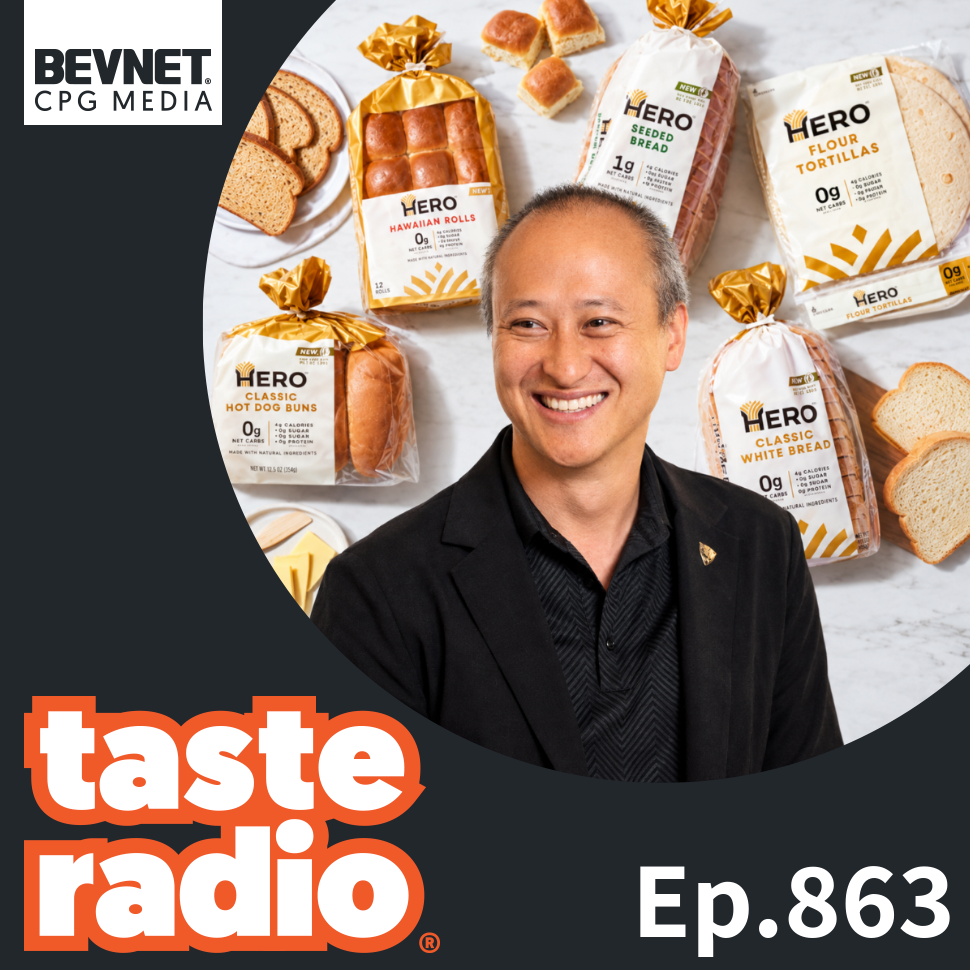
[00:00:10] Ray Latif: Hello friends, and thanks for tuning in to Taste Radio, the number one podcast for anyone building a business in food or beverage. I'm Ray Latif, the editor and producer of Taste Radio, and with my co-host for this episode, John Craven and Jacqui Brugliera. This episode features an interview with Stephanie Reda, the Director of Brand Development for fast-growing snack and seltzer brand, Hal's New York. Now, when I say I'm with my co-hosts, I am actually in a studio for the very first time alone. I'm with co-hosts who are based in, well, currently based in Southern California. John's out there with Jacqui in the studio.
[00:00:50] John Craven: Yeah, we were getting set up over here and we just saw this one single chair waiting for you to enter. It was sad.
[00:00:58] Jacqui Brugliera: What do you mean waiting? I've been here all morning.
[00:01:01] John Craven: Yeah, yeah.
[00:01:02] Jacqui Brugliera: I played some entrance music for you when you were walking in though. It was good.
[00:01:06] Ray Latif: What was the entrance music?
[00:01:07] Jacqui Brugliera: I don't know, some WWE kind of stuff.
[00:01:10] John Craven: Oh, I was hoping it was Return of the... I could see Heavy Metal or something.
[00:01:13] Ray Latif: I was hoping it was Return of the Mac. You know that song, Return of the Mac? I love that song.
[00:01:18] John Craven: Oh, that's favorite.
[00:01:19] Ray Latif: Yeah. Actually, at the Naturally San Diego Pitch Slam, the DJ actually asked me, he said, do you want to walk into any music? And I joked, I said, how about Return of the Mac? And I'm just like, no, no, don't do that. And then he played it. So I don't know if anyone heard it.
[00:01:33] John Craven: Yeah, it's always a good time. It starts the party.
[00:01:36] Ray Latif: Yeah, it does. It does. Yeah. Mike is, according to the calendar, in OOO. I don't know where OOO is, but I hope he's having fun. Numpty town. And John, I think we talked about this last week. You're in Southern California because you're about to be interviewed. Well, tomorrow you're going to be interviewed as part of a Naturally San Diego event. You ready? You have all your notes?
[00:01:59] Jacqui Brugliera: Still working on those, Ray.
[00:02:01] Ray Latif: All right.
[00:02:02] John Craven: He's always ready.
[00:02:03] Ray Latif: Yeah. You're also there to get on a boat. Is that what you're doing for the WCB extravaganza, summer extravaganza?
[00:02:09] Jacqui Brugliera: Uh, we are. We are. Came out here to go on a boat basically.
[00:02:13] John Craven: Yeah. So we're going to take a picture of our boat and see how it compares to your boat from last week. We're in a competition.
[00:02:19] Ray Latif: Yeah. Our boat from last week was very nice. Very, very nice. But we had like, I don't know, how many people joined us? Like 16, 16, 17? Something like that. Yeah. Yeah. Are you guys doing spouses and significant others on this boat?
[00:02:31] Jacqui Brugliera: I think so. We are.
[00:02:32] Ray Latif: See, we didn't do that with us. We just left everyone at home for hours.
[00:02:36] Jacqui Brugliera: Sometimes better. Yes, sometimes.
[00:02:39] Ray Latif: Well, I'm happy for you. I'm happy that that's going to happen. It's probably going to be actually cooler, relatively speaking, than it is here. We're in the midst of a humidity heat wave. I think the temperature feels like it's 105 out here.
[00:02:54] John Craven: Yes, I saw some photos and everyone was dripping in sweat.
[00:02:58] Ray Latif: Yeah, it was nice, but sweaty. Yeah. Just brutal. Yeah, I mean, I think that's how you know you're having a good time. Mm-hmm. If you're nice and sweaty. If you're sweaty. It's a terrible 72 degrees out here.
[00:03:12] John Craven: Yep. You know, life is hard over on the West Coast.
[00:03:17] Ray Latif: Yeah, Jacqui got what I was talking about. Anyway. Yeah, it did. I'm ignoring. Well, one thing that you could use on a boat for sure are some popsicles, some ice cream pops. One of the two, or perhaps some sort of combination of the two. I saw this new product being launched or that was launched by To, I think, relatively well-known brands. O'Rida, for sure. The well-known maker of potato products, like their french fries. Anyway, everyone knows O'Rida.
[00:03:51] Jacqui Brugliera: If you need an explanation of what O'Rida is... I don't know.
[00:03:55] Ray Latif: Maybe somebody thinks I'm talking about another brand. This is audio, so sometimes you have to explain what O'Rida is. And GoodPop. GoodPop is a maker of frozen desserts. They have joined forces to launch a new fudge and vanilla french fry pop. It's designed or developed to taste like french fries dipped in a milkshake. This looks like pretty much the best new product launched in 2024. I need to get samples like yesterday.
[00:04:31] Jacqui Brugliera: I already ordered some.
[00:04:32] John Craven: They're already on the way. He couldn't wait. You ordered some?
[00:04:35] Jacqui Brugliera: I mean, it's $9.99 for four of them, free shipping. I'm like, this is not even worth the time to go write an email asking for samples. That's actually a very good point. I didn't even notice that.
[00:04:49] John Craven: Are they being sent here?
[00:04:51] Jacqui Brugliera: I ordered some to the office back east, but then I made a second order to where I'm staying out here because I'm like, I kind of need to drink this.
[00:05:00] John Craven: No matter what, you'll get them.
[00:05:02] Jacqui Brugliera: I'm hoping for like chunks of potato.
[00:05:06] John Craven: Well, I mean, they must be like fried potatoes, right? French fries and- I hope so. Salty and it sounds delicious.
[00:05:14] Ray Latif: You are brilliant, John, because I'm on the website right now, and it says sold out. Check back tomorrow. Wow. There might be some more tomorrow. So sad I hogged them all.
[00:05:23] John Craven: You bought all of them.
[00:05:24] Ray Latif: That was really smart. You know what? For $9.99 in free shipping, that is insane, because the amount of dry ice that they have to include in that box is probably four times that price.
[00:05:35] Jacqui Brugliera: I mean, this is clearly just a marketing play, right? There's no, like, let's make some money with the collaboration. So it's fine, you know?
[00:05:43] Ray Latif: Yeah.
[00:05:44] Jacqui Brugliera: Straight to Instagram, it will go when I get it. It's going to work.
[00:05:48] Ray Latif: Who led this concept? Did Good Pop reach out to O'Rida? Maybe this is a good 15-minute segment for Taze Radio.
[00:05:55] Jacqui Brugliera: I would guess it would be Good Pop. They got a guy that knows a guy kind of thing? I don't know.
[00:05:59] John Craven: Yeah. I don't know. They always do some cool, innovative things. Ice cream brands are known for doing innovative flavors, so I would say they probably proposed this to them. But have you been a french fry and shake person in the past, Ray?
[00:06:15] Ray Latif: not really a french fry and milkshake so like when i go to shake shack i never get a milkshake i just get a burger and fries but i love this because i'm a huge sweet and savory kind of guy i mean that's The Long combo right like snickers reese's peanut butter cups peanut m&ms like these are just common things that you see that fried chicken and donuts fried chicken and donuts yeah i know yeah yeah So this is not the first time I think we've seen French fry flavored ice cream or French fries sort of incorporated into ice cream. What's the name of the brand? Coolhaus. Didn't Coolhaus do something like this?
[00:06:50] Jacqui Brugliera: Yeah, I was going to say, I think Coolhaus did.
[00:06:52] Ray Latif: Yeah, yeah. But in a pop form, I think this is the first time we're seeing this. Man, okay, so maybe I gotta reach out to the folks from Kraft Heinz and Good Pop and see if they can please send us some, because we're gonna have to try this in the years.
[00:07:08] Jacqui Brugliera: I mean, there are a couple that are on the way to the office, so just hang tight.
[00:07:13] Ray Latif: I will let Captain Colin know to put them aside, and hopefully, Jacqui, you get one or two so we can all eat them. Yeah, I don't know. We'll see.
[00:07:19] John Craven: There's four people in his family, so I'm thinking I'm the odd man out.
[00:07:24] Jacqui Brugliera: Well, some of them don't eat ice cream, so.
[00:07:26] John Craven: Ooh, I have a choice.
[00:07:26] Ray Latif: Maybe I'll share. Yeah, some of your family members are vegan, right, John?
[00:07:31] Jacqui Brugliera: Uh, no, they're just complicated. Vegan, they're just complicated. No, no, not vegan, not vegan.
[00:07:39] Ray Latif: Jacqui, what's your favorite sweet and savory combo?
[00:07:42] John Craven: Well, I was saying that, like, way back when, when I used to eat Wendy's a lot, that it would always be French fries and a Frosty. Like, that was my go-to for sweet and savory. And we're talking about Wendy's was like the fancy food chain back when. Like, we'd get our baked potatoes and our chili, and then I'd get my Frosty, which is, like, also phrases like a better-for-you milkshake somehow.
[00:08:08] Jacqui Brugliera: Back in the day.
[00:08:09] John Craven: Yeah, back in the day.
[00:08:10] Ray Latif: I think Wendy should give you one of those lifetime, you know, free for lifetime cards. Just for that plug. It's the, it's the upscale fast food chain.
[00:08:20] John Craven: At least it used to be when there were limited options when I was a kid. That was like what my parents thought of as the better free option.
[00:08:27] Ray Latif: Wendy's, this isn't the first time that Wendy's has come up on the podcast. We talked about their $5 deal where you get like a burger, fries, a drink and chicken nuggets for five bucks. And I have had that and it's something, I'll tell you it's something for sure. Anywho, we're getting off topic here. Actually, I guess this is the topic.
[00:08:49] Jacqui Brugliera: Ray needs to end the podcast so we can go straight to Wendy's.
[00:08:51] John Craven: Yeah, craving it.
[00:08:53] Ray Latif: Ironically, the last time I did eat Wendy's and it was that $5 biggie bag. That's what they call it. I was at BevNET Live Winter 2023 in Marina Del Rey. And guess what? We're not very far off from the 2024 iteration of this show. And all the shows I'm talking about, BevNET Live, Nosh Live, Brewbound Live, all happening in December. And good news, folks, you can get a jump on discounted room rates for the events right now. Jacqui, how do they do it?
[00:09:31] John Craven: Yeah. So the room blocks just open this week. So this is your time to jump in, register for the events, and then you will receive a link in your email once you're registered with access to the room block. We are limited on rooms. They always sell out. So I'd recommend you jump in now if you want to stay at the venue and you want to save some books.
[00:09:49] Ray Latif: Staying at the venue is the best thing you can do because that's where all the conversations happen. That's where all the networking happens. Yes, there are some hotels in the area, but you got to walk all the way over. You got to take an Uber. Yeah. Who wants to do that? Exactly. The action is at the venue. You land on the roof in your chopper. And I take limited meetings up there on the helipad. So it's a lot easier to get to that helipad if you're staying at the hotel, just so you know.
[00:10:17] Jacqui Brugliera: That's what I'm saying.
[00:10:19] Ray Latif: Yeah. Farron, our dear friend and our spirits editor for BevNET. Farron will be at BevNET Live as well. I assume we're going to be incorporating even more spirits and cocktail content into the show in December. And Farron's been doing an amazing job. covering this industry from top to bottom, the spirits industry, that is. She has her finger on the pulse. And I really enjoyed reading her recent article about the evolution of celebrity and influencer backed spirit and cocktail brands, RTD cocktail brands, that is. And It got a lot of attention on LinkedIn. A lot of people are commenting on the story. I mean, it's just been a deluge. I don't know what opened Pandora's box. I think it was George Clooney, you know, making a billion dollars off of Cosamigos. Uh, yeah, that was probably part of it. But you know, even before that, Sammy Hagar with his, uh, Cabo Wabo. Was it rum? Yeah. Cabo Wabo rum. I mean, he made a ton of money off that. Was it like 300, at least a few hundred million dollars off that brand. But, uh, yeah. What's that?
[00:11:29] Jacqui Brugliera: I don't know, but I don't think anyone really was paying attention until George Clooney got his payday. That seems to be the, uh, the fuel for all of what we're seeing now.
[00:11:40] Ray Latif: Yeah, I wonder if that's why, as Farah noted in the story, that celebrity brand dollars are overwhelmingly coming from tequila. In other words, the celebrities that are investing in this industry are getting into the tequila game specifically, and maybe it's because George Clooney made a billion bucks off of it. I mean, you think about a guy like The Rock and what he's doing with Terramana. I think when I was at Tales of the Cocktail last year, the big conference, the big beer bar and hospitality conference in New Orleans, I heard that they were doing a million cases of Terramana annually, and that was in 2023. And when Cosimigos sold to Diageo, they were only doing 100,000 cases. So Diageo bought Cosimigos for a billion dollars at 100,000 cases. So if you extend that, I mean, should Terramana be sold for or acquired for $10 billion?
[00:12:40] Jacqui Brugliera: I don't think the math ever works out that way where the first guy got a big payday and the second one's going to get a bigger one. because of that, or at least by the same, a 10X multiple, like using the math that you're using, I don't think it works that way.
[00:12:55] Ray Latif: No, it's not going to work that way. I don't know anybody that would be able to recoup their investment At Sea $10 billion price tag. It would take a long time. But, I mean, it is an amazing brand, Terramana, and it's one of a lot of brands that are doing pretty well in this business. But as Farron's story noted, a lot of the growth in celebrity-backed brands is coming from non-ALC and RTD brands. So again, quoting her story, a few celebrities have embraced non-ALC spirits, including Katy Perry, Blake Lively, and Lewis Hamilton, making up less than 1% of celebrity brands, but are growing by 65% in the same data period. So interesting stuff. Again, you know, non-elk still a very, very nascent bleeding edge space, but it is growing and we are seeing celebrities really get into and commit to that space. The thing with celebrity-backed brands is that consumers are quite good at sniffing out inauthenticity and inauthentic connections between the actor, musician, influencer, what have you, and the brand that they're representing. J.Lo is a very good example of this with her Delola brand of premixed cocktails, RTD, whatever you want to call it. JLo doesn't drink alcohol and yet she has an alcohol brand. How does this work? And so a lot of her, we talked about this about a year ago when she launched the brand and it's like, this makes no sense. And her fans were like, this makes no sense. Why are you doing this? But for me, I'm wondering, I'm trying to think when I purchase spirit or when I think about, I don't know, the association between a celebrity and a brand, I'm wondering, like, do I actually buy into this? Where does the credibility come from here? I don't know. John, what do you think?
[00:15:01] Jacqui Brugliera: Yeah, I mean, I think it's really kind of odd in the sense that from an authenticity, you know, perspective, like, None of these celebrities have any sort of connection to tequila, for example. Like, were they home distilling spirits? Like, even if they did, they aren't making tequila, right? So, like, the association is ultimately, like, they like to drink tequila or their fans like to drink tequila. But, you know, look, I think, you know, the issue with a lot of these is just the story is basically all the same, you know. all the way down to the token photos of the trip they took down to Mexico and some agave in the background or whatever. And then the playbook is also kind of the same. Like, you know, these are not brands that sort of naturally flow into the life of whatever celebrity is there. So everything sort of feels a little forced. It's like, here's, you know, celebrity holding a bottle of their product or a bottle of the product in the background. Like we've just seen this so many times that I don't know. I mean, I guess then there's also cynically like, I think the type of consumer who's looking for, I don't know, this sort of mid-price value tequila doesn't really care all that much, you know? It just seems like a little bit of a whack-a-mole of, you know, what brand happens to have their eye or, you know, dollar for some short period of time. So I think it is smart for those who've gone and done something different, you know, if it's a The Long ALC stuff or RTDs, you know, those are longer, probably longer plays, you know, there's no like illusion that you're going to make billions in those categories like tomorrow. But I think for things like tequila in particular, there very much is the illusion that there's like a lot of money to be made quickly and easily there, which just is not true for most.
[00:17:06] John Craven: Yeah, and I feel like to that point, a lot of the brands that are growing, it's tied to the category as well. So like tequila is growing. So these brands are also growing. And with like JLo as an example, her brand is still growing and is one of the top performers based on Farron's article, even though people might be questioning her authenticity. But it just shows that like, yeah, she might get some bad flack at the beginning, but she does have staying power as a brand and as an influencer. Some people might not even know that she doesn't drink because they don't know her that well. So they just see her face. She, you know, ties to the brand and then she increases awareness for the brand.
[00:17:45] Jacqui Brugliera: I think also the most interesting stat in that article is that 80% of consumers can't connect the brand and the celebrity. There's just really hard sort of association, which some of that is probably just that there's an overwhelming amount of the stuff out there. And even Terramana, to say that that brand's successful exclusively because of the celebrity attached to it, I think the execution of that is pretty like hardcore as a brand too. So you have to make sure you have both basically.
[00:18:19] John Craven: Yeah. And based on the celebrity too, it can open up other channels like Long Drink has partners that are an actor, a DJ, um, a golf superstar. So a lot of people are drinking on the golf course, a lot of people drinking clubs. So they're kind of targeting those specific channels, even though it's a finish. cocktail, I believe. So I feel like a lot of times that kind of gets lost. It's just a tasty cocktail for people in those channels.
[00:18:47] Ray Latif: Yeah, I would agree. I think one of the most successful, I don't know if you could call it a celebrity-backed brand, but it was highlighted and featured in the TV show Entourage was Avion. But Avion was front and center in I don't know how many episodes of that show. In fact, there was a whole storyline based on Avion Tequila, which probably helped it quite a bit. Yes.
[00:19:09] Jacqui Brugliera: Hey, there was also Aquahydrate that didn't exactly benefit.
[00:19:14] Ray Latif: I think there was only like a handful of mentions of that brand in the show. And you're talking about the Mark Wahlberg backed brand. Well, that backed bottled water brand.
[00:19:23] Jacqui Brugliera: It was like in everything he did for many years.
[00:19:27] Ray Latif: Yeah. It was also backed by Diddy, but we'll leave that alone for a moment.
[00:19:32] Southern California: Vibrant Ingredients is the natural ingredient partner powering food and beverage innovation, delivering flavor, function, and protection through a science-backed portfolio. Vibrant delivers purpose-driven solutions that help brands create extraordinary experiences. Discover what's possible with Vibrant today. Visit vibrantingredients.com.
[00:20:00] Ray Latif: The celebrity-backed brand that I really think has done an amazing job with both marketing and branding is Crystal Head Vodka, which is co-owned by Dan Aykroyd. And I interviewed Dan Aykroyd in August of last year, and we had a great conversation for Taste Radio. And we talked about the fact that his association with the brand is kind of atypical for most celebrity-backed brands in that he's not front and center. He is not the face of the brand. The face of the brand is the crystal skull that is so represented on the bottle. It is the bottle in so many ways. And it was interesting because amid this growth of celebrity and influencers in the spirit space, he's like, look, from the beginning, we were all about business fundamentals and premium positioning. And I think that is really what's getting lost in this gold rush is can we actually create a good brand? Can we create a good business? But some people are just throwing stuff At Sea wall and seeing if it sticks. And hey, you know, we've seen that work too. I also think that sometimes the most obvious celebrity connections to a brand are the ones that people appreciate the most. So Snoop Dogg's Gin and Juice RTD. I mean, come on. Everyone should have watched that 20 years ago, you know? I don't know. It seems to be working now. I mean, I think there's a lot of people that are I don't know. Maybe, maybe no one's drinking this. I don't know. But it just it looks cool. Yeah, it's pretty. It's pretty obvious. It's by Dr. Dre as well. Dr. Dre and Snooper aligned on this brand. I don't know if anyone's tried. Have you tried this, John?
[00:21:46] Jacqui Brugliera: Yeah, I tried it when it came into the office. It's not bad. You know, I think it is one of those products that people of a certain demographic that I think at least you, Rae, and I are in will probably be tempted to buy a can of that once just because it's funny, right? You know, I joked about they should have made that 20 years ago. They should have made it 20 years ago, right? But I think it's fun. It's funny. It's got the parental advisory thing on the front of it. Throwback to the old days of buying tapes and CDs. And I think that's one that it kind of speaks for itself. There's a lot of people that will remember that and know what it is, right? And the celebrity connection there is really straightforward. So yeah, I mean, that's a clever, I guess, opportunistic, if nothing else.
[00:22:47] John Craven: Yeah, I think it's really authentic, obviously. They've been singing about this. People attach them to that drink specifically. They did collaborate on it, too. It just wasn't one of them launching this. And I haven't tried it, but I mean, from the list of all the things that have come out, I was most drawn to that as far as something that makes the most sense. But again, to both of your points, it's all going to be about flavor and quality to make sure that it lasts. If people want to buy it again and they don't just buy it once because it's something that they think is funny.
[00:23:22] Jacqui Brugliera: It's
[00:23:37] Ray Latif: They actually went with this well-known designer who, according to Farron's article from the launch or about the launch, has worked with brands including Hermes, Knoll, and Logitech. So this is something they designed to be a premium gin-based cocktail. And, you know, again, looking at the packaging, Yes, it has that parental advisory warning in the middle of the can, but it also looks like something that you might, I don't know, perhaps even see in an airline. I think they did a good job there too. Tastefully done, I would say. Guess what, John? It's not just me and you that this might appeal to. Jacqui just pointed out that she enjoys this and would reach for this.
[00:24:23] Jacqui Brugliera: I just have to give Ray some sort of crap every episode.
[00:24:26] Ray Latif: Well, you know what?
[00:24:27] Jacqui Brugliera: I was tempted with the return of the Mac thing, too, because that's a little late 90s, but you know, it's OK.
[00:24:34] Ray Latif: It is quite old school.
[00:24:35] John Craven: But everything's retro now, you know? So anything you like, the younger generation now likes.
[00:24:42] Ray Latif: Exactly. Something like that. I think that if you have any interest in this space, you should be following Farron's articles on a regular basis. You can get regular updates on everything that's going on in the spirits business via her newsletter, which comes out. Is it bi-monthly? Twice a month? Twice a month. Go to BevNET.com slash spirits dash newsletter to sign up. From boozy to non-boozy, I have in my hand one of Recess's four zero-proof cocktails. This is their classic Cosmo. Recess Time a brand that was once known for their CBD-infused beverages. Now they are known for their alcohol alternative cocktails and also a line, their primary line of products, is a mood-boosting or adaptogenic-infused line of products that is designed to enhance mood. Those products are made with magnesium and adaptogens. But the non-elk stuff, which they call craft mocktails, come in four flavors. They have a Paloma. In addition to the Cosmo, they have a Paloma, an Island Spritz, and a Lime Margarita. I was actually kind of surprised when I saw Recess get into this business. Were you?
[00:26:08] Jacqui Brugliera: Yeah, I mean, I was definitely looking at that kind of like, man, what the heck? This is like, you know, I'll say it now, but it almost felt a little desperate at the time. And I'll give credit where credit is due. I mean, I'm super impressed with those products. You know, I think they've done a really good job getting them out there. I mean, their products at this point, like I have a couple of friends that don't drink and like they show up with the, like the recess Paloma, uh, with certain folks in my demographic, uh, or my circle. Is pretty popular and it's tasty. So, um, really nice pivot. And oddly, I think the brand actually kind of makes sense as a, as a not out too. So it does.
[00:26:50] John Craven: And are there any like functional benefits still to their mocktails?
[00:26:54] Ray Latif: Yes, so they're infused with guayusa and adaptogens. Guayusa has caffeine and so caffeine in a non-alcoholic cocktail, a bit of an interesting addition. The adaptogens include L-theanine and lemon balm. Good stuff. I mean, again, you know, everything begins and ends with taste for me. So I think the only one I haven't tried is the Island Spritz. Now, Ben Whitty, who's the founder of Recess, is probably going to kill me for drinking this warm, but let's see how this goes.
[00:27:27] John Craven: Yeah, I mean the packaging pops just like even in your in your hand on camera. It's really pretty.
[00:27:32] Jacqui Brugliera: I love like the slim cans and and pretty like understated to you know, like it's not shouting via Packaging or whatnot that it's a non-alch either.
[00:27:44] Ray Latif: Mm-hmm This island spritz is delicious. It tastes like a It tastes like a pina colada, but not an overwhelmingly sugary or just like sticky pina colada, like pina coladas are sometimes known for. Really, really good. And you can definitely drink it not cold, so. Good job, Ben. I got to catch up with Ben. We sat down probably like five years ago for an episode of Taste Radio when there was a lot of hype around Recess as this new CBD brand or this brand that could be the anchor for the CBD beverage category. And well, No, there really isn't much of a category for CBD beverages. Still out there. To a certain extent, yes. I mean, Cloudwater is a good example. I love Cloudwater. Vibes. They're doing some great things. Vibes, for sure. But I think Recess was looking At Sea much bigger opportunity for beverages.
[00:28:44] Jacqui Brugliera: The gold rush of it is no more, which frankly, I think is a good thing.
[00:28:49] John Craven: Yeah, I feel like it's just transitioned into yet another kind of functional ingredient that you can play with. So I think it also is makes sense for Recess Time pivot. They're still using function in their beverages, so they're still in that kind of category, but they're just a different use occasion.
[00:29:04] Ray Latif: Yep. I'm actually, I don't know how much I should say here, but I'm actually surprised we haven't seen any kind of announced celebrity involvement in Recess. Because from what I understand, celebrities, some that you might know, really enjoy and like the brand. So I'll leave it at that. Maybe we, maybe I can get Ben back on the show and we can, I can get him to reveal a few things. If you do your own homework, you might know what I'm talking about. All right, onto another brand that I saw in the cooler. This is called Nutcase. Nutcase is a brand of premium cashew milk. This is the vanilla variety that I'm holding in my hand. Talk about great packaging. This comes in a matte black can with the word Nutcase vertically centered on the front of the can. These products are plant-based, obviously contain five grams of protein. Recovery is mentioned as a function. They contain 570 milligrams of potassium and are naturally sweetened. The sweetener is dates and agave syrup.
[00:30:09] John Craven: Hmm. So it's almost like a chocolate milk that you would, it's not chocolate, but.
[00:30:14] Jacqui Brugliera: Well, they do, they do have a chocolate flavor, which is delightful.
[00:30:18] John Craven: Okay. So it'd be like a replacement for a chocolate milk post-workout. That's kind of what they're going for.
[00:30:23] Ray Latif: Correct. Correct. And Nutcase participated in our New Beverage Showdown competition at, uh, BevNET Live Winter 2023. You know, I can't, they didn't make it to the finals, uh, if I recall, right John?
[00:30:38] Jacqui Brugliera: I think that's correct. Um, and I think they only had a single skew then.
[00:30:42] Ray Latif: Okay. Was that one of the reasons? I mean, like, I think it's fine to talk about this now, but was some of the criticism, uh, you weren't part of the semi final round.
[00:30:53] Jacqui Brugliera: Yeah. So, um, and I try to oftentimes not watch the first round to not bias the second round.
[00:31:01] Ray Latif: Yeah, I can't recall. Geez, I want to go back and look at some of the notes from that. But I think part of it was perhaps that they only had The Long skew and The Long nut, I guess, like just cashew on its own as the base for the milk was something that I think the judges saw as limiting.
[00:31:22] John Craven: Yeah, I mean, the name allows them to expand and this might be their first, you know, go and then they might enter into other nuts.
[00:31:30] Jacqui Brugliera: Yeah, I think it's, I mean, looking at the three of those, I tried them right before leaving and it's pretty cool just to see the three of them now. The strawberry one is like, if you like the flavor of like strawberry quick, they nailed that. It's like the classic strawberry milk. But yeah, it's tasty stuff and definitely agree the packaging is like pretty eye-catching.
[00:31:57] Ray Latif: For sure. The founder of this company, Joelle Wynand, I believe she had a chain of restaurants and kind of spun Nutcase out of them, if I recall. Actually, no, I take that back. She's a professional poker player. Interesting. No, no, no. I was taking a turn. No, she has like all these, if you go to her Instagram page, she's got She's got like a Forrest Gumpian kind of thing going on where she's the founder of this brand Nutcase. She's the owner of a brand called Wolf Down, which makes Berlin donor kebabs in Canada. They're in Ottawa and Canada. So she's a serial entrepreneur. Yes, and she's a poker player. Like if you go to her Instagram page, she says poker player just for kicks, but from my understanding, she's actually quite good at the game.
[00:32:48] Jacqui Brugliera: So she's smart. I was going to say, it's not like one of those random things that people put on their social media profile just to like catch your eye.
[00:32:55] John Craven: I mean, I caught his eye.
[00:32:57] Ray Latif: No, I recall when I was doing a little research on the brand for the New Era Showdown that, yeah, she's got game, as the kids like to say.
[00:33:07] Jacqui Brugliera: I think that would be Riz nowadays. No, no, no, no.
[00:33:13] Ray Latif: I thought Riz is like when you're trying to attract someone else, like your ability to attract someone else. Let's just leave it here.
[00:33:24] John Craven: Yeah. I guess we're not the experts on this topic.
[00:33:26] Ray Latif: Okay. Well, I do know Riz is short for charisma. So anyway, you guys got anything good at the WCB?
[00:33:34] John Craven: I have one thing that I was drinking over the weekend at the beach, which is Crescent Nine. They have a variety of THC products. This one particularly is five milligrams of THC and four milligrams of CBD, and it is their ginger lemonade. So as far as their flavors go, they're very like approachable things that you would, you know, pick up. in any beverage. But what is interesting is that a lot of their different SKUs have very varying degrees of THC. So they have one, I believe, that has like 50 milligrams of THC. Cool to see them just trying to test into different dosages, see kind of what resonates, what people want. It is Delta 9, so it's not resealable, which is one thing that I guess they would have an issue with the larger dosages. But this one I tried and I liked it. It's something that I would, you know, drink again. I like that they add CBD to it. Usually I have a better experience when it has both THC and CBD.
[00:34:27] Ray Latif: What's the name of the brand again?
[00:34:30] John Craven: It is Crescent Nine.
[00:34:33] Ray Latif: Crescent Nine. There's a lot of nines added to these products that contain Delta Nine. Delta Nine, yeah.
[00:34:39] Jacqui Brugliera: So subtle.
[00:34:40] John Craven: Yes.
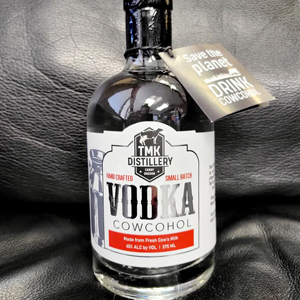
[00:34:41] Ray Latif: So subtle. I have, I just saw this. This was in the storage room. I don't know if this is brand New York not, but it definitely caught my eye. It's from TMK Distillery in Canby, Oregon. It's called Vodka Kalkahol. So it's vodka made from fresh cow's milk. This comes in a 375 milliliter Bottle, it's 40% alcohol by volume. I've seen these types of products in the past. I've never seen anything described as cow-cohol before.
[00:35:12] John Craven: Like as a forecast?
[00:35:14] Ray Latif: I imagine that it will interest people and that people will pick it up and look at it. I don't know if people would buy it, but it is, as one might expect, a small batch of spirits. Yeah.
[00:35:31] John Craven: I wonder if there's a benefit of distilling with whey versus distilling with, you know, other ingredients.
[00:35:38] Ray Latif: I don't know.
[00:35:39] John Craven: Or it's just a differentiator. They're just doing it differently.
[00:35:43] Ray Latif: Yeah. It says, as you pointed out, it's distilled from whey. It's a byproduct from our, in our farm cheese making process. So they apparently have a farm as well. Nothing goes to waste. So that's a, that's a good thing.
[00:35:57] Jacqui Brugliera: Maybe there's a listener out there that can school us on this.
[00:36:00] Ray Latif: Yeah. Yeah. If you do have any insight on this, please let us know. Send us an email to ask at Taste Radio.com. But, uh, just to wrap this up as the bottle says straight on the rocks are mixed with your favorite flavors. These cows know how to have a good time. So there you go. Calcohol everyone's new big thing. Alright, it's time to get to our featured interview for this episode. As I mentioned at the top of the show, Stephanie Reda is the Director of Brand Development for Hal's New York, which markets flavored seltzers, ginger ale, and salty snacks, including potato chips, popcorn, and pretzels. Launched in 2014, HALS is known for its folksy, old-school branding and products that are a common sight at bodegas throughout New York City. HALS is also distributed at several chain retailers, including Target, Whole Foods, and 7-Eleven. In our conversation with Stephanie Reda outlines the history of HALS and discusses the brand's retail and distribution strategy. She also talks about HALS marketing and social media initiatives and how her role has evolved as HALS enters its 10th year in business. Hey, folks, it's Ray with Taste Radio. Right now, I'm honored to be sitting down with Stephanie Reda, who is Director of Brand Development for HALS New York. Stephanie Reda to see you.
[00:37:26] Ferron Salniker: Hello, everyone. Excited to be back.
[00:37:28] Ray Latif: Yes, back. We sat down last year as part of our Taste Radio studio. We only had 10 minutes back then. We have a little bit longer now. I think we're going to chat for 20, 30 minutes about Howl's New York. What an amazing brand this is. So first and foremost, thank you so much for bringing all of your seltzer and all of your snacks here to BevNET Live. People are munching on them and enjoying them. I think that's one of the hardest parts of an event, is trying to find something that's just something familiar, something that you know is going to be tasty and to wash it down with some seltzer. So that's what you're providing today.
[00:38:02] Ferron Salniker: Absolutely. And I think it's a little bit of something for everyone. We did some of our basic flavors. We do some really exciting other unique flavors, we'll say, that we'll talk about a little later. But yeah, for today's event, we just have our original sea salt kettle chips, our number one flavor over here in the white bag. And then we did our original sea salt popcorn, one of three popcorn skews. And we have our pretzel originals, which are just, you know, the usual pretzel shaped twist. And we just put our little How's New York spin on them.
[00:38:31] Ray Latif: No functional ingredients in these.
[00:38:32] Ferron Salniker: No, not in those. Delicious taste, but other than that.
[00:38:37] Ray Latif: That's not a bad thing. Again, I think when someone is going to reach for some pretzels or some popcorn or some chips, it's just like, that's what I want. Let's keep it simple.
[00:38:45] Ferron Salniker: Yeah, we don't need to mess around with it.
[00:38:48] Ray Latif: Exactly. I feel like Hell's has been around for a while. How old is the company now?
[00:38:53] Ferron Salniker: So we're actually having our 10th birthday this summer for the seltzer, which is crazy to think about. I feel like it's been around for a year, but at the same time been around for, you know, longer than I've even been around for. So very excited to have this celebration of our 10th birthday. And then the chips have been around for about five years now. So I think one of my favorite things with the brand, we try to keep it very nostalgic with some of like the old school, just packaging and flavors that we have as well. We have a lot of the traditional flavors, which like I said, We have some more fun, exciting, innovative flavors, but we do want to keep it very classic. And with that, I think a lot of people feel as though it's been around for decades. And we always love to say, it's not your grandfather's club soda. We try to make it very appealing to the younger generations and stuff with some of the new flavors we have, but at the same time, keep that old school twist.
[00:39:43] Ray Latif: Yeah, I think that is the interesting dynamic that HALS presents or how HALS is positioned in that when you do look at the brand, it feels like an old school brand, you know, that's been around forever. And you said 10 years, but in a world that's driven by Gen Z consumers and millennial consumers, you know, how does that sort of old school positioning, how does that old school branding fit into that dynamic?
[00:40:10] Ferron Salniker: Well, I think at the same time, yes, as you said, so many of the Gen Zers, they want more exciting beverages now. They don't want to drink the sodas that have been around for hundreds of years at this point. You know, they're reaching for the poppies, culture pops. And then even with iced teas, they're not necessarily grabbing for The Arizonas, they want the Just Iced Teas, the spoons of the world now. So I think with Hal's, we really are able to have that fun younger consumer with some of the flavors that we do have, such as fruit punch, mango, vanilla cream, even while still appealing. And it almost has that old school New York deli feel to it. and with the original flavors that we have, black cherry, lemon, lime. So I think there is some fun nostalgia to that so that the younger generation does, you know, want to try it out. But it's still something new and exciting. You have a fruit punch flavor? We do, yes. It's one of our summer seasonal flavors. Fruit punch seltzer? Yes. So it's clear. It's a little bit trippy. It's a fun red, pinkish label. And when you open it up, it tastes like Hawaiian punch almost. It has that very old school fruit punch feel, but it has the clean ingredients of our traditional salsas.
[00:41:16] Ray Latif: People who listen to the podcast on a regular basis know that I love fruit punch and I feel like there's not enough fruit punch flavors or just fruit punch period on the market. So I'm glad that you have one.
[00:41:25] Ferron Salniker: We'll have to get you some to try. I mean, it's honestly my favorite flavor.
[00:41:28] Ray Latif: Yeah, we talked about this last year. You refer to Hal's as a seltzer, the beverage as a seltzer, not a club soda, not a sparkling water as a seltzer, which is a very Northeast New York type of term. Is that something that people I mean, are people recognizing that seltzer is? You know, the same thing as sparkling water, essentially.
[00:41:48] Ferron Salniker: I think now they are. I mean, I remember about five years ago when I first started with HALS, I was at one of my first national trade shows and, you know, I'm telling everyone, seltzer, come try our seltzer. And I had people come over, they're like, oh, what is seltzer? And me being a native New York, I was like, what do you mean? What's seltzer? And had to explain to them that's just, you know, sparkling water, which is So more carbonation, more flavors. But I think we want to always stay true to the seltzer brand because it is such a staple part of New York. You have New York pizza, New York bagels and New York seltzer. And then I think so much with even the hard seltzer lately, that's been.
[00:42:22] Stephanie Reda: Oh, yeah.
[00:42:23] Ferron Salniker: That's really, I think, helps the seltzer name. So people are a lot more aware of it. It does raise the question more if we are a hard seltzer or they get a little confused when they see it's seltzer with no alcohol in it. But. I mean, yeah, I think it's definitely helped the name and helped us a lot.
[00:42:38] Ray Latif: I think it's also great to use the word seltzer when people in this area pronounce the word water as water. Water. Water. Yeah. I think that's, I mean, if you were saying that's a sparkling water, somebody would be like, well, what is that?
[00:42:53] Ferron Salniker: Or if you're Jerry, it's seltzer water. So I think sometimes people get a little confused.
[00:42:58] Ray Latif: And Jerry is?
[00:43:00] Ferron Salniker: Jerry is Big Geyser's COO president, and also I'm very lucky to be his daughter.
[00:43:05] Stephanie Reda: Yes.
[00:43:06] Ferron Salniker: So I've grown up in the industry, been flipping bottles around since I can truly remember. So it's been a really amazing experience to just be able to have grown up in the industry and be a part of it every step of the way with him. I mean, I don't have a better role model between him and Lewis, who I've also grown up around. And it's just been an amazing experience to have built this with the both of them.
[00:43:27] Ray Latif: Totally. I want to talk more about your role and your evolution as you know, before we hopped in the mic. So I was talking about, OK, so what does a Director of Brand Development do? And it sounds very much like a founder. So, I mean, I want to talk more about that in a sec. But going back to the seltzers and flavor innovation and how it fits into modern consumer culture, when you are thinking about flavor development and you are creating seasonal flavors, how much testing goes on? I mean, because you yourself, you're a young person. I mean, Is it just instinct? Is it intuitive that you think that your consumers will like a particular flavor or is it a lot more research data focus group driven?
[00:44:08] Ferron Salniker: Yeah, it's a little bit of everything, to be honest. I think at this point, we have a very established fan base and we know what they're going to gravitate towards. At the end of the day, with all the innovation that we have come out with, I think the top flavors are always going to be, whether it's for the chips or for the seltzer, our original black cherry, lemon and lime for seltzer. And then even for the chips, it's original barbecue and sea salt and vinegar. So you are always going to have those classic flavors that are going to be on top. So we try to always be cognizant of that. And then at the same time, with all the innovation we do want to come out with, we never want to cannibalize our own space. So we are very aware that, especially in the stores up and down the street, the bodegas, the little markets, they only have so much space. So we don't want to, you know, come out with these new flavors that we, of course, have hopes they're going to do well. We know they will do well, but we don't want to be taken away from our own shelf space. taking away from some of our top sellers.
[00:45:02] Ray Latif: It's so funny you say that because I was just talking to Nicole Dawes, who's the founder of Nixie. They make sparkling water. Now they make a soda as well as Zero Sugar Soda. And she was talking about the importance of knowing and promoting your best sellers and not putting a product out there where another product that you have in your portfolio could be doing better and you know it could be doing better. I also think about package type because you have cans and you have bottles as well. How does that work? How do you think about where certain packages belong in certain stores and retailers?
[00:45:34] Ferron Salniker: Yes, we have our standard 20 ounce single serve seltzer. That's been our bread and butter, our day one. And within the past couple of years, just with some of the changes that the corporate cafeterias were doing, they did a lot of no plastic initiatives. And as soon as those took into play, we received so many different emails, inquiries from consumers, and just even the customers reaching out directly to us saying that they were receiving so many questions by asking, where's our house seltzer? We miss our house seltzer. So that really was the reason that we expanded into the 16 ounce cans. And from there, we are selective with where we'll place it, but I think that's really grown organically up and down the street more than we had thought. So We do want to traditionally stick to placing the 20-ounce single serve up and down the street in 7-Elevens with a lot of our chain authorizations and other accounts. But yeah, it's doing well up and down the street. Even though that wasn't the traditional focus, I think we're a little surprised about how well it has done.
[00:46:32] Ray Latif: You have 15,000 followers on Instagram. And when I do look at your Instagram profile, it is a lot of younger folks being featured there. How do you think about, you know, your social media strategy and making sure that what's being portrayed is an honest representation of the brand?
[00:46:50] Ferron Salniker: Absolutely. I mean, I think what you were saying before, it's kind of hard to be inauthentic because it's going to be shown, you know, if we're trying to be something that we're not, it's going to be very, evident to whoever's viewing our profile and whoever's the true fan to the brand. So at the end of the day, we are a seltzer and chip company. I don't think it's more fun than seltzer and chips. So we really just try to keep it fun, keep it very light, and just highlight the different aspects we have, whether it's all the exciting flavors we have, the new innovation we have, or just some of the classics that we have with the chips. The new pretzels that we recently launched, the popcorn. We also have some new ginger ales that we launched that have been really fun. It was the first time we experimented with doing some flavored ginger ale. So we have the grape and raspberry and I think that's brought a whole new fan base. So that's been really fun to do as well and just We always showcase them and highlight them first on social media and get our fans really excited. And then our distribution has been so great so that as soon as we're posting and the consumers see this, they're able to go directly to their local deli or market and purchase it.
[00:47:57] Ray Latif: We've talked so much about your younger consumers or the folks that make up the younger part of your consumer base. But if you're up and down the street in New York City, I would think you're attracting a lot of blue collar workers. Do you have to market to those folks or is it more a function of we just have to be available for them at all times?
[00:48:17] Ferron Salniker: more so available. You know, we do want to market to everyone, but our biggest customer at the end of the day is 7-Eleven. So that obviously is getting so many different blue collar workers every single day, probably more than any other market I would have to think. So We want to just always make sure that we're readily available and more often the exclusive seltzer in these accounts. So we want to go in there and be the only seltzer that's sold there, be the only kettle chip that's sold there. That's been a big strategy for us that we've seen works a lot. And with that, you don't even need to market as much necessarily.
[00:48:51] Ray Latif: How do you become the only seltzer or only kettle chip that's sold at 7-Eleven?
[00:48:55] Ferron Salniker: We have an amazing sales team. You know, just they built incredible relationships. And then when you go in there and then just show the numbers that we have and the prices that we're being sold for, it's a way that we can kind of just wipe out the competition.
[00:49:09] Ray Latif: When you say the prices, are you trying to undercut your competitors?
[00:49:12] Ferron Salniker: We'll say we're a better product At Sea better price.
[00:49:14] Ray Latif: OK, what's the typical price of a can or a bottle of seltzer at 7-Eleven?
[00:49:19] Ferron Salniker: I mean, it depends on whether or not they're running the promotion. So some of the franchises might, some of the franchises might not, but we'll try to keep a sweet spot around $2 per bottle.
[00:49:29] Ray Latif: And your chips?
[00:49:30] Ferron Salniker: And our chips, they can range anywhere. I mean, it's going to depend there.
[00:49:34] Ray Latif: And by chips, I mean your snacks.
[00:49:35] Ferron Salniker: Yeah, it depends. We have the small bags, we have a 5-ounce bag and then an 8-ounce bag. So we usually will run a lot of promos, especially at the chain stores. But it could depend anywhere from $2.50 a bag. So we try to keep it At Sea reasonable price. And then we'll build those in with a lot of meal deals.
[00:49:53] Ray Latif: How often do you run promotions for the brand?
[00:49:55] Ferron Salniker: It's really going to depend on the market that we're talking about. King Collin, which is a chain in Long Island, they do a really good job with our promos that will run sometimes seasonally, sometimes for the year. Same with Stop and Shop, ShopRite, 7-Eleven, as I mentioned prior. Target, we have promos as well. So a lot of them are on either seasonal schedules or they might be for the year. Whole Foods, we're on just different, they'll be like two weeks on, two weeks off, a schedule like that.
[00:50:23] Ray Latif: Sometimes I hear from founders, in particular ones here at WebNet Live, about what it takes to be successful in New York City, in Manhattan, at the bodegas. And, you know, you go in there and it's actually kind of surprising how much inventory, how much selection, the broad selection that some of these places have. And there's so many options, you know, people can just pick up whatever they want. And, you know, why would they pick up your brand? What's compelling them to pick up your brand? If you could whittle it down to say one or two reasons why or how you're successful up and down the street in New York City, what would they be?
[00:50:58] Ferron Salniker: I mean, I do think the number one is our distribution. In the New York market, we are distributed by Big Geyser and they are incredible. I mean, I truly can't say enough good things about them. And they just have been around for over 30 years at this point. They've just completely owned every market. I mean, they're just customer service obsessed, truly. I've never seen any other distributor have those kinds of relationships that they have. And they have such loyal sales managers and they've built great relationships. So I think with that, Whether it's a new product that they have or a product that they've had forever, they just really know how to either debut it to their customer or just continue to sell it. They're not going in and just taking orders. They really are constantly selling. And I think that's such a huge part of our success. And yeah, going back to that. And then also, like I said, I think just the innovation that we've had. Like we mentioned before, the fruit punch seltzer, some of the chip flavors we have, we have a honey barbecue, a dill pickle, a buffalo ranch. So a lot of those we don't see from our competitors. And then same with the seltzer or with the ginger ale. We're doing a lot of things that appeal to just vast demographics and consumers.
[00:52:09] Ray Latif: You know, in the bodegas, I think the owners have a ton of power, as they should, in terms of where a product should be placed, where it should be merchandised on the shelf. I also think the distributor probably has a good amount of influence and input as well. But how do you get them working together to best support your brand?
[00:52:30] Ferron Salniker: I mean, yeah, at the end of the day, it is going to be the bodega owner's choice where to put the product. And they only have so much space because they, of course, have so many different products. So a lot of it is up to our sales team to work with the bodega owners, managers to try to find the best space. We always want to be in that premium eye level selling position. Eye level is by level. And we really want to always just try to gain that space. And with that, you know, it kind of has to be a successful product that's going to be in that space. If we didn't have the numbers to back it up and the sales to back it up, and we just wanted that premium positioning, obviously it's not going to happen most likely. So just having that success has really helped. And at this point, the product has been around for a while and does have that success, especially in the bodegas and any up and down the street markets.
[00:53:15] Ray Latif: You still have to do free fills and things like that.
[00:53:18] Ferron Salniker: No, we really don't. We haven't really. And I think that's something that's also really unique and something that we're proud of with the brand. We really never did refills. I think it's really just been an amazing success story and has happened very organically. And we're very excited to see where it's going to go next.
[00:53:33] Ray Latif: By the way, I've never heard the term I-level is buy-level. I like that.
[00:53:36] Ferron Salniker: I-level is buy-level. I know. Should we trademark that?
[00:53:38] Ray Latif: You should. You should. And I hope people know what that means. Buy as in the customer wants to buy it as well. Yes. Stephanie Reda you mentioned, you know, you've been in this business for a long time. Your dad has been a key mentor of yours as you've been building Hell's. And again, I would consider you as much a founder as anything. You do a lot for this brand. But what have been some of the most challenging parts of learning how to best manage, promote, and run a brand like Hells New York?
[00:54:06] Ferron Salniker: Well, like I said, going back to just having that partnership with Big Geyser and have been able to see what it's been like since day one. I think a lot of people come in and they see the success of either our brand or the success of Big Geyser and don't realize the hard work that goes into it and it really is very long hours and I mean you could be spending an hour minimum in one single account whether it's you're trying to get that deal with the manager or you're packing out a lot of grueling hours especially over the summer and I mean, our sales team in the city is constantly walking from account to account. And then you have our sales managers on the east end of Long Island that are driving two hours just to get out to Montauk from Bridgehampton. So it's a lot of work and time and effort that goes into it. But I think that's also how we shine so much, because we really do have the best of the best between our distribution. and our amazing sales team with HALS. I mean, I truly, we would not be where we are without our amazing team with both HALS and Big Geyser.
[00:55:08] Ray Latif: So you personally, how have you grown? I mean, how have you evolved as someone who has taken a significant ownership of the direction of HALS New York?
[00:55:22] Ferron Salniker: Yeah, so I've been at how since the day after my college graduation in June of 2018 and have been there every day since and to be able to see like your six year anniversary, I guess. Very excited to be here and celebrating with you guys, but to be able to see how we've transformed since those days. I mean, we had probably eight seltzer flavors at that point. We didn't have the cans. We didn't even have the chips at that point. That I think is always like what trips me up the most thinking how successful we are with the chips now. And then to think we didn't even have those a few years ago. And I remember being so nervous when we launched the chips because I'd only been at the seltzer brand for about a year at that point. And I knew nothing about snacks. I had some previous beverage history but with snacks kind of going into that blind and it was such a fun but obviously challenging experience and to have been able to just grow that with our team since day one has been incredible and everything that we've done differently with marketing, especially over the past year or so, because I think when we first started selling the brand, it was kind of just get in every account and we don't even need the marketing. That was always kind of the mindset with it. But now we've been able to play around a little bit more with some of our marketing, and it's been so much fun to be able to evolve in that way.
[00:56:40] Ray Latif: So what's next for HALS?
[00:56:41] Ferron Salniker: That's a very good question. Like I said, it's our 10th year birthday and we have a lot of exciting things down the pipeline this year, which I can't share at this point, but I'm very excited to share with you probably come fall time and between new flavors and then just some other brand extensions, we'll say you're very, very excited for it all.
[00:57:01] Ray Latif: Like HALS New York candy bars?
[00:57:03] Ferron Salniker: Potentially.
[00:57:03] Ray Latif: Potentially. You heard it here first. Joe is excited. Joe, our audio engineer, he heard candy bars and he's just like.
[00:57:11] Ferron Salniker: Those ears perk up a bit.
[00:57:12] Ray Latif: Exactly. Did you see that? Like it literally just made a chomping look. All right. Anyway, Stephanie, it's been so great speaking with you. Thank you so much for taking the time. We really, really appreciate it.
[00:57:22] Ferron Salniker: Awesome. Thank you so much, Ray. This was great.
[00:57:24] Ray Latif: Thank you. That brings us to the end of this episode of Taste Radio. Thank you so much for listening. Taste Radio is a production of BevNET.com, Incorporated. Our audio engineer for Taste Radio is Joe Cracci. Our technical director is Joshua Pratt, and our video editor is Ryan Galang. Our social marketing manager is Amanda Smerlinski, and our designer is Amanda Huang. Just a reminder, if you like what you hear on Taste Radio, please share the podcast with friends and colleagues. And of course, we would love it if you could review us on the Apple Podcasts app or your listening platform of choice. Check us out on Instagram. Our handle is bevnettasteradio. As always, for questions, comments, ideas for future podcasts, please send us an email to ask at Taste Radio.com. On behalf of the entire Taste Radio team, thank you for listening, and we'll talk to you next time.
[00:58:16] Stephanie Reda: you