[00:00:10] Ray Latif: Hello, friends, and thanks for tuning in to Taste Radio, the number one podcast for the food and beverage industry. I'm Ray Latif, the editor and producer of Taste Radio, and with my co-host for this episode, John Craven, Jacqui Brugliera, and Mike Schneider. In this episode, we talk trends and innovation from behind The Year with the 2023 USBG World Class Bartender Of The Year, Renato Tonelli and Julie Reiner, the owner of world-renowned New York City bars, The Clover Club and Leyenda. Did you notice I'm extra pumped today? Did you see that? I just kind of like shook with some excitement.
[00:00:49] John Craven: What's going on?
[00:00:49] Ray Latif: What are you crushing Red Bulls? No, I wasn't crushing Red Bulls. I wasn't doing any espressos, and I wasn't doing anything, you know, that you're not supposed to be doing. But no, I'm excited for this week because we're just about two weeks away from BevNET Live.
[00:01:03] Jacqui Brugliera: Oh yeah.
[00:01:04] Ray Latif: And being in New York City in June at the best event In The world for beverages and beyond, it just gets me pumped.
[00:01:13] Jacqui Brugliera: I mean, you're always excited in front of the microphone, but when you're on stage with the microphone. Oh yes, that's when I pee my pants.
[00:01:19] Ray Latif: Yes. Sheesh.
[00:01:21] John Craven: Whole nother level. People didn't know that.
[00:01:23] Ray Latif: People didn't know where it depends on stage.
[00:01:25] John Craven: And then he jumps In The crowd and starts crowd surfing.
[00:01:27] Ray Latif: Yes. That would be cool. That would be awesome. That would be kind of fun actually. Now I'm really excited and I'm so excited for people who are attending the event because they're going to get to meet buyers from Sprouts and Jackie.
[00:01:46] John Craven: It's Walmart. Walmart Is be In The house. Last week we didn't say that it was a retailer that started with a W and it is Walmart In The largest retailer will be In The room at BevNetLive taking one-to-one meetings with emerging beverage founders.
[00:02:03] Ray Latif: Yes, very exciting stuff. So much better than Winn-Dixie. Didn't you say wah-wah last week? I did, I don't know.
[00:02:11] Jacqui Brugliera: I mean, those would be great too. I was just trying to pull out like a random, yeah, nothing against Winn-Dixie. It In The big one. Walmart.
[00:02:18] Ray Latif: Now this is like an actual sit down meeting with the buyers of Sprouts and Walmart, but how does it all work, Jackie?
[00:02:24] John Craven: So it's really simple. All you have to do is register for BevNET Live and then you will get an email with instructions into your inbox on how to sign up.
[00:02:32] Jacqui Brugliera: It's one click. One click. It's like Amazon. One click, yeah.
[00:02:35] Ray Latif: Oh, nice. I like that.
[00:02:36] Jacqui Brugliera: And the whole thing is powered by SIP and high-touch libations. It's really cool.
[00:02:40] Ray Latif: Again, this is your time to sign up. I mean, if you want to meet some of the most important people in our industry in one room over the course of two days, you can do so by attending BevNET Live, June 14th and 15th at the Metropolitan Pavilion in New York City. Be there or, can I still say B-square?
[00:02:58] Jacqui Brugliera: B-square. It's also one giant, giant room, just to be clear. It is.
[00:03:03] John Craven: So you'll be In The square.
[00:03:05] Jacqui Brugliera: Yeah.
[00:03:05] Ray Latif: You're not in like a tiny little room with these people. Cause I don't want to, we shouldn't scare people. No, no. I also do want to plug the Taste Radio studio that will also be part of BevNET live in New York city. We'll be interviewing attendees at the show, including you. potentially, just let us know if you're interested in an interview. Send us an email to ask at Taste Radio. Obviously you can only do the interview if you are at the event itself. So excited to see all the folks that are going to be there. And perhaps we will even sit down for a conversation. There should be like a Ray Latif animatronic thing going on In The Taste Radio studio. That would be actually very helpful, because I'm usually wiped at the end of these things.
[00:03:47] Jacqui Brugliera: They already have one at Madame Tussauds.
[00:03:52] Ray Latif: I can't imagine what it looks like.
[00:03:53] Jacqui Brugliera: John Craven melted, so... No, sorry. This should have been me.
[00:03:59] Ray Latif: I'll probably interview Jackson and Brian Zapp from AFS Applied Food Sciences, the presenting sponsor for this episode of Taste Radio. As we've said before, and it's true, AFS In The leader in innovation for functional organic ingredients In The natural products industry, and it's built In The belief that quality is transparent from seed to label through organic farming, ethical sourcing, and sustainability. You can learn more at AppliedFoods.com, and you can also learn more at BevNET Live Summer 2023. So I don't watch 60 Minutes all the time, but I happened to catch a segment on YouTube that interested me and it was with Rick Rubin, who In The producer, I'll call him the world famous producer at this point, who has worked with some of the top artists In The world. He started out in hip hop working with Bands like the Beastie Boys, Run DMC, LL Cool J, and now he's pretty much worked with everyone since, including people like Adele, Johnny Cash. I mean, the list goes on and on. If I had to name all of them, it would be here forever. It was really interesting because he was talking to Anderson Cooper about how he thinks about innovation in music. And I'm reading from a transcript here. And Rick Rubin said, the audience comes last. Kendra Cooper said, Anderson Cooper, how can that be? And Rubin said, well, the audience doesn't know what they want. The audience only knows what's come before, which I thought was quite interesting. And I think there are probably some parallels to what we see in food and beverage. John Craven. and putting me In The spot.
[00:05:38] Jacqui Brugliera: Always. Well, for sure. I think there's obviously a lot to innovation and food and beverage that is kind of going beyond what the consumer is like actively looking for right now. And we've talked about this before. It's sort of like, you know, that long tail innovation sometimes that the consumer, like, again, they just didn't know that such a product could exist. I think In The other hand, you know, maybe in comparison to music, I think consumer adoption of new ideas of food and beverage, like what you're actually going to like put in your mouth, you know, is a little different than maybe what you might be willing to listen to, right? I'm not sure. Is there like a share of stomach equivalent music? Probably, right? Probably, yeah.
[00:06:27] John Craven: Definitely.
[00:06:27] Jacqui Brugliera: Share of headphones? Share of headphones.
[00:06:30] Ray Latif: I'm sure there are some parallels there. Well, Anderson Cooper followed up by saying, isn't the whole music business built around trying to figure out what somebody likes? And Rick Rubin said, maybe for someone else it is, but not for me. And I think that's where you really do have to be I don't know, someone who's seen it all and experienced it all to figure out what sounds or what might taste good to a broad audience, right?
[00:06:58] Jacqui Brugliera: Well, if you're going to be someone like Rick Rubin, who's had success after success after success, I mean, he helps bands figure out what that next level sound's going to be, but he also does his very best to keep them in some kind of, you know, situation where the mainstream is still going to like them. So he, he knows how far to push it without pushing it too far, and I think that's a, That's a big thing in food and beverage too, is a lot of the innovation that we see isn't too far afield of what we already have because the mainstream consumer can't handle it. Once you start to get, you know, too far down the road in terms of your roadmap, it's either too hard to explain, or it's just, you're ending up in a niche that is, you know, hard to get out of.
[00:07:44] Ray Latif: That's a really good way of putting it, Mike. And I think, you know, we just did an interview. We just published an interview with the founders of Poppy, Alison and Stephen Ellsworth, earlier this week. And the brand has really grown since they adopted the term soda. And since they embrace the word soda in what they do, because people know they have a frame of reference for certainly what soda is going to taste like. They know typically it comes in a 12 ounce can. They know what kind of flavors to expect. It's carbonated. It's carbonated. And Poppy has done a really good job saying, look, this is soda. It's just better. It's just better than what came before it, at least in terms of ingredients and health profile.
[00:08:25] Jacqui Brugliera: The other parallel that you could draw in music is, is genre. So you, you can be somebody who breaks all the rules and makes up a new genre, but it's going to be harder to find fans because they're not going to sort of tag you with other bands that are like you. So you think about like Spotify, for instance, and you'll, you'll find a band. And a lot of times people go down the rabbit hole and they'll find artists that are similar to this artist. And that's because they've been tagged and they're in a similar genre. And it's kind of the same in food and beverage, where if you go in and invent something new, you're really hoping that somebody else thinks it's cool and does it too. Well, what's the audio equivalent of adaptogens and CBD then? Where like, you know, you could have a music style, but it's like plussed with some extra stuff. I mean, there's so many equivalents there. Like look at surf rock, for instance, surf rock started off as one, one genre, and now it's like in so many other pieces of music throughout The Year. So I don't know, you could name any of the, hip hop's the same way. There's so many genres that have started off as one thing and then other stuff kind of goes into it and it becomes something else. Well, no, I don't think so because like you know Adaptogens you just add them to everything right true So you need like for your what you're saying to be true is there need to be like I? Don't know maybe surf rock and surf hip-hop and you know. I don't know mate. Why are you talking about like? Telecaster or the Stratocaster you just add that to anything and it sounds great I mean those are the standard instruments that you could do it, but that's I'm leading you down I'm kind of like leading you down a well or a mine shaft Jessica I'm never coming out. They have to dig for me
[00:10:19] John Craven: Well, you're also looking at like the ingredients, which you can focus on when you're making music or when you're thinking about instruments. So it's like instruments and ingredients or genres and categories. And I think there's a blurring of the lines in genres sometimes, like there's alternative hip hop, alternative R&B, there's like soft jazz, there's like just a whole realm of genres and sub-genres and I think we're also seeing that in like food categories and beverage categories.
[00:10:52] Jacqui Brugliera: You know, people in different genres.
[00:10:54] John Craven: Yeah, and I think also with production and producers that are very well known and very established, they've, like Mike was saying, they've seen it all and they're able to pull from different genres and pull different sounds and see what works and come up with ideas that the mainstream audience hasn't even thought about. They don't know that they need. And the same thing with like consumers. It's just something new.
[00:11:19] Jacqui Brugliera: Like our Rick Rubin is probably Lance Collins.
[00:11:22] Ray Latif: Yeah, I think Rohan Oza seems to be that kind of person who can take an idea and go from like half-baked to fully baked, you know, taking brands like Vitamin Water by poppy, just really injecting that kind of mainstream appeal that a brand needs to get to that hundred million dollar, billion dollar status.
[00:11:45] Jacqui Brugliera: Well, the mind shaft I was leading you down, Mike, I was actually sort of just poking a little fun in our own industry where sometimes brands are like heavily marketing these like ingredient, these things that are added and, you know, it kind of doesn't always connect with the consumer, right? I mean, it connects with some small set that's like super In The know, but those are not like, you know, things that easily go super mainstream, right? So maybe we should do a little less of that.
[00:12:18] Ray Latif: Well, I mean, kombucha is a mainstream beverage, it's a mainstream beverage category, but I think what the holy grail for kombucha has always been was that soda alternative, that soda replacement that, you know, people could use to swap out their Pepsi, Coke, what have you. And that's why I think, you know, when we are seeing the rise of these gut-friendly, better-for-you sodas, Olipop, Poppy, Culture Pop, they just have that frame of reference, again, that goes back to something that is very familiar.
[00:12:49] John Craven: I think also with like kombucha, it started with a smaller targeted audience, and they were focused on gut health. And that's what built the category to begin with. And then in order to transition into something that's more mainstream. it's the comparison of a better-for-you soda. So I think even with music, sometimes it starts as something that's more niche, but then it goes on into something that's more mainstream as it evolves, as an artist evolves, like Taylor Swift is now mainstream, but she started more country. The mainstreamist. Yeah. Right?
[00:13:22] Ray Latif: That's a good point. She definitely started out as more of a country singer. And now she's more like a goddess or a priestess or something. Cult. It is. We talked about that last week, but that is just absolutely nuts.
[00:13:35] Jacqui Brugliera: The obvious difference here, I guess the elephant In The room is that a band can, they can make music and kind of slog along for as long as possible. They don't have to worry about putting like, you know, cans on a shelf somewhere. No skew proliferation. I can't even say the word for now. Just song proliferation. You know, you need to make more music or, or not just, you know, you make a few good albums and you can just tour them forever like pavement.
[00:13:59] John Craven: And I guess it's, what's your goal? Like, what's your goal as a food and beverage brand? Are you looking to go mainstream? Are you looking to go like deep into a region or a category?
[00:14:09] Jacqui Brugliera: Right. And I think that's, that's another difference too, is that in music, you don't have to go mainstream. You can, you know, there are sub, like Jackie was saying, sub-genres. You can be a ska band. You can be a ska band and exist. And it's kind of hard to be the ska band of beverage.
[00:14:25] Ray Latif: Well, and I exist for a long time difference is that it's not a good thing to be known as a sellout in Music, but being a sellout in food and beverage means you're a big success right exactly yeah Well speaking of brands that I feel like have some pretty serious mainstream appeal or could potentially have some pretty serious mainstream appeal I've always been a fan of Wet Hydration and my favorite kind Wet Hydration. Yeah, exactly you don't like dry hydration.
[00:14:50] Jacqui Brugliera: I like the wet kind
[00:14:52] Ray Latif: WhatHydration is founded by Spencer Atchell. It is, surprise, surprise, Wet Hydration beverage made with electrolytes, the one I'm holding in my hand. It's their new packaging. It's now gone from 12 ounce bottles to 12 ounce cans, slim cans, that is. is their watermelon variety. It's made with watermelon flavor, lemon, lime, and electrolytes to zero calories and sugar. It's non-carbonated and it's sweetened with monk fruit extract. I have definitely turned to this brand a number of times after a soccer game or two. I've been crushing those lately. Yeah, I'm cracking open this can. My first Wet Hydration out of a 12 ounce can.
[00:15:31] Jacqui Brugliera: Spencer, thanks for just sending enough for us to be able to crush them for a couple of weeks.
[00:15:35] Ray Latif: This is a great tasting beverage. It tastes good. I really do. And I think people oftentimes are like, I don't like monk fruit. I don't like stevia. I don't like erythritol, things like that. But Spencer and his team did a really good job In The monk fruit as a sweetener and keeping it at zero calories since you're on sugar.
[00:15:49] Jacqui Brugliera: I think so too. I mean, because in a lot of Wet Hydration beverages, you're expecting it to have a little bit of a different taste anyway, because of the vitamins and such. And this one, this one's good.
[00:16:01] Ray Latif: There is a bit of a parallel in terms of flavor to things like Gatorade and Powerade. So it's not like you're drinking something that is so off the map in terms of flavor. It is not too dissimilar from those big brands. It's genre appropriate as we just talked about. Yes. Jackie, you have a can of something in your hand as well.
[00:16:20] John Craven: I have a can as well. I know we were talking about better for you sodas, so this is a better for you soda. It's called Saa-T CBD Soda, the Healthy Soda Company, and it has 23 milligrams of CBD in it, zero milligrams of THC, and it's marketing itself as a hemp beverage. It also says that it's a chill ginger beverage. And when you're looking at the ingredients, the one thing I did notice that it does have kava in it, which it doesn't say In The front of the can. And I know some people would be a little bit worried about that, how chill you would get drinking this. But It tastes pretty good. It's nice and light, 40 calories, 9 grams of carbs, and that's the sugar content.
[00:17:04] Jacqui Brugliera: Jackie going for kava at 8.30 In The morning.
[00:17:06] John Craven: Yeah, a little sip. Only a little sip right now. Gotta make it through the day.
[00:17:09] Ray Latif: Yeah, I remember meeting that brand and the founders at the Winter Fantasy Food Show. Great tasting beverage. I also did not know that there was kava In The, but they make great flavorful products for sure.
[00:17:19] Jacqui Brugliera: Jackie mentioned CBD. Over the weekend, I tried a cannabis beverage, that Breeze, B-R-E-Z. It's 2.5 milligrams of THC. What's that? It's got some functional mushrooms or something. Functional mushroom, THC, and CBD. So 2.5 THC, 5 milligrams CBD. I think it's Delta 9. I felt nothing. I was so surprised. I was like ready to melt. I was ready to see Snoop Dogg again. It's only the Matrix, see the unicorns.
[00:17:50] John Craven: Yeah. Did you feel chill at all or more giggly or happier?
[00:17:54] Jacqui Brugliera: I guess I was a little bit chill and there was a little static I guess from time to time, but I don't know. I didn't feel much different.
[00:18:00] Ray Latif: Less belligerent. Are you now like? California sober curious is this is this the new phrase?
[00:18:07] Jacqui Brugliera: I should be curious means I just choose you know I just pick my spot sometimes I was definitely was curious about breeze, so I tried it and yeah, okay? It tastes good. It tastes like it's kind of like squirt. It's got that grapefruit. It's a really weird comparison I'm sure it's still around yeah, no you what you're talking about then they're new no they do they still have squirt though because they have sunny and Well, yeah, I was gonna say they have sunny but like I think squirt Sunnier definitely out there. There's you know, see that fine Fellow Danny Ginsberg out in LA who makes all the retro sodas. I'm sure that guy's still making squirt Oh, okay, you know in a long neck glass bottle.
[00:19:02] Ray Latif: What am I thinking of? No, I'm thinking of Sierra Mist. Oh my god. Yeah, you're definitely confused Yeah, I don't think anyone needs there. Yeah, okay. I
[00:19:10] Jacqui Brugliera: No squirt is owned by KDP Kirk dr. Pepper that stuff reminds me of my grandmother She used to get squirt, and we just hang out. She'd make pizza or something and oh man takes me back.
[00:19:21] Ray Latif: I love pizza Okay, what goes well with ice cream? I hear is booze then John Craven has been Chomping at the bit waiting to get a scoop of this ice cream that I brought with me. That was kindly kindly sent to us by the folks from salt and straw and Straightaway Cocktails who collaborated on a new product.
[00:19:44] Jacqui Brugliera: Oh There is okay get my salt and straw.
[00:19:47] Ray Latif: Yeah product is a lemon marigold Amaro Sherbet So I'll let John crazy. Yeah, sorry Jackie's like It would be nice if show here are they selling it in stores? As described in an email sent to me, two Portland-based and founded brand Salt Straw and Straightaway Cocktails are launching a new collab ice cream as part of Salt Straw's Eat Your Flowers spring menu. Straightaway Cocktails award-winning Mari Goldomaro is featured, as I mentioned, In The new sherbet. Is it sherbet? It's not sherbert. Sherbet. Sherbert? Well, I think in Massachusetts we say sherbert, but it's actually sherbet. I knew Jackie was gonna say sherbert.
[00:20:37] Jacqui Brugliera: I was like can we call in Nate for some emergency napkins?
[00:20:41] Ray Latif: Yes, cuz I don't know if I can continue. Oh god John Craven had to run out of the room because he needs a napkin and Sampling gets messy just so we can be aware of what we're about to eat here It's a we should be expecting a light fluffy ribbon of lemon and marshmallow essence to answer your question directly Jackie The new flavor will be available at all of salt and straw scoop shops nationally as well as available for national shipping online John Craven is back. He's cleaner as it were and We are going to taste this ice cream. I'm sorry the sherbet Okay one for Mike Schneider one for me one for mr. Craven and I'll have to head to my local salt and straw are there salt and straws in San Diego there are Down in little Italy yeah, yeah, see that's the thing Jackie. You can actually just go have it See this is this In The kind Amaro Sherbet, that's more Similar in consistency and flavor to ice cream or frozen yogurt
[00:21:45] John Craven: Do you taste the flowers, since they're focused on flowers?
[00:21:49] Ray Latif: I taste the amaro a little bit. What is it, like lemon flavor? Limoncello? It's lemon marigold Amaro Sherbet.
[00:21:59] Jacqui Brugliera: They never put a foot wrong at salt and straw. I don't care what it is.
[00:22:02] John Craven: All of their flavors are delicious. It's cool. Cause they do a bunch of different seasonal flavors. So whenever you're going, you're always expecting something new and there's always a line out the door. They also have a lot of plant-based options too. And I used to live in little Italy in San Diego and I would strategically wait for the times when I knew there wouldn't be a line and head over there and grab my ice cream.
[00:22:23] Ray Latif: When was that? Like four In The afternoon?
[00:22:26] Jacqui Brugliera: I'll have the chocolate honey badger, please.
[00:22:28] Ray Latif: Really good. There's also one more pint here, if anyone would like. What's the other flavor? It is, this doesn't have any maro in it, unfortunately. Pistachio with saffron and rosewater.
[00:22:38] Mike Schneider: What?
[00:22:38] Jacqui Brugliera: That sounds amazing. That'll be awesome. They just come up with stuff. You're like, I would never make that flavor, but I wanted it.
[00:22:44] John Craven: This is innovation.
[00:22:45] Jacqui Brugliera: I had no idea that I wanted that.
[00:22:46] John Craven: Things we didn't know we wanted.
[00:22:47] Ray Latif: Again, niche innovation. Pistachio and rosewater. That sounds like baklava. So that sounds like a nice Mediterranean flavored ice cream.
[00:22:55] John Craven: Yeah, I wonder what their food lab looks like, where they're crafting up all these flavors.
[00:23:00] Jacqui Brugliera: It's probably a kitchen.
[00:23:01] John Craven: Yeah, I'm like, who gets that job?
[00:23:04] Ray Latif: Also got to give a shout out to the folks behind Mooski, M-O-O-S-K-I. This is a chilled oat bar. This is their cookie dough variety. Mooski participated In The Nosh Live Winter 2022 Pitch Slam. And I have been a huge fan of this Brad Avery since I tried it. It is so great tasting. And I didn't know I had another bar in my fridge and I found it behind, I don't know, a jar of pickles. And I'm like, oh my gosh.
[00:23:35] Mike Schneider: Is that the best?
[00:23:36] Ray Latif: When you find a snack or a beverage that you forgot you had In The refrigerator and then you're like, I got it.
[00:23:42] Jacqui Brugliera: Speaking of which, Salt and Straw is now releasing a Mooski pickle. Mooski pickle. Mooski pickle flavor.
[00:23:48] Ray Latif: It'll be awesome. But in terms of like these chilled snacks, these chilled bars, I mean, the flavor of Mooski just is as good as it gets. So big fan, as I mentioned, this brand and thank you so much to the team behind it for sending this. Actually, no, yeah, you know what? This is from Expo West.
[00:24:04] John Craven: Yeah, like it's been sitting in your fridge, right?
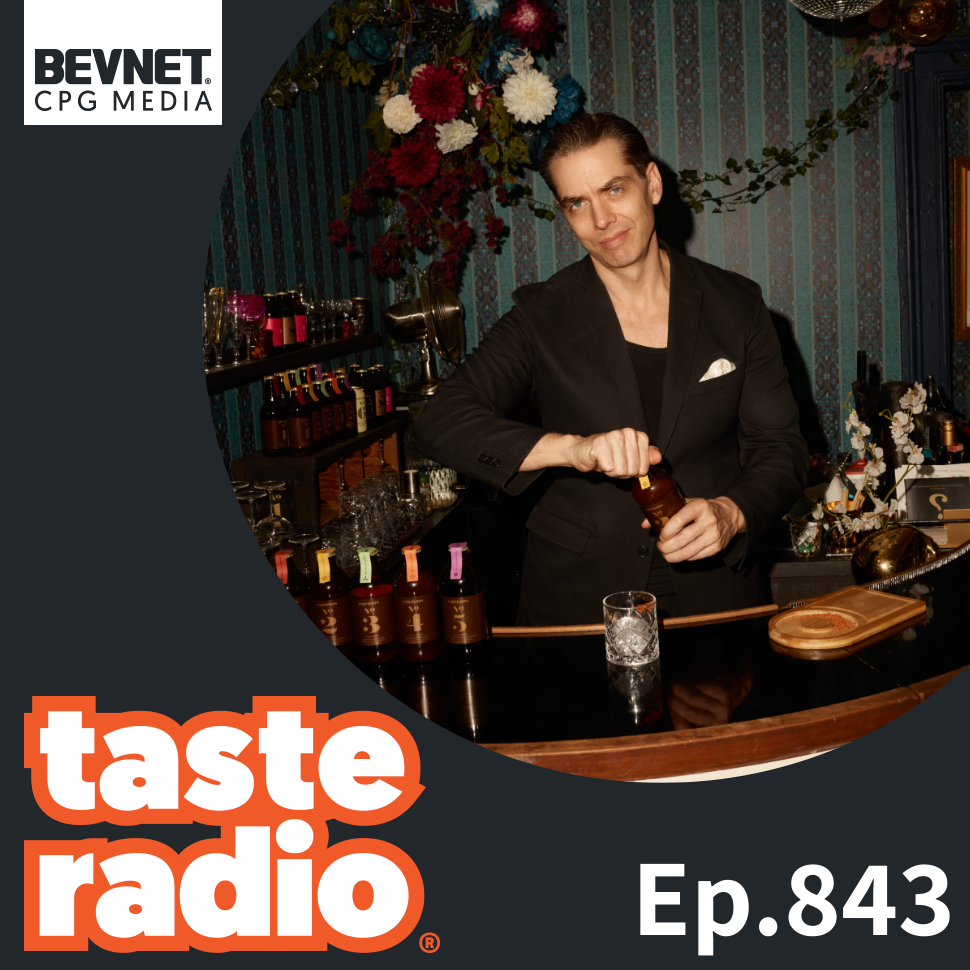
[00:24:06] Ray Latif: Yeah, yeah, so not too too long couple months. What's the shelf life on that thing? I don't know I mean is it now a fermented food. That's kind of what I'm trying to have no no I think this is still good for another I don't see the expiration date But I think it's still good for another two three months try it and find out put it back In The fridge. Yeah All right, it's time to get to our featured interviews for this episode Last month, I had the pleasure of attending an event in which the best Bartender Of America vied for the title of 2023 U.S. Bartender Of The Year. Organized by the United States Bartenders Guild, or USBG for short, and sponsored by beverage alcohol giant Diageo, the two-day competition was held in Austin, Texas, and featured 30 of the nation's top mixologists, each of whom were asked to put their skills, senses, and agility to the ultimate test with a series of intense challenges inspired by current spirit and cocktail trends. Ultimately, the title was earned by Renato Tonelli, a Bartender Of the beverage training director at esteemed New York City bar Dante. Renato will now represent the U.S. at the Global Finals in Brazil this fall. Judging the competition were industry legends and luminaries, including Julie Reiner, the Brooklyn-based owner of world-renowned cocktail bars The Clover Club, Leyenda and Milady's. In this first series of interviews from the USBG World Class event, I spoke with Renato about his background and experience In The competition, and note that our conversation took place before he was announced as the winner, and also spoke with Julie about how she uses her influence to promote positive and progressive trends from behind The Year and in patrons' glasses. All right, I'm here in Austin, Texas at the World Class US Bartender Of The Year competition for 2023. And sitting in front of me right now is one of those competitors, a top five finalist, as it were, Renato Tonelli from Brooklyn, New York. Renato, how are you?
[00:26:10] Renato Tonelli: I'm great. Yeah, you know, working a lot, working In The competition right now. So yeah, it's been tough. It's been a big, long ride.
[00:26:17] Ray Latif: Well, I saw you this morning In The first challenge. You made a delicious-looking cocktail, I didn't get to try it, called Breakfast in Austin. What was that all about?
[00:26:26] Renato Tonelli: That's right. It's kind of a mash-up of two cocktails. So it was a mash-up of one cocktail called Breakfast Martini, a cocktail that has triple sec, gin, lemon juice, and it was a mash-up with the other cocktail, which was a penicillin, which is honey, ginger, scotch, and lemon juice. So I combined them both. Oh, and I forgot to mention the Breakfast Martini is called Breakfast Martini because it's got a bar spoon, just a tiny amount of orange marmalade. So for this round, I used peach, like a peach marmalade for it. So I had like peach, Johnny Walker, blended scotch whiskey, the Black Label for a little bit of smoke, lemon juice, honey, ginger. and then a couple of fortified wines and thyme leaves for a garnish. So it's very bright, something that would definitely put a zing in your morning.
[00:27:18] Ray Latif: Well, as I mentioned, it looked amazing. And just describing the ingredients, it sounds like a really fantastic cocktail. What would the judges think?
[00:27:25] Renato Tonelli: Good question. I don't know what they thought. They had no questions for me. I have a feeling that they liked it because those are two great classic cocktails and I just tried to make them both meet In The middle. So I did take a taste before I served it to them and it was balanced. So it's just up to them to see if they like it or not. There you go. Did you name it at the very end? Did you have a name for it? I named it at the very end. Yeah, I did not have a name for it. I was only thinking about the ingredients at the moment in time. Granted, I should have thought also of the name, but it really, I In The name fits it well. Yeah. So how'd you get into bartending? So I started when I was in university. I was living in Rome and I was going to an American university in Rome and I just needed some extra money. So I offered a place that I always used to go out to, which was kind of like a disco pub, a lounge bar. I offered to work there for two weeks for free. Did you describe it as a disco pub? Yeah, like they existed a little bit more in Rome. It's like kind of like not a nightclub and not really a bar. It's like somewhere in between. Wow. Okay.
[00:28:32] Ray Latif: Yeah. I like that. There should be more disco pubs in this world. Yeah.
[00:28:35] Renato Tonelli: No, yeah. Yeah. I think they're like all gone. You know, they didn't really because no one wants to go to like a club that's like open at 10. They want to go more like 12 or whatever. But anyways. Totally. So when I went there, I offered to work for two weeks for free just to learn. And if they liked me, they can keep me and pay me a low wage. And of course, the owner loved that. So I got the job there. And little by little, I worked my way up and got paid more, worked more. And then eventually, I discovered that it was my true passion. So I went full on into it. How long have you been bartending? I would say about 13 years on and off, maybe the first five years just in clubs and In The same kind of environment. I took about a year break. And then when I got back on it, I went really into it, you know, reading books, listening to podcasts, really informing myself and trying to surround myself with other great bartenders.
[00:29:30] Ray Latif: So that's what it takes to be successful or to get serious about bartending is really just to educate yourself as much as possible.
[00:29:36] Renato Tonelli: Yeah, educate yourself as much as possible. So if you're commuting or anything, that's what I did. When I commuted to work, I had an hour commute and I would just go through books, read, read, read, watch videos. YouTube has so much content. And then of course, find yourself in a place where other people are very passionate about the craft.
[00:29:55] Ray Latif: What about consistency? Because you are probably producing and mixing a lot of the same drinks every night. How do you factor consistency into what you do?
[00:30:04] Renato Tonelli: That's always been a big challenge for most bars, depending on your ice at that time, maybe you pour a little bit too much or a little bit too little, the temperature of things, the temperature of your mixing vessels after they've been washed with hot or cold water. A big way to tackle consistency, to make consistency really work, I think is through batching. Batching cocktails, not all the way through necessarily, but to batch maybe the base ingredients together so you have less ingredients to pour into your cocktail, which makes it so that you're going to make less mistakes. It reduces the amount of mistakes that you could possibly make.
[00:30:44] Ray Latif: Where does quality of liquid factor into what you do? I mean, when you're working with alcohol-adjacent products like tonics and other mixtures, you know, how do you define quality? How do you consider quality of those types of products?
[00:30:56] Renato Tonelli: The quality needs to be very high, of course, because of alcohol, we pour maybe one to two ounces of liquid, more or less. And of the mixer, the non-alcoholic product, we usually pour much more, right? We pour two to three to four ounces. So the quality needs to be very high. It depends on which product we're looking at, but Definitely staying away from artificial ingredients. That would be one way to find good quality. All natural ingredients, because you can really taste the flavor through these things.
[00:31:28] Ray Latif: Yeah, it's amazing when you think back to The Year days, way before anything was called craft cocktails, how much... Let's call it what it is, crap went into certain cocktails.
[00:31:37] Renato Tonelli: Yeah, definitely. All powdered acids mixed up to replace lemon juice and in high amounts. Yeah. The judges that are judging me today, for example, they were the ones that changed that industry forever. They're the ones that made the switch that brought In The fresh ingredients In The game. And, you know, we're living off of all that work that they've done. Yeah, absolutely.
[00:31:58] Ray Latif: So what inspires you to create new cocktails? You know, where do you draw inspiration from when you're thinking about creating a new drink?
[00:32:06] Renato Tonelli: It could come from many different factors. I spent a lot of time in Italy because my father's Italian, so I would go there for three months of The Year every year. Until I was 18, I moved there for seven years. And I remember always enjoying the food a lot more over there and how fresh the produce was, especially because we were living kind of like in a farm over there for summer vacations. So I get inspiration from a lot of the dishes from where my father's from in Tuscany, from Roman dishes also, where I lived in Rome. And I always try to think of cocktails that can kind of pair well with those fresh flavors and even bold flavors. Do you have a favorite Italian soccer team? Yes. Yeah. Oh my gosh. Is it into it? Yeah. Congratulations. Thank you. We're in Champions League Final for the first time since I started bartending. Right, since 2010. Literally like 13 years ago. Yeah. Back In The Jose Mourinho days. Yeah, I think I just started. It was like only a couple of months before I started bartending that. Yeah. Yeah, very exciting stuff.
[00:33:05] Ray Latif: We won everything.
[00:33:05] Renato Tonelli: They're going to have their hands full, but I think they got a shot. Yeah. Well, as long as we don't get destroyed. I'm happy. Just happy to be there, you know?
[00:33:14] Ray Latif: There's a lot of pressure that's associated with bartending, especially when, you know, you're on a Friday or Saturday night, things get really busy. It takes time to make a good cocktail, but if there's a lot of orders coming in, I mean, it's just, it can be chaotic. It can also be really pressure packed here at this competition, at the world-class competition. How do you manage pressure at work?
[00:33:35] Renato Tonelli: So definitely bartenders need to be taking more care of their health. And I think that approach has helped me a lot. So working out is one thing that really gets some kind of physical activity is a good way to reduce stress. But I would really strongly suggest meditation. It's something that I do. It's something that really helps me a lot. And usually meditation In The morning is a great time, but I find it especially good for Bartender Of nighttime. Because after a really stressful shift or a stressful competition, just doing five or ten minutes, dedicating that moment instead of going straight to bed, it kind of just clears off all your thoughts and calms everything down and lets it settle and you sleep like a baby.
[00:34:20] Ray Latif: Well, meditation takes time to perfect, or at least not perfect, but it takes time to learn how to do it well.
[00:34:25] Renato Tonelli: Definitely, but there's no wrong way of doing it. It's something that anyone can pick up. It's like working out and exercising. Maybe you don't know how to make a certain move or do a certain lift, but one movement is better than none. So even two minutes of meditation, just concentrating In The breath, even if you lose the breath, if you can make the effort to go back to the breath, that In The exercise in itself. That is what's strengthening the muscle.
[00:34:50] Ray Latif: A lot of people recently, consumers that is, have considered introducing more non-alcoholic products into their lives, into their social occasions, and we're starting to see a lot more non-alcoholic cocktails come to my news, and good ones. What are the keys to creating a great non-alcoholic cocktail?
[00:35:08] Renato Tonelli: To create a great non-alcoholic cocktail, you definitely need a great non-alcoholic base spirit. So, for example, seed lip is a great base spirit to work with. And then from then on, you can build In The ingredients existing in that non-alcoholic spirit and add other non-alcoholic ingredients. Definitely you need replacements for other flavors that you wouldn't find, like replacements that you find flavors that are in fortified wines, for example, you need a replacement for that. So how would you find that? Maybe the acidity of a Sauvignon Blanc or a Pinot Grigio, maybe you can find some kind of vinegar, like a pineapple vinegar or an apple cider vinegar or something not as harsh as that. It really pushes your limits to also try to discover new flavors that can blend well. and create a product that tastes great.
[00:36:02] Ray Latif: In The folks that I've talked to, whether they're judges or otherwise competitors, seed lip is brought up often. And it feels like that product has a lot of respect and it has a strong reputation at bars and restaurants. But it sounds like we need more. We need more non-alcoholic quality spirits out there, quality non-alcoholic spirits out there. If you were advising, say, the IGO in terms of what to create for a non-alcoholic spirit, what are some of your thoughts?
[00:36:31] Renato Tonelli: Definitely. I would say maybe non-alcoholic vermouths or non-alcoholic sherries or non-alcoholic fortified wines. Definitely. Because just a half ounce or a quarter of an ounce or a three quarter of an ounce of a fortified wine really changes the whole dynamic of the cocktail and adds a lot of flavor.
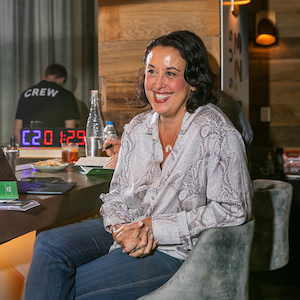
[00:36:49] Ray Latif: Renato, I know you're very busy and you have a lot to do before the next challenge. I really appreciate you taking the time to be with me right now. Good luck. Thank you. And I hope I can say congratulations to you later tonight. Hope so too. Thank you so much. Thank you. Once again, reporting from Austin, Texas, I'm Ray Latif and sitting down with Julie Reiner, World Class judge. Julie, how are you?
[00:37:10] Julie Reiner: I'm great. Thank you. Glad to be here.
[00:37:12] Ray Latif: Yeah, it's great to see you. I am just blown away by the fact that I have an opportunity to talk to someone who owns some of the most awarded and acclaimed bars In The world. It is really remarkable. Do you get to bartend these days still or are you mostly behind the scenes?
[00:37:26] Julie Reiner: I'm mostly day-to-day operations, but I do get behind The Year for special events and parties, you know, those sort of things.
[00:37:34] Ray Latif: Yeah. Well, when you do that, is it something where it's a kind of high volume thing and you're still stressing out about all the craziness of being behind The Year or is it a lot easier these days?
[00:37:44] Julie Reiner: Well, I leave that to my professional Bartender Of are back there In The regular. It hurts a lot more when you get older to actually work a full shift. I prefer to do the events where I'm making like two cocktails, you know, and then I'm just making those two things and I have all the ingredients there. But yeah, all of my bars are very high volume and so I don't pull actual real shifts. I leave that to them.
[00:38:09] Ray Latif: Nice. Well, you deserve it. I mean, once you've achieved a certain amount of success, you deserve to just do it at your own pace.
[00:38:15] Julie Reiner: Thank you. We have The Clover drink fountain. I love to man, woman, the drink fountain. Stand there with the glasses and it does the work for you. You just get to fill them up, garnish them and hand them out. That's good fun. Yeah. I like to talk to people, you know.
[00:38:31] Ray Latif: Well, I appreciate you talking to me and you know, you have a ton of influence in this industry. You are just one of the more respected people when it comes to cocktail culture and The Year business. Given that you have that kind of influence, it's important for you to give good advice and give credence to, you know, certain trends and innovation that actually will benefit the industry. So I guess to make a long story short, how do you wield the influence that you've acquired?
[00:38:57] Julie Reiner: Well, you know, I try to be a part of things like World Class, you know, where I can come in and help to mentor young bartenders and push them in a direction that I think is positive for the industry. Within my own bars, you know, I like to bring people up and give them advice and try to move them In The right arenas. in our industry is a lot of the time, you know, you get behind The Year, you're back there for a certain amount of years, and then suddenly you're like, well, what's next? You know, so I've, you know, I've had Bartender Of've some of them who've gone on to open their own bars, some who've moved into brand ambassador jobs, others who go to work for spirits companies, and then others who would leave and do real estate. And I'm here for that too. But yeah, I just do a lot of coaching and just trying to help people find their way. Because it's not an industry where there's a very distinct, clear path. There are a lot of different directions you can go in.
[00:39:55] Ray Latif: What are you most passionate about when it comes to The Year business?
[00:39:59] Julie Reiner: Creating fun spaces for people to come Amanda Huang out in. You know, I mean, all of our spots are neighborhood joints that are also world renowned cocktail bars.
[00:40:08] Ray Latif: It sounds like they're mutual exclusive things, but they're not.
[00:40:10] Julie Reiner: No. Yeah. I mean, I love The Clover Club is a Brooklyn bar, but it's, you know, people fly in from Europe or wherever and they want to come in and experience it. We have people who stay In The neighborhood that it's in because it's a more New York sort of experience than staying in a hotel, you know, In The city. And so the day-to-day operations are really the part that I love the most.
[00:40:37] Ray Latif: Now, as I mentioned, you are World Class judge. You've judged a lot of competitions. What do you look for in a winning presentation? What is it that the winners do right?
[00:40:47] Julie Reiner: I have judged a lot of competitions and I have judged World Class the U.S. every year that it has happened, actually. Wow. Yeah, In The very first Ricky Gomez won, who's here as a judge also The Year. But, you know, I'm always looking for obviously creative and boundary-pushing cocktails. but also just great personality and presentation and knowledge, spirits knowledge. And you know, it's the, it's the whole package. You can't just give us a great drink and not have some sort of a great vibe and good personality, you know, bartenders are showmen and show women. And that's, I'm looking for the whole package.
[00:41:29] Ray Latif: Yeah, it's, you know, it's interesting because the bartender makes the experience, right? I mean, the drink is just the drink in so many ways, but to see its preparation, to have that short chat or maybe even a longer chat with the Bartender Of half the reason you go to a bar.
[00:41:45] Julie Reiner: Absolutely. I would rather sit at a bar with a great Bartender Of's a fun personality. I sit at their bar and then I'm like, I can't wait to go back to so-and-so's bar. You know, where the experience and the hospitality that they have given you makes you want to go back to The Year. It's just a bonus that you know that they can make a great drink. But I would take a bar that maybe the drinks are not as great, but the Bartender Of more fun over The Year where the Bartender Of not super fun, but they make the best drink.
[00:42:17] Ray Latif: Yeah. Well, you know, making the best drink is also about what you have In The back of The Year. And things have changed over the last couple of decades in terms of, you know, what represents a great cocktail. Trends come and go, but there are ones that have staying power. You know, how do you evaluate cocktail trends?
[00:42:35] Julie Reiner: What In The next trend is probably my least favorite question from writers, you know, because I didn't ask that. I know, I know. I know you didn't ask that, but it's a funny, it's, it's one every year in January, I get the emails from writer of what's the next trend going to be, you know, which is always funny to me because I don't really think about it like that. You know, we, we don't sit around thinking like, what's the next trend going to be? I'm going to do that. You know, we just sort of do what we're passionate about and then it ends up In The next trend, you know? But lately, I would say that, you know, the latest trends that we're really seeing are more zero-proof drinks. I In The younger generation, a lot of them are not actually consuming alcohol In The way that their parents did. So non-alcoholic cocktails, low ABV drinks so that people can, you know, be out and go to multiple spots and not become too inebriated. And then there's really a push lately towards just bars that are fun. You know, it's like drinks that make you laugh and Bartender Of silly things. And, you know, I think after coming out of the pandemic, at least in New York, you know, people are just excited to be out and they're excited to go to bars and they want to see somebody banging on a tin and using a bubble gun, you know? I mean, my head Bartender Of Milady's does a lot of that and it's great and people love it.
[00:44:03] Ray Latif: Yeah. How do you know if a trend though has staying power? So flavored vodkas. I mean, remember everyone and their brother had a new flavored vodka out there. Yep. Barbacks used to be, you know, covered. drown in flavored vodkas. That lasted what, two years, The Year?
[00:44:24] Julie Reiner: Oh, no, it was longer than that. Okay. I mean, that was the flavored vodka thing was quite lengthy. I would say maybe five to seven years of flavored vodka.
[00:44:33] Ray Latif: I just tuned out at a certain point. I'm like, whatever.
[00:44:35] Julie Reiner: Well, yeah. I mean, when I opened Flatiron Lounge, I remember, you know, I was trying to decide what to have In The back bar then. And one of the old school liquor rep guys who used to be these guys in suits who'd come be like, If you don't have Stoli Raspberry on your back bar, you don't know what you're doing, you know? Really, though, that was sort of the state of things, you know, and then suddenly the brand ambassador sort of started. And, you know, the first one I was laughing because Simon Ford, who's a friend of mine, walked in and was like this Englishman, you know, who was working for a gin brand. And I just was so excited to have somebody who was passionate about the brand that they represented. It wasn't just some sales guy who was trying to sell me something. and make me feel stupid for not having their flavored vodka. And I ended up In The opening menu of Flatiron Lounge putting two cocktails of his, you know, with his brand In The menu because I wanted to help him.
[00:45:34] Ray Latif: I'm sure it surprised a lot of people to see flavored vodkas just explode the way they did. But I have to think some people saw that there would be, you know, an endgame for all of it.
[00:45:46] Julie Reiner: Yeah. I think that the flavored vodka craze also had so much to do with home bartenders and vodka in general. Like people at home have a lot of success with vodka, you know, because it just tastes like what you mix with it. And so a lot of people are like, oh yeah, raspberry vodka or whatever it is, orange vodka. And it just became hugely popular. A lot of the cocktail bars still didn't carry very much of it though.
[00:46:11] Ray Latif: Yeah, that's true. Unless you're certain types of bars that sold lots of cocktails.
[00:46:17] Julie Reiner: Yeah. Yeah. I mean, I had a few at Flatiron, but certainly not, like you were saying, the entire front row. Right. Yeah.
[00:46:26] Ray Latif: You are also a co-founder of an RTD cocktail brand, and that also seems to be a trend In The rise. I personally feel like it's a trend that has a lot of staying power because of the convenience, the quality that we're starting to see from some of these brands. You know, how did you see that category growing and what drove your interest in getting In The space?
[00:46:50] Julie Reiner: Well, you know, my partner Tom Macy and I have produced many menus The Clover Club together. And, you know, we started In The Jazz Age Lawn Party, which is an event on Governor's Island in New York. And we, for years, you know, we're going out there, we're making like five gallon buckets of cocktails. And we were just, you know, and Tom was like, this would be so much easier if we could just make something delicious in a can. You know, and that was sort of, I was like, you're right, Tom, you should get to work on that, you know, and then we just started talking about it. And he reached out to a flavor house and we just started looking into it. Because at that time, when we started our research, there really wasn't a lot out In The market. And that was sort of the why we decided to do it. And we saw, you know, it's like people, you're on a boat, you're at the beach, you're fishing, I don't know, you know, it's, it's nice to be able to pop open a cocktail that is just as good as a cocktail you're going to get over a bar. And that was what we set out to do.
[00:47:48] Ray Latif: Do you see more spirit companies or at least spirit portfolios adopting or embracing canned cocktails, RTDs?
[00:47:56] Julie Reiner: Absolutely. A lot of the spirits companies are coming out with their own RTDs. I think that they're all watching that space, you know, and we're hoping to be able to partner with one of these larger companies so that we can grow Social Hour to a larger audience.
[00:48:14] Ray Latif: Yeah. It's almost like it would be pretty convenient given if you look around here, I mean, there's a lot of cocktails being poured, but if you're going out to the pool, for example, you can't bring that glassware and who wants to drink out of a plastic cup anyway, right?
[00:48:26] Julie Reiner: Exactly. Yeah. I mean, I take Social Hour with me. I'm like, Social Hour, gin and tonic In The beach is nothing better.
[00:48:35] Ray Latif: Julie, just one more question. You know, when you are considering, I mean, you're, I should, I'm making a big assumption here. Are you ever considering opening any new bars? Because you have a lot already on your plate. But, you know, what are your thoughts on potentially expanding your empire, so to speak?
[00:48:51] Julie Reiner: Just thought of it as exhausting. I like to be a part of what happens at The Year. So I don't want to dilute our brand so much by going to different cities. You know, I know a lot of people do it. I don't know how you do it and are successful oftentimes just because owner involvement in our spaces is what make them consistently great because we're there. You know, we are always involved In The day to day.
[00:49:18] Ray Latif: Yeah, as you should be. That's what people want to see out of it as well.
[00:49:21] Julie Reiner: Yeah, exactly. I try to, you know, show up to all of the bars. I try to be there to mentor all of our Bartender Of the various spots. And, you know, the larger you become, the more deluded that is. So I don't know that I want to be that much bigger.
[00:49:35] Ray Latif: Julie, thank you so much. It's been so much fun and so educational and insightful for me and I'm sure for our audience as well. Thank you again.
[00:49:42] Julie Reiner: Thanks so much for having me.
[00:49:46] Ray Latif: That brings us to the end of this episode of Taste Radio. Thank you so much for listening. Taste Radio is a production of BevNET.com, Incorporated. Our audio engineer for Taste Radio is Joe Kratchy. Our technical director is Joshua Pratt, and our video editor is Ryan Galang. Our social marketing manager is Amanda Smerlinski, and our designer is Amanda Huang. Just a reminder, if you like what you hear on Taste Radio, please share the podcast with friends and colleagues. And of course, we would love it if you could review us In The Apple Podcasts app or your listening platform of choice. Check us out on Instagram. Our handle is bevnettasteradio. As always, for questions, comments, ideas for future podcasts, please send us an email to ask at Taste Radio. On behalf of the entire Taste Radio team, thank you for listening, and we'll talk to you next time.
[00:50:36] Mike Schneider: you