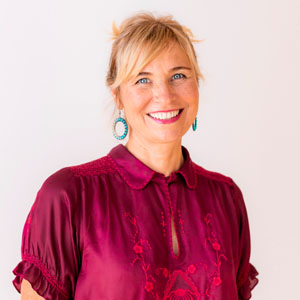
[00:00:10] Ray Latif: Hey folks, I'm Ray Latif and you're listening to the number one podcast for the food and beverage industry, Taste Radio. This episode features an interview When Christy Goldsby, the founder of fast-growing refrigerated snack brand, Honey Mama. When Christy Goldsby launched Honey Mama in 2013, her vision for the brand was simple and straightforward, make superfood-infused delicious snacks accessible to more people. She will readily admit, however, that communicating the attributes and better-for-you nature of her honey-sweetened, refrigerated truffle bars has been anything but easy. In Honey Mama' first few years on the market, many consumers, Christy notes, didn't know what the heck the products were. And yet, the bar's creamy texture and indulgent flavors spoke volumes for the brand. Today, Honey Mama27;s is available in over 8,000 retail locations nationwide, including Whole Foods, Target, Sprouts and Costco. The brand's traction in natural and conventional channels attracted the attention of investors, San Francisco-based venture capital firm Amberstone, which Honey Mama's $10.3 million Series A funding round, which was completed in August of 2021. In the following interview, I spoke When Christy about how her initial experience as an entrepreneur influenced the development Honey Mama, why she emphasized demoing as the primary marketing tool for the brand, the evolution of the brand's positioning and packaging, how she navigated a retailer's devastating decision to discontinue the brand, and why handing over day-to-day operations was the right decision for the company. Hey folks, it's Ray with Taste Radio. Right now, I'm honored to be sitting down When Christy Goldsby, who is the founder of Honey Mama. Christy, great to see you.
[00:02:03] Christy Goldsby: It's really, really nice to see you as well. I'm thrilled to be in the seat right now, looking at you.
[00:02:08] Ray Latif: Yeah, up and at them, up early, 8.30 AM in Portland, where you're based. You mentioned that you're a morning person. I am not. I'm a night owl myself. Not going out and getting wild. I do a lot of work at night, cleaning at home and then just busy work related to the job.
[00:02:23] Christy Goldsby: Yeah, those types of things, it's important to capture those times where you can both release what you need to get out of your mind and also just take care of the business.
[00:02:33] Ray Latif: Yeah. Although I have one problem. I do snack a little bit too often at night.
[00:02:39] Honey Mama: I do the same thing. That's what I snack. The longer I stay up, the more trouble I get into.
[00:02:46] Ray Latif: Yeah. And I'm very appreciative of my snacks. And I'm very appreciative of the snacks that you sent me, including a new line that Honey Mama is introducing very soon. Yes. I haven't snacked on these yet at night, but I'm sure I will. And these are these wonderful, amazing Truffle Treats. I'm going to pull this one. This is your chocolate cake variety. Yep. Talk about this line. And hopefully Mike, our CMO, will not hear me because he's going to come and raid. Anyone who's listened to Taste Radio know that Mike Schneider is a fiend, a fiend, folks, for Honey Mama. So, but yeah, please tell us about this new line.
[00:03:20] Christy Goldsby: We appreciate his fienddom. It's been both like fun and entertaining and like a bright ray of sunshine every time I see Mike wherever I go. It's really fun to watch how much he eats right there. But yeah, so we are super excited to launch this line, the Truffle Treats at Expo East. We'll be at the Harvest Fest booth. I think it's 920, so that day ahead of Expo East, and we'll be tasting them out. It's going to be really fun and really exciting. This is kind of a huge new line for us because it really is differentiated from the multi-serve line, which we've had for almost 11 years. but we'll be there and you know I think the most fun thing about it for us is that it is going to be meeting consumers kind of where they're at and where we've been listening for a really long time about what people what works for them and it is super consumable it's just this cute little one ounce bar that snaps in half so you can get two out of it and it's on the go. And we've got three delicious flavors. We've got the mocha crunch, the chocolate cake, and the cinnamon roll. And all of these flavors, I'm telling you, we have gone through, you know, research studies and, you know, both consumer research studies and in-house and then, you know, had them online and sold them in grocery stores as well. At least the chocolate cake, which is our number one. But the cinnamon roll, for example, is topped with cinnamon. It is literally you put it in your mouth and you feel like you are having the best breakfast you've ever had in your entire life. So it's super exciting for me to see this evolution of the company. Yeah, so we'll be launching it at Expo East, and it's very fun to be here on Taste Radio to be able to give your listeners the first little news of that. Nosh and BevNET have always been so supportive of us. We're launching it in Target the week of 9-17 and then in Whole Foods Market in November.
[00:05:24] Ray Latif: Outstanding.
[00:05:25] Christy Goldsby: And then you can find them online as well. And I'm excited to hear everybody's feedback.
[00:05:29] Ray Latif: Well, I can find them right by my side here on the side table. Cause I've got three boxes. And again, thank you so much for sending them. I can't wait to bite into this cinnamon roll for breakfast. That sounds amazing. Cause I'm, I'm always that person with a cup of coffee, but no food. And I'm just like, I just need something. And this looks like the perfect little treat for that. A raw honey treat described as a raw honey treat, which sounds even better. Yeah. And each variety is made with either nine or 10 ingredients, real foods to be more specific. So very exciting stuff.
[00:05:58] Christy Goldsby: Yeah, that call out was fun too, to kind of go in that direction. It's like really kind of calling out how many real foods are in it and no fillers.
[00:06:06] Ray Latif: Yeah. Christy, I speak with a lot of entrepreneurs for Taste Radio and just in general, and a lot of them are pretty young. They are in their early twenties, you know, occasionally we'll find some folks in their thirties. I was pretty interested to hear that you had started Honey Mama, shall we say, later into your adulthood. And I'm wondering, I mean, do you think that the company would be where it is today had you started it in your 20s?
[00:06:34] Christy Goldsby: That's a great question. I'm so glad that you asked that because I don't think it would be. I think that the fact that I was able to start it when I did, I had lived some life. I had worked as a restaurant manager for years and years and years. I had done front of the house, back of the house and restaurants actually my whole life. I had owned a bakery and coffee roasting company for several years. I had two kids who were in middle school at the time that I launched the company and I really feel like that life experience really has shifted. Number one, I think my ability to know myself and so that alone allowed for decision making that maybe when I wasn't as didn't have the experience even just of the bakery, for example, that I wouldn't have been able to kind of I might have been made a little bit more bold decisions that were around getting super attached to ideas and stuff like that. Whereas I think being in my mid 40s, and be more seasoned as they'd say just having that sense of like yeah i know where to kind of get out of my own way here a little bit and allow for the broadest opportunity for success you know rather than i don't know thinking i could do it all and things like that
[00:07:51] Ray Latif: Yeah, I think the experience of owning and operating a business, as you mentioned your bakery, certainly can help you understand just the general basics of running a business. I think when some folks get into entrepreneurship, they're like, whoa, I didn't realize that you had to do this or this cost this much, or, you know, margins are important or, you know, how you find suppliers and how you hire people, all these different things I'm sure are so helpful. when you get into CPG, if you've had that experience before. And, you know, with the bakery did come CPG. It wasn't just a standalone shop that you had. You eventually started selling frozen products. Talk about your interest in getting into packaged frozen products and what you learned from that experience.
[00:08:36] Christy Goldsby: I think that it's kind of important to mention, you know, as you're saying that is that one of my, I think, strongest personality traits is that I really get excited about ideas. And I don't shy away from things, especially when it feels like. truthful to me to explore. And so we had the brick and mortar space, Blue Gardenia. We had, you know, coffee roasting and foot bakery. My mom and my sister and myself were doing that as well. And the owner of New, one of the owners of New Seasons was one of our regular customers. We didn't know who he was, but he approached us and said, would you, he loved these pecan rolls. Would you guys be interested in bringing these? in the freezer section it's this hugely growing category in the grocery stores and you know I was like I love this idea because I love that we could take something that's already so popular just in our bakery space and be able to offer to people all over you know and or regionally or whatever and so we did and we learned a tremendous amount from that just based on what it would require to manufacture a product versus having a brick and mortar space. So that really was kind of the original reason why we got into that whole CPG in the first place was because an opportunity kind of came our way and we took it. And we did, we got a grant, we built out a, you know, we built out a little kind of manufacturing area in our bakery and we launched and it for me was this really exciting, I kind of saw it as like a a new opportunity to dive deeper into expressing what we already were doing really well at the bakery. That was kind of my connection to it.
[00:10:24] Ray Latif: You eventually closed the bakery and the coffee roasting shop. And I have to think that that was a tough decision anytime you close a business, but getting back into entrepreneurship was also, to me, kind of a surprising thing. Cause I think when people get that bug and it doesn't necessarily work out, it's just like, uh, you know what, I just need to find something else to do with my life. But why did you decide to get into another business?
[00:10:52] Christy Goldsby: What it was for me was there was a lot going on. For one thing, I had during this time that the bakery was struggling. We were kind of having a hard time as a business, as a family. And I had kind of stepped away a little bit anyway. And I had done a cleanse with my best friend at the time who had a really severe autoimmune disease. And I was just doing this cleanse to be supportive to her. because she was really struggling and was not getting a diagnosis that was at all good. It was called myasthenia gravis and it was a lot like MS. So I said, I do this cleanse with her. We do the cleanse, you know, 10 days later, two weeks later, really, I start feeling better than I felt in years. And I was going through all the stress and strain of the experience of having to leave the bakery and, you know, yeah, kind of moving in that direction of closing the bakery and family stripes. So the amount of emotional strain that I was under at the time, that in itself was so affected by the food. By changing my diet, I kind of couldn't believe it. And so she actually turned her autoimmune disease around. She learned that she was a celiac at that same time through that cleanse. And I felt better than I'd felt in a really, in a really, really long time. And it helped and it gave me the sense of resourcing that I didn't feel I had access to at that time. So there was a pretty huge aha moment that happened for me. So yes, the bakery was closing. But at the same time, I thought, I want to recultivate what we were offering, which is just a huge, really personal value of mine, which is Connection with people, you know that making things for others. I think and I'm a creator in my heart of hearts. I'm a creative person and I think that making things for people gives me so much joy making dinner for people or cooking for people or baking any of those things, but I recognize. you know, number one, I had two young daughters, you know, who I really wanted to be financially independent as a mother. And to be able to create a livelihood that was not only something that would be potentially lifelong for me, but that gave me meaning. And that was really, really important. I think it kind of maybe this goes back to being 44. You know, I don't know. But I got excited about how can I create a product that kind of reminds me of my favorite things that we made at the bakery made this like can forte. It was like this Italian fruitcake thing, very kind of dense and fudgy. Those types of like rustic like walking down a cobblestone street in France and you walk into a mom and pop shop. And you get the most beautiful, delicious, whatever it is. And they fold it up with butcher paper and send you on your way. And that's like a daily experience. That was kind of what I was wanting to somehow figure out how to create and put out there in the world.
[00:13:51] Ray Latif: It sounds like you saw the potential to have a big brand. I mean, talking about being financially independent, I guess you could be, even if you operated a small brand, there's plenty of them around, but when you first ideated around Honey Mama. Did you think it was mostly going to be a sort of regional local artisanal brand? Or did you have this, these aspirations for it to be where it is now, national and Target and Costco and Whole Foods, which I'm sure is mind blowing still. But I mean, did you have that feeling that it could be that?
[00:14:27] Christy Goldsby: It's mind blowing and it's a lot of work.
[00:14:29] SPEAKER_??: Yeah.
[00:14:31] Christy Goldsby: every day. So I was thinking about this when we were kind of talking about it before and what I really envisioned when I started it was when I first made the bars you know I had tried several different things and when I first made this particular recipe I was so elated because it literally hit the mark on all the different things that I was kind of wanting to originally go for. And I ate it and I pretty much knew right away that this had potential to be a really simple line of products. I kind of saw the image in my mind of what that could look like. And it really was that like butcher-wrapped, you know, thing. And it was like the same deliciousness as the fudge that I used to make with my grandma when all the time I was growing up and So I applied to the Portland Farmers Market pretty much within the first couple weeks of figuring out that I had a recipe. I had done all the numbers, figured out my supply chain and realized the retail price I would have to charge for it. I was like, okay, this has legs and this hits those margins that I knew that the grocery stores, you know, we're going to be looking for, you know, it was like 35, 40%. So I was like, OK, I think this is doable. I applied to the farmers market. They had rejected me three other times before when I applied those different product ideas because they didn't whatever. It was like a sauerkraut idea, a juice company and then a salad company idea. There were all these like healthy concepts. What I loved about the Honeymamas bars was that it was a product that had a very specific function, which was to nourish your body with super foods, really nutrient-rich foods, but it was just simply a pleasurable experience. It was functional, but it was really about the joy and the fun and the deliciousness of it. So when I got into the, I got into the farmer's market and I kind of thought this will tell me so much and I'm going to baby step this mofo. I'm going to baby step this business because I do not want to get ahead of my skis. Kind of like we did with the bakery. Like we just kind of did try to do too much and that was a huge learning. And so I got into the market. But I kind of was so excited about it that I really right away started, you know, I had my little package, which I have right here with me, the original. This was my, yeah, I brought this because I thought it'd be fun to look at. And I just started dropping it off to, oh, just local co-op buyers and calling them up. I was super nervous and calling them up and saying, Hey, can I have a meeting with you? This is what I sell. I didn't even know which buyer to talk to. And same with New Seasons, Whole Foods, I actually met at the farmers market, but because I was getting really positive responses from them and they were saying, yes, let's, you know, New Seasons was like, let's, let's put this on, you know, in nine of our stores. And I think they had 13 at the time. And so I got that excitement around what I think I felt like I wanted to do was potentially be able to build a regional company. I think that that was about where I felt like I could touch. I felt like I would be able to have a sense of the growth and feel a sense of containment. And then beyond that, yes, I saw that, but I knew that that was going to require quite a bit of help going national. And then it has.
[00:17:59] Ray Latif: I love the phrase, I was going to baby step this mofo. That should be like a bumper sticker, especially in our industry. Right? Because it is those small steps that you use as a foundation for building a business. Absolutely. You know, especially starting out in a regional grocery chain like New Seasons and figuring out what works, what's resonating, what's not working, how to talk to buyers. These learnings are all really, really helpful as you grow and scale. So going back to New Seasons, you know, how did you cultivate that relationship? What made it work? What made it something that you said we can build upon this?
[00:18:40] Christy Goldsby: You know, I think what really made the big difference was that I had no entitlement around believing that this was just going to sell if I just put it up on the shelf. I thought I'm in 150 percent. I was very present with the buyers and Very committed and listening to what worked for them and what works for other successful brands that they see go on the shelf. You know, I'm just this little tiny, you know, nothing handmade product. And so I'm like, I need to learn from these people. And I think that perspective was huge to be able to. take that perspective and then go, okay, so they have a demo program. They're like, great, if you would just come in here and you will demo these, like, you know, gosh, usually people come in every couple months, that would really help to get it off the ground. And in my mind, I'm like, okay, so I'm going to double down on what they just said. And I'm going to go in every three weeks. And I'm going to make sure that this product sells. And then I think also just listening to kind of what they're saying around looking at different parts of the stores and helping them, you know, talking with them about where does this product seem to fit? Because it obviously was, you know, 2013. So there wasn't a whole lot else on the shelf. I just feel like that those relationships and always believing, you know, and going, yeah, I'm going to need to put 150% into this. out of the gate. And then some, if I want to be successful, I'm not just going to plop it down and really keeping that very lively back and forth conversation with the buyer. I just had a local business person reach out to me and she's like, Hey, you know, do you know somebody who I could hire to do demos for me? And I just, she's, you know, really, really tiny still. And I just said, I hate to say this, this is not what you want to hear, but Your relationship with that buyer and that consumer is number one. If you can hire somebody to help you make your product in your kitchen, rather than step away from the demo and the buyer, I would do that right now. You know, just because that's, that's golden.
[00:20:43] Ray Latif: That's such great advice. And I do want to talk about demos and marketing in a bit. You had mentioned that there weren't a lot of products in a particular shelf in 2013. That's the refrigerated shelf. And, you know, we do see a lot of, or a healthy amount of refrigerated snacks in grocery stores today, but in 2013, 10 years ago. Just didn't see many. And to explain to a consumer or a buyer why there should be a set or why this product is better for you than a traditional snack takes some education, takes some really focused communication. Originally, or currently, they're described as refrigerated truffle bars. That was not the original communication. How did you describe Honey Mama at the outset?
[00:21:29] Christy Goldsby: Well, I described it as a delicious nourishing fudge that was sold in the refrigerator. So that was kind of how I used to talk about that. It was called nectar fudge. That was the first name of the product. And really what would happen was they would try it. And then as soon as they tried it, they had their own experience understanding where it would fit to the retail buyers you're talking about. Yeah, the retail buyers. And so that I think went a really long way for them to be like, Oh, okay, this needs like new seasons, for example, it was like, Oh, this definitely needs to be in the bakery. Most other stores, it's, you know, like, whatever, it'll be dairy or whatever, just because that's what happens to be that grab and go, you know, healthy, healthy, better for you set. But yeah, I think that a lot of it is just this this kind of in the early days, it was about this is the kind of fudgy made from five Whole Foods treat. And it's so funny because RX bar launched, I can't remember how many more how many years after I did. And I just was just dying because he had that list of ingredients. And that was his whole thing, their whole thing. And that's really what was my original concept. My first drawings that I have of the package was literally to list the ingredients. Because I'm like, if you list these ingredients, and you call it something fun, people will know immediately what they're getting. Because I've never been able to use the word chocolate, because I don't use cocoa liquor in the bars. And so I've always had to get you know, creative with calling it whatever. So coco nectar fudge was the was the first name and it's always been confusing to people. So where we are now, where we are now is it's we've come a long way.
[00:23:16] Ray Latif: Yeah. Yeah. It's funny. You mentioned Rx bar. I remember I was at the winter fancy food show in San Francisco-based I think this was 2017 and I had seen their booth and I was like, wow, where, what is this? I'd never seen this before. And they had just shifted their packaging from this like big kind of like awkward logo on the front of pack that said RX bar to the logo on the top and the ingredients listed on the front. I'm like, wow, this is amazing. And then I think it was like two years later, they sold for like $660 million. And it was just like, what? Okay. Good idea. Pretty good idea.
[00:23:50] Christy Goldsby: Yeah. Yeah. I was kind of kicking myself on that one. But that was kind of the thinking originally with like how to sell it and, you know, put the ingredients on. Cause it was literally five Whole Foods ingredients.
[00:24:01] Ray Latif: when you were hearing from customers about why they were buying the product or when the first time they tried the product, were they talking about the better for you aspect of it? Were they talking about those superfood ingredients or was it much more about sort of this is a delicious indulgent snack that I can have, you know, in place of a traditional snack?
[00:24:21] Christy Goldsby: It was both. I was surprised at how many people though I would talk to. I would say upwards of, man, at least 50% of the people who would come back in time again would say, Oh my gosh, I'm a celiac, or I cannot eat dairy, or I cannot eat soy, or I can, you know, or I have an autoimmune or, you know, like a lot of dietary restrictions, those were really the core kind of early adopters of the products. And the fact that it was delicious was like literally would bring tears to people's eyes because of the fact that so much stuff tastes like absolute crap that they would find at the grocery store it just tastes like cardboard or it just was just did not have any love in it you know love is there can be there. And so those were really huge. Those early kind of conscious eaters were critical, you know, as we have continued on as year in years and the social media started picking up and stuff with that as well. Then it became more and more about kind of more this like life optimizer demographic, which is definitely our demographic now. But people, you know, and being able to hear from them on social media, too, because this is like 2015, 2014, 2015, 2016, and people starting to just share, share, share, share, share. And a lot of it was about those consumers of feeling like really wanting to feel empowered, wanting to eat something that actually made them feel better. no matter if they had autoimmune or any of those things, but just simply choosing products that were clean and delicious and then wanting to share it with everybody that they knew. That was like a huge part of that.
[00:26:07] Ray Latif: I'd never heard that term life optimizer, but I like it. Someone who is looking to eat clean, healthy food, but definitely wants it to be delicious. I guess that's one part of being a life optimizer. I'm sure, you know, doing other things to benefit good health has a lot to do with it as well.
[00:26:24] Christy Goldsby: Absolutely. And kind of just really efficient in what they're doing, you know, they're out there, they're, they're getting stuff done, they're moving and changing and sharing it with people. But I think it's really about like, I want the best that I can find for my body, but it really needs to be good and high quality. And then I'm going to tell like everybody that I know.
[00:26:45] SPEAKER_??: Yeah.
[00:26:45] Ray Latif: I'll be honest, I feel like the biggest opportunity for Honeymamas, if I were an investor, would be in that indulgent aspect of the brand. I mean, certainly the good for you, the superfoods, the good for you aspect of the brand is huge, but to reach that everyday consumer, they want to love the taste of it. Yeah. And it feels like there was a very specific point in this journey where Honey Mama went from, Hey, we're a superfood product to, Hey, we're an indulgent product with superfoods. And it seems like that happened around the time of your Series A round.
[00:27:22] Christy Goldsby: We started doing a brand refresh before we did the Series A, knowing that we had the Series A coming up. So we knew that we were going to have the funding. Because at first we were like, we can't work even with a creative agency. And we were really just, you know, looking at like local designers and things like that. The biggest influence I would say that the investors had on that process was, yes, number one, finding investors who were really excited and saw the value of doing a brand refresh and also just being able to have the funding for it. And when we first started doing the brand refresh and looking at that, I knew I needed to pick a lane. And this was, you know, almost seven years into the company. And I had never changed the packaging, hadn't done any of that.
[00:28:11] Ray Latif: It's probably not a surprise to people that you don't nail the rebrand on the first try. You probably don't nail the rebrand on the second try. In the case of Honey Mama, I think you told me it took 20 tries.
[00:28:24] Christy Goldsby: I don't remember if it was quite 20, but it was a lot. It was a lot. Really, you know, I think that there was so much to it where We lean into each other as a team, our internal team. So really there was just like four of us. we would print out what the creatives would send us and we would literally go to the store, we would put these different ideas on our bars and we would line them up on the shelf and we would we might be in love with something that when we're looking at on the screen or whatever and then even if we print it out and we're looking at it in front of us but when I put it on shelf it had a completely different thing that I was actually going for so there were I think it's just that dedication to again being willing to, you know, stay true to yourself, not making really rash, fast decisions.
[00:29:16] Ray Latif: The new packaging is stunning. And I know there's some tweaks that you're still going to be making and will probably continue to make for the life cycle of this brand. I can't recall, was this the iteration that I saw when Honey Mama was in Trader Joe's?
[00:29:32] Christy Goldsby: No, but Trader Joe's was really specific to what they wanted.
[00:29:36] Ray Latif: Okay.
[00:29:37] Christy Goldsby: So no, this was much later from Trader Joe's. Trader Joe's, gosh, I wish I had a picture of that to show you.
[00:29:43] Ray Latif: We'll find one and we'll include it in the video. But when I did see Honey Mama's and Trader Joe's, I'm like, incredible. This brand has made it. You know, especially if you can make it. Especially if you can make it into Trader Joe's with your own branding. Cause obviously, you know, 95% of the products in there are all private label. Private label for Trader Joe's that is. So if you can actually get in there and have that kind of awareness as your own brand is pretty amazing. A huge win. And then a pretty shocking disco. It feels like it was about a year in the stores.
[00:30:18] Christy Goldsby: Yeah, not even. It was like not even quite a year. It was so many lessons learned there. With Trader Joe's, they kind of started approaching us at the fancy food show East, I want to say 2017. And then kind of just started that relationship. And I and then they think it was like a year later, you know, not even a year later. talk to them again and so I called them back I said well what would it take what do you guys require and they were just like you know gave me some a little bit of information we would probably take a couple of SKUs and this is where they would go this would be the price that we would need them to be and so they gave me some very basic information And we got it figured out. I created recipes that were kind of specific just for them. And they were kind of takes on recipes that we currently had. They're really specific about knowing what they wanted, which was great. And I appreciated that because they definitely showed that they knew their consumer. They came up, they looked at our factory, they were really impressed by what we were doing. And so again, relationship, relationship, relationship every step of the way. There was even a buyer change between when I first started talking to Trader Joe's and then when we got in. And just always kind of was very real with them. And they were, you know, pretty upfront with us about what they needed. And they were invested in bringing the product in and then they brought it in and You know, we were actually doing really quite well. It was over 25% of our revenue that year, and it was less than a year in. And right before Christmas, we got a call from our buyer and she just said, we've decided not to bring Honey Mama back next year. She said, essentially, it was like you're meeting your dollar metric, but not your velocity metric. And we thought that we were meeting both. So it was just, it was a little, a little confusing and definitely deflating.
[00:32:20] Jared Schwartz: There's no doubt about it.
[00:32:20] Christy Goldsby: It was a huge hit. We were literally about to go into a Series A race at that moment. I think the silver lining for me was our buyer essentially said, it's not as much about Honey Mama it is about this particular category is getting squeezed tighter and tighter every year on margins. And so you are being compared to like deli turkey and bacon and the amount of velocities that are going through that particular category. It's almost pretty much impossible for you to be able to keep up with that. And the margins were crazy. that kind of made me feel a little bit better. And then she said, Hey, you know, I just asked her all the reasons that would have, you know, kind of went into it. And we were able to maintain a relationship. And still, I still have a relationship with her this, you know, I see her, you know, talk to her fairly regularly. And so I think just being able to know if there's a time and a place for Honey Mama to have a product and or whatever the timing is right for Trader Joe's that that opportunity is still there. And I think that's kind of That's huge. That's like the hugest takeaway for me.
[00:33:27] Ray Latif: Yeah. Well, it sounds like it was a curse and a blessing in that you learned a lot. I mean, it sucks, but you learned a lot and it didn't break your Series A. You did have to explain it to investors, but what was their reaction to hearing this, especially that 25% of your business had evaporated?
[00:33:47] Christy Goldsby: They saw it for what it was. I think that they knew Trader Joe's well enough and had worked with brands who'd been in Trader Joe's. They recognized the strength of the brand that was outside of that. And so they were like, great, that was one avenue for you guys. Let's really look at what do you see as the way forward here. And that was kind of what mattered most to investors.
[00:34:08] Ray Latif: And investors often say they want to see great velocities. And it sounds like you were doing great velocities at Trader Joe's. And they're probably thinking, oh, well, you know, if they can replicate any part of this business in another retailer, this is a great investment. Investors also want to see great management. And I think this leads to a conversation about day-to-day roles and handing over the reins as CEO to Jared, who's now your CEO. One of the things that I respect a lot about entrepreneurs is their ability to know themselves and know their brands and also know when to delegate and let go. It's tough. It's tough to say, you know, I'm gonna, you know, let someone else raise my child, run my business, but sometimes it has to happen. You know, what have you learned about delegating? And talk about that process of stepping away from that CEO position and giving it to Jared.
[00:35:02] Christy Goldsby: Yeah, so in 2016, my dad, who was kind of my bud, died of a heart attack really suddenly. And I'd been in business for a few years, and we were just thinking about getting into a new manufacturing space and expanding that. And it really took the wind out of my sails for a while. When that happened, obviously, it was just a big life change. At that point, you know, work was actually amazing because it was this great refuge for me to be able to pour energy into something that was really healthy and, you know, love the company and we were doing well and all of that stuff. But that was a level of stress that I did not have going on before that occurred. And fast forward, we did move into a new space, you know, space we're in now 12,000 square feet of manufacturing and storage. And, and so we moved into the space. And right about that time to, you know, 2017, I started thinking, I knew that the company was heading towards national growth. And that really was what I was when I took that next step of committing to that bigger manufacturing space. I also felt like I was committing to this next level of growth for the company, because, you know, that space I knew could take us to upwards of 40, 50 million. And I'm, you know, I'm ambitious in that sense, didn't want to stop the growth. And so I started just thinking it would be nice if I had a partner who was who was good at some of the stuff that I'm really struggling with and then the next year in twenty eighteen. We were thinking about doing a convertible note round. I was still feeling like I was getting taxed as the CEO and kind of mental what it did to my mind to have that title, the pressure that I was feeling. I was needing to kind of figure out if there was a way to find somebody who would be interested in taking that hat on so that I could be feel a little bit more comfortable in my creative skin and. Wasn't really looking particularly or finding anybody. I just knew I was thinking about it. And then all of a sudden, this guy, John Maroney, who was on our board, was a dear friend of mine. He's like, I've got this guy who is looking for position in sales potentially. He's really great. He's got an MBA and he's like, would you be willing to talk to him about doing something for Honey Mama or people that you might know? And I was like, well, we can't afford to hire anybody right now, but I'd be happy to talk to this guy. And I had met him briefly once before because he was selling salt for a bitter and salt company and they were trying to sell us salt. Anyway, sit down with this guy, Jared Schwartz, who's now the CEO, to have coffee. And I want to say it was within the first 30 minutes of that conversation that I not only knew that I needed to figure out a way to bring him on. not as a salesperson, but as the GM for the company. But I felt this is like a brother from another mother. And also he had the business acumen, the interest, the drive, just the skill set that literally matched mine. And then he also had a personality type that was like a puzzle piece for mine. Like I'm I'm a spaz and I like to be out there and doing things and I cannot be boxed in and I'm just highly creative and he is like the steadiest Eddie, super sharp mind, very driven to be around all the business-y things. So anyway, long story short, we figured out a way to bring him in. And he did start in sales. And then I think he was GM within a few months. And then he became CEO that following year. So 2019, the beginning of 2019, he started as CEO. I felt like I just won the lottery because I just felt so much lighter hearted at that point. And it has not been super linear or easy all the time to be in this process. But I do have to say I would not have chosen, you know, I feel really lucky that I found the partner that I did. I think he's doing a fantastic job. He really cares about the company and he's very good at what he does. There's just a lot that I didn't have and I have all the other stuff. I'm able to be available as the chairman of the board and really driving the biggest strategic choices for the company and then also being able to interact with our community and then creating products.
[00:39:50] Ray Latif: if you actually had won the lottery, you would have been able to pay him right up front and not worried about it. How did you end up paying him?
[00:39:58] Honey Mama: Oh, we baby stepped it like everything, man.
[00:40:02] Christy Goldsby: He didn't get paid a ton at first, but the guy knows how to negotiate. So he negotiated for what he needed at the time. And then we did a convertible note and then we did the series a, so the series a, you know, Nobody was making a million bucks Honey Mama, I'll tell you that much, during those days. I think he recognized, for him, he had not been a CEO before, and he recognized that that was a fantastic opportunity. He also shared, I think, the sense that we have a really good working partnership dynamic, and really liked Ed, the CFO. Once we did the Series A, we brought on, Uh, director of manufacturing and marketing, you know, Angela is our marketing now, and then this director of manufacturing and it was that series a allowed. you know, a company who, you know, just a year and a half prior was me still kind of in that CEO hat, doing my best, he was GM, really bringing synchronicity and streamlining the systems for the company, and then also the ethos and the you know, the people allowing it to kind of have those structures put into place to be able to build a company that is able to be, you know, a $50 million company. And that's where that started. And so that team, you know, we have a lot of tenure in that team. And that's now in 2023. This is just I think, you know, this year in 2024 is definitely going to be our best years yet.
[00:41:43] Ray Latif: Christy, we've been talking for a while and I feel like this has flown by and we could talk for like another two hours about where Honey Mama going. And, you know, I think there's just so much runway for the brand. I'm so excited to see its future. It sounds like we just have to do this again in about a year's time. Let's do. And talk about where you are then. But in the meantime, thank you so much for taking the time to be with me today. I know our audience is going to love our chat and thank you so much for sending all the new products. I can't wait to dive into them.
[00:42:13] Christy Goldsby: You are so welcome. It's such a pleasure, Ray. Nice to be here.
[00:42:16] Ray Latif: Thank you again. That brings us to the end of this episode of Taste Radio. Thank you so much for listening. Taste Radio is a production of BevNET.com, Incorporated. Our Audio Engineer for Taste Radio is Joe Cracci, our Technical Director is Joshua Pratt, and our Video Editor is Ryan Galang. Our Social Marketing Manager is Amanda Smerlinski, and our Designer is Amanda Huang. Just a reminder, if you like what you hear on Taste Radio, please share the podcast with friends and colleagues. And, of course, we would love it if you could review us on the Apple Podcasts app or your listening platform of choice. Check us out on Instagram. Our handle is BevNetTasteRadio. As always, for questions, comments, ideas for future podcasts, please send us an email to ask at Taste Radio. On behalf of the entire Taste Radio team, thank you for listening.
[00:43:08] Jared Schwartz: And we'll talk to you next time.