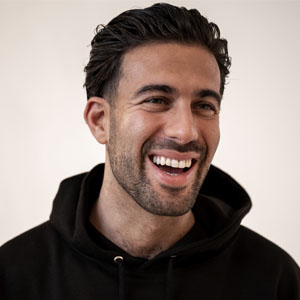
[00:00:10] Ray Latif: Hello, friends. I'm Ray Latif, and you're listening to the number one podcast for anyone building a business in food or beverage, Taste Radio. This episode features an interview with Josh White, the co-founder of pioneering water brand, Canowater. Walked out this morning, I don't believe what I saw. 100 billion bottles washed up on the shore. Those lyrics from the hit song Message In a Bottle by The Police probably touched a nerve with Josh White. The young British DJ had become increasingly dismayed by the sight of throngs of single-serve plastic water bottles appearing on exotic beaches. As he considered the problem, one solution came to the forefront. Aluminum. Josh is the co-founder and CEO of Cano Water, a trailblazing water company based in the UK. Launched in 2014, it was one of the first brands to sell water in metal cans, which the company presents as a more sustainable option than plastic containers. Leading with the tagline, Don't Bottle It, Cano Water is distributed throughout Europe and is aligned with several well-known British retailers and investors, including Sainsbury's and Ricky Gervais. Cano Water is in the midst of new distribution in Southern California, where the brand is partnered with beverage incubator LA Libations. I sat down with Josh for an interview in which he talks about how he became, in his words, hyper-focused on creating a Cano Water, why he describes himself as an accidental entrepreneur, the arduous but ultimately successful path to finding a manufacturing partner, how a cold email helped Cano Water land its first major retailer, and how the company is leaning into its British roots as it expands distribution in the United States. Hey, folks, it's Ray with Taste Radio. Right now, I'm honored to be sitting down with Josh White, the co-founder and CEO of Cano Water. Josh, great to see you. Hey, Ray. Great to be here. Beautiful day in London. Here we are in Notting Hill. Yeah, I know it was raining this morning, but it's turning out to be a beautiful day. The sun's out. It is. It's rare. Yeah.
[00:02:23] Josh White: It's rare. Have you grown up, have you been in London your whole life? I've been in, so I'm about half an hour from London. I'm in a place called Hertfordshire. But yeah, it's pretty rainy most of the time. Pretty great. So I feel like the sun has come out for you.
[00:02:35] Ray Latif: You know, I was looking at the forecast and I wasn't so sure, but, you know, I'm from Boston, so Boston has its share of cold weather and rain. So you're used to it. Yeah. Yeah. Not as much as London. It's not like the gray skies of London, but there's some similarities for sure. Cool. So you told me something before we hopped on the mics, which is really interesting. You're a DJ. Before you were an entrepreneur, or at least a beverage entrepreneur, you were a DJ. You're still a DJ. Correct. Yes. And one of your most, I guess, high profile gigs, shall we say. was won last year. Yes, correct. Boris Johnson's wedding, which was a crazy, crazy one. Boris Johnson's wedding. I can't imagine what that was like. Well, the stories from COVID. I probably shouldn't get into that, but did they have any can of water there?
[00:03:23] Josh White: I brought my own. I brought my own. So they didn't have it there. But his wife is a big fan. So I brought a few cans with me. So I was drinking it the whole night.
[00:03:33] Ray Latif: Nice.
[00:03:34] Josh White: Did anyone ask you what this is? I'm sure they know what it is. Yeah, exactly. I mean, around the UK, it's I mean, we're actually the Water and Buckingham Palace. So I'm pretty sure that yeah, they've seen a few times.
[00:03:43] Ray Latif: Yeah.
[00:03:43] Josh White: How'd you get in there? Do you know what? It's just sort of made its way in there to be honest with you. And one day, and it is funny, like you get to a point where you can't really control much and you just sort of, it spirals out of control. And one day you get sent a picture from someone going, Oh, I just bought your, your water from Buckingham palace. So yeah, we are the water in Buckingham and Windsor palace.
[00:04:00] Ray Latif: Incredible. Is it through a distributor? Yes, all through distributors.
[00:04:05] Josh White: Okay.
[00:04:05] Ray Latif: You must have a great sales team.
[00:04:06] Josh White: We do. We do. But, you know, I think that looking at wholesale and a lot of the wholesalers, we've got a fantastic distribution network in the UK. So, you know, it's sort of like a spider's web. It just sort of filters through and lands up and ends up in places that, uh, you know, as I just said, it can send pictures every day from people being like, Oh, I've seen you here, or you're in the hands of this person, that person.
[00:04:26] Ray Latif: Yeah. It never used to be like that. No, no. You distribute throughout the UK. Yes. And you're getting into the US market, right? Correct. Yes. Whereabouts in the US?
[00:04:37] Josh White: So just Southern California at the moment. For the past, probably about four or five years, there's been quite a lot of interest from the US. Sure. We've just never really known how to facilitate it. But it has been, you know, there's been some big inquiries that we've wanted to do and never been able to do. So we're working with, as mentioned to you, the guys at LA Libations. who accepted us into their incubator program, the SIP program, and you know it's been sort of working really, really well, sort of covering Southern California, launching into some nice independence.
[00:05:07] Ray Latif: Yeah, interestingly, Cano Water is pretty well-consumed in the United States. I think we don't need to go much further than that. But when you launched the brand Cano Water, you were the first branded water in a can out there and anywhere in the world. How'd you come up with this idea? How'd you go from DJ to beverage entrepreneur?
[00:05:27] Josh White: The best way to describe it is I was 22 years old. I was a high school dropout. I was never academic. I was always more creative, more into sort of culture. And I'm obsessed with like music and art. Everyone around me was going into like more corporate roles and whether it be banking or property. And I just wasn't interested in anything like that. I was always more interested in sort of like the cultural world. And this was at a time where going into DJing no one really cared about DJs at that time. Now being a DJ is quite cool, but back then it was quite like, why are you being, why are you a DJ?
[00:06:03] Ray Latif: Not to ask you your age, but what time period was this?
[00:06:06] Josh White: So I'm 33 now, but this was at a time when I was sort of like 21, 22. And people are going out there and they're, you know, making money or going to university or coming out of university and making money. I didn't really, I had no purpose. I didn't really know what, what I wanted to be. You know, I have severe ADHD. I had very big problems with addiction growing up. I'm actually 15 years clean and part of a recovery for quite many years. And I was just quite a confused kid to be honest with you. And my friends were quite similar. Like they didn't know what their purpose was or what they were going to do. And we weren't in the position where we could, you know, use family money or just get a leg up. We had to do it ourselves. I just went to a trip to Thailand. Funny enough, I had a business at the age of 19. It was an events company in the UK that was booming. It was huge. It was an under-18 events company. And after two years, it just failed, basically. It went all the way up and all the way down. So I'd experienced failure. I always say that if I was to write a book it would be called The Accidental Entrepreneur because I just, it just wasn't, being an entrepreneur just wasn't in my DNA. I never thought, you know, you hear the term imposter syndrome. I never really thought I could amount to anything. That's just, you know, I was always the class clown at school and was always told that I was probably not going to amount to much. And then yeah, 22, went to a trip to Thailand with my two best friends and just came across loads of plastic pollution. You know, brands that I grew up loving, Evian, Coca-Cola, brands that when you look at them, they're just fun brands. But when you see this side of things, It's like, oh, well, I never knew that was happening. How is that happening? Why is that happening? Does anyone even know that that's happening? And when you start doing searches about it, you see that the only people that are talking about this are environmentalists, that people think are mad. You know, this is way before like any Greta Thunberg or, you know, it's these people that are standing outside of Coca-Cola's office with big cards, you know, saying, well, you're ruining the world. And no one's listening to these people. So, our ADHD mentality, we became completely and utterly obsessive. Why is this happening? How is this happening? I think most people would just get on with their lives. But every day after work, we would have this conversation on a WhatsApp group of like, we need to do something about this. And we became, we hyper focused on trying to come up with a solution. We weren't scientists, we weren't going to just create something that just disappeared into thin air. And through doing copious amounts of research, saw that You know, Tetra Pak is terrible for the environment. The infrastructure is just not out there. It's three layers of material. The recycling infrastructure. Yeah, the recycling infrastructure. So it's aluminium, paper, plastic, and it's difficult to recycle. You know, glass is recyclable, but it's very, very heavy and it smashes. And can it go up against a plastic bottle? It's already being done. But then when doing the research on aluminium, you see that 75% of aluminium that's ever been made is just still in circulation from the 1800s. So this can of can of water that I'm holding in my can in 60 days can be another can of water or a trip or a liquid death or you know whatever it is and a hundred years ago it would have been and it always comes back as its intended use whereas plastic never comes back really as its intended use and it might become like a park bench or a piece of clothing but ultimately it just causes problems for the environment. So with this story, you know, we became completely and utterly obsessed with, can aluminum be a competitor? Can we put water in a can? I think most people that were in the drinks industry would say, no, there is no way that that would happen. It's more expensive. You can't see the water. It's not resealable. It will taste funny. And I think that we were just three naive little kids that basically were like, well, we don't really care. We're going to do it. after about seven, eight months of building a fake brand, because that's what we did. We are three creative souls who are obsessed with branding. You know, the thing was, let's create something that looks so cool, that would steer people away from Plastic Bottle. That's like the future. That's like the apple of water, basically. It's funny, I'll never forget, there was nowhere to put water in a can. So we found this place in Austria, they were the only people in the world.
[00:10:27] Ray Latif: There were no co-manufacturers who would do this? No manufacturers, no one would do it.
[00:10:30] Josh White: Everyone was just like, it's too hard to put water in a can, you know, getting the taste profile right and also getting the steel cans rigid, because otherwise it'll be flimsy, it's too hard, it needs a shot of nitrogen. There was one place in Austria that was willing to test it, but we were the guinea pigs. But they wouldn't sell us, they wouldn't do any minimum orders under 150,000 of steel and 150,000 of sparkling. So we couldn't taste what Cano Water would taste like. So essentially what we did is they sent us 500 cans of like a flavor. that were just plain silver and what we did is we would meet after work every night and we would spray paint the can we would then wrap it with like a vinyl and we would just turn up to meetings and just say hey this is what a can of water would look like and people thought that we were mental literally mental They thought you were mental because you were putting water in cans?
[00:11:20] Ray Latif: Water in a can.
[00:11:21] Josh White: No one understood it. No one would accept that there would be a world where anyone would drink water in a can. Even my own family, like they genuinely thought I was crazy. I remember having an argument with my sister because I heard her speaking to her friend about like, what's Josh up to? Oh, well, you know, he's doing this thing where it's like putting water in a can, it's crazy. And this is 10 years ago? Yeah, nearly 10 years ago. That's crazy. And it's just the funniest thing. Like everyone thought we were mad. People were saying to my mum and dad, like, why is he doing this? It's stupid. Because where I grew up, like people don't take risks like this, you know, and there's reasons why in London, I think that there are no like craters of Uber and Airbnb and you know, because it's, it's strange, initially, and alien to people. So, Karl Longstreet Shaw, we sent an email out to London Fashion Week and Selfridges, if no one knows who Selfridges is, it's probably the most luxurious department store in the country. They are quite known for being innovative. And we sent them an email and they got back to us within six weeks saying that they wanted a meeting. And it was very funny because the guy basically turned around and said, I don't know whether you've got any inside information, but I've just moved here from Harrods, which is another department store. And the first thing that I've been tasked to do is be the first retailer in the world to remove plastic bottles completely out of the store. And you emailed me in that week. It felt surreal. And then London Fashion Week got back to us and said they wanted Can-A-Water to be the water of London Fashion Week. So at that point, we were like, all right, cool. We've got something. And we thought it was going to be so easy. And the truth was, it really, really wasn't easy. So we launched Can-A-Water at the beginning of 2016. And it was just was, it was tough.
[00:13:08] Ray Latif: Let's go to the name for a second, because Can of Water, it's clever, it's kitschy, but this is a sophisticated package as you mentioned. How do you merge the two? How do you go from something that is easy to understand, a little funny, but also sophisticated?
[00:13:22] Josh White: So I think the name Cannawater was meticulously sort of thought about. We wanted to create something as the first. We wanted to create something and we've been working very, very hard on trademarking this like across the world for many, many years. We wanted to create something that was what it was. We wanted to call it originally water. Okay. We were naive kids who thought we could call it water. And then we got trademark attorneys telling us that it's too descriptive and it's not possible to do it. So I remember we were in a WhatsApp group and one of the boys was like, why don't we just call it Cannawater? It is what it is. It's a can of water. And I think that, you know, it's so funny. I'll be at a bar and someone will, like, there might be another can of water brand, but someone will still ask for a can of water. Can I have the can of water? And I think that that was something that was so important that we are the first to do this. Let's create something that It's similar to that Coke, you know, even if there's a Pepsi, you ask for a Coke, that was the idea. From a premium perspective, we always wanted to create something that, you know, I talk about BlackBerry and Apple and me as an individual, I've always been an innovator. I've got this analogy of like copycats and innovators. The innovators are the ones that are always forward thinking. They're never copying anyone. They might be taking inspiration from people that inspire them, but they're never looking at other brands and stealing from them. There's plenty of those people, but I've always been an innovator from when I was a kid. No one could tell me what to wear, what to do. I've always been that person that makes my own decisions. you know, it's a close friend of mine. It's probably not a shock of like going into a line of business that kind of water because I've always, as I said, like when anyone else was going into that world, I was DJing. When anyone would get that, I would get that. I would always be my own person. With the BlackBerry versus Apple comparison, I think that I remember a day when everyone had a BlackBerry. Everyone was obsessed with it. They were passing out their BlackBerry pins left, right and center. And one day there was that weirdo that got an iPhone because it looked better. It felt better. It was like the future. And everyone looked at that person as being a bit weird. I was that person. And then six months later, everyone goes and gets an iPhone. And I've been like that with music, with culture, with this, where I might be that weird guy that gets this, and then in a year's time, people are like, oh, I like that music, or I like this, I like that. And I think that, you know, for us, we want to create something that had that future feel, that future, you know, and I think my business partner, Perry, always says that he's the guy that sort of came up with the design of Can of Water. anyone else just would make the can blue because water's blue apparently and they'd put mountains on it because you know mountains Cano Water and then they would get like Jennifer Aniston or Zendaya to just smile next to it and that's just that's just what water's been it's the most boring world ever it needed to be shaken up but no one was going to tell us that water is blue you know no one was going to tell us that we needed mountains I think there is that disruptive ADHD mind where it was like We're just going to do what we want to do and no one's going to tell us how to do it. So even though the name was playful and the brand looks so serious, I think that it's quite funny. I speak a lot now about like, you know, the brand looks beautiful, but behind the brand, as I told you, my story, you know, I'm not perfect. I suffered my whole life with with ADHD and addiction and this and that. And I think that that is something that is there is a side behind the brand. But the truth is, is that this brand has always, yeah, from the start, it's always been a premium for we've, we want this to be a household name that we can go up against the biggest companies in the world with. And I think that in order to compete against the other brands, you've got to have a mass brand that can sit in their hotels, the airlines, all these places that otherwise these other brands will just, they'll just carry on. If that makes sense.
[00:17:14] Ray Latif: Yeah.
[00:17:14] Josh White: doing what they're doing. So we always looked at this as not just a gimmick. We looked at this as we want to be, you know, we want to be alongside the big boys.
[00:17:22] Ray Latif: Yeah. At its core, what you're selling is commodity. You're selling water. Water is a commodity. Typically, most people have access to water, maybe not sparkling water. For sure. Yeah. And even spring water, you know, it's not necessarily the, you know, you don't have a spring in your backyard, but you can access spring water pretty easily. And so a cynic might say, well, you know, a can of water, why am I paying anything more than a buck or a pound for it? And so you have to convince them that there's a reason to pay a premium for this beyond, I think, just the packaging and the name and so on and so forth. What is that message? How is that message resonating with those consumers?
[00:17:58] Josh White: Yeah. So I think for us is a few things. I think that, you know, as a brand, We've never sold a plastic bottle. We've always been very authentic from the start. I think that behind this brand is also, there's a lifestyle and there is a, you know, we call it keep it proper. It's basically our sort of term of keep it real. Like we aren't selling, there isn't marketing bullshit behind this brand. We are just a simple brand started by simple people. It looks beautiful on the outside. It is flawed on the inside as, you know, as the story. And Kano is an umbrella and I'll go into that because I definitely think that there is sort of future NPD that we're looking at at the moment that sort of takes Kano into a different place. But, you know, it is simple. It is water. But I think for us, without us starting this, there wouldn't be this fear in the market. And I've watched it for many, many years. And it's been, you know, it's been super exciting for us because our vision was always to wake up the sleepy bottled water market and to really to get them to do what they're doing. We want them to go into cans. That's the truth. We want them to. It's the reason why we started it, you know, on that beach in Thailand. I think for us, you know, as a brand that's never sold a plastic bottle, that's been authentic from the start, the thing that's always got to me with a lot of these brands is that It's beautiful on the outside, but it's very ugly on the inside. When I see a smart water ad with Jennifer Aniston and she's smiling and she's making it like, go to Thailand, go to India, go and see where these plastic bottles are going. And I think for us, it was always to be a very, very transparent brand. I see with a lot of brands, they say that they're transparent. The word authentic is thrown around the industry like wildfire. There are very, very few authentic brands out there. This brand genuinely was started with purpose before profit. It was started as a bit of a project that in the UK sort of spiraled out of control once a few things happened. You know, we didn't start this because we were like, oh, we're going to make so much money with this. We started it because we genuinely wanted to make a difference. And you know, I spoke to you before, you know, when I went to LAX and I saw that there were cans everywhere and not plastic bottles of water, that's something that makes me beyond proud because that wouldn't have happened without brands like Cano Water. So you're spot on, you know, we are selling a commodity. There isn't so much difference when it comes to the product, but I think as a brand, there is core authenticity. There is, you're buying this product based on not only the story behind it, but what the brand represents. The opportunity that Cannawater's had in the UK is unlike most brands. You know, we were at the front cover of Harper's Bazaar magazine the other day with Arena Shake. You know, I'm scrolling down Instagram and the biggest model in the world with 25 million followers. I thought that one of my team had photoshopped something and she's posted it on her Instagram. It's the front page of Harper's Bazaar. There's 10,000 billboards in Paris with it all on. You know, we're the poster boys. Did they get permission to do that from you guys? They didn't even Message In. Joe, it's not like we would have said no, but it's mental. I mean, and that's, funnily enough, I think that's where people overlook the brand.
[00:21:14] Ray Latif: Would you prefer that Can-A-Water is known for sophistication or sustainability?
[00:21:23] Josh White: I think at its core, sustainability, but sustainability is boring. So it's modernness, sophistication. And I think for us, it's like it's the brand fit is the most important thing. When I look at a lot of water brands, they are just so boring. they've got so much money, and they're so boring. Like, when I look at what Liquid Death does, and listen, they've got a lot of money to play with, like, I'm like, wow, like, they're playing with it. The other brands, they're so complacent. They just do nothing with it. It's like they don't know where to go, or they're so worried about tarnishing their, that there is such a pathway in for brands, especially for a premium brand like Cannawater, because Liquid Death cannot go into The Police that these other brands play in, like the hotels and this and that, unless they pay big money or, you know, they're convincing people. I don't know how they're convincing people like Virgin Atlantic or British Airways or any of these people. But when I look at the brands that have got those biggest accounts worldwide and the big chain accounts, It's just so boring. They're just, there are brands like Red Bull that are still doing what they've been doing for 10 years. And you know, I love those brands, but the water world, it's so boring. So I think for us, it's like, there is that premium element and the sophistication element, but I think that we just want to be recognized as a brand, like other brands that are up there. I think that's the key for us. And I think that the water world is doing a massive injustice. Because they all want to be sophisticated, they all want to be like Fiji Water and Voss, but they're just boring.
[00:22:57] Ray Latif: Well, boring sometimes comes from, as you mentioned, a lack of interest in getting in trouble or an aversion to getting in trouble. And I totally understand that. I mean, if you have a lawyer who tells you, don't do this, don't do that.
[00:23:12] Josh White: Maybe they're so big that they don't have to.
[00:23:13] Ray Latif: Yeah. Is there a way to sort of walk that line of being, hey, we're at our core about sustainability, but this is also something that says something about you and your lifestyle and so on and so forth. Less so about, hey, I, you know, I don't want to have a plastic bottle in my hand, but more this image. That's just my image.
[00:23:33] Josh White: Yeah, definitely. So I think, yeah, as I mentioned before, so don't bottle it has been our phrase for many, many years. In the UK, we've lived that and as a brand, that is the message around, this is a brand for you. And a lot of it has come from the founder story of like, You don't have to be perfect. We're not perfect in that perspective of, you know, beautiful on the outside, the can and sort of flawed on the inside. And we've done a lot around don't bottle it. And that's always been quite a disruptive message from us in the UK. Go into the US. we didn't feel like don't bottle it necessarily worked. We got quite a few challenges on don't bottle it of what that means. It could mean like don't bottle it up from a mental health perspective, etc. We still talk about sustainability through everything that we do, but we do it in a much different way. So that caution is actually on the back of our cans in the US. There is like a caution logo. It's not on our UK cans. We've taken this approach of the new wave of don't bottle it is keep it proper. As I mentioned before, what I see a lot of and what we see a lot of is a whole load of marketing bullshit, basically, that everything is fine and everything is great. And it's celebrities smiling and saying that everything is perfect and actually just isn't. And life isn't perfect. Life is actually full of flaws. And every single day, shit happens. And we recognize that. And I think that as Brits, we are very, like, unapologetically honest. Like, Ricky Gervais is one of our biggest investors. Everyone's seen that Golden Globes thing that Ricky Gervais did. That is very British. That's very, very honest. That's who we are. We are just water. We are simple. The brand is simple. We don't need skulls and crazy shit to sell the product. You know, we've We've done a good job in the UK and I think that that is something that is very British about us. Keep it proper is all about sort of showing that imperfection and showing that you don't have to be perfect. And I think that's something that we are just sort of starting with in the US and looking at launching in the next sort of six to eight months around this being just a lot more honest and a lot more sort of unapologetically honest of like, this is who we are. We're not perfect. Why are these other brands saying that they are and acting like they are? There's no such thing as perfect.
[00:25:54] Ray Latif: Yeah. I see a lot of opportunity to lead with British, lead with the fact that you are a British company, that you're a UK company. Yes. You know, you think about, and these are much, much bigger brands, obviously, but Evian French, Perrier French, Fiji, obviously from Fiji, et cetera. And I think there's an opportunity to sort of own that space as being a British brand. For sure. Is that attack you're going to take?
[00:26:15] Josh White: That is one of the attacks. We haven't got British water. You know, it's water from California because I am completely against Evian and Fiji taking water from across the world. And I think that everyone should have local water. As long as it's good quality water, they should have local water. You know, we spent the past nine years trying to get away from Austria to bring water to the UK. It wasn't easy. The Cano Water, funny enough, it was like, because the Cano Water category wasn't big enough, no one in the UK would do it. And now it's big enough. We've sort of created our own opportunity in essence. And now we are, have got proper British water. But I think that a lot of the marketing that you will see, all of the marketing that you will see in the U.S. will have Britishness from it. And it will be not trying too hard and it will not be trying to sell dreams. It will just be very honest and very British. And, you know, the water market is huge. Virgin Atlantic, perfect example. They could go with Cano Water they want, Cano Water. They chose Can-A-Water. They like the look of the brand. They like the feel of the brand. They want to back authentic. We have found that in the UK, big chains have chosen Can-A-Water over the biggest brands in the world because they want Cano Water that looks good, premiumizes them, feels good. And there are 10, 20 Cano Water in the UK, but they choose can of water as like, we want that brand because we like what's behind it. We like the authenticity. They've never sold a plastic bottle. We want to back that. There's very few companies that are out there that haven't sold a plastic bottle. They're just adding a can onto their roster and just expecting. But, you know, I think that we're under no impression that the US is hard, but we wouldn't even be looking at it if the interest wasn't there. I mentioned to you before 100,000 cans going to the F1 for one order. Soft drinks brands don't necessarily in one order see those kinds of volumes just off of, you know, we've only been there for like four or five months. And it's, so we see a lot of those big opportunities coming in that it would be silly to waste it because other brands that are in the US we've lost a serious amount of opportunity because we're not there. And we've seen that and we've tallied it up and we're like, you know what, even if we're crawling, the opportunity there, even to just do small, we're losing out on some big volume over there. Whereas I think that, you know, when I speak to a lot of other founders in soft drinks, there's no inquiries, there's no inbound. It's just, let's just go there. It's America.
[00:28:51] Ray Latif: Well, I'm excited because I'm going to be back in L.A. in December, and I am excited to see Cano Water on shelves and ship markets out there. And I'll also be drinking a can on my way back home. I'm taking Virgin Atlantic, so excited to have my can. I know the founder. I interviewed him the other day. Amazing. Yeah. Josh, it's so great speaking with you. Thank you so much for taking the time. You've built an amazing brand, and it seems like there's a lot more to build, a lot more runway. I can't wait to see where it all goes from here. Thank you. Thank you. Take care. That brings us to the end of this episode of Taste Radio. Thank you so much for listening. Taste Radio is a production of BevNET.com, Incorporated. Our audio engineer for Taste Radio is Joe Cracci. Our technical director is Joshua Pratt, and our video editor is Ryan Galang. Our social marketing manager is Amanda Smerlinski, and our designer is Amanda Huang. Just a reminder, if you like what you hear on Taste Radio, please share the podcast with friends and colleagues. And of course, we would love it if you could review us on the Apple Podcasts app or your listening platform of choice. Check us out on Instagram. Our handle is bevnettasteradio. As always, for questions, comments, ideas for future podcasts, please send us an email to ask at Taste Radio. On behalf of the entire Taste Radio team, thank you for listening, and we'll talk to you next time. you