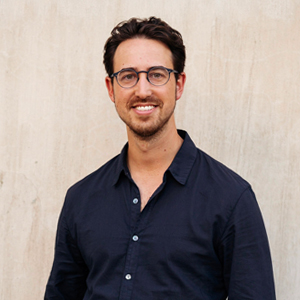
[00:00:10] Ray Latif: Hey folks, I'm Ray Latif and you're listening to the number one podcast for the food and beverage industry, Taste Radio. This episode features an interview with Noah Gray, the co-founder and CEO of Onda, an upstart brand of tequila seltzer that has achieved remarkable retail and distribution growth just two years after its debut. Just a reminder to our listeners, if you like what you hear on Taste Radio, please share the podcast with friends and colleagues. And of course, we would love it if you could review us on the Apple Podcasts app or your listening platform of choice. When Clayton Christopher calls your brand a winner, you're probably doing a few things right. A prominent beverage investor and entrepreneur, Clayton joined Onda as an equity shareholder and board director as part of the brand's 2021 Series A round, which secured $5 million in funding. At the time, he noted, quote, the potential of the category, the positioning of the brand, and the strength of the team as key reasons for his investment. Based on Onda's trajectory, there's justification for his belief in the company. A premium tequila seltzer brand, Onda is made with a blend of Blanco tequila, sparkling water, and real fruit juice. Available in eight flavor varieties, each 12-ounce can contains 5% alcohol, 100 calories, and no added sugar. Last year, Onda expanded distribution to over 10,000 retail accounts in 31 states, including those of Publix, Total Wine, Trader Joe's, Whole Foods, Walmart, Costco, Safeway, Albertsons, and Bevmo. Onda achieved over 700% growth in 2021 and emerged as the third best-selling brand of tequila-based seltzers, according to Nielsen data. In June, Onda announced Aria Growth round of $12.5 million, led by existing investors, including Clayton, investment firm Aria Growth Partners, venture platform 25 Madison, and several high-profile athletes, musicians, and entertainers. In the following interview, I spoke with Onda co-founder and CEO Noah Gray about Onda's origins as a trade-up concept, how a confluence of premium ingredients and striking package design have resulted in strong consumer trial and repurchase, What up and down the street sales informed the team about effective retailing and merchandising, and how he landed meetings with and won over high-profile investors, including Clayton and former president and CEO of Moët Hennessy, Jim Clerkin. Hey folks, it's Ray with Taste Radio. Right now I am speaking with the one and only Noah Gray, the co-founder and CEO of Onda. Noah, how are you?
[00:03:11] Noah Gray: Hey, Ray, doing well. Very excited for the interview.
[00:03:14] Ray Latif: Nice to see you again. Nice to see you as well. Calling in from the wonderful part of Brooklyn that's known as Williamsburg. What's new in Williamsburg these days? Williamsburg is great.
[00:03:27] Noah Gray: I've lived in Brooklyn for a long time, still home. One of the perks of building a business during COVID and building a fully remote team, we get to work kind of all over the place. And so I'm talking to you from my apartment on a sunny Brooklyn afternoon here.
[00:03:43] Ray Latif: Am I wrong in saying that it looks pretty spacious, your apartment, which is kind of strange for New York City? Well, it's just, you know, it's the angle of the camera.
[00:03:50] Noah Gray: I think it's a little... What you can't tell is that the entire apartment is just here and here.
[00:03:55] Ray Latif: So it's positioning. Noah's calling in from a closet, folks. That's exactly what he's trying to say here. No, it looks like a nice place.
[00:04:04] Noah Gray: Thank you. Thank you.
[00:04:05] Ray Latif: Yeah. As always, I do my research before these interviews, and I was scrolling through the Twitters, and I saw your co-founder Max de Warren on there, and his bio indicated that he's not sure how he got here, but he's in the booze biz. Not sure how he got here, but he's in the booze biz. Is the feeling mutual? You know, it's interesting.
[00:04:29] Noah Gray: I don't think either Max or I set out with a lifelong goal of entering beverage alcohol. And sometimes I do wonder how I got here myself. You know, I studied history and literature in college. This is a little bit of an unexpected turn. On the flip side, I've always been very interested in food and beverage and the consumer space and both the sort of storytelling opportunities in the consumer industry and and also have loved products that are part of our lives and really care about what I eat and drink. And so from that perspective, I think doing something in food and beverage, something in consumer was an interest I had for a long time. I just I'm not sure it would have we would have predicted it was an alcohol, but that's where we identified an opportunity. And so when we did that, we kind of took the took the plunge and really enjoyed it.
[00:05:22] Ray Latif: Well, you studied literature and philosophy as an undergrad. You did go to Yale's business school as well and got your MBA there. Was that where the idea of Ondo was fomented? It was.
[00:05:33] Noah Gray: Max and I met when we were both admitted students to the Yale School of Management. I think we both shared kind of an interest even going into business school and using two years outside of the traditional workforce to explore entrepreneurship, explore starting something. Business school, I mean, it's an amazing environment to look into starting a company. You have access to professors, advisors, classmates to spark ideas. And that was something that he and I both really wanted to take advantage of. And we started working on Onda in our first year, really kicked off in January, the first year that we were in business school. And I'm kind of happy to talk more about some of the conversations that led up to officially starting the business. But yes, that was, you know, that was the timeframe in the environment.
[00:06:17] Ray Latif: I think the genesis of Onda is or could be summed up in a tweet that our founder and CEO John Craven, BevNET's founder and CEO John Craven, put out there in the Twitterverse last week. And what he said was that most hard seltzers are gateway products that consumers will abandon when they find something better. I think that's Onda in a nutshell, no? I love, I love that tweet.
[00:06:46] Noah Gray: It's very relevant, very relevant to what we're doing. Premiumization and trade up in HeartSeltzer is at the core of Onda. But I think there's really three trends, three themes that we were interested in at the beginning, at the outset. Prior to business school, I had some experience consulting in the beverage space and in beverage alcohol. And there were three topics that were really of interest to me personally, and I think, you know, interesting in the industry. This is going back, let's say 2018, 2017. There was a lot of conversation around convenience, more convenient forms of drinking, especially in beverage alcohol. There was a lot of conversation and personally I had a lot of interest in better for you drinking and better for you drinking culture. You know beverage alcohol it's an indulgent space but there are certainly ways to make products and solutions that fit perhaps better into a healthier lifestyle than what was traditionally on the market. And in kind of that more convenient, better-for-you space, products that are a little better for you but with still the same convenience, that's kind of where this hard seltzer, in my opinion at least, that's where the hard seltzer phenomenon really began. When you could combine those two trends, it was pretty unique. But the products that entered the market first and that brought people into that market were really mass market products. You're talking about malt-based hard seltzers. They're just sort of beer with a different name, a little bit of a facelift. And then the third trend in alcohol and across, you know, a lot of consumer categories that was really powerful was trade up. And so much of the growth in the industry was happening in the premium tier. And so when you had this fourth category kind of explode onto the scene, tapping into better for you, tapping into convenience, but conspicuously without a premium option, that was, you know, it was just immediately obvious to myself, to my co-founder Max, to other early believers in Onda, that there would be a very large opportunity in creating a product that you could graduate to from Hard Seltzer. I'll pause, I'll kind of pause there. I'm happy to talk a little bit more about how we thought you could support a premium value proposition in this space. There were a couple of decisions we made early on that I think were successful and helped us. And it has a lot to do with quality of ingredients, using real spirits, quality of brand and design, and investing in the design side of the business. And then a few media and partnership strategies that we explored really early on with our other founders in the business, Kelly Adams on the design side, Shay Mitchell on the brand and media side.
[00:09:28] Ray Latif: Yeah, I definitely want to talk about the formulation and packaging. One thing that you didn't mention was this trend of tequila and soda or tequila and seltzers just popping up. I think the last time we spoke, your co-founder Kelly had told me that it seemed like overnight everyone was drinking tequila and soda. Was that happening as you were coming up with the idea or did that happen after?
[00:09:53] Noah Gray: Yeah, it's a great question was a real input into the concept. I saw this firsthand just socializing going out in New York when I was in my early 20s. It felt like a switch flipped in the popularity of vodka, sort of vodka soda being this go to drink was replaced. I mean, it really that's that was my personal experience is replaced overnight by the bar order becoming tequila, soda and lime across the board. And I think you see the growth in tequila soda is reflecting also the growth in tequila as a spirit category. I'm sure you saw recent, I think it was in Bloomberg, the recent report that tequila is on pace to surpass American bourbon and whiskey this year. And I believe value, I think it was dollar sales and is projected to surpass vodka in the coming years in value as well, which is staggering growth from what was once kind of a regional spirit. You know, it's hard to say precisely what drives or what has been driving the kind of American fascination with tequila. But I think a few of the contributing factors are the health halo around agave, which connects back to this better for you proposition and then really compelling provenance and origin storytelling. You know, authentic Mexican culture that tequila comes from has captured many people's imaginations. And I think that drives the popularity of that spirit base across the country. And we were really interested in it too, and in the premiumization of tequila as well.
[00:11:22] Ray Latif: I don't think I'm saying anything out of line here, but your packaging is phenomenal. I guess I should be a little bit more objective when it comes to things like that, but I'm not the only one who says these things. You know, when I look at the package, it makes me want to pick up the can for sure. There's just something so beautiful about it that you want to know more. Can you talk about how the label came together and why orange because it's a you know when you look at on that orange just hits you like a spotlight you know from the shelf.
[00:11:57] Noah Gray: Absolutely. The packaging development is something that we spent an incredible amount of time on at the very beginning, as much as we spent on the liquid. It was really, we knew early on one of the keys to successfully launching and getting off the ground. I really have to give credit to Kelly Adams, our designer and my co-founder. She designed the packaging herself. It's a real labor of love and I think very inspired by her own life and her own tastes. Let's start with the color with the orange. When we first looked at the seltzer market, we did a pretty robust survey. And the immediate observation was that the majority of brands in the space were leaning into minimal kind of restrained black and white packaging, predominantly black and white, a little bit of blue. And the largest design elements were kind of around you know, 100 calories, 100 calories would be prominent message and then packaging is black and white. This to me was very reminiscent of early sort of generation one diet products. The whole thing is designed to say what's not in here. There's nothing in here. It's just an empty vessel. And it's all about the calories that aren't there, the sweetener that's not there, the absence. And we wanted to flip that instead of saying, well, there's all these negative things that we don't have. We wanted a packaging strategy that was really affirmative and positive and said, we actually affirm all of the good things that we're putting into this product with a really bright, a really loud color that was also very unique in the space. So next to black and white and blue cans, this bright onto orange color really jumped off early schematics. We did have shelves and we loved that. And then in thinking about building a premium brand, we also wanted to look outside of the category for cues and strategies used by luxury brands and other industries. And I would say our packaging that color is as much inspired by what an Hermes does or what Ferrari does and owning a specific brand color and everything they do as it was by our experience in the beverage category.
[00:14:01] Clayton Christopher: Guessing your margins? That's risky. Belay Financial gives CPG brands the clarity to scale smarter, faster, stronger. Get your free inventory ebook by texting TASTE to 55123 and start making data work for you. Vibrant Ingredients is the natural ingredient partner powering food and beverage innovation, delivering flavor, function, and protection through a science-backed portfolio. Vibrant delivers purpose-driven solutions that help brands create extraordinary experiences. Discover what's possible with Vibrant today. Visit VibrantIngredients.com.
[00:14:48] Ray Latif: So at this point you have the business school experience, you have the business plan in mind, you have a great partner in 25 Madison, so launching the brand should be pretty easy, right? Except when you decided to launch the brand was right when the world stopped, right? At the outset of the pandemic.
[00:15:08] Noah Gray: It was unreal, like truly surreal to spend the last 18 months or so standing up the business, getting ready to launch. And then I'll never forget this, Max and I were driving to our very first production run, very first production run of Onda ever. And on the way there, we hear in the news that Tom Hanks has contracted this thing called COVID-19. And Max, I'll give him credit for this, he had the foresight. He was already thinking ahead, okay, how are we going to adapt our launch strategy? And I was so determined that we were still going to march forward, launch Memorial Day. It was difficult. It was difficult to let go of that plan. Ultimately, of course, this was more than, you know, more than a seasonal cold. Far, far more. And we had to change almost everything about how we came to market. The original plan was a launch focused on wholesale and retail, most likely would be in Connecticut and New York for Memorial Day. We had distributors that we were planning to launch with called us and said, we're putting everything on pause. the shift that we had to make was to think, rethink, how do you bring this product to market through a digital first strategy in a world where events are off the table, sampling is off the table. Many of the kind of boots on the ground strategies and tools and tactics you'd use for a consumer product business were off the table for us. It was a bit unnerving, but I also think this is where some of the complimentary skill sets that our team brought to the table helped us. Perhaps if we were all career, you know, I'm making it up, but career beverage, alcohol salespeople, the pivot might've been more challenging, but we already had great e-commerce experience on the team and my co-founder, Max, who had worked at box.com and Shay's channels are all very digital first. And she brought that to the table and Kelly and thinking through our brand identity had also thought about building a digital first brand. And so making that pivot was not as destructive to our planning as I think it could have been. And we were able to stand up an e-commerce business and still come to market on July 1st, around the 4th of July, July 1st, 2020. So we just incidentally celebrated our second birthday last Friday.
[00:17:30] Ray Latif: And congratulations on that. You know, as a result of pivoting, it seems like you picked up a skill set that most veteran beverage alcohol sales folks have, and that's being able to go door to door and sell your wares. What was that like going into all these independent stores and selling on that for the first time?
[00:17:52] Noah Gray: That's a phenomenal experience. So on the one hand, we did, we had to pivot to the sort of e-commerce first launch when we first came to market, but then quickly formed a partnership with a distributor locally here in New York and pushed forward with the retail approach. We still had a lot of conviction that the ultimate path to success would combine a robust online presence with a robust retail and wholesale strategy. And so, you know, by July 15th, I think about two weeks after the online launch, we were hand selling and we're a small team. So we hired one veteran salesperson who came to us from Cutwater Spirits. His name is Justin Brown as our first VP sales. And Justin gave the founders a crash course in being salespeople ourselves. And it was just, I mean, it's a tremendously rewarding experience. I would encourage any young founders. It is so important to have the firsthand experience selling your product and talking to your customers. So for the entire summer of 2020, I was out myself on Long Island, Manhattan, in New Jersey, a little bit in Connecticut, hand selling the product. And I mean, what's just fantastic about that experience is you go from, you know, it's easy as a founder, you all you do is you talk about your business, your brand, it's all you think about. And then you go out into the sort of real world, quote, unquote, and you talk to someone who sells hundreds of beverage brands, and you get like one second. Two seconds to make an impact and the things they care about and the things you care about, getting those things to align can be very, very humbling, a humbling experience. You have to learn the importance of pricing, tactical marketing. It's so tempting to chase after some of the shiny you know activations especially in alcohol where you have an opportunity to play and it's like really you know cool and kind of unique cultural moments. But at this early stage really your best chance of turning someone into a customer is at your point of purchase. And the way to do that is you have to turn the person who manages the store into an ambassador for you for when you're gone, and that's old fashioned personal relationship building, you need to have great merchandising of your packaging so it's visible it's eye level. We need to have great moments of disruption in the store. And this is, again, old school fundamentals of marketing. It's posters, shelf talkers, racks, display pieces, clings. And learning that world was great. It was a great experience for me personally. And I think that firsthand experience is what has also given me the conviction for the whole company to continue investing. and overinvesting in the tactical commercial side of brand building, which is really where the vast majority of the dollars we've raised have gone to and will continue to go to.
[00:20:41] Ray Latif: How many stores, how many retail stores would you say that you visited in that first six months and how many of them did you get thrown out of?
[00:20:50] Noah Gray: I mean, hundreds, hundreds, we probably sold into 1500 accounts in the first six months. I think we're 1500, maybe 1700. By the end of the year, I personally went to hundreds. My track record as a salesperson was also pretty good. I think it's pretty good because when you're the founder, that's a unique sell. It's a unique sell for the store owner to have the founder of the business there. And I think you can use that to your advantage. But there were plenty, there were plenty that just did not care who or what I was trying to sell. And it's also good for the ego, I think, to get a few no's, a few no's too.
[00:21:25] Ray Latif: Was it sort of we're just going to play the numbers here and see how many stores we can get into? Or was it very much like, you know, let's skip some of these bodegas because they're just people aren't going to buy this product. They're just not going to buy a premium product. So let's look toward the higher end, you know, retail liquor stores. Or was it very much, as I mentioned, you know, let's just hit as many as possible?
[00:21:49] Noah Gray: It wasn't quite let's hit as many as possible, but our product is unique because we're what I would call mass premium or an affordable luxury. We sell a 1099 four-pack. Most people, that price point, it's premium to your six-pack or eight-pack of hard seltzer, but it's not out of reach and we're not selling a $50 bottle of full-strength tequila. So I think there's a lot of stores where this can make sense. That said, we have been very focused more on, I would say it's less the premiumness of the account, but the volume of the account is able to do based on benchmark brands. And we pay very close attention to that data that we get from our distribution partners, what accounts move high volume of RTDs specifically, and over-invest and over-target those. And we ran a ton of hit lists, top 200 accounts for RTDs in a market, and we just chased those down first. And then the other half of the equation for us is from the beginning been a very strong national accounts team and national accounts presence. And that's where the volume of those accounts really for our business comes from. Did you buy that data or is it publicly available? We did not buy it, nor is it public per se. It is information that you can get in close collaboration with your distributors. And I think something that I learned really early on is that you have to think of your distribution partners. We've got great distribution partners from Breakthrough Beverage, with whom we have many states open, and RNDC, Republic National Distributing. If you really think of them as partners and treat them as partners in building the business, they can give you enormous amounts of data, insight, and intelligence on the markets in which they operate.
[00:23:34] Ray Latif: And that's guided a lot of our strategy. Last time we spoke, you'd said where Onda is merchandised correctly, Velocity is amazing and drives trial. Can you define what correctly means and how you ensure it on a retail store basis? Yes, I mean, this is something I think about daily.
[00:23:55] Noah Gray: It's sales fundamentals. It's having the right SKU assortment in the store. If we have just one facing, it does not create the billboard effect that we need to capture someone's attention. So it's having our assortment, our two variety packs for four packs, at least in my view, at least three facings to create an interruption. Four facings is excellent. Six facings is the goal. So getting your SKUs, the full brand block, sold in, number one. Number two, pricing, making sure that the pricing is executed correctly and is competitive in the market. I think number three is secondary display and interruption. It's not complicated. It's posters, shelf talkers, racks, and other point of sale materials, but it needs to be executed consistently and everywhere. And then I think another part of this strategy is creating ambassadors of the store managers, store owners. It's also key, and that's an education challenge. To do all of this well, and this is maybe one of the biggest learnings for me, to do all this well requires a team, an excellent internal team. The distributor will help you, but this is what we task our people with as really a highest priority. Because where we're able to set up these accounts correctly, we do. We see phenomenal, phenomenal velocity. Our packaging is so standout and eye-catching. The liquid is great. The repeat is great. But you have to, you have to convert the customer and we don't have national advertising. So this is kind of the focus for the whole company. How do you replicate that model and scale it as fast as widespread as possible?
[00:25:39] Ray Latif: Well, it certainly sounds like you have a pretty aggressive and sophisticated merchandising strategy, one that has already been executed by conglomerates that are out there with their own tequila, soda and seltzer brands. And it seems like there's a new tequila, soda brand coming to market at least weekly at this point, independents and from large companies. How are you assessing that competitive landscape and how Onda can sort of stay on the front foot when it comes to the future of this category?
[00:26:09] Noah Gray: So we made an early name for ourselves, and we entered a lot of markets quickly. Together with great distribution partners like Breakthrough, like RNDC, that has a blocking effect on, I would say, new startups. If I was a new startup looking at this space, I would not enter it because Onda already exists and has presence in the 35 states that matter. If you're a larger supplier, an established, serious platform doing a line extension, we see that. Mature tequila businesses going into tequila seltzer, I'm not sure that has the consumer resonance to be a long-term strategy for those brands. I think it has the inadvertent effect of cheapening the bottle, which they certainly do not want. And then if it's a new world innovation from a big supplier, I think our team is more passionate because we're independent and we feel the urgency to win. And then I think our brand is cooler because it's more personal to us and because we are our own target consumer and we're able to move and do creative things that a lot of these larger platforms either wouldn't be prepared to do, couldn't do, or wouldn't fit in. Now, I would use as an example, the great relationship we have with Revolve. Revolve is a lifestyle fashion e-commerce business, perhaps not the most natural on the surface of it, you know, natural brand partner for an alcohol business. But we see Revolve talking to, reaching and engaging the same community of millennial and Gen Z consumers who drink and love onda. And between Revolve's audience, plus Shea Mitchell's audience, plus our audience, we thought that was a really powerful partnership and has enabled us to activate at some of the most important cultural moments throughout the year. That's the type of creative partnership and activation that I do think differentiates us and would not be, you know, first idea or tactic for either an incumbent or more corporate incubation or innovation.
[00:28:14] Total Wine: Do you want more repeat buyers on Amazon? Well, this free resource in collaboration with Straight Up Growth will help your brand turn first-time buyers into long-term subscribers. Download Winning the Repeat Purchase Game on Amazon now at Taste Radio slash SUG. That's Taste Radio slash S-U-G to start building retention-driven growth for your brand on Amazon. Scaling a beverage brand into major retail comes down to operational readiness. From packaging lead times to co-manufacturing strategy, the details can make or break a launch. In a new ebook in collaboration with Octopi and Asahi Beer USA, industry leaders share what they've learned in helping brands scale. Download it now at Taste Radio slash octopi.
[00:29:04] Ray Latif: The team, as you had mentioned, is hungry. The team helps you be better than the larger players out there. The team is filled with industry veterans who have impressive backgrounds and resumes. Well, first of all, you shared this with me before we jumped to the mics. How many people are on your team right now, two years in? We're 28 full-time employees at Onda currently. That is incredible. That is really amazing. How are you attracting these veterans to come into the company, to join the company in these key positions?
[00:29:42] Noah Gray: I think early on in starting a business like this and entering an industry as a new brand, you kind of have to make a choice between two strategies. I think there really are only two. One is say, hey, I'm going to throw out every rule for this industry and do everything differently. Everything that's traditional, we're going to do the opposite. And that can be effective, and people have done that successfully. Or you can say, I'm going to bring a fresh perspective to certain aspects of the industry, but I'm going to work really effectively, work really well within the infrastructure to be successful. And I think that's the strategy. That was the strategy that we pursued. And in regulated industries, I think that's almost necessary. It's difficult to do everything differently in highly regulated industries like alcohol. So very early on, we pursued people who we identified as having kind of two attributes, and this for our internal team, people who want to be entrepreneurs, and people who bring real experience, real functional and industry experience to the table. Because we were a young founding team, and we were coming from outside of the industry. And we knew that that was a gap that we wanted to immediately fill. I mentioned Justin Brown was our first sales hire. He was formerly a VP at Cutwater Spirits. His impact on our business right away was transformational. We recently hired a new president and chief commercial officer, Tom Schlocktenhofen. Formerly, he was the head of sales for High West, High West Whiskey, a great entrepreneurial brand that he helped to build and ultimately to sell. Tom brings this combination of experience at an early stage growth business like High West, plus many, many years working at Diageo, a little bit of the best of both worlds. And then when we thought about advisors, investors in the business, we took a similar approach. I was introduced early on to Jim Clerkin, who at the time was the CEO of Moët Hennessy, just as a friend and as an informal advisor as we were considering entering the industry. After Jim left Moët Hennessy, he and I had stayed in touch. And over a number of drinks and conversations, I was able to convince him to join our board formally as our chairman. Having someone who has the industry relationships and experience, the gym has that he could bring immediately to the team was also instrumental I think in not only guiding our strategy and our leadership team but in helping us to recruit and retain really top tier talent. The other person who's been hugely impactful as our first institutional investor was Clayton Christopher. Clayton was the founder and CEO of Deep Eddy Vodka, has also started multiple other beverage businesses, Sweet Leaf Tea, Waterloo Sparkling Water, as well as serving as a co-founder of Kavu Venture Partners, which has invested in the space substantially as well. And what Clayton has been able to add is both this combination of an operator's perspective and experience with a really sophisticated venture investor and growth equity investor point of view as well. And so for myself as kind of a first time founder, first time CEO, having advisors like Jim and like Clayton who have run this playbook before, you know, I can't, I could not put a value, could not even begin to put a real value on what that has meant to me and has meant to Honda.
[00:33:11] Ray Latif: Again, you know, I think you hit the nail on the head is just meeting these folks and developing relationships with them has been so impactful on the brand's development getting into the room the first time and- you know explaining what you're trying to do and trying to. Get them on board as advisors as investors that's a different.
[00:33:34] Noah Gray: It's difficult. I can share what I think the formula is. It's not easy to repeat. I think it's fairly simple, but it's all in the execution. You know, I think the reason that these guys were interested in joining us, probably four parts here. First, a very well-defined and articulated market opportunity. It's rare to see and to really be able to support there is a gap, a glaring gap in a space. And that's what we found here in this premium tequila seltzer space. That was clear. And then within that space, we had already done the work to develop a great liquid, a great standout package and brand. And then those are the first three, the market opportunity, a great product, a great brand. The fourth thing that was perhaps most important, I can't speak for them, an incredible amount of personal passion for this opportunity from a young team and a team that was really open and hungry, I think, to learn. You know, I think a lot about being a young founder, how do you lead a company of 28 people? And how do you lead with experienced investors and partners who've seen so much more than I have? And I like to take an approach of leading through learning, asking questions, trying to ask the right questions or be guided to the right questions to ask. And I think that was something that was quite appreciated. And I think it's a shared sentiment among the other founders in this business.
[00:35:07] Ray Latif: When it comes to Clayton specifically, I'm sure he sees hundreds if not thousands of new brand opportunities, new brands for him to invest in every year. When you do get that opportunity, is it five minutes? Is it an hour long meeting? What is that pitch like? I guess it's like what happens inside that room? And this is something that I think a lot of our audience might be curious about.
[00:35:31] Noah Gray: Yeah, the first the first meeting was a call. It's 30 minutes, 30 minutes on the line. And I just approached that call with a ton of enthusiasm and appreciation, appreciation for his time, and then enthusiasm for this idea that I had, and just asked, you know, in a really open way for his thoughts and his view on this opportunity. And I think he appreciated being asked in that way.
[00:35:57] Ray Latif: And how about Jim Clerkin? Can you talk about the process of connecting with him?
[00:36:02] Noah Gray: Jim has some great advisors and people that he works with. Ultimately, I was sort of sent to pass a second test with an advisor and friend of his in Connecticut. And we got oysters and spent an afternoon together, drinking, having some oysters, talking about the industry, talking about Honda. After passing through that handler, it was back to back to Jim. And and then over multiple, you know, multiple calls and meetings and conversations, I think you just have to be persistent. You know, even these sort of legends and titans in their industry can be reached with with sort of persistence and a positive, positive, open attitude.
[00:36:42] Ray Latif: Persistence is so incredibly important, as you mentioned, but you've got to have a foundation and something that actually can work for these guys to believe in you. And what Clayton mentioned in the first press release about investing in Onda is that he had said that he pays close attention to a number of factors, including the potential of the category, the positioning of the brand, and the strength of the team, all things that you just mentioned. And then he said on all three counts, The brand is a winner on that is a winner. And so, you know, yes. Getting to that meeting, making sure that he understands what you're doing and making sure that he knows about what you're trying to do is really important. But then when he actually assesses the opportunity, you better be pretty buttoned up.
[00:37:25] Noah Gray: You do, and I think you have to do the work up front. This goes back even to the first time we went out to raise capital. There are so many opportunities, so many opportunities for people to invest in. There's so much risk also to investing. And what I found to be the most impactful is if you can go to a prospective investor and say, here are all the ways I've already taken the risk out of the equation for you. That's a very powerful thing to say. And when we've raised money in the past, it's been, if you go back to the first time, and this is also connects to sort of meeting and wooing Jim, meeting and wooing Clayton. We've already developed the liquid. Here, taste it. We've already developed the brand and the packaging. Look at it. It's right here. Here's the first carton you can hold in your hands. We already have the manufacturing and the co-packers. Here are the contracts. This is where we're doing it. We have the tequila supplier. This is the partner. This is the juice. And we have the distributor. We've got the distribution agreement already. We had all of these things prior to the first time that we raised money. And so then the ask was, hey, this is the whole machine. We've already built the machine, help us turn it on. And I think that's a really compelling way to raise money when you demonstrate that you've already put in the work to make sure it's successful.
[00:38:49] Ray Latif: So you have raised quite a bit of money. You've raised, well, you recently closed on a $12.5 million funding round. and you've raised $18.75 million to date. That is a ton of money for an early stage brand. I mean, how do you assess your capital needs when you are still so young?
[00:39:09] Noah Gray: It's challenging. I wish I had a perfect crystal ball. This industry is expensive. Consumer products are expensive. Retail and wholesale are insanely expensive. All of those sales tactics, those sales 101s that I mentioned before, the merchandising, the displays, the point of sale, that is pure cash. You're talking about spending hundreds of thousands of dollars on posters, on racks, on overhead, sales incentives, discounts, allowances. It's not for the faint of heart. We are putting money into the highest ROI levers that we have identified on the sales and marketing side of our business. And as I mentioned before, the most effective, the highest ROI levers that we have found are still inside of the store, samplings and demos. to give consumers the opportunity to try the liquid for the first time is our number one lever. It's most effective. And then activation locally and in the trade, number two lever. And that's also where these fundraisers are being invested. They're very growth oriented. When I look at our org chart, for example, that 28 full-time employees, 20 of those are in sales, the commercial side. That will continue to be where we invest. I think in the next stage, though, our focus is going even deeper where we're starting to see real success. Part of the first few years was being first to market in markets that mattered and assessing the organic response. We have a good sense of organically where Onda is working, where we have good partners on the distribution and retail side. Now, our intention is to pour a lot of gasoline on those fires.
[00:41:00] Ray Latif: Noah, this has been such a great conversation. I just have one more question. And I think this is sort of the elephant in the room is well, Onda's doing so well and they've raised so much money and they have such a great team and so many great funding partners. It seems like they're on the cusp of possibly an exit, even at this stage of development, you know, two years in. Do you talk about, I mean, it's sort of one of those words that people are kind of loathe to use because it sounds like they're just, you know, racing toward that payday instead of, you know, building a brand, but you built the brand and yet you still could get that payday seems like relatively soon.
[00:41:43] Noah Gray: It's something that we get asked about a lot. My response is that we will do what is in the best interest of the company first. If in order to reach the next stage of growth for this company, we need a partner, a strategic partner like a Diageo or an AB InBev. We will evaluate that at that moment in time, but we are not building a business for a personal exit. And that's not the mindset that we have internally. And I guess speaking plainly, I think we have quite a bit of roads still ahead of us as independent operators.
[00:42:18] Ray Latif: Noah, thanks so much for sharing your story and Anda's story with us. Good luck with everything going forward. And once again, really appreciate all the lessons, learnings and insights that you shared with our audience today.
[00:42:29] Noah Gray: Thanks, Ray. Pleasure speaking with you. Look forward to talking again soon.
[00:42:34] Ray Latif: Absolutely.
[00:42:34] Noah Gray: Thanks again.
[00:42:38] Ray Latif: That brings us to the end of this episode of Taste Radio. Thank you so much for listening. And thanks to our guest, Noah Gray. As always, for questions, comments, ideas for future podcasts, please send us an email to ask at Taste Radio. On behalf of the entire Taste Radio team, thank you for listening, and we'll talk to you next time.