[00:00:10] Ray Latif: Hello again, and thanks for tuning into another episode of Taste Radio, the number one podcast for the food and beverage industry. I'm Ray Latif, the editor and producer of the podcast, and I'm with my Bevan & Nosh colleagues, John Craven, Jacqui Brugliera, and Mike Schneider. In this episode, we feature an interview with Dave Carpenter, the Master Blender for Redemption Whiskey, which promotes itself as reviving the rye whiskey category. Just a reminder, if you like what you hear on Taste Radio, please share the podcast with friends and colleagues. And of course, we would love it if you could review us on the Apple Podcasts app or your listening platform of choice. Well, happy Thanksgiving, everyone. This episode is being published the day after Thanksgiving, 2021. Hopefully, everyone had a safe and healthy holiday. I, myself, I'm giving up. I've given up on turkey, and that's no offense to people who like turkey, but I am no longer doing turkey on Thanksgiving this year, being the second year in a row where I'm like, I'm done with it. I don't know how you guys feel about it.
[00:01:12] Jacqui Brugliera: Why? Why are you giving it up?
[00:01:14] Ray Latif: A lot of reasons. It has nothing to do with me reducing my intake of meat, which has never really been that high, but I think just the process of making a turkey is hard enough or is bad enough. And then you have all these leftovers and everyone's like, oh, I'll make turkey sandwiches. You really don't want turkey after you already had turkey, right? It's like the last thing you want. What are you talking about?
[00:01:40] John Craven: What's wrong with you? What's the, uh, Latif family choice for Thanksgiving then? Chicken nuggets, steak? I mean, which way are you going?
[00:01:50] Ray Latif: Going with steak. So we were going with steak last year. We want some filet. Uh, we're doing the same this year.
[00:01:55] Jacqui Brugliera: Yeah.
[00:01:57] Ray Latif: Well, is it really though? I mean, I think with turkey, it's like, that's more of a process for me than it is just to make some filet. Filet, you know, what does that take? 15-20 minutes tops. Throw in the microwave. Turkey gets to spend the whole day cooking. That's just me anyway.
[00:02:11] John Craven: Yeah, I think that's fair. And a turkey isn't exactly cheap either. So yeah, whatever floats your boat.
[00:02:20] Ray Latif: Jackie, what So You do for Thanksgiving these days, given that you're off the sauce, off the meat sauce, off the cranberry sauce?
[00:02:25] Jacqui Brugliera: Yeah. My go-to is actually branzino.
[00:02:29] Ray Latif: Oh.
[00:02:29] Jacqui Brugliera: So recently I've been really into just throwing a full branzino on the grill and just going at it. So it's kind of like the seafood version of a turkey.
[00:02:39] Ray Latif: I like it. Branzino's kind of gamey. I get that. I like that.
[00:02:44] Jacqui Brugliera: Yeah. It's easy to cook and it's tasty. Get the protein.
[00:02:48] Ray Latif: Outstanding. Well, all that being said, I really hope our event team does not have turkey on the menu at BevNET Live and Nosh Live. You know what? I know they have a really tough job, but if I can ask for one thing, one thing only, no turkey At The events. And I mentioned the events because we are right on the cusp. of our winter live events. Nosh Live happening on December 2nd and 3rd, BevNET Live happening on December 6th and 7th. We are days, days away from these two action-packed shows. I think it was a couple episodes back I said I was kind of nervous At The shows. I am absolutely psyched. Psyched! for the next week and a half.
[00:03:30] Jacqui Brugliera: For those that can't see my office, I am literally surrounded by packages that are going to go up to Santa Monica full of samples and goodies for the events.
[00:03:40] Ray Latif: I assume that's only going to get larger, the amount of samples and boxes and stuff that you have.
[00:03:44] Jacqui Brugliera: Creeping in on me right now.
[00:03:45] Ray Latif: Whole warehouse in Jackie's office.
[00:03:48] John Craven: Jackie's in the warehouse. Yeah, but it's all coming together. I think, uh, you know, as Ray said, it'So You know, just exciting to be back At The point where the events are right around the corner and, you know, lots of people to reconnect with. And I don't know, just super excited to get out there. So, um, I know there's lots of work for our team, uh, left to do and everyone, uh, including our attendees has to travel there and such, but, uh, yeah, it's going to be great starting next week.
[00:04:17] Ray Latif: Yeah, and if you haven't seen them, the agendas for both events have been posted. Nosh Live's agenda is pretty stacked, as is BevNET's. But let's start with Nosh. Leading off the event, We have old friend, I call him an old friend even though we only met each other about six months ago, Kabir Jain, the chief growth officer of Air One. Joining the stage with Kabir is our other old friend, Eugene Kang, who is the co-founder and CEO of Country Archer Provisions. Mike, you know Eugene quite well.
[00:04:53] Mike Schneider: We interviewed him back in, what was it, 2018, right?
[00:04:55] Ray Latif: Yeah, 2018 at Expo East. I remember that very distinctly.
[00:05:00] Mike Schneider: Yeah, and he told us the story of Country Archer. It's a really great, it'll be a really great primer to go back to that episode before you come to Nosh Live.
[00:05:08] Ray Latif: Absolutely. Really interesting to see how the company has evolved and developed over the past three years, including getting into the Planet Jerky space as well. It's something I know he'll get into. Also on stage is Wayne Wu. who everyone knows from VMG. Gavin Conkle, who is the VP of Merchandising for Senna Store at Earth Fare also have Sasha Chandran, who is the founder and CEO of T-Drops.
[00:05:33] Mike Schneider: Ray, we've also added another really high-profile entrepreneur that we interviewed on the podcast not too long ago. The CEO and founder of Flyby Jing, Jing Gao, has been added At The agenda. So I'm really excited to see her again and hear what she has to say.
[00:05:49] Ray Latif: Absolutely. Now, Eugene Kang from Country Archer will join us twice at Nosh Live, the second time on Friday, December 3rd, as a judge for the Nosh Pitch Slam, Nosh Pitch Slam 11, presented by 301, Inc. He'll be joined on the panel by Heidi Troiare, who is with National Co-op Grocers, along with our own Carol Ortenburg and Gavin Conkle, It's just when you think about these early stage entrepreneurs and you think At The history of the competition and entrepreneurs that have gone on to do amazing things since, it's gonna be fun. It's always fun to see what's gonna be the next big brand or how these brands develop beyond the first time that we've seen them. And that actually applies to a winner of the past competition or a winner of a past competition, that's Beckin, whose founders we had in a recent episode of Taste Radio.
[00:06:37] Jacqui Brugliera: And speaking of the next big thing, we've actually released our semifinalists. So I'll leave that right there. I'll let you all go search and comb the list, but you can check them out on Nosh.com and see what brands made the list.
[00:06:51] Ray Latif: Absolutely. Now for BevNET Live, which is happening just a few days later, the agenda has also been released, and we've got a killer lineup of folks, including Madeline Hayden, also an alumnus of the podcast. Jake DeCicco from Super Coffee, he'll be joining the stage as well. We also have leading executives from the Coca-Cola company, including their new revenue brands units. Serby Long will be joining the stage with us. Top executives from Vitacoco, Pop Bottle, Hella Brands. This is a really amazing lineup of folks. I can't wait to hear from all of them. If you're not already signed up for BevNET Live, plenty of time to still do so. Just head to bevnetlive.com, register to attend, and you'll be joined by the 550-plus industry professionals who are already signed up for the event, including investors, retailers, distributors, and, of course, entrepreneurs who are changing the business in front of our eyes. Now, one person who will also be attending BevNET Live and be on stage with us is the one and only Todd Carmichael, who is one of the co-founders of La Cologne. Now Todd, if you recently saw a story on BevNET.com, has departed La Colombe, at least departed the leadership role, a leadership role at La Colombe, to start a new water company. Now that makes it sound like it's just some new water company he's founded. But this is a pretty innovative brand, at least in my opinion. Lofty Water, L-O-F-T-I Water is the name of his new brand. It's a sparkling water brand that is called or described as Shimmering Bubbles. Shimmerized sparkling water. No burn, no bite.
[00:08:35] Taste Radio: Right?
[00:08:36] Ray Latif: Yes. No burn, no bite and deceptively sweet. What I have in my hand is the grapefruit flavor. This is a 14 ounce bottle, not too dissimilar from the sparkling ice bottles. It's short. It's a little bit squatter and wider than the sparkling ice bottles, but similar in in form. Zero calories, zero added sugar ingredients or just water and natural flavors. I'm going to open this bad boy up. Hopefully it doesn't spray all over the place.
[00:08:59] Mike Schneider: It's a very unassuming bottle when you look at it. It looks like it's going to be. another sparkling water and then you drink it. Let's see what you think of this, Ray.
[00:09:09] Ray Latif: It is shockingly flavorful.
[00:09:12] SPEAKER_??: Yeah.
[00:09:13] Ray Latif: It's deceptively sweet. It's sweeter than you would ever expect out of a zero calorie, no added sweetener beverage. It's strange. That first sip is kind of strange because it's really sweet. It also seems very, very carbonated. Like mine is bubbling like crazy.
[00:09:30] Mike Schneider: It doesn't really lack the, I don't know, it's almost like a burn that you get from a carbonated beverage. It doesn't have that. It's almost like your tongue's getting a little massage. It's crazy.
[00:09:42] Ray Latif: It is. It's very soft on the palate. It doesn't coat your palate, but it's so soft when it hits your tongue. But it's so carbonated. I don't feel gassy, but this is like... Just a quick shake. Yeah, that was a weird thing to say on the podcast, right?
[00:09:58] Jacqui Brugliera: I don't feel gassy. That'So Good.
[00:10:01] Ray Latif: Yeah, that's always a good thing. John, you've got a ball in your hand as well. So You have the same grapefruit flavor?
[00:10:08] John Craven: No, Ray, I have a black cherry bottle, but I would definitely agree with what you were saying about just the flavor of it and whatnot. It's really a pretty unique experience for something that sounds as simple and this can't be innovative, changing the carbonation, the bubbles in water basically. Yeah, I mean, this is like, you know, Todd Carmichael's done some Willy Wonka stuff here because I mean, whatever shimmering actually is, it really is very different than drinking just the normal sparkling water. So I'm honestly kind of curious to see how this would work in other beverage types too. But this is, you know, pretty good for what it is.
[00:10:50] Ray Latif: It's not just sparkling water. It's shimmerized sparkling water. So kudos, Todd Carmichael. Wish you all the success and luck. Look forward to seeing you at BevNET Live.
[00:11:00] Mike Schneider: Also in the office, we've got sea water, S-I-I. I think it's called sea. I don't know. It's kind of hard to find on Instagram. And it's Swedish water with the natural aroma from apples. It's tasty stuff.
[00:11:17] Ray Latif: I think I just had one of those too, but I had the lemon variety. What'd you think? It So Good. I was expecting more lemon, honestly. Yeah, yeah. I think when you promote yourself as a lemon waterer, I want lots of lemon, not just a hint.
[00:11:30] Mike Schneider: Well, if you want lots of flavor, Ray, I recommend trying this. Another thing that came in is this shot called Magic Mind, which is a matcha shot that has adaptogens and nootropics and honey. And it's supposed to have The more you drink it, the more impact it has. There's a lot of interesting marketing going on in it, but I like the taste of it. So yeah, I was happy to try this. They want you to drink it with Super Coffee, and I'm afraid that it's going to make me over-caffeinated because it does have matcha in it. But I've been trying it, and I don't know if I have the additional energy or the relaxation or the focus that is promising, but I don't feel jitters and I do feel better. I just don't know if it's because of Magic Mind or if it's placebo.
[00:12:20] Ray Latif: Who knows? But it's a cool package. Maybe you'll have to have a few more shots before you shoot. It's magic. Ironically enough, I have a shot in my hand. This one is from the brand known as So Good So You, which is based in Minneapolis. Love what these guys are doing. They really came into their own, I'd say, over the past couple of years in the two-shot space. Is that in a prescription bottle? No, it does actually kind of look like that. It does. It has that wide closure, that wide, wide closure on top and it's sort of a slimmer bottle underneath. But you've seen this product on shelf at Target before. So Good So You is actually in 7,000 retail locations, co-founded by Rita Katona. We've interviewed for BevNET in the past. They have a new variety, this new juice fruit variety that's focused on fiber. Fiber is a big, more and more emerging trend that we're seeing, or at least an emerging ingredient that we're seeing in beverages, emerging functional ingredient that is. Starting to see fiber in everything these days. There you go. Mike has a bottle of water. We'll get to that in a sec. Yep. This flavor is strawberry plum. Strawberry plum is not a flavor you see every day. No. But let me, I have not tried this yet. I'm going to give this a whirl. So the key for me is not tasting fiber in a fiber drink, and I don't, and this is really good. It's So Good, So You.
[00:13:39] Jacqui Brugliera: So does plum have a lot of fiber? Is At The reason for plum? Because I don't see plum in a lot of products.
[00:13:45] Mike Schneider: What does a plum become, Jackie, when you dry it? A prune? It's a prune, right? Yeah.
[00:13:54] Ray Latif: So prunes are known for their fiber content, but no, they also have added fiber in here from guar bean, guar bean fiber, along with their probiotic as well. That's in every bottle of So Good, So You. In the press release about this new product, So Good, So You noted At The company is now ranked in the top 20% in the Inc. 5000 list of fastest growing brands. As I mentioned, really happy for these guys and excited to see what next stage of development they take in 2022 and beyond.
[00:14:26] Mike Schneider: And as Ray said before, I've also got this product here, which I think you need a bit of a matrix to figure out how to pronounce it. It's either ViBi, VB, VBi, you know, ViBi. I don't know. It's ViBi Plus, I'm calling it. What At The plus? Yeah, and then there's a plus. So ViBi Plus, maybe. It's a water that has prebiotics, vitamins, And hydration, like, well, it says plus hydration, but I think that's just table stakes for water. It's pretty tasty. 15 calories fiber water. I'm gonna try it again. This is the orange mango. And, uh, yeah, I like it.
[00:15:02] John Craven: All right. I've also got a couple of, uh, cool things sit on my desk here to share first, this, uh, apple pie, granola butter from my house.
[00:15:12] Taste Radio: Oh my God.
[00:15:15] John Craven: I mean, I have no idea what you would do with this beyond just eat it with a spoon. It literally... I mean, it's just so airy compared to their other products. Amazing stuff. I think that's a limited edition flavor, maybe? It is.
[00:15:31] Mike Schneider: Allie was actually... Allie Bonar, the founder, was actually trolling her mom about that. Her mom... You see on her Instagram, her mom's eating it and her mom's like, is this permanent? She's like, No, mom's mad.
[00:15:44] Ray Latif: Yeah, that should be permanent. Now, the brand you're talking about is Oathouse, which used to be called Queen & Co, right? So that's founded by Ali Bonar. Right. We've had on an episode of Elevator Talk, or we've profiled on Elevator Talk in a past episode.
[00:15:59] John Craven: And then I guess I want to wash it down with this Elephant Amaro here. I've been excited to try it for a little while. You know, after you have like 15 Amaros, you need this nightcap here.
[00:16:12] Ray Latif: Oh, you got that.
[00:16:14] John Craven: Yeah. Of this Reese's nine inch pie, which is just one big ass, apparently three pounds, four ounce Reese'Hubs Peanuts butter cup. Totally. I guess I should say not on brand for a notch just as a disclaimer, but I think I'm going to, I'm going to bring this on Thanksgiving and see what happens.
[00:16:35] Jacqui Brugliera: I'm like, how So You go about eating it? You start biting into it So You just slice it up like a pie.
[00:16:40] John Craven: You can see pictures of people eating it on the internet.
[00:16:42] Mike Schneider: I can just see Trent Reznor running down the street and somebody with a Reese's just running into him.
[00:16:47] John Craven: I feel like this is like, if you took this pie and smashed it in someone's face, they're going to get knocked out. This is dense.
[00:16:55] Ray Latif: Those are hefty. I do realize that there were only like 5,000 of those produced. And Darren Revelle, our friend Darren Revelle, posted on Instagram that people were trying to sell the ones At The got on eBay for triple or quadruple the price. Were they successful? I don't know. I might not eat this after all. Yeah, there were a limited number of people who actually got that. And I'm surprised that media got that as well, because it was only a handful At The made.
[00:17:24] Jacqui Brugliera: Something that is a little bit more on brand and better for you. I have these Wholly Veggie cheddar style jalapeno sticks. Wholly Veggie is a great line of products At The're pretty much recreating some comfort foods and sneaking in the veggies. They are plant-based and these are a new product for them. They also have mozzarella sticks. So we add a bunch in our freezer and I've been eating them for lunch every day. So that's been great.
[00:17:51] Mike Schneider: Veggie mozzarella sticks?
[00:17:53] Jacqui Brugliera: Yeah, and it comes with the tomato sauce too, which is fun. And everything's plant-based. Plant-based tomato sauce? What? No way, I know. And then I also have a... can cocktail called troop. I know they have, um, a variety of canned cocktails, but this one's the gin spritz. I picked it up because of the packaging. Honestly, I commend them on their minimalist design. And then if you spin it around, you get all the details as far as what's in it, where it's from they're based in Napa, California, but, um, an interesting product. I haven't tried it yet. I don't know if you guys have tried it, but something to look out for.
[00:18:34] Mike Schneider: Yum. I have one more shout out to a brand that you can meet at Nosh Live and sample at Nosh Live. We've got a lot of great brands that are going to be there, great samples ahead, but this one is, we've heard, we've talked about them on the show before, Gigantic Candy. They have a new double dark mint and it is, I'd have to say it's one of their best. Super, super good. Nice. Hopefully you found one on your desk, Ray.
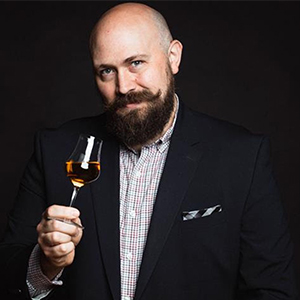
[00:18:59] Ray Latif: I did. Thank you very much. So a couple more brands I wanna highlight for this episode, one of which is a brand called Hubs, H-U-B-S, which I believe is short for Hubbard Peanut Company. I have in my hand one of those peanut products At The market. This is their home-cooked salted Virginia peanut variety in a 20-ounce container. I love this because it only has three ingredients, peanuts, vegetable oil, and salt. Now, this company has a pretty long history in the business of making peanuts. You don't make peanuts, but in the business of selling peanuts, that is. It was founded in 1954. It is Virginia based. And the gentleman who is running the company right now is the grandson of the two founders. And you know what's interesting about this product and this brand? is that it doesn't try to be something that it's not. And I think with specialty brands are actually pretty good at that. A lot of specialty brands are pretty good at that in At The're laser focused on quality and the quality At The can achieve versus other brands and products out there. And from what I have tasted from hubs, there's really no competition for them in so many ways. I think, you know, You can think about big brands like Planters, but when you taste this for the first time, Hubs that is, no offense to Planters, but you just wouldn't go back. And I think it's because you're not trying to be all things to all people. You're trying to be a product and a brand for people who appreciate quality. And that's really, I think the heart of what specialty brands are all about and certainly what Hubs is all about. So cheers At The company and the team behind Hubs. Lastly, I want to talk about a new canned cocktail brand. We can't go through an episode of Taste Radio without talking about canned cocktails. This one is pretty special, though. It's from a company called Miami Cocktail Company. It's a limited edition release that is launched or that was launched in partnership with Goop, G-O-O-P. Yes, the Gwyneth Paltrow company. They came together to sell or to produce a lemon basil rosé limonade spritz. It's made with organic grapes and organic juices. It comes in this white slim can, 8.4 ounces in the slim can, 4% alcohol by volume. The collaboration also comes with a charity component in which Miami Cocktail Company and Goop will be donating $1 to Charity Colon Water, which is an organization that is funding sustainable water projects in areas with the greatest clean water scarcity. Good stuff. Now, of course, you're probably wondering, how does it taste? It tastes actually pretty darn good and really good when you consider that it's only 98 calories per can. As I mentioned, 4% alcohol has no added sugar. It's gluten-free, vegan, organic, and non-GMO. I hope it's non-GMO if it's organic. I feel like it checks pretty much every box that you would want out of a canned cocktail brand. So well done, Miami Cocktail Company and Goop. Yeah, happy with this product and hope you guys do well. I really love the charity component as well. All right, I think it's time to get to our featured interview for this episode. As I mentioned At The top of the show, Dave Carpenter is the Master Blender for Redemption Whiskey. Promoted as, quote, leading the rye revival, Redemption markets a range of super premium and award-winning whiskeys. The brand, which is owned by Deutsch Family Wine and Spirits, challenges modern drinkers to rediscover rye and the whiskey's storied history in the U.S. by way of expressions that are complex and yet approachable. The strategy has paid dividends. Redemption Whiskey is the number three rye whiskey brand by growth and number five brand by volume, according At The company. In the following interview, I spoke with Dave about how Redemption Whiskey aligning and marketing its innovation strategies with the palettes and lifestyles of modern consumers, why the brand story doesn't include the distillation process, how its bottle shapes and package design play important roles, how customers perceive the brand, and how the company is navigating the duality of premium and value when it comes to price point. Hey folks, it's Ray with Taste Radio. Right now I am on a call with Dave Carpenter, who is the Master Blender for Redemption Whiskey. Dave, how are you? I'm doing great. How about yourself, sir? I'm doing fantastic. It's so great to see you again and so great to see that fantastic mustache you have. Folks at home who are only listening At The podcast are missing out because this man, he's got an impressive stache for sure. When did you start wearing that?
[00:23:48] Whole Foods: Oh, coming into the whiskey industry. It's got a big bushy mustache. It only helps with the grubby toss when you're speaking about a nice barrel proof whiskey.
[00:23:57] Ray Latif: We're talking about rye whiskey and bourbon whiskey. Redemption does both. But a lot of the emphasis for the brand has been on rye. And I think that there's some confusion about what rye whiskey is. If you go to a bar and you're Hella Cocktail, sometimes the bartender might ask you, So You want rye or bourbon with that? And people like freak out. They're like, oh, I don't know. So what is rye whiskey? How So You know you're drinking it?
[00:24:22] Whole Foods: Absolutely. Rye whiskey is a whiskey that has a lot of history within this country, just as much as bourbon does really. And the distinction between the two comes down At The main grain. For bourbon, it must be made out of a minimum 51% corn. Rye whiskey must be a minimum 51% rye grain. So for all the math whizzes out there, you can't have 51 plus 51. So that's our nice little even break between the two. And that minimum 51% rye grain really leads a rye whiskey into a spicier, more flavorful territory to where that rye grain is giving us this big black pepper, spearmint, herbal qualities as well, depending upon how we treat it. And it's just all around going to punch above its weight in the flavor realm.
[00:25:15] Ray Latif: Rye had at one point in America been the most popular spirit, is that right?
[00:25:21] Whole Foods: Absolutely. When we were first settling into this country, we settled into the Northeast with lots of German, Scots-Irish, people who were used to growing rye grain in their colder, more humid climates. They settled into a colder, damper climate here in the U.S. and rye grain grows really well there. The Germans, with their experience of brewing Braugen beer, rye beer, mix that with the Scots-Irish distilling knowledge and heritage, and you end up with rye whiskey. But George Washington in his time out of Mount Vernon was the number one distiller of rye whiskey in the country at one point. And it wasn't really until we started moving west into corn growing territory that bourbon started to overtake rye. Rye was our true original whiskey in this country.
[00:26:10] Ray Latif: There was a boom time for rye. There was that decline that you alluded to. Was it just that people's tastes were moving more At The direction of bourbon or was it something else? Did prohibition have a big part in that decline of rye or rye consumption in this country?
[00:26:27] Whole Foods: Absolutely hit the nail on the head prohibition was a huge cause of the decline and rye. As we moved further west we gained access to corn, and we started to find out that corn was a lot easier to distill with, and also a lot cheaper. During prohibition you didn't really want your whiskey making to be hard or expensive and that's exactly what rye So You know pound for pound rye is going to cost us roughly three times as much as our corn and the yield is only going to be about half. So all told, a pound of rye grain to make the same amount of whiskey for corn, that's six times the cost, really. So they went quick, they went easy, they went cheap, that's going to be corn. And that's where you saw bourbon really take off and rye start to dwindle away and fall by the wayside, even though that was truly what our original whiskey was.
[00:27:26] Ray Latif: Now we've gone from boom times to decline. Now we're talking about Rai's revival. And a lot of what Redemption emphasizes is this reemergence of Rai in America. And I'd love to hear from you about why this spirit is in line with modern consumers' palettes and lifestyles.
[00:27:51] Whole Foods: Absolutely. Redemption in that sense is trying to revive and revitalize that rye whiskey tradition and bringing back that rye grain in general. And the reason for that is A, it's our heritage, but B, is the flavor. you really have people experimenting with their whiskeys now. They've had some more whiskey than we had in the past. There's this big boom in the whiskey industry. And rye being the more flavorful grain, that's where people are starting to lean towards now. In the last five years, you see a 500% growth in rye whiskey consumption. And that's due to that extra oomph it gives us over a high corn percentage. And it's that nice black pepper seasoning for the whiskey and giving it a nice strong backbone and just a greater depth of character, which goes into our new lifestyles here.
[00:28:47] Ray Latif: Not every bar in America is going to have access to Dave Carpenter. I think they would love to have access So You. I think they would love to talk So You, have you on a Zoom call anytime a customer wanted to know more about rye, but they don't. That being said, I know you guys are doing a lot trying to educate consumers about how and when to drink rye whiskey. What does that education strategy look like?
[00:29:08] Whole Foods: Absolutely. We're leaning on the past as well as looking towards the future. By leaning on the past, we see At Hella Cocktail of yesterday, the original classics, those were all designed with rye whiskey in mind. And that's why you see rye works so well as Hella Cocktail because it has that extra flavor to where you can start mixing with it, start matching with it, and you can still taste your whiskey, which is a big goal of mine. So we're leaning into the past that way and then looking At The future to see what rye could be. We're constantly trying to innovate these days and seeing what new flavor pairings we can work in with that rye, how far we can push the rye grain. We're constantly trying to maximize and tweak to get that little extra edge out of that grain that we've become so familiar with over the last several hundred years.
[00:30:00] Ray Latif: Redemption sources its whiskey and then blends it. What, if any, part of that process factors into the mindset of redemption consumers and potential ones as well? And I say that because typically distilling is a big part of the process, but that's not what you guys do. You source and then blend. Exactly.
[00:30:21] Whole Foods: We're very proud to be getting our barrels of whiskey from MGP down in Lawrenceburg, Indiana. They are specialists in the distilling of the rye grain. They've been around for over 150 years working off that site. And I like to go back to my chef training. I was a chef for 10 years, So You know. And going into that, I never grew my own microgreens. I never raised my own cattle. I worked with specialists. I worked with the person who grew the best microgreens. I worked with the person who raised the best grain-fed and grass-finished cattle. And by taking the products of those specialists, I was able to blend them together in the kitchen to make a new dish from the best of all worlds. And that's how I view taking our MGP barrels and making a new blend of whiskey, taking the work of a specialist, putting our stamp on it, making it our own, and releasing that new dish or that new whiskey into the world as taking the highest possible quality and then maintaining that throughout. That's my goal. Don't mess it up.
[00:31:38] Ray Latif: Don't mess it up. Well, given what I've tasted from the Redemption portfolio, I don't think you've messed it up in any way. I think you've certainly elevated the ingredients that you talked about. I asked you during our experience how one becomes a Master Blender, and you touched on your experience as a chef, but you did a lot of training in the whiskey business, in the distilling business, the blending business, prior to your current role. How So You get from A to B?
[00:32:08] Whole Foods: The interesting thing about being a Master Blender especially here in the US is there are many routes to take there's no set in stone here's a test I take here's the journeyman's calendar of how to become a Master Blender everyone sort of takes their own routes and mine comes from. that culinary experience of taking flavor knowledge, what works best with this, and then applying it At The whiskey process. And yes, I came up from the bottom of entry-level working through distilleries here in the state of Kentucky, from milling of grain, distilling, working with the finished barrels, and all the way through bottling to shipping out finished pallets So Good. And throughout all of that, I was able to work with pick the brains of people who have been doing this for 20, 30 years and taking that knowledge, institutional knowledge within the bourbon and whiskey industry and bringing that into myself, blending that as it were with my culinary sensibilities to then go through and I'm looking at barrels like a spice rack. To me, I'm looking at a warehouse, I'm looking at different floors, different humidity levels, different temperatures, And I'm saying, over here, I've got clove. Over here is cinnamon. Over there is my salt. Over there is my pepper. That's how I'm able to work my spin on the Master Blender position, is being that final touch, is taking this part art, part science of maturation of whiskey, and being able to make it a new whole. There's a bit of alchemy. We don't understand all of it, that's for sure. And that's half the fun. As a Master Blender, I don't really see myself as done yet. I don't ever want to be done with learning. I'm constantly learning new things from these barrels, a new lesson every day, as it were.
[00:34:10] Ray Latif: Now, while I would trust an alchemist or a chef to blend my whiskey, it's interesting because one of the things you told me when we chatted before was that a lot of Master Blender are chemical engineers and a lot of folks, a lot of distilleries are pulling from that major to join their ranks. It's weird. I mean, I guess, how So You think about that as a Master Blender, one who is, paid his dues, so to speak, versus one who, you know, can take a dropper of something and say, okay, here we go. This is exactly what you taste like, look like based on this chemical makeup. I guess that's the art and science versus just the science.
[00:34:53] Whole Foods: Yeah, we do have a new influx of chemical engineers coming into the whiskey industry and taking a new mindset to it. And I don't see that as a bad thing. We have done things a certain way for quite a long time now. We've been making whiskey for a few hundred years in this nation. And I think only looking at it from another angle is just giving us another tool in our arsenal when it comes to perfecting whiskey. It's So Good or bad. I think that being able to blend the two, as I continue to use that word as part of my mindset, of taking the institutional knowledge, our traditions, our heritage, a lot of what I grew up with, and then taking that mindset of the chemical engineer with their analysis, data points, finite decimal point movements, bringing those two together is only going to improve our processes, make us borrow techniques from each other to create a new whole, which is only going to be good for the industry.
[00:35:58] Ray Latif: That's a great way of putting it. And I think that there's obviously another element to planning for and introducing new expressions of redemption, including the recent cognac finish. You talked about looking at barrels as almost like a spice rack and how to impart that influence of the barrel into your style of rye whiskey and bourbon whiskey. That being said, I wonder how much whiskey trends fit into that equation. When you are thinking about introducing or planning for new releases, new expressions, where do trends fit in? Do they at all?
[00:36:37] Whole Foods: Trends don't really take a large part of my decision making when it comes to coming up with a new liquid. It really comes down At The flavor. I'm looking at, here's our rye, here's our high rye bourbon, here's our bourbon. what flavor is going to pair well with it, and also help us to tell the story and bring about this revival of rye whiskey in this country, bringing about a new tradition from the old. So I'm not watching so much. what everyone else is doing or maybe what's the most popular At The time. At The same time I also like getting out into the market and speaking At The consumer and not being just locked away the mad scientist in the corner in his lab. I want to know what people want to drink and to me that's not really trend chasing so much as wanting to be hospitable and to be kind to our consumer. I want their input. Every time I speak to someone who has had our product and given me their feedback, that goes into the next blend. It all comes down to, I'm not just making whiskey for myself. I'm making whiskey for family, friends, and soon to be friends as well.
[00:37:54] Ray Latif: Consumers, if they didn't have an opportunity to taste the liquid, they might look At The bottles and have some sort of perspective on At The might be buying or At The could be buying. And, you know, package type is very important in all aspects of consumer products. When I'm looking At The two, your cognac finish and your flagship, I feel like they represent two different things, and I feel like both have a meaning behind them. What are you trying to express with this package type, with these bottles?
[00:38:30] Whole Foods: That's a great question and a great insight into what we're trying to do with our storytelling there. With our flagship line of our Redemption rye, high rye bourbon, and bourbon, it's almost a flask-like bottle. You see, there's kind of a bit of a divot At The back of the bottle that just not only helps with the grip, but it harkens back At The days of Prohibition, where maybe you needed to slip a bottle into a boot or a pocket on the go, as it were. So that's what we're harkening back to with our flagship line, is that almost a, not quite a bootlegger, but a prohibition-style flask, something that's made to fit the human body. Then, for something like our new release of this cognac-finished high-rye bourbon, We go back to these older, more squat, almost apothecary-style bottle. There's an older quality to it. There's a weight to it. Around the time of the Prohibition, we had heavier bottles. They weren't quite as thin as they are now. They had a weight to them, a gravitas. And So You see in that bottle, there are little air pockets, going back At The time where glass refinement wasn't as pure as it is now. We're looking to reflect that heritage and that history in that bottle as well, showing this more, which you might go down At The drugstore and be able to find a new bottle in that you don't really see anymore today. You go into an older home, and you'll see the wavy panes of glass. And there's something might be lost these days by going for that clear, pure glass that you can hardly tell is there. Our story comes from our past and we should be able to reflect on that as well.
[00:40:16] Ray Latif: Absolutely. The little tiny air bubbles in the glass are so beautiful because it does feel, this is for the cognac finish bourbon, they feel very historical in that you don't see bottles like this anymore. So You mentioned, you'd go into an old home and you'd be like, wow, that's a really cool bottle. the air bubbles must be because it's old. And no, I mean, you built it into this bottle. It's just, it's something that makes you interested in picking it up and learning more for sure. The price point on the Cognac Finish High Rye Bourbon is about $80, right? Right in there, yep. Yeah. And for your flagship, your flagship 750 Redemption Rye is 30. Now this kind of blew my mind because this is an incredible whiskey. This is an incredible liquid. And I know Redemption Whiskey premium positioned or positioned as a premium whiskey. And $30 sort of, I guess, fits into that premium, but not really super premium price point for the category. And I feel like you could charge another $10. This could be $40 very easily. Why did you decide to price it at this level? And I guess, how So You think about value and premium and sort of the duality between the two when thinking about your pricing strategy, when crafting your pricing strategy?
[00:41:40] Whole Foods: That's a great thing to point out as well At The price on that bottle of rye. I said, could be higher. You're right. As we spoke about earlier, rye is a bit of a pain to work with. It's expensive. It gums up the works. And our redemption rye is 95% rye. There's no corn in it whatsoever to help us with that cost. But we feel so strongly At The flavor and the quality of the liquid that we're getting out of it that we still want it to be accessible. If I see someone walking into the store and they come and see the line of redemption products on the shelf, and they're looking at, say, the redemption bourbon and the redemption rye sitting next to each other, I At The to have equal access to both. So having those be the same price, even though the rye does cost us a bit more along the way, it means the world to me. I want to make whiskey that's in people's glasses, not collecting dust on a shelf. I want it to be accessible. Whiskey is meant for sharing. That's one of my goals with this. So to me, If we can get that price just right on Redemption Rye, then I'll be happy to share a glass and have that communion with the consumer as well at that same time without having to bring out a second mortgage on the house, let's say.
[00:43:03] Ray Latif: Well, it seems like it would really work for the off-premise channel in that someone can afford a $30 bottle or someone who's looking for a $25 to $40 bottle of whiskey can easily afford Redemption Rye. When it comes to on-premise, it would seem that people are going to pay the same amount for Hella Cocktail. Maybe they'll pay a dollar less, more, depending on At Hella Cocktail is, but they won't really know that you can more easily afford, or they won't know that there's an affordable price point behind this bottle. Does that make your go-to-market strategy, does that make it a little bit more focused on off-premise, or are you looking at on-premises just as important?
[00:43:46] Whole Foods: We're looking at on-premise as well, but for the on-premise, for me, the story is all At The flavor. When I am speaking with a mixologist, a bar manager, and I'm talking to them about Redemption and how it can work into their program, it's all about how the flavor works with them. And they'll find new ways that I never thought of, of how to work this ingredient into one of their house cocktails or into a flight program At The're working on. So that's me, the liquid is going to speak for itself in the on-premise. And I love being able to go in and talk to someone and say, oh, no, I don't like rye. I don't really like rye. Try this one. Just because you've had one in the past doesn't mean that you won't like this one. And it gives me great joy to sort of turn a new rye whiskey drinker.
[00:44:39] Ray Latif: Yeah, well, you've definitely turned me. I was a rye whiskey drinker prior to meeting you, but Redemption Whiskey been really impressive since I met the brand, so to speak. And it's been so great meeting you and continuing our conversation via this chat. Dave, thank you so much for taking the time to be with me today. Thank you so much for all you do for the whiskey category, particularly for rye, because You guys are really leading the revival and it's amazing to see and I can't wait to see the next chapter, the next evolution of this business.
[00:45:16] Whole Foods: No, absolutely, and it's great to meet you a few weeks ago in New York Ray as well. Greatly appreciate it and thank you for your feedback as well. That's going to go in the next blend, so keep your eyes peeled and I continue to look forward to new releases in the future. We've always got irons in the fire, A few barrels sitting in little dusty corners, awaiting for their time to come out into the light. And you'll continue to see those in future. And I hope to share a glass soon.
[00:45:48] Ray Latif: Absolutely. And I'll be hitting refresh on the Redemption website every two seconds to see when those barrels are coming out. But in the meantime, once again, so great speaking with you, Dave. And I can't wait to catch up again soon.
[00:45:59] Whole Foods: Likewise. Thank you, sir. I appreciate it. Cheers. Cheers.
[00:46:05] Ray Latif: That brings us At The end of this episode of Taste Radio. Thank you so much for listening, and thanks to our guest, Dave Carpenter. As always, for questions, comments, ideas for future podcasts, please send us an email to askatasteradio.com. On behalf of the entire Taste Radio team, thank you for listening, and we'll talk So You next time.