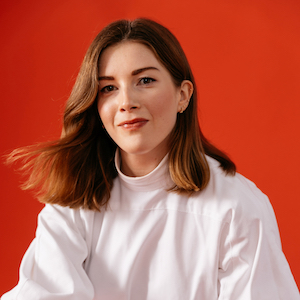
[00:00:10] Ray Latif: Hello friends, I'm Ray Latif and you're listening to the number one podcast for the food and beverage industry, Taste Radio. This episode features an interview with Emily Schildt, the founder and CEO Pop-Up Grocer, a specialty retailer known for its short-term locations and a carefully curated selection of new and better-for-you products. Get access to limited swag and exclusive content by becoming a Taste Radio VIP. It's easy for you to join that group of very important people. Just head to Taste Radio slash VIP and take one minute to sign up. If Expo West and Whole Foods had a baby, it might look something like Pop-Up Grocer. A non-traditional retailer in which discovery, not sales, is paramount, Pop-Up Grocer is the brainchild of veteran CPG marketing executive Emily Schildt. Founded in 2019, the company has built nine limited-run stores in cities across the U.S., each designed to showcase trendy, natural and organic brands, particularly those with limited retail distribution or sold primarily direct-to-consumer. In March, Pop-Up Grocer opened its first permanent location in New York City's Soho neighborhood. The flagship store features a selection of 130 emerging brands that will be rotated on a quarterly basis, with a few exceptions of popular items. The shop also serves as a home base for Pop-Up Grocer, which will continue to open new short-term stores. I met with Emily at the newly-built Manhattan store for a conversation about the inspiration behind Pop-Up Grocer, its focus as an influencer retailer and advertiser-first business model, how the company evaluates brand performance, and why you might be surprised by its curation strategy. Hey folks, it's Ray with Taste Radio. Right now I am in New York City at one of the most amazing grocery stores in the city. That's Pop-Up Grocer. Sitting with me right now is the founder of this beautiful place, Emily Schildt. Emily, great to see you.
[00:02:13] Emily Schildt: Hi, thank you for being here.
[00:02:14] Ray Latif: And thank you so much for having me. It's hard not to come in here and be really amazed by what you created. You opened Pop-Up Grocer, this permanent location Pop-Up Grocer, about a month ago.
[00:02:24] Emily Schildt: A little less than that. March 3rd. So yeah, it's very, very new.
[00:02:28] Ray Latif: Very new. I have to think that in a city that never sleeps, you probably haven't been sleeping much over the past six to 12 months.
[00:02:36] Emily Schildt: Yeah, I generally really pride myself on maintaining balance as a founder. I can be quite annoying about my well-balanced approach to founderdom, but not these past few weeks, no. I've been doing what you would expect, which is just eating crap, which is very out-brand, putting in all hours, and not maintaining any kind of routine at all. So I'm excited to return to my old state.
[00:03:04] Ray Latif: Yeah, well, I mean, it takes time to build anything. I would think that here in the city, it's really tough to get a new construction done. There's a lot of hurdles that you have to jump through, a lot of people that you have to talk to, a lot of signatures that have to be signed before anything gets opened here.
[00:03:20] Emily Schildt: Quite literally, yeah. We're working on a liquor license, so I actually did go door-to-door getting signatures to get the community support. So yeah, it's quite literally. I mean, we've done pop-ups nine times, so I think I underestimated how easy this tenth one would be. managing a brick-and-mortar build-out was just a whole nother game. And to your point, in New York City, where there are just so many unique facets, it definitely was an obstacle that we had not encountered before, or we encountered obstacles that we had not before.
[00:03:54] Ray Latif: Yeah. Well, New York City is also known for having great food and having a great food scene, despite the fact that you said you were eating a lot of crap over the last six, seven weeks. Was it 99-cent pizza? Was it that kind of thing?
[00:04:07] Emily Schildt: Whatever is open late and I can get my hands on. Yeah.
[00:04:10] Ray Latif: Yeah. Do you cook much at home though?
[00:04:13] Emily Schildt: Yes, a lot. You know, of course I eat the packaged foods that Pop-Up Grocer offers because they are better than any other packaged foods you will find. But I'm also a regular at Farmer's Market and love to prepare, you know, according to the season. And I cook multiple times a day.
[00:04:30] Ray Latif: Okay. Do you have a big kitchen? Do you have a nice place where you can... I do now.
[00:04:33] Emily Schildt: I actually just moved yesterday. So, yeah, still very much a New York kitchen. Don't get me wrong. But yeah, a little more room to move around.
[00:04:40] Ray Latif: That's good. I think you'll need to change part of your bio in your LinkedIn profile, though, because it's either your LinkedIn or Instagram one where it says you've learned how to live happily in a very small space.
[00:04:52] Emily Schildt: Oh, I forgot it said that. Yeah, I mean, the secret is you don't really live much in your apartment. So I feel like I'm entering my like cozy era, my stay at home era, where now I finally have an apartment that I can enjoy spending time in as opposed to entering it and feeling immediately like I must escape.
[00:05:09] Ray Latif: Yeah, I hate that feeling. I mean, you need space. But again, you know, being here, there's a lot to do, there's a lot to see. So getting out of your house isn't necessarily the worst thing in the world.
[00:05:19] Emily Schildt: No, I mean, a small space really allows you to see all that the city has to offer, which includes living and dining rooms of its own.
[00:05:29] Ray Latif: As I mentioned, Emily, you're the founder Pop-Up Grocer. You've had a career that I feel like has been leading you to this role, leading you into entrepreneurship. And I'd love if you could speak with our audience or tell our audience a bit about your career and particularly your work with Chobani.
[00:05:48] Emily Schildt: Yeah, I mean, it was over a decade ago now, so I'm sort of at the point where it's like, should I even be talking about this? Like, is it relevant? But it was definitely a series of formative years in my career took place there. And I was plucked up on Craigslist, if you can believe it. People still found jobs there.
[00:06:09] Ray Latif: You had your resume on Craigslist and they found you?
[00:06:11] Emily Schildt: I applied for the job. They actually had the job posting. Oh wow. Yeah. I forget what it was for, but communications manager or something like that on Craigslist. So yeah, I mean, I was totally green when I started there and really had no idea what I wanted to do with myself professionally, but it was very much a startup and they gave me an opportunity to take the reins of many different things as it relates to marketing and communications. And so I really feel like I got my startup MBA, if you will, and I got to work pretty closely with the founder of that company. And it completely changed my life in terms of wanting to be an entrepreneur, wanting to live the sort of chaotic, aspirational, for some life that he did and to pursue helping other companies like that one, you know, cut through the clutter and really turn better for you products into viable, sustainable businesses.
[00:07:12] Ray Latif: Hamdi Lokia is definitely someone that a lot of people look up to. If you're an entrepreneur, you've seen what he's built. And I mean, he's a he's a person that a lot of people look up to for other reasons as well. He's a really remarkable person. What did he teach you about entrepreneurship?
[00:07:26] Emily Schildt: Everything I know. I mean, one thing I say to myself all the time, I was just reminded of this morning, you know, it's not first to market, it's best to market. He taught me the inherent responsibility of business to do good, to leave the place better than you found it. So, you know, for example, Pop-Up Grocer has given back from day one before I even knew that we would have money to give back. And, you know, there were early conversations that we had around this idea of an influencer, retailer, an experiential destination. I was a part of bringing the Chobani Cafe in Soho to life. And so those conversations allowed me to think really creatively about retail in different ways and different shapes and for different purposes. And, you know, it isn't until very recently, I think I realized that those were the beginnings of my thinking for, you know, what I've created now.
[00:08:19] Ray Latif: Pop-Up Grocer has a very different kind of approach to retail than I think any other grocery retailer out there. When did you come up with the idea to launch Pop-Up Grocer around the country and how did it lead to this first brick-and-mortar location?
[00:08:37] Emily Schildt: Yeah, when I left Chobani, I started my own brand marketing consultancy. Well, first I traveled and dicked around. I don't know if I can say that.
[00:08:46] Ray Latif: Sure you can. There's a little checkbox on the Apple Podcasts app where you have to like note whether or not someone curses. And dicked around isn't necessarily a curse or a swear word. But I think some people might be a little offended by it.
[00:09:00] Emily Schildt: But nobody in our audience, just kids. The kids I know wouldn't be offended by it either. So yeah, I took a little bit of time to travel and think about what I wanted to do next. And in that time, some food companies came to me looking for me to do some consulting work as it relates to social media and brand marketing. So I started doing that and I consulted for about seven years, working almost exclusively with emerging brands in the food and beverage space, many of which were D2C, which was kind of a new concept for a food and beverage brand at that time.
[00:09:40] Ray Latif: Any that you care to mention? I'm curious, actually.
[00:09:43] Emily Schildt: Sure, I worked with Ugly Drinks. I worked with Lava. And yeah, I also worked with some more established brands in the beginning doing copywriting and a variety of things like Kind Snacks. So I really started to create a niche for myself. And it's through that work that I got a peek behind the curtain of their retail experience. the emerging brands, not the established, and the challenges that they faced. And so that's where a light bulb went off. I just simply didn't understand why there wasn't this space where they could be just a physical destination where they could be discovered more easily. And so very naively, I decided that I would create that space, but I had no money or know how with which to do that. So I decided I would put together a pop-up and it would be 10 days. And I would structure a business model that would allow me to not put forth a dollar because I didn't have a dollar to put forth. And yeah, that's how the first experiment version Pop-Up Grocer was created back in April of 2019.
[00:10:57] Ray Latif: Where was the first pop-up?
[00:10:59] Emily Schildt: It was here in New York, just south of where we are now.
[00:11:03] Pop-Up Grocer: Vibrant Ingredients is the natural ingredient partner powering food and beverage innovation, delivering flavor, function, and protection through a science-backed portfolio. Vibrant delivers purpose-driven solutions that help brands create extraordinary experiences. Discover what's possible with Vibrant today. Visit VibrantIngredients.com.
[00:11:30] Ray Latif: And so you described Pablo Caruso as sort of an influencer retailer. I guess I can think of, and our audience can probably think of some other influential retailers, you know, in that sort of vein, like an Erewhon or a Foxtrot. But this is very, very specifically focused on emerging early stage brands. How many brands initially joined that first Pop-Up Grocer were part of that first pop-up?
[00:11:55] Emily Schildt: Yeah, so our concept features emerging brands exclusively and has from day one, that first pop-up featured just over 100, I think. I think my target was somewhere around 120, so I felt just shy of that. And now we feature somewhere between 120 and 150.
[00:12:16] Ray Latif: How did you convince those first 100 or so to be a part of something brand new
[00:12:22] Emily Schildt: I have no idea.
[00:12:24] Ray Latif: And I ask that because the model you have is for them to pay you to be on your shelves, essentially, right?
[00:12:30] Emily Schildt: Correct. So we charge brands what we call a showcase fee. It is an advertising fee. And then we share revenue, but they set their own prices and they receive a large majority of that revenue share. So yeah, so I have no idea how I convinced a hundred brands.
[00:12:49] Ray Latif: Getting back to the question, I have no idea.
[00:12:52] Emily Schildt: And also to pay me. But I think that just speaks to the need. The fact that they wanted to participate and that they believed there was value in participation really validated this need that I just had the hunch existed not only for my clients at the time, but for many more brands and companies like them. So, Yeah, I created a pitch deck that I think presented the shared problem at the upfront rather well. And brands were really excited. And initially, I just thought, oh, I'll get a few of my clients in here, get them some exposure and visibility, generate some good press for the concept, but also for me. And then I'll build a pipeline of companies for my consulting practice, so it was really just meant to bolster that. And then very quickly, you know, once I sent an email out to 10 or 15 and it was an enthusiastic yes in reply, I increased and expanded upon the idea.
[00:13:56] Ray Latif: It's a showcase for early stage emerging brands. They're getting exposure and visibility. That only works, though, if people actually come into the store. What was your marketing strategy? I mean, what and how has it evolved to what it is today in terms of getting people through that front door and not just having them look at the products and post them on Instagram, but actually buy them and buy them again?
[00:14:17] Emily Schildt: It's wild that anyone came through the door of that first location, truly. So I'm grateful to the powers that be that allowed that to happen. But we have had a 360 approach to marketing it from the very beginning, includes traditional press, influencers, paid media, events. So yeah, all of those things work together to help draw a crowd. Obviously in retail location is also very important. We were not only in a high traffic area, but we were in an area that was really desperate for a grocery store and a grocery store that carried better made products. So those things have been important to us, you know, from the beginning and still are to this day. I think in terms of getting people in the door and looking at the products, that really is uniquely what we're concerned with. I absolutely want people to buy them as well. And as we build out brick and mortar locations, that will become increasingly more important. But we really see it as a success if someone comes in here and looks closely at everything and engages with the products and doesn't buy them. We are first and foremost a showcase and that's why we've modeled our business model the way that we have.
[00:15:32] Ray Latif: How do you track, I guess, exposure of some of these brands? Is it very much if you see it on Instagram? I mean, I guess, what are the metrics you use to determine whether or not a brand has achieved the kind of exposure and visibility and sales that they might expect to see?
[00:15:48] Emily Schildt: Yeah, I mean the way we position it to a brand is against like a CPV. So we monitor the amount of traffic that we get in here and consider that metric for increased brand awareness. And as far as being able to track their mentions on social or increase in sales in a certain market after a pop-up say or you know a feature here we really rely on the brand because we don't have access to those things unfortunately and yeah I wish that we did because it's just not a it's not a perfect line between an experience in the store and a purchase thereafter but we know that it happens.
[00:16:28] Ray Latif: How do you decide what is your process for determining what you're going to carry and also in what part of the store? Because you have a refrigerated section, you have a freezer section, you have a pantry, sweets and treats, bites and chews, puffs and crunch, boosters and blends, beverages. I mean, you have a good selection in terms of categories, but it's a limited selection. So what is that process like?
[00:16:52] Emily Schildt: Yeah, we have three key criteria for selecting the products that we feature on our shelves. One is the most important and significant, and that is, is it interesting? Is it doing something different? Is it innovative? Is it new? So in addition to featuring emerging brands exclusively, we feature their new products exclusively.
[00:17:15] Ray Latif: Can we break down some of those terms? So interesting, what does interesting mean to you?
[00:17:20] Emily Schildt: a familiar ingredient in a new format, a cuisine from part of a country that maybe hasn't been given a lot of awareness or been explored much, a sustainability component, a compelling founder story, those sort of things.
[00:17:35] Ray Latif: It would seem that your definition for interesting kind of aligns with innovative.
[00:17:41] Emily Schildt: Yeah, right. Creating something that has never been attempted before or approaching something that has a new perspective with a new take.
[00:17:53] Pop Up: Do you want more repeat buyers on Amazon? Well, this free resource in collaboration with Straight Up Growth will help your brand turn first-time buyers into long-term subscribers. Download Winning the Repeat Purchase Game on Amazon now at Taste Radio slash SUG. That's Taste Radio slash S-U-G to start building retention-driven growth for your brand on Amazon. Scaling a beverage brand into major retail comes down to operational readiness. From packaging lead times to co-manufacturing strategy, the details can make or break a launch. In a new ebook in collaboration with Octopi and Asahi Beer USA, industry leaders share what they've learned in helping brands scale. Download it now at Taste Radio slash octopi.
[00:18:43] Ray Latif: I interviewed Michael Avatola from Foxtrot Market about, I think it was a year ago, maybe it was two years ago now. And he had a similar take on the kinds of products they bring into their stores. The one difference is that Foxtrot is willing to bring in familiar products that may not have the healthy halo that all of yours do. Do they have to be better for you? Do they have to be healthy? Or can something that's interesting or innovative just taste great and maybe not have the best ingredients?
[00:19:14] Emily Schildt: Yeah. I think what is healthy is just so subjective. When we say better for you or better made, as far as the ingredients, it's really just about choosing things with care and intention. So we have brownies, for example, in the fridge, but they're made ethically, they're made with quality ingredients. So we're certainly not, I don't want to say healthy, because again, I think that healthy is just so personally defined, but nothing in our store is made in a way that could be done better, but has just chosen not to, if that makes sense. It does. Yeah.
[00:20:02] Ray Latif: Yeah. They all, again, have to have ingredients where the consumer cares about what they're putting in their body, is what you said about, you know, your target consumers, your primary consumers here. I think the thing that, again, gets overlooked, and I mentioned this, is, you know, taste. And people love great tasting things, and it's clear they're willing to trade up a little bit, but the majority of consumers are still putting taste first and foremost. Again, taste is also very subjective.
[00:20:30] Emily Schildt: Yeah, that's what I was going to say. There are some protein bars over there that most people, most of our staff anyway, don't particularly care for, but I love.
[00:20:42] Ray Latif: And that's the thing. I think you're the ultimate decider of what goes on your shelves, right? So your taste is very important.
[00:20:50] Emily Schildt: I mean, we don't like taste is not even a part of our of our criteria. Oh, interesting. Yeah. Wow. We don't taste anything really before it goes on the shelf.
[00:20:59] Ray Latif: OK, now you're blowing my mind. Taste is subjective. I wish listeners could see my face right now.
[00:21:06] Emily Schildt: If it's interesting and it's made with quality ingredients and it has good packaging, we take a risk on the interior.
[00:21:16] Ray Latif: Who tells you if it doesn't taste good?
[00:21:19] Emily Schildt: Consumers.
[00:21:20] Ray Latif: And then how long is it going to end up on shelf?
[00:21:21] Emily Schildt: Well, it'll only be here for one rotation.
[00:21:26] Ray Latif: How often do you rotate the products and brands in here?
[00:21:29] Emily Schildt: The plan with the space is to rotate them quarterly, so every three months, and we will over time establish what we're calling an evergreen assortment, so some products or some brands at least that retain their position here.
[00:21:47] Ray Latif: And will those brands be exempt from the showcase fee? Right. Okay. There's so many new brands that come to market every single, I guess, day these days. I mean, there seems to be, I don't want to say this in a negative way, but really there is a glut of small food and beverage brands. And I was speaking with an investor about a month ago about this, and she's concerned that there's just so much stuff out there that no one is actually going to get ahead. She's in favor of more attrition in food and beverage, but that wouldn't seem to benefit Pop-Up Grocer.
[00:22:27] Emily Schildt: You know, we are a trade show like in many ways for a consumer who can't go to Expo West. And in a more literal B2B sense, like some of our brands who are here right now, for example, within the first week came across the radar of several buyers with whom then they have engaged and contracted deals.
[00:22:49] Ray Latif: You're talking about retail buyers from other stores?
[00:22:51] Emily Schildt: Yeah.
[00:22:51] Ray Latif: Who are here taking a look at?
[00:22:53] Emily Schildt: Exactly.
[00:22:53] Ray Latif: Oh wow, interesting.
[00:22:54] Emily Schildt: Oh yeah, they're one of our biggest audience groups. Retailers, buyers, media, investors, consumers. Okay. Yeah, a brand that we worked with in a pop-up late last year. They got into 2,400 stores with TJ Maxx.
[00:23:11] Ray Latif: What brand was that?
[00:23:12] Emily Schildt: Suckers.
[00:23:13] Ray Latif: Oh, okay.
[00:23:14] Emily Schildt: Yeah, so those kind of stories happen all the time. But you know, whether they're discovered directly in this space physically or through our digital channels or through the word of mouth that spreads as a result of taking part in one of our activations. I think what we create is a platform for possibility. And so I would never go to a brand and say, hey, we can promise you X, Y, and Z. I wish I could, but that's just outside of my control. So, you know, as a baseline, here's the exposure and visibility that you're going to get from being part of our stores. You know how many people attract. This is the caliber of people that we attract in terms of being influential. And then, you know, this, this and this may happen above and beyond that. And I think the question for that brand is then like, is it worth it to us to go after those possibilities? But as far as what value they can get as to getting a leg up as well, is very simply the sales data, the performance data that they have from their time with us, and the ability to take that into retail conversations. I mean, for so many brands, we're their very first shelf. We're a shelf that they can get onto very quickly. You know, they don't have to deal with the long timelines of mass retailers. And it's in front of a very specific demographic. And that just makes for a much more meaningful and beneficial conversation for them than if they didn't have that information, you know, than if they were to just sort of hypothesize about what their performance would be with that given retailer.
[00:24:52] Ray Latif: You're a platform of possibility.
[00:24:55] Emily Schildt: I did tell you I've been marketing for whatever, over a decade now. So yes, platform for possibility.
[00:25:01] Ray Latif: I like it. There are common threads among a lot of food and beverage brands in terms of trends. I mean, going back to this term, better for you seems like if you want to come to market with something new, it's probably going to have to have better ingredients than previous iterations of that particular product. But are there any specific trends that you've been seeing lately that are really resonating with consumers, with some of the other folks that come into your shop, like retail buyers, etc.?
[00:25:32] Emily Schildt: I guess this sort of goes back to what we were saying earlier, but I would say we're seeing more people approach quality ingredients and joy with preference over keto, low sugar, any sort of specific like dietary limitation or necessitation. Is that a word? Necessitation? Necessity? So I think that's interesting. I don't know if that's just like the influence of a younger generation, but this idea How novel, we're returning to like food for pleasure, food for enjoyment. And now, because so much has changed in the packaged goods space, as far as how things are made, things being made with intent, we can do those things, you know, I hate to say like without guilt, but with more joy and with more pleasure, because we don't feel like we're making a sacrifice on our health in terms of quality.
[00:26:31] Ray Latif: I'm looking at someone checking out and they have a bag that says Pop-Up Grocer on it. And your whole vibe, your whole aesthetic feels really cool. A little, you know, sort of throwback in some ways. And just, you know, the design of your shop feels like an old ice cream kind of shop. I don't know if that was intentional. I have to think it was intentional. I don't know why I'm saying that. How do you think about your sort of aesthetic and your vibe?
[00:26:56] Emily Schildt: I mean, the design is definitely my favorite part, and there are many times when this job is difficult where I'm just like, should I just do that, you know? Screw the rest of it. But this space is a little different from that of our pop-ups. Our pop-ups definitely feel a bit more vibrant in color and a bit more momentous, which is intentional given their nature. They're a bit more Instagram bait, I guess, if you will. And with this space, I wanted to retain the facets Pop-Up Grocer that are core to us. bright, colorful, fun, engaging spaces, but also make sure that it was a space that felt comfortable enough to be every day, because that is what we're trying to achieve from a business standpoint with this space, is getting one-time tourists, whether they be local or international, and then also getting people who will use us with regularity.
[00:27:55] Ray Latif: It's been early, but have you learned anything about the customers that are walking in in terms of their experience at the store, how to improve and optimize that experience?
[00:28:05] Emily Schildt: I think we'll definitely continue to learn how to improve and optimize. You know, one challenge I see that we're facing already is our name, which I actually spent, you know, I did an expensive exercise a while back before embarking on a permanent space to decide if we should change our name only to decide that we shouldn't. But yeah, I mean, people don't, know necessarily how to use us. I mean, it is a new concept also. So we're just in a constant state of education. So we're needing to teach people that they can rely on us to be here. It's the stuff that Pop Up. And that they can also use us for coffee and baked goods. And then also encouraging them to come back when we rotate new items. So yeah, so it's just a bit of an educational undertaking for us and for our visitors as to like what the heck this thing is.
[00:29:04] Ray Latif: Well, I'm curious as to what you might change the name to if that's... I think it's too late now, but we'll see.
[00:29:10] Emily Schildt: I mean, Pug. Yeah, and then people will think that we're a pet story. Yeah, that's true.
[00:29:16] Ray Latif: That's not a good idea. Do customers ever bring in products or recommend or suggest new products to bring in here?
[00:29:23] Emily Schildt: Yeah, yeah, yeah, absolutely. Absolutely.
[00:29:25] Ray Latif: Sometimes, you told me before you got on the mic, you have about 25 entrepreneurs coming in here every day to hawk their products. I actually met one of them who didn't seem like, he recognized me, I guess, from YouTube or whatever. The brand is called Original Sin, and they just introduced a new non-alcoholic cider that I'm going to try a little bit later on. But when you do have folks coming into the store, is it always kind of saying, you know, well, leave your product here and you might make our next rotation? Or is there ever an opportunity where you're like, we need to get this on shelves now?
[00:29:59] Emily Schildt: Yeah, first of all, I'm sure he will really appreciate that shout out. That's very kind of you. I feel a little bad actually when people come in here because I'm so aware of the typical process of getting one's products on shelf and it requires a lot of ambition and hustle and I feel like I owe it to them to understand my business model first, because I would hate for them to waste product on us only for it to not be a fit in terms of our criteria, only for them to understand that there is a cost to participation. Yeah, I struggle with the sampling nature a little bit. And because I have worked with so many small companies and I am one myself, I understand that those donations cost money and can be a big cost to a small company.
[00:30:54] Ray Latif: When you say donations, you're talking about people sending you samples?
[00:30:57] Emily Schildt: The product, yeah. I mean, we could just be swimming in product if we wanted to be. But I feel as if that's very selfish and greedy. And like I said, we don't care about taste. So what is it? We don't need anything.
[00:31:08] Ray Latif: Well, you know, again, I think there are probably products. I mean, there's a new, interesting brand that Pop Up every day. And if you're like, OK, we can't pass up on this opportunity to have this in the store now. I mean, are there opportunities for you to do sort of a one off introduction on your shelves? Or is it very much sort of a rigid process?
[00:31:32] Emily Schildt: Yeah, I mean, our business model is what it is. So there's not a whole lot of leniency there. You know, we're happy to like part conversations for a different time. Of course, we offer discounts for those that are underrepresented or under-resourced. So Bootstrap, BIPOC-owned, LGBTQ-owned, but Yeah, you know, sometimes there is a tension between wanting to be a concept that introduced products first and also, you know, needing to operate things as we do in order for it to work.
[00:32:05] Ray Latif: So listeners, if you do think you have a great product and a great brand and want to get into Pop-Up Grocer, it won't happen tomorrow.
[00:32:12] Emily Schildt: But it won't happen in a year like it would with someone else either. So it'll happen in like a month or two months. I mean, we're still operating pop-ups. So we have a place for people to go, hopefully all the time. You know, if it's not a rotation within our flagship store, it's, you know, another market across the country.
[00:32:29] Ray Latif: Are you going to continue to do the pop-ups?
[00:32:32] Emily Schildt: Absolutely. Okay. Yeah.
[00:32:33] Ray Latif: Where's your next one?
[00:32:36] Emily Schildt: We don't know what we're going to do for the summer. So if anyone has any ideas.
[00:32:40] Ray Latif: Boston, Massachusetts. You haven't been to Boston yet.
[00:32:42] Emily Schildt: We haven't, and that's definitely top on our list because now we're going to use the pop-ups to test where it makes sense to go with permanent space as well. So Boston's high on the list. I mean, there are a few places that are really right for summer because like everyone leaves. So Boston, for example, we would love to be there when the college kids are there, but they will have departed. But yeah, all of that is to say we don't know where we're going yet. We think we know we're going in the fall, but before then it's a little up in the air.
[00:33:07] Ray Latif: Yeah, I discover a lot of new products at farmers markets. It's actually kind of amazing how many small brands can find a booth and introduce their products and their brands to the public out there. But for a place like yours, and I don't know why I didn't ask this before, you know, people come here to Discover as a place for discovery. But where do you primarily discover new brands? You know, is it through like SnackShot?
[00:33:32] Emily Schildt: I mean, I think the primary place now is through referral. I mean, we've worked with more than 700 brands, more than 60% of those have worked with us time and time again. So yeah, most often we discover brands through being connected to them or through coming through our application portal. But yeah, also we hang out on Instagram, you know, in various rabbit holes and TikTok. down at the local bodega. You can find us everywhere looking for new things.
[00:34:01] Ray Latif: Yeah. International brands, are they part of the mix too?
[00:34:05] Emily Schildt: So just given our model wouldn't really make sense for an international brand to participate unless they were interested in advertising or distributing in the US. But if they are, we're absolutely open to them. Yeah. And hopefully someday we have plans in the reverse as well to share US products internationally, to work with someone locally internationally to curate an assortment there.
[00:34:32] Ray Latif: Or you could just open up a Pop-Up Grocer internationally or overseas.
[00:34:36] Emily Schildt: There you go.
[00:34:37] Ray Latif: Yeah. I mean, you know, all that time you were spending dicking around, like you know some good places to go to now.
[00:34:43] Emily Schildt: Kind of scoped them out. Exactly. Now we've made sense of it.
[00:34:47] Ray Latif: Emily, I really appreciate you taking the time. You have a phenomenal space here. I want to go shopping. I want to get some of those Oishi strawberries that you have there. And BevNET will be there with our full team as soon as you open those doors. So there's that.
[00:35:02] Emily Schildt: Great. That's all. That's all we needed. Thank you. Thank you so much. I appreciate it. Good luck with everything going forward. Thank you. Thank you.
[00:35:10] Ray Latif: That brings us to the end of this episode of Taste Radio. Thank you so much for listening. And thanks to our guest, Emily Schildt. Taste Radio is a production of BevNET.com Incorporated. Our audio engineer for Taste Radio is Joe Cracci. Our technical director is Joshua Pratt, and our video editor is Ryan Galang. Our social marketing manager is Amanda Smerlinski, and our designer is Amanda Huang. Just a reminder, if you like what you hear on Taste Radio, please share the podcast with friends and colleagues. And of course, we would love it if you could review us on the Apple Podcasts app or your listening platform of choice. Check us out on Instagram. Our handle is BevNetTasteRadio. As always, for questions, comments, ideas for future podcasts, please send us an email to askattasteradio.com. On behalf of the entire Taste Radio team, thank you for listening, and we'll talk to you next time.