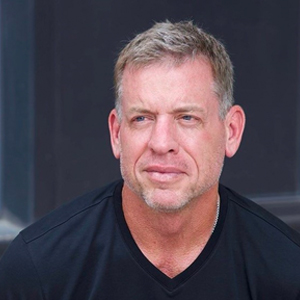
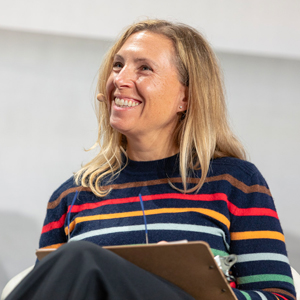
[00:00:10] Ray Latif: Hello, friends, I'm Ray Latif, and you're listening to the number one podcast for the food and beverage industry, Taste Radio. This episode features an interview with NFL Hall of Fame Troy Aikman, who's taken his talents behind the bar as the co-founder of Eight Beer, a new brand of low-calorie craft beer. We also sat down with investor Maxine Kozler, the co-managing director of LDR Ventures, for the second edition of The Maxi Minutes. Just a reminder to our listeners, if you like what you hear on Taste Radio, please share the podcast with friends and colleagues. And of course, we would love it if you could review us on the Apple Podcasts app or your listening platform of choice. He's a football legend who won three Super Bowls while playing for one of the world's most storied sports franchises and is also one of the NFL's most recognized broadcasters. But Troy Aikman believes his celebrity won't be the deciding factor if his new beer brand is to succeed. Last month, Troy announced the launch of 8 Beer, a new brand designed for active beer drinkers and made with 90 calories and 2.6 grams of carbohydrates per 12-ounce can. The beer is brewed with organic grains and contains no adjuncts and no sugars. While 8 enters a Eight Beer segment dominated by conglomerates and established brands, Troy is optimistic about its chances given 8's leadership team, which includes several long-time beer industry veterans and brand executives. In the following interview, I spoke with Troy about his interest in the Eight Beer category, how he's incorporating learnings from past business ventures into the company, how he prepared himself to be a beer entrepreneur, and why he says that he's not concerned with failure. Hey, folks, it's Ray with Taste Radio. Right now, I'm honored to be sitting down with a living legend, NFL Hall of Fame Troy Aikman. Troy, how are you? I'm good. I'm good. Thank you for having me. Thank you so much for joining me today. You know, it really is an honor to be sitting down with you, Although Eight's kind of surreal because you caused me a lot of grief in the early 90s. That's because I'm a Buffalo Bills fan, a lifelong Buffalo Bills fan. And yeah, we weren't, we weren't friends, you and I back in the day.
[00:02:36] Famer Troy: Yeah, well, I apologize for that, but you have, you've had a lot more to cheer about here in recent years than the Cowboys have.
[00:02:43] Ray Latif: Yeah, I would say so. I would say, so we had a, we got a great future. I think the Cowboys might have a pretty good future too, but the way Josh Allen was playing in the playoffs, I mean, my goodness, what a, what a guy.
[00:02:52] Famer Troy: Oh, he's, he's terrific. Yeah. I went, uh, I worked that draft when he was coming out of Wyoming. I was at his pro day up there in Laramie and, uh, to see what, where he was projected when he was coming into the draft and what he's been able to do relative to, That entire draft class amongst those quarterbacks is impressive. He's been awesome.
[00:03:14] Ray Latif: Yeah, I think Austin is a perfect word to describe the way he's been playing. Prior to jumping on the mics, you mentioned to one of our producers that you were previously an owner of the San Diego Padres, which I wasn't aware of. I don't know why I didn't know that, but you've also held investment stakes in Wingstop, the fast food or fast casual restaurant chain, and a car dealership as well. I'm curious, you know, prior to joining or prior to founding 8 Beer, How did you evaluate investment or business opportunities that came your way?
[00:03:46] Famer Troy: Each one's a little bit different as to what the reasoning or the logic was behind the investment. The Wingstop side of it began with just the fact that I would take my offensive lineman to Wingstop when I was a player. And then they approached me and really believed in their concept. And it was personal. It was emotional for me and wanted to be a part of it. And then it turned into a board seat, turned into an investor as well. And that company is still thriving. I mean, it was a great success story as for someone like myself who got in relatively on the ground level. But I tend to get involved in things that I'm passionate about that are consistent with with who and what I am and it's a big reason why then I got into the beer business. I felt that it was something that we could do effectively that would be authentic to who I am and be consistent with my lifestyle. I've been loosely involved in the beer business. Going back to my college days, I worked at a distributorship when I was transferring from the University of Oklahoma to UCLA. And I met my now partners and we felt like we could do it differently. We could do it in a way that wasn't available on the market right now. Something new, something fresh. And I feel like we achieved that. I'm very proud of the end product and excited about the response that we've gotten from the consumers that have tried it.
[00:05:07] Ray Latif: Troy, you're entering one of the most competitive businesses in the beverage industry, as you mentioned. I have to think that you could have been or you could be just as successful aligning with an existing brand. So why start your own? I mean, I know you said you saw whitespace there for a brand like 8, but for someone with your profile, it could just be just as easy to, you know, make as much money or be as just as successful aligning with an existing product.
[00:05:39] Famer Troy: Well, it would have been, uh, it probably would have been easier, but it wouldn't have been as rewarding. I met my partners. through a mutual friend, and we began a conversation of whether or not we wanted to pursue this and make a Eight Beer. And when we looked at the category, we just felt like it was time for something new and something fresh. And I thought that we could do it differently, something that was not readily available. And so we started down that path. It was a lot of work, a lot of trial and error along the way over two years. in the making. But what we came up with is eight. And what differentiates us from others is that we have no adjuncts and no fillers, meaning we have no corn, no rice, no syrups, no added sugars. And yet we're 90 calories and 2.6 carbs. So we fit the measurables, if you will, if those are important to you. And I don't think we sacrifice taste. I think the taste is amazing, so it's something that that I'm really proud of. It's a lifestyle brand and my approach. I've always been very mindful of what I put in my body and I work out hard. I've been a lifelong athlete, but I also enjoy having a beer with family and friends and whenever we're celebrating, you know, life small victories and I wanted to be able to do it without compromising all the work that's put in during the week. And I feel 8 does that better than anything that's on the market right now. So it's unique. It's been well received and I'm real proud of what we have.
[00:07:09] Ray Latif: Now, I did an interview last year with someone you played with in the NFL, Jerry Rice, who is the co-founder of an energy drink brand called Goat Fuel. And getting into that business was easy for him because his daughter is one of the co-founders of the company. For you, did it take a lot of convincing for you to get involved with this project? Was it your idea to begin with? What I'm wondering is if you can talk about the origins of 8 Beer.
[00:07:38] Famer Troy: Well, let me first say it's interesting because I think eight is goat fuel. So Jerry might've stole our idea. Um, no, it was, uh, I've always been a beer drinker. I've always liked beer. Never imagined that I would be making my own beer. But as I mentioned, when, when I was introduced to my now partners and, uh, one of them, Doug Campbell has had a career in the beer space. I was president of Amagang Brewery, and that's what initially started that conversation. One, I thought we could do it in a way that would better serve a lot of people out there than what was readily available on the market now. And also, I thought it'd be a great business and a fun business to be a part of. So that's really why I dove into it, and I couldn't be more excited about the way in which we've gone about doing it. I've learned over the years to really bet on people. more so than a product or a technology. And I bet on my partners as much as I bet on our ability to come up with something that we had envisioned. And every step of the way that has proven itself out. So the response has been amazing as we went around and we met with distributors and key retailers about our idea and our concept. They were even as enthusiastic as we were. So that only got me believing more that, hey, there is a real need for something new. And we're here to fill that void.
[00:09:05] Ray Latif: Now, your name, as far as I know, is not on the can. Obviously, people can make the reference to eight and your jersey number, but how are you personally planning to be involved in marketing and promoting this brand? You talked about meeting with distributors, and I've seen you bartend at certain restaurants and bars in Texas as well. But how far does your I guess celebrity and fame go or how far do you think it should go as you are building this brand?
[00:09:38] Famer Troy: Well, I I don't feel that eight is I don't look at it as some that it is a celebrity founded brand. I guess it is if you view me as a celebrity. So I understand that. So I'm not naive to that. But what I mean by that is I've been involved with this from the inception. Every element of this company and what we do, I've got fingerprints on the story. When I say that we're a lifestyle brand and we what essentially we are, we made a beer for people who wake up in the mornings and that are passionate. and have a purpose to be the best they can be. And to be the best they can be, they have to put in the work in order to see that through. And I do that every day through my health and wellness and through my pursuits. And then when I decide that I want to have a moment to celebrate, life's moments or time with family and friends. I don't want to compromise all that work that's been put in and the people that this beer has been made for are those that either want to be the best version of themselves. They want to put in the time to build a business. They want to put in the time to pursue a dream. There's a lot of work that's involved in doing that and to be able to do it and still enjoy and celebrate and have balance within their life and not compromise all that. That's the story of my life. My athletic endeavors, my success after my football career, whether that's through broadcasting or investments or other businesses that I've been a part of, all have that common theme. And it's about putting in the work and putting in the time. And that's what this beer is about. It's about having balance and it's about not compromising all the hard work that's required in order to see your goals through. So my involvement within this company is at every level. What does that mean? It means whatever it takes. Do I feel like I'm just merely a spokesman for Eight Beer? No, it goes way beyond that. And I think that I'm certainly out in front of this. I think because of my involvement, because of the name of this beer and because people know that I'm associated with it, But this beer in a lot of ways already does, and it certainly will in time. It'll stand on its own. There's people who have asked me whether or not we're going to move outside the state of Texas. And my hope is we do. But if we stay only in the state of Texas, we could have a really good business. But if we're talking about moving outside of the state of Texas, it's because there's a real demand and people want our beer. you know, in those regions. And if they do, it's not only Cowboys fans that are going to enjoy this beer. This beer goes well beyond my association with the Dallas Cowboys or the fact that I wore number eight. The product itself will stand alone, as I think it does already in a lot of ways, but it certainly will in the future.
[00:12:35] Ray Latif: It's interesting, Troy, you talked about your own lifestyle in relation to how you thought about developing this brand, 8. And I've heard other folks talk about how their lifestyle was key to their adoption of or removal of a certain product or brand in their life. And I think specifically about something like non-alcoholic beer. Non-alcoholic beer has had a little bit of a renaissance in that more and more people are finding that it's more aligned with their lifestyle, a healthier lifestyle, than one that does contain alcohol. Did you guys consider, or how did you consider the alcohol content in 8 when you were developing this brand
[00:13:21] Famer Troy: Yeah, well, I'm not a non-alcoholic beer drinker. When I drink beer, I drink alcoholic beer. So in order to be authentic and consistent with who I am, that was what I was going to be a part of. Now, is there conversations about other iterations of eight and what might that look like? Yes. But that's just in projecting down the road. May we at some point make a non-alcoholic beer Possibly, you know, and there is a segment of people that want a non-alcoholic beer. So I'm not naive to that. But for for me and for us, that just wasn't something we were interested in at the time.
[00:14:00] Ray Latif: You know, you really can't say, and I think you know this for sure, you can't use the word healthy or better for you as it relates to alcoholic beverages. The TTB, the government agency that regulates alcoholic beverages won't allow that. But everything about eight has this healthy halo about it. What's the process? What is the messaging and communication that you're trying to get across without using those terms to describe the beer itself?
[00:14:27] Famer Troy: Well, we use organic ingredients. And as I mentioned, we have no adjuncts and no fillers. So that kind of answers that question in and of itself, a hundred percent organic grains. So I think for people like myself who are mindful of what they're putting in their bodies and yet also strive to have balance. And if there are those people out there like myself who do enjoy a beer from time to time, I think eight is probably the best choice. At least it is for me. And I think that most other people that look at it and look at it objectively would agree with that.
[00:15:03] Ray Latif: You said choice and there's a brand out there we haven't mentioned yet or a product we haven't mentioned, and I won't mention it, but it's the one, it's the leading brand or product in this space that 8 plays in. It's almost like a David versus Goliath kind of battle at this point. 8 is a very small upstart brand, but you are targeting the drinkers of the brand that I won't mention, is there a level of competitiveness that you guys feel for this sort of David versus Goliath battle, or is it just, we're going to build organically in the way that we see fit?
[00:15:38] Famer Troy: Well, the way that I look at it, I mean, I'm certainly not naive to the competition and the category in which we have dove into. I mean, there's over 8000 breweries across the country and we chose arguably the most competitive segment. And I understand that. But. You know hey I look at it this way and I've said this before that if I was worried about not being successful I would have never tried to pursue my dreams of being a professional athlete and I never would have been the Cowboys quarterback. That doesn't deter us. I feel great about what we have, what we've put together, the team that we've assembled, and the product that we have. And I think we've made a great beer for all the reasons that I've stated. And what that story looks like when it's all said and done, we'll find out. But I love what we have. I'm excited about it. And by all accounts, everywhere we've been, when consumers have tried it, they've been overwhelmed by it as well. So I think we have something that's very unique, something that's new and fresh. And I think people are responding to that.
[00:16:40] Ray Latif: Clearly, you're not afraid of failure. And that's an incredible thing for an entrepreneur. Well, it might be a requirement for an entrepreneur. However, you are and you have been very successful because of the practice, the preparation, the work that you've put into your endeavors, whether it be a quarterback or whether it be a broadcaster. What did you have to learn? What did you feel like you needed to learn about the beer business? to be just as successful, to be just as prepared for this business?
[00:17:12] Famer Troy: Yeah, there's a lot of work that's required. I think I don't even want to say what I've learned because I've already known it. You know, I've been at this for a long time in terms of building businesses or being a part of successful teams. I think the foundations of that are the same. You surround yourself with really talented, smart, hardworking people. And that's where it all begins. And that's where it began with us. I have great partners. They're all smart, very methodical in their thinking, understand the space, the category, the industry in which we're in. And we've hired like-minded people. We've been very meticulous in who we've brought into this team that we have. We call Team 8. And like my playing career, so many people know me because of the Cowboys quarterback back in The Maxi-90s. and our successes, but it doesn't change. And I think anyone who's been in business, who's been a part of sports would tell you the same thing. It takes a lot of talented people all working in the same direction, all pulling in the same direction in order to have success. And so that's been our mindset. We're not afraid to roll up our sleeves and do whatever it takes. And we surround ourselves with those same kinds of people. So, yeah, I'm not afraid of failure. It doesn't mean that I haven't had failures. We all have. But it does mean that we give ourselves the best possible chance to have success because of the people we surround ourselves with and those that we align ourselves with. So that's been the way that we've gone about building Eight Beer step of the way. Our mantra is no shortcuts, no excuses. And we take no shortcuts and we make no excuses. We don't now, we haven't at any time and we won't in the future.
[00:18:46] Ray Latif: You mentioned you've had failures in your life. Are you talking about failures in business?
[00:18:52] Famer Troy: Yeah, I've had failures in business, things that I've invested in that I believed in. I've had failures as an athlete, had failures in my personal life. I would hope you have as well. I don't know that you're human if you haven't. So I think people look at those who have been successful and all they see are the successes. But yeah, it's the it's the failures that have allowed me in order to have my successes.
[00:19:15] Ray Latif: What failures in business specifically have taught you how to avoid future failures as you approach and adopt new endeavors in your life?
[00:19:25] Famer Troy: Well, when I look back over the things that I felt would have turned out better than they did, the common denominator was that I didn't have the people that could execute it, or we didn't have the people that could execute it. It hasn't been about the product. I've been involved in some technology companies that haven't gone as well as what I would have hoped. It wasn't because the technology wasn't great. It wasn't because of what we were pushing wasn't what I thought it was. It was that we didn't have the people to execute it. So I've learned in my career to bet on the people. And if you have good people, it doesn't guarantee success, but it gives you a chance. And without good people and without talented, smart people, you have no chance, in my opinion.
[00:20:11] Ray Latif: What's your ultimate goal with 8beer? Because I think there's, as you mentioned, a great opportunity just to stay in one state and build the brand from there. And, you know, given the size of Texas and the number of bars and restaurants in the state, you could have a pretty successful business. However, there is an opportunity to go far beyond that. So, you know, what is the end goal here? Is there one?
[00:20:34] Famer Troy: There's not for me. No. I want us to be successful. And so I guess the follow up question to that would be you know what is success. To me success is is that we're profitable. Beyond that I don't have any thoughts. I really I've been I'm asked a lot. Hey when are you going to be available in this state. Are you going to leave Texas. And You know, maybe we will, maybe we won't. It'd be great if we do. It'd be great if we're national. But I don't start this out by saying, you know, boy, we're only successful if we leave the state of Texas or if X happens. I'm just in it to build this company, build a great company, build a great brand, something that we can all be proud of. And if we're profitable in the process of doing that and we never left the state of Texas, I'd be thrilled. I honestly do not look at this with some end goal. I haven't I really haven't viewed my life in that way. I knew at a young age I wanted to be a professional athlete. So I guess that's the only time I've really projected that far out in advance. But usually, I'm pretty much locked into what has to take place in the here and the now and what the next steps are. I mean, as we're talking, our beer is only available on premise in the state of Texas. We haven't even launched yet off premise. So that's coming up in April. And then we'll see what happens from there. But to be trying to project what is the end game when we haven't even gotten into grocery stores or convenience stores, it's a little premature.
[00:22:13] Ray Latif: It's so amazing and so refreshing to hear you say that because I think in our business, a lot of times people are asked about the end game and they say, well, it's to sell. It's to sell to a big, you know, to a big company or conglomerate. And for you to say, well, I just want to be profitable, investors would love you because that's exactly what investors are looking for. On that note, you know, as you continue to build your team, what's most important? What are you looking for for the next stage of development for AID? And I know it's still really early into the brand's development, but are you looking for investment? Are you looking for other partners to help promote the brand, other people, you know, other professional athletes? What helps you get to the next level?
[00:22:54] Famer Troy: Yeah, there'll be another capital raise at the right time when that's necessary, which we understand. Our initial raise was really primarily family and friends. And then there'll be another one that'll help advance us to the, to the next level. But, uh, yeah, that's the approach. I think the followup on your point, I think people get in trouble when, when, when they're in the sports world, there's a lot of people who are always looking for their next job. What's their next best opportunity. And that's just not, that's not how I've operated. So for me anyway, I don't want to speak for others, but, For me, if I went into this thinking, hey, our idea of success is when we sell or our goal is to sell, then I think you're getting into it for all the wrong reasons. That's just not, that's not why I've gotten into anything. I've never gotten into anything to sell it. I've gotten into everything because I think it makes sense. I think it's something that we can grow. And if down the road, somebody were to want to acquire us and it made sense for us, it may not make sense for us. then so be it. We'll cross that path when we get there, but we're just trying to build the best brand that we can possibly build.
[00:24:09] Ray Latif: Well, I mean, in one case in your professional career, the goal was simple. It was win the Super Bowl, right? In this case, it's to be profitable. I think there's probably some inequality there, but maybe not. I mean, would it be just as rewarding to you for eight to be successful in the way you believe it to be as, say, winning the Super Bowl?
[00:24:30] Famer Troy: Yeah, yeah, we want to be the best Eight Beer on the market. However anyone defines that, that's where we want to be.
[00:24:38] Ray Latif: Well, Troy, as I mentioned at the top of our conversation, it's really an honor to sit down with you. I've tried your beer, it's great. I'm not typically a Eight Beer drinker, but yours really does fit the bill for what I think people want these days. And I wish you all the success going forward. Hopefully one day I can come out to Texas and I'll see you behind a bar and I would love to share a beer with you, an Eight Beer that is.
[00:25:02] Famer Troy: There's nothing I love more. I hope to see you in person and I hope that I'm pouring your first Eight Beer to you.
[00:25:07] Ray Latif: I will be wearing a Buffalo Bills cap, no doubt. So I hope that's okay. That would be more than fine. That'd be more than fine. All right, fair enough. Troy, once again, thanks so much for taking the time and good luck with everything going forward.
[00:25:19] Famer Troy: Thank you so much. Appreciate you.
[00:25:21] Ray Latif: You too. Last month, we sat down with Maxine Kozler for the first installment of The Maxi Minutes, a new series of short interviews that offer an investor's perspective on news, trends, and issues shaping the food and beverage industry. In this second edition of the series, Maxine spoke about how investors consider rates of return when evaluating funding opportunities and shared her thoughts on the wild world of NFTs, particularly as it relates to their impact as a marketing and revenue driver for consumer brands. All right, now we're back with Maxine Kozler, who is the co-managing director of LDR Ventures. Maxine, so great to see you again.
[00:26:09] Super Bowl: So great to see you too.
[00:26:11] Ray Latif: And a big congratulations to you and the team at LDR. One of your portfolio companies, Shaka Tea, was recently acquired by Kings Hawaiian. Outstanding news. Once again, congratulations and so happy for Bella and Harrison. What an amazing accomplishment.
[00:26:28] Super Bowl: Thank you so much. We are so proud of the team there. They've done an incredible job and we think this is an amazing partnership that makes so much sense. We have looked at, you know, what Shaka has built and to plug that into their partnership with Kings Hawaiian and the unbelievable global infrastructure that Kings Hawaiian has built. And to pair those two together is such a recipe for continued growth and success.
[00:26:57] Ray Latif: I like the way you use the word recipe because it really is. It's a recipe in so many ways. Now, Maxie, the last time we spoke, we talked about the most effective ways for entrepreneurs to pitch to investors. And I want to go a little bit deeper into that as it relates to how investors consider returns. That is their rate of return. What constitutes a win?
[00:27:18] Super Bowl: Yeah, this is a big question and it's incredibly complex. So I'm going to keep it as simple as I can. You know, it does go back to you have to do your homework on who you're pitching. What do they invest in? What stage do they invest in? You know, sometimes you can find that out publicly or just in your pre-meeting setup. But getting to that pretty quickly in the meeting with the investor is really important. If they don't invest in people who have less than 5 million in revenue, it's gonna tell you a lot right there. Angel investors by their very nature, they're going into companies pre and post revenue. So they're not looking at that as much. So on that note though, an angel investor is coming in and taking the biggest gamble because there's a least track record. And given valuations, they're coming in early. So you don't need the hugest return for an angel investor to do very well. So for angel investors, and especially if it happens quickly, you can stay in the lower rates of return, and it's still a really big win. On the other side, Angel Investor could easily be in it the longest, along with the founder, and it could go 7, 8, 10 years easily before there's a true liquidity event. So they've definitely earned that rate of return. One thing to really think about is the investor is putting money away in your company as if they were buying a building. And so they can't get that money out until something happens. So an angel investor, they're going to get the best rate of return if there is a great outcome, but they've tied up their money the longest. So when you have later stage, really big VCs who want to write five, 10, 20, you know, a hundred million dollar checks, They need those bigger rate of returns because of the amount of funding that they're putting in and the rates they need back for their LPs who've put money in. Plus their infrastructure is so much bigger. Their overhead is so much bigger. It costs them so much more to look at deals and go into deals. They just need a bigger rate of return. And that's a lot of why they have to go into later stages. And the really big institutional investors their last money in, first money out. So they have to invest according to that. So what is a win? Has everything to do with what kind of investor it is? When did they go in? There's angel investors and super angels. An angel investor could do a couple deals a year. So they're kind of counting on it a lot more. And so they want the win more, and their average is going to be a lot different. Super investors who are doing 40, 60, 80 deals, they're gonna be a little bit more relaxed about it because they're playing a different game. And traditional venture capital, they could do 50 to 100 deals a year depending on how big their firm is. So they have to get those bigger rates of return because it's only gonna be a fraction of their investments that actually give them any kind of return and it's gotta pay for everything else.
[00:30:51] Ray Latif: Now, it hasn't been quite determined yet what the rate of return might be on, say, an NFT, but we're quickly finding out what that answer might look like. Obviously, NFTs are as talked about a subject as there is in CPG. And you yourself have invested in the space. It's a tricky space to discuss and to break down, but I'm hoping that you can offer some insight, guidance, and advice to our audience about how this is all playing out in food and beverage.
[00:31:27] Super Bowl: Yeah, this is an exciting opportunity, but it is at the very, very beginning stages of it. LDR has started a division around crypto and specifically NFTs. So we dove into it. It's funny, we're art collectors. So I think a lot of it originally came from that and understanding intellectual property around art and creative works. But to really put it in perspective, there's a couple hundred thousand people who actually have wallets globally to buy NFTs. And even looking in the countries that have adapted to NFTs the quickest, the United States is not even in the top five. So as much as there's hype and talk and conversation, we've barely scratched the surface. This is really at an early genesis. But I think that consumer brands are the best ones to play with this. And the way that I'm seeing it used for consumer brands, I feel like the word a couple of years ago we would have said was activation. This is like a marketing tool to create activations. And in the non-food brands, the best example I've seen of it so far is Nerf. Nerf has created their Nerf guns that you have to go to, say, Target and buy. And you buy that, and there's a code in the physical gun that your kid can then take home, go onto Roblox, put the code into Roblox, and then they own the gun in the game. And that's the only way that they can own that. That was brilliant. That was brilliantly done to merge the physical world, IRL, with Web3, with the metaverse. And so I see consumer brands doing this more and more and planning it, planning it. Everyone's dipping their toe in the water. One of the funny, given our firm is heavily buying into NFTs and working in that world, it may not be a shock that my Valentine's Day gift This year from my husband was an NFT, a beautiful picture of a woman with a shirt on that had a big heart that said, loving it. It was really funny and timely to get that as my Valentine's Day gift. But what it also, as an investor, set off this alarm in my head of what a great consumer use. holiday, gifting, you know, your wallet's public. You know, it's not, that part of the security is not as scary to give someone your wallet address so they can gift you. And I think brands are gonna have a lot of fun with that. I think they can be very creative. I think it's in the play section right now. It's in the marketing realm. We have actually, we're just posting our company wallet. up on the LDRventures.com website. So you can see what NFTs we have already, what projects we support. And one by one, our brands, our portfolio companies are starting to drop their NFTs. So Junzi Kitchens, which has started another division called Nice Day Chinese Food, is opening their first Nice Day location in Huntington, Long Island. in the next month, and they're going to drop an NFT with it. And they're coming up with cool, exciting uses for it.
[00:34:51] Ray Latif: I'm curious as to whether you think there's a specific food or beverage category where NFTs make most sense. We've seen it a lot in alcohol. We're starting to see it a little bit more in non-alc. Food, I feel like it's sort of behind the other two categories. Are they the two industries that I mentioned? But what are your thoughts?
[00:35:08] Super Bowl: Well, one of the things that we were educated on by some founders is alcohol makes perfect sense from a marketing perspective because there's so many areas where alcohol can't advertise specifically in social media and Web3 because of age restrictions and content restrictions, but they can release NFTs. and on those channels that they would be previously banned from at this time. So alcohol and cannabis specifically, this gives them a huge opportunity to market in places that they weren't able to market before. And they also tend to have huge budgets and they can play and be progressive as well and give things a try. So I think in that respect, food will come along. I think they have to figure it out. But I think, you know, just the more aggressive advertising categories are going to play with it first.
[00:36:04] Ray Latif: Now let's come full circle. Are you putting a little bit more value or stock into companies that are already adopting NFTs or already have a good understanding of this market when you are evaluating pitches?
[00:36:18] Super Bowl: Great question. What I think it is, is how do they see it? How are they looking to use NFTs and Web3? Because getting down to a core question that doesn't change, whether it's NFTs, Web3, podcasting, radio ads, do they understand marketing? Do they, number one, know who their customer is? And then number two, are they very smart about how to get to them? So there's a ton of companies where NFTs and Web3 make no sense for their customer. So if I see a brand that's trying to dazzle us by saying, we're totally launching NFTs, and that's not their customer base, that would push me away because if they don't even know who their customer is, there's bigger problems.
[00:37:11] Ray Latif: Well, Maxie, you know, the good news is that this is the second edition of The Maxi Minutes. The bad news is that we still have to wait until the next episode of Taste Radio, a few episodes down the line, until we hear from you again. But as always, incredible information, such great insight. Thank you so much for taking the time to sit down today. Looking forward to edition three of The Maxi Minutes coming soon.
[00:37:32] Super Bowl: Thank you, Ray. You offer such a great opportunity for us as investors and for founders to have a channel to talk to each other.
[00:37:44] Ray Latif: That brings us to the end of this episode. Thank you so much for listening and thanks to our guests, Troy Aikman and Maxine Kozler. As always, for questions, comments, ideas for future podcasts, please send us an email to askatasteradio.com. On behalf of the entire Taste Radio team, thank you for listening, and we'll talk to you next time.