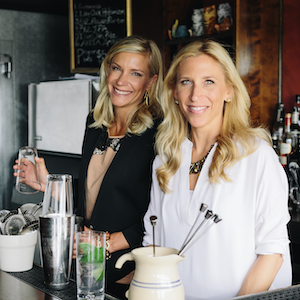
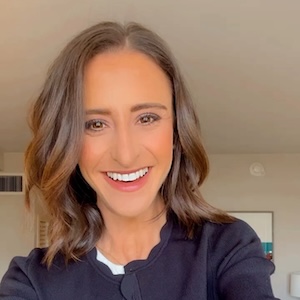
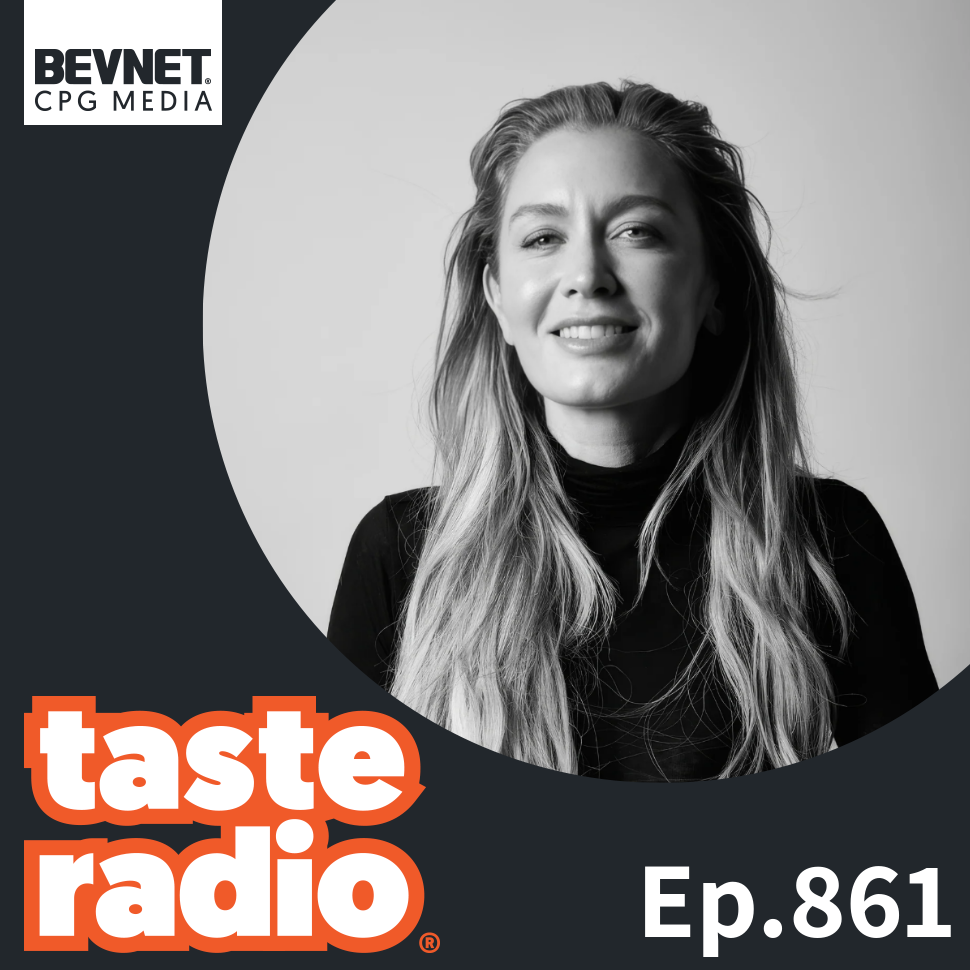
[00:00:10] Ray Latif: Hello friends, I'm Ray Latif and you're listening to the number one podcast for anyone building a business in food or beverage, Taste Radio. This episode features an interview with Taylor Foxman, the founder and CEO of beverage advisory firm, The Industry Collective. Straight talk can be hard to come by. Speak with Taylor Foxman, however, and the veteran beverage executive and industry advisor will give you the unvarnished truth. Or, in the case of this episode, declare something an outright falsehood. Taylor has over a decade of experience in beverage alcohol and beyond, having worked with globally recognized wine, beer, and spirit companies, including Pernod Ricard and Gruppo Campari. She's the founder and CEO of The Industry Collective, a leading beverage and cannabis advisory firm, and is also a partner with Alethia Ventures and an associate partner at MacArthur Capital. I recently sat down with Taylor Foxman a conversation framed as a series of true or false questions, including those about the value of great taste, the impact of bad PR, the sober curious movement, the future of cannabis beverages, and Gen Z consumers' relationship with alcoholic drinks. Hey folks, it's Ray with Taste Radio. Right now, I'm honored to be sitting down with Taylor Foxman, the founder and CEO of The Industry Collective. Taylor, great to see you.
[00:01:39] Taylor Foxman: Thank you, Ray, for having me on. This has been on my bucket list for, can't even tell you how long. So anyway, I'm very excited. I even put my hair down. I'm on video. This is like hell freezes over for me, but for Ray and for WebNet, I'm excited. So thank you for the opportunity to answer. I really appreciate it.
[00:01:56] Ray Latif: Well, an interview with you has been on our bucket list as well. So I'm really happy that we made this happen. You're based in New York in a bright room. It looks like an office, but is this, is this your house doubled as an office?
[00:02:08] Taylor Foxman: house stretch. But yes, this is my apartment. I'm in my mid 30s. And New York living is this which is I still am in an apartment with no doors, minus a closet and a bathroom. So my husband configured my office space and it's a loft. like space. And so he's configured it in a way where I do sit by the window. So I feel like I have some, some outdoor, you know, some sense of what's happening outside. But in reality, I've been working from home since the business was launched, so almost five years. But I have my dog, Miss Linda, who's sitting behind me. And that's, that's, uh, she's employee number one.
[00:02:46] Ray Latif: Impressive. I mean, it is true. COVID era or otherwise, you can build a pretty significantly sized business from your home and you have done just that, a very well-respected business at that. You and I have known each other for some time, beginning with my work at BevNET and then continuing on through Taste Radio. I've worked with a number of your clients, interviewed a number of your clients for the show. I'm sure that listeners know who Taylor Foxman is, but for the two that don't, tell us a bit about yourself.
[00:03:18] Taylor Foxman: Sure. You know, my background is all things beverage. I've been in the space since I was 19. I jokingly say that I was paid in vodka bottles, but I was. I started working for Svedka as an intern when I was in college, postponed a master's at USC in California, and started working on the agency side for Pernod Ricard when I was 21. I've been in New York for 15 years, albeit I still don't see myself as a New York. All of the collective members are like, you're definitely a New York. You've been here for that long. And I was like, I still feel like an outsider. Been in New York for 15 years and spent the crux of my career working for Mostly the C-suite of a lot of the largest global alcohol companies in the world, including Gruppo Campari, Stoli Group, Pernod Ricard on and off for almost 10 years, Boston Beer, Patron, Mass Jägermeister. I kind of just raised my hand. I started actually in public relations and communications, which is when I met you, right? And then just wanted to learn more. And so I got into sales strategy and engagement, corporate social responsibility, venture capital. And then about five years ago, through the executive team at Patron, I got pulled into cannabis and I was part of kind of this first ever like corporate cannabis holding company, as to which it was me, a lot of the executive team behind Patron, Bo Wrigley Wrigley Gum, and a few people from Walgreens at a C-suite level, and got pulled into a huge SPAC M&A deal when I was 28 or 29 in cannabis. and the collective started right around then. So I had two full-time jobs for many years where originally I just got connected to founders of originally early stage beverage companies here in the U.S. through my network. So through big banks and VCs and family offices and talent agencies and they all just said Taylor Foxman help. So I took it on. I formed an LLC almost five years ago, which is now an S Corp. And I started advising companies like Beatbox Beverage and Speakeasy Co. and brands that I'm still with almost five years later, you know, in and around, I think even pre-COVID, which is crazy. And back ended a very big business for myself. So had a lot of jobs, had two jobs, as I said, for over two years, almost three, I believe. And in the last two years alone, through referral, so no decks, no business card, very outdated website. I'm sorry for anyone who has ever looked at my website. My banking husband did it a long time ago. All through referral in the last two years alone, the business has gone from me advising five early stage beverage companies here in the United States to now 80 CEOs all over the world.
[00:06:07] Ray Latif: You seem to touch every aspect of the beverage industry and beyond, from finance, to marketing, to PR, to advisement. I assume you even mess around with formulation from time to time, and you're also known as a Pitchflam judge, that of the cocktail showdown, BevNET'Dio Cocktails showdown, where you joined us as a judge last year during BevNET Live Winter 2023.
[00:06:34] Taylor Foxman: Thank you for that opportunity. That was very fun. Very, very fun.
[00:06:38] Ray Latif: It was very fun. Yeah. The winner of that competition, Ponyboy Slings, pretty amazing brand and just excited to have you as a part of that. So thank you again.
[00:06:47] Taylor Foxman: It was a really great opportunity. It was so cool to see kind of that wave of emerging brands and just, you know, see the innovation that's out there and the excitement around the category. And, you know, you bring those people together. So thank you for the opportunity. I really appreciated it.
[00:07:01] Ray Latif: I appreciate you saying that and hope to have you back if we can get you back. Fantastic. So, you know, I mentioned before we hopped in the mics that I wanted to frame this conversation a little different than what I normally do. Do kind of a true or false with Taylor Foxman segment here on Taste Radio. Again, you know, you have such a broad experience in The Industry and you've touched so many aspects of how great brands are built. And so I think this is not necessarily a hard and fast true or false, but an opinion-based one. And I think someone with the experience that you have, I think is probably closer to a hard and fast truth than an opinion-based one. But let's start. Okay. I'm ready. Easy one. Easy one to me, I think. I think. Having a great tasting product is the most important factor for success in the beverage industry, true or false?
[00:08:00] Taylor Foxman: False. I do not think actually taste matters as much as people think. In my apartment, we have a swap-in, swap-out rule, so I can only bring things in. If I get something out the door, I still live in New York City, so I have a hard time bringing in a lot of product at this point into the apartment. I even have a storage locker downstairs that my husband made for me. I think there are so many factors that go into what makes a brand grow and successful. Taste is important. Look, if you have a product that has crappy taste, no offense, I don't know how to say this in a better way, at the end of the day, it's a non-starter for anyone, right? Distributors aren't going to take you on if you have a product that doesn't taste good. Investors won't give you money if you have a product that won't taste good. So in the context, It matters. Is it kind of the leading non-starter? In my opinion, not necessarily at all. I think there has to be something, maybe it's like, you know, something proprietary, whether it's an IP, whether it's the target demographic that you've just nailed. It has to be something else. And I think taste factors into it, but it's not priority number one, I think for most of the stakeholders that matter to these people at this point.
[00:09:11] Ray Latif: Bad PR is better than no PR, true or false?
[00:09:16] Taylor Foxman: It's hard to get yourself out of bad PR. I did crisis communication for too many years that I'd like to admit. I do think putting yourself into the equation of polarizing topics is worthwhile. For example, when I was involved with Jim Cook for Boston Beer, I helped Jim with an op-ed for the New York Times. And he wanted to do a story about, you know, the state of the craft The Industry. And he said to me, Tal, I have a lot of thoughts. They're fairly polarizing, but I think we should do it. And it was right before Donald Trump became president. And I was like, there's no way in heck that we're getting an op-ed in the New York Times right now. Like, are you kidding me? About kind of like an evergreen, I mean, there were things swirling in the craft The Industry, but it was not, you know, mission critical topic number one in the United States. And we reached out to Clay Risen, who's an op-ed editor for the Times, and we got approved. And we actually had the story written in the Times right before Trump became president, and it was on the state of the craft The Industry. And virtually, Jim's take and our take was, when you're grabbing craft beer from a shelf, just understand that you may think it's craft. It's not. It's probably one of the larger five conglomerates. That was risky doing. We went into it understanding that we would get harsh feedback and criticism just given people's thoughts and stance on Boston Beer at that point in time. But we did it because we thought that there would be positive outcomes regardless. Right. So we would kind of take the good and the bad. I think it's very hard to backpedal from bad press, especially if you know in advance it's coming. I would do everything I can to try to mitigate it in advance, to see a story, if you can, prior to it being written, to have it, you know, if possible, do some form of recording or written transcribed Q&A, just ways to, again, mitigate the chances that something comes out that you had no idea. It's very hard to go back from that.
[00:11:16] Ray Latif: Oh, you would know. As you mentioned, you've been doing this for a long time.
[00:11:20] Taylor Foxman: I would know, yeah.
[00:11:21] Ray Latif: Yeah. Let's get to another truth or false here. I was about to say truth or dare. We're past those days, aren't we?
[00:11:29] Taylor Foxman: It's too early in the day to start drinking and then get into truth. Maybe next time when you're in New York City, we'll do a truth or dare.
[00:11:36] Ray Latif: I'm going to hold you to that, Taylor. All right, true or false, you would invest in a brand that you don't use in your own personal life or have a personal connection to, true or false?
[00:11:47] Taylor Foxman: Oh, I love this one. Yeah, 100%. There are a lot of brands that I work with that if you even go back to like the taste, right? So when I get approached, all the business has been 90% of the business actually been referral, which is really cool. And I'm super grateful for that saved me a lot of money on marketing. Every time that I get it inbound, from a partner, I always have to find that unique value proposition, right? We talked a little bit earlier, like what is unique about this company? I cannot take something on if I don't feel there's something uniquely, substantially different. However, in terms of taste of a product, I don't always have to like the product, but I have to believe that there's an audience that does. And if I can't, I can't move forward with it. So even on the investment side, I work closely with, I don't know how many venture capital firms at this point. I believe that it is important that you believe that there is someone who can drink the product. I have seen, and I am part of groups where they may not necessarily agree that they like the liquid, but we have to believe that there is an audience for it.
[00:12:57] The Industry: Vibrant Ingredients is the natural ingredient partner powering food and beverage innovation, delivering flavor, function, and protection through a science-backed portfolio. Vibrant delivers purpose-driven solutions that help brands create extraordinary experiences. Discover what's possible with Vibrant today. Visit vibrantingredients.com.
[00:13:24] Ray Latif: Curveball coming, maybe not. True or false, Below Deck Mediterranean is your favorite reality TV show.
[00:13:31] Taylor Foxman: It was. I mean, I still watch it every week. I think that the guests, the quality of the guests have gone down so considerably. It used to be you would watch it and they would walk down that little deck and you just know chaos is going to ensue. You know, whether they have like these big hats or they're like influencers or they're fitness instructors. So I was always like, all right, what drama is gonna happen on this boat. And my dad, for context, by day my dad is a surgeon, and by night he's a sailor. So I've grown up on various types of Melgises and J105s and catamarans and boats all across the world. So I like him because of that and because of the drama. I think, I don't know if you watch it, I still enjoy the show, but I think the drama has gone down. Notably, because I think the guests are just calmer. Maybe they don't drink as much. I don't know. But I'm not as entertained as I used to be, unfortunately.
[00:14:25] Ray Latif: OK, so it's a false for you.
[00:14:27] Taylor Foxman: It's a false. It's a false.
[00:14:29] Ray Latif: I would have thought that you would have had some sort of contact with one of the characters on the show, I call it characters, one of the people on the show.
[00:14:37] Taylor Foxman: I may. I may have something to do with one of them, perhaps.
[00:14:40] Ray Latif: Okay. Well, there was a, there was an alcoholic coconut water brand that one of the actors on the show, I don't know what to call them, the people on the show. I said character, I said actor. Yes. Her name is Aisha Scott.
[00:14:50] Taylor Foxman: It's a mix. It's a mix, right? Yeah.
[00:14:53] Ray Latif: Yeah. Okay. So you may be advising a member on the show is what you're saying.
[00:14:58] Taylor Foxman: I may be in some discussions with someone on the shows looking for some, you know, brands that they could align with strategically. Okay.
[00:15:07] Ray Latif: Okay. All right. All right. Mysterious, but, but very interesting.
[00:15:11] Taylor Foxman: Yeah.
[00:15:12] Ray Latif: Okay. The next three truths or falses are related. Okay. First one is moderation is the new sober curious. True or false?
[00:15:24] Taylor Foxman: True. I think that's the direction that we're going. I think it's, look, I could go on about this for a very long time. I did a story in Rolling Stone kind of around this topic, like headwinds for the spirits industry and how it kind of speaks to the larger moment in time that we're in, which is, I feel like we're at a notable inflection point. I don't think this is all or nothing game. I think there are so many articles that are out there right now talking about, are we going into prohibition era, blah, blah, blah. I don't see that happening. What I do believe is that people are and I'm curious your thoughts, Ray, but I think people are getting smarter. I think there is more competition and I think there's less money to be spent on X products. Right. So I think it's part of that. Yes, I think moderation plays a notable role. I think people are just more mindful. I think they still, for the most part, want to enjoy. And again, some people don't want to drink at all, and that's totally fine. And that is a huge part of the consumer base at this point. I don't know exactly the percentage who don't drink at all, but I do know that people are incorporating traditional beverages, non-alcoholic beverages, functional beverages across the board because they want to incorporate I guess more mindful drinking patterns and consumption happens wherever they want to incorporate more mindful drinking behaviors. So I think moderation is here to stay. I don't see us getting into the kind of overconsumption mode that we were in, I think, like at the height of COVID. I think people are, you know, they want to drink, they just want to drink better and maybe drink a little bit less and have other options. I don't know what you think, but that's kind of my stance on it.
[00:16:58] Ray Latif: Yeah, I've definitely seen that. I think people in my age group, I see having a beer and then two seltzer waters or two glasses of wine and a seltzer water. And it's not three alcoholic beverages as their drinks of the night. I mean, it's happening less and less and less. And a lot of people are saying the same things.
[00:17:18] Taylor Foxman: Right.
[00:17:19] Ray Latif: I have other responsibilities. I don't want to wake up tired. I certainly don't want to wake up with a hangover. And so, you know, instead of having no drinks, they may have one or two, but then supplement it with water or some sort of other beverage in the meantime. The thing I don't see changing as much, and this is the next true or false, Is Gen Z consumers consuming more alcohol? But, true or false, Gen Z consumers will consume more alcohol as they get older.
[00:17:50] Taylor Foxman: I don't think so. False.
[00:17:52] Ray Latif: False. Okay.
[00:17:53] Taylor Foxman: No.
[00:17:54] Ray Latif: Why is that?
[00:17:55] Taylor Foxman: Well, you know, I've been reading a lot of research. I talked to a lot of people that are much more on the data side of things. I'm not. It's just, you know, everything I say is just based on what I hear and what I see through my network and my collective. One interesting fact was around, you know, when they queried that demo, they said, well, you know, during COVID, I didn't have the opportunity to go out and drink with my friends. So even just like kind of the situation as to which a lot of these people were in, like kind of, I don't know, they just didn't have maybe the same environment that we grew up in, which is, oh, we can go sneak out, see our friends, have drinks, grab something from the cabinet. I don't know, like, I think COVID played a large factor into it. Another thing that I thought was a really interesting insight as to why they're not drinking as much is they saw their parents overconsume. and they don't want to be in that position. So I thought that was a really interesting insight. And then also just like I grew up in a generation of people where everyone was drinking, you know, maybe some earlier than, you know, legal age to drink. However, that was just part of the culture of when I was growing up, like that was part of what you did when you went out, right? Once you were of legal drinking age. But if you grow up in an era where you're out with friends, and whether it's at a party, at a sporting event, at a dinner, and that's not the norm, I just don't know if there's enough from like a marketing engine perspective to all of a sudden just like, change the dynamic and make it this something that that generation will be like well you know now I see that everything I mean celebrities have been associated with alcohol now for many many years right so it's not like all of a sudden there's going to be some celebrity that's going to come out that's going to change their mind or some research that all of a sudden alcohol is in fact great for you. So I don't know, I don't know what it would take. Do you know what I mean? To make that happen when I think this generation is just seeing it from a different lens. They didn't have the same opportunity to necessarily like explore with alcohol the way that I felt like I did when I was growing up. And I don't think they're going to have the same societal pressure. So I'm not sure how that would happen. If I can be honest.
[00:20:02] Ray Latif: Yeah. Well, two followups on that one. You know, you and I both went to BU and I think during our respective times at the university, I don't think I knew, I can say this for myself, I don't think I knew anyone who didn't drink unless they didn't drink for religious reasons. Everyone else I knew drank, drank alcohol.
[00:20:25] Taylor Foxman: I didn't either. Same.
[00:20:27] Ray Latif: I think there's a humongous shift change that we've seen. I know plenty of people who are just out of college. I don't know almost anybody who's in college, but plenty of people, including those who work at BevNET, who don't drink alcohol and they are 24, 25 years old. So that's been a big change. On the other hand, I remember there was a time when Taylor Swift, earlier into her career, would always talk about how she didn't drink. And then eventually, you know, she started drinking alcohol. Now she's more categorized as a millennial. But yeah, I wonder if people kind of look at that and say, well, I don't have to drink now, but maybe I'll have a glass of wine. Then, you know, as I get older, I can be more responsible about it. But I do think you're right about the fact that some people just don't want to be out of control, don't want to lose their ability to function in a way that they want to function in, you know?
[00:21:14] Taylor Foxman: And I think, too, what I think has been, honestly, the most freeing part, and I'm using the word freeing, part about the last, let's say, like, what, two years, I would say, two or three years, is there is no stigma anymore. Honestly, I don't really care who drinks. I don't care who does drink, who doesn't drink. Everyone can make their own choices about that. What I think has been great is twofold. One is optionality. There are so many brands out there right now, which is why I work from 8 a.m. to 8 p.m. Monday through Friday. I try to take Friday off. That has failed miserably. My therapist will not be happy with me. But the point is, first, optionality. I think it's so great that there is so many options out there. There are bigger brands like an athletic that now you if you want to go and liars, if you want to go to any type of venue, sporting arena, concert, you want to go to a movie theater, whatever, you can find an option, whether it's water, it's a poppy, it doesn't matter. So that part of the optionality, I think is so exciting, because, you know, it's one thing to say, okay, now the stigma is away, you know, you can have what you want. but there are no options right? So the fact that there are now options and there is no stigma around anymore. I think it's just very freeing for people, meaning that you could do whatever the heck you want. And I would say, you know, I've cut all dinner meetings because I'm not really drinking as much anymore. I don't drink during the week. I haven't in years. And on the weekends, I, you know, if I want to have a glass of wine or, you know, one drink, but that's really it. But I just like being able to have options and I like not having to explain myself to your point. And so I think that goes back to the moderation. I think it's just like the last story I did for Rolling Stone was like, choose your own adventure was the title. And I, I think that is the future. Choose your own adventure with alcohol and be, yeah, I think moderation is going to play a huge factor in that as well. You're right.
[00:23:12] Ray Latif: Part of that new optionality includes cannabis beverages. Now, cannabis beverages aren't necessarily a replacement for a non-alcoholic beverage, but they're a replacement for alcoholic beverages and they have become that. So true or false, beverages will eventually become the most consumed form of cannabis.
[00:23:37] Taylor Foxman: Oh, yes. I also can go on about this for a very long time. We're not going to do a tour of my fridge, but the entire top shelf is all cannabis beverages.
[00:23:47] Ray Latif: We should do a follow up. We should do something that teases this episode where we do go through your fridge. We'll do that on TikTok or Instagram or something.
[00:23:54] Taylor Foxman: I would love to do that. And you could do my bar cart, which is extended halfway into my living room in this one room that has no doors. Again, only point of contention with my husband, knock on wood. I sat down with one of the largest, so I work as a partner of record for all the global corporate strategics, right? Ray, that's where I came from. So I work with all the big corporate M&A groups in-house. What are you seeing? Who should we invest in? Who should we partner with, right? And I was sitting down with one of the largest top three global wine spirit companies in the world a few months ago at their offices. And they said, oh, we think our headwinds are this, this, this, this, this. I said, I pulled out pixelated cannabis and a cannabis beverage. And I said, no, your biggest headwind will be, in my opinion, cannabis beverages. I think that subcategory within cannabis has evolved so quickly. I am just wildly impressed with what they've been able to do. Some of these brands, when you think about it, you now have, and I don't need to go into names of brands per se, but forget about the brand names. You have companies that are creating bottles that look like Patron bottles, frosted bottles, that are directly shipped to your door, okay? No ID needed, direct to consumer, that are flavorless, calorie-less, and you have two milligrams, five milligrams of THC per serving. I'm just using this as an example. That you can make a cannabis lemonade or whatever you want, whatever drink you want. You have it, same similar effect of like, you know, you feel good, you feel giddy, you feel happy. Not everyone has the same, you know, response to cannabis. I'm not making that claim, but a lot of people do have a nice kind of relaxed high from it. And then you wake up the next day, calorie-less, flavorless, no hangover, direct to consumer. I think that when the cannabis beverage thing started, there was a lot of regulatory hurdles and there still are, right? On the regulatory side of cannabis, it is still the wild, wild west. Don't get me wrong. But I think in the last year or two alone, the innovation that they've been able to do in the category with being able to ship to consumers, make things that are flavorless, calorie-less, flavorful, in formats like an RTD or an RTS format, I'm just so bullish on this. I'm a consumer of the category. I think it's great. I don't see this like being the only headwind that a spirits company has right now. But if I were a spirits company, I would be closely watching the category because they're also making it into retail as well as we speak.
[00:26:34] Ray Latif: All right. A big truth. A big true from Taylor about cannabis beverages. A big true.
[00:26:39] Taylor Foxman: Big true. Big true.
[00:26:42] Ray Latif: Switching gears to investment, entrepreneurs need to be able to present well and speak articulately to raise money. True or false?
[00:26:53] Taylor Foxman: True, with a little bit more added to that. I think fundraising is a full-time job. There was someone that said to me that there should be someone who's like a CEO of the business and then like, you know, president of fundraising or something. I help out of the 80 brands that work for probably 60. I'm not kidding. seed to late stage with fundraising all the time. The minute you're done fundraising, you need to think of the next round and the next, especially if you have to keep raising for your business. And people know the businesses that need to continue to inject capital, right? Like there are businesses that just will continually need money. I think, yes, being well-spoken is important, but I think it's way more than that, if I can be honest. I think it's the way I've built my whole career. I've never applied for a job. I'm 36. I've just built a global network of people in my ecosystem where I have no MO. And I think what's more important than speaking well and articulately speaking with conviction and having a great deck and all that stuff is actually building relationships with these investors and identifying whatever growth phase you're at. Who makes sense for your business? Whether it's an angel investor, whether it's a bigger corporate M&A, I'm not saying that they're going to put money in right away, but go in with an open mind, like literally stop thinking about things while they're talking to you and just understand what these people want and like digest what they're looking for. And if they say check back, check back. If they say you're not the right fit, move on. If they say they need more information, follow up. So I think what's more important in my mind right is like less about how they present and more about how they how they absorb what they're being told how they follow up how they genuinely like engage with these people and keep these investors apprised. Most of the time they're not going to get investment for the first probably two times they reach out to these people, right? But it's the third time or the third email or the fourth call where something sticks. So I think it's more about persistence, it's engagement, it's relationship strategy. But I think being well spoken also plays a factor as well.
[00:28:59] Ray Latif: Yeah. Also being memorable. This is something I always tell people who present in our Pitch Slam competitions is, you know, you're up against anywhere between five to 11 other people who are vying for that crown. And inevitably judges forget some of those presenters. It just happens. There's just a lot of people up there.
[00:29:23] Taylor Foxman: Yeah.
[00:29:24] Ray Latif: And if you're not memorable for one reason or another, you're going to get forgotten. It's not a good thing.
[00:29:30] Taylor Foxman: Oh, that's a great example. So when we were doing the competition, RTD competition, there was a fellow who I can say, so his name is Nicholas Bradley, who wore gold pants. I don't know if you remember this, but he had gold pants on. And this is about, great segue, and he has a company called Dio Cocktails. also part of the collective and so we met through that thank you again Ray and team and so he gets on the stage and I just I don't know Ray Latif you remember but like I couldn't think about anything other than his pants and he's like oh the liquid's so great blah blah blah blah blah and I love it And I just like stopped him. I'm like, I am so sorry. All I can think about are your pants. And my husband still today is like, are you still working with the pant guy? I'm like, well, he's not a pant guy. He owns a big company, whatever. But he wanted to present himself in a way that spoke to who he was. And I found out through that competition and later having subsequently started to work with him, his background was in fashion, right? And so he owned a swimwear line. I think it could be whatever he wanted to be, but it has, you're right, like going back to maybe I don't feel comfortable wearing gold pants, but maybe something, you just have to find your, what I always call it, I've told you this before, like what's your so what? And I think, you know, even something along the lines of just what you're wearing, you know, if it's something that's just like speaks to you and who you are, like that in of itself can be memorable. It doesn't have to be anything more than that.
[00:30:55] Ray Latif: Totally. And you know what? I'm so happy you mentioned that because I was trying to get that out of you and it was exactly what I expected. So thank you for that. Last one, true or false. And this is very related to the last one. Great brands always have a great founder story.
[00:31:14] Taylor Foxman: No, false.
[00:31:15] Ray Latif: Okay.
[00:31:17] Taylor Foxman: Sometimes I think it's important. I'm going to write a story about it soon around for people that are fundraising. Founders are really sleeping on thought leadership, in my opinion, other than the ones that I work with. I think it's really important for founders if it's still founder led. to get out there and share their story on LinkedIn, you know, sign up for councils where you can write for magazines, like just do stuff to like get out there and share your story. However, I do get brought into brands where, you know, maybe it's a change of ownership, or maybe they don't have a really cool, interesting backstory, but they have a really cool product or something really proprietary. I do think in a market like we're in, given how competitive it is, I think that they should share their story. But I don't think it's a non-starter, if there isn't that really strong founder story, if there's something else that sticks out that's like uniquely distinct about the business.
[00:32:11] Ray Latif: Well, if I were to be asked, true or false about this interview and whether or not I enjoyed it, I would say 1000% true. This has been fantastic, Taylor. Thank you so, so much. I really enjoyed this.
[00:32:25] Taylor Foxman: Thank you for having me on. Oh, this is so nice. Thank you. We'll do the Instagram. We'll do the what's in my fridge. I think I did that during COVID. We'll do the bar cart, i.e. my living room, which is the bar cart whenever you want.
[00:32:36] Ray Latif: Fantastic. Thank you so much. I know how busy you are, so I really appreciate the time. And I know our audience is going to love this conversation. Thank you again.
[00:32:43] Taylor Foxman: Thank you guys so much. I really appreciate it.
[00:32:48] Ray Latif: That brings us to the end of this episode of Taste Radio. Thank you so much for listening. Taste Radio is a production of BevNET.com, Incorporated. Our audio engineer for Taste Radio is Joe Cracci. Our technical director is Joshua Pratt, and our video editor is Ryan Galang. Our social marketing manager is Amanda Smerlinski, and our designer is Amanda Huang. Just a reminder, if you like what you hear on Taste Radio, please share the podcast with friends and colleagues. And of course, we would love it if you could review us on the Apple Podcasts app or your listening platform of choice. Check us out on Instagram. Our handle is bevnettasteradio. As always, for questions, comments, ideas for future podcasts, please send us an email to ask at Taste Radio. On behalf of the entire Taste Radio team, thank you for listening, and we'll talk to you next time. you