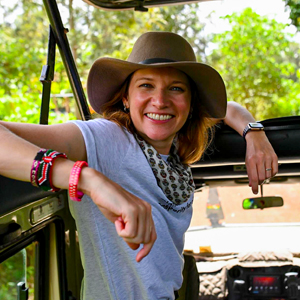
[00:00:10] Ray Latif: Hello friends, I'm Ray Latif and you're listening to the number one podcast for the food and beverage industry, Taste Radio. This episode features an interview with Heather Terry, the founder and CEO of ambitious platform brand Good Sam Foods, and the co-founder of trailblazing chocolate company, Nibmor. Just a reminder to our listeners, if you like what you hear on Taste Radio, please share the podcast with friends and colleagues. And of course, we would love it if you could review us on the Apple Podcasts app or your listening platform of choice. The Revolution may not be televised, but if it's up to Heather Terry, it will be farmed. A veteran packaged food entrepreneur and advisor, Heather is the founder of Good Sam Foods, a startup focused on combating climate change through regenerative agriculture. Launched in 2020, Good Sam's central thesis is that by empowering small farmers to adopt systems that will improve soil health, increase biodiversity, and sequester carbon, people and the planet will benefit for generations to come. Good Sam markets several product lines, including chocolate bars, candy-coated nuts, and baking mixes, all of which incorporate ingredients sourced from small farms that utilize regenerative growing methods. Good Sam products are currently available on Thrive Market, Amazon, and the brand's website, and the company is planning for brick-and-mortar distribution in the fall of 2022. While Good Sam isn't Heather's first startup, she's also the co-founder of organic chocolate bread Knibmore, she'll say it's the one she always wanted to build. This time around, she's tapping into the experience and lessons learned from over a decade in the food industry to accelerate growth while minimizing the mistakes that entrepreneurs are often prone to making. In the following interview, I spoke with Heather about her foray into entrepreneurship following an acting career in film and television, why acknowledging a lack of business acumen was important in Nibor's early years, why adhering to brand mission is paramount to Good Sam's operational strategy, and how the company is attempting to identify and educate consumers that will embrace its vision. Hey folks, it's Ray with Taste Radio. Right now, I am honored to be speaking with Heather Terry, who is the founder and CEO of GoodSam. Heather, so great to see you again.
[00:02:39] Heather Terry: It's so great to see you too, Ray. Thanks for having me again.
[00:02:42] Ray Latif: Yeah, we say again, because the last time I saw you was at Nosh Live Summer 2022 in New York City. We sat down for a 10 minute interview as part of our Taste Radio Studio in which we chatted with attendees of the event. We had a great conversation. I really enjoyed every minute of it. And I'm looking forward to this one as well. I know you're quite familiar with New York City having lived there for so long. Did you get to take in a show while you were in town?
[00:03:11] Heather Terry: No, I didn't. These days, I feel like I kind of zip in and out of New York City a little bit more. I don't know if it's just like a post-pandemic thing, Ray, or what, but going to New York City these days, because I live in the suburbs now, it's like a thing. You've got to plan for it. It's not as off the cuff as it used to be, is my point.
[00:03:33] Ray Latif: Yeah.
[00:03:33] Heather Terry: So no, I didn't do anything. I had some good food and I left.
[00:03:37] Ray Latif: Well, I asked it and maybe your audience doesn't know this, but you spent some time on Broadway. I did. As an actor. So I assume that every time that you want to go into town, that you want to get a finger on the pulse of the theater scene out there.
[00:03:55] Heather Terry: Yeah, no, I mean, of course I missed the theater. It was really the way I started my adult life was in the theater, and I started my first food company out of the Walter Kerr Theater on 48th and Broadway. I was doing a show called Arena's Vow, and it was my first chocolate company, my first business at all outside of being an actor. And it worked, and that's how I ended up starting Nibmore, because there was not a lot of work in 2008-2009 when the housing crisis happened. And I thought, well, I'll just go Taza Chocolate. That sounds totally logical, right? That sounds like the thing somebody would say to themselves at that moment in time. you know it's a weird story and I think at that point in time you know I didn't know what I didn't know and I think when you there is sort of some truth to ignorance is bliss in a lot of ways and certainly at the beginning of my entrepreneurial journey I think ignorance is bliss sort of got me through those first couple of years because I didn't really know what I was doing or where I was going. I was lucky enough to have a business partner who knew a lot more than me and who could help us navigate so we could survive. And I think I was lucky that way. I know a lot of times people chalk things up to luck, but I was lucky in that she had a better sense of where to go than I did and we survived as a result. I think we were innovative at that time and I think we had a good product. And I think when you have a good product and you're being innovative and you can, you know, my acting career served me obviously, right? I mean, I was able to kind of get in front of a camera, get into an interview, talk about the product line. And I think those things served us really, really well back then. And I think the landscape was a lot different back then too.
[00:05:38] Ray Latif: Certainly a really important aspect in terms of how Dimor got off the ground and developed. Also something that really important as we discussed the last time we spoke was about how frugal you guys were. And I wonder, you know, given that you were sourcing premium, high quality, non-GMO ingredients, how you were able to control costs and expenses and negotiate with manufacturers such that you could, you know, get your cogs under control and get to a price point that was reasonable for consumers.
[00:06:09] Heather Terry: Yeah, I mean, if anyone out there thinks organic is expensive today, imagine, you know, 10, 12, 13, 14 years ago, it was really expensive. And I think we did a lot of funny things that we look back on now and we just laugh. you have to think outside of the box sometimes. And I think also the thing that was a little bit lost on us, and maybe that I want to say here now, because it was sort of a landmine that we stepped on, was that we said yes to a lot of people. We said yes to a lot of things and stores that we weren't necessarily ready for at that time. And I think being a lot older and wiser than I was back then, I would say to an entrepreneur now, it's okay to say no. And it's okay to say, we're not ready for this. And it's okay to say, I'm going to chip away at a smaller chunk of Thrive Market because that's what I can afford right now. There's no shame in that. And sometimes it's a little bit slower, but maybe makes it so that you don't implode your business or don't destroy it or don't go out of business. And I think You know, because we do, we think of, you know, big accounts like Whole Foods and Target, and we think of them as in a very sexy kind of light. But when we look at the financials of that, it's not viable for every business at the point that maybe those accounts approach you. So I would say, you know, go back to your, the financial side of things and say to yourself, can we really do this? Can we really meet the demand and the expectation that's being set out here? Because the answer might be no.
[00:07:46] Ray Latif: That's a really good point. And I think you also have to decide what kind of business you want to be. You know, do you want to be a big business or do you want to be a small business? And I think there's no harm in being a small business. Small businesses do quite well in some cases. But in our industry, I think the expectation is always that you want to be You know, this big, huge brand that's sold everywhere, but you have to make that decision. I think this is something that you articulated in a Forbes article that I read about you, which is, you know, choose what you want to be. And you'd said, you know, if you live in the gray area, you will spend either too little or too much time getting to your goal. Can you expound on that?
[00:08:23] Heather Terry: Yeah, so I think oftentimes we go into business thinking one thing and we have, our gut tells us what we want. You know what you want. Everybody knows what they want when they go in. And I think oftentimes outside influences bring in a lot of voices and they are tempting you to a different side. And it's not to say that you can't change the way you feel about it, but I often see a lot, and of course I've been in this industry for a long time, I've seen founders who were perfectly well-intentioned, doing really, really great, listen to some of those outside voices to move faster, get bigger. I've seen people lose their entire company because of it. So you've got to know where you want to go and you've got to know what you want for yourself, your company, your employees. And when those outside voices come to you and say, but you must be doing this, I think you kind of have to go back to, what I call your North Star, and actually the North Star was something that one of the, I hired a CEO at Nipmore before I left, and he always came back to this idea of North Star, the ethos of the company, what the company is trying to accomplish. If we're making a decision, does it jive with this North Star? Is it in alignment with what our greater goal is as a business? And if you can look at it from that angle, if you say to yourself, okay, I want to be, let's say your goal is, okay, we're going to be a $50 million company. We're going to have 100 employees. We're going to take 10 years to get there. We're going to not waver on this certification and this certification and this certification. We're going to treat people fairly. We're going to make sure our US employees have parental healthcare, blah, blah. You set up a standard for yourself. When those external voices come in, Heather Terry be a buyer, an investor, a close friend, your mom, your grandma who wonders why you're not a millionaire already, you go back to the North Star if you're thinking about truly pivoting and saying to yourself, is that in alignment with what my greater vision is or has my greater vision changed? If you operate from that place and you don't just make these snap decisions, That will help you not step on that landmine, not make that huge mistake, not waste that massive amount of money, right? Because those are the things that are really damaging in a business. And oftentimes, just from experience, Ray, it's usually not good. coming from the founder, it's usually coming from these external voices. And so what I'm asking everybody out there to do, and the way that I was framing at the time was in this gray area, but you know what you want, go back to your North Star. If that has changed fundamentally, then you have to change that piece of it, but then you know where you're going again. It's just about staying true to yourself. And again, I have the luxury of age and a little bit more wisdom, but being really true to yourself, true to your board, if you have one, true to the people who invested in you. There's nothing worse than a founder that's just all over the place. It's just like, today we're doing this, tomorrow we're going over there. It's so unfocused, it doesn't inspire confidence, and it doesn't create a sound business in any way, shape, or form.
[00:11:49] Ray Latif: I'm sure you saw a lot of that after you left Nibmor in 2015. You became a mentor and advisor to a lot of companies. But by the way, why did you leave Nibmor in 2015?
[00:11:58] Heather Terry: I think my investors and I just had a fundamental difference of opinion in the direction of the company. I had always wanted Nibmor to be a food company. I didn't want it to just be Taza Chocolate company. And it became just Taza Chocolate company. And so my greater goals were really around food in general, which of course set me up perfectly to eventually do Good Sam. I just needed a few years to figure out how I would bring that greater vision, you know, the one really that Jennifer and I started in 2008, 2009. And it's so funny, you know, Jennifer and I talk about this every once in a while. And when I started Good Sam, she said to me, when she saw what it was, she said, this is exactly what we set out to do. I can't believe you're really doing it." And she was so excited by that because, you know, we got kind of trapped into one category at Nibmor, and it was never our intention. And actually, if you see my notebooks from that time and you see some of her and my larger strategic plans, you can see we were planning on getting into all these snack categories, food categories. It's so funny to go back and look at some of that stuff and then think what I'm doing at Good Sam, because it wasn't that I opened up that playbook. It's been in my mind for so long that then as this opportunity came to the forefront, it took on that life of something that I had been incubating for over a decade.
[00:13:21] Ray Latif: I got to, this is, this is one of those questions where I'm like, it's kind of a weird question, but I'll ask it anyway. Why would you get back into the business when you know how difficult it is? And you, you, you know, you already know how crazy and nuts it already is. You already know how difficult the industry is. It's almost like I talk to entrepreneurs and the first thing I want to do when they exit their brand is rest and relax. And I ask, okay, you know, is there any chance you're going to get back to the industry? And they're like, probably not. You know, I think I'm going to use my time as an investor, as an advisor and something you did with Beyond Brands and Beyond SKU and Naturally New York, where again, you did quite a bit of mentorship, but what motivated you to get back into the game, so to speak?
[00:14:05] Heather Terry: You know, it's a funny thing, because I didn't think I was going to get back in the game, just like you said. I think I was, when I joined the partnership at Beyond Brands, and Eric, Eric Chanel knows this, who's the founder of Beyond Brands, he knows I was pretty resolved to stay out of starting another company. It had been so the school of hard knocks for me for so long. And I felt pretty beaten at that point when I joined the partnership at Beyond Brands. And I was ready to just be involved in fractional way in businesses and say, you know, don't do this. This will cause you a lot of pain. Let me help you not step on that landmine, this one, right? I was, I was pretty resolved on that. And I liked being a consultant. It was, it was nice. It was a little bit of a different lifestyle for me. And it was, it was fulfilling to a certain degree. However, with that said, when I left Nipmore, I jumped right back in and I started consulting right away and then I became a VP of sales at SW Basics and I did, you know, a lot there. I wasn't done yet and my husband knew that too, you know, and I think when I came to him with this crazy idea to go into doing another company, And believe you me when I say my husband's head twisted around five times when I told him I was going to do it in Columbia. He was just, you know, the Columbia part for him was a little bit of a foreign concept, but the me getting back into it and getting back into it from the food angle, holistically in more categories, crossing categories and dedicating it to regenerative ag and dedicating it to farmers. When I explained it to him and I said, I think I want to do this. You know, he's been with me since the beginning of Nibmor and he said to me, yeah, you're not done yet. This is the one. This is what you've been working for for over a decade. This is, everything has led you to this point. so you know I drink a lot of green juice and coffee and I get through the day and you know my team pumps me up and they are you know I've hired intentionally a lot of experienced people and a lot of really young people who are eager to learn because we need that energy in a company like this and so It gnawed at me for a lot of years, right? It really did, that I had unfinished business. I had unfinished work. That Nibmor never, and I love to see that it still exists, and I love seeing it on store shelves, and I love seeing all the people who are involved with it now. There's no greater joy as a founder than to see your company live on. After you leave it, you know and to really have a life of its own that speaks droves to the brand that Jennifer and I Created that it can stand on its own without us But it was with me. It was a very heavy Thing that was with me for a long time And so when this opportunity came across my desk at beyond brands and I was very cautious Let me tell you that I was very very cautious on this one. I was I uncertain. I did a lot of research. I ripped apart the original idea. I killed the original entity that came to Beyond Brands. I redid it. I invested in it. I brought other people that I wanted to have at the table with me, invested in it. I built a team, my dream team. I really did the team at Good Sam. today is the team that I have wanted to create my entire career. And knowing that I could do that here, or believing that I could do that here was what got me back in. And that's why I'm doing it. And people do, people think I'm crazy, but I really had unfinished business in the food industry.
[00:17:58] Ray Latif: Well, it certainly sounds like Good Sam's been in development for some time, and it sounds like being buttoned up was as much about having the right team as anything. Attracting people to an upstart company, though, is often challenging. How do you get people to believe in the idea, to believe in the vision, to believe in you?
[00:18:17] Heather Terry: I think, look, I've been around for a while, so that helps a lot. I'm not a 22-year-old founder, so I think, you know, a lot of people who are on the team, like Marsha Bell and Kari Giannaparetti, Marsha, who came to us from Nibmor, who had worked with me at Nibmor in operations, and she has an extensive background in ops. you know, she wanted to work with me outside of Nipmore and she wanted to see that through because her and I had a good working relationship and it was really where she wanted to be. Kari Giannapurati, who was at Taza Chocolate early in her career and then Nutso, I think just having the opportunity to take something again from the ground up, which she really has done in her career, was another great challenge. And of course, Kari and I have known each other. So Alex Whitmore from Taza Chocolate took me on my first trip into the field when I had Nibmore and showed us how to build a direct trade supply chain, which was totally a foreign concept to us, right? And that's how I met Kari, and we've known each other all these years. And so her seeing us take that model of direct trade and put it on steroids, right, is really, really, it was enticing to her. It was, and then throwing the regen ag angle on and crossing categories and really talking about regenerative agriculture in a different light, I think for her as a salesperson, was not only exciting but also extremely challenging. And she's taken this job and I mean, I'm just blown away by her every single day. And then my younger people on the team, and not only do I have younger people, I have a lot of people in foreign countries who work for us as well. But my younger people who are literally willing to do anything for a company that is dedicated to the planet, to people, to equitable behavior. to transparency, right? They're literally willing to take their skill set and hone it and learn and grow. They're the backbone of this company, right? And they're the ones that keep me on my toes. And I think this mix of really, really seasoned people Because our financial team is extremely seasoned and has been around the block. And this younger generation that we've brought in really collaborating together to create something successful and that is meaningful and that's changing some things in the consumer narrative, I think is just really exciting. And that's why we've been able to attract talent at Good Sam.
[00:20:37] Ray Latif: One of the other things that you do that is a little different than other companies, and I think you alluded to this, is you do your utmost, and I'm gonna use your words here, to eliminate the middleman.
[00:20:49] Heather Terry: Every single person who touches something that goes into a good ZAM product, we know them personally. We know them, we meet them, we spend time in the field, we spend time in the factories. We are not just buying from somebody who says, oh yeah, this is this certification, this, this, this, this. It's not lost on me, Ray, that that's a luxury to a certain degree. And certainly our partnership with Thrive Market has helped us facilitate that because Thrive really believed in this vision very, very early on. Nick Green and Jeremiah McElwee really believed in this and believed in what we could do as a small company in order to facilitate those partnerships and relationships. On the ground, what happens in any relationship, and of course, I've been working with Comands my whole career. And commands are maybe a little bit easier because they're more in my world, but when you show up, you continue to be a good partner. You continue to deliver on your word. You are building relationships that transcend that product. And it's the same thing in the field. You know, when you're talking to farmers and you're talking to associations, you're talking to cooperatives. They don't know the first time that you come through if you're going to deliver on your word, if you're going to show up for them, if you're going to actually do what you say you're going to do. One of the cardinal rules at Good Sam is to never promise anything that you cannot keep. It's a terminable offense, right? You could get fired for it here because There are so many promises that have happened in the field for farmers that are never delivered on, that have broken the supply chain, that have broken trust, that have made it far more difficult for companies like us to operate on the ground. So, you know, this is something that we take very, very seriously in every single relationship from the person who plants the seed all the way up through the people who manufacture our packaging, who manufacture our products, up through our customer, right? Very transparent. We don't always get it right. We're not perfect, but we're willing to sit at the table always, forever, 100% to troubleshoot, fix it, make it right. Because that's the ethos of this company. And I would argue it's good business. And we talk about regenerative agriculture, but you can't have regenerative agriculture if you don't cross categories as a company, if you don't involve people and the conversation around equity and people in that conversation, and that's not just equity to the farmer, but that's equity all the way up through your end consumer. So when we're talking about ESG, circular economy, fair trade, direct trade, regenerative agriculture, they don't stand individually on their own.
[00:23:29] Ray Latif: Explaining all of this to me and explaining this to our audience is really compelling. And talking about what you guys are doing and the North Star for Good Sam is really interesting to me. At the end of the day, though, you're selling products. You're selling a brand to consumers. And telling that story succinctly and in a way that is going to motivate someone to become a loyal consumer of the brand sounds like it's gonna be a bit more challenging. On your packaging, the first thing you see in the largest font, and we talked about this at Nosh Live, is be an ally for small farms. Small farms is actually the biggest font. Good, Sam. in terms of the label hierarchy is at the top, but it seems like the reason that someone would buy your product is because they do want to help small farmers. They do want to be a part of that, that support for, you know, regenerative agriculture and I guess changing the way that food is grown. Again, going back to the question of, you know, how do you do that? How do you communicate that to the end consumer sounds tough.
[00:24:38] Heather Terry: My greater vision for the company is for these raving fans to open up their pantry and to just see good Sam, good Sam, good Sam, good Sam. in every vertical, right? That like, I support regenerative agriculture and I support these relationships and these partnerships so ardently. I want to be a steward of the soil. I want to be an ally for marginalized people. I want to enjoy something that's a delicious snack that is high quality that I believe in. That that trickles down to something that seems so benign to us every single day, which is our pantry where we go to grab something out of it. So that's my greater vision. When we think about how we do that, it involves a lot of muscle and a lot of marketing people and, to your point, influencers, all of that. Another tagline that's coming out on some of our packaging is food for the greater good. And the reason we use be an ally for small farms, food for the greater good, planet people, prosperity for all, is that we believe as a company, and I believe as a founder, that fundamentally people want to do the right thing. We all want to do the right thing. We just sometimes don't know how. And it was something I talked about early in the days of Nipmore, or maybe midway through my days at Nipmore, when we rebranded and we put a hand on the package, which has since gone the way of the Dodo, but we put a hand on the package and the hand was picking up a piece of chocolate. People were like, why this hand? What's up with this hand? And I said, well, because when you pick up Taza Chocolate bar or you eat that piece of chocolate, you're sending a message. You're telling the store, the distributor, and ultimately the company that makes it, I accept this. I'm going to eat it. I'm going to give it to my family. I'm going to give it to my friends. I'm going to gift it. Whatever it is that you're going to do with it, but you're telling them, I'm okay with this. We underestimate the power of that. in the grocery store. We underestimate the fact as consumers that every time we click buy now, every time we put something in our shopping cart and we follow through with that purchase, that we are sending a message to many people along the supply chain that this is what we want. If it's not what we want, then we should stop buying those things. And so I'm back here in the same place of if you fundamentally believe in these principles, if you believe in regenerative ag, if you believe in direct trade, if you believe in food equity, if you believe in the connection between people, food, cultures, all of it, then come see what we're doing at Good Sam. come see what we're doing. Just take a glimpse. And if that aligns with you, try one of our products. And if you like that product, try another product and another product and another product, right? Because When you chip away at consumer behavior that way, that's really where change happens. Every person that I can influence to say, when you make that choice at the grocery, like maybe your life is so crazy. Maybe you have five kids and you have a job and you have limited income. You're like, how could I possibly, how could I possibly do something good in the world? Like, I know I'm supposed to, I see all these influencers on Instagram when I'm trolling it at night and I'm exhausted out of my head, you know, but we all have to eat. We all have to eat, and we all make choices every day, every time we go to the grocery store, or again, every time we buy groceries online. We're making choices, and actually those choices have huge, huge impact. So for us as a brand, this is a really important point. No matter what else is going on in your life, no matter what is going on in your life, you have to buy food. And if you believe in these fundamental things, like I said, regenerative ag, direct trade, equity for workers, all of it, then come buy something from Good Sam's. You're doing the right thing. And if you enjoy the product, keep doing the right thing. It's really that easy. You don't have to be an evangelist. You don't have to be an activist. You don't have to get the microphone. You can just buy products that align with your values. It's really that simple.
[00:28:43] Ray Latif: I think most consumers are moving in that direction, but not all of them are there yet. In fact, I think it's probably a small percentage of consumers that are thinking in that way. And those consumers are only buying at certain grocery stores on certain platforms. Thrive is a good example of that. So at this point, as you are moving into brick and mortar, which you told me you are later this year, the retailers that you align with, Those decisions are going to be extremely important because the retailers are going to be advocates for your brand as much as anyone else. So when you're talking to retailers about how best to promote and merchandise Good Sam products, what's that conversation like?
[00:29:23] Heather Terry: Yes, I think you're right, Ray. I think, you know, there's low hanging fruit where you have a consumer who's already a part of this story and who's already looking for brands like Good Sam. And there are some other brands doing some really great work too out there, you know, Quinn Popcorn and, and, you know, there's, there's a lot of great brands that we sit with in this like regenerative category or this more conscious category. I am focused, the business is focused, the team is focused on these low-hanging fruit retailers and velocity to start. Because again, when you start to develop that base and you start to build that velocity and that momentum, the eyebrows of everybody else start to raise going, what's going on here and why am I suddenly seeing this brand and data and why am I, who are these guys and what are they doing? You have to chip away at it from a logical point. This kind of goes back to my earlier conversation is like, okay, well, if Target approaches you way too early and you get on the shelf and you fall off the shelf, you just shot yourself in the foot and you've wasted a lot of money. Every brand should be going after its core target consumer in the stores, especially brick and mortar, where we don't have as much good data, where we know the consumer is already looking for those attributes, those values, that alignment. That's what we're doing as a brand. I've spent enough time in brick and mortar to know when you can find that person who either really gets or kind of gets or is really curious about getting what it is that you're doing, they will at least try it and then you bring them along for the ride and you start to see them pick it up again and again and again. That's our strategy and I think we're going to hit that hard and see where it gets us and continue to, you know, chip away at people's pantry one item at a time, right?
[00:31:13] Ray Latif: Yeah.
[00:31:14] Heather Terry: And you know, I also want to say about the buyers and the distributors right now, there are some champions there. There are some true, true champions out there right now who really believe in Regen Ag, who really believe in crossing categories, who really believe in like, okay, well maybe I'm the candy Taza Chocolate buyer, but I'm going to call the person who does nuts because I believe in this. I believe that our store should be doing this. We've said we want to do this, so let's do it. And they've been really strong allies for us in the retail conversation. I'm extremely grateful to them. It's going to take a lot more of them. However, I think the strategy for natural buyers is changing a lot. And I think it's changing more rapidly than we know. And I think in a couple of months, right, we're going to see a lot of regen ag and caps and aisles that are dedicated to regen ag. And, you know, we're going to start seeing brands do what Good Sam is doing. crossing categories and saying we believe in regenerative agriculture and if we do, we have to innovate with every commercially viable crop that our farmers create and that they grow.
[00:32:21] Ray Latif: Is that why you have four product lines at this point? You know, because your farmers are growing so many different ingredients and you're just trying to support them in as many ways as possible?
[00:32:31] Heather Terry: We're taking out anything that's commercially viable and putting into end products. So it's not everything, but it is every major crop that we can get a handle of. You know, our coffee and our cacao grow together. Our macadamias, some more coffee that we're doing next year, mangoes and avocado oil all grow together in Kenya. We are taking it because we know that those categories, that they're viable and that there is a market for them. So in doing that, we're supporting the regenerative system, we're supporting the direct trade relationship that we have, and we're giving farmers a true year-round stream of income. This is something that we're kind of, we're a little bit lost on in the U.S., right? We're one of the worst offenders of carbon in agriculture. 30% of all of our carbon offsets come from agriculture in the United States. And what's interesting about that is that farmers keep saying, and it was just in a New York Times article a couple of weeks ago, but farmers keep saying, well, why am I going to go and flip this farm to growing five or 10 or 15 things when all you're asking me for is one? That's a huge problem. It is a business. Farmers are not here to serve us. They are running businesses. And if we fundamentally believe in regenerative agriculture, if we believe in partnerships, if we believe in the direct nature of those things, or if we even believe in preserving the soil on a baseline level, then we have to do more than just say, great, I'll take that one thing from you. Go find somebody else to deal with the rest. It's a big problem.
[00:34:07] Ray Latif: It is, and I think more and more people are recognizing that problem. RegenAg is something that we've been talking about in the industry for a few years now. I think there are a handful of brands that are really putting emphasis on it in terms of their sourcing and marketing of their products. But at this point, I don't know if there's anyone who has been as laser-focused and as RegenAg-centric as Good Sam. That being said, If we do see those end caps that are really focused on regenerative agriculture, that would make it seem like there's going to be a lot of different brands. It's not just going to be Good Sam in those end caps and in those aisles. So how do you support the mission of regenerative agriculture with Good Sam as its anchor while supporting the cause and supporting what other brands are doing in the space as well?
[00:35:04] Heather Terry: I've said this very publicly and very openly. I want as many people here joining the party as possible. I had some really good advice early on in my career. I've talked about this in other interviews. I was at the Institute for Integrative Nutrition and I was starting Nip More and Joshua Rosenthal, who's the co-founder of IIN, knew what I was doing and he had heard about it and I happened to run into him. I had run out to the bathroom and he was running back to the stage and I ran into him in an empty lobby at the Beacon Theater. in New York. And I was surprised to see him. And I didn't have many touch points with him. But he said, Oh, Heather Terry, come over here. Come over here. And I said, Oh, hi. He was kind of a celebrity. So I was a little awestruck. And he said, How's it going? And I said, It's going well. And he's like, Well, I heard you're starting Taza Chocolate thing and tell me a little bit more about it. And I did. And I said, I said, but I'm a little scared. And he said, why? And I said, well, you know, there's just, there's so much competition out there. And so many people are trying to do what we're doing. And he stopped me and he said, Heather Terry's enough room for everybody. You're not going to be everybody's cup of tea. They're not going to be everybody's cup of tea. People are going to try a lot of different things, especially when it comes to food. And you operate from the mission and vision that you come from and you tell your unique story and you sell your unique product and you go out there and you find the people that resonate with that. And that changed a lot of things for me. So it's the same thing here. There's enough room for everybody. I want as many people dedicated to regenerative agriculture as we can possibly find. The actual health and future of the planet depend on it. So I am happy for every copycat brand to come after us to do their own regen ag thing, to support regenerative agriculture in a way that helps it grow, to cross categories with us, to do everything that we're doing. We publish our impact report and we say in it, take anything that serves you from this report and use it for your company. We want people to do that because there's enough room for everybody. We're all going to be a part of this story. I don't have the corner on this side of Thrive Market. I don't have the corner on this idea. Do I want to spearhead it? I don't know that want is the right word. I think I am spearheading it out of necessity, but we're just going to keep going and we're going to keep doing what we're doing because it's working and it's a good business decision for us and it's a good business decision for most businesses. So, if you're out there and you're trying to do regen ag and you're just looking for the easy way out, I'm going to explain to you right now that there is no easy way out when it comes to regen ag, that the greenwashing will only harm us as an industry and it will only harm us as humans on this planet. If you want to do regenerative ag, find a real way to do it in your business. even if it's only in one or two things, but be true and honest about it. Because it's very, very hard work to do what we do out there, but it's extremely fulfilling.
[00:38:11] Ray Latif: And if you can't incorporate Regen Ag into your business strategy for one reason or another, maybe just buy Good Sam products. How about that?
[00:38:20] Heather Terry: Exactly.
[00:38:24] Ray Latif: Heather, you know, we had a great conversation in New York. This has been a fantastic conversation as well. Thank you so much for taking the time to sit down with me today. I really appreciate it. And I'm excited to see the future of Good Sam. I feel like, You've built this foundation for success and this foundation to help small farmers. And it's really amazing to see. It seems like the sky's the limit for what you're doing over there.
[00:38:47] Heather Terry: Thank you. I really appreciate it. And Ray, you've swiftly become one of my favorite people to talk to. I've had so much fun with you. Thank you so much for having me. Thank you so much for letting me talk about what we do at Good Sam. It's the greatest honor of my career to lead this company. So thank you for giving me a platform to speak about it.
[00:39:06] Ray Latif: Thank you again. It's been a pleasure. That brings us to the end of this episode of Taste Radio. Thank you so much for listening, and thanks to our guest, Heather Terry. As always, for questions, comments, ideas for future podcasts, please send us an email to ask at Taste Radio. On behalf of the entire Taste Radio team, thank you for listening, and we'll talk to you next time.