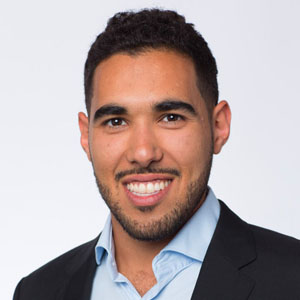
[00:00:10] Ray Latif: Hey folks, I'm Ray Latif, and you're listening to the number one podcast for the food and beverage industry, Taste Radio. This episode features an interview with Shadi Bakour, the co-founder and CEO of pioneering sustainable water brand, PATH. The term white space is often used by entrepreneurs as a reason for launching a new brand. A void exists in a particular food or beverage category, and founders will claim that their products fill it. But what if others, notably investors and retailers, don't see that opportunity? How do you make your case in a way that will convince others of your vision? That's precisely the question that Shadi Bakour and his co-founders faced when they launched PATH, a bottled water brand that is known for its refillable aluminum containers. It's fair to say that Shadi has answered that query. Founded in 2015, PATH has become one of the fastest growing beverage brands in the U.S. Its products, which include still, sparkling, and alkaline varieties, are sold at over 50,000 retail locations nationwide, including CVS, 7-Eleven, Walmart, Target, Whole Foods, Sprouts and Wegmans. In September of 2022, Path announced a $30 million Series A funding round led by Altos Ventures and included investment from celebrities such as Kevin Hart, Ryan Seacrest and Guy Fieri. In the following interview, I spoke with Shadi Bakour the inspiration for Path and how he and his co-founders set about commercializing the concept, how they won over retail buyers beginning with 7-Eleven, How deals with vendors at the San Francisco Airport and Expo West were game-changing for the brand, the impact of limited edition and licensed products, and which parts of the business were most attractive to investors. Hey, folks, it's Ray with Taste Radio right now. I'm honored to be sitting down with the co-founder and CEO of Pathwater, Shadi Bakour. Shadi, great to see you. Hey, Ray. Everything going well? Everything is fantastic. Thank you so much for asking. Hope all is well with you down in Austin, Texas, where you're based. Yep, we're rocking and rolling. Isn't that the kind of city that Austin is a rock and roll kind of city?
[00:02:31] Shadi Bakour: It absolutely is, but there's a lot of CPG, you know, food and beverage founders that are moving out here and it's definitely a high energy place.
[00:02:39] Ray Latif: You and I have known each other for some time. I want to say the first time we met, I think was in 2017 at BevNET Live. Could have been 2018, but it's kind of amazing to see where Pathwater is right now and where you and your co-founders or how you and your co-founders have built this brand. I don't know if I expected to see a Barbie themed Pathwater back when I first met you. Talk about that collaboration.
[00:03:05] Shadi Bakour: Yeah, it actually happened extremely quickly. We saw the opportunity. Obviously, we have different partnerships that we've been able to launch through retail and outside of retail. But Barbie, we all know the marketing that went behind Barbie, and it was an amazing activation of the brand. And we're very honored to be a part of that.
[00:03:28] Ray Latif: I would love to see those Barbie themed bottles in movie theaters. Have you guys inked any deals with movie theaters to this point? Not quite yet, but there are discussions out there. The key word in there was quite, not quite yet. I'm excited. Before I met you at BevNET Live, you had a dream and the dream was Pathwater. But before you launched the brand, I'd read that you were an Uber and Lyft driver, which doesn't sound like the most fun profession. I could be wrong. And maybe there were a lot of lessons and learnings that you could take away from your experience. I mean, were there?
[00:04:06] Shadi Bakour: Yeah, I would say it was a very fun profession. I actually really enjoyed it. I also worked at an Italian restaurant on the weekend and You know, even though we were there to hustle and make money, I still got a lot of out of those experiences. But at the end of the day, I think it's the do whatever it takes mentality of, you know, I would say it's a blessing to be able to live at home with your family and not pay rent for a period of time. So those are opportunities that we took advantage of. Some people might say, like, oh, I can't I can't live with my parents because I just can't do it. But, you know, you make sacrifices. like you said, for your dream.
[00:04:49] Ray Latif: It's a blessing and it's also, I guess, a genius move in so many ways. If you can convince your parents to move back home for a certain amount of time, to save enough money to launch your dream, to launch your brand. And I call it a dream. I think I've called it a dream a couple of times because it really is this amazing goal that you have for the future of bottled water. And on your LinkedIn account, I believe the description of your profile, the first thing in your profile description is join us in saving the planet. Talk about the origins of this concept of Pathwater and how much it is tied to sustainability and reducing waste and plastic use.
[00:05:37] Shadi Bakour: Yeah, absolutely. We started out just really looking at big ideas that were scalable, simple, but could have a large impact, and bottled water being the largest category in beverage, exceeding carbonated soft drinks for the first time in 2017 in total sales volume and continuing to grow at a very healthy rate. We knew that this was a big category to be even looking at. We were very young and naive to, you know, think that we could go up against this behemoth of a category and inspire change. But here we are today. And I didn't think we would be doing a Barbie collab either at this point. So that's something that's surprising to me and you both. But yeah, we saw that opportunity very early on in late 2014 and, you know, looked at how we could innovate not only the liquid inside the bottle, but also the packaging around it and saw a trend very early on starting to kind of fester around sustainability. And obviously, over the past few years, you're seeing aluminum brands all over the place coming out with different concepts, different go to market strategies. But we've kind of really solidified ourselves as the leader in the space, not only when it comes to our ability to reach customers in different ways, but also in our ability to preserve the planet. And that's what it comes back to when you say join us in saving the planet. That's first and foremost what we focus on. And we believe that having an authentic brand approach really speaks to the customer and to the consumer. And they can see through the companies that are just trying to make a buck and trying to market themselves for, you know, an unauthentic reason. It's been an incredible journey so far. We've grown quite a bit since those early days, and we're very excited about the impact that we've made so far, but still a long way to go.
[00:07:44] Ray Latif: You're right that there are a lot more aluminum bottle water brands out there, but I believe most of them are positioned as single-use bottles, whereas Pathwater is a multi-use bottle. You can use it as many times as you want. When we spoke last, you said that there are some people who have been using it for years, literally. How did you go about commercializing this concept? Because again, I think most manufacturing, most beverage co-packing has been set up for single-use beverages. Yours, again, is not that.
[00:08:23] Shadi Bakour: Yeah, it's very counterintuitive, right? As a disruptor in any industry, you need to come in and really find a way to go against the grain. And that's exactly what we did. Our idea from day one was, if we want to make something that's truly sustainable, then it needs to be reusable. And we looked at every different option of reusable bottles, every different material, and ultimately found that aluminum was the best for many reasons. But the reusability is something that we never strayed from. We have been told time and time again, advised by retailers, investors, whoever it may be. But once we've gotten to a certain stage and level, I think people started to say, OK, they started to get it. You know, they started to see the vision a little bit more. And that's just allowed us to do a lot of things that our competitors, frankly, are not able to do and really differentiates us in the market.
[00:09:25] Ray Latif: When you had that first conversation with a co-backer, what was their reaction to the idea?
[00:09:31] Shadi Bakour: So our first Copacker conversation, we brought a very bad looking prototype and showed them the idea. They kind of laughed at it. They said, that's not going to happen. Maybe we could do it in this different like can, because they had a canning line. And we walked away from that conversation. We weren't able to make anything happen. But a few months later, actually, This co-packer, I'll leave unnamed, launched a canned water beverage and claimed the sustainability claim. I mean, it was a regional brand, so we weren't really worried about it, but it was just funny to see how that happened.
[00:10:12] Ray Latif: Well, clearly you were on the right track. I mean, I think just even seeing that, made it clear that you were doing something that made sense. But I still think that, you know, when you were communicating the idea to retailers and then eventually consumers, it was more of hey, this is something you need versus something they said they needed, right? I mean, typically, there's a hole in the market and entrepreneurs or founders will fill that hole, fill that white space. In this case, it felt like you saw an unmet need that not a lot of other people did. Was that the case?
[00:10:49] Shadi Bakour: Yeah, absolutely. And the first co-packer that we actually worked with, we had to beg them to take our product on. So driving that change early on when people really didn't understand why our product needed to exist was difficult.
[00:11:07] Ray Latif: Can I pause there for a second? You said you begged them, you begged the co-packer to make your product. I hear that occasionally from entrepreneurs, but what did you really do to convince them?
[00:11:18] Shadi Bakour: Okay, when we first looked for co-packers, we went through a list of 500 co-packers that we data mined off some website and called all of them. We were on a short list of three. The last three, the one we used was one of them. And we told them, listen, we need you to run our product. We'll do whatever it takes. We'll be there. We'll fly out. We'll make sure it runs smoothly. Just let us run it just one time. Just see if the product runs. And they agreed. And it was a horrible experience because the first 10,000 bottles that we made tasted completely like tea or juice. It was at a juice co-packer. Oh, dear. Yeah. So you can't fill water learning lessons. You can't fill water at a juice line, especially if the pipes are plastic and not stainless steel. You'll get some residual taste.
[00:12:15] Ray Latif: that probably cost you a few bucks and made you wonder whether or not you could actually pull this brand off.
[00:12:22] Shadi Bakour: At that point, we still had another 25,000 empty bottles that we had to fill. So we were still looking forward. And in that stage, I would say we produced 18,000 of those, and we figured out a way to make them not taste like juice. We just cleaned the heck out of them and took those to market and started going door to door to 7-Eleven. So there were obviously ups and downs throughout that, but early days was very much, let's figure it out. Let's figure out the next move. Just try to place our pieces on the chessboard.
[00:13:03] Ray Latif: Going back to the question of an unmet need and convincing people that this is something that consumers will eventually want, I feel like Whole Foods would be a natural fit as your first retailer. But did you say your first knock on the door was at 7-Eleven?
[00:13:19] Shadi Bakour: So actually, we went after those natural foods retailers early on and saw very, very little success to no success. Because in a Whole Foods type store, the water aisle is massive and you just get lost as a new brand in that store. So we pivoted and we went after 7-Eleven and started going door to door. We figured out at 7-Eleven you can go in and make a deal with the franchise owner and they have some say over a certain percentage of the products that they hold. So we could go in, make a deal, get the product on the shelf. In 30 days, we delivered to 227 Eleven's in Northern California. Two cars, three people. One of our cars, like the bumper, was hanging off of the back of it. But those are the best days. Those are the best days.
[00:14:14] Ray Latif: Indeed, the early days when You really don't know if you can pull it off. You're working, you're probably still working 16, 20 hour days, but it's funny how often I hear from entrepreneurs that those first few months, those first few years were the most fun looking back. How did you convince those 7-Eleven franchisees that this was a brand and a product that would resonate with consumers, their consumers more specifically?
[00:14:41] Shadi Bakour: Early on, it was just about proving yourself. So as much as you sell and you could say that this is a product that's needed, I think proof is in the pudding. So if you can put the product on the shelf, figure out a way to get the product on the shelf, number one. And then number two, figure out a way to get the product off the shelf. Whether that's their trial marketing or just, you know, good placement, which is the number one mover is placement, right? And visibility in the store. That's what we would fight for. We would make deals. We would put the product on the shelf. We would tell them. we're going to come back in a week. And if it moves, you're going to order more. Sometimes we would free fill them and just say here, take, you know, take a case and just watch how quickly this moves. We would put a sticker if we could on the fridge. That was pretty much the extent of it. And we just built really good relationships. Again, if you can get that eye level right by the handlebar spot, then you're golden. That's a big difference maker when it comes to how much product you move off the shelf. How do you get that?
[00:15:51] Ray Latif: When you say you make deals or you made deals, how did you convince the retail buyer, the owner of the store, to put your product front and center?
[00:16:05] Shadi Bakour: I mean, there are a lot of sales pitches that we went out with. You know, we're a local company. We're building this brand. It's sustainable. We're getting away from plastic. Talk about the different factual data behind this movement away from plastic. For example, San Francisco International Airport banned single-use plastic bottles in August of 2019. LAX has also recently done that as well. So you're seeing a trend, you know, plastic bags, et cetera, et cetera. And that's something that we were able to kind of lean back on. Lastly, but I would say probably most importantly is the deal, right? And if you can make a deal and you can incentivize them and you're willing to take the hit early on and to be more aggressive and get into the market, then you can usually figure out a way.
[00:17:01] Ray Latif: Are you talking about selling the products at a significantly reduced cost to the retailer? Is that the incentive you're talking about?
[00:17:10] Shadi Bakour: Yeah, I mean, we would free fill a lot of the stores originally, and then we would come back and we would show them that the product had moved because it always had. That was something that we saw early on that we knew, you know, that was a good proof of concept for us was that when we put the product on the shelf, it started moving with pretty much no marketing or at most a sticker. So that was very encouraging for us early on.
[00:17:40] Ray Latif: It's kind of surprising to me, honestly, Shadi, because if I were a 7-Eleven customer and I see a bottle of water, I go into the store to buy a bottle of water and I see one that's priced at, and I believe it was probably $3 or so at the time, you know, when you launched. And then I see another one that's a dollar or even a dollar fifty or two dollars. I'm saying, OK, well, you know, I'm just trying to save some money here. I'm going to go and buy the single use bottled water. And then if I'm the retail owner, I would say, well, you know, I want to sell as much product as I can. You know, I want to sell 10 bottles of water, not one that the customer can just, you know, refill.
[00:18:22] Shadi Bakour: Yeah, we always believed in that reuse case. But even early days, we were the only aluminum water brand out there. Now you see 17 of them. We were the only guys out there pushing any aluminum product. So we could lean on the recyclability as well. But I would say the reusability aspect of it, it gives more value to the consumer. And what we always said in those days is you're actually losing customers because you're not selling a sustainable product. There are customers, especially, you know, we started in Northern California, in San Francisco, that Bay Area, they're very environmentally conscious. If someone's walking into your store, they're going to specifically not buy bottled water because there is not a non-plastic option and they won't buy single-use plastic. So even early on, we could lean on certain changes in laws and consumer behavior around single-use plastic bags and other single-use plastic items.
[00:19:25] Ray Latif: Well, certainly it seems like SFO's ban on single-use plastic bottles was a huge opportunity for Pathwater, but you still had to make that deal. Yeah. How did you go about getting into those retailers at SFO and what was the impact?
[00:19:44] Shadi Bakour: Yeah, we actually, it was a very guerrilla days early on, still in 2019. And we figured that there was a ban going into place, but we didn't know how we could get in to talk to the retailers, distributors, what we could do because there was security checks that you would have to go through to get into the airport. So we actually booked flights on Expedia and they had 24 hour free cancellation and we would use it to go through security and talk to all of these different, you know, players every single day. And that was our big step into SFO and really into the airport business. Today, Path is in over 95 airports. We launched nationwide with HMS Host this year, and that's been an incredible partnership. But SFO was definitely a catalyst for our brand in many, many ways.
[00:20:36] Ray Latif: You didn't realize that HMS Host probably had offices not inside the airport at the time? That's crazy. Well, I mean, it shows the hustle shows the grit and determination. You're like, look, we're going to go talk to whomever we have to talk to to get into the airports. And you actually probably learned a lot about consumer behavior in those shops.
[00:20:58] Shadi Bakour: Yes, it was an amazing testing area. We launched different partnerships. We launched different limited edition bottles into the airport.
[00:21:07] Ray Latif: It also feels like another humongous moment for PATH was when you landed a sponsorship deal with Expo West. It was in 2019 and PATHwater was everywhere. But that's not an easy or inexpensive sponsorship, I would think. You know, it feels like that takes a lot of time to iron out the details and probably takes a ton of money. to get your name on those Expo West banners and to get your product, you know, in the hands of every attendee. Talk about how that deal came together.
[00:21:39] Shadi Bakour: Yeah. Well, obviously there's a basis for Expo West and New Hope Network who host Expo West to take sustainability as a big initiative for them within the industry. And there are countless examples of what they've done there, but We were actually the first ever official water sponsor of Expo West, I believe in 39 years of the show. And our approach was, you know, we basically went from not being able to afford a booth to doing this massive sponsorship with Expo. And we always believed in the adage that you should go big or go home. There's a lot of noise in the industry. There's so many brands at Expo that it's really hard to cut through. And so we just decided, let's do it as big as possible. We had a 25-foot inflatable Pathwater bottle in the middle of the plaza. We had Guy Fieri was there. We handed out 80,000 bottles, branded all the refill stations. Why was Guy Fieri there, by the way? Guy Fieri is one of our partners, investors. He's a huge supporter of the brand. Early on, he was an investor in the brand? Yeah, he invested in 2018.
[00:22:55] Ray Latif: Wow. I gotta ask, how do you get a meeting with Guy Fieri?
[00:23:02] Shadi Bakour: Just pure hustle. I mean, we've gotten some of the craziest celebrities and athletes involved with our brand and invested into the brand. Next year, we're going to do something really big from a marketing standpoint that will start to leverage these different players. But even now, like I was with Guy Fieri last weekend, we did a video we posted on social. So we're starting to engage more with these people.
[00:23:27] Ray Latif: Did you know his office? Did you just reach out to his office cold call them? Or was it through someone you knew who knew him? Someone we knew. Who knew him?
[00:23:37] Shadi Bakour: Yeah, you know, his wealth manager. Oh, okay. A lot of times with celebs and athletes, you'll meet like the wealth manager, the financial advisor, the business manager, something like that, that will, you know, handle those matters. And then you'll also meet with the celebrity and they'll talk about the product, blah, blah, blah, and then if they like it, you're off to the races.
[00:24:00] Ray Latif: So get a meeting with the wealth manager or financial advisor first, make a good presentation, and hopefully you'll get to meet the celebrity.
[00:24:08] Shadi Bakour: Yeah, but you'll rarely know who that wealth manager is unless you can, you just continue to network hard and you'll find these places, these pockets. It's a small world.
[00:24:20] Ray Latif: Networking hard. I'm assuming that's offline because a lot of people network online via LinkedIn. It sounds like what you guys were doing was you're out there on the streets and in the world.
[00:24:32] Shadi Bakour: Yeah, we really believe in being in person, which is why my travel schedule is absolutely insane. But, you know, if I slow down, I feel like I'm not hustling the same way that I was before. So I don't ever want to lose that energy behind like that hustle and the willingness to like roll up your sleeves and do whatever needs to be done, getting our hands dirty and just making it happen.
[00:24:59] Ray Latif: Even now, well, it says in your LinkedIn profile, you started Pathwater in 2015, but I think when you guys got really rolling, it was a couple of years later, but I mean, it just goes to show even like six years in or so, you're still out there grinding and hustling as much as you can. Getting back to Expo West. The sponsorship fee, you know, and being the first bottled water sponsor for Expo West, again, seems cost prohibitive for a lot of brands, especially emerging ones. How did you negotiate that fee or did you negotiate a lower fee with the New Hope team?
[00:25:33] Shadi Bakour: Absolutely. I mean, at that point we had to. We've always been kind of in a healthy, I would say, financial position, but especially early on, like that was a really big sponsorship for us. And we really leaned on the sustainability aspect of the sponsorship. They really took into consideration that we were a startup and We just kind of looked at it more as a partnership than a sponsorship and positioned it that way. So those are the main things that we utilize to negotiate that deal. But the conversation started much smaller. Like, hey, we can do a digital screen for you guys or something. And we just really were adamant about the fact that we're not thinking on the same level. We want to think really, really, really big. And so eventually we were able to get there and figure that out. And it was an amazing, amazing activation. I mean, I think everyone remembers Pathwater Expo West 2019. I still saw people with those bottles at the most recent Expo, which is crazy.
[00:26:42] Ray Latif: Well, there you go. I mean, if you're talking about impact on awareness for the brand, if everyone remembers Pathwater from 2019 and subsequent events as well, it seems like awareness was a huge win for the brand. That being said, again, you are marketing the sustainability of Pathwater, the fact that you can reuse these bottles. So you would have to, I would think, have in tandem with uh free giveaways, refilling stations, right? Was that something that or is that something that you try to push for or promote when you are doing other kinds of trade shows to have places where you can actually show folks that they can refill the bottle for say an entire three-day period?
[00:27:29] Shadi Bakour: Yeah, absolutely. I think it's generally widely accepted that, especially in the US, there are refill stations pretty widely accessible. Whether you're at the gym, whether you're at the airport, whether you're usually at a trade show arena, you'll see those sensory refill stations. Where they're not available, we definitely like to see how we can either provide them ourselves or work with a third party that can service the machine and set it up But as we continue to grow, absolutely, it's all about the refill lifestyle. And we want to create that end-to-end solution for the consumer to be able to have the opportunity to make those more sustainable choices, live in a way that makes more sense. you know, than just drinking and tossing, drinking and tossing, and just continue to drive impact forward. I think the impact that we've made after Expo in 2019 has been absolutely mind-blowing to me. And even 2020, we saw some of the biggest growth in our company's history. And we just blew up nationwide and started going into chain retail, et cetera, et cetera. But again, we feel like we've barely scratched the surface of what the potential for this brand is. And it's very exciting. The partnerships, the retailers, the activations that we'll be doing over the next 12 to 18 months are going to be on a different level.
[00:29:04] Ray Latif: Very cool. Exciting to see that as well. And I got to ask, though, before Pathwater, Expo West attendees, at least some of them, were carrying around their own reusable water bottles or water containers. And I'm sure there's someone who's been screaming throughout this conversation, Ray, ask him the obvious question. Why shouldn't a consumer just buy a refillable bottle, like a Nalgene or a Yeti or one of those other brands out there that have existed for some time? Why do I have to buy a ready-to-drink beverage, a ready-to-drink bottle of water, as a way to buy a refillable container?
[00:29:45] Shadi Bakour: Yeah, so there are a few reasons why our product really works and fills a gap in the market that's existed for a long time. Number one is price point. So those reusable bottles that you'll find on the shelf are usually selling for anywhere from $10 on the very low end to $50 or $60 on the high end for those really nice ones, right? That's number one. Number two, I would say, and equally as important, is convenience. having a product that's out in the market on the shelf in your local store. And we know that beverage distribution is one of the largest distribution systems in the world. Coca-Cola reaches every corner of every single country. So thinking about that, we can make a much larger impact by offering our product in a ready-to-drink beverage. And doing so and combining the reusability aspect of it is bringing a new value add to the consumer that they've never had before. They're getting the water, but they're also getting a bottle that they can keep. And on a per drink basis, it's actually coming out to be more beneficial for the consumer's wallet, more beneficial for the planet. And even at a retail standpoint, retailers are making a very high dollar margin because our product is a premium margin product. So there are a lot of benefits, and we're trying to create that win-win-win for everyone. So that's kind of how we look at reusability versus, you know, RTD in the market today.
[00:31:32] Ray Latif: How often do customers refill the bottle? What's a typical number of times they use it?
[00:31:40] Shadi Bakour: About six to seven times. And you've seen the whole spectrum. You know, you have people that'll drink it once and recycle it, which is fine because aluminum is the most recyclable material in the world. And then you have people, like I said, from Expo that are still reusing it today. And that's an amazing opportunity for us to really show the champions of our brand that are living that reusable lifestyle, that are carrying it with them to school, to work, you know, in their backpack, in their purse, wherever it may be.
[00:32:10] Ray Latif: There is, and someone's probably going to ask this, there is still a plastic cap. Do you have any plans to replace the plastic cap with a different type of material?
[00:32:20] Shadi Bakour: Yeah, actually you'll see in a lot of our stores and with a lot of our partners, it's not fully transitioned over yet, but we have launched a fully aluminum bottle with a fully durable aluminum cap. that is the first of its kind in the space. We're continuing to push innovation forward. We didn't feel comfortable going with the existing aluminum closures that were offered to us. We actually switched away from an aluminum closure to a plastic cap for quality, safety, and reusability. But yeah, since then, for the past three years, we've been working on this new aluminum cap that has now launched into retail. It's at Costco Business Centers, it's in Alo Yoga, and many other places, at one hotels, et cetera.
[00:33:12] Ray Latif: You know, Shadi, I think when it comes to reusable bottles, it's sort of like a lifestyle symbol in so many ways. If you hold a Nalgene bottle or a Yeti or any other brand out there, it says something about you. It says that you are sustainable-minded, that you are trying to reduce the amount of single-use plastic out there, at least in my mind. And it also looks kind of cool. And I think that's part of the reason why people buy your limited edition products as well. We talked about Barbie, and I think it'd be really cool for someone to walk around with a Barbie reusable bottle, especially with all the hype going on right now. But you've also done deals with Monopoly, Spongebob, with Teenage Mutant Ninja Turtles. Talk about those licensed deals and the impact that they've had on the brand.
[00:34:00] Shadi Bakour: Yeah, we have launched obviously with Barbie, but also with many other IPs and licenses across retail into CVS, Target, and many of our other partners. And that whole idea came from the concept of our product being a reusable container. It kind of gave us the opportunity to leverage our bottle as a canvas for whether it's different organizations or different collaborations that we could do with artists. The beauty of what we've built is that we've created a supply chain that gives us the flexibility to launch these types of products. Our supply chain partners are unmatched in the space. But beyond that, I would say our whole approach is we wanted to make sustainability engaging and fun for the consumer. So we looked at these brands as opportunities to kind of connect with the consumer without them even having to know about our brand in the first place. And instead of really making someone feel guilty for drinking a plastic bottle in the past or whatever tactics companies use to convince consumers to use products, we thought if you like SpongeBob, then you're already going to have an affinity towards that brand. And you're doing something good as a byproduct. You're doing something sustainable. You're partnering with an organization that's focused on, you know, giving back to the community, philanthropy. So Spongebob has been one of our hottest selling SKUs. You know, Monopoly was a huge success, and we're really excited to see what happens with Teenage Mutant Ninja Turtles. Barbie has been going viral for us, and it's just gotten crazy tailwind behind it. So we'll continue to launch different collaborations in the future, and I'm really excited about some of the ones that are coming out in the fall and in the spring.
[00:36:08] Ray Latif: Are retailers asking for those licensed products, those limited edition products, or are you pitching them to retailers? I imagine there would be interests across the board, but is it more from the retailer side that you're getting asked to do these deals?
[00:36:25] Shadi Bakour: So we're putting it across retail and food service, I would say. Retail, a lot of those relationships, for example, Teenage Mutant Ninja Turtle, they had the movie coming out, they're doing a huge marketing behind it, they're doing a set in every Target store nationwide. So we launched into that set, and that's one collaboration that came about. Different relationships, different opportunities, we've also just like kind of floated into retail just to see the reaction from consumers. And it's been amazing.
[00:37:00] Ray Latif: It feels like the bottles could be part of the marketing campaign for the movie though, right? So I'm not sure which movie studio produced Teenage Mutant Ninja Turtles, but I would think if they start to see all these bottles at all these target locations across the country, and people make that connection between the bottles and the movie and say, oh yeah, I wanna go see that movie, they should be paying you guys.
[00:37:24] Shadi Bakour: Yeah, you should come in and negotiate our deals.
[00:37:30] Ray Latif: Okay, Shadi's like, yeah, it's not as easy as it sounds. Nicely done. Well, you have to do what I've been convincing, and this is a key part of being an entrepreneur, is convincing people that your vision for a particular brand or product is going to work, makes sense, and is worth investing in. And Pathwater closed a very big round about a year ago In September of 2022. It was your Series A. It was a $30 million round. How did you, number one, assess your funding needs? Because again, that is a big round.
[00:38:11] Shadi Bakour: So beverage is a very capital intensive industry, and I think there are countless examples of the requirements of capital to get a business to a certain stage. Also, in our situation, I would say the opportunity is so massive. for us because we're not a niche product where we're fulfilling a shift in fundamental consumer behavior. It's happening at the consumer level, it's happening at the organizational level, and it's happening at a government level right now. And so These drivers on a mass market are allowing us to see the opportunity that's at our fingertips. And obviously in order to capture that opportunity more quickly, you need funding, you need money. Cash is the lifeblood of, you know, it's oxygen for an organization, for a business. And we're very lucky to have very strategic capital partners that are extremely supportive of the long-term vision and path
[00:39:15] Ray Latif: How many retail stores were you in at the time? What was your distribution footprint? What did it look like last year at the time of the round closing?
[00:39:24] Shadi Bakour: We were at about 40,000 stores and change 40 to 45,000.
[00:39:29] Ray Latif: So sales numbers must have looked pretty good when you were calculating your valuation. What was that process like?
[00:39:40] Shadi Bakour: We did something that was reasonable, that was fair, that also valued the growth that we've had and the growth opportunity looking forward. But honestly, evaluation discussion was it was the easiest thing with this partner, because when you find a partner that is truly on board with you, then that's just a quick conversation that you figure out, you know, what makes sense and you move forward. The outcome at the end of the day is really what matters. And if you can find the right partner that can help you get there, then valuation is to me is lower priority. Not to say that we took a low valuation, it was very healthy, but that's just indicative of a true partnership.
[00:40:27] Ray Latif: The round had a number of investors, but the round was led by Altos Ventures. And I assume that's the investor you're talking about when it comes to communicating your vision and them understanding it. But what parts of the business were really most attractive to them? The vision for sure is important, but these days it seems like investors want to see a path to profitability, a healthy gross margin, good leadership. So for Altos, what really moved the needle most for them?
[00:41:02] Shadi Bakour: Yeah, hopefully all of those things were in place when they invested. I think they were. But we've definitely made drastic strides since then in developing and professionalizing and scaling the business. So always evolving and always improving. Altos is the type of investor that you can read this on their website. They invest in terms of decades, not in terms of years. They're looking for that massive, massive outcome. They're only looking Natural Products and brands that have the potential for that. They're super supportive in every single way, but that's ideally where they want to invest. I think that was one part. I think us having an X factor to our brand and being contrarian and being disruptive and doing these collaborations and working with different organizations and the non-traditional stuff that we were doing, as well as the traditional being a backbone and showing success there as well. The combination of those things, I think, is what ultimately interested them in leading the round. And, you know, they've joined our board. They've continued to support us in any way that they can. And honestly, we were very lucky because I know many stories of founders that have worked with the wrong partner and what that's done to their business as well.
[00:42:31] Ray Latif: Did you initiate the conversation with Altos or did they reach out to you?
[00:42:37] Shadi Bakour: It's funny, it was through like a LinkedIn search. Someone from Altos had LinkedIn search someone from our side and we just connected from there and just took the conversation from there.
[00:42:49] Ray Latif: Did you realize that you needed a partner like Altos that had a long-term perspective on investment when you were launching the round?
[00:42:59] Shadi Bakour: So we're looking for a growth investor and we definitely found that in Altos. I know many companies that have gone with the wrong investor. And a lot of times that investor is really focused on squeezing out the numbers, you know, management changes and having a partner that's more focused on the larger outcome. And how do we get from A to Z? And knowing that at Z we'll be a very healthy business. fundamentally, but also that we'll have built something that will drive outsized returns for them. I think it's a really smart strategy that a lot of funds just don't have the opportunity to take that strategy because number one, it can be considered risky. But number two, most investors are looking for a quick three, five, seven year return. And having a partner that is not necessarily constrained by time is also a complete game changer for how we think and operate as a business.
[00:44:07] Ray Latif: I mentioned that investors typically look for great leadership teams, great managers as part of their criteria for funding. And you've been at this, you've been the CEO for, well, I guess since the beginning. How have you learned how to become a better leader and a better manager of people?
[00:44:25] Shadi Bakour: You just got to be constantly consuming all the information that you can from every single resource. You know, obviously you have books, podcasts, Taste Radio, every single avenue that you can get your hands on. You just have to be voracious about consuming that stuff constantly and involving and Over larger periods of time, you know, we've been in this business now for, I mean, eight years since we officially started. And since then, it's been a learning journey for me. And I'm looking forward to the next 20 years because it just compounds day after day after day. And the gap between yourself and everyone else just gets bigger and bigger and bigger as you continue to have that consistency. Leadership is a journey and we have made huge strides, I would say, with the organization that we've built, but we will continue to look for ways to evolve and to take the way that we kind of lead and operate as an organization to the next level. One of my biggest mentors of many mentors that help advise and coach and guide me is Scott Miller. And he is obviously a legend within the beverage industry.
[00:45:48] Ray Latif: Former CEO of Ascensia, now he's doing his own thing with Yes League.
[00:45:53] Shadi Bakour: Yep, yes, Lee Water. Yes, he has been just a tremendous value add for our business and has helped me to change the tone and the pace and the excitement and everything, you know, just take things to the next level. And we're just constantly having conversations about how we can continue to take steps up towards the ultimate, highly functional, highly productive team that's just continuing to do what we've done.
[00:46:27] Ray Latif: Yeah, and you told me the other day that there's 80 employees now at Pathwater. That's right. I wonder what for you is more mind-blowing, that you're running a company of 80 employees or that you have a Barbie collab come in full circle.
[00:46:44] Shadi Bakour: Yeah, I would say the Barbie collab is an interesting one.
[00:46:51] Ray Latif: Did not see that one coming. Yeah, I don't think many people did. But it just goes to show that you have created something and you have persevered in a way that few people had any concept of. And that's The essence and the beauty of entrepreneurship is doing something that you believe in. and getting it done no matter what it takes. Shadi, congratulations on everything you've built to this point. I was going to say something kind of corny, maybe I will still say it. I said, I'm really proud of you. I really am. I'm really proud of you and your co-founders. Again, I met you guys about six years ago and, you know, like a lot of early stage entrepreneurs and you're green, you know, a little wet behind the ears and look where you are now. It's amazing. It really, really is amazing.
[00:47:37] Shadi Bakour: We have the gray hairs to show for it. We're really excited for the future. I'm excited to be sharing this podcast with everyone and just kind of continuing to drive an impact on a larger scale in the industry. You'll be seeing a lot more of us in the next year or so. We're only growing. Okay.
[00:47:58] Ray Latif: Well, I guess we'll have to do this again in a year. Let's do it. All right. Shadi, thanks so much for the time. See you soon. All right. That brings us to the end of this episode of Taste Radio. Thank you so much for listening. Taste Radio is a production of BevNET.com, Incorporated. Our audio engineer for Taste Radio is Joe Cracci. Our technical director is Joshua Pratt, and our video editor is Ryan Galang. Our social marketing manager is Amanda Smerlinski, and our designer is Amanda Huang. Just a reminder, if you like what you hear on Taste Radio, please share the podcast with friends and colleagues. And of course, we would love it if you could review us on the Apple Podcasts app or your listening platform of choice. Check us out on Instagram. Our handle is bevnettasteradio. As always, for questions, comments, ideas for future podcasts, please send us an email to ask at Taste Radio. On behalf of the entire Taste Radio team, thank you for listening, and we'll talk to you next time.
[00:48:57] Shadi Bakour: you