[00:00:00] Mari Llewellyn: BevNET Live, the premier event for beverage industry executives, is coming up fast on June 10th and 11th in New York City. Hundreds of beverage founders, investors, and retailers are already confirmed. Don't miss your chance to build momentum mid-year and set yourself up for a strong finish. Early registration pricing ends Friday, April 24th. Register now and save $100 at BevNetLive.com.
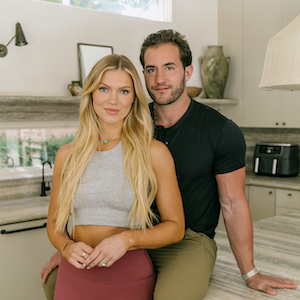
[00:00:39] Ray Latif: Hello, friends. I'm Ray Latif and you're listening to the number one podcast for the food and beverage industry, Taste Radio. This episode features an interview with Mari Llewellyn and Greg Lavecchia, the co-founders of rapidly growing wellness brand, Bloom Nutrition. Mari Llewellyn's personal wellness journey, one that included a remarkable 90-pound weight loss, sparked intense online fame and, in turn, the creation of Bloom Nutrition. But it's the brand's consumers who have been fanning its flames in recent years, evangelizing others about the brand's impact amid their own paths to better health and well-being. Founded in 2019, Bloom debuted as a direct-to-consumer brand of pre-workout powders and has since evolved into an omni-channel supplement company anchored by its popular greens and superfoods products. The brand is bolstered by a thriving social media presence. Mari routinely touts Bloom to her 1.5 million Instagram followers, while Bloom itself has 427,000 followers on the platform and over 660,000 on TikTok. Bloom had been solely focused on e-commerce until October of 2022, when the brand landed placement at over 600 target locations. It was Bloom's first retail partnership, but just four months later, Walmart added its products to nearly 1,800 of its stores. Despite just a year on shelf, Bloom is one of the highest-earning brands in its category at Target, according to co-founder Greg Lavecchia, who credited Bloom's social media prowess as driving sales and velocity. In this interview, I spoke with Mari and Greg about the company's roots and how its marketing strategy has gradually shifted away from an emphasis on Mari's personal story to one of, quote, letting the creators create. They also discussed how they measure the ROI on its investment in social media, why hiring young talent has been key to success on TikTok, and how they've supported Bloom's relationships with Target and Walmart. Hey folks, it's Ray with Taste Radio right now. I'm honored to be sitting down with Mari Llewellyn and Greg Lavecchia, the co-founders of Bloom Nutrition. Mari, Greg, great to see you.
[00:03:02] Greg Lavecchia: Thanks for having us.
[00:03:04] Ray Latif: Hello, hello. I'm really, really excited to sit down with both of you and speak with you about this amazing company that you built, Bloom Nutrition. And it's always great to speak to fellow podcasters. Mari, you're the host of the Pursuit of Wellness podcast. Tell us all about what people would expect to hear on that show.
[00:03:24] Greg Lavecchia: So the premise of the show was really an expansion on my own wellness journey. I feel like the great part about health and wellness is there's always more to learn and new levels to unlock. I feel like I'm never done. So even after my weight loss, I was continuously learning Bloom Nutrition, exercise, mental health, everything wellness related, and I am obsessed. So I was like, let's make a show and bring people on that I want to ask questions to. And it's been amazing. I launched the show in January. We've had some incredible people on. I've learned so much. I'm in the studio right now. So yeah, all things wellness. And it's been a really, really exciting journey.
[00:04:05] Ray Latif: It looks like a very comfortable studio. It looks like the kind of place where people can open up, talk about their health journeys and do it in a really comfortable way.
[00:04:13] Greg Lavecchia: That's the goal. Get it all out of them.
[00:04:17] Ray Latif: Whereas Greg, you look like you're in a more traditional studio. You've got your screens behind you. You've got your gear. You've got your audio set up, all set. I mean, are you, are you more, I know you're a host as well, but I mean, do you enjoy the technical side as much as you do the hosting?
[00:04:32] Bloom Nutrition: I have co-hosted with Mari, but I take no credit for the success of that show. And I've maybe been on, on two episodes. So I'm a really from the inception of Mari even having a, you know, a public name. I, I am in the background very much. So right now I'm physically just on the second floor and Mari's on the first floor of our headquarters here in Venice beach. But, um, this is, this is far from my comfort zone, but I'm here for it and excited about today.
[00:04:53] Ray Latif: Okay, great. Well, is that your office?
[00:04:56] Bloom Nutrition: Yeah, we're in our headquarters right now. This is my personal office and Mari's in her personal office, which is half studio.
[00:05:01] Ray Latif: Nice, nice. I noticed your espresso machine right there. I want an espresso machine in my office. How often are you sipping on espresso?
[00:05:08] Bloom Nutrition: I try to keep the team very caffeinated. So it's our tip for productivity around here. But I have a rule as much as I want before 1pm. That's the rule. Okay. Once one, once like 1259, I may throw on back, but once 1pm hits, it's done. Why is that? I don't know. I feel like that's a good rule to have. So it doesn't affect my sleep.
[00:05:29] Ray Latif: I haven't thought, I haven't thought through it, but you know, it's funny you say that there was a, there was a time where I decided to give up coffee. I think it was about three years ago and I, I do drink coffee now, but I gave it up for like, I don't know, two or three weeks. I found myself. falling asleep so much earlier in the evening. It was like by 9.30 and I'm usually up till midnight by 9.30. I was like, I can't even keep my eyes open at this point.
[00:05:53] Greg Lavecchia: That's us currently.
[00:05:55] Bloom Nutrition: Well, we wake up very early, but we're, uh, I don't think there's any negatives to having caffeine if you're, if your anxiety can handle it. So maybe Mari, you have a different perspective.
[00:06:04] Greg Lavecchia: I would say my guests have a different perspective on that. It depends who you talk to. I'm a little bit more controlled with the caffeine because I run so anxious. I mean, Greg is just like an Energizer bunny up there. So to each their own.
[00:06:16] Ray Latif: Mari, you referenced your health journey and went through a pretty dramatic shift in your lifestyle, which is sort of the basis and foundation for Bloom Nutrition. For folks who aren't familiar with your journey, can you talk a bit about it?
[00:06:31] Greg Lavecchia: In 2017, I was at college at Drexel University and I'd always kind of had underlying mental health issues and never really found a healthy way of dealing with those issues. So for me back then, I really you know, I was using food, I was using alcohol, I had very unhealthy coping mechanisms. And I would say around that time, I really hit a rock bottom period of my life, you know, I was 60, 70 pounds overweight, really not in touch with health or fitness, my own body, I was treating myself badly, I ended up having to drop out of school, I was a semester away from graduating, and I ended up moving home to my dad's house, which is a little bit of a reality check. I kind of realized, okay, I'm unhealthy. I don't know where I'm headed in my life. I have no job. I have no degree, no plan. And it was really a moment where I realized that it was my fault. And I've said that before and people do get upset about it because I think it's difficult for people to sometimes accept blame for their own position. But I was kind of done blaming other people for where I was at. And I took full responsibility and decided I needed to get control back. And the way that I did so was trying to get healthier. I felt like it was the one thing I could control. So I was dating my now husband, Greg, who's also my co-founder on the podcast, who has been an avid bodybuilder since he was young. And he was the person who really first inspired me to try fitness. So I remember, you know, my first kind of healthy meal sending him a picture. And it was pretty much exactly what Greg was eating at the time, which was like six eggs in a bowl of oatmeal and like this full on bodybuilder meal. And he was like, Oh, love it. Like great, great start. Definitely didn't need to be eating the same amount as Greg was as a 220 pound bodybuilder. But you know, it was my first step to figuring out my path. And then from there, I really just became obsessed with optimizing my health, optimizing my mind. I found that fitness and health allowed me to think clearly, have a more stable mood. and improved everything. And it really taught me how to have a work ethic as well. So ultimately, I lost 90 pounds that year, and began posting about fitness in November of 2017, with a transformation photo. So I was really private about my fitness journey for a long time. And that transformation photo was the first step to me sharing publicly on social media. and at the time I feel like you know social media was very different things were organically blowing up you could get a lot of followers in a short period of time there was less saturation and that photo really did blow up more than I anticipated and my community began to grow quite quickly. And there was a pretty organic demand for products from from my female community. And that's kind of what started this whole snowball of a business. And we've had different iterations of what the business has been. And we can go into more detail on that. But that's how everything started.
[00:09:46] Ray Latif: When you say your products, Mari, do you mean Bloom Nutrition products? Did you have a company at that point? Or was it products that you were using in your life to help you along your fitness journey?
[00:09:58] Greg Lavecchia: So the initial demand was for a workout plan. So that's what we went ahead and did. You know, I was getting DMs. What did you do? What did you eat? Give us the whole plan. So Greg and I packed a bag and went to Barnes and Noble for 24 hours and typed up a pretty basic workout plan. That is the true plan that I followed. Um, a lot of like bodybuilding compound movements. And we put it up for sale for $5. And at the time we didn't even know how to automate the process. So we would actually manually email people the workout plan and they would PayPal us $5. So we would be doing this all day on the phone via DM. and then eventually figured out how to make a website. But that workout plan evolved over time and became much more sophisticated. It's now my app called the Strength app. And that was really what gave us the initial capital we needed to create the next physical product, which was a resistance band. I should say our first physical product, which we hand-packed and shipped the first 900 out of my dad's attic. So before Bloom existed, it was called Mari Fitness technically, and that was the workout plan and resistance bands.
[00:11:13] Ray Latif: Mari, it seems like you have the entrepreneurial spirit and, you know, always have had that. I can just get the sense that you, you are just a natural at this kind of business. Greg, did you have that entrepreneurial bug as well?
[00:11:25] Bloom Nutrition: I had the bug. This is, this is, uh, I love social media. I love. I love fitness and definitely love business. I think more and I both struggle potentially working for other people. So we had to figure this out working for ourselves. But yeah, watching Maris and my entrepreneurial spirit kind of combined into a good yin yang synergy as a has definitely been awesome to watch over the years. or experience.
[00:11:52] Ray Latif: Mara, you referenced, you know, this sort of evolution of social media from 2017 till now, quite a bit has changed. But do the sort of foundations, do the, I guess, pillars of social media and how you engage with people, has that remained the same or is it much different? And if so, you know, what has changed?
[00:12:13] Greg Lavecchia: For me personally, it has changed a lot. You know, like I started by posting a ton on Instagram. I was very, very active. I pretty much treated it like my diary. And back to your other question, I always kind of felt like business was never my plan. And I found most of my passion was in the creativity of branding and sharing and content and creating our labels or what have you. And Greg is really kind of the powerhouse behind the business. He's incredibly entrepreneurial. I cannot imagine him doing anything else. So as my presence on social media has evolved, I feel like I've actually pulled back from sharing so much on Instagram and definitely have just leaned into the podcast. I think because I felt like I had more I could share and it's difficult to get across a full idea or concept in a one minute reel or a little story clip. I felt like I wasn't doing myself or my audience justice by, I don't know, continuing on the same platform and doing the same things I'd always done. I really felt like the podcast was the next step for me and it's really allowed me to learn so much more about the space that we're in. So I feel like social media has changed a lot. Obviously, TikTok has become huge and that has been a huge part of our business that we could have never have anticipated. And we've definitely, as the business has evolved, pulled away from me being the sole face of the company. And that was the reason we never called it Mari's Supplement Company. We wanted to give it its own name so it could exist by itself or represented by other people as well.
[00:13:59] Ray Latif: I definitely want to unpack more about your social media strategy. Let's back up for a second and talk about the launch of Bloom Nutrition. Greg, how do you go from resistance bands to supplements? And I know you're probably no stranger to supplements as a bodybuilder, but where did you see the hole in the market?
[00:14:18] Bloom Nutrition: So we launched MariFitness in 2017, went from instant download PDFs to booty bands or resistance bands, sold over a million of those resistance bands. And then everyone was asking, what supplements should I take with these workout guides that I'm doing?
[00:14:32] Ray Latif: Can I stop you there for a second? It's pretty incredible what you just said, and I don't wanna skip over it. You sold a million resistance bands. I can't even imagine where to start marketing a resistance band, number one, and number two, what it takes to sell a million of them, supply to fulfillment to post-sale kind of feedback and promotion. So how much did that inform you about the next stage, the next evolution of your business?
[00:15:01] Bloom Nutrition: It was interesting because Mari and I were the only employees of the brand and, you know, it was doing eight figures. So we had to understand supply chain. You know, we were working. It was it was it was all global. So we were working with manufacturers, one manufacturer specifically in Pakistan, who made all of the bands. And we kind of had to fund that manufacturing plant to expand and in order to keep up with our demand. So it was it was a really interesting experience. I mean, at that point, Mari and I were just finishing our degrees in school still. So, you know, whether we were in Mari's dad's attic or in our dorm room, or running to a Barnes and Noble, which was essentially our co-working space at the time. It was quite an experience and we were doing everything from customer service to supply chain to content generation, right? But we pretty much just made the resistance band a necessary piece of the instant download PDF, which obviously had no cog, right? So we were able to create this massive value through digital products associated with this physical product, which was, you know, a very low expense as well. So a product that you could just ship in an envelope for, you know, Out the door, you're spending $6. Worst case scenario, we were selling for, let's say $30 with the digital value that was associated with it. So it was a great business, probably should have never stopped doing it. We launched it as an app in 2021. And it was on January 1st, the most competitive day, resolution season, resolution day. And we were I think we were beating Peloton and Weight Watchers on the app store list on that day. Yeah, it was. It was. It was a pretty big launch and very exciting. You know, kind of next chapter for those instant download PDFs, but. That's now called the strength that.
[00:16:36] Greg Lavecchia: It's funny to look back to and think all of that was preparing us for Bloom because now Bloom is obviously our biggest business and has become its own beast. But I feel like the resistance band and the app and the guides and everything we had to go through were really like training wheels for what we do now.
[00:16:55] Ray Latif: And again, there's a lot of supplement powders out there. There's a lot Bloom Nutrition brands out there. And the ones that actually resonate with most consumers really do fill a need, fit a hole in the market in their lives. So again, going back to this question of how does Bloom differentiate itself from those other products? What was that SWOT analysis like?
[00:17:21] Bloom Nutrition: Mari was incredibly strategic from day one in the sense that she did not really partner with any other brands, right? So this was a time when influencers, the second they had, you know, 15,000 followers were signing a contract with Jim shark or signing a contract with, you know, insert supplement company name. You know, we, we, we recognize the opportunity of creating our own products, which was definitely the far more difficult route, but the way bigger opportunity, especially, you know, in terms of sustainability of our careers. But because of that, Bari was launching and selling these workout guides and everyone was eventually saying, but what supplements should I take with these guys? So we've essentially had the responsibility to create that supplement or Mari had to sign with a supplement company. And we started with, you know, recalling local manufacturing plants in the Northeast. We were living in New York at the time. And we started with a pre-workout. You know, Mari would go into, I don't want to speak for you, but Mari would go into a vitamin shop or GNC and all of the pre-workouts were red and black and very masculine and a ridiculous amount of caffeine, especially for, you know, a female's tolerance or somebody who deals with anxieties tolerance. And she was like, this is the opportunity. These pre-workouts are ridiculous and they're full of ingredients I can't even pronounce. So January 2019, we launched Bloom Nutrition with just these pre-workouts and they basically sold out right away. From there, we introduced recovery powders, then we introduced protein powders, and we were addressing the incredible community that Mari built, that niche community, which was women who lift weights, right? So like, think if you go into a gym right now, maybe it's majority male. It was even far more niche in 2019. And because of that, when we released this greens powder, Our TAM overnight went from a woman who lifts weights to any woman in the United States, right? Because it was no longer addressing the fitness community. It was addressing the wellness community. And, you know, that's pretty much where we are today, which is we saw this greens powder. I mean, I'm kind of skipping steps here, Mari.
[00:19:17] Greg Lavecchia: Yeah, I'll jump in and just say, for me, I was pretty much just creating products that I really wanted to take, which was kind of perfect because I really represented this larger community of women who wanted the same thing. So whether it was the more natural pre-workouts, then ultimately the greens. The greens were something that I felt was missing from my routine. It's an all-in-one supplement full of fruits and veggies, prebiotics, probiotics, adaptogens, something I could take one scoop of and feel like I got all my nutrients in for the day, but tasted really good. Our goal was to make Bloom fun and easy to incorporate for a female who was new to fitness. So it wasn't intimidating. It wasn't too scientific. It was, hey, let's make this fun and enjoyable and easy to keep up with in your routine. I think consistency is really important. And I was sampling these greens on vacations. I was taking them on trips when Greg and I actually got engaged and I was keeping track online of how I was feeling and the results I was getting. I absolutely love the product and I feel like you could tell that through the screen and what I was telling the community. So when we did launch them right before COVID, it just seemed to really, really resonate. And at the time, as we said, it was pretty much just Greg and I running the company and we didn't have a ton of capital to keep enough in stock. So we kept selling out over and over and over, which The community was a little mad about, but I feel like in hindsight also created more hype around the Greens because everyone was like, why does this product keep selling out? And that was really the launchpad for what we're known for now. Now we're pretty much known as a Greens company.
[00:21:03] Mari Llewellyn: Vibrant Ingredients is the natural ingredient partner powering food and beverage innovation, delivering flavor, function, and protection through a science-backed portfolio. Vibrant delivers purpose-driven solutions that help brands create extraordinary experiences. Discover what's possible with Vibrant today. Visit VibrantIngredients.com.
[00:21:30] Ray Latif: Mari, just for context, what was the size of your social following at the outset of Bloom Nutrition?
[00:21:38] Greg Lavecchia: Oh, I want to say it was 600,000. Does that sound correct to you, Greg?
[00:21:43] Bloom Nutrition: Sounds correct. Now it's at 1.5 million on Instagram.
[00:21:45] Greg Lavecchia: But yeah, now it's at 1.5 million. It was 600,000. But the following was unique because it was a very like, They knew everything about me and Greg. It was a very involved community. So even when we were building Bloom, I was showing them label options and flavor options, and I was showing them behind the scenes. I mean, I literally had a light box in our townhouse apartment in Colorado, and I was taking the website photos myself. Our first label for Piña Colada pre-workout, we took the photo of the coconut on the label. Like everything was super, hands on DIY. Yeah, exactly. So they really were involved from the beginning. And I still have a lot of those followers now who remember that time.
[00:22:32] Ray Latif: So I feel like I couldn't do that. I feel like, you know, opening yourself up to the public and showing your vulnerabilities and showing how you are not only building a business, but building your own personal life and relationships is pretty tough. How do you become comfortable with that? And how much of an impact do you feel like it had, you know, in terms of the brand's development?
[00:22:59] Greg Lavecchia: It's interesting because I've never been that shy about sharing online I feel like I almost had this separation between reality and what I was sharing and I also maybe feel like in this whole that's been my purpose and my skill set. I'm not necessarily someone who's really familiar with, I'm horrible at numbers. I don't know all the phrases in the industry. I'm not great with that. That's really Greg's strong suit. But I do know how to connect with people. So I felt like sharing my hardships and challenges and wins and ins and outs of my experiences were what connected me to the community. And I think at the beginning of Bloom, it was huge. especially with supplements and fitness it is such a personal emotional thing for so many people to feel like they could relate to the founder of the company and it wasn't just no offense, but a bunch of men behind the scenes in suits who we don't know, they could see who they were supporting and understand that I was coming from a similar place as them. So I think at the beginning of the company, that was crucial. Now, I mean, it has changed so much and we have so many customers who don't even know who I am, but to have that core story, I think has helped us along the way.
[00:24:19] Ray Latif: A devil's advocate might say, well, you know, your story is not easily replicatable. It's not easy for the average person to say lose 90 pounds. Did you have any concerns about your story being a little too aspirational? And if so, how did you address them?
[00:24:35] Greg Lavecchia: there was more so this attitude of everyone else online had this airbrushed image and we weren't discussing any struggles or any challenges they may be facing and I was really coming at it from transparency and relatability and I do understand that my journey might be a little bit aspirational. But when we began to evolve the brand and lean into other influencer stories, I feel like that's where we really honed into, you know, our mission being we want to be as accessible to every woman as we can be. So we have influencers now who are mothers, students, nurses, representing all corners of life. And the weight loss story is less about, hey, everyone should be doing this, or you could, you know, this has to apply to everyone else, but like, that I've been there too, and I've had my dark moments too. And when I think about my journey, it was more so a mental journey than anything else. Greg, what would you add to that?
[00:25:32] Bloom Nutrition: Yeah, I think everyone kind of was able to relate to their version of your journey. Right. And so, of course, it was, it was, It was aspirational and potentially extreme in terms of whether or not somebody could relate to it directly. But indirectly, clearly just from the fact of Mars following growing so much, there was a massive community that was able to directly relate, or at least, you know, make their version of it.
[00:25:59] Ray Latif: This is a good segue to my next question, which is about influencers. Every single entrepreneur I speak with talks about the struggles of influencer strategy and trying to figure out one that's going to work for their brand. Greg, you know, how do you know if an influencer is the right fit for Bloom Nutrition? And what is your approach to aligning with them?
[00:26:21] Bloom Nutrition: Or it's just like a quantity side of it, right? So how many followers they have, how many views are they consistently getting? Of that following that they have, is it your actual TAM? So for us, for example, if it's a female in the United States that we're targeting, if 60% of that person's following is male, then they're 60% useless to us. Likewise, if it's a Brazilian following and not in the United States. So just a quantity side of things that you need to check those boxes. You know, then you have to make sure that that person is literally making a video about your product, about your brand, and they need to fit a certain criteria in terms of really just values. And so, you know, it's up to our influencer team to go through that person's profile, potentially follow them for a couple of weeks, let alone months, and decide, is this somebody that we would feel okay with, let alone proud to represent this brand? And based off of that assessment, you know, as you're trying to scale, not everyone's gonna be the perfect spokesperson for this product, but you need to decide what type of partnership that may look like based on those values that they're projecting. So that's the foundation of building the program. But I would also say, you know, they need to convert and they need to actually be, you know, bringing that row as that your program requires. So finding someone who's able to communicate to their, their following or potentially just to a cold following on the algorithm, if the video is going viral, which is, you know, very regular on something like tech talk, somebody who can speak in a way that's actually going to get people to desire that product, which is a skill in itself. Making great content does not mean that they can convert.
[00:27:54] Ray Latif: How much of the influencer strategy revolves around awareness versus sales? I think you touched on that, Greg, but I mean, you're at the end of the day looking for this influencer to drive and generate revenue. Am I wrong?
[00:28:06] Bloom Nutrition: It's funny because our entire program is very top of funnel. So especially the influencer side of our marketing, which is majority of our marketing spend and definitely majority of the impressions we're making on people. It's very top of funnel. I mean, it verges on product placement in their already normal content. You know, we're not asking influencers to take our greens bottle and give a whole sales pitch about the product. We want them to just show how they're incorporating it in their life. So in that sense, they're not sending people to Amazon, they're not sending people to Shopify, and they're not, generally speaking, they're not sending people to a specific conversion point. But we're trying to make sure they're as aware as possible about our brand and about our product. And then as they're shopping in the places that they're already shopping, which is, you know, Target, Walmart, the top retailers in the United States, Amazon, then they're able to convert when they're ready. So it's very different than operating, you know, a bottom of funnel meta marketing campaign. But it's worked for us and it's definitely complimented our now rollout into retail. How many influencers do you have total at this point? Or how many influencers do you work with? Thousands, we work with thousands. Some might not post for a couple months, some might post four times a month. We have a network of thousands of influencers in the United States with a majority female US following.
[00:29:21] Ray Latif: Well, I guess that makes my next question less pertinent, but I'll ask it anyway. Mari, do you ever have any disagreements with your team about who you're working with, whether it be just a gut feeling or a feeling that they are not representing the brand in the way that you would like them to?
[00:29:40] Greg Lavecchia: Interesting question. I will say where I'm at right now with the business is that I really have handed off these responsibilities and I fully trust the influencer team to make the best decision we have. I mean, I think one of the best parts about Bloom is we have such a fantastic team. A lot of them are women. I think we're like 90, 95% women team. A lot of them are young. They probably understand TikTok better than I do, if I'm being honest. However, we have had discussions behind the scenes about big names, celebrities sometimes, you know, thoughts around certain influences. And, you know, I think we have occasionally had discussions around it, never disagreements, discussions around it. And at the end of the day, I think they know what my values are. And I think that we always end up on the same page. So currently, I feel like everyone who represents Bloom aligns well with those values.
[00:30:37] Ray Latif: Certainly, there's a question about compensation. You know, how much do we spend on this person via whether it's product or otherwise? And, you know, how do we measure the compensation's value and its impact on sales?
[00:30:53] Bloom Nutrition: We operate our entire marketing strategy around a blended CAC, you know, just essentially dividing our top line sales across omni-channel, you know, with our marketing spend. We really try to not focus on individual channels unless there's, you know, like a holiday, like whether it's a prime day or a sale going on a target. Then the entire influencer program is pretty much reverse engineered around CPM. So like, what is the cost per thousand views? That's how top of funnel it is. We're just trying to grow brand awareness with this product. The product's great. If somebody tries it, they're going to tell their friends about it. They're going to continue buying it. So when it's based around CPM, which is, you know, something that's very achievable with influencer marketing on tech talk. So, or sorry, it's achievable affordably, right? So if you're talking. A podcast ad, you might be talking $30 CPM. If you're talking a YouTube, like what the top influencer on YouTube, you're talking, it could be $80, $90 CPM. If you're talking where our influencer programs at now, it's well below $10. So we're able to get millions of views for a fraction of the price that the average business is getting it. And that's pretty much where we started a negotiation out with an influencer. So if an influencer is getting, you know. a million views, we need to try to negotiate that as close to our goal CPM as possible. That's fluctuated over time, especially as the influencers on TikTok become more aware of like, you know, their rates, let's say. Now everybody has an agent. So we're, you know, we've had to increase that since we've started the program, but it's still a very competitive, highly affordable CPM that's been, you know, the foundation of the whole program.
[00:32:26] Ray Latif: You've both referenced TikTok a couple of times. It does seem to be the social media channel that everyone is targeting and chasing after. How do you hire, Mari, folks who really understand the platform and can speak to the users on it from Gen Z to Gen Alpha and even beyond?
[00:32:47] Greg Lavecchia: As I said before, we really have such a young team. They're all pretty much under the age of 30, especially in the influencer department, mostly women. They are the ones shopping via TikTok. Like I think a majority of this office, they understand the trends, they understand the audios, they know which influencers are having an impact. better than Greg and I do. So I think hiring younger and hiring kind of from our demo has helped us a ton. Greg, would you agree with that?
[00:33:23] Bloom Nutrition: We've always been a fan of starting people at an entry level role. We love hiring people right out of school. We prefer if they're not brainwashed, lack of a better term. And, uh, you know, the, the lead of our influencer program who spends, you know, sometimes millions of dollars a month is Mariah. She's 25, 24, I think. 24, she's 24. And she has, you know, 12 people under her. So it's a really unique program. There's very little attribution. We don't use affiliate links. We don't use affiliate codes. It's, you know, highly tracked from page views and just like surges of sales and, you know, our omni-channel retailers. But most CMOs, let alone CEOs, let alone investors, which thankfully we don't have any of, but would have a heart attack if they, you know, looked over this program.
[00:34:06] Ray Latif: Well, if it works, it works. I mean, the proof is in the pudding. Sure. So again, I think people listening to this podcast would say, oh, well, that makes a lot of sense. You know, someone who actually understands TikTok is someone I should hire. I mean, the knock on Gen Z is that they don't work as hard as previous generations. So again, going back to this question of how do you know if they're the right fit? What is your criteria? How do you measure their experience versus their understanding of a particular social platform.
[00:34:37] Bloom Nutrition: For this program specifically, the TikTok program, which is, you know, now it's probably 15 headcount here. It's a little volatile depending on the season, but it used to entirely stem from an internship program. So dare I say it allowed us to do a, you know, a free trial on some people. They weren't free entrance. They had actually a great hourly rate, but we'll call it a free trial. So, you know, they'd have a three month internship and then we would decide of, let's say there was 10 of them, you know, we would try to keep two and make them full time. So that was one of the best things we ever did here. Uh, it's still a program that exists at bloom and you know, they'd be coming right out of UCLA or USC or wherever, you know, whatever. School was conveniently located for the students to come to our headquarters. And, you know, again, the woman who runs the program started as an intern. So that was huge for us. Now, you know, as we're hiring more experienced roles for certain spots here, people who have done it before, right, in terms of, you know, growing a business to the whatever our goal may be. We try to do like six rounds of interviews. You know, they're doing homework assignments. They're coming in person a couple of times. We have a great HR lead who was actually our first hire ever. So our strategy has not changed a bit, but we treat different departments differently.
[00:35:49] Greg Lavecchia: But I like that phrase, done it before, because I think that's the thing with TikTok marketing, no one has done it before. So I think it's more about bringing in the young people and empowering them. And Greg does this, he has great leadership skills, and he'll say to them, no one has done this before, you know as much as the next person. I very often see, and I don't wanna name names, but I see brands who, probably have older employees who have great qualifications and have been in this industry before and they completely flop on TikTok because they have no idea what's going on. I really think that this is an unprecedented time and hiring young people and telling them they can do this, I feel like we're just having to break the mold a little bit and trust them. It's more about their willingness to work hard and be a team player than them having the qualifications prior, if that makes sense.
[00:36:47] Bloom Nutrition: There's no such thing as an expert. There's no such thing as someone with experience in this department. I mean, I would say that even for Instagram, I would say that the climate, the environment of social media is so volatile. It changes every six months. What Mari was an expert at in 2019, 2020, 2021, she's now pivoted to podcasts. It's a completely different world. And if you're hiring someone over 30 years old, even over 27 years old, I'm older than both of those ages, to lead those departments, They better be young minded or a young soul and be really into those apps because they change very often. And someone who hit a home run in 2020 by no means is qualified to still hit a home run in 2023. You can't catch lightning in a bottle twice. So yeah, we have pretty strong views on that.
[00:37:33] Greens Superfoods: Do you want more repeat buyers on Amazon? Well, this free resource in collaboration with Straight Up Growth will help your brand turn first-time buyers into long-term subscribers. Download Winning the Repeat Purchase Game on Amazon now at Taste Radio.com slash SUG. That's Taste Radio.com slash S-U-G to start building retention-driven growth for your brand on Amazon. Scaling a beverage brand into major retail comes down to operational readiness. From packaging lead times to co-manufacturing strategy, the details can make or break a launch. In a new e-book in collaboration with Octopi and Asahi Beer USA, industry leaders share what they've learned in helping brands scale. Download it now at Taste Radio.com slash octopi.
[00:38:23] Ray Latif: Well, from TikTok to podcast, it seems like the, I guess, shift in focus for you, Mari, personally, has been pretty successful. And I talk to entrepreneurs who are saying to me, oh, you know what, I should start a podcast. Can you offer any tips or pointers on, you know, how to do so? And I honestly don't know how to answer their question sometimes because Yeah, it doesn't take a lot to launch a podcast, but it does take a lot to get people to listen to it. And that's the whole point. You know, Mari, when did you have the idea to start a podcast, and when did you realize that the timing was right, and that you could get a large following using that platform?
[00:39:04] Greg Lavecchia: I think it was always in the back of my head because I've been someone since I was young who loves presenting. I always wanted to be a TV presenter in school. I was horrible academically, but loved giving a presentation. So I've always loved using my voice and sharing. over the last couple of years, I started guesting more on other podcasts and kind of seeing how it worked and getting my voice out there. And I said, okay, I think this is a really good method for me for sharing my story, but also potentially hosting and asking other people about their stories. I didn't know if it would convert. And I was pretty bluntly told, doesn't matter how many followers you have on Instagram, it doesn't always convert. And I went into it with that mindset, which I think was good because I wasn't expecting success right away. I knew I would have to work hard for it so as soon as I knew I wanted to launch a podcast in January I started batching content and I did tons of interviews like I want to say I did like 20 before I even launched and that gave me such room to practice and mess up and hear you know okay I say um a lot or I'm interrupting the person I need to I need to stop talking while they're talking, whatever it may be, and really hone in on those hosting skills before I did actually launch. It is hard work. I think I didn't anticipate how much work it is in terms of research, editing, ads, intros, whatever it may be. But I think it is truly my favorite thing I've ever done because I'm honing in on my skill set, but it's still so challenging and there's still so much room to improve. And I think in terms of converting, I'm still figuring out exactly what hits. But I think, you know, when I think of my standout episodes, all of them are slightly controversial or a new concept or someone that I don't 100% agree with. I think that's kind of the magic in podcasting is it's not about continuously talking to people who have the same values or mindset as you. It's about bringing on people who have a new mindset and a new idea and something you can learn from. So whenever I do interviews, I try to put myself in the mindset of the audience. What would they want to know? What would they ask? And most of the time, when I think my question's dumb, it's the same question everyone else is thinking too. So I've had to really let go of that ego and lean into that. But you're 100% right. I think so many people want to do podcasts now and it's I think that there's some number about the percentage of hosts that get past the first five episodes, it's some crazy amount drop off. So that consistency in itself, I feel like puts you ahead of everyone else.
[00:41:47] Ray Latif: From a marketing standpoint, how do you promote the show? Or is it really just the content that drives interest?
[00:41:56] Greg Lavecchia: As of right now, it's pretty much just the content. I mean, we do tap into Bloom's email list every now and again and try to collaborate there. But mostly my goal is to make the most viral content I can from the episode and get it on Instagram, get it on TikTok, repeat, create new clips, pull from different parts of the conversation, look back and see what performed and then just keep trying to replicate that. And also talking to different kinds of people. It's sometimes surprising to me what... resonates and what doesn't. It doesn't always resonate when you have a big name on the show. Sometimes it's more about the actual topic. So just, yeah, a lot of content. People want video now. They don't want to just listen. So keeping up with the demand there and yeah, trying new things as well.
[00:42:45] Ray Latif: Over the past three and a half years, I would say most of the interviews that I've conducted for Taste Radio have been virtual, probably 65, 35 at this point. But I do love recording in person as much as possible. And I think there is a sense from consumers that they want to have as many sort of IRL, real world experiences. I just feel like it's not just consumers, but people in general. And I think going from social marketing to that in-person live kind of experience with a brand or a brand owner makes a huge impact on how that person has a relationship or that person's relationship with the brand. What I'm getting at is how do you go from something like TikTok, Instagram, podcasts to that IRL experience that people are clamoring for these days?
[00:43:42] Greg Lavecchia: That was something we really put a lot of focus on after COVID was that in real life event, because we kind of blew up during COVID. For the first couple of years, we were very much an online brand, but we do have such a strong community that we started doing meetups in person. One that stands out was our bodega event in New York City. We began everything in New York. Greg and I grew up in New York. So we hosted an event at a bodega in New York and had green smoothies and I was taking photos and we had magazines with the greens all over them. And our team is so personable and so great with talking with the community. And we had line out the door and it was like this big moment where we could create a lot of content around it and make everyone at home feel like they were there too. That was such a success that we basically kept replicating that and now we've done so many different events. We recently did one in the Hamptons. We took over Hampton's Coffee. We had an influencer house. We have a collaboration with Vida Coco coming up with a Winter Wonderland event here in LA. I think people do want that in-person connection with the brand and it really helps the brand come to life. Kind of what we've done here in the Bloom office, you get to show everyone what the environment would be like if the brand was like a real person or, you know, whatever it may be. So I'm a huge fan of in real life events. I think they make a big difference and you can connect with the customer even more.
[00:45:10] Ray Latif: It also helps doing these IRL events when you have products in stores that they shop at. So going from, say, a bodega event in New York City and saying, oh, yeah, we're also sold at this retailer. It's even more amazing if you have a retail partner like Target and Walmart. It's a big leap, though, going from direct-to-consumer, e-com, to these massive, massive retailers.
[00:45:34] Bloom Nutrition: I think translating D2C success into retail is one of the toughest things that a brand can try to do. And I think it's generally taken too lightly. You know, you'll see nine figure D2C brands that flop when they go to a target or retail. So it does not necessarily translate. it was also very difficult to get our product in Target. They did not want a, quote, superfoods product. They gave superfoods a try for 2021, 2022, and they were doing awful, so they cleared those shelves and just brought in more collagen. And I was like, please, put us on the bottom shelf with one forward-facing SKU in as many stores as you want. And so I launched in Target in October 2022 in like five, 600 stores, one forward-facing Berry SKU. And right out of the gate, it was selling great, like really great, like top five SKU in the whole department, even though we were only in a quarter of the stores. And me being a spoiled brat from e-commerce, I was like, all right, great, put us in full chain. Like, let's go in full chain. It's about to be resolution season. This is a huge opportunity. And they were like, whoa, hold your horses. Like, this is Target. We reset our shelves once a year in like October. So I was like, I mean, I basically was like, here's a million dollars and let's call them slotting fees. Put them anywhere you want. We're ending COVID right now. A ton of people can't put product on your shelf. Put me anywhere on your shelf where there's an open space in any of your stores and let us show you what we can do in terms of a digital activation, letting our omni-channel shopping customers take over your stores. We got that. And during resolution season, we launched full chain, still with just one SKU on the bottom shelf in targets nationwide. And just a month into having our product there, we set the record for the highest selling SKU in the history of the OTC and vitamin department. So, you know, we were more than any Quest Bar, Vital Proteins product. And then, you know, From there, we've added more SKUs. We've definitely grown our relationship with Target in terms of, you know, some of the activations that we're doing on a collaborative level. And it's now our number one, you know, brick and mortar retailer. In March, we launched in Walmart. And I think, you know, Target as a whole has that social media sex appeal. So it very much complements a brand that's doing really well on social media. It also really complements the Gen Z young millennial female. So, In a way, we kind of reverse engineered our entire product line for the target female. And so I think it was just a match made in heaven, it was meant to be. But we're really excited about expanding those doors and seeing where else we can make some fun content with and get our consumers or existing consumers of those retailers excited about bringing Bloom into those stores. So that'll be what 2024 is all about.
[00:48:21] Ray Latif: So if I'm hearing this correctly, there is a direct line from your social media following to target stores. It wasn't something where someone was passing through that aisle and accidentally bumped it with their shoe and said, oh, what's this, Bloom Nutrition, and picks it up and thought this would be a good fit in their lives. You really drove interest and drove people to target stores via your social media.
[00:48:46] Bloom Nutrition: I would say anytime there was a change. So anytime we went from 600 stores to full chain, when we introduced our second SKU, when we got, you know, our first end cap or an off shelf in their store, which, you know, this happened on maybe an every other month basis or cadence, we would do a full digital campaign around that activation in the store. And the reality is, is as a social media brand. or social media founders or operators, you should be constantly looking for validation and credibility that you can get associated with your brand. And the consumer understands that Target, Walmart, you know, insert certain retailers names. They're not just letting anyone into the store. You know, they're doing diligence on that product. And so for us to be the social media brand, young founders, hey, why should I trust you guys? Well, once we were able to get these retailers to stand behind us and even amplify our brand, it just honestly gave a boost to every channel. So I think that you should make a big deal about every time you have some sort of partnership happening with a retailer. You should constantly remind customers that you're at these retailers because it will even enhance your e-commerce performance. Lastly, yeah, like you need to tell people to go to those stores and buy it because that's not only going to create sales in that store, but if you create enough sales, it's going to give you more opportunities for things like off shelves and, you know, exciting collaborations with those doors.
[00:50:08] Ray Latif: Mari, as Greg mentioned, you entered Walmart, Bloom Nutrition entered Walmart earlier this year, the biggest brick and mortar retail chain in the world. And having Bloom Nutrition on its shelves seems like a huge win. But it might also come with a change in the way people view the brand. It might come with this sense that, oh, Bloom Nutrition is a big brand now, and it's a Walmart brand. Did that ever come into play? I mean, did you have any hesitation about aligning with a retailer of that size?
[00:50:40] Greg Lavecchia: I think in terms of our mission, we were always about accessibility and we're based here in LA. Before that we were based in New York, but we always had this knowledge that my community and Bloom's community is really everywhere. We're all around the country, Kansas, Florida, Texas, wherever it may be. We never wanted to be this niche. health product that only existed in New York and LA. We wanted to be everywhere. So I think getting into Walmart was actually just a huge win for the community because we had followers who were like, Oh, great. You launched in Target. I don't have one near me, but they did have a Walmart near them. So for us, it was more of a win than anything. And because we always had that close connection with the community, they were celebrating with us and they couldn't believe that They remembered when we launched from my dad's attic and when we were taking the photos ourselves. So to see us on the shelves of Walmart was this huge, huge win. And I think the way we communicated that was by me getting in the store and showing them and talking about it and showing them the true emotion we had when we did launch there. Because otherwise, you know, there's this kind of screen between you and the customers. And I don't really like that. I like to break down that wall and show them like, Hey, this was a really big deal for us. And it still is. So yeah, if anything, I feel like it was just a celebration on both ends.
[00:51:57] Bloom Nutrition: Yeah. Walmart's been great to work with, you know, in the last few years, they've brought a really high quality selection of products, especially supplements into their stores. And, uh, you know, we've been really proud to be partnered with them.
[00:52:09] Ray Latif: With the amount of stores that you're in, brick and mortar stores that you're in, I wonder where D2C fits into the future of their business. How do you think about the sort of balance between D2C and brick and mortar at this point?
[00:52:20] Bloom Nutrition: It's tough. I mean, for starters, everyone wants the lowest price. Everyone wants a unique SKU. Everyone wants the newest flavor first. So, you know, just like how you have a relationship management with your customers, you have a relationship manager with your influencers, a relationship manager with your employees or your team. You also have that with your retailers and you need to keep them happy, really happy and excited to continue pushing your brand. So there's quite a few moving pieces in terms of the omni-channel operation. I would say that something that I did not expect to happen, which is fine that it did, is now our personal website is not nearly as lucrative or as large as it used to be. You know, that is definitely been cannibalized and brought into for an overall net gain into Amazon, Walmart, and Target. But, you know, you just need to continue trying to keep all of those retailers happy and follow their rules. You know, it's not rocket science.
[00:53:11] Ray Latif: It's not rocket science, but it is a complicated dance, as it were. I think you just talked about that, Greg, which is trying to keep all moving pieces in the same direction. But it sounds like you've done so, and it sounds like Bloom Nutrition is a pretty remarkable brand in that it was born out of a mission and desire to make people feel better. and you're doing it every day with millions of people all over the United States. I can't imagine that feeling financially, just putting that aside for a second, just being able to help people along their health journeys is an amazing thing to do. Greg, Mari, thank you so much again for taking the time to sit down with me today. So excited to share this with our audience.
[00:53:52] Greg Lavecchia: Thank you so much. This was a pleasure.
[00:53:55] Ray Latif: Thank you. That was great. That brings us to the end of this episode of Taste Radio. Thank you so much for listening. Taste Radio is a production of BevNET.com, Incorporated. Our audio engineer for Taste Radio is Joe Cracci. Our technical director is Joshua Pratt, and our video editor is Ryan Galang. Our social marketing manager is Amanda Smerlinski, and our designer is Amanda Huang. Just a reminder, if you like what you hear on Taste Radio, please share the podcast with friends and colleagues. And of course, we would love it if you could review us on the Apple Podcasts app or your listening platform of choice. Check us out on Instagram. Our handle is bevnettasteradio. As always, for questions, comments, ideas for future podcasts, please send us an email to ask at Taste Radio.com. On behalf of the entire Taste Radio team, thank you for listening, and we'll talk to you next time. you