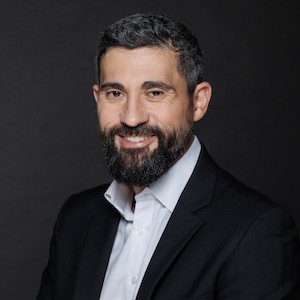
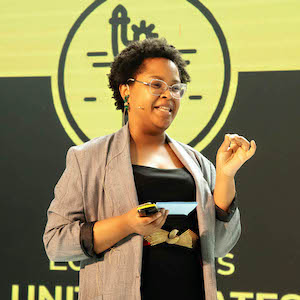
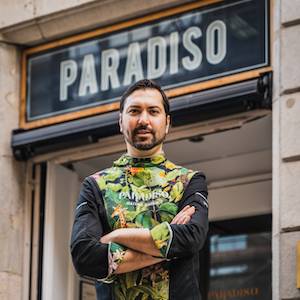
[00:00:10] Ray Latif: Hello, friends. I'm Ray Latif, and you're listening to the number one podcast for anyone building a business in food or beverage, Taste Radio. This episode features a quartet of interviews with key players from the global finals of Taurus Brandy's Zero Challenge, a competition designed to promote a new paradigm in hospitality by aligning mixology with environmental responsibility. What role can bars and mixologists play in protecting Earth's fragile environment? It's a question that Juan Torres Master Distillers, the maker of Torres Brandy, has posed to the global cocktail community in the form of an annual contest that rewards the most sustainable bar project. A highly regarded family-owned brand based in the Penedes region of Spain, Torres Brandy is the creator of Zero Challenge, an international competition whose aim is to promote, identify, and reward environmentally-friendly solutions in the management of bars and crafting of cocktails. The 2024 Zero Challenge Finals were held last month in Barcelona and featured 10 bartenders based in countries from around the world, including Finland, Estonia, Spain, Mexico, Italy, Canada, the United States, and the United Arab Emirates. Each presented a project intended to improve sustainability and reduce environmental impact within their bars and included solutions often specific to the impact that climate change is having in their respective regions. They were also challenged to develop a cocktail using Torres brandy, one that reflected their commitment to a sustainable future. Juan Torres Master Distillers invited me to attend the event, which spanned the course of three days and included educational tours of the Torres Brandy Solera and Familia Torres Winery, the latter of which has for decades emphasized the importance of addressing climate change with innovative growing methods and production processes. The event culminated in the crowning of Beto Del Toro of Mexico's Rufina Mezcalería as the winner of the Zero Challenge competition, a title that came with a grand prize of 30,000 euro. The following interviews feature conversations with four of the key participants in the competition, including Beto Del Toro, along with Christian Visalli, the Global Spirits Director for Juan Torres Master Distillers, Loni Lewis, a finalist representing Ocon, a restaurant in South Carolina, and Giacomo Gianniotti, the founder of the world's 50 best number one bar Paradiso, and the winner of the inaugural edition of Zero Challenge. Hey folks, it's Ray with Taste Radio. Right now I am sitting with Christian Visalli, who is the Global Director for Spirits for Familia Torres. Cristian, great to see you. Hey, nice to meet you. You know, it is not often that I spend a Tuesday afternoon in the Penedes region of Spain, so I am a very lucky person right now. I think I'm even luckier that I get to sit in front of you. because you have a pretty significant hand in everything that goes on here where we are. Now, where are we?
[00:03:28] Christian Visalli: So we are in Vila Franca del Penedès, very close by Barcelona, around 50 kilometers inside a countryside surrounded by wineries. So it's a pretty cool place.
[00:03:41] Ray Latif: It very much is. And we've been sampling some of your wares, so to speak, over the past couple of hours. Had a wonderful lunch, which included a tradition, eating and otherwise, that I've never experienced before. It involves onions and a bib. Can you explain what we just did?
[00:04:01] Christian Visalli: Well, it's a very, very local tradition, which is the kind of the Catalan way of barbecuing, if we can call it like that. And so it's about roasting this specific kind of onions. And people are gathering together, especially on the Sundays, Saturdays, over the weekend, really. And they share a glass of wine Torres Brandy while they're roasting this. And there is a specific way to eat them. You have to stretch your hands, clean them up and dip them into the specific sauce, which is the secret recipe of each family.
[00:04:30] Ray Latif: It was amazing. The food was terrific. The onions, the flavor. I asked you, you know, do you add oil or butter in the roasting of these onions? yields a buttery flavor that I think anyone would fall in love with, even if you don't like onions. It was not pungent or spicy or bitter in any kind of way. It was just delicious. And even without the sauce, I think it was delicious.
[00:04:51] Christian Visalli: Yeah, absolutely.
[00:04:53] Ray Latif: Yeah. How I knew you and I would get along is that we both used gloves. There were gloves provided. They were like these little, I don't know, food service gloves that were provided so that you didn't want to get your hands too messy or you didn't want to burn your hands because the roasted onions get pretty hot. But I looked over and the only two people at the time, there were more people than usual. Yeah, they followed them. It was just me and Christian. So I really appreciate that. But the reason that we're here in the Penedes region is because Familia Torres is doing something pretty special via its spirits division.
[00:05:27] Christian Visalli: We're very excited to be here right now with all people coming from all over the world. The competition is about transmitting and creating more sensibility with people that work in the bar industry in order how to make the bar business more sustainable. There are a number of initiatives that are connected to the company DNA that are linked to the sustainability. There are a number of projects such as the regenerative viniculture. We have a lot of projects connected to the recovery of our ancestral grape varieties. So we really thought that it was within our DNA to make an initiative that is connected to sustainability for our spirits, part of the business. And that's how the Torres Brandy Zero Challenge was born. The idea behind is not to have only another cocktail competition, but Zero Challenge in which we can stimulate people working in the industry in order to think better how we can make their business more sustainable and win a prize that can actually allow that and make it happen.
[00:06:23] Ray Latif: The prize is significant. It's €30,000. And as you mentioned, there are 10 finalists here coming from all over the world. You have folks from the US, from Finland, from Estonia, from Canada, from Mexico, and of course from Spain and Italy. And Italy as well, of course. Yes, that's true. It is, as you mentioned, not a cocktail competition per se. In fact, 90% of the, I guess, evaluation of these presentations has nothing to do with the cocktail itself.
[00:06:55] Christian Visalli: So one part is obviously the core idea and the impact that it has on the business in terms of sustainability. Then there is the feasibility part. And then there is the financial impact that it has. So when we combine all these three aspects, we can assess each of them separately. And they finally account for these 90 points out of the hundred that they're available to take. So within the feasibility, we also assess the scalability of the project. And I think that the winner of last year's project was an example of that, because he actually presented a project where he needed to buy a specific machine that could actually convert part of the plastic waste that Anibar use. to use them as part of the tools that everybody use in a bar. So it's like some of the glassware, some of the ashtray, some of the straws, some of other common things that you can use in a bar. And the idea behind is not for him only to use that, but he also wanted to involve all the community of bars that was in the surrounding areas. And they can collect also this from them. And so they can actually use this together so when you think about it in the future and we are amplifying that as well well there might be a certain number of bars that can actually come get together put a share of the amount of money that is needed to buy the machine and start doing that in another area of the city or maybe in another city of Spain or maybe in another country and the fact that we can amplify that in the rest of the market. Well, it's a great thing because it can help us make this change happen and it's just an example of last year's project, so we're very excited to see what is coming up this year and what impact it could have in the industry such as the winner of last year.
[00:08:36] Ray Latif: I had asked you earlier when we were doing a press conference or you were doing a press conference about the competition whether or not there was an opportunity to give or fund other ideas beyond that of just the winner. And if that is part of the future of the competition, because again, you want to affect change on a broad scale and a single idea is great. 10 great ideas is even better. So how do you think about supporting those who may not have won the competition, but have great ideas nonetheless?
[00:09:08] Christian Visalli: Yeah, so we do actually keep in contact with all the participants, that's what we have been doing over the past year, not only for the winner, which actually has been included also in this edition because he's going to be one of the judges for the cocktail part actually during the night and that's shows the continuity we have the project. But also in each market that we have been like really visiting them, our representatives are going to their places and we are seeing how they are evolving. I think that it's a good learning from the future in which we can change something for the third edition of this competition. And the good point in that is that we can donate an amount of resources also for the local winners in order that 10 ideas actually have the potential to start. Maybe we can you know, we can work out on the amounts of the prices. Right now, the winner wins the possibility to come over to Spain and present their idea. I think it could be a nice change for next year to adjust this and make the competition even bigger. And also for local winners to be able to have an amount that they can use to implement their idea.
[00:10:16] Ray Latif: One of my favorite parts about this competition is that it includes or features even bartenders. Bartenders are the conduit to new products, new flavors, new ideas. And I got to think that part of this competition, part of the mission behind this competition is to provide bartenders with the tools and resources they need to be able to have those conversations with guests and patrons, to be able to share the impact that climate change is having on winemaking, that climate change is having on beverage alcohol as an industry as a whole.
[00:10:51] Christian Visalli: Definitely, bartenders are very good in preparing cocktails, but they're also very good into talking to people. That's really part of your job, of their job. And with sustainability, I think there is a very important risk for people when they receive information, maybe relevant information, but they can turn it to be very technical and people can start actually to, you know, be less interested or less involved, despite the fact that it's very important information. So if we manage through this initiative, to transmit the right message to the bartenders. I'm sure that they will be the right voices in order to share this with the final consumer, with people, and in a very much more friendly atmosphere, which is a bar and where people are more relaxed and are very open to hear about, you know, a lot of things. And if we manage to put this in the top of mind of the bartenders and they'll be taking this responsibility, we as a brand and as a company, we wanted to take this responsibility. That's why we are doing these kind of initiatives. And we thought that by having them living here a couple of days, transmitting this message, having them the opportunity to make their voice listened, then it's easier for them to amplify this message with the consumers and the people.
[00:12:04] Ray Latif: Oftentimes I think messages about sustainability are similar. People talk about, you know, using less water or adding solar panels or, you know, recycling or using less plastic or less waste. I think one of the most interesting aspects of this visit to me has been the emphasis Juan Torres, Familia Torres, using ancestral varietals in their wine and in their spirits. If you could talk about this notion of ancestral varietals and the story behind it.
[00:12:38] Christian Visalli: Yeah. So the Ancestral Grape Varieties Recovery Project, it's something that has a long history within the company. It started around 40, 45 years ago. And the idea starts from the fact that, as you all probably know, you know, the phylloxera came to Europe When the plague arrived and basically arrived with all the varieties of grapes that were in Europe, obviously it took a lot of time to recover from that. But right now, in the production of wineries, the varieties of grapes, it's continuing growing and it's normalized, let's say. But still, we realized that there were certain places, especially here in Catalonia, where a certain different kind of grape would grow and would sprang. And so the family realized that there might be an interesting opportunity into that. And they started publishing in the local newspaper some advertising, say, or some message or say to the grape grower, if you find a different kind of grape from the one that you're used to see in your land, please call us and we will send somebody to pick up the grape. And actually, you know, a CSI, you know, officer, we have some of the technical department from our company coming to the land, picking up the grape and bringing it back to the laboratory and making a DNA analysis of that. And then once we had the DNA that would match it with the encyclopedia of grape that is in France, and if this variety was not registered, this DNA was not registered, then it can classify as a pre-phylloxera variety, so an ancestral variety. And then we would take the responsibility to plant this, portion of land, plant this variety and wait and see if it grows and see if then it makes good wines. And sometimes it does, sometimes it doesn't. But over these years, we have recovered more than 40, 45, 45 different grape varieties. We made some very nice wines with them. You think you tried some of them over these days?
[00:14:39] Ray Latif: Yes, it's delicious.
[00:14:40] Christian Visalli: And also we started using some of them in a certain other project. We recently launched Vermouth, Cazal's Vermouth, which actually is the first ever made Vermouth with ancestral varieties. It's the Selma varieties, which is another kind. And it's a project that actually talks about the vision that the family-owned company can have, because to wait for somebody to call you, send the people to pick up the grape, analyze it, then plant it, then wait it to grow, and then make the wine, and test it if it's good or not. Well, all this process, that I said in a very short time, it takes years. And that's something that we think it's worth, because these grape varieties, some of them are more resistant to climate change right now, and maybe more useful in the future.
[00:15:23] Ray Latif: It seems like you have a pretty good job, given that you're with a family-owned company that is doing well financially, but is also very much believes in its responsibility for the future of global health and the future of the environmental health. Christian, thank you so much for taking the time to be with me. This has been a lot of fun. Just quickly, who's going to win tomorrow?
[00:15:44] Christian Visalli: Oh, well, you know, it's tough to say, I mean, but I'm sure that we're going to have like a lot of fantastic projects. I wish you the best to all the participants. I cannot say more. I'm really excited to wait for tomorrow's presentation.
[00:16:00] Ray Latif: Absolutely. Now, in all seriousness, I think you're going to have 10 amazing presentations tomorrow and a tough decision to make. I've already seen basically the short notes about each presentation and they all seem like they're very promising. So good luck with everything tomorrow. Thank you. Looking forward to it. Fantastic. Thank you.
[00:16:21] Torres Brandy: Vibrant Ingredients is the natural ingredient partner powering food and beverage innovation, delivering flavor, function, and protection through a science-backed portfolio. Vibrant delivers purpose-driven solutions that help brands create extraordinary experiences. Discover what's possible with Vibrant today. Visit VibrantIngredients.com.
[00:16:48] Ray Latif: Right now I'm honored to be sitting down with Loni Lewis of Ocon. Lani, great to see you.
[00:16:53] Juan Torres: Hi, good to see you.
[00:16:55] Ray Latif: We're up here on a patio. I guess we could call this a patio.
[00:16:58] Juan Torres: Yeah, very nice patio.
[00:16:59] Ray Latif: In a building in the center of Barcelona. It is a beautiful day. Not too many clouds in the sky. I'm getting a good, good sun vibes here. Yeah. Anyway, you just presented as part of the Taurus Zero Challenge competition, which was phenomenal. You did such a great job. You brought a ton of excitement, energy and passion to this competition. And I'm really happy that you did because, you know, as fellow Americans, you know, we always got to come strong for these competitions.
[00:17:30] Juan Torres: Right.
[00:17:32] Ray Latif: Talk a bit about your background in the industry and talk a bit about Ocon.
[00:17:36] Juan Torres: So I'll start with Okon first. Okon is a newer restaurant in Bluffton, South Carolina. It's about eight months old. It is a African and Caribbean-inspired Southern food restaurant. We explore a lot of pathways from Africa to the South. And it's just an exciting restaurant in Bluffton where there's really not that many ethnic restaurants or like tasty food, not tasty food, but you know, just kind of like, you know, different spices and everybody there is not used to it, but it's been so well embraced.
[00:18:12] Ray Latif: Yeah. And here you are in Barcelona. Yeah. I would say that of the five presentations we saw already, I thought yours, again, was really passionate and amazing and exciting. And I think the details that you shared with the audience about the importance of not just the project itself, but educating people about the importance of sustainability and not just patrons, bar patrons either, but those of your community. I'm giving away a little bit too much here. I don't know if you can hear me. No, you're fine. No, but your presentation, if you could share a few details with your audience, please do.
[00:18:44] Juan Torres: Right. OK, so my idea is called the Icoco Room, which would essentially be a secret bar inside the apartment complex where Ocon is located. an area called the Bridge Collective and so in one of the Airbnbs that's a studio we would turn that into a secret bar slash event space and then take all the conventional landscaping up from around the building and put in edible landscaping to be used in that bar and the bar will also use the food waste from Ocon and then collaborate with local farmers in a Montessori school across the street.
[00:19:22] Ray Latif: So just to be clear, the landscaping right now features non-edible plants and foods.
[00:19:29] Juan Torres: There's only one edible plant and it's a magnolia tree. A lot of people don't know that magnolias, the leaves can be used for tea and you could eat the flowers. And so when I was originally entering the competition, my cocktail was called Secret Life of Magnolias and it was a magnolia tea based cocktail.
[00:19:49] Ray Latif: The other plants or some of the other plants that you talked about in your presentation, two stood out for me, moringa, which is really cool and okra.
[00:19:56] Juan Torres: Yeah.
[00:19:57] Ray Latif: How does okra feature into cocktails?
[00:19:58] Juan Torres: Oh my gosh. So you can make okra water and it's like kind of like slimy, but it's really good in like a martini, like using okra water to like dilute an actual martini and use the okra water for that. It's really good and it's supposed to be very healthy for you.
[00:20:18] Ray Latif: I almost feel like, you know aquafaba? Am I saying that right? You know, it's the water left over from dried chickpeas that are reconstituted. Anyway, people use that as a substitute for egg whites. I wonder if they could use okra water as a substitute as well, because it is a little bit more slimy, to use your word.
[00:20:35] Juan Torres: No, that would be interesting. I did see some research on Oak Grove where they're using it to clear microplastics from water.
[00:20:42] Ray Latif: Wow.
[00:20:42] Juan Torres: Yeah.
[00:20:43] Ray Latif: It's a superfood. Yeah. In all aspects of the world. Yeah.
[00:20:46] Juan Torres: So delicious.
[00:20:47] Ray Latif: Yeah. Preparation is so tough for these things sometimes. I host a bunch of our competitions for BevNET. I host our New Beverage Showdown, which is a competition that features 12 early stage beverage founders, all in the non-alcoholic space. Also our food, Pitch Lamb. We do a cocktail one as well. And I see a lot of people do pretty well. And I see a lot of people do exceptionally well. I, again, thought you did an exceptional job. How do you prepare for these things? How do you get your message across? Think about your PowerPoint presentation. How do you try to get everything together such that you're delivering not only the message you want to deliver in terms of the information, but something that's going to move and excite the audience?
[00:21:32] Juan Torres: I think that it's your job to excite the audience. I think that you definitely have to get out of your head a little bit and not think about the other competitors to be exciting and have that kind of like carefree spirit. I also do a lot of praying beforehand.
[00:21:49] Ray Latif: I also do a lot of praying. I like that.
[00:21:51] Juan Torres: Yeah, I pray for success, you know, and then I try not to have my PowerPoint be too cluttered with words because nobody's going to read everything and then have like kind of just like PowerPoint bullets to where you can like expand on what you already wrote. I start the speech off with something that people are going to remember. So this one was, damn, I don't even remember. Then what did I say? Oh, unwavering something.
[00:22:22] Ray Latif: Unwavering confidence?
[00:22:23] Juan Torres: Oh, unwavering determination.
[00:22:26] Ray Latif: Determination. Yes, I recall that.
[00:22:28] Juan Torres: Unwavering determination.
[00:22:29] Ray Latif: I like that you said, though, a lot of prayer, because I've never heard that before, even though people probably pray.
[00:22:34] Juan Torres: Right. Yeah.
[00:22:35] Ray Latif: I noticed in the map that you shared on one of your slides talking about the green space and the path to our local river.
[00:22:42] Juan Torres: Right.
[00:22:42] Ray Latif: And a Montessori school as all being part of the sustainability project that you've envisioned. I also noticed that there were at least two or three churches in the area as well.
[00:22:52] Juan Torres: And they all come for brunch at Okan.
[00:22:56] Ray Latif: Well, it's a trust thing, too. If the community trusts your restaurant, if the community trusts you, then I think it would seem like this isn't like a shill to sell more food or beverages. Here's something where we want to be an inherent and important part of the community that educates people about what we're doing on a sustainability level. I loved the, I think it was the first or second line that you shared in your presentation, which is waste is a lack of imagination.
[00:23:26] Juan Torres: You know what? We went to the Paradiso Bar Lab. Paradiso won last year, the competition. And as they were showing us around, there was a computer screen with the name of the company that makes the machinery that breaks down the plastic and he makes coasters out of it. And there was a presentation going on and it said, Waste is a lack of imagination. Then somebody else sent me a sustainability presentation and it said, waste is a lack of imagination. And I was like, oh, this is like a theme. I'm putting that in my speech.
[00:23:59] Ray Latif: I wasn't sure if that was your line or if that was somebody else's.
[00:24:02] Juan Torres: No, it's definitely somebody else's.
[00:24:03] Ray Latif: Yeah. Well, it's a great one. It's a great one. And I think it's also something that we should teach our kids, right? You know, you don't have to think about garbage or ingredients that you don't use or that you toss in preparation of a meal or a beverage as something that is normal. You know, you should think about it as something that you can either not do or incorporate into another thing, for lack of a better word.
[00:24:28] Juan Torres: Yeah, use your creative juices to just think up new things and new ideas. And the possibilities are endless if you're, you know, utilizing your imagination.
[00:24:37] Ray Latif: Yeah. And I think in particular places where water is a little less available. I mean, that's a big issue in our country is particularly in the West. where saving water and reducing water usage is really important. And I can't recall the exact details, but if you could share them about how you are planning to capture rainwater. Right. I mean, I thought I thought that part was really great as well.
[00:24:59] Juan Torres: Right. So I put on the budget rain barrels because we do get a lot of rain in South Carolina and the vertical gardens themselves would not have a source of water automatically where the drip irrigation that's existing already does have, you know, our city water and it's we have like a regulator to not use so much water, but the rain barrels are something that I've been researching a lot. I actually have one in my backyard and my grandma had one as we were growing up, so I think that it's very important and it's just nostalgic for me because my grandma had this big barrel sitting on her porch and she'd just go and like dunk her bucket and water all her plants and she had beautiful plants and I don't know why more people don't do that, you know, instead of just being like, let me turn the water hose on.
[00:25:47] Ray Latif: Yeah, it's strange. It definitely feels like a very easy thing to do.
[00:25:51] Juan Torres: Yeah. I think in some states, though, it's illegal to collect.
[00:25:54] Ray Latif: Oh, is it really?
[00:25:55] Juan Torres: Yeah, I think in California, it's illegal to collect your own rainwater. Yeah. Oh, geez, I have to look into that because I'm not sure what... Because it's going into the ground, I guess. And it will like, I don't know.
[00:26:05] Ray Latif: I don't know either. Look it up. I don't know. I think it's a good idea. And I think, yeah, ideas from the past and things that, you know, your grandparents may have done are things that you can easily educate your children about. And again, I think that is really the thing that stood out in your presentation. I think the thing that stood out for the judges as well is don't just think about this project as singular to your bar or even singular to the industry. We as a whole planet need to contribute here and work together to address some of the systemic issues that we've been facing as it relates to climate change.
[00:26:38] Juan Torres: Yeah, I think that humans don't see themselves as locusts, but sometimes they go into an area and they just, you know, consume all the resources and then they're like, oh, where else should I move? You know, it's sad. And I think that the people who are moving to our area are moving there for the beauty of it, but then they're not making sustainable changes themselves. But I think that they will be excited to learn how to do that.
[00:27:02] Ray Latif: Yeah. So. Tear out your grass. Stop watering it. Yeah. Put in plants.
[00:27:07] Juan Torres: Let the weeds grow.
[00:27:08] Ray Latif: Yeah, there you go. Lonnie, this has been great. Thank you so much for taking the time. I feel like we could just sit up here and talk for a while. I would enjoy that, actually.
[00:27:17] Juan Torres: Yeah, we can.
[00:27:18] Ray Latif: Yeah. Well, it's sunny. It's beautiful. There's cocktails inside. There's some food, too. So we should probably end here. But thank you so much again. Good luck. Thank you. Excited to try your cocktail tonight.
[00:27:28] Juan Torres: Thank you. Thank you.
[00:27:32] Ray Latif: Right now, I'm honored to be sitting down with Giacomo Gianniotti, who is the owner of Paradiso Barcelona. Giacomo, great to see you.
[00:27:39] Master Distillers: Hello, yes.
[00:27:40] Ray Latif: I saw you yesterday. I met you for the first time yesterday at your bar, the number one bar in the world, according to the world's 50 best as rated in 2023. It is an amazing place. There was a line out the door. I think we were there at 5 p.m. and there was already a line out the door. What's so special? What's so magical about your place?
[00:27:57] Master Distillers: Thank you, first of all. And second, I think Paradiso is a magical mix, you know, like a great recipe for a cocktail. So I think it's the concept that is like a speakeasy and then you enter from a fridge door and when you enter, I mean, the design of the place is amazing. You enter inside this magic world. We have the roof with the wooden curve that involves you when you enter, an amazing hospitality, the cocktail, the creativity, the wow factor. We try to involve all our guests touching the five senses. We say that even we want to touch the sixth sense because the sixth sense is your experience. So the mix of the five senses, with the memories, not with the experience that we want to transmit with our cocktails. So I think it's a mix of these elements. It's a place of experience, but as well it's a place where the people then enjoy their time and they're having fun, having some of the best cocktails.
[00:29:04] Ray Latif: Yeah, it definitely felt like it had a fun, exciting vibe in there. And the cocktail I had that you shared with our group, it was a play on a mint julep, I believe. It was delicious. It was really, really good. We had the cocktail in a speakeasy within the restaurant, which was kind of cool. You go through a bathroom, and then there's like a panel that looks like a wall. There's a sink on that wall, and you open up the the wall and you're in this amazing room that's made to look like the inside of a copper still. And what's even better is that there's Macallan whiskey all over the place. I'm a huge Macallan fan. And so I was just like, wow, this is like, this is a dream come true to be in here. How long ago did you open Paradiso?
[00:29:44] Master Distillers: Paradiso is eight years and a few months. Yes. So it's an amazing journey as we start in three. It was me, my wife and another colleague. And now we are a big family of 46 people. We have an R&D lab with six people working there. So the project has been growing very, very well. And we were so proud of the team and everything we have been achieved.
[00:30:11] Ray Latif: Very cool. I got to ask before we go any further, you're Italian in Barcelona. How'd you end up here?
[00:30:17] Master Distillers: Yeah. So I started in the hospitality. I think I've bought in the hospitality. My family run an ice cream shop called Gelateria Paradiso. That's why the bar is called the same. And, um, When I was 18, I started there, like the passion for the hospitality, but when I was 18, I wanted to learn how to be a bartender properly, and I moved to London. My plan was to be there for just a few months and ended up being there for four years. But, you know, coming from Italy, from Tuscany, being used to Mediterranean weather after a few years in London, it was a bit, I was a bit struggling. So I decided to continue travelling as I really like to travel. And I came to Barcelona and then I find love here. So I've been married here. And then I had my dream come true. Then it was to open my own bar and I call it Paradiso. And so, you know, everything then started.
[00:31:16] Ray Latif: This is a long story short. This is it. It's a great story. And I understand why someone from Tuscany would want to move out of London. The grey skies are not like the ones here or in Tuscany.
[00:31:25] Master Distillers: London is amazing. I love it. Don't get me wrong. But for me, four years was enough.
[00:31:31] Ray Latif: Did you have a soccer team that you supported in Tuscany?
[00:31:35] Master Distillers: I am a big football team fan, yes. Not in Tuscany, but... Are you a Barca fan?
[00:31:41] Ray Latif: Is it Barca? What's your team?
[00:31:42] Master Distillers: No, no, from Italy, from Italy. My team is Roma. Oh, Roma, OK, sure. Because my father is a fan, so all me and my two brothers, we grew up with the passion for Roma. And actually, a part of the team is that I live abroad, so it's like an excuse to be connected with my family, you know, so it's great.
[00:32:03] Ray Latif: That is great. I wish they hadn't fired Jose, but I don't know how you feel.
[00:32:08] Master Distillers: That's a whole other story. We're getting off topic here, John. Come on.
[00:32:11] Ray Latif: Why'd you even bring this up? No. So the Zero Waste Lab, we're here in Barcelona to celebrate bartenders from around the world who are creating sustainability initiatives for their bars in ones that can not only benefit their locations, but also their communities and perhaps the world at large with these ideas that will help address climate change, the effect of climate change, and also just overconsumption, I think, of resources in our world. And you as the first winner, of the Taurus Brandy Zero Challenge competition last year, kind of set the standard, I think, for what to expect from these bartenders. Talk a bit about your project, the Zero Waste Lab, the development of it, its evolution, and where you see it going from here.
[00:32:59] Master Distillers: So, as you say, they presented last year the Zero Waste Lab, then it was a project, then we kind of started before the competition, a couple of years before with some ideas of this idea, a dream, to have a space in Paradiso dedicated to... Before it was to create something from the waste and now it's more on all sustainability. So the process, thanks to the competition and thanks to the prize, then the reason this competition is is evolving, is evolving in more a complete like department in Paradiso, then try to study the operation of the bar and try to bring improvement on sustainability, you know, because even if we have a waste lab, a Zero Waste lab, a sustainability department in Paradiso. We're not 100% sustainable and we have a lot still to improve. But I think then, even before we were focused on sustainability and we did a few projects and then we ended up putting together in my idea for the competition, then it was try to create a bar without waste, basically, and try to make from organic waste, plastic waste and glass and carton paper waste, try to make something that we can reuse at the bar. So with the price, we bought two machines. Then with this machine, we can make, for example, coasters for our bar. That is what we're doing now. But as well with this price, put one of the guys of the team, then he was really focused on sustainability, in charge of this department. So part of the prize being to, of course, pay another people to do this people's job and this guy be focused in sustainability and put the standard for all the team, make masterclass, review as well all the process, but as well, We made an auditory on sustainability with an external entity, then look really into Paradiso and give us some solution. How can we be, not just recycle our waste, but try to be a bar with a positive impact for the people that we work with, for our team, for the farmer that we work with. And then if there is a waste, try to you know, make something on it than it was our original project. So I think this competition give us the power to put in practice our project straight away.
[00:35:45] Ray Latif: And from what I understand, you're working with other bars locally, other bars and restaurants. They are giving you their plastic waste and you're able to use it and transform it into things like coasters as well.
[00:35:55] Master Distillers: Yes, so this is an idea that we had since the first day. Of course, we bought the machine in the last six months ago, so it's been as well a project of learning how to use this machine. All the plastics are good to use with this machine. a lot of problem to coming over but this was one of the point to first masterize the technique and then share it the opportunity and then we have in house machine to transform the plastic into coaster for other bars. of the Born area, where is Paradiso, and the Old Bar in Barcelona, of course. And as well, another thing that we would like to share is that now we are a partner with the Plat Institute, that is a creative entity consultancy here in Barcelona. They have a farm close to Girona, they have a place dedicate to re-study new material such for example ceramic but with no heating or such making like a tray or glasses with for example the oyster shell or like a seashell So, as well, we're working with them, we have a contract, we just started now a contract of three years to study new organic material or try to remake other things from the waste, study, investigate, and then we want to share as well this study with the industry, you know, to share the message and as well then other bars and restaurants can be able to make the same as us.
[00:37:40] Ray Latif: That's fantastic. Now, 90% of the competition is the idea itself and the presentation of that idea. 10% of the competition is the cocktail that the competitors are all making. You're judging the cocktail part of it, and I think you're probably a very good judge of what's a good cocktail, but what represents a good cocktail to you? What represents a good cocktail, particularly with brandy, because I think they're all, all the cocktails have to be with Torres Brandy, correct?
[00:38:05] Master Distillers: Correct, correct, correct. So for me, a good cocktail needs to have personality, you know, like Jose Mourinho. Like Jose Mourinho. Amazing example, yeah. So I need to have like an idea behind, so the flavor, complexity, maybe mix of a few different flavors, a body as well in your mouth, you know, try many drinks and you try and kind of disappear in your palate. So they need to have a body, they need to have an idea, a good presentation as well. So, you know, I need to, It needs to be complex, especially we are in a global final competition and we're judging for the best, especially in this competition that is Torres Brandy Torres Zero Challenge. Apart of a good and amazing cocktail, we want as well then need to be sustainable, so with the local seasonable ingredient and maybe work with the local people, support the local community, or then the waste can generate, can be reconverted in something, or can be compost, or you know, need to have as well an extra meaning for me.
[00:39:16] Ray Latif: You're a man in demand. I think they want you downstairs to start charging these cocktails. So I won't keep any longer. I wish we had more time, but perhaps the next time I'm in Barcelona, we can sit down for another conversation. Giacomo, thank you so much for taking the time.
[00:39:29] Master Distillers: I really appreciate it.
[00:39:30] Ray Latif: Thank you. Thank you. Right now, I am honored to be sitting down with Beto Del Toro, who is the owner of Rafina and the winner of the 2024 Taurus, Brandy, Zero Challenge competition. Congratulations, my friend.
[00:39:50] Zero Challenge: Thank you. Thank you. Thank you very much.
[00:39:52] Ray Latif: It was a tough competition. Yeah. You know, you were up against nine other bartenders.
[00:39:57] Zero Challenge: Nine bartenders and all their owners of a bar. Yeah.
[00:40:01] Ray Latif: Who presented really great ideas and plans for sustainability in their bars and beyond. Yeah. Really delicious cocktails. Thank you. How are you? How are you feeling?
[00:40:13] Zero Challenge: I feel so happy and I feel this moment is a great time. It's a work to looking for nine years, when the project of DROFINA begins. And this is the crown, I tell you, this is the crown of the project. After nine years, it's the crown. It's the international recognition.
[00:40:41] Ray Latif: We don't have video. We're not showing any video. But if you're listening right now, Beto is very emotional about this. Yeah, I can tell.
[00:40:48] Zero Challenge: I still cry right now when I talk with my family in Mexico.
[00:40:52] Ray Latif: God bless you. Yeah, that's amazing. You know, when you started the bar, Grafina, what did you want it to be different? What did you want it to be known for?
[00:40:59] Zero Challenge: OK, the difference is we make our own mezcal. Yeah, in Oaxaca, the sustainability is the one rule. It's the basic rule in all the people. In the people who work in Rufina, it's the sustainability. It makes the difference in all the bars and restaurants. It makes the difference, the sustainability.
[00:41:29] Ray Latif: You know, it's an interesting idea, this Zero Challenge competition. Because when you're a bartender, typically you think, I just want to make the best cocktails. I want to have people feel comfortable and happy at my bar. Yeah, hospitality. Exactly. But I feel like this challenges bar owners and bartenders to do more. To say that we're more than just people who can make drinks. or more than people who can just open a bar. We can help society in so many ways. And I think the question is, how do you help society?
[00:42:07] Zero Challenge: How I help the other people to open another bar?
[00:42:11] Ray Latif: Well, how do you help? your patrons, your clients, to think about climate change. How do you help them to think about sustainability? And your presentation today talked about how you are incorporating sustainability into your strategy. But how do you make your customers care? How do you make them care?
[00:42:35] Zero Challenge: How do you make them be excited about sustainability? It's a nice question. When customers come to Rufina, we serve the cocktail in the glass, a sustainability glass. This is my project. Exactly. Glass made from bottles. Made from recycled material. We take this bottle and make a glass. Right.
[00:42:59] Ray Latif: Well, what's also great is that you have a lot of respect and people seem to have a lot of respect for Rafina and for you. Thank you. And so the bartenders that are here and those that come to Mexico and say, oh, what bar should I go to? They see what you're doing with Rafina and they say, oh. They're incorporating sustainability into their business. Yeah. Maybe I can do the same thing.
[00:43:24] Zero Challenge: Because if you incorporate the sustainability in the business, it's very cheaper for the... Yeah, there's a financial impact. It's a financial incentive. It's the best thing. If you have a business, it's the best thing.
[00:43:40] Ray Latif: Right.
[00:43:40] Zero Challenge: But the Rufina Bar is in Leon, Guanajuato.
[00:43:43] Ray Latif: Okay.
[00:43:44] Zero Challenge: Guanajuato is in the center of the country. and this is the very important place in Mexico because here is the independence of Mexico from Spain in Guanajuato.
[00:43:55] Ray Latif: Okay.
[00:43:56] Zero Challenge: Yeah. It's a very important place.
[00:43:59] Ray Latif: It's an important place and you're making it even more important in terms of modern culture by winning this competition and showing that you can not only have a bar that serves great beverages and serves great cocktails, but a bar that can be relevant in terms of culture and sustainability in this world.
[00:44:22] Zero Challenge: Cocktails with mezcal, mezcal derecho, mezcal, only mezcal.
[00:44:28] Ray Latif: Beto, thank you so much for taking the time to sit down with me. There's so many things going on.
[00:44:33] Zero Challenge: Sorry about my English.
[00:44:35] Ray Latif: No, your English is a thousand times better than my Spanish.
[00:44:38] Zero Challenge: Literally, a thousand times better.
[00:44:42] Ray Latif: My Spanish is terrible. You won this competition.
[00:44:47] Zero Challenge: Yeah, I'm very, very happy for this.
[00:44:48] Ray Latif: It's amazing. You know, it's only 11.30 here in Barcelona. I feel like you're going to be up for a little bit longer than that.
[00:44:56] Zero Challenge: Yeah, I need to celebrate with my people.
[00:44:58] Ray Latif: Another two, three, maybe eight hours.
[00:45:01] Zero Challenge: Yeah. Beto, thank you so much.
[00:45:03] Ray Latif: Very nice to meet you and thank you for the interview. God bless and congratulations. Thank you. That brings us to the end of this episode of Taste Radio. Thank you so much for listening. Taste Radio is a production of BevNET.com, Incorporated. Our audio engineer for Taste Radio is Joe Cracci. Our technical director is Joshua Pratt, and our video editor is Ryan Galang. Our social marketing manager is Amanda Smerlinski, and our designer is Amanda Huang. Just a reminder, if you like what you hear on Taste Radio, please share the podcast with friends and colleagues. And of course, we would love it if you could review us on the Apple Podcasts app or your listening platform of choice. Check us out on Instagram. Our handle is bevnettasteradio. As always, for questions, comments, ideas for future podcasts, please send us an email to ask at Taste Radio. On behalf of the entire Taste Radio team, thank you for listening, and we'll talk to you next time. you