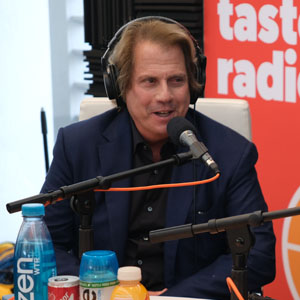
[00:00:10] Ray Latif: Hello, friends. I'm Ray Latif, and you're listening to the number one podcast for anyone building a business in food or beverage, Taste Radio. This episode features an interview with serial entrepreneur Lance Collins, who has created some of the most successful beverage brands of the past two decades, including Body Armor, Fuse, Nos, and Core Hydration. Twenty-three years, nine brands, and four successful exits, Lance Collins has seen it all. Yes, he sold Fuse and Nos to the Coca-Cola Co and reaped a windfall return. Yes, Coke also paid billions to buy body armor, while Curd Dr. Pepper acquired Core Hydration for $525 million. There's no question that his wins are impressive. But Lance will tell you that he's made nearly every mistake that one can make in the beverage industry and has experienced the raw and desperate times when mortgaging your house is the only way to stay in business. When asked about a through line that has linked his companies and defined his career, Lance Collins to passion. It's why he continues to develop new beverage concepts, including Organic Sports Drink Recover 180, Fitness Centric Energy Brand Accelerator, Additive Free Tequila Casa Azul, Better For You Soda My Muse, and Zen Water, a brand of sustainable bottled water. I sat down with Lance at the 2024 Beverage Forum, where he talks about his current and past ventures, lessons from successes and missteps, how he identifies white space and defines differentiation, the reason that entrepreneurs fail, and why he encourages founders to make, quote, fast mistakes. Hey, folks, it's Ray with Taste Radio. Right now, I am supremely honored to be sitting down with the one and only Lance Collins. Lance, great to see you.
[00:02:04] Lance Collins: Great seeing you, Ray.
[00:02:05] Ray Latif: Yeah, it's been a while. Ten years? Well, you know, we have visited your house a couple of times. The first time we were there, we did a video for BevNET.com. The second time we did an interview for Taste Radio, which was very well received. In both cases, I was just amazed. by the hustle that you show, given that you have cases of product always ready to go in your car. And I think that's something that you've done throughout your career is always be ready with samples, always have samples on hand.
[00:02:38] Lance Collins: The traveling salesman.
[00:02:40] Ray Latif: Yeah. Well, I mean, like, look, that's what the beverage industry is. It's hustle. It's great. It's perseverance. And some of that you talked about on stage just now here at the Beverage Forum in Manhattan Beach. When I think about your career and just the volume of brands that you created, like the volume of brands that have been successful on the market, is there a through line? Is there one or two things that link all your brands and all your products?
[00:03:07] Lance Collins: Yeah, it's my passion. You can't teach passion. Even when you're not winning in the beginning and the world's going against you, you have lots of employees, you have to overhire sales. Sales don't keep up with your overhead, your expenses. You burn money like it's going out of style. And then you got to figure out where I'm going to break even. When am I going to save this thing? It happened with Fuse. First three years, it was brutal. Fourth year, it was great. Fifth year, broke even. Sixth year, seventh year, made a lot of money and then sold to Coke. NOS was a rocket ship. I didn't have that issue. But then again, I started body armor. First four years were torture. And everyone said, you're crazy. You wouldn't have to cater eight. Are you crazy? And yeah, I'm a little crazy.
[00:04:01] Ray Latif: That was the first time we visited your house. I remember we were talking about the bottle and some of the changes that you were planning on making to the bottle and did. Some people might look at BodyArm and say, look at that amazing brand. Look at that great, amazing exit that they had with the Coca-Cola Co. But it took years of trial and error to get it to a place where it really could be that disruptive, that challenger brand to Gatorade and Powerade. And I think that's true across some of the brands that we have on the table here, including one more. That's Casa Azul, which, you know, getting into the beverage alcohol business, I mean, some might say that's that's a recipe for disaster. But here you are doing it with both the tequila itself and canned cocktails. I mean, how's that going?
[00:04:44] Lance Collins: Unbelievable. Yeah. Basically disrupting the market, the alcohol market. 70% of tequila brands have additives in it. And I'm all about organic purity, no additives. That's my whole thing. And I'm doing a new organic sport drink called Recover 180. Got it here. Yep. It's organic. It's got one gram of sugar, 15 calories serving, sweet with organic stevia, a little bit of erythritol, organic coconut water. It's like sodium for organic sea salt, potassium for organic sources. And it's the next big smart trend.
[00:05:26] Ray Latif: You had said you want to create something valuable and urged entrepreneurs to create something valuable. Again, you had already entered the sports drink category once before with Body Armor, doing it again with Recover 180. What does this add to the category? How did you analyze a need state for consumers such that this would be something that they would start grabbing, and this being the Recover 180?
[00:05:50] Lance Collins: So I know the sports drink isotonic market very well. I would say that my competitors have a lot of artificial flavors, colors, red 40, yellow three, all those colors and colors are a bad thing. And that bad gives me a very good opportunity to do better with the product. Now I've upscaled to an organic product. It tastes great. It looks great. And when I started body armor, Mike and I had to pay the athletes.
[00:06:20] Ray Latif: Mike Rapoli. Yeah.
[00:06:21] Lance Collins: We had to pay Hardin. We had to pay Gronk. We had to pay Richard Sherman. We had to pay everybody, Trout. And today I started this new drink and they pay me now. because Harden made $27 million. Brock made a lot of money.
[00:06:39] Ray Latif: Off the sale of body armor.
[00:06:40] Lance Collins: Yes. So they wanted to come in heavy because $27 million wasn't enough for James. He wants a couple hundred million now. So he wanted to take the whole round, but he took a good piece of it. And it's unbelievable how this is such a paradigm shift that I'm actually getting paid from the athletes to have skin in the game. And that's a once-in-a-lifetime event I never thought I'd see.
[00:07:07] But Lance: Vibrant Ingredients is the natural ingredient partner powering food and beverage innovation, delivering flavor, function, and protection through a science-backed portfolio. Vibrant delivers purpose-driven solutions that help brands create extraordinary experiences. Discover what's possible with Vibrant today. Visit VibrantIngredients.com.
[00:07:35] Ray Latif: Aside from the idea that you shouldn't be just paying athletes to participate as an ambassador in your brand, what other lessons have you been able to acquire from Body Armor that you're applying to Recover 180?
[00:07:50] Lance Collins: I think strategy. Rapolli was a great strategist. I think I have his playbook. He's probably not happy to hear that. Mike is a genius, and I brought him into body armor year two, and the results were incredible. We fought together. We were in the trenches together. It wasn't easy, okay? It was 24-7, seven days a week, but we did it. And you know, I wish Mike was in my new deals, but Unfortunately, the way his arrangement is, he can't be in the deals. So he's doing other great things with his shoe companies and food companies. But I'm moving on. He's also a partner with me in the organic tequila.
[00:08:38] Ray Latif: For folks who are listening, I'm sure they're like, well, yeah, of course Lance can do all these things because he's got a track record of success. He's got people who are funding his ventures. I mean, but when you think about sort of that grind, being able to do things in a sort of affordable way and do things from the ground up without spending a lot of money, I mean, is there a way that you can advise early stage founders on how to do those things without a huge investment?
[00:09:05] Lance Collins: Well, if they're strategic, And they don't go too far. They can do regional launches, have good sampling teams. Hopefully, they have liquidity. I hope they don't mortgage their homes. But it's a different world. I'm up against Celsius. They have an $18 billion market cap. They're spending probably $100 million on their marketing. They have teams on every channel. YouTube, Instagram, they're just everywhere. But it took them 18 years to get to $100 million. They couldn't really give it away for the first 12 years. So kudos to them, they stuck with it. And now it's a hot brand. And my new brand, Accelerator, which I think is a competitor, and a very strong competitor, we have to play the same game.
[00:09:57] Ray Latif: When you say, I just want to go back to don't mortgage your house, There are a lot of founders out there who will mortgage their house, who will liquidate assets because they believe in what they're doing. You see that as being a dangerous thing to do. And, you know, I think... No, I don't.
[00:10:14] Lance Collins: No, I don't. If they believe in their mission, they have to mortgage their house. I mean, unless they have a rich father or a relative that will invest in their company, families and friends. You know, I mortgaged my house at Fuse twice. It's a true story. So I didn't know if I was going to lose my house or not, but it made me work harder.
[00:10:38] Ray Latif: Well, I think that's part of it. I mean, but what really impresses you about founders when you say work harder? In what way are they working harder?
[00:10:45] Lance Collins: Honestly, if you love what you do, you don't have a job. And if it's working better, if it's not working, you're thriving to make it work. You got to work 24-7, seven days a week. It's got to consume you. Unfortunately, when I started Fuse, I had a little daughter, I shared custody, and it was 24-7 Fuse, 24-7 NOS, 24-7 body armor. And then I got married, which is even better. I married my me as Linda Collins.
[00:11:24] Ray Latif: I think the idea of working all the time is something that will turn a lot of people off because you do want to have a life. You do want to separate your professional and personal life. But the failure rate in beverage is so high. What do you attribute failure to? When people don't make it, there's a lot of different factors. But what would you attribute most factors to?
[00:11:47] Lance Collins: They're in denial. They think they have a great product and they don't. You know, a lot of guys came to me, I try to help them, but, you know, I have examples, but I'm not going to say it here.
[00:11:59] Ray Latif: Sure, no, please.
[00:12:00] Lance Collins: I understand why. And, you know, I said, guys, give it up. In this particular, they had a rich doctor, father, who was losing a lot of money. I said, you should give him a break and figure out how to start over again with something better. And you know what? There's a lot of people that did make it. that I gave advice to. I mean, this girl at Poppy today.
[00:12:23] Ray Latif: Sure.
[00:12:24] Lance Collins: She's brilliant.
[00:12:25] Ray Latif: Yeah. Alison Ellsworth and her husband, Steven, created a brilliant brand. Yeah.
[00:12:28] Lance Collins: Alison Ellsworth is a force of nature. I'm mad at her because she didn't let me invest in her company.
[00:12:34] Ray Latif: She didn't let you or she didn't ask you?
[00:12:36] Lance Collins: She didn't know me.
[00:12:37] Ray Latif: Oh, okay.
[00:12:38] Lance Collins: But what she's doing is wonderful. I have a product in Functional Fizz that's coming out called Muse with the D'Amelios. It's disruptive. I'm going to give everybody in that character a run. I got Bill Juarez running this, Megan Robles, my marketing person. They're awesome. Bill is just a force of nature. And Megan. And you have to have great people. I mean, if you don't have great people, You can't do it all yourself.
[00:13:08] Ray Latif: Great people is really important. What else is important? Because if I look at, say, the accelerator can that you have right here, I see this branding and I'm like, how is this going to stand out on shelf next to a Celsius? And I really believe it could. But what did you want out of this package design, out of this label design?
[00:13:24] Lance Collins: I'm going to mention a name, Evan Schuster. Evan Schuster.
[00:13:28] Ray Latif: Who is that?
[00:13:28] Lance Collins: And Scott DeLorme. Evan Schuster was a designer at Nike. OK. And then he was with Scott DeLorme at Monster. and then they came and joined me at Ashok, which by the way, was a 16 ounce can. We launched it during the pandemic. We failed miserably. It was a great product. We just couldn't compete against Bang and Monster and Red Bull. And we figured out, you know what? This is not working. This is a perfect example of how to evolve. And we said, you know what? I'm going to go into a 12-ounce slimline can. I'm going to do a thermogenic energy drink that helps burn fat, that tastes great, has no sugar, ocean minerals, all the little things you got to do. NSF certified for athlete safe. And we developed this beautiful can and it's on fire.
[00:14:27] Ray Latif: I want to ask one more question about Accelerator. I've never seen a flavor called Cherry Ice Pop. Now, our technical director, Joshua Pratt, I would think, would love this flavor. But how do you think about the flavors, particularly for modern consumers? We've got the can right here. This is the Rocket Pop. This feels very American. It's the best word. It basically looks like an American flag here. And I think, again, it also feels like it's for a younger consumer. Like this has a popsicle, like a red, white and blue popsicle as part of the branding here, as part of the label design. Is that who you need to reach with energy drinks?
[00:15:04] Lance Collins: Gen C, millennials. Yep. We have some baby boomers too.
[00:15:09] Ray Latif: But, you know, for the most part, are those the ones If you were creating a new brand, do you have to be laser focused on one particular demographic, or is it something where you'll learn along the way about who's drinking your product?
[00:15:22] Lance Collins: To be honest, you'll learn along the way, and you'll know really fast. who's drinking a product. We have sampling demos and we do a lot of data mining and we have a lot of Gen Z millennials on this. And also with Recover, Core and now Casa Azul. It's recently priced so we have a younger demographic.
[00:15:46] Ray Latif: Lance, I've already taken up a lot of your time. I just I just got to ask, you know, if you were to start over, let's say you were your 25 year old Lance Collins and you hadn't created any brands and you're starting over and you said, look, this is one mistake that really cost me a lot of time, money and resources, and I would never make this mistake again. What is that mistake?
[00:16:09] Lance Collins: Well, first of all, I've been blessed. I never made that mistake at 25.
[00:16:13] Ray Latif: Okay.
[00:16:14] Lance Collins: So, I actually didn't start Fuse until I was 35. Okay. So, anyway, I had... You look young, so I'm trying to... I look younger than my age, but that's because I love what I do. I love my family. It's easy to look good. Anyway, at 25, You know, measure three times and cut once. If you have something that you think is going to work, go with it. I mean, the worst thing can happen, you fail. And by the way, 90% of the people fail. It's just a fact. And I'm the lucky top 10% that haven't failed.
[00:16:57] Ray Latif: But there were mistakes along the way, and if there was a mistake that you said, this is one that really I should not have made and I will not make again, what would that be?
[00:17:05] Lance Collins: Okay, when I started body armor, I had an over wrap, and if you had a Swiss Army knife to open the bottle, you'd have to drink, it was super drink. I had Coke 210, I had amino acids, I had green TX wrap, it was called body armor super drink. I said, Tony Haralambos called me, he goes, people are not liking the drink. It's too extrinsic. And I said, yeah, but it's a super drink. He goes, it doesn't matter. People don't like the taste. So with that, and luckily only in LA, I got on a plane and went to Erlanger. I change the forms, change the packaging, and I relaunch the current formulas. But the key is, if you're going to make a mistake, make a fast mistake and make a fast fix. And try your best to keep it simple. Try your best to keep it simple.
[00:17:57] Ray Latif: Last thing, Lance, you know, all of your brands are positioned to be big, mainstream, nationally distributed brands. Is that intentional? I mean, have you ever created a brand where you said, you know what, this is going to work regionally, this is going to work with this particular demographic, this is going to work with these types of folks? Or have you always been go big or go home?
[00:18:15] Lance Collins: No, no, I'm not. Even with accelerators, I'm only at 20% ECV after a year. I think that's still pretty impressive, actually. Right. Okay, but for me, I'm letting Mike Fine and Andrews Unbelievable, Wilkinson, and Paul, and their strategy is Let's grab three, four markets and really develop them. And then let's increase our ACV to 40% or 50% in our second year. And by third year, it would be 100%. But if you create some sparks in like Louisville, in like Minneapolis, in Kansas City, in Dallas, and you get these success stories, you can make a brand. It's harder to go broader and wider in the beginning and be successful in all that geography. And I'm more focused on recovery, on launching not the whole country right away, maybe the East Coast, West Coast, and that's where we're at. So it's always strategy for me now, because I know how hard if you go too deep and far in the beginning, you're not going to make it.
[00:19:26] Ray Latif: Lance, it's always great speaking with you, even if it's a few years apart here and there. But I really appreciate the time. Congratulations on everything you've built. It's amazing. I mean, since Body Armor, you've launched, what, another six brands? I mean, it's crazy. Stuff like that. Yeah. Yeah. Well, congratulations on everything. I'm really happy that you're spending time with your family. It's why you do what you do, right?
[00:19:47] Lance Collins: Ray, you look really good, man.
[00:19:49] Ray Latif: Thanks. I appreciate that. You as well.
[00:19:50] Lance Collins: All right. Thanks for having me.
[00:19:51] Ray Latif: Thank you. That brings us to the end of this episode of Taste Radio. Thank you so much for listening. Taste Radio is a production of BevNET.com, Incorporated. Our audio engineer for Taste Radio is Joe Cracci. Our technical director is Joshua Pratt, and our video editor is Ryan Galang. Our social marketing manager is Amanda Smerlinski, and our designer is Amanda Huang. Just a reminder, if you like what you hear on Taste Radio, please share the podcast with friends and colleagues. And of course, we would love it if you could review us on the Apple Podcasts app or your listening platform of choice. Check us out on Instagram. Our handle is bevnettasteradio. As always, for questions, comments, ideas for future podcasts, please send us an email to ask at Taste Radio. On behalf of the entire Taste Radio team, thank you for listening, and we'll talk to you next time.
[00:20:46] Lance Collins: you