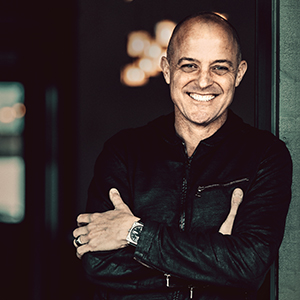
[00:00:10] Ray Latif: Hey folks, I'm Ray Latif and you're listening to the number one podcast for the food and beverage industry, Taste Radio. This episode features an interview with Greg Brewer, the co-founder of critically acclaimed winery Brewer Clifton. Just a reminder to our listeners, if you like what you hear on Taste Radio, please share the podcast with friends and colleagues. And of course, we would love it if you could review us on the Apple Podcasts app or your listening platform of choice. It's not surprising that despite being one of the most admired and lauded winemakers in America, Greg Brewer keeps a pretty even keel. That's not to say that he isn't gregarious or remarkably candid, he is both, but his laid-back demeanor is reflective of a worldview and winemaking style based on simplicity and surrender. Named the 2020 Winemaker of the Year by Wine Enthusiast Magazine, Greg co-founded Brewer-Clifton Winery 1995 and for the past 26 years has been crafting world-renowned Pinot Noir and Chardonnay produced from grapes grown in Santa Barbara County. Self-described as an honest voice of our vineyard, Brewer-Clifton Winery known for a philosophy of minimal intervention as it seeks to achieve the purest expression of the fruit. While industry heavyweight Jackson Family Wines acquired Brewer-Clifton Winery 2017, Greg has continued at the helm, noting that his commitment to the winery and its traditions is stronger than ever, a statement demonstrated by sustained acclaim and plaudits. In the following interview, Greg spoke about why a focus on ritual and discipline has guided his three decades in the wine business, a critical lesson about branding that he learned from celebrated designer Diane von Furstenberg, how vulnerability factors into his leadership style, and how he's maintained a positive and fruitful relationship with the trade and press. Hey folks, it's Ray with Taste Radio. Right now, I am honored to be sitting down with Greg Brewer, the co-founder of Brewer-Clifton Winery. Greg, how are ya?
[00:02:19] Greg Brewer: I'm good, Ray. Thanks for having me on the show.
[00:02:21] Ray Latif: Thank you so much for joining me. I gotta start with this, because I'm sure there's gonna be people who are gonna make this joke. You're a winemaker. Your last name is Brewer. People are gonna be like, hey, shouldn't you have been a beer maker? How often do you get that joke?
[00:02:35] Greg Brewer: A fair amount, surprisingly. I mean, in honesty, less, I think, a bit than I used to. But yeah, nonetheless, it's pretty common. And the funnier element of that is when literally that question is posed with a spirit like I've never heard it before. And maybe that's part of their joke, too. But sometimes, like, God, do you ever think you're in the wrong business? It's like, oh, my gosh, 31 years later. No, I've never heard of that before.
[00:03:01] Ray Latif: Well, it turns out that things worked out for you as a winemaker. You were named the winemaker of the Year by Wine Enthusiast, the 2020 winemaker of the year. Congratulations on that accolade. Thank you. What does that award do for a winery like yours? What does it do for your wine portfolio?
[00:03:19] Greg Brewer: It was a huge honor and it's hugely flattering, you know, to be recognized in that regard. And I think, you know, something that I earnestly feel in my heart and I did from the very beginning of even the nomination, you know, the nomination was a win. For me, it was like being, you know, nominated for an Emmy or an Academy Award. I mean, you know, it's like that's awesome that you're recognized there. And whoever wins, it almost doesn't matter, in my eyes anyway, you know, because it's, you get to that point and it's cool, right? And for me personally, you know, it truly is, in association with the area. And I mean that with the utmost sincerity. All I know is this place. When I came into the wine business in May of 91, I didn't know Chardonnay was a grape. I was barely 21 years old. I mean, I liked wine like any college kid. You know, oh yum great i'll have more, you know, it wasn't So everything that I am my entire identity is is wedded and rooted in Santa Barbara I've never worked anywhere else. And so everyone who's taught me trained me inspired me pushed me around beat me up You know, they all own this as much as I do the whole landscape does and so that that for me was awesome, you know to see Santa Rita Hilla, which is our little district within Santa Barbara county and then Santa Barbara county as a whole being kind of highlighted on the global stage was an amazing feeling. You know, it was great. And if I played a tiny role in making that happen, that's awesome. I mean, I work hard and that's fine, but nothing we do is that complicated. You know, we're disciplined and we execute and I'll sacrifice everything I have for this craft and for this place. But I'm not that special. I mean, I'm just a person. At a certain point, I'll be gone. And so for the area, it was tremendous. And it really, it just helped to buoy up everyone's kind of awareness of the area if they hadn't heard of it. And then certainly, it fueled and emboldened one's confidence in the area. If they had known of it or traveled here, been here, had the wines, it was kind of like a, it was ratcheted up a level to see it recognized on that scale.
[00:05:22] Ray Latif: Yeah, it seems like the collective has a lot to do with the success of your brand and you personally. It's interesting you mentioned that you'd sacrifice anything for the area, though I wonder what kind of career you may have sacrificed prior to becoming a winemaker. Your background prior to wine was in French literature, is that right?
[00:05:44] Greg Brewer: Yeah, briefly, all my family, we've all done different things, but a lot of it has been like in education, university, I mean all kinds of different things. And so it's like our family business is to teach and that's ultimately, and like theater too, so it's like dramatic teaching is basically what we do. like some people are cobblers, some are accountants, like we're like, we're that. And so anyway, I love teaching. It's my favorite thing in the world. And so, you know, my first plan was to teach French in high school, French originally, and then that quickly got shifted into teaching at the college level. And so, yeah, I taught at UCSB for a year. you know, entry level, you know, French 2, 3, 4, whatever it was, while I was working on a master's that I never completed in French Lit. And all I wanted to do was teach. And obviously, as many people know, sometimes in the university environment, you know, there's a lot of other things at play as far as expectations of oneself. And so, I'm 21 years old, you know, I wasn't a grad student material. I mean, I kind of stumbled into it. And so, while I loved the teaching and I took that very serious, you know, grad school and research and French lit things, I kind of let go by the wayside. And at the same time, I was in the tasting room at Santa Barbara Winery, which was my first job. And I immediately, I mean, day one behind the bar, I kind of, I got that charge of education. You know, even though I didn't know anything that first day, you know, I got a book that night. I read it cover to cover just to start learning more because I thought, gosh, as soon as I learned more about styles of Sauvignon Blanc, Riesling, whatever it is, then I could help quell people's insecurities about wine. I could help kind of numb some of those insecurities and fears people bring to it in that same way that you receive that energy in your teaching and sharing any information with people. And so I was able to kind of just transpose the educational piece into wine, essentially, at the bar. And then I've always done that my whole career, you know, just straddling front and back of the house, essentially.
[00:07:35] Ray Latif: Yeah, making wine more approachable for everyday folks has been a challenge for the wine industry, well, probably since day one, since there was a modern wine industry. At the same time, I'm sure there are legions of Wine Enthusiast who have attempted to enter the business and not done so well for themselves. And I'm sure there's just been just as many folks who've wanted to start their own winery and have not been able to do so. Why did you want to start a winery?
[00:08:04] Greg Brewer: It's a great question. I was thinking about that. I mean, it just made sense at the time, you know. And I was thinking about that concept just, you know, just the other day. And I really don't know, you know, I think it's interesting. Wine's been around for a bazillion years, right? And it's very primitive. It's very barbaric. Nothing's new, you know. It's like it is what it is. And so, you know, when we started, I was thinking about that motivation. And it wasn't, hopefully it wasn't like an arrogant, you know, I was 26 years old. Hopefully it wasn't like, oh, I've got this figured out, this wine thing. Let me like show everyone around the world, you know, but literally I think it was being inspired by those heroes around us, you know, that, you know, be it in, you know, in Europe or certainly mostly in California, you know, Russian River and down here in Santa Barbara, these idols, like these amazing people that were like, were pursuing their own thing and they were working at bigger wineries or they started their own small ones. And so it's almost like a mash-up, you know? It was taking little pieces of here and here and here, and then kind of morphing it together and dropping it into this landscape of what would become Santa Rita Hilla that was proven by a handful of the true pioneers around here, like Richard Sanford and Brian Babcock and a handful of others. But it was still small. It was still kind of under the radar, you know It was like a surf spot that wasn't crowded or a fishing hole where you know There's still tons of fish because like the boats hadn't figured it out. And so it was like, oh my gosh Like we'll take what we've learned and kind of wines we've had from different places And then we'll kind of we'll meld it together here and wouldn't that be cool to see what would happen? you know, and so that was really the motivation and there was never a there was never a plan other than, you know, scraping together, you know, a very humble kind of seed, seed capital is a big word, humble little spare change, you know, the starting point of money to get things going. And it was like, oh gosh, hopefully we can get through the year. I mean, there was no like, oh, let's have a prospectus and then year eight, we'll be doing XYZ. It was very, you know, not month to month, that's a little extreme, but certainly year to year, we didn't really, you know, we didn't know we were just going to do the best we could.
[00:10:08] Ray Latif: I feel like, I don't know, maybe you've already done this, you probably should now looking back, create a business plan or at least some sort of blueprint business plan for budding wine entrepreneurs called how to start a winery with $12,000. I mean, I guess what I'm saying is, how do you start a winery with $12,000?
[00:10:29] Greg Brewer: Well, creatively, you know, we were young. You know, we had other jobs, thankfully, you know, within the wine sector. We had other jobs locally to make a living, you know, because we didn't take anything out of this for the first three or four years until I think it was 99. And we were, you know, doing pretty well. We thought we'd splash out. And, you know, we each got cell phones. And so Steve clipped in. I got the blue one. But that was our first, like, high five. Check us out. Like, let's make it rain. You know, that was our first thing. And, you know, so we had other jobs. And the beautiful thing about our craft is largely, you know, you're not time dependent. That was one thing that always really resonated with me. You know, it's not like, oh gosh, what happens when the restaurant is closed? You know, it's, there's no, there's no time with this, you know, so you could get food in, you could do the work in the middle of the night. You know, you could do a lot of like written correspondence back then, writing a newsletter, sending things out, packing boxes to ship away at the FedEx place. It could all be done nocturnally, you know, so you could swing shift yourself. And that's one thing that's advantageous about this line of work as compared to retail strictly where it's 10 to 6 or whatever the hours. And so that was, you know, that was one thing. And then against being like watching and just like anything in life, you know, if you if you don't have a plan b or you have no other Choice, but to make things work you make them work. You know the stakes when you have to really deliver So, you know i've heard tons of stories throughout my life of like rihanna when she tried out in front of jay-z in new york I mean like I mean i've heard that in her interviews and it's like she was like game on. This is your chance to not be nervous as a teenager, you know, but to do that. And so there was a futures program, you know, in the spring after, you know, the fall of 96, it was like February of 97, very prominent locally. And it was like, gosh, we need to be accepted in this little futures program. We need to be written up. We need to sell some wines. In advance so that we can get some cash flow to pay for packaging, you know And then we'll bottle early in the summer so we can hopefully sell out at the end of the summer So we can get you know, stay on the hamster wheel and kind of do harvest again You just you make it happen. You make it work. It's not like oh gosh. I wonder if we should do this It's like you have to do this And so you're motivated by different things when it's a need not simply a desire Why was it a need? Why was there no plan b? Well, because there's no other money. I mean, you know, if we didn't sell out of the wines, we wouldn't have bought fruit again and we would have ended after a year. So the only way we could have kind of kept it going was, was to do that. And what's interesting is that then you're armed. It's like anything else, like, you know, you're a kid, you're riding a bike and you get a flat tire and you're like between your house and your school. You've figured out you know what I mean? You ride on the flat tire you walk your bike home. I mean you It's not like oh someone let me call someone i'll get picked up I mean, you know, I was raised in the 70s like that wasn't an option and so You know you figure it out and then the more you have some kind of twists and turns you get experience and then you You apply those to different circumstances. And so You know those little things that we learned early on were super helpful later, you know the economic downturn A very costly kind of troublesome divorce and my kid, you know things where it's like, oh, well things aren't awesome right now But then you're kind of like, well, we've gotten through this. Like, we'll figure it out. We'll do it. And we'll, you know, have a big octopus tattoo on my arm. I mean, part of it is like animals that are really inspiring to me that can adapt, you know, to survive, to distract an enemy, to sever an arm off and grow another, to look like something else. So, I mean, that's the only way that something can keep going. And that's been part of the spirit of our project. It's been fun.
[00:14:03] Ray Latif: Did you at the outset realize or realize the potential for a brand or is it more about let's just create great wine and see where this goes and build a sort of brand identity after the fact?
[00:14:19] Greg Brewer: A little bit of both, I think, you know, it's such a thoughtful question you posed. It's a little bit of both. I mean, I think, you know, it was kind of taking from, you know, models that were already in place, like, you know, William Seliam up in the Russian River, you know, and Bert Williams, he was, that was like really the original, that and Calera, you know, that's really William Seliam, like the original, like, culty, you know, Pinot person in California. And Bert Williams, you know, had a home down here in Santa Barbara, and he was best friends with Chris Whitcraft, who kind of did some work at the winery where I worked, so I got to know them. And, you know, I'd read about them in magazine, you know, William Selian in magazines and covers of magazines and like, you know, it's like crazy. And then he was like the coolest guy, you know, and so it was kind of like, wow, like that's awesome. And their, I don't want to say template, that seems formulaic, their protocol, their aesthetic, their ethos, I guess, William Selian was just, kind of translated down into here, into this environment. So it wasn't like chasing like a cover band, like, oh, we want to be like William Sully. It wasn't that. It was like, wow, that's really cool. Why don't we like put our own spin on that general trip? And then it was, you know, when we started, while we didn't have a business plan or anything, we were very convicted as far as our approach. And so it was very much this kind of reliant on removal of self and raising everything the exact same, and it's very static atmosphere. So it's not to impose bias or judgment on anything. And so It's a very tidy package. I mean, the story is very easy to tell and to get your head around. You may or may not agree with it. That's not for me to control. But the storylines, oh, I get it. That's what you both do. That's what, you know, that's what Brooklyn is about. And we've never wavered from that. So I think that's helped to kind of give some strength to the project because it's, we've never, you know, there's always temptations. Oh, maybe we should this, maybe we should do that, you know, and, and the thing is to be loyal to like that, that plan. And I think that loyalty has been helpful in our overall success because people know what they're getting with these wines. People know, you know, the storyline and they feel comfortable with the storyline because it's very concise and very compact and very steadfast.
[00:16:30] Ray Latif: What are the key elements of that storyline? How do you communicate what you guys are doing in a way that is, I guess, efficient, yet also stylized in a way that is going to attract attention, not just from the consumer level, but from the trade level as well?
[00:16:47] Greg Brewer: Sure, yeah. So, you know, we're wedded to a little eight-mile stretch of land, you know, called the Santa Rita Hilla that we collaborated to help, you know, map and define back in the late 90s. And so there's provincial loyalty and provincial kind of hometown pride things that people can understand. no matter where one's from, there's always that like, oh yeah, that's my hometown, you know, and this is my professional hometown. And so that's helpful. And then raising everything in a very neutral fashion. So, you know, all really old barrels, everything's always raised the exact same, you know, vineyards are all interpreted the same, you know, so vineyard to vineyard, block to block, clone to clone, year over year. It's the same because who are we to alter the outcome of something, you know We do the best we can and there's protocol obviously of getting from grape juice to wine, right? But it's like that's like monkey work. I mean, it's very it's very simple how we do it and Um, it is I mean, it's very simple. It's not a big deal. And so You know when you're working with great produce, right? It's like you go to the farmer's market and you bring a tomato home like some heirloom tomato from someone and what are you going to do slice it and Put salt on it or a piece of basil. I mean, you know, it's not it's not hard because that You know, it is it's already there, you know, and so that's the burqa thing. So everything's raised in neutrality And then we're immediately adjacent to the ocean and it's a very cold pacific where we are and our valley opens up due west onto it like a mouth and so Within the the messaging and vernacular of the project. There's also a huge role that the ocean plays and and that also is very sensual and people can relate to it as well, you know, cold and wind and fog and desolate soils and kind of sand and that kind of lunar landscape and people are usually pretty down with that too. So you think about this kind of cold foggy bundle up in your fleece and be contemplative like on a, you know, beach walk when it's kind of cold and foggy and salty and then kind of all that's harnessed and raised in a neutral setting And then it's like, Oh yeah, I got it. That's broke up in a nutshell. I mean, that's all there is to it really. And the rest, the rest is just being careful and doing things the same all the time, you know, and that's even that, I mean, that was a pretty tight story for you, but I mean, that can even be abridged, you know, and it is, if I'm pre-shipped in a restaurant, I've got 20 seconds with servers, which is my favorite. It's like adrenaline rush. That's my favorite thing in the world. But it's like, you know, a couple of quick buzzwords about each wine, boom, boom, you know, chardonnay and pinot, and then that, you know, neutral, ocean, salt, savory, you know, wind, cold, whatever, boom, done. And you can handle that. And there's so much input in our lives. I mean, there's so many wineries, there's so many vineyards, there's so many styles, other beverages, everyone's on their phone, everyone's a little bit distracted. I mean, attention spans are finite, more so than ever, and I think we'd all agree on that. And so the message has to be loud and clear. It can't waver. It's not like a normal winery. It's funny. I love Japan. I love being there. I love watching that culture operate. It's not for everybody, but it's crazy inspirational for me. I read these sushi books, these profiles of these chefs and their lives. That's such a fantasy of mine. I love that, you know, you apprentice somewhere for 15 years and then you can do this and like for 50 year career, you've done the exact same thing. You've got five stools at your counter and like, you can set your clock to the time. I mean, it's like, it's the thing. And I love the rigidity of that. It makes me smile even relaying the story to you. And that's, it's way too restrictive for many people. And some would see this craft, like many, of, oh, no, I want to explore. I want to do this. And the role of the winemaker is to nurse out the best of these different things. And that totally makes sense. The role of a chef or an artist or anything, it could be the same thing. Our approach, anyway, is just this kind of, for me, calming, this calming, repetitive, more zen situation. And it's also something you can't pull off anywhere, I don't think, because Santa Barbara is so regular and so consistent in our weather because of where we are in the state and the ocean. And so it gives us, it affords us this honor, privilege, opportunity to operate in this very raw way. Because there's never in the 31 years that I've been doing this, there's been really no thing we've needed to do to compensate for that scale of adversity. that most people would experience over three decades in a wine region.
[00:21:16] Ray Latif: At the same time, I mean, I get why you're so deferential to the region and to what you do. I mean, because you have such access to great fruit, great grapes. At the same time, I'm sure you have neighbors in Santa Barbara, in the Santa Rita Hilla, who probably have access to some of those grapes, who probably have access to some of that land. And yet they're not as well-recognized or respected as Baruch Clifton. So you must be doing something different. You must be doing something that is unique and sets you apart from at least your neighbors, right?
[00:21:46] Greg Brewer: Yeah, I mean, yes and no. I mean, it's really funny. There's something my wife and I, my wife makes wine as well, and there's something, you know, sometimes we talk about the nuance. And sometimes that's overlooked in something. And I think it's most easily understood in the realm of cooking, you know, where let's just say, like, I'm not a very good cook, right? And so, but let's just say I've got the same ingredients as a trained chef, right? Like, he or she is going to, at the end of the day, at the end of the, you know, preparation, that food is going to taste different from mine. Mine will be fine. But, like, there'll be certain things that they do. Just like when you watch those cooking shows, it's like, oh, gosh, don't forget. I was like, well, that changes everything, doesn't it? Sure. And so there's that. And really with us, it's a very, very simplistic thing. And it's funny that my closest friends locally that make epic wines, sometimes they joke if we're on a panel together or they're speaking about me. And they say it's so funny because Greg does close to nothing. I mean, as far as the execution of these things, it's very straightforward. And it's like, it couldn't be more simple. Yet those wines don't resemble many other things. And that to me is very meaningful, you know, because if there's no weird trickery bearded lady at the circus stuff going on, and we're just being kind of strict and doing our thing, and if they don't taste like other things, that to me is successful. Because in this day and age, I think there's a tendency for all fields. There's a risk of things to become a little homogeneous. Photoshop, autotune, you know, editing. Certainly, you know, there's all kinds of things you can do to alter the outcome of a line. And I think, you know, one of the reasons why we've elected to go into an area that was not super well known 25 years ago to only be neutral, now to only work with these estate vineyards that we have. It's not because they're the best or it's the best area or we have some secret, but it's singular. And so part of the motivation of neutrality is to not work with elements that other people have access to, like new barrels. New barrels are beautiful, that's fine. You could buy the same ones that I do and all of a sudden that could be a unifying element in our resultant wines. And so part of like the naked thing is like, well, if these things are just these things in these places, they're going to be what they are and people might dig them and they might not dig them. And very fortunately for us, it's worked out. I mean, there has been that acceptance of the product with different types of buyers and wine people and then within the media as well. I mean, certain people kind of like us more than others, but by and large, our scorecard is pretty good because I think people understand our story. They understand that the thing behind it, and I think sometimes, you know, there's a number of wine writers with whom I'm quite close, and some have different reputations of he likes this, she likes that, and sometimes they're really not fair, you know, and I think with some frequency, some of the really good writers and those that, you know, are kind of have had the most sway, they're confident, you know, and they see, they see like the fire in something, I mean, they see the direction of something. you know, so it's not necessarily, oh, it's all new up, or it's this great, or it's picked early, it's picked late. It's very trivial, you know, and people kind of gravitate towards that. It's very superficial. But if it's like, oh, whoa, like this person is like on this path, and they're going for this very specific thing, I think that's That's cool. And I think people, you know, I've always been inspired by that in other things like Bjork or Prince or whatever, you know, people that like do like, they do their own thing, you know, and you may or may not like that. But you know, you hear Bjork's music. And I think it's just crazy, amazing. But it's like that you hear like a little bit of a song like, oh, well, that's her. You don't mistake that. And I love I just, that to me is an inspiration.
[00:25:39] Ray Latif: Bjork's music, Prince's music, very specific music too. You know who they are almost as soon as you hear the first note. And I know you said, you know, some people may dig, you know, your wine and others may not. And it's the same thing with music or art or movies, what have you. At the same time, wouldn't you want everyone to love your wine in the same way that a sushi chef, if I can say that right, you know, can give you the best fillet of tuna that you've ever had in your life over, you know, the most delicious rice that could ever be served. I mean, you would want everyone to have that, right? And you would want everyone to love that. Does that mess with you sometimes? I mean, does it cause any kind of conflict in you that you're not creating something that everyone would love?
[00:26:28] Greg Brewer: No, no. I mean, every now and then, you know, you get some weird, not weird. That sounds terrible. Someone who doesn't understand. But, you know, there's some commentary. Someone is not, you know, isn't as enchanted by the results as, you know, you might hope. And that's fine. You know, that's fine. Because if you're chasing all that, because like you said, you can't please everybody. So, and I think if you try to, you're just going to be like spinning, you know what I mean? And you're going to get further and further away from what you're electing to that you're hoping to accomplish. And I think what's been interesting is, is there are a handful of wine. I mean, Brewer Cuffin is a good example. And we have a sister project called Diatom, which is another Chardonnay project. And Diatom is very, like, it's such a, the focus of that wine is so It's very personal, and it's very, very subtractive, it's very raw, and it's very, very singular. And when I started going down that path, you know, call it 20 years ago, I guess I was prepared for or almost desirous for it to not be alienating or threatening, but like I thought the audience would also potentially be finite, you know, because it was a kind of an extreme thing. And then I've quickly realized that the audience is crazy vast for that. And it's because I think, again, the intent is pure and the reason for doing it makes sense. And so as a result, I think that people are ready to hear it.
[00:27:53] Ray Latif: When we spoke last and almost everything I've read about you, you talk about surrendering and you use that word a lot when describing Brewer-Clifton.
[00:28:02] Greg Brewer: Giving into something. I mean, I think about, you know, espousing oneself to somebody else, you know, which is kind of the way I have to San David Hills and to Brewer-Clifton Winery. And I think you can be attracted to a bazillion different people. I am, you know, and I'm attracted to tons of other regions. I mean, I see them all equally, you know, Russian River, New Zealand, Texas Hill Country, upstate New York. They're all the same in my eyes. They're beautiful people, like very, like representative wines. It's cool, you know, so that's all, that's all cool. It wasn't like I picked here, like, oh, that's going to be the best area. I'm going to go there. That wasn't it at all. But I'm here. So very much like when you marry someone and you commit to that person, You can give in, you can be raw, you can be naked, you share secrets, you're vulnerable, ideally. When both parties are doing that, then the relationship can grow, yeah? Because you're not trying to control things, or you're not protective, you're not defensive.
[00:28:55] Ray Latif: I think you used the word vulnerable at one point. It's almost like your confidence in your brand and in your company has to be, I guess, moderated with this idea that you have to change, that you have to be a little different. Would that define vulnerability for you or is it something else?
[00:29:15] Greg Brewer: Vulnerability is part of it. Loyalty is another. and the notion of being true to something, you know. And I've thought about that, especially as I've gotten a little bit older. And I had the huge good fortune, it was five years ago, four or five years ago, of having lunch with Diane von Furstenberg in New York in her office with my oldest daughter. And she was the coolest lady. And I asked her, you know, we're talking about different things. And I said, how have you endured this, you know, from Studio 54 and that whole scene? being a princess before, bankruptcy, I mean all these cancer, I mean all these different things and you are you in your wrap dress and those prints and she said always be true to your brand, you know, that's all you have.
[00:29:59] Ray Latif: Explaining or communicating that signature of who you are and what you're about is an important part of the message you send to the trade, the press in particular. Just like in the fashion industry, the press and the wine industry can help make, in some cases, break a winery. I wonder how you've navigated the trade press for Brewer Clifton, because you've had some pretty remarkable wins, and not calling Robert Parker part of the press, but I think, I don't know, I forget exactly what his quote was five years after you started, but it was so impactful that it not only put you guys on the map, it made you one of the most high-profile wineries in the world. really. So I guess what I'm asking is, what did you learn from that experience? And how have you been able to work with the press since to help support the way you are communicating your brand and what you do to the end consumer?
[00:31:05] Greg Brewer: Yeah, that's an amazing question. I think for us, it's all been storytelling and relationships and connections. And so at the beginning, you know, we had this rule where we wouldn't send wines off to anybody, like they needed to come to us and, you know, to kind of have them in context. You're talking about sending wine to be reviewed. Like, oh, we'll get a sentence to these magazines and, you know, hope for the best. And it was maybe a little bit, cocky to do what we did, but for us, the reasoning was like, well, a restaurant wouldn't do that. You wouldn't put together four courses of your menu and ship it in a heat-stable thing, you know what I mean? People come to those restaurants, so why? Because if you're judging something, the context is important. Is it a food truck? Is it a three-star Michelin? That, to me, plays a role in just assigning them. And back then, you know, it was cool. And we'd also offer to go to them, you know. So there's a lot of super prominent writers, and we went to their houses. You know, Karen McNeil, and Steve Haimoff, and Ron Wiegand. I mean, all these people, I mean, they do like tours, and show up, and have like our bag of wine, and like their living room, and you know, kind of tell what we were all about. And it was really cool they entrusted us, you know, with that. They're probably like, who are these crazy guys? And so that was helpful at the beginning. And then also, you know, I think we've always, there's been trust. I think the trust has gone both ways with writers. And so we've always been very ambassadorial of Santa Barbara County and I've always done the best I can. It's a little harder these days because it's bigger but being conversant with like what other people are doing, you know and being very much An ambassador, you know of everybody and it's not it's not like oh, here's my 30 minutes of access with someone I'm gonna like drill home to you ray right now. Like this is brew clifton. This is us and we're hot stuff because we do xyz It's like oh, this is this landscape and this is what's going on and here's and we present what we do as examples of it but it's not, you know, it's like, it's a presentation. It's not a sale. And I think that that reputation got out a fair amount. And so we were tasked in the nineties of like, wine writers would come to Santa Barbara and they like jump in our car, you know, like get an SUV, whatever, and drive around with like seven wine writers to other wineries. And it was like, we were the chauffeur and we'd be in the tastings, we'd explain, oh, that vina, that vina, they just planted, they're new, they're doing this, whatever. And so we became a, a trusted sounding board and obviously we had our own thing but we didn't like ram it down people's throats and so that was that was helpful and I think you know it's all just been very organic and and you know that the Parker reviews, you know, and what he wrote in 01 was, um, was a huge deal. I mean, our, my, you know, my, our business phone is my cell phone and it was like, you know, I woke up one day and I had like 60 voicemails and I couldn't, you know, keep up with it fast enough. I mean, it was an amazing thing. It was like just a crazy explosion. But in Bob's case, one thing I love, I mean, a lot of things I love about him as a, as a person, but he, you know, he had confidence in something that no one else would have really had that much confidence in, you know, it's this warehouse and Lompoc and, you know, a few Chardonnays and Pinots, but he, there was an elemental art approach and conviction, I think, that spoke to him. And he got behind that, and they weren't quote-unquote Parker-wide, you know, whole cluster Pinot and neutral oak and black, I mean, things that weren't a style that would normally kind of be assigned to what he had a kind of wrong stereotype of being or Appreciating but I think he appreciated like people going for it He saw that we were going for it. And I think that was that was helpful and then it went from there, you know, and and also and now these days I think One thing that I've found selfishly the most successful is really giving whoever, you know, whenever I do anything, I give all I can to it, like thinking about this time with you today and like being, like trying to not, I mean, no stone unturned, anything you want, I'll give you, you know. And offering like backstage things and sentiment about this without any veil, without any cloak, without any shield, So you have something to hold on to, you know, and certain things might be like, oh yeah, that was cool. We talked about this, whatever, that's fine. And others might be like, wow, that was interesting. Like that element was valuable. I haven't heard things talked about that way before. you know, and I think that kind of feeds on itself. Then if someone were to read something or to listen to this or whatever, they might think, oh, wow, that was cool. Like, I'm in a different field, but I might reach out and kind of look into that, you know?
[00:35:40] Ray Latif: Mm-hmm. I can imagine that some PR professionals might take issue with your approach because going off script or at least saying things that might not be in line with what you want to communicate as the winery.
[00:35:56] Greg Brewer: You know, I don't do anything so far off the rails as to take away from or to minimize the effort that's been put forward to get to the point of the conversation, you know, that would be lame. To sabotage that would be lame. At the same time, I want to give people their money's worth, so to speak. And if you beat on a panel or in a conversation like this or in a written interview, whatever it is, you know, I want to give something that's interesting, you know, and ideally not just to a specific audience. I want there to be conceptual dialogue that connects with people beyond wine. That's important to me as well, you know, because when i'm listening to things You know, that's what speaks to me, you know an interview with bjork an interview with whoever like whoa, like You thought about that sound when you're walking to school in iceland in the snow when you were 10 years old, you know Whatever it is. It's like oh my gosh, that's so hardcore But then that made that means something it's not like vernacular specific to music that would alienate others. It's like this broad, carnal, like, inspiration and understanding that, like, could apply to making pottery or furniture or landscaping or whatever, you know, and that is very, very special.
[00:37:12] Ray Latif: Well, I certainly appreciate that sort of mindset of I'm giving it my all in everything you do, and I think that really speaks to you as a person. I certainly appreciate that, Greg, because I think You mentioned that you're a controlling person and that you have a sort of way of doing things that is very specific to you. And I think some folks that I meet like that are very introverted in how they communicate or how they express themselves. It's a weird dynamic that is you. Going back to being a controlling person, it might surprise folks that Brewer-Clifton Winery owned by another winery. It's owned by Jackson Family Wines. The company was sold, I believe it was in 2017. You are still very much involved in the winery, but you don't own it anymore. How does that work as a controlling, as a person who is self-described as very controlling?
[00:38:14] Greg Brewer: Oh, it works great. You know, in the past four and a half years now, I mean, the wine, I've never, I've had some crazy good times as we talked about some of them, you know, and the past four and a half have been the best. And I'm not, I'm not saying it because I have to. I mean, they, they sincerely have been. And the reason is that the freedom that's afforded to me is ridiculous with Jackson Family. They, all they want, they still refer to the wineries as mine. They've never felt more mine. I've never felt more independent. I've never felt more supported, be it from the family, exec team, PR, legal, vineyard farming, everybody, sales in particular. And something about myself, yes, I'm very controlling, but I'm also very service driven. I love pleasing people. I've learned about myself more so than, oh, I'm the hardware store owner. I wouldn't sweep the floors that way unless they were my hardware store. And some people are that way. And that makes total sense. I'm not. I ended up owning things, wineries, because I love working. And it's like a refuge for me. And I think I'm escaping personal things in my life. And so I seek refuge in my work and that's therapeutic. And so that, you know, it's productive, you know, as, as compared to abusing whatever, you know, so I, you know, I just work all the time and it's like, everyone's like, oh my God, that was amazing. And I'm like, oh, cool. I feel happier, you know? And so it's a win-win. And in this case, you know, if you're alone, for me anyway, and you're performing and you're by yourself and it's like, oh, that was a cool result. I'm like, you know, awesome. And then, you know, you move on and that's fine. And now with people around, they're like, oh my gosh, that was so incredible. You did this, you did that. I'm like, I'm like a dog. You know, it's like they throw the ball, I get it, I run back. I'm like, oh my God, you were so fast. And I'm like drooling. And I'm like, throw it again, throw it again, throw it again. You know, I wanted to give more. And so the way I'm managed is beautiful that way. a huge testament to how Jackson County operates. And I imagine other larger companies, I imagine Volkswagen is this way, you know, hotels. I mean, you know, most things aren't owned by who people think own them, you know, which is a whole other conversation. But like, you know, Volkswagen owns Lamborghini, Porsche, Audi, all these different things. So, you know, I would argue that the Lamborghini people, like Volkswagen execs, aren't calling them, telling them to like tone it down and, you know, make it less loud and threatening and scary and fast, you know, they're probably like, fuck, keep, I'm sorry, keep going, make it louder, faster, more orange, more green, whatever. And so in the case of Jackson Family, we have some beautifully successful projects within the company, you know, Kendall Jackson, the Crema, Hartford Court, Copain, Sutter, I mean, on and on and on. Oregon, South America, Australia, I mean, South Africa, I mean, crazy. And so, you know, for them to purchase me, it's hugely flattering. I'm talking about flattery. I mean, the award was awesome. I mean, being recognized by a company like that and to be like the horse they want to put in the race in Santa Rita Hilla and for them to reach out to me is a huge gift. And they don't need more of those other things. We're in a warehouse, a metal warehouse building in Lompoc with all old barrels, you know, and like a handful of tanks. I mean, it's not that valuable on the surface. But knowing that they invested in this idea, of brewer clifton and diatom i don't take lightly and i'm very protective of that investment on their part and i want to give them all that i can of that energy and ethos and all they want is for for me to be more of that there's never it's never been like oh hey that's cool that you've been kind of on the on the edge like you know some swat team navy seal guy like out on your own you know there's no like oh hey maybe throttle back and be here for roll call and do whatever i mean it's very much like keep going don't let us slow you down like keep keep expanding us and that doesn't always happen with a parent company and i can honestly say that's all i've ever felt and that can that motivates me even more you know i mean because it's like oh god you think that was good and it's like this you know, it kind of, it keeps fueling it. And I, you know, I'm asked all the time, less so now, but the first number of years, it was like the knee jerk from all my friends and psalms and writers was like, what are you doing now? Are you still there? What's your next gig? You know, and that's like the obvious, I guess. And I've never been happier. You know, all I want to do is to do more of this. And I love for them in their service. And I love that all these people now, this army is around me to help spread the word of this idea that we had. How special is that? People don't get that chance ever. How cool is that? You know, like you think about starting a project and, you know, you hand it down to your kids or whatever, great. And you get some distribution, fine. But like a lot of people, Are heavily invested emotionally financially kind of emotionally most importantly in the success of this and that's amazing I'm almost like teary but think how cool that is to like have an idea in your head and to have all these people champion that and nurture that and cradle that and And I don't take that for granted. It's an amazing, amazing gift. And like, I don't want to go anywhere. I'll work for them for, you know, as long as I live, until they fire me, you know. And then hopefully I'll get a job in like a tasting room, you know, whatever. But I want to like, just full circle. Like I'm, you know, I've never been happier. It's an amazing family.
[00:43:28] Ray Latif: Well, they would be doing themselves a huge disservice if they were ever to fire you. For someone who loves life and is as passionate as you are about wine, about what you do and where you are, is just remarkable for me to see and hear. Greg, I can't thank you enough for taking the time to sit down with me. This has been an interview like no other I've done, and that's in a really good way. So thank you very much again. I hope to meet you in person at some point. Are you ever at your tasting room in Los Olivos?
[00:44:00] Greg Brewer: A lot. Yeah, usually busy weekends. I try to be there in the afternoons, you know, when it's really hopping along. It's super fun. I love being there and it's a huge ego stroke. You know, you walk in, it's like, oh my gosh, that was great. So I do it for myself. I do it for myself when I'm having a bad day. I'm like, I'm going to pop in the tasting room. I'm there with some frequency. Harvest is trickier, but when I'm not on the road and my wife works in her tasting room on weekends, so it works out great. I just go to ours. So I'm there a lot and then receiving people at the winery whenever I can. And then COVID notwithstanding, out on the road. And I love connecting with people as much as I can. And I'm always available and I love that.
[00:44:38] Ray Latif: Awesome. Well, hopefully I'll be out in wine country sometime in the early 2022, and I will definitely look you up when I'm out in the area. Like I said, it'd be great to meet you in person.
[00:44:51] Greg Brewer: Awesome. Thank you, Ray. Thanks for all your time. It was great to talk to you. It really was. Thank you again, Greg. All right, brother.
[00:44:58] SPEAKER_??: Bye.
[00:45:01] Ray Latif: That brings us to the end of this episode of Taste Radio. Thank you so much for listening, and thanks to our guest, Greg Brewer. As always, for questions, comments, ideas for future podcasts, please send us an email to askatasteradio.com. On behalf of the entire Taste Radio team, thank you for listening, and we'll talk to you next time.