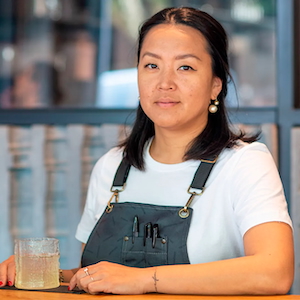
[00:00:10] Ray Latif: Hello, friends. I'm Ray Latif, and you're listening to the number one podcast for anyone building a business in food or beverage, Taste Radio. This episode features an interview with Monica Berg, the co-founder of acclaimed bar Tayer Elementary and modern liqueur brand Muyu. How do you simultaneously operate one of the world's most awarded bars and a local drink hangout in London? If you're Monica Berg, you serve every customer with the same level of respect, passion, and enthusiasm. An award-winning mixologist celebrated for her distinctive and innovative approach to cocktails, Monica is one of the world's most respected figures in the business of spirits and hospitality. She is the co-owner of Tayer Elementary in London, a dual-concept drinking establishment, which in October was named the fourth best bar in the world by international awards program The 50 Best. Monica is also the co-founder of Muyu, a brand of sophisticated and monoliquors infused with aromatic essences from plants, flowers, and fruits, and developed in partnership with Netherlands-based De Kuyper Royal Distillers. In the following interview, I spoke with Monica about how her background in bartending and hospitality shaped the creation of Tayer Elementary. She also shares her perspective on cocktail trends and the drivers of new concepts, and how she assesses innovation as it relates to new spirits and cocktail ingredients. Monica also discusses the origins of Muyu, and how it fills the need for bars and consumers, and what's resonating with its target audience. Hey, folks, it's Ray with Taste Radio right now. I'm honored to be sitting down with Monica Berg, the co-founder of Tayer Elementary and Muyu. Great to see you.
[00:01:58] Monica Berg: Great to see you. Thank you so much for coming in.
[00:02:00] Ray Latif: Yeah, I am here at this incredible bar, one of the best bars in the world, ranked. Where are you guys right now in terms of rank?
[00:02:08] Monica Berg: We are currently number eight, I think.
[00:02:12] Ray Latif: Number eight. Is that something bars chase or is it just, you know, part of the process of being a high end bar?
[00:02:21] Monica Berg: I think definitely some bars chase it, other bars less. I think also it's the definition, you know, what is the best bar. So there's many different lists and many different awards out there, but, you know, having some kind of goal, if it's to be the best bar in your community, in your street, in your building, even. Sorry, that was a bit of ice.
[00:02:44] Ray Latif: I am enjoying this because you are prepping to open at 3 p.m. It's 12.45 right now. So there's a lot to do. So ice is going to be heard.
[00:02:53] Monica Berg: Ice is going to be heard, hopefully in shakers and mixing tins.
[00:02:56] Ray Latif: Yeah. But, you know, just going back to being one of the most highly regarded bars in the world. Talk a bit about the history of where we are and your background in hospitality and bartending.
[00:03:09] Monica Berg: Yeah, so currently we're in Old Street, which is in the eastern part of London. It's not East East, as we would say, but it's quite central. It's a very nice area because you're kind of in the middle of everything. So if you are based in London, you would be in between the Old Street roundabout, which is kind of where all the technology is. You have the Barbican in Clerkenwell, which is the design and arts areas. And then below us, we have the city, which is the financial institutions. So it's quite a happening area in terms of there's a lot of people in and out. It's also one of the largest and densest residential areas of London. So we have people living around us. And I think what most people don't know about us is that we're actually quite a neighborhood spot. So we do have people traveling through London and visiting us because we are on lists like that and in other guides, but also we have a huge part of our community that is local to us.
[00:04:08] Ray Latif: Yeah, and I often wonder when neighborhood bars like this have such a cachet for their cocktail program. Typically, it's because the owners or the bartenders themselves have had a long history in the business. It's not typical that you see new folks to the industry open places that have, once again, the cachet that Tayer Elementary does.
[00:04:38] Monica Berg: Basically, when we opened this bar, it's kind of like the culmination of both Alex and me having 20 years of experience in the industry from before, and also essentially being very, very selfish, if I have to be honest, and kind of just creating our ultimate dream bar. So this is both the bar that we would like to work in, but also the bar that we would like to visit. So, you know, I love cocktails. I love the creative side of making cocktails. I love serving them. I like making them. But I also sometimes when I go out, I want to drink something else. So we put equally as much effort into our wines, our beers, our coffees, our food, our ice, which is just being driven in right now.
[00:05:25] Ray Latif: I don't think some people realize that you bring in ice, high-end cocktail bars bring in ice instead of making their own because the ice is such a huge part of the beverage.
[00:05:35] Monica Berg: Absolutely. And I think that today, especially in London, you have to keep a very focused program. And I mean, if we wanted to be able to offer the same ice in our bar, making it ourselves, we would have to lose eight seats. because that's the kind of space that we would lose. And we would have to have at least one full time person making that ice. So rather than to put it as part of the kind of overheads, we put it as an ingredient, if that makes sense.
[00:06:07] Ray Latif: Yeah. So there's a real, there's a functional reason as much as there is a logistics reason, as much as there is a reason for the cocktails themselves. But, you know, a few years back, maybe 10, 15 years ago, you wouldn't have seen or at least I don't expect you would have seen bars buying their ice. It just, I think, it just not have made a lot of sense. But trends change, expectations change about what represents a great cocktail, what represents a great cocktail experience. What really drives trends in this business? Is it consumer driven? Is it ingredient driven? Is it bartender driven?
[00:06:44] Monica Berg: I think it's a mix of all of them, because I think that if something is just not desirable, even if you try the hardest by marketing it, by creating an environment for it, if it's just not desirable, then it's never going to catch on anyways. So it has to be a combination of something that intrigues people, makes them excited, makes them want it again and again. but also someone has to have, you know, a vision to kind of set it off. But at the same time, it's kind of this cycle. You know, every trend has an anti-trend. So, you know, we in London, we are very fortunate that, you know, there's an audience for most things. Even if you wanted to create a bar that has the most narrow, bizarre concept and focus, there probably would be enough people in a city like this to facilitate that. But if you are in a smaller town, it's less likely that you have enough of the audience. So you have to kind of be a bit more, you have to fish with a wider net in that sense. But I think, you know, you saw in London, for example, 10 years ago, you had bars that had a lot of focus on the experience, on the serve, on the theatre around. And maybe some of them, not all of them, but maybe they focused a lot on everything around, which made a lot of people think, oh, but I want to focus only on what's inside the glass. And you see, for example, here we've adapted since we opened five years, certainly. But our style has or our vision has always been to focus on what's inside the glass, but also the glass itself, because that's a huge part of how you perceive flavor as well. And, you know, in the beginning, we did have a few drinks that would have garnishes, but then we would notice that the guests, they would just take them off and leave it on the side. And so we started to have this conversation with some of our more frequent regulars and said like, so would you rather pay one pound less for a drink? Or would you rather have a garnish? And it's like, well, I would rather pay less and just focus on the drink. I was like, OK, then that makes sense. So that's the style that we kind of went down. But mostly just because we're having this continuous conversation with our guests. But if it makes sense, we would, of course, have a garnish anyways. But I think that for something to be a trend or move past being a trend, because trends are very fleeting and very short-lived, and then as soon as something better comes along, it changes. So for something to go from being a trend into becoming mainstream and becoming a thing, like a cultural movement almost, You could say that Aperol Spritz for many was a trend a few years ago, but it's not a trend anymore because now it's such an integral part of drinking culture in 2024 or in today's society that it kind of moved beyond it. So I don't know, it needs to definitely be something that is desirable.
[00:09:44] Ray Latif: Two things. I had a drink last night. I had a mezcal Negroni and there was a humongous slice of grapefruit in there. And I myself, I took it out. I'm like, what am I supposed to do with this? And I don't know, maybe it would have been a pound less if they didn't put it in there. And frankly, I can't recall the last time I had grapefruit in a Negroni. So I totally get what you're saying. The other thing is you said for every trend, there's an anti-trend. Is that what you said? What's an anti-trend in your mind?
[00:10:09] Monica Berg: It's just something that to me, anyways, how I define it is that, you know, when you have a trend that is very all about more is more, then at some point someone's going to say, this is not my vibe. You know, I like minimalism. I like simplicity. So that's going to be the anti-trend to that trend. Maybe I misunderstood. This is just a personal definition.
[00:10:33] Ray Latif: No, no, I love it. I think it makes a ton of sense because at a certain point you are going to have some pushback on things that, you know, seem to be trendy and fun. And then eventually it's like, OK, we've had enough of that. Now we have to move into something else.
[00:10:48] Monica Berg: And I mean, I remember when I was bartending 20 years ago and people every day would come up to me and say, you're the worst bartender in the world because your drinks suck. And I was like, yeah, that's fine because my drinks haven't actually changed much across the 20 years. They've obviously grown up and become more kind of complex and a bit more adult in the way that they're composed. But the flavor compositions and the flavor combinations remain the same because I pull from my memories, from my traditions, from my culture. But then, of course, as I've grown up and learned more, my drink sense is the same, but I've always been very much attracted to this minimalism, this simplicity, not too much fuss, not very scandy in that way, in my thinking. I'm very proud of where I grew up, you know.
[00:11:38] Ray Latif: Scandi as in Scandinavia.
[00:11:40] Monica Berg: Yes. So my hometown is Oslo, Norway. So I've been in London now for 12 years. But before that, I was in Oslo. And, you know, I'm very shaped by where I'm from, let's say.
[00:11:52] Ray Latif: Yeah. I'm a huge fan. People listening to the podcast will know I'm a big fan of Scandi, of Scandinavia. I love going to Copenhagen. It's one of my favorite cities in the world.
[00:12:02] Monica Berg: It is wonderful. Yeah, it's wonderful.
[00:12:06] Ray Latif: I imagine that must have been kind of hard to hear earlier in your career that people didn't like your cocktails or as you said, some of them were even more nasty than that.
[00:12:18] Monica Berg: Yes. I mean, the thing is, you know, you don't always fit into people's image of what a bartender is or what anything in this world is. So you just have to, you know, put on your happy face and take it. Because I still knew that I wanted to be a bartender. loved the job and you know even if it didn't fit with what they wanted at the time I was very happy to be patient and you know like I opened this cocktail bar in Oslo I think it was around 2009 or 2010 And part of getting people to really want to drink cocktails, we had to make some choices in the offerings to facilitate that, because it wasn't natural for anyone to drink cocktails. It was beers and wines by default. So you compete with something that is so different from yourself that you have to be willing to work a long time and have this goal and pursue it. And sure, on some days it's hard, but you know, everything is hard at some points.
[00:13:20] Ray Latif: I think it's also hard sometimes for people to embrace innovation. And perhaps what you were doing at the time could be called innovative. You know, certainly a lot of the things you've done since, including Muyoo, is and should be described as innovative. But how do you assess innovation? You see a lot of new products all the time. I'm sure you have salespeople come in all the time, say, hey, you should try this product. You should incorporate it into your bar. How do you evaluate those new products, spirits and cocktail ingredients?
[00:13:50] Monica Berg: I mean, first and foremost, I think that anything that you want people to use either in drinks or in food, it has to be delicious or it has to have the potential to be delicious. It can also be, you know, intelligent. It can be clever. It can be innovative. It can be something new. But first and foremost, it has to be delicious. But then also you have to look at the bigger picture if there's a secondary kind of message you want to incorporate here or if it has any other purposes as well. But certainly, I would say that, you know, a lot of the time when true innovation happens, it's because someone has a really good idea or understanding of where they are now and where they want to go. And then they get to that new place by improving something else, by changing something, or in that once-in-a-lifetime moment, they maybe create something entirely new. But that's a bit rarer, obviously, but, you know, we all learn from the people that have done great work before us, and then we add our kind of thoughts to it, and then we hopefully get to a better place.
[00:14:57] Ray Latif: I had an opportunity to sit down with you earlier this year in New York at Little Ned's. It's a bar in Manhattan, and you were introducing Muyu to journalists and folks at the time, and it was wonderful. It was a really, it felt to me like a very sophisticated, nuanced, and different kind of product. What is it, and how do you see it as filling a need for bars, restaurants, and at-home consumers?
[00:15:23] Monica Berg: So Muyo is a liqueur, but it's what we would describe as a contemporary liqueur. And it's made by Alex and Simone and myself and our partners, which is De Kuyper. So De Kuyper is a liqueur maker that has centuries of experience. and by teaming up with them probably was the one thing that allowed us to challenge what this category was and is because we felt that you know the way that our perspective as bartenders understanding of course that we don't actually know how to make anything we wanted to play to our strength, which is blending other things. And then they, Die Kuiper, as a producer of something, they know how to make this, so they could help us make the best version of the product that we wanted. But basically what we decided to do is because we followed our personal passions, and that is you know also looking at flavors in a new way in an unexpected way and combining the bartender's curiosity and mixing abilities with the perfumer's thinking so rather than to start with you know alcohol as a flavor or just one ingredient and have that ingredient be the the sole flavor profile, we mix different, we do still start with one unique ingredient, so jasmine for myself, quinotto which is a citrus for Simone and then vetiver which is a root or aromatic grass for Alex and then we use other accessories or flavor accessories to build around the kind of perspective that we want for each liquid and what you end up with having is something that creates a lot of depth and character but also who blends well with other products because the liqueurs they can be drunk by themselves but they are much better when they are interacting with other products and it really is just a tool for bartenders to use when they are making drinks because You know, we're always chasing that next flavor experience and flavor innovation. And ultimately, the most egoistic way of looking at it is like, I wanted to create a jasmine liqueur because I've always loved a certain very, very small part of the flavor profile of a jasmine, but I couldn't find it anywhere. So I made it so that I could use it in my drinks.
[00:17:48] Ray Latif: I'm going to ask a really dumb question, I think. Why a liqueur versus, say, an extract?
[00:17:54] Monica Berg: Because I think an extract is, I mean, our liqueurs has a lot of extracts in them. And we start by extracting all of the ingredients individually, and then we combine them together afterwards. So it's almost like a perfumer's toolkit in the sense that how you build it, you have the base notes, you have the heart notes, you have the top notes. And it's designed to give a longer and more full or richer flavor experience. But I think that the reason why we wanted to not just do a singular extract was because we also wanted to have fun while creating them.
[00:18:35] Ray Latif: I think it also helps you build a brand, perhaps. It's easier to see a liqueur on a bar back than an extract. It might be easier to sell a liqueur in a retail store than it would be an extract.
[00:18:46] Monica Berg: Yes. And also, I think that El Cure, it does appeal to a wider audience in that sense, because also what we wanted to do, and this is why we, for example, have the serve, I wouldn't say signature serve, but like our recommended serve on the labels to make it easier, because it's all about we want to make it easy for you at home, for the bartender in Well, you're from Boston, right? So for any bartender in Boston or for any bartender in London, we want to make it easier for them to make delicious drinks. And sometimes with extracts, it becomes very like one way of using. Here you can do whatever. Because, you know, in the beginning, we were making certain cocktails here with the liqueurs. And then I go somewhere else and I see how other bartenders are using the liqueurs. And I was like, oh, wow, I would have never thought about that. But that's so clever. And so it ends up being this cycle of I can learn from them and they can learn while using the liqueur. So it becomes a really great interaction.
[00:19:53] Ray Latif: I imagine that's part of the selling proposition. And after years of being behind the bar and talking to salesmen, you're on the other side, so to speak. How's that going? And, you know, what's been the aspect, what are the attributes of the brand and the liqueur that are really resonating most with your audience?
[00:20:13] Monica Berg: Well, I mean, it has definitely been a very interesting journey to kind of see the other side of the industry. And even the creation part of it was such a learning experience because the timeline here was so different from what we thought. I thought naively that it would be just to create something, get it in the bottle. That's it. We launch it. We sell it. Everybody's going to be happy. But just, you know, formulating the recipe for mine was because I had such a particular image in my head, how I wanted the liqueur to taste. So it took, it was the longest one to get sign off because it took nine months from start to finish just to be happy with the liquid. And then it was all the testing of the liquids, how stable it is and all of these things. So from we create, started working till we launched it, it was three years. Wow. And I'm not a patient person, you know, so it's like, and now when we are launching it, we just launched it in the US now, five years later than our UK launch. So it really gives you perspective and makes you understand and respect people that work in innovations and creating spirits and these things on a daily basis. And also just going into bars and trying to be useful to bartenders. You know, you're trying to help them achieve what they want. One of the things that we've seen, which has been good for us here in the UK, is that, you know, once bartenders get to try the product, they really resonate with it. And it tends to be something that they start to reach for quite frequently. So this has obviously been very rewarding to see for us.
[00:21:58] Ray Latif: How much does sort of name recognition and your partner, legacy partner, that is, you know, De Kuyper factor into the sales?
[00:22:07] Monica Berg: I think less and less. I think that in the beginning, obviously within the industry, it's a huge advantage that people, you know, they know that Alex and me, we have our bar here in London. Simona has Sips in Barcelona. And they know that we are, you know, we are just like any other bartender in that sense. We still work service every week. We still use our own products. So they know that it's not, we're not trying to sell them something that we are not ourselves also very happy with. So it has helped, but now we've especially, as for example, in the UK, where we've matured a bit more, where we have a very amazing distributor that has taken our product across the country to places that I've never been to and in bars that I hope to visit one day. And you see that that is helping much more to have people try your product, believe in your vision, and then going out and sharing that has been very helpful.
[00:23:08] Ray Latif: I could tell you still bartend and you still work service because at one point, about two minutes ago, Monica had to open the door and she got up, moved a box, unlocked the door, closed the door, relocked it, did not skip a beat. No one would have known that unless I just brought that up. So bartenders are the ultimate multitaskers.
[00:23:26] Monica Berg: They are like cats with their reflexes.
[00:23:29] Ray Latif: Yes, it was really impressive, actually. Yeah, so U.S., the U.S. market, the crazy, chaotic, insane market of the United States. Why get into that market now?
[00:23:39] Monica Berg: America has always, you know, been a dream. It's such a, in many ways, it's such a iconic institution when it comes to bars, you know, and drinks, bartending. But it's also, it's a market that is very different from the one that we are in. And it has been a huge lesson or continues to be lessons learned in just how the legislation is so different from state to state. It's almost countries in that sense. And also how people drink in America is very different to how people drink in London, in Paris, in Oslo. So it really is interesting to kind of learn that as you go as well. It's very scary in many ways, but it's also a lot of fun.
[00:24:31] Ray Latif: I want to ask a couple of questions that I didn't include in our original list here, and both of them relate to scary things for the industry. Number one, the number of people who don't drink or are cutting alcohol out of their lives. And then potential competing products or ingredients that people will incorporate into their lives instead of alcohol. So I'm talking about folks who are sober or sober curious and things like THC or mushrooms and things like that. So just, you know, I'd love to hear your perspective on how the industry can evolve with both of those two dynamics happening at the same time.
[00:25:16] Monica Berg: I mean, I've seen the statistics as well as in the numbers and I see that on one side, people, they drink less. Some people drink less. I wouldn't say that's true for all the countries in the world or all the markets. And when people drink has changed, you know, so, for example, here in the UK now, Saturday brunch has taken over for Friday night in becoming the most profitable, not profitable even, but most visited time of day during the week when people go out. Oh, interesting.
[00:25:51] Ray Latif: So people don't go out on Fridays anymore?
[00:25:52] Monica Berg: Not this much, no. And I think it's the result of many things. It's the result of our changed behavior during the lockdowns where people go to bed earlier, but also because less and less people live in central London because it's so expensive. So you have to take the last train home. Also people, you know, if you go out and I mean, drink on Saturday brunch. You can still be home in a quite reasonable time by Monday morning. You're fine. You know, like, so there's many reasons for that. But also, as you say, people drink less. They have chosen to take other or they have chosen to get their kind of happiness from other places. And there's many reasons for that as well. And one is certainly kind of like the effect afterwards. If you don't have to deal with hangovers, that's a positive, I would say. But also it's a price point, I think, because when you look at some of the competitors to alcohol, Many of them, they come in quite a lot cheaper, and especially for the younger generations, money for everybody. But perhaps the younger ones, they are a little bit more price sensitive. So if you can cut the cost by 50%, 60%, then that's what you're going to do.
[00:27:11] Ray Latif: Are a lot of your guests, I would assume, again, because of the nature of who you are and what you sell, are a bit more sophisticated about cocktails? And by that, I mean, they're probably a little bit older. Or are you still seeing younger consumers come into your bars and, you know, the knock, maybe not the knock, but the expectation is that, you know, Gen Z consumers are not going to be your primary consumers because they are not, A, going to drink as much and B, not going to spend as much.
[00:27:42] Monica Berg: For us, maybe we are just very privileged, but we see a good mix of ages. And I would say that one of the best things about my bar is that we have such a diverse set of visitors and we really see everyone. So I think also to explain to those who haven't been here is Tayer Elementary, where we're currently sat at, is kind of the front facing bar, which is our take on a neighborhood bar. And here we really try to keep the price point as low as we can. But it's still 2024. Everything is, you know, increased between 25 to 125 percent in costs for us the last two years. So obviously it's more expensive than it was when we opened five years ago but we still try to keep it on the lower end so that the idea is that you should be able to come here for a drink a few times a week if you wanted to and you also don't have to have more than one. We also have a lot of non-alcoholic options. We put a lot of effort into it. We're launching one of our new collaborations today, actually, which is the can that you see here in the fridge.
[00:28:52] Ray Latif: Oh, very cool.
[00:28:52] Monica Berg: We do also work hard on giving people a good option if they don't want to drink any alcohol. It's not going to be like a super cheap option because we put as much effort into it as we would with anything. But certainly here in elementary, we want to have the price point on the lower side. In Thayer, which is a bit more experimental and we kind of indulge ourselves in playing around with ingredients that are more pricey, then the drinks will also be more pricey. But no, we do have a lot of Gen Z and the younger crowds that are just starting out their kind of cocktail journey. But they do know very well what they want and what they don't want. And I think that this is the nice thing for us is that it challenges us to, you know, we have to be able to be delicious at £11 as much as we have to be delicious at £19.
[00:29:46] Ray Latif: It sounds like you treat guests equally, just depends on what they want. And the price is going to change a little bit based on that experience or that beverage that they're looking for.
[00:29:56] Monica Berg: Absolutely. And the core thing we wanted to achieve with the bar is that, you know, Alex has a lot of experience from five star hotels. My background is more like fine dining. And we really want that focus and attention to detail and that kind of feeling of being special. And we want that, but we don't want the formal side of it. We want loud music. We want fun. We want people to laugh and enjoy and not even pay attention to the drinks whatsoever if they don't want to pay attention to the drinks. If as long as they come, they say, oh, this is a nice drink and they come back. Some of the drinks, you know, we've had on the menu since we opened because every time we tried to take them off, people get very upset, which is a good thing.
[00:30:39] Ray Latif: Yeah. I imagine one of your favorite parts of New York is employees only.
[00:30:43] Monica Berg: Well, I mean, I've had a lot of fun in employees only over the years.
[00:30:48] Ray Latif: Definitely. Well, it's what you described. It's loud. It's bustling. It's exciting. There's great cocktails. I think some people are paying attention to what they're drinking. Some people are not.
[00:30:57] Monica Berg: But yes, absolutely.
[00:30:59] Ray Latif: Yeah. I'd be remiss if I didn't ask you where people should be drinking here if they are coming to London.
[00:31:06] Monica Berg: Well, I mean, London has a lot to offer. I would say you might disagree, a lot of people might disagree, but in my opinion, London is still the most competitive, most challenging, most amazing, most innovative cocktail city in the world. I think you can find high, low, good, bad, dark, bright, everything. But if you really like cocktails, I would say that you have to go to a hotel and experience the kind of London hotel drink experience, whether you want to go to Duke's for a classic martini, if you want to go to the Connacht for the trolley, if you want to go, you know, to Scarves for the kind of live music and fantastic room. And obviously amazing drinks as well, but there's all these different types of hotel bars that you can experience here. Or you can go, you know, to Satan's Whiskers, which is a personal favorite of mine. They do classic cocktails really well. It's a very industry kind of heavy hangout, but they do drinks really well. The team is amazing. It's been open now for a decade. So it's, you know, established. You also have three sheets, which is in the original one is in Dawson, but now they opened the second one in Soho, which has kind of taken everything that was amazing about the old one and adapted to Soho. But it's truly an amazing bar. Also try, I shouldn't push this maybe, but you should try everything they have on the menu, obviously. But try the French 75, because it's really an amazing way to see how a Classic drink has been twisted into something that is on paper unrecognisable, but when you taste it, it's still a French 75 and it's amazing. You can go to Termini for that kind of Italian aperitivo bar experience. And there's so many other things as well, you know. If you like sherry, go to Gordon's Wine Bar, which is arguably one of the oldest bars in London. You go down in the kind of cellars, they have sherries from the barrels and it's just amazing. There's so many great bars.
[00:33:13] Ray Latif: Well, that was a really great list. Thank you so much. I actually went to the Cana a couple of days ago and I did do the martini cart, which was amazing. And that was a fantastic martini. Thank you so much, Monica. I know how crazy busy you guys are. And congratulations on everything that you've created. Thank you. Congratulations on Muyu. Another fantastic liqueur. I look forward to catching up again soon.
[00:33:36] Monica Berg: Absolutely. Me too. Thank you. Thank you so much.
[00:33:42] Ray Latif: That brings us to the end of this episode of Taste Radio. Thank you so much for listening. Taste Radio is a production of BevNET.com, Incorporated. Our audio engineer for Taste Radio is Joe Cracci. Our technical director is Joshua Pratt, and our video editor is Ryan Galang. Our social marketing manager is Amanda Smerlinski, and our designer is Amanda Huang. Just a reminder, if you like what you hear on Taste Radio, please share the podcast with friends and colleagues. And of course, we would love it if you could review us on the Apple Podcasts app or your listening platform of choice. Check us out on Instagram. Our handle is bevnettasteradio. As always, for questions, comments, ideas for future podcasts, please send us an email to ask at Taste Radio. On behalf of the entire Taste Radio team, thank you for listening, and we'll talk to you next time. you