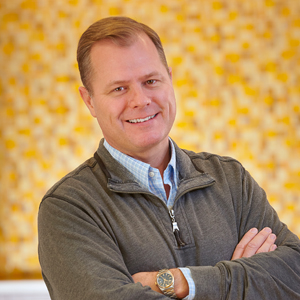
[00:00:10] Ray Latif: Hello friends, I'm Ray Latif, and you're listening to Taste Radio, the number one podcast for anyone building a business in food and beverage. This episode features an interview with Brad Johnson, the CEO of Verde Farms, a pioneering brand of grass-fed, pasture-raised, and organic beef. At one point during my conversation with Brad Johnson, he expressed the value that Verde Farms offers to modern consumers. were simply taking away all of the bad things that a broken food system introduced to give you the purest version of something that you already love. The leading U.S. provider of USDA-certified organic, 100% grass-fed, and 100% free-range beef, Verde Farms markets a variety of products including ground beef, steaks, and stew The Massachusetts-based brand sources beef from a network of family farmers in Uruguay, Australia and North America, and touts its adherence to sustainable and substantiated business practices, including regenerative agriculture. In 2020, Manna Tree, a Vale-based global investment firm committed to improving human health through nutrition, acquired a $15 million minority stake in Verde Farms. At the time, Manna Tree noted that, quote, consumers today are more keenly attuned to the impacts of their purchase decisions from a health and sustainability standpoint, and hailed Verde Farms as well-positioned to meet them where they shop. The brand is currently represented in several major retail chains, including Target, Harris Teeter, BJ's, The Fresh Market and Albertsons. In this interview, recorded during Manna Tree's recent Leadership Summit in Colorado, Brad spoke about how Verde Farms is attempting to democratize access to Verde Farms beef, why consumers view brand attributes in a holistic way, weighing investor expectations versus mission-based goals, and why the company invests significantly in customer and consumer service. Hey folks, it's Ray with Taste Radio right now. I'm honored to be on the mics with Brad Johnson, the CEO of Verde Farms. Brad, great to see you.
[00:02:27] Brad Johnson: Great to see you. Thanks for having me.
[00:02:29] Ray Latif: How are you enjoying being in the mountains?
[00:02:32] Brad Johnson: I'm loving it. Colorado is home for me. So we used to come up here when I was a kid. And so it's kind of great to be back and great to see how it's developed.
[00:02:39] Ray Latif: Yeah. Here in Vail is where we are. You grew up in Colorado. Do you say you live here now?
[00:02:44] Brad Johnson: I did, yeah. I actually grew up on a family farm down in Longmont, Colorado. I raised market lambs and, you know, took those to 4-H and showed them in the county fair and state fair.
[00:02:55] Ray Latif: Wow. Okay. So you have a long history in the sort of animal protein-based space. That's what I'll call it. It's in my blood for sure. Yeah. Yeah. According to LinkedIn, you are recently the CEO of Verde Farms. You achieved that title. You were named CEO this month in January of 2024.
[00:03:13] Brad Johnson: Yeah, it was a big honor. You know, I joined Verde Farms as president in May and, you know, Dana approached me in December and said, you know, he thought it was time for him to step into some other things in the industry. Dana being the founder of Verde Farms. Sorry, yeah. Dana Ehrlich, the founder of Verde Farms, approached me and said that there were some things that he wanted to do in some of the industry organizations and that he was ready to turn the reins over to me.
[00:03:37] Ray Latif: Yeah, so we spoke with Dana a couple of years ago and we had a brief overview of what Verde Farms is. But for folks who didn't listen to that episode or haven't had a chance to yet, please give us a little bit of background about the company.
[00:03:48] Brad Johnson: Yeah, so our mission really is to bring people the cleanest, the most sustainable, and best tasting meat that they can possibly have. The way that came about is Dana, about 20 years ago now, was spending some time in North America on a backpacking trip. And he came along these ranches or estancias, as they call them down in Uruguay, and was able to go out and kind of have The Fresh barbecues with the gauchos down there. And what he noticed is that his body felt really good when he ate that grass-fed organic beef. So fast forward, he comes home and he starts to look around and see if he can find this same 100% grass-fed organic beef from North America. And he can't find it in any of the grocery stores. And that was kind of his moment where he said, okay, I think there might be an opportunity here. I think about it as today, we see this trend of organic and these, you know, more sustainable proteins and these grass-fed proteins. But this was 20 years ago where he had that insight. So it's pretty amazing to be one of the, you know, kind of leading companies and the original companies in the space.
[00:04:57] Ray Latif: I wonder, can you market this will make you feel better? Or is that something that your legal team would scoff at? And I ask that because Earlier today, we talked about the fact that consumers are looking more for things like, this will do something for me, versus this is free from this, right? So it's hard when you think about beef, because what does beef do for you? Oh, it gives you protein. But does it make you feel good? I know plenty of people who say, after I eat beef, Now we're talking about low quality beef. They feel bad afterwards. So I wonder, I mean, is there an opportunity for you to talk about how it makes you feel as much as it is a high quality product?
[00:05:38] Brad Johnson: I think there is. I mean, I don't think we can take that all the way to a claim, but I would certainly ask people to, you know, kind of do the taste challenge, right? And go out and buy some Verde Farms beef, a hundred percent organic, a hundred percent grass fed. It's, you know, from a regenerative farm. And there are studies that show that it's more concentrated in some really important nutrients. But for me, yeah, we can say, we can make some of those claims, but what's most interesting is it truly does feel better after you eat it.
[00:06:07] Ray Latif: Yeah, I've definitely eaten some beef. Tangent here, but I was talking to one of your portfolio colleagues, Manna Tree's portfolio colleagues, and he used to work for Wendy's. And I'm really getting off topic here. But anyway, we talked about a certain fast food chain, not Wendy's, where every time you ate there, or maybe the last time you ate there, because I don't eat there anymore, the beef that you ate made you feel terrible. And it was just like, why are people killing themselves this way? Obviously, you know, if you feel bad, that the food you're eating made you feel bad for a reason. It's like rejecting this I don't know, this foreign food in your body. It's just like your body wasn't made to digest this type of food. And so I go back to Verde Farms and I'm like, OK, grass-fed, organic beef seems like a no-brainer, just seems like the most obvious beef that you'd want to consume. But it's not necessarily something that's available to everyone. It's not like Verde Farms is going to be in these fast food retail chains, you know, tomorrow.
[00:07:11] Brad Johnson: Not yet.
[00:07:12] Ray Latif: No. But how do you think about slowly, in a long-term way, getting to a point where your beef is more accessible, is democratized in a way such that people who had been eating bad food and bad beef are now getting the much better, higher quality beef in their lives?
[00:07:35] Brad Johnson: Yeah, it's such a great question. And I think, yeah, I like you have maybe over consumed some conventional beef from time to time. And you have that, that feeling of, oh boy, that's, that's kind of a gut bomb. I think job number one is just to know that there's an alternative, that you can still enjoy that thing that you love. but enjoy a different kind of it, Verde beef, that won't make you feel that same way, right? So job number one is that age-old marketing thing of just making people aware of it. I think job number two is educating people with a really inviting brand. Like the reality of our category, especially at retail, is it's pretty complicated. There's a lot of attributes. There's a lot of different things that you can look at, lean points. you know, different cuts, you know, a Sirloin burger versus a Chuck burger, and people can be pretty intimidated by it. So I think one of the things that we do well with Verde, and one of the ways that we'll democratize it, is simply putting it together in a package that makes sense, that speaks to a consumer, not just on an attribute level, but also on an emotional level.
[00:08:38] Ray Latif: Why are most consumers at this point buying your products?
[00:08:41] Brad Johnson: I think our consumer story really boils down to this is a product that you already love and we're a better for you version of it. But importantly, we're not a better for you version that is kind of a denigrated product or something less. We're not taking, you know, kind of the things that inherently make you like it and taking those away. We're simply going in and taking away, you know, I would say all of the bad things that a broken food system introduced to this product and taking those bad things away to give you the purest version of something that you already love. So I think when people kind of look at our brand, it is, hey, that's a category I love. I love eating a ribeye steak. But there are some problems with how that's been produced over the last 30, 40, 50 years. But a company like Verde is really motivating to them because we're taking out some of those broken things of the food system and giving them back a product kind of the way it was meant to be.
[00:09:43] Ray Latif: So ethically sourced, you know, working with farmers directly, do you work directly with your farmers? Are beef farmers, is that what they're called? Is that the term?
[00:09:53] Brad Johnson: I suppose ranchers, but yeah, either way. We're Verde Farms though. So yeah, I think there's some, some poetic license there.
[00:09:58] Ray Latif: Fair enough. But so it seems like that is high on the list of product attributes for your consumer base at this point, that they love the fact that you are taking care of the beef, that you are taking care of those who raise the beef.
[00:10:13] Brad Johnson: Yeah, in fact, we've done some consumer work on this. And what we found is because, you know, as a typical marketer, we went and said, well, what's the most important attribute? Is it that it's organic or is it that it's, you know, humanely raised? Or is it that it's regeneratively farmed? Or is it that we treat people correctly in the entire sort of value chain? And what consumers played back to us is, look, I don't want to choose one of those things, and I'm not ready to say that the environment is more important than having it organic so that it's good for me. What they really articulated to us, and I think this is really what makes Verde unique, is that I want all of those attributes. And the magic is bringing all of those things together and offering somebody a package where we check off all four or five of those attributes so that they can get exactly what they want.
[00:11:03] Ray Latif: Achieving all of those attributes can be expensive. It's expensive to raise the cattle the way you expect it to be raised. It's expensive to work with farmers that you believe deserve a fair wage. It's expensive to get the certifications, the verifications that Verde Farms has. And this all goes back to, I think, the ability to democratize access to your beef. price point. When you're thinking about the price point of your products in the context of the entire beef category, is there a point where it's sort of an economies of scale where you can start to reduce the cost to the end consumer? Or, you know, is it just the expectation that, look, if you want this quality, you have to pay this price?
[00:11:48] Brad Johnson: I think at least right now, if you want this quality, there is a premium that's very real. And we don't shy away from that. However, one of the interesting things that I'm starting to learn, especially about their regenerative farm claim, is that the cost is in setting that up. And so the sort of variable ongoing cost of that is not as great. And so there's kind of an upfront, you know, set up charge effectively that you need to, you know, deal with in a real way for a company with a P&L that is responsible to shareholders as well as consumers. However, longer term, I do see a way in which there's a efficiency and incentive built in to setting some of these things up for the longterm.
[00:12:33] Ray Latif: You brought up shareholders, so let's talk about that for a sec. Manna Tree is one of the larger shareholders for Variety Farms. Is it the largest shareholder at this point?
[00:12:41] Brad Johnson: Other than the founders, it is the largest external shareholder.
[00:12:44] Ray Latif: Yep. So, you know, they have a very specific focus on companies they invest in and what they're trying to do. They're trying to create a better food system through finance, essentially is what it is. And I'm sure they would love to see Verde Farms in more places and restaurants and as far and wide as possible. But as you mentioned, you have a responsibility to achieve certain expectations or to reach certain expectations in terms of revenue and profit. How do you balance this desire to be a brand that achieves the mission of better food, better beef for as many people as possible with, I guess, the constraints that come with having external investors.
[00:13:29] Brad Johnson: Yeah, I think, you know, maybe the first answer to that is the investors that we select, right? So Manna Tree has been a wonderful partner and they're in it for the long haul and they really are passionate about the same thing that we're passionate about, which is, you know, fixing that food system. And so they give us a lot of latitude to kind of pursue our passion around, you know, kind of beef from a better place and doing things right and not taking shortcuts. That said, they're also very collaborative and helping us problem solve through it so that we can ultimately deliver it at a cost that's going to make sense to consumers and that more and more consumers can afford over time. And so one of the things that I've loved about Manna Tree is the access that they afford us to other experts and just ideas to actually help us problem solve those things, not just sit back and sort of say, hey, I'm an investor. I have this expectation. What's to me very magical about Steve and Ellie and the team is that they're sitting down at the table with us and helping us problem solve through those things.
[00:14:32] Ray Latif: But it's got to be hard because you're in a category, you're in a commodity business. I mean, beef is a commodity business and there are competitors in your space. There's competitors that are private label doing very similar things to what Forty Farms is doing. I mean, I think about Trader Joe's, for example, I shop at Trader Joe's two, three times a week and I'll be honest, I'll buy their brick of grass fed, organic Australian braised beef on a pretty regular basis. And I think it's, $7.99 for a pound? And I wonder, I'm like, how does Verde Farms compete with that? And how do they talk to their shareholders about, you know, this external pressure that they're getting from companies that, to an end consumer like myself, we say, oh, well, it's pretty much the same thing, right?
[00:15:21] Brad Johnson: Yeah, I think that's very fair. And for me, again, with our mission and what we care about is, is doing things right and changing the food system. I'm thrilled that Trader Joe's is putting out a great product like that, right? I do think ours is better. And I think it comes back to that multiple attribute stack that we're able to offer. So, you know, particularly the land-to-market certification and the regenerative farm and the impact that that has on the environment because of the carbon sequestration is very, very meaningful to us. And what we found is consumers are more than willing to pay an extra dollar for a pound of beef because it carries that claim.
[00:15:57] Ray Latif: But what is your price point? We've been talking about price, but what's your average price point for, say, a pound brick of ground beef?
[00:16:03] Brad Johnson: Yeah, it's going to depend on the lean point a little bit. The leaner cuts are going to be a little bit more expensive. But, you know, for our 80-20 beef, we'll be right in that $7.99 range as well. And so you can get, you know, Verde Farms, 80-20 beef for a very similar price as what, you know, what you said you were paying at Treacher Joe's.
[00:16:19] Ray Latif: Okay. So I'm completely off then. I honestly expected it would be a higher price point. I expected it to be at least $2 more.
[00:16:25] Brad Johnson: And depending on what you're baking, if you want to go all the way up to a 93.7 lean point, but that's a value I think that consumers understand in the meat category.
[00:16:33] Ray Latif: How do you get more consumers compelled to buy your products? Is it education? Is it branding? Is it someone in store being like, Hey, you should try Verde Farms because you'll feel better after you eat it.
[00:16:47] Brad Johnson: Yeah, no, it's a great question. And we're blessed to have a really good marketing team. And so it's the first two things that you mentioned, right? It's education and branding. And those are both really important. And so walking a consumer through, hey, why does organic matter? Why does grass fed matter? Why does this regenerative farm claim matter? Why does this humane treatment claim matter? So we have marketing materials that do that and do that pretty well. And I think one of the really smart things our marketing team has thought about is They really do customer-centric marketing plans that are heavily focused on the shelf, right? So we're trying to find people in-store that are right at that moment of purchase, where they're looking between conventional beef and Verde beef, and they're ready to understand the difference. And so we're not doing a lot of sort of awareness-driven advertising out of store right now. We're really focusing on that moment of truth where you're picking up two options and deciding which one do I want? And am I willing to pay a little bit more for Verde?
[00:17:48] Ray Latif: It seems like there's a lot of opportunity in food service for a brand like yours. And then again, how do you co-brand in a way that really highlights what you're doing and sticks in the mind of a consumer that, oh, I ate this at this restaurant or quick service chain, really enjoyed it. It's going to make me want to go to a store and buy this product.
[00:18:12] Brad Johnson: Does that make sense? It does. It's such a good question. So we're mostly focused on retail right now. We do have a presence in food service. And I think the answer to your question of how do you kind of express that to a consumer in a restaurant without being overbearing, right? Cause you're out to dinner. You don't want to be like hit over the head with this stuff. So the magic to me is choosing the right partner. And you know, our key partner in food service is True Food Kitchen. and, you know, talk about a mission-aligned restaurant, right? They see things, I think, exactly like we do, and, you know, want to offer people great, organic, better-for-you food. And so it's very natural for a diner that's in True Food Kitchen, and they see Verde on the menu, oh, well, that all makes sense, and that's, you know, a big part of my motivation for being in this restaurant, so it makes sense that Verde's there.
[00:19:04] Ray Latif: The other thing we haven't talked about, but that has been a big talking point over the past couple of days here in Vail is that protein is a very on-trend ingredient or a very on-trend term, whatever you want to call it. And, you know, for many years, I think alternative proteins have been really hot in the minds of entrepreneurs, retailers, investors, but I feel like there is some creeping back to a one-ingredient-based protein, a one-ingredient-based animal protein. How do you take advantage of this interest in protein among consumers who we see on TikTok talking about how much protein they eat in a day, how they're trying to introduce this sort of hybrid of animal-based and plant-based protein? I guess, how do you think about that opportunity?
[00:20:03] Brad Johnson: Yeah, we agree. We see the same data and people still very much are focused on getting a lot of protein and they're also focused on getting high quality protein. And that's, you know, sort of the magic for us and other companies like us. So the first thought that comes to mind when I think about, Hey, I want a lot of protein and I want more protein in my diet. Well, if you're going to have a lot of something in your diet, you're going to want to make sure that it's the cleanest, tastiest, best version possible. And so that's why sort of selling an upgraded version of it, I think is really good. And a pure version that doesn't have growth hormones, doesn't have antibiotics, kind of takes out those negatives, especially when you're having so much of it in your diet. And so I think we have that kind of consumer tailwind behind us and it's helping us a lot, especially as people not only look for, you know, a lot of protein, but high quality protein.
[00:20:58] Ray Latif: Do you ever think about ways that you can, I guess, get a wider reach or broader awareness via product innovation, things like beef sticks or beef jerky? And I know that there's already a beef jerky and beef stick brand that's part of the mandatory portfolio, that's The New primal, but it might lead to more awareness for Verde Farms and what you guys are doing, but it's also, you know, perhaps a much more complex project than I'm making it seem.
[00:21:27] Brad Johnson: Yeah, I think, look, you'll be able to sympathize with this. Like, as an entrepreneur, there's so many things that we want to go. address, right? There's so many opportunities out there. And, you know, I think that's one of the beauties of Verde, like it's a springboard and potentially in the future, we could do some of those things. But actually what we're preaching right now to our team is focus. And I think there's so much opportunity just in what we're doing right now that we want to do that really well and hit all the marks with that. do the right things for our customers, help grow their category, be at customer service rates that are 99.9 or better, right? So we wanna really execute with excellence on the things that we do today, knowing that if we do that, those other opportunities are still there as we move forward. So absolutely, there's something that we're interested in, but I think The New term 2024 focus is much more narrow.
[00:22:25] Ray Latif: I wonder how you think about success and asking yourself at the end of the year, do we achieve the certain goals that we had for Verde Farms within the category that we're operating, the sustainable beef category? How do you define success?
[00:22:40] Brad Johnson: We still start with mission, right? And the vision that Dana put in place 20 years ago or more than 20 years ago. So we're gonna, number one, have the discussion of, were we consistent to that mission in giving people the cleanest, the most sustainable and best tasting beef option that they can possibly have? So that's kind of consumer question number one, and have we been consistent and true to that mission? Beyond that, what we're trying to do is build just a fundamentally good business, right? And so we're thinking about all of the less sexy metrics within business, right? So it's customer service rate, it's velocity, it's unit economics. It's all those things that add up to, we're not just, you know, giving people sustainable beef, but we're building a sustainable business.
[00:23:27] Ray Latif: Customer service to me feels like one of the more overlooked aspects of brand building. It's interesting because I feel like being able to hear from, talk to, and interact with your consumers has to be priority one. You want to know, did they have a good experience? Can we be better? Can we do anything for you beyond what you've already experienced with the brand? How do you operate your customer service strategy? And is there anything specific about it that you feel differentiates Verde Farms other brands? Not necessarily brands within your space, but other brands in general?
[00:24:03] Brad Johnson: We think of two things, we think of consumer service, and so the actual end user, the person that's eating it, are we giving them the best possible experience? And then we think of customer service, the retailers that we sell to, is our fill rate up, is our on-time delivery right? You know, all of those things. And so, you know, I think our approach to that is to measure a number of things. And so we actually have a system internally that we call VerdiCare and we measure certain metrics because we're big believers in you manage what you measure. And so we take a look at it. We assess whether we hit our goals. If we did hit our goals, we talk about why and how we can amplify that. If we didn't hit our goals, we're very honest with each other and say, how can we do better next time? So that's number one. And then number two is. you know, inevitably when we do get that call, we just try to really listen and then go through the kind of root cause analysis of how could that have been a better experience for that consumer or that customer. And then, you know, we as a, you know, we're still a relatively small team. We can all get together, talk about very clearly what the impact was to the customer or consumer because of the problem that they encountered, try to empathize with that, and then try to really talk as a group about how we're gonna try to make sure it doesn't happen again.
[00:25:20] Ray Latif: It sounds thorough, that process. I was going to say complicated, but it sounds thorough going about that experience that your customer or consumer had. It also seems like it might be kind of expensive to do so, but it's important. When you're budgeting for customer service, is it a more significant cost than what people might think?
[00:25:46] Brad Johnson: It depends on how you frame it, right? So we would frame it the other way, which is to say the expense of not doing it is the bigger thing, right? And so, yes, there's very real cost to that because it takes somebody to pick up the phone and listen and really understand to where they can then embed that into the organization so that we can empathize. But, you know, that is a cost that we're very happy to take on because it's, you know, if you think about it, it's also the best way to get feedback about how we can improve as a team, right? And so we view it as far more costly to not do it than to do it.
[00:26:20] Ray Latif: Do you outsource customer service or is it in-house?
[00:26:22] Brad Johnson: It's in-house, which is very important to us.
[00:26:26] Ray Latif: Last thing I want to talk about, Brad, is you've mentioned this phrase a number of times, which is regenerative agriculture, and you touched on exactly what that means. And, you know, I've heard that phrase, I don't know, often over the last five or six years. And I think about how important it is, but how important it is to end consumers is still a ways away and still a long way away, I think. And I think as an industry, we have to unite and talk about this topic more effectively and more often. Are you working with other brands and other categories? Are you working with, I know there's an association, but like, how are you working together to more effectively deliver that message and educate people about what you're doing?
[00:27:14] Brad Johnson: Yeah, so we work with the land to market group and have learned a lot from them with our partnership. And so they provide really great perspective and actually really great materials for us to understand it as a team so that we can explain it to our customers and consumers. We couldn't agree with you more. That's something that we wanna talk about more. We are talking about it more and You know, also just talking about it more precisely. I mean, this idea that, you know, we can really sequester carbon back into the soil and end up with, you know, a really environmentally positive product, even, you know, beef, is a powerful idea that I don't think, to your point, many people understand. And so we'll be talking about it a whole lot more, you know, with the help of Land to Market and with others.
[00:28:01] Ray Latif: It definitely feels like a bit of an uphill battle, especially when it comes to the U.S. beef industry, which I'm sure, I don't want to say I'm sure, but I would guess has little interest in incorporating regenerative agriculture into their current system, which makes your job that much more important.
[00:28:21] Brad Johnson: Yeah, I mean, look, at the end of the day, the consumer will decide whether it's something that they want to pay for. And we as companies have to make it as cost efficient as possible. And so, you know, we're working with a couple of retailers now to put some point of sale materials that kind of explain that to consumers. And our bet is that as we put that at the point of sale, as consumers read that material, understand that material, as we talk about it in forums like this more and more, our bet is that consumers are going to, you know, maybe not demand it across the board, but it'll become much more common to expect it.
[00:28:57] Ray Latif: Brad, it's been so good speaking with you. Thank you so much for taking the time and let's stay in touch. Thanks so much for having me. That brings us to the end of this episode of Taste Radio. Thank you so much for listening. Taste Radio is a production of BevNET.com Incorporated. Our audio engineer for Taste Radio is Joe Cracci. Our technical director is Joshua Pratt, and our video editor is Ryan Galang. Our social marketing manager is Amanda Smerlinski, and our designer is Amanda Huang. Just a reminder, if you like what you hear on Taste Radio, please share the podcast with friends and colleagues. And of course, we would love it if you could review us on the Apple Podcasts app or your listening platform of choice. Check us out on Instagram. Our handle is bevnettasteradio. As always, for questions, comments, ideas for future podcasts, please send us an email to ask at Taste Radio. On behalf of the entire Taste Radio team, thank you for listening, and we'll talk to you next time. you