[00:00:10] Ray Latif: Hey, everyone, I'm Ray Latif, and you're listening to the top podcast for the food and beverage industry, Taste Radio. This episode features an interview with Jason Wright, the co-founder and CEO of Wilde Brands, an innovative brand of chicken and pork-based chips. Just a reminder to our listeners, if you like what you hear on Taste Radio, please share the podcast with friends and colleagues. And of course, we would love it if you could review us on the Apple Podcasts app or your listening platform of choice. Amazon founder and CEO Jeff Bezos once explained that the e-commerce giant innovates by, quote, starting with the customer and working backwards. Jason Wright, the co-founder and CEO of Wilde Brands, adopted a similar mindset for the development of the brand's unique chicken chips. Sensing an opportunity to innovate within the salty snack category, Jason, a serial entrepreneur who launched Wilde in 2015, envisioned a meat-based chip and saw himself as the prototypical customer for the product. Going from concept to scalable brand, however, was challenging and came with a number of missteps and setbacks. Yet, those growing pains ultimately paid off, and Wild's chicken chips and recently launched pork chips are now carried nationally at retailers including Whole Foods, Sprouts and Safeway. In the following interview, Jason chronicled his entrepreneurial journey, beginning as the co-founder of an upstart granola brand, through to the debut of Wilde, why the company pivoted away from bars and into chips, and how he convinced investors to buy into the strategy. He also explained why co-manufacturing was ultimately the wrong choice for Wilde, working with retail buyers to establish a new protein-centric segment within the snack category, and how the company identified packaging callouts that would resonate most with consumers. Hey folks, it's Ray with Taste Radio. Right now I'm on a call with Jason Wright, who is the co-founder and CEO of Wilde Brands. Jason, how are you? I'm doing great, Ray. How are you? I'm doing fantastic. Really fantastic now that I'm speaking with you. You know, your accent is so specific. I remember the first time speaking with you and I was like, you know what? I think Jason's from South Carolina because I have a friend, Alan, who actually listens to the show quite often. And he's from South Carolina. He moved to Boston for a time and his accent is now, you know, a little screwed up. It's like half Boston, half South Carolina. But I mean, I'm just assuming you are from South Carolina, right?
[00:02:45] Jason Wright: I am, Ray. You nailed it, man. From South Carolina, went to college there, and then I, kind of like your friend, I hightailed it to the Northeast. Unfortunately, or fortunately, I don't know which one to say, but for me, I was there 10 years, but I never lost this accent. So from day one to the last day I was there, people always, you know, felt like I was fresh off the boat because this accent just stayed with me.
[00:03:09] Ray Latif: Yeah, you mentioned you spent some time in the Northeast, in New York City. And I'm pretty sure the reason you moved is because you spent some time as a fashion model in the city, right?
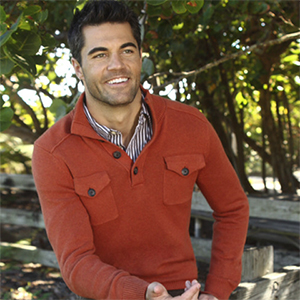
[00:03:18] Jason Wright: I did, you know, that feels to me like another lifetime, you know, like I'm ancient now, but in my early 20s, yeah, I got the opportunity to go up and shoot for a particular apparel brand. And, you know, I had a lot of fun and I said, well, hey, well, you know, why don't I try to do this? Which is really what propelled me to get into natural foods because, you know, up until that point here in South Carolina, you know, I'm not really watching what I eat, but at that point, you know, I said, well, if I'm going to take this serious, I'm going to work out, I'm going to eat right, which led me to Whole Foods. And I don't know, I just grabbed a passion for starting to make my own healthy products, which led me into the food industry. So I really credit kind of getting into the fashion, you know, the modeling industry kind of was my vehicle to getting into CPG.
[00:04:08] Ray Latif: What brands did you model for?
[00:04:10] Jason Wright: Abercrombie was one of them. Hanes was one of them. So back in the old days, I was an underwear model, but you know, they would chop my head off. So they had to pay me a lot, or they would pay me a lot less if they chopped your head off. And so, you know, I was more of a, we'll say fit model, but yeah, so that was a Wrangler was one of them and catalogs, but listen, it didn't last long. You know, there was no career for JW in the modeling industry.
[00:04:41] Ray Latif: Well, you talked about your passion for entrepreneurship and we'll get into the origins of your entrepreneurship. But in my intro, I mentioned that Wild makes chips out of chicken and pork as well. And I'm sure there are people listening being like, what, what? Okay. So just give folks an idea who haven't sampled your products. Give them an idea of what they should be expecting when they're eating your products.
[00:05:01] Jason Wright: Well, Ray, I got it right here. So I'm going to actually eat it on camera. You know, when we developed this, you know, we, we start with chicken breast and our chicken chip lineup, and then pork shoulder for our pork lineup. My passion, I mean, really the vision, I should say, what I wanted this product was I wanted it to eat like a potato chip. Folks should expect this product to eat like a potato chip. It's crunchy, it's crispy. I never wanted the product to eat like jerky. When I started this product, We all love potato chips, but I don't do really well on a high-carb diet. So the vision here was, well, let's replace the potato with protein, but I never wanted to lose that crunch. So that's what customers should expect. They should expect it to be like a potato chip.
[00:05:48] Ray Latif: Well, that's great to hear for a lot of listeners, because I think some folks might be expecting the crispiness and the texture of, say, a pork rind.
[00:05:55] Jason Wright: Yeah. So, you know, pork runs, you know, really puffy and airy, but this product, you know, the way we've come up and kind of figured out how to make it, you know, we slice it as thin as we can compared to a potato chip. And, and the product is a little bit more dense, like a potato chip than you would consider like a puffy, you know, pork run. So just a total different process. You know, it's funny because when we developed this and I did it out of my kitchen, in theory, I thought I'm just going to take it to a pork rind facility because we had to be in a USDA facility. And that was the only facility I knew of that fried and seasoned pork rinds or snacks, salty snacks. And I took it to a pork rind facility. And I can assure you that that was not the way to make it. And we had to go down a whole different path at that point.
[00:06:44] Ray Latif: Well, we'll talk about that path shortly, but let's back up a little bit and talk about your first brand, which was called Feed Granola. You explain, you know, that your passion for healthy living spurred this idea, but it's interesting because granola is pretty ubiquitous now, but when you started the company, it was more of a, it felt like a little bit more of a natural food kind of thing. So, you know, why did you land on granola? Why was that the sort of opportunity that you saw for a brand?
[00:07:16] Jason Wright: Yeah, so the granola company was not something I ever set out to do. I started making healthy snacks and I would go down to my local health food store in the city and buy seeds and nuts and fruits and it was kind of a concoction I came up with. And, you know, lo and behold, friends and family liked the product. And, you know, I started selling it at the local gyms there in the city. And it kind of just by default, you know, it turned out that my first company was a granola company because I just made that as a healthy snack. You know, I didn't know about Bear Naked at the time, but we quickly, you know, I discovered them about, I don't know, six months into the brand. You didn't have Instagram back then. It was the old school days. We're talking about early 2000. So I discovered them on the Food Network channel. And I was like, oh, man, here's a company that's three years ahead of us. And then you started to see them on store shelves everywhere. But looking back, I learned a lot there. But I would not have picked granola knowing what I know now.
[00:08:24] Ray Latif: You know, I think competition is one part of it. I'm sure you learned a lot from the experience. What was something else? I mean, what else did you learn from feed granola that you were able to incorporate? What were some of those lessons that you were able to incorporate into Wild?
[00:08:39] Jason Wright: Yeah, Jason Wright out of the gate, you know, a big one comes to mind is being different in the market. I mean, it was tough with a granola because, you know, you got oats and nuts and and fruit, but I had no staying power, you know, and that's what I didn't know then, but I know now, you know, compared to Bear Naked, it was a more superior product. The lessons I learned there that I took to Wild was, you know, we've got to be differentiated. You know, there's got to be something that, you know, is our flag in the sand and not just a me too product. So that was a big lesson learned. Another lesson learned was because of those modeling days, we got a lot of PR. My business partner and I, he was a model as well, so we got a lot of PR, which propelled us to get a lot of distribution. And we just opened stores. We were not disciplined to say, hey, whoa, we're growing too fast. We don't have maybe the capital to support all this distribution. We just didn't know at the time. And that was another thing here at Wild. I really focused on nailing our product, trying to really perfect our product before I started to gain distribution. And so that was two big learning curves for me.
[00:09:51] Ray Latif: So it's interesting you mentioned PR because I think PR is something that is so important in everything related to new food and beverage companies. You need to get the word out and you need to get the word out in a really positive and effective manner, especially out of the gate. But from what I'm hearing is sometimes PR can backfire on you if you are not prepared for the distribution and retail opportunities that are coming your way.
[00:10:21] Jason Wright: We were fortunate, it was like a PR dream. We were on, I don't know if you remember the TV show, The Entrepreneur by Donnie Deutsch? Yeah, of course. Yeah, sure. So he did a 30 minute show on us. So they aired it and then he brought us onto his show. And so from that, we started getting a ton of PR hits. But business side, we were not prepared. You know, we we not perfected the product. We didn't have the capital to go and support all your promotions and marketing efforts. And then we were sitting beside a more superior product, you know, in bare neck. At this moment in time, I would love to have all those PR opportunities.
[00:11:05] Ray Latif: Yeah, well, explaining and communicating to the end consumer what your product is all about is really important. PR certainly helps in that way. And again, we'll talk a bit about education as it relates to chicken and pork chips. But, you know, post feed, you stayed in the food business and started working for a startup called Yum Nuts. What was Yum Nuts all about?
[00:11:26] Jason Wright: It was like an air dried cashew. Basically, it was two guys that were partners over at Bear Naked. That were friends of mine that started the business and we basically wound feed down, we just got to a point where you know you couldn't get a lot of support for it and we made some mistakes with a lot of learning curves. So I decided to go over and join Tyler Ricks and drone with TBR. And we, we basically launched a yum nuts and it was a very unique product. It was air roasted, I should say. So it almost felt like, or sound like dice in your hand. Like it was a really unique product, but I think the problem was we couldn't figure out if we were a health product or a candy, you know, cause we had flavors like coconut covered, we had chocolate and. We really never determined if the customer was eating it because they wanted a healthy option, because it was low in sugar, but then there was still that sugar, you know, and that kind of candy like, and I think we just got the positioning wrong. And outside of that, it was a commodity. So when you got 99.9% of your product tied up in a commodity, and then the commodity, obviously in our case, cashews went through the roof. you know, we had a problem with our pricing structure. But it was a fun experience, you know, another learning curve, but a fun experience.
[00:12:47] Ray Latif: It's funny you mention that one of the issues with Yum Nuts is that it was a commodity, essentially a commodity brand, because your next job is with The Wonderful company now, you know, pomegranates weren't necessarily a commodity in the United States back in the day, a little bit more so today, obviously pistachios as well, also commodity products. So You know, how did going to The Wonderful company reshape, I guess, your perspective on food and support that entry back into entrepreneurship as the founder, co-founder of Wild?
[00:13:19] Jason Wright: One thing I learned at Yum Nuts with a commodity is you better own the farm. So if you're going to compete with the guy who grows, you know, all the produce, you need to own it. So when I went to Palm, wonderful, wonderful brands, you know, they have pistachios, they have pomegranate, and the Resnick's, they own vertically integrated, they farm, you know, they produce, and then they have the brand piece of it. And so that kind of started to plant the seed in my head. As you know, I knew I wanted to go do my own thing again. But it planted the seed in my head was my next adventure, I would like to be as vertically integrated as possible control, you know, everything from A to Z. So that was an experience that really kind of instilled in me, like, vertically integrated next project.
[00:14:29] Jeff Bezos: Vibrant Ingredients is the natural ingredient partner powering food and beverage innovation, delivering flavor, function, and protection through a science-backed portfolio. Vibrant delivers purpose-driven solutions that help brands create extraordinary experiences. Discover what's possible with Vibrant today. Visit VibrantIngredients.com.
[00:14:56] Ray Latif: Let's talk about the original idea for Wild. It wasn't chips. It was not. It was something else. What was it?
[00:15:04] Jason Wright: Yeah, so it was a meat based protein bar and kind of another situation that I almost, you know, got myself into when I look back at feed. I was living in Austin. I was training for a marathon. I was eating jerky. I was combining it with granola and the idea popped in my head. It was like, why couldn't we have a, you know, meat based protein bar, you know, kind of a protein bar, you know, kind of meats jerky. So I'll go down this path. And that's what wild was born as. But here I am going down this path. And here I go discover epic, right.
[00:15:37] Ray Latif: And so I'm chuckling because because I've been by the epic headquarters in Austin.
[00:15:43] Jason Wright: So at the time, they were not there. So they didn't have their South Congress. Basically, I was in a little gym right outside the city. And they had a little juice bar. And boom, I walked into the juice bar and I could see this packaging and I saw the animal and it was clever. You know, I was like, I know what that is. And they were not in Whole Foods yet. But it's same similar situation to feed, you know, they already had a product on shelf here, I was, you know, still trying to develop what I was going to launch. And so they were ahead of us. And, you know, the industry small. So as I started to dig around, like, they were already partnered up with co man that we potentially was going to approach. So at that point, I decided, well, let's move to Boulder. Let's take Wild to Boulder. If I launch this brand in the backyard of Epic, they're already here. They're already established. You know, that just didn't seem right to me. So I took it to Boulder. And, you know, the bar industry, our bar never took off. A lot of other brands tried bars, but Epic really, you know, they owned the market. They were first in the market. And then at the end of the day, the bar, the kind of meat-based protein bar was a very small category. You know, here we were, we were facing some tough decisions. Brands launched, brands not doing well. I really need to pivot. And I knew that I couldn't pivot for a jerky. I couldn't pivot for a stick. Like I had to have a wild factor. And I had this idea about the chip. And, you know, I worked tirelessly in my kitchen to give my investors a prototype. At that time, we were starting to lose a lot of faith from current investors and got very fortunate that I got this product in front of them, got this product in front of some new investors, the chips. And a lot of people saw a big, big idea here. And that's how we transitioned from the bar to the chip.
[00:17:37] Ray Latif: I'm curious, why not do jerky? Why not do meat sticks? Was that category, were those categories already too crowded? Was it just going to be tough to differentiate from the products, existing products out there?
[00:17:48] Jason Wright: The answer to your question, yes. But I think also there was that little voice in my head that said, remember your granola days? Don't do a me too product. And you know, I'd already launched wild as a meat based protein bar. So I'd already done something. I told myself I was not going to do it. It didn't start out like that and I didn't know that that was already there and you know how far along they were. and the pivot point of going to the chip or going to the next product, there was no way I was going to launch a Me Too product. So I gravitated towards that chip. I thought it was really, one, innovative, but something that I was really passionate about, that crunchy, that crispiness, eating like a potato chip. And the fact that it had never been done before, that really drove me.
[00:18:35] Ray Latif: Were your investors scared of this idea? Were they in love with this idea? Was a little bit of both?
[00:18:41] Jason Wright: Yeah. We had some tough conversations with current investors. You know, I remember one person in particular saying, Jay, you can talk about innovation all day long, but we need to fix today. And we just, you know, this project and we'll get into it, but it did not happen overnight. Obviously there was a lot of hurdles, but I was fortunate to meet Bill Moses. who is a star in our industry. And he introduced me to Alan Karp and these guys really, really liked this product. They liked the innovation piece of it. And, you know, they came on as new investors and didn't really want to even look at the bar or think about the bar. They were focused on this chip. And, you know, they kind of helped pave the way and helped me get through a lot of hurdles. Had those guys not come on, you know, maybe, you know, the current situation was a little dodgy. You know, we were pretty much unsuccessful with the bar and here we were going to go through a new transition period and it takes time to get a product to market. But those guys came on and helped a lot and we all, you know, doubled down on the chip and we went full steam ahead.
[00:19:48] Ray Latif: This is really eye-opening, I think, for folks who are listening in that, you know, as one of your investors mentioned, you can talk about innovation all day long, but you've got to fix today. You've got to show that you can create a viable product line. And to hear that Carp invested on an idea, it sounds like, is pretty amazing. What was your pitch?
[00:20:11] Jason Wright: He tells me today, he said, you know, looking back, I don't know if I should have invested in that or not, you know, like, I didn't realize it was going to take this long. He and Billy Logan, which is a partner there, his partner and Bill Moses, you know, I basically pitched them the prototype. And at the time we were still, what will the packaging look like, which is a whole nother story that, you know, we, we redid later. But, They just believed in the product. They thought, you know, there's a space here. People like low-carb, folks like high-protein, and they were really amazed at the product eating like a potato chip. And, you know, they knew that they'd be growing pains, and they knew we had to figure out manufacturing, but it intrigued them. And I think we kept showing progress, like, you know, figuring out how to manufacture it, going through making custom build equipment. But they were constantly seeing us moving in the right direction and kept supporting the brand. I think they came in maybe late 2017 and we didn't put a product on the shelf until late 2018. So there was a year of a transition period of kind of relaunching.
[00:21:21] Ray Latif: Yeah, I think I remember first trying the chips at Expo East. It might have been 2018. And I think Wild was one of the most buzzed about brands because when people talk about innovation, you know, you guys represented it. The chicken chip was true innovation. No one had ever seen anything like that, or at least, you know, most people in our industry hadn't seen anything like that. getting to the chip itself, getting to be able to sample the chip, I'm sure required a lot of trial and error. How did you, I guess, initially think of production? I know you talked about going to a park run facility and talking to those folks. But I guess, how did you go from here's what I made in my kitchen to here's the finished product? And I know this is a question that a lot of early stage entrepreneurs have.
[00:22:08] Jason Wright: You know, that first time at Expo when we showed you guys, We had already went through the Port Ryan facility and knew that that wasn't going to work. So come back, I worked with a close friend, Derek Spores, who's in the industry. And he has a little food lab that we set up, basically a basket fryer. And I went to a machine shop and we came up with this top belt that basically makes our signature wave. in the product, but there's multiple reasons why we had to have this that we discovered when we went to the Port Rhyme facility, why Port Rhyme facility wasn't going to work. But we basically, you know, hand fried all these samples that you saw at Expo. We then went and met with one of the top manufacturer of fryers here in the U.S. They also are very popular out in other parts of the world. But I thought we'd walk in and say, here's kind of what we figured out. And we really, I say we fried, but it's like a crisp because it's really in such a shallow, it's more like a searing. But we have a meeting with this manufacturing company and lo and behold, they're like, we've never done anything like this. But after we kind of explained how we thought we could do it, you know, they took a leap of faith and went down the path and we basically created a prototype machine first. So we took this prototype machine and we put it into a manufacturer that had empty space and we basically did more testing. We originally thought that this test fryer would allow us to launch. But we discovered that there was still a lot of problems we had to work out. So fast forward, learning from the prototype, and then that propelled us to actually go and produce the first wild fryer, which still came with a lot of problems, but we were able to use that product or use that machine to launch late 2018 in the Whole Foods and in the Sprouts. But yeah, that that's just one piece of it. You know, if you start to look at like, how do you get a chip made of chicken breast to act like a potato, you know, to slice like a potato, that was a whole nother piece, you know, there's two big processes, the wild, and you really can't have one without the other and vice versa. So it was a huge learning curve.
[00:24:22] Ray Latif: Yeah, now that I'm thinking about it, I guess I was just thinking of like a chicken breast, a cooked chicken breast that you would slice into thin chips and then fry those. But that's certainly not how you make this product. You would know if you were listening, you would know if you saw the chip, you'd know that's not what it is. So you had this machine. Do you have a patent on the machine?
[00:24:41] Jason Wright: We do. We have a patent on the top belt. So, you know, we just basically discovered, you know, and with the help of the manufacturer, the prior manufacturer that this has definitely never been done in the food industry. And you know, you guys should move forward, try patenting it. And we did.
[00:24:58] Ray Latif: It sounds like having this machine in a co-packing facility might cause some issues in that the co-man might want to use that machine for other products. So did you run into any issues with your co-man?
[00:25:11] Jason Wright: You know, we did. I tell entrepreneurs all the time when it's here today where I'm sitting at it, we're in Winchester, Kentucky. We have a 50,000 square foot facility that we just opened late last year. So like, you know, we control all the processes here. But in those early days, we didn't have the budget or the vision, you know, as far as there's so many moving parts to go do our own facility at that moment was just not in the cards. And so we did put it into a co-man who, you know, you can find them around the country. They'll have open space. You put your equipment in, install it. So we did that and we just had a lot of problems. We had problems where we were still operating the line, we were still making the product, yet we were paying hefty, you know, toll fees that come with the Co-Man. And then, you know, this particular Co-Man had a lot of larger meat-based companies. So this product obviously being meat, you got to operate under USDA. So you can think about any manufacturer that's making jerky, is making sticks. And so we had some problems, you know, there's a lot of curiosity in the industry when we launched. And so there was times when folks that shouldn't be seeing our operation, we're seeing our operation, we're seeing inside, I'll call it the, you know, the gut of the fryer, you know, which is where the magic is inside. It's unfortunate, but those things, those things happen.
[00:26:38] Ray Latif: Yeah. It's that or raise the capital to build your own manufacturing facility, which doesn't seem like a viable option for a lot of folks. How did you get your investors? I keep going back to your investors. How'd you get them to buy into this idea of, hey, we can't work with this Copacker anymore, Coman anymore. We need to build our own place. That must've been a fun conversation.
[00:27:03] Jason Wright: Yeah, it was. You know, I think we were doing all the work. You know, there was a lot of fine tuning the product. And I found myself and most of my team members found themselves in the operations side working the line. And then when we started to look at all the time we were spending on the line, because we just couldn't trust the co-man to make a product to our standards, you know. And there's a lot of moving parts in Wild. I mean, I get it. And it was being done for the first time. You know, I basically put a potato chip line in a USDA facility that had never been done before. So there's so many different things that you got to look for. But when you started to look at how much we were spending case-wise, toll fee-wise, Indirect overhead, you know, they were renting a space to us on top of that. It started to make sense that we should just go and do our own thing. And we had learned because we were forced to run that line. We had learned so much that we felt confident enough that, hey, we can go and do our own manufacturing facility. And so, you know, with the help of my finance team, who, you know, we put together some really good plans that showed where we would get our return on investment. If we invested into a our own facility, we started to open up a lot of eyes. You know, Alan got behind it. You know, we have a strategic partner that once we knew that our equipment was getting shown, that strategic partner said, you know, you guys really need to get all these secrets under one roof. And, you know, you're going to continue to learn some things. And so, you know, I think that conversation with the board really pushed our investors and myself to say, you know, we need to go do our own manufacturing facility. it's tough because you know if there's a product that can be easily co-manned I probably would not suggest you go do your own manufacturing facility because you can get very price competitive and the co-man has a lot more experience running a product that whether it's a potato chip or some type of puff you know that's been done before. In our case with the product never been done before there were so many secrets we didn't want out in the trade so that was the big reason One of the big reasons we wanted to go put this under one roof, close the doors and do it ourselves.
[00:29:18] Wilde Brands: Do you want more repeat buyers on Amazon? Well, this free resource in collaboration with Straight Up Growth will help your brand turn first-time buyers into long-term subscribers. Download Winning the Repeat Purchase Game on Amazon now at Taste Radio slash SUG. That's Taste Radio slash S-U-G to start building retention-driven growth for your brand on Amazon. Scaling a beverage brand into major retail comes down to operational readiness. From packaging lead times to co-manufacturing strategy, the details can make or break a launch. In a new ebook in collaboration with Octopi and Asahi Beer USA, industry leaders share what they've learned in helping brands scale. Download it now at Taste Radio slash octopi.
[00:30:08] Ray Latif: All right, so you've perfected the recipe. You've got a place where you can make this product to your specifications. Everything should fall into place at this point, right? It's easy, you know? But there's a big question of how are you gonna get people to eat this product? How intuitive are chicken chips? Over the past three years, I mean, what have you seen from consumers? What have you heard from consumers and retail buyers about the idea of chicken chips? Do they understand it from the get-go?
[00:30:37] Jason Wright: No, not at all. In the early days, when I say early days, you know, 2019, we were doing a lot of demos, we were only in Whole Foods Sprouts, and we were doing a lot of education. We were listening to what the customer wanted to hear about the product and what we had missed on with the packaging. We convinced Whole Foods that an animal-based set and salty snacks was a good route to go. There was a shopper, keto shopper, there was a crossfit shopper, there was a, you know, fitness shopper, low-carb shopper that had basically stopped going down this aisle. And in order to get this customer back into the aisle, you know, we needed a destination. So we helped create the animal-based protein set, which consists of epic pork rind and 4505 and Wilde Brands lesser evil, you know, animal-based salty snacks. And that set became one of the fastest growing subcategories for Whole Foods. But until that point, you know, we were basically getting lost. We were getting lost in potato chips or getting lost in corn chips or, you know, tortilla chips. So that really, that set helped have a destination for people to go. But until this, you know, up until today, people still don't quite get their head around the chicken chip when they first hear about it. Now, we've recently launched pork chips, which I can tell you, It is a much more open to try it. Consumers just, they don't even ask questions. They just, they want the product. They're like, that's delicious. That sounds great. I want to try it. And I think that goes back to the fact that pork had been done in jerky, had been done in sticks, had been done in pork rinds, and people are used to eating it in a ready-to-eat format. And I think that's probably some pushback we get with chicken.
[00:32:28] Ray Latif: In that pitch to Whole Foods, when you were advocating for an animal-based protein or animal-based salty snack set, how much of your pitch was about data versus the story of, hey, keto consumers, crossfit consumers are going to want this product?
[00:32:49] Jason Wright: I got very lucky. Our buyer at the time, David Woods, he's real big into CrossFit and real big into the keto community. He had actually, you know, had the idea as well. And hearing it pitched from our side, you know, I think he got his wheels turning. He kind of had really thought about how to bring these type of consumers back into this salty snack aisle. And so he was a big champion of helping drive this for us. You know, he got it right out of the gate. He felt that with the rise of premium pork rinds, You know, you had the Epic and the 4505, and they were already starting to see good sales there. And then it was a no-brainer to just group these items all together. So some data, but a lot was just timing. There was David. He was thinking this as well, and he helped champion the subcategory. So I got to give a lot of credit to him.
[00:33:47] Ray Latif: Yeah, and I guess the brands that are involved with the set as well, did you have communication among your competitors, I guess, about the potential for this set? I know that's probably a weird conversation to have, but, I mean, were you talking to these guys from 505 and Epic?
[00:34:03] Jason Wright: No, David kind of took that role on and kind of talked to all the brands and said, here's what I'm thinking, here's what I'm going to do. But, you know, we built the set and we brought it in our presentation and showed, hey, we believe these items should be placed together. And he kind of ran with it from there.
[00:34:19] Ray Latif: Well, there you go. Make his job a little bit easier. Again, going back to the end consumer, once they see this set, once they see these brands grouped together, they still want to know, OK, what does it taste like? What am I going to experience? What should I expect from this product? So in terms of hierarchy or product attributes, hierarchy or product attributes, what did people want to see? What resonated most with consumers?
[00:34:44] Jason Wright: What we learned was that number one, it was texture. They could not believe that the texture was like a potato chip. And that was really a roadblock for them because, you know, a lot of folks thought this is going to eat like a jerky, like a dried jerky. And so we had to really push that texture. It's going to, you know, it's going to perform like that potato chip. We had to push taste, which comes with a combination of our flavors that we combine, especially on the pork lineup. It's actually flavors that you'll find on traditional pork, whether it's pulled pork, whether it's pork tacos, and then the protein. A lot of folks, they love the fact that they can have this experience of a chip. It tastes great, but yeah, they're getting 10 grams of protein from complete protein, you know, and not just like a powdery protein concentrate that's used to make a solid snack. Plenty of those exist. I never wanted to go that route because it's just texture-wise, it seems to me it never delivers. But that's really what we've found is that texture, the taste, the protein. And then I'd say fourth is the low-carb effect. You know, with 50% less carb and potato chip, folks really, you know, they like that number. That's really what we find people, you know, saying about it, you know, after they try it.
[00:36:02] Ray Latif: You touched on this earlier about packaging and, you know, you've gone through a number of iterations of not just your bag, but your logo itself. How'd you end up with the current iteration?
[00:36:15] Jason Wright: So when we first started Wild, you know, we had the bar and we thought about the bar package and the logo was, it was a hand-drawn logo. It was kind of tilted to the side. you know, I kind of think it was kind of ranchy, you know, it kind of had that rancher feel. And as we transitioned to the chip, and if I back up, we did use that logo on the first round of our chip package. But what we found, you know, this product is so out of the box, we had to have a showstopper, like we had to be very bold at the end of the day to get people to want to pick the product up and figure out really what it was. So we did a lot of consumer research, worked with a great agency, and basically just said, you know, at this point, we need to really establish this brand. And so at this point, we'll change anything. We'll change logo. We'll change, you know, the feel, the personality of the brand. And so we just said, we want to go down this path. Here's what we've learned through all of our demos. And we really want a bold, bold package. And so we, uh, we went away from the kind of ranch style feel, even though I still wear a lot of my old t-shirts, you know, cause I do like that logo to, you know, where, what we have today.
[00:37:32] Ray Latif: Well, for folks watching the video, you can see the dozen bags behind Jason and that logo is bold. It takes up almost a third of the front of the package. And to me, it screams conventional. And I mean that in a really good way. And I think your old packaging was a little bit more natural specialty grocery. So, you know, based on that, I assume you see a future for Wild that is broad in terms of channel. You know, starting out in Whole Foods, winning in Whole Foods has been great for the brand, but where do you see Wild going from here?
[00:38:10] Jason Wright: We have a big partnership coming with Kroger at the end of the year. We have some partnerships with some, you know, 7-Eleven and some C-Store Channel. So, in the end, we want to appeal to the masses. We want to have a product that people feel good about snacking on with any of these brands. I think you've got to win in natural, but then after you win in natural, you really need the Kroger, you need Costco. To really make a business out of this and make a true brand with staying power, you need to be able to really be successful and, you know, a club channel and a grocery channel. And we did feel like the old package was too ranchy and that it would not speak the boldness and the innovation that was inside the bag. So we really had to go down this route and, as you say, kind of lend more to a conventional consumer or speak to a conventional consumer with this style of package.
[00:39:13] Ray Latif: Well, you know, 7-Eleven certainly makes a lot of sense, especially with the pork chips. Again, you know, that point of reference that consumers have with pork rinds. How have the pork chips been received to date? Because I know they're pretty new.
[00:39:25] Jason Wright: Yeah, and I gotta get you some. So we launched Whole Foods end of January. We launched Sprouts early February. It's only in those two stores. It's on our website. You know, we've done very well there, but the product's been well received. You know, the lineup, I think we learned so much from the chicken and we applied that to the pork. You know, the lineup, you know, we have golden mustard barbecue, which takes us back to your, your friend Allen and my childhood growing up in the Carolinas and eating mustard based barbecue. We've got black pepper bacon and sweet chipotle. So I think That lineup is probably going to be the home run of the portfolio, you know, here within the next 12 months, although currently today, you know, this has limited distribution. But there's a lot, all new customers coming on. They're heavily, you know, pork skewed.
[00:40:18] Ray Latif: All right. Well, I guess we'll be looking for a pepperoni chip in 2022, perhaps.
[00:40:24] Jason Wright: I don't know. We'll try it.
[00:40:27] Ray Latif: Yeah. Well, it's been so great being with you, Jason. I feel like this has been a long time coming because, you know, we talk a lot about innovation in the food and beverage industry. And as I mentioned, you guys represent it. And it's so great to see, you know, where you were and where you are now. And I wish you all the success going forward. Hopefully, we'll see you in person later this year, perhaps at Expo East. It'll be a little reunion from three years ago.
[00:40:54] Jason Wright: But after this pandemic, man, I cannot, we are going to Expo East and I cannot wait to socialize and I can't wait to take all the products and show them off and hopefully we'll have adult beverage, the two of us, at some time, you know, during Expo. Yeah, I think it'll be fun, but we definitely are looking forward to getting out there and, you know, talking to folks again.
[00:41:15] Ray Latif: Well, how about this? I'll bring the adult beverage, you bring the chips. That's a deal, my man. Deal indeed. Jason, it's been great speaking with you again, and let's make it happen.
[00:41:26] Jason Wright: Yeah, Ray. Hey, thank you for having me, man. I really appreciate it. Had a great time, and I'm looking forward to seeing you at Expo.
[00:41:34] Ray Latif: Indeed. That brings us to the end of this episode. Thank you so much for listening, and thanks to our guest, Jason Wright. As always, for questions, comments, ideas for future podcasts, please send us an email to ask at Taste Radio. On behalf of the entire Taste Radio team, thank you for listening, and we'll talk to you next time.