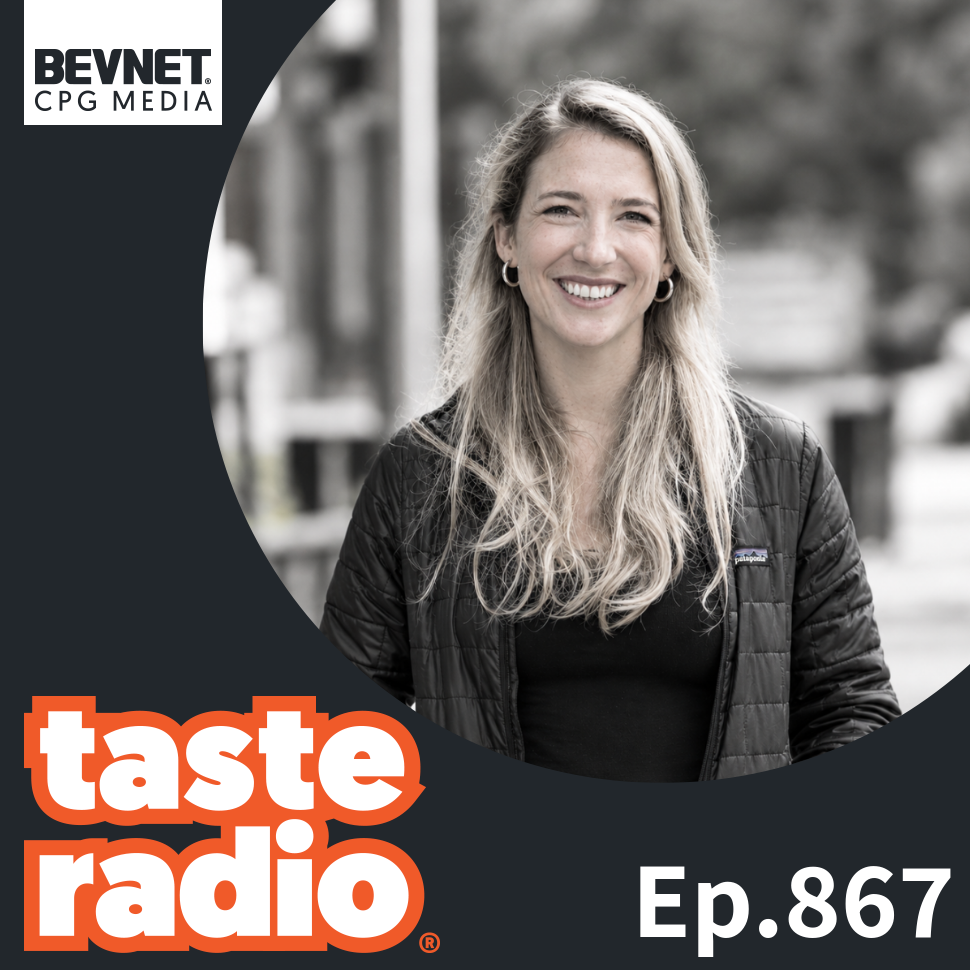
[00:00:10] Ray Latif: Hello, friends. I'm Ray Latif, and you're listening to the number one podcast for anyone building a business in food or beverage, Taste Radio. In this episode, we sit down with Rosa Li, the founder and CEO of fast-growing functional beverage brand, Wild Wonder. Wild is woven into the fabric of her brand's identity, But Rosa Li's methodical, strategic approach to building a successful and respected CPG company stands in contrast to the untamed energy her products represent. Rosa Li the founder and CEO of Wild Wonder, a sparkling beverage brand that blends the benefits of prebiotics and probiotics. Launched in 2020, the AAPI-founded company describes itself as, quote, rooted in culture, offering USDA organic drinks that taste as fresh and vibrant as a California produce stand. Flavors like Raspberry Lychee, Strawberry Passion, and Guava Rose come to life in 12-ounce Slim Cans, each containing 5 grams of prebiotic fiber, 6 grams of sugar, and 40 calories. Wild Wonder is available nationwide, including at Whole Foods, Sprouts, The Fresh Market, as well as select Target and Costco locations. In this interview, Rosa shares how a focus on steady incremental growth has been key to maintaining Wild Wonder's integrity. She also discusses how the brand aligns its expansion with core values, its unique position at the intersection of kombucha and soda, and the power of social listening in shaping the company's future. Hey, folks, it's Ray with Taste Radio. Right now, I am honored to be sitting down with Rosa Li, who is the founder of Wild Wonder. Rosa, great to see you.
[00:02:04] Rosa Li: Hi, Ray. So happy to be here.
[00:02:06] Ray Latif: Indeed. We're here at Expo West 2025 on the final day of the show. It's a Friday, which is a new final day. Typically, it's been on a Saturday, but I imagine it's been as busy as ever for you.
[00:02:17] Rosa Li: Yeah, it's a crazy show.
[00:02:19] Ray Latif: Yeah. So people are encountering Wild Wonder right now when they visit your booth. Do most people know what you're doing? Are people pretty familiar with the brand?
[00:02:27] Rosa Li: I would say half, half. Obviously, people at the show are in the natural products industry. There's a lot of buyers are stopping by. So our existing buyers, some new buyers. So we're just really happy to introduce our newest flavor to everyone, which will be unveiled to the public in May. A lot of people are also tasting the existing line of flavors.
[00:02:47] Ray Latif: Yeah, I have a sneak peek at your new flavor. It's behind our camera over there. Yeah, it looks really, really good. It's mouthwatering for sure. Yeah, I feel like it definitely fits in line with everything that you're doing with Wild Wonder, which is making interesting yet approachable flavors in a format that is pretty in line with trends in beverage. You're not a soda, per se. We talked about this a couple weeks ago. How would you describe Wild Wonder?
[00:03:13] Rosa Li: It's a great question. You're very on target in describing us. So Wild Wonder is a sparkling beverage with gut health benefits and unique flavors. We really focus on flavor and function. So unique but approachable. So as you can see from the lineup here, Raspberry Lychee, Strawberry Passion. These are all inspired by my grandmother's herbal tonics growing up. So the base is actually an herbal base. Everything has a fresh fruit, herb or botanical in them and then paired with fruit. So it's the combination of fruit and botanicals, grandma wisdom with a concept of a California produce stand.
[00:03:48] Ray Latif: Nice. You and I met about five years ago. I think it was 2020, right? As soon as the pandemic, you can never get through an episode without talking about the pandemic. That's right. You joined us for our New Bedford Showdown. That's right. In 2020. It was all virtual.
[00:04:00] Rosa Li: Went ahead of a very different looking product.
[00:04:01] Ray Latif: You definitely did. Yes. What was different about it? How has it changed since then?
[00:04:05] Rosa Li: Oh, so much has changed. And this really speaks to the power of incremental change over time. I would say our brand essence has not changed. Our core values have not changed. But if you think about the packaging, the positioning, the flavor profiles have all been tweaked. So when we first started, when I pitched on Taste Radio, it was a glass bottle, first of all. So it looked like a kombucha bottle because our offering was very much kombucha benefits without the vinegar. And it's still very much like that. We just speak about it very differently. And then I believe we called it a super herb infusion, which no one understood. So it was very confusing to the customer. And now we really just focus on two things they value about us. It's the flavor and the function. So as you can probably see from the cans, The biggest thing that pops is the flavor name, because people purchase based on flavor. And we also talk about the benefits, which is prebiotics and probiotics. So we changed from glass bottles to cans. That's one of the most impactful changes we made. As we're coming out of COVID, people were looking, I mean, during COVID, people were looking to purchase products online. So there's a huge shift to e-commerce various channels beyond retail. So having everything in a can format made the product more accessible. We also realized a lot of consumers, the way they drink kombucha, they nurse that bottle over time. So it feels more precious. And consumers are saying that, you know, they felt it was actually wasteful to go through multiple bottles a day. So having our drinks in a can format actually increased the usability, accessibility of the Sprouts and The frequency of usage.
[00:05:49] Ray Latif: Yeah, a 12-ounce can, it's not a very difficult thing to drink. And yes, very few people that I know leave a half-empty can. Bottles on the other hand, you close that up, put it in the fridge, it'll take a longer time. So I'm sure it helps with getting people to drink more often. Increase that velocity. Exactly, exactly. You mentioned kombucha. I think some consumers look at Wild Wonder as sort of a cross between a kombucha and a soda. And I think that's kind of a good thing. Kombucha certainly has a healthy halo. Certain segments of soda are looked at more favorably because they do have better for you ingredients. But how do you, if at all, navigate that balance? How do you incorporate that kind of communication into your marketing?
[00:06:34] Rosa Li: Yeah, that's a great question. We definitely don't want to be confusing to the customer. I would say the consumer, when they make purchase decisions, they're not thinking, oh, what category of beverage do I feel like right now? They're not thinking, oh, do I want a kombucha or a prebiotic soda or a coconut water or water? They're just looking for a beverage, maybe with their lunch. Maybe it's like an afternoon pick-me-up. Maybe it's like they're just thinking, I want something fruity. I want something sparkling. We don't feel that it's super necessary to put us in a box. They like us because of the two things that, you know, it's flavor, it's great taste, and it's the additional benefits. And so we're functional. That's differentiating compared to water. So I would say the benefit of being compared to a kombucha, especially in the earlier years post-launch, is that everyone was surprised on the upside. Everyone tasted it and they're like, oh my gosh, this actually tastes good.
[00:07:31] Ray Latif: As in it doesn't taste vinegary like kombucha. Yeah.
[00:07:33] Rosa Li: And then they're expecting something that is not as satisfying on the taste. Or, you know, maybe they're expecting something that's not as approachable because functional beverages don't have the best rep for having great taste. And I'm a huge foodie. I don't believe in giving up taste for health. So the taste really needs to be there and needs to be approachable. It needs to be very delicious. So I would say in our all the surveys we conducted, people are saying this is a great tasting Sprouts and The're just pleasantly surprised. So I mean, even till this day, people come to the booth and they're like, oh, this actually tastes good. And whenever they say actually, it makes me think, oh, are they just expecting beverages not taste good?
[00:08:14] Wild Wonder: Yeah.
[00:08:14] Rosa Li: Yeah. So we really benefit us to taste more approachable, more mainstream. And because we don't say it's a kombucha, we don't call ourselves a kombucha, and it's not a kombucha. I don't think there's much fear nowadays, especially with all the prebiotic sodas that's launched on the market, for people to assume that we're not going to be good tasting.
[00:08:33] Ray Latif: It actually tastes good. I think you mentioned people aren't necessarily looking for a specific category. They're not saying, hey, I want this particular category, that particular category. But inherently, that's where they're going to find them, in the stores, right? When you're talking about merchandising, Wild Wonder, and you're encouraging retail buyers or retail merchandisers to say, this belongs in this part of the store, that part of the store. If it's next to kombucha, I think the person who's looking for a better for you refreshment drink isn't necessarily looking in kombucha because they're afraid of that taste. So how do you talk to merchandisers about where to position your brand on shelf so that more people can be aware of it and eventually try it?
[00:09:19] Rosa Li: Yeah, 100%. And I think that's a super important question in thinking about how do we position ourselves in the market. And that truly affects our sales, our performance. So we are in a kombucha shelf. We talk to the same buyer as kombucha. And sometimes, you know, depending on the retailer, that's the dairy buyer, sometimes the produce buyer. But the way we position is gut health. So we offer both prebiotics and probiotics. When people are looking for something functional, they're looking for something that's good for digestive health, they are going to that fridge. And this is actually similar to Olipop when they first started before they launched that Ambien line, is they are, because they're offering prebiotic benefits, they are in the kombucha shelf. So I would say that's beneficial to us because One, it's a can, so it's not a bottle, so it does stand out. And two, we offer different flavor profiles, something incremental to that customer who's coming to the shelf. It's not a kombucha for people who are just thinking, hey, I want something that's better for my gut. They're not just limited to the same vinegary offerings.
[00:10:30] Ray Latif: Is it more helpful to be in kombucha because you stand out there versus saying being in soda? I would think you'd want to be in soda, in that soda category. But in kombucha, as you mentioned, you stand out because you're in a can. It doesn't say kombucha certainly anywhere on your can. So you talk about velocity, I just feel like your product might turn more in soda. Is that eventually where you want to be though?
[00:10:50] Rosa Li: So it's interesting because obviously now everyone's talking about soda before no one was talking about soda. And there's so much shift in the market. Categories are shifting as well. Like the shelf for kombucha was purely kombucha. Now there's actually other functional beverages. Sometimes it's even non-alcohol. There's not necessarily just gut health. There's other functions. There is some soda in that shelf now. So I would say from a merchandising perspective, which is what we care more about, rather than how should we be categorized necessarily, maybe it's in spins or whatnot. We just want to make sure we are positioned where the consumer is looking for our type of products, which is that functional beverage. that's probably 80% kombucha or before it was almost 100% kombucha. Now it's probably 50% kombucha now. But they're still looking for functional beverages in that same shelf, especially being a gut health beverage, prebiotics and probiotics. We are in the refrigerated section. We don't want to be in a soda like ambient aisle because when people are traditional soda drinkers might not be looking for something functional. People who are traditional soda drinkers are also very much they have a price target or a price threshold. So this is a premium product and people are paying the premium for the benefits. 3.49 is not really that close to a Coke or Pepsi price. So we do think a lot about who is our target audience and how do we comp price.
[00:12:22] Ray Latif: Yeah, I'm glad you brought up price because $349 is not necessarily a price for a mainstream consumer when they're thinking about a soda. It definitely feels like that's a price that they would be paying for a more premium beverage, for sure. But you've grown, Wild Wonder that is, pretty quickly, pretty fast in these last few years. And Wild Wonder about your pricing strategy as it relates to distribution. When you're breaking into those new markets and new channels, how do you think about aligning pricing and distribution?
[00:12:52] Rosa Li: Yeah, that's a great question because we are always looking at how much is the customer wanting to pay and like what are they saying to us in terms of what we can do better. We're always trying to be at least like 1% better every day. So price is something that we are thinking about as we expand to conventional retailers and mass retailers. I would say looking at our velocity today, and we are top in terms of velocity performance, people are paying the premium. So we're not so worried about price today. Obviously, as we grow, you know, maybe we expand more with Walmart, we expand more with the conventional retailers, there's going to be some price compression. So we just think about, okay, Walmart usually looks for a certain discount to The Fresh of the market. Costco will want to offer a percent value to their customers. So we just want to make sure the math works while still maintaining a really solid margin so we can grow profitably, sustainably. But so far, we're not so worried about pricing. I would say to your point earlier, you know, if we were to position ourselves in the solar category, people are going to be expecting. $2, $2.50, that type of price range. Kombuchas are priced at anywhere between like $3 to $4. So when they first started, they were at $5. So for some of the premium products, they are priced higher. So we offer more benefits in each can, really unique flavors, staying true to our value and why people are buying us, we'll continue to command that solid velocity at a higher price.
[00:14:27] Ray Latif: You mentioned two very big retailers that a lot of folks would want their brands to be sold in. That's Target and Costco. Did they reach out to you or were you chasing those two retailers?
[00:14:39] Rosa Li: You know, I actually met them at a show, at Expo West. Not this year, previous year. So this speaks to the value of being at Expo West. And this is truly the Super Bowl of natural products.
[00:14:50] Ray Latif: Did you have a booth?
[00:14:51] Rosa Li: Yeah, we have a booth this year.
[00:14:52] Ray Latif: Did you have a booth when you met the buyers from Walmart?
[00:14:55] Rosa Li: We had a booth when we met. I was not just walking around the show with a backpack, which also is a great strategy. So we started doing Expo. The very first year that Expo West allowed, post-pandemic, so it's 2021. So this is our fourth year doing it. The company is five years old. Every show just gets better. So we actually met amazing retail partners at Expo West. We met last year. A lot of the Albertson Safeway buyers, regional buyers came by, met us. This year, the national team came by, met us for not the first time. We've been having conversations with them. Walmart came by last year. We met Costco buyers last year. So these are relationships we develop over time and this show has just been amazing in terms of meeting buyers, connecting with the community.
[00:15:45] Ray Latif: They're interested in your brand, but getting your product on their shelves is a whole nother thing. Demand planning, thinking about your production capacity and what you would need to be in those stores. That's a whole different story. How do you plan for something like that? How do you plan for that PO from Walmart? How do you make sure that Walmart has the confidence that you can fill those orders?
[00:16:09] Rosa Li: Yeah, I mean, we take a lot of pride in our operations. We've been operating very efficiently, even at at a smaller scale than Olipop or Poppy. So in terms of production planning, we operate in different regions now. We have multiple co-packers that can help to support certain volumes. So if we don't plan exactly as demand, we can always fill a little bit of smaller volume to supplement with additional co-packers. I would say we generally did a pretty good job with inventory. I would say the planning part is we don't plan from a HR headcount perspective for Costco, because that's very risky. And those are rotations and volume that might not come through. But for other retailers, there's usually a reset schedule that's months in advance. You know, for Whole Foods, I would know, you know, six months in advance before it goes on the shelf. So all these retailers have their reset schedule. So we do actually have pretty good visibility in terms of, OK, what's next quarters? demand. Costco is probably the only one that's a little bit volatile, but we do actually, you know, we've been talking to buyers and we generally have a pretty good sense of when that next rotation is.
[00:17:22] Ray Latif: How many co-packers are part of your team or I guess you work with?
[00:17:25] Rosa Li: Yeah, we have two and a half. And so one on the East Coast, one in the Midwest and a smaller co-packer on the West Coast in California. Um, that's more used, you know, to supplement volume and for, um, testing new products.
[00:17:39] Ray Latif: How do you have a good relationship with all three of them to make sure that they're swimming in the same direction as you guys are?
[00:17:45] Rosa Li: It just takes time to build relationships. You know, we are very good at communicating what we need. What do you mean by that? Yeah, so anytime anything changes, anything that, you know, we have a shortage in terms of raw material, we will communicate as early as possible. These are, I mean, obviously we do a lot of diligence in picking co-packers and making sure that they are quality co-packers. We do a lot of reference checks to make sure that they also communicate well. They have quality standards that fit our standards. So the co-packers actually, they all came by our booth as well at Expo, spoke very highly of us just in terms of the way we work.
[00:18:23] Ray Latif: And I think that's the key, right, is making sure that your expectations meet their expectations and vice versa. And I always hear that there are lots of problems or you should expect problems with co-manufacturing. It's just going to happen. But it can't be such that it breaks the relationship. So when you do have a problem, and I'm sure you've encountered them, how do you approach it as a founder?
[00:18:47] Rosa Li: Yeah, it depends on the problem. Some of those problems are minor. So if there's delays in manufacturing, you can't really avoid those because you never know when something happens, the line can go down. Maybe there's an equipment issue. So it's important to build in some cushion in terms of how much inventory we hold, obviously that comes with consequences. It means we need to hold more cash to support that cushion. You know, an extra 10 days of inventory hold can impact a lot in terms of cash flow. So, you know, we have a line of credit that we can draw down if we need a little more cash that protects us. But I would say there are some major problems that I've seen as well. Like during COVID, someone got COVID and the co-packer had to shut down operations. So that really forced us to diversify our supply chain, diversify our operations, our manufacturing partners. And as a result, we're stronger because if something happens with one co-packer, we can go to a second one. So, you know, we did have all the stock issues in the past. When, you know, there was a quality issue, we didn't like the level of quality that is produced. So we made a decision, a hard decision to not sell those products. And what that meant was we were out of stock.
[00:20:01] Ray Latif: And you were at a lot of money.
[00:20:02] Rosa Li: That's right. So, you know, if that were to happen to anyone, that's definitely a more major issue that, you know, we had to work with our co-packer to figure out what happened to make sure that doesn't happen again. And that's costly for everyone. You know, it's additional resources we all have to devote to that type of situation. And if that couldn't be resolved, then we would have to diversify even further our manufacturing partners.
[00:20:27] Ray Latif: Do your retailers understand when things go wrong? I mean, at this point, it feels like you're pretty much efficient and on time getting product when it's supposed to be there. But when it hasn't, how does that conversation go?
[00:20:41] Rosa Li: Yeah, we definitely notice our retailers right away. So that comes similar to what we talked about. Communication is really important. We always communicate problems whenever they happen. We don't hold off. You know, if there's ever an out of stock situation, we let them know right away. And retailers really appreciate that. They obviously We don't want problems, but they also don't want to find out, you know, as a surprise. So they want to know as soon as possible. So then they can also respond in a productive way. So when we were out of stock last year, we did communicate that to all of our buyers immediately. And we made a decision to essentially prioritize retail buyers. And then we basically took our online sales off essentially just to, you know, not reallocate the inventory from online to retail so we can service the retail customers.
[00:21:33] Ray Latif: Did that impact your relationship with your online customers? Because if some of them were expecting shipments and their regular subscription shipments, and now they're like, okay, I'm not getting this for a certain amount of time. How does that affect that relationship?
[00:21:45] Rosa Li: I actually don't think it hurt our relationships at all. I mean, we always had really strong sales. I mean, if you're not getting your subscription one month, yeah, sure, people can be sad, but they also understand that there are circumstances that dictate volume or inventory availability. So I think after COVID, everyone understood that there's always all the stock issues and Yeah, we didn't see any damage to our reputation. We also communicated very early to those online customers. Hey, we're out of stock. You know, just bear with us while we replenish our inventory. So I would say, you know, I don't think the out of stock situation really affected us in any negative way outside of a dip in sales for one month.
[00:22:28] Ray Latif: It's really important to have good relationships with those customers because they are loyal customers for the most part, I would think. But they also are helpful in telling you what they want to see out of your brand, how they think about your brand. I'm sure you take cues when you are listening to those folks in how you talk to potential new customers. How does social listening impact your overall marketing strategy and new product development, like your upcoming products here?
[00:23:01] Rosa Li: Yeah, we're constantly listening to our customers and it's so important to really focus on our core values and core competency. I think for startups, one of the hardest things to do is the balance between focus and innovation. A lot of people are attracted to shiny objects and we're forced to constantly generate buzz, especially given the noise on the market. I mean, have you seen the number of prebiotic sodas that's launched in the market in the last two weeks? So, I would say we use social listening to figure out what do they care about? What are they looking for? And how are they consuming our products? There's actually a framework called Jobs to be Done by Dan Olson, and it's really a matrix. Think about it as on the x-axis, there's the importance scale, and the y-axis, there's the satisfaction scale. So, Satisfaction meaning how satisfied are people nowadays with everything that's offered on the market. And importance meaning how important are these product attributes to your customers. So we want to be focused on the important attributes that truly are driving buying decisions. Are people really value and pay money for. And on the satisfaction scale, we want to be on lower on the satisfaction scale. So it's not an oversaturated market. And there's not a lot of those. So the two things that we still, you know, again, two things we focus on are the unique flavor profiles and the benefits. Those are the things we continue to hear in social listening. In surveys everywhere, you know, post-purchase surveys, we do a lot for both online customers and retail customers to figure out why are they buying Wild Wonder? How are they consuming us? So we are not trying to be a soda. This is why we don't market ourselves as a soda. We will never do soda flavors. We're not going after the root beers and the colas. There's enough people doing that, as we know. We want to stay in our lane, stay true to our core values, unique flavor profiles, botanicals and fruit. Everything is an herbal base. And that all is very much deeply rooted in Eastern herbal wisdom. And we will have unique but approachable flavors. We have more benefits in each can, both prebiotics and probiotics, you know, low sugar. So those are the benefits people talk about on social media. They love the different unique flavors we offer. So I would say we've done so many surveys now and the first thing that comes up is like gut health. Why are they buying it? It's gut health. And I think that what they really mean is they're not trying to solve their gut health issues with Wild Wonder, but they're paying the premium because it's functional, because of the benefits. Right. And then flavor also ranks super high. Those are really the two things that stand out. It's like really tasty, very delicious. Surprise on the upside. So those are the things that we are going to double down on. And The Fresh is just noise. Like when we first started, we were talking about all these attributes like, gosh, mission driven, clean ingredients, sustainable, gluten free, organic. You know, those are all great attributes, but they're not the reason people are buying Wild Wonder.
[00:26:08] Ray Latif: Sometimes I think the reasons why people buy a product can be incongruent with the reasons that an investor might buy into a brand, might fund a brand. So investors today, I'm sure that they're very buzzy about soda. You're very clear, we're not that, we're never gonna be that. But again, your customers are telling you, we like your brand the way it is. But for an investor to say, well, I'm only gonna fund this if it's this. How does that impact fundraising?
[00:26:36] Rosa Li: You know, it's actually really interesting. I made a decision not to fundraise last year because one, the market's terrible and two, we're operating just fine. We're breakeven. We're not losing money.
[00:26:45] Ray Latif: Congratulations. Thank you. It's that easy.
[00:26:47] Rosa Li: Yeah. So if you have a profitable company, then you don't have to worry about raising money. It's just a huge load off my shoulders. And that's why we've always wanted to run very efficiently and again, focus on what we do best, focus on why people like us and not worry about The Fresh. There's a lot of investors that are coming to us nowadays because they want to, I guess, be part of this journey. have something in their portfolio that benefits from a tailwind of prebiotic sodas and Ollipop and Poppy and all the growth they've had. So I would say it's actually a benefit to not call ourselves a soda. Because we stand out in the crowd and they're actually telling me, and this is not just investors, buyers as well, they're coming to us and saying, hey, you guys, positioning is really unique. You're not just another soda. And that's why they like us. Same thing with buyers. Like Kofu's whole exec team actually came by yesterday and the CEO came by twice during the trade show. And our buyer consistently tell us that they like us because we offer something different. And if they were to just not look too closely, and everyone just looks like an Ollipop or Poppy, and we look different, we feel different, we taste different, the story's different. And I think if you, if I were a retailer, I think about, what kind of customers do I want to bring to my shelf and stores? I want to offer something incremental. I don't want to just offer a Me Too product. And that's why we want to stay in our lane, and we want to just focus on what we do best.
[00:28:22] Ray Latif: That's really good to hear. Because I think a lot of folks think, They should sotify for products to fit in line with trends. There's definitely certainly a lot of interest in the brands you mentioned, Poppy and Olipop. There's a lot of strategic interest from what we hear in those two brands as well. But it's almost too late, I think, for brands to get into this space.
[00:28:44] Rosa Li: Yeah, I definitely think that there's different waves of innovation. If you think about when GTS first started like 30 years ago, they really built the kombucha category. And 2012 to 2017 was like when kombucha really had their boom. And by when HealthAid and Kavita started around 2012, and we saw a huge boost to that category. And that's a new category. By 2017, there's probably close to 100 kombucha brands on the shelf. And then during COVID, everyone went to nostalgic flavors and started going not backwards, but in a different direction and looking for comfort, looking for more approachable flavors in this functional beverage category. as Olipop and Poppy started doing more education in this market. And I would say nowadays, everyone's looking at, you know, what's coming next? What's this next wave? And I would say that we would love to lead this next wave of innovation with more unique flavor profiles. If there's anything I'm learning from the show, and I haven't had a lot of time to walk the show, but I'm noticing a lot more Asian flavors, global flavors, and that's not going away. So I would say, how do we position in this growing category beyond just traditional soda flavors? At the end of the day, this is a sparkling drink. So you're either sparkling water or a soda, right? There's not a lot of options or categories per se. I would say people are drinking us because we are somewhere in between those two big categories. And I'm not counting kombucha because that's like very niche. So there's more taste than a spindrift in Wild Wonder. You get more satisfaction on the taste and it's also functional. But then we're never going to be as sweet as a soda. We don't want to market ourselves as a soda because when consumers get it and they taste it, they're going to be underwhelmed on the taste profile as opposed to being pleasantly surprised. Because if they're expecting a soda, they don't get a soda, they're not going to come back. So that's why we don't market ourselves as a soda because traditionally people think of soda as like a root beer or cola, something very sweet.
[00:30:59] Ray Latif: You're five years in with Wild Wonder and you're doing well. You have good distribution. You have good retail partners. You're breakeven, as you mentioned. A lot of things are going right. When you look at the next five years and the potential for the brand, what do you see? What are you trying to accomplish? I talk to entrepreneurs and sometimes they say they work backwards. They say, we have this overall vision, this idea, and we want to accomplish it sort of step by step on the way back. So how are you analyzing, anticipating the potential for Wild Wonder going forward?
[00:31:29] Rosa Li: Yeah, my goal is deceptively simple. We want to execute well. We will stay true to our core values, our core competency, and just very focused. We obviously have product innovation, but it's going to be the same line of products. We're going to do it in a very gradual way, in a way that makes sense, even with our distribution. You know, we're basically just doubling every year and it's very much consistent. We focus on serving our customers while making sure that their needs are met. Obviously we have growth goals in terms of revenue. We're not gonna go after a certain revenue regardless of what else happens. So for instance, what I mean by that is sometimes people will say, hey, investors force us to get to 100 million three years. Well, you're going to have to spend a ton of money together, especially if the velocity is not good. So for me, it's saying, yeah, sure, we want to get to 100 million and we want to do it rapidly because market share is important. But we're not going to do so at the expense of maybe it's losing profitability. Maybe it's spending trade in a way that doesn't make sense. Maybe it's fueling growth just with marketing dollars. If our product isn't performing, we're not going to spend on marketing. We're going to focus on the product. And maybe that delays us by a year, but that's okay. So I would say, you know, we do have very strong velocity on shelve, we have very strong product lineup. But what my team and I always focus on is execution, making sure that, you know, we don't run out of stock, we continue to perform well on shelve and just kind of tackle one market at a time, one retailer at a time, and we'll get there.
[00:33:12] Ray Latif: Yeah, what you just talked about reminded me of an interview that I did with Nona Lim, who's the founder of Nona Lim's Foods. And she makes what she her brand was this groundbreaking brand of Asian inspired dishes. And she talked a lot of in that interview, she talked a lot about the importance of being able to generate retail velocity without a lot of marketing spend, without a lot of trade spend. And it's exactly what you're talking about. So it's great advice for anyone listening. Rosa, you know, you and I had chatted about doing an interview like this. I think it was BevNET Live 2023. It was the winter 2023. I'm glad we're doing it now. I'm really, really glad because you've gone through a lot over the past 18 months, I'm sure. And I think it's helped your brand. I think it's helped you as a founder. And I think it's everything we talked about today is going to be really helpful for our listeners. So really appreciate the time. Thank you so much. Congrats on everything you built. It's incredible. It's not easy to build a beverage brand.
[00:34:04] Rosa Li: I am 100% in line with that one.
[00:34:07] Ray Latif: But you're doing it. Fantastic.
[00:34:08] Rosa Li: Yeah. Thank you so much, Ray. It's just been so fun to be interviewed by you and share this journey with you.
[00:34:14] Ray Latif: Thank you so much for saying that. Appreciate it. That brings us to the end of this episode of Taste Radio. Thank you so much for listening. Taste Radio is a production of BevNET.com, Incorporated. Our audio engineer for Taste Radio is Joe Cracci. Our technical director is Joshua Pratt, and our video editor is Ryan Galang. Our social marketing manager is Amanda Smerlinski, and our designer is Amanda Huang. Just a reminder, if you like what you hear on Taste Radio, please share the podcast with friends and colleagues. And of course, we would love it if you could review us on the Apple Podcasts app or your listening platform of choice. Check us out on Instagram. Our handle is bevnettasteradio. As always, for questions, comments, ideas for future podcasts, please send us an email to ask at Taste Radio.com. On behalf of the entire Taste Radio team, thank you for listening, and we'll talk to you next time.
[00:35:09] Wild Wonder: you