[00:00:10] Ray Latif: Hello, and thanks for tuning in to Taste Radio, the number one podcast for The Good and beverage industry. I'm Ray Latif, the editor and producer of Taste Radio, and I'm with my co-host for this episode, John Craven, Jacqui Brugliera, and Mike Schneider. In this episode, we feature an interview with Will Fabry. a former chef turned Master Distiller who oversees blending and finishing for Craftco, a portfolio of highly awarded spirit brands including Joseph A. Magnus and Fox & Oden. Happy New Year, everyone. 2024, I got the glasses to prove it. There we go.
[00:00:45] John Craven: I got these.
[00:00:47] Ray Latif: So we thought the eye hole would be in the four. I basically can't see out of these things. For folks who aren't watching the video or real of this thing, I'm actually wearing those glasses that actually say 2024 across my face right now. And I really can't see much.
[00:01:01] John Craven: Did you wear those all New Year's Eve night?
[00:01:03] Ray Latif: No, this is actually the first time I put these things on because they are actually very uncomfortable.
[00:01:08] Jacqui Brugliera: I'm just picturing you getting thrown out of a bar on New Year's Eve wearing those where you're like, don't you know who I am?
[00:01:14] Tay Relief: God damn it. I'm Tay Relief.
[00:01:18] Ray Latif: I've never been to a bar on New Year's Eve.
[00:01:20] Tay Relief: I'm Tay Relief.
[00:01:21] Ray Latif: Nah. I can't imagine myself being at one of those places. It's just packed and crowded and overpriced.
[00:01:26] Jacqui Brugliera: The amount of hand sanitizer you need would make it impossible.
[00:01:30] Tay Relief: I feel like a hand sanitizer bubble bath. Yeah, you need to be in a bubble.
[00:01:34] Ray Latif: I've never used albuterol in my life. I feel like I'd be albuterizing myself all day and night in one of those places. Just can't breathe. Anywho, no, it is exciting. 2024, brand new year. And I've seen all these people on LinkedIn saying, here's what you should do for new years or for your new year to have a healthy and happy and safe new year. And here's what you should do. And I figured I'd share a thought or two on how to have a great new year. Okay. I've been saying this and I've been telling everyone, I tell my friends, I tell my family. Stop supporting Man United. Well, before the end of the season, I might be saying that. Green juice. I keep saying to people, drink green juice. People wake up in the morning, they're texting me and they're like, I've got no pep. I'm tired, I'm exhausted, or I'm having gut health issues, or I have some sort of skin condition or whatever it is. And I always say, are you drinking green juice? And they say, no. And I say, did I tell you like 500 times already to drink green juice? Yeah, you told me 500 times. And I got the skin issues.
[00:02:31] John Craven: You sound like, uh, the guy from like my big fat Greek wedding with the Windex. Yes. That just says and hears everything with Windex.
[00:02:38] Ray Latif: Yours is green juice. That's a very good comparison. Very good comparison. Windex guy from big fat Greek wedding, Ray Latif from Taste Radio. Very similar people. Anyway. No, in all seriousness, I started drinking green juice every morning, six to eight ounces, like, I don't know, a year and a half ago. And I feel like it's really helped. I feel like I've been healthy, healthier than I had been in the past. I feel like I've just been more active and had more virility, for lack of a better word. Is this your first foray into vegetables?
[00:03:10] Jacqui Brugliera: Yeah, what is this?
[00:03:11] Ray Latif: What green juice are you consuming? Is it one jacked up with apple juice? No, no, definitely not. Never buy green juice that has apples as an ingredient. Never do that. Isn't that impossible? Too much sugar. It is not. The one I buy is the 32 ounce multi-serve container from Trader Joe's. It has like a gram of sugar that comes from grapefruit juice. That's where it's, that's what it's sweetened with, but it has like kale and collard greens and cucumber and celery and things like that. But it is fantastic. And I drink, like I said, six to eight ounces a day. Now I do like other brands. I love Evolution Fresh. I like Pressed. You know, there's a, there's a bunch of them out there that I like, but Trader Joe's is the one that I consume on a regular basis.
[00:03:51] John Craven: In a pinch, do you ever opt to like just use powder, like a green powder?
[00:03:54] Ray Latif: No, I've tried that. And unfortunately the sweeteners and green powders just ruin it for me. They typically are using sweeteners that I don't like. I'll just leave it at that. But I do sometimes drink green juices that are of brands that I don't particularly love, but I'll also leave it at that. It's a little mysterious there. When I'm on the road and there's just not a lot of options, I will have a green juice from a brand that I am not enamored with, but I'll do it anyway.
[00:04:24] Tay Relief: Mysterious race.
[00:04:25] Ray Latif: Yes. Uh, if you, if you really want to know, send me a note and I'll, I'll tell you which ones they are. Mike, any New Year's thoughts for you? Any, any recommendations for our listeners?
[00:04:35] Tay Relief: I'm being asked for New Year's tips. I mean, I'm following Amanda Lee Lifestyle, Amanda Smerlinski from our team. Oh, cool. She's got some great tips for a high protein diet, which I'm like taking notes. Okay.
[00:04:48] Ray Latif: Amanda Lee Lifestyle. That's her Instagram handle? Yep. All right. Jackie, you doing the same? Drinking a lot of bone broth and whatnot?
[00:04:54] John Craven: I'm not drinking bone broth.
[00:04:56] Tay Relief: She's not drinking bone broth? Oh, that's right. I always forget.
[00:05:00] John Craven: I'm sorry. I'm pescatarian, so I guess I could drink seafood bone broth.
[00:05:07] Jacqui Brugliera: Seafood broth. I mean, they have marine collagen, so you could do that.
[00:05:11] John Craven: OK, I could try to up my marine collagen.
[00:05:12] Jacqui Brugliera: Mix that up with some mushrooms or something.
[00:05:13] Ray Latif: Yeah, I don't know if Jackie needs to do any of that. Shroom broth. She's already consuming all kinds of really interesting and novel things like the sea moss.
[00:05:23] John Craven: Oh yeah. I mean, I'm going to the farmer's market and finding all the weird things that I can consume. I'm just like a Petri dish right now with all the different functional ingredients inside of me.
[00:05:33] Ray Latif: Sounds like Expo West. More THC or less THC in 2024?
[00:05:37] John Craven: More THC.
[00:05:38] Ray Latif: More THC. Okay.
[00:05:40] John Craven: Yeah. Over the holidays, I definitely consumed more THC than I did alcohol, which was kind of nice and refreshing.
[00:05:45] Tay Relief: Did you have any magical cacti? I had some magic cactus over the break. Okay.
[00:05:51] Ray Latif: Good for you. Interesting. Okay. So is alcohol on the way out or is it just you're tempering it with more THC?
[00:05:57] John Craven: I would say I'm tempering it. Dry January, right? Dry January or like cannabis January. January. January.
[00:06:07] Ray Latif: Yeah. Right. Yeah. No, no, I'm not doing that. John Craven's not doing that either. No, no. That was an easy answer.
[00:06:13] Tay Relief: Yeah. Very easy. John Craven enjoys him a magic cactus though. Just saying. Yeah, they don't really do anything to me, but...
[00:06:25] Mike Schneider: They taste good, I like it.
[00:06:26] Tay Relief: They taste good, and John Craven's had a couple of those. Okay.
[00:06:29] Ray Latif: Well, I assume I was gonna say more Negronis or less Negronis, but I assume the answer's always gonna be more. What, am I prescribing my 2024 regimen here?
[00:06:37] SPEAKER_??: No.
[00:06:38] Jacqui Brugliera: I just want... I'm gonna go real extreme. We gotta do, like, weekly ayahuasca and...
[00:06:44] Tay Relief: Keto diet AOD yeah all that's true this podcast has already been accused of being on ayahuasca CrossFit times a day. I don't know.
[00:06:53] Jacqui Brugliera: I mean you know look a cliff jumping shark tossing to give some non nonsensical 2024 suggestions. I think it's just kind of what you make of it, right? I mean, you can go on LinkedIn and it's like, depending on who you follow, either the sky is falling or, you know, I don't know, everyone in DTC is just crushing it, but I don't know. You just got to put that stuff aside at some point and do your own thing.
[00:07:17] Tay Relief: I see more than a few founders say they're going to be meaner in 2024. They were too nice in 2023. Oh, okay. Care to name any names? No, don't do that. I mean they put it on their Instagram, so yeah, well cold plunges Yeah, cold plunge your friend Geffen from From a couple of coffee. Oh, she's gonna be meaner you're uh you're Wires tangled there by the way
[00:07:41] Ray Latif: Cold plunge is yes. Thanks for that, Ray. Thanks for that value add. I just didn't want people to see it on the reel. Don't do it. Anyway, yes. Okay. Well, I hope people drink More Green juice, consume more THC. That's not better. And a more Amanda Lee lifestyle. And perhaps do some ayahuasca stuff. And watch out for Geffen. Well, I mentioned the Negroni thing because I can't wait to have a Negroni with Monica Watrous, who is our new managing editor for Nosh. Very exciting stuff. Everyone is thrilled here at BevNET, Nosh and Taste Radio. Seems like the community is pretty thrilled too. Monica posted this yesterday that she said that on LinkedIn that she's happy to share that she's started a new position as managing editor of Nosh.com at BevNET.com. Only 547 people liked it. That's it. Yes. 253 comments. Yeah. People seem to be in love with this new partnership.
[00:08:41] John Craven: And with that announcement, we also told everyone that we're evolving beyond natural for Nosh. So we are covering all of The Good, packaged food industry now, not just natural. Right.
[00:08:52] Tay Relief: Coverage has evolved. Welcome to the community.
[00:08:55] Ray Latif: Yeah, I mean, I feel like this is a change that's been coming. And John Craven, I mean, you know, you talk to the team about this, and I think it makes a ton of sense. I mean, can you expound on why we're making this sort of shift?
[00:09:09] Jacqui Brugliera: Yeah, I guess to give a little more detail on it, I think, you know, what we're ultimately trying to do is cover, you know, what's exciting and kind of moving the needle in in The Good space. And I think, you know, that means a focus on innovation, new products, investing, you know, the kind of key movers and shakers, emerging brands. And why we are doing that is because I think the industry has kind of told us that the label of natural at this point is something that a lot of brands that previously identified as natural channel brands are going beyond that. And, you know, conventional retail is a place where some of these brands are having success and more and more are looking to you know, conventional retail. So I think for us, again, you know, really kind of at the heart of what we're after, and this is true of, you know, how BevNET's operated for 20 something years is, you know, we're kind of going where the action is. And I think, you know, that's something that as the lines have blurred and the industry has changed, it makes sense for us to adapt with it.
[00:10:16] Tay Relief: I mean, the strategics have been leaning into better for you for years, and it just makes sense for us to have the pulse on that as well. Absolutely.
[00:10:24] Ray Latif: It's funny, you think about brands like The Good Crisp or Vienna Snacks, and yeah, five, six years ago, they were very much natural channel focused brands. Now you see them everywhere. You see them in convenience, you see them in club, you see them in conventional.
[00:10:39] Jacqui Brugliera: Well, yeah, I think, you know, in the past decade, if you look to products that were in Whole Foods, I don't know, maybe a little more than 10 years ago, but yes, there were a lot of that sort of products that were really blasting the word natural or the organic seal. And, you know, Vienna and Good Crisp are great examples of like, they're upgraded snacks that do that without preaching this direct kind of healthy, natural message. It's more about like, you know, fun, cool products that clearly look and taste upgraded as well. So again, I think, you know, we're just trying to get to make sure we can follow all that. Totally.
[00:11:17] Ray Latif: And just one more brand call out. Lesser Evil, the folks from Lesser Evil sent me some product recently. And I was just thinking about it, and I was like, man, I would never want to eat any other popcorn. And yes, definitely part of it's because they do use better quality ingredients, and in some cases organic ingredients, but just because it just tastes better. And it does have that fun element that I can share with my family and be like, yeah, this is a cool brand, this is a cool product, and feel great about what's inside and what's outside the package.
[00:11:44] Jacqui Brugliera: Yeah, it's like the less junk type products. And again, I think a lot of products now are doing that without like, having to blast that all over the package too. Totally.
[00:11:55] Ray Latif: Obviously, we've also seen this trend in beverage and brands are not only giving us better for you products, they're giving us more in terms of the quantity of products. Case in point, Lemon Perfect. Lemon Perfect recently announced that they're moving from 12 ounce bottles to 15.2 ounce bottles. Just to note, Lemon Perfect is a brand of hydration drinks that is flavored with organic lemon juice and other natural flavors, sweetened with stevia leaf extract. They made this announcement and we covered this announcement on BevNET earlier this week. As someone who's followed this brand for a while and did an interview with their founder last year, I just feel like this is one of those things that was a long time coming for a brand that was always in the hydration space, but kind of needed this move to make it official.
[00:12:46] Jacqui Brugliera: Yeah, I mean, I think the hydration sports shelf has a lot of big bottles on it, so I think it makes sense for Lemon Perfect to increase the size a little bit to fit in with those a little more directly.
[00:13:00] Tay Relief: I mean, Ray, when you see a bigger plastic bottle, what's the first thing that you're thinking? Oh, more plastic, right? They've got a, have you seen the certification? Certified plastic neutral on the side here.
[00:13:12] Ray Latif: Yeah, interesting. And alongside the side of the bottle here, it says for every bottle of Lemon Perfect sold, we fund the removal of one bottle equivalent of plastic waste from the environment, reducing our plastic footprint to net zero. I like that. What do you think, Jackie?
[00:13:26] Tay Relief: Does that does that diffuse that concern?
[00:13:28] John Craven: I think if you're looking for it, I don't know if someone is super concerned about the plastic.
[00:13:35] Tay Relief: Probably more concerned about getting more Lemon Perfect.
[00:13:37] John Craven: Yeah, yeah. I think they're more concerned with the liquid inside of the vessel.
[00:13:42] Ray Latif: Yeah, and it's also, again, going back to John's point, it definitely fits into that shelf with a vitamin water, with a bi, much better than it did in the past. And I think this also gives it an opportunity to expand deeper into ambient shelves as well.
[00:13:57] Tay Relief: I'm also checking to see if 15.2 fits in my belly.
[00:14:02] Ray Latif: You're gonna drink the whole thing? I think so.
[00:14:03] Tay Relief: Okay. Chug a log.
[00:14:05] Ray Latif: Do not belch or spew on the microphone. Wow. Not that you would spew because of the liquid of Lemon Perfect.
[00:14:12] Tay Relief: Definitely not. You know what I'm saying?
[00:14:12] Ray Latif: Because of the liquid. Listeners, we like Lemon Perfect.
[00:14:16] John Craven: It also gives it just more opportunity in C-Store and convenience. People are looking for more liquid because they're drinking it over a longer period of time and grabbing it. I spent a lot of time in Wawa's in Virginia over the holidays and there's definitely a lot of opportunity for additional innovation in the beverage set there. And I think having a larger format that seems a little bit cheaper too because you're getting more product. It's smart.
[00:14:44] Tay Relief: Most people don't know, but Jackie drives a semi on the weekends.
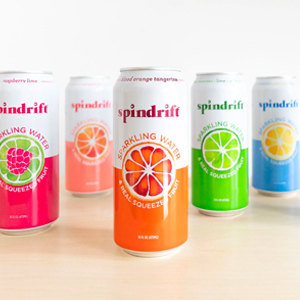
[00:14:49] Ray Latif: It's funny you mentioned Wawa because that was one of the chains where they piloted this new larger format and founder and CEO Yanni Hufnagel said in the story covered on BevNET that it's one of the reasons that the success in Wawa and Quick Trip, one of the reasons that they decided to go nationwide with this format. So good stuff, exciting stuff. Now, this is a bit unclear, but is Spindrift also moving in this direction? Spindrift, the brand of sparkling water drinks sweetened with fruit puree and fruit juice, posted on Instagram about five days ago that they're leaving short kings in 2023 and making room for tall boys. Can't get enough spinny in a 12 ounce can, we hear ya. We're giving away a case of 16-ounce cans and a set of pineapple glasses to five lucky drifters. Anyway, big is the new small.
[00:15:39] Tay Relief: Big is the new small.
[00:15:41] Ray Latif: Yeah, so a lot of people commenting said, wow, this is amazing. I love this. I can't wait for an extra four ounces in my cans of Spin Drift. Subsequent posts didn't necessarily indicate that that's exactly what they were doing. No, they just leaned into a mystery flavor, I think. They did, yeah. There's a mystery flavor coming.
[00:15:57] Jacqui Brugliera: Is it just a mystery flavor in a 12-ounce can or a 16?
[00:16:01] Ray Latif: You know, the post showed it, a case in a 12-ounce can or a case of 12-ounce cans.
[00:16:06] Jacqui Brugliera: Interesting. Yeah.
[00:16:07] Ray Latif: So something to keep an eye on at least, but maybe this is the year of larger format drinks. All right. Can't wait. Any guesses on the flavor, Ray? I'm not going to guess on the flavor. You guessed on the flavor, Mike, and you posted a comment on that.
[00:16:23] Tay Relief: You don't think it's gonna be Cool Ranch Mystery Meat?
[00:16:25] Ray Latif: I don't think it's gonna be Cool Ranch Mystery Meat. No. You know what I would be excited if they did? I'd be excited if they added a certain ingredient that helps with brain health. Brain health? One that I could use clearly? Yes.
[00:16:40] John Craven: I love a good segue.
[00:16:42] Ray Latif: Yeah, it is. Is it Cognizant? It is Cognizant.
[00:16:45] John Craven: Yay! Let's start a petition here.
[00:16:48] Ray Latif: Cognizant and Spindrift. Let's do it. You heard it here first, folks. All right. And I want to thank Cognizant because they're our presenting sponsor for this episode of Taste Radio. Cognizant is a clinically tested nootropic ingredient that delivers a patented form of citric choline to supply your brain and those of your consumers with the energy it needs to stay sharp. Learn more at cognizant.com. That's C-O-G-N-I-Z-I-N.com.
[00:17:14] Tay Relief: Yeah, if you're looking for brain health in your beverage, have a look, founders.
[00:17:17] Jacqui Brugliera: I forgot to add nootropics to my 2024 resolutions earlier.
[00:17:22] Tay Relief: More cognizant.
[00:17:23] Jacqui Brugliera: More nootropics. Just shovels full.
[00:17:24] Ray Latif: Specifically, more cognizant. All right. I want to revisit a buy or sell topic that we talked about a couple of weeks ago. We quasi-introduced this new segment called Buy or Sell in which we, the four of us, say we like this idea or not so like this idea. Are we bullish on this? Okay, let's do it. Buy or sell. I think people get it. did this topic and it was about dry bottle shops and whether or not dry bottle shops would thrive in 2024. And I was a hater. I believe Jackie wasn't so keen on this idea. Mike and John were kind of like, we're kind of positive about this. I was like, if there's a couple. Yeah, it could work. Dry bottle shops may do well in 2024, but seems like Target is going to be a big time spot for people to find N.A. spirits and cocktails. They announced a partnership with a non-alcoholic beverage retailer called Seche, is that how it's pronounced? Seche.
[00:18:24] Tay Relief: S-E-C-H-E-Y. Oh, Seche, like a session. Yeah, Seche. A sachet of sessioning. A session of sashaying.
[00:18:32] John Craven: What does it mean?
[00:18:34] Ray Latif: I don't know. Anyway, it's a brick and mortar retailer that is based in Charleston, South Carolina, founded in 2021. And Sashay and Target had a pilot run of N.A. cocktail and wine sets When Target stores that began in December. And it was announced this month or it was announced late last month. that they're going to expand that program to 450 Target stores. And the initial set includes five brands, De Soi, Guia, Kineforx, Nope Beverages, and a non-alcoholic wine brand, Surly, as well as Sashay's own branded de-alcoholized wine. Can you Forks?
[00:19:18] Tay Relief: Really?
[00:19:19] Ray Latif: I actually saw this on LinkedIn. I saw a picture of this on LinkedIn and someone's congratulating the founder of Nope Beverages as being part of this set. I did not see this coming, honestly, and I'm wondering how successful it might be. We'll see. I might be surprised, but I'm also happy about this because I think I'm happy for these brands that have been anchors for this emerging category and are great brands. I mean, I think all the brands that I mentioned have terrific products. They're beautifully designed and they have founders who are really pressing for optionality in the spirits and cocktail scene. And this is an opportunity for more and more people to have access to products like these. So whether or not this is something that Target does, you know, in perpetuity, or he has these kinds of products in perpetuity, I'm happy that people are getting to see these products more and more.
[00:20:20] Tay Relief: Does it say anything about where it'll be merchandised, Ray? So you said end caps, but is it like in grocery? I don't know, but I believe so.
[00:20:28] John Craven: I think this is just a way that it shows that the dry bottle shop can evolve. If you're not in Charleston, South Carolina, you can't go visit this shop. If you're not in like set locations, you can't go visit a, you know, a dry bottle shop. But the partnership with a larger retailer then expands the footprint. And I think the key is like the curation component too. Like this specialty retail shop has the relationships with the brands and knows what brands are quality and what's selling. And then they can bring that to like a larger retailer that doesn't have as much experience with that non-ALK set yet.
[00:21:05] Jacqui Brugliera: Yeah, I definitely think it, it'll certainly drive trial, especially during dry January, if it's up and running then. But curious to see if the repeat purchases there, you know how that does throughout the year. I suspect also some of those products are, you know, pretty premium priced products as far as just the grocery set and target goes. But I think interesting experiments certainly will be great for category awareness in 2024. One more buyer sell.
[00:21:35] Ray Latif: There was a story on Nosh about two weeks ago about a brand called Tonino, which is a Costa Rica based brand that markets tuna, canned tuna. And so they recently introduced a new kids line of products, which, um, It's a little surprising. I don't know how many kids love tuna. Did you grow up eating tuna? Tuna fish sandwiches?
[00:21:57] Mike Schneider: Definitely. Yep. You did?
[00:21:58] Ray Latif: I did. Do kids today eat tuna fish sandwiches? I haven't seen many.
[00:22:01] Mike Schneider: Mine don't.
[00:22:01] Ray Latif: Mine do. Okay. So you have no, I don't know any kids that eat tuna, but if you're trying to reach more kids, maybe this is a good way to do so to get them to, uh, you know, see these cans and see that they're kind of fun and playful, but they still have to crack them open or have their parents crack them open. I don't know if this is necessarily...
[00:22:20] Jacqui Brugliera: It seems like the brand awareness there is a little like, I don't know, were you ever, are you shopping for canned goods with your parents, like for tuna?
[00:22:28] Ray Latif: Yeah.
[00:22:29] Tay Relief: Kids' tuna, that's interesting. What's the difference?
[00:22:32] Ray Latif: Why do you need kids' tuna? I don't know. Well, Gabriella Jimenez, who is Tonino's West Coast sales and marketing director, said that she was informed about this idea, or she said this idea was informed by conversations with Tonino's existing buyer at Walmart, where it's sold as jarred and canned tuna products for nearly four years. Kids' products are really difficult. We've talked about this on the podcast. We've talked about this with founders of kids' brands. Always, you know, it's about, yes, you gotta get the attention of the kid, but at the end of the day, who's buying the product?
[00:23:01] Tay Relief: The parents. Dad.
[00:23:03] Ray Latif: Right. So, are parents gonna outlay, you know, the cost to buy a can of tuna that's playful and fun and that has these things that are associated with, I guess, you know, kids' culture and kids' lives? I don't know.
[00:23:18] John Craven: Parents are usually buying the tuna and then making something out of it and making their sandwich. They're not, the kids aren't even seeing the packaging process unless they're just eating directly from the can. And I don't see a kid going down the canned fish aisle being like, Ooh.
[00:23:35] Jacqui Brugliera: That's too big of a laugh Doesn't one of them already have a cartoon character. I don't know it's darkest. Yeah. Yeah.
[00:23:44] Ray Latif: Yeah, they do or they did well there is a an interestingly enough cartoonish tuna character on one of these new cans so that might be an issue and Anyway, if it's not clear, um, um, I got a sell on this idea. Mike is, Mike's definitely buying it.
[00:24:01] Tay Relief: There's a lot of sell in the tuna category. I mean, the one's called chicken of the sea, so. What? Chicken of the sea tuna. Oh, for crying out loud. That's a tuna. It has a mermaid on the package.
[00:24:12] Ray Latif: It does have a mermaid. All right. I think it's clear where we stand on tuna products. I think we're all interested in buying more bone broth. At least I am. Thanks, Amanda. Well, I brought this four pack of Brodo bone broth. Brodo is a maker of animal based protein broths for chicken. They have beef and these are really, really delicious products. They used to be sold in cups like this. Like ice cream pints? Yes, like ice cream pint cups in the freezer aisle. And recently they introduced, or last year they introduced, shelf-stable options in these pouches. And there's one cup per pouch. They have a roasted garlic and chili chicken broth, they have a chicken broth traditional variety, and they have a hearty bone broth that's made with beef, chicken, and turkey. One made with ginger and turmeric chicken bone broth. Yeah, so delicious stuff. Brodo was founded by chef Marco Canora. Marco operates a bunch of Brodo broth shops across New York City. He's also the chef and founder of Hearth Restaurant and Zadie's Oyster Room. So John Craven already took one of my four here. He took the spicy nonna. Yum. which is made with garlic and chili. Mike, I'm going to give you the ginger and turmeric. You look like you need some ginger and turmeric.
[00:25:37] John Craven: Thank you.
[00:25:38] Ray Latif: Jackie, I'm going to throw one at your screen. Actually, no, once again, you don't eat this stuff.
[00:25:42] John Craven: I give it to Amanda Huang.
[00:25:43] Ray Latif: Amanda loves bone broth. She does love bone broth. All right, Mike, you brought a whole bunch of beverages here. What are these things? I got some, I got some beverages. Remember Pneuma? Yes, of course. Pneuma is back. I love it. Pneuma is a brand, well, they used to be a brand of sports drinks.
[00:25:57] Tay Relief: They have hydration drinks still. They come in Tetra packs. Okay. And now they've also got these, I guess they're energy drinks. It's a little confusing. This one's a daily wellness soda, the fruit punch one. Then they've got the dragon fruit, which says performance energy drink. I'm assuming this one is caffeine. The tangerine one that I'm holding in my hand is also performance energy drink. This one probably doesn't have caffeine. Does not. Okay, so that might be the difference. And you've got what, tangerine? The tangerine, which has 120 milligrams of caffeine. Yeah, that's the one I was looking forward to trying. You should take that one. I took it. You can't have it. Go for it.
[00:26:32] Ray Latif: Yeah, so very exciting stuff. Pneuma, I recall, was a part of our New Beverage Showdown. Geez, when was that? Like six years ago almost?
[00:26:39] Tay Relief: That's good to hear from Pneuma. Absolutely. Also, File Under thinks I didn't think would be Amazeballs but R, Hoplark's limited edition cream soda. That does look good. It's really good.
[00:26:50] Jacqui Brugliera: I think the root beer one was pretty solid.
[00:26:52] Tay Relief: Yeah, the cream soda. Here you go, Ray. This one, it is amazing. I've had more than my fair share of that. So thank you for sending that.
[00:26:59] John Craven: For dry January, I have Free AF, which they are non-alcoholic cocktails. This is Paloma. This is Cuba Libre. And what I thought was interesting was underneath the description of the cocktail, it says with Afterglow and it has an asterisk. And Afterglow is a natural heat extract that mimics the warmth of alcohol without the alcohol. So I'm very curious what that means.
[00:27:30] Ray Latif: Yeah, you know, we had the founder on an episode of Elevator Talk and I asked her about that as well and whether or not that functional ingredient was something that they specifically owned or whether they were outsourcing the ingredient from another company. And I can't recall if it's something that AF owns or they're getting it from somewhere else.
[00:27:48] Tay Relief: Are you going to drink that today, Jackie? Because if you are, I'm going to slack the West coast branch, have people keep an eye on you.
[00:27:54] John Craven: I know. I mean, it's alcohol free. So unless the afterglow has some effect on me.
[00:28:02] Tay Relief: Hair turns orange and stands up. We'll know.
[00:28:04] Ray Latif: Well, I think, uh, as we wrap up our banter here, I think this is a good idea that we should continue to talk about some of Jackie's favorite non-alcoholic cocktails and spirits as she makes her way through dry January.
[00:28:15] John Craven: Yeah, I'm down for the challenge. Good luck. Don't keep me accountable.
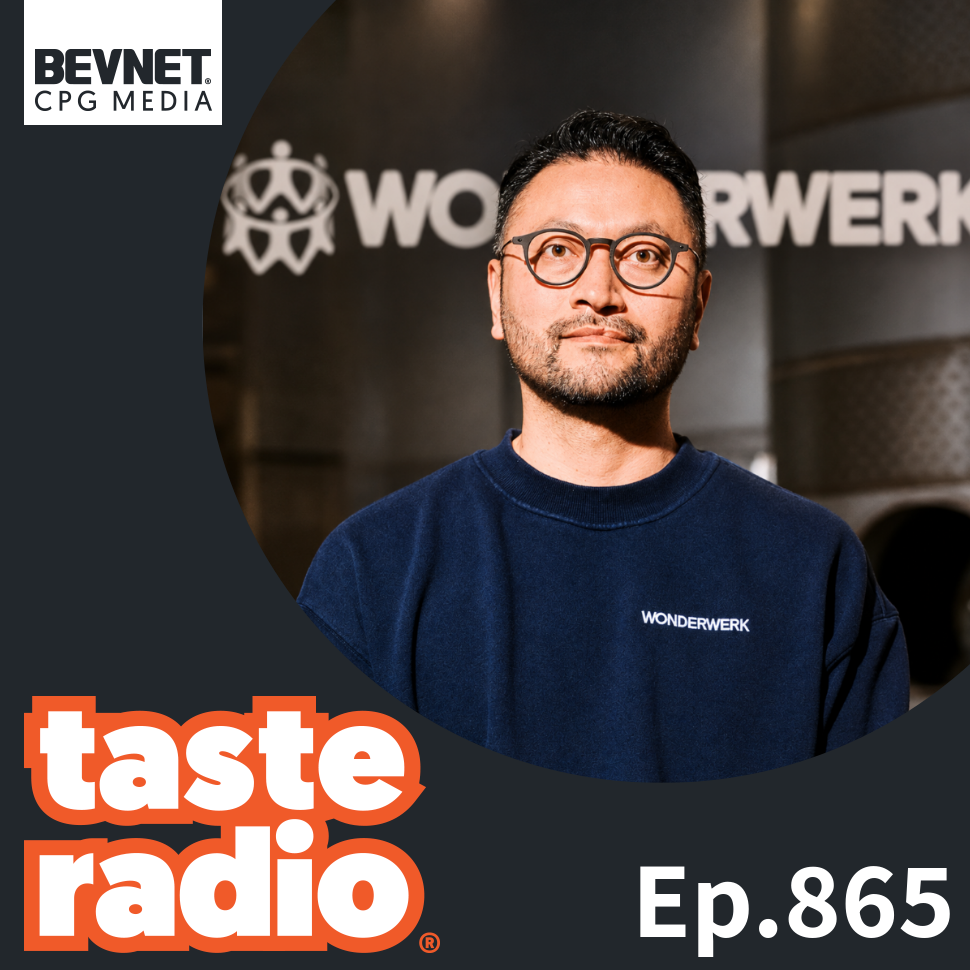
[00:28:24] Ray Latif: Alright, it's time to get to our featured interview for this episode. As I mentioned at the top of the show, Will Fabry is the Master Distiller for Craftco, a Michigan-based company that owns several acclaimed brands, including Coppercraft, Joseph A. Magnus and Fox & Odin. a 20-plus year veteran of the culinary industry, Will joined Craftco in 2018 as the executive chef and tasting room manager at Coppercraft. Pairing his passion for the culinary world and his passion for spirits, Will oversees and directs the brand's barrel inventory management, barrel maturation, and serves as a lead member of its tasting panel. In the following interview, I spoke with Will about Craftco's distilling philosophy and how he and his team consistently meet the high expectations that consumers have come to expect from its brands. He also spoke about how the company operates at the intersection of production, consumer demand, and pricing, and how he attempts to improve upon and become more proficient in his role. Hey folks, it's Ray with Taste Radio. Right now, I'm honored to be sitting down with Will Fabry, who is the head distiller at Craftco. Will, great to see you.
[00:29:36] Will Fabry: Hey Ray, good to see you as well. Thanks for having me on.
[00:29:39] Ray Latif: Well, thanks so much for being with me. I kind of wish I were with you right now in person because I love distilleries and it looks like you've got quite Master Distiller that you're sitting in right now or sitting in front of right now.
[00:29:50] Will Fabry: Yes, sir. Yeah, I got both of our stills over my shoulders. Not pictured are the whiskey barrels beyond us, but yeah, they're all here.
[00:29:59] Ray Latif: One of your colleagues had mentioned that Michigan is actually ideally suited for blending and aging whiskey. That's a quote. And I'm sorry, I chuckled. I'm sure I'm not the first person to chuckle, but why Michigan? What makes it so great? What makes it such a great place for blending and distilling whiskey?
[00:30:15] Will Fabry: So I can speak on how Michigan is a great area for blending whiskey. As far as aging, our inventory, our stock is aged. Majority of it is either in Indiana or the Kentucky border, as well as there's some in Virginia across our brands. The seasons in Michigan are drastically shorter, which is not advantageous for the maturation of the whiskey. So Michigan creates an ideal spot for blending houses, where seasonality doesn't really come into effect for aging of the spirits. The Michigan winters are long and cold and dark. And the summers are beautiful, but short. So we pride ourselves on blending our inventory in the blending season here compared to aging that.
[00:31:14] Ray Latif: It feels like logistically, it might be a bit challenging to blend in one place, to age in another place, you know, to distill where you are and make it all work harmoniously. How do you manage that process?
[00:31:28] Will Fabry: We pride ourselves on putting the highest quality spirit in a bottle. We're a very whiskey focused company. We source majority of our whiskey stock and we've been fortunate enough to deal with different distilleries that contract distill for us. So we, again, we don't hide behind the fact that we're a blending house and we want to put the best highest quality product in front of a consumer. So we work with these different companies, the different mash fills that we prefer that aid to our blends. And then we prefer and choose to age it in a more preferable climate, be it Kentucky or Ohio, and then Once that whiskey has become of age, we then ship it up to Michigan where we then blend it or finish it.
[00:32:27] Ray Latif: Yeah. It's interesting because your title is Master Distiller, but you do a lot of blending. And just for folks who are not familiar with those two roles and what they entail, can you just explain?
[00:32:38] Will Fabry: Absolutely. So distillation, it's a lot of where the grain is from, how it's grown, seasonality, the season the grain is grown, the season it's distilled, whereas blending is more of watching our inventory, how it ages, tasting it as it progresses and matures throughout its life in a barrel, and being able to kind of pick or highlight barrels that are close to its peak in age or maturity and being able to select them and blend them with comparable barrels for a SKU in our portfolio.
[00:33:22] Ray Latif: I've spoken with master blenders for past episodes of the podcast. And I was kind of surprised to hear that in a couple of cases, the master blenders were or had either doctorates in chemistry or masters in chemistry. And it feels like it's becoming more prevalent in the distilling industry to see folks with that type of education in those roles. Your background is in the culinary world as a chef. How do you think about the two? I mean, does one lend itself better to the industry than the other? Because I'm sure you had to learn quite a bit on the job about the chemical nature of blending and distilling.
[00:34:05] Will Fabry: Absolutely. So even though my role is head distiller, a majority, as I said earlier, bulk of my job is blending. And it's that creative, it's the artistry side and the chemistry side kind of meeting together. So I get the opportunity to these barrels. And fortu that we've partnered with do a phenomenal job at d aging them. They paired u So I have the opportunity to taste through these barrels, you know, and kind of use that chef background, be it highlighting an ingredient, i.e. a barrel, and kind of placing that amongst our portfolio to kind of highlight the quality. Like if a barrel sticks out to me and my team, we can immediately kind of ping that to one of our products. If we come across a very special barrel, we have the opportunity to create a special project around that compared to distillation where majority of that focus is on the grain ferment and the cook. I really get to focus on once that distillate is put into barrel, how that changes, When Target changes, and forecasting where that barrel is going to go.
[00:35:35] Ray Latif: Well, guess what, Will, you're really good at it. Just from having tasted some of your products and from some of the reviews and the awards that I've seen Craftco receive, it's pretty remarkable what you've done in your tenure here or tenure at Craftco. There are five brands, if I'm not mistaken, in the Craftco portfolio. Let's focus on two of them. two of which I have right in front of me, or at least two products from each brand. One is Joseph A. Magnus, and the other one is Fox and Odin. And I'd love to talk about these two in particular, because they are the most well-known, well-respected, and most awarded brands. Can you talk about their respective legacies, their distilling philosophies, and how you and your team are consistently maintaining the high expectations that consumers have come to have for these two brands and their products?
[00:36:32] Will Fabry: Absolutely. So, Joseph A. Magnus is a historic distillery, or Master Distiller rather, that kind of went dormant through the Prohibition period. He started over 100 years ago, and it's a brand that we kind of fell upon. So we have a amazing whiskey consultant, Nancy Fraley, that we work closely with her. She was given the task to recreate the bottle sitting on your table right there, the triple cask, after finding a bottle in the great grandson's closet or wall.
[00:37:12] Ray Latif: Did you say wall inside the wall?
[00:37:14] Will Fabry: I believe that's the story. Yeah. Okay. So during Prohibition, individuals had to kind of hide their booze. And sure enough, you know, the original prototype, they hit it in the wall and a great grandson kind of fell upon it. And the story goes that 100 milliliter sample was extracted. and given to industry veterans, one being Nancy Fraley, which is on our team, and they had to try to recreate this. So that kind of philosophy of using ingredients such as whiskey barrels to blend to such a quality and storied product has really kind of transcended across our brands. Just Babe Magnus, which we carry on his legacy and his standards, started the other brand, Fox Notan, which is more an homage to the Western and Northern Michigan way of life, the trees, the beaches, the vacationing. We really have prided ourselves on blending our vintage stock of our inventory to create, in my opinion, one of the most delicious bourbons I've tasted. using resources to create blends meant to be enjoyed in front of friends and family really transited from Joseph Magg.
[00:38:39] Ray Latif: As I mentioned, both very highly awarded. Joseph A. Magnus's Cigar Blend in particular has drawn a ton of interest among whiskey enthusiasts. I think some of your older stocks are on the secondary market for well over, multiple times over their original price. And, you know, as you're scaling both brands and as you're looking to make them more accessible and available, That's when, I'm sure you've heard this phrase a million times, COVID hit. And I'd love to hear from you about how you maintain the integrity and the quality of these products when supply chain shortages hit, when it became more difficult to be in Master Distiller, to be blending these products and to deliver on what people have come to expect over the years.
[00:39:34] Will Fabry: Yeah, that's a great question. First off, once COVID hit, it really changed the perspective of the consumer. Historically, it would be on-premise, be it at bars or restaurants, and then it focused to off-premise, you know, liquor stores selling bottles, being enjoyed at home. So the off-premise, it really boomed, which was an interesting Opportunity for us because it drastically heightened demand where supply was kind of forecasted to remain the same so. Initially with Cigar Blend, it was a lot of mailing samples across the country between myself and Nancy Fraley and tasting these barrels together, even though we were thousands of miles apart. And coming up with these blends and even procuring finishing casts from France was a challenge in itself. The supply chain I can't necessarily speak for the packaging aspects of things but procurement of these finishing casks that we age the cigar blend in or the triple cask became drastically harder to find and it was more than double or probably triple the time frame of procuring these materials when, you know, the demand was 2x of what we were expecting. So it was an interesting dance, dare I say, that we kind of danced around it, but it was an opportunity that I think we excelled at. As a team, we came together and really spent more time, be it virtually, but more than we'd ever spent together. And some of those blends are some of the blends I'm most proud of. And even amongst blending there kind of helped our other brand, Fox Noten, as well. The idea started pre-COVID, but got serious during COVID. And it really gave us an opportunity to hit it out of the park. So it was a challenging time that really made us focus on the best quality blends in a bottle. Even though it was a very dark time, I'm very grateful for what came from it.
[00:41:54] Ray Latif: From a cost perspective, you can tell the pricing wizards at Craftco what something costs and probably have a perspective or probably have some idea of what the end price should be. Is there any pressure from the top to maintain costs such that they can keep prices to where consumers expect them to be?
[00:42:16] Will Fabry: Sure. That's a great question. I feel that pressure every day. We strive for perfection. We strive for the best quality blends that we can put in a glass. That's the goal at the end of the day. The pressure to maintain that quality is there every day, but I don't necessarily think of it as a price point. I think of it as a degree of perfection. We continually strive for the best possible, and if that isn't hit, then we won't release a batch or two, you know, until it's ready. The pressure of releasing what these brands live up to is immense. I feel like we deal with it very well here. It's something that we think about every day, every time we taste these blends or these barrels, and we kind of watch it progress. But I don't think of price points when I think of pressure. I just think of quality.
[00:43:20] Ray Latif: When you talk about perfection and searching for and striving for perfection, who tells you when your products are perfect? How much stock do you put into the industry awards that are out there and the critics who are so well-known in this business?
[00:43:39] Will Fabry: So I found working, there's a team internally, two or three of us, as well as Nancy Fraley, our whiskey consultant. It's a lot easier for us as a group to get to the conclusion of we are 100% satisfied with this, or this is where we want it. compared to if it was just me or if it was just me plus one, you know, so I think that speaks to how great we work as a team. As far as awards go, we pride ourselves in all of the awards we get. We are extremely proud of them. It shows the hard work and the hours that we put towards these blends. So Yeah, at the end of the day, it's answering to a team instead of myself. Again, I struggled with satisfaction when it was just me. So it kind of helped when it was a team effort and there was multiple opinions and critiques. So it really captures the team essence, I think, especially the words show it as well.
[00:44:51] Ray Latif: How much do critics impact your perception of achieving a high quality product, achieving the kind of product that you are proud to put your name on?
[00:45:03] Will Fabry: Sure. I am proud to put my name on any and everything that we produce here. I've dealt with criticism professionally for a long time. It is not easier to take now than it ever was. But at the same time, I think we use that as fuel to kind of check boxes and quality assurance. You know, at the end of the day, again, I love hearing any and all feedback. My mind races all day thinking of how we can make a blend better. But at the end of the day, as a team, we're proud of it. We're extremely proud of it. It's made how we want to make it. And if that doesn't match up with someone else's opinion, so be it. But we strive for what we consider the standards, and we maintain that in-house, personally.
[00:46:00] Ray Latif: when you talk about we want the spirits to get better, we are always striving for improvement. But for improvement in the bottle to happen, I would think that you yourself as Master Distiller, as a blender need to improve as well. How do you become better at your job?
[00:46:21] Will Fabry: That's a great question, Ray. I keep a pulse on the industry. I'm constantly tasting. I'm tasting spirits that aren't necessarily thought of when it comes to like whiskey production, grappa, you know, gins or brandies, especially brandies, because in my opinion, you know, The Good brandy world kind of helped launch or give birth to American whiskey. So bettering myself in the larger spirit industry and kind of pushing my taste portfolio and palate I feel like that is bettering myself as an individual, as well as the constant critiquing of products I put forward, as well as my team puts forward.
[00:47:11] Ray Latif: It's been so great speaking with you. I really, really appreciate the time. I really appreciate the products you make. I've tasted a handful, including the Cigar Blend from Joseph A. Magnus and Fox, it definitely lives up to the bill, to the billing that is. Once again, appreciate the time. I hope we can meet up in person at some point. I don't know if you ever get into the Boston area, but if you do, please let us know.
[00:47:35] Will Fabry: All right. Yeah. Thank you so much, Ray.
[00:47:36] Ray Latif: Thank you. That brings us to the end of this episode of Taste Radio. Thank you so much for listening. Taste Radio is a production of BevNET.com Incorporated. Our audio engineer for Taste Radio is Joe Cracci. Our technical director is Joshua Pratt, and our video editor is Ryan Galang. Our social marketing manager is Amanda Smerlinski, and our designer is Amanda Huang. Just a reminder, if you like what you hear on Taste Radio, please share the podcast with friends and colleagues. And of course, we would love it if you could review us on the Apple Podcasts app or your listening platform of choice. Check us out on Instagram. Our handle is bevnettasteradio. As always, for questions, comments, ideas for future podcasts, please send us an email to ask at Taste Radio.com. On behalf of the entire Taste Radio team, thank you for listening, and we'll talk to you next time.
[00:48:30] Mike Schneider: you