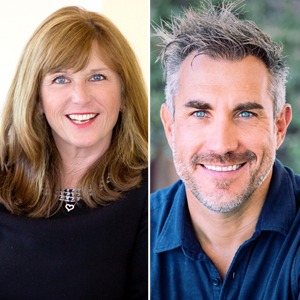
[00:00:10] Ray Latif: Hello friends! I'm Ray Latif and you're listening to the number one podcast for the food and beverage industry, Taste Radio. This episode features an interview with Jane Miller and Adam Hertel, the CEO and Chief Sales Officer, respectively, of Rudy's, the legacy baked goods brand known for its organic and gluten-free offerings. They say that everyone loves a good comeback story. Well, Rudy's needed one. Founded in 1976, the Colorado-based brand has long marketed organic and gluten-free breads, including sourdough loaves, English muffins, wraps, and buns, and has fostered a loyal consumer following at natural and conventional retailers, including Whole Foods and Kroger. In 2014, natural foods company Hain Celestial acquired Rudy's for $61.3 million. At the time, Rudy's generated nearly $85 million in annual retail sales, according to published reports. Unfortunately, brand sales and distribution regressed under new ownership. By May 2020, revenue was down to $35 million, while ACV and The Natural Channel, which had been at 98%, plunged into the 30s. That month, Hain unloaded Rudy's to Mayfair Equity Partners, which incorporated the brand into its Promise Gluten bakery business. Over the next two years, Rudy saw two CEOs arrive and depart. But in October of 2022, Mayfair turned to Jane Miller, who led the brand's ascendancy from 2008 to 2014 to helm the company. They also brought in experienced food and beverage executive Adam Hertel as Chief Sales officer. Their plan to breathe new life into Rudy's has been an evolution and came with the realization that sales and distribution couldn't return to 2014 levels without a significant investment in innovation. In the following interview, Jane and Adam explained how they identified the most pressing issues at Rudy's and are attempting to right the ship by working closely with retail partners and developing new products that could resonate with new and existing consumers. Hey folks, it's Ray with Taste Radio right now. I'm honored to be sitting down with Jane Miller and Adam Hertel of Rudy's. Jane, Adam, how are you?
[00:02:29] Jane Miller: Doing great, Ray. Happy to be here.
[00:02:30] Adam Hertel: Yes, indeed. Yeah, honored to be here. Long time listener, as they say, right? So yeah, excited for this. Thank you.
[00:02:36] Ray Latif: Long time listener, first time interviewee. We should have had you on a long time ago, Adam. Hey, everything comes to those that wait. That's great. Actually, I should say that about Jane. Jane, you've been in this industry for quite some time. You've been with some of the most exciting entrepreneurial companies of the last, I'd say, 15 years. I'm really happy to have you here. And you know, some folks might say, Well, Jane, yeah, she's been with Rudy's for a long time. She's been with Rudy's since 2008 with like an eight year hiatus. And you're back now. So it's curious to some people, I'm sure, why you decided to come back to the company.
[00:03:07] Jane Miller: It's curious to me too, Ray, actually. So thank you for bringing that up. No, but seriously, I was the CEO of Rudy's from 2008 to 2014 and sold the company and went on and did a couple of other things. And then just came back as CEO about a year ago. And it's literally in a 40-year career, the most exciting thing I've ever done.
[00:03:27] Ray Latif: Really? That's a bold statement for having a 40-year career.
[00:03:30] Jane Miller: Yeah, I know. I hate to even say 40 years. Actually, I think that we should erase that and say in my 15-year career. And as long as someone's just listening and not looking at this, they might actually believe it.
[00:03:41] Ray Latif: Jane, I wouldn't worry about that at all. You know, it is really exciting. And I'm so happy that you're here, both of you here to chat today, because you both have a ton of experience in food and beverage. Adam, I've known you since 2011, 12, I want to say.
[00:03:54] Adam Hertel: You're always better at this history. Let's just go with that. Maybe even 10. I'm not quite sure. It gets foggy, but yeah, over a decade.
[00:04:00] Ray Latif: Yeah. It's crazy. And I remember I was pretty green and wet behind the ears. You were still, you had quite a bit of experience under your belt having been working in the beverage industry for at least five, six years before that.
[00:04:10] Adam Hertel: Yeah.
[00:04:10] Ray Latif: About that point. Right.
[00:04:11] Adam Hertel: Yeah.
[00:04:11] Ray Latif: Yeah. You know, given that you've seen a crazy evolution in this business and you know, so much has changed over the years. I mean, how have you as a sales executive sort of kept up with these shifts?
[00:04:24] Adam Hertel: Yeah, I think this is a great question. It could go a number of ways. To me, the obvious thing is category matters more than ever. I really think that the ebbs and whims of the industry as consumer trends are fickle and pricing and COVID impacts with beverage and now being on the food side, it's been interesting to also make that jump and see Some of the things in Beverage that were driving functionality and, you know, what else can be done to reinvent category trends that have almost in some ways, you know, been established pretty strongly now. And it's kind of, sometimes you think what else is out there to do? Where can you find white space? I think what's exciting coming to the food side the last couple of years now is looking almost at this idea of, you know, comfort food, of staples, of in some ways what are commodity brands. And where do those brands have opportunity to add value, to find out new opportunities for footing, to find this incremental expansion, to add more value for the consumers. And those things are always what's going to be relevant. But you need to have disruption that is relevant to the consumer and to the buyer. And you need to find new ways, I think, that are going to be true to who the brand's core is. But also, especially if you want to have exponential growth like we're looking for, you got to be compelling.
[00:05:32] Ray Latif: Are the demands from the consumer side of things and the demands from the retailer side, are they aligned? Are they pretty much the same thing or do you find some differences between the two?
[00:05:43] Adam Hertel: I think that, you know, the proxy of the retailer, the buyer standing in for the consumer is usually pretty spot on. I think they have a fairly good idea if they're a leading edge progressive retailer, especially that wants to take chances on early stage innovation and emerging brands, that they are really going to be in tune with that. I think there's obviously this life chain of, you know, where does the conventional Moolow type, you know, grocer come in and being very deliberate in terms of that market launch strategy. kind of that one-two punch of not going too far too fast, you know, with spreading your bandwidth. But yeah, I think you need to be very cautious with also making sure that you're looking at data, vetting out ideas, figuring out in consumption data and what the trends are, not just from a retailer level, but also looking at consumer insights.
[00:06:25] Ray Latif: Well, Consumer Insights are helping to drive this next stage of development for Rudy's. And this is a new, I would say, stage in so many ways in that Rudy's had been a prominent brand, a well-known brand, and still is. But there were some problems when you came on board for the second time, Jane. And I like to think about this stage as sort of a comeback story. There are a lot of problems. There were a lot of problems that needed to be addressed. How did you figure out which ones needed to be addressed first and what was your process of creating solutions for them?
[00:06:58] Jane Miller: I love the term comeback versus turnaround because it really feels much more forward moving and so much more hopeful in some ways. And I think to me, the biggest thing that happened was when I sold the company in 2014, it was over three times bigger than it is today. And so, you know, in the course of a number of years, the brand kind of languished and really sort of lost the relevance. I mean, in 2014, we were the number one organic bread in the country. We were the number two gluten-free bread and Dave's Killer Bread, which is now by far the number one bread, was just in the Pacific Northwest and didn't even have national distribution.
[00:07:38] Ray Latif: I mean, I just want to pause there because it's crazy to think about that. When you sold the brand, it was three times bigger than it was when you came on board the second time. That's pretty dramatic. I mean, what went wrong?
[00:07:50] Jane Miller: you know, brands are so fragile and they need loving care and they need people that are out there representing them. And I think a lot of times when a Brandt Gehrs sold to a big strategic that it becomes one brand in the whole stable as opposed to having a team that all we think about day and night is Rudy's. And so what happened over the course of about eight years was it just was not supporting with retailers, not talking to consumers, frankly taking the quality out of the product. I mean it was almost a playbook for everything that you should do to not have a healthy brand. So when I came back in we said, okay, what's the biggest thing we need to deal with? Well our biggest problem was that we have our own bakery. And the way the economics work on a bakery is it needs to be running full out all the time. And so when we were three times bigger, we were running full out all the time. And all of a sudden, when you're at a third of the volume that we were back then, we can't make money. And so, you know, our job one was to figure out how do you really grow the top line? And that's really where Adam comes in, in terms of how we pull together a strategy and make sure that we're aggressively going after retailers.
[00:09:00] Ray Latif: So if I'm hearing this correctly, the opportunity that you saw was to sort of restart or kickstart that sales strategy that you had back in 2014. But I mean, is that something that you felt confident in doing?
[00:09:16] Jane Miller: Well, let me start and then I'll have Adam jump into what we did because since we have sort of the bridge there. So I literally came back. So I came back before I came back as CEO. I came back as a board member and a major investor in the company because I did some really simple math, which was we're a third of the size of the business and we're in a third of the ACV. So being, you know, not the sharpest knife in the drawer, but someone who could do a little bit of math, I'm like, all we have to do is go from 30% ACV to 100% ACV and the natural channel, it will be three times bigger. So I, Adam was on board before I was as a team member. And I say to Adam, all we have to do is go from 30% to a hundred percent. Liz is like so easy. And Adam's like, that sounds great. Let's go out and sell. And so Adam, why don't you talk about our first customer call about a year ago and how we decided that that wasn't going to work anymore.
[00:10:05] Ray Latif: And I think that's what I was getting at. I think I was getting at is like, well, it sounds really simple. Like you were at a hundred percent. Now you're at 33%. I mean, you should be able to get back to a hundred percent pretty easily, right? You know, what is it that I'm missing here?
[00:10:17] Adam Hertel: What could possibly go wrong? This is a third grade story problem, right? Let's go. Yeah. Yeah. So. Yeah, I think, you know, the narrative at the time, right, when I joined, but, you know, a little over a year and a half ago now was, yes, we have this big potential. The math is fairly simple and straightforward. I think some of the miscalculation was how Whole Market dynamics and the landscape around us has shifted externally. And so, you know, looking back at almost a decade ago and assuming everything around us would be the same, I don't think we were that naive. But certainly maybe an underestimation of when you look at the centralization and the overall scheme of what's happened in the industry, notably with with DSD consolidation and similar to beverage. Ironically, I maybe couldn't have made a bigger departure away from beverage into bakery, but a lot of the dynamics and distribution and route to market are very much the same. So as the DSD consolidation has gotten stronger, those major competitors have bought up more regional brands. What we really found through trial and error and just kind of throwing things against the wall and seeing what sticks in these, you know, retailer sessions was the bread buyers' needs were being met. And by and large, then, you know, saying that the consumers' needs were being met. They were being met. In their minds. And so to clarify that, you have, you know, again, these large organic brands, Dave's Killer, which essentially owns the category at this point, and a lot of brands coming in on DSD trucks. The other thing that happened the last couple years is the in-store labor crisis, where in-store labor and the amount of labor and overhead that's being committed to merchandising has really diminished. And you're seeing that for a couple of reasons. One, because It's an area they can cut costs and hand that labor off to the DSD partners who are set captains that own that space. And also I think just the general function of some of the employment crisis, you know, that we've seen in retail. So those dynamics shifted and they would have been hard for us to predict. And I don't think anyone could have really have known that until you just get out there and start to try and look at, okay, we can keep growing this business, but it's going to be maybe single digit growth, low double digit growth. And we need to then figure out, okay, we're going to keep in the bread business, but what else is there? And where do we start to accelerate?
[00:12:14] Ray Latif: So let's use a word that people have used a lot over the last three years. Pivot. You've got to pivot. You've got to innovate. What guided your innovation strategy? Once you figured out that, you know, things weren't going to go back to the way they were, you know, you realize that you need to change. So how did you think about changing?
[00:12:29] Jane Miller: So pivot is really the best word to describe what has happened with Rudy's over the last year. And it was right around this time last year where we looked at each other after being in this customer call and realized that Rudy's not having DSD nationally was not going to be relevant for all the reasons that Adam just mentioned. So he went kind of back to the drawing board and said, like, well, so what is the core of what we're about? And it's like, we have amazing breads, like amazing breads and buns and rolls and tortillas. I mean, products that are superior, but the world has changed, as Adam said. So what we did was really working with our key brokers to say, what are some trends that we're seeing? What are some insights about the industry? And what we saw was that there were huge categories that had bread as a component but didn't have anybody that was plain and gluten-free or natural and organic. And so it was this huge insight which was that there was categories that were shortcuts for consumers, this whole idea of convenience, but nobody was doing it in healthy ways. And so it was this, you know, kind of this brainstorm. We said, let's start bringing some products in. And what we saw was we looked at a couple of categories. And as we started trying the products, the worst part was always the bread. We're like, oh, not only is it not good for you, you look at the ingredient statements of a number of different product categories. It's not only not good for you, but it doesn't even taste good. So, you know, why don't we try to go that direction?
[00:14:02] Ray Latif: When you were looking at these big opportunity categories and saying, we could innovate and we could do this better, you know, what consumer insights did you draw? Whole Market research was available that told you that there was this opportunity, there was this runway for success and innovation?
[00:14:18] Adam Hertel: Yeah, I think a couple of things is, you know, really vetting it out through a few different angles and perspectives to check our assumptions. And I think we had a pretty strong gut instinct initially on what these categories were. So just to kind of walk through a few of those, I think high level is where does Rudy's rightfully have a place to win? Where does the consumer today identify us? Where have we been known to play, you know, for decades now in the industry? So it has to be obviously bread centric, as Jane mentioned, we're not going to make a huge departure. We're not an ethnic brand, maybe not even burritos or pizzas, because, you know, would that be authentic to what, to what Rudy's is? And, you know, there are certainly a lot of those in the freezer. So I think understanding A couple of things. Let's look at the Venn diagram of where the category growth is, as Jane mentioned, figuring out where we have a place to play, where's the consumer going to identify what this is great quality Rudy's organic or gluten free bread on these products. And also the fact that we already have a gluten free frozen business, all of our bread is frozen supply chain coming through to the to the stores where it gets slacked out or it stays in the in the freezer in the case of gluten free where the velocities are oftentimes slower. So it's not a huge departure to look at the frozen opportunities that we then kind of took those initial assumptions, cross checked it against some, some great data that, you know, brokers can often provide in our case, working with a large national broker, the insights and the ability that they have to pull in data from, you know, NIQ and various sources to really start to vet out is this growth where we think it is, is there an opportunity if you look at Mulo channel versus what's happening in the natural channel, In the examples of the areas that we went into, we saw these giant, not just dollar growth, but also unit growth categories the last couple of years, which is pretty impressive when you look at what's been driving dollars in the industry and oftentimes not so much units. These were still brands that were growing in units as well. And then they didn't have a natural, better for you, clean label analog. And that's really where we started to see this white space creep in that we got really excited by.
[00:16:09] Ray Latif: Was, or did day part use fit into your analysis? If you're thinking about breakfast, I always hear about how breakfast is hot, breakfast is coming back. People want a better for you option for those opportunities, those breakfast opportunities. Did you see something that was shifting in terms of midday snacking occasion? I guess, how did that fit into your planning?
[00:16:32] Jane Miller: I would say, honestly, it was a lot less about strategic thinking in that way, other than identifying really big categories that didn't have the analog, as Adam said. So, you know, we were almost day parts, you know, agnostic to some degree. So, you know, the big categories that we identified, you know, Jimmy Dean breakfast sandwiches, billion dollars. You know, Uncrustables, Pocket Sandwiches, almost a billion dollars. Texas Toast, almost 500 million with just two players. And if you went to the analog and natural, the biggest company was like 13 million, like 2.3 billion. to 13 million. And so we actually loved all of the categories, thought we might have a right to play in all of those. And so we have a breakfast option, we have an all day option, and we have an evening option. And so we really said, let's just go, let's just go for all of it and not just, you know, pick one. And so honestly, we were so entrepreneurial. We've been around for 50 years, but we're kind of like a 50-year-old startup because we didn't do a lot of consumer research. We just said, we have to pivot this business to be successful, so let's go for it.
[00:17:39] Ray Latif: You didn't do a lot of consumer research, but consumers are important. New consumers are important to the future of the brand. And you got to think about younger folks, Gen Z consumers, Gen Alphas, and how they think about incorporating the brand into their lives, how they think about incorporating new Rudy's products into their daily lives. Did that factor into your decision? Did that factor into how you formulated or, you know, the types of ingredients that you use for these products?
[00:18:08] Jane Miller: Yeah, let me start and I'll have Adam build on that. I mean, absolutely. It was about young families, mainly. I mean, we, I would love to think we were like a super sexy, edgy brand, but we're not. We are like an all family, family friendly brand.
[00:18:21] Ray Latif: That's important to know. I mean, I look at, cause I, it feels like everyone wants to be that cool, trendy brand. But if you're not that, fine. You know, if you're a brand for young families, if you're a brand for people who appreciate, you know, a breakfast sandwich out of the freezer, you know, that you can easily and quickly heat up. I mean, what's wrong with that?
[00:18:41] Jane Miller: No, I mean, you have to kind of be comfortable in that. And I think what we found, you know, without really sophisticated research was that, you know, modern day parents are looking for shortcuts. They need convenience and they need to have a label that they can trust. And I think that that was sort of the signature and the shorthand that Rudy's brought in with current consumers that we have. But still, as you said, we have a huge opportunity to appeal to that next generation of consumers, too, that don't know Rudy's. And we need to try to bring them into our franchise.
[00:19:13] Ray Latif: Adam, you're rolling out quite a bit of innovation in a relatively short amount of time. You have Texas Toast, which is already out there, Sandoz and Breakfast Sandwiches on the horizon. The Sandoz are already out, aren't they? Sandoz, well, should be launching third.
[00:19:27] Adam Hertel: They're coming out in the spring.
[00:19:28] Ray Latif: Folks, I've had all three and they're all fantastic. So when you see them in the freezer aisle, rush and grab one or two. I think about timing as being really, really important to the launch of any new line. And I'm curious as to how you planned out the timing for these launches and also with regard to retailer resets.
[00:19:49] Adam Hertel: Yeah, yeah, this is kind of a really fun story. And I think probably a little crazy to, you know, say openly now in terms of just how wild we were on the timelines and backing into some things that we had to meet. So the impetus, kind of the origin story on the breakfast sandwiches, which are going to be launching first to market at Sprouts in January, and then the Texas toast, which launched, you know, first to market on a Whole Foods exclusive a couple months ago. both happened earlier this year. So, you know, we had these kind of speaking of vetting out and how do we know that we have a concept? I think getting retailer buy-in, working with your buyers, you know, through your, your, your, your broker partners and just having these conversations at the shows, which is how these both happened. We had concepts at Expo West that we showed our whole foods buying team on the Texas toast. This was, you know, first week of March, everybody knows in Anaheim and literally showed these concepts on, on a page and said, what do you think of this? And, you know, they both locked eyes, looked at each other and kind of smiled like, and there was this Eureka light bulb moment and we knew we were onto something and it was like, This is interesting. You're going to have to move really quickly. This category is already kind of set sail. How fast can you deliver on this? So that was our challenge there. And ultimately we were able to execute this through some very topsy turvy kind of bumps in the road to execute this from a supply chain perspective and launch six months later.
[00:21:08] Jane Miller: All right, can I just add one quick thing, which is literally when Adam is showing these buyers this stuff on a piece of paper that has a comp, we didn't have any products developed. We didn't have any commands lined up. We were basically showing them concepts and then crazily developed the products and then crazily made it happen.
[00:21:31] Ray Latif: I mean, that definitely sounds entrepreneurial. So yeah.
[00:21:37] Adam Hertel: Not exactly your big CPG product development Gantt chart of how you would roll out new products. And then a similar story with Sprouts on the breakfast sandwiches. We were at the Kahey show in February, just a month or so earlier, and started talking about you know, what do you see missing? Who's doing a premium, better for you, clean label compliant breakfast sandwich with real meat and dairy. You know, there's a lot, there's some plant-based stuff out there. Ironically, in the natural channel, it's easier to find a plant-based breakfast sandwich than it is actual like upscale premium Jimmy Dean sort of a thing. So we thought that was a great idea. And again, we saw the smiles and the absolutely like, can we be part of this iterative process with you? When do you think you could have this ready? And so both of those conversations with, you know, two, the biggest two key natural anchors in the country, Really were instrumental in pulling us into these and then we knew when those categories were setting and and we backed into those timelines And it's been a furious sprint and a lot of fun, and you know some lost sleep.
[00:22:32] Ray Latif: Yeah, I imagine more than a few hours. Yeah I wanna talk more about how you validated the opportunity with retail buyers, but I wanna go back to this notion of being a recognized legacy brand first. That's what Rudy's is, people know what it is, buyers in particular know Rudy's. And then on the other hand, you have all these startups who are coming out with novel ways of incorporating interesting ingredients or flavors into their products. And I wonder for retail buyers whether or not they think that modern consumers are leaning one way or the other. And maybe this goes back to knowing who you are and embracing it. But, you know, I see some brands that are coming out with a clean label, uncrustable, right, for example. And then I see Rudy's coming out with a clean label, uncrustable. And so do buyers take into account, and maybe this is a better question for buyers, do they take into account your experience, both of your experiences and your team's experience and the Rudy's brand as being a legacy brand and knowing that you guys, even if you don't have the finished product, know that you can execute it and meet their timelines. Or do they think about, okay, well, we need to be, you know, a little bit more current in how we think about who we're aligning with in terms of partners, taking into account entrepreneurs who are relatively new, but bring something different to the table.
[00:23:55] Jane Miller: Let me just start with the key thing. It's about Taste Radio that the product is really, really good. And I'll have, you know, Adam talk about the retailer, but from, you know, a, you know, what do we bring to the party? Like nobody cares about Jane Miller having been the CEO. You know, I think for the modern consumer, The fact that Rudy's is brown for 50 years, yeah, interesting. Like what's relevant today? And it really is our products are superior to other products in both gluten-free and inorganic. And so that's part of the story that I think from a consumer standpoint we have to bring forward because there is, you know, our unaided awareness is about 2%, but our aided brand awareness is almost 40%. So people have heard of Rudy's before, but it doesn't come top of mind. So I think we've got to lead with great products that taste amazing. But I don't know from a retailer standpoint, Adam, what have you experienced?
[00:24:49] Adam Hertel: Yeah, I think we have the benefit of some of the stability and security that goes with being, you know, a legacy bread brand. And so I think the buyers and retailers are going to reward us for that, but also our ability to really flex and have this Absolute entrepreneurial sprint to fill a void in Whole Market and Kroger it in a way that I think the retailer can trust to have confidence in Is something where we you know almost were able to deliver from both sides of what that retailer, you know value prop is gonna look like and knowing they have a trusted partner that they're already working with and and that we're still able to kind of turn on and activate in a really quick to market startup type way. So that's been a really just fun kind of position to be in and certainly feels like we're sometimes being tugged both ways. But I just feel like we're at this really exciting time in our development where we can still act that way and deliver on both of those promises.
[00:25:38] Jane Miller: You know, just one quick thing also, Ray, I think that there is actually a credibility that we bring about being able to deliver, that we know what it takes to service a large customer and to meet their supply requirements. So we're not naive about that. So I do think there is a little bit of advantage that we have maybe versus another entrepreneur that would come in that hasn't ever sold to Whole Foods nationally before or to Sprouse or other large customers.
[00:26:05] Adam Hertel: Yeah. And getting into the vertical supply chain, the fact that we own and operate our same legacy bakeries, you know, a gluten free bakery dedicated across from the organic bakery in Boulder, like we always have, you know, we're not going to have issues with bread supply. We're not going to have any of those concerns. And as much as bread might seem like a commodity, that's oftentimes not going to be in short supply. Occasionally it is. And we are hearing some things where, you know, there's a bit of a garlic bread shortage the last year with certain retailers and such. So that gives us a really strong foot to stand on as well.
[00:26:33] Ray Latif: Jane, I'm really glad that you led with taste, because taste is so important. You know, we see dozens of new brands and products come to our offices weekly. And some of them really have such great packaging and they're beautiful and they look awesome. And you open it up and the taste isn't there. You're like, OK, that's the last time I'm going to eat that. And it's unfortunate because for all the work that you put into the packaging, you miss something inside the product. But who tells you it tastes good?
[00:27:01] Jane Miller: Gosh, can I start with the Whole Foods example, I guess? I mean, so at Expo West, Adam literally shows a picture of Texas Toast. Again, no product yet, no place to produce it, nothing. And then the Whole Foods team was so gracious to kind of keep the review open for us to come in. And so we came in. with a product that we thought was our best, you know, best view of this. It was about an inch thick in terms of the cut of the bread. So super thick, you know, just slathered in butter and garlic. This sounds very whole foodie, by the way. Big Texas toast slathered in butter. all good butter, all good garlic, and gluten-free bread. And so, Adam and I go to Austin and we try it and we have the whole team try it. And we were kind of like, well, you know, we think that maybe the bread's too thick. And they're like, no, it has to be just like this. And it was just like this experience of having someone try the product. And again, it's really probably hard to screw up bread with butter and garlic. But I think sort of getting that feedback from our customers, and again, the feedback we got from them was, don't make it thinner. We wanted a thick-sliced Texas toast, because we were all ready to cut it back, and I think that they loved the proportions of the cheese that we had on those items, and they loved the gluten-free. So I think getting their feedback into that, they also helped us tremendously with the packaging. because we had, I think we weren't communicating everything that we needed to. It was the first round of packaging. So I think even having that insight from the buyer about love the product, but you're not bringing across strongly enough that this is garlic as opposed to just gluten free. So, you know, and those nuances are super important in terms of how it's going to pop off on the shelf.
[00:28:48] Ray Latif: Well, this goes back to a point that you made earlier, Adam, which is that the retail buyer is that proxy for the end consumer. But do you take all cues from the retail buyer? Probably not.
[00:29:00] Adam Hertel: Yeah, no, I mean, lacking obviously very official big CPG focus groups and tasting panels and things of that sort. We definitely leaned on what I would kind of call friends and family, you know, tribal feedback, as well as getting this out to our employees, our buyers, our brokers, and as many constituents in general and a somewhat informal process. But I think then. Once we got some of the feedback as the samples go out to these early stage retailers and they pass them around and they have their own committees and panels and it's going within the office there, then you get some consensus of feedback. And I think, you know, at some point you're saying, okay, we're getting feedback that the sausage patty needs a little bit more seasoning, which is what we heard, you know, from Sprouts early on. And again, they were part of that iterative process and therefore we increased the seasoning to kind of be on par with, you know, where we, we thought the consumer is and not overwhelming. So it's almost again, like we said, this 95 versus 99% confidence level and finding the right balance of speed to market, knowing you have confidence and not overthinking it completely at the expense of it taking an extra six months that we just didn't have.
[00:30:05] Ray Latif: So that 4% between 95 and 99 isn't as wide as some people might think it might be in terms of certainty and design and development.
[00:30:13] Adam Hertel: I don't think so. I think, you know, you hear this analogy a lot of times in sports and all sorts of continuous improvement type examples. But for us, I think, you know, we got to a really confident place through this, you know, fairly informal, but still well vetted out process and throwing it against the wall a few different ways. And then recognizing these are delicious. And again, we're not professional tasters, but we heard from enough places and tried enough versions of our own kind of workshopping this, that we were really confident. And then once the feedback with these leading retailers, you know, I think, um, prove that out. We were like, it's, it's time to go.
[00:30:46] Ray Latif: You know, I speak with a lot of early stage entrepreneurs who have the same mindset as you both did when it came to huge opportunities. When you think about breakfast sandwiches and Jimmy Dean's, for example, you said $2 billion business, Jane, that's, that's crazy. But one of the reasons those products have existed for as long as they have is because they use ingredients to help make the products taste better, to microwave easier, to preserve as long as they can, as long as they do in the freezer aisle. And all those things contribute to Taste Radio contribute to predictability of taste. The complexity of making a breakfast sandwich, I would think, is pretty significant. But when you have the process down, do you continue to improve upon it? Do you still look for ways to make it better? Or do you get to a point where you're like, as long as we are here, as long as we're at this level where, you know, we're as close to the, I guess, the leading brand in the space as we can be, this is a good place to be.
[00:31:48] Jane Miller: It's a great comment because I do think that as a brand that wants to be a thought leader and to be really bringing great products to consumers, we have to continue to iterate. We can't just sort of say, OK, done. You know, I think we have to always be saying, is this the optimal product that we want to have in Whole Market? What can we be doing? You know, because especially as And new entrepreneurs come out with new products that have, you know, potentially one-upped us. Like, are we always tasting other products? Are we always making sure that we're delivering to the consumers? I think a brand our size can't rest on our laurels. I mean, we really have to figure out how do we keep growing and how do we keep improving and bringing real value to the consumer. So I think it has to be part of our DNA, actually.
[00:32:31] Ray Latif: And also introduce new products. I mean, you have an innovation roadmap that goes beyond the three product lines that we've discussed. It feels like you probably have a little bit more time and a little bit more resources now to be able to execute in a different kind of way. But how do you think about that innovation roadmap? Does it, does it happen or is it as much informed by what you are doing right now as it is, you know, market trends and consumer insights that you're gaining about what's next?
[00:33:01] Adam Hertel: Yeah, I think we need to make sure that we're also moving methodically and, you know, in kind of a stage gated form that we have the chance to prove out how the velocities in each of these products are doing, where is Whole Market fit, and that we can take the learnings and then apply those as we keep adding on other other concepts. We've kind of had this fun internal, you know, saying that our future is in the freezer, which is a pretty different narrative than we had maybe you know, year, year and a half ago about, hey, most bread is sold in the commercial ambient bread aisle. And so this has been a big, again, pivot to use the overused term. But also, I think, you know, adding incrementality to key categories where we can really stand out is going to be key and not moving too quickly. So we get the benefit of some of this landscape kind of billboard effect by having you know, two through hopefully three products in retailers, a couple of freezer doors apart, and then you start to see that surround sound benefit that we get, and then looking at where else we can start to layer in and, you know, add in the freezer. But I think taking a little bit of a breath to make sure we execute these three really well.
[00:33:59] Jane Miller: I think that's a super important point because to the question you asked earlier, Ray, about pivoting. I mean, we made such a big pivot and we move so quickly with these three new products that we really have to be very thoughtful about the next ones that we do. And to Adam's point, making sure we execute these brilliantly while we have and as we continue to learn so that we have other things in the pipeline that will be relevant to retailers and relative you know, relevant to consumers. We've just brought on a new VP of marketing and she's, you know, already thinking about what's the stage gate process here. Let's add a little bit more discipline. And I was saying to Lauren yesterday, I'm her worst enemy. So I was like. It's because they love ideas, like really get excited about being able to get in front of customers with something that they're interested in. But we really need to get a little bit more of a balance from being like, you know, totally cowboys to having a little bit more discipline, at least to keep Adam and his team sane.
[00:34:55] Ray Latif: Well, it's important. And I think you are all together, part of this dream team, a term that Jane, you've used a number of times on LinkedIn, talking about all these great hires that Rudy's has made over the past year. And, you know, the future or our future is in the freezer, Adam. For some folks in our industry, they might be like, Oh, I don't, I don't know if that's really a brand that I want to be a part of for any reason, any number of reasons. So you really have to get buy-in. from people who are going to be part of this team. You have to get people to embrace that vision, embrace the mission that you've set out for Rudy's. How do you vet those people? How do you find people that are going to not only fit into the culture of what you're doing, but also be flexible enough to think as an entrepreneurial company as you are now?
[00:35:45] Jane Miller: Well, first, let me say that it's all about the team. Whether you're selling a soft drink or tea or chocolate or whatever it is, it really is about the team. And I think if you bring the right people together, that's where the magic really starts to happen. And I think with us, it starts with we have, you know, five key company values that everybody gets introduced to in their first interview, which is exceed expectations, you know, embrace change, assume the best, which is the most important one about how we respect one another, exhibiting high standards and winning together. And I think just having everybody understand what we're trying to do and that they're a part of something that is fun and growing. And as Adam and I like to talk about, like, we want to have people that you want to, like, have a beer with. You know, like they actually like being around. And I think in having diversity of opinions and people that can come to the party with like not just being, let's just agree with everything that Adam and Jane are saying, but instead like push us and and challenge us and have us be better as a team overall. And it's hard. I mean, I've been doing this kind of stuff for a long time. And the easy part is developing innovation. The hard part is getting the team to be able to come together in a way that makes it magical.
[00:37:01] Ray Latif: Well, yeah. I mean, I think that's, that's the point is, you know, you want to find people that you are friendly with and that you can look at as friends, but at the end of the day, you are running a business. And at the end of the day, you have stakeholders that you're responsible for. So these people need to be able to do their jobs. And I mean, it's a fine line though, that you're walking is, you know, you're looking for experience, you're looking for reliability, but you're not looking for jerks. It feels like that can be, as you mentioned, Jane, a difficult, you know, a difficult path to navigate.
[00:37:32] Jane Miller: Well, and I think the other thing, maybe you see this a lot with entrepreneurs that, you know, especially when you're surrounding yourself with friends, is you need people that can execute too. So it's like, you know, you have this challenge, which is you want to like everybody, but you don't like them very much if they can't actually execute. You know, and so, and that's really the hard part, which is getting that right balance between, yeah, let's enjoy what we're doing and let's get along, but we are here to do a job, which is to grow a business and to make sure that we're bringing value to our shareholders. And I think that's, that I think is tough. I don't know. How do you look at it, Adam?
[00:38:06] Adam Hertel: Yeah, I mean, that that that hustle culture sort of thing has maybe been overplayed, but we're certainly in that in that phase. And maybe it's kind of this like Colorado Rocky Mountain style boulder hustle, which is a little different than what you might equate with like New York, but it's, it's definitely finding that right chemistry, or maybe I should say the cocktail in my parlance of, you know, making it well balanced and having to have people who get that. And I think Fortunately, with Jane's, you know, just incredible hiring expertise and kind of, I think that sixth sense for the right sort of cultural people and also the wealth of talent that exists in that Boulder market in our industry have both been, you know, just amazing in terms of the quality of people that we bring in. I think folks who understand kind of what the community and the culture and what Rudy's exemplifies in the past and what we're going to do going forward, even as the pivot occurs.
[00:38:54] Ray Latif: I'm so excited about the future of Rudy's and I'm excited because I can sense how passionate you are about the company and how passionate you are about what you're building right now for its future. And, you know, I've seen so many brands that have been acquired by strategics and they're, they were so vibrant and exciting at the time they were acquired. And then five years later, they're just not, or they're not even on Whole Market anymore. So it's really cool to see that, you know, Rudy's is back in the right hands, is, you know, a brand that's very much about the future, not the past. And I'm excited to see how it all plays out from here.
[00:39:30] Jane Miller: Thanks, Ray. It's truly exciting to be a part of this and to do the comeback, as you said, and then to be even bigger and better than we ever were before. And I think that's the thing that's our biggest challenge is how do we take something that was a good brand before and make it into a really iconic brand?
[00:39:49] Adam Hertel: Yeah, these next 6-12 months are going to be amazingly exciting to watch, you know, as these things hit Whole Market and start to activate marketing. And thanks for having us and look forward to, you know, reconvening and seeing where this all looks like it's going in a few months or a year.
[00:40:02] Jane Miller: And can we put in a shameless plug, buy Texas Toast as soon as possible. Sure. We are doing extraordinarily well. It is flying off the shelves. We have some stores that are just doing like nothing I've ever seen before, but we could always use more Texas Toast sales.
[00:40:18] Ray Latif: I'm sure people need more Texas toast in their freezers. Can I, can I say, I didn't mention that we're here at Nosh Live Winter 2023 in Marina Del Rey. And I'm wondering, do we have Texas toast upstairs? Because all this talk about Texas toast, I feel like I need, I need a slice or two.
[00:40:32] Jane Miller: We did not bring any Texas toast.
[00:40:34] Ray Latif: Okay. If I go to my local Whole Foods down the street, I can find some.
[00:40:36] Jane Miller: Yes, you can. Okay.
[00:40:37] Ray Latif: There you go. Absolutely. Well, we do have toaster ovens somewhere around here. Anyway, Jane, Adam, thank you so much again for being with me.
[00:40:43] Jane Miller: Thanks, Ray.
[00:40:43] Ray Latif: Thanks, Ray. Appreciate it. That brings us to the end of this episode of Taste Radio. Thank you so much for listening. Taste Radio is a production of BevNET.com Incorporated. Our audio engineer for Taste Radio is Joe Cracci. Our technical director is Joshua Pratt, and our video editor is Ryan Galang. Our social marketing manager is Amanda Smerlinski, and our designer is Amanda Huang. Just a reminder, if you like what you hear on Taste Radio, please share the podcast with friends and colleagues. And of course, we would love it if you could review us on the Apple Podcasts app or your listening platform of choice. Check us out on Instagram. Our handle is bevnettasteradio. As always, for questions, comments, ideas for future podcasts, please send us an email to ask at Taste Radio. On behalf of the entire Taste Radio team, thank you for listening, and we'll talk to you next time.
[00:41:37] Jane Miller: you