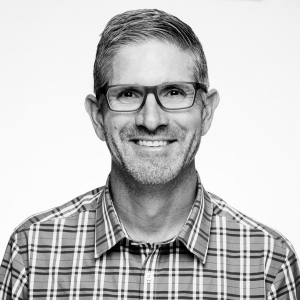
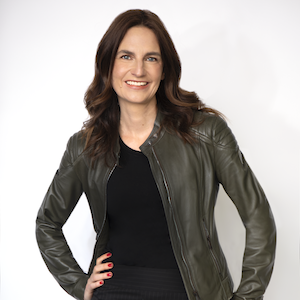
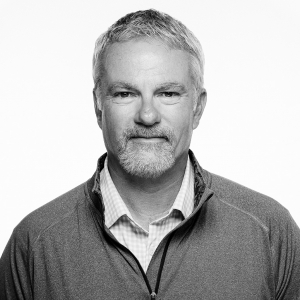
[00:00:10] Ray Latif: Hello, friends. I'm Ray Latif, and you're listening to the number one podcast for the food and beverage industry, Taste Radio. This episode features interviews with Ross Iverson, Brent Drever and Steve Young of health-centric private equity firm, Manitree. Just a reminder to our listeners, if you like what you hear on Taste Radio, please share the podcast with friends and colleagues. And of course, we would love it if you could review us on the Apple Podcasts app or your listening platform of choice. According to a 2020 health survey conducted by the U.S. Centers for Disease Control and Prevention, 41.9 percent of Americans age 20 and over are obese. It's a frustrating statistic for public health officials who have consistently urged overweight individuals to exercise more frequently and make better eating decisions. The latter point, however, is linked to the accessibility and affordability of healthy food and beverages. Yes, there are better-for-you options, but are they readily available and at a reasonable cost to most consumers? The question was commonly heard at Manitree's second annual Global Health Forum, hosted earlier this month in Vail, Colorado, where the investment firm is based. Founded on the belief that, quote, the future of health, well-being, and longevity is attainable through innovation in food, Manitree invests in and actively partners with growth-stage companies, including HealthAid, The New Primal, Urban Remedy, Gotham Greens, Verde Farms and Good Culture. Prior to attending the Global Health Forum, which featured presentations on metabolic health and how consumer behavior has shifted around the Better for You segment, I sat down with mandatory leaders Ross Iverson, Brent Drever and Steve Young for individual conversations about the firm's investment strategy, how it relates to getting healthy and accessible food, and to the shopping carts of more consumers. We also discussed how entrepreneurs are faced with shifting expectations for profitability and top-line growth, their assessment of consumer confidence in spending, emerging food trends, and ways that public institutions and private companies can align on common goals to positively impact Global Health. Hey folks, it's Ray with Taste Radio. Right now, I am honored to once again be speaking with Ross Iverson, the Co-Founder Managing Director of Managery Partners. Ross, great to see you. Great to have you back in Vail, Colorado. You know, it is great to be back here. Beautiful day here in Vail, although I heard it was pretty chilly the last couple of days.
[00:02:54] Ross Iverson: Well, not like the Northeast where you're from, but probably a little bit more like Minnesota where I call home.
[00:02:59] Ray Latif: Wait, did you move?
[00:03:00] Ross Iverson: I've been here for about 10 years, but definitely from the upper north originally, which is obviously home of a lot of great food companies.
[00:03:08] Ray Latif: Yeah. I'm back here and you're back here for the second annual Manitree Global Health Forum. And last year's inaugural event was fantastic. I'm expecting and anticipating and excited for another fantastic conference tomorrow. How long do you guys work on these things? How long do you work on these conferences?
[00:03:25] Ross Iverson: You know, we have a dedicated marketing team, which is I think a little bit different for a finance firm, but convening the network, our network power is part of our secret sauce. So we take all year to plan this. We've got great speakers, great attendees, but we do a couple other ones during the year. We do one for our global LPs over in Zurich in June. And then we do one in New York for more of our institutional investors. And then we actually have a leadership summit back here in Vail in the fall where we bring all the CEOs here and they collaborate as far as best practices for the coming year.
[00:03:56] Ray Latif: CEOs of your portfolio companies and beyond kind of thing? Correct.
[00:03:58] Ross Iverson: Yeah. And they come and share war stories of how to navigate the various markets.
[00:04:03] Ray Latif: Yeah. You're going to be seeing your LPs and institutional investors pretty soon. I'm sure you're in constant contact with a lot of them. And I wonder, I think our audience wonders, how they're feeling about the economy, because that is, seems to be top of mind for everyone. You know, what's going on in 2023? Are we headed for recessions? Things seem to be getting better, but then you hear about all these layoffs. You hear about sort of wary or jittery investors. You know, what are you hearing from your partners?
[00:04:31] Ross Iverson: Yeah, it just really depends on which investors you're talking with. Uh, I would say families are definitely trying to conserve cash liquidity. If you think about how many great investment opportunities there were over the last five, seven years, these families committed to funds like ours and they have to fulfill on those commitments. And, you know, those funds are not done investing that capital. If you're an institutional investor, you're always deploying into different sectors at a time. But what I would say that we'll get into with this conversation is. Consumer companies are starting to be looked at with a lot more scrutiny. And I think that's a category in general that institutional investors are a little bit wary of. They're wary of the supply chain issues that now have created cost overruns for a lot of companies. They're worried about how inflation is affecting these businesses. And I think they're in more of the wait and see mode than they are the FOMO mode of, Hey, we got to get into The New wave of, you know, functional beverage or plant-based foods.
[00:05:26] Ray Latif: What do you say, wait and see, you're talking about how they operate in terms of their business strategy or in terms of, you know, whether or not these companies are actually going to turn a profit?
[00:05:36] Ross Iverson: I think they're waiting and seeing if they're going to put more capital towards these businesses. So that capital can come through a manager like us at Manitree, and then we can go find the companies, you know, if you're a large pension or endowment, a sovereign wealth fund. Or it can be if they want to do direct investments or follow on investments to companies they've already invested in. So many companies have burned through that cash of their series A, series B round. They're going back to the same investors that are in the company. And the investors are saying, you know what, I think I might just write off the original investment because I don't see a pathway to profitability.
[00:06:12] Ray Latif: That sort of makes you a pretty important gatekeeper within this food and beverage community that we call home in so many ways. It gives Manitree a lot of influence in terms of how you're advising companies to operate, to think about the future, to think about exit strategies, and so on. Let's start with operating on a day-to-day basis. I think profitability has become this really trendy term, which is, I've spoken about this on the podcast in a number of recent episodes. It's so strange. How do you evaluate short-term versus long-term profitability?
[00:06:47] Ross Iverson: Great question. We were talking before we went on here and you had mentioned a firm about you got to run a business every day as if you're not going to have somebody buy it. And I think that that's a different mentality of scaling to an IPO or scaling to a strategic that's going to pay you three to five times revenue. There has been such a giant reset in valuations that have happened just in the last 12 months. And it's really driven by the interest rate increase and the fact that money is no longer free. And, you know, investors have alternatives now to get 8, 10, 12% on their money in a low risk environment. And in food, unfortunately, the margins aren't like software or technology. You know, you might be 25% on the low end, maybe in beverage, you can get close to 50. Those businesses probably shouldn't be valued at three to five times sales unless you're scaling over a couple hundred million in revenue. And so the bread and butter for investors have been building companies from maybe 10 and 20 million of revenue up to 100 and then trying to sell them off. And very few of those companies ever hit profitability on the scale from $20 to $50 million. And I think nowadays, we're just telling people like, you got to get creative. Maybe there's a firm you should merge with. And you're both doing $40 million in revenue, maybe you're doing $80 and you're just a little bit closer to profitability. And people are rethinking everything, everything from packaging costs to formulation costs. Obviously, we've seen shrinkflation. I think I just had an energy bar last week that I went to grab the paper product and I said, where's the bar? It was half as big as it was a couple of months ago.
[00:08:23] Ray Latif: Well, it's funny you say that because... When I think about, you know, how brands and products have evolved over just over the past few years, it's been pretty dramatic. And I think everyone is chasing those gross margins that you were talking about and they're becoming harder and harder to hit. That being said, you know, in your business and your focus here at Manitore is very much about the best, healthiest, most nutritious products you can sell. And there was a, there was a tweet yesterday that I saw that essentially said, The most nutritious brands or the brands with the most nutritious products are The New that are most unlikely to scale. And it's for those reasons, I think, you know, when you have high quality ingredients at premium prices, It just becomes really, really difficult to operate a business that way. How are you advising again? And how are you thinking about the future of the companies that you will invest in, given that it's so difficult and going to be increasingly difficult to scale companies that are the best for you?
[00:09:31] Ross Iverson: Great question. And I think you're going to hear this at the health forum tomorrow. We've got one of our founders, Nika from Urban Remedy. And so if anybody knows Urban Remedy, it's a kiosk within whole foods. They've had some retail outlets. The New are going more mainstream as well. And Urban Remedy is one of the most health forward. I always tell people when I'm in whole foods and they're staring at the kiosk, I said, that's the healthiest food in whole foods. But Nika has gone back to the drawing board. I mean, she's worked with her team in the last 12 months is how do you take that salad bowl? How do you get the juices to also improve the margins? And they found different formulations to, you know, keep that up there. We're not talking about wholesale 10, 20% increase in margins, but making five, six, 7% increases is dramatic in environment like this without sacrificing. Now, you're also going to hear tomorrow from people on the retail level and buyers of what is the consumer looking for? They are still looking for health forward, but they're maybe not willing to pay $7.99 for a functional beverage day in and day out. So we're seeing how a recession or a slowdown in the economy could affect those one-offs. We always say if there's a product that you can trade down easily, that's not probably a mandatory company. We want products that you're going to embed in that daily life cycle or your dietary habits, where if you don't choose that product, you're actually going to feel worse. You're either going to have lower immunity, you're not going to have the right mix of people that are health forward of fat, carbs, protein. And if you can dial in the portfolio around people's dietary habits versus, again, the checkout line or you've got an energy bar now that might be $7.99, you're like, whoa, is it really worth $7.99 for one energy bar?
[00:11:11] Ray Latif: I'm going to try to merge the last two topics in that when you're talking to your LPs and institutional investors, the top line, the overall vision for Manitree, and this is spelled on your website, and we've talked about this in the past, is improving human health. That is the ultimate goal for this firm. And if you are investing in brands where there isn't a trade-down option, and that isn't a mandatory brand, it's more difficult for the general public, for the mainstream consumer to have access to that product, to that brand. So has that changed at all? Or, I mean, has accessibility and affordability, you know, has that changed in terms of consideration when you're thinking about The New investment for your firm?
[00:11:58] Ross Iverson: For sure, and I think a white space here, I'll give away a little house secret, because I don't actually think there are any secrets in investing, but if you look at where retailers are going in order to hit the consumer where they're at, it's really through the white label and the private label businesses. So if we want to put our capital towards co-manufacturing, transportation, logistics, to serve those big retailers, that's a way for us to help that consumer get a healthy calorie. And so, you know, if anything from, you could say microwave popcorn, for an example, at Target is there might be a really healthy option and there might be an unhealthy option. Who's making that microwave popcorn and who's making some of those gluten-free snacks and who's making those, you know, $2.99 type of packaging versus the $6.99. Those are platforms that Manitree is looking to invest in. And we think that there's great long-term partnership. And we know that our limited partners in the capital is very interested in investing in those types of more, I would say, industrialized businesses in the food space. So, you know, those high-flying brands, unfortunately, I think are going to be harder to back over The New 36 to 48 months, unless they've crossed that $50 million of revenue. And if they've done that, then, you know, Manitree, somebody definitely has an interest in working with those firms.
[00:13:08] Ray Latif: But even those companies, from what I'm hearing, is that they are going to be stretched because of private label options. And I'm looking at a cooler full of health aid over here, and there are a lot of private label kombucha options. I was just in a store and I saw a Kirkland natural, or whatever Costco's brand is called, Kirkland, I think, kombucha. And, you know, those are priced. at a sort of value in comparison to what health aid is priced at. Does that concern you at all that on The New hand, you know, investing in companies that can produce and play in this private label, white label space are going to be cannibalizing in some way the products and the brands that you're already invested in?
[00:13:53] Ross Iverson: If you look at Big Beverage, they obviously have a portfolio that hits the consumer where they're at at different occasions, different price points. I think Private Equity might have to take a playbook out of Coca-Cola and Pepsi and say, Hey, why can't Manitree own the kombucha manufacturer and own multiple brands that use that as well as the Kirkland brand? And so the asset becomes the manufacturing asset, not necessarily the brand. And what you're really looking for is to say, hey, if you can't get to a scale where Coke or Pepsi is going to buy you, if you can build that platform, then another financial buyer might be the exit. And I think, you know, our role right now in this marketplace is how do we help founders get liquidity out of their blood, sweat and tears to get their companies to 30, 50 million revenue? How do we help those venture investors kind of live to die another day to some extent, because there's going to be lots of, you know, zeros happening in the venture space. And there's just a lot of great collaboration going on where if Manitree can come in and invest. you know, $35 to $150 million to help all of those people move the mission forward. It doesn't matter to us if we're selling the premium brand or if we're selling Kirkland out of our assets.
[00:15:00] Ray Latif: Well, how long are you willing to hold on to these assets before, you know, there is an exit? you will have a lot of influence until that actually happens. So.
[00:15:10] Ross Iverson: Great question. I mean, every investor has different time horizons. I mean, we have two funds that we're only four years in on each. So we have a huge time horizon right now. Those are usually 10 year holding periods, but we do have people that are looking at some of our companies saying, Hey, those are really nice assets in the marketplace. They're profitable. And our whole goal is how do we get the healthiest calories to as many people as possible, as fast as possible. And sometimes we're not the right person to have that asset for 10 years. If we can go and work with a really large strategic and quadruple distribution in three months, once they buy the business, then guess what? You and your family are eating healthier cottage cheese, or you're eating healthier Vital Farms eggs. And I think that that's the win for us is to say, what is the right time to transition?
[00:15:57] Ray Latif: In some ways, I feel like there is a little bit of sort of operational. You guys have an operational role as much as you have an investor role. And I'm thinking about some of your portfolio companies in which, and I think you mentioned this before we got on the mics, is sometimes there are these hard conversations you're having with operators and founders about realistic expectations about where their company is going and where they need to be. Has that become more difficult for you, sort of understanding that you do need to play a little bit more in the day-to-day or am I reading into things a little bit too much?
[00:16:27] Ross Iverson: No, we're super active, you know, almost weekly with, you know, our C teams, helping them out, helping them recruit teams, but you do have difficult conversations. And I think we're trying to unwind. maybe five to six years in the most unrealistic, you know, investing market that we've ever seen. And so those are really tough conversations. It can take years to kind of work through and build trust with people. So when you invest and you don't have trust on day one and you have to start building it, but on day five, you have to make tough decisions. And on day 15, it's really a challenge to say, Hey, how do we level set expectations in this market? and do it with what I think is the end in mind, which is getting to sustainability. No founder wants their business to go to zero. The consumer doesn't want their business to go to zero. But getting to sustainability today is far different than it was three years ago, because that next family, The New angel investor, The New institution is not ready to write the $10 million check or the 20. So you kind of got to live within your means and, you know, do that hard work. I always kind of equate it. It's like, you know, I got to save for my three boys college fund. And if I miss a year, guess what? You know, they're not going to college. I don't have the choice to say, Oh, somebody is going to come bail me out, you know, when they're a sophomore in college and just make it happen. It sounds simple, but many times when you have that discussion with the CEO, they look at you like, what do you mean? Like we can't keep losing three to $5 million a year. Like we did it before. We can't do it forward. So I think level setting is an art, not a science, but at the end of the day, we're all trying to build sustainable businesses.
[00:18:03] Ray Latif: That is the tough conversation I'm hearing from entrepreneurs that investors are saying these things and they are confused by it because investors were not saying those things a year or two ago. And it's scary for these brands who are like, am I actually going to have the capital that I need for The New year? And if not, maybe we will go to zero.
[00:18:21] Ross Iverson: Yeah, I mean, again, it's coming out of an era where we saw a lot of entrepreneurs make $25, $50, even $100 million paydays. And guess what? Every other startup person at Expo West is like, that's me one day. I want to get that $100 million IPO. And unfortunately, that's just not the game that food and beverage is. Again, it comes back to those margins. And so if you're in it to build a mission forward company, changing, you know, regenerative cattle dairy from conventional. And you're saying, and if I can make a little bit of money along the way and change lives and build an employee base, those are entrepreneurs we'd like to back. Kind of the people that are saying, Hey, you know, I want a hundred million dollar exit. Those are really hard entrepreneurs to back because, you know, in this environment, they probably won't be able to retain enough of their business to get to that level. And they're going to be demotivated to that point. The good news is. We're seeing a ton of corporate executives from the big food companies say, maybe now is the time to reenter the market and help maybe a troubled business or a business that has stalled out with the founder hitting a ceiling. And that's a great opportunity to help these companies. And then investors are saying, hey, You have a 25 year pedigree in this business. We're willing to give you 25 million to take it to The New level. Whereas sometimes the founders, it's really hard if they don't have the track record to take a company from 50 to a hundred in the old days, you would bet on, if you've never done it, we trust you now. You have to prove it and you have to say, Hey, I've done this five times before and you'll get the capital. And again, this pendulum will swing back seven to 10 years from now. But I think the biggest thing is. Investors get a bad reputation environments like this because founders love to say, Oh, my investor, they're just pinning me against the wall or they're, they're putting terms on me. And at the end of the day, you have to be able to just be realistic on both sides and continue to move the ball forward.
[00:20:12] Ray Latif: I think it just goes back to the point we were making earlier about, look, you have to build a great business and building a great business is about the fundamentals.
[00:20:21] Ross Iverson: I mean, it starts in the middle. So gross margin is where it's at. And it's not necessarily like it's gotta be a high gross margin. It has to be a predictable gross margin. So when you see companies say, oh, you know, this quarter was way down because we had inflationary costs. Next quarter's way up. Like that makes you really nervous. And so you can plan around some stability and some tolerance. And so if we can get gross margins within maybe one to one and a half percent consistently quarter to quarter, that makes us feel really good. And then it's distribution is, do you have a culture of sales? Even if your top line, you know, is struggling because of price increases and you're seeing some elasticity in the consumer. What you want to see is you want to see a Salesforce that can just continue to open more doors. And it's very rare that most food and beverage companies are fully penetrated in the market when they're below a hundred million. And so it comes into is the CEO driving sales or have they actually built out a true sales organization to do it? I actually think there's an opportunity in our space. to combine sales forces and to build platforms around executive management platforms. There's a great person from Minnesota that was kind of an inspiring entrepreneur who owns the Minnesota Timberwolves named Glenn Taylor. He had one of the best business models I've ever seen. He took MBA students and then invested in rural companies and he had about 75 companies. They all operated under one unified executive team. What's fascinating to me in food and Bev is I go to board meetings. Every single conversation is the same. Every CFO is dealing with the same thing. Every chief of sales. So I think, you know, in addition to merging brands together, maybe there's a chance now to build like a unified operating platform to help these companies move forward. Because if you can shave out the executive cost structure, that's going to make a big deal to margins at the bottom line.
[00:22:05] Ray Latif: Is that something you guys are looking at to do or?
[00:22:07] Ross Iverson: Probably not in The New term, but if you think back of, you know, where Bain Consulting, Bain Capital built, I think in the food industry, there's a space for a manager or investor to build something that's very, very compelling from a consulting side.
[00:22:22] Ray Latif: We are about a month away from Expo West and everyone's always looking for The New hot ideas, the emerging food trends. And again, nine times out of 10, when you go to Expo West and you see the coolest thing, that's not going to be around like a month later, six months later, you know, whatever timeframe. These ideas just don't resonate with mainstream consumers. What are the things right now? What are these emerging ideas, these emerging food trends that you think really have the potential to be scalable?
[00:22:54] Ross Iverson: I think, you know, you're gonna hear tomorrow from Robert Lustig. And, you know, he's obviously talked about processed foods, a lot about sugar as well. I think the sugar genie is out of the bottle. I think it's gotten mainstream education. And unlike maybe the days of old when fat was bad for heart disease, and all of a sudden we realized that good fat is fine. I don't see sugar scientifically taking a step backwards and all of a sudden becoming this mainstream, like acceptable product again. So you're going to see as many products as possible in your grocery store shelf, reduce sugar. And so if brands can accelerate that from a cost standpoint, it doesn't matter if it is, again, your. Buffalo wing sauce where, you know, The New primal CEOs here, you can talk to Jason about how they're reducing sugar and sauces. It could be your mashed potatoes that you never knew on the shelf had that, but think about things that you're going to feed your family day in and day out and how you're going to just upgrade them slightly versus again, what you said, the trends. You might not be feeding your family ashwagandha potatoes for dinner just because there's a new startup at Expo West, even though it's functional. I think the functional side has got way too much adoption left in it because the efficacy of testing it is really, really hard. And unless it's on par with price, consumers I don't think are going to pay twice the price for food products if they don't actually feel it in their body.
[00:24:16] Ray Latif: Sugar, for sure. Everyone's trying to reduce sugar. Everyone, like you said, the cat's out of the bag when it comes to sugar. But the sweetener alternatives, whether they are natural or otherwise, are not, seemingly not, you know, great options, frankly. And I think they're so divisive. If we're speaking honestly here, stevia, monk fruit, erythritol, allulose, from a taste standpoint and from a digestibility standpoint, there's a lot of questions. And consumers, I have friends, so I show them some new products and I go, that looks interesting. What's the sweetener in there? Allulose. Oh, I can't eat that. It really messes up my gut. you know, how do you take that sugar reduction or that emphasis on sugar reduction into account, given that there are this wide range, there is this wide range of opinions on Taste Radio sort of digestibility.
[00:25:05] Ross Iverson: Yeah, I mean, you're right on. I mean, the gut does not like anything fake, right? And so, you know, it comes down to manufactured foods, beverages, over-processed. And unless we get changes on government regulation or you have retail chains that are willing to take a stand against some of these filler products, I mean, you know, think back of when palm oil was a big discussion, but you can still find palm oil in a lot of products. You know, that was more of an environmental push than maybe some of the health side of it. But there are so many bad products that are kind of this better for you. I think, you know, if you look at our industry right now, we are getting hammered with lawsuits across the industry from people that are saying fake health claims. You know, I'm not a fan of that, you know, from a class action standpoint, unless it actually triggers the FDA. to kind of set par for the course. And I would be a proponent of the FDA making more regulations because then the food companies can just play within the bounds that they are. But guess what? The input costs for a lot of those items, you know, those are big industries, you know, in big factory farming on that side of the house. And it's really hard to see that it takes so long to make that change. And, you know, I'm guessing you can come in and replace something with allulose on a brand, make really good money for five to seven years. And by the time the consumer really gets it, you can move on to The New one. And so hopefully natural becomes more of a solution, but, you know, mainstream education is still a big challenge when it's coming down to people's health.
[00:26:29] Ray Latif: Well, that's a great place to wrap up our conversation because I want to ask some of your colleagues about how Manitree is talking to and working with and lobbying government organizations to take a firmer stand on some of the things that are going to help you reach your vision of improving human health. Ross, as always, I feel like I could sit here for another three, four hours and we could just riff on any topic, but thank you so much for taking the time. I know how busy you guys are, so I really appreciate it. No, thank you very much, Fray. Hey folks, it's Ray with Taste Radio. Right now I'm on the mics with Brent Drever, Co-Founder Managing partner of Manitree Partners. Brent, great to see you again. Hey, great to see you too, Ray. Yeah, back for another year of the impressive Global Health Forum. Last year was year one, this is year two. Excited for this. Are you excited as well? I'm sure you are.
[00:27:21] Manna Tree: Yeah, you know, it's, it's really cool because you know, your first year, it's kind of, you're just trying to explore what can it be. And then you learn from that. And then your second year is you start to look at the excitement coming out of the prior year and what can you do and what speakers can you bring in? And just this topic of human health is so important. So it's, it brings a nice draw and then it doesn't hurt when we're in Bell, Colorado, and there's a lot of snow on the ground and blue sky.
[00:27:47] Ray Latif: Yeah, absolutely. We are not seeing any of that blue sky. We're in the conference room right here, which is nice and warm, nice and toasty warm. And there's flowers here too, which is also quite nice. No, in all seriousness, it's great to be here. It's great to be back. And I'm excited to hear from some of the speakers, all the speakers really tomorrow. And we were just chatting before we got on the mics about the fact that it was great to hear from two governors at last year's Global Health Forum, including the governor of Alaska and the governor of Colorado. And we were talking about how the governor of Alaska was someone who I think I had certain expectations of in terms of what he would be bringing to the table, his sort of political tilts. And, you know, it's hard because I think those kinds of preconceived notions might limit me or anyone really into having productive conversations with folks like that. But it felt like he was really open to having productive conversations with anyone, regardless of, you know, their political leanings or their belief system. And I felt like that opened up a whole new perspective for me. How do you work with public institutions on that process? You both have the same goal, but the process is so important.
[00:29:01] Manna Tree: It's a really good question. I mean, for us, One of the biggest challenges we typically see with working with public institutions or public government is speed. And it just takes a lot of push to get things accomplished. But when you're on the same page, they just have access to resources. And it's not necessarily the financial resources, it's the connectivity. And so when you have a shared interest, so when you're describing the relationship or getting to know the governor of Alaska, He's so vested in solving some of the significant challenges within his state. So what we were able to do is bring him out to Colorado and then introduce him to some of our company leaders that are trying to solve, you know, bring healthier food to populations and at scale. And he's starting to, you know, the wheels are ticking. He's like, wow, we could maybe build a greenhouse in Anchorage, Alaska from Gotham Greens, or maybe could we actually bring some of the beef from Verde Farms and Good it in a cost-effective way. So it's all about that ideation. But when you've got somebody that's really proactive, like the governor of Alaska, and saying, I'm trying to solve something significant here, he's creating momentum. And when you have that momentum, you can do a lot of really good things.
[00:30:16] Ray Latif: Speed, though, again, you know, government's known for bureaucracy and doing things not fast, doing things slowly. Is there a way for you to, I guess, jumpstart the idea, jumpstart that partnership so that things do move a little bit more quickly?
[00:30:31] Manna Tree: Well, the challenge in government is that it's always going to be a cycle because, you know, governors are for your terms. And so you've got to think through the timing of their term. That's a part of it. But you have to go to them and really think about and work with them to say, how can we add value in your community without taking advantage of your community? And when I say taking advantage of is it's going to come down to cost. It's come down to accessibility. And so you have to create value to them and make sure that you're also diversifying your points of contact. You can't just always rely on one governor. You've got to actually start to talk about who else is making policies, who else is actually proactive in bringing healthier food to children as an example. And you've got to just keep multiple connections moving at once because politicians are going to come and go and you want to have more of a moving mass. And that's a way that we always think about it. It's like, don't just stop with one person. Think how you can expand your relationships. So you're adding value to multiple groups.
[00:31:37] Ray Latif: Have you been successful in working with governments and state governments to achieve, I guess, some of the things that you have talked about in the ideation that's come out of some of these meetings?
[00:31:48] Manna Tree: I would say it's work in progress. I mean, it's for us, we've talked with military, you know, from a military accessibility to healthier food. If you look at some of the food that they get, that's a PX as you're talking about, or just on the, in the field, in the field. Okay. Yup. And, and so we've got some of our companies have products that would be very applicable to military personnel in the field as an example. But it just takes a lot of time. You've got to get in their contract cycles. You've got to get into making sure the health benefits are there, which generally we already have with our companies as part of our diligence. So it takes time. I wouldn't say that we've got a lot of wins on the board, but we've got momentum and that's all we're working. And we're playing this for the long game. So to work with a governor, to work with you know, a leader in the military or a senator or whatever it might be, is it's all about momentum and it's all about just staying persistent. Because if you don't, it's going to just fall to the wayside.
[00:32:45] Ray Latif: Is your team doing the lobbying? Are you personally there, you know, talking to these folks or are you outsource some of that conversation?
[00:32:54] Manna Tree: Well, with my partner, Ellie Rubinstein, she's pretty well connected. And so I would say we do more of the interactions one-to-one, and we're not really interested in the lobbying aspect of it. It's how can we establish a relationship and prove that we can add value. And so we're just leveraging our network to the best of our ability and really making sure that we're making a personal connection. Does that network lead to or open doors at the FDA? The FDA, I wouldn't say that we get that deep. Our closest to the FDA is, is we've had numerous conversations with various universities as an example, and they've got connectivity into the FDA, but that's another engine that's pretty slow moving. Or I wouldn't actually say the FDA is always slow moving. It's just has a tremendous amount of demands on it. So there's so much volume going into it to get something through. You just have to be patient. And yes, there's fast tracks. Yes, there's things, but you've just got to. There's really good consultants that can help you navigate that process, but we typically aren't getting into that level with the FDA. We have one company that we're more familiar with the FDA because of its precision nutrition, it's working with infants. And so you have to really think through, you know, your FDA guidance and so forth, but it is patients again.
[00:34:10] Ray Latif: Well, I think it would be to the benefit of your portfolio companies in so many ways. If the FDA were to take a tougher stand, and this is just me talking on certain ingredients that are bad for people.
[00:34:22] Manna Tree: Yeah. You know, when we think about ingredients, so the easiest one to target is sugar. And one of the things that we look at is how can you replace sugar? How could you remove it entirely? So one of our company's micro technology has a bitter blocker and a bitter blocker is actually helping a lot of times sugars added to something because there's a core ingredient in the product that proteins is example, yellow pea. It's a very bitter protein, so they mask the bitterness with sugar. So if you can actually take the sugar and not use sugar, but use more of a bitter blocker through mycelium and in the case of microtechnology, then you're solving a true problem. Like you're not actually adding sugar, you're solving the bitter, you know, removing the bitterness. So it's challenging. But one thing that we talk about is if we're able to scale our companies and our companies do have a healthier spin to their products, then we feel like we're doing the right thing because scale is volume. And you're getting out to more people and more people are understanding like, Hey, there is an alternative to this poorly designed product from a nutritional value to one that has a similar taste profile, but as cleaner ingredients. So that's kind of the way that we look at it is, is if you can get more scale, more volume out there, then you're starting to make a positive impact.
[00:35:44] Ray Latif: You know, I think when I think about Manitree and your portfolio companies and having spoken with, you know, you and a lot of the leadership team, it feels like the investments are on best for you companies, not just better for you, but best for you. But as you alluded to, just as you just said, you know, just getting it out there, just getting better for you to as many people as possible is a huge win. Accessibility, however, is really tough and convincing people to eat better for you is not as easy as it sounds. There are all these statistics out there that are saying that people are eating better for you products. And I don't know, I'm a little skeptical, honestly, because I still see people eating really, really bad food a lot. And I feel like the best way to reach folks and really create a foundation for healthy eating is in childhood. I know plenty of people, friends and colleagues who are feeding their kids not so great things. They go to soccer practices and soccer games and birthday parties and I still see some of these legacy brands. I'm like, what are you doing? Why is this here? This is insane. And this is all people who are well-educated and supposedly people who are healthy and their kids are eating junk. So does MatterTree take a stand on that? I mean, do you have any particular focus or emphasis on reaching children and creating better-for-you products for children?
[00:37:06] Manna Tree: It's a great question. The hardest part with reaching children is you've got to influence mom and dad, right? And typically mom and dad aren't eating healthy, but it's also with children, there's an element of convenience. So mom, dad, full-time jobs, how do I pack a healthy lunch? They don't. It's just put all the snack packs in there, send them off to school. So how do we look at it is you've got to take and say, okay, is there a healthy version of that snack? And so like we have one of the companies and, you know, that has snack mates, one of our companies, The New primal and it's, it's beef jerky, but it's got a lot less sugar. And so can you actually make that accessible to that family? The challenge with. what you're describing is all around behaviors and patterns and how humans are just creatures of habit. And so you can't go at it and just say, we're gonna try to solve it from my perspective, solve it with going directly to the child. You have to hit the child, the parent, the grandparent, the community, because it takes just a large push to influence people to change. And so to me is it comes down to innovation. Great food companies, it's all about Taste Radio texture. And if you can actually create the right ingredients with the right Taste Radio the right texture, you're going to start winning people over. But we got to be really careful in doing that. Because you have a lot of tasty food out there where it has great texture that just is completely, you know, unhealthy. So I do believe there is a movement to help clean up the food supply chain and the food system. But if we look at back in time, it's taken us 50 years to get to where we're at and all the unhealthiness. It's not, let's unwind this in The New 10 years. It's going to take another 50 years to get things cleaner. And us, it's just like one step at a time. And if we can bring out and invest in the companies that are making better products, healthier products, and we just know that we're, we're moving the needle, but it's not going to be this overnight success for sure.
[00:39:13] Ray Latif: Well, HealthAid sells a great story. And they have a great brand. They have great liquid. And Dinah Trout, who's one of the co-founders, was on stage last year at last year's Global Health Forum. And one of the things that was most poignant when she was speaking was like, look, we have to make Better For You cool. We have to make it cool for kids. You know, because that kid who is after school going into that convenience store, that CVS, and they're pulling out that Arizona ICT and no offense, Arizona, you know, outstanding company. I think they would fully admit that their products aren't the best for you.
[00:39:47] SPEAKER_??: Yep.
[00:39:47] Ray Latif: But I think there is an opportunity for HealthAid to be just as cool as them, certainly not have the kind of distribution power, at least at this point, that Arizona does. But, you know, I think the attempt that was there with the POP line has kind of just didn't work for one reason or another. So, you know, given what you've learned from that and given what ManaTree and HealthAid have learned from that, what is The New step? What is that next step to getting to, I guess, a more accessible option, a more affordable option for consumers?
[00:40:18] Manna Tree: I like that question because we talk about that. And when you're thinking about rolling out new products, I mean, it's expensive. Thinking about distribution is obviously challenging, but the benefit HealthAid has is it has distribution. It has brand recognition. We just got to keep. tweaking the model. We've got to just say, maybe it wasn't the thin cans that are looking like Izzy. Maybe it's the 12 ounce can that has a little bit more of the story on it. Or maybe it's the flavor profiles that are a little bit more relevant to, you know, the consumer, the younger consumer. So you got to keep innovating and you can't give up. And so what we saw with Pop was, yeah, we had a following, but it just didn't go fast enough. And in the beverage space, as you're well aware of, is you can die out really quickly. So you got to keep at it, but you can't blow the bank. And so we're very careful about rolling out products with all of our companies that you just don't destroy your balance sheet because you just went all in. And so there's a pivot. And I think what happens is you start to say, okay, maybe it's more of a regional strategy, trying to, you know, to get really a nice following and you keep expanding from there. But I think you look at packaging. I think you look at flavor profiles, price points, you look at doing four packs. So there's, there's plenty of successful models out there. Let's keep learning from them. And knowing that we have a benefit because we are healthy, like we do have functional ingredients that can help your, in this case, as you alluded to, like your microbiome, there's good things in there. So we just can't stop. You know, you don't give up. It wasn't as successful as we wanted, but we do see there's opportunities to, to create new success in the future. Are you going to Expo West next month? I am excited for that. I, I have to say last year, I was a bit overwhelmed because there was. chaos, so many people, so many brands, and it felt like it was just a big coming out party of tons of things. What's the hall?
[00:42:16] Ray Latif: The first hall was on Wednesday. Is it The New Venture? I think it was like Hall L or S or N or whatever it was. It was the only one that was open. The main halls weren't open that day on Wednesday.
[00:42:27] Manna Tree: It was The New in the back. I think that's like the Venture stage. It's two floors and you're like, Are you kidding me?
[00:42:36] Ray Latif: No, it was, I was, I'm still get traumatized, traumatized thinking about it, honestly, because there were so many people there and it was just coming off of like Omicron. Yeah. And I was like, oh gosh.
[00:42:48] Manna Tree: We're all going down. That's like, when I looked in that room, I was like, cause they had the glass that you're looking down on the floor and you're like, there's more people in this building than I've seen in the last two years entirely. And so, but Expo West is fantastic. I mean, I don't get too caught up on the trends. I mean, you can predict a lot of things, what's going to be hot, what's going to be not, but it's amazing to see The progress that companies make. And what I like to see is year over year, who else is who's coming back and what is their story now? What new products do they have? And so forth. So I I'm very careful about how I spend my time. Cause you can get overwhelmed for at least I get overwhelmed really easily because there's just so much, but it's fun to see the progression. Cause I always try to make a few meaningful connections. And usually if they're doing good, they're going to be back The New year and The New year. So it's an exciting place. I love the energy though.
[00:43:39] Ray Latif: Yeah. I'm excited to see a lot of folks I haven't seen in some time and, you know, cause sometimes Expo West, you'll see them and then you won't see them again for, for another year. But for me, I think it's also a question of how have they progressed over the year? What have they done to show that they actually are a better company than they were in 2022? What are you looking for? You know, how are you evaluating some of those companies where you're saying, Hey, I liked you last year. What have you done since?
[00:44:02] Manna Tree: What's fun is cause you're always going to get to a founder or a CEO or somebody that's head of sales. And you can go to them to say, most likely they don't remember me, but I remember them because they're seen, you know, hundreds of thousands. They forget an investor's face or name. Yeah. Well, sometimes I go a little incognito too, because I don't want to be just infiltrated.
[00:44:23] Ray Latif: You can't turn the badge around anymore because it says your name on both sides.
[00:44:29] Manna Tree: But I always go in and I'm like, you know, last year you talked about this product. So tell me how this product has done in the last year, or you were looking at new distribution. Were you successful in that? Or did you overcome some of the pricing challenges that we were starting to fill at the beginning of last year that everybody hit really hard within inflation? So how are they navigating the challenges? And what's fun is some entrepreneurs are so good at telling the story to say, yep, it was tough, but here's what we did to succeed. And that's what I look for. It wasn't a complaint. Everybody had the same challenges. Everybody had supply chain, inflation, recession, workforce, everybody had that. So it's The New that actually said, here's what I creatively did to overcome that.
[00:45:13] Ray Latif: It was my first conversation with your colleague Ross. And I pulled this quote from, we put it up on Instagram and it was, if an entrepreneur says they're going to do something and then actually does that thing, then I know they're ready for investment.
[00:45:29] Manna Tree: That's like music to my ears because it's about execution. Totally. You know, it's like, when we look at deals, I always like to look at their past investor decks because it's like, you, you sell such great stories, right? You work at a banker and they're telling you like, we're going to be this big, but I like seeing The New that actually did it. And that's actually hard to find.
[00:45:48] Ross Iverson: Totally.
[00:45:49] Ray Latif: Well, I'm glad I found you because I know you guys are running all over the place trying to get everything ready for tomorrow. And I really appreciate the time that you give me today. Thank you so much once again, and I look forward to seeing you over The New couple of days.
[00:46:03] Manna Tree: Thank you, Ryan. I'm glad. I found you as well, because this is actually, I'm always encouraged by the knowledge that you bring to the conversations because you get to interact with so many amazing leaders and entrepreneurs and so forth. So thanks for bringing your knowledge and sharing other people's knowledge to the broader universe. So I appreciate it.
[00:46:22] Ray Latif: It's an ecosystem and I'm glad to be part of it. Yeah. Thank you. Thank you. Hey folks, it's Ray from Taste Radio. And once again, I'm sitting down with one of the leaders of Manitree. That is Steve Young, who is a Managing Director with the firm. Steve, great to see you. Hi, Ray. How are you? Thanks for having me. Very nice to see you. Very nice to meet you. I think this is the first time we've had an opportunity to sit down. You joined the company in September of last year, September of 2022. So this marks, uh, was it five months now that you've been here? Yeah, five months and counting, I guess. Yeah. Yeah.
[00:46:53] Disease Control: How's it been going? It's going great. You know, it's, uh, it's such an honor to be working with the Manitree team. I mean, the mission that they've got to improve human health through food and nutrition is so important. And, you know, for me, this is sort of a way for me to ultimately just, uh, uh, You know, I've seen big companies, I've seen small companies and, and to be able to work with mandatory to go in advance, kind of what I, what I hope are The New brands that are leading, uh, in the food and beverage space is just a great opportunity. So it's great to be here with as part of the team, working with big companies.
[00:47:23] Ray Latif: That's a bit of an understatement. You've worked with some of the biggest, biggest companies in the world. Tell us a bit about your background.
[00:47:28] Disease Control: Yeah, so I worked for 20 years in different marketing and general management roles at General Mills. Great company, you know, and I, and I did a number of different, really non-traditional and just interesting things there. I spent, uh, I was the first Managing Director on their small planet foods acquisition. I spent five years abroad with them. I lived in Sydney, Australia, and Lausanne, Switzerland with a joint venture that they have with Nestle to sell cereal outside of North America. I always joked that like, you don't draw hardship pay when you're living in places like Sydney and Lausanne. And The New of my best experiences to kind of set my current kind of career in motion was I had point on our natural and organic brands and specifically the Annie's acquisition that we did back in 2014. Really great experience. General Mills was a leader in the natural and organic space. And really that Annie's acquisition was a way to become, you know, an even, an even bigger player in better for you food. And so I did that really got kind of bit by the small emerging brand bug, if you will, and ultimately left General Mills. I joined forces with, uh, uh, sunrise strategic partners. The venture firm at Steve Hughes from Boulder Brands started. I worked at Steve's right hand for four years in the venture space. After Sunrise has deployed its first fund, I had an opportunity to go in and be the CEO of a frozen food company called Bellisio Foods. It's a 700 plus million dollar company. They have their own brands, brands like, you know, Michelinas and a number of value-based licenses. But one of their biggest businesses is private label and co-manufacturing production. So I led that business. during the COVID period. I always tell people I got a PhD in supply chain during those years. It was really fun, quote unquote, to run a plant in the middle of the pandemic. But while I was doing that, the Manitree team reached out to me and said, hey, we've got more impact to drive. We've got another fund to deploy. Brent, one of the co-founders who I know you know, Brent and I were on the board of Vital Farms together when we took that public successfully. And at the end of the day, when, when Brent put on the table, the opportunity to come back into this space, I just viewed it as, like I said, at the, at the onset too good of an opportunity to, to pass up. And so here I am, you know, working now with hopefully good operational expertise with our portfolio of brands as they, as they work to scale.
[00:49:43] Ray Latif: I'd say it's pretty great operational expertise that you have. Oh, it's definitely, definitely broad. Yeah. I think about Annie's and I think about Annie's as a company that Manitree would have loved to invest in had they been operating back then. And it's probably a company that if they saw any kind of parallels between Annie's and a company that's currently out there, you know, Manitree would want to snap it up. That said, You know, Annie's was also a really well-run company before it was bought by General Mills. And by well-run, I think obviously they had a great leadership team, but they also had great branding, but then just the business fundamentals were there as well. And that's the thing. I think there is no question that when it comes down to a great business, the fundamentals, that'll always stay consistent. It'll always be attractive to investors. Yeah, no doubt. But the metrics for those fundamentals have changed. They've shifted. And investors are looking for different things. They're looking for sort of quote unquote, better fundamentals. Is that what you're seeing as well? Yeah.
[00:50:47] Disease Control: Yeah, no doubt. I mean, the bar has been raised, I think, across the board for emerging brands, especially in the context. I mean, it doesn't matter whether you're interested in ultimately being acquired by a bigger company or going public or doing something else. The reality is that the fundamentals, as you said, Ray, are really important. You know, there was a time. When, and again, I'm speaking primarily from a larger kind of cap space here, you know, referencing Annie's. There was a time when frankly, the large caps, really what they needed is top line growth. They needed to evolve their portfolios of brands to be more in keeping with more modern kind of tastes, millennials, Gen Z consumers. And so, you know, a company like General Mills might've looked at Annie's, which by the way, was a terrifically well-run company. I mean, big shout out to John Foraker and for the, for the work he and his team did. but, you know, terrifically well run company, but Mills would look at that and say, look, that's really is primarily a source of top line growth for us, you know, and we will work over time to improve the bottom line. We might've at the time looked past certain blemishes kind of in the center of the P and L on the bottom line. And I think you fast forward to today. There are a few things that have happened. One is, you know, look, the large caps coming out of both during COVID and coming out of COVID. they're doing quite well. I mean, you know, my old company, General Mills is doing terrific. And they've seen resurgence in growth in many of their legacy brands. And so when they look at new emerging brands, they're not only looking for, okay, is this a top line growth story, but they're looking at, okay, is there a profitable business model here? Is this going to be a creative to our portfolio? You know, there's less of a desire to kind of take a leap, to fix a P&L in The New of trying to go and add growth to the portfolio, because frankly, those larger companies just don't need it. And the reality is when you look at other sources of exit for emerging brands, the IPO markets or selling to another bigger private equity firm, for instance, or things like that, I mean, I think it goes without saying that if you're trying to go in and successfully IPO a food company today, you would have a tremendous amount of scrutiny on your fundamentals. I mean, investors in a time like this where there's uncertainty in the economy, they're just not going to invest in the top line at the sake of the bottom line. You've got to have really good unit economics across your company. You have to demonstrate that the consumer is willing to pay you for the better food that you're providing. And if all those things are there at Manitree, we really believe that there's going to continue to be a really strong market for those companies that have strong fundamentals, top to bottom companies that are maybe growing, but not hitting bottom line targets or companies that are growing, but are losing cash each period. It's going to be a tough time for those companies. And so that's where we hope our operating expertise comes in and that we can just help those companies navigate those waters and get to strong fundamentals across the board. So I grew up at General Mills that had, I don't even know what the number is now, but many billion dollar brands. And I think one of the questions that exists in the world today, especially as things become localized is, okay, are we really going to see billion dollar food brands anymore? Or are things by definition going to be more micro? I think that's interesting. And I don't know that I have the answer to that. I do think that, you know, there's going to be a tailwind behind local artisan, smaller things. I guess all I'd say is there's a, there's a world of difference between a $25 million hyper local company and a billion dollar mega global brand. I mean, I can think of so many companies in our space that are hundreds of millions. One of, you know, Manitree's biggest success stories, one of the things that I'm most proud of is the work we did with Vital Farms. I mean, that's a publicly traded, several hundred million dollar pasture-raised egg company that continues to grow quite nicely. And, you know, look, are they a billion dollar company today? No, they're not, but they're definitely delivering better for you food at scale. And I think, you know, to your point, what we're trying to do with mandatory is, is sort of challenged the premise that, you know, better food shouldn't just be found in certain retail locations or in certain parts of the world. And so we're trying to scale those things, but I think there's a, a lot of places you can go without turning it into the kind of next billion dollar Cheerios brand that's global.
[00:54:51] Ray Latif: With these companies that are putting out really interesting, innovative, really ultra-healthy products, do you have any advice for them in terms of scaling back the, I guess, healthiness of it in favor of making something that is more accessible and approachable?
[00:55:09] Disease Control: It's a really good question and it's a really good question in the context of just inflation that we've seen and the price points that better for you food, all food that we've seen over the last two years. Because I think what you're getting at is how do we manage nutrition and delivering the best food we can with affordability to make it more broadly available. And I think the answer to that question, or I think where my mind goes is, look, there are always, and this has always been true, by the way, there are always sort of niche, fad things that kind of enter the populace and the consumer space, and they're here and they're white hot for a while, and then they're gone. And a lot of times they are super precise, super niche things. So you could chase those things and try to deliver those things that are really niche. Or what you can do is say, okay, well, what's the broader theme that is going to be more timeless and how do we maybe go and meet that need? And so the example I'd give you today that we are seeing and that we really think is an opportunity is the paleo diet and lifestyle that was so big for so long. Keto, which was, you know, another version of that kind of carb restricted diet. Again, another one that was white, white hot for a while. The reality is that those diets, when you look at the numbers, those diets, the number of people who are strictly on those diets. That's faded. It's starting to fall. So if you were marketing a keto product, you have a interested universe that is getting smaller today. Okay. But guess what? If you've been on a paleo diet or a keto diet, one of the things you, you learn when you're on that diet is that, you know, I really ought to avoid added sugar. Added sugar is not good for me. And so even if you're off the keto diet, you come out of that diet in the wake of that diet is a belief that I got to watch added sugar. And so that, and I believe this is going to be one of the biggest, most timeless trends that we have ahead of us. So, you know, like my advice to companies would be to say, okay, look, instead of producing something more niche. produce something that's maybe more mass and broadly appealing. Like in this case, added sugar, if you could find a way to remove sugar from many of the items that we see in the store, like I think that's going to be a timeless scalable thing. And a lot of times you can do that at a scale that you might not be able to do with some really precise micronutrient and whatnot that just by definition is going to have a lower interested universe.
[00:57:24] Ray Latif: A number of the companies that Manitree has invested in or is currently invested in have vertically integrated models, self-manufacturing models. And coming from someone who has a ton of operational expertise. I wonder, is that something where entrepreneurs should be looking at that with a more open mind? Because it is, it takes a lot of money to start a manufacturing facility. It's a whole different kind of business than just the sales and marketing aspect of, you know, running a brand. But, you know, is it more advantageous given that you can control costs, that you can innovate in a way that is on par with the changing sort of winds of food and beverage?
[00:58:06] Disease Control: Yeah, I think you've got to be, again, I'm going to go back to, it's a time right now, we're in a time right now where you have to manage cash really carefully and you have to manage your bottom line really carefully. And so a company that is too small taking on the financial burden of self-manufacturing could run counter to those things. And it could really create a bit of a spiral downward that that could be hard for a business owner to kind of weather. So you got to be careful. I mean, I think what's implicit in is you've got to have a proof of concept. You got to know that like, okay, if we're going to invest in manufacturing space, do we really have belief that the consumer is going to buy what we're making so that we can pay those bills that come with that investment? You can't get ahead of your proof of concept when you're looking at self-manufacturing. Okay. And then the second thing I'd say is make sure you have a real, a real need and point and competitive advantage you're trying to build by self-manufacturing. You know, I can think of companies and I'll use Gotham Greens in our own portfolio as a great example. The reality is they're trying to go and really hyper-localize hydroponic. produce and make it available with less water and less sort of miles on the road, delivering fresh produce to people. The reality is for them to do what they're doing at scale, they've got to own those greenhouses and have the ability to put those greenhouses in the right space and co-manufacturing something like that, or working with another outside firm to do that. A, the capability to do it probably doesn't exist. And B, even if it did, they'd be at a competitive disadvantage if they had another competitor trying to do the same thing with the same co-manufacturing partner. In that case, them investing in their own facilities makes a lot of sense. If you're making an allergen-free product, for instance, it can be hard to get into a co-manufacturer if you've got a really steep list of attributes that you just can't have in the product to deliver on your allergen-free promise. Those companies might have to look at, okay, maybe I have to look at an owned model. In both of those cases, you'd be investing to put kind of a mode around your business and to build competitive advantage. It's not just self-manufacturing for the sake of doing it. It's doing it to really build that advantage. And I think that's really important because it's a, it's a big leap and it's an expensive one.
[01:00:17] Ray Latif: If you make the wrong bet. How does your due diligence for a company that is in self-manufacturing that is vertically integrated differ from that, that isn't different from a brand that's just doing sales and marketing? Is it a much, much longer, deeper in-depth process?
[01:00:33] Disease Control: No, you know, I don't know that it's a longer or more in-depth process, obviously, if you know, cause the reality is if we're going to invest in a company, if they self-manufacture, we're going to want to understand that manufacturing environment. What does the facility look like? Who's leading it? If they're co-manufacturing. We're going to want to understand who that co manufacturer is who's leading it, what are they making. How does it all work so the reality is I think the depth of diligence on our side would be equal. I will say though that if you're self manufacturing again like I said, what we're going to look for is okay. Are your consumer velocities there? I mean, do we have high, high confidence that you're manufacturing things that have really caught fire with the consumer? And that rate of sale is going to continue. We're going to want to look at things like gross margins. You know, are you generating enough income? in the price the consumer is paying for your item to ultimately go and offset and generate earnings to pay for that manufacturing. So we'd probably put a little bit more scrutiny in the rate of sale and the margin, because in a situation when you're self-manufacturing, that stuff's even more critical.
[01:01:35] Ray Latif: It's hard to get to a place where you are a mainstream brand. But I think, you know, when folks go to Expo West, when investors go to Expo West, I think that's a big part of what they're looking for is, you know, can this natural brand, you know, does it have the potential to become not necessarily a billion dollar brand, but one that is widely distributed across the US, one that is very easily accessible by mainstream consumers. How do you evaluate those types of brands? How do you evaluate scale potential or scalability of brands, particularly ones that you might see at an Expo West? Yeah.
[01:02:08] Disease Control: It's another really, really good question, Ray. And, you know, so I've already mentioned sort of like, you really do have to look at the rate of sale, like Where is this company? Have they demonstrated sort of a proof of concept? And what I mean by that is, you know, are they performing better than the competition? What does their rate of sale per point of distribution look like? So there's a, there's a numeric sort of component that we look for when we evaluate companies, because you're trying to find the breakouts, right? You're trying to find The New that have met a consumer need. They're doing a job for the consumer, the consumer's paying for them, and they've sort of got that, that combustion. They've got that liftoff. You know, I will say the other thing we look at is authenticity, we think is really important. Impact and the way they're doing things is really important. I think one of the things that is, especially when you start talking about how do you appeal to younger consumers, you know, the reason this company exists or what they're doing to give back to the community to make the environment better. Those are all things that really matter. I mean, I know one of the stats that's really stuck with me is that 78% of consumers today really believe that a sustainable lifestyle is important. 61% of consumers think that the things that are in our food products are harmful to them or could be harmful to them. You know, that's, that's a lot of skepticism. So when we evaluate a company, if there's a company that's really, you know, they're selling, but they're doing it the right way, they've got a really authentic story. They're giving back. We really think that is another kind of important element. That's going to ultimately, you know, scale with the consumer, but also generate a return for us as investors. The other key thing, and I said this before, um, is just people, you know, you want to invest. Alongside a founder or a CEO or a management team, you can really see partnering with. We don't want to have sort of an us versus them mentality when we get involved with a company. We want to be able to kind of work together, lock arms, troubleshoot, solve problems, celebrate. have candid conversations. And so the reality is that, that human connection, I'd be lying if I didn't tell you that's important. You know, this is a, this is a business that is built on people making a difference. I mean, I think if you look at the long arc of Expo West, you know, we've got Carlotta Mast, who's going to be at this event that we're doing here in Vail tomorrow. You know, Carlotta has seen so much over, you know, how Expo has evolved. And the common thread on all of it is that you've got people who are really motivated to make a difference. And so, you know, that is an important part of what we do when we evaluate investments.
[01:04:39] Ray Latif: Again, Expo West, we're coming up on it. And a lot of the brands that are there are going to be looking for the Whole Foods buyers, for the Sprouts buyers, for the Fresh Market buyers. And I mean, that's a great place to start. If you can be national at Whole Foods, you're probably doing something right. But can you scale at Whole Foods? Does scalability at Whole Foods correlate to scalability at, say, Target? I think, you know, we have seen that. But how do you evaluate a brand that has national distribution or that has a path to national distribution at a Whole Foods or a Sprouts or a Fresh Market in a way that might give you confidence that they could do the same at Target, at Walmart, at what have you?
[01:05:24] Disease Control: So one of the things that I really learned from my time working with the Annie's team after we made that acquisition, they had a really, really innovative and unique channel strategy. And the way they thought about it is, you know, we'll have businesses like Whole Foods that are the tip of the spear for us. They're our bullseye, like that's where we're going to go with the most cutting edge stuff. And it's going to be the kind of bedrock of our company. Then they said, look, The New ring out are places like Target or many of the Kroger houses, like King Soopers is one that comes to mind. Publix, you know, those are retailers where you've got a consumer that is really interested in better for you food. And sort of the idea was, OK, well, if something works at Whole Foods, maybe it'll work at Target. If it works at Target, well, guess what? It might actually work more broadly than that. We might be able to go to different types of channels and outlets and retailers that are a bit more quote mainstream. If something doesn't work at Target, the Montserrat Annie's was, well, it's probably not going to work in a more mainstream outlet. And so this idea that you sort of work from the center of the bullseye, the tip of the spear back or out is important. And so to your question, If we see companies that are killing it at Whole Foods or doing great at Sprouts, that's awesome. If they've got a story, a partnership that is starting to bear fruit with a place like Target, okay, well, that's interesting. Because now what you're doing is you're starting to talk to places that are even more mainstream. And again, I use Target as an example. There are other regional grocery players that are important. I've got so much admiration for frankly, what Kroger has done in this space. I mean, the reality is Simple Truth, their Simple Truth brand that they built as their private label natural organic brand, that is far and away the biggest natural organic brand in the country. And so I think that's just an example of if you can start to prove that you can make it outside of the core natural channel, that tends to be a pretty good marker for, okay, well, there might be more broad, more broad opportunity.
[01:07:10] Ray Latif: And so that's something we'd look for. So even if you are doing say $10 million worth of business in the natural channel, you need to see the progress there or the progression to that second ring.
[01:07:20] Disease Control: you have to either see it or you have to have really good reason to believe that, okay, that second ring is going to, is going to materialize and it's going to work, I think. Okay. Yeah.
[01:07:28] Ray Latif: Well, Steve, I'm excited to see how some of these leaders and brands kind of express that potential at Expo West. Are you going to be there? I definitely am. Yeah, for sure. Was this your, is this your first Expo West in a while?
[01:07:41] Disease Control: No, I've been to Expo. I can't even remember how many times I've been to Expo. I unfortunately missed the kind of grand reopening last year.
[01:07:48] Ray Latif: And so I'm super excited to, uh, to be back this year. Yeah, it's going to be fun. This has been fun. This has been really exciting and it's been really informative and insightful. And thank you so much for sharing all of your expert advice and experience and expertise with our audience today. I really appreciate it. Yeah. Thank you.
[01:08:05] Disease Control: Thank you for all you and your team do to, to kind of spotlight things like this. So it's really important and it really helps to build community in the group. So I appreciate you having me.
[01:08:15] Ray Latif: That brings us to the end of this episode of Taste Radio. Thank you so much for listening, and thanks to our guests, Ross Iverson, Brent Drever and Steve Young. Our audio engineer for Taste Radio is Joe Cracci, our technical director is Joshua Pratt, and our video editor is Ryan Galang. As always, for questions, comments, ideas for future podcasts, please send us an email to ask at Taste Radio. On behalf of the entire Taste Radio team, thank you for listening, and we'll talk to you next time.