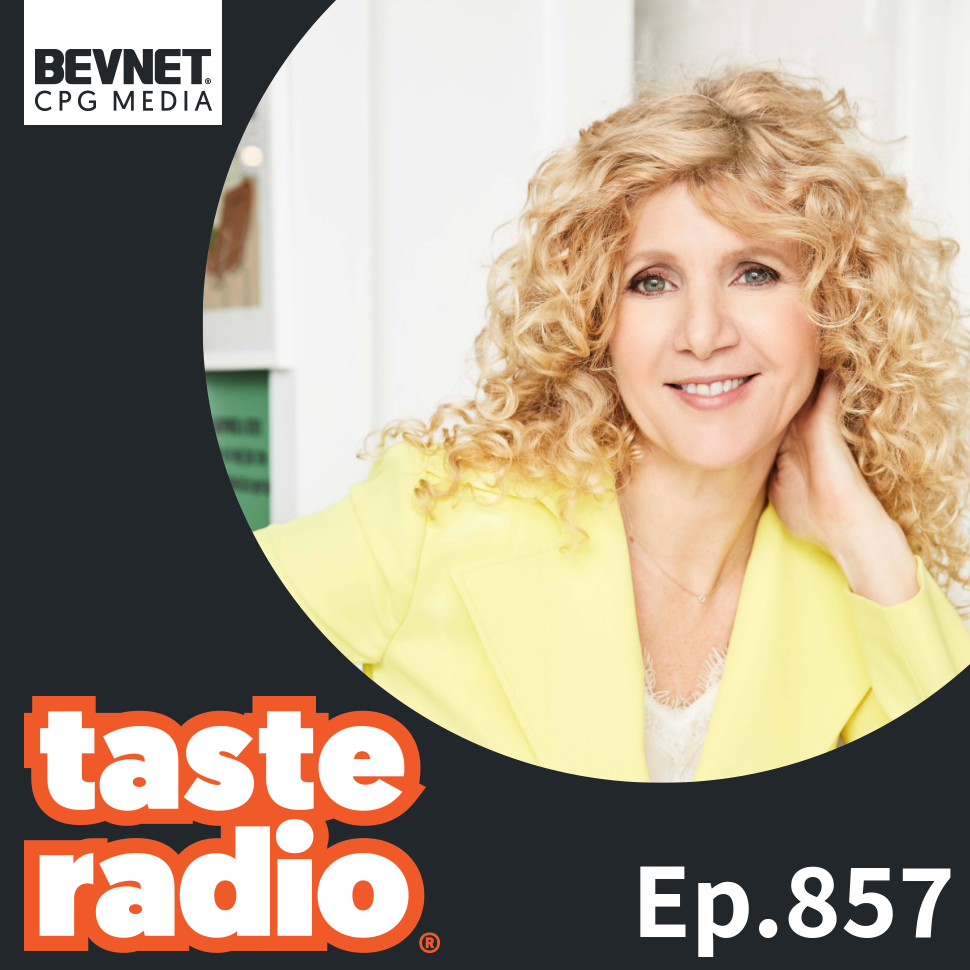
[00:00:10] Ray Latif: Hey folks, I'm Ray Latif and you're listening to the number one podcast for the food and beverage industry, Taste Radio. This episode features an interview with Becca Millstein, the co-founder and CEO of Fishwife, an upstart brand whose stylish and sustainable approach to tinned seafood has caught the attention of Whole Foods buyers and Vogue editors alike. get access to limited swag and exclusive content by becoming a Taste Radio VIP. It's easy for you to join that group of very important people. Just head to Taste Radio slash VIP and take one minute to sign up. Chic is not typically a word associated with canned fish, but it is an apt way to describe Fishwife. A modern, super-premium brand of tinned seafood, Fishwife is the brainchild of entrepreneurs Becca Millstein and Caroline Goldfarb. Launched in December 2020, the Los Angeles-based markets ethically sourced tuna, salmon, trout, and anchovies from fisheries and aquaculture farms in the United States and Europe. Known for its bright and quirky label designs, Fishwife built a thriving direct-to-consumer business out of the gate and gradually introduced distribution to select retailers. Earlier this year, Whole Foods began selling Fishwife at stores in its Southern Pacific region and will add the products to its Northern California locations this summer. In the following interview, I spoke with Becca about the light bulb moment and planning process that led to the development of Fishwife, the impact of its outstanding label design on trial and word of mouth marketing, her perspective on scaling a niche concept, and how she navigated and learned from a potentially devastating supply crisis. Hey folks, it's Ray with Taste Radio. I am in the press room at Expo West 2023. And joining with me right now is the one and only Becca Millstein, the founder, excuse me, co-founder and CEO of Fishwife. Becca, so great to see you.
[00:02:16] Becca Millstein: Oh, Ray, so great to see you. I'm starstruck. I'm nervous, but I'm so excited to be here with you.
[00:02:22] Ray Latif: There's no reason to be either, but I am the one who's starstruck, honestly, because Fishwife is just an amazing brand. From the moment I saw your brand, I was just like, wow, whoever created this is a genius, number one, and they're going to make a ton of money, number two.
[00:02:39] Becca Millstein: A girl can dream. A girl can dream.
[00:02:42] Ray Latif: Fishwife is quote unquote a pandemic baby. It is. You were in the music industry prior to being in CPG, which is an easy, natural transition for people.
[00:02:51] Becca Millstein: It's not obvious on the outside, but honestly, the skill set that I do have is kind of the one that I developed in the music industry. So when I worked in the music industry, I was doing brand partnerships. So partnerships between musicians and brands. And I was doing creative direction and marketing for musicians, which is... perfectly translatable like as you may know we've launched quite a few products at this point and Putting out a product is a very similar process putting out a tinfish product is a very similar process to putting out Like an album
[00:03:25] Ray Latif: The reason that Becca's laughing is because I have the most quizzical look on my face right now. I'm like, wait, Tin Fish, putting out an album, and they have similar processes.
[00:03:35] Becca Millstein: So the product itself is very different. Obviously, you've got an album, which is, you know, the body of music, recorded music. And Tin Fish product is obviously a very material, good, composed of sourcing fish from one place, getting another. The product is different. but the process of launching something is quite consistent across. You know, when we develop a product, it's like, okay, what product is it going to be? So we have the full product development process, which very different from music, but it's like, okay, what world do we want to create around this product? And that's the whole, I mean, anyone who spent time in the music industry, and it's the same in the CPG industry, It's like the magic is world building. Like, obviously, we've seen that in, you know, Liquid Death and Fly By Jing and like Diaspora and all these brands that build entire universes around their product. It's so much easier to engage with an entire world that you can really put yourself in.
[00:04:33] Ray Latif: You know, people have a light bulb moment when they are thinking about starting a brand. I think we're seeing more tin fish brands out there nowadays and everyone's kind of bringing something unique and interesting to the market. But I haven't met too many people who are like, I'm going to start a tin seafood company and then just go do it. And then just going to do it, you don't just go and do it. Like there's a whole process and playing process. When you were thinking about starting Fishwife, where did you start? Was it the brand? Was it the food itself? Was it the consumer?
[00:05:02] Becca Millstein: Yeah, I can tell you exactly because I feel like this is always the most interesting part. So It was a light bulb moment. It was Millstein and Caroline and my brother John were on a hike during COVID and we were bouncing back and forth business ideas for no reason. I think because I was playing music at that time and I think I was trying to come up with a name for my band. I don't know. I won't bore you with the details.
[00:05:22] Ray Latif: What kind of band did you have?
[00:05:23] Becca Millstein: I had a folk band, you know, as one does living in LA, you can't not almost. So like we were on this hike, came up with the idea. We were like tin fish. Because we were like, you know, like cheese puffs, you know, like pickles, whatever, like that kind of conversation. I'm sure you have them all the time. And there was like tin fish and we were both like, oh my God. This is insane. There's been no innovation in this category ever. We came up with the idea on that hike, and on the way down, we were coming up with names. At first, we were going to call it Goldfin or Goldtin. Those are the two contenders. We were driving home and started calling all of our friends. You're really excited about this idea. Oh, I was. I mean, wait till we get to the end of the night. We came up with the name. My friend Greer came up with the name. She's amazing. I'm like so grateful because it's the perfect name. Fishwife, it means, you know, a loud, brash, bold, swearing woman who's trying to sell fish, which is amazing because I gave myself permission to swear all the time, which I love to swear. And now it's part of my brand.
[00:06:27] Ray Latif: And if you swear, all we have to do is just like this, a small checkbox in the Apple podcast, just to let people know that kids maybe, you know, you have to kind of watch out for the kiddos.
[00:06:36] Becca Millstein: Put the little headphones on the kiddos, the baby headphones.
[00:06:39] Ray Latif: So feel free.
[00:06:40] Becca Millstein: Okay, amazing. Thank you. So anyway, got the name, locked that it was like fish wife. That's perfect. Just locked in immediately. And then we started looking for artists to work with. And that's like, that was what I had been doing very much in my career.
[00:06:56] Ray Latif: Not package designers, artists.
[00:06:57] Becca Millstein: No. And I remember I had a conversation with someone who is now a very close peer of mine in the industry. And I remember this person was like, you should work with someone who's done packaging before because it's going to be so much work to get through the regulatory, like help them understand the regulatory complexities of designing packaging. And I was just like, I need to find the right voice, like the right person, the right visual language. And the odds of me finding that in like a packaging designer did not seem... This is not me poo-pooing packaging designers. I mean, now Danny is a packaging designer and he's brilliant. But I think I just didn't want to start from there. It was like, let's find the right person and then we'll figure it out. So... found Danny. He was the best friend of a different designer that I had collaborated with several times and actually had brought on to rebrand the startup that I was working at before. So I had had that like company branding experience before and loved it. So found Danny, that locked in right away. I mean, we like tested a bunch of different illustrators with, you know, friends, family, et cetera, you know, who people were most attracted to, gravitated towards. And Danny was just, he was the one.
[00:08:06] Ray Latif: Clearly, because, you know, I think that's the thing that stands out immediately as it should, you know, when people first encounter a product or a brand, they're going to see the label and they're going to decide pretty quickly whether or not they're going to pick it up and look at it a little bit more, even buy the products. And Fishwife, you know, if I'm picking up, this is your smoked rainbow trout and it has like a Wes Anderson kind of vibe to it. It feels really fun and approachable. You know, you just want to learn more. It's maybe hard to read. Like if you see Fishwife, it may be hard to find out like, OK, what? What kind of fish is this? But when you pick it up, you're just going to learn more. 100% traceable pack by hand. All this stuff just starts to pop and you start to realize, wow, more and more and more. It's just really, really cool. And you use like every inch.
[00:08:52] Becca Millstein: We're about to do even more. We're about to do the interiors like flaps. It's going to be a lot.
[00:08:57] Ray Latif: Yeah. And so when I think about that, your packaging that is, It makes a lot of sense that, you know, media and press would be really interested because they haven't seen something like this before. Totally. Was the package, was that what led your PR strategy? I mean, was that the sort of way in? Was that the foot in the door to get interest from magazines like Vogue and newspapers like the New York Times, et cetera?
[00:09:22] Becca Millstein: Yeah, totally. The press thing is really interesting.
[00:09:25] Ray Latif: Because your press has been incredible. Your PR strategy seems like exceptional.
[00:09:29] Becca Millstein: Yeah, no, we've been super lucky. But I think the thing is, it's like, it's like the product and the timing and being kind of first to market. Like, I mean, like Scout and us kind of came to market at a similar time. They came a little bit before, but like first to market with a positioning. I think when you're like the first mover in a category, like it's like Imperfect. Like when Imperfect came out, it was like, okay, Imperfect is the first, you know, first market that's upcycling fruits and vegetables, produce. And they're just going to get a ton of press because that's a new concept and it's delicious to dig into. Like there's so much to dig into. And that's kind of how it is with Fishwife. It's like, okay, everyone knows the canned fish category, but no one has ever approached it in this way with this kind of branding, with this brand positioning. And I think when that happens, you get really lucky with press because, I mean, there's that piece. And then there's also, there's so much to dig into with each of these products. It's like, I could spend three hours talking about each of them, where they come from, you know, what's going on at the fishery or the farm, what's going on at the cannery, and then how we came up with the concept of the packaging. I think there's just a lot of meat to dig into with the products, which has made journalist jobs very easy.
[00:10:39] Ray Latif: And dare I say, everything you put out is very Instagrammable.
[00:10:43] Becca Millstein: It is quite Instagrammable. As a person that fully did not use Instagram, more or less before Fishwife, and now I'm like, all on it, sadly, all the time.
[00:10:53] Ray Latif: Because I have 50,000 followers on Instagram.
[00:10:56] Becca Millstein: We just hit it. I'm very excited. I'm very excited. 50,000 Fishwives in the house.
[00:11:01] Ray Latif: Amazing. Yeah. And I think that's the other part of this is you have a huge following on Instagram, on social media. Hopefully, folks are buying the product and not just like, you know, looking at your Instagram page.
[00:11:12] Becca Millstein: You gotta be careful about that.
[00:11:13] Ray Latif: Yeah. Well, how so? How do you mean?
[00:11:15] Becca Millstein: I mean, I think I had a conversation with another founder who said something that I thought was really interesting. He was like, I think the brand, he was talking about a company he had worked at previously. I think the brand was a lot bigger than the revenue. which I've never really, you know, I'm like, is that possible? Like, can it really happen that a brain can be so outsized and the revenue doesn't follow? I would say that hasn't been an issue for us yet, but it's definitely something I'm super conscious of. I mean, I think the thing that I'm very conscious of is the product has to be as good as the packaging. Like, I mean, it's a classic. I think it should be a classic fear for people to have in this industry. Like you never want your packaging to overshadow the product itself. So I feel amazing that we have this gorgeous, sexy, beautiful product that Danny and I literally put days and days and days, cumulatively hours into designing. But then the product inside is like next level and totally new and different and interesting and so delicious. But it's something to be conscious of.
[00:12:11] Ray Latif: Yeah, for sure. You know, the consumer publications were really interested in the backstory and the product and the packaging. And then the business and the trade were really interested in hearing about how you were this direct-to-consumer darling and you guys really came out of the gate strong with a direct-to-consumer strategy that worked. What was it about direct-to-consumer that you guys got right?
[00:12:33] Becca Millstein: Yeah, I think the packaging. I mean, with direct-to-consumer, it's like, that's like, if you don't have gorgeous packaging, because people don't know what it tastes like when they're buying it online. You're not like at a Whole Foods demoing and they taste it and they think, I gotta buy this. You need to have beautiful packaging. So I think we did that really right. But I think the voice of the, I mean, I speak a very familiar voice to our customers. And I think that's helpful. I think, you know, when I talk to people about social media and how to do it well, and why it's so hard to hire for like a great social media manager. It's like you want your company to have a voice. It's like what I'm talking about the world piece. It's like you want it to be a world and you want it to be a character like a person or someone you can engage with. And I think people have felt very comfortable with Fishwife as like a friend of theirs from the beginning. And that was something that I was very intent on. And obviously, I mean, I run our Instagram and now I finally have a brilliant young lady named Lauren Murphy who lives in Boston, lives in Newton. I shouldn't say where she lives, but she lives in Boston. Well, our office is in Newton.
[00:13:33] Ray Latif: So if she's anywhere near, tell her to stop by.
[00:13:36] Becca Millstein: You have to hang out. She's amazing. But I, you know, ran our DMs until and ran our whole social media account. I still post all of our social media posts. Yes, it's very distracting sometimes from my daily workflow. But clearly it matters. Well, that's the thing. I mean, I think a lot of founders deal with this. They're like, I shouldn't be posting my own Instagrams. Like I have a freaking business to run. But it's also like, one thing about our business that is notable is that it is so organically driven. Like we basically, we didn't start spending anything on paid advertising until a year and a half after we launched the company, which I'm very happy about that. And we started spending very, very tiny budgets. We spent $2K as like an experiment month in July last year and then kind of slowly, gradually built up from that. But we're still spending very, very, very little. All this to say is like, sometimes I wonder, Becca, should you be spending time posting this Instagram post and like responding to these DMs, even though Lauren manages most of that these days, thank the Lord for her. But it's like, where does that organic growth come from? Like it comes from people. loving your product. And where does like love come from? Love comes from like a deep connection. I want people to feel that they're deeply connected to our product, which obviously, you know, they have to like it, they like have to like how it tastes. And that's something, but like to drive you to go online, to navigate to our website, to go to your local store and pick up fish wife, especially because it's a premium product. Like it is not cheap. And God knows, I wish it wasn't as expensive as it is, but such as sustainable seafood.
[00:15:19] Ray Latif: Well, I do want to talk about the price in a second, but I want to ask, do you sign, do people know, do your followers know that you're the one posting the content? Do you sign DMs as Becca?
[00:15:28] Becca Millstein: I do sometimes now because Lauren does so much of it that now when I do, DM people. But honestly, I don't, I was never in the habit of doing it because I was always just the one doing it. So it didn't occur to me to sign my name.
[00:15:41] Ray Latif: It was just like, this is me. Well, I mean, I think that's one of the cool things about like interacting with founders is like, wow, I have like a direct line to the person who like created this company and this brand. And it just like feels like that genuine connection. I remember when like Twitter came out. And a good friend of mine was like, this thing is awesome. I can talk to LeVar Burton anytime I want. I guess that is kind of cool.
[00:16:02] Becca Millstein: Yeah, I mean, social media is amazing. And I will say that as a founder, that connects with influencers and celebrities. And I'm like, do you like yesterday, I was dealing with Hillary Duff. I'm like, I'm like eight year old Becca freak out. I mean, the connection, I would say as a brand and as a brand founder, The closeness of the connections to powerful, influential people is absolutely mind-blowing.
[00:16:30] Ray Latif: Did you slip and call Hilary Lizzie?
[00:16:32] Becca Millstein: Oh my gosh. I'm just trying to— I'm editing those DMs hard to make sure I don't have any slip-ups. I say very little because I'm scared of, you know, of fangirling too much. But, I mean, that's amazing. And that, to go back to the DDC question, influencers have been, like, unbelievably powerful. They're definitely one of the biggest sources of discovery. Like the biggest source of discovery for people is social media. So between our account and just, you know, our posts being shared and influencers talking about us, that is our biggest channel discovery.
[00:17:05] Ray Latif: Is your influencer strategy one of, you know, are you paying these folks or is it a free product?
[00:17:11] Becca Millstein: No, I mean, I think if we were going to do a paid situation, it would be some like sort of in-depth partnership. We want people to really love and enjoy the product. And that's sort of like what has gotten us really far is like, I think these influencers, you know, take to the, it's same reason people like it. They feel a connection to it. They think it's beautiful. They think it's tasty and they want to talk about it. So we haven't done paid. I'm trying to think about a situation in which we would, because it's like, We want people to share it because they love it. That's what makes it so special. And people's followers are so smart. It's just I feel like you can often smell the paid from a mile away and it doesn't hit the same. But if you do it really well, it does.
[00:17:49] Ray Latif: Yeah. Everyone cringes. It's not just me. Everyone cringes when they see like a paid promotion and they just be like, Oh, you know, I was looking for a quick snack in the middle of the afternoon and Fishwife hit the spot. It's like, come on. I know.
[00:18:02] Becca Millstein: It's like, that's not going to make people, if we do it not well, like it's going to make people be like, this is whack. Like, why is Fishwife paying this for like, it just doesn't make sense. So I think if we really found a person that we wanted to partner with in a deep way and wanted to compensate them for their services, their time that they were putting into, you know, into that partnership, we would explore it. But I would say like on the flip side, it's really challenging because to go into the influencer thing, it's like with a lot of these big name people, it's either like, it's going to be free or it's going to be a $50,000, $100,000. And like, obviously a brand like ours is not in the ballpark of being able to pay some of the people that have just naturally adopted our product because they like it.
[00:18:44] Caroline Goldfarb: Right.
[00:18:44] Becca Millstein: And they understand that too, which is really, I mean, We've partnered with some amazing influencers and have amazing relationships with them now, and they get it. It's like, we're a tiny business. I think the definition of a small business is below $50 million in revenue. Just like, I don't know if you know that fact.
[00:18:59] Ray Latif: Yeah, I mean, like, in our industry.
[00:19:02] Becca Millstein: Yeah.
[00:19:03] Ray Latif: I think the threshold used to be under 10. Okay. And now I think it's under 50 because like if you want to be acquired, if an acquirer is looking for you, they want to see that you're doing about $50 million in business. So it's like, yeah.
[00:19:15] Becca Millstein: These are small businesses. I think that's probably the thing that I. I know that the people that listen to this podcast are in the industry, but I think that's the thing that all of us founders are, you know, kind of faced with time and time again, just people thinking your business is so much bigger than it is. I have two full-time employees and that's it. And that's like so many of the brands that are out there. Magic Spoon, or not Magic Spoon, Magic Spoon has a lot of employees. Three Wishes. I was talking to the founders the other day. It's like they've got like four employees. It's amazing when you find out how small these companies actually are. And I think I wish more people understood that.
[00:19:50] Ray Latif: Yeah. You brought up Magic Spoon, which is actually a good segue into my next question. Yes, yes. Magic Spoon, I think the average cost of a box, the average price of a box is 10 bucks. Is that right? Okay. So there's this interesting duality between the fact that you have a tin fish company. a premium tinned fish company where the average price of your products is?
[00:20:11] Becca Millstein: Like around nine, I mean, five, up to 13 bucks.
[00:20:15] Ray Latif: Okay.
[00:20:16] Becca Millstein: Down to $7.99. Yeah.
[00:20:18] Ray Latif: And so typically, you know, you can go buy like a can of sardines or even a premium can of like tuna for, you know, five, six bucks, you know, not so much more than that and less. And it's been around forever. Canned fish, tinned fish, huge, huge industries, a multi-billion dollar industry. So on the one hand, you have this premium seafood company, tinned seafood company at premium prices. And on the other, you have this industry where people can go and buy pretty good fish at, you know, value prices. So how do you think about scaling from there? Because there is this subset where, you know, you can drive some interest, you can find a community that really loves your product. But can you be this like huge brand, not a small brand anymore, a north of $50 million brand with the positioning that you currently have?
[00:21:11] Becca Millstein: Totally. That's a question I ask myself every day. No, I mean, it's really tough. And I think that there honestly are a lot of people on my boat because we're all starting better for you, better for you, better for the Earth companies. You hear this from founders all the time. Everyone wants everything from you. They want it to be beautiful. They want it to be extremely high quality. They want it to be extremely sustainable. And they want it to be below five bucks, whatever, or below $9.99, which is a lot of our rules because a lot of us built gorgeous premium products that answer the question of sustainability and nutrition and quality. And those things are not cheap, as you know. I mean, there are a couple different ways that I think about it. I think the top line one is It's a really fun space to play in because canned fish is, you know, household item in every house in America. Canned tuna, we all grew up on it. But the product that we're bringing to market, that Scout is bringing to market, that Patagonia is bringing to market, we're not going head to head with chicken of the sea. We're all going head to head with each other, but we're also going arm and arm with each other, because we need to educate and basically premium as the industry, because it's kind of a new food category. Premium tin seafood just really hasn't existed. I mean, like before Scout and I, There was maybe one canned trout product in the US and canned trout is so delicious. It's absolutely amazing. Like it's very hard to find people that don't enjoy it, but it just hasn't existed in the US. So this is a business that is not going to we're not going to be in and out in five years. You know, this is like a, it's a bit of a slow burn where we need to continue spreading throughout the concentric circles of society and convincing more and more people that they should care about where their seafood comes from. You know, who are the people involved in raising it or catching it and how are they being treated and paid? Educating people about the quality and convincing them, like, you're not using this in the way that you use canned tuna. You're not smushing it up with a bunch of, you know, mayonnaise and putting it between two slices of white bread. You're having friends over for dinner and putting it out on a plate with a gorgeous baguette and beautiful cultured butter, or you're serving it to your kids, you know, mixed into pasta or salads. And that's the new use case. And that's a massively bigger use case than just tuna salad sandwiches.
[00:23:41] Ray Latif: For sure. And I wonder if it's just as much about bringing new consumers into the fold, the fold of being canned seafood and tinned fish. as much as it is creating a brand for existing consumers within that space. Yeah. So you're creating new usage occasions, it seems like for the people who are already familiar. But are you finding that there are people who are just like, look, I didn't know I loved tinfish. I didn't know I would like this. And now I do. And now I'm a consumer of this category is this industry.
[00:24:09] Becca Millstein: Oh yeah, all the time. I mean, so many people have never, they don't like seafood, and they definitely don't like tinned fish. And then they try fish wife, not to brag, but like we built these products to be delicious. Like we built them to be undeniably delicious. So when you try our smoked trout, It is salty, it's sweet, it's tender, it's smoky, like it is so tasty. Our smoked salmon is like this buttery, tender, juicy, like just such a flavorful product. And like that's why we started with that instead of mussels and escabeche, because like that's going to take a little bit longer, you know. But also, I think I've underestimated how excited people are to try the more experimental products. I mean, anchovies are a very divisive tinned fish, but amongst our consumer base, at this point, it's like not divisive at all. It has been the most requested product from our customers for years by massive margin. People just don't know. I mean, I'm like, I've been having this conversation for two and a half years now. But like people have loved Din Fish for a very long time, but there was no like community or brand to rally around and celebrate that love.
[00:25:24] Ray Latif: And now there are. And again, a lot of this excitement came from direct to consumer. And now you're breaking into retail. Yep. And retail is a whole different game.
[00:25:35] Becca Millstein: It is.
[00:25:35] Ray Latif: And you seem to have like a good grasp of like the brand and the business and what it's going to take to scale.
[00:25:41] Caroline Goldfarb: Yeah.
[00:25:41] Ray Latif: But how are you finding your way through this craziness that is brick and mortar retail? Totally.
[00:25:49] Becca Millstein: Well, we started really small like we I mean, the path that, you know, I laid out when we started the company, it was, you know, it's a playbook at this point, but it's like you do the specialty channels. Yeah, you perform there, you know, you really expand into those get the brand affinity, people, you know, learn about you. And then at some point start to transition into the natural grocery. So we're now in Central Market, New Seasons and Whole Foods. And I would say, you know, Whole Foods is a massive focus for us. Like it has to be. It'll probably be our biggest account for the next couple of years. But we started really small. Like they wanted to do a national launch. And first of all, at the time they reached out, our supply chain and SRPs were years away from being ready for Whole Foods shelves. Well, actually one year, because we launched with them this January. So we started really small. We launched in SOPAC. one region, 65 stores. And to me, that was a very obvious choice to roll out in that way. Because you have no idea how you're going to perform. You know, I mean, you have a sense like we had the data from Central Market and New Seasons and, and understood that the product is really moving. But as you continue to get into bigger retailers, like Whole Foods, you just don't know what the velocities are going to be. And obviously, as everyone knows that listens to this podcast, like getting in is great, but it's all about if the product is moving off the shelf. So, I'm so happy we did that. We've been able to, you know, I've been doing demos. I see how people interact with the product. Side note, I did a demo last week. Like, everyone tried the anchovies. My mind was absolutely blown.
[00:27:26] Ray Latif: What region of Whole Foods was this?
[00:27:27] Becca Millstein: Sopak.
[00:27:28] Ray Latif: Okay.
[00:27:29] Becca Millstein: And like, people are so down to try them. But I think just to answer your question, it's like, I think starting small and testing the waters and testing and learning. has been so great for us. And like, we're going to do this region, we're going to figure out exactly, you know, what we need to do, demos, promotions, merchandising, etc. to make sure we're, you know, exceeding the velocity target that they have given to us. And then we'll continue expanding. We're launching into two new regions in Q2. And we'll just kind of keep building out that playbook and making it more and more sophisticated.
[00:28:03] Ray Latif: it seems like a really wise decision to hold back until you're sure you can address demand and manage these, well, manage Whole Foods across the country to best promote your product and make sure that it's on shelves. By make sure that it's on shelves, Whole Foods and every other retailer hate stockouts. And you learned, I guess, a pretty big lesson about supply chain and the importance of a sustainable supply chain. Yes. a viable supply chain in late summer of 2021. The worst day of my life. Oh, man.
[00:28:37] Becca Millstein: No, not the worst day of my life, but probably one of the one of the harder days at the business. So for the first year of the business, I was the only employee. And there are some things that I'm good at. And then there are a lot more things that I'm terrible at. And at that time, I was running our supply chain. And at that point, our supply chain was much less complex than it is now. We were working with two canneries, but mainly one micro cannery in Oregon. And, you know, we didn't have a contract. It was very much the height of the pandemic. So they were experiencing horrible labor shortages, like, you know, their staff will get COVID and they may be out for a month.
[00:29:15] Ray Latif: And is that why you didn't have a contract?
[00:29:17] Becca Millstein: Because like, they just couldn't have a contract because I didn't even know that that was something you were supposed to do. And I think a lot of CBG founders don't. It's very hard. I feel like it's hard to know which partners you're supposed to have contracts with sometimes when you're starting out. And the thing is, a lot of them still don't. Like we visited one of our new co-backers. This cannery works with this huge brand. I won't say any names, but they work with this huge brand they've worked with for 20 years, Handshake. So it's not out of the realm in our crazy industry to work off handshakes, but it also can leave you in a very gnarly spot. So I was actually with my family. You know, we were on vacation, quote, unquote, I was on a vacation because when you're the only employee at your company, such a thing does not exist. But I called my cannery and I was like, okay, when are these pallets of, you know, trout and tuna going to be ready? Like, we're really, we're getting low. And they were like, well, not only do we not have those pallets, you know, not only have we not actually produced that product, like obviously they had all the fish. I had sent them all, you know, trucked thousands and thousands of pounds of trout and tuna to them, but they hadn't processed the product. And they were like, you know what? Here at the back of the line, the next time we can get this to you is October. And it was August. So I was like, you know, the sky's falling.
[00:30:37] Ray Latif: Well, how do you find your way out of it? Because this is, I love these kinds of topics because everyone goes through these awful situations, you know, sometimes like weekly. And no one really likes to talk about it because I think some people think, oh, it puts my brand, puts me in a bad light. But these are such important stories, not only for solidarity among other entrepreneurs, but because other entrepreneurs might have gone through or might be going through a similar situation. And they're like, I don't know what to do.
[00:31:06] Becca Millstein: I mean, first of all, I don't think I know a single founder who hasn't been through a horrible co-packing moment or, you know, co-packing production operations moment that severely impacts their business for at least a time. We have all been there. So I mean, what we did is what I do a lot, which is we made a very cute, I called Danny up. I was like, We need to make a really cute graphic that says gone fishing and we're going to be out of stock for a month. And, you know, just let everyone know that we're out of stock of two products probably for about a month. And it sucked. But you just, I mean, if you're honest with everyone, you're really not going to get in a bad situation. So on the customer facing side, we just let everyone know. Thankfully, we had not oversold any product that we didn't actually have. So it was just okay, we're out of stock. We're not going to we're not going to make a lot of revenue this month. That's fine. But then on the operational side, we were extremely lucky because I had started working with a cannery in Washington. on developing our smoked salmon product, you know, a couple months before. And so I went to them and I said, okay, I know we were just going to do the salmon product, but we've just run into a really tricky situation with our trout and tuna. Can we work with you on these products? So thankfully we were able to translate the recipe pretty quickly and got things up and running with them. Was it in time for the holiday season? I guess it was. I mean, at that point I was just, We did not have revenue targets in my first year of business. I mean, the ones that I did set were very modest. So it was not a stressful, stressful first year, which I recommend.
[00:32:44] Ray Latif: So even though it was the worst day of your life, or you said it was the worst day of your life, you did build some contingency into the brand into the business. And I think that's something that's really smart, honestly, because I think some people, they're putting all their eggs in one basket, so to speak. And then all of a sudden they realize, Oh, no, I don't have a basket anymore. You know, like, so what do you do? And if you've already pre-sold the product, you're screwed. It's really hard to come back from that.
[00:33:10] Becca Millstein: It's really tough. I mean, you can do it. We've done it at times. Or, you know, things, shipments coming in late, etc. But it takes a massive amount of customer handholding and triage and it takes a ton of energy to make sure your customers are still having a good experience when there is an operational challenge that's making it take longer for them to get their product.
[00:33:31] Ray Latif: What happens when a customer goes ballistic?
[00:33:33] Becca Millstein: Oh my gosh, I mean, my sister Julia, who actually lives in JP. Oh, why not? Yeah, I have her stopped by the BevNET office. Yeah. She runs our customer service. And she is a wizard. She, you know, consistent with what I've said before, it's like, she's a real person. And my sister is way funnier and cooler than I am. And she brings all of that to our customer service. So She's really good at managing people and just being a real person and, you know, obviously giving them what they need to feel good. If it's a refund, if it's a free pack of trout, whatever, you know, we take care of our customers. We make sure they feel really good. But like having a person on the other end of the line that is hyper responsive and very much an actual human being.
[00:34:19] Ray Latif: When you say hyper responsive, do you mean like within the hour getting back to them kind of thing?
[00:34:23] Becca Millstein: Not within the hour. I mean, it's usually within a 12 hour period. But I mean, during the holiday season last year, Ray, that was... It was an intense time.
[00:34:35] Ray Latif: Between gifting, I think some people feel like, OK, I paid so much money for this. You know, where is my product? I deserve it. You guys are killing me. You kind of think. Oh, yeah. I can imagine you've been in some sticky spots.
[00:34:45] Becca Millstein: Oh, my gosh. I mean, it was just I think a lot of brands ended up in this spot. I don't know. People thought maybe it wasn't going to be a strong holiday season. It was insane. And yes, people want their products, their gifts. They're very sensitive about their gifts, which totally makes sense. Their gifts. And it's a it's a very nice product.
[00:35:00] Ray Latif: Yeah. But all that being said, you know, between your supply chain and your customer service, it sounds like you've gotten those buttoned up and you're kind of ahead of the curve of a lot of, you know, small brands that are sort of at your scale or at least at the size of redevelopment. Yeah. And more to that, Like, how did you learn about all this? Was it sort of like learning on the fly? Or did you have examples of food brands and entrepreneurs that you said you looked at and said, you know what, this person has really taught me the right way to build a brand specifically within food?
[00:35:32] Becca Millstein: Yeah. Yeah, I mean, it was definitely so much learning on the fly. But I also I mean, I say it all the time, like my greatest asset are my advisors and my peers, honestly, maybe even more my peers these days, because we're all just in the in the shit together. Oh no, that checkbox.
[00:35:51] Ray Latif: Gotta check that box now.
[00:35:53] Becca Millstein: Can't just do a little bleep. But I've had very, very amazing advisors since starting the company. Like Jing, I reached out to on LinkedIn, you know, when I was launching the brand in December 2020.
[00:36:03] Ray Latif: Jing Gao, Fly By Jing.
[00:36:04] Becca Millstein: Yes. And Jing has been, I mean, she's, I don't want to say changed my life, but like, she's been an unbelievable asset to us. She's obviously like a paragon of how you want to build a food CBG business.
[00:36:17] Ray Latif: And, you know, not to cut you off, but I mean, like, I would think that there's a lot of people probably reaching out to Jing and being like, can you be my advisor? Can you be my mentor? Can I like lean on you when I need some answers to something? How did you develop a vibe with her? How did you get her on your side?
[00:36:34] Becca Millstein: Yeah, I mean, it's a really great point because I think, yeah, developing strong mentor relationships is definitely a challenge. And I don't understand how people, you can't build these businesses without those people. So I think A Jing was probably, I mean, her star has been exponentially rising. So probably when I hit her up in 2020, she wasn't even at the point where she had, you know, probably hundreds of people reaching out to her all the time. So I think there's that. But again, I think these days, it's really like my peers, like maybe people that are a year ahead of me, but like those are the people that I get the best information from on the day to day stuff, maybe like for fundraising and just like, you know, general company building strategy. I'll talk to some of my advisors that, you know, have exited or, you know, are 10, 15 years in. But otherwise, it's my friends. I mean, me and Miles from Zabs and Noah from Ruby have a group chat that we're, I mean, it's literally active all day long with us just being like, where do you get this printed? Like, is this weird if I bring this to a demo? Like, what's, you know, what certification is like? those text message relationships with your, you know, Vanessa Famost, whatever things. From Amsterdam. Yep. Paul from Ouroboros. It's like, I can't, I would die without these people. I really would. So like, that's kind of the short answer of like how you learn. Obviously not that many people are in canned fish, so I think that's part of the whole tinned fish industry, the new wave. We're all super close because we all need the resources that each of us has. Adam helped me find a cannery. I helped him find a trout farm. We need each other. So people are your best assets. They really are.
[00:38:14] Ray Latif: Yeah. I think the common thread between some of the brands that you mentioned, AumSum, Ourobora, Flyby Jing, you know, these are all like next-gen brands. These are all the kinds of brands that modern consumers want. And you're addressing that demand and working together, you know, as that next-gen kind of platform. It's not really a platform, but as a sort of next-gen cohort is really awesome. And it also gives you permission, I would think, to partner with them in a really authentic way. And Fishwife has done a lot of great partnerships. And this again goes back to this question of how do I approach a brand that I want to work with and how do I make it valuable for us and for them? What's been your approach?
[00:38:57] Becca Millstein: That is a great question. I would say with so much of this stuff, I did not have a real strategy. Just because, you know, the company was just me for so long, I didn't have, you know, I wasn't building out KPIs. When you're a one person team, I don't know, maybe there's some one person teams that build out KPIs themselves, but I certainly did not. So like, with Flyby Jing, it was just so obvious. First of all, Jing and I had eaten our product together a bunch of times and tasted phenomenal. And we spent a ton of time together. We were just like around each other all the time.
[00:39:29] Ray Latif: And the partnership bore this product that I'm holding in my hand, which is just beautiful. It won a Best of 2022 Nosh award. And it's smoked salmon with Sichuan chili crisp. It is unbelievable. It really is.
[00:39:46] Becca Millstein: But the thing is, like, it does have to be really valuable for both brands. So like, you know, at this point, we do assess people's, you know, their reach, their engagement, their email, their click through rate, all of the all of those things to make sure it's gonna be a valuable partnership. Because some of these things take tremendous investment. Like obviously there's a bunch of different tiers of collaboration. What we did with FlyByJing is obviously the most in-depth collaboration you can do. It takes R&D with our cannery, you know, it takes canning, you know, time off the canning line to do that R&D. And then it takes, you know, designing all that packaging, that's not an easy feat. That's weeks and weeks and weeks of work. But with a company like FlyByJing, it was like, okay, well, we have some audience overlap, but we also have a ton of customers that you don't have vice versa. So it was just a perfectly symbiotic relationship. Honestly, I think that's like the, there's the mixture of the data that you need to look at, and then the intuition. With things like collaborations, you gotta let intuition lead, because it's a brand building exercise. And, you know, as the person that built My brand, I know who our customers are, obviously, you know, spent all that time in the DMs. Like, I know what our customers are going to really enjoy, hopefully, most of the time. And so, intuition is very strong with these sort of brand collaborations. But these days, it's like, let intuition lead and then dig into all the data and make sure it's going to give us the return on investment. Because some of these collaborations do take a massive amount of team time.
[00:41:17] Ray Latif: So as much as I might want to see, say, like a smoked salmon cream cheese ice cream from Van Lewins.
[00:41:25] Becca Millstein: Okay. I have had that conversation. Really? Not with fanloons. No, I actually had it with, um, not ice cream yet. I actually did talk to Jenny about that. Oh, really? Wow. Yeah. Because, you know, candied salmon is a very, is a very common treat. It's like, you know, so I think it'll happen. I had it with Sprinkles Cupcakes that.
[00:41:43] Ray Latif: Okay.
[00:41:43] Becca Millstein: I think that would be amazing. A cream cheese frosting with. Okay. That's going to happen.
[00:41:47] Ray Latif: The sweet and savory. Yeah. Yeah. Phenomenal.
[00:41:50] Becca Millstein: It's like, you know, bacon on a, what is it like a maple bacon donut?
[00:41:53] Ray Latif: Yeah.
[00:41:54] Becca Millstein: Like this is what we're talking about.
[00:41:57] Ray Latif: I want to keep going on and on and on. I know you have a busy schedule, but thank you so, so much for taking the time to sit down with me today. This has been so fun. We covered a lot and we've talked about a lot, and I know our audience is going to get a lot out of this. So thank you so much on behalf of them.
[00:42:15] Becca Millstein: Oh my gosh, I mean, as you know, Ray, this is my favorite podcast. It's truly, truly an honor. So thank you so much for having me on.
[00:42:23] Ray Latif: Yeah, let's do this again, maybe next year, because I feel like there's so many good things to come for Fishway.
[00:42:28] Becca Millstein: I'm sure a lot will have happened by that time.
[00:42:30] Ray Latif: All right. It's a plan.
[00:42:32] Becca Millstein: Thank you, Ray.
[00:42:32] Ray Latif: Thank you. That brings us to the end of this episode of Taste Radio. Thank you so much for listening. And thanks to our guest, Becca Millstein. Taste Radio is a production of BevNET.com Incorporated. Our audio engineer for Taste Radio is Joe Cracci, our technical director is Joshua Pratt, and our video editor is Ryan Galang. Our social marketing manager is Amanda Smerlinski, and our designer is Amanda Huang. Just a reminder, if you like what you hear on Taste Radio, please share the podcast with friends and colleagues. And of course, we would love it if you could review us on the Apple Podcasts app or your listening platform of choice. Check us out on Instagram, our handle is BevNetTasteRadio. As always, for questions, comments, ideas for future podcasts, please send us an email to askattasteradio.com. On behalf of the entire Taste Radio team, thank you for listening, and we'll talk to you next time.