Hello, and thanks for tuning into Taste Radio, the number one podcast for anyone building a business in food or beverage. I'm Ray Latif, the editor and producer of Taste Radio, and I'm with my co-hosts John Craven, Melissa Traverse, and Mike Schneider. In this episode, we break down three notable M&A deals announced in the beverage industry over the past week.
Explore how brands distributed in the UK and US resonate with consumers across the pond. We also spotlight Lao's latest creation and Negroni inspired sparkling water, along with a lineup of new products that caught our attention. Plus, we feature an interview with beverage industry veteran Jeff Church and actor Matthew Apostle Weight, the co-founders of the emerging protein soda brand.
Proda. Alright, we're just about three weeks away from the Taste Radio NYC Meetup. It's happening on Thursday, April 16th at the offices of Ansin in Times Square. That's from five to 7:30 PM We've got a great lineup, live, podcast recordings, interviews, networking, plus food drinks, and of course a lot of fun.
So yeah, this is one you definitely do not want to miss, but. Just a quick heads up, you do need to register to attend. Just head over to taste radio.com/meetups to lock in your spot and limited space. Yes, limited space. That's why you need to register. And register soon. Of course, we'll be back in New York City in June for Bev Net Live.
It's happening on June 10th and 11th. It is the premier event for the beverage industry, the place to connect with entrepreneurs, investors, retail buyers, distributors, suppliers and service providers. What's a service? Provider. Melissa, we always talk about service providers. I would say that is a business that provides a service.
There you go. And in our case, to a food or beverage brand. There you go. I was stumped before you asked that Ray. No, I It's a, it's, it's a strange phrase. Whenever I say it, I'm like, service provider. I guess we could just say support businesses, something like that. I don't know. Service providers, people know what we're talking about by now.
Yeah, yeah. Okay. I mean, we're talking about designers. Designers. We didn't make company designers. Yeah. Consultants there go. Even investors are a kind of service provider, although we tend to call them investors. Yes. Well, basically, anyone and everyone you need to help grow your business, you can register and certainly learn more@bevnetlive.com.
Now, if we're looking ahead to Bev Net Live, I'm sure we're gonna be talking about Danone's $1 billion acquisition of Hue. Hue is the UK based nutrition and meal replacement brand. That news broke earlier this week. As did the news about Molson CO's acquisition of Atomic Brands, the company behind Monaco, ready to drink cocktails.
Both deals were announced on Monday. Certainly another strong signal that M&A activity in food and beverage is alive and well. Don't forget about Dirty Shirley too. Dirty Shirley was also acquired earlier this week. The acquirer was or is, tell us. Cak Cak is correct. Well done Mike. Thank you. Yeah, I mean certainly all these brands represent the next iteration of mainstream brands that we'll see in America.
I mean, heel's already got great distribution. I'm sure we're gonna see a lot more of it in more places. And uh, I wonder if the outset, the founders of Huel ever thought that the company that they created would be acquired. By one of the largest beverage and food companies in the world. Of course, Danone, it just goes to show you never know what might work.
That's always the fun part of this industry is just seeing these brands who go from outliers to being something that is revered and obviously worth a lot of money to some other strategic player. I posted about that on LinkedIn a little bit last week of just, you know, I think there's always this feeling for early stage entrepreneurs that.
You know, when they see these deals, it's almost like demoralizing. But remembering the fact that a lot of these brands, again, started out the literal same way that brands are starting out today, is something that I think also is kind of crazy in that there's brands out there right now that are kind of either unknown or looked at as, you know, their idea's crazy or never gonna make it.
Are going to be mainstreaM&Are going to make it probably in a big way. So, you know, interesting part of the cycle. Congrats to those companies for getting over maybe the finish line of sorts or starting line, depending on how you look at it. But yeah, impressive stuff. I mean, they had contemporaries that were doing similar stuff.
You might remember brands like Soylent who didn't fare quite as well as fuel. I mean, this came down to brand execution team. Conviction. Yeah, quality of the product, slow growth. So they didn't introduce too many new skews too fast. And then they did eventually diversify. And I think, you know, the other two brands, I mean, dirty Shirley's definitely one that, you know, when it launched, I mean, it felt like an outside the box kind of idea.
You know? Mm-hmm. And I guess to some extent, same for Monaco. It's not like RTDs were as proven and proliferate as they are today. So some of this ultimately is the result of, of timing, but also having that killer execution and just desire to keep pushing. And in a time where we hear that folks are drinking less and less, there's plenty of opportunity for, you know, we have two alcohol brands right there who were acquired.
So even if you're in a category that may not be experiencing such rapid growth as others, there's still plenty of opportunity. All good points. And I think it's important for folks to hear these points and the fact that when you start out. Nothing is guaranteed. In fact, in some of the comments on your post, John, there were a lot of folks who repeated the same message, which is, this is what I needed to hear.
This is a tough business. You know, every day is a struggle, but eventually, at least for some brands, there really is a great opportunity to change the way people eat and drink. One of the brands in that thread is doing exactly that, and it was sunny, the brand of Sure. Better For You Kids Snacks. It's kind of like a Lunchable, but not really like Lunchable crackers spreads sometimes cheese.
They're definitely. Doing things in a way that, you know, makes a lot of sense, but is different than the way others are doing it. And then they've also launched more conventional things like their boxes of crackers and then their spreads in in jars and at least in a limited run. And I mean, it's cool to see just the way these companies, they have conviction, they've come out and tried to do something different and you know, it's working.
It's always gonna be a slow go though in this industry. It's probably comforting for all the brands out there to know, especially if they're emerging, that brands like Sunny who really are so far along, like when I see them at Expo, I think you're killing it. But everybody's having a tough time. It's not easy.
It really is hard, and you never know what's gonna happen. I think the best comment on your post was from a person named Jill Sites who said, this is in response to your post. No one started at exit, which is very true. Right. And unfortunately, wise words, Jill, well, unfortunately, I mean, some people get to exit pretty quick, but it might not be the exit that they were looking for.
Yeah, yeah. I mean, unfortunately this is the, uh, the real here. There's a very, very, very small number of brands that get an exit via a strategic acquirer, and so they get the biggest headlines. But at the end of the day, most of those brands have been around for some time. There's probably, you can count on your fingers and count on your hands how many brands have exited under five years in development.
I mean, it just doesn't happen like that. So. Monaco ready to drink cocktails. When did that brand launch? 2012. Yeah, it's been a while. Yeah, it's been a while. It's been on the market for a while. Yeah, so for all the excitement and enthusiasm about RTD cocktails, that one has been around for almost 14, 15 years and it takes time.
That's kind of part of what I was getting at too, is, I mean, that's a brand that existed for a long time as really like an outlier doing something that, I don't know, the industry kind of just. Scoffed at her turned a blind eye to right. And now it's like RTD cocktails are almost like the, the savior of Bev Alk right now.
So, you know, it's, I think, pretty wild just how the tables turn and. Unfortunately, I mean, I, I do feel like it, it's almost like an on-off switch where, you know, a brand goes from the crazy idea to the, you know, industry is enamored with you. Like, and of course you can kind of go back and forth I suppose, but there's no kinda like in-between, you know?
And I don't know. Again, that's just part of the challenge of the journey, you know? Circling back to what I mentioned about M&A activity being alive and well in food and beverage. I think that is a definitely a positive sign. We've mentioned this in the podcast a number of times, and so clearly there is a thirst, a demand for better for you brands and products, not just at the consumer level, but at the strategic level as well.
We've heard varying reports about the amount of financial activity or investment that's happening at that level, but when you see deals like this, it's hard to ignore. The fact that strategics are watching and they're just trying to pick their spots. So keep your chin up folks, that, that, there's one takeaway from all this.
It's keep your chin up, folks, good things will happen for you. But I'm excited. I, I think, you know, 2026 is gonna be one of those years where we're, we're gonna continue to see those types of deals on a pretty regular basis. It's just exciting to hear about them, talk about them, and give people that confidence that good things can happen even when it's a really long shot of an idea.
I mean, hue, hue. When I saw Hue come to the states, I actually wondered if it would translate the same way it would in the uk. Really? Yeah. I thought it was a pretty good idea. It definitely felt like a European brand to me, and sometimes European brands don't really translate over here as well. I don't know.
I think it feels pretty, it taste good. Pretty universal to be honest. Yeah. What made it feel European? Was there a you in the word flavor Ray? Maybe that's what it was, but um, it felt like it. Spoke to a European consumer in a way that they would understand, whereas a US consumer, maybe it was just in the education that you might've needed to understand what they were selling, whereas I think here in this country you don't have any time.
For me, I think some of, just looking back, you know, the maybe fortunate, well in the rear view mirror and unfortunate at the time. The thing going for Hue was that there was Soylent, which kind of had a package that felt like a little bit of a cousin to Hue. Yes. And they were both kinda like heavy RTD and like, I think that's kind of not what made Hue as big of a business as it is, you know, it's like the powdered stuff and and whatnot that they've been certainly really good at selling.
We had a rxbar kinda vibe for me and. I do agree that it was very much a UK brand that focused on telling you what you're putting into your body and making sure it was good. That seems to be a theme there. That is less of a theme here, although it's becoming more of a theme. I think whenever you make that transition across the pond, whether it be from the US to the uk or vice versa, it can be.
A bit of a challenge. I'm willing to try. Well, Melissa, you have an expert or you recently talked to an expert about this very subject. I spoke to a person who does this all the time. Ruth Ick from Tomorrow, brands Ruth. I know Ruth. Ruth is the best. Mike, you know, you were on Ruth's podcast. Were you Mike? I was Ruth's podcast.
Yes. Ruth Ick from Tomorrow Brands. She's on this week's non base podcast. Ruth and her team bring brands over from the United States to the uk and she had some really interesting things to say about what makes a brand translate, what makes a brand not translate, and I think it. Sort of helps everybody understand brand strategy and what works in branding and what makes something universal.
So she helped bring brands like pop chips and Vitamin Water over to the uk. She called it Vitamin Water. Vitamin Water, and she was talking about brands that didn't translate that well. For example, liquid Death didn't translate that well. She talks a little bit about why. She thinks that was, it certainly was a marketing ploy that worked here that didn't translate over in the uk.
And then we were talking about other brands and whether they would work or wouldn't work in the uk, which brought us to Goodall, which of course is the mac and cheese brand. High fiber, high protein. Everybody knows about them, but she made the point that because there is so muchness. Dal for Mac and cheese in the United States.
That of course, is a big part of what makes that brand so popular and well loved here, but people in the UK didn't grow up in mac and cheese, so it's not necessarily something that would do well over there. You know, we'll see if good old ever wants to go over across the pond, but maybe a Beans on Toast brand would do better over there.
Wow. Could you have a packaged beans on toast brand? Has there ever been such a thing? I might be interested in buying that actually. Yeah. Or like jacket, potatoes, maybe. I don't know. Jacket potatoes. When I was, when I was growing up, Cornish, pasty. I remember seeing beef pies in these. Steel tins, uh, was like a round plate almost.
It was like a small plate. And I don't know how you would heat this thing up. I guess you would put the entire thing in the oven and they were really delicious, but they were like res, you know, like meals ready to eat in the army. Mm-hmm. Where like this thing could last for 50 years. And I always wondered about, okay, is this actually healthy to eat?
And I remember seeing one that actually had a production date of 10 years prior and I didn't even wanna open it 'cause I was like, oh, this is gonna wreak. It's not very appetizing. No. Now, but, uh, all in all, I mean, I think Oodles makes a lot of sense. The translation of, I think Gen Z branding to the uk, I mean, it's completely prevalent in u in ubiquitous here in the United States.
It feels like every new brand that launches, or every rebrand that we've seen seems to have some sort of air of Gen Z appeal. I wonder if that's translated to the UK yet or anywhere else in Europe. Well, they call it Gen Z. Okay. How about just Gens for sure. They're focused on Gen Z over there. Are they just like we are and Yeah.
Yeah. There's definitely, they're looking to the next, uh, the next generation. I mean, if you just look at living things and xo, xo for instance, living Things is focused more on the millennial consumer. And xo XO is a Gen Z consumer primarily, but for everybody. I mean, still it's London, it's the uk. So you, you do want to have.
A product that can go beyond just your niche consumer. I do love products that have branding that can stand the test of time and don't necessarily need to represent a specific generation or era. I mean, that's why people go to general stores and candy stores and places like that and you know, go to see the candies and the chocolates and the treats that they've always eaten.
I mean, peeps, when was the last time Peeps did a BRI brand? I don't know about a rebrand, but I actually saw peeps have sort of reinvented their flavors. So they have a, um, butterbeer flavor. They have a Pop-Tart flavor, uh, Dr. Pepper Sour Watermelon. Oh, I did see that. Yeah. Yeah. I want peeps stale. I just want 'em, I want 'em to already be stale.
Of course you do. Yeah. Yeah. I considered getting them for crisp speed pees. Yeah. What about a protein one? Protein peeps. Come on. Like with a, with a, with a jacked up little duck. Just call 'em pees. Yes. And did you guys ever do the peeps wars when you were a kid? No. You put 'em in the micro too. Facing each other in the microwave.
Of course you did. That sounds awful. My town has a general store called Fisk General Store. They've been around since the 1860s, and I went there to get these black jelly beans, black licorice, jelly beans. Oh no. I, you know why? 'cause of nostalgia. I remember 'cause of Captain Collin. Because of Captain Colin.
Yeah, Colin also loves black licorice, but it's a nostalgia thing. Like my dad loved, you know, black licorice and black licorice, Shelly Beans. So I got these there. They get these in once a year. They're made by just born and they have to get them from another company that bags them. But just born is this.
Same company that makes peeps. They also make Mike and Ikes hot tamales. Wow. Real winners there. Yeah. Yeah. That's also what got me thinking about nostalgia and food and how much of what you're eating in certain circumstances is because you actually like it versus you remember it from your childhood or from something else.
Certainly we've talked about protein and soda a thousand times on this podcast, which is strange because protein and soda is a relatively new thing. But in this episode, as I mentioned at the top of the show, I sit down with Jeff Church and Matthew ate, where the co-founders of Proda. Which is a new brand of protein sodas that is going to be sold nationally in Sprouts.
Beginning in April, I sat down with the pear at Expo West 2026 and uh, they have classic orange variety talking about classic flavors. That's really good actually, it tastes. Almost like an orange Creamsicle more than it does. It's like a, a Fanta or what's the other one? Splash, not Splash, orange Crush, slice Crush.
No, not Slice, slice, crush. Fresca. Yeah, there's a million of them. Yes. Slice is, uh, is a brand that's owned by Soja and Jeff Church is one of the co-founders and former CEO of Sujas. So yeah, stay tuned for that interview. It's a. I would say a really good one, but I think all my interviews really good.
You're biased. They, I mean, they are. Ray, you're, you're a good interviewer. I appreciate you saying that. I, I'll say it for you. Thank you. I also have in my hands something I saw at Whole Foods yesterday that kind of blew my mind and very much may me curious about the potential for a product like this. Me too.
This is. Laos Sparkling Negroni Water. Now Laos is a brand produced by non-alcoholic platform, the Zero Proof and Laos Markets a non-alcoholic Negroni. They also have a non-alcoholic espresso martini, which are fantastic. We have praised Laos a million times. They've won awards from Bev net, but the sparkling Negroni water really threw me for a loop.
'cause I'm like, okay. The sparkling water that's flavored, I guess with the essence of Negroni. We used to joke with Hugh Thomas and Joe Ben because they both love Negronis and they made, they're the founders of ugly drinks, the sparkling Water brand. And we used to joke that they should do a Negroni flavor.
Well, here it is, uh, a four pack was $20 and I bought a four pack, and we should try some. I tried it yesterday, crack it open, and I will wait until I hear from you guys about. Thoughts on here, John, you can pour for everyone, uh, about this Negroni water. I gotta try this. I've been dreaming about that. Oh, look, it's even colored like a Negroni.
It really is. It's a little bit lighter in flavor. Almost looks like a raspberry seltzer flavor. Smells negro ish. I will say that it's better for it to not be ice cold when I, I put it in my freezer last night. I like this so much. Yeah, I like it so much too, and it makes so much sense. I can't really drink that much anymore at all.
And so, and I love Laos, but I don't always want the sugar that they have in their regular, you know, RTD in the calories. So I would totally drink this more often. Laos, you've done it again. It's really good. 20 calories. This is so good. It has 28 calories and four grams of sugar per 12 ounce can, and it comes in that wide bodied 12 ounce can that is ubiquitous for soda and has the same color scheme and branding as the Laos Negroni na.
It also uses the classic beverage playbook rule of increasing margin. Just add more water. Add more water. I like this better than the original, I think. 'cause it's, it's less sweet. Yeah. I mean, I would say my issue personally with drinking a Laos Orny, Negroni sometimes is the sugar content. Mm-hmm. And this is definitely.
I mean, it's just light and crisp. I mean, it's like the opposite of an Negroni that is sort of heavy and packs a punch. But yeah, I like it. Just to be clear, the Phony Negroni is not made by the Zero Proof or Laos. It's made by Reis, which is another fantastic brand of NA cocktails. Yep. When I first took a sip of this, I think I, I was too cold and I didn't get enough of the Negroni flavor as it warmed up just slightly.
I felt like it was the AIF that I've always wanted, right? I mean, it's. Very refreshing. Tell me, I can imagine having like eight of these on the beach, or you know, just before dinner. How much will they like in the summertime? Well, I'm hoping that Bev Net's gonna reimburse me for the $20 that I spent, so hopefully zero for me.
Actually, no, no money outta my wallet. The price point on that. I mean, also good way to increase margin, just raise price. But I mean, five bucks a can for a water product is, is kind of interesting. It's very aggressive. I mean, it will definitely test the perceived value of something that's marketed as alcohol replacement as opposed to like if it were just truly flavored water.
It sort of straddles that line between refreshing sparkling water or just sparkling water period and, and a cocktail. And I also remember, remember Sanzo when Sanzo first came out? Mm-hmm. Sanzo was the brand of Asian fruit inspired sparkling waters, and certainly not $5 a can, but when it was sold at Whole Foods for the first time.
You're talking three, three and a half dollars per can and people were definitely buying it. I don't know what the price point is now, but maybe the Laos, Negroni sparkling water. That price will come down gradually as it gets more distribution and more retail presence. But I think overall. We're all in agreement.
That's a pretty darn good product. Pretty solid, very tasty. Yeah. Yeah. And uh, Melissa, you have a can next to you too. What is this? Yes, I do. This is Mabe. The flavor I have is Strawberry Breeze. It's an artisanal tea blend. I just thought this was really tasty. It's caffeine free. It's still, it's not sparkling, and I just thought the flavor was incredibly refreshing.
The ingredients have some naturopathic. Qualities to them. So they use wild mint, lemongrass, basil eucalyptus. It's a black-owned business and they source the ingredients from women-led co-ops, and it's just such a tasty beverage. I also love the packaging. They have these shiny details on the front that contrast really nicely with the, the other details, but really beautiful and really tasty.
Basil. That's how they pronounced it in the uk. Not bazel. Basil. This Basil? Yes. Like uh, basil from, uh, Austin Powers. Wasn't that his boss? Bazel. Bazel. Oh boy. Oh boy. Alright, more cans. Mike's going basic here. Yeah, it was thirsty. So I'd grab some refreshing basic alkaline water. That's what it says on the package.
Did you check the company name on the back? Get basic water.com. Where's the company name? It's right there. It's like basic B beverages or something. Basic bee water. Okay. Nice. I love it. Nice. The company name. That's awesome. I thought I was supposed to be looking for Coke or Pepsi for a second there, but I don't know.
I like the can. It's basic. I mean, y Yeah, but the problem here hurts my mind to say this. Mm-hmm. But if you're basic, in a true definition, are you really venturing out to buy new basic water or are you just having a, I don't know, Poland Springs or, it's a plate on alkaline though. It's so confusing. It's not acidic.
It's basic, and the water's basic. So clever. So that's what I'm saying. It hurts my head. I mean, I, I don't know. I kinda like it not gonna lie. Yeah, it's, it's tooty flashy can, it's a, it's a high volume play for sure. I mean, it comes in that 12 ounce slim can I thought you were gonna criticize the vertical logo on the front of the can Mike.
I am, but now that you mention it, Ray. Ray, I am. You know it works. Everybody seems to be doing it now. I've got Gorge in my hand here. They're doing it too. And I mean, just 'cause I don't like it doesn't mean it's wrong. I wouldn't do it. Well you're talking about two brands that do it, so you must like something about it.
I wouldn't. I would do it. And I've got the Mr. Fantasy Energy drink in my hand. Mr. Fantasies made by Gorge. Sexy fizzle. Punch by gorge. Yep. Green tea and caffeine. Zero grams of sugar going in Gor. I don't know who Mr. Fantasy is, the women led brand of energy drinks. I feel like, uh, they've had some traction lately.
I haven't seen it in too many places in the Boston area. I think it was at Target for a hot minute. Maybe. Maybe it's still there. I don't, again, I'm not in Target very often, but, uh, yeah, it seems like they're finding some fans with their approach to that category. You know, certainly we've seen Alani new take that track, CEL CSB, pretty effective reaching female consumer.
So yeah, excited to see how Gorge continues to evolve on the market. This is one of their best tasting flavors, yet this tastes good. Zero calories? That's correct. Nice, nice. Oh no, sorry. Five. Five. Okay. My eyes are going. I couldn't see from six feet away my eyes. Yeah. And their approach to innovation is community led, right?
They look to their community for r and d tweaks and new products, which is always smart. Very smart. All right, from beverages, many canned beverages to food. John's got, uh, I just brought some snacks. Brought some snacks. Cashew butter is that, this is a ground up maple cookie with, what does that say?
Vanilla and coconut. Elevated nut butter blend. This stuff is, uh, called ground up. It's so good. It's really good. It's like, I mean, I'm just eating it with a spoon. I, I couldn't imagine making like a nut butter jelly sandwich out of this. I make a peanut butter and jelly with that low sugar jelly on royal bread.
It's really, that's too many steps. It's just getting, it's really good. The spoon is easier, but, uh, yeah, this is really tasty stuff. So thank you for sending. Second thing I have here. So Japanese barbecue sauce was like a big thing, right? Yep. Bot John's is the, uh, pioneer in that space here. So how about Mexican barbecue sauce?
Why not? I don't know if you guys sampled this. Uh, it's called a Reba tried it at Expo West and they sent some along, but we've got two Mexican barbecue sauce flavors. An original, and this one's kinda wild, but it's, it's super tasty. Hot honey street corn barbecue sauce. So. It feels like something that you could just kind of put on anything, tacos, non-Mexican food, whatever.
That sounds amazing. Everything. There was another Mexican barbecue sauce brand at Expo West. Did you guys see Paco Jones? It's a Mexican ketchup specifically, and that is awesome. Yes, really good. I taste that. Yeah, I mean, it seems like there's. A theme happening, or at least a groundswell for these types of products.
'cause Teal Lupita, which is a Mexican American inspired brand of snacks and sauces, introduced a barbecue line of products at Expo West as well. Our colleague, Shauna Golden, wrote about t Lupita and its expansion. Into new products in a new article on nas.com. You can read all about it. In fact, she interviewed founder and CEO, Hector Saldovar at Expo West.
One of the good guys, I mean obviously the American consumer is pretty familiar with the fact that there are Mexican condiments and sauces, right? And now there's like, I don't know, it feels like maybe an explosion of products that are trying to take additional ideas mainstream, which cool. I just feel like people are done with bland chicken, right?
I mean, yeah. How many times have you purchased chicken from the grocery store and all you have is like olive oil, some salt and pepper, and it's gotta be a better way. There's gotta be a better flavor out there. We should have never had that problem. No, I don't know. I I Sometimes you're getting the wrong stuff shipped to your house.
Maybe that's what it is. I put sauce on my chicken. Yeah, well maybe it's just me and maybe I'm one of the very few or one of the millions who don't get enough flavor out of their proteins and you know, these kinds of products are there for us. Learn to cook, bro. No, but to your point though, that's what these sauces are for.
That's what these sauce are. They would not exist if there weren't demand and interest for people like me. I also gotta mention Tiarra Negra again, that's like my personal favorite. It's not really a sauce. No. It's sort of in between a salsa matcha. I think it's described actually you as a salsa matcha.
Yeah, salsa matcha. It's thick, you know? Right. It's more pasty and that is a delicious product. Love that stuff. They need to send us their new products or we could go buy them. Oh yes, please. Can you buy all of those? I'm sure you could go to their website and buy it. Oh, well I could. I guess I could do that.
Is it oil based? Like a salsa matcha. Yeah, yeah, yeah. You could spread an entire layer of their, again, salsa matcha on a steak, which is the first thing I think he said was You can use it as a dip. You can use it as a condiment or you can use it as a marinade. And he, he said, the founder, I did exactly that on some steak last night.
My, my jaw dropped my mustard of water. But would, would you just eat it with a spoon like, like John Z in the ground up? That's, uh, that's aggressive in the studio too. I was not doing that in the studio. I was using my finger. Oh, god. Kidding, kidding. Did you try this at the alley rally? Oh, my dessert butter.
I believe I did. Yeah. Yeah. That's another one that I, I don't know exactly what the occasion is, but gimme a spoon and put it in front of me. Yep.
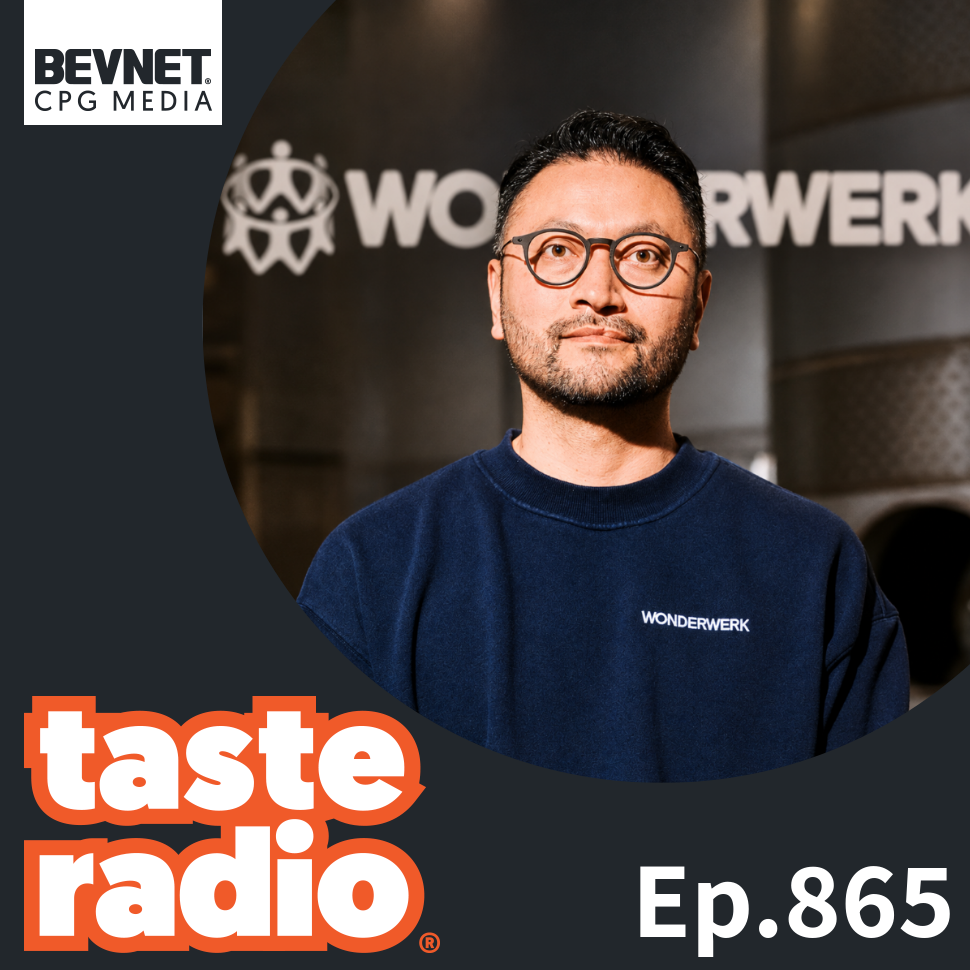
Hey folks, it's Ray with Taste Radio. Right now I'm supremely honored to be sitting down with Jeff Church and Matthew Postlethwaite, the co-founders and co-CEOs of Proda. Gentlemen, it's so great to see you, Jeff. You and I have known each other for some time. How are you? I'm great, Ray. How you doing?
Fantastic, Matthew. Good to see you as well. Good to be here. Thanks for having us, man. This is your first expo, west Matthew. This is not, I've been here about 10 years, but this is my first time bringing some type of product here. So 10 years. I didn't know that. Okay. Yeah. So you've been interested in CPG for some time?
Well, I have, but just as a, a consumer really. Not as a, as a someone building something in it. Now you're an entrepreneur in the thick of it. Visiting Colemans and doing interviews with Bev net over here. Yeah. So you, you're really, you're neck deep in this business now. Yeah. I mean, I, I learned from the best of this guy here, so yeah.
Jeff, I'll call you an industry legend 'cause uh, that's what you are not, I don't mean that you're an old guy. I'm just old, right? No, no, no, no. Not at all. But you. Are behind, uh, one of the great success stories of the past 15 years in Soja. Thank you. And obviously you've been following your career for some time and really excited to hear that you're getting back into the space with a brand like Proda.
I think intuitively our listeners might know exactly what this is, given the name, but. What is protege? Prote is a protein soda. It's a product that, uh, Matthew created about 18 months ago, actually for his grandmother, uh, who was having a hard time getting enough protein in her diet. So he wanted to create something that as we get older, it's really hard to get, you know, 60 grams of protein a day.
So we created it, you know, really for that. And I met him about, about eight months ago in July. And, um. I had wanted to get into this space for a long time instead of soda space, the new soda space. And actually when I started Soja, you know, I started it because I have four kids that are millennials and Gen Zers and I thought that they, I knew that they weren't gonna give Coke and Pepsi to their kids, but I missed it by about that much.
I mean, and Ali Pop and popular, like, were right there. So I wanted to get into it, but I didn't want to get into a prebiotic soda 'cause it's already been done. When I met Matt, he had created these great sodas, so, you know, we kind of, we decided to do it together. So Matt, I think the question that our audience would have, and it's a question that I remarkably have as well, which is why soda?
Because you know, if you were going to give your grandmother you wanted to supplement her diet with added protein, I don't know, I'm gonna be ageist here, say maybe milk or like added protein and milk or tea or something. But why soda? That's a good question. One. One. She loves soda so. That was a no brainer, but I've been in the face of different protein brands for the last six years in my career in Hollywood.
Perfect aminos, some other RTDs. And what I actually found was that I was sending her these really thick protein shakes and she couldn't consume them. She's 80, I think she's 82 years old now. Um. Sorry to I, she'll be fine. She's 82 years old and she just couldn't consume these really dense, thick shakes, or she couldn't take all the tablets like the perfect amino tablets that I was sending her.
She couldn't consume them all. And what I wanted to create was something that was refreshing and fun and enjoyable, that almost you can't taste any protein in it. And that's what we did. We created a product that there's virtually no taste of protein. Like I can't taste the protein in this. And it's just, we really lean on our pillows being refreshing and crable.
And being in the fitness space as well. Like I traded it for my grandma, but also for like, I was working out at the gym and I. It was like, ha, and I wanted something refreshing. And there's nothing on the market like this, certainly 18 months ago when I started the idea. And what people don't realize is that 60% of adult US consumers have to take some kind of protein enhancement or supplement, and 50% of adult consumers drink soda.
So there's this incredible white space that's out there with the clear protein. Now is, is opening up the doors for that. It didn't used to exist. It's always existed in the thicker shakes, but not in the clear proteins or waters is where you're seeing 'em now. Well, Matthew, you made a bold statement, which is that you can't taste the protein and that this is a refreshing soda.
Well, the proof is in the puddings, right? I'm gonna try some of this, right? And I'm gonna try the classic orange. This sounds great. Perfect. And what's great about protein in general, I think, is that any amount, any additional amount is probably good for you. But how do you know, how did you determine that 10 grams was the right for a 12 ounce can of soda?
Well, 10 grams is the minimum that you need in order to call it a good source of protein. Anything below that, it's 20% of your daily value amount. What we were specifically focusing on is getting a complete source of protein, so it's got all nine essential amino acids rather than a collagen, which is only three of your 9:00 AM amino acids.
This has like a complete protein, so it's a really good source in terms of like muscle protein synthesis in terms of like hitting a bunch of goals that you have in your life. So. Yeah, and I think the other interesting thing about what you're doing is that it is a complete beverage as opposed to one that is singularly focused on one thing.
I mean, in so many ways you are selling protein, soda, and protein is the lead. Yes. But it certainly sounds like this is more of a complete beverage than. You know, just a, again, one dimensional type of functionality meant would be really a refreshment, a craveable refreshment. So it's refreshment first and we want people to drink it and when they're done with it say, oh my gosh, there's protein in this.
You know, it was really good. 'cause most of the companies are the brands that are out with protein. First of all, they came out higher with higher protein levels and you just can't mask those levels. You know, properly, but at 10 grams you can mask it. But even the 10 grams, most of 'em aren't masking it. So if you want people to repeat, which is, you know, one of the most important metrics in all of CPG, they can't have that chalky taste.
Yeah. Yeah. It's excellent. It really is the orange flavor. It almost tastes like, not a classic orange, but like a classic orange creamsicle kind of flavor. Yeah. It has a little bit of creaminess to it, which is fantastic. The other question that is always important for an early stage founder to answer is, who was this for?
So I would think, you know, looking at the can that you could be marketing to a lot of different people. It doesn't say one particular type of consumer on it, but Jeff, you know, who would you expect to be drinking these products? I mean, it's gonna be a large swath of people, as you can imagine, but it's gonna be Gen Z up to, you know, 50-year-old, you know, type people.
We designed the can to be kind of equally split between male and female. It's not overly male, it's not overly female. And the honest answer is we don't know yet. So we'll get into it and we'll see what really resonates with people. The really good thing about it is that the science behind it and the protein, it is such a good source of protein.
It is a complete source, and that was really important for us to hit. And a lot of companies haven't hit that. The science behind it, quite like we have collagen, for example, isn't a complete, right. Yeah. Well, you touched on this. There's a lot of people getting into this new subcategory of protein sodas.
Now what? What do we see about 10 of them on the show floor here at Info West, and there's probably another 10 more in development. And it just seems like everyone's jumping into the pool. Differentiation is going to be critical and key refreshment is a great angle. I love that as one angle. Is there another way or are there additional ways that you can differentiate and help yourself stand out from the competition?
I think the, the first is the refreshment is really the, the focus of it. But we're gonna make it a fun brand. It's not about fitness first, it's about refreshment first. And a lot of the brands aren't doing that. And I think, you know, there's a lot of brands coming out, big categories, you know, pulling big, you know, lots of competitors and they'll probably be 40 or 50.
I remember when we started sja, you know, three years later there were 61 Cold Press juice brands pitching to Whole Foods for their reset. So that's okay because we need good competition. And a lot of 'em, you know, there'll be three or two or three winners and we're planning to be one of those winners.
Jeff, based on your experience, do you expect retail buyers are more inclined to replace what they currently have on shelf with protein sodas, or do you think there'll be incremental room added to coolers and ambient shelves for products like these? That's one of the great things about being in this space is they're expanding the space pretty dramatically.
Given the modern sodas where Poppy and Lollipop are, they're just, they're expanding from four foot sets to eight foot sets to 16 foot sets. 'cause what's happened is. With Coke and Pepsi taking interest in both Poppy and Ali Pop, they pretty much put that whole $40 billion soda category in play. As you know, energy drinks took 20 billion of it in the last 20 years, and now it's a situation where I think, you know, protein sodas and prebiotic sodas are gonna take a bunch of it.
I think in 10 years we'll look up at the soda industry. It'll be significantly different than it's today. I mean, it's already very different than it was five years ago, which is crazy to think about. I mean, the idea of soda and soda was that four letter word that nobody wanted to touch, and now all of a sudden everyone wants to be in the soda business, which is really interesting to think about.
Matthew, you said that this is about refreshment and you talked about how, you know this is not necessarily a fitness first beverage brand, but you're a strapping young man yourself, and I've seen your Instagram account and you know, a lot of it is about fitness and whatnot. So how do you incorporate.
Refreshment into what you do from a promotional standpoint? Yeah, I mean, I, I, I work out a lot, but, uh, so do I, can you tell you guys are basic? I couldn't tell who was who when you walked in, you know, it, it's not a case about hiding your away from like, who I am. Like I, I still love the fitness space and I'm still very much a part of it.
But where we're able to lean in is we're also, we're able to lean into this kind of duality of. The fitness space, but also the wellness space. And I think that's a perfect position for this. That's why we're zero sugar, but it's non caloric sweeteners we're using. It's a very natural product. There's a very big halo around it in terms of like it's, I think it's probably the best.
Protein soda. I mean, I would say that, but it's probably the best, healthiest protein soda on the market. That's my claim. And we're not running away from fitness either. One of our board members is a, an individual named Joey Gonzalez, and he is the former president of Barry's Bootcamp. You know, so we're focused on those channels for awareness drivers.
So they're important to us. And also like we're a little different and we are fun, but also our photography is a little bit more higher end and, and the whole branding ecosystem's gonna be hopefully a little disruptive. Yeah. I mean, when you launch on April 1st, is that when you're launching partner? Yeah.
I mean, what does that media blitz look like? What are you trying to get out there? What channels are you using to promote the launch? So we have a pretty big planned out strategy that expands a lot of D two C stuff. TikTok, we're gonna lean in pretty heavily on Instagram. Um, a lot of my. Followers, but also a lot of my community that have built up over the last six, seven years as a fitness.
And you have about a half a million follow? About half a million on Instagram. Yeah. Yeah. There were a lot of protein brands specifically used to come to me to kind of help them launch theirs. So this was kind of a natural fit for that. So we're gonna blast it out through all of my kind of community there.
But yeah, big TikTok strategy, big Amazon. Strategy and a big Instagram strategy as well as pr. We've got a great PR team working behind it. Fantastic. And brick and mortar will be, uh, sprouts. So we're launching Nationwide at Sprouts, um, in all 500 of their stores, and we're really excited about that. We're actually doing an exclusive with them, so we'll only be.
Sprouts for in brick and mortar retail for the first year. And we're doing that because I've done, I've made the mistake in my, in my career of going into 20,000 doors too fast that I did with Rowdy and, and I watched one by one by one. The doors come, come down because I didn't have the marketing budget to really, you know, cover that large number of doors.
So rather than going to, you know, 10 or 15 different retailers in the first year, we're gonna put all of our marketing dollars into. Into Sprouts and it's really making, building a proof of concept and we're getting dual placement both in ambient and in cold. So, you know, we we're really leaning and heavy with Sprouts.
I think Sprouts today is the, IS where Whole Foods and Target were maybe 10 or 15 years ago. They've become really the innovator in that. They're just a wonderful group of people to work with, really down to earth. Yeah, I would agree that Sprouts has become a very, very influential retailer, especially for emerging and early stage brands.
Are they carrying all five of your SKUs? Actually carrying seven. Um, seven. Seven, yep. And we'll have five in the cold, in the cold case, and seven in the ambient. I see five here. I don't see a, a Cola variety. Do you have a Cola product? Well, cola is interesting. That is on the horizon, but we, I think we're on our 453rd version of Cola and we haven't quite nailed it, but we will get there.
But. You do have a root beer though. We have root beer coming out, which is also challenging to make. But my favorite is the Shirley Temple that we have coming out. So there's a lot of Shirley Temples you see in in the modern sodas, but nothing in the protein space yet. I think it's probably one of my favorite drinks.
Shirley Temple. Yeah. Shirley Temple is, is definitely an on-trend flavor, especially for younger consumers. A golden apple is something I wouldn't expect, and I'm gonna try this one right now. I originally thought it was golden apricot, and I was like, oh wow, that sounds really interesting. But golden apple is that is.
I might take that idea for that flavor. It is really good. You know, an apple soda isn't necessarily the first thing you think of, but it's a really great tasting flavor and again, you don't really taste, I don't taste any of the protein. I don't know. What sweetener do you use for this? It's a combination of monk and stevia.
Okay. It tastes like a soda. Like that's why we didn't, didn't want to create like a sparkling water. We want to create like a full quality soda. Yeah. I mean, in terms of the. Sweetener deck you have, it's not coying or overly, you know. Sweet. It's, it's a, it's a good amount of sweetness that really works and isn't sort of in line with what you would expect out of a soda.
So we had sucralose in it in the beginning, but we really wanted to pivot into more of a natural sweetener. Yeah. And the suc sucralose has such extreme sweetness that, you know, you get very decadent in his sweetness, and it was just too much for what we wanted to do. Sucralose is a really, it's a sweetener that you can use to mask protein very well.
It's kind of the easy way to mask protein. And then when Jeff Church joined, he was really adamant, and I'm so glad he was to switch to the natural sweeteners and it was so hard to balance it and get a right level of sweetness. But we eventually, we, we cracked it and after then it was like. We changed every seven.
Well, that, that's Jeff, I would advise anyone listening not to use, I mean, I shouldn't say that, but like I, I would advise folks to consider natural sweeteners first. I mean, because I think at the end of the day, most consumers are going to, especially if you are in SPRs, or especially if you're looking at the natural set, I mean, a lot of those places aren't even going to accept products that they are made with sucralose.
So if you want to get into those retailers, if you feel like. Your brand is in line with what they're selling. Then you gotta, you gotta figure that out. It's the great thing about it, like with energy drinks, you, you kind of have a blind eye with sucralose, but with a, a soda and a better for use soda like this, I drink two or three of these at night because I have a sweet tooth and there's just that.
Halo around. Oh, I'm not consuming sucralose at night that I like. I don't want sucralose sat in my body while I'm sleeping. I think the other thing from a consumer standpoint, I was walk, I was gonna to work out a couple weeks ago and I walked by a little kid's birthday retail outlet that they were, they do birthday parties at, and that party hadn't started yet, but at every table there was, there was an op or a pop at every single table around, and I think.
Moms, I know my, my daughter has three kids and she gives it to her kids, you know? Totally. I mean, she's totally fine with it. 'cause it doesn't have any caffeine in it. Doesn't have anything bad in it. So it's just, I think there's a whole demographic that is opening up for moms with their kids for products like these, it's really surprising 'cause that hasn't been an initial target for us.
I think it's fair to say, but I think so far every person that we've given it to has also given it to their kids as well, so. Mm-hmm. Yeah, it's interesting learning. Well. You're gonna learn a lot more once the brand launches, and I think the goal for any entrepreneur is to minimize the amount of mistakes that you make in those first few months, in that first year.
It's difficult because sometimes those mistakes are just impossible to avoid. But Jeff, given your experience, you know, what do you see as the potential pitfalls, the biggest challenges? In the first six months that you're out there on the market. Well, given that you said, I've pretty much made every mistake that's known to man out there.
And fatal flaws. And fatal mistakes, you know, it's always about creating awareness, you know, getting, getting the awareness to get trial because if you create a good product and you get the trial, then you'll get the repeat. And if you get the repeat rate, then you're in a really good spot. I mean, I think we've put the variables in place here with a good product, a really good product, really good branding.
You know, a good team. I, I've been the guy out in front as you know, on a lot of brands, and I'm really happy being the guy out in behind. I, I work with Kim per and JR. And I love. Being the guy in the back doing the, you know, crunching the numbers and doing the strategy type stuff. And, you know, that's really the role I'm gonna have in here.
And he's gonna be the guy out in front. He can do that stuff. Um, he's, he's, he's used to doing it and I'm, I'd rather focus on, you know, the inner parts of the, the business. But, you know, always creating awareness is the biggest challenge. Getting people to try it, you know, making sure you have enough money.
You don't run outta money. You want that, you want your capital to last for at least 15 months that you first raised. We've raised $3 million, you know, for this. So we're again, leaning in mostly with marketing to, you know, to do that. We've got a really good team of people that, you know, I brought along the way from, you know, from my previous companies.
So, you know, I think, I think we've kind of set the ingredients in place and, you know, you gotta get a little lucky and you gotta get, you know, you gotta get a little bit of timing on your side. I would agree. It's tough because there's so many new beverage brands coming to market. There's so many existing ones, and to get someone to care about what you're doing is really difficult.
And you know, it does start with taste and getting liquid to lips to use that classic adage in the beverage industry. So, you know, demoing is going to be critical at Sprouts. What is your demo strategy look like? What is it going to look like? Yeah, we'll demo every other month. The top, you know, a hundred stores or so?
We'll, first of, we'll demo everyone. We're also gonna give every employee a, a free can. Kinda get them excited about it. We'll do that twice. Two free cans, I think. Yeah, we'll do that twice during the remainder of the year. Mm-hmm. Um, and then SPR is putting up a really large display for us, almost like a large end cap for three months.
So we'll have the product in there that we designed that's got a. Big, strong orange kind of, you know, attractive look to it. So between all those things, you know, we we're gonna test and learn. I've learned along the way. You don't wanna like say you're gonna do something forever in a certain way because it may not work in three months of something, and then we'll pivot if we need to.
But you always gotta be just continuously changing and continuously finding out what's gonna really resonate with that consumer and how are you gonna get 'em to pick up that can. Not to give away the secret sauce entirely, but how did you get Sprout so excited about the brand? I've had a long relationship with them.
You know, June's had a great relationship. 'em SU's had a great relationship with them, and I just feel like Whole Foods is, you know, maybe because of the Amazon, you know, acquisition, but it's just not. Quite the same. I know they're trying to do it, and Sprouts used to have a great program called Made To Matter.
It was a great program, but they kind of moved away from that. And now Spross has had this innovation forager set, you know, for some time where they bring emerging brands in and they give them three months of a trial. Mm-hmm. And then if they do well, then they, they graduate to the set. And that's a version of what we're doing here, but.
And really just a, you know, really great relationship with people. I think sometimes, you know, founders don't really take advantage of collaborating, you know, with retailers and it's kinda like going to your, your professor's office hours. Not many people really end up going to that, but if you collaborate with these retailers, they'll collaborate back.
Like they picked our two flavors, the root beer and the, and the Shirley Temple. They actually picked those flavors. Yeah, absolute. Because they fit in with their set Well, and just if you do that and they trust you. They wanna work with people that, you know, say, you know, do what they say they're gonna do.
Yeah. And I think they have some trust in, in me and obviously Matt's, you know, got a, got a strong background as well. And I think for Sprouts, they, they took the time to find the one that had the best halo around it. So the best tasting, but best quality, best macros. We've also got the three grams of fiber in there and there's nothing like it on the market.
So all of those things combined and the branding, they really wanted to lean in hard with it. Well, my last question, Matthew, is are you ready to start flying around the country doing demos and chicken hands and kissing babies and doing all that stuff? Oh yeah, he is doing it right now. I doing it right now.
Oh boy. Oh boy. Yeah. Well, sleeping two, three hours a night. Yeah. Well make sure that uh, you sleep as much as you can. Yeah, because it's not gonna end for a while. Being in the paper dentistry. It's a hundred yard sprint for a marathon. I thought acting was hard. This is another ball game. The CBG world like it is.
Tough. Everyone who have, who's come from another industry and entered CPG, I often ask, which is tougher. And immediately it's CCP g, CP G. Oh my gosh. This is just tough, tough business. But the rewards are pretty remarkable if you do succeed. And I think you've got a, a great chance to succeed with protest.
So thank you so much for taking the time to sit down with me today, and really excited to stay in touch and see what the future holds for Proda. Thank you, Ray. Thanks Ray. Thank you. Appreciate it.