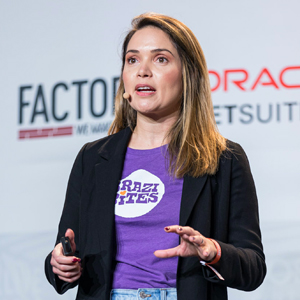
[00:00:10] Ray Latif: Hey folks, I'm Ray Latif and you're listening to the number one podcast for the food and beverage industry, Taste Radio. This episode features an interview When Junea Rocha, the co-founder Brazi Bites, a platform brand of better-for-you Latin-inspired foods. Just a reminder to our listeners, if you like what you hear on Taste Radio, please share the podcast with friends and colleagues. And of course, we would love it if you could review us on the Apple Podcasts app or your listening platform of choice. When Junea Rocha launched Brazi Bites in 2010, she thought its success would hinge upon being a first-to-market brand of Brazilian-inspired cheese bread. Fortunately, she was wrong. Although a similarly positioned brand debuted a few weeks before it, Brazi Bites has since developed into a household name in the freezer aisle. The brand gained national recognition and a surge in sales following a 2015 appearance on the ABC show Shark Tank. That year, annual sales grew from $1 million to $8 million and kicked off a massive retail expansion. The cheese spread is now sold at more than 16,000 stores nationwide, including those of Whole Foods, Target, Costco, Wegmans, Publix, Kroger and Sprouts. In 2018, investment firm San Francisco Equity Partners acquired a majority stake in Brazi Bites, after which Junea transitioned from CEO to CMO and helped direct the company's foray into several other food categories, including empanadas, pizza bites, and breakfast sandwiches, all of which are based on the company's original cheese bread dough. In the following interview, I spoke with Junea about how she got up to speed as a food entrepreneur and how she's utilizing her experience and resources to support early-stage Latin business owners. She also discussed how Brazi Bites managed challenges with production capacity following its appearance on Shark Tank. the company's thoughtful innovation strategy, and how she and her co-founder and husband, Cameron McMillan, evaluated potential Equity Partners and decided to sell a majority stake of their business. Hey, folks, it's Ray with Taste Radio. Right now, I'm honored to be sitting down When Junea Rocha, who is the co-founder of Brazi Bites. Junea, it's so great to see you.
[00:02:38] Junea Rocha: Great to see you, Ray. Excited to talk to you.
[00:02:41] Ray Latif: Yeah, absolutely. You know, I missed the opportunity to speak with you at Expo West 2022. You were there, I recall seeing you there with a pretty sizable team of folks. How many people are on your team at this point?
[00:02:55] Junea Rocha: Our company has about 20 people managing just, you know, the branding side of things, not the manufacturing, more in manufacturing, but about 20 people. We had a great time at Expo. It was good to be back on the floor there.
[00:03:08] Ray Latif: Yeah, absolutely. And you had plenty of food for people to Nosh on and enjoy, which I'm very appreciative of as well. I mentioned to you before we got on the mics that Brazi Bites is a top brand in my household. It's eaten often and stocked quite a bit in our freezers. So thank you for that. The cheese bread in particular is our number one go-to skew from Brazi Bites, but everything else is amazing too.
[00:03:34] Junea Rocha: Thank you, I appreciate that. I appreciate that.
[00:03:38] Ray Latif: Very exciting news for Brazi Bites. Earlier this week, you guys kicked off your Latino Entrepreneur Accelerator Program, kicked off on September 15th. Please tell our listeners a bit about the program and its mission.
[00:03:51] Junea Rocha: Yeah, thank you, Ray. I'm very excited about the accelerator we just launched. So it's called the Latino Entrepreneur Accelerator Program. And it's something that's really close to my heart that I'm passionate about. The program aims to lift Latino Entrepreneur during their most critical times in their journey. And it's doing those early stages. And I'm really passionate about giving back and sharing all the knowledge that I've gained over the last decade or so growing browser buys. And so this was an opportunity to organize this giving back in the form of accelerator. And so the way that it's going to kind of play out is Latino Entrepreneur is going to win a grant in the amount of $10,000. In addition to that, and I think more important than that, is going to be 12 weeks of mentorship directly with me and my amazing team here at Brasi of sales, ops, finance, and so whatever support Latino Entrepreneur needs. and so excited about the program. Applications are just open now in September. It's going to be open through, you know, it's also part of our Celebrating Latin Heritage Month that's happening right now. And that's an important time for us to like uplift our brand and other brands along with us. And the application is open now until the end of October.
[00:05:16] Ray Latif: Amazing stuff. $10,000 in 12 weeks of mentorship. I have a feeling you're going to get a lot of applications. And it's just one person who will receive the grant or is it a number of folks?
[00:05:28] Junea Rocha: So the way it's set up is that one company is going to receive the grant, but we're expecting a lot of applications. So we wanted to see how we could help more brands. And so there's this second tier for the finalists, where we're going to use our platform to bring awareness to their brand. So it's just a different way to support them as well. So about four companies total are going to be supported by Brazi in one way, shape, or form.
[00:05:55] Ray Latif: Very cool. And, um, you should be congratulated for this program. It sounds pretty amazing. And it sounds like a little benefit, uh, a bunch of folks in our industry. I have a feeling there wasn't something like, uh, the Accelerator Program that you're putting on when you launched Brazi Bites in 2010. Uh, I'm sure that would have been helpful, but, you know, talk about your process for educating yourself about the food business.
[00:06:20] Junea Rocha: Yeah, so I agree. I feel like there's so much to learn when you enter an industry, and there's so many passionate entrepreneurs with ideas, and it's like, how do I get started? A lot of the questions I get, it's like, I start telling about the brand, but people are like, no, no, no, but go back to that step one, go back to that. It's hard for people that are even outside of the industry coming in. It's like, but how about that very first step? when we started, there's a few things that helped us a great deal that I can go back to. So I live in Portland, Oregon, and this is where I found the brands, where the Brassie Brights headquarters is located today. And here in Portland, there is a big food community and a thriving ecosystem of food in general. So farmers markets really vibrant. There's a lot of agriculture here and there are some like key retailers that also play an important part in kind of growing the natural food ecosystem such as like New Seasons, Market of Choice and Whole Foods, the Northwest region. So there is a bit of an ecosystem. I think that that was very helpful. There's a couple of things that we did that were tangible back then. We needed to learn from the ground up, how do I launch my company? I had this idea, but what do I do next? We took a class in a community college here that's called Getting Your Recipe to Market. literally like the name just tells you pretty much, you know, what it means, but it goes about three months. And it just teaches you the ABCs of taking a recipe and putting it out in the market. And I'll sort of the things that you must know early on how to package UBC codes and stuff. And what's cool about this program is at the end of it, you get to pitch your product at that time was new seasons market. you know, big retailer in my industry. And, you know, it's kind of, you go from like knowing nothing to pitch to new seasons in 12 months. So that's kind of cool. So that program helped us a lot. We pitched to new seasons. There was another thing about it is that the winner would get placement. We pitched to new season at the time we did not win. And that time I was like, Oh my God, it's the end of this brand. we were barely getting started. But it wasn't. It was just the beginning. And we obviously later got got into into new seasons. And today they're wonderful partners. But that that's sort of like the sort of that helped and then began educating through just the food ecosystem, more in the local market, because we weren't ready to do trade shows yet early on. And so getting peers, I'm a huge believer on peer mentorship as Latino Entrepreneur, especially in the food industry, but just as a founder in general, because when you're going through the struggles of the first few years, Nobody in your circle of family and friends, if they're Latino Entrepreneur, are going to get what you're going through. So having peers that you can bounce off ideas and just acknowledge the struggles really helped us a great deal. And then as the brand grew and we kind of branched out of our region and started to go to Expo West, we built a network that became more national. And it was the friends that we were making on the floor that we would call up. And then so it became this thing. You're constantly learning, you're constantly asking, and you're trying to avoid big mistakes, and you're trying to just make the best choice that you can with the information you have on hand.
[00:09:57] Ray Latif: I think that's great advice. First of all, I love the idea of taking a class or some sort of course on how to bring your recipe to market. It feels like at least you get the basics of that part of the business. And then secondly, obviously building a peer network and talking to other entrepreneurs who have been where you were and been able to find their way into this industry is really important and to continue building that network along the way. You know, I've talked to a lot Latino Entrepreneur who talk about how difficult it is to bring a brand new concept to market, to bring a brand new idea to market. But you've talked about how that was an important part of your vision for the brand. You wanted to be the first market brand of Brazilian cheese bites. But little did you know, and probably surprising to our audience, there was already one available on the market when you launched. How did that affect your go-to-market strategy, your retail strategy?
[00:11:02] Junea Rocha: Early on, it affected much more in the local market. So the story kind of goes about this, right? We had the idea of bringing Brazilian cheese bread to market in a way that we believed sort of would have the most impact, but it was kind of like in the way that we believe the product should be consumed and the way that our household was eating products. Clean ingredients, best tasting, real ingredients, and just delightful, right? And then it would be branded in a way that Americans could understand, and it would be marketed in a way that would eventually lead to a national distributed product. So that vision was established early on. You know, when you're bringing an international product to a new market, there's many examples in the US. I mean, global products are popular. But there is a lot of nuance in the way that you brand and that you market the products and the way that the recipe is created. So anyway, while Brazilian cheese bread as a concept was not new, we had our own vision that was very different. And we felt like our vision had a shot of success. When we launched like right in the beginning, it turns out that we had a competitor in our local market that also thought that Brazilian cheese bread was a great idea. And so that was like challenging and it felt like a massive obstacle early on. And it really we had to dig deep and like we believe that we are different, we believe that we are adding value. And then we're going to kind of like figure our way our way out. The reality is because bra is so popular in south am It really is everywhere i sort of like internation farmers markets around t Because we want that product to be introduced more and we want it to be known the category. But of course we want Brazi Bites to be that brand that it is the known brand that has all the distribution that is in every store. And that's what the type of distribution we have today. And we've been able to build a brand that way. But yeah, it was quite like a shock, you know, launching the brand and thinking like you have this idea and then it's like the first door you start knocking. I remember the day going to like an event in the local market and then I see this other entrepreneur with a little cooler. And I was like, that looks like the cheese bread. I can't believe this. And it was, you know, one of the strategies was Outwork. You know, we hustled really hard for many years building Brazi Bites demos, you know, on the ground. The story that in our industry is, you know, all over it's, you're working 24 seven, you're doing all the jobs. Our story has a lot of parts like that. And part of that, it's like I'll work in the competition with that piece early on was out working. I wish I had a better advice in a magical way to tell other brands that there's an easy way to just do that. But it was about outworking. It was about outsmarting. It was about demoing more, telling their story better, pivoting more, trusting that recipe was better and all that good stuff. And eventually that competitor went out of business and we took off.
[00:14:24] Ray Latif: Well, it's never good to hear about a brand going out of business, but it's great to hear that you were able to outwork and out-hustle and out-think your competition. You know, on that note, I hear a lot about hard work. And, you know, I think there's different definitions. There's varying definitions of what that means, what that term means. What does hard work mean to you?
[00:14:45] Junea Rocha: For me, building Brazi, like it took like hard work meant truly hours of work. It took like every ounce of passion and energy and believing and also being smart, right? Cause you can work all the hours and, and working on, on something that's not productive. But for me, like building the brand, I like to talk about like our brand was building in phases. So the first five years were, on the ground, it was knocking on doors was full of rejection, it was just sort of like trying to explain the product and building and learning so much and having to change so quickly. And what that took was just like a lot of hours, a lot of determination, it was truly like nonstop. You know, for the first five years, the two of us founders, and trying to figure it out and making some mistakes. But for the most part, being smart, asking smart questions, pivoting quickly when things were not working. That to me, and I think building brands from the ground up from nothing requires that level of time and energy.
[00:16:02] Ray Latif: Part of that energy went toward producing your own products. I think this is a huge hurdle for early stage entrepreneurs is production. How do I make my product? Who's gonna make it for me? And early on, you were self-manufacturing. What are the benefits? What are some of the challenges of doing so?
[00:16:23] Junea Rocha: So I love that question because, you know, it's something we've been talking about again in this stage of the business and really digging into the pros and cons of the different dynamics of manufacturing because of all the supply chain issues that everyone's having and, you know, the tough last 12 months or so. For us, I think when you're looking at do I go self-manufacturing, do I go third party, there's a number of things that play a part. And I think one of the very important ones is what kind of product you're making and what kind of manufacturing capabilities are out there in the country to meet your need. Razerbytes is a brand that operates in the specialty frozen space. Okay, so think anytime there's a word specialty, or there is sort of a niche or something that you're inventing, something that's not automated. you're going to have a hard time beginning that company and going straight to a co-packing model. There's pros and cons to both, right? But for us, there were so many benefits in the early days to have our own manufacturing. The first one and most basic one, the company was too small. We did not have adequate volume to go to a co-packer and say, this is the demand for the year, do projections, negotiate on pricing. We weren't even in that neighborhood. We were pretty far from that. So we needed to learn. And we also needed to learn the manufacturing. We needed to create the manufacturing for the product, everything from the ground up. So we also were bootstrapping the business. So there was just a number of implications. There was only one path. It was to make your own. But because we weren't funded, we were bootstrapping. We started very small, and we stared steps. So we went from a shared commercial kitchen. So you're just paying by the hour. And so your cash out is very limited, just attached to your output. And then we start growing distribution a little bit and that we're like, OK, we need to hire a couple of employees. We move from that to a shared warehouse where four brands that were allergen friendly. So they're all gluten free. We could get the seal of the gluten free and we could hire our own employees and operate in a little corner. That was a great next step for the brand. And then we started growing like we need full-time production. We need more storage space. We went about building our own facility. So that was a bigger step for us. We built a facility. We had done a round of investment back then. We had a combination of loans and convertible notes and such for the brand. And we were able to build our facility. Then we began to scale. So I'll pause here to just talk about the benefits of that. You control your Brad Avery closely. You become very intimate with the manufacturing process. You become very intimate and close with all your suppliers, what it takes to do well. You're able to innovate very fast. You're able to do everything that you need for your sales and marketing efforts very fast. And that was really important at that moment in time. And so that was very beneficial. Cost control, just everything. Now, on the downside of that, manufacturing takes a lot of attention, and there is costs associated with that that can get out of hand. Because we build manufacturing sites for that appropriate time, we didn't have an issue with cost, but we had an issue with attention. you got to deal with hiring and employing and equipment and all the stuff that comes along with that. For that moment, it was very positive. We learned so much and became very intimate with the process. Now, fast forward, the brand explodes overnight, goes on Shark Tank. Everything changes. That model doesn't work anymore for that moment in time. It was boom. We kept seeing the writing on the wall because the brand was getting a lot of traction at that year. And we're like, ooh, this model is not going to you know, there was a capacity there and then there was the attention. We are founders running sales and everything's like, we have to do something. And so the co-packing model looked very appealing. And we were at that time where we could then go to a co-packer and say, this is how much it costs to make this product with this equipment. These are all the suppliers. This is the projection. So we were in a position to do that. And so that was the right move at that time. And then the company blows up demand overnight. We then now have a partner to support us with that effort and switch gears to become a more of a sales and marketing, you know, finance, brand growth organization.
[00:21:08] Brazi Bites: Guessing your margins? That's risky. Belay Financial gives CPG brands the clarity to scale smarter, faster, stronger. Get your free inventory ebook by texting TASTE to 55123 and start making data work for you. Vibrant Ingredients is the natural ingredient partner powering food and beverage innovation, delivering flavor, function, and protection through a science-backed portfolio. Vibrant delivers purpose-driven solutions that help brands create extraordinary experiences. Discover what's possible with Vibrant today. Visit VibrantIngredients.com.
[00:21:55] Ray Latif: Thank you for sharing the story behind the decision to start manufacturing on your own and then why you moved to co-packing. It'll be interesting to see if you decide to go back to that self-production model or at least adopt it as part of your manufacturing strategy. You expressed why that might be a good path for the company. At the same time, I'm thinking about the Shark Tank story. And as you mentioned, you guys were on Shark Tank and I've talked to other entrepreneurs who've been on the show and whether or not they received investment, one of the things that's tripped them up sometimes is having enough inventory on hand to meet the demand that comes from that show. You know, when you were on the show, did you realize how many people were gonna be buying your products? Did you have enough inventory to supply everyone?
[00:22:43] Junea Rocha: We understood the impact of the show back then, so it's important to note that we went into 2015 pre-streaming. It's like society has changed so much because now we're streaming, there's so many more options and nobody's watching live television. It seems like I'm talking about a different era, but it was not. Not that long ago, we were all watching live TV. So Shark Tank in 2015, not only everybody's watching live, but it's highly popular. Almost 10 million viewers every Sunday were sitting on their couch and watching the show. So we understood the impact of this show, but we did not understand. I guess I would say we thought we understood the impact of the show because we did a lot of research and talked Latino Entrepreneur. But no, we were totally unprepared because I don't think that you could prepare at that time with the infrastructure we had on hand. We were very small by nature. We were under a million dollars in sales. We had had some traction. We were in about 600 stores nationwide, 600 doors. So we had Whole Foods. We had some Kroger and Sprouts. So the brand was starting to get out there, but highly in the natural channel. But there were I think five of us in the office running the brand at that time. So we weren't prepared from like an office standpoint and production standpoint to handle that level of overnight success. It was awesome, right? So I mentioned this sort of viewership at that time. What was cool about our brand at that time is that we had been working really hard for five years and hustling and we knew we had something special in our hands. But the biggest challenge Latino Entrepreneur in our industry is that there's a lot of amazing products out there. And not everyone gets discovering time to create a viable business. So we knew the writing was on the wall for us because at some point you're going to run out of cash or you're growing, you know, at a pace where it's not as appealing and there's no investment money at that time. So there's all this dynamics of that moment that you need the money. And we knew we had something special. There were all the signs and we knew the cheese bread like deserved its moments. And the show gave the exposure that the brand needed at the perfect time. And the demand just came flooding. This, I never saw it again and I have rarely seen in our industry a product that's not sold in e-comm. It's sold in grocery stores because you're a frozen brand. Now we have e-comm and there's grocery delivery again. This is all new stuff, right? We did not have any of that. We had a store locator. And what that exposure did for us was the demand was so massive and it was so incredible. And people were so moved by learning about the company and wanting to try our products that they literally dropped everything the next day and drove to the nearest store. And we sold out nationwide. And we sold out for the next four months. There was a frenzy on the brand. We couldn't keep up with demand. But the brand went from under $1 million to over $8 million. And it would have gone even more. I mean, it was absurd.
[00:26:00] Ray Latif: Did you say it went from 1 to 8 million?
[00:26:03] Junea Rocha: Is that what you said? Yes, under 1 to over 8. And only because that's all we could make, physically make.
[00:26:10] Ray Latif: What was the timeframe for that? Was that within a year?
[00:26:12] Junea Rocha: It was less than a year. Wow. It was kind of the year that followed, right? So I'm giving you kind of annual revenue.
[00:26:19] Ray Latif: Yeah.
[00:26:20] Junea Rocha: were like the leading up. And I mean, this is position where we were, we couldn't keep up with the man. So imagine what it, what it was like, if we could, you know, all it was, it was head down and try to make as much product as we could to try to make sure that that consumer that was so interested in the brand was able to eat the product within that timeframe, because we knew once they ate it, then they would, you know, love the brand and be turning to a customer. And so it was like, let's go. It was amazing, it was awesome.
[00:26:51] Ray Latif: And that was just with one product line for so long, just with the Brazilian cheese bread. And in recent years, you've expanded the line to include a number of different products. You have many empanadas, you have pizza bites, you have breakfast sandwiches, and all of them are fantastic. Folks who are listening, If you haven't had a chance to try any of those products that I just mentioned, please go ahead and do so because they're fantastic. Let's talk about the timing for brand expansion, for looking at Brasibyte as a platform brand. How do you take into account both retailer needs and consumer trends, you know, when you're thinking about expanding the brand?
[00:27:33] Junea Rocha: So our brand, the Brasibyte brand, was sort of like a bit of a case study for focus in our industry. And sometimes that can be uncomfortable, but that's what worked for us for all kinds of reasons, including the fact that we had a very lean team and we both strapped for so long. But this is kind of how we grew, right? You talked about the cheese bread for just being the brand. Think about this, Ray, it was eight years of one single product line. Not one single flavor, not one single items queue, but one single product line. Because we felt like we were the best at it and then we could execute and there were much more doors to go get. And if we were laser focused on doing this one cheese bread really well, then we could create the brand from it. And so throughout those eight years, there were a few iterations of different flavors that came in and out of the picture. But this is like, this is what we do. As the brand grew and became much bigger, sort of this whole Shark Tank and demand stabilized for the cheese bread. We then had time to kind of start digging in and saying like, who is buying this product? Why is this brand resonating? What are true values? Because when you're growing a brand and you're like, I like this product, I believe in my recipe and my ingredients. you actually don't think about all this like sort of like things that like those big things like we didn't even have a mission and vision. The mission was make cheese bread.
[00:29:10] Ray Latif: mission.
[00:29:11] Junea Rocha: It was a good mission. It was awesome. But it was about the product. All this time I was telling you about the packaging and the messaging and the recipe. There was a mission and there was a vision there, but it wasn't structured. It was just like, we're going to get cheese bread, we're going to teach people how to eat, and we're going to pivot along the way and all that good stuff. So then we start, we build, start build a team that's brand stabilized. It became more of a business and we're like, okay, who are we? Like, why are people buying this? Why are people drawn to the brand? What has made us successful up until now? Then we started hearing from consumers too, like Brasi, what else you got going for me? I think our fans wanted more from the brands. And so we started hearing more, like, what else can you guys make? Can you make just different things? So there's this line of thought, it's like, can you just bring all these products from Brazil, just make all these things? Some of them don't align with our brand identity and what we want to do. And can you just become a gluten-free brand, and just because you're gluten-free, and just create all these gluten-free lines? So having to find who we are, what makes us special, then we kind of did a lot of inner work on that. And then from that, started creating new product lines. And we learned that Brazi Bites, at that point, could become a platform for better for you Latin-inspired foods that were absolutely delicious. And the main driver for the love of the brand turned out to be the taste, just the deliciousness. And all the values, all the things that we do every day, that we hold ourselves accountable are super important. But to the consumer, the number one, it's like you're delivering this thing that just blows me away. It's like the tagline that emerged at that point was, you have to have them. Because we started realizing that when people learn about the brand, the consumers would introduce the brand to a friend at a consumer show or in social media. And they were telling people, oh my god, you don't know what Brazi Bites? You have to have them. And we started seeing that. And then they were telling each other. And then we started seeing that in trade shows. A buyer from a store would bring their co-worker and be like, oh, my God, we are not carrying Brazi Bites, and you have to have them. So that became sort of the tagline. Then it was like about taste, but with our values intact. Then we defined what that was and begun to launch products that were thoughtful with that in mind. Another thing that we discover in that process of just like we love playing with products and what our consumers need and what the market needs and stuff, all of that is being played out. But the Cheddar Parm, our top-selling cheese bread, Ray, which you mentioned is the one favorite in your household, is a powerhouse for the brand. It's the traditional. And that item, we discovered that it's a vessel for many forms, and those forms can be just absolutely amazing. And so that item is sort of becoming this pocket for a number of innovations, including our most exciting one of the year, which is the Pizza Bites. And it's the one that has massive traction right now. And it turns out that that particular dough with, you know, fresh, better for you pizza flavors inside created this explosion of taste that is something that we're really excited about. And it's been really well received.
[00:32:42] When Junea: Do you want more repeat buyers on Amazon? Well, this free resource in collaboration with Straight Up Growth will help your brand turn first-time buyers into long-term subscribers. Download Winning the Repeat Purchase Game on Amazon now at Taste Radio slash SUG. That's Taste Radio slash S-U-G to start building retention-driven growth for your brand on Amazon. Scaling a beverage brand into major retail comes down to operational readiness. From packaging lead times to co-manufacturing strategy, the details can make or break a launch. In a new e-book in collaboration with Octopi and Asahi Beer USA, industry leaders share what they've learned in helping brands scale. Download it now at Taste Radio slash octopi.
[00:33:31] Ray Latif: You know, when you were thinking about extending the brand, did you have a roadmap in place or was a lot of the talk about brand expansion after the investment from San Francisco Equity Partners, which, you know, bought a majority stake in the company, I believe in 2018?
[00:33:51] Junea Rocha: before that deal that we made, that we structured the company to build the team and position for growth, we were beginning the studies around it. It was kind of like leading up to that, we had recognized the potential of the brand. We had grown quite significantly and we wanted, you know, we recognized that we needed to innovate and we started building a roadmap for the innovation, but it was sort of like, that grassroots way to sort of like what were consumers was the early days of understanding the brand. After we did the deal, one of our main objectives was to build a team to position for growth. During this process of building the team and getting an investment, we got much more organized about that. There was processes put in place with timelines. When you're a founder and you're growing at that scale, you're just sometimes showing up and you're getting through the day. You're putting down the fires, you're wearing so many hats. It's hard to pull your head up and get organized and build a roadmap for growth. So that's what we kind of did at that time is kind of pause and bring more resources so we weren't doing everything.
[00:35:08] Ray Latif: Yeah, your role changed as well. You changed roles from CEO to CMO. Can you talk about why that move was right for you and also right for the company?
[00:35:22] Junea Rocha: Ultimately, I was given the choice during the transaction with our partners, SFPP, and there was a lot of conversations around it. What are the founder roles moving forward? We knew we wanted to stay on. The deal was made and the investment was made to grow, so we were excited to stay on. But there were a lot of conversations about What does a team look like? What do you want to do? So I feel like I was put in a position that was a great position to be put in, which was like, what do you want to do? Like, what do you love about what you do? And what are some of the things that perhaps we should hire other people? So there was a moment and a time for those discussions, and it allowed me to kind of stop and think what I wanted to do. And part of that, I also, understood that, you know, post private equity, there's a lot more reporting involved. And they're in a bigger company was going to be built with a lot more team members, more staff to manage. And as I looked into that whole picture, and the founder and the founder story, and the fact that I ran sales for the company, sales and marketing for a decade, and so my knowledge of that piece and where I could add value the most, So it's a combination of those things and I felt like somebody was better positioned to run the overall enterprise and the reporting piece and building the team and and all of that kind of stuff and my skills would have better served and I would enjoy my day to day more. if I was in a role that was more focused on the branding side, on the consumer side, on the selling side. And I love that side, you know, I think part of the Browsebyte success is just listening to the consumer. I always tell my marketing team, because as a CMO, I oversee the marketing team, and I tell my team all the time, you know, the consumers are showing us the way. They're telling us what they think. They're telling us what to do next. They're even telling us what kind of content they want. Just listen, you know, and so like, I love that part. I love paying attention. I love our consumers. I think as a founder trying to build one bag moved out of the shelf every day, you know, we move millions of bags right now this year. But back then it was like every bag that moved, I was grateful and I still am. And I think I carry that sort of like hustle and how hard it was to drive demand. for those early years that I think I can add a lot of value having bringing that perspective to the table. And then sort of like how does that mesh with how I talk to my retailers and how I explain what my innovation is. And so I think that's where I bring value and that's what I love. And there's better people that can be doing the job, the important job of the CEO by a private equity run company.
[00:38:27] Ray Latif: I mean, that's a big decision to make, and it sounds like it's worked out. I mean, in the four years since, you know, San Francisco Equity Partners made the investment, the brand has continued to grow and expand. And it sounds like the partnership is a good one. You know, you talked earlier about how you built the company early on through loans and other forms of debt. This was, I think, the biggest amount of investment in the company until that point. Is that right?
[00:38:53] Junea Rocha: It was.
[00:38:53] Ray Latif: Yeah, it was. So how did you evaluate that opportunity? Because I'm sure there were other people knocking on your door, or at least there were other suitors for the brand. You know, how did you evaluate the opportunity that San Francisco Equity Partners brought to you guys?
[00:39:10] Junea Rocha: Up until that point, we had learned a lot about raising money and how to fund a business. So we had done all kinds of things. We had begun. We were by the way horrible at raising money in the early days. And I speak of that with pride because we got rejected by every investor angel in the early days. But you know what happened to us. We developed. We were so laser focused on growing the brands that we became bad. Not bad. We were a little bit delayed at raising money. You know how a lot of founders and companies just launch and they're really good at raising money, but they have no business. We were the opposite of that. We had a good business and we were building a good brand. So we got a lot of lessons on the raising money side because for years, nobody would give us a penny. It was painful. But then what, what that did is just to force us to keep learning. Like, why am I like the worst at raising money? And then we were seeing like other founders with products that were not getting any traction raising, you know, a million bucks or whatever the need was. But then that at some point, we're like, okay, we got to get better. And so we started learning all of the things and how to become, you know, fundraisers, the skill set as a founder, you do need, you need to tell your story, you need to understand the mechanism of raising. So we kind of like understood, you know, all the mechanisms and how to fund the business. And so when that deal came about, we were at a phase of the company where we were actually had become profitable. So that was very nice for that size. We had built a business that had consistent demands. but we were growing very fast and we had no team. We had four people and we had, you know, a ton of demand and we were just putting fires every single day. And so we did not position ourselves for growth. And then we look at all the consumer needs and the love for the brand and, you know, our belief that this brand is so much more and can be something really amazing and have much more reach through new products and so on. And so the way to execute on that vision was through a private equity deal. Because at that time, Cameron and I did not have the skill set to build a team and to just stop everything and like understand what it would take to restructure the business. Now living through it, you know, we understand what was done to get us here into position for growth, but we did not know at that time. And we are investors. We had some angels at that time that the group didn't know what needed to be done. So we felt like, okay, getting a deal with a private equity that can come in and sort of like help us grow this thing. And someone who believes in the brand, how do we get that deal done? We ran a process. We did have a lot of prospects at the time, but we wanted to run a process that was formal with a banker, that was organized, that throughout this process, we did a bunch of brand work and sort of like some visions for the brand, a lot of it on the financials and product side. So that was really helpful. And then we wanted a partner that was really aligned and understood the potential of the brand. And so while you have incomings and you know, a lot of the brands as you're getting traction, you start getting incoming calls and emails. there's different quality across the board and there's different knowledge. And so we wanted a certain type of structure and partnership. And SFPP was a partner that throughout this process, there was a lot of alignment. And there was a lot of they believe in the authenticity in the mission, you know, the idea of a Latin foods platform, and they had a track record of building authentic brands. So in the end, they got selected as the partners.
[00:43:01] Ray Latif: I like the way you put that. In the end, they got selected. You were not selected by them. They got selected by you. Junia, this has been such an amazing conversation. Thank you so much for taking the time to be with me today. I really appreciate it. And I think our audience is going to learn quite a bit from everything that you talked about today.
[00:43:19] Junea Rocha: Thank you, Ray. It was nice talking to you.
[00:43:21] Ray Latif: Thank you. That brings us to the end of this episode of Taste Radio. Thank you so much for listening. And thanks to our guest, Junea Rocha. As always, for questions, comments, ideas for future podcasts, please send us an email to ask at Taste Radio.com. On behalf of the entire Taste Radio team, thank you for listening.
[00:43:42] When Junea: And we'll talk to you next time.