[00:00:02] Ad Read: This episode of BevNET's Taste Radio is brought to you by Saffron Road. Saffron Road's global journey began Why The core belief that traditionally pure foods can be a safe medium to compassionately inspire and inclusively connect diverse cultures together. Saffron Road was founded to create premium quality halal foods that were widely accessible, but which also took the high road and didn't compromise by being better for the environment, better for the farmers, better for the animals, better for your health, and most of all, being better tasting.
[00:00:32] John Craven: Saffron Road never ever compromises quality, taste, or ingredients. Zero tolerance is the hallmark of Saffron Road's obsession for higher standards of excellence.
[00:00:41] Ad Read: So Carpe Diem. Join the culinary revolution on Saffron Road's journey to better world cuisines. For inspiration on ethical food adventures, visit Saffron Road. And now, Taste Radio.
[00:01:02] John Craven: Thanks for listening to BevNET's Taste Radio. I'm John Craven, and with me are Mike Schneider, Jon Landis, Carol Ortenburg, and Jeffrey Klineman. Ray Latif is off this week, so I hope my voice can sound half as cool as his here. Smooth as silk. We're recording from our studio here in Watertown, Massachusetts. And in this week's episode, we hear from Ryan Caldbeck, the CEO and co-founder of investment platform CircleUp, and we get his thoughts on what CPG companies should consider when raising capital. We also speak with Bruce Friedrich, the Executive Director of The Good Food Institute, a non-profit organization that supports investment in and the development of plant-based meat brands. And in this week's edition of Elevator Talk, we go back to the roots with Nansee Kim-Parker, the founder of Ute. an innovative tea brand. And just a reminder to our listeners, for questions, comments, ideas for future podcasts, please send an email to askatasteradio.com. I guess that's the end of my intro spiel here. So we're back. Yeah, thank you. I survived. Back from Expo West. I guess we should talk about that a little bit. Might as well, right? I guess. What else is there to talk about?
[00:02:12] Ad Read: Is that the elephant in the room?
[00:02:13] John Craven: Has everyone regained their voice? The cauliflower elephant? You know, we've done a lot of coverage on our respective sites here, BevNET, Nosh, and I think there's lots more to come, some videos, et cetera, et cetera. But since we're here talking on this podcast, you know, just want to ask you guys kind of what your big takeaways were from the show. I'm not going to ask that question of what your favorite product was, but. I don't know. How can we sum it up for the listeners?
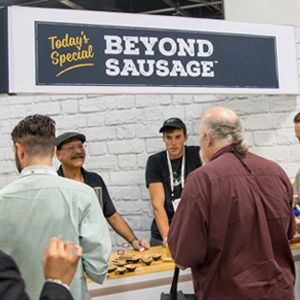
[00:02:43] Ad Read: I mean, I think we talked about it on the last episode a little bit. My big takeaway was just that everything is tasting so much better and that the brands are really focusing on that and that the community of technology and suppliers and everything is caught up to the demands of all these entrepreneurs to make these products actually taste good. So I'm really excited about all that. That was, you know, for me, I remember going to this show a few years ago and just trying things, you know, being like scared to try some of these things because they didn't, they were so bitter and they were so, you know, veggie forward. But, you know, I mean, Now you try that Beyond Meat sausage and it's like night and day compared to five years ago.
[00:03:22] John Craven: It sizzles.
[00:03:23] Ad Read: Yeah.
[00:03:24] John Craven: So, I mean, Jeff, you've been going to these shows for, I was going to say a long time, although the show's like, what, almost 40 years old. As far as a team, you've been going to it for a long time. What did you think? So I've been going to the show for about a dozen years. I can't remember when I didn't go. But I think that rather than looking at product, the big takeaway for me was The level of divide between many of those suppliers who are producing the products that Landis loves and their key retailer over so many years, Whole Foods Market. Now that's not to say that they aren't incredibly dependent on each other, but there's what some people are calling a 3% tax being levied on any supplier of significance into the Whole Foods grocery stream. And that's caused both pushback from the supply community as well as a chance to reassess where these products are actually reaching consumers. And I think that's the most important takeaway that we saw this year, which is this kind of cresting of a variety of retail outlets for the natural product industry. You had Kroger there stating that they sell 35% of the natural groceries in the country. You had Whole Foods continually fighting for share. You have insurgent platforms like Thrive Market, who are really dealing with a democratization of these kinds of product. You have the increase in private label. You have a growth of direct-to-consumer methods. And all of these things, I think, speak to a sort of fracturing of the traditional route to market for the natural products industry.
[00:05:43] Ad Read: That sounds like a good thing, though. I mean, it seems like there might be more opportunity and people are less dependent on a single partner to launch their brand.
[00:05:52] John Craven: Absolutely. And people are taking distributors out of the equation as well. And at the same time, it causes a lot of discomfort because there are people who feel that they've had the the game, the game has changed out. They had the playbook. It was just, it's kind of like in the tech space where you've got Apple and there's a one way in it's the walled garden. And then you've got sort of Android where you can kind of hack your way around and do it any way you want to. And this is kind of Android making its way to the market. Well, it's certainly different than a couple of years back where it seemed like anyone and everyone was creating a Whole Foods exclusive. And, you know, you would constantly hear that from all these startup brands, you know, where are you launching? Oh, we're in Whole Foods, you know, it might be. one or two stores here or there, but I certainly heard a lot less of that. Yeah. And also, where are you being distributed? Well, we're national in UNFI. Right. And that sort of relationship, and it's still super important. It is like you talk to these guys, you ask them, are you going to pay? And they'll say, well, we're going to push back, but we really do need to be there. We'll see how hard they push, I guess.
[00:07:10] Ryan Caldbeck: Something that I was really heartened to see in terms of growing opportunities was also an ongoing discussion around diversity in the industry and encouraging a more diverse set of individuals to come into leadership roles at food and beverage companies. There were a couple events to facilitate this. VMG sponsored a group of college students to come to Expo West and see what it was about. And it was exciting to see people sort of bringing this issue that's in a lot of other industries into natural products and discussing, you know, how do we change the industry?
[00:07:46] John Craven: There's a big push behind women this year. There were some networking events and Speaking with some of my sources, you're starting to see groups already echoing out of that, and we hope they can continue.
[00:08:01] Ryan Caldbeck: There was along those lines, you saw brands proudly proclaiming that they were women-owned businesses. I believe there was a panel as well that New Hope sponsored. So I think that movement is definitely gaining a lot of traction and I'm excited for the future as a woman.
[00:08:18] Ad Read: Thursday was buzzing too, International Women's Day and there were a lot of booths doing some cool stuff for that and I thought that that was awesome. Definitely.
[00:08:28] John Craven: Well, I gotta kick it over to Mike, who also, for our listeners, celebrated his one-year anniversary with BevNET at Expo West, which I guess that will forever be your work anniversary. Two Expos in one year. That's true. That's crazy. Impressive. You survived. So I guess what are your, you know, your, that was like your sophomore show here. So what were your thoughts? Much different than my first show where I was drinking from the fire hose and just meeting the industry. This one, I noticed there's a lot of, there were a lot of mature packages there, even in upstart brands. I mean, obviously as a person who's looking at branding and packaging and messaging, I was impressed by the number of brands who, You know, even some of the pre-launch brands looked like they were ready to go. As a marketing expert, do you think that having a slick package in place even before a product has really solved its maybe taste or function issues is the way to go? I always say that the formula for brand is great brand plus bad product equals hot mess. I think that, you know, if you have a great product, you should go for a great brand. And do you have to get all the kinks worked out of the product before you start to brand? No, because you need to build out that audience. You need to build out a good message. But I think the product is the most important thing in all cases. Yeah. And there are a lot of people looking to debut at this show, even if they're showing something that isn't quite complete. Yeah. And it's interesting to see that that model has even evolved as well, where you saw some products there that were rebranded and they had the rebranding there Why The Good brand. And that's usually a confusing play, but I think the way that some of them did it with like, clearly this is prototype, clearly this is the next generation with without just going all out next generation was good. And I saw some that went all out next generation and had The Good product there too as well. So there's a couple of different ways to play that game, but it's always going to be a thing that causes confusion. And it's always going to be that thing where you're like, I got to get the newest stuff out there. I got to get the newest stuff out there. So we understand that, you know, there's no right or wrong way to do it. You just have to make sure that you're clear in your communication. People are working with a lot of product types that they can continually iterate on. They can continually try and make the flavor better. I mean, certainly all the pea protein products. are constantly trying to get the formula right. That's one of the great things about working here is people will just come up to us and say, hey, we've got a couple of new things that we're trying or we've tweaked this or we've tweaked that or they'll come up to us with secret vials. We don't even know what's in it. And that's scary, but I like it. For some reason Craven makes me try those first. I'm not sure why. That's the rule. You go first. Well, what did you see at the show? You know, I wholeheartedly agree with everything you guys said. I mean, I think what's really interesting to me and, you know, like Jeff been going to this for, I don't know, a decade or whatever. You know, this show is just so massive and there's so many companies there and there's clearly so much investment money out there and companies are coming out of the gate stronger. You know, the one thing I sort of took away is that, you know, you kind of look at all this stuff and there's so many companies and there's still, I guess to some extent, you know, more or less the same, you know, shelf space out there. And, you know, I kind of wonder, you know, how many companies walk away from this Why The sense of like, you know, validation of their idea and their product because of, you know, people, I don't know, even like us or others that kind of look at these ideas and we're looking for innovation and things that are, you know, Interesting, interesting and cool, which doesn't necessarily mean that it is actually a viable idea. So I think that right now seems like a challenge because I don't want to call it like a bubble or gold rush, but I mean, it's a time where things are kind of sticking against the wall like. maybe a little longer, a little easier than they might have in the past, where, you know, it was a struggle to get a well-branded, well-packaged product. It is a great time for this channel fragmentation to happen, though, I mean, because it gives brands like that other opportunities beyond the playbook, the Whole Foods playbook. Yeah, people are able to hit singles and doubles without even going through brick and mortar, and that's pretty exciting, and they can find one or two channels or one or two regions to play in.
[00:12:48] Ad Read: I think it's a good question that you put, though, John. It's when is it too much? When are there too many brands and too many SKUs? The other thing I see is these brands are taking longer to fail, right? So 10 years ago, you'd have these people kind of flashing the pan, launching, and a couple of them sticking around and becoming larger companies. Now with more brands competing for the same amount of space and they're sticking around longer and new ones launching every day, when does it become too much to handle for?
[00:13:19] John Craven: It's a good question. It's like Why The tech bubble popped, you know, you'd see like, you know, investors putting money into some app that makes you feel like you're Gilligan from Gilligan's Island or something, you know, it's like there's all kinds of money. I know you, that was your favorite app, Jeff. You said a skipper. Um, I think some of it is also, you know, in The Good days you didn't have things like, you know, kickstarters and these other ways to raise money. So, you know, when I first started going to the show, like there was a lot more stuff that felt like fresh from the farmer's market where, you know, maybe at best they have like a mock-up or something of this thing they want to create, but they didn't yet have the capital to do it. Whereas now, you know, things get pretty far along before they've even actually tested the waters with real retail. So, you know, that's just kind of where the market's at. I mean, The Good news for all of this is that And as we've talked about repeatedly at our events and on our sites, the seas are changing and consumers are not going back to these old legacy brands that are just in decline. So there's clearly opportunity, but again, that doesn't mean there's opportunity for every last concept that people come up with. And getting back to your Jon Landis, how many times did you just say WTF? Did you say that a lot? A lot, yeah. So you're wondering if the bubble's going to pop.
[00:14:36] Ad Read: I don't know if I'm if I'm considering it a bubble or not, but I just definitely agree with John. You know, the shelf space isn't getting any larger. You know, e-commerce opportunities are probably allowing more of these niche products to reach those customers, not ice cream. Yeah. I mean, to reach the customers that really need them. Right. But Beyond Meat, it seems like there's going to have to be a little bit of a shakeout just in brick and mortar to find the shelf space for all this stuff.
[00:15:05] John Craven: Carol, you worked in retail and in marketing. How shelf-ready are many of these brands? And additionally, is the money helping them get there?
[00:15:17] Ryan Caldbeck: What's exciting and that what we were just talking about yesterday was that there are all these food tribes now. And so maybe they're not shelf ready for a giant retail store where you need to appeal to a wide swath of consumers. But if you're just trying to go after one specific food tribe, like a keto vegetarian consumer, you can Go online, set up a really strong e-commerce play and really target that shopper. And the investment dollars are helping with that. I see a lot of investors who recognize the fact that you can have a super strong direct-to-consumer e-commerce play. we just covered ancient nutrition last week, they crush it online. Retail is an emerging category for them, but online is where they've seen amazing success and they reaped the benefits of that strategy in this last round of investment.
[00:16:08] Ad Read: And Carol, what I found interesting from your article on ancient nutrition was that it was a group of over like a hundred investors to put together a hundred plus million dollars. And I think that that's also a trend that we're seeing with these investors coming together.
[00:16:22] John Craven: All right, guys. Well, I really appreciate the insight into Expo West. I guess we're already counting down until next year's show. You know, at that show, there were a lot of investors running around. I bumped into a ton of them. So I think it's pretty relevant that our first interview for today's episode is with Ryan Caldbeck, who is the CEO and co-founder of investment platform Circle Up. So let's hear the interview.
[00:16:47] Ryan Caldbeck: We are here at the Winter Fancy Food Show in San Francisco, and joining John and I is Ryan Caldbeck, who's the founder and CEO of Circle Up. Thanks so much for being with us.
[00:16:56] John Craven: Thank you both for having me.
[00:16:58] Ryan Caldbeck: I'm pretty sure most people have heard of Circle Up, but just in case we have some listeners that haven't, let's start off by what is Circle Up?
[00:17:04] John Craven: Sure. CircleUp is an investment platform powered by technology. So we've built a technology that we call Helio, which is a series of data sets and algorithms that go out into the world, find and then evaluate consumer companies. We then use that technology to invest into the companies, to connect the companies with other investors, or to loan them money.
[00:17:26] Ryan Caldbeck: Let's talk through what it was like founding CircleUp and what that process looked like. I can't imagine this was like an easy, you know, thing to just go out and do.
[00:17:36] John Craven: It was scary, to be frank. It was really scary. So my background is in consumer-focused private equity. I was working at Encore Consumer Capital at the time. I had, candidly, what I thought was an amazing job. I mean, just working with really smart, high integrity, hardworking people that I genuinely loved. And I was happy, but not as happy as I thought I could be in my life. And I wanted to build something that I thought could have a big impact on other people. And for me, my personal journey, that was creating something that I thought was filling a void. And so I did a lot of work with my then girlfriend, now wife, on what that meant to me and discovered that it was helping other people to achieve their dreams. And in the consumer space, as you both know really well, it's hard to get the capital and resources that you need to thrive. And so we designed Circle Up, built Circle Up to try and achieve that. And that is our mission today. And Circle Up's kind of evolved, like what Carol was talking about with Helio is a pretty new thing, right? So, kind of, you know, take us a little bit through the evolution of it. Sure. So, Helio's new in that we talk about it now. We've been working on it for years and years. So, from that standpoint, it is not new. Circle Up started publicly as a marketplace to connect brands with investors. Because in consumer, that's one of the key pain points. For companies less than $10 or $15 million in revenue, it's really hard to find the capital and resources that you need. We always had the thesis to use technology. We only began talking about it publicly in the last, call it, 18 months or so. And the idea came out of my experience in consumer private equity, where someone would hand me a list of companies my first six months out of business school with no data at all, no information, and I would have to make a decision. Do I want to go after that company, yes or no? And to be candid with you, it was not a hard job. There's no data. You're looking at a website. Is this company in Whole Foods, and did they just launch in Target? Let's go after them. Is that easy? More scientific.
[00:19:41] Ryan Caldbeck: Let's start a food company, John. I think we got this covered.
[00:19:43] John Craven: I'm going to put the mic down and go start one out. There's only so many pieces of information when you don't have data that you can go look at. Sure. I began to think, you know what, a monkey could do that, and that turned into a computer could do that. That led into what is now Helio. So we always had the thesis to build something that looked like Helio. What changed, what evolved, and we're really proud of this, is our original vision for Helio was to evaluate companies when they would apply to CircleUp. When we built that product, which was called the Classifier, We discovered that eight of the 10 data sets that were most predictive of a company's success were pieces of information that we did not need to ask for. That was a very big aha for us. So we then used that knowledge to be able to go out into the world and find these companies proactively, as opposed to waiting for them to come to us.
[00:20:31] Ryan Caldbeck: I think it's interesting that you launched the company without Helio, which is such a key core component of CircleUp now. What was it like having a business where there's part of it that you can't talk about or it's not yet there? How do you focus on what you do have while still thinking about the future at the same time?
[00:20:50] John Craven: It was scary. Every CEO, every founder I've ever talked to is scared and fearful if they're being honest. naive. But like, in my opinion, the fear was compounded because one of the core assets we were building, we couldn't talk about and celebrate. And so there was a couple year period where we would go out and have a perspective on a company and say, we really like And then we kind of fumble through that answer, right? And it's really hard to communicate what Helio is in a three-minute overview on a phone call. That was hard. We were making a bet. The bet that we were making was if Helio truly added value in the world and could create efficiency in this really opaque market of consumer, that that value to the world would be recognized eventually. But that was a big bet. So if I had to go back and redo it, I think I probably would have started talking about it much sooner, to be candid with you. That was probably a mistake. one of the reasons we didn't. First, we weren't sure they would work, just to be really transparent with everyone. We weren't sure it would work. But also, before you can demonstrate some of the things that it does, it looks like a pipe dream. It looks like most folks, I know, John, you have a CS background, but like a lot of people just would look at the concepts on a whiteboard and say, that doesn't even make sense. So we wanted to prove it out a bit before we began talking about it.
[00:22:20] Ryan Caldbeck: Is that where the fund fits into the overall strategy now? Is this a way to prove that Helio does work? And maybe for our listeners, you should start by telling them about the fund.
[00:22:32] John Craven: Sure, sure. So Circle Up has three business units, effectively. A marketplace, a series of equity funds, which I'll come back to. and a credit business. So the equity funds, the largest fund there that we just recently closed in November, is a $125 million fund. It's made up of institutional investors, so sovereign wealth funds, pensions, endowments, et cetera. And that fund uses Helio to find, to evaluate companies, and then invest in those companies. And to your point, Carol, it is a proof point for us. We're able to demonstrate the power of Helio more effectively because we can actually invest. And so that came out of our experience Why The marketplace. We were using Helio, finding companies that would go on to do extremely well. But the investors wouldn't always see what we saw. The investors on the marketplace, I mean. And so there are more than a few examples of companies that did, that went on to do exceptionally well, that didn't raise their entire round, in some cases didn't raise anything on Circle Up. In the last year and a half, two companies sold to top five consumer private equity firms in the country. Both those companies were on our site 18 months prior. And in both cases, they didn't raise a dime. That's not a humble brag, I want to be clear. That kept us up really late nights a lot. Like, what are we doing wrong? And part of the answer is when you hand the power of something like Helio to effectively someone who believes they're just a smarter stock picker. They tend to reject that, right? So an analogy we sometimes give is if you know about the public markets, there are quant hedge funds like AQR, Two Sigma, Renaissance Technologies. If you handed those algorithms to, let's say, a public stock broker, that public stock broker might just say, well, I've been doing this for 20 years. I'm just smarter. And so that's a hard thing to get some investors passed. So we think the combination of connecting investors, third party investors Why The companies directly, but also having this fund where we can kind of, you know, put our money where our mouths are, that's effective. So let's talk a little bit about the state of money and investing in this crazy food and beverage world here.
[00:24:43] Ryan Caldbeck: It's not a provocative topic. Nobody has opinions on this at all.
[00:24:46] John Craven: Yeah, nobody. I mean, I feel like I asked this question with like every investor you know, anyone who's remotely close to this at this point, you know, I guess just to ask it in an open-ended way, you know, what's your sort of take on the current kind of landscape and, you know, just the state of these industries? So, I could talk for a very long time. I know, it's not a short question, right?
[00:25:07] Ryan Caldbeck: Answer it in 30 seconds.
[00:25:08] John Craven: No, I'm kidding. So, I'll try to summarize it. I think there are some things that get me very excited about the state of investing into consumer and some things that get me very scared about the state of investing into consumer. What gets me excited is investors of all kinds are recognizing that consumer is a really interesting place to invest, and specifically that the tailwinds and the structural dynamics for early stage consumer companies, call it 1 to 15 million in revenue, are extremely attractive. They are eating share rapidly from every large company, which we can talk about at length. That attention did not exist when we started Circle Up five and a half years ago, and that's exciting for me to see. I think that that will benefit the entrepreneurs. Our mission, again, is to help entrepreneurs to thrive by giving them the capital and resources that they need, and that is more likely to happen if that attention is paid. There are also some things that scare me a lot. I see very large private equity funds trying to find ways to invest very small amounts of money into the companies. I also see technology VC funds trying to invest very large amounts of money. into these companies. Both of those things scare me a lot. The private equity firms that invest, the consumer entrepreneurs often don't recognize they will get close to zero attention from the $2 billion fund that just invested $10 million. They won't know their name. And that's a sad reality, but that is the reality. They need to go focus on, you know, that fund is gonna go focus on where they just wrote a $250 million check, not the $10 million check. So now you partnered with someone that's not gonna give you the support beyond capital, These entrepreneurs, every entrepreneur, including myself, you need things beyond just capital. In the case of tech VC firms, I candidly get terrified by what I see from some of the VC firms, including some ones that we know extremely well, because I see them write very large checks and put huge valuations on these companies. Having a huge valuation is really sexy to go talk about, you know, that night with your friends. When you're trying to raise your next round and your last round was, you know, 30 times revenue, you won't get it done. And when you realize you won't get it done, now you have to pair it back to five times revenue or four times revenue. The problem is suddenly there's a death spiral. The investors are mad at you. They may try to kick you out, which we've seen multiple times. They may prevent you from raising it down around, et cetera, et cetera. And we've seen more than a few companies either get killed or really good ideas, really good products not be as successful as they could be because of that dynamic.
[00:27:44] Ryan Caldbeck: It is interesting, you just talked about how there is so much capital, but yet there seems to be, according to CircleUp, still this lack of capital in certain places that result in you needing to create these offerings for companies. So how do those two things mesh together at all? It sounds like they're almost opposite forces.
[00:28:03] John Craven: It's a great question. And so, first of all, let's recognize we could be wrong. We could absolutely be wrong, but I'll answer it how we think about the world. There is a lot of capital that's trying to get access to this. The problem is that the structural, just economic barriers to those funds, those investors being successful are meaningful. So here's what I mean. In the technology world, there's pockets of innovation. So largely Sanford, the Bay Area, San Francisco and New York comprise 80 plus percent of where tech gets funded. there's geographic density. In the case of consumer, there's geographic dispersion. The companies are just as likely to be in LA, Portland, Austin, Boulder, et cetera. And because of that, it's really hard as a investor to find and evaluate companies in an efficient way. So what happens is, you know, the three of us go start a fund. It's a $75 million fund. That fund says, we're gonna focus on companies with one to 10 million in revenue, because that's where we see the hole. Then we go out, and it turns out that sending Carol across the country as a partner of the fund to go find these companies, it takes six months to find a company when you're flying across country. So you fly to Fancy Food in San Francisco, or you fly to Expo West in Baltimore. You learn about a company, then you fly to Omaha to go visit that company. When that company, Why The fund can then write a $25 million check, it's worth your time. Why The check ends up being $1 or $2 million, which is what these companies in this size range need, the math doesn't make any sense at all. And so there's structural barriers. So what we've seen over the last five, 10 years is that A number of funds have come up saying, we're going to focus on this size range. We're going to focus on 1 to 10, 1 to $15 million revenue companies. In every single case, they start by doing that. Six, 12, 18 months later, they say, you know what? We're going to move up market. We're going to do these larger companies we can write larger checks into. Because then when we spend six months sourcing a deal, that extra time can be paid off because we wrote a $10, $15 million check. One issue that we see with sometimes these VC firms or private equity firms, larger private equity firms writing checks into these companies, is that they put pressure on the companies to grow at an unnatural rate. When a Sand Hill Road VC firm gives you $25 million to grow your business, as sexy as that sounds, they expect you to grow your business far in excess of anything that your peers are going to be able to do. In consumer, one of the challenges there is that that often leads the entrepreneur to say, okay, let's ramp up marketing. Let's make sure we go get, you know, in publications, let's get it in Project Nosh, et cetera, et cetera. And that's helpful, but it is not sufficient. You need a product that is unique. And so what that money is doing is it's short-circuiting a natural process in consumer of an entrepreneur iterating on their product, whether it's through farmers markets or listening to feedback from a buyer, whatever it is, but developing a product and iterating on over the course of not just six months, but a couple of years to refine that product and the packaging around it. Until that's done effectively, dumping marketing dollars onto the company just brings more people in to try a subpar product.
[00:31:06] Food Show: Right.
[00:31:07] John Craven: And so we see that problem today where we'll see marketing budgets that are astronomical, but then you dig into the data and the consumers aren't interested in continuing to buy the products. It's kind of a subpar experience. That's also what scares me about that. Well, I mean, it seems like there's also this and, you know, these things are hand in hand, but there is this sort of, you know, I assume interest from the money because companies are getting acquired at, you know, earlier stages than they might have you know, 10 years ago or something like that. So, you know, you could look at something like an RX bar that's, you know, a fairly young company, right? Yep. Grew really fast and sold, right? Yep. I guess, you know... But RX tweaked their products a number of times. They tweaked their packaging very importantly. They did, but over a short period of time.
[00:31:49] Taste Radio: Fair. So... Yep. That's right.
[00:31:51] John Craven: So I guess my follow-on kind of question to that is, you know, do you think that we're sort of in a, you know, just totally toxic kind of period where There's tremendous growth, but I mean, it seems like people are very focused on short-term rather than long-term, right? That, I think, is the key point. There are investors that are focused very much on the short-term growth. Can I build this business and flip it in two to four years because our XBAR did? And that is scary. Those investors have tended to lump into either the kind of tech VC market or, you know, late stage buyout private equity firms that are carving out a small portion to invest in these companies and want to see quick wins relatively quickly. So that's a scary proposition. There are also investors and board members and advisors and team members that want to build something that matters for the world. Want to create a product that's filling a hole that the consumer cares about. And those investors and team members, et cetera, are the ones that I think will build the enduring brands that create real value. So as an entrepreneur, I don't know where this fits in the mix for, you know, what Circle Up offers, but how do you help an entrepreneur kind of find those people or maybe at least get proper grounding in reality of like what they should be focusing on? It's a great question. So there's an answer that I would give kind of in a 30-second soundbite on this podcast, and then there's a longer answer that takes more time to explain in person or on the phone to an entrepreneur. My answer on the podcast is try to think about the incentives of the investor or the partner that you're working with. If they're used to flipping an investment in two or three years as a tech VC firm, or if they're writing a $10 million check out of a $2 billion fund, they have different incentives than when there's, you know, a group like ACG or Kavu, which has done extremely well, and it's just a more important investment for them. Those are the investors where you can see it as a percentage of their total assets under management. You can see that as where they spend their time. You could see to that on who sits on the board. All of those things matter. So that's where I would kind of start. It's my kind of 80-20 answer on how an entrepreneur would be able to figure out who to work with. Another cut on this is ask the investor, ask the board member, who else have you worked with that looks like me? Just leave it open-ended on that. And they may talk about other food companies, but that food company might be a $500 million company. Or they might talk about other food companies in the same channels that have a similar growth strategy and were the same size. And when you can drill down on who else they've worked with that has kind of similar growth drivers of your business, you'll find an investor or a partner that's right for you.
[00:34:38] Ryan Caldbeck: At CircleUp, you vet who's allowed to be on your marketplace. Do you vet the investor side as well? Are there investors that you say, look, I'm sorry, you're just not a good fit, or we don't really agree Why The way you're investing, you know, your investment thesis and strategy?
[00:34:54] John Craven: Absolutely. Yeah, we do that all the time. And there's different themes on why we'll kick an investor out. It might be because we've consistently heard negative things about them from entrepreneurs. We poll our entrepreneurs a lot. So we recently came out with, as you both know, a list of what we call consumer catalysts, right? We poll entrepreneurs to hear who do they really love in this space, whether it's an investor, in this case, as we're talking about, Carol, or a reporter or whoever it is. You guys like Jeffrey Klineman a lot. We do, we do. And we like, we love both of you as well. So we poll them, we can also see their activity. And so we'll sometimes see an entrepreneur or a investor that'll give a term sheet, sign up a company to a term sheet, and then change the terms. Right? We see that information. And that's powerful, because in this opaque market of private equity, It just kills me. But companies don't talk about that. There's a stigma to having a broken term sheet. That broken term sheet can kill a company. And the private equity firm knows that. There are some private equity firms, very well-known ones, that will put forward a term sheet Why The expectation that they're going to change that later, knowing that the CEO can't back out of the deal because they had already churned off all the other investors in the process. And if they try to turn it back on now, they'll be wondering, well, what does that private equity firm think? Why did that private equity firm back away, right? And that's a really hard place to be. So when we see that kind of thing, we kick investors out.
[00:36:19] Ryan Caldbeck: I think these are all amazing discussion points that entrepreneurs, investors really need to take a hard look at themselves and how they approach investing or Why The're looking for in a partner. I want to turn to something a little fun, Helio. If Helio was a person, an investor, what would Helio be like? How would you describe them? Are they really data-driven? Are Why The one everybody thinks is the life of the party?
[00:36:48] John Craven: Helio would be extraordinarily data-driven, would not be swayed by bias, by human bias, and would be a very interesting person to talk to in the corner of the party, but would not be the person in the middle of the party shouting or particularly funny. So more like the most interesting man in the world or whatever.
[00:37:09] Ryan Caldbeck: There we go.
[00:37:11] John Craven: Perfect. Well, hey, Ryan, thanks a lot for spending time with us here and appreciate all the insight. Thank you both so much. And thank you also for what you're doing for the community, helping to spread transparency in this market, I just think is so important. So thank you both. Appreciate that.
[00:37:24] Ryan Caldbeck: Thank you.
[00:37:25] John Craven: Thanks. All right, that was some pretty great stuff from Ryan. Mike, what do you think? We can say it as many times as we want, but you can't hear enough times from an investor how to work with an investor. And I think some of the things that he said were, I think some of the insights that he gave brands there were awesome. Like, ask them, who have you worked with who's like me? I mean, that one, and just wait and find out if you are the right fit for them. Because it's so important to know who you're taking money from and to find the right kind of partner for you. whether it's a circle up or whether it's private equity or debt or whatever it is you need, you have to understand who you're working with and what kind of value add they're bringing, if any. Yeah, I think that point about, you know, asking, you know, Why The've worked for that's similar to them is particularly important and one that a lot of times seems overlooked. Like, you know, entrepreneurs are like, oh, wow, they worked with such and such company that was big and successful. Doesn't necessarily mean that they're going to be the right fit for you. And sometimes it's like, hey, I got the money, you know, I got, and, and you, you don't, you don't pay attention to all the things that come with that. And being careful to dot those I's and cross those T's as you go into a partnership is really important. And I think There's a lot of excitement, especially when it comes to starting your first company. You have to slow yourself down and make sure you understand who you're working with. And yet, the Circle Up initial platform is really geared toward pulling in a lot of the money that's kind of sloshing around with high net worth individuals and people who might be experienced in the industry but don't necessarily want to apply themselves as value added investors. I think that speaks to the importance of the crowd as a marketing tool. as well as a fundraising opportunity.
[00:39:18] Ad Read: And of course, there's going to be operators out there who will be successful just Why The capital they, you know, they have the knowledge and the network to succeed without the value add. But, you know, I mean, we've been talking about it for a long time, all this tech money flooding into CPG food and beverage. Some of this tech money might not have as close an understanding on these business models. But then again, CPG is also starting to techify. I mean, with all this direct-to-consumer and e-commerce and all the data that they're collecting, there might be, for your business model, a lot of value in, you know, bringing in someone from the tech space.
[00:39:54] John Craven: And then obviously, you know, you look at this show and there's, you know, so many new companies. I mean, there's obviously a lot of people coming into this space from the outside. So I think, you know, what he's saying is definitely, you know, great advice for anyone who's, maybe you have experience with investors elsewhere, just not in this space.
[00:40:13] Ryan Caldbeck: I saw Jessica Simpson walking Expo West. Is she going to be an investor?
[00:40:19] John Craven: She's more of a tech investor.
[00:40:21] Ryan Caldbeck: But I mean, I do. I do think we have a luxury here in that, look, we know how hard it is for brands to raise capital, and we know that this is something that they're grinding at every single day. And we recognize that while choosing your investor and being smart about where you take your capital is always a wise decision, it's not an easy process. And I think Circle Up does aim to solve some of those pain points that brands have.
[00:40:50] John Craven: Awesome. Well, great insight. And thanks again to Ryan for sitting down with Carol and I for the interview. All right, so now let's talk about another topic that we never ever talk about here on the podcast. That's sarcasm in case you didn't pick that up. It's plant-based meat and where that category is headed. One person who has a lot of perspective on the topic is Bruce Friedrich from The Good Food Institute. I have to ask, Jeff, what is The Good Food Institute and why did you want to sit down with Bruce? Well, the reason that Carol and I sat down with Bruce wasn't just because they're investing in technology and plant-based meat, but it's actually in some ways I'd say a return to the political roots of the health and wellness and natural food space of 40 or 50 years ago. This is a mission-driven organization and one that puts funds together behind technological innovation in the plant-based or as they call it, clean meat sectors. And it was really refreshing to speak to someone who's coming to the table from a grounding of belief and responsibility while still recognizing just how wild some of the people who continue to push forward in the industry can be. All right. Well, let's hear the interview.
[00:42:28] Ryan Caldbeck: Alright, today we are in San Francisco at the Winter Fancy Food Show, and I am joined by Bruce Friedrich of The Good Food Institute and Jeffrey Klineman. Bruce, thanks so much for being with us here today.
[00:42:43] The Good: I'm delighted to be here. Thanks for inviting me.
[00:42:45] Ryan Caldbeck: How's the show going for both of you?
[00:42:47] The Good: I think it's going fantastically well. It's just really exciting to see so many people so enthused about food. And some of the booths have really innovative products that I think are going to do a lot of good in the world. So it's really a lot of fun. I'm really enjoying it except for the podcasting aspect.
[00:43:07] Ryan Caldbeck: Always such a bright, positive star, Jeff.
[00:43:10] John Craven: The podcast is the best part, man. I am here because I'm super interested in ethical treatment of plants and animals.
[00:43:22] The Good: All right, that's exciting.
[00:43:23] John Craven: And I'm also, I love coming to these shows because you see the many ways that the business is expanding and the ways that different philosophies and ways of addressing food are turned into really premium experiences. And I know that that's one of the things that The Good Food Institute has been investing behind.
[00:43:47] The Good: Yeah, we're super excited by all of the growth and especially the alternative protein space. And there are some really interesting and innovative companies here. So, a company called Good Catch is here offering a wide variety of plant-based seafoods. There's another, New Wave Foods, which is doing plant-based shrimp. A bunch of plant-based dairy companies like Kite Hill and Follow Your Heart and Miyoko's Kitchen. It's just really neat to see all of these people who are basically using food to improve the world, create products that are better for the environment, better for sustainability, better for animals, better for our health. So, it's really, it's a lot of fun.
[00:44:21] John Craven: Now, you didn't just stumble on some of these brands. In fact, you are one of the key financial backers, or some of the organizations you work with are some of the key financial backers for these brands. So, can you give us a little bit of the thought behind launching these products?
[00:44:41] The Good: Sure, so The Good Food Institute is a 501c3 non-profit organization and we do a wide variety of work on the science of plant-based alternatives and the science of clean meat alternatives. Clean meat is actually growing meat but directly from cells, so bypassing the animal. And among the various things that we do, our scientific team and our innovation team We actually do start companies, so we figure out white space where we think a company should exist and doesn't at the moment. And we also, Why The companies we're excited about, introduce them to venture capital funds. So we have really good ties. Our scientific team, in particular, has really good ties with a lot of the largest VCs, as well as most of the big strategic investor food companies. So those are some of the things that we facilitate. And yeah, the companies that I just ticked off are here, and we have done quite a lot of work with all five of them.
[00:45:29] John Craven: And are you an advisor, board member, are you a partner in some of these funds, or how's that work?
[00:45:37] The Good: No, I don't have any vested financial interest in any of these funds. I am co-trustee of a venture capital fund called New Crop Capital, and they are invested in some of these funds, but that's sort of an odd venture capital fund in that there are no LPs and there's no profit that's going to be made by anybody. All of the profit that comes out of New Crop Capital, all of it will go to basically back into mission-related nonprofit organizations, including the nonprofit that I oversee, that I'm the Executive Director of, The Good Food Institute.
[00:46:06] John Craven: Certainly, certainly. So it's a 501c3 that's set up to grow companies to further the mission that you're working on.
[00:46:17] The Good: Yeah, we grow the entire space. So we have a scientific team that's publishing all kinds of open access documentation to help anybody who wants to move into this space. We have an innovation team that does similar work. We have a lobbyist, and basically the lobbyist is focused on trying to get money from the government for plant-based meat and clean meat research. We do work at the regulatory space, both to level the playing field for plant-based products and to figure out a clear regulatory pathway forward for clean meat products. kind of anything we can think of to raise the entire tide of the plant-based alternatives and the clean meat alternatives to industrial animal agriculture.
[00:46:53] John Craven: One of the things that I've found most interesting in sort of reading up on your profile, though, is that you've come to this highly technical, highly scientific, highly regulatory, and highly financial post almost from a religious calling.
[00:47:13] The Good: Oh, it is for me a total, I mean, it is literally a religious calling, so.
[00:47:17] John Craven: Let's talk about how that path took you here.
[00:47:21] The Good: Sure. So a whole bunch of years ago, I adopted a plant-based diet, and it had to do with my Roman Catholicism, so literally religious. And it just had to do with looking at the fact that there are 800 million people in the world who are starving to death. We are polluting the world in a variety of ways, including through industrial animal agriculture. So the meat industry causes more climate change. than all of the transportation sector combined, all the planes, all the trains, all the trucks, all the everything. And industrial animal agriculture causes a lot of harm to animals, and it causes a lot of harm to human beings. So for a long time, I was working in the nonprofit space, focused on basically trying to convince people to consume fewer animal products. And then we saw what happened with Beyond Meat, with Impossible Foods, with Hampton Creek. And these are companies that are creating alternatives that are designed to compete with industrial animal agriculture, but not by guilting anybody. They're designed to compete with animal agriculture by creating awesome products that taste fantastic, that are reasonably priced, that are easy to find. And a few years back, myself and a group of other people thought, you know, that's a better way to displace animal agriculture. Look what happened with plant-based milk. It went from like zero to 10% of the milk category, not because anybody has ethical concerns about you know, cows, it's because they're creating really tasty products that are reasonably priced that you can find in your local grocery store. So we want to do that with alternatives to industrially produced meat.
[00:48:44] John Craven: So can you roll it back just a moment, though? We kind of elided a little bit of the Roman Catholic root of vegetarianism, the basis for your own personal adoption and how religion played a role in that calling. So I certainly have shared stakes with many a Roman Catholic. Sure. So how does one lead to the next?
[00:49:13] The Good: Yeah, so I mean, according to the Bible, the earth is on loan to us. And there's an awful lot in the Bible that says we should The Good stewards of the earth around us. And yet, the animal agriculture industry, according to the United Nations, they wrote a more than 400-page report. They're agricultural scientists. And they say no matter what environmental issue you're looking at, from the smallest and most local to the largest and most global, everything from loss of biodiversity to water use to water pollution to soil desertification, To climate change, animal agriculture is one of the top contributors. One of the key issues in the Bible is how we treat the least among us. And as I was mentioning, 800 million people are starving, even as we grow massive amounts of crops to feed them to farm animals, which entrenches global poverty. One of the key principles of the Bible is mercy. including mercy for animals. The righteous person has regard for the life of his beast. So whether you're looking at environmental issues, or you're looking at sustainability in the global poor, feeding the poor, or you're looking at the issue of compassion for animals, I mean, it seems to me, and, you know, I don't want to tell anybody else how to interpret the Scriptures, but it seems to me that one of the things we should be doing as people of faith is making choices that are kind, making choices that are not, you know, trotting over the earth in combat booths. making choices that don't cause people to starve. That for me is a part of my faith. And that's what led me to become a vegan. And then how do I sort of move the world in that direction? It seems to me that talking about that doesn't do it that well. So telling other people that they should do what I'm doing doesn't, you know, work particularly well. But creating products that people want to buy, you know, basically taking what happened with plant-based milk and extending that to the other products, creating products that actually compete Why The products of industrial animal agriculture, you know, we can do a lot of Good Food the Earth, for the global poor, for animals.
[00:51:00] John Craven: Do you find it challenging to create coalitions with some of the more progressive groups that are also involved in the vegan movement, knowing where you're coming to this from?
[00:51:20] The Good: It really depends. We've encountered quite a bit of support from people in the vegan movement. People are excited about the idea of creating better products. There are a lot of people who are very excited about Beyond Meat. They're excited about Impossible Foods. They're excited about Gardein, about Hampton Creek. And the idea of creating more companies that are basically, you know, people can take these products home to their meeting family and friends and say, I'm not asking you to change your ethical belief system, just taste this product. Isn't it absolutely fantastic? Isn't this something that you want to put into the rotation? And if we convince, you know, ten people to eat half as much meat, that's the same as convincing five people to eat no meat. But maybe it's going to be easier to convince ten people to eat half as much meat, especially if you've got the products that they can eat instead without any sacrifice at all.
[00:52:07] John Craven: And you have to have some fairly interesting conversations, however, with people who are coming to it from a much more politically progressive agenda.
[00:52:20] The Good: Yeah, I mean, I had an op-ed in the Wall Street Journal after Tyson Foods launched their venture capital fund, and their very first venture capital investment was in Beyond Meat. And there were a fair number of vegans who like just went apeshit on Ethan Brown and on Beyond Meat on the Beyond Meat blog. And I wrote an op-ed for the Wall Street Journal that just basically said, who better to help us with marketing plant-based meat? Who better to make plant-based chicken? Who better to make clean meat chicken than Tyson Foods? So, we are very excited to have companies like Tyson and Cargill and other strategic investors helping the plant-based companies and the clean meat companies. And to the degree they see this as opportunity and not as threat, that's going to make the transition a heck of a lot easier. But it does make for some interesting conversations with other progressives.
[00:53:08] Ryan Caldbeck: And that was one of the things I wanted to touch upon is because we've seen other deals recently with vegan or vegetarian companies, such as Field Roast and Sweet Earth, where there has been this backlash afterwards towards the company that they're, you know, selling out or now aligned with a meat company. And I was curious, you know, are there things you think that these companies can be doing better when they make these announcements to reassure their customers? Or is there any way that they could try to convey that message that you did in your op-ed to consumers?
[00:53:41] The Good: I think there are just going to be some people who have a very black and white view of the world. I think there are going to be some people for Why The idea of veganism is like a sort of moral superiority contest. And I suspect that those people- It's not a moral superiority contest. It sure shouldn't be. It shouldn't be. We want the tent to be as big as possible and as welcoming as possible. But yeah, I mean, there certainly are an awful lot of, you know, vegans have over time given ourselves a pretty bad name in a lot of different circumstances. And if you're going to go into like the highest welfare grocery store or the highest welfare restaurant and start screaming at people about eating meat, that's going to make vegans look bad. And those people are unlikely to get excited about even things that are worthy of being excited about. They don't necessarily want to make a broader movement a bigger tent. They want to feel morally superior to other people. And, you know, that's too bad. I'm not sure there's much we can do about that. I feel like Maple Leaf when they bought Light Life and Field Roast, they did it in a really nice way. I feel like Tyson when they invested in Beyond Meat and Cargill when they invested in Memphis Meats. I think the Why The messaged that was exactly right. A lot of people got upset, but a lot of people just like to get upset.
[00:54:53] John Craven: And the best message is always going to be the product, right?
[00:54:55] The Good: I'm into that. Yeah, absolutely.
[00:54:57] John Craven: I mean, as my place in the tent, of course, is as a consumer of vegans. And I can say that many of the products are, you know, sparing vegans from consumption because they're of a high enough quality that I'd substitute.
[00:55:14] The Good: Yeah, no, exactly. And I mean, it was pretty interesting when Tyson Foods made their first investment in Beyond Meat. Tom Hayes, the CEO of Tyson Foods, in his public statement basically said, plant proteins are going crazy. They're growing a lot more quickly than animal proteins, and we want to be where the consumer is. And Tyson Foods, since they made that investment, they have been just hugely helpful to Beyond Meat. They have opened doors in the United States. They've opened doors internationally. They've helped Ethan and his team to better understand the marketplace for meat. They've been helpful in getting the Beyond Meat products into the meat case. So, it's really been fantastic. And it's been fun to see how sort of some of the legacy brands, like Tofurky is really upping their game. Gardein is really upping their game. So, sort of in response to seeing what Impossible Foods Beyond Meat are doing, kind of the entire plant-based sector is saying, yeah, we can do this. We can become competitive with animal-based meat. It's very great.
[00:56:06] Ryan Caldbeck: I think it's also very interesting you mentioned Maple Leaf. You know, they are a massive meat producer. And when they acquired Field Roast and Field Roast made those statements about their tenants that they promised to uphold in their own company and for their consumers that Maple Leaf gladly signed off on and said, we support you. We don't want you to change at all. We want you to stay exactly the way you are and who you are.
[00:56:31] The Good: Yeah, no, it's been terrific. And I mean, Maple Leaf, for listeners who don't know, is the largest meat producer in Canada. And then we've seen the largest chicken producer in Germany just bought a leadership stock in Supermeat, which is a clean meat company.
[00:56:42] Ryan Caldbeck: That is a great-named company, by the way, Supermeat.
[00:56:45] The Good: I know, isn't that fantastic? Yeah, and that's an Israeli company as well, right? Yeah, it's one of, yeah, there are three clean meat companies in Israel, go figure. So they're, you know, like,
[00:56:54] John Craven: eight around the world and three of them are in the tiny little country of israel but that is a a tech hub and a food hub yeah well it's uh... i i think again we're seeing veganism making for strange bedfellows or if not strange because you seem fairly normal bruce i'd say unlikely bedfellows
[00:57:13] The Good: Yeah, I mean, we're hosting an event next month. It's a joint event of the Northwestern School of Business and the University of Chicago School of Business, and it's being moderated by Jacob Bungie from the Wall Street Journal. And we have Boca Burger represented. We have Tyson's Venture Capital Fund represented, Memphis Meats represented. So yeah, I'd say, I mean, it's sort of an interesting amalgam, kind of the legacy brand, although now with a major food company, and then Memphis Meats, which is clean meat, and then in the Wall Street Journal moderating.
[00:57:42] John Craven: What do you do for hors d'oeuvres at that kind of event?
[00:57:46] The Good: Hummus, I guess. Guacamole. Little bits of plant-based meat on a cracker.
[00:57:54] Ryan Caldbeck: You mentioned some of these lab-grown meat companies. Can you talk about that area of the industry a little bit more?
[00:58:01] The Good: Yeah, I mean, to take a quick step back on nomenclature, like every processed food starts in a food lab, but we don't refer to lab-grown Cheerios or, you know, lab-created Budweiser, even though Budweiser was, you know, certainly started in some sort of brewery lab. So we call it clean meat. So clean energy is energy that's better for the environment. Clean meat is meat that's better for the environment. It's also just cleaner. It doesn't have the antibiotic contamination. It doesn't have any of the bacterial contamination. That's the nomenclature that's endorsed by certainly all three of the companies in the United States working on clean meat, which are Hampton Creek Memphis Meats and Finless Foods. But the U.S. has been a leader, probably the U.S. and Israel. So it started in the Netherlands with Mark Post about four years ago and the $300,000 burger. And he now has a company called Mosa Meats. And then there are three companies in Israel, three companies that are not in stealth mode in the United States, and then one company in Japan. So I think that's the eight that have sort of announced their presence to the world. There are three or four more, I think, all in the United States that are in stealth mode.
[00:59:07] John Craven: I think it's a broader But for most consumers, though, it's a broader look than that, though. It's not just, you know, your clean or your, you know, your lab-grown meats. It's also your kind of vegetable-based extrusion products like a Good Catch.
[00:59:26] The Good: Yeah, yeah.
[00:59:27] John Craven: So, let's talk about how, you know, how big a tent that is.
[00:59:32] The Good: Yeah, I mean, it's still really, I mean, it's Germany and the United States are probably the trendsetters in plant-based meat, really the United States. I mean, it's people like Bill Gates saying this is the future of food. It's Eric Schmidt, the former CEO of Google, saying when he was speaking at the Milk and Global Summit that this is something that, this is a tech innovation that's going to improve humanity. by a factor of at least tenfold in the fairly near future, plant-based meat, called it nerds over cattle. It's, you know, Kleiner Perkins and DFJ and sort of all of these venture capital funds that are used to solving really big problems through technology saying, let's solve this problem through food technology. So the United States is really, really the leader, especially in the plant-based space. Although there is some pretty interesting stuff happening at like agricultural universities in the Netherlands and a fair number of meat companies and other innovators in Germany.
[01:00:24] John Craven: So intellectual heft and investment would be, would you classify those as the two key victories thus far for this movement?
[01:00:35] The Good: I mean, scientific heft, right? So, it's the people who are taking peas, and they're taking chickpeas, and they're taking new, and they're looking at new and more innovative ways. Clean meat, obviously, just growing meat directly from cells. So, yeah, I mean, it's the science, it's the innovation. So, sort of scientific innovation with food, and then it's the money. It's the venture capitalists who say, yeah, industrial animal agriculture is a big problem, and here's a way that we can solve that problem.
[01:01:00] John Craven: So let's talk about Why The obstacles are. Are they technological, regulatory, consumer, financial?
[01:01:09] Ryan Caldbeck: All of the above.
[01:01:10] The Good: Yeah, I think everything but the consumer. I think once we have the products that taste really fantastic and that are reasonably priced, consumers are going to go for it. But there are some regulatory hurdles, especially with clean meat. We're hoping the path will be smooth, but it has yet to be seen. We've actually, at The Good Food Institute, we're pulling together a coalition of all of the clean meat companies that want to operate in the United States, and we're going, you know, putting together what we think the regulatory path forward should look like, and we're going to go to the FDA together.
[01:01:39] John Craven: What are the regulatory obstacles that are in place for this kind of product right now?
[01:01:44] The Good: Well, for clean meat, like, we just don't, like, meat is under the Federal Meat Inspection Act. Sure. And it assumes a slaughterhouse. whereas other foods are under The Good and Drug Administration. And so the question is, it's probably going to be regulated by FDA, since there is no slaughterhouse and there is no farm, but that's not necessarily the case. And then there are similar questions in, you know, most other countries in the world. We've had some preliminary conversations with regulators. We think it's going to be probably a fairly easy pathway forward. even easier in places like Singapore and Israel and China. And once other countries start approving it probably there will be a snowball effect. But that hasn't happened yet. So you know kind of who knows. On the plant based front it looks also in part because the strategic investors because the Tysons and the Cargills and the other meat companies and Pinnacle are so excited about this space. It seems like the regulatory playing field is going to be leveled, but there is this crazy battle Why The dairy industry, which is trying to censor plant-based dairy companies and force them to call their products things that are confusing to consumers. And I mean, it's a violation of the original purpose of The Good, Drug, and Cosmetics Act, and it's also a violation of the Constitution. It's one of the battles that we've sort of jumped into at GFI.
[01:02:57] John Craven: I think the notion of censorship, notion of nomenclature may point to the biggest challenge, however, and that is no matter how much the consumer is coming toward it, There's still a branding issue for some of these plant-based proteins. I wonder if The Good Food Institute and its coalition are, in some ways, hoping that the population ages into these kinds of behaviors.
[01:03:31] The Good: I mean, I don't know. It seems like we need to pay attention to nomenclature. We need to pay attention to the regulatory battles. We need to make sure that almond milk can call itself almond milk, just like, you know, rice noodles can call themselves rice noodles. Like, the arguments of the dairy industry against being able to call soy yogurt soy yogurt really don't pass the smell test. And neither the left side of the aisle nor the right side of the aisle, like from the right side, they're like, what is this nanny state nonsense? And from the left side, this stuff is a better product. It's healthier, it's better for the environment, and we should support allowing it to be introduced. So there are some battles. It doesn't seem to me like they're likely to be, especially steep climbs, but so far it remains to be seen for some of them.
[01:04:17] Ryan Caldbeck: There also seems to be a bit of consensus building, though, between brands about agreeing on what you're gonna call yourself. I'm thinking of the plant-based cheeses, and yes, some of that is because of regulatory issues, but you walk in and you look at the shelf and every product has a different statement of identification. It can be a little confusing for the customer to figure out, okay, what is this the alternative of that I would have chosen in the animal-based space?
[01:04:43] The Good: Yeah, no, that's exactly right. I mean, that's one of the crazy things about the position of the conventional dairy industry is that they basically want to make it, you know, they want to sow the seeds of consumer confusion, which I think is one of our stronger arguments with regulators that the whole point of the law, the whole point of regulation is to facilitate a competitive marketplace where consumers are able to understand what it is that they're buying.
[01:05:07] John Craven: Wouldn't they say they're merely simplifying it between what is cheese and what isn't?
[01:05:13] The Good: Yeah, I mean, they might say that. I mean, that is one of their arguments is consumer confusion, but it's a little bit silly. If you call something nut cheese or you call it soy cheese, no consumers are going to be confused. And if they are confused, there's an ingredient label right on the back so they can see what's in it. So you do end up with sort of rhetorical gymnastics, rhetorical contortions from the dairy industry that are, you know, like, it's a little tough to understand how they really take themselves seriously when they're making some of the statements that they make to try to defend the censorship.
[01:05:42] John Craven: Why not just push to call it clean cheese?
[01:05:46] The Good: Well, clean, I mean, yeah, Why The cellular agriculture products, and there are cell ag versions of cheese and the various dairy products and egg proteins and collagen. Yeah, we don't know yet Why The nomenclature is going to look like there.
[01:06:01] Ryan Caldbeck: Speaking of cellular agriculture, though, you know, it is interesting that you all support the clean meat movement. I think even among vegans and vegetarians, I hear a discussion, you know, if this product does exist, do I consume it?
[01:06:15] The Good: Yeah, no, it's interesting. And when we first started working on this and people would say, well, clean meat, is that vegan? It just struck me as self-evident that it's not vegan. It removes some of the stronger arguments for veganism, if there is clean meat there. And then a lot of people have argued, well, no, veganism isn't like an ingredient list. Veganism is an ethic of you know, that has to do with ethical eating. So if there is meat that doesn't include animal suffering or the environmental harm or the global poverty harm or the other things that cause people to stop eating meat from a vegan standpoint, then maybe it is vegan. I still land in the camp that says it is real meat. So if you are vegan, you should not eat it. But maybe there will be fewer vegans because people will decide that this allays the concerns that they had that caused them to go vegan.
[01:07:00] Ryan Caldbeck: At Hampton Creek, we were discussing, you know, like kosher as well or halal. How does that start playing into account when you have this clean meat product that all of the rules around that, you know, sort of go out the window? There are no cloven hooves.
[01:07:13] The Good: Yeah, no, I have a blog about this on The Good Food Institute website. So if you just go to gfi.org and search kosher, my blog will pop up and there are multiple rabbis and multiple kosher certifying agencies who have said that from a religious standpoint, clean meat is not meat. It's totally parv. So that opens up the possibility of, like, clean meat pork, which is... And clean meat shellfish and, you know, sort of other things like that.
[01:07:38] John Craven: You're blowing my mind right now. If there's soy bacon bits, you know... Exactly. ...there might be ethically stunned clean meat that's kosher certified. And I personally, Bruce, look forward to sitting down and eating a nice, clean burger with you someday.
[01:07:58] The Good: I'm looking forward to it, Jeff. That'll be awesome.
[01:08:00] Ryan Caldbeck: Thanks so much for being here. It was great chat today.
[01:08:02] The Good: Thanks, Carol.
[01:08:03] John Craven: Thanks very much, Bruce. All right, guys. Well, that was a great interview. Especially loved the part about all the steak talk. You know, there's some great stuff in there, I think, just about this being sort of literally a religious calling. And, you know, I'm kind of curious, you know, after you guys did the interview and kind of listened to that, I don't know, what's your feeling on that? Is that something that really is kind of a key part of, you know, Why The Good Food Institute and Bruce is all about? Like, is that kind of necessary for him to do what he's trying to do?
[01:08:39] Ryan Caldbeck: I think it's definitely a personal motivation for Bruce himself. Some of the most successful people we see in this industry are motivated by personal beliefs they have or struggles they faced in their own life. And that really excites them to go after these problems they see in the industry and try to solve them and put resources behind them.
[01:08:59] John Craven: I see them almost as an extension of evangelicals who are fighting climate change and members of the black church community who are taking environmental stance. There is this really strong current of belief that extends through a lot of preservationist causes and into the natural foods business. I also thought, you know, after sort of hearing him talk a little bit about that and some of, you know, just his own beliefs, I was actually quite surprised when you guys were talking about the Tyson Foods investment in Beyond Meat. And I was kind of expecting him to have a negative reaction to that, but, you know, that was a really well, you know, sort of presented belief. You know, it's kind of the rising tide floats the boat, right?
[01:09:50] Ryan Caldbeck: For me, the companies that are seeing the most success are the ones that are trying to find people across all verticals to work together with. They're not trying to alienate any company or any consumer. They're trying to say, this is an issue in our planet. How do we try to solve it together? Whether that's food access and access to high quality protein sources or climate change or whatever that problem is that they're trying to solve for, let's work together.
[01:10:19] John Craven: I think causes can make for strange bedfellows. Well, I guess a similar sort of, you know, note what he was talking about of the sort of lab-grown versus clean. I thought it was pretty interesting in that it seemed like it was trying to close one can of worms, you know, Why The lab-grown and almost opening another one by using the word clean. You know, I guess I'm curious what you're, again, you guys who cover these types of companies a lot in this category a lot, you know, how do you feel about that? Well, I think if you think it's confusing for him and for you, just imagine how it is for the rabbis.
[01:10:56] Ryan Caldbeck: I think a lot of this will shake out as these products come to market and consumers start actually getting their hands on them and getting to eat them. You know, right now it's not like lab grown or clean meat burgers are really sitting on shelves in stores. I think we'll see the nomenclature work itself out. And who knows, there may even be another term that emerges that really resonates the best with consumers.
[01:11:19] Ad Read: It was definitely eye opening to me, though, to think of, you know, comparisons of lab grown meat to like extruded corn and things like that. Where do you draw the line? You know, we're comparing it to meat and not to other processed foods. And it's just a food process really. And I think that that's what he's trying to get at is it's just a way of processing food. To me, that was flipped it on its head a little bit.
[01:11:44] Ryan Caldbeck: It'll be great if in 30, 50 years, we look back on this conversation and think it is the most ridiculous debate we had because this is just a normal product that's sitting on shelves.
[01:11:54] John Craven: I have to disagree. I think nomenclature is extremely important, particularly when it comes to marketing these kinds of things. You could call it clean meat, you could call it plant-based meat, or you could call it a better veggie burger. Man, Jeff, you just made Mike's heart grow three sizes. That's me.
[01:12:12] Ad Read: And to be fair, I wasn't necessarily disagreeing that the nomenclature isn't important. It's just that this is a better way of setting the precedent for it instead of comparing this product to a meat product, compare it to other products that are processed and to get people thinking that way. I've never really considered it that way. So to me, that was really interesting.
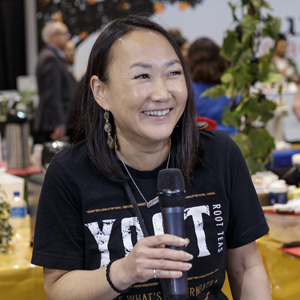
[01:12:33] John Craven: I think it's, you know, one of those things where at the end of the day, like call it clean, call it lab, I mean, food science and, you know, this sort of processing becomes front of mind for these products. Whereas I think for a lot of consumers, it's not for just regular old meat and certain other products, but there's plenty of science and all sorts of other things that go into all these products, you know, creation, development, delivery, you know? Always fun to talk about plant-based meat and all sorts of meat on here. Well, now it's time to move on to Elevator Talk. Inspired by traditions of Ayurvedic Herbal Medicine and Chinese Herbal medicine, Ute is a brand of herbal Yoot Tea brewed from superfood herbs. We caught up with founder Nansee Kim-Parker, who dug into the roots of her brand in this edition of Elevator Talk.
[01:13:26] Food Show: It's time for our Elevator Talk, where we put a founder in an elevator with their dream investor. Let's hear what happens.
[01:13:34] Taste Radio: What is your company's mission? Our mission is to bring herbal ancient remedies to mainstream consumers. I really feel like The Good marketplace is growing in that functional based aspect. But herbals have been around for thousands of years and have been utilized as medicine for thousands of years. But I feel like the regulation around herbs are classified as supplements when it should be classified as a food ingredient. So people can self remedy themselves on, you know, chronic illnesses that they can really take care of themselves. It's self-help, self-healing. What is your product and how is it different? So our product is a ready-to-drink herbal Yoot Tea line and it's different in the sense that we use and formulate around a functional superfood herbal root and we make it so that it's formulated to taste good and something that you'd want to drink every day for daily wellness.
[01:14:36] Food Show: Who is your target audience and how do you quantify the market opportunity?
[01:14:40] Taste Radio: I guess our target market is people that look for health products to support their health. And the main demographics have been from, I'd say 70% are women that are between the ages of 30 to 80, or even 90. I mean, my parents still do herbal remedies. And really for people that want natural remedies versus over-the-counter.
[01:15:09] Food Show: What stage of growth is your company in?
[01:15:11] Taste Radio: Oh, we're basically startup. We're very small. The company is small. We are looking to grow as we get into more, you know, retail locations. What do you need from a partner or an investor to go next level? I'm definitely actively looking for strategic partners and to grow our brand with more SKUs because I have many other Yoot Tea that I would like to add on to our three SKU line. And we also want to grow in more retail locations as well. So far, we're only in the NorCal Midwest and Northeast regions, and we'd like to grow Beyond Meat. What has been the biggest surprise since starting your company? The biggest surprise has been all the money that it entails to support product on shelf. I know every entrepreneur thinks that they have an amazing product and that once consumers see it on shelves, it's just going to fly off. In reality, that does not happen and you really have to support it. You have to demo. Demo support has been crucial, you know, to maintain our velocity in our stores. And so we've learned that if you don't demo, it's not going to move because unless you're a Me Too product, if you're something that no one's familiar with, you really have to have strong demo support. And that's a lesson that we've learned because Not everybody is familiar with herbals or herbal teas, so demo support has been a big lesson for us. Why should I invest in you? Because I never quit. I live and breathe this. I'm a little bit too passionate because I need to get more sleep, but I really know my weaknesses and my weaknesses is that I'm very strong in operational and formulation side, and my weakness is in the business sales marketing side. would like to partner up with business partners that have that strong suit. You know, investors want to know that you can't do everything and that you know when you need to look for outside of yourself. for that support and you can kind of see the big picture. And so I'm in it for the long haul. I'm realistic on what my market is and I feel like that's something that you should ask for in an entrepreneur. You can't do everything at once and that you have a plan and you can share that plan with possible future investors.
[01:17:43] Ad Read: Nancy is such a soldier. She's been doing this for like five years now just continuing to soldier on and it's always a pleasure to see her at these shows. I love these entrepreneurs that just have, they have an unending desire to see their brand succeed and they're willing to just put one foot in front of the other every single day. And it's so inspiring to see that and Why The best to Nancy.
[01:18:08] John Craven: All right. We'll call that final thought with Landis, which actually is not mocking you. That is a great sort of final thought on episode 101 here. So that being said, time to wrap up here. I want to thank our sponsor, Saffron Road, a maker of pure foods that compassionately inspire and inclusively connect diverse cultures together. I also want to thank our guests, Ryan Caldbeck, Bruce Friedrich, and Nansee Kim-Parker. Again, for questions, comments, ideas for future podcast episodes, please send an email to askatasteradio.com. On behalf of Mike, John, Carol, and Jeff, I'm John, and we'll talk to you next time.