[00:00:02] Rhonda Kallman: I had three young children at the time and I came home one day and I remember being on the couch going, I don't know if I can do this anymore. And my oldest daughter, who was probably not even 10 at the time, she said, Mom, you're not a quitter. And that's all I needed to hear.
[00:00:25] Ray Latif: Congratulations to the winner of the 2018 Nosh Life Summer Pitch Slam Watermelon Road. They're reinventing dried fruit with imaginative new flavors of fruit jerky, like Watermelon Road, pineapple mojito, and apple pie. Their newest flavor, mango margarita, will be available in July 2018. It has just the right amount of sweet and heat to keep you coming back for more. Each batch is prepared in Brooklyn, New York, and made with fresh, plant-based ingredients and never any artificial preservatives or refined sugar. All fruit-flavored jerkies are marinated in citrus, which acts as a natural preservative and gives an intense citrus flavor that's unique versus other products on the market. Already a top-selling retailer in New York and the Hamptons, Watermelon Road's a favorite of the paleo, vegan, and gluten-free crowds. Each bag's just 80 calories, perfect for an on-the-go treat. Thoughtful snacks with a purpose. Watermelon Road.com or orders at Watermelon Road to learn more.
[00:01:18] Jon Landis: Hey, Mike, one last quick note before the episode gets underway.
[00:01:21] Ray Latif: What is it, Landis?
[00:01:22] Jon Landis: We got swag!
[00:01:25] Ray Latif: As soon as this hit the office, we thought we should be the first to get their hands on this stuff. And the obvious answer is our amazing podcast audience have been raving about the content, sharing with friends and colleagues, you know, helping us grow this thing from a grassroots level. Thank you so much.
[00:01:38] Jon Landis: Yeah, so we don't want this swag sitting in boxes around our office. We want to get it out the door. So you're asking yourself, how do you get your hands on this stuff? Mike, tell them how. Yeah, to start, we're going to be selecting a few folks a week who sign up for the new Taste Radio newsletter. Yeah, so just head on over to Taste Radio.com slash subscribe. There's a short form there. Fill it out, cross your fingers, and look for a box.
[00:01:59] Ray Latif: And you know, we're going to have more fun ways to win swag in The Future, too. This is just the beginning. Right now, we're just really excited to get this stuff out the door into your hands. Thank you, guys. And now Taste Radio. Hey everyone, thanks for tuning in to episode 119 of Taste Radio. I'm Ray Latif and with me are John Craven and Mike Schneider. Today we're reporting from the 2018 Summer Fancy Food Show in New York City. And in this week's episode, we're joined by two groundbreaking entrepreneurs and beverage innovators. Rhonda Kallman, the co-founder of Samuel Adams and Boston Harbor Distillery and Califia Farms co-founder and CEO, Greg Steltenpohl. As always, for questions, comments, ideas for future podcasts, please send us an email to askatasteradio.com. You guys feeling fancy? I'm feeling fancy. You should be. Down here in the basement of the Javits Center. We are in the press room. For those of you wondering, this is Ray Latif on the mic, not Barry White. Barry White? You've been using that voice a lot, huh? You know, we rarely record this early in the morning, and you know, sometimes it takes a little while. Can we get a little kink in enough of your left? Yeah, it's a little raspy, you know. It's after three days, actually four days, of talking, walking, eating, drinking, all sorts of things, actually. Yeah, you cover a lot of ground in these shows, Ray. You're pretty fast, hard to keep up with. I am and I'm going to pat myself on the back for that because we recorded a ton of video interviews, podcast interviews. We've got reporting from the show top to bottom. So I look forward to that on the BevNET website and on the Project Nosh website and more on Taste Radio too. Yeah, as Hugh from Ugly Drinks would say, the BevNET. The BevNET. It used to be called the BevNET, right, John Craven?
[00:03:47] John Craven: Yes.
[00:03:48] Ray Latif: Way back in the day.
[00:03:49] John Craven: It was thebevnet.com. Like the Facebook. Like the Facebook, yes. I was taking cues from the Facebook that was invented in The Future after BevNET.
[00:03:55] Ray Latif: And then Mike took him out for cocktails one day and said, you know what? Just call it BevNET. It's cleaner. That's why you need a CMO, guys. Always great advice on this podcast.
[00:04:07] John Craven: Drop the the. Exactly. Mic drop. kind of reminds me of that scene in coming to America when Eddie Murphy gets the haircut and they just cut the ponytail off. That'll be $8. Yes.
[00:04:15] Ray Latif: I think it's $12 actually. So the Fancy Food Show, once again, you know, an important show, particularly the summer edition, I think, you know, here in New York City, you see a lot of distributors in the area, you see a lot of innovative beverage concepts, food concepts coming from all the five boroughs in the Northeast in general. But one of the more interesting things I saw this year was the evolution of the show's Incubator Village, which is now called the Incubator Village. It recognizes the emergence of food incubators, the importance of them to early stage brands, The Incubator Village housed 11 incubators and shared kitchens from around the country and a lot of the brands that they're working with. And I feel like it was like a nice showcase for not only the brands but how far and how impressive and how much help these incubators are offering early stage entrepreneurs with everything from financing to scaling production to marketing to staffing. They're such a valuable resource.
[00:05:20] John Craven: Yeah, for sure. I mean, incubators in general have come a long way from being these sort of like odd things to, you know, there being more and more of them. I mean, I think the fact that there's 11 here, you know, it feels like there's probably some that didn't participate, but for sure. I mean, the quality of the work that you see and, you know, some of the companies that are working with these incubators and also just a lot of entrepreneurs really see it as a coveted thing. I mean, I heard about, you know, the Chobani Incubator, like, I don't know how many times yesterday, like And, you know, people really want to get into that track. So pretty neat to see that it's got a village here at the show.
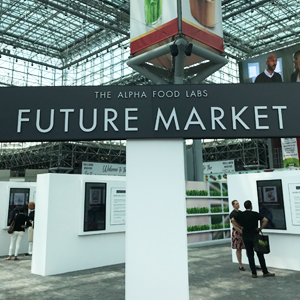
[00:05:55] Ray Latif: Yeah. And the Chobani Incubator is interesting because it's the national incubator. I mean, they accept brands from all over the country, whereas others are really hyper-focused on a local area like The Hatchery, which is based in Chicago and backed by a lot of money, including Kellogg, ConAgra, and the city of Chicago itself is really hyper-focused on the Chicagoland area. And then you see, you know, smaller ones too, like Commonwealth Kitchen, which is in our backyard in the Dorchester neighborhood of Boston, which is also focused on local brands and supporting the local community as well. Yeah, it's interesting to see the way that incubators have evolved and to see the way that they truly are accelerating brands the way you see it in tech. As somebody from the tech world, I've seen Y Combinator and Techstars and smaller ones like Dogpatch out of Boston doing their thing, and it's cool to see it in food and beverage. Totally. It's also the best place to find what's next. You feel like you're going into these Incubator Village and turning over rocks and finding really cool stuff underneath them instead of worms. Totally. Worms and bugs, Ray. What's that? Worms and bugs. Worms and bugs. And crickets. I almost fell over when we had Bill Weiland on a couple episodes ago. He said, you know, when crickets were the new hot thing, people were like, oh yeah, crickets, get into crickets. I just call it the new hot bug. I mean, the thing about crickets that's strange is crickets, from everyone I talk to who's making cricket products, crickets are not cheap. It's like, hey, let's have people eat bugs and have them be expensive bugs. That's hard. That's a hard sell. Yum. Remember those things when you're building your brand. Well, crickets were a hot food trend. I think they are still pretty relevant right now. And there's a, and there's an organization called Alpha Food Labs. Mike Lee. Yeah, Mike Lee, who we had in episode 100, who's the founder and CEO. They had a great sprawling space for The Future market concepts. And basically they call it a futurist food lab that explores future food concepts, the impact of food systems. transformational brands. And we saw things like Four Foods, Faba Butter there. We saw Yoppa, which are those chicken-based chips from Tyson's incubation unit. Jon Landis' favorite. Yeah. Some really innovative concepts. And, you know, when I went to The Future Market in San Francisco at the Winter Fancy Food Show event, You saw, I mean, they showcase these ideas and these potential food concepts, but we actually saw them in practice. We saw this actually happening at this show. Strategies coming to life? Yes, we saw strategies coming to life. And I thought it was just pretty amazing to see what's going on and how fast it's coming. The other thing that I saw that was pretty interesting was Ocean Hugger Foods. They call it the world's first plant-based alternative to raw tuna, and it is all tomato-based. It's pretty impressive stuff. Speaking of impressive stuff, we happened by Pan's Mushroom Jerky yesterday. They've reformulated, repackaged I like the way this brand is coming along. They've come a long way since Expo West. It's kind of more like a mushroom gummy to me. Yeah, Craven was telling me it's more like mushroom gummy bears yesterday. He's like, I'm not a big jerky guy, but I'll eat these. I love gummy bears. Mushroom gummy? Yeah, it's good. Huh. Well, listeners, if you're thinking about creating a mushroom gummy, you know you got at least one customer, right? Yeah. We also happened by Peekaboo Ice cream yesterday. Ice cream made out of vegetables. Doesn't taste like vegetables. I guess it's supposed to be, you know, a way to get your kids to eat vegetables. We were wondering if... Well, ice cream fortified with vegetables. Yeah, fortified with vegetables. It's still ice cream. It's definitely ice cream. It's good. It was good? Yep. Cool. I think I talked about this. This product debuted at Expo East last year, but they didn't release it because they needed to make a few tweaks, and it was Harney & Sons Cold Brew Nitrogen Tea, which has zero calories and uses zero sugar, but this hot cinnamon spice variety tastes like it's got at least 10 grams of sugar. It is really impressive stuff. some tea nerdery right there. It is some tea nerdery, and I nerded out on some tea, but tea has always been a prevalent part of this show.
[00:10:07] John Craven: It has. I'm still not sold on nitro plus tea, but you know, hey, that's just me. Have you tried this? No, but we've tried a couple different nitro tea products, so.
[00:10:17] Ray Latif: Well, but speaking of spicy products, we did run into the Fizzy Fox guys and tried their berry cinnamon. Not bad.
[00:10:23] John Craven: Indeed. Yeah, definitely saw a bunch of shrub products here, that being one of them, even though they weren't an exhibitor. Also got to try that new GT's, what was it called? Cannibalist. Cannibalist. The CBD enhanced kombucha that they're about to launch.
[00:10:40] Ray Latif: It's really good. And also next to that was the habanero grapefruit. So thoughtful. It's not very sweet. The habanero and the grapefruit act, or they work together really nicely. It's interesting because during this show, the World Cup was raging on, and anyone who had a TV at their booth had a few customers come by to check out what was happening with the tournament. That was a good play. I happened to come across a brand called Tiny Hero, which is a Canadian-based brand that blends quinoa with traditional food products like a mac and cheese. Really enjoyed that product and that brand. Hope to see more from them. And the penalty kicks. And the penalty kicks. Thanks, Tiny Hero. All right, we're back here in the Taste Radio studio in Watertown, Massachusetts, and let's talk a bit about Rhonda Kallman, a trailblazing entrepreneur who helped launch a new era for American beer. Rhonda's the co-founder of Samuel Adams and now taking her best shot at the business of distilled spirits. Drawing on experience from nearly three decades in the alcoholic beverage industry, Coleman's latest venture, Boston Harbor Distillery, extends a career that began in 1984 when she partnered with Jim Cook to create the now iconic Samuel Adams brand. Her path from Sam to Spirits includes both remarkable success and years of adversity. In an interview recorded at the distillery, Kalman spoke about the defining moments of her journey, identifying the disruptive concepts and innovation, and how at the most challenging point of her career, she realized that she could never quit. All right, John, Mike, and I, Jon Landis, that is, are here at Boston Harbor Distillery in Dorchester, Mass., in neighborhood of Boston, and we're here with the great Rhonda Kallman, who's the founder of the distillery. Rhonda, thank you so much for being with us.
[00:12:27] Rhonda Kallman: Great to be here. Great to have you guys here, I should say.
[00:12:31] Ray Latif: I'm sure it's great for you to be here as well.
[00:12:33] Rhonda Kallman: It's nice to be here. Surrounded by you guys.
[00:12:36] Ray Latif: You live here, almost.
[00:12:37] Rhonda Kallman: I do, almost.
[00:12:38] Ray Latif: Yeah, you've been here since 2015 when you opened the distillery, correct?
[00:12:41] Rhonda Kallman: Well, actually, I incorporated the business in 2012. and signed my lease in 2012. So I've been down here for a while.
[00:12:50] Ray Latif: And it looks just like this when you got here, right? I don't think so. It's a pretty exceptional place to be, distillery or otherwise. It's just remarkable to see the wood, the brick, the beams, the alcohol. I mean, everything in here. I like the barrels. Yeah, the barrels. Everything in here just looks perfect. Can I say that?
[00:13:09] Rhonda Kallman: Is that okay? Yes. You know what? We call it refined grittiness. Okay. It's all authentic. And it's all handmade. My husband was the builder of this place before, you know, actually 1859, Silas Putnam built it. But it was, this particular building has always been a shed. It was just underappreciated for 150 years.
[00:13:31] Ray Latif: It has a lot of character. I mean, clearly it was underappreciated before, but not anymore. Everything is pristine in here.
[00:13:38] Rhonda Kallman: Yeah, the bones were certainly here, and we just brought it to life.
[00:13:42] Ray Latif: And you just gave us this great tour. You took us through the history of Boston Harbor Distillery's spirits, from whiskey to rum to your creams, your coffee liqueurs, everything. And I got to say, I mean, pretty impressive lineup that you have here as well.
[00:13:59] Rhonda Kallman: And the distilled beer line. Don't forget the distilled beer.
[00:14:01] Jon Landis: Oh my goodness, how could I forget that? Well, can you tell us, expand on what a distilled beer actually is?
[00:14:08] Rhonda Kallman: It's exactly that. We actually, in this instance, we take finished Samuel Adams beer varieties. Till now, we've done five different styles. What you guys tasted today was double black lager, merry maker gingerbread stout, and a la blanc India pale lager. And we just literally distill it. We run it through the still, and we put it in huge barrels, and we bottle it at 84 proof right now, which is the year we founded Samuel Adams.
[00:14:42] Ray Latif: I'm interested if you could take us back to 1984, when you first saw the opportunity. You know, on this podcast, we talk a lot about white space and identifying ways to take advantage of a hole in the market, a gap in the market. You know, what did you and Jim see as that opportunity for craft beer, for beer, excuse me, it wasn't craft beer at the time.
[00:15:01] Rhonda Kallman: No, it was actually called micro beer. Doesn't matter at all beer. But Jim saw it. Jim is the sixth. You know, it's difficult for either one of us to tell the story of Boston Beer without mentioning each other because it was so powerful. Our different backgrounds, our different worlds, our orientation. But we came together. You know, we met at Boston Consulting Group. He was a manufacturing consultant and brilliant, three Harvard degrees, but he was the sixth consecutive oldest son to be a brewer in his family. three Harvard degrees, and there I was, sitting outside of my IBM Selectric typewriter. I was a secretary, but I was moonlighting as a bartender and waitress. And when I wasn't working, yes, so there I was, sitting outside of Jim Cook's office at Boston Consulting Group, and he wanted to start a brewery. And he literally, it was his great-great-grandfather's recipe that he found. And he wanted to make it here in Boston. And somebody said to him, well, how are you going to sell this stuff? And he said, well, I haven't figured that out yet. And they said, well, what about her? She's out there. So I've never sold anything in my life. But I, as Jim always says, bars are my natural habitat. And I just love it. I love the excitement of it all. He asked me to help him start a beer company. And I went, whoa, well, one little problem is I don't drink beer. I drink whiskey. And he said, well, I promise that I'll make something that you like. And obviously he did. And so for 15 years, it was an amazing ride of building one of the most remarkable, most respected craft breweries in the country.
[00:16:52] Ray Latif: So you're building a craft brewery, but you're also creating a category. Back at BevNET Live, we talked to a lot of companies that are creating categories, for instance, the Cascara set. It's coffee fruit, it's Cascara, their messaging is all over the place. Did you think about that when you were creating this category? Did you think, wow, we've got something new, we've got to look to others who are doing something similar and we've got to rise up together, or was it something else?
[00:17:20] Rhonda Kallman: Well, for me, it was something else. And for both of us, it was something else. Jim wanted to clearly make a beer that was superior to what was available to us. And as these trends start, I mean, lots of beverage trends start. in the Northwest, like San Francisco North. And that happened. I mean, we certainly weren't the first microbrewery, and they're certainly not the last, as you can tell. But in the East Coast, it was different. There was nobody doing what we were doing out here. So that in itself made it different. But he truly wanted to make better beer. And better beer means an ingredient story. And it was a very pale, bland landscape. It was all corn, maybe some rice, like Michelob. Michelob was 8 million barrels when we started Boston Beer Company. Coors wasn't even distributed here on the East Coast back then. And there was no internet, so let's just say that.
[00:18:27] Ray Latif: Now, you mentioned that you had to tell a story to sell Samuel Adams, and you were at the forefront of that. You were on the ground, on the front lines, trying to sell Samuel Adams to distributors and retailers at a time when they were saying, why am I paying for a premium domestic beer? And that is, again, one of those issues that a lot of entrepreneurs face today. How am I going to sell something that's innovative, that's different? You know, what was your approach?
[00:18:51] Rhonda Kallman: Well, the approach then was really all we had was the beer. And it's a little about what's inside, what's inside the bottle, what's inside us as entrepreneurs. And being an entrepreneur back then and starting a beer company, it was 1984. People just didn't do that. It was like starting an oil company or something. And there we were, doing something remarkably different. And we felt better because of the integrity of the product. And that is what we sold. And that's what we talked about. That's what we did. It was all about in the bottle. And it worked because it was different, it tasted better, and people were willing to pay a little bit more.
[00:19:38] Ray Latif: You say integrity. Can you sort of elaborate on what you mean by the integrity of the beer? Because again, the ingredients are important, the taste is important, but something's got to go a little bit further beyond that, right?
[00:19:50] Rhonda Kallman: Today it certainly does. Then it was a little bit different because you could clearly see the difference. You could hold up a bottle of Bud Miller or maybe Coors or Heineken, for example, because they're corn-based beers and they're still millions of barrels, so there, you know, people like that, but we gave people an alternative, something that they hadn't seen, that they didn't really know existed, because it didn't in the East Coast. And when we talked about the ingredient story, and then, you know, Jim is the sixth consecutive oldest son, it was a story of entrepreneurship, and people fell in love with it.
[00:20:31] Ray Latif: So you mentioned not having the internet when the company started. I remember the first time that I tried Samuel Adams and Boston was Boston Ale, actually called Stock Ale at the time.
[00:20:42] Rhonda Kallman: And still my favorite one that we make.
[00:20:44] Ray Latif: I think one of my favorites as well. It was a very different flavor and it was clearly a better quality beer. We thought, you know, Miller Genuine Draft and Moosehead were like quality beers at the time, got our hands on this and minds were blown. How did you explain it to the world at the time? I mean, you don't have Instagram, you don't have the internet. How do you get the story of better ingredients out there to the people and get them tasting? How do you drive trial of this?
[00:21:17] Rhonda Kallman: So Mike, that is a good question, because you have to remember, There was no way to communicate other than face-to-face, believe it or not, and that's really where I came in handy. Because I love to be out there, and we just went door-to-door, bar-to-bar, talking to people, having an experience with them. I mean, today there's like 12,000 licenses in Massachusetts. Back then it was a lot less. And so it was a concentrated area, Cambridge, where Jim was very familiar with, because he went to Harvard, and Faneuil Hall, that I was very familiar with, because I worked as a secretary up in those towers over there, where I met Jim. And we just really took it neighborhood by neighborhood, and we went in ourselves. But sort of the best part of the story was, could have been a biggest failure, but we turned it into a positive. There was no distributor in Boston that would take our beer. We had never sold anything before. We didn't really know the three-tier system. So Jim was all upset one day and came back and said, no one's going to take our beer. And I said, so screw them. We'll get a truck and we'll do it ourselves. And we did. And Mike, we got to control the communication of what was important. You know, there wasn't a middle man, although- Face to face, you got to control it. It's face to face and we got to see what was important to people. And that's how we built the company. There wasn't a path. We just made our own.
[00:22:47] Ray Latif: Now, it's abundantly clear the success of Samuel Adams, the success of Boston Beer Company. And in 2000, you left the company to start your own brewery called New Century Brewing. What was your goal there? And why did you decide to start off on your own?
[00:23:00] Rhonda Kallman: Well, frankly, my goal was to be Chobani Incubator for the beer industry for decades. I had watched great brands be built by enterprising entrepreneurs or families that had a dynasty over in Europe, and I'd watched the big guys buy them after they were already well distributed, and they had a footprint, a national footprint. Well, in the alcohol beverage, in the beer business especially, There were franchise laws, so you couldn't easily move in many states. So I watched these guys get bought by the big guys, who basically, and then they were stuck in some markets. It just was a mess. And then the big guys would just virtually liquidate it, would just suck all of the marketing out of it. Of course, you know, the founders weren't there anymore. And I just watched them write it down. I mean, look at great brands like Beck's or Bass, for example. Just so happens that they were both bought by Anheuser-Busch, so it's not really a dig at them, but that's who did it. And I watched this, and of course, in technology incubators are, It was the trend. And so I thought, why not start New Century Brewing Company to be Chobani Incubator for the beer business, to partner with an Anheuser-Busch or Miller or Coors. They were separate back then. for example, and I knew all those people because I was the only, I was the first woman in the beer business. You know, I have an award from the Brewers Association of being the pioneering woman in the beer business. There just weren't any, and obviously you guys can see that I am not that old. But that's the way it was. So I knew all these guys because what we had done at Boston Beer Company was pretty remarkable and pretty well known. So I thought that I could leverage my expertise and my passion for building things. I'm a brand builder. And, you know, running a company that's been built has its own, you know, set of skills, which I have those too, but I prefer to build things that are different. And that's what we were working on. And so that's what we built.
[00:25:19] Ray Latif: So with New Century, you did build a couple brands, Edison Light, which is a premium light beer, and Moonshot, which was a beer with some added caffeine to it as well. Ultimately, the business itself didn't succeed. Why was that?
[00:25:35] Rhonda Kallman: Well, that's a good question, Ray. Let me just start by saying it was, you know, timing has a lot to do with successful businesses. I mean, if you look back and, you know, Rockefeller and Carnegie and you've read about, you know, Malcolm Gladwell's books, it's a whole lot about timing. And for me, the launch of that was the beginning of a 10-year doom loop, both personally and professionally. But the learning out of it is remarkable. And it's really helping me succeed in this next venture. But I launched the brand on the eve of 9-11. I was undercapitalized when I started. You know, all of the money dried up after that, particularly when you're trying to launch in Boston and New York. Nobody wanted to try anything new back then. And so it took some resolve. to keep things going. And I did for a while. And I got breast cancer and had to go through all that. My only brother dropped dead one day from Lyme disease. That was terrible. And I just kept picking myself back up. I have three children. I have, you know, a wonderful husband and I got to keep doing where my heart is and where my passion is. And these things happen to you. But that's life. Well, the old expression that it doesn't kill you makes you stronger. So here we are today. And if it wasn't for the FDA coming in and shutting and banning my moonshot beer instead of regulating it, which is what the FDA should be doing, parts per million of caffeine to percentage alcohol. I wouldn't be here today and I wouldn't be here with you guys right now talking about my Boston Harbor distillery.
[00:27:21] Jon Landis: It's a distinct possibility that we wouldn't be here talking about your distillery, no. All right, so we have a lot of entrepreneurs listening, and you said you listen and enjoy this podcast and want to meet these entrepreneurs and get more connected. But really, the one thing I hear from them all the time is just, you know, how do you just keep going when the deck is stacked against you and the hill is too steep to climb? How do you get up and put one foot in front of the other? Is there something that you tell yourself? Is there a way that you motivate yourself?
[00:27:50] Ray Latif: You mentioned being in this doom loop, and how did you know, I can't quit, now is not the time to quit?
[00:27:56] Rhonda Kallman: Wow, that's a really good question. You know, again, you have to dig deep. And if you can't picture yourself being satisfied or happy and not true to yourself doing something else, then that's the decision. But I will say I had... three young children at the time, and I came home one day, and I remember being on the couch going, I don't know if I can do this anymore. And my oldest daughter, who was probably not even 10 at the time, she said, Mom, you're not a quitter. And that's all I needed to hear. Mom's not a quitter. My husband was, do what you gotta do. Just be happy. And that, I mean, what's the worst that can happen?
[00:28:45] Jon Landis: sometimes the most complex questions have the simplest answers, right?
[00:28:49] Rhonda Kallman: Out of the mouths of babes.
[00:28:54] Jon Landis: We have Jim Cook on record saying that you're the best hire he's ever made in his life. I do want to know what you taught this man to make him say this. Because a lot of what you're saying, first of all, I have to say, Entrepreneurship is about partnership. So I think a lot of entrepreneurs are about finding partners and mentors and things like that. So it's not very uncommon, but there's a level of learning and feeding and hunger and getting up every single day and putting one foot in front of the other that's somewhat unteachable that needs to be ingrained in you. So I want to know how you discovered your passion for entrepreneurship and what drives you?
[00:29:41] Rhonda Kallman: You know, I never planned on being an entrepreneur, but if I look back at my paper route when I was 11 years old, and a babysitter, and I was actually working for some guy that my fathers knew at the World Trade Center selling those, you know, ridiculous paintings when I was 13, but I made $150 for the day. I mean, even today, that's a lot. So it just happened, but really it was the experience that I had with Jim. It was forging a new path and just watching how people related to doing something different. You know, I was a secretary for Boston Consulting Group. I mean, the best minds in the world. It was amazing experience, but I like being an entrepreneur better. And there's only, you know, there's 24 hours in a day. but no one has to live by the clock. For me, sometimes I'm up at three o'clock in the morning and I might have to sleep till 10.30 in the morning, but that's up to me. And so that's part of it, just being in control of your own destiny. And I have the right to do that as a human being. And I believe in myself enough. And the key is, is to finding enough people that believe in what you believe, because you need mentors, and you need investors, and you need customers.
[00:31:07] Ray Latif: Yeah. And you need a business plan.
[00:31:09] Rhonda Kallman: And you need a business plan. And you need some luck. That I'm working on.
[00:31:16] Ray Latif: You've had a little bit of luck, no?
[00:31:17] Rhonda Kallman: I have, I'll get it back.
[00:31:21] Ray Latif: So you're in this new category, or relatively new category of craft spirits, and you're competing with local brands, you're competing with national brands, in the same way that Craft Beer had their approach to authenticity and real ingredients and real brewers making the beer. Craft Spirits has the same sort of vibe to it. So my question is about creating a category where you are working with your competitors, you're working with the entire industry to build something that is strong and relevant in the same way that Craft Beer did, but maybe without some of the pitfalls that Craft Beer is looking at and seeing right now.
[00:32:00] Rhonda Kallman: Well, Ray, you know what? I mean, the craft distilling world has the benefit of what's happened in the wine business. Of course, you know, 30 years ago, jug wines were 80% of the volume. Or maybe it's 40 years now, I'm not even sure. And now that's turned on its head. You know, it's the 80-20. 80% are wonderful, independent, artisan, boutique producers. And Jim Cook's famous for saying, you know, beer is the new wine. He had been saying that for decades. look what happened. It's not quite that. Craft beer is still less than 20% of the volume, so there's a lot of, should I say, head space there.
[00:32:46] Ray Latif: Sure.
[00:32:46] Rhonda Kallman: So it wasn't, it's not hard to see the parallels in craft distilling, and why not? But what needs to happen in craft distilling is it's a nascent business that's been going on for, you know, decades, actually, but it's starting to become more organized. Bill Owens from the American Distilling Institute has been at the forefront of everything. He's the godfather of craft beer. He's been here and done that. He lives in Northern California, so he saw the wine thing. He led the beer thing, and he's been leading the craft thing. And he's still leading it, along with the American Craft Spirits Association. So now we've got two agencies or associations that are bringing all of us together as craft distillers, which is about 1% of the entire spirits business in the United States. I mean, we've got a lot of room. If beer is, I don't know, 15 to 18 craft beers, you know, somewhere in the double digits up there, well, you can see where this thing is going to go. But what's different is that the spirits industry is dominated by legacy, mature, largely European companies. that are in the luxury goods business, and they know how to do it really well, and they're not going to let what happened to American beer, they're not going to be usurped by the craft artisan producers. A lot of their brands are made up by those people. So, you know, I think it's up to us as craft distillers to get together because when the tide comes in, all the boats are going to rise. And we've seen that in everything. And we need to make sure that when you have the real deal going on, which is right here at Boston Harbor Distillery, and many of us in the industry where we've actually put a stake in the ground for production. I mean, I was a craft brewer most of my career. And I understand what it takes to make something from nothing, to actually come to work and see that still going, smell that in the air that we're smelling right now. We're distilling, we're real makers. And the worst thing that can happen to us is the posers from the marketing departments of billion-dollar conglomerates that are trying to undermine our authenticity and our principledness of being real. and being who we are. And that's what we have to be careful of. And we better get organized pretty quickly.
[00:35:40] Ray Latif: Craft distillers can take a cue in terms of organization from visiting here at Boston Harbor Distillery. Again, it doesn't look like a single thing is out of place here. And Rhonda, you've created something that's amazing. And I really appreciate you sharing it with us and taking the time to sit down with us. I think our listeners are going to get a lot out of this and really appreciate everything you've done for beer and hopefully everything you'll do for spirits.
[00:36:02] Rhonda Kallman: I'll drink to that. Cheers.
[00:36:04] Ray Latif: All right. Thanks. From one trailblazer to another, Greg Steltenpohl is the founder and CEO of plant-based beverage company Califia Farms. Known as one of the foremost innovators in the beverage industry, Steltenpol, who's also the founder of super-premium juice brand Odwalla, recently joined me at the 2018 Summer Fancy Food Show for an interview to discuss the development and impact of habits that he's adopted during his nearly four decades in business. All right, I'm here joined by the one and only Greg Steltenpohl. Greg, thank you so much for being with me.
[00:36:39] Boston Beer: Great to be here, man.
[00:36:40] Ray Latif: I said one and only. I guess I could have said beverage legend, industry visionary. You know, what do you prefer?
[00:36:45] Boston Beer: Please.
[00:36:47] Ray Latif: All right, please. So this is your second time on the podcast. The first time you were on, it was called the BevNET podcast. Now it's called Taste Radio. What do you think of the new title?
[00:36:58] Boston Beer: I like it. A little bit more on point.
[00:37:00] Ray Latif: Yes, I would say so as well. Exactly. We're covering a variety of things now. Right. And you have covered a variety of food types, beverage types in your career, starting with Odwalla and now as the founder and CEO of Califia Farms, a very, very fast growing, successful brand. And, you know, people look to you for a lot of advice in this industry. You mentor a lot of young entrepreneurs and they're looking to you for some support and guidance on how to build their businesses. And one of the most important things about building a business is establishing good business habits. And I wanted to ask you about some of the habits that you've built over the years, particularly the good ones, and then maybe some of the ones that you've shed as you have grown in this business. So, what's one really great habit that you've adopted that has really benefited you as a leader and benefited your companies?
[00:37:53] Boston Beer: It's such a great question, and it's a little scary to think that somebody might actually listen to you and take any advice, so forewarned is forearmed, but I think listening is the first habit that any successful leader has to have, and the problem is if you are a leader, sometimes you tend to think that your ideas and your thoughts are the important ones to impart. But you really can't grow as a leader unless you listen in a deeper way. I mean, so there's superficial listening, repeating back, you know, this kind of formulaic ways of listening. I think absorbing everything around you and truly distilling it. And then as a leader, you've got to be able to operate in a more systemic and holistic framework. So that's a big challenge. And applying the listening and translating it to learning and application. is another kind of skill that takes a habitual process of assimilation. So there's listening and then assimilation. And I think books like the Seven Habits of Highly Successful People and all that kind of talk about these things, but I can really only reflect it in practice. Anything that's worth suggesting is probably some of the hardest stuff always to practice yourself. You know, because it's like, oh, I wish I did more of that. Or when I do that, I feel really good and I get a lot of reinforcement out of it. But still, the things that are easy and the habits that you don't want to have that you fall back on are the ones that keep you from progressing. So there's this dynamic to the whole question. You know, it's not just a list of these are the habits that I do. So I think at least the part of the conversation that I enjoy is just going a little bit deeper into principles behind the habits and why that's important.
[00:40:10] Ray Latif: Well, you did mention listening. I mean, it sounds pretty simple as to why listening is important. Can you give me an example of why listening has been so important in your career and why it has benefited you in a very specific way?
[00:40:23] Boston Beer: Well, I've always, since early 20s, been affected by this old Chinese Taoist philosophy that was expressed in this book called the I Ching. And the I Ching, it's a kind of an aggregation of a long history, starting with like these old mountain Taoist masters, but then becoming, you know, during the Confucian period kind of codified a little bit, and it became a backbone of Chinese philosophy. But one of the basic principles is that you have two complementary dynamics, and one of them is the creative, and the other is the receptive. And listening is the archetype of the receptive. And to create organizations and grow organizations and to have genuine leadership, there has to be some kind of balance between those two things. And that's what I'm talking about. In daily practice, if you let yourself talk too much or you take too much of a leadership role, you don't allow the fuller development of your own leadership team. And the distributed leadership is how organizations can truly scale. And obviously, I'm in a position where I have to be a student of that. So in order to impart anything, you're really teaching and learning at the same time. And actually, that's the most fun.
[00:42:04] Ray Latif: So it sounds like listening isn't just important for you, it's really important for your entire team. How do you get them to adopt the same practices? How do you get them to buy into this habit of listening?
[00:42:14] Boston Beer: Well, one of the things is you have to create cadences within the organization that allow regular practice as a group together. And another thing is just having different parts of the organization be able to have their own spaces for dialogue. So the different types of meetings, there's meetings with objectives and there's meetings in which dialogue is the most important thing because Things that often sneak up in hierarchies are things that people are afraid to report to.
[00:42:51] Ray Latif: What's an example?
[00:42:53] Boston Beer: Let's just say bad news, hidden inventories, things that were out of code or a botched batch. Any of these things that people might be ashamed of, But if you've been around for a while, you know that really understanding what happened is the most important thing. So you can't create an environment in which people are comfortable talking about those things unless you remove the fear element. So, the habit, how do you develop habits for the organization? So, there's personal habits and there's organizational habits. So, regularity or cadences of these opportunities, we call them huddles, where a huddle is not set with an agenda. A huddle is an opportunity where a small group has to have a very limited time to share information, And you also create within those type of huddles or you can create huddle or dialogue space within larger, more formal meetings. And making that a real practice. So one of the things I've learned as a practice is at the end of any major meeting, so if I have a monthly or a quarterly review, business review. I'll make sure at the very end that we go around the room and get everybody's voice in the room rather than just saying, are there any questions? Because if you've been speaking, especially as the most senior person, a lot of people will not then say unless they're allowed just their own space to say what they want to say.
[00:44:37] Ray Latif: And has that elicited some real key learning lessons about individuals and the company at large?
[00:44:43] Boston Beer: Oh yeah, well I think just the whole concept of continuous improvement, and out of that another habit I'll just mention, because when we're talking about group practices, we generate what we call an action list that comes out of every meeting, and we make sure that the recording of that action list is then reiterated in the next meeting. So in that way, you're linked together the sequence of meetings in a feedback loop, and you show and you demonstrate people that there's active accountability. A, and listening because if somebody brought up an issue or brought up an idea, then it's followed through, and then it's reviewed the next time. So these are simple ideas, but I do think they fall into that, squarely into that. combination of personal and group practice. And habitual means the cadences and habits are the same thing. So another thing for me is just purely on the personal level. And that's from a daily cadence standpoint. For myself, this is just what I've found really helps me, especially as an older person. You know, you in age, you know, the start of the day, is to allow a transition period between your sleep and dream time and the onset of your interactive activities, like email, texting, opening up the computer, performing activities with that part of your brain. especially for people who have kind of a creative position as well as, you know, just a management position, that short period of time, and for me, in real practice, it's about 15 to 20 minutes.
[00:46:45] Ray Latif: So you don't sleep with your phone by your bed and look at your email as soon as you wake up?
[00:46:48] Boston Beer: Well, to be honest, I'm, that habit, I haven't come, I, You know, I try to leave it in the kitchen. I try to put it on the floor. But sometimes I wake up and it is there. So striving for, you know, striving for more purity on that one. But yeah, just a lot of people that I work with in our R&D department, the ideas come. And for me, it's really true. They come at night and they come when it doesn't matter whether you're actually sleeping or little dreamy. And it's sort of what's next. And it's important to consolidate, to bring that into your conscious mind, and then write it down. And that way, that's how you sort of capture your other forms of learning, where you synthesize stuff biologically.
[00:47:37] Ray Latif: That's really interesting. And what's your process? I mean, do you type it out? Do you write it out?
[00:47:41] Boston Beer: No, I just keep a short note, a small notepad. Same for dreams, trying to remember dreams, constant challenge with that one too. But just you have to write it down, write down.
[00:47:53] Ray Latif: Interesting.
[00:47:54] Boston Beer: But that practice of when an idea hits you, doesn't matter whether you're on an airplane, in a taxi, you've got to write it down.
[00:48:04] Ray Latif: Do you forget if you don't write it down? Is that what you're saying?
[00:48:07] Boston Beer: Well, many, many times, but you also don't quite capture the nuance or it's harder to flesh out a little bit of the purity of that idea at that time. Okay.
[00:48:20] Ray Latif: So I got to ask, when has an idea really turned into something great for you or the company that has come from you waking up and saying, hey, I got to write this down?
[00:48:29] Boston Beer: Oh, man. Honestly, I would say more than 50% of all the stuff I've done. And I would say, I probably worked on hundreds of product launches in the companies that I've worked with. And listen, I really feel like there's almost nothing new under the sun. So what is new is in this time and space, you bring these ideas together in a fresher way. It's a synthesis. So you go, oh yeah, the coconut cream in the better half, you know, or the word better half and linking it to the idea of half and half, you know, like that one came together in a dream or in the, you know, whatever. And there are those weird twilight zones, right? The purple haze. There's just a way in which you can't get there by thinking sequentially. You just can't do it. You can't do it by breaking it down in an outline. That frames up your mind and poses questions for me. The process of outlining is another discipline that as a habit, so I'll just mention that one as well. Good old-fashioned outlines where Roman numeral, Capital letters, number, you know, lowercase, just indented to break down the hierarchy of thought. To me, I'd like to combine that with a visual diagram, which, you know, is to put the ecology into place, and that's a discipline that we're trying at Calafia to make a systematic part of the whole organization. And, you know, I call it stakeholder diagrams or do the ecology of whatever you're talking about. So, talking about cold brew. What's the ecology of cold brewing? You've got all the various formats, the touch points, times of day. It's a way to bring systems thinking into daily activities. Because we do tend to be undisciplined as far as how we've been taught in school and stuff around solving problems. We don't really step back, zoom out. and look at those different micro and macro viewpoints of a problem. There used to be a book called Lateral Thinking that really I think came out in the 60s, was really all about the marketing and creative services field, but it really laid out a lot of systematics and those are habits, habitual ways of looking at issues and problems through fresh eyes. In Calafia, one of the things we try to do is, we use this phrase, something different, something better, as creating a hurdle. So another habit is what I call touchpoints. Going back to a touchpoint, for us, it's core value expressed in a phrase, and you try to get a little poetry or twist to the words. So for us, something different, something better. So is the idea really, is it a me too, or is it really better?
[00:51:46] Ray Latif: Right.
[00:51:47] Boston Beer: Yeah. You got to say yes or else don't do it.
[00:51:50] Ray Latif: Yes.
[00:51:52] Boston Beer: I wish honestly that that was more prevalent in these trade shows.
[00:51:58] Ray Latif: I mean, I think you're right. I hear what you're saying for sure.
[00:52:01] Boston Beer: Less booths to visit.
[00:52:04] Ray Latif: I definitely agree with that. Habitual practices can be positive, they can also be negative. You alluded to one where you want to keep far away from your phone or your laptop as soon as you wake up in the morning. You know, what's a bad practice? What's a bad habit that you adopted but have since shed?
[00:52:24] Boston Beer: Oh, bad habits. So many. I don't know where to start. I heard that might happen. Part two, you know, the hour-long version.
[00:52:33] Ray Latif: Our SD card has plenty of room. Right.
[00:52:36] Boston Beer: Well, I think bad habits, like, Pure habits are, in my mind, bad because I think they're repetitive neural circuitry. So, you know, it's a loop and you're not going to create something fresh out of that. So, when I talk about these other things, the positive habits, The word habit, again, I'm a little wary of it, but I like to call them practices because, in a way, you're making yourself do something which increases some kind of novelty or learning into your neural pathways. And that is what keeps things fresh, both for your mind, your curiosity, and the way you interact with people. So we've all heard the same-o, same-o. And you know, when you hear someone say that, you're just kind of like, Oh man, you know, you just don't want to go any further, right? Correct, yes. And you kind of know that that person is, you know, in a bit of a rut in their life. And that's what most bad habits are, ruts, right? So that's, I think, ruts are the biggest part of a bad habit. I mean, specifically for me, things I have to watch is going into a meeting with a head of steam on, and just plowing into the meeting with my own agenda. So in other words, not practicing the earlier part of what we talked about. Another bad habit is just jumping in, just the opposite of what we, the other part of plowing into the day without reflection, without assimilation. Another thing is not really taking the time, the habit of just working. and not breaking up the work streams, you know, with allowing yourself for fresh impressions. Just talking to somebody about walking the show, a big buyer for a major retailer here, and I asked him how he walks shows, because I think it's really interesting. Like, these shows are massive. How do you spend your time? He only had one day. I said, what do you do? He goes, I don't deal with my own category at all. So, in other words, he forces himself into a fresh pattern, I mean, a fresh kind of viewpoint, and then looks for analogies, you know. That he can apply to his own category. Right.
[00:55:10] Ray Latif: That's really interesting. And I think it's really interesting the way you describe good habits as practices and bad habits as ruts. The hard thing, I think, or the one thing that might be kind of difficult is identifying when you're in that rut.
[00:55:23] Boston Beer: identifying when you're in a rut usually happens when you or someone else says, here we go again.
[00:55:30] Ray Latif: That's an easy way, sure, of figuring that out.
[00:55:35] Boston Beer: No, but I mean, it's like, did I really make that same mistake again. And, you know, hiring, that's a big one. Hiring practices, like when you're with a growing company, you've got entrepreneurial situations, there's a lot of change management, there's a lot of pressure to make the hire. I got to get somebody, you know, we got to fill that position. Every time, every single time I have succumbed to that line of reasoning and not been inspired or excited about the choice, it's been a mistake. I mean, the problem is there's these voices. You have different voices, right? And you have the voice that, oh, they've got this skill, they're good at that, or I'm intellectually compatible with them. I really like talking. For me, that's an issue. I like the milieu of bright people and good conversation. But many times, you need to find the people who are right for the job, not just the people who may be right for you. I'm not talking about the energetic fit. That's very, very important. The energetic fit is different than agreeing And I think the discipline of hiring for complementarity, which means you've got to be complementary to The Future and not antagonistic to The Future, but complementary in terms of areas, you know, the great thing about If you're going into battle together, you want somebody who's trained to look at a certain distance. If your tendency is to look closer, or your tendency is to look further away, then you need someone who specializes at looking 50 feet ahead if you're looking 300 yards ahead, right? So that complementarity, but also compatibility. The complementarity and compatibility are a little different. And culture is one of the things I've learned is, You can't create cultural dissonance when, and I've learned this really the hard way, about people who have such a different style that their sense of values You have to create a dissonance for most of the employees. Greg is that way, but Tim is this way or Bob is that way. What are we? Are we this way or that way? Everyone has different styles. It's not about that. Everyone has different approaches. At the end, you have to feel like you are all coming from the same place. I mean, at least in my position, it's the most influence I can have is the next hire I make. Because that person is going to have a huge influence on the company.
[00:58:40] Ray Latif: And may hire employees for themselves.
[00:58:42] Boston Beer: And they're going to be hiring many, many people. Yeah.
[00:58:45] Ray Latif: Well, this has been very, very helpful for me. And I'm not even an entrepreneur. And I can imagine how important it is for entrepreneurs to be hearing this right now.
[00:58:53] Boston Beer: Well, I appreciate that. And, you know, I love doing it. It's a ton of fun. You can tell. It's a ton of fun. And I'll just, you know, end with, you know, the thing that I am most proud of back from the Odwalla days, is that out of that period, we developed, at last count, it was around 20 entrepreneurs who went on to become founders or CEOs or owners of their own businesses. And some of them really, you know, big, big businesses and more successfully financially than me. So I'm super proud of that. And, you know, I feel that's what it's all about, you know, making a better world for the next time.
[00:59:40] Ray Latif: Well, perhaps we'll see some of those folks coming out of Califia Farms well.
[00:59:44] Boston Beer: I hope so.
[00:59:45] Ray Latif: All right, Greg. Thank you so much again for the time. Really appreciate it.
[00:59:48] Boston Beer: You bet.
[00:59:51] Ray Latif: That brings us to the end of episode 119. Thank you for listening, and thanks for our guests, Rhonda Kallman and Greg Steltenpohl. Tune in next week for episode 120, when we're joined by Brian Rudolph, the co-founder of fast-growing pasta brand Banza. Once again, for questions, comments, ideas for future podcasts, please send us an email to ask at Taste Radio.com. On behalf of John and Mike, I'm Ray, and we'll talk to you next time.