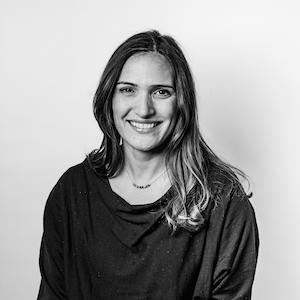
[00:00:10] Ray Latif: Hey, everyone, I'm Ray Latif, and you're listening to the Top Podcast for the food and beverage industry, Taste Radio. This is Episode 230, which features an interview with Nicole Ledoux, the co-founder and CEO of 88 Acres, a seed-based food company known for its simple ingredients and allergen-friendly products. Just a reminder to our listeners, if you like what you hear on Taste Radio, please share the podcast with friends and colleagues. And of course, we'd love it if you could review us on the Apple Podcasts app or your listening platform of choice. The familiar adage, plant a seed and watch it grow, is particularly apt for 88 Acres. Launched in 2015, the Boston-based company produces a range of seed-centric products, including bars, granola, butters, and dressings, all of which are free from the top eight food allergens. Focused on products made from Whole Foods, nutrient-dense ingredients, 88 Acres' message of making more from less has resonated with consumers beyond the allergen-free community and gradually expanded distribution beyond its roots in the Northeast. Today, the brand is represented nationally in a range of natural and conventional retail chains, including Whole Foods, Target and Sprouts. In the following interview, I spoke with Nicole Ledoux, who co-founded 88 Acres with husband Rob Dalton, about how the company has scaled from a local to national brand, why she credits in-house production as a significant competitive advantage, and how a very successful Kickstarter campaign provided a foundation for the brand's retail launch and successive fundraising initiatives. Hey folks, it's Ray with Taste Radio. I'm going to call right now with Nicole Ledoux, the co-founder and CEO of 88 Acres. Nicole, how are you?
[00:01:47] Nicole Ledoux: Hi, Ray. I'm doing great. Thanks so much for having me today. I'm excited to be here.
[00:01:52] Ray Latif: I'm excited to have you on the show. Thanks so much for taking the time to do this. I haven't used Twitter in a long time. I think I'm not the only one, but I saw your Twitter profile recently and it said that you're a fan of bourbon. I assume you're an even bigger fan of bourbon this year, at least maybe since May or June.
[00:02:08] Nicole Ledoux: Oh, man, this is definitely the year of bourbon. Yes, I did have a baby earlier in the year. So when the pandemic first hit, I was extremely pregnant. But since our daughter Parker has been born, I have been enjoying a little bourbon here and there.
[00:02:26] Ray Latif: Well done. How have you been juggling family and work in 2020? And this is a crazy time that we're living in. Do you have any tips for our audience?
[00:02:35] Nicole Ledoux: The way that work and family life are blending together in a much different way than they did pre-pandemic, being at home, one of the key things for my husband and I is we have an office up on the third floor. It used to be the attic in our house. And the ability to kind of hide away for as much of the day as possible makes it easier on especially our toddler son kind of like out of sight, out of mind. But I think we've just been way more flexible about trying to meet our team where they are and to assess their needs. So there's definitely been some like later evening phone calls so that our team members with kids can take some time during the day to help with whatever Zoom school or family issues that they've had. So there's definitely not as much of a clean kind of like eight to four or nine to five day as there used to be. But we're all surviving and thriving and healthy. So that's all we can ask for.
[00:03:33] Ray Latif: Have you given specific guidance to your employees about this sort of flexible schedule? Or is it just sort of, you know, this is the world we're living in.
[00:03:42] Nicole Ledoux: So we try to check in with each individual team member at least once a week on nothing related to work, just kind of like a How are you doing? How are you dealing with this? What's going on in your life? What can we help with? We only have a handful of team members who have kids. And so just making sure that we're giving everybody the right amount of flexibility that they need. And we've always had this perspective of as long as you're getting your work done, you know, we don't necessarily need to stick to some like hard and fast workday rules. But I think it's even more important to check in and just see how people are doing. This year has been, it's been a lot to handle, you know, between the pandemic and everything that's happening, kind of, in the country. So just making sure that everybody is feeling like they have the resources they need to be successful at work.
[00:04:45] Ray Latif: Do you have an HR department or are you essentially the HR department?
[00:04:49] Nicole Ledoux: No, we do not have an HR department. And so that has definitely been a struggle from like a bandwidth perspective is just me and my co-founder Rob and our CFO Mark have been kind of divvying up that responsibility just to make sure that we can communicate with every single person on our team. But that was one of the hires that is pretty high up on our list to bring in as quickly as possible. I think times like this, the team needs more and not less communication and it would be really nice to have somebody on HR.
[00:05:30] Ray Latif: I think an HR department sometimes is a gift and a curse. Just me personally, because I don't think a lot of people know how to use your HR resources most effectively. I think you might have a different perspective because you spent a lot of time in corporate finance. Post college, your career was rooted in finance. You were an options trader. What does one do as an options trader? What is that role all about?
[00:05:54] Nicole Ledoux: I mean, basically I traded imaginary pieces of paper.
[00:05:58] Ray Latif: Okay.
[00:05:59] Nicole Ledoux: I worked in a fixed income group on a fixed income options trading desk. And essentially, we helped portfolios, people who are managing portfolios, whether they were hedge funds or other types of funds, manage their interest rate exposure through the options market.
[00:06:19] Ray Latif: I've spoken with folks who have come from the investment world and got into entrepreneurship. And surprisingly, there's more than I would have expected. You know, what was the inspiration behind you getting into the food business? I know that there was a dark moment that kind of sparked it, but it had to be more than just that, right?
[00:06:42] Nicole Ledoux: Yeah, I think that I had pursued this career in finance because it was super challenging and I was surrounded by really smart people. And I liked that aspect of it. But when I really, I got into my early 30s and started to really dig into what it was that I liked about my job and I wasn't very passionate about the financial markets and in order to be a trader and to like get up in the middle of the night to be watching your portfolio and I just, I just didn't love it enough to keep putting my heart and soul into it. And so I was coming to that realization right around the time where I met my now husband and co-founder Rob. We met on Match.com back when Match.com was kind of the only way you could meet someone online. And we were out for our fourth date at this restaurant in my neighborhood. and his meal was cross-contaminated with peanuts or tree nuts. He had mentioned on a first or second date that he was allergic to all nuts, and I just filed it under some interesting tidbit about him. But he looked across the table literally two bites into dinner and told me not to panic, but that I needed to bring him to the ER because his throat was closing. So that was like my trial by fire with food allergies. And I remember we hopped in my car and I was driving down Comav in Boston, doing like 90 miles an hour and blowing through red lights to get him to Beth Israel's emergency room. And he handed me his EpiPen and asked me if I knew how to use it. And I was like, I don't even know what that thing is.
[00:08:37] Ray Latif: Oh, geez.
[00:08:38] Nicole Ledoux: So I met his mom and dad for the first time in the ER, which is actually a really funny way to meet your future in-laws, because I was like the hero that saved their son's life. And there was very little attention on me and getting to know me and more sort of gratitude for getting Rob to the hospital. So it was pretty funny.
[00:08:58] Ray Latif: I've been in a car ride with someone who is having an emergency allergic reaction. I forget who's going into anaphylactic shock. Is that, is that what it is? Yeah. It is a harrowing experience to say the least.
[00:09:11] Nicole Ledoux: Yeah. And, um, so Rob's throat was closing. He has difficulty breathing. It's really, really scary. And I can imagine it's terrifying for him, but as somebody who had never seen that or been around that before, it was like such an eyeopening experience for me. And we spent the night in the ER. They released us in the morning and someone had to watch him for the next 24 hours as the IV drugs wore off to make sure he didn't relapse. I brought him back to my apartment and I put him to bed and then I went into my kitchen and I literally just went through every single thing on my shelf to make sure that I was dumping out the slivered almonds and any of my protein bars that had nuts in it, the jars of peanut butter. It was sort of an aha moment for both of us because I realized that if I was going to keep dating this guy, his food allergy was going to become my eating restriction. I just didn't want him to have to read labels in my house. And I wanted to make sure that I was keeping him safe on my watch. And I remember going to the grocery store a couple days later, and I was, like, on a mission to find him some, like, delicious, nut-free food that he could eat. And I found, like, two or three things, and I brought them back to the house, and I put them on the table. And I'll never forget the look on his face. And I was like, what? What's wrong? And he was like, Whole Foods are not for me. And if they weren't for him, the target consumer, you know, I was like, so I dug into that a little bit and he was like, honestly, like the nut free safe food reminds me of being at the elementary in elementary school at the nut free table, you know, by myself. And I don't want to eat food that makes me feel like a sick person or that I have to have different food from everyone else. and that like really struck a chord with me because if you know, how many people were out there like Rob who just didn't feel like they had the opportunity to eat food that was like empowering or that focused on being delicious or nutritious and not just about being free of something. So I started making us bars in our, like my crappy basement apartment kitchen. And instead of using nuts in those bars, I was using seeds, which have, this amazing nutritional profile, tons of protein that were kind of accomplishing, you know, similar, if not better nutritional profile to the nut based bars that I used to eat before I met Rob. And, you know, it started where he would, someone would steal a bite. And then people were like, hey, can you make us some extras? We want some of those bars. And then it turned into this, people placed, you know, like hundreds of people placing their orders before some of our triathlon workouts. And we knew we were onto something when Rob was super excited about them, but even more importantly, our friends who didn't have food allergies were like, these are the best bars I've ever had. I don't have any food allergies, but I just eat these because they're delicious.
[00:12:42] Whole Foods: where, you know, we knew that this could be a solution for way more people than just us in our immediate circle of friends. Vibrant Ingredients is the natural ingredient partner powering food and beverage innovation, delivering flavor, function, and protection through a science-backed portfolio. Vibrant delivers purpose-driven solutions that help brands create extraordinary experiences. Discover what's possible with Vibrant today. Visit vibrantingredients.com.
[00:13:38] Ray Latif: You know, I hear similar stories from entrepreneurs about creating something in their kitchen and it being loved by their family or friends and sparks the idea of a potential business. There's a big leap between that moment and actually having a product. What was your process for planning and ideating for a brand for 88 Acres?
[00:14:02] Nicole Ledoux: We have always thought about this process in terms of taking like really small bites, no pun intended, and kind of proving out like smaller milestones before we head to the next thing. So I think for us, we just got the product in front of like more and more people and kept tweaking the product until we knew that it was like exactly where we wanted it to be. And then it was sort of like taking small steps beyond that. And then kind of constantly gut checking. I remember when I left my job, I was like, I'll spend three months on it. And I'll try to get to this milestone. And if I don't get to this milestone, I'll think about maybe like going out and getting a job or something. And those three months turned into six months, turned into nine months, turned into a year. And I've been working on 88 Acres since. I think it's in the early days, it's really important to make sure that you're setting those milestones for yourself because there's so many places where you can get stuck or feel like you're not moving fast enough or you're spinning your wheels and it's really easy to get overwhelmed. And so setting those like, those smaller milestones for sure helped me keep going.
[00:15:24] Ray Latif: It took three years though. And within those three years, I can imagine that there were probably moments we were like, should we be doing this?
[00:15:32] Nicole Ledoux: So many of those moments.
[00:15:34] Ray Latif: Yeah. So what kept you going?
[00:15:36] Nicole Ledoux: So right around the time when I left my job to focus on 88 Acres full-time, Rob got into an MBA program at Babson, and I was working from campus and being surrounded by other students who were working on their entrepreneurial ventures, professors who could answer questions for us. it definitely felt like we were able to move a little bit faster and get our ducks in a row in order to get to the launch phase. One of the things I realized early on was that my old network of people within finance, although extraordinarily talented, amazing people, there just wasn't a lot of overlap between what they were working on in finance and what what I used to do in finance and what we were trying to do like building a brand from scratch and starting a business. And so building like a new network within you know with other startup entrepreneurs was super helpful because whether somebody else was starting a tech company or a food company or, you know, really any company, you're solving very similar problems in the early stage, like getting a business plan together, putting together a minimum viable product, finding customers, putting together like your sales pitch. And so being able to bounce ideas off of that community was super helpful.
[00:17:02] Ray Latif: When you did decide that you were going to make this happen, that you were going to launch 88 Acres, one of the most agonizing decisions had to be that of actual production. This is an issue that early stage entrepreneurs run into all the time, which is, who's going to make my product? Do I have to make it myself? Where is this going to, where is this actually going to come from? When you were considering production options, what went into that process?
[00:17:34] Nicole Ledoux: So one of the things that helped a lot was that right when we were starting to answer this question, we had entered into a business plan competition and we won that competition and we won some money with that. Prior to winning that money, we had talked to a bunch of people in the food space and everybody seemed to be using contract manufacturers or co-packers. And so we thought that we could do that too. And we literally started Googling co-packers and none of them would call us back. And that was like the few that we could actually like find contact information or or actually like figure out what they did.
[00:18:14] Ray Latif: There was no BevNET or Nosh back then?
[00:18:17] Nicole Ledoux: Yeah, no BevNET or Nosh back then. No like cheat sheet of 10,000 available co-packers that you could just cold call. And so we're really spinning our wheels. And we had talked to another food entrepreneur who had been working with like a food consultant who was helping her figure out her co-packing strategy. And we had talked to him. He was like, I can help you do this search. They're definitely never going to call you back. So he had the legitimacy of working for decades in the food space. He had helped hundreds of businesses line up co-packers. And so by winning that business plan competition, having some money that we could devote toward bringing in some resources, that helped a lot. So we hired him and one of the first conversations that he had with us was really just trying to lay out how difficult it was going to be to find a co-packer that could work for us. And that's really for a few reasons. The first is that we were adamant about finding a facility that would be multi-allergen free. So our bars, these original bars and every subsequent product that we've ever made is free of the top eight food allergens plus sesame. And so finding a facility that never allowed those ingredients in their building was really important to us, but it's not something particularly back then that was like at all common.
[00:19:54] Ray Latif: I don't think it's very common right now either.
[00:19:55] Nicole Ledoux: Yeah, it's still not common at all. The gluten-free industry was gaining quite a bit of traction back then, but even that, finding a gluten-free facility was super difficult, but finding a facility that had even one additional allergen that they prohibited from the building was next to impossible. The second criteria that we had was that, so our bars are baked. One of the reasons they taste really delicious is that we don't make our bars the way that almost everybody else in the industry makes them. So if we could find a bar manufacturer, they almost always had the wrong equipment for us. So that was really difficult. And then the third criteria was that we wanted to find a co-packer that we could grow with. A lot of co-packers don't, most co-packers don't like to work with startups and they have very high MOQs, like minimum order quantities. And we didn't want to have to order like a hundred thousand units of each of our three original SKUs and then try to figure out how to sell all those before the food expired. So, you know, we vetted thousands of potential co-packers throughout the U.S., we opened the search up to Canada, and we really just didn't find anyone.
[00:21:14] Ray Latif: Thousands, really?
[00:21:16] Nicole Ledoux: Thousands.
[00:21:17] Ray Latif: Wow.
[00:21:18] Nicole Ledoux: Yes, so that was a pretty exhaustive search and when you talk about, you know, why did it take you three years to get off the ground, like the first year basically was us trying to find a co-backer and to kind of like get our business plan together. And so we kind of got to this point where we needed to make a decision about either walking away and not starting the company because we couldn't find anyone to do our manufacturing for us. Or we could start our own manufacturing operation and do our own production. And I remember we had a long discussion about whether we wanted to do that and how scary that was. But ultimately, we were so convinced that there was this need for 88 Acres and the food was amazing and that we were onto something. And so ultimately, we decided to build our own bakery in 2014.
[00:22:13] Ray Latif: And I'm assuming that it costs a lot of money to do that.
[00:22:18] Nicole Ledoux: Yeah. So we were saving for a house and instead we built a bakery. And I will never forget, there's a photo of Rob and I signing the lease on our space. So first of all, the building that our bakery was in, it was an old hot dog factory that had been shut down for over a decade. And when you walked through the space, you really, really, you almost had to close your eyes and imagine what it was going to be. It was in pretty rough shape, but the plus side of that was we really got to start from scratch and make sure that the space was completely tailored to what we needed. But at that lease signing, when we were handing over, literally we had just drained every penny out of our savings account, and we were committing to this, I think it was like a three-year lease at the time, which to us seemed like an eternity. And we were like sweating and pale and not at all like the happy moment that you would expect to see out of like such a milestone for the company.
[00:23:27] Ray Latif: That was probably the riskiest moment of your lives.
[00:23:31] Nicole Ledoux: For sure.
[00:23:32] Ray Latif: When we talked last though, you said that there were ways to mitigate risk. Despite the fact that you were both risk-tolerant people, you did sort of protect your investment.
[00:23:46] Nicole Ledoux: We did, yeah. So I think what made us comfortable to move on to the next step of signing this lease and building our own bakery was really rooted in our ability to find customers who would agree to take our products in before we had the ability to produce them. So one of those ways was we did a Kickstarter campaign and we didn't view that as a way to raise money as much as we did as a way to pre-sell our first production run and also to start to build that network of consumers that beyond like our own personal networks. It was great if our moms and dads love us and our friends were excited to support us. But what was really interesting was when you start convincing total strangers to try and fall in love with your product. So the Kickstarter campaign was kind of a proof point. And we had gotten in front of Whole Foods with the bars and despite the fact that the bar category is incredibly crowded, they thought that 88 Acres was making a product that was really filling like an important white space within the category and they didn't have anything on the shelf that was like that or that was meeting this customer demand and so they agreed to launch us within the entire North Atlantic region before we had made a single bar. And so because of those two points, I think we felt comfortable that, you know, that we could figure this out. There was an end consumer for this product and we just needed to be able to manufacture it. And, you know, the sales were as lined up as they could be.
[00:25:35] Ray Latif: Was the Kickstarter campaign or was the response from the Kickstarter campaign mostly from local consumers or were you getting responses from folks across the country? And if it was sort of widespread and broad, was that also an indication that there was broad opportunity for 88acres?
[00:25:52] Nicole Ledoux: Totally. Yeah. So to answer your first question, it was pretty broad. We had Kickstarter customers from every state. We did a lot of pre work going into the Kickstarter campaign. We had talked to a bunch of people who had incredibly successful launches, both within the food space and also within like the general consumer space. There was like an apparel company that had done like $3 million and Their original goal was like $10,000. And at the time, food was not, it was like a much smaller sector within Kickstarter. So if you had a hoodie to sell, you could really blow the doors off of your campaign, but no one had really done that within the food space. And I think at the time of our Kickstarter launch, there was like one food company who had done more than like $25,000 in sales. And so we did a ton of research and we had this whole plan together about how we were going to like spread the word about the campaign and leverage networks of our friends and their friends and try to create as much momentum as early on as possible. And through our research, we had learned that if you can hit your Kickstarter goal very early in the campaign, that it would provide a lot of momentum to kind of rocket past that. So we ended up raising, I think, $35,000, which at the time was the second or third largest Kickstarter campaign within the food space. Our goal was $10,000, and we reached our goal within 72 hours. And the Kickstarter campaign was important. It was an important proof point as we were talking to different retailers, because it mitigated a point of risk for them that we had pre-sold all of this product, that we had people who weren't in our immediate networks or even in our immediate communities who were demanding this product. And it definitely helped the conversations with these retailers.
[00:28:03] Ray Latif: Was the story about you and Rob as a couple and obviously the story about his allergic reaction at dinner, I mean, how much of that story resonated with folks as well?
[00:28:13] Nicole Ledoux: At its core, this sounds super cheesy, but at its core, 88 Acres is a love story. And it's really about Rob's inability to feel like he can sit at the same table as everyone else. And my desire, I grew up on an 88-acre farm in Central Mass. My family is obsessed with food. I wanted to give that experience to not only to Rob, but like to anyone who is eating our foods that, you know, that you can bring people around the same table regardless of like dietary restrictions. And we can do that in a super empowering, positive way that celebrates the food that's in our products rather than constantly talking about the ingredients that aren't in our foods.
[00:29:08] Ray Latif: Going back to your manufacturing facility, you mentioned you have a lot of folks that work at the plant. I think during COVID that that might be the most challenging part of your business or might be the most challenging part of your business to date. But when we spoke last, you said that opening your facility was 100,000% the right decision. How do you analyze the benefits of running your own manufacturing versus working with a co-backer?
[00:29:41] Nicole Ledoux: Yeah, I mean, during COVID, I think April and May were the two most stressful months of my entire life. And keeping our team safe in general, but specifically at the bakery was our number one concern. Everything starts and ends with the bakery and the love and care that they put into producing all of our foods is like why people love our products, right? So when we were vetting potential co-packers, it was really shining some light on you know, some of them like were buying the ingredients for you and any cost savings they were enjoying or any production efficiencies like they got to, to keep and it really like shined a light for us on the importance of sort of like owning our own destiny from so many different angles, right from a cost and COGS perspective on the one hand, but more importantly, just the quality of the food and ensuring that we were making our food in the absolute most safe environment possible and that we were being like militant on who in our supply chain we were partnering with and you know nobody is going to do a better job of making your food than you are and no one is going to care more about making your food than you are and so I think that that was sort of like the driving thought while we were trying to figure out building our own bakery and you know we just we knew it was something that we had to do and that we wanted to do this ability to completely control our supply chain. We're probably the biggest pain in the butt company to work with for any of our suppliers. We ask a million questions. We really have to get comfortable with knowing exactly where the food is coming from and where there could be any potential risk of cross-contamination with other allergens. And so we really spend a lot of time building that supply chain out and controlling our own supply chain. It allows us to not only work with the best suppliers possible, but also to pass along that transparency to our consumers because we know it's important.
[00:32:13] Taste Radio: Do you want more repeat buyers on Amazon? Well, this free resource in collaboration with Straight Up Growth will help your brand turn first-time buyers into long-term subscribers. Download Winning the Repeat Purchase Game on Amazon now at Taste Radio slash SUG. That's Taste Radio slash S-U-G to start building retention-driven growth for your brand on Amazon. Scaling a beverage brand into major retail comes down to operational readiness. From packaging lead times to co-manufacturing strategy, the details can make or break a launch. In a new e-book in collaboration with Octopi and Asahi Beer USA, industry leaders share what they've learned in helping brands scale. Download it now at Taste Radio slash octopi. Do you need to scale your team faster without compromising on talent? Join Oceans for a live webinar on April 20th and learn how leading companies are hiring top global professionals who are ready to grow with your business. Register for the webinar now at Taste Radio slash oceans. That's Taste Radio slash oceans.
[00:33:24] Ray Latif: Do your consumers ask about your supply chain? I can imagine that it's really important for you just for peace of mind to be able to sleep at night knowing that you do have a product that is what it is and is what it says it is. But I guess in terms of consumer hierarchy of needs, is it something where they're like, I trust this company, this is why I buy products from this company, or is it something else?
[00:33:53] Nicole Ledoux: I think that definitely has a lot to do with it. It was important to us that we could tell any consumer, whether they had severe food allergies or not, that this is the exact care that's going into producing your products. These are exactly the things that we're screening for when we're partnering with suppliers, and this is how we're ensuring that we're keeping people like Rob and some consumers' children safe. And the ability to do our own manufacturing was like a huge cornerstone and starting to build that trust. Over time, we've definitely seen the shift within the food industry where consumers are just demanding more transparency from every company they choose to support, whether it's a clothing company or a car company, and for sure the food companies. you know, Whole Foods are making their way into their groceries baskets every week. So we wanted to kind of lead the charge. and being super transparent. But I remember, you know, in the early days of launching the company, we would talk to ingredient suppliers, and they wouldn't want to tell us where the ingredients came from, or what farms they were partnering with. And so it was definitely, it was very frustrating. And I remember, there's this mentality of like, why would you want to tell people, you know, where you're getting your ingredients from, this is a competitive advantage. And we just never thought that way. And so We don't work with people who have that mindset and we've never treated our consumers like that. We try to give as much transparency as we possibly can at all times.
[00:35:37] Ray Latif: And when you're talking to your consumers, are they dictating or are they advising you on your innovation strategy? Are they asking for certain things that are, you know, allergen-free or nut-free beyond bars? And is that how you've expanded your product line?
[00:35:54] Nicole Ledoux: I mean, we definitely get a lot of consumer feedback on like, Oh, well, I wish you would make this or this flavor. Have you ever thought about this? Most of our innovation comes from within our team. So everybody at the company is obsessed with food. And, you know, when they're not at 88 acres working they are doing things like brewing beer at home or You know baking like the world's greatest banana bread or they're you know, they're avid followers of food blogs they love to cook and so a lot of ideas just come from we have a company wide slack channel and we're constantly posting, you know things that we've made or ideas that we have and and We also, before our office closed, we had beers and brainstorm every Thursday afternoon from four to five, which would really turn into like four to 6.30. And we would all sit around. We didn't have a conference room or like a conference table in our office. We had two couches and a bunch of floor pillows and poofs. And so we'd sit around on the couches together and we would just kind of like riff off of each other and ideas and that's really where a lot of our innovation comes from. But it for sure comes from different pain points that we've identified from different consumers throughout the country.
[00:37:21] Ray Latif: When you have an idea that you think would make sense as a line extension or brand extension, it seems like it would be easier to immediately work on that idea if you have your own facility. I assume that's another competitive advantage is that you can do R&D a lot quicker than you would otherwise because you own a manufacturing plant.
[00:37:41] Nicole Ledoux: Yeah, totally. And we also have like a kitchen in our office. So that's sort of where all R&D would start. You know, we have the ability to on a slower manufacturing day, or kind of at the end of a shift, to just tack on a run to whatever we were, you know, whatever our production plan was at the end of the day. And if you work for a co-packer who has these huge like minimums or where you're struggling to fit into their production schedule, doing R&D is very expensive and just have like a really long lead time. And so our ability to super quickly innovate is really driven by our ability to kind of own that R&D process from beginning to end and to get into our bakery really quickly and try things out. So it's definitely a huge advantage.
[00:38:35] Ray Latif: Innovation is really important, but at the end of the day, it comes down to execution, right? Or I'm not sure. I mean, what do you think is more important, innovation or the execution of that innovation?
[00:38:45] Nicole Ledoux: I think both, like you really can't have one without the other. You can have the greatest idea in the world, but if you can't convince people that this is something that they should try, then your amazing innovation is never going to grow legs. I read a stat at At some point last year, that was something like, and don't quote me on the actual number, but the magnitude is important. It was like 80% of your grocery cart decision has been made in your head before you even walk through the grocery store. And what that tells us is that it's really important to get on people's radar before they're ever in the store. So the execution of every product launch is really, really important.
[00:39:28] Ray Latif: Money is also really, really important. You talked about Kickstarter raising $35,000. I think in the big scheme of things, that's probably a drop in the bucket these days, right? Yeah.
[00:39:39] Nicole Ledoux: This costs a lot of money.
[00:39:40] Ray Latif: Yes. It does. You've raised money in a lot of different ways, obviously crowdfunding. What are some of the other ways that you've been able to raise money and how much of it is equity-based?
[00:39:53] Nicole Ledoux: Yeah, we tried to be really, really scrappy in the pre-revenue days and we left no stone unturned. So we entered like every single business plan competition that we could, especially if there's money attached to it. And so, you know, winning some business plan competitions really helped, you know, there's some stuff that just It costs money and there's no way around it, and it's really painful to have to pay before you've even really decided if you have a viable business. So the first, I think we won somewhere between $20,000 and $30,000 in business plan competition money. We did the Kickstarter campaign once we were certain that we were going to launch the company and we had a product. We also looked for grant money, so the kind of like no strings attached money, most of that came from the schools that we went to. So we were part of, Rob for undergrad went to Northeastern and they have an incredible accelerator program for both current students and alumni. We were part of that. It was super helpful and we got some money from that. We got some seed money from Babson that was not part of like their business plan competition. One of our first investors was, I went to UMass for my undergrad and they have this amazing venture fund and they were one of our first investors. So really like leveraging our alumni connections. But eventually, you know, we needed to bring in some money that was beyond grant money and after we had exhausted our savings accounts. And so, you know, it was really then about going out and finding angel investors or groups like the UMass Maroon Fund and, you know, pitching the business to them. And we started to raise some equity rounds.
[00:41:47] Ray Latif: How do you win a business plan competition? It sounds like you've won a few.
[00:41:51] Nicole Ledoux: I think it's about having a really compelling why. And for us, a big part of that was our founding story. And then it's convincing people that the world needs your product and that the market size is attractive enough to give you a shot at being successful. We didn't realize it at the time, but these early business plan competitions were us sort of perfecting our pitch. which would be critical for when we would start meeting with investors, because basically that's what you're doing.
[00:42:25] Ray Latif: When you are meeting with investors for an initial round of capital, when you go back to them for that second round, what are you trying to show them? What are they asking for?
[00:42:36] Nicole Ledoux: For us, it was about setting milestones and establishing a track record with investors. And so we had started to network with investors that we were way too early for. But this was important for two reasons. One, by establishing these relationships with investors we knew weren't going to write checks, they would help us by making introductions to people who, you know, were a little bit more appropriate from a stage perspective. And I think the second was really to, it was almost like an early advisory board for us. It's that whole, like, if you want advice, ask for money. If you want money, ask for advice. And we had this group of people who kind of knew we weren't asking them for money. And so they were really critical in helping us to achieve some of these early milestones that we had put out. And then this establishing a track record with investors, you know, we check in with investors every, like, three or six months, and every time we would check in with them, we had an update for them. And so they could see this progress that we were having. So when we were ready to go out and raise a round with them, they weren't meeting us from scratch. Like, they had been talking to us for a year and seeing this idea progressing. And, you know, I think from an investor point of view, they're trying to find like the best jockey and not necessarily the fastest horse. And, you know, that sort of like almost like dating process really allowed them to get to know Rob and I and get comfortable with us before having to write a check. It was really important to Rob and I that we that we ran the company and that we were finding investors who wanted to help us develop as leaders and not necessarily partner with investors who are going to like replace us with some professional management team. So, you know, like through that whole kind of like dating process, you learn who the investors are, who, you know, it's really important to find the right founders and who the investors are, where it's just really important to find the right idea. And like, anyone can run this.
[00:44:54] Ray Latif: Well, it sounds like your passion for the company and for your mission places you in a perfect spot to run the company now and in the future. And based on your track record for 88 Acres, it sounds like you're doing a heck of a job. Nicole, thank you so much for taking the time to speak with me today. This has been so informative and so great. I love your products. I think your brand is amazing. And this has been an honor to sit down with you today.
[00:45:18] Nicole Ledoux: Thanks so much, Ray. This has been great. And thanks for the opportunity. I appreciate it.
[00:45:22] Ray Latif: All right. That brings us to the end of episode 230. Thank you so much for listening. And thanks to our guest, Nicole Ledoux. As always, for questions, comments, ideas for future podcasts, please send us an email to ask at Taste Radio. On behalf of the entire Taste Radio team, thank you for listening.
[00:45:41] Taste Radio: And we'll talk to you next time.