[00:00:10] Ray Latif: Hey folks, thanks for tuning in to Taste Radio, the number one podcast for the food and beverage industry. I'm Ray Latif, the editor and producer of Taste Radio, and I'm with my BevNET and Nosh colleagues, John Craven, Mike Schneider, and Jacqui Brugliera. In this episode, we're joined by Nicholas Reichenbach, who is the founder and executive chairman of Flowater, which is changing the way consumers consider premium water. Just a reminder to our listeners, if you like what you hear on Taste Radio, please share the podcast with friends and colleagues. And of course, we would love it if you could review us on the Apple Podcasts app or your listening platform of choice. Welcome back, John Craven. Haven't seen you in a bit on Taste Radio, but it's not like you haven't been busy. A lot going on at BevNET. Yes. Thanks for noticing, Greg. Well, it's not so much me that's noticing as it is, you know, I think our listeners. You know, actually, one of our listeners put something out on Instagram and tagged you and tagged our Instagram handle, BevNetTasteRadio, and he was praising you for mentioning Clio bars, the Greek yogurt bars that I talked about a few episodes Back To he must have confused you and me. I don't know how you could do that, but... That's okay.
[00:01:19] Nicholas Reichenbach: I said I had 50 in my fridge at Eric, my freezer at any given time. So, I mean, I guess it's fine. They attributed to us, get the brand, you know.
[00:01:29] Flow Water: If it gets me more, more Cleos, then sure. Yeah. Was it Cleos or Chloe's? I think we might've been talking about both, right? Chloe's?
[00:01:39] Ray Latif: Oh, Chloe's, yes.
[00:01:39] Flow Water: Chloe's, excuse me.
[00:01:41] Ray Latif: Yes, Chloe's, the fruit bars, the fruit and oat milk bars. Actually, we have an interview coming out with the founders, Elizabeth Epstein and Michael Sloan, coming out in the next episode of Taste Radio. Look out for that. Fantastic brand, really fantastic conversation. Interesting to hear about their 10 years in business. Now, BevNET has been in business since 1996. If I'm doing the math, it's 25 years. This is a 25-year anniversary of BevNET, John Craven? Yes. Wow! Are we doing anything to celebrate? We're celebrating every day, Ray. We always celebrate. Every day is a celebration at BevNET. That should be our tagline. Can we trademark that? Every day is a celebration at BevNET.
[00:02:21] Nicholas Reichenbach: We tell everyone in the interview process that every day is a celebration and we just pay it off, right?
[00:02:26] Flow Water: That sounds creepy.
[00:02:27] Nicholas Reichenbach: Day after day.
[00:02:28] Flow Water: Did you just say that sounds creepy? It sounds a little creepy. Every day is a celebration? What is that? Sounds like a tagline for some fast food joint or something.
[00:02:37] Ray Latif: Well, how about this instead? Every day that you are a BevNET Inosh insider is a celebration. I like that one a little bit better.
[00:02:45] Nicholas Reichenbach: Stick to hosting Taste Radio, Ray. Leave the taglines to the marketing team.
[00:02:49] Ray Latif: All right, all right. Okay, well, I think folks have probably heard about Insider and us talking about Insider on BevNET and Nosh. But I think it's a good time to introduce our Taste Radio audience who haven't been exposed to our evolution, the evolution of our subscription model, which is now known as Insider. Mike, what is this all about?
[00:03:09] Nicholas Reichenbach: Yeah, right. I mean, the product has evolved significantly since we built it. I mean, we've added a lot of great original programming, speed dating. So we decided that we had to move it beyond the sports subscription that we use for other things. You can subscribe to a newsletter. You can subscribe to our social channels and all that's free. And so we decided to rename this product Insider. Eating a little bit of our own dog food, right? We're talking about package design all the time on our show and we're iterating here every day too, just like you are.
[00:03:42] United States: Yeah, I think it also just really illustrates the community that's forming behind BevNET and Nosh and Brewbound. And when you become an insider, you kind of take a step beyond those free opportunities and you step into that community of brands, retailers, distributors, you name it, that are part of the industry.
[00:04:01] Nicholas Reichenbach: And we understand that it's a community that's highly motivated to grow their businesses, and we're trying to bring everybody together in the best way possible. And there's opportunities to get your burning questions answered when you need them answered, and then opportunities to find your next partner through our speed dating. And we're continuously iterating on this product, too. We're just going to keep adding to it. We're releasing our insider newsletter this week, and there's all kinds of things in the pipeline too, so stay tuned.
[00:04:32] Flow Water: If all that stuff isn't enough for you, there's also a variety of discounts that you get from being an insider, including off of our upcoming return to in-person events this December.
[00:04:45] Ray Latif: Yes, indeed. Very exciting development.
[00:04:48] Nicholas Reichenbach: Upcoming return to events?
[00:04:50] Ray Latif: Yes. In December, the big return of BevNET Live, Notch Live, and Brewbound Live at Santa Monica Watrous the Lowe's Santa Monica Beach Hotel. I'm very excited for this, as I know a lot of folks in the industry are as well. Check out BevNET and Notch for more details and Brewbound for more details as well. But this is full steam ahead for the team. We are planning, we are preparing, and we are gearing up to go Back To California. Well, and Jackie, in your case, you're gearing up to go slightly north.
[00:05:23] United States: Yeah, I'm just going up the road, but it's a nice escape. Yes.
[00:05:28] Ray Latif: Indeed. I'm sure it's a nice escape for some folks to come out to sunny Newton, Massachusetts as well. You know, I mean, this is one of the destinations of America is Newton, Massachusetts. You know why? Because Batman headquarters are located in Newton, Mass. And it was great to host a man known as Ugly Hugh, who is the co-founder and CEO of Ugly Drinks. His full name, his real name is Hugh Thomas. He stopped by the office earlier this week, and it was good to chat with him in person. It's been a while since we did that with folks. And I think we're encouraging more folks to come into the office. Right, John Craven?
[00:06:08] Flow Water: Sure. Yeah, happy to have visitors. And I think, you know, starting to see people in the industry get Back To, you know, some of their more normal travel schedules. So I think, you know, if you're in Newton or San Diego, or I suppose even New York City, go visit Barry Nathanson. But yeah, we're happy to have visitors again. So
[00:06:31] Ray Latif: Yes, can't forget about our office in New York City, staffed by a man of one, but a very amazing man, Barry Nathanson. Jack, have you been to his office in New York?
[00:06:43] United States: I Have It, but I've seen the background of it in his video. It's just like all beverages.
[00:06:48] Ray Latif: Vintage beverages.
[00:06:50] United States: Vintage beverages.
[00:06:51] Ray Latif: No, it's incredible. Like, let's just do a quick tangent here on Barry. I visited his office a number of times in New York, uh, cause he's got a great conference room where I can record podcast interviews and meet with folks and stuff. And, and it's part like 1986 in there and part, you know, 2021, like he's definitely got beverages from the past. but he's also got like a sort of modern concept in that he's staying current on trends and what's happening in the beverage industry. He also has these incredible index cards where he like keeps track of names, addresses, when he last spoke to someone, the content of that conversation. He doesn't have a Rolodex. Like a Rolodex is a Rolodex. He doesn't have a Rolodex. He just has like a stack of index cards where he keeps track of folks. Awesome. And he's completely organized. It's called HubSpot Analog.
[00:07:45] Flow Water: Yeah, I was going to say we scoff at this, but you know, BevNET, like I'm sure many of our listeners, pays a nice, you know, monthly fee for a CRM system. And you know, Barry just needs some new cards.
[00:08:02] Ray Latif: Well, he could just stamp every one of the cards with HubSpot and at least, you know, it would be on brand for the CRM, right? Oh boy. Coming next week, a request from Barry.
[00:08:14] Nicholas Reichenbach: Can I get a stamp that says HubSpot? I mean, Barry does a lot of things, you know, he does a lot of things in ways that we've evolved from, but Barry's highly effective. He also, he knows everything about the industry. He can tell you some really great stories. And like you said, Ray, he's still, you know, ahead of the trends. And I mean, it's remarkable. I hope that I'm as sharp as Barry when I reach Barry's age.
[00:08:42] Ray Latif: Yes, we're just ribbing Barry because Barry... Because we love Barry. He's okay with being ribbed. But no, Barry is one of the most connected guys in the industry and one of the most decent people that I've met in the beverage industry. And it's always fun talking to him and hearing his stories and getting his insights about what's going on. He's also one of the few guys that I know, in our office anyway, that's not a big kombucha drinker. He's he's still with his Honest Tea and, you know, some of his, uh, some of the traditional beverage categories, things like that. He's, he's, he's that guy, which, which I appreciate. He knows what he likes. Absolutely. Absolutely. Well, I know what I like and of late, I've been drinking quite a few juice shots, boost immunity. It's all about immunity these days. And Vive Organic has introduced a couple new juice shots that are loaded, absolutely loaded with turmeric and ginger. The new turmeric variety has 30,000 milligrams of turmeric. It's a blend of orange juice, turmeric root juice, lemon juice, cayenne pepper, organic black pepper. The new ginger variety has 60,000 milligrams of ginger along with apple juice, lemon juice, and organic cayenne pepper. It's all organic, as would be expected.
[00:09:59] Nicholas Reichenbach: Those definitely pass the BevNET ginger test. If you make a face when you drink it, then it passes the test.
[00:10:07] Ray Latif: Well, it's almost impossible to drink an entire shot at once. I did feel superhuman afterwards, but it took a lot out of me to get to superhuman status. So I would just sip on that one if I were you. The turmeric one you can crush, no problem.
[00:10:22] Flow Water: Well, speaking of beverages to make you feel superhuman, I got this Bully Boy Italian iced tea, kind of like somewhere between a spritz and a maybe a hard seltzer of sorts. Got that. And also they're ready to drink bottle or ready to pour, excuse me, bottled Negroni, both two thumbs up. And the other one that I've been saving this couple of these cans, this Gia? Gia? I don't know how you say it. Oh, Gia. Yeah. G-H-I-A. That is legit. Yeah. Non-alcoholic spritz. Definitely some really good stuff. One of the better, I would say, no-alcohol cocktail-type drinks I've had in a while.
[00:11:05] Nicholas Reichenbach: That drink is just interesting. It's one of those that you can sip and feel like you're having a cocktail without the effect.
[00:11:14] Ray Latif: Can I segue into something that's a little similar? And I know you guys have talked about Casamara Club on the podcast before, but I got the cans and these are amazing. Casamara Club, a maker of Casamara Club sodas, non-alcoholic. These are pretty incredible because they've got so much flavor in them and are so similar, I guess, to me at least, to the experience of drinking a cocktail, but only have 15 calories per can, per 12-ounce can, and only 4 grams of sugar per 12-ounce can. It is incredible.
[00:11:52] Nicholas Reichenbach: I'm glad you got to get those right. I mean, I've already professed my love several times on the podcast for Casamara Club.
[00:11:58] Ray Latif: That stuff is quite tasty. Yeah, this is their Alta variety. They market a bunch of different varieties, but I was blessed to receive these. So well done, Casamara Club. It's positioned as an aperitivo leisure soda. Folks, if you can get your hands on these, I highly recommend you do.
[00:12:15] Nicholas Reichenbach: Also, I found in the fridge, Ray, the latest natural energy, pen. Power of the Himalayas in a can. Here it is.
[00:12:22] Ray Latif: Interesting. P-I-N, what differentiates it?
[00:12:25] Nicholas Reichenbach: Power in nature.
[00:12:26] United States: Power in nature.
[00:12:27] Nicholas Reichenbach: It's a Himalayan energy tea, Ray. I mean, I feel like a Yeti when I drink it.
[00:12:33] Ray Latif: Interesting. Because Yetis drink quite a few energy drinks. That's how they- Sure do. That's how they stay energized.
[00:12:40] Nicholas Reichenbach: Zero calorie energy tea. It's tasty.
[00:12:43] Ray Latif: Yeah. Well, let's find out what's happening out in San Diego. Uh, Jackie, I know you've gotten a bunch of food samples of late.
[00:12:51] United States: Yeah. So the way I stay energized is through food. I don't know about beverages so much, but I found this awesome new salsa matcha. Uh, it's called Kuali and they're based out of Oakland. So it's nuts, peppers and oil. So I'm really excited to try this. It looks really, really good.
[00:13:12] Nicholas Reichenbach: The package is so cool.
[00:13:14] United States: I'm going to be just pouring it on top of my lunch today.
[00:13:17] Nicholas Reichenbach: Oh my goodness.
[00:13:18] United States: And then we have a couple of refrigerated bars, which I thought was interesting. Um, this one reminds me a little bit of the packaging of Honey Mama, but it is 12 chocolatey bites of paradise called cocoa cow. They have a couple of varieties of flavors. So these came into the office as well.
[00:13:36] Ray Latif: And cocoa cow, it's not spelled cocoa cow. Like you would expect to spell it, spell something, spell it different.
[00:13:42] United States: Yeah. Like cacao.
[00:13:43] Ray Latif: Okay, so C-O-C-O-C-A-O.
[00:13:46] United States: Yeah, yeah, Coco Cow. So it's made out of cacao powder, coconut nectar, and coconut oil.
[00:13:52] Nicholas Reichenbach: Nice. Is it vegetarian or vegan?
[00:13:56] United States: Yeah, it's vegan.
[00:13:57] Nicholas Reichenbach: Calling it Coco Cow is going to confuse people, I think.
[00:14:00] United States: Yeah, it's only if you read it. Like, if you hear me speaking about it, yeah, it's confusing. When you see the cow, if people recognize cacao, I think it might be less confusing. And then Salivation Snackfoods food. So it's a refrigerated dark chocolate brownie, but it's keto. So they add some egg whites for extra protein, a healthy indulgence. And then I have a Maisie plantain chips and jackfruit chews. So awesome snacks. I love, I'm a huge fan of jackfruit as a vegetarian. So excited to try these chews. And I think I have one more thing. Actually, like I said, lots of lots of samples this week. And then I have little more, which is sunflower butter, organic puffs, and there's only four ingredients. So healthy snack. They have a couple of varieties of these as well.
[00:14:51] Nicholas Reichenbach: So there's a kid snack. Those have come into the Boston office to those are those are tasty. Yeah, I think they're supposed to be a better for you kid snack. There are flavor, but not too much flavor, because like you can't too much flavor for kids.
[00:15:05] United States: Yeah, and yeah, there was a tomato one too, so trying to pack in the veggies for the kiddos. I'm just like going under my desk.
[00:15:12] Ray Latif: There you go. Jackie, the amount Clio Snacks you Have It's reminiscent of the snacks that I usually Have It my desk, so well done.
[00:15:19] United States: I know, like we said, we're going Back To real life, so lots Clio Snacks.
[00:15:23] Ray Latif: Yes, yes. Well, I have a snack, I guess, I don't know if you'd call it a snack per se, but that you might like, Jackie. This is Sweet Pea. Sweet Pea, a maker of non-dairy Ice Cream powered by, of course, chickpeas. Maybe not of course, but it is powered by chickpeas.
[00:15:41] Nicholas Reichenbach: Hey, Ray, if Ice Cream's not a snack, is it a meal for you? Do you, I mean, do you? No, it's a dessert.
[00:15:47] Ray Latif: to frozen dessert.
[00:15:48] Nicholas Reichenbach: Gotcha.
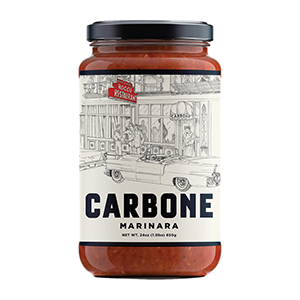
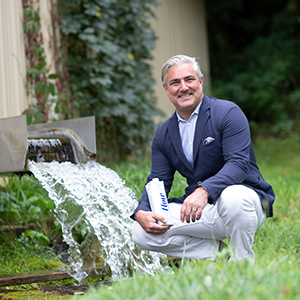
[00:15:49] Ray Latif: Yeah. You know, this is pretty amazing stuff. It's really, really creamy. It's really delicious. It's actually, I think, a little bit more reminiscent of like a soft serve in some ways, because it's so creamy. It's really good. It's got 210 calories per serving, two grams of protein, and surprisingly, in a good way, only 30 grams of saturated fat per serving as well. This is their mango tango featuring peach variety. You never get enough fruit in Ice Cream, I feel like, and mango and peach, I'll do that all day. So sweet pea, good stuff. There you go. Yes. Last but not least, I Have It my hand a jar of Carbone Arrabbiata Pasta Sauce. Carbone, a premium brand of pasta sauces. This is a remarkable product. I think most people, when they think of really high-end pasta sauce brands, they think of Rao's. Rao's is good stuff. Carbone, right up there, really. Yes, absolutely. Some people might be like, I know Carboni, it's a restaurant in New York City. Well, guess what? This is the brand based out of that restaurant, similar to how Rao's brand is based on the Rao's restaurant in New York City. So yeah, good stuff. Thanks to the folks at Carboni for sending this over. All right, I think it's time to get to our featured interview for this episode. As I mentioned at the top of the show, Nicholas Reichenbach is the founder and executive chairman of Flowater, a premium alkaline spring water company that markets a range of wellness-oriented beverages that are promoted for their use of sustainable carton packaging. Founded in 2015, Flow has achieved remarkable retail growth, with its products sold in over 25,000 retailers across the U.States and Canada, including at Whole Foods, Safeway, Wegmans, Walmart and Vitamin Shoppe, and achieved sales of $25 million in 2020. The company has also attracted a number of high-profile investors, including musician Shawn Mendes, actress Halle Berry, and NBA star Russell Westbrook. Success has prompted an upcoming public stock offering that is expected to raise over $50 million in support of the company's vision to establish a new standard for premium water, one that's focused on Taste Radio sustainability. In the following interview, Nicholas spoke about the rationale behind going public just six years after launching the beverage company, his unique experience as a music promoter and tech entrepreneur, and how timing played into the decision to commercialize his family's spring and the launch of Flow Water. He also discussed his impressive ability to raise capital for the company, how he's attracted celebrities including Gwyneth Paltrow to support the brand, and the company's strategy for taking direct aim at legacy premium water brands including Fiji and Evian. Hey folks, it's Ray with Taste Radio. Right now I'm on a call with Nicholas Reichenbach, who's the founder and executive chairman Flow Water. Niklas, so great to have you on the show.
[00:18:50] Whole Foods: Great, great. Thanks a lot, Ray. Great to be here.
[00:18:52] Ray Latif: It is, it is. And before we hopped on the mics, or actually before we started recording, we were talking about our love of Scandinavian countries and Europe, and we had a really good conversation. I had no idea you lived in Stockholm for a time. That's so fun. Stockholm is just an incredible city.
[00:19:06] Whole Foods: Stockholm's an incredible city, Europe's an incredible continent, you know, and we both share the love of food and beverages, of course.
[00:19:14] Ray Latif: Absolutely. Absolutely. An incredible restaurant scene in Stockholm. Also a pretty great electronic music scene from what I understand.
[00:19:23] Whole Foods: Oh yeah, some of the world's best artists come from Scandinavia and Stockholm.
[00:19:28] Ray Latif: For sure. Well, I'm not talking about ABBA, although ABBA's great. ABBA's great. I think in your world, or if I recall reading about you, you might have been more into, say, Swedish house mafia? Yes, that's for sure. Yeah. In doing my research, I dug up your old SoundCloud account, which it doesn't look like you've used in a while. You had a great profile picture and you had an impressive plunge on your shirt. It was maybe three, could have been four buttons down. Oh, yeah.
[00:20:01] Whole Foods: That photo must be, it's got to be at least 15 years old.
[00:20:06] Ray Latif: Yeah. Were you into the club scene? Were you into the electronic music scene?
[00:20:10] Whole Foods: Oh, Ray, do we want to go there? Sure, sure. Yeah, I actually started my entire career in business when I was 16 years old. And I had a clothing goods shop, 1991, I'm aging myself, called Rave New World. Ooh. Yeah. So myself and a group of promoters, about six of us in North America, broke electronic dance music from Europe in the nineties. So I became very quickly after when I was 16, I used to do bus tours into raves in Toronto, which is our major city here in Canada. And then I quickly became a concert promoter and built my first 10 years of my career as a concert promoter, promoting electronic dance music across North America. And it was fun, man. We used to throw about 600 shows a year. So yeah. I was a part of the first generation of it. We didn't call it EDM. We called it dance music and that was it, right? And it's all about dance music. And then, you know, after living in Europe for six years doing my master's, I got out of that and into tech. So, but yeah, I'm very, still very passionate about electronic dance music and my SoundCloud that I use every day. Really? My last set is Leap Ridge from Bernie Mann, which is the inception of Flow for me anyways. But some of his sets are just epic Bernie Mann sets, but I still listen to them every day.
[00:21:39] Ray Latif: Wow. Wow. You know, statute of limitations is probably passed on this. How many of those 600 shows were legal versus underground, shall we say?
[00:21:49] Whole Foods: Oh yeah, this is the best part of it. I didn't throw underground shows because when I was turning 18 and 19, that's the legal drinking age in Canada. So the first shows that we threw were licensed establishments for people that were over 19 years old. And so I focused on those shows almost exclusively for my entire career from 19 to 28 years old. So what's that? Nine years that we did that. So we own many venues ourselves, and then we threw concerts in other people's venues as well. It was a fun time. But yeah, they're all done legitimately, legally, and it was a really fun time.
[00:22:28] Ray Latif: Incredible. Well, we'll get into this, but it seems like you had sort of a Forrest Gump-ian kind of life in terms of your business career, starting out in an EDM with dance music, that is, and getting into other industries as well. But let's talk about the big news that's happening. Flow Water going public on the Toronto Stock Exchange. Congratulations. Very, very cool news. How does going public support the long-term vision Flow Water?
[00:22:56] Whole Foods: you know, it was a very simple board decision to take Flow public. We decided in 2020, Q4 2020, to take the company public. And it was really a factor of that we've been preparing the company to do an IPO since 2017. So we listed on the Toronto Stock Exchange private markets platform, which is a pre-IPO platform. that allowed us to do fundraising through what's called institutional IB investment banks and retail brokers and accredited investors in Canada and the US. And so we started down a different fundraising effort than most most beverage companies or most companies would take. Most of them would engage with private equity or venture capital, and even to a lesser extent, angel investors. But we decided to more institutionalize our growth strategy. And so we did that in 2017. We started moving the company towards a higher level of ESG, environmental social governance, which is really at the core of what Flow is from a company standpoint. And we started a path which takes three years to go through audited financials to up the corporate governance. And then we pass through that path in October. And so it was pretty easy next step for us to take the company public, to really give the management team the kind of runway to build a major contender or a major beverage company in North America and have that access to capital and growth. to really be able to do that, which is one of the major constraints for any beverage startup or any beverage company going in and trying to compete against market share, against multinational beverage companies that have a vast amount of resources against innovative, disruptive companies like Flow.
[00:24:54] Ray Latif: Yeah, I have a feeling you've experienced the sort of fundraising side of business many times in your career, particularly on the tech side. You're a tech entrepreneur for many, many years. Let's talk about that. Obviously, we've heard about your background in dance music. What got you into tech?
[00:25:13] Whole Foods: Ringtones. Really? Yeah. Wow. I sold ringtones for 10 years. I was probably one of the largest ringtone providers and we sold them. I broke ringtones, the actual music file, an MP3 on a phone. I was the first person in the world to do that when I lived in London, England in 19, sorry, 2001. where I partnered with Motorola and MTV, and we put the first music file that was fully licensed, and then we did it again with the first music video on a Motorola phone and on a phone, they were called feature phones at the time. And that set my whole career off in mobile technology and tech, all focused around consumer products and the mobile phone. So I pioneered mobile gaming, connected gaming on mobile phones, and I started I still actually have a, I'm still a very large shareholder of a mobile publishing company, a mobile games company called Magmec. So I've been in that industry now and I've published over 300 mobile games and cross-platform video games as well. So that's been with me for about, well, geez, it's gotta be close to 15 years now. It's a lot of fun, but that's how I went from concert promoter and music and entertainment and moved it into mobile and technology through entertainment and entertainment products going to consumers.
[00:26:36] Ray Latif: For people who might be watching this video, you might notice that I have a quizzical look on my face in that I can imagine that you probably did well for yourself creating Ringtones, which was a big business, I recall, in the early 2000s, and then mobile gaming, which also sounds like it could have been pretty lucrative. Why get into the beverage business? Why take the experience that you have, you know, to get into this crazy, insane beverage business that we all love so dearly?
[00:27:06] Whole Foods: Okay, so here's how it all connects together, you know, because my whole life has been very serendipitous and I'm blessed and I feel grateful for everything that's happened. When I started electronic dance music concerts and shows, I went over to Europe in 1993. And, uh, we went to this club called Creamfields in, uh, Liverpool, and we're watching this DJ Paul Oakenfold at the time. And I went to the bar to get a drink. And I think, I think I was, I may, I may have been able to drink at the time or just, you know, 19 or, you know, some limitations has passed.
[00:27:46] Ray Latif: I don't think he needs to worry about it.
[00:27:47] Whole Foods: I think I could have been able to drink it. So it was one of like the first, you know, cause I was 19 and I was able to drink and it was London. I ordered a Red Bull vodka and we had, I had no idea what Red Bull was right. Everyone's drinking this drink called Red Bull. So I ordered a Red Bull vodka and I must've stayed up dancing until like eight in the morning. I was like, oh my God, this is incredible. So when I came Back To North America, I contacted the Thai family in Thailand because Klaus with the can, he did a deal with the Thai family too. And he was just really like, it was just getting into bars and restaurants and nightclubs in the UK and Europe at large. I contacted the Thai family, I started bringing container loads over and effectively, I broke Red Bull Vodka on an on-premise strategy for the entire 1993 all the way through to 2000. In 2000, we stopped distributing Red Bull and I ended up selling the company. And so we divested out of the beverage portion of it, because I realized that Klaus was coming in with the can, and that was a force to be reckoned with. I guess I was right, because that would have been a hell of a battle, because we were selling the Thai version of it, and he was selling Red Bull, effectively. So all that being said, I knew enough about beverages to be dangerous. Having done that on an on-premise strategy and to a way lesser extent retail at the time, but it was mainly nightclubs and restaurants and and bars that actually drank Red Bull. You know, after moving away from that into tech for 15 years, the one thing that kind of followed through with me is my family owned, and now Flow owns it, but they owned a very large mineral water artesian spring. And for those that don't know mineral water artesian springs, they're very rare. There's only a handful of them in North America. There's only less than 100 that are being commercialized worldwide from companies like the largest mineral water companies in the world like Avion and Danone to Nestle. Mineral water is water that has minerals in it that are over 260 parts per million and under 500. The range that you can drink mineral water is actually very small, and then the minerals inside it are even more complicated because people want to drink mineral water that tastes great. Great tasting mineral water has two minerals in it, calcium and magnesium, and they're both functional in nature too, obviously, calcium and magnesium, and then to a lesser extent, potassium and zinc. My family spring happened to have what I would call the perfect combination of minerals inside it at three hundred and thirty three parts per liter. It made it the most dense mineral water sold domestically in North America against companies like Fiji Avion. way lesser extent boss, Icelandic, that was behind me. And so fast forward, I sold one of my tech companies, lived in San Francisco, attended Burning Man, as you do when you live in the Valley, and you want your inspiration to change the world. And my inspiration was Let's get my family's artesian mineral water and let's put it in an eco-friendly pack made from plant-based material and let's change the world by taking away single-use plastic and making it into a more domestically sourced and responsibly packaged waterbread.
[00:31:23] Ray Latif: Well, clearly you're a born entrepreneur. You have an idea and you run after it. In our world, that can be a little dangerous. So how much planning went into this? You know, how long were you thinking about getting into the water business?
[00:31:38] Whole Foods: Ray, it's kind of funny when you say that. I remember when I was throwing concerts in the 1990s, I literally had a wall of maps of the world in Canada. And I remember saying, oh my God, do you guys, like to my staff, do you guys realize that Canada has 25% of the world's fresh water? We're way over index. And so it was always in the Back To my mind. But my old man wouldn't let me commercially develop the spring. I asked him because we wanted to do private label plastic bottles in the 90s for all of our shows. And he said, no way. That was the nicest way I could put it. He's like, absolutely not. And then when I came back from Europe, I saw a boss in Norway, because I lived in Stockholm. And I said, what about if we put it in a beautiful glass container? And he said, look, I'm going to be dead soon. You can do whatever you want with the spring. I'm like, oh, I think I'm making some progress here. Then fast forward about 10 years later, I came back and said, look, I think we can commercialize the spring, do it responsibly, and really have a positive impact and legacy on the planet that would make it a better place by doing this. He said, go for it. That's how I got into water.
[00:32:55] Ray Latif: Well, there you go. Where did the name Flow come from and how did you get it? It's a great name. It's a great brand name and I'm surprised that it was available when you started the company.
[00:33:04] Whole Foods: That's a whole other story. But, you know, I obviously married up in life. I have a phenomenal wife and partner. And so Tammy, my wife, when I called her from Burning Man, I said, Oh my God, I got this idea. It's incredible. She said, Oh, you got to call it flow. I'm like, Oh, I'm like a four letter word, meaning water and the flow of energy and the state of flow. Cause she was just reading this book called the state of flow. And I said, Oh, yeah, it's a phenomenal name. There's no way that we'll ever get to use that name. A trademark would be almost impossible to get. Long story short, we started developing the brand and we got incredibly fortunate and lucky. I was able to acquire the trademark for Flow for all mineral water, spring water, and functional beverage. That was a very select use trademark. But then we're also fortunate enough to partner with the company that owned the entire global trademark of Flow for this category. We ended up acquiring all the trademarks in 17. So as of 2017, we basically own the trademark of Flow and every other country, meaningful country in the world. But we started off with just one, you know, one trademark Flow Water, and it allowed us to really grow the brand into, you know, arguably, you know, the brand platform that we Have It almost as impressive as everything else that we do with all of our 18 million strong customers. And the name Blowout The Core really is the ethos of the company. You know, positive energy, positive reinforcement, and being the best of yourself for yourself and the planet.
[00:34:46] Ray Latif: Yeah, when I think of brand names and trademarks that are just iconic at this point, you got to bring up Lance Collins, you know, who obviously the founder of Fuse, co-founder of Body Armor, Core Water. He's got a bunch of other brands today. I mean, all these just like, just great names and Flowater being as important to the brand, the name that is, as anything with the business. But I wonder, what do you think is more important to your business at this point? Is it the name Flowater, the brand Flowater, or your production facilities, which are, as you told me before, a pretty significant advantage in the water business?
[00:35:32] Whole Foods: I call this vertical integration strategy. I think vertical integration is essential for running premium beverages, especially premium water. As we talked about before, Ray, the first president of Flow and one of the first investors, founding investors of Flow was John Craven. And John Craven, for those that don't know, used to be the president COO of Fiji for many years as he built it to a global success after they acquired the brand and the product. And then he went on to building brands like Aquahydrate amongst others. And so John Craven on initially as one of, I think, one of the first five investors of Flow and jumped on our board as an advisor and then later became the first company president. And he taught us everything that we needed to know about premium water. And the first thing that he taught us was vertical integration is absolutely necessary for premium water because the cost of logistics and shipping and the cost of maintaining a premium brand and cost of maintaining premium, like an average margin set, you absolutely needed to own the spring. the production facilities, the trucks that go to and from the spring and manage the partial logistics, all the way through to the brand, the trademarks, all of that and in between. And so that vertical integration strategy started for us in 2016. where I rolled my family spring into the parent company. We built our first Tetra Pak facility in Toronto and that gave us the extra margin to be able to go down and move into the United States, where we did in a meaningful way with Acosta NS and KE and UNFI and all of our great retail partners like Whole Foods and Sprouts. And that allowed us to really start building our asset strategy, where it went from one Tetra line to three Tetra lines in Canada, our growth mainly coming from the US, although it's doubling in Canada, it's just quadrupling in the US. We decided to go carbon neutral, but we also wanted to get a domestic spring, a twin spring to my family spring, and build out a facility in Virginia. We found one in Virginia, and we built out a facility to become vertically integrated, but also domestically sourced and packaged, allowing us to not only, I call it the triple bottom line, people, profit, and the planet. It allowed us to click all of those boxes that we care about as an ESG company and go carbon neutral because Virginia ships within one trucking day, but it also allowed us to build the asset infrastructure to be able to produce our products at scale, with the highest level of ESG, but also maintain a healthy margin so that we can internationalize that, and we'll continue to do that. The plant in Virginia has five machines now, and as of now, we Have It in total. That would make us the largest Tetra Pak Prisma packager in North America. As soon as the two machines come online, there's only one other company that has, well, less machines now. They have about six machines. By default, as we move into the future and you see the public offering of flow, there'll be two investment strategies that we'll be rolling out, which is national DSD. Everybody, all the audience knows what I'm talking about. I don't need to go into that. So we'll be rolling out National DSC, which we have now with the launch of Target, and it's going extremely successful. We've got, I think about 35 partners as we roll that out, and then we'll be building on our facilities. We'll be adding more machines, more capacity, and by default, we'll be breaking the category, not only in the enhanced water category, as flow as the beachhead, but as you know, we also do a lot of all the other premium RTD beverages in Tetra Prisma. So we do a lot of co-packing for our strategic partners, and we'll start to see this across all the categories as flow promotes the environmental forward packaging solution of Tetra Prisma. And by default, hopefully we'll be able to take the brand all the way, but also take the format all the way, because it's a super unique format We're advancing it from 100% plant-based to 100% recyclable. We hope to be the number one sustainable packaging solution in North America and then hopefully globally after that.
[00:40:03] Ray Latif: Now, one of the reasons that beverage entrepreneurs don't typically own their own production facilities is because it's very expensive. You guys, however, have raised quite a bit of money over the past six and a half years. A hundred million dollars, if my math is correct. Your rounds have included actors, musicians, other celebrities. First of all, how do you know how much to raise from round to round? I mean, $100 million in six and a half years, that is quite a bit of money. I mean, how do you know what you're going to need for that first year, for that third year, for this sixth year?
[00:40:39] Whole Foods: After living in Silicon Valley and being a part of tech startups my, well half of my career, I got very accustomed to raising capital from from venture capital and seed investors and all that stuff so I've had flows my 11th company. And so high-tech startups were at least six of those, if not seven of those companies. And so I'm very familiar with the playbook of raising capital. And roughly speaking, it's 100 million US that we raised over the course of five rounds, which started off at the seed round, friends and family, founders, seed round. It's only 4.3 million that we put in. That's not bad for a seed round though. It's not bad for a seed round, you're right. It's not bad for a seed round. It helped that we had myself and my business partners, John Cocker and a couple of strategic investors as well. Then we closed that off and we started the typical thing that you would hear, which is series A, series B, C and D. So four kind of more institutional structured financing. And each one of those doubled in size every time we raised. Roughly speaking, and the valuation supported a forward multiple of, let's just call it 3.7 to 3.9x our projections the following year. Relatively modest, but boilerplate for beverages. We just took what all the beverage deals were, and here's what our valuation was. And then we set off to raise them. Series A was 10. Series B was 20. Series C was, I think, around 35. And then Series D was 55, 53, right? So all that kind of brought it into it. And roughly speaking, how did we know what to raise? My rule of thumb is it's got to get you 18 months run rate. So if you take all the capital we've raised and divide it by six and a half years, it's 4.3 rounds. So it's exactly what we did, which is every time we set out to raise money, it gave us 18 months worth of run rate. And then we complement it with an additional raise of 18 months, an additional raise of 18 months, and our public offering, which is 90 million Canadian dollars. that we've closed on it and the company will go public in this half of this year. The first half of this year, it will give us about 18 months to 24 months to roll out national DSD and build our facilities in the US, primarily to be able to support that national DSD in all of our 25,000 locations. For all the audience raising, my rule of thumb is whatever you raise money, make sure it's going to cover you for 18 months.
[00:43:27] Ray Latif: and know how to ask for money. I think that's something that you're quite good at. And, you know, going Back To your celebrity partners, it seems like many brands would want to be in the position that you're in. You have some really big names associated with flow. I think about Shawn Mendes, Russell Westbrook, Gwyneth Paltrow was a partner of yours. I don't believe she's an investor, but she was a partner of the company for a time. How do you know, how to best utilize or what are the best ways to utilize your partners who are actors, musicians, athletes, in what capacity should they represent the brand? How do they represent the brand publicly?
[00:44:07] Whole Foods: The long and short of it is there's two different ways that you can engage with celebrities and influencers, in my mind anyways, there could be more. in this playbook with flow and beverages, there's two different ways. One, they can love the brand, and they can love the company, and they can invest their own capital into the company and become investors and shareholders. Or two, there's just an endorsement deal that is typical, which is you just pay the money, they're gone. Do they love the brand or not? I don't know. And in my career with video game publishing, I've done about well over a thousand celebrity endorsement contracts. So I'm very familiar because I did all the movie titles, Star Wars and Batman and Indiana Jones and, you know, everyone in between. So I like I understand, you know, what endorsement is, you know, licensing rights and all that stuff. But this time I did it totally different because I felt like Flo is the rock star. You know, and the brand and the products that we have are so good. They taste great. They mean something to the world. It's positive. And I felt that if people were going to come in, they're going to come in as a partners. They're going to come in as shareholders and you're coming as investors. So we set off to find a couple in 2017, a couple of shareholders that would really help us build a family of investors and celebrities and influencers to really kind of kick it off. And it wasn't really by design, but we ended up getting not lucky because I could say we got lucky about 10 times, but we got very fortunate to be able to engage with Coldplay. and their manager, Dave Holmes. Earlier on, Dave Holmes is Canadian native, but obviously a global citizen. He basically fell in love with the brand, and then the guys fell in love with the brand too. They came on in a meaningful way, and then David came on our board as well, and we really started building out the family of Flow, where now it's of the 100 million, 20 million US was raised, with all of our influencers, so not small checks. They're all vested in the outcome, and they actually really love the brand and their customers. So they're not endorsement deals. However, with that being said, when we get involved with our celebrity influencers and our shareholders, We do give them options for helping us promote the product, but all unifiably small compared to their investment stake in the business. And I think that's just a great, it's a great message to have that you have influential people and just great people and awesome customers that truly believe in the brand and that want to promote it on their own organically and help us amplify and In another way, it's like these people truly believe that their influence will have a positive impact on the planet. And they chose Flow to be able to take their voice and change the world in a better way with us. And I think there's no better relationship that you can Have It anybody, whether they're influential or not, and your brand and your company.
[00:47:29] Ray Latif: Can I go off on a tangent here? I mentioned Gwyneth Paltrow, and it seems like any brand would want her to be involved as an endorser. Can you explain how you got involved in that relationship, in that partnership?
[00:47:44] Whole Foods: Well, OK. I can say this very politely, too. Gwyneth was a customer of Flow. Her kids drink Flow all the time. She's seen it with her family because of her ex-husband. And she knew Chris's involvement in the company, Chris being the lead singer of Coldplay, Chris Martin. Yeah. So she had obviously seen flow all the way through in the last three, four years leading up to 2019. So two years. But that's not why she came on. She came on because she loves the brand. We sent it to the Goop office all the time. We gave all of her employees a discount code, including herself. And they just fell in love with the brand. And we started talking to her about just doing some stuff with Goop. Because Flow and Goop, the audiences are almost identical. For those that don't know Flow, 75 percent of our customers, 18 million, at least 15.5 are in the US and we double every year. Seventy-five percent of them are female. We're very female-focused, female-empowered. It was super organic. Then she came down to Expo West and she came by our booth. We asked her to come by to launch the Goop partnership. Uh, so we did like a, you know, a kind of integrated group partnership with Gwyneth. And I said, well, why don't you come by, you know, and we'll set up, you know, some press and come by the booth, say hi, all that stuff, walk the floor with me. And so, um, she came by, we had a great launch of the group partnership and we walked the floor and I, I just threw it out there. I said, you know, It looks like, you know, you and flow match a lot and we're about the same things. And I said, would you consider, you know, coming on and being the face of flow? And she said, I'd love to, I believe in the brand. So that was, that's the Gwyneth Paltrow thing. And, uh, it was an awesome relationship and she's amazing. Um, just a phenomenal person. And now our new, our new, our new face of flow amongst Sean, Shawn Mendes and Russell Westbrook is Halle Berry. And so Holly and Flo are tied by the hip. She loves Flo too and super passionate about changing the world. And we've got a long road with her ahead. So I think we've just been blessed to be able to have ourselves attached to some of our customers that really truly believe in it and then also have great entrepreneurial businesses of their own. So Hallie's an entrepreneur with Respin. She just recently launched, obviously, Gwyneth with Goop. So it's just a great, tight ecosystem, and it's really working towards building flow to be a household name into our core consumer.
[00:50:26] Ray Latif: Absolutely. And yeah, Halle Berry, a great representative of any brand, I'm sure. And congratulations on your partnership with her. Earlier, you had mentioned, Nicholas, that, you know, Flow is a premium mineral water brand. And, you know, given the relationship that you Have It John Craven and his experience with Fiji, it sounds like you're positioning the brand to compete with Fiji, to compete with an Evian. Those are iconic brands and have very loyal consumers. How are you asking folks who are consumers of those brands to make the switch to Flow?
[00:51:04] Whole Foods: We definitely compete in the premium enhanced water category and it's naturally enhanced water is usually mineral water when they refer to that. And then artificially enhanced are all the functional waters that you see on the shelf. And primarily both of those are all in plastic. And then you have some brands like glass brands, but they're few and far between when you think about it. in North America. So when we set out to build Flow Water really set out to build a domestic company in North America initially to really be able to provide one of the first national brands that is domestically sourced and responsibly packaged for North American consumers. So when we look at that value proposition, no one else really is really doing that. And what we saw is that most of the negative PR that international mineral water brands have are the fact that they are not environmentally forward or environmentally sustainable. whether it's from Fiji Islands or Swiss Alps or Norway or Iceland, you start to see that there's a lot, all of our category is international brands, but there's none that really promote a domestically sourced and responsibly packaged. So those are the two pillars that we really go on when we start to talk about people now. With that being said, we also have one other thing going for us. Flow tastes great. If you go across any sort of consumer insight and people that drink flow or that have tried flow, you will get the same thing going. We Have It highest net promoter score. It's 82 out of any beverage company I've ever heard of. And that's the sign a net promoter score is what's the likelihood of you recommending this product to a friend. So that's what it means. And we Have It highest recommendation of our product because when you ask them, people love the taste of Flo. It has a very silky smooth taste. The profile is very unique. And it happens to be from our Canadian spring, my family spring, as well as our Shannon Doe Valley spring. They have almost the same taste profile. And then we also do organic infusion of all of our flavors. So we have a very unique and amazing tasting products. So when you combine those three things against our wellness consumer that cares about alkalinity, cares about the environment, but wants amazing tasting, naturally occurring thing, it's a slam dunk. So when we compete against our other brands, we really build on the fact that we're domestically sourced, you know, in the United States, we're responsibly packaged with plant based material, moving towards a compostable world. and that we're providing amazing tasting product. The biggest traction that we've gotten, and I call this strategy liquid to lips, and that's mainly from my concert promotion error. That's what they call bums to seeds and liquid to lips. Those are the two things that matter when you do concerts. How many bums do you Have It the seeds and how much liquid to lips? Liquid to lips to me means sampling. When we look at how we win, when people start drinking Flow, they become Flow customers. We Have It highest level of repeat purchases of any other premium enhanced water brand that I know of, in accordance to Nielsen Scanvac data. The reason for that is that when you start drinking Flow, you become addicted to the taste of Flow, the quality of Flow, and the way it makes you feel. It makes you feel good about yourself and good about the planet. And that's when we're really, we're starting to change the path of purchase against other premium enhanced water brands or other beverages, but mainly premium enhanced water brands by winning them on Taste Radio quality. And then our values of the brand values and matching it to our core consumer.
[00:55:10] Ray Latif: Where does package design come into play? Because, you know, holding a bottle of Fiji or holding a bottle of Evian, it says something about a person. You, you know, taking a sip of your liter Tetra Pak of Flow Water. What does that say about the consumer who's drinking it? And, you know, again, going Back To competition, If you ask someone to identify a bottle of Fiji, they could probably do it without the label, right? So how do you compete on that level when you are up against not only iconic brands, but iconic bottle shapes? Have you ever seen this in the store? The one liter Tetra Pak? Yes.
[00:55:50] Whole Foods: It stands out super unique because there's no other premium water brand that actually uses this format. And because we're the largest Tetra Pak Prisma packager, and we will be moving forward, that's one of our goals is to really dominate that format for us and our partners that use Tetra Prisma. We're going to make drinking Tetra Prisma and drinking flow a status quo and a social change. And we're already starting to see that where people are going, oh, you know, I want to drink out of, you know, a different thing. Well, this is different, and the design of it is super unique to flow, and it will continue to be unique to flow. I would say arguably that in the years to come, you'll start to see this is a status symbol, just like owning a Tesla is a status symbol. We consider ourselves the Tesla of water. I think someone asked me the other day, give me your Hollywood pitch, flows the Tesla water. Okay, next, boom. When you look at that, it's amazing design. I can talk about the product design all day with this thing, sugarcane cab, never see sun or air. So there's no contamination inside. It's a beautifully designed package. It reflects off of it like it's moving water. And so we spent a lot of time doing that. So we have a super unique design. And we really think that by great design and great products inside, you're really going to win at the end of the day. So it's super important for us. And we feel that ours is so unique that we can take that shift of what was a plastic bottle and move it into, this is what I want to be carrying around now. Ray, this is the most exciting part about Flow. By far the most exciting part about Flow. every week, we have multiple, what I would call super influencers that are caught drinking flow that I have no idea how they got the product. Like Bill Gates, he drinks flow. Kim Kardashian, she drinks flow. Khloe Kardashian, she drinks flow. The list goes on and on and on to the point that it blows my mind when I think about how many people that are influenced drink flow. So, you know, in my mind, it's only a matter of time before flow becomes culturally relevant, and drinking out of responsible packaging becomes culturally relevant. The category that we're in, and these are stats that we pulled from Nielsen, the category we're in, so responsible packaged or alternative packaged premium enhanced water is growing eight times faster than the category average. So when you look at that, that's a testimony to consumers coming in and demanding choice and demanding change into sustainable packaging. And since we're the one of the oldest sustainable packaging in premium enhanced water brand, you know, we've had a first to market advantage to that as we grow and scale. But it's really the consumers are changing. And this package design, we believe is going to be the winning format.
[00:58:59] Ray Latif: I mean, it's amazing that you're seeing people, I mean, it's a mark of success or a mark of road to success that you're seeing people, well-known folks, drinking your product. That being said, has that taught you anything about how to market the brand? Are you looking to engage unaffiliated influencers by just getting the product in their hands? Can you do that? I'm not, I'm not familiar with how you would, but is that part of your marketing strategy? Yeah.
[00:59:32] Whole Foods: You know, liquid to lips, the more, the more people that can try flow, the better we'll be. Cause we know that because we have great taste, The materials on The Insiders are always the highest quality, but the highest quality taste profile the highest quality flavor profile functional profile. And so when we get this into the hands of anybody, whether they're, you know, consumers at Whole Foods. or whether they'Red Bull Gates, we have a very strong covert to them actually doing repeat purchases. So for us, that's pretty much the main marketing activity we do. We just spend a lot of time getting our product into the right people's hands and into people's hands.
[01:00:13] Ray Latif: Now, I think it's fair to classify Flow as a challenger brand. You are in a category with other brands that have been in the business for a long time and are very successful. Are there any examples of other brands that had been in the position that you're in that you can pull from and say, okay, we can incorporate their strategy into our business strategy?
[01:00:40] Whole Foods: That's an interesting question because, I mean, every entrepreneur is an innovator, right? Or we would be called inventors. we're not writing patents and this and that, we're just doing business and we're innovating the spaces, right? So I draw on a lot of companies for innovation and like-minded strategies moving forward. The biggest thing that I draw on with Flow and the inspiration I get is from my tech background and I see all these amazing entrepreneurs now and in CPG, food and beverage, that they remind me of like Silicon Valley, the talk, the feeling, what they're doing, how they're approaching things. And the biggest thing that I see is that we're shifting from We're shifting from a distribution game to a customer game. And that's the big thing. When we start to look at a company like Flow and a company like Olipop, which I love those guys, and other forward companies, Recess and all the great new brands that are coming up, they've got one thing in common that the big multinationals don't, and some of the other large contenders in our space, none of them know how to focus on customers. And it's because they're too big and they don't Have It right lens. They don't have that lens on of like, we, all we do is live and breathe our customer experience and the brand lives and breathes the customer experience. And like, you know, they're building their infrastructure similar to what a tech company would when it goes to funnel management, which is awareness, acquisition, engagement, monetization and then repeat. And so when I start to talk to other entrepreneurs and these contenders, and us as being a contender, we all have one thing in common. We love our customers. And everything that we do is for our customers. Our customers determine what flavors we Have It them, what functional benefits we put in them, what format we sell in, what the pricing strategy is. But when we look at it, we look at it from a lens of, hey, do we have a purpose? and a mission that aligns ourselves with our customers and can we grow with them to provide LTV, lifetime value. And so when I look at us contending against all the other amazing brands that I totally love and respect in our category, the one thing that Flow has that no one else has outside of our amazing our amazing water coming from our artesian springs that's super unique is that we're customer focused. We have 18 million customers and we literally we call it customer love. We have a love meter that on our Back To our tech platform that literally basically tells us whether our customers are happy or not by how much tickets we do, what the customer service experience is like, how much social news that we get. And so when we look at our company, we really look at it like, We're in charge of providing our customers with the best products, the best service for the best price. We want to build our relationship with them, not just a transactional relationship, but we want to build with a loyalty relationship that allows them to be truly a brand advocate and supporter, along with us being able to build a relationship with them that could last decades. Because essentially Ray, we provide high quality still mineral water. Well, people have been drinking that for 300 years or since the dawn of time. As long as we provide our focus on our customer, eventually we will win as long as we take care of our customers and they take care of us. So I think that's the big difference between a contender and someone that's dominating a transactional space.
[01:04:42] Ray Latif: Well, it certainly seems like you guys are on your way from going from contender to iconic brand. And I just, an impressive, really impressive brand, a really impressive business. Nicholas, it's been so great speaking with you. Thank you so, so much for taking the time to be with me. Hopefully, as the pandemic starts to wane, we can meet up in person. Perhaps in Stockholm, you and I can sit down for a meal. I have a feeling you know some places that I haven't been to and I'd love to hear about them.
[01:05:14] Whole Foods: Well, you know what? Equally, Ray, it was a pleasure to be on the show. I can't wait to meet you in Boston for some seafood chowder.
[01:05:21] Ray Latif: There you go. That's a good idea. All right. Perfect. Nicholas, once again, thanks so much for being with me today. Cheers. Thanks, Ray. Cheers. That brings us to the end of this episode of Taste Radio. Thank you so much for listening. And thanks to our guest, Nicholas Reichenbach. Please subscribe to Taste Radio on the Apple Podcasts app, Spotify, Stitcher, or Google Podcasts. As always, for questions, comments, ideas for future podcasts, please send us an email to ask at Taste Radio. On behalf of the entire Taste Radio team, thank you for listening, and we'll talk to you next time.