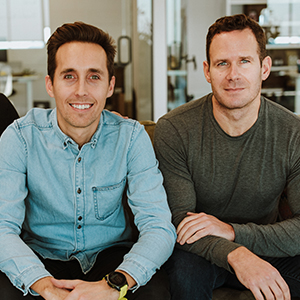
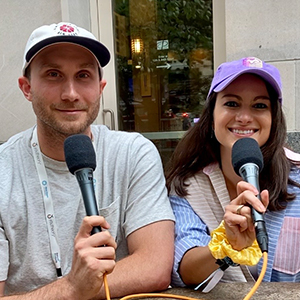
[00:00:10] Ray Latif: Hey everyone, I'm Ray Latif and you're listening to the number one podcast for the food and beverage industry, Taste Radio. This episode features an interview with Chris Magnone and Mark Cigos, the co-founders of Buddha Brands, a maker of better-for-you, plant-powered food and beverages. We also sat down for a conversation with Jen Ballen and Joseph Magliano, the co-founders of Otherworld Foods, an upstart brand Plant Based pancake and waffle mixes. Just a reminder to our listeners, if you like what you hear on Taste Radio, please share the podcast with friends and colleagues. And of course, we would love it if you could review us on the Apple Podcasts app or your listening platform of choice. I recall first meeting Chris Magnone and Mark Cigos a few years ago on the show floor at Expo East. At the time, the Canadian entrepreneurs were neck deep in coconut water, a product they saw as an anchor for a platform of premium and clean label food and drinks. The category was crowded and competitive, yet Chris and Mark were ambitious, energetic, and focused on building a company that could address modern consumers' demand for plant-based and nutritious products. In the years since, Buddha Brands has seen its share of hits and misses. While coconut water is no longer the company's primary focus, the founder's vision persists via a line of keto-friendly snack bars launched in 2020. Made with MCT oil, sunflower seeds, and peat protein, the bars contain no sugar alcohols, palm oils, dairy, or soy. Today, the bars are available at over 1,500 natural independent retailers and grocery stores in the U.S., including nationwide at Sprouts. Buddha Brands also completed its first round of outside capital in July, in which the company added $3 million to support retail expansion of the keto bars along with new product development. In the following interview, I spoke with Chris and Mark about the formation of Buddha Brands, key learnings from the brand's U.S. debut, how they responded to adversity and innovation that fell flat how they navigated a challenging time for the bar category, why the timing was right to bring in new investment. Hey, folks, it's Ray with Taste Radio. Right now, I am speaking with Chris Magnone and Mark Cigos, co-founders of Buddha Brands. Gentlemen, how are you?
[00:02:36] Buddha Brands: Awesome.
[00:02:37] Ray Latif: You're doing great. How are you, Ray? I'm doing great. I'm doing great. So good to see your faces. I haven't seen you guys in a while. Well, we had a quick call about two months ago or so, but face to face, it's been some time and you guys are fun loving guys who like to, you know, have a cocktail here and there. And I really enjoy doing that. I hope we can do that again really soon.
[00:02:55] Chris Magnone: I do too. I think the last time we actually saw each other was in New York, I want to say just over two years ago at the DevNet CBD event. Yeah, live.
[00:03:08] Ray Latif: And we had that nice drink on the rooftop. It was a crowded rooftop. We found a little corner where we could all congregate, you know, and talk about what we saw, what we were doing, what we're enjoying. And it's really fun. I really hope if you guys have an opportunity to come to Santa Monica Watrous our events, Knowledge Live, VivNet Live in December, we'll see you there. But in the meantime, it's great once again to see you guys here on Zoom. You know, you're based in Canada. You're all in Montreal. Is that right? I'm in Magnone and Mark's actually in Toronto. He's based in Toronto. Oh, wow. Okay. I didn't realize you guys were that far apart. I mean, how many miles is that? Because Americans, we have no concept, I think, when it comes to like how far Canadian cities are apart.
[00:03:50] Chris Magnone: It's about 500 kilometers, I think.
[00:03:52] Ray Latif: That's not helpful to us. We don't do kilometers.
[00:03:57] Chris Magnone: I think that's about 320 miles if I'm not mistaken, roughly. So it's not a long drive. It's like going from Montreal to New York and actually Mark was born and raised in Montreal, but then he moved out to Toronto seven years ago, was it?
[00:04:14] Ray Latif: Well, I actually just spoke with an entrepreneur who's based in Toronto, one of the co-founders of Acid League. He only sings the praises of Toronto and of Canada as a whole. And I've only been to Montreal, love Montreal. And we've interviewed a number of Canadian entrepreneurs here on this show from Susie York of Love Good Fats, Carl Goyette of Guru Energy, Mike Fata of Manitoba Harvest, the amazing trio behind Mid-Day Squares of course, you guys as well. to a person. The Canadian entrepreneurs are very positive and very kind and pleasant people. But I wonder about the environment for CPG the environment for packaged food and beverage brands. What's it like in Canada. How different is it from the United States.
[00:05:00] Chris Magnone: It's a great question. I'd say that the markets are pretty similar. Probably the market dynamics are the biggest differences, just in the sense that the speed at which the U.S. market can move, both in innovation and technology, and then probably the purchasing power. Obviously, the consumption is probably more than 10x what it is in Canada. And then, you know, Toronto, obviously, Mark lives in Toronto, but he can speak to that as Toronto is, you know, essentially our US metropolitan city. I mean, it's a massive city. And I know you said you haven't been there, but it's a major, major city, right? So it's very similar to the US market. And I'd say the community, the food consumers are very much the same, you know, the same trends resonate in both countries. maybe there's a bit of a delay sometimes in terms of what's going on in the U.S. and when it finally penetrates Canada, but I'd say with technology and like, you know, information flowing at the speed at which it does now with all the social media and things like that, that's becoming less and less.
[00:05:57] Ray Latif: What about the community for food and beverage entrepreneurs in Canada? I mean, do you guys kind of all know each other? I know that's going to sound like a stupid question. It's like Canada is a gigantic country, but, you know, I'm sure people are wondering, like, you must know each other. You must get together sometimes, right? We all go snowshoeing together in the winter.
[00:06:16] Buddha Brands: You know, we're trying our best to build our own Boulder or Austin over here. It's just a lot more spread out, right? I mean, Canada's got around, what, 35 million people over the second largest landmass on the planet. So it's interesting. But, you know, Toronto has definitely grown and evolved into a hub as well for a lot of small fast growth businesses in the CPG space. and you're starting to see more and more the communities here try to get together, help one another out, especially brands that are trying to grow and penetrate the U.S. market.
[00:06:48] Ray Latif: Yeah, I'm sure there's a lot of mindshare among brands who have sort of been there, done that, made it in the United States, so to speak. You guys are still making your way into the U.S. with your keto bars, and I want to get into those amazing bars in a moment. But the history of the brand is really interesting as well. How did your founding team come together? What's the story behind Buddha Brands and the name itself?
[00:07:11] Buddha Brands: Oh, this is a great story. I mean, it goes back to me being 16 years old, flipping burgers at McDonald's, literally. I was playing tons of hockey, you know, grew up in a very sports-minded family, and I was playing a bunch of hockey at the time, and I had my yearly checkup, and I go to see my doctor, and I said, doctor, you know, I'm playing tons of sports, I'm working out, but I don't feel 100%. And so we went over a whole bunch of things, and she asked about my diet. And I said, well, you know, I'm eating McDonald's two, three times a day.
[00:07:44] Ray Latif: And for free, what are you going to do?
[00:07:46] Buddha Brands: I mean, basically it's for free. Okay. You know, I, she's like, well, listen to your diet. It's just not conducive. And it doesn't, it's not talking to the way you're living your lifestyle in regards to your exercise and your sports playing. And I was 16 at the time. And so I left the doctor's office, went and quit my job at McDonald's and walked down the street to a health food store. And, you know, realized as I spoke to some of the staff there that, you know, my diet was out of whack. I could have started taking some protein powder, some vitamins. I mean, I was exercising so much. And then from there, I started going down a different path in my life. I wanted to be more focused, more purposeful, searching more for betterment, being more mindful of, you know, what I was ingesting. And then, you know, upon that path, imagine I'm at 16 at this time. and I'm going along. And when I got into my mid-20s, I decided that my passion for working out and playing sports and eating well, I wanted to get into the industry, health and wellness industry. And so I got into sports nutrition and supplements, and I started working for companies there. And then over the course of the next few years, I'd already known Chris and his brother, and we all got together. We were playing hockey, beer league hockey, you know, hanging out. And then we started talking about, you know, opportunities and they were living a very similar lifestyle to me. They were in the clothing world with their own business. And we started talking about some great brands in the U.S. that we wanted to bring to Canada. And I'll let Chris continue this story because I don't want to take the whole spotlight on this, but it was incredible how we organically got to where we are today. So, Chris, you know, why don't you continue it?
[00:09:24] Chris Magnone: I think, as Mark said, that was the jump off point where we got together and we collectively shared this vision of betterment and what we felt like was an opportunity for us to do something that we were pretty super passionate about. Mark, because of his experience in the supplement industry, had some knowledge of some of the trade shows. And we decided to basically jump on a plane go down to Expo East and that was is actually just, you know, just over 10 years, what would have been 10 years, our first time attending Expo East when COVID unfortunately canceled the show. I remember walking it like it was yesterday. I mean, I was eyes wide open and just like in awe of this amazing mecca of innovation and so many options. And so that's really where we kind of hit the ground running. that's where we started to cut our teeth in the industry. We actually started as an importer distributor of other brands, Rhythm Foods, Brad's Raw Kale Chips, The Chia Co. The list goes on. We always focused Plant Based, clean ingredients, and what we thought were brands that had a purpose. Those brands really spoke to us. The first two, three years, that's what allowed us to cut our teeth in the industry. learn the customers, learn the purchasing, learn the marketing, and everything else that kind of came with it. We felt like, to some degree, there was a void in the market, something that really wasn't being done. And if you think about what we were doing, it was really lifestyle-oriented. Everything that we kind of wanted to bring to market was lifestyle-oriented. And so, we basically decided to get into, you know, something that was Plant Based. And that's where we started Buddha Brands. And it started with coconut water. And for us, that was Plant Based, lower sugar, clean ingredients. And again, we just felt like with the brands that were in the market at that time, and this is, you know, 2011, 2012, specifically in the Canadian market, there wasn't really anybody kind of speaking to the consumer in the way that we thought they could be spoken to. And, you know, quite quickly we launched and fast forward a few years and we're a category leader and we've done exceptionally well in that space. And that's really kind of the jump off of how we got into the space and have grown quite quickly.
[00:11:49] Ray Latif: Coconut water was certainly one of the hottest categories in early 2010 through 13, 14, started to see some leveling off later in the decade. That being said, I'm sure you learned quite a bit about the natural foods industry, about the environment for producing, distributing, selling coconut water and how that could translate to other products as well. specifically within the Canadian market, what did you learn about selling coconut water and how to sort of translate those learnings and success to the United States market?
[00:12:25] Chris Magnone: In terms of, I guess, what did we learn that we could translate to the US market? I'd say that we probably could speak for hours on all the things that we learned, but I'd say that the initial thing was really product market fit. So obviously the product was the right fit for the market at the right time. And that obviously allowed us to accelerate our growth. And then with that came a lot of distribution, setting up distribution partners, making sure that we had the right margin structure, and then obviously the right go-to-market, you know, working with the right retailers to help build the brand equity and brand within the community. Is that entirely transferable to, you know, penetrating the U.S. market? I'd say yes, however, the markets are, again, as we said before, subtly different in the sense of the speed at which they move. And so, as you said before, the trend was quite hot, and then it had a bit of leveling off. And so, as we explored expanding in the US market, we saw that we went way too wide. That was probably our biggest mistake. try to expand into the US with our beverage side of the business. We just went way too wide and we'd really been focused on a specific region or channel. It took a couple of years of learning.
[00:13:39] Ray Latif: Chris, you use the phrase right fit and I hear that a lot from entrepreneurs looking for the right fit in the right market. What does the right fit look like? How do you identify it? How do you know when something will work for your brand?
[00:13:52] Chris Magnone: That's a great question. I think a lot of things can go into that. I think, you know, obviously seeding the market with the right retailers, that can give you a lot of early indication. I think, you know, obviously brands that have a lot of direct-to-consumer are able to obviously test the market much quicker. Direct-to-consumer wasn't as big of a thing back then as it is obviously today. And I think that's been proliferated with COVID obviously. So I think that's a really great testing platform is to be able to use your direct-to-consumer to be able to test and see. And then I would also say is just, you know, doing your research, you know, seeing what's going on in the marketplace and what categories are growing, and then obviously finding the white space within, you know, each category. I think there's always room for disruption and innovation. And I think this industry is, you know, a testament to that. So I'd say that that's kind of the way that we've looked at things.
[00:14:43] Ray Latif: There's certainly room for innovation and disruption, but there may not be enough distributors or retailers to carry those innovative and disruptive products. And I know that Buddha Brands, like a lot of brands, didn't immediately find distribution, didn't immediately find retailers that would pick up the brand, pick up the product. But the retailers and distributors that did, what was the driving factor? What was their interest in the brand? How did you convince them that you would enhance their portfolios?
[00:15:17] Buddha Brands: You know, that's a question that we get asked a lot by a whole gamut of people, even buyers, category managers ask us that question, like, how are you getting in these retailers? And it's the initial question until they really start to understand the product, but it's a few step process. You know, there are so many to your point, right? There's so many brands and items in the market, and there's so many new ones every day. It's so crowded. It's so chaotic. I think the success that we've had has been truly, the first step is persistence, perseverance. We were absolutely relentless, resilient, and being very intentional about which retailers we were going after and who we wanted to partner with from a vendor and retailer partnership. And when we had this, we call it our hit list. When we had our hit list cemented and we knew who we wanted to go after, we wouldn't stop until we got our meetings, till we got our opportunities to pitch. And obviously, like any batting average, you're not going to get them all. But we started to get into some of the key retailers. Now, the other step to this process was we obviously had the right product. And when we brought the product to the decision makers, they understood that the convergence of innovation and timing was right. And there's obviously some category managers and decision makers that take the risk. They want to be ahead of the curve and they want to get behind the brands that they believe will be the future of you know, their stores. And so this is how we won this business. And it's how we still continue to win it today. There's obviously your leaders and your laggers. And I think it all really goes back to the first thing is a lot of brands, they'll get in a couple of retailers and they'll be okay with that. And then they'll kind of, they just won't go through with what got them into the, you know, their initial retailers. We just have never stopped. It's been part of our boot away, we call it, whereas we've been absolutely focused on going after relentlessly on the people that we believe will be the right correct partners for us in the marketplace.
[00:17:28] Ray Latif: As you have expanded retail and distribution, you've also expanded your product portfolio, going from beverage into snacks. And prior to getting into your keto bars, you introduced a new line of snacks as well. Talk about the innovation pipeline, what you identified as categories in which you could not only scale, but establish a foundation for other brand extensions as well?
[00:17:59] Chris Magnone: I think when it comes to innovation, it's been an iterative process. And I think when we finally took a step back and really reflected on all of our failures. Unfortunately, there's been a few, but I think that's where the, if you call it like a, you know, postmortem, if you will, on some of our innovation, I think that's where we learned the most. And we were able to apply those learnings into, you know, our expansion into the bar category. I'll just point to, I guess, one of probably our most profound failures, which unfortunately I had led, but we got really excited. And this is pre really the beyond meat proliferation of the plant-based kind of meats and alternative meats, if you will. But we basically launched a coconut jerky. We were among the handful, if even, of companies doing it in the world. And we launched this, you know, organic coconut jerky. And we were really excited about it because obviously, you know, it fit in with our brand tenants and pillars and It was obviously an expansion into the snacking category. We had some great retailers actually to take us on both sides of the border from Whole Foods to Wegmans to Loblaws to you name it. And they were all equally as excited as we were with this innovation and it died on shelf. It literally just...
[00:19:23] Ray Latif: I'm sorry, I didn't mean to... I snickered there and that's not something to snicker about. No, no, we deserve it.
[00:19:28] Buddha Brands: We deserve it.
[00:19:30] Ray Latif: Snicker. It wasn't that you deserve it. It's just that the way Chris delivered that line, it died on shelf. Just the idea of seeing coconut jerky not selling just on a dusty shelf. It's something that other brand owners have experienced as well. I guess at that point, all you can do is snicker because the alternative is to start crying, right? Yeah, which we did too.
[00:19:53] Chris Magnone: But yeah, so I mean, it was like a perfect storm, you know, when you're, you know, I'd say we lost focus, we went too wide with the business. And, you know, that was, you know, just a lack of experience. And so I think it really pushed us to kind of dig deep, you know, in a multitude of ways. And again, it taught us so much about innovation in the sense of go to market strategy, like your question before, how are you testing and making sure that this is the right product fit? you know our distribution and our ability to sell into the market was pretty extensive and unfortunately we just went too fast. and too wide, and we paid for it in a number of ways. So all of that learning, again, from choosing the right co-manufacturer, the right suppliers of ingredients, the right tempo to launch in, which customers to launch in with, has really helped set us up for success with, you know, the bar category expansion, which to have been able to go from, I mean, we launched it about two years ago, we're approaching two years now, and to have the type of retailer success that we're having, I think it's 100% owed to the fact that we learned so much from, unfortunately, some product failures.
[00:21:02] Ray Latif: Was the jerky just ahead of its time? Was it something that consumers didn't understand? Did you feel like you didn't support the brand well enough itself to educate folks about the benefits of and the texture and the flavor and all those things that are really important when introducing a new product like that?
[00:21:17] Chris Magnone: Absolutely. I do think we were ahead of our time. And I don't think we supported it as we probably needed to. But even still, I think we just went too wide. And we've probably needed a lot more time to incubate the product in the right way. So a number of things. But I think timing, as you pointed out, is probably the number one thing.
[00:21:36] Buddha Brands: I give out a lot of product to friends and family. And if I look at any of the products that we've had, whether they were third-party brands when we first started the company to brands that we've created or products that we've created, sooner or later, the audience will speak. And I know when we've had, I mean, people love me in my life, and they've, for the most part, given me some good feedback, even my parents, on whether they like something or not. And whether you're demographic or not, I think when people taste good food or beverage, they're going to tell you about it. And a lot of times founders, entrepreneurs have this belief that, you know, they know exactly what the market wants. And when you start getting the feedback, you know, you got to listen to that. And it's not that the feedback was poor on the jerky. I just, you know, I think that we were, we were believing it was kind of that hero product. I mean, it was, it was just kind of on trend. Like it was, it made sense. where innovation in the industry was going. Chris talked about Beyond Meat and plant-based meats and all that and alternatives. It just wasn't there fully. And again, there was the education aspect, but when I look at just people giving honest feedback on Taste Radio what they thought of texture and all that thing, when I fast forward now to our bars today, I can't find someone who doesn't like them, right? And yet when I go back to the jerky and you start thinking back on things, not everybody really liked it. And you're never going to get 10 out of 10. It's impossible. But you really want to go for seven or eight or above because if you get any lower like around five or below or six and below it's like I don't know. Maybe this just doesn't have the legs that we as founders and innovators believe it has.
[00:23:17] Ray Latif: It's so funny you mentioned that, Mark, because I did an interview with Bill Moses, who's one of the co-founders of Kavita and now Flying Embers, and he talked about wanting to innovate by creating the least offensive products. You know, something that wasn't always going to be a 10 out of 10, as you pointed out, but something that wasn't going to offend a large part of the population.
[00:23:43] Buddha Brands: I'll let Chris take this one. I just want to say one thing about the bars is that the one thing we also learned from our failures of innovation in the past was with these bars, I mean, we have gone back to the drawing board time and time again to get this perfectly right. Like we believe the product we have right now in market is the best version of itself, but it's taken several versions along the way. And we just haven't stopped until we felt it was a 10 on 10.
[00:24:08] Chris Magnone: I guess, you know, in regards to the genesis of the line, I would say that the Buddha Brands has always been, you know, the direction, the vision of the brand is a lifestyle brand. And so we felt like, you know, we wanted to be able to have line extensions into adjacent categories that, again, appeal to the consumer base that we are targeting. And so for us, when we looked at the different categories that we wanted to expand into, you know, one of the big learnings that we learned with coconut jerky is there wasn't really a category. It didn't exist. You know, we were trying to create this new category, and that really takes a different mindset, different funding, a whole number of things if you're going to do, you know, essentially build a new category. Whereas when we looked at the bar category, Again, as you said, highly competitive and Mark and I love competition. We don't really shy away from that. We think it brings out our best colors. But when we also looked at the category, we felt like actually at that time I had started to do half Ironman. and I was actually consuming a lot of bars. Mark just naturally consumes a lot of bars, probably the most I've ever seen anybody consume. Just the bills when we'd be on the road for bars was outpacing what I'd eat at restaurants. So that's how many bars he'd eat. So we had an affinity for bars. And when I started to consume a lot of them to train on the road bike and stuff like that, it was pretty impressive to see How much sugar was in each bar and then the lack of let's say cleanliness with the ingredients and so as we started to kind of peel back the onion in the category and again, this is all with now. a different focal point or a different lens coming off of the jerky, we really did our due diligence. We started to get reports and dig into data. And that wasn't something that we had previously done. And so when we did that, we really discovered that there was a clear opportunity that we felt like we could bring something that was disruptive, something that was innovative and totally differentiated. The market's really spoken to that and said that I think we've done exactly what we thought we were going to do.
[00:26:21] Buddha Brands: ED HARRISON And to Chris's point on that, I just wanted to add that when we talk about the major retail partners, we've partnered it up since we launched the product. our first bars into the U.S. market last March 2020. Right. And you know our category gets decimated. But I mean OK so let's let's talk about that for a few minutes because that's important. I mean you got to understand something. So we launched right as COVID hit. Our first retail partner was Wegmans. Okay. And it started there. Whereas, you know, the decision makers were saying, look, forget about the keto category. You guys probably have one of the cleanest bars in my set. And so, you know, that kept on going across the board with a lot of the other majors that we locked up with in the U S where it was, you know, the category managers were saying, you don't only have one of the cleanest bars in the keto set. You have one of the cleanest bars in the category in general.
[00:27:13] SPEAKER_??: So
[00:27:13] Buddha Brands: We believe that that was the reason in a category where people were like, I'm not even looking at new products right now. We continuously were checking off some of the biggest retailers in the US market to list Natural Products. It was a testament to what our team did and Chris spearheaded that in regards to the innovation and what we were going to put in this product. It was a very mindful and purpose-driven product. It wasn't by accident that we're going to go do a bar and here we are. There was a checklist and they made sure they checked off every single thing before we started shipping the product.
[00:27:46] Ray Latif: What was on that checklist? That's the first question people listening are going to be like, what was on that checklist? Because I want to make sure I check every box as well.
[00:27:54] Buddha Brands: Yeah, Chris will take this part because he can check off on that list everything that they had in mind when they were creating this product.
[00:28:01] Chris Magnone: I think high level from a checklist perspective, I think, you know, Again, it starts with the research, starts with understanding what's going on in the marketplace and finding white space, finding how you can add value, because our goal wasn't to be just, let's say, another low sugar or keto based product. It was really to bring something differentiated. And then, you know, the checklist kind of goes down from there. So, I don't know if I want to go through the entire checklist, let's say, but I'd say that it starts with research and then, you know, finding that white space. And then really, you know, what does your brand want to stand? What do you want to stand for? What do you want to kind of put into the market? And I think at the time, I mean, you know, at the time of founding the business, it's always been clear to us is that we really want to help people live a better life. And so we try to come up with products that, you know, help us, but also obviously help our consumers on that path to betterment.
[00:28:54] Ray Latif: Now, the bars are tied to one of the hottest trends in food and beverage in recent memory. That's keto. If I'm looking at your package, it says keto done clean. You have that trademarked well done. It's a keto bar. You don't call it a protein bar or nutrition bar. You call it a keto bar. I think speaking with other folks in the food and beverage space is some worry. that keto, as hot as it is today, may not be that sustainable of a trend. Say, are we going to see keto products in 10 years? Are we going to see a keto category that's as busy and interesting as it is right now? Any concerns that putting yourself squarely within that space could hurt you long-term?
[00:29:41] Chris Magnone: I would say no. I'd say that, you know, the way we've positioned it is, as Mark was saying before, is, you know, our product is a clean product that is keto certified. And, you know, from a marketing perspective, we're going to use everything we can to make sure that we stand out in, you know, what is arguably one of the most competitive sets in a grocery store. So when it comes to the longevity of keto, I don't see it going anywhere because I think when you start to really peel back the onion, you look at what are the macro elements or the elements that make up keto and really it's low carb and low sugar. And so if you look at Atkins, it's still there, it still does extremely well. And, you know, that's not to say that we're going to be just focused on keto for the rest of the brand's life cycle. I think what we're focused on is Plant Based, low sugar, clean ingredients. And yes, that's keto certified. And yes, we are a marketing company to make sure that the product stands out so that the consumer can find us on shelf.
[00:30:43] Ray Latif: I want to go back to the retailers that you guys are with. What retailers are the keto bars in at this point, specifically with the United States?
[00:30:51] Chris Magnone: Sprout, Thrive Market, Wegmans, Central Market, ATB, we're obviously on Amazon. And then there's a bunch of call it independents sprinkled throughout the country. We've tested and been in Costco as well.
[00:31:06] Ray Latif: Now, were these retailers also carrying your other products prior to the keto bars, or did you have to sort of reintroduce the brand? And I ask that because I'm sure these retail buyers knew you as one thing, which is a coconut-centric brand. And now it's like they have to know you as sort of a different type of food company, if I'm not mistaken, one that is really focused on the bars.
[00:31:30] Buddha Brands: So I would say we started from scratch, truthfully. I mean, we had obviously some connectivity and relationships inside some of the buildings of these major retailers that we partnered up with, with, you know, hungry Buddha, keto bars that knew that knew us in the past when we had worked with them with thirsty Buddha coconut water. But no, I was starting from scratch. They were different. They were different buyers, different category managers. And you know how this industry changes. I mean, people are moving companies all the time. So we basically, and I always joke around with Chris. I'm like, when we got into the bar business, we were technically a startup. And there was a whole learning curve to that on many different fronts. And sometimes it's a blessing and a curse. I mean, nobody knows you from what you previously did, and they're just willing to give you an opportunity on something new.
[00:32:15] Ray Latif: In some ways, it sounds great in that you're starting with a blank slate. You feel like a rejuvenated entrepreneur getting out there and selling almost an entirely new platform. On the other hand, I'm sure it's pretty frustrating in some ways, knowing that you'd already been in some of these stores and the fact that you really have to reintroduce yourself. But reintroducing yourself, at least you have the experience. I think, you know, you're not a green entrepreneur. You're someone who actually understands the business. How much do you lean on that part of your career is knowing that, you know, the ins and outs of retail distribution, sales, et cetera. Did that matter at all? Or were they just looking at the opportunity, the retail acquirers? Were they just looking at the opportunity for the bars?
[00:32:57] Buddha Brands: You know, time and experience and hard work gives you confidence. And it's not to sound boastful or arrogant or anything like that, but confidence is a major thing. And, you know, I think you gotta be self-aware. And we became very self-aware in the last, increasingly self-aware in the last few years that, you know, not everything's a home run. And we realized that when we went down in the first try, you know, it wasn't as calculated and strategic as it could have been. And we learned from that. And going back this time around, you know, I had really good confidence. I had confidence in the product, confidence in our team, and our people are great. And we had this support system around us. And, you know, there were people in those buildings with some of the major retailers that helped us out. They knew us. They realized we had made a decision, an executive decision, to pull out of our coconut water in the U.S. market. And they were willing to open the door and introduce us to the category managers that were relevant to us in the bar category. So I can't say that it was a total start from scratch. It kind of was. But, you know, I think that we had the confidence behind us and the mindset to go in. And it's where it's gotten us today in a span of like, you know, 18 months.
[00:34:07] Ray Latif: I want to touch on direct-to-consumer for a sec, because as you guys mentioned, the bar category was deeply affected by the pandemic, a lot less foot traffic, a lot less grab-and-go opportunities for snack bars, for protein bars, for nutrition bars, etc. How much of your business was direct-to-consumer? How much of it are you looking at being direct-to-consumer in the future? And I ask because Shipping, you know, liquid and shipping beverages seems like a pretty difficult thing in the e-commerce world. It's heavy, it's bulky, it's all that. Shipping this box, which I'm holding in my hand, seems like a much easier thing to do.
[00:34:46] Chris Magnone: You know, if you, if you'd go back in time and say, Hey guys, with all the learnings you have, would you, you know, go into beverage or would you go into snacks? And I think we both would probably say, you know, the snack category is a little bit more, a lot more friendly to, like you said, direct to consumer. Also, when you're hand bombing all the different products into trade shows, it's a lot easier to bring in cases of snack bars versus hand bombing coconut cases.
[00:35:11] Ray Latif: The beverage entrepreneurs listening right now are laughing their heads off because they're like, we've been saying the same thing for years.
[00:35:19] Chris Magnone: And I think the funniest thing for us is like, we've always been a bootstrap business. And so, you know, when you look at the fees for handling heavy liquids into a trade show, it's astronomical. It'll cost you the same amount of money to, you know, bring that pallet from their, their holding station into your trade show booth as it would to like, you know, bring a container over from, uh, from Thailand. Wow. So we always just hand bombed it. We rented a mini van and then literally would hand bomb all the product ourselves. But anyways, Just, I'd say that, you know, your question around the direct-to-consumer, it's a very small part of our business still. We've been predominantly focused on other channels up until the last, let's say, three years, where we really started to build our e-commerce around Amazon. And we just recently actually launched our own direct-to-consumer, so that's really starting to kind of come along. And then we really just believe in partnering with, you know, the leaders within that space. So, you know, whether it's Thrive Market in the States and Amazon and other partners that we're partnering with, that's kind of where we put a lot of our emphasis for right now.
[00:36:26] Ray Latif: Chris, you use the word bootstrapped. It's not just bootstrapped in terms of operations, you've been bootstrapped in terms of funding as well, until recently. Recently, you did take on a pretty significant capital infusion. Why was the timing right?
[00:36:41] Chris Magnone: It's a good question. I think, you know, everybody's situation is different. And I think for us, you know, we really wanted to push ourselves to be as thoughtful and strategic and impactful with our funds that we had. I think we were in a position where we could albeit it was difficult, but we could fund the business to a certain degree, you know, with our initial investments. But that got to a point where, you know, obviously here where we needed additional capital. Specifically, you know, I think we learned, again, a lot of lessons from our innovation with Jerky. We just didn't have the right capital structure to be able to kind of properly educate consumers and do the things that we needed to do. And so we didn't want to make that mistake twice. And so this is where, you know, as we've seen the product market fit, We're getting really good data and insights into, you know, how both of our product categories are performing. I mean, we still have double digit growth on the beverage side of the business, which is really strong. And then obviously on the snacking side of the portfolio, it's obviously an exponential. So we felt like this was the right time for us. We had learned a lot. We'd been as thoughtful and responsible and good stewards of our own capital, that this was the right time for us to go out and seek external capital. And it was non-dilutive. You know, I think another thing for us is just We wanted to be, again, thoughtful about how we thought about the capital structure and the capital partners that we brought on. And so we went with non-dilutive capital at this stage to kind of essentially bridge us to probably a Series A in the next six to 18 months.
[00:38:12] Ray Latif: Yeah, you don't hear that too, too often, the term non-dilutive capital. Can you explain what that means for folks who are not familiar with the term?
[00:38:20] Chris Magnone: essentially, we took on debt. I mean, we took on patient capital, and at the end, it's debt. So that's probably the extent of it. I mean, whereas, you know, if you took on, let's say, an equity partner, that would be dilutive. And, you know, I've seen a lot of instances, unfortunately, where shareholders get or founders rather, get super diluted through the process of raising capital. I think it all starts with just this notion that people will give you money, or they give you money to what degree. At a certain point, if you're not a good steward of that capital, you can quickly lose control of your business. So again, there's no right or wrong way of doing it. I know plenty of companies that, and obviously there's tons of examples that have raised capital and done successfully well, and founders have exited in a great way. But then there's obviously the other side of the coin too. And I feel like what we've done for ourselves has worked, just in the sense that it's given us an opportunity again to make sure that we, you know, understand what we want to do with the business and how we want to grow our brand. And, you know, it's maybe been a little bit longer than some of these, you know, overnight success stories. But I feel like as we're approaching our 10th year of the brand next year, we're in a really good spot. And we're pretty happy with our capital partners that have come on and supported us now for this growth.
[00:39:37] Ray Latif: I mean, it's great that you're happy with your partners. As you mentioned, Chris, sometimes that doesn't necessarily work out as well as some people might think it does. And I think there's a question also of how much do you ask for? How much are you willing to part with in terms of equity? is the question that a lot of entrepreneurs are facing. But in your case, it wasn't that because, as you mentioned, it was debt. It was non-dilutive capital. You still want to know how much you're actually going to need versus what you might want. How did you know that the $3 million that you raised would be enough for your short-term and, I guess, potentially your long-term goals for the brand?
[00:40:16] Chris Magnone: Yeah, it's a great question. And just to be clear, I mean, we went through a process just before COVID, everything kind of hit just before COVID for us, you know, the launch of the bars, but also at the same time, we had launched our first call it round, and started a process with a number of parties. We had a number of term sheets, just as COVID hit. And, you know, obviously, we then needed to kind of take steps from that point on. But how did we know your question just around, I guess, the amount of capital that we needed? We essentially went through, I think what most people do is a financial modeling. And we wanted to make sure that we had enough capital. Again, we're not a super capital intensive business. We're asset light. So we don't actually do our own manufacturing. We don't own our warehousing. We outsource a lot of stuff. And we really try to focus on the sales and marketing aspects of the business. So we can be pretty impactful with the dollars that we raise. So for us, $3 million, when we ran through our model, again, when we look at the inventory builds, the innovation, the R&D and stuff that we want to continue to invest in the people, I think those were the obviously big components. And then the biggest piece that we didn't really have the firepower that we had that we needed. previously was really around marketing. And so that's where the capital raise has come in. And that's been very instrumental for us is just being able to lean in and support all of the different marketing activities that we want to do.
[00:41:40] Ray Latif: Am I going to go to New York City and see a big billboard for Hungry Buddha keto bars?
[00:41:44] Chris Magnone: No, I don't think that's I think if you think about us and the tactics that we'd like to implement, it's generally very let's say, bootstrapped and tactical. So we like to test and learn, test and learn, and kind of continue that iterative process. I mean, yes, we have capital, and we could probably be a little bit looser with it, but we kind of have that mindset that we like to test, learn, and keep iterating. And then obviously, when things are doing very, very well for us, we invest more capital.
[00:42:14] Ray Latif: Just get people to try these. I know that sounds really simple, but as soon as people try this, Mark, you mentioned this, people love it. I love it. Thank you. Such an important thing is to get the bars in people's mouths. I mean, again, I'm oversimplifying it, but I mean, what is the plan for sampling, you know, at a time when things are still not perfect, I guess, or may never be perfect again for sampling?
[00:42:35] Chris Magnone: And that's a great question. I mean, I think that was probably one of the hardest things we had planned so many, you know, demos, and, you know, just to get people to try Natural Products, just as they started to hit the marketplace, and then everything went away from, you know, sampling perspective, people being outside and together, etc. So we really had to think differently about it. And so that's where like, obviously, a lot of subscription boxes, and then, you know, just finding unique ways to get our product to what we believe is our target consumer. And it seems to have worked well. I think as things are reopening and we're able to demo, whether it's at a Costco or Sprouts, you know, we've been investing there as well. But I think it's the Again, the experiential side of things, how do we get the product and bring the experience at the same time? So I wouldn't say that challenge is over. I think we probably have another year of where we're still living in, call it a pandemic-endemic environment. But I think that's where the true excitement comes, is when we get people to try the product.
[00:43:38] Ray Latif: The through line in all of this is to stay hungry, stay excited. How perfect for a brand called, or at least a product called Hungry Buddha.
[00:43:48] Buddha Brands: There's two things I'd like to finish off with, if you don't mind, Ray. Sure. You know, firstly, the one thing that we've always realized along this journey, and you have to understand, we didn't come from the food and beverage industry. which is something that I think people that want to become entrepreneurs or that are entrepreneurs starting their journey is like, you know, it is the grind, it is the resilience, and we're like this ongoing university of never-ending learning. But the thing we've learned more and more over the years, and I would say it's the catalyst for everything that comes together, is the people, both internally and externally. And we look at our team as we grow and evolve. I mean, some people have been with us for several years now. And then people like yourself on the external that have given us an opportunity and our retail partners. And it's a convergence of all those things that come together. they get us to hear. So it's just nice to sit down and chat with you right now about all this stuff because we've been listening to Taste Radio for a while, we've known you for a while and I told Chris a while back, I'm like we gotta get on that show man, we gotta talk to Ray. So this has been awesome, we thank you.
[00:44:50] Ray Latif: It has been awesome and I thank you guys very much. It's really kind of you to speak that way about our organization, the community as a whole. I think it does really take a village. I've said that in a number of our episodes, but building the community and aligning yourself with good people is such an important part of this business as well. And I'm glad that it all worked out and I'm really glad and I'm excited for our audience to listen to this episode because it's a really good one. So thank you again. Thanks, Ray. Thanks, Ray. We continue our episode with a pair of entrepreneurs that are just getting their feet wet, although they might describe themselves as completely drenched. Jen Ballen and Joseph Magliano are the co-founders of Otherworld Foods, which is pursuing a positive impact on the food system by aligning locally sourced and upcycled ingredients with nostalgia-inspired products. Launched just a few months ago, the company markets vegan and superfood-infused pancake and waffle mixes that are currently sold direct to consumer. I sat down with Ballen and Joseph at the recently held Natural Products Expo East 2021 show, where they spoke about the origins of the company and how they recruited a team of world-renowned innovators and chefs to help formulate the mixes. They also explained why they chose to launch the brand prior to having product to sell, and what they view as the biggest learning curve for early-stage entrepreneurs. Hey folks, it's Ray with Taste Radio. I'm here in downtown Philadelphia at Natural Products Expo East 2021, and I'm sitting in front of Jen Ballen and Joseph Magliano, the co-founders of Otherworld. Jen, Joe, how are you? Great.
[00:46:35] Mark Cigos: Great. How are you?
[00:46:36] Ray Latif: I'm doing fantastic now because we're going to be talking about pancakes and waffles, which are two of my favorite foods ever. Otherworld makes better for you pancake and waffle mixes. Tell me a bit about your backgrounds, why you decided to get into this business and why pancakes and waffles?
[00:46:52] Natural Products: Yeah, so Jen and I actually met over a decade ago in undergrad. And we were just fast friends bonding over shared interest in food, health, nutrition, sustainability. We'd have these really interesting conversations while we were in school. And then when we got into our professional careers about impact, and we both found ourselves professionally intertwined in the food system in some way. And not so long ago, back in end of November of 2020, we found ourselves having that same conversation. We thought to ourselves, you know, we have these really interesting overlapping skill sets in food and product operations. You know, could we create something that helps move planetary health and human health forward in the right direction? And we realized we need to add more fruits, vegetables, and whole grains to people's diet and figure out a way to use potentially upcycled ingredients. And that helped us land on bakery. And so when thinking about bakery, we said, what's the most beloved product of our childhood? And we're like, did you also eat tons of pancakes and waffles when you were a kid? Sort of like unsurprising answer for children of the 90s was almost every day. So we got to working on a recipe and the long story short is we eventually cracked the code on light and fluffy pancakes and waffles that are not just a better for you profile, but a good for you profile. And we figured out a way to do that where sustainability was intertwined in our DNA with upcycled ingredients, curbside recyclable packaging, made with recyclable content, and that got us here today.
[00:48:13] Ray Latif: You guys don't lack for ambition. Advancing human and planetary health, that's quite a goal. But if you have light and fluffy pancakes and waffles like you guys have, you know, I think you can convince a lot of folks. Jen, what was your background? How did you decide that this was the right avenue for you as well?
[00:48:29] Mark Cigos: I started my career on Wall Street and I became interested in sustainability through the lens of impact investing. I then went to business school to explore different avenues in which to blend career and impact and landed on the food system. For me, the food system has always been part of the problem, but could be part of the solution. And so post-business school, worked within CPG companies in the food and beverage sector, working on operations and building sustainability initiatives and kind of trending closer and closer to startups. I love the build. And then Joe and I, as mentioned, were chatting about how we could address both planetary and human health. And here we are.
[00:49:03] Ray Latif: I assume there were a lot of names on the cutting room floor. Not everything is trademarkable. Jen, you know, how hard was it to find a name that you could both settle on and that was both, I guess, usable for the long term?
[00:49:16] Mark Cigos: Naming was one of the hardest parts of forming this company. We were trying to find a brand name that's easily recognizable, that represents both what we're doing today, but also who we will be in the future, and that is able to be trademarked. So we went through hundreds of names. and that we both loved, you know, and that our close friends loved as well. We made lists, we did brainstorming sessions, we even tried a website where you can ask for people to come up with names. Those did not work. We actually incorporated as Painted Plate, and then we picked our brand name later, Otherworld.
[00:49:53] Ray Latif: Your first production run, you told me before we got on the mics, was yesterday. Yeah. And that's pretty incredible. You're already online. You're already selling your products? We're in pre-order phase. Pre-order phase. Okay. It seems like it's almost chicken and the egg kind of thing. You know, where do you start? How did you determine that this was the right path in terms of pre-orders and getting your production done after your first sales?
[00:50:14] Natural Products: Yeah, there's a lot going on all at the same time. And it's about, I think, inching all these different paths forward as much as you can until the moment that it's going to really take off. And, you know, as we were figuring out our formula, we're also building a commercial supply chain. And as we were figuring out all this, we're also trying to raise money. And some people are a little bit easier to get money from others. And some people need to see products. Some people need to see brands. Some people need to see sales. And so you're sort of doing all of these things at the same time, and you're eventually setting yourself up for this moment where you realize you actually have to order 12 and a half thousand pounds of flour and produce tons of product. And one of the things we wanna do is build a bit of an understanding, a bit of a following, and have some pre-orders going before we actually had a product run so that we knew some of it was sold, we could communicate with customers, communicate with people who we thought would be using our product heavily and figure out, We think we know why they're going to use it, but let us ask them why they're actually using it. And we ended up discovering all these new things about why parents are feeding certain foods to their kids. And there's just sort of a million things going on at once. But when you have a good team, it's a lot easier to keep track of things. And a bit of dividing and conquering, but also staying aligned at the same time has been just really important to make sure that all that stuff, you know, we can keep track of it and continue to excel at all of it.
[00:51:35] Ray Latif: I definitely want to talk about your team in a second, but I want to go to Jen's business school experience because when I was in business school undergrad, we had to team up with some other students and put together this business plan. Now, when you're 21 years old, these business plans are pretty trash. But when you're a little bit older, I think you can see how operations, marketing, IS, etc. can all work together cohesively, but it's still academic versus reality. How much of your business plan is that sort of following the path that you laid out for yourselves?
[00:52:08] Mark Cigos: Yeah, so business school for me, I went to MIT Sloan and they offer the ability to have independent studies and really kind of create your own course. And so I actually started a nonprofit in business school. So I kind of had this entrepreneurial spirit already. And in business school, I was always focused on sustainability and kind of how to blend that into a career. Our current company and how it's related to the pathway, you know, we started thinking about the problem. The problem was the food we're eating is destroying the planet and our health. And we wanted to think about how we could solve that problem. Then we thought about who's experiencing this problem. We thought about building something just for kids because we really loved this nostalgic product. And we learned from parents that they were experiencing a pain point of having their kids eat fruits and vegetables. But as we talked to more and more users, we learned that there was other people experiencing this problem. So we expanded the business to be not just for kids. So I think we've kind of iterated in many different ways. We, at the end of the day, believe we'll be a multi-product, omni-channel business. Pancakes and waffles is just the start. In a year, we might be having a different conversation about more changes that have come down the line. So I think one thing that Joe and I both do really well is making decisions quickly, but retaining the right to change our mind. And I think that's what you have to do to build a successful business.
[00:53:26] Natural Products: So that phrase is said a lot.
[00:53:28] Mark Cigos: Yeah.
[00:53:28] Natural Products: This is the decision that we're making right now, but we reserve the right to change our minds.
[00:53:32] Ray Latif: So I think it's fair to say the business plan hasn't gone exactly to plan.
[00:53:36] Natural Products: No, you know, it's funny, my brain went in a very different direction when you asked that question, where my background was management consulting. And, you know, I think about short term business plan and long term business plan and working in bankruptcy and restructuring, everybody's cash strapped and all startups are cash strapped also. So there's a lot of similarities. So in terms of our short term planning, that's very flexible. We're sort of like, what is happening right now? How do we respond to it most effectively? But the long-term planning really hasn't changed. And Jen said it very well, it's like multi-product, omni-channel business. And the path in which we get there we know is gonna be really fluid, but we know what that successful company looks like at the end of the day.
[00:54:12] Mark Cigos: The values and the problem we're solving will not change, but the way in which we get there and how we sell and who we're selling to could modify along the way.
[00:54:22] Ray Latif: How did you determine that e-commerce was the right way to launch the brand? We see a lot of early stage brands do the same thing that you guys do, but did you look at retail? Do you look at wholesaling your products at the outset?
[00:54:33] Mark Cigos: We did not. We plan to be in retail locations. We will be in pop-up grocers, flagship store actually next quarter. We plan to be on some e-com marketplaces as well as independent retail stores in our areas. We started with e-com because it is a easy way to build product awareness. And we want to first build awareness before we expand. So we want to make sure we're expanding at the right pace and have the right amount of capital to expand the retail presence.
[00:55:01] Ray Latif: How do you get people to know about your product? Jen, you said, you know, it's the easiest way to get to market, but if no one knows who you are, well, no one's going to buy your product. So what was your approach to building awareness for Otherworld?
[00:55:12] Natural Products: Yeah, that's the $100 million question that everybody here at Expo East is, I think, trying to answer. We are taking a test and learn approach. You know, this iOS update for Apple and the privacy that you now have online, particularly in Facebook and Instagram, has changed the way that people advertise and the data that you can get from users and how we can effectively target people. So we're testing 10 to 15 different marketing tactics in small ways to see what's really effective for us. So that in six months, we'll actually know the three or so tactics that actually yield good results. And that's not just conversion, it's how do we measure all the awareness that we're creating, and then all the way down to conversion as well. Facebook and Instagram is certainly one big piece of that, and companies like Magic Spoon have figured out really effective ways to acquire customers. And I think it would be really awesome to do that, but we are planning for many different scenarios of this tactic. is really inefficient in acquiring customers online because the reality is we're competing for the same eyeballs as Casper, who can spend $500 trying to get Ray to purchase a mattress, and we are selling $9.99 pancake and waffle mix, and we need you to purchase for one-tenth of that. So all these other tactics that we're testing, we will figure out sort of in a fluid way what's the best way for us to expand in that online manner, and then that awareness that we build will help us move into retail.
[00:56:36] Ray Latif: You do have help when it comes to your team. Before we got on the mics, you were talking about some of the chefs that you've been working with, which, I mean, they have some remarkable experience. Talk about that team and why it's helping you grow the business or how it's helping you grow the business.
[00:56:51] Natural Products: So we've been very fortunate in that both Jen and I's professional experience has been in food in many ways. And I was telling you earlier that as a part of traveling all over the world for management consulting, I used that time to spend time in kitchens in New York, San Francisco, Copenhagen, Tokyo, and created a really interesting chef network. You know, two of the people that I became close with were Brooke Seam and Dan Giusti. Brooke is a pastry chef. She had her own bakery in New York City called Prohibition Bakery. She worked at W50, which is Wiley Dufresne's molecular gastronomy restaurant. And then Dan Giusti. And Dan was the head chef of Noma in Copenhagen for three years, two of which they were the best restaurant in the world. And he left Noma to start a company called Brigade, which makes scratch made meals and low to moderate income public schools in New York and Connecticut. So he went from cooking for 40 people a day to thousands of kids a day. And between having a trained baker in molecular gastronomy and one of the most innovative chefs in the world who's now cooking for thousands of kids, we figured out, yes, we need to make something really interesting, innovative, and something that's really difficult to recreate. but really ultimately yummy, something that kids understand and they look at and think, this is something I know and I love and parents are comfortable buying. And so getting to learn from Dan's experience in schools and getting to learn from Brooke's experience in molecular gastronomy in these restaurants was this huge boon that we just don't think any other team has. And we feel really uniquely qualified to solve this problem from a product standpoint.
[00:58:22] Ray Latif: It's one thing to have friends and have a network, it's another thing to convince them to join your business. What was your pitch to them in terms of, hey, join our team?
[00:58:30] Natural Products: It's funny, we chat about this, Jen and I, actually pretty often about sort of the difference between friends and a network. And we don't really think we have a network, we have friends. And when your friends do something, you usually have the tendency to say, how can I help? And that was really the same thing. It was really letting Brooke know as a friend, hey, I'm doing this thing. And letting Dan know, hey, I'm doing this thing. And realizing, oh, wait, they are actually really qualified to help. And hopefully they have time, but they also offered. found in not just product, but I think marketing in particular. So much of Jen's experience at Drinkworks, another CPG startup, has come to help us in marketing, in product, in operations, where the people that have become really important parts of our lives have just said, how do I lend some of my expertise to you? And some of our team has ended up being those people as well.
[00:59:23] Mark Cigos: I've been working in sustainability professionally for the past decade. And a lot of that work, particularly in the earlier years, is selling the vision because it wasn't always obvious of the win-win situations. And so I think I've learned how to kind of inspire colleagues and friends to join in on something that could yield really impactful results. And I think that well, we're fun to work with, of course. We're building something amazing that's delicious, but also we're solving a real problem and people love to feel empowered to work on something that makes a difference. We have a lot of part-time employees right now that we're so excited to be able to bring on full-time. I think everyone at Otherworld Foods just really loving being part of the build and we really want to empower the people here to be part of building something big because we know it's going to be something really big.
[01:00:13] Ray Latif: How does that approach work with investors? You both quit your jobs, did you say in February?
[01:00:18] Mark Cigos: Yeah, roughly March, April.
[01:00:20] Ray Latif: Yeah. So when you close that door, you're like, okay, no more paycheck every couple of weeks. Right.
[01:00:27] Natural Products: Yeah.
[01:00:27] Ray Latif: That's always scary. And unless you have some backing, you really might find yourself eating ramen noodles every so often or pancake mix, you know, pancakes and waffles. How have you talked to investors about what you're doing? Is it the same pitch?
[01:00:43] Mark Cigos: It is mostly the same pitch. I mean, we really believe in what we're doing. We've raised nearly a million dollars in pre-seed fundraising. We have a mix of strategic and friends and family investors right now, and we're super happy to have these people on board. And I think they believe, one, in the team, but two, in the market opportunity, and three, in just the ability for this company to be able to make an impact and for us to build the right team around us to do so.
[01:01:07] Natural Products: Yeah, one of the things that Jen and I talked about actually really early on when we were building our pitch was we don't want to lie. And it's a weird thing to say because in venture there's a lot of like stretching of the truth and trying to figure out what's the right narrative to tell to, you know, to these particular people. But we were very, you know, we're very cognizant of I think it is important to think about how that might come off and also just internally we don't want to have to remember something. We thought if we just tell the truth all the time and we tell the story the same way because that is genuinely what the story is about how we are friends, why we are doing this our company and it's like, well, this doesn't quite align with our fund. That's OK. Then they're not the right investor for us. And it's a tough thing to say because you really you need money and you need to get money from these people. We think doing things the way that we are doing them and continuing to be genuine to the mission, genuine to our friendship, genuine to our employees is the right way to approach fundraising as well and to go to our investors and say, here's what we're trying to accomplish. Here's what we need to do it. And if you are the right partner, then that's great. And if you're not, that's really okay too. We'd love to send you some pancakes and waffles and you know, you can have a great time.
[01:02:16] Ray Latif: Well, you've sold me on your pitch, but at the end of the day, you've got to sell consumers. How do you sell a consumer a better for you pancake waffle mix that is priced at a premium? Again, I think you mentioned about $10 per canister. So what's that pitch sound like?
[01:02:34] Mark Cigos: There are three things that are extremely unique about other world pancake and waffle mixes. The first is that we are super food packed. So our approach to nutrition is a back to basics approach, eating fruits, vegetables, and whole grains. So we not only made plant-based mixes, there's no milk, butter, eggs, any dairy, but we added in fruits and vegetables and made with whole grains. There's no added sugar, naturally sweetened with dates. It is not only better than the alternative, but actually good for you and tastes absolutely delicious with our amazing team of chefs. And then to go even further, we've thought about how to intertwine sustainability into the mission. So we use upcycled ingredients, meaning that the ingredients in our mixes come from food sources that would have otherwise been wasted. And we believe that this product is a way for parents to create a joyful experience with their kids. a way for them to still serve their kids the pancakes and waffles they're begging for, but do so in a way where they're eating beetroot, and reishi, and cacao, and sweet potato. And so we've learned that while this is a nice to have product for some people, this is a need to have product for parents. And parents are actually so overwhelmed with joy that they have a product that their kids love, that they can eat with their kids, and their kids are getting a nutritious breakfast.
[01:03:47] Ray Latif: This has been an incredible conversation. I really appreciate the time. And I got to ask you this because I'm sure a lot of other entrepreneurs in your situation are wondering the same thing and are either looking for solidarity or an answer. What's the most difficult thing? What's the most difficult part of starting a business like yours? What's been the biggest hurdle, I guess, that you've had to leap over?
[01:04:09] Natural Products: We looked at each other that way because we have the same answer. We feel really, really lucky in that we have such a good friendship before we started this business that we've been able to rely on each other for any instant of doubt or any instant of being overwhelmed. And we have these great overlapping skill sets where we really trust each other, but we also have come from different backgrounds. And we probably do, according to some, too much work together, you know, on Zoom or in person than most, but it really works for us. So we're aligned and we know where the other one stands on a minute-to-minute basis. And in that sense, like, there have been stressful moments of, you know, when the product, we're developing the product and, you know, after three months of product development, we're like, this still isn't working. We were solid and like we know what we're trying to do. We talked all this out and everything has been figureoutable. It's a phrase that Jen says all the time. It's like everything is figureoutable. And it really has been, particularly when you have the right person next to you on a day to day. And there's been a lot that has been easy. There's been some things that have been stressful, but more than anything, it's just been like really fun and exciting.
[01:05:18] Ray Latif: The fact that you guys have each other is something that is so important in our industry. I hear from so many founders that talk about how lonely the experience is and how often they wish they had a co-founder. The fact that you guys not only trust each other but are such good counterparts to each other is awesome. I'm excited to see where this goes. I'm excited to see how you guys grow as entrepreneurs, and I'd love to stay in touch. But this has been a great start, and I'm really glad that we were able to develop a relationship beginning now. So thank you again for joining me today. And whenever you have an opportunity, I'd love to try your products.
[01:05:53] Mark Cigos: Thank you for having us.
[01:05:54] Ray Latif: Great to meet you, Ray. Great to meet you as well. Thank you so much. That brings us to the end of this episode of Taste Radio. Thank you so much for listening. And thanks to our guests, Chris Magnone and Cigos, Jen Ballen and Joseph Magliano. As always, for questions, comments, ideas for future podcasts, please send us an email to ask at Taste Radio. On behalf of the entire Taste Radio team, thank you for listening, and we'll talk to you next time.