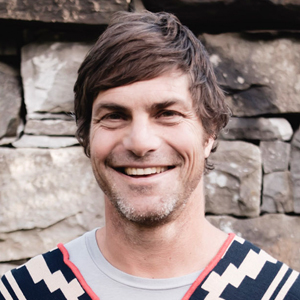
[00:00:10] Ray Latif: Hello, and thanks for tuning in to the number one podcast for the food and beverage industry, Taste Radio. I'm Ray Latif, and you're listening to Episode 172, which features an interview with David Karr, the co-founder of pioneering yerba mate brand, Guayaquil. Tune in on Friday, July 26th for Episode 44 of our Taste Radio Insider Podcast, when we sit down with Rizal Hamdallah, the Chief Global Innovation Officer of Ocean Spray. Just a reminder, if you like what you hear on Taste Radio, please share the podcast with friends and colleagues. And of course, we'd love it if you could review us on the Apple Podcasts app or your listening platform of choice. If you're familiar with yerba mate, you're probably familiar with Guayaquil. Founded in 1996, Guayaquil was one of the first companies to introduce the beverage to American consumers and helped establish a thriving market for yerba mate, an herbal drink brewed with naturally caffeinated leaves of a holly native to the South America rainforest. In the two-plus decades since, Guayaquil has essentially become synonymous with Yerba Mate in the U.S. and established itself as a vertically integrated company driven by responsible and sustainable business practices. BevNET CMO Mike Schneider recently sat down with co-founder David Karr, who opened up about the company and its origins, how Guayaquil introduced Yerba Mate to American consumers and created Evangelist for the brand, thinking about the business as a quote, reforestation vehicle, communicating its mission to consumers and its unique approach to distribution and hiring.
[00:01:45] Mike Schneider: Mike Schneider here in Brooklyn with David Karr, the co-founder of Waiakea Yerba Mate. David, great to be with you. Great to be here. Great to have you on Taste Radio. First of all, why did you pick such a difficult name for us?
[00:01:59] David Karr: That's a good question. I often ask myself that. It actually happened organically because the first project that we worked with in Paraguay, the owner of the property had quite a large chunk of rainforest and he had a brand of yerba mate in the Paraguayan market that he was selling called Guayaquil and it was mostly because that we came to understand later there was some indigenous people that were living sort of on the buffer zone next to his property. And to scare people away, he said they were like the Guayaquil, because they were like indigenous savage people, right? And so he called his product that. And when we started importing this special shade-grown, forest-grown yerba mate that was the only one at the time, we just used that name without thinking about it. I spoke Spanish at the time and so did my partner, who's Argentine, so to us, Guayaquil seemed like a cool name. Obviously, it turned out to be quite a hard name for most people to pronounce. So we had the conversation over the years many times about, should we change our name? And we never did, because we really resonated more with the vibration of what it represented and thought, ultimately, it wouldn't be a hurdle we could overcome.
[00:03:21] Mike Schneider: But you didn't just go to a farmer's market, try yerba mate, guayquil, yerba mate, and then put it in a can. That's not how it all went down. Why were you and your co-founder, Alex Pryor, so taken by Yerba Mate and tell us a little bit about the journey.
[00:03:36] David Karr: So the origin story is really part of, it's probably the most important part of like why we are the way we are today because we've stayed, like Alex and I are soul brothers. We've stayed connected this entire time. And we've never had a difficult moment, which is kind of ironic for most people to hear that, you know, 25 years into our relationship. And we're both the same age, right? We're both turning 48 this year.
[00:04:00] Mike Schneider: I have two brothers, and we can't be in the same room for 10 minutes without having a difficult moment. So, wow.
[00:04:07] David Karr: Within the first two years of the company, I expanded it to five of us. So there's five founding semi, as we call ourselves, seeds, and one of them is my blood brother, and we still work together to this day. So we're a different company in that sense. But going back to the love connection that Alex and I had when I first met him, It was one of those things where he was the most passionate guy I'd ever met at that point in time. And ultimately, ironically, later, he ended up introducing me to my now wife. So not only did he introduce me to Yerba Mate, my professional career, he also introduced me to my wife. And so all these years later, he, with his family, and my family, we vacation together and spend time together as families, even though we live in different countries. But way back when I met him, Before I met Alex, I was studying international business and finance and marketing at Cal Poly in the central coast of California, and he was also studying there. But in my third year of university, my finance teacher at the time had explained to me that there was no environmental or social costs in our gross domestic product. And I actually understood what that meant, and I was 22 at the time. I walked out of class, And I said, I'm done. I'm not going to put my energy into a system that is broken. And to me, it already seemed broken. And I walked to the foreign language department and said, where can I go as part of my curriculum? And they're like, well, we have this study abroad program in Aix-en-Provence in Southern France. I was like, great, I'm going. So I called my parents. I said, I'm leaving this state. I'm leaving this country. I'm going. And so I moved to France, had an incredible experience, a whole other story, living with a family. And then I stayed for another year and learned German and Spanish. And so I had my eyes opened to community and culture and farming in ways that I'd never had growing up in the Silicon Valley. I experienced things differently through a different lens. When I came back, I was more introverted than I'd been in my life, just focused on my yoga and my mountain biking and my surfing. It was just to myself, just finish my degree. And right when I was finishing my degree, I was at a restaurant, and I was, the guy waiting tables was this guy Alex, and he spilled food on me, and we started talking, I spoke Spanish, he's like, hey, you should come out, we'll have a barbecue at my place, because he liked me, I liked him. So I went out there, he was living in a trailer on a really beautiful property in Los Osos, California, doing organic farming studies for the landowner. who's now a friend. And after the barbecue, he passes around a gourd. I'm like, what is that thing? It looks pretty cool, right? So I start drinking it. And within like 15, 20 minutes of drinking the gourd, I feel amazing, straight up. My energy, and I can breathe, and that's really the backstory. The feeling of this caffeine is very different than the coffee feeling, and I like it. That's a great thing to bring up. From the very beginning, I actually had an experience with coffee. When I came back from Europe, when I was living in France, and I was so committed to learning French, I would sit in cafes, and I'd read Le Monde. I was really into it, and I drank coffee for six months. And one day I woke up and I was freaked out. I felt like crap. I was really like, oh my God, this is what people talk about. Did you have the heart explosion? I just did not feel like myself. Didn't have that natural energy and vitality that I had. And I just stopped cold turkey because I was like, whoa, this is weird. I felt like some energy was controlling me. It wasn't myself. I stopped it. I did even when I came back. And I had some coffees from time to time. I had friends who worked in coffee shops. They make these yummy mochas. And I'd do a couple of those. And I was like, you know, this is too much sugar and milk. And so I had drank coffee. But when I started drinking mate, it was a whole different thing. I mean, I didn't realize how different it was. But essentially, it nourishes while it stimulates rather than depletes while it stimulates. It was kind of like wheatgrass with caffeine. You're bringing in all this nutrition at the same time you're bringing in the caffeination. And so the arc is different. You didn't really have the crash. And it lasted longer. And it was more gentle. And I liked more the awakening and the clarity that I was experiencing, rather than, say, like a nervous anxiety. And of course, the thousands and the millions of people afterwards would all confirm the same experience they had with sort of the plant spirit of Mate. And that was a huge part of it, I think, in our growth and what we're doing, the confidence, knowing that this plant spirit is going to be very appealing to some people. over others and people are going to choose whichever caffeine they like and they can drink them all and many people do but at certain times you're going to like want mate and other times you're going to want coffee and you can just choose. I think a lot of people in the food industry, like the organic, natural food industry that we came out of, had started organizations because of something that had affected them. And also, like almost any company, the real successful ones, it seems like people are super passionate about something because it affected them personally in some way. So really, the regeneration happened with me personally first, and I was someone who grew up with getting shots in my arms for almost a decade to help me deal with my allergies. And growing up in California, there was always something in bloom. And I had humidifiers in my bedroom my whole childhood. I was always suffering. Then I was on the drugs, the pharmaceutical Benadryl and Sudafed. And then when I got to university, I stopped.
[00:09:54] Mike Schneider: Does that do anything for you?
[00:09:55] David Karr: It doesn't do anything for me. It just made me groggy. Yeah. It would stop my nose from running, but it wasn't the solution for me. You don't feel good, though. Yeah. I was still a stoked individual. I love my life, but I dealt a lot with that. That was like a big part of my life. It's like a haze or something. It was like a haze. The only thing that made me feel really good was extreme exercise. So I was really athletic. So I'd mountain bike and surf. And after doing like two hours of yoga, like a stanga or something, I could breathe well. It was like, those are the peak moments where I was feeling myself. And the only time I had felt that otherwise was when I was drinking the gourd with Alex. So every time I got together with them and I drank mate, I was like, dude, what is this stuff, man? I've never heard this. And meanwhile, I was starting a technology company with a couple of buddies in San Luis Obispo. And three, four months in, I was way more excited and passionate about what Alex was doing and talking about it than what I was doing myself. And he just said, la puerta siempre abierta, like the door's always open if you want to join me. So what made you walk through that door?
[00:11:01] Mike Schneider: What was it about, you're starting this tech company, and you're realizing, I'm not quite as passionate about this as I am about the gourd. What's in the gourd?
[00:11:12] David Karr: It was Alex, and the product, and the story. Because he was telling me the stories about the product. He's telling me how it's this powerful rejuvenator. It's called the Oro de los Indios, like all the legends. And I'm experiencing the effects of the product. I'm feeling the power of it myself. and I'm hearing the stories and then I'm hearing like how it used to be from the forest and now it's all grown conventionally and like we could grow in the forest and we could restore the forest and we can work with indigenous people and small farmers and and I was like yeah.
[00:11:44] Ray Latif: We'll be right back with more from David Karr after this quick word from our sponsor.
[00:11:49] South America: What makes Rye's Nitro Cold Brew Coffee great? Some would say the organic ingredients. Some would say the variety of great tasting flavors. Others might say the sound it makes when they open it makes them smile.
[00:12:05] Mike Schneider: And let's talk a little bit about category creation, because that's what this is. I mean, there's a lot of education required when you start a category. Did you realize that at the time?
[00:12:14] David Karr: No, I did not realize that at the time. I was way more confident that it would happen quicker. I even tell my brother, like, this is going to go fast. Like, I really thought, like, this was just going to take off so quickly. How could people not love this product? And of course, for me, meeting it the way I did, and drinking the ceremonial way of the gourd, and feeling the effects, and drinking it with Alex. And I thought, wow, people are just going to get into this. But I was from California. I was living in the Central Coast. I was drinking it with my bros. And we were combing the coastline, looking for good surf. So it's lots of good time in the car, checking spots, then sitting on the beach. And so it really fit our lifestyle. And I was a really lifestyle-oriented person my whole life. I was committed to lifestyle. That's why I left the Bay Area. I'm like, I'm not like, I want to have balance in my life and I want to like be healthy and full of vitality. And so that the product lined up with that, the lifestyle that I had lined up with it. And I thought that way more people would be into that quicker.
[00:13:14] Mike Schneider: Did you understand that this would be the words lifestyle brand probably didn't exist at the time, but did you understand that this was going to be for a specific kind of person or did you say everybody's going to love this?
[00:13:25] David Karr: You know, I thought everyone was going to drink. At that time, you know, Red Bull was just coming on the scene and, you know, craft coffee was just kind of happening. And I thought, like, well, there's just going to be a bunch of people who are going to drink mate instead of coffee, especially because we only had hot. You know, we started in whatever, 1996, and it wasn't until 2005 we had our first glass bottle. All we ever drank was hot mate. And everyone who was getting into mate was quitting coffee. And it was usually the people that we'd meet, say, in the natural food industry because they were having some maybe health challenges, which is why they're shopping at natural food stores anyway. And they found that quitting coffee was like really healthy for them because it was part of the step to a healthier life, but they're doing other things too. And so drinking mate was like a catalyst and made them feel really good and clear their mind and help them with wherever they are at in their life.
[00:14:15] Mike Schneider: How do you get the message out there initially that you have this product and that it has these benefits?
[00:14:22] David Karr: Well, I had $14,000 and a VW bus. And so I just traveled throughout the Northern California, Oregon, and Washington in my van with my brother. Old school demoing. Yeah. I did over 1,000 demos myself and set them up and broke them down. And I lost track many years in. But I had served over millions of cups personally, millions. And I think between me, Steve, and my brother, and Domiguel, and myself, we had served over 5 million cups personally that we brewed. and looked someone in the eye and hand it to them and said, this is going to make you feel good kind of thing. We didn't have any other option than to just travel around and show you own a store. Hey, this stuff's amazing. We have a case of it. Will you buy it? I don't know. I'll stand in your store and sample to people until we create a customer base for you, and then you can decide. We'd sell the packages for them. We'd sell the first case usually of of the Montay tea bags and the loose Montay, and then we'd like leave them another case or two behind and we'd go to the next place. So you went store by store.
[00:15:17] Mike Schneider: So obviously it was going to go really fast. Clearly, right. It's going to catch like wildfire. How do you get from VW bus store by store to some kind of inflection point, you know, where you're saying this is where we hit one? Yeah, well, I see it on the shelves. You know, we're enjoying it here today. I think I got to time being more of an illusion everywhere.
[00:15:41] David Karr: Yeah, I got to time being more of an illusion before. some point. For me, it was more about my personal and my professional being aligned, and time disappearing, and just doing what I loved, and knowing that we'd get there, and it was going to take time. I stopped worrying how long it was going to take, and really just doing something for the right reasons. Different people would say we made it at different times, depending on what your personal goal of success is. For me, I made it the day that I met Alex and started drinking mate. For someone else, we made it when our data showed X at a certain store. It's like, that's just all subjective.
[00:16:19] Mike Schneider: So you made it on day one, but how does it feel now versus then? Does it feel better now?
[00:16:25] David Karr: It's even more exciting. I think every year it's just gotten better and more exciting because we've stayed private and we've stayed committed to why we started this company. And there's just more of us. For a long time, it felt like there's two, and then there was five, and then there was 10, and then there was 20, and then there's 50, and then there's 100. And so now there's many shoulders holding it, and it feels like we're not gonna go under I never feared it not working, but I was also realistic and it could have happened at some point in time that it wasn't going to work. And now I feel like I don't even think about that anymore. I stopped thinking about it perhaps not working 10 or 15 years ago.
[00:17:03] Mike Schneider: At what point did the purpose become bigger? Because right now the pillars of the company are zero waste, regenerative architecture, nurture tradition, values align suppliers, zero emissions, conscious leadership, and of course, as we're doing right now, share the gourd.
[00:17:19] David Karr: I think we're putting words to things and articulating things today that have been there all along. My first connection to South America is when I traveled down to Ecuador way before I met Alex with my mother. I was really taken by the people, like the humility and just how beautiful the environment was and the way people lived. I remember coming back from that trip feeling like, wow, it's amazing. I was thinking of different things you could sell. I remember reading about the Tagua nut that came from Brazil, I believe, later on. People were using this nut that could be harvested from a tree that was grown sustainably. that could be turned into a button for clothing. And so when I met Alex, I'd had those thoughts before. Because after I left university, I was actually going to join the Peace Corps. I was not going to go into business. I was already thinking about things that I could do with my life. that were going to contribute to a different world because I was pretty idealistic, like I still am. Thankfully, I haven't had to lose that. From the very beginning, what got me was this is a caffeinated commodity. It's one of several caffeinated commodities that makes up a half a trillion dollar industry and people consume large amounts of coffee, tea, chocolate, etc. And it's scalable. And I was really intrigued about making a scalable difference. And so from the very beginning, the fact that it was a rainforest product that could be propagating the rainforest and create more rainforest and could bring back a lot of the degraded area, because when I first, when I was born, there was about 70 to 75% of the Atlantic forest around, which is the forest where Yerba Mate grows, and then today it's less than 7%. And when Alex and I were first dreaming of what was possible, it was like, we could use this as a reforestation vehicle. and as a way to conserve the forest that was there. That first project, it was like 20,000 acres of rainforest, and we were conserving that forest by buying this loose Yerba Mate and then selling it in a package. In our first business model, we defined it Market Driven conservation, which is the answer to that question. That was phase one. Market-driven conservation. Let's save what's there. Later on, it was like 10 years later, it's like, uh-oh, that ain't enough. We all got the same information, we all knew what was going on, so we changed it Market Driven restoration. And then a number of years ago, we changed it to regeneration, which means we need to even do more now. We need to regenerate, not just restore what was there, but we need to regenerate that which used to be there, which tied full circle into our original idea, which was to create biological corridors between reserves by reforesting its natural habitat. And there was another Canadian study that came out that showed that 60% of the bird and animal species lived in the reforested mate plantations inside the rainforest, which was the big aha moment. It was like, wait a minute, you can do agroforestry essentially, agroecology, inside of a rainforest and the birds and animals travel through it. at a high percentage. That was what Alex and I talked about on day one, like the first many months when we were talking about this, because we were looking at that information that was there, and it was this idea like, if people really got into this product, we could use it as a reforestation vehicle. And the people who knew about Yerba Mate the most were the indigenous people. It was their drink for hundreds of years. So now you're having the stewards of the land being the indigenous people who were once there, who have been, you know, the Guayaquil suffered a genocide. I can talk about it if you want, but essentially you're working with people who have been extremely marginalized now to protect a forest which has been extremely marginalized. How are you measuring the impact of your business model? Regeneration for us comes in many forms. Even when we started Guayaquil, there was no triple bottom line. But even when that whole movement came along with triple bottom lines, it was kind of funny because it's like, we're going to build in as many bottom lines as we can. And I understand that. having a social and economic, environmental bottom line was important. That was the whole reason I walked out of class that day was because there was no social and environmental bottom line. But for me as I evolved myself, I realized there was many more bottom lines like cultural bottom lines and there's holistic bottom lines. So we wanted to build in as many of the externalized costs and internalize those costs, because the entire system was built on externalizing costs, driving quarterly profits, which is a very short term thinking method, which has led to like our current plight of humanity. And so the idea was like, let's internalize the costs. Let's create a business model where people can like drive it by just buying the product. And we created it in such a way it was like, someone could just buy the can and really not know what we're doing. That's totally fine. Drink it because it feels good and you like the way it tastes. The hope is that people would enjoy the product and they ask questions of themselves and others and they start holding businesses accountable and that they purchase things that they value because you vote with your dollar. I always felt you vote with your dollar and that is what you just read, our 2020 mission statement, and now we're coming up with maybe a 2050 mission statement. But years ago, we erected a vision statement. that is timeless, which is Yerba Mate culture will power Market Driven regeneration business model to create vibrant communities and regenerate ecosystems, which is timeless. So that everything we do in the sharing of the Mate drives the model. to create vibrant communities and regenerate ecosystems. And so to answer your other question, like regeneration comes from the inside, like we're socially regenerating, we're environmentally regenerating, there's a lot of layers to it, and we're bringing in more layers to that, as you have alluded to, like with our distribution model, and then also with our- Which is self-distribution. Yes, and also with like electric vehicles and people who have, you know, who are system affected. And so those are all layers of regeneration that are super dear to us that we've layered in later. The paradigm of regenerative thinking is more what's driving our decision making rather than say like an end dollar, an end goal. There's no end game. It's a mindset because we've always felt that the greatest influence we're gonna have as a, say as a tribe or as a collective is to influence and inspire rather than to have to do it all ourselves.
[00:24:02] Ray Latif: We'll be back in a flash after this word from our sponsor.
[00:24:06] South America: Who can name this tune? Give up. It's a new hit single called Uncanny by Rise Nitro Cold Brew. Pretty catchy, eh?
[00:24:21] Mike Schneider: In January 2018, you talked to BevNET's Martín Caballero and you told him that the goal is to become completely electric. You said, it's our model as we expand and go into new markets. And that's happened. Your distribution model, it's a self-distribution model, and you're totally electric. How long did that take? That seems to have happened much faster than actual, you know, sort of bringing the product to market and educating the consumer.
[00:24:48] David Karr: We are GM's largest electric fleet customer now with, I think, close to 300 vehicles. They even evolved one of their vehicles, the Bolt, into the Cargo Bolt, because we needed more room. And the technology hasn't really come as fast as we thought it would. We actually thought there would be more vans and sort of sprinters by now that would carry more product. They're not there. We know they're coming. And these things take time. But we are inside of a couple of years. That's where we're at, because we're just leasing them. And we're putting our product in there and we're driving to the store and we're dropping it off. Sounds kind of simple, but that's what we're doing. Yeah, it's wicked easy, right?
[00:25:29] Mike Schneider: You just get a bunch of cars and a bunch of people in heels. And here we go. Let's go down that rabbit hole for a second here. So is that something you're just sharing a gourd one day and saying we should do our own distribution from an electric fleet?
[00:25:42] David Karr: Well, Patrick, who was with me, was really... Patrick Lee. Patrick Lee was really clear that if we were going to stay private and determine our own destiny, that we needed to do our own distribution. Otherwise, we end up all the rest. And because we were really clear that we wanted to remain private, he was like, that is our only option. And we were paddle boarding. And I remember the day when I was like, well, why don't we do it electrically and use Teslas? And I had kind of drew up this diagram and they could pull a wagon that was filled with product. We just started riffing on this whole idea, right? And we ended up getting two Leafs and two Teslas when we first started. And the Teslas obviously did not make that much sense using a luxury vehicle, which is an incredible car to deliver the product. The Leafs ended up not being the best fit either, and we ended up with where we're at now. But we're agnostic to the vehicle, but more to the concept of using electric. So it was just hatched in conversation. And then later on, through a series of connections, we stumbled on the idea of using people who have been system affected, and met James Anderson, and went down that rabbit hole. And so, like I said, I don't think most people seek complexity like Waikiki does. It seems like we seek complexity, or we're not afraid of it. I'm not sure which one it is, but it's probably both.
[00:27:07] Mike Schneider: Clearly. As you're restoring communities, what stops civilization from devastating again?
[00:27:19] David Karr: Nothing. I'd rather die a foolish optimist than a pessimist. So I'm just going to put my energy into things that I believe in that are making a difference. I'm gonna grow my tribe, I'm gonna make decisions that I think are good for myself, my family, my loved ones. I'm gonna try to set an example. I can't change the world, I can only inspire people.
[00:27:42] Mike Schneider: Does Guayaquil at any point become a company that more aggressively pursues that goal in challenging other companies to do what you've done? To perhaps publish a manifesto of how to do this?
[00:27:57] David Karr: I think what we're doing is leading by action. And so we're making bold decisions and taking big risks, so to speak, because we are choosing to scale. And so in that choice, and choosing to take money to do that, we are committing to action and we're taking decisive action and making bold moves. And so people can look at what we're doing and maybe that'll inspire them to make the similar decisions in whatever paradigm or industry that they're in.
[00:28:34] Mike Schneider: You talked about building community and part of the regenerative architecture is that you hire previously incarcerated people into the Guayaquil family. Talk about that.
[00:28:47] David Karr: We refer to them as a legion of system affected because they have been affected by the system and we know that a lot of people are affected by the systems in different ways and it's really hard to break that chain, break out of that system. However, they're really well suited to the delivery. that takes place with our distribution company, the Urban Mate Company, because it's very organized, methodical process where you get the product and you follow the path of door and it takes you to the account. And the way I think about it is it's building really positive patterning, very positive neural networks where their experiences are, they're always like the Guayaquil person. People are stoked to see them and bring them the product. And so they're having a lot of positive experiences, driving around an electric car, being part of the change, not polluting the environment, bringing a product that represents a really cool, exciting business model that people are into, and they like the actual way the product tastes. Then they take good care of the customer, and they remove the garbage, and they stock the shelf. You do that every day or five days a week, and you do it over and over. All of a sudden, you're building new memories and new experiences, and that is really healthy for someone who's come from that background, and maybe it's a stepping stone for another job, and that's totally fine too, but it's part of that regenerative mindset. And as it turns out, they're really loyal, because they don't really have many opportunities other than us. And so it works, it's mutually beneficial, which is something that we always think makes for good long-term relationships. So there's a lot of layers.
[00:30:33] Mike Schneider: The latest layer of complexity is that you're building this drying facility. How do you know it's time to do that kind of stuff? How do you know, oh yeah, we can take this on now. It seems like control's really important for you to have control over, obviously, the entire creation of and distribution of the product. How do you know, oh, let's take on drying now.
[00:30:54] David Karr: Really it comes down to quality and being able to control the process as closely as we can. And we are able to do it with third party drying facilities, but it takes a lot more time. it's a bit more loose, and so the more we can do things ourself, the better. Since we've committed to self-distribution, and we do our own sales, and we do our own marketing, we've had the vision to go from seed to shelf from the very beginning. We didn't know that the seed to shelf was going to mean distribution. That was always a weak point in our vertical integration. But now that we're doing that, doing the drying is not a big hurdle for us. That's much smaller hurdle, but we just need to do it.
[00:31:37] Mike Schneider: Talk a little bit about the global impact. If you're looking at it from the 25,000 foot view.
[00:31:44] David Karr: Yeah, the impact, I would say, goes back to the source and the impact that we're having at source modeling the impact that we're having in the markets where we sell. So we've talked about delivering our product with formerly system affected on electric vehicles bringing you know, a healthy energy infusion for people to enjoy. Back at Source, the inspiring part that's happening is the impact we're having is rippling out. So we acquired, one of our investors, when they sold their interest, donated the money for us to acquire a property in Argentina that was sun-grown mate. And we've turned that into a demonstration project of how you reforest. And we have over 500 students come a year to come to the Agroecology Foundation, where they can learn how to farm organically in the forest, biodynamic, reforest the rainforest over the Yerba Mate. And over the 10 years since we've had the property, now I've seen what was once sun-grown mate look like secondary forest. So you're like, wow, we can reforest. That's incredible. And working with the Asha Guayaquil people who we've worked with now for almost 20 years, they were one of six groups of the Guayaquil people that were left after the genocide. And we started working with the one that was the most open to working with outside people, the other groups are now looking at us going, hey, we want to get on the action. We see what happened over there. We see how you started a food sovereignty project. We see how they're building a drying facility on their property. We see how the World Bank's now come in and started building housing for the people. We see how other NGOs have now all gotten involved and worked in sanitation, in water, in health, clinics, all because of our involvement. And that was, again, going back to the inspiration influence was if we come in as an economic partner and say, we're going to buy your rainforest-grown mate that's grown in collaboration and harmony with the people in the forest, we kind of believed that other people would want to ride that good wave, and that's happened. And that's happening more and more. And we're seeing that ripple out. That's what gives me hope and inspiration. And the same thing that's happening in the market side. People are like, wow, this product's amazing. And they're telling their friends about it. So we're seeing the ripples take place both on the market side and the regeneration side. And that is the most exciting thing going on.
[00:34:12] Mike Schneider: David, thank you so much for being on Taste Radio. And thank you so much for sharing the gourd. Thank you. My pleasure. It was great having you. And I hope to see you again soon.
[00:34:23] Ray Latif: That brings us to the end of episode 172. Thank you so much for listening, and thanks to our guest, David Karr. You can catch both Taste Radio and Taste Radio Insider on Taste Radio.com, iTunes, Stitcher, Google Play, SoundCloud, or Spotify. As always, for questions, comments, ideas for future podcasts, please send us an email to askatasteradio.com. On behalf of the entire Taste Radio team, thank you for listening, and we'll talk to you next time.
[00:35:01] David Karr: Hello, I am Melissa Traverse here for the Taste Radio podcast, talking about some of the biggest tension points that CPG brands and founders face when they're scaling a brand, and those are financial accounting and inventory management. I am joined by Matt Lynn, inventory accounting guru from Belay Solutions, and he is going to shed some light on all of this that is going to help everybody out quite a bit. Matt, thank you so much for joining us today.
[00:35:31] Alex Pryor: Thank you for having us, Melissa. It's great to be out here at Expo West and it's great to sit down and be able to chat this because it's kind of a passion project of ours, working mainly with CPG brands and hoping to help them scale.
[00:35:43] David Karr: It's been such a pleasure chatting with you and the team and learning all about what you do over there at Belay Solutions. Can you tell us a little bit about yourself and what your role is and the kinds of solutions that Belay gives to CPG brands and founders?
[00:35:59] Alex Pryor: Yeah, absolutely. My role with Belay, I'm actually our inventory accounting manager. I run our inventory department. So we work with CPG brands, taking them from spreadsheets, putting them on inventory management systems, and really helping connect their tech stack between their sales, online marketplaces to that inventory management system, even down to their financial systems like QuickBooks. Belay overall is kind of an outsourced accounting firm. And with that, we're helping teams. We have different levels with bookkeeping, controller level work, even high level into CFO type items. So we really help those brands in any way that they need financially. And then I just have a subset of a department where we're really just laser focused on inventory.
[00:36:41] David Karr: It's certainly a complex topic and there are plenty of places to go wrong. Let's start by going right and start super simple. Can you tell us what some of the biggest red flags are that would help a founder understand or, you know, the person running a brand understand that it really is time to get some help with some of these areas?
[00:37:02] Alex Pryor: WKYT. They have a lot of transactions that don't get coded or they just put them into placeholders to just get rid of it so it's not an eyesore. They'll notice they have revenue but no cash or they notice that they have a good amount of cash but their blind spot is really seeing the vendor invoices that are sitting there just needing to be paid and so they just lack that clarity that's going to really be around the corner.
[00:37:39] David Karr: You know, you were talking about one of the red flags that comes up that I think makes so much sense. When somebody asks you what your numbers are and you can't come up with the right number, that's a big problem because that's something that you really should be able to share with decision makers who, you know, you're ideally looking to do business with. What should you be able to call up at a moment's notice?
[00:38:03] Alex Pryor: Really at any time, you should be able to know an accurate margin. It's amazing how many founders we end up talking to that they can tell you their revenue numbers, they can tell you their selling price, and then the minute you start talking about cost or their cost of goods sold, they just get a deer in headlights look. So really it's very hard to tell, am I even making money? Or if you don't know your entire landed cost. Maybe you know what the freight cost is, the duties separately, but you're not really getting that as part of your unit cost. So it's really hard to tell. Am I even making money or am I losing money from the very beginning?
[00:38:36] David Karr: And do you recommend that founders are able to call up a margin by channel?
[00:38:41] Alex Pryor: Absolutely. And depending on the number of products and channels, you kind of want to know what are your best sellers, which ones are making the most and which ones maybe you're not making as much. But especially if you're branching out and you're doing D to C with B to B, absolutely want to know that.
[00:38:58] David Karr: Gotcha. You mentioned that when things feel really chaotic, that's probably a red flag. I would say that it probably almost always feels chaotic if you're running a CBD brand. And I know this may be hard to quantify, but is there a revenue number? Is there a number of doors number that would help a brand understand whether or not it makes sense to bring on a partner like Belay? Understanding that so many brands are bootstrapped or they might be tight for cash. What is that friction point?
[00:39:28] Alex Pryor: 3 3 3 3 3 3 3 3 3 3 3 3 But as you're growing, as you're getting to those six-figure revenue numbers, and especially as you're approaching seven, you want to make sure you've got good financials. Because as you scale to that point, most likely you're going to be looking to raise capital. And investors, the first thing they're going to look at is your books. And are they clean? And do they show a clear picture of your business?
[00:40:01] David Karr: You know, another area that folks might look to to organize some of the chaos are their systems. So many folks stick with Excel spreadsheets for a good amount of time. How do you know that you need to outsource some of your accounting to an organization like Belay Solutions versus maybe signing on to a Synth7 or NetSuite or something like that?
[00:40:24] Alex Pryor: Well, that's actually something we really help with when it comes to that cost question. That's something that trips people up. And sometimes if you just have a turnkey business, you buy and sell a finished good, you can maintain with spreadsheets. And we've had clients with million dollar revenue that can do that. But we see so many brands nowadays are using contract manufacturers. and they're just sourcing certain parts of their product. So when you start talking costs, they have no idea exactly what their unit cost is. So that's where we come in and we kind of understand, we'll speak with the customers and the clients and get their needs. And then if we think they're ready for a system, then we'll help put them on that system so they can get some of that clarity. And it's not something we force on anybody. There are plenty of times where founders come to us and we'll tell them bluntly, you're not ready for it right now, but we'll let you know when we think you are.
[00:41:10] David Karr: That sounds like excellent advice. What should a founder or somebody running a brand look for in an outsourced accounting partner? Are there certain checklist items that they should make sure that their partner be able to execute or be able to help them understand?
[00:41:27] Alex Pryor: Absolutely. I think one of the keys there's, there's a lot of outsourced accounting firms out there. Some focus on service-based SaaS companies, but if you're a CPG founder, you really want to make sure that your accounting firm has CPG experience. I would ask them, you know, what kind of brands have they worked with? And even beyond that industry specific, because there's so many subsets of CPG. And that's something that I think is great about what we do with Belay is that we kind of run the gamut. It's kind of like the insurance commercial. We know a thing or two because we've seen a thing or two across a broad spectrum.
[00:41:56] David Karr: Probably getting references is always helpful, right? Absolutely. All right. So this all sounds great. I think we have a really good understanding of would it make sense to hire an outsourced partner? You know, what some of the things you should be looking for are. What does offloading this kind of work mean for the brand? What can this do for lightening the load of a founder or lightening the load of a brand operator? Like, how does that help them in their everyday business?
[00:42:26] Alex Pryor: It just tries to really help quiet the chaos. So what we're looking to do is just take some of the weight off that founder's shoulder, let them focus on building the brand, building the business, getting that exposure. If you don't have sales, you really don't have anything. So we want them to be able to focus on that while we take care of your back end office work. And we can just present that to you on a monthly basis, you can help make decisions, you can take that to investors. And really, you can just focus on growing your business.
[00:42:51] David Karr: I feel like I felt founders and the folks who are running brands collectively sigh a breath of relief just hearing that. How can people learn more about Belay Solutions?
[00:43:02] Alex Pryor: So people can text TASTE to 55123 for their free inventory guide to get started.
[00:43:08] David Karr: Matt Lynn, inventory accounting guru at Belay Solutions. Thank you so much for joining me here at Expo West. It's been such a pleasure to chat with you and learn about what you all do over there to help founders and brands with their financial accounting and inventory management. For everybody else out there, thank you for listening to the Taste Radio podcast. I am Melissa Traverse and we'll see you next time.