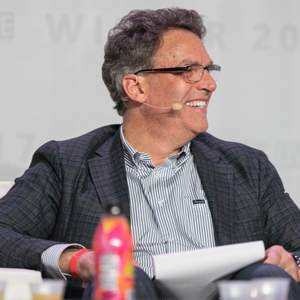
[00:00:10] Ray Latif: Hello and thanks for tuning in to the number one podcast for the food and beverage industry, Taste Radio. I'm Ray Latif and you're listening to episode 174, which features an interview The Beverage industry legend Ken Sadowsky, who joins us for a wide-ranging conversation about his work with iconic brands and his perspective on trends shaping the future of the drinks business. Tune in on Friday, August 9th for episode 46 of our Taste Radio Insider Podcast, when we sit down with Ann Yang, the co-founder of Misfit Foods, who opens up about her decision to leave the company in order to focus on her mental health. Just a reminder, if you like what you hear on Taste Radio, please share the podcast with friends and colleagues. And of course, we'd love it if you could review us on the Apple Podcasts app or your listening platform of choice. Mike Kirban, the co-founder and CEO of coconut water giant Vita Coco, may have said it best when offering his take on Ken Sadowsky. He said, Affectionately known as The Beverage whisperer, Ken has been involved in The Beverage industry for decades, and as a distributor, investor, and advisor, he's had a powerful impact on the development of several well-known and category-leading brands including Vitamin Water, Vita Coco, Bai, Hint and Califia Farms. In the following interview, Ken spoke about his background in the business and how he assesses the opportunity to align with and invest in early-stage brands. He also offered his perspective on leadership, why he believes that entrepreneurs should be wary of indecisiveness, and shared his thoughts on notable categories and emerging trends. Hey folks, it's Ray with Taste Radio. I am here at BevNET headquarters in Watertown, Mass., inside the Taste Radio studio. I'm with Mike Schneider, BevNET CMO, and my Taste Radio co-host. And we are truly honored to be joined by The Beverage whisperer himself, that is Ken Sadowsky. Kenny, how are you?
[00:02:08] Ken Sadowsky: I am fine, thank you. And thank you for having me.
[00:02:12] Ray Latif: I hope that your travel from Westboro wasn't too tricky to get here to Watertown.
[00:02:17] Ken Sadowsky: Not arduous except for exit 17 off the pike. That is an arduous exit.
[00:02:21] Mike Schneider: The circle of death.
[00:02:22] Ray Latif: Yes, it really is. I don't know why they haven't fixed that yet, but it is a mess.
[00:02:28] Mike Schneider: I just take it full speed and, you know, people back out of my way. It should really be called the Mess Pike right there. The Mess Pike, I like that. I agree. That is a disaster of a rotary or whatever you call that at that point.
[00:02:43] Ray Latif: Ken, you and I have a shared history with the Mass Pike in that one of the key exits, is that exit 10? I was going to say nine, but I think you're right. I think it's 10, the Auburn. The Auburn exit. I grew up in Auburn, Mass. your family's distribution company, Atlas, is based in Auburn. Yes. So I remember as a child seeing those trucks going up and down the street. And who would have thought that a mere two decades later, I'd be sitting down with Ken Sadowsky of Atlas Distributing. Two decades or three, Ray? Come on. Thanks, Mike.
[00:03:22] Ken Sadowsky: And look, I've been gone from there for a decade, so it's pretty, it's unbelievable how time flies. And I did just stop by there yesterday, so.
[00:03:30] Ray Latif: So your family was your conduit to The Beverage business, right? I mean, they've been in, how long has Atlas been around?
[00:03:36] Ken Sadowsky: 1933, legally. And illegally?
[00:03:40] Ray Latif: We don't get into that. What do you mean illegally?
[00:03:43] Ken Sadowsky: Well, my grandfather may or may not have been a bootlegger.
[00:03:46] Ray Latif: Oh, okay. We'll say may not have been.
[00:03:50] Mike Schneider: Do you want us to cut that?
[00:03:55] Ray Latif: So, I mean, did you grow up with a business? Were you out there in the trucks and delivering? Were you doing some of the hard work like that? Or were you sort of behind the scenes, you know, in the office?
[00:04:03] Ken Sadowsky: No, the summer jobs at high school and between college years were either merchandising, which on The Beverage side of the business, because there was no soda side of the business at that point, meant hanging pool table lights in bars and neon signs in windows, and could be delivering table tents to on premise accounts or I mean, I remember going to Yankee Spirits in Sturbridge, Mass and dusting off three gallon glass bottles of Inglenook wine. I mean, just really old school stuff. But yes, when things had to be priced individually and everything had to look tip top and we had dusters.
[00:04:47] Ray Latif: So as much as you grew up in the business, you grew up in bars and liquor stores as well. 100%. That might explain a few things. No, I'm just kidding.
[00:04:55] Ken Sadowsky: Just kidding, Ken. It explains why my family didn't trust me with any beer once I got into the family business and I had to start the soda end of the business.
[00:05:03] Ray Latif: So you started the soda end of the business. You were the one that got Atlas into Non-Elk?
[00:05:08] Ken Sadowsky: Yes. Technically, my father had taken one brand, New York Seltzer, and there were 13 accounts. And he asked me to come in and see what I could do about it. growing that business, and I had just been let go by the Brown-Forman Division of California Cooler, and I said, okay, I'll do it for a six-month project. And it was 20 years later when I finally left, and not on that temporary project term, but it was a great experience. It seems like it would be given, like, where you are today. My career has been really fortunate that I've been, like, at the ground level of all these little things that people say, oh, it'll never be like that again. And then, you know, it does. It just sort of goes, you know, history repeats itself. If one were to look at California Cooler from 1982, I think it started. I joined in 84, left in 87. if you were to look at the FMBs, right, the alternatives or whatever you want to call them today, or the alcoholic seltzers, they are really just the cycle that has reshaped and formed with different ingredients, but it's still a wine cooler to wine, what Truly and all these other seltzers are to today's LDACs, as we used to call them, legal drinking age consumers.
[00:06:29] Ray Latif: Well, that's I remember Bartles and James. Remember Bartles and James?
[00:06:32] Ken Sadowsky: Those coolers used to be like the those ads. Yeah, it was in the 80s. It was as popular as could be. The ads were effective. And Gallo did a great job with them. It was Frank and Ed. And they were on their porch and they did a great job of telling people that they were these homespun. Meanwhile, it was the biggest wine company in America at the time. And California Cooler were these startup young entrepreneurs and actually did, if anyone can dig these up on YouTube, they're really fascinating. But it was Chiatay at their peak did the California Cooler ad campaigns. The first one was one more reason to hate California. And it was like a scene of a guy in a New York bar scene where it's like, It's got the beautiful weather. It's got the beautiful women. And now it's got this stuff. I hate California. And it was really, I mean, it was cutting edge at the time. And Chiatay was, I mean, they were literally in the throes of putting together that Big Brother ad for Apple. I mean, they were the most talented agency out there. And California Cooler used them because Jay Chiat really liked the brand California Cooler.
[00:07:38] Mike Schneider: That's a really hard emotion to evoke, the emotion of someone cheering and someone going, oh, I hate them, but I want to be them. Yep.
[00:07:45] Ray Latif: So all that being said, what do you think of alternatives today?
[00:07:50] Ken Sadowsky: I mean, thankfully, I've aged out of that demographic. So I don't really have to tolerate them. But as a trend watcher, you know, to me, it's just it's history repeating itself. And I'm not well versed at all in the nuances of, you know, I was at a restaurant last night that had Truly and Naughty and White Claw. And I just said to myself, it's amazing because this all used to be beer. And before that, it used to be Zima. Right, Noxzima. I remember that. Noxzima was the Coors product called Zima, and then they would put blue Curacao in it and call it a Noxzima. Oh, God.
[00:08:27] Ray Latif: I think the brand Noxzima itself, I mean, do people still use that stuff? Is Noxzima still around? It's still around. I know what you're saying, but I'm saying like the brand itself is, I wonder if people are going to get the reference. That stuff burned your face, man. Are you supposed to put it on your face, Mike? Yeah. Oh, okay.
[00:08:41] Ken Sadowsky: What would you put, Ray? Let's not talk about that. I don't want to know. I think it's an overnight face cream or skin softener. So hands, face, whatever, but I am not sure.
[00:08:51] Ray Latif: So if someone, getting off this Noxzema conversation for a sec. So if an entrepreneur approached you with a heart seltzer and there's new heart seltzers popping up literally every single day, what would compel you to invest? What would they have to say for you to really be interested?
[00:09:08] Ken Sadowsky: Well, I think that horse has left the barn. I mean, you know, I'm really much more of a bleeding edge type investor when something is already in stores and as pervasive in the trade as it is that FMB category. Not that there's not room for another one, because you're right in identifying the fact that when a segment is growing, people will continue to enter that segment, you know, in the energy drink category, for example, and in the coffee category. But there would have to be something really compelling in any category to be a fast follower or even a slower follower. But I'm not interested personally in investing in hard seltzers.
[00:09:54] Ray Latif: So let's explore that a little bit. I mean, you're The Beverage whisperer. Your reputation precedes you. If you're in The Beverage industry and you don't know who Ken Sadowsky is, well, you should, because you're a little behind the eight ball on that. You do now. You do now, exactly. Given that you've invested in some of the most high-profile brands of the past 15 years, hints Vita Coco, Sambozon, Vitamin Water. Essentia. Califia Farms. Forto. I've been fortunate. You've been fortunate with Forto. Yes, I like that.
[00:10:25] Ken Sadowsky: I've been fortunate with that list that you just... Indeed.
[00:10:29] Mike Schneider: But you must get... By the way, they're all on the table in front of us right now. He's brought them all.
[00:10:35] Ken Sadowsky: If you can't be the brand, you have no business investing in it.
[00:10:38] Ray Latif: There you go. You must get pitches every single day. If not... Well, you mean because I'm a Red Sox fan and I go to Fenway Park? Dad jokes.
[00:10:49] Ken Sadowsky: Dad jokes across the board. No, I do. I get my share of inbounds, as they say. How many pitches would you say you get a year? Not quite 200. Because if there's like 252 business days in a year, and I used to say it was like a vitamin, I would get one a day. And there are that many product launches, but I don't, I probably see a significant number of those, but I would say it's probably around 100.
[00:11:19] Ray Latif: And how many do you actually invest in or agree to advise?
[00:11:24] Ken Sadowsky: Well, one example, like coming out of Expo West this past year, I was either dizzy or not focused enough, but I didn't see anything compelling. I mean, and usually that's, you know, when I, I'm sort of prepared to be writing checks in April and May and June as follow up for, you know, the March Super Bowl of products. And I just didn't see anything compelling. I think it's getting too blurry. That entire show is getting hard to handle. The show is getting blurry or is the industry getting blurry? Well, I think the show is representative of the industries. I think the answer is both.
[00:12:04] Mike Schneider: Can we dive a little bit here? I'm newer to the industry and one of my sort of introductions to the industry was, my first day was Expo West, as you might recall, four Expo Wests ago. And one of the first people that I got to meet was Ken Sadowsky. And we went to, we have been over the past four years going, taking a few minutes here and there to go to booths together. And you're a very easy person to talk to. And you can kind of just launch into, Thousands of dollars worth of advice like that. I think an interesting question for our listening audience is, what is it that compels you to go from that, I'm here to give you some advice on what I think you should do with your product to, we really need to spend some time together and talk about working together, you know, me investing in your product. What compels you to get there?
[00:12:58] Ken Sadowsky: I think it's a little bit of art versus a lot of people that are in my shoes in this industry have much more of a scientific approach. And I think what's benefited me is both my network and my sense of, you know, it doesn't always fit into a square hole, you know, I'm not looking for a square peg going into a square hole, I'm looking for something that's moldable. And so it starts with just my opinion about whether the product is on trend, and then it's the person. And by the end of the evaluation period, it has much more to do with the person than the product. Do you have a way that you like to be pitched? The answer is, I guess, not overtly. I mean, I can't, I don't like inbounds that are too aggressive. But what I would also say is, having been at the desk of a distributor where I was the buyer, and then I would go out into the trade and see things in the trade, whether they were part of Atlas Distributing's portfolio or not, that were working. And so as soon as I left Atlas, and I started doing what I do for Verlinvest, And on my own, the inbounds were coming in my first few inbounds that I thought were reasonable products, but they were wanting me to move with a higher speed or alacrity than I was used to doing. I remember saying, you guys are screwing up my chronology. Normally, I find something working in the trade and then go after them. So the inbounds was a whole new thing to me and it's been time consuming. So I think that's the best way I can answer that question.
[00:14:43] Mike Schneider: If there isn't a list of dues for Ken Sadowsky, are there things that you see people do, aside from being aggressive, which you mentioned, that you tell someone not to do when they're pitching an investor?
[00:14:56] Ken Sadowsky: I think it really is, again, I wish there was a guide that I could help someone with, but it really is just a different, every case is different. Again, I wish I could just say, look at this book, this was a really well-written book by this author, and it just tells you the A to Z of, but it just, it's not that, it's not that, I guess, linear.
[00:15:21] Ray Latif: But what was interesting is that you said you are willing to invest, it seems like a month or two after being introduced to a brand. You said that in March is when you meet some of these entrepreneurs, learn about these new brands, and April and May is when you write these checks.
[00:15:37] Ken Sadowsky: That's a pretty quick turnaround. Yeah, well, look, I mean, I've been accused of ready, fire, aim before. But there are times when, you know, it just, it seems right. And, you know, I guess in the real story of a brand, sometimes I meet them at Expo West one year and it's the Expo West the second year when I see enough progress for them to capture my attention.
[00:16:04] Ray Latif: Sticking with Expo West for a sec, my first Expo West was in 2011. And I've spoken this before, I think on the podcast, about one of the first brands that I interacted with was Bai. And I remember meeting Ben Weiss, the founder of Bai, at his booth in the basement. And he had these glass bottles of coffee fruit infused antioxidant beverage. And I was like, oh, these guys are cool. I like what they're doing. I actually remember seeing the brand at an Asian grocery store in Boston. before I even joined BevNET. And I liked what they were doing, but I wondered about the potential. And then when I joined BevNET, I read that Rohan Oza, who was the CMO of Vitamin Water, now famous for Cavu and being on Shark Tank, Bill Bradley, former US Senator, and Ken Sadowsky were investors in this brand. And I'm like, What do they know that I don't know? And as Mike, don't say it, Mike. Don't say it.
[00:16:59] The Beverage: Can I say it? Should we start a list? I can see Mike over there.
[00:17:01] Ray Latif: I want to say it. All right. But no, I mean, you spoke about this before. You have to be sold. It's more like a website than a list. All right. It's more about the founder, it's more about the entrepreneur than it is about the brand. So what was it about Ben and then just in general, what did you see in Bai that really compelled you to be involved? And let's be clear, Bai sold three years ago, two and a half years ago for a billion seven.
[00:17:33] Ken Sadowsky: Yeah, well, look, I would love to take all the credit for seeing this thing, you know, before it happened. But this is one literally when Rohan flew down to Miami and said, I see this cool brand, there's this great leader, and he needs your kind of help. And Rohan basically just said, you know, Will you do me a favor and take a look at the brand? And after that it was, so I didn't, that was one that, you know, was an inbound from Rowe and he has really good instincts for certain things, including The Beverage game. So that was, that was really what happened. And then. meeting Ben, spending time with Ben, and then how he interacted with Ari, who was really an opposite type person. Ari Sorokin, who is, I believe, their president or? CFO. CFO, okay. But he went through a lot of titles, COO, CFO, just, you know, valuable comrade to Ben and to the brand. And actually, there are a couple other stories that came out of there. But we went on a road trip to the West Coast together, and we were interviewing distributors. And this story came up about this thing called a Grimmie, which was strob distributing. It lived right on the ocean, and they used to surf all the time. But there were some people that would come from, it's the equivalent of going to a Boston nightclub and calling people the bridge and tunnel crowd. The Grimmies were the people that came from very far away and their wax would melt off their surfboard and make the windshield and windows of their cars look like something completely different. And so they would, they were easily identified as Grimmies, their cars, and they would get out and they would surf, but they were not the locals. And that became the term of endearment for Ben and Ari and I. We all call each other Grimmies. So I literally got a text this morning, Grimmie number two, who is Ari, is in Austria looking at some stuff and enjoying time with his family. And so I woke up to a text this morning saying, Grimmie, what do you think about?
[00:19:51] Ray Latif: We'll be right back with more from Ken Sadowsky after this quick word from our sponsor.
[00:19:56] Vita Coco: What makes Rye's Nitro Cold Brew Coffee great? Some would say the organic ingredients. Some would say the variety of great tasting flavors. Others might say the sound it makes when they open it makes them smile.
[00:20:12] Ray Latif: You called Ben a great leader. What's a great leader mean?
[00:20:15] Ken Sadowsky: Well, I mean, the insightful story that I remember telling on the first Taste Radio that I did was the pivot from having Bi be a hot filled product that had sugar in it and then had a sub line that was Bi-5 that was the great tasting blend of stevia erythritol that became the entire product line and it was his taking a chance and being an entrepreneur and doing that pivot that led to the real success. I mean the brand really accelerated from that point and it was just a phenomenal tasting product and it deserved to be the focus.
[00:20:57] Mike Schneider: How important was it to move away from the focus on coffee fruit.
[00:21:03] Ken Sadowsky: Yeah, well, that it's one of those things where the marketing team puts together a deck and they perceive the hierarchy of things that consumers will, you know, compel them to buy and you know, the list sometimes gets completely lost. And so you have to rejigger it. But I remember, you know, the coffee fruit and the fact that it was an upcycled, you know, the part of the coffee that was getting thrown away. And that was one of the things that, you know, I thought was really cool about the product. Consumers didn't care.
[00:21:38] Mike Schneider: Yeah, Cascara. It's being reintroduced as Cascara now. And again, the consumer is like, what? What is this? Oh, by the way, you know what it is? The buy is like laughing about this, I'm sure. We always talk about the buy playbook.
[00:21:53] Ken Sadowsky: You talk about Expo West being downstairs and I also remember there was another product called Kona Red that's still around but has pivoted in their own way. But they started in the same aisle as Bai at that Expo West and their products viscosity was so much chewier and it was just a whole different take on what And I guess it speaks to the fact that the consumer didn't care about the extruded coffee cherry.
[00:22:20] Ray Latif: They cared about the taste. Making you feel good isn't just about the taste, right? I mean, the branding has a lot to do with it as well. And when I look at a carton Vita Coco, you know, I think about beaches and I think about the ocean and the sand and all the good things that come along with that, especially if you like the ocean like I do. And when you first encountered Vita Coco, you were a distributor, right? In 2004?
[00:22:44] Ken Sadowsky: I read an article in Brandweek magazine talking about what could be a next trend. And it talked about Vita Coco and Zico. And that's how I found out about it. And I reached out to both Mike Kirban and Mark Rampolla. Why'd you choose Vita Coco? Mike responded to the email.
[00:23:03] Ray Latif: Ooh, look at that. And you invested a couple years later, right?
[00:23:08] Ken Sadowsky: Yes, and that's really how I got started with VerlInvest as well. What is VerlInvest for folks who are not familiar with the company? It is the Belgian InBev family's diversification vehicle for investing. The core business is obviously the biggest beer company on the planet. They sell three out of every 10 beers on earth. And the diversification vehicle has about 20 portfolio companies around the globe, and basically their mission statement says, we will not invest in beer. Anything else is open. And you are their senior beverage advisor. Yes, senior advisor now. I've done some non-beverage things for them, but they haven't invested in them, but I have permission now to bring that stuff to them. Does that include Theodent? Yes, it does.
[00:23:59] Ray Latif: Let's do a tangent right now. We have to talk about Theodos.
[00:24:01] Ken Sadowsky: I saw this on beveragewhisperer.com.
[00:24:04] Ray Latif: What is, it's a toothpaste. Made out of chocolate?
[00:24:08] Ken Sadowsky: Well, the functional ingredient in chocolate is theobromine or theobromine. And the Tulane alumni network found me as somebody who The Beverage experience, this Branded theobromine called Renu, R-E-N-N-O-U, is in this toothpaste in such a formula that it's the only toothpaste on the market that can regrow enamel and the patents have actually just been issued. Fluoride and the entire dental industry has said protect enamel on your teeth. This stuff can now regrow it and it was a Tulane scientist and PhD doctor that did all the work on this. And they basically came to me because in the right formula, liquid formula, it can be helpful for osteoporosis and preventing osteoporosis, so helping bone growth. And the reason that this stuff was discovered was the Mayans, who were the first people to have chocolate in their diet, actually have much thicker bone structure in their skeletal remains than any other civilization in that era.
[00:25:23] Mike Schneider: And so it is really based... So they did some research on to why that was the case.
[00:25:27] Ken Sadowsky: Yes.
[00:25:28] Mike Schneider: And they linked it back to chocolate.
[00:25:30] Ray Latif: Yes. So this is really interesting because when people are... choosing toothpastes, maybe they're willing to do a little bit more research than what they... Maybe not. Than they would for... Look at the messages on toothpaste.
[00:25:44] Mike Schneider: It's about either the flavor of the toothpaste or the whitening quality. Those are the two big things in toothpaste right now. Because they're all assumed to be very similar. underneath all that.
[00:25:54] Ray Latif: Well, I'm looking at Kenny's teeth and they look quite white right now.
[00:25:57] Mike Schneider: Yeah. I borrowed these from somebody.
[00:26:01] Ray Latif: Okay. So Theodent Verlinvest is invested in?
[00:26:04] Ken Sadowsky: No, they're not. They're not. Okay. That is, uh, actually something that's been basically self-funded out of, uh, Tulane's incubator. That's down like their idea village, if you will.
[00:26:16] Mike Schneider: It looks super compelling, very early stage. All the marketing content is very scientific. So part of what you're probably telling them is, let's figure out the one thing or the two things that are going to make this thing fly off the shelf.
[00:26:29] Ken Sadowsky: Right. Well, I mean, we're really, that's a nascent brand at this point, but it's a fun brand and it's a real brand.
[00:26:37] Ray Latif: So as the senior advisor for Verlinvest, you bring them ideas, any idea that you might invest in you have to bring to them? Is that right?
[00:26:44] Ken Sadowsky: Yes. Okay. I don't want to get too far into the weeds of the terms of my advisory agreement with them, but if they wind up investing in something, Their check size would get better terms than my check size would, but I can invest alongside of them at same terms.
[00:27:00] Ray Latif: Okay. So with Vita Coco, okay, Mike replied to your email. A big step in the big step in the future Vita Coco. Good move, Mike. Yeah, totally. As you mentioned before, the leader is so important. And I interviewed Mike Kirban a couple months ago for Taste Radio. And I asked him about confidence and the importance of confidence as a leader. And when I think about Ben, and I think about Mike, and I think about Kara Golden from Hint, when I think about Mike Rapoli from a Vitamin Water Now body armor, I think about these people who are so well equipped to lead people, to lead an organization. How much does that play into your philosophy, confidence, charisma, and how much does it play into the potential success of their brands?
[00:27:49] Ken Sadowsky: I think it's a major factor and I think it's also incumbent upon these people to be who they are and not try to be somebody else. And then I consider myself a coach of people like that. If I can determine how I can be helpful, complementing their skill set and then working with the things that they might need help with, and I can tell you unequivocally that when I started coaching, most of the aforementioned people, it was really rewarding. And then as the projects became successful, I was coaching people on their team because it's what they wanted the free time to do was, you know, other things. Team building wasn't always the focus, brand building more of the focus.
[00:28:43] Ray Latif: How do you stay confident? How can you be confident without being arrogant or being perceived as arrogant?
[00:28:51] Ken Sadowsky: I don't know. I think the simplest answer is I lead my life by the golden rule. I mean, I just, not Theo Golden or Kara Golden, just treating people the way... Dad joke number two. Hello. I like to just treat people the way I would want to be treated. And I think that arrogance is tough to convey if that's the way you operate.
[00:29:10] Ray Latif: Have you ever had to cut anyone down to size and sort of call them out on stuff like that?
[00:29:15] Ken Sadowsky: I'm sure I have, but you know, I've probably been the recipient of it more from my grocery store days when receivers were, you know, they were known for taking suck pills in the morning and you didn't hit their receiving windows. And it's like, you suck, your company sucks, your merchandiser sucks. I mean, that was the, I guess that was part of my path to being humble. Suck pills, right? You take them and then you suck.
[00:29:40] Ray Latif: Now this is going to be something that comes up every week on the show, Ken. Thank you very much for that. It's like an earworm for a DJ. Yes, it is. I'm sure you've been asked this question a thousand times, but I'll ask it anyway. Coconut water. You know, if somebody said coconut water in 2004, as many articles as, you know, you could have read about the potential for this category, the potential for The Beverage, it was still a very, very unlikely beverage category, at least The Beverage category that it's developed into today. What was your advice to the entrepreneurs in the business, particularly Mike Herbin and Vita Coco, in terms of communication and education to consumers?
[00:30:21] Ken Sadowsky: Well, the first one was the easiest one. When he came in to see me, the original pack had rehydrant on it as like one of its benefits. Is that a word? Rehydrant? No, that's exactly what I said to him. I'm going to sit on this side of the room. Let's try getting this, you know, label in some sort of grammar compliance. Yeah, use words people know. Step one. But look, he's a super sharp guy and nobody's perfect. And they were really proud of themselves for kind of trying to create a new word. But I don't think the population of America was ready for that.
[00:31:01] Mike Schneider: We talk to brands about this stuff all the time. Like you're using a word that someone doesn't know you should look for. a brand that's like you, has someone created this category already, and can you be part of it, or should you go and try to create a brand new one, because it costs a lot to do that.
[00:31:19] Ken Sadowsky: Yeah, and I think that's a great point, and then from a more tenable perspective of the same thing, I talk to people all the time and they show me their product, or they show me the deck and what the product's going to look like, and I say, this is great, but what is it going to look like in a store? I mean, what's the price point? What is it going to look like in its peer set? And if you're going to be the major standout from a price perspective, you better be the best looking product on that shelf. And it's just so visceral, the game in the beginning, and then what's added to that component of things is Instagram. I mean, if it's not Instagrammable, it's like, you know, forget about it.
[00:32:01] Ray Latif: Yeah, I mean, I see your Instagram, Beverage Whisperer, and you're always doing these store checks wherever you go. And you're never taking a picture of a single product, as far as I can tell, or very few times you're taking a picture of a single product. A lot of times you're taking a picture of a shelf, which is interesting. And it's interesting that you, I mean, you mentioned that now, oftentimes it's products that you're invested in, but hey, you know, that makes a lot of sense too.
[00:32:20] Ken Sadowsky: Always on brand, always on brand. Well, there's a little bit of shameless self-promotion, but usually I, you know, credit those companies. Yeah.
[00:32:28] Ray Latif: One of the more interesting brands or more higher profile brands that you've been involved with in recent years has been Forto. We mentioned it a couple of times. Forto, a brand of two ounce coffee shots, organic. They have grown pretty quickly in a relatively short period of time. I have a big distribution deal with Dr. Pepper. Hershey's has invested in the brand. Once again, I mean, when you got in early, What compelled you? What was the tipping point for you?
[00:33:00] Ken Sadowsky: Okay, this is an example of what a stark raving genius I am.
[00:33:06] Ray Latif: Can you look like he was waiting to say that?
[00:33:08] Ken Sadowsky: He's on the edge of his seat. I met Neil at one of the Expo Wests. Neil Premkumar, who's the founder and CEO. And he had Stir, and it was a, you know, stevia-based liquid enhancer like Mio. And I knew he had Nestle background and I really respected his professionalism and the decks that he would send me. And the last page of the deck before I invested, the last version of the deck, was this thing that had Forto on it and a little form factor like you see in front of us. And I said, I think you should really stay focused on this stir stuff. So, I mean, 90% of the revenue now of the company is Forto. So you can see what a stark raving genius I am. But that's another case of when you bet on the jockey, not the horse. And then, you know, you talk about a little form factor, and then I know it's public knowledge at this point, but at NAC's show, I think we are going to be bringing out that seven foot guy, Shaq.
[00:34:09] Ray Latif: Shaq is an investor in Forto, also recently announced, I think it was about, I want to say a couple of two, three weeks ago, or maybe a month ago.
[00:34:17] Ken Sadowsky: Yeah, definitely recently. And we're trying to figure out how exactly to activate them.
[00:34:22] Ray Latif: How much of the package play into your decision to get involved with the band? Because this Forto, for folks who aren't familiar, looks like basically a to-go cup, a Starbucks cup. If you're familiar with that, it's got the little lid and everything. You take off the lid. You don't actually drink from the lid, but anyway.
[00:34:36] Ken Sadowsky: Right. It's, uh, it really is a cool, that was the compelling piece for me to re-up in further investment rounds, but there is actually a ready-to-drink now. I don't think it's quite 12 ounces, even though it's a 12-ounce container, I think because of the production. It's like 11.5 or 11.2 ounces of liquid, but we do have a ready-to-drink now that is in the 200 milligram per 12-ounce package.
[00:35:05] Ray Latif: Was that the first energy slash coffee brand that you've ever been involved with or ever invested in? Coco Cafe, notwithstanding? Right. Coco Cafe, notwithstanding.
[00:35:14] Ken Sadowsky: Yes, it would be.
[00:35:15] Ray Latif: Yep. Why is it taking so long? Because energy's always been hot, continues to be an important category The Beverage, very competitive, a handful of really big players. I mean, is that the reason?
[00:35:30] Ken Sadowsky: Well, I think there's a number of ways that I've sliced that or looked at it. And the first way was when I was sitting at Atlas Distributing trying to put a portfolio together of what to distribute in the marketplace. And we wanted Red Bull, and Red Bull wasn't in Massachusetts yet. And then we wound up getting Monster and then we wound up getting Red Bull and had for a long time actually Red Bull and Monster. But I looked at that space and I would, you know, I would talk to incoming potential vendors and they would say, oh, I have this great stuff, it tastes better than Red Bull. And I would just look at them and I go, sell me something that sells better than Red Bull, not that tastes better than Red Bull. I mean, Red Bull is just a phenomenal story to be admired by anybody that's a student of this game.
[00:36:20] Ray Latif: Tell me something that sells better than the leading brand. That's tough. That's really tough to do, or at least even has the potential to do that.
[00:36:27] Ken Sadowsky: But I guess the point I was trying to make was the pejorative statement about Red Bull was always that it didn't taste good. And so we were, oh, I have something that tastes better than Red Bull. And I would say, no, no, I want something that sells better than Red Bull. How about something that's healthier than Red Bull. guru or you know carbonated things like my friend at Dark Dog and some of these other carbonated just naturally Monster Energy drinks and yet there's really a third silo and the third silo is you can get energy, one can get energy from coffee. But if we look at just the first two, you have science doing the Red Bull, the Monsters, and I guess we can put Bang in that category as well. And then on the nature side, you had these other things that were very similar product composition, but, you know, whether it was green tea as the energy or whatever the things were that were naturally derived energy components, and the consumer just never got it. I don't want to be just a historian and say, look, because it hasn't worked in the past, it means it won't work in the future, because there are the confluence of some of these trends happening now, and it's one of the reasons that Vita Coco bought Runa, because it's a natural energy that's taking a guayusa leaf and really harping on the fact that there could be a natural energy trend happening that's not just coffee.
[00:38:06] Ray Latif: It's still hard, right? I mean, Mike and I have talked to, I don't know.
[00:38:11] Mike Schneider: We've talked to many companies. I mean, we talked to Guayaquil, who doesn't necessarily have the same kind of natural energy message around them, but they've been doing it for 23 years. You've got newer entries to the market like Tea Riot, for instance, who are going right out there and saying that we're tea energy and they're testing plant-based energy, which they have a new Costco box, which is pretty neat because one side of it says tea energy and the other side says plant-based energy and they're kind of testing both of those messages on the box. What do you think of, you know, this whole plant-based energy category right now that is based on tea, based on coffee?
[00:38:51] Ken Sadowsky: I mean, it's growing and I think that when something is growing, one has to pay attention to it if you're sitting in my shoes and I've been paying attention to it for a while and how it morphs into different things. I mean, like even Hint has Hint Kick, right?
[00:39:09] Ray Latif: A caffeinated version of their flavored water products.
[00:39:13] Ken Sadowsky: And so I just look at it as Americans are sleep-deprived and they're going to continue to be sleep-deprived because these things are here to stay and there are going to be more of them.
[00:39:26] Ray Latif: We'll be back with more from Ken Sadowsky after this word from our sponsor.
[00:39:30] Vita Coco: Who can name this tune? Give up. It's a new hit single called Uncanny by Rise Nitro Cold Brew. Pretty catchy, eh?
[00:39:45] Ray Latif: Well, there are some categories that were growing fast that you aren't necessarily a believer in. In the past, I think it was four years ago, you and I sat down in the kitchen and I asked you about a few. Don't go all the way down in your seat there. He's going to mention the K word. Here it comes. Yeah, I asked you about a few categories and one of the categories that I asked you about was kombucha and you were like, I don't see it. I don't understand it. I don't get it.
[00:40:16] Ken Sadowsky: Yes.
[00:40:17] Ray Latif: Kombucha is a pretty big category at this point.
[00:40:19] Ken Sadowsky: Yeah. I'm going to, I'm actually coming out with a brand. It's called contrition kombucha.
[00:40:25] Ray Latif: It's called foot-in-my-mouth kombucha. No, but I mean, sure, you weren't the only person to be bearish on kombucha. Why were you at the time? Was it, I mean, because a lot of people were talking about it being a true soda replacement, given that it was a fizzy, better-for-you drink. What didn't you believe in it?
[00:40:42] Ken Sadowsky: I just, the old factory
[00:40:46] Ray Latif: part of the situation. The nicest possible way he could say it. It smells bad.
[00:40:54] Ken Sadowsky: I mean, it was really just not for me. And I just thought that, you know, in so many cases, I've been successful in putting myself in the place of every man consumer, every woman consumer, everybody consumer. And I've been, you know, had good instincts. And this one was one where, you know, you have to remove the word in and I just had stink.
[00:41:15] Mike Schneider: For me, it was one of those things where I'd been a beer guy, and I always wanted to like fruit beer, and I don't. Mostly it's just syrup. And I think if it's not done from some company in Belgium with a yeast, and you're actually injecting fruit, it doesn't come out right. But kombucha was everything that I wanted fruit beer to be. So when I first drank it, it was the funk, it was the taste, and it was also the way that it made me feel. I could just drink, I felt like it was the sessionable fruit beer that I never had before, so I was like, the light goes off, but it's one of those things where that's not the thing you're looking for.
[00:41:52] Ken Sadowsky: Yeah, and I'm not a fruit beer person, but you know, look, I've been in this game for a long time, and I admit my faux pas, and that was one of them.
[00:42:04] Ray Latif: It's okay. You know, sometimes people... Warren Buffett wasn't a big believer in tech stocks, right? And he missed the boat on Amazon. He readily admits that. So you're not the only one, Ken. It's okay.
[00:42:15] Mike Schneider: We talked a little bit about caffeine and kick and we noted that caffeine exists in a lot of different places. Hint kick being one of those places where you might go home. I'm going to get water with caffeine in it now. And noon, the electrolyte product has a caffeine version. Let's talk about CBD for a minute here. That was a big jump there. I'm making the jump. Let's talk about CBD. It's a hot new ingredient. First of all, what do you think of the CBD market?
[00:42:42] Ken Sadowsky: Well, you know, look, I like the segue, even though it could be a cliff. I like the segue because I think that if CBD is the anti-energy and that is their raison d'etre, then it really could be a valuable and big category.
[00:43:00] Ray Latif: I've never heard that term associated with CBD, the anti-energy.
[00:43:04] Ken Sadowsky: I love that term. I'm with you. Yeah, I mean, if that's what it's going to do, then I think, you know, the previous generations of Marley Mood Enhancer with melatonin and all these other things will become a moot point. I know that's a lot of M's, but that could be the way that CBD gets into the mind's eye of the American culture, pop culture.
[00:43:28] Ray Latif: I mean, that was the hard part about a Marley's or a Just Chill or some of those brands out there. They were lumped into this relaxation category. They were described as relaxation beverages, which, you know, for anybody, you don't even have to be an insider. It'd be like, that seems pretty niche. That seems like a pretty small market. Whereas CBD, I think the anti-energy play could be interesting, but there's so many other benefits that are being associated with CBD that it really makes it hard. It's such a muddled business.
[00:43:59] Mike Schneider: Anti-inflammatory, you know, anti-seizure. There's all kinds of different, I mean, on many ends of the spectrum here.
[00:44:05] Ken Sadowsky: Yeah. A hundred percent. I mean, that was what was... keeping me from even taking a deep dive was it was there was a snake oil component to it because one could walk through Expo West and see every part of functionality.
[00:44:22] Mike Schneider: You didn't like the CBD deodorant?
[00:44:25] Ken Sadowsky: You didn't like the CBD snake oil? Wow. Yeah. And look, I mean, and well, but look, and the other thing is the regulatory environment is so soup to nuts. It's just, uh, it's a cautionary tale, I guess, at this point.
[00:44:40] Ray Latif: So I recall probiotics as being like the CBD of, say, three years ago. Everyone wanted probiotics. Everyone wanted a probiotic SKU. And one of the brands that's leading the charge in that space and has been for some time is GoodBelly. Gut health has been the value proposition that's been communicated to consumers. But it feels like it's still it still requires a good amount of education. How does probiotics get past that hump or what I perceive to be a hump?
[00:45:12] Ken Sadowsky: Well, I mean, I hope we get there. I was on the board of Good Belly, I'm not anymore. There was the 301 infusion of capital and I was shown the door, which is probably why General Mills is so smart.
[00:45:25] Mike Kirban: Sorry to hear that.
[00:45:27] Ken Sadowsky: But no, I mean, look, I think the fermented food thing from, you know, the guys like, I guess they're not Cleveland Kraut anymore, but they're Cleveland something. Anyway, they're great guys and I love their product. And, you know, the fermented food, whether it's kombucha or kimchi or kraut, all these things are probiotics. And I just think what Good Belly is doing is using a really good strain and doing the right thing and then the gut health jury to me is not even close to being still out. It works. So I'm just a believer and you know, I guess I'm a core consumer of that product. I was involved as a consumer before I was on the board. And I just believe that if you can keep your gut healthy, you keep the rest of yourself healthy.
[00:46:25] Ray Latif: Let's pivot to alcoholic beverages. You've invested in a high-end tequila brand called Riazul, which we have here on the table.
[00:46:32] Ken Sadowsky: Yes, and it's unopened, which is really a shame on a Friday afternoon.
[00:46:37] Ray Latif: We've got the Switchy over there too.
[00:46:39] Mike Schneider: We've got Karina's Switchy that I bet that would be great with.
[00:46:41] Ray Latif: You know, it's funny, I was going to ask you about alcoholic beverages and when you brought this in, because I didn't know you were involved with any spirit companies. And is this the only one?
[00:46:49] Ken Sadowsky: That is the only one. And yes, it's a it's really a great product.
[00:46:55] Ray Latif: So do you expect to invest in more brands like this or more high end spirit brands?
[00:47:00] Ken Sadowsky: I don't know what I expect to do.
[00:47:04] Ray Latif: There's no formula, right?
[00:47:05] Mike Schneider: Haven't you heard?
[00:47:07] Ray Latif: But that segment of the spirits industry, high-end tequila, obviously premium bourbon, premium brown spirits continues to grow, continues to be one of the fastest growing parts of the spirits business. It seems like, you know, it would be a great opportunity to invest.
[00:47:24] Ken Sadowsky: I think what you just identified is something that Jim Cook identified in 1983, which is what I Just Chill drinking better, drinking less. And Sam Adams started it. For me, it was the first thing that I noticed. If it wasn't the first thing, then I would like the other person to come forward, because I've never seen it illuminated in any other way or articulated in any better way. than how Jim described it when Sam Adams came to be. And again, my family business was the first Sam Adams distributor and we just have the utmost respect for Jim and the brand.
[00:48:02] Ray Latif: What about drinking less and drinking healthier? This whole super curious trend that's happening right now.
[00:48:10] Ken Sadowsky: I mean, I think it's, look, seed lip is an interesting thing. I am really all for anything that makes somebody happy and healthy. And if they don't want to put alcohol in their repertoire, good for them. I like alcohol in moderation. How about now?
[00:48:33] Mike Schneider: I think he's done.
[00:48:33] Ray Latif: I think we got all we can today, Ray. Well, the way that Ken has been looking at this bottle of Riazul, it's like, Ray, what would make you sound better right now is a shot of tequila.
[00:48:46] Ken Sadowsky: It's the way you've been looking at Harry Maguire, Ray. I'm angry at the tamper band around the neck of the tequila, that's all. Indeed.
[00:48:54] Ray Latif: Having been an investor in brands for going on over two decades, from Vitamin Water through to Fortone Results Day, there must have been some times where you might have regretted investing in a brand. And it's not necessarily, I don't want you to call out any particular brand that you've invested in, but you know, what are some of those times where you've said, you know what, I really didn't evaluate this the way I should have, or the founder isn't someone that I vetted thoroughly enough.
[00:49:23] Ken Sadowsky: Oh, I've been there. I've been there on multiple occasions. One of them was a tiny company that had this great functional ingredient. But what I learned from that CEO about what not to do. was not to bring in a top-heavy group of people, top-heavy meaning salary, high-salary people with monies that had been raised, and then really not have a business but just be swinging for the fences. I mean, the guy really did have, the company had this great functional ingredient, but there was no team built and there was no business built, even though it appeared to have real, you know, homework had been done, real science supported a lot of this stuff, but there was just no, the online business was misrepresented.
[00:50:17] Ray Latif: In the tech world, we call it vaporware. Yeah. Aside from spending too much money, what are some of the ways that you've seen brands fall down, fall on their faces when they didn't have to, to just, you know, made a really big mistake?
[00:50:33] Ken Sadowsky: I guess I've seen indecisiveness be a bigger factor with some failures than one would think because, you know, it's almost easier to make a wrong move and then adjust right away. than it is to just continue to have this innovation pipeline for both the existing product line and then future extensions of the product line, and then no decision got made. I guess the easiest way I can put it is when a small company starts thinking like a big company, that's really bad.
[00:51:10] Ray Latif: A lot of the brands that you're invested in, you've been involved with and invested in for a very long time. Would you call yourself a patient investor?
[00:51:19] Ken Sadowsky: I would call myself a patient investor for sure. I would say that Verlinvest is a patient group, and they have taught me a lot along the way as well about what makes a brand successful, sellable. They speak all the time about optionality, like if this goes well, what are our options? And one of them is always, if someone comes along with a big enough check, we get out. But they look at things in a very pragmatic way.
[00:51:51] Ray Latif: I like them already. Well, speaking of patience, Ken, thank you so much for being patient with me and Mike. Sometimes it can be a little harrowing sitting down with the two of us, I'm sure. Never. Never. Thank you.
[00:52:03] Ken Sadowsky: Well, not so far. I shouldn't say never. Never is a long time, but not so far.
[00:52:07] Ray Latif: We almost wanted to keep you for another hour, but perhaps we'll have that other hour down the line. You've always been such a great friend to BevNET and a great friend to me personally, Ken, so I thank you for that. I know that I always feel comfortable calling you or texting you or emailing you because I know that you're going to be really nice about whatever it is. And any ask, it's always going to be, I wish I could do this or I will be able to do this. And thanks for being so reliable and such a reliable partner to us and to the industry.
[00:52:40] Ken Sadowsky: My pleasure. It's a fun game. You guys are great.
[00:52:43] Ray Latif: Yes. Well, until next time, Ken, thanks so much again, and we'll see you soon.
[00:52:48] Ken Sadowsky: My pleasure. Thank you.
[00:52:53] Ray Latif: That brings us to the end of episode 174. Thank you so much for listening, and thanks to our guest, Ken Sadowsky. You can catch both Taste Radio and Taste Radio Insider on Taste Radio, iTunes, Stitcher, Google Play, SoundCloud, and Spotify. As always, for questions, comments, ideas for future podcasts, please send us an email to ask at Taste Radio. On behalf of the entire Taste Radio team, thank you for listening, and we'll talk to you next time.
[00:53:30] The Beverage: Hello, I am Melissa Traverse here for the Taste Radio podcast, talking about some of the biggest tension points that CPG brands and founders face when they're scaling a brand, and those are financial accounting and inventory management. I am joined by Matt Lynn, inventory accounting guru from Belay Solutions, and he is going to shed some light on all of this that is going to help everybody out quite a bit. Matt, thank you so much for joining us today.
[00:54:00] Mike Kirban: Thank you for having us, Melissa. It's great to be out here at Expo West and it's great to sit down and be able to chat this because it's kind of a passion project of ours, working mainly with CPG brands and hoping to help them scale.
[00:54:11] The Beverage: It's been such a pleasure chatting with you and the team and learning all about what you do over there at Belay Solutions. Can you tell us a little bit about yourself and what your role is and the kinds of solutions that Belay gives to CPG brands and founders?
[00:54:27] Mike Kirban: Yeah, absolutely. My role with Belay, I'm actually our inventory accounting manager. I run our inventory department, so we work with CPG brands, taking them from spreadsheets, putting them on inventory management systems, and really helping connect their tech stack between their sales online marketplaces to that inventory management system, even down to their financial systems like QuickBooks. Belay overall is kind of an outsourced accounting firm. And with that, we're helping teams. We have different levels with bookkeeping, controller level work, even high level into CFO type items. So we really help those brands in any way that they need financially. And then I just have a subset of a department where we're really just laser focused on inventory.
[00:55:10] The Beverage: It's certainly a complex topic and there are plenty of places to go wrong. Let's start by going right and start super simple. Can you tell us what some of the biggest red flags are that would help a founder understand or, you know, the person running a brand understand that it really is time to get some help with some of these areas?
[00:55:30] Mike Kirban: 3 3 3 3 they have a lot of transactions that don't get coded or they just put them into placeholders to just get rid of it so it's not an eyesore. They'll notice they have revenue but no cash or they notice that they have a good amount of cash but their blind spot is really seeing the vendor invoices that are sitting there just needing to be paid and so they just lack that clarity that's going to really be around the corner.
[00:56:08] The Beverage: You know, you were talking about one of the red flags that comes up that I think makes so much sense. When somebody asks you what your numbers are and you can't come up with the right number, that's a big problem because that's something that you really should be able to share with decision makers who, you know, you're ideally looking to do business with. What should you be able to call up at a moment's notice?
[00:56:32] Mike Kirban: Really, at any time, you should be able to know an accurate margin. It's amazing how many founders we end up talking to that they can tell you their revenue numbers, they can tell you their selling price, and then the minute you start talking about cost or their cost of goods sold, they just get a deer in headlights look. So really, it's very hard to tell, am I even making money? or if you don't know your entire landed cost. Maybe you know what the freight cost is, the duties separately, but you're not really getting that as part of your unit cost. So it's really hard to tell. Am I even making money or am I losing money from the very beginning?
[00:57:05] The Beverage: And do you recommend that founders are able to call up a margin by channel?
[00:57:10] Mike Kirban: Absolutely. And depending on the number of products and channels, you kind of want to know what are your best sellers, which ones are making the most and which ones maybe you're not making as much. But especially if you're branching out and you're doing D to C with B to B, absolutely want to know that.
[00:57:26] The Beverage: Gotcha. You mentioned that when things feel really chaotic, that's probably a red flag. I would say that it probably almost always feels chaotic if you're running a CBD brand. And I know this may be hard to quantify, but is there a revenue number? Is there a number of doors number that would help a brand understand whether or not it makes sense to bring on a partner like Belay? Understanding that so many brands are bootstrapped or they might be tight for cash. What is that friction point?
[00:57:57] Mike Kirban: 3 3 3 3 3 But as you're growing, as you're getting to those six-figure revenue numbers, and especially as you're approaching seven, you want to make sure you've got good financials. Because as you scale to that point, most likely you're going to be looking to raise capital. And investors, the first thing they're going to look at is your books. And are they clean? And do they show a clear picture of your business?
[00:58:30] The Beverage: You know, another area that folks might look to to organize some of the chaos are their systems. So many folks stick with Excel spreadsheets for a good amount of time. How do you know that you need to outsource some of your accounting to an organization like Belay Solutions versus maybe signing on to a Synth7 or NetSuite or something like that?
[00:58:52] Mike Kirban: Well, that's actually something we really help with when it comes to that cost question. That's something that trips people up. And sometimes if you just have a turnkey business, you buy and sell a finished good, you can maintain with spreadsheets. And we've had clients with million dollar revenue that can do that. But we see so many brands nowadays are using contract manufacturers. and they're just sourcing certain parts of their product. So when you start talking costs, they have no idea exactly what their unit cost is. So that's where we come in and we kind of understand, we'll speak with the customers and the clients and get their needs. And then if we think they're ready for a system, then we'll help put them on that system so they can get some of that clarity. And it's not something we force on anybody. There are plenty of times where founders come to us and we'll tell them bluntly, you're not ready for it right now, but we'll let you know when we think you are.
[00:59:38] The Beverage: That sounds like excellent advice. What should a founder or somebody running a brand look for in an outsourced accounting partner? Are there certain checklist items that they should make sure that their partner be able to execute or be able to help them understand?
[00:59:55] Mike Kirban: Absolutely. I think one of the keys, there's, there's a lot of outsourced accounting firms out there. Some focus on service-based SaaS companies, but if you're a CPG founder, you really want to make sure that your accounting firm has CPG experience. I would ask them, you know, what kind of brands have they worked with and even beyond that industry specific, because there's so many subsets of CPG. And that's something that I think is great about what we do with Belay is that we kind of run the gamut. It's kind of like the insurance commercial. We know a thing or two because we've seen a thing or two across a broad spectrum.
[01:00:25] The Beverage: Probably getting references is always helpful, right? Absolutely. All right. So this all sounds great. I think we have a really good understanding of would it make sense to hire an outsourced partner? You know, what some of the things you should be looking for are. What does offloading this kind of work mean for the brand? What can this do for lightening the load of a founder or lightening the load of a brand operator? Like, how does that help them in their everyday business?
[01:00:54] Mike Kirban: It just tries to really help quiet the chaos. So what we're looking to do is just take some of the weight off that founder's shoulder, let them focus on building the brand, building the business, getting that exposure. If you don't have sales, you really don't have anything. So we want them to be able to focus on that while we take care of your back end office work. And we can just present that to you on a monthly basis, you can help make decisions, you can take that to investors. And really, you can just focus on growing your business.
[01:01:20] The Beverage: I feel like I felt founders and the folks who are running brands collectively sigh. A breath of relief just hearing that. How can people learn more about Belay Solutions?
[01:01:31] Mike Kirban: So people can text TASTE to 55123 for their free inventory guide to get started.
[01:01:36] The Beverage: Matt Lynn, inventory accounting guru at Belay Solutions. Thank you so much for joining me here at Expo West. It's been such a pleasure to chat with you and learn about what you all do over there to help founders and brands with their financial accounting and inventory management. For everybody else out there, thank you for listening to the Taste Radio podcast. I am Melissa Traverse and we'll see you next time.