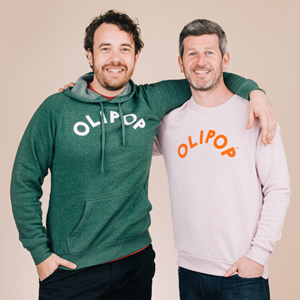
[00:00:10] Ray Latif: Hey folks, thanks for tuning in to Taste Radio, the number one podcast for the food and beverage industry. I'm editor and producer Ray Latif, and you're listening to episode 207, which features an interview with David Lester and Ben Goodwin, the co-founders of sparkling tonic brand Olipop, to discuss the genesis and development of their fast-growing company. Just a reminder, if you like what you hear on Taste Radio, please share the podcast with friends and colleagues. And of course, we'd love it if you could review us on the Apple Podcasts app or your listening platform of choice. A brand of sparkling tonics made with prebiotics, botanicals, and plant fiber, Olipop promotes itself as quote, the healthy alternative to soda. Launched in 2018, Olipop is the second beverage company founded by Ben Goodwin and David Lester, who previously collaborated on Obie, a probiotic-infused soda brand designed to appeal to mainstream consumers. In this go-around, Ben and David have doubled down on their efforts to create a better-for-you carbonated drink focused on digestive health and featuring familiar soda flavors including root beer and cola. As the brand continues to expand distribution, Olipop has caught the attention of investors who have fueled growth via a $2.5 million seed round in 2019 and a $10 million Series A round in January. In the following interview, I spoke with Ben and David about how Olipop was conceived, how they communicate functional ingredients to consumers, why the brand is resonating beyond natural channel retailers, and how lessons from their experience with Obie are incorporated into their current business strategy. Hey folks, it's Ray with Taste Radio. I'm on a call with Ben Goodwin and David Lester, the co-founders of Olipop. Gentlemen, thank you so much for being with me.
[00:01:59] Ben Goodwin: Thanks for having us, Ray.
[00:02:00] Ray Latif: Thanks, Ray. Where are you guys calling from? Ben?
[00:02:04] Ben Goodwin: Yeah, I'm calling from the beautiful forests of Aptos, California, which is about an hour and a half south of San Francisco, Northern California.
[00:02:12] Ray Latif: Very cool. And David? Yeah, I'm in the East Bay in Oakland. Oakland. I have to ask, why are you guys calling from different locations?
[00:02:20] Ben Goodwin: David and I really hate each other.
[00:02:22] Ray Latif: It just works better this way, Ray. I hear that happens with co-founders. Yeah.
[00:02:29] Ben Goodwin: I'm a bit of a weirdo. I like to live not in a major metropolitan area because I'm traveling out there so much. I'm a little bit of a hermity forest dweller, to be honest. I have a little formulation lab in my house. It is a great place to just zen out and get away from all the interfering noise and focus on things. I'm a bit obstinate in my desire to live down here, which probably won't last forever as we get an office built out in the Bay Area. But for now, it's been a nice little refuge.
[00:03:02] Ray Latif: And David? Yeah, I mean, Ben and I have been working together for about seven years now. So it works pretty well for us, actually. Yeah, I really like it out in the East Bay. I've got two kids, so, you know, they get to school out here and it gives me easy access to the city and, you know, for my wife as well, you know, going to work too. So, yeah, we made it work. Very cool. David, you mentioned that you and Ben have been working together for seven years. What was your first project and, you know, how did it kind of evolve into Olipop? The first thing we started working together on was a project called Obi. That's actually something that Ben had started formulating before I left my corporate career and moved to the US. That was really our first introduction together into the beverage industry.
[00:03:49] Ben Goodwin: I had actually been looking for a business partner for no less than three years before I ran into David. That was quite a process of picking people out. I can be a bit of a perfectionist and I know I have pretty distinct strong points and pretty meaningful weak ones as well. I was really looking for a partner to complement that. David really is the counterbalance to my strengths and weaknesses. We've clicked off and worked really well since then. OB historically, at the time, it was basically a fermented water kefir. It was actually quite an extensive R&D process. I spent about five years developing it. I worked with a microbiologist and organic chemist. We built our own lab, basically this ad hoc microbiology facility and went through probably 500 different iterations of this culture bank, which we basically mutated our own kind of waterkeeper-based culture bank, figured out how to make the thing actually scale and function, which is extraordinarily difficult. I mean, there was a lot of kombucha on the market at the time, but there was really no water kefir out on the market. Kavita originally was actually a water kefir-based culture, and then they switched over to powdered probiotics. And my goal with Obi was to actually create something that was viable and scalable, and that took a tremendous amount of work. I think it took about three and a half years working with this microbiologist just to get the culture bank to a point where it was scalable and tasted how we wanted it to taste. I mean, it's actually a funny story. We thought that we had failed. We had done two different rounds working on this culture bank and nothing seemed to be working because it was just such a a new frontier of of work and it just nothing was was happening that was up to our standards and I was breaking down the lab and found this sample set in the corner that I hadn't tried yet and drank it and I was just like Jim you know this tastes really good what is this and that actually ended up being the winning formula it's really like a skin of your teeth type situation and then you know I had the kind of Similar to what we've done with Olipop, I basically had the audacity to say, all right, if I actually have a water kefir base that tastes good here, that I can scale with, why don't I try to make it taste as accessible as possible? So it's actually getting to the consumers that need it the most. And that led me down this general framework of taking something that's really useful for microbiome and digestive health, but repositioning it away from the standard high-priced, challenging-tasting, maybe kombucha direction, and moving it more towards this soda-consumer direction. Then while I was going through that process, I was looking for a business partner. I joined up with one. It didn't work out. We had to separate, which is a painful process. It was actually my third round of looking for business partners when I was lucky enough to run into David, who had just completed his sabbatical and was moving on from Diageo, which was his former employer. It is worth noting, by the way, that OB, unfortunately, we did exit OB in late 2016, and it's not my impression they actually continue to use the water kefir culture that I developed. I think they have switched, kind of gotten more of the Covita route. They're using powdered probiotics at this point, so that's worth noting. But all that work did happen, and it was really phenomenal in that format. We got the thing culture-analyzed, culture-assayed, and built a really big 6,000-square-foot production facility. It was quite an undertaking.
[00:07:27] Ray Latif: Ben, I understand that you were self-taught in the field of microbiome research.
[00:07:33] Ben Goodwin: Yeah, you know, I'm a bit of a weirdo. I don't think the path I chose is necessarily right for everyone, but it certainly has worked out for me, I suppose. You know, I am autodidactic, and it really stems kind of from psychological foundation I've built for myself, if that makes sense. I was going to UC Santa Cruz for environmental science because I knew I wanted to do something in the scientific field and I knew I wanted to do something positive. I did have a mentor at the time I was going to college. It's actually this gentleman named Edward Lawson who won a Supreme Court case by himself with no legal representation in the early 80s. I was actually working as a co-executive producer at a theater with him and basically just getting kind of exposed to a lot of pretty radical sociological thinking. It really shifted my thinking. It sounds kind of naive in certain ways, but my mom was worried that if I dropped out of college, I'd spend the rest of my life flipping burgers, which at the time I was a vegetarian, so that was pretty unlikely. You know, basically, what was really important to me, as overly simplistic as it sounds, is I saw a lot of people getting degrees, and then I kind of felt like once they got their degree, they felt too comfortable with their degree, and they leaned too heavily on the knowledge that they felt had been provided to them on that track. And that's just something that didn't seem right for me. I really wanted to learn how to think, not what to think, if that makes sense. So I really hold adaptive, hungry thinking and action at the absolute kind of highest level. And it was a bit of a risk to leave the college track. But I kind of felt I do well in sink or swim style situations. I think that's one of the reasons why I persevered as an entrepreneur. And, you know, I knew that if I was going to leave the safety, the theoretical safety of a college degree, that was going to force me to be really, really active, both in terms of applying my concepts and making them reality and learning and growing, but also in really staying hungry. And we do live in the information age, which means that you can access just a massive amount of information. You just have to be interested enough in life and interested enough in what you're passionate about to continuously upskill and dump information into your brain and then learn how to integrate it and use it. And then also learning that there are different ways to engage people with degrees and bring that knowledge into your work. So that's, roughly speaking, that's really the approach that I've used. I found I am really a learning by doing type person. And if I'm really fascinated by something, I kind of just tear into it and just upscale my knowledge consistently.
[00:10:44] David Lester: Tune in at the end of this episode for an exclusive interview with Matt Lin of Belay Solutions. He sits down with Melissa Traverse to break down the biggest inventory and accounting mistakes CPG founders often make. You'll learn how to bring clarity to your numbers so you can scale with confidence.
[00:11:02] Ray Latif: Well, upscaling your knowledge consistently in the beverage industry seems to be something that is an ongoing process as well.
[00:11:09] Ben Goodwin: beverage really is business on expert mode. So if you don't have a business background, you're gonna get chewed up and eaten alive and you just kind of have to roll with that. But for me, it was really just, if there's something worth doing from kind of a scientific or consumer health perspective, it's worth doing at scale. And the reality is, that is kind of a function of beverages. It's one of the things that makes it so hard is that it, kind of intrinsically requires scale. So it kind of forces you to go down that path. But if you're interested in the larger mission and a broad social impact, it is very challenging, but can be very rewarding to that end.
[00:11:50] Ray Latif: Yeah, I think as you say, Ray, you can put these ingredients in a lot of different formats, but there's few more ubiquitous categories in our world than soda, I think on any given day in the US. 60% of kids, 50% of adults are drinking a sugar-sweetened fizzy drink. So for us, that challenge was really interesting. It gave us a vessel. Ben describes it as kind of like a Trojan horse, a way to reach a broader range of people. And we soon recognized the challenge of that. But I think what's consistent for both Ben and I is that we do, for better or worse, seek out those challenges. It's kind of exciting. most meaningful or impactful thing we can do when we kind of, you know, hunt out the difficult way of doing things. And, you know, it's been a learning experience for us, you know, here we are seven years in, in the industry, and I finally feel like we're starting to get to grips with it, you know, a little bit. David, I'm glad you mentioned the word soda, because soda is, you know, next to water, the most ubiquitous beverage out there, beverage category out there. And OBI, your original brand, your first brand, was called a probiotic soda and a better for you soda in essence. But isn't there a bit of a sort of oxymoron when you call a soda a healthier beverage? It was definitely a challenge. I mean, we originally had probiotic soda written on the bottle and we took it off because What we discovered is that consumers semiotically want to gravitate towards soda, but the word soda has a lot of toxicity around it now. In essence, it's like make it look, taste, and feel like a soda, but don't actually call it a soda. We've taken that learning forward into Olipop. We call them sparkling tonics, but for all intents and purposes, we behave like a soda and that is our goal to map the soda category. I think one of the things that has changed since we first went to market with Obi seven years ago is products like Halo Top and the plant meat alternatives. At the time, people thought we were crazy for doing a soda. They're like, look, soda's dying. You should be doing sparkling water or kombucha or something like that instead. These are growing categories. But we felt very strongly that soda is where the opportunity lay, and it was a great way to push these important ingredients that are supporting digestive health out into as broad a range of people as possible. The landscape has changed with Beyond Meat launching in fast food chains and stuff. People now recognize, whether that's investors, consumers, retailers, that some of these categories are not completely dead. Consumers are still gravitating towards them. They hold real cultural relevance for consumers still, but people are looking for better alternatives to what has historically existed. The Trojan horse that David mentioned, Ben, is the key component of that Trojan horse, the flavors, the familiar soda flavors that you have both in originally with Obi and then now with Olipop?
[00:15:15] Ben Goodwin: Yeah, I mean, obviously, functional beverage is this kind of rapidly growing space, and then traditional soda is technically a declining space. But there's still just, there should be some awareness around the relative sizes of the categories. I mean, you know, kombucha is what, approximately a billion dollar category. It's flatlining a bit. I think sparkling water is in the kind of $4 billion area, flattening a bit. You know, soda is in the tens of billions of dollars with 90% household penetration. Even if you like the concept that consumers are catching on to the fact that soda is unhealthy, the reality is that there's still just so many consumers who are in that space. They grew up drinking soda. They kind of rely on that for some pleasure in their day. The thing that's also really important is just, again, it's this concept that if something is actually has sociological value, has widespread value. You know, I think it's really incumbent on the companies to do the extra work to make it as consumer-friendly as possible, to create as few hurdles for the consumer as possible. I mean, even people who have switched away from drinking soda, a lot of them drank soda when they were younger. You know, there's the household kind of nutritionists, the mom or the dad and the family who maybe They've been able to get behind one of the more expensive and kind of challenging tasting digestive health drinks, but the rest of their family hasn't necessarily, their friends haven't necessarily, their grandparents haven't necessarily. And I thought it's important to not create a heavy glass bottle with two dolphins jumping over a rainbow for $3.99. In the cold set, it's meaningful to actually create something that can really be applicable for the broadest range of people possible. you know, bring food and beverage back to kind of creating those common social roots instead of being something that either falls into this elitist category or this kind of traditional category and trying to really create something that works for everyone.
[00:17:12] Ray Latif: This might come across as a strange question to you guys, because you've worked so hard and so long on developing these formulations that taste great. So let's say the Coca-Cola company wanted to add probiotics to Diet Coke. You know, there are a lot more Diet Coke drinkers out there than there are OB or currently Olipop drinkers. You know, what's stopping those companies from doing that? I mean, I guess the bigger question is, do consumers really care about what you're selling in terms of functional benefit at this point? And how do you make them care?
[00:17:41] Ben Goodwin: Yeah, we kind of... look at the product as having a front end and a back end. So the front end is really the brand, it's the taste profile, it's the kind of nutritional pack, and then the back end is really the formula and the ingredients. So what's nice about that is that I can work with our team, both our in-house team and the different researchers, then our scientific advisory board, and we're actively working on additional innovation right now to help enhance what's already a good formula and make it even better and more novel to us. So we're just getting started. There's some really, really cool innovation underway. I think it's worth mentioning, there are three platforms on the health side to this product. And we're mindful, quite frankly, not to just pigeonhole it under prebiotics. I think that's a hot category that consumers are getting excited about, and that's great. But it's really this, you know, when you look at the research around hunter gatherers, around indigenous diets, and then correspondingly how it affects their health and the microbiome to industrialized consumers and their diets and health outcomes, the three big pillars that are missing from the industrialized diet that are in the indigenous diets are one, total fiber content. So we get about five to 10% of the fiber that our indigenous friends do. Prebiotic content, which is kind of a subset of fiber, but it's still, it's worth bringing into its own category. And then nutritional diversity. So in all cases, hunter gatherers get vastly more of all of those different categories. And so that's why all three of those things are stacked in the product from a health side. It's not just prebiotics, it's not just fiber. It's not just a nice diverse blend of different plant-based ingredients. It's all three together. And then we can basically work with our innovation partners and our research partners to create even more effective, even more integratable and diverse compounds and plant extracts to kind of deliver on that underlying principle.
[00:19:44] David Lester: Do you want more repeat buyers on Amazon? Well, this free resource in collaboration with Straight Up Growth will help your brand turn first-time buyers into long-term subscribers. Download Winning the Repeat Purchase Game on Amazon now at Taste Radio slash SUG. That's Taste Radio slash S-U-G to start building retention-driven growth for your brand on Amazon. Scaling a beverage brand into major retail comes down to operational readiness. From packaging lead times to co-manufacturing strategy, the details can make or break a launch. In a new ebook in collaboration with Octopi and Asahi Beer USA, industry leaders share what they've learned in helping brands scale. Download it now at Taste Radio slash octopi. Do you need to scale your team faster without compromising on talent? Join Oceans for a live webinar on April 20th and learn how leading companies are hiring top global professionals who are ready to grow with your business. Register for the webinar now at Taste Radio slash oceans. That's Taste Radio slash oceans.
[00:20:55] Ray Latif: I'm hearing a lot about the research and science that went into creating Olipop. And it's amazing. Frankly though, the reason I would pick up a can, and I have a can of your classic root beer right in front of me that I'm holding in my hand. You know, I see the call-outs for it supports digestive health, plant powered, microbiome approved, prebiotics, botanicals, and plant fiber. But the reason I'm picking up this can is because it's a great looking package, number one. The idea of a root beer with two grams of sugar, which it also says on the can, sounds really good. And you have a very visually striking package, as I mentioned before. You know, regardless of whether or not I taste this and like it, you already got me with the package, with the label design. David, you mentioned that Olipop had been in development for three years. You know, what came first? Was it the liquid or was it the brand? And how do you make them work together harmoniously? Yeah, the liquid came first and it's really kind of reflects the relationship that Ben and I have and the skill sets that we offer. I mean, Ben is by far and away the most talented formulator that I've ever worked with, you know, including in my corporate career. And, you know, if the product doesn't taste good, There's not a lot you can do with it, really. We've been asked by investors in the past, like, how are you going to, this is fascinating, but how are you going to educate consumers on all of this? And our response is, we're not really going to bother trying to do it. You know, we have spent a lot of time simply mapping soda. Our challenge here is not really around convincing people it's healthy. A cursory glance at the pack will sort of tell you that, you know, two, three grams of sugar, nine grams of dietary fiber, people kind of get it. the challenges in convincing them that this is a viable substitute for their soda occasion. So, we've been working really hard against areas like fun and refreshment. You know, we're kind of competing with some of the most established and well-marketed brands in the CPG industry, and that's a fascinating challenge to undertake. So, that's how we've kind of been approaching it, and we're starting to weave more of the kind of functional story into our into our narrative and figure out the appropriate ways to communicate that to consumers but I would say typically you know what we find is you know so a group of 10 consumers there'll be one who's the kind of group nutritionist and they will want to go deep and investigate a bunch of stuff on a product. And for the consumers who want to do that, that's great. We've got the information there to go really deep with them. And for those that don't and just want a fun alternative to soda that's better for you, we can meet that need too.
[00:23:35] Ben Goodwin: You know it's interesting because we are starting to expand nationally now. So we're starting to get feedback from a lot of different regions. And so it's really funny demoing on the coast and interacting with consumers on the coast or in some of the kind of more built up metropolitan liberal areas versus demoing with consumers. in kind of more conservative areas and seeing them interact and react to the product. And I do find, you know, ironically, so I was recently out at the 7-Eleven Innovation Summit, like three or four months ago. And quite frankly, because the sales are doing so well and the product is doing so well, we're really interested in trying to find the places where the product fails, where it doesn't work, because that's where we're actually going to get the best learnings around how we can improve. And, you know, I was thinking to myself, okay, here we go. 7-Eleven headquarters in Dallas, Texas. Finally, I'm going to get my ass handed to me and people are going to hate this stuff. We had better flavor and conceptual adoption at sampling 300 7-Eleven employees in Dallas than we get on the coast sometimes. There really was almost this, thank God, it's a product that You know, does have this kind of the caloric and sugar aspects, but has full bodied flavor. And oh, cool. It's also good for my digestive health. Great. There is strategy behind what we're doing, but we are trying to meet an actual industrialized consumer need. We're not particularly bent out of shape about the reason why a consumer is interacting with the product. Beyond understanding it, we're trying to build a product with layered benefits and layered offerings so that we are actually accessible to multiple layers of consumers that can actually build a sustainable business off of that.
[00:25:22] Ray Latif: The other thing I was going to mention, Ray, is that I think what's working right now and you know, what's been successful in our business has been able to marry the social mission that we have with a commercial opportunity. So we're very driven by this idea of trying to take the benefits of digestive health to as broad a range of people as possible. And that social mission is pushing us against a much bigger commercial opportunity. You know, and the question now is sort of how much of those soda occasions can we grab? how far can we take this product and that's the sort of exciting challenge ahead of us and one that I think our investors are really kind of intrigued by and motivated by as well. David, you mentioned that you're looking at the consumption occasions for soda drinkers and how many of those occasions that Olipop can replace. But what if, you know, you're facing a consumer who wants nothing to do with soda and is not even looking at a product that has any resemblance to soda? I mean, how do you reach that consumer? Is it very much on a functional level at that point? Yeah, I think, you know, candidly, we're probably not that interested in that consumer. There is, you know, by far a big enough group of people who have some association with the category and the penetration rate, I think Ben mentioned is, you know, 90% or that of the category. So pretty much most Americans do drink or have drunk soda at some point in their life, do have association with it. Generally, you know, a positive one. And what's fascinating for us and is an interesting kind of experiment for me in positioning is that most soda brands kind of sit in one flavor category and they all operate somewhat independently against different occasions at times, different consumers even. We've had a lot of fun with the recent launch of root beer, really leaning into the nostalgia aspect of soda and the category, playing around with root beer floats, taking people back to those memories of childhood. On other flavors, we'll play into different aspects. And, yeah, so for a lot of soda brands, Coke plays largely in cola, Fanta plays in orange. We're starting to play across all of these flavor verticals, and we're finding that we can stretch a brand pretty effectively across them, united by an underlying functional benefit and a brand positioning that is consistent across the board as well. Yeah, it's a lot of fun to see how far we can take this, where we can map it within the first month of us launching our online platform at the back end of last year, our e-commerce, with no ad spend, we were shipping to 48 states. We're finding in the Uber health stores of LA and Erewhon, our SKUs are some of the top performing in the store, but equally, we've got elderly couples out in the Midwest that are ordering case-in-cases via e-commerce because they're looking for a more convenient way to add fiber into their diet. We are just at the beginning of this journey. There is a long road ahead, but we see a lot of opportunity and we're looking to see how far we really can bridge the gap into the mainstream and provide consumers with a solution like this that really actually need it.
[00:28:54] Ben Goodwin: It's a good point that David's making, actually, specifically about heroin. I mean, we have an NCAP in the Venice store right now, and the vintage cola skew is the top-selling beverage in the store right now. If there's any consumer that is, in theory, antithetical to soda, it's going to be this kind of heroin shopper. And it's the top selling beverage in the store. I mean you know how are you going to compete with that. So yeah there's a huge amount of opportunity here not only with your more traditional kind of open to soda consumer but with your consumer that in theory stopped drinking soda or antithetical soda. Now, this other point as well is the pack does not say soda, right? It says sparkling digestive tonic. And so for that kind of anti-soda, more educated consumer, I think they're going to kind of see what we're up to from the health side. But to David's point, at the end of the day, the big opportunity is certainly with consumers who are open to that flavor profile and building a successful brand ultimately means working in both spheres.
[00:29:56] Ray Latif: You've already built one brand in OB and it's interesting because you can tell that some of the lessons from OB are being introduced and incorporated into Olipop. What were some of the key learnings from that first go around that are really critical to the success and the viability of Olipop going forward?
[00:30:19] Ben Goodwin: I mean, I think, just on a personal side, I mean, I was obviously younger, you know, in my early to late 20s for the most of the formation of Obi. And I mean, just on a personal side, I learned a lot about myself as a person and as an entrepreneur. I learned a lot about leadership and picking your partners very wisely, investors, how company culture and the people inside of the company really are everything. I mean, you basically, You have to develop product market fit and you have to know you've got a great product that's strong, that resonates with consumers, that moves off the shelf, that kind of exists on its own merit. And once you've kind of got that reasonably set and you feel good about that, like obviously you should continue to innovate and improve and make tweaks and even pivot if that's necessary. But once that piece is kind of done, it's all about the people. It's all about who you're hiring, who you're working with, who's investing in you, what that governance structure looks like, how decisions are getting made. That really builds the engine of the business. So, you know, we've instituted a borderline ridiculous interview process for hirees at this point. You know, we put any kind of major hires going through up to four to six different interviews. They get homework. We put them through psychological testing sometimes. So it's a little, if you want to interview for a job at Olipop, be prepared for that. But that's ultimately, from my side, is really the biggest lesson. And also, having enough self-confidence, and having enough self-esteem, and having enough esteem for the work. Basically, do the work so that the product, and the ethos, and the strategy, and the kind of essence of the company can stand on its own feet. And then have respect for your own work, and don't let people in a variety of different layers, people who there's not alignment with the respect for the work itself, into your company and really pick people to work with who are really aligned and have done a lot of personal development on their end. So they're really ready to balance being really commercially effective with being healthy, well integrated, positive kind of cultural influencers. And I think at the end of the day, that's where you build something really special.
[00:32:46] Ray Latif: Well, Ben and David, this has been so great. Thank you so much for sharing all this great information about Olipop. It's really remarkable to see how the brand has evolved in such a short amount of time and really looking forward to seeing how it grows in the years to come. Thanks, Ray.
[00:33:00] Ben Goodwin: Thanks, Ray. It's been a real pleasure talking with you.
[00:33:02] Ray Latif: Yes, indeed. Talk to you soon.
[00:33:04] Ben Goodwin: Thanks so much.
[00:33:08] Ray Latif: That brings us to the end of episode 207. Thank you so much for listening, and thanks to our guests, David Lester and Ben Goodwin. You can catch both Taste Radio and Taste Radio Insider on Taste Radio, the Apple Podcasts app, Stitcher, Google Podcasts, and Spotify. As always, for questions, comments, ideas for future podcasts, please send us an email to ask at Taste Radio. On behalf of the entire Taste Radio team, thank you for listening, and we'll talk to you next time.
[00:33:49] Taste Radio: Hello, I am Melissa Traverse here for the Taste Radio podcast, talking about some of the biggest tension points that CPG brands and founders face when they're scaling a brand, and those are financial accounting and inventory management. I am joined by Matt Lynn, inventory accounting guru from Belay Solutions, and he is going to shed some light on all of this that is going to help everybody out quite a bit. Matt, thank you so much for joining us today.
[00:34:19] Halo Top: Thank you for having us, Melissa. It's great to be out here at Expo West and it's great to sit down and be able to chat this because it's kind of a passion project of ours, working mainly with CPG brands and hoping to help them scale.
[00:34:31] Taste Radio: It's been such a pleasure chatting with you and the team and learning all about what you do over there at Belay Solutions. Can you tell us a little bit about yourself and what your role is and the kinds of solutions that Belay gives to CPG brands and founders?
[00:34:46] Halo Top: Yeah, absolutely. My role with Belay, I'm actually our inventory accounting manager. I run our inventory department, so we work with CPG brands, taking them from spreadsheets, putting them on inventory management systems, and really helping connect their tech stack between their sales online marketplaces to that inventory management system, even down to their financial systems like QuickBooks. Belay overall is kind of an outsourced accounting firm. And with that, we're helping teams. We have different levels with bookkeeping, controller level work, even high level into CFO type items. So we really help those brands in any way that they need financially. And then I just have a subset of a department where we're really just laser focused on inventory.
[00:35:29] Taste Radio: It's certainly a complex topic and there are plenty of places to go wrong. Let's start by going right and start super simple. Can you tell us what some of the biggest red flags are that would help a founder understand or, you know, the person running a brand understand that it really is time to get some help with some of these areas?
[00:35:50] Halo Top: WKYT. They have a lot of transactions that don't get coded or they just put them into placeholders to just get rid of it so it's not an eyesore. They'll notice they have revenue but no cash or they notice that they have a good amount of cash but their blind spot is really seeing the vendor invoices that are sitting there just needing to be paid and so they just lack that clarity that's going to really be around the corner.
[00:36:27] Taste Radio: You know, you were talking about one of the red flags that comes up that I think makes so much sense. When somebody asks you what your numbers are and you can't come up with the right number, that's a big problem because that's something that you really should be able to share with decision makers who, you know, you're ideally looking to do business with. What should you be able to call up at a moment's notice?
[00:36:51] Halo Top: really at any time, you should be able to know an accurate margin. It's amazing how many founders we end up talking to that they can tell you their revenue numbers, they can tell you their selling price, and then the minute you start talking about cost or their cost of goods sold, they just get a deer in headlights look. So really it's very hard to tell, am I even making money? Or if you don't know your entire landed cost. Maybe you know what the freight cost is, the duties separately, but you're not really getting that as part of your unit cost. So it's really hard to tell. Am I even making money or am I losing money from the very beginning?
[00:37:24] Taste Radio: And do you recommend that founders are able to call up a margin by channel?
[00:37:29] Halo Top: Absolutely. And depending on the number of products and channels, you kind of want to know what are your best sellers, which ones are making the most and which ones maybe you're not making as much. But especially if you're branching out and you're doing D to C with B to B, absolutely want to know that.
[00:37:46] Taste Radio: Gotcha. You mentioned that when things feel really chaotic, that's probably a red flag. I would say that it probably almost always feels chaotic if you're running a CBD brand. And I know this may be hard to quantify, but is there a revenue number? Is there a number of doors number that would help a brand understand whether or not it makes sense to bring on a partner like Belay? Understanding that so many brands are bootstrapped or they might be tight for cash. What is that friction point?
[00:38:16] Halo Top: 3 3 3 3 3 But as you're growing, as you're getting into those six-figure revenue numbers, and especially as you're approaching seven, you want to make sure you've got good financials. Because as you scale to that point, most likely you're going to be looking to raise capital. And investors, the first thing they're going to look at is your books. And are they clean? And do they show a clear picture of your business?
[00:38:49] Taste Radio: You know, another area that folks might look to to organize some of the chaos are their systems. So many folks stick with Excel spreadsheets for a good amount of time. How do you know that you need to outsource some of your accounting to an organization like Belay Solutions versus maybe signing on to a Synth7 or a NetSuite or something like that?
[00:39:11] Halo Top: Well, that's actually something we really help with when it comes to that cost question. That's something that trips people up. And sometimes if you just have a turnkey business, you buy and sell a finished good, you can maintain with spreadsheets. And we've had clients with million dollar revenue that can do that. But we see so many brands nowadays are using contract manufacturers. and they're just sourcing certain parts of their product. So when you start talking cost, they have no idea exactly what their unit cost is. So that's where we come in and we kind of understand, we'll speak with the customers and the clients and get their needs. And then if we think they're ready for a system, then we'll help put them on that system so they can get some of that clarity. And it's not something we force on anybody. There are plenty of times where founders come to us and we'll tell them bluntly, you're not ready for it right now, but we'll let you know when we think you are.
[00:39:58] Taste Radio: That sounds like excellent advice. What should a founder or somebody running a brand look for in an outsourced accounting partner? Are there certain checklist items that they should make sure that their partner be able to execute or be able to help them understand?
[00:40:15] Halo Top: Absolutely. I think one of the keys there's, there's a lot of outsourced accounting firms out there. Some focus on service-based SaaS companies, but if you're a CPG founder, you really want to make sure that your accounting firm has CPG experience. I would ask them, you know, what kind of brands have they worked with? And even Beyond Meat industry specific, because there's so many subsets of CPG. And that's something that I think is great about what we do with Belay is that we kind of run the gamut. It's kind of like the insurance commercial. We know a thing or two because we've seen a thing or two across a broad spectrum.
[00:40:44] Taste Radio: Probably getting references is always helpful, right? Absolutely. All right. So this all sounds great. I think we have a really good understanding of would it make sense to hire an outsourced partner? You know, what some of the things you should be looking for are. What does offloading this kind of work mean for the brand? What can this do for lightening the load of a founder or lightening the load of a brand operator? Like, how does that help them in their everyday business?
[00:41:14] Halo Top: It just tries to really help quiet the chaos. So what we're looking to do is just take some of the weight off that founder's shoulder, let them focus on building the brand, building the business, getting that exposure. If you don't have sales, you really don't have anything. So we want them to be able to focus on that while we take care of your back end office work. And we can just present that to you on a monthly basis, you can help make decisions, you can take that to investors. And really, you can just focus on growing your business.
[00:41:39] Taste Radio: I feel like I felt founders and the folks who are running brands collectively sigh. Breath of relief just hearing that. How can people learn more about Belay Solutions?
[00:41:50] Halo Top: So people can text TASTE to 55123 for their free inventory guide to get started.
[00:41:56] Taste Radio: Matt Lynn, inventory accounting guru at Belay Solutions. Thank you so much for joining me here at Expo West. It's been such a pleasure to chat with you and learn about what you all do over there to help founders and brands with their financial accounting and inventory management. For everybody else out there, thank you for listening to the Taste Radio podcast. I am Melissa Traverse and we'll see you next time.