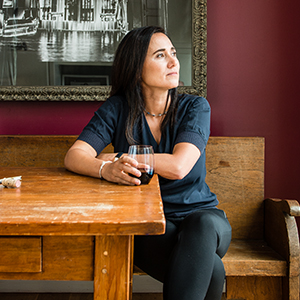
[00:00:10] Ray Latif: Hey everyone, I'm Ray Latif and you're listening to the Top Podcast for the food and beverage industry, Taste Radio. This is episode 233, which features an interview with one of the wine industry's most influential figures, Laura Catena, the Managing Director of trailblazing Argentine winery, Bodega Catena Zapata. Just a reminder to our listeners, if you like what you hear on Taste Radio, please share the podcast with friends and colleagues. And of course, we'd love it if you could review us on the Apple Podcasts app or your listening platform of choice. Laura Catena may have one of the most unique resumes that you'd ever come across. Recognized as the face of Argentine wine, Laura presides at the helm of her family's admired winery, Bodega Catena Zapata, which has paved a path for South American wine to be recognized at the level of its European counterparts. She's also the founder of the Catena Institute of Wine, which focuses on science-driven ways to support and showcase Argentina's winemaking regions. And until recently, Laura had worked as an emergency room physician in San Francisco-based job she held concurrently with her wine-related roles. On the surface, you might think there are few similarities between the responsibilities of a doctor and a vintner. Yet, as part of my conversation with Laura, she explained that her professions intersect in ways that make her better at both jobs, and in turn, allow her to provide more effective care to her patients and craft exceptional wine. My interview with Laura is one that further explores this dynamic, and also delves into Catena Zapata's history, science-forward approach to winemaking, and why she feels the heavy responsibility of carrying the whole country of Argentina on her shoulders. She also explained her passion for achieving sustainability through innovation, and how she attempts to win hearts and minds when selling Catena Zapata's portfolio. Hey folks, it's Ray with Taste Radio. I'm going to call right now with Laura Catena, who is the Managing Director and a fourth generation vintner of Catena Zapata. Laura, how are you?
[00:02:18] Laura Catena: I'm great, thank you.
[00:02:20] Ray Latif: Thank you so much for joining me today. It's such a pleasure to meet you. Your influence in the wine world is just remarkable, so it's just an honor for me to be able to sit down with you today. You know, I gotta ask, I don't know, you've probably answered this a million times. What was the origin of your bright red beret?
[00:02:38] Laura Catena: You know, it actually is a gaucho hat, because the gauchos are the cowboys in Argentina, and they live with the cattle, and they still exist in Argentina. There's many parts of Argentina where, you know, mostly men, there's not many women gauchos take care of cattle, because, you know, in Argentina, we have a lot of cattle that is grass-fed. It's the best beef, I think, in the world. But I've also kind of liked Texas beef. But the gauchos wear this beret that comes from the Basque country. So it's a mix between the Native Americans. The gauchos are usually of mixed blood, you know, a little Native American, some Spanish, some Italian. There's also, like in the south of Argentina, gauchos that came from Wales. But it's basically this life in the countryside with the horses and the cows. And they wear this gaucho hat. They wear bombachas. which is the word for female underwear in Argentina. But actually, a gaucho bombacha is this kind of baggy pants that are cinched with a beautiful, colorful belt and boots. And they wear this hat. So it's actually a gaucho hat. It's not a beret. And if you go to Mendoza, where I'm from in Argentina, or any part of Argentina on the weekends, many times fathers go with their sons on horseback, and they wear these outfits, these traditional outfits. And I have occasionally seen a girl. And when I was a little girl, I always wanted to wear a gaucho outfit. And my parents always let me. And my brother was sometimes upset, but he let me do it too. So it's part of my identity. And if you go to Argentina, you can buy some really nice gaucho hats.
[00:04:20] Ray Latif: Yeah, in most pictures I see of you, you're wearing the gaucho hat. I apologize for calling it a beret, but it seems to be an important part of your outfit these days, or it seems to be an important part of your identity, as you mentioned. And having grown up in Argentina, I imagine that you're in the country quite often, except perhaps for this year. You're based in San Francisco-based. When was the last time you were in Argentina?
[00:04:46] Laura Catena: Well, I was there in February for the harvest, and then I had left to go to ProWine, which is a wine show in Germany, and then that was canceled. And so I was unable to go back for the finishing of harvest. And then usually I would be there in August for all the blending. And this year I've had to have samples sent to me in San Francisco-based actually, until recently, Argentina was closed to in and out flights. So the only people who could come back were people being repatriated, which I would have been one of those people, but then I would have possibly not been able to get back to my children who are in the U.S. And I have a 15-year-old girl, so I can't really leave her for several months. So I've been doing a lot of tasting virtually, and I'm missing Argentina so much, although I'm there through Zoom pretty much every day.
[00:05:38] Ray Latif: What's one thing about Argentina that most people wouldn't know about or if they were to visit that they might miss?
[00:05:45] Laura Catena: Well, most people don't know that in Argentina we have monkeys in the north, we have some jungles near the Amazon, and then we have penguins in the south. And I believe there isn't another country that has both monkeys and penguins. And many people think of Argentina as a tropical place because they think South America, the beaches, and actually the beaches are not that good. They're better in Brazil and even in Chile. And so I think it's the fauna and flora diversity of Argentina, the fact that we have this warm north and this very cold south, Patagonia and even Antarctica.
[00:06:20] Ray Latif: So for context, where is your winery based? It's based in Mendoza, but where is that in relation to the rest of the country?
[00:06:29] Laura Catena: Yeah, so that's very important for winemaking because vineyards need to grow in places where there's not too much rain, where the soils are not very fertile, and where there's good drainage. Because if a vine has too much water or too much heat, it grows a lot of leaves and it doesn't give the juicy fruit, the polyphenols, everything that the grapes need to grow. So you need low yields. not too much rain. If you have too much rain, you also get diseases. Or if you have too much fertility, you have too many leaves. So in most parts of the world where great wine is made, you have these conditions. And in Argentina, it's all on the side of the Andes. So if you think of Argentina as being the southern part of the southern hemisphere, remember the Andes is the longest mountain chain in the world. So it goes all the way up north, but then all the west of Argentina is lined by the Andes Mountains. And you actually have vineyards all the way from the north, a place called Salta, which you can read about in my book. Then you come down to La Rioja. We actually have a region called La Rioja, just like in Spain, because it was named by one of the Spanish conquistadores. And then we have Mendoza, which is kind of smack in the middle, right by the Andes Mountains. And it doesn't rain there very much, so you have these beautiful mountains that you can see from the vineyard. You're standing in the vineyard, it's the middle of summer, and you see snow. And the soils are all filled with these rocks. I actually have some to show you that I have with me. So look at these stones. So you see all that white stuff? That's calcium carbonate. And Many of the great regions of the world, like Burgundy, some parts of the Rhone, have this calcium carbonate in their soil that winemakers think is special. We don't know exactly why. It might have to do with the microbes in the soil. But in Mendoza, you have these alluvial soils formed by glaciers and rivers as they melted. And you have the cool climate from the altitude. So you have cool climate and sunlight. And what that does is that the grapes ripen very slowly. So the sugars are not too high. Remember, sugar goes into alcohol. So the alcohols are moderate. You know, I don't like wines that are all alcohol. And then you have nice acidity because of the cool temperature. And so you get these wines that are beautifully elegant, very drinkable with a nice balance. Oh, you even have wines in Patagonia if you go south, but those that are lower altitudes.
[00:08:56] Bodega Catena: Guessing your margins? That's risky. Belay Financial gives CPG brands the clarity to scale smarter, faster, stronger. Get your free inventory ebook by texting TASTE to 55123 and start making data work for you. Vibrant Ingredients is the natural ingredient partner powering food and beverage innovation, delivering flavor, function, and protection through a science-backed portfolio. Vibrant delivers purpose-driven solutions that help brands create extraordinary experiences. Discover what's possible with Vibrant today. Visit VibrantIngredients.com.
[00:09:43] Catena Institute: Can you talk a bit about how Catena Zapata started and why it's become such an influential and important winery in the world?
[00:09:51] Laura Catena: You might have heard that there was a big era of military governments in Argentina. And that's why I often tell my husband, who's American, and my children and my friends in the US, because I live between both countries, that all the hardships that happen here, at least you don't have a military government. I grew up in a place where in the corner there'd be a person with a gun. And actually, I was at a school that got raided by the military because they thought there was a terrorist hiding there. And they came with guns and pointed at us children. And it is so great to be in a country, well, God, I don't want to talk about politics, but not everybody benefits from not being shot at. So another big topic that you have going on in the US, and I feel for people who feel threatened by guns, because I lived through that. And so my family left Argentina for a couple of years during the military government. We were in California, and my father was basically a visiting scholar at UC Berkeley. He was calling the winery. Everything was by fax those days. We didn't have the internet, right? Remember in the 1980s? I don't know when you were born, Ray. You were probably either not born or about to be born.
[00:11:00] Ray Latif: I recall fax machines and the 1980s, but thank you for saying that. Yes.
[00:11:03] Laura Catena: Oh, my God. Okay, so my dad was doing everything by fax, and he would go back and forth. And what he didn't realize was that he would get his inspiration from California. And that's why I often, you know, really repeat that saying that from hardship often comes something good. And I think that there we were in California. We were so worried about what was going in Argentina. And then my father starts going to Napa Valley with my mother and my little sister, who was born in California. And they go to the Robert Mondavi Winery, and they hear about the judgment of Paris. You know, they made that movie about the judgment of Paris, the bottle shock, where the Californian wines defeated the best French wines. It was 1978, I believe. And the judges were French. And all of a sudden, my father says, these Californians, these crazy Californians think they can defeat the French at their own game or that they can at least compete with the best French wines. And he says, I'm going to go back and do that in Argentina. And at the same time, Chile was doing really well with low-end wines. And that's what Argentina thought they should do. And remember, at that time, Argentina was the fourth largest producer of wine in the world. We were drinking all the wine in Argentina. We weren't exporting. But Chile was exporting everything. But my dad said, no, I want to do what the Californians are doing. I want to make Argentine wines that can stand with the best of the world. And that has really been our vision, our motto, what we are doing. And it involves not just Catena, my family winery, but all of Argentina. We want to put Argentina on the map.
[00:12:45] Ray Latif: And putting Argentina on the map required or came with two really important things. One being the Malbec varietal and two being the terroir that you referenced earlier. For Malbec, was Malbec at the time a really, a generally accepted wine, a generally accepted varietal of quality? Or is it something that where Catena Zapata really helped usher in a new era for Malbec?
[00:13:11] Laura Catena: Yeah, so that's a very good question, because today, you can't find a restaurant or a wine store without Malbec on its shelf. But when I started working with my father, and I was still a medical doctor, working full time as a medical doctor, but once in a while, I would go help out. And I would go on what's called a ride along, when you go with one of the wine salespeople to present your wines. And I remember one time, it was in the early 90s, I went with somebody, and we had seven appointments. And at each appointment, they would make us wait. Then they wouldn't have time. And finally, I think that out of the seven, three people were willing to see us. And towards the end of the day, somebody tasted the wine and said, wow, this Malbec is wonderful. It was the Catina Malbec, this wine. that you got a bottle of. And he was talking and he was saying, you know, I've never had Malbec before. This is wonderful. And then at the end of it, I think, oh, yes, we made one sale. And then he says, but I can't buy it because nobody knows what Malbec is and I won't be able to sell it. And so I left the whole day without having sold one bottle because people did not know Malbec. And then my father was convinced that if he could make a really great Malbec, he would be able to sell it. But first, he actually made a really good Cabernet Sauvignon and Chardonnay. And many people don't know that part of the story. So the first two wines from Catena that we exported were Cabernet Sauvignon and Chardonnay, which also have a long tradition in Argentina. They came to Argentina at the same time as Malbec, but they weren't as widely planted. And it was actually, the door opening happened more with Chardonnay and Cabernet, because people would taste it blind. Actually, my mother went out at the beginning. And she would bring brown bags, and she would brown bag a bottle of our Chardonnay and a bottle of whatever they would say was their best Chardonnay in the store, which was often a Chardonnay from California. And she would have them taste it. And my mother claims that every time, our wine won. And this was in the early 90s. And so after we achieved the credibility from Chardonnay and Cabernet, when we came out with Malbec, although it was difficult, like I told you, we were already a known winery and a known name in wine. But it was literally at least 10 years, you know, think about it. Malbec started to be known in the US, even in Europe, you know, after 2005. So if you think about, we started in the early 90s, it was almost 15 years of not knowing what was going to happen.
[00:15:38] Ray Latif: I can feel how passionate you are. You're just glowing with excitement talking about the wines that you make. And earlier you mentioned that you are a physician. And I'm curious because, you know, early into the winery's development, you had an opportunity to join the family business, but you chose medicine as a profession. Why?
[00:16:01] Laura Catena: Well, you know, my father has this theory that if you want your children to come work at the family business, the main thing you need to do is to not ask them because they're going to end up not working with you. So my father was never very pushy with me. He never told me that he wanted me to work with him. So after my parents went back to Argentina, my father started this revolution in Argentina to make fine wine and to put Argentina on the map. And remember, our winery was founded in 1902 by an Italian immigrant. So my father really had to change everything, not about how our family made wine, but also how the rest of Argentina made wine, because we wanted to make wine that could stand with the best of France, California, Italy. But anyhow, my father's doing this. He would come visit me in school. I was a Harvard undergrad. And I studied biology, and then I said, what am I going to do with biology? I want to work with people. I did a little bit of lab research, and I knew I could not sit on a lab bench all day. That was not my thing. I have a son actually doing a PhD in chemistry. He loves being in the lab all day. I needed to be with people. And so I said, how about medicine? I did some volunteer work. I thought, this is great. I want to help the world. That was my priority. And I can do some science, which I love. And I also loved humanities. I was one of those young people that loved everything. But I wanted, more importantly, to help the world. And I love the young people today, everybody that is so concerned about the environment, sustainability, because this generation is, I think, the generation most obsessed with helping others and helping nature. In my generation, I wasn't even thinking about the environment. I was thinking, how can I help people? And this generation wants to help the whole world. And it's so admirable. I love these young generations of today. But anyhow, I wanted to help the world. And I thought, OK, the family winery, I love wine because I used to go with my dad to France to taste as his translator. I would drink in Argentina. But this was like a hobby, and it was a business. And I didn't want to do a business. I wanted to help people. And to me, being a doctor, was helping people. And so I decided I didn't want to work with my dad. But then, actually, how did I go back to working with my dad? It was to help him, because we were invited to this great prestigious thing called the New York Wine Experience. It's this show in New York, which has been canceled this year, but if you ever have an opportunity to play, All the best wineries in the world are there. You get to meet the owners. They bring their best wines. And it's by invitation only. And for the first time, a South American winery had been invited. So my father said, Laurita, you need to go because nobody at the winery speaks English well. And I met plenty of people who didn't speak English well at this thing. So English was not a requirement. I think my dad was trying to figure out how to get me to work with him. So I go to this tasting, and I'm standing in my little booth. And I'm seeing the people walk by. They look up and see Mendoza Argentina. And I think in their brain was like, where is Argentina? Do they really make wine? And they would keep on walking. And then the final straw was somebody that tasted the wine next to me from another producer and spat in my little spit bucket and then kept on going. And I thought, that is so rude. It's like, you're using my trash can. But you don't want my dirt, you know, and I called my dad the next day and I said, Dad, I'm still going to be a doctor because I at this point, I just finished my residency in emergency medicine. So I had a job, my first job in Los Angeles. I was ready to start my life as a doctor. But I want to help you. And You know, the first thing I did was help in the whole vineyard research area because I knew about research, I knew about science, and I knew that if we were going to make these great wines, we need to think about the soil and the climate and the vine selections. And that was how I founded the Catena Institute in 1995, which has the purpose of elevating Argentine wine through science. And the other phrase that we use is science to preserve nature and culture. because as scientists and physicians, I understood that a lot of what we needed to understand was, you know, how are these wines made? You need to do experiments. You need to do what we call micro vinification. So you test, like you prune a certain way, you know, you water a certain way, you use a certain cover crop, and then you see how does it affect the flavor. But I also understood that there was a big part of tradition and art in winemaking, which there also is in medicine. If you meet the great doctors, 50% of what they do is people skills, is art, really. Even the way you recognize patterns of disease is very similar to the way somebody makes wine, which is putting components together. So anyhow. Long answer to your question about being a doctor. I started working with my dad, and then for 30 years, I've done both. And it's been a very busy life, but a fun life.
[00:21:09] Ray Latif: So you've been working with the winery for a long time. It's been only relatively recently that you've sort of left medicine as your primary focus and really started focusing on wine. Why? Why now, I guess, was the right time? Or why recently was it the right time to step away from medicine as your primary profession and into the family business?
[00:21:32] Laura Catena: Yeah, well, you know, in family companies, there's always the father, the, you know, like the boss, and then there's the new generations. And I actually became Managing Director in 2010. And I was working part time medicine, because I love being a doctor. It's like immediate feeling that you're helping people, whereas in viticulture, you know, you plant a vineyard, and you don't know for 10 years, if you did the right thing, you know, everything takes so long. Every vintage is different. When you go take care of patients in the hospital, you change lives. I mean, you can have such a huge impact. So I didn't really want to stop doing it, even if my work with the winery was so all-encompassing. I've traveled 10 days a month for my last, whatever, 25 years. I spend time in Argentina. I have three children. They were much younger, and it was quite difficult. I often upset my husband quite a bit. You know, when people ask me, you know, how do you multitask? I said, by not making my husband happy. He's been the one suffering from everything I do. Not the children. They get everything. But anyhow, my father turned 80 in 2019, in November 2019. And I said, dad, he wants to spend more time with the grandkids. He doesn't like to travel. And I said, I'm going to stop being an emergency doctor, which is a very high pressure job. You have to be up on all the literature. It's just a very high-pressure job. Also, when you go in, anything can happen. You have to stay up to date. You have to do a lot of training because there's a lot of procedures. And I was doing, the last 10 years, pediatric emergency medicine, which is my love in medicine. I love taking care of children. The one very good thing for me has been that because I've been focused on the winery, I've been able to focus on all our team, all our employees. And we have several hundred employees. And as a doctor, we were able to respond very quickly to all the precautions. It was me and the quality control person and the head winemaker talking every single day about everything we were doing to prevent our staff from acquiring COVID.
[00:23:44] Ray Latif: And in many ways, you're taking care of more than that. You know, it's interesting when you talked about being a doctor and helping people, you're helping one person at a time, and in the aggregate, you're helping a lot of people. But it was interesting when we chatted last, you talked about a heavy responsibility being on your shoulders in managing and overseeing the winery. And I'd referenced, you know, Lionel Messi, the very famous soccer player who is from Argentina, as having the weight of the world on his shoulders whenever he's playing on the World Cup. But, you know, it's curious. I think some people might not understand why you feel this, I'm going to call it a burden for lack of a better word, to run your winery and to be such an important part of the economy in Argentina. You know, where did that come from? Where did this drive and this feeling come from?
[00:24:38] Laura Catena: Yeah, so when I started working with my father, it was mostly I was trying to help him. My father has always been such an incredible supporter to me since I was a young child. He always supported me in my adventures and everything I wanted to do. And so I saw that the journey to putting Argentine wine on the map was going to be difficult. I said, I'm going to help my father. But then what I realized was that wine had changed the economy of Mendoza, my region. So thanks to wine, the economy of Mendoza has improved significantly. You know, when I compared to when I was a child, there was so much more poverty in Mendoza. Now you see the schools are painted, you see coffee shops. I always feel like when there's coffee shops and ice cream stores, that means that, you know, the community has time to enjoy. And the economy of Mendoza is actually among the strongest in Argentina and very much related to wine. There's other things being produced, but the main Income source is white and what I realized was that you know me as a doctor. I was thinking all oh I help people and Thinking perhaps that I help people more than a business person But I today firmly believe that if you are running your business responsibly sustainably if you're taking good care of your staff and you're generating money and for people living in that region who now can pay for their kids to go to school, for their vacations, for their retirement. You are as a business person helping just as much or perhaps more than an individual doctor and Now, why is this a weight on my shoulders? Because, you know, we've broken many barriers for Argentina. So, first, you know, we got to that New York wine experience I was telling you about. We were invited to that event that no South American winer had been invited to. Then we recently broke another record, which was a 100-point wine by Robert Parker's Wine Advocate. It had never been given to a wine from South America. We received 100 point wines for one of our Adriana Vineyard wines about four years ago. Then we had several hundred points from James Stockling and other magazines. Today, we have six 100 point wines. 20 years ago, it would have been unimaginable. This year, we have this crazy honor. Drinks International, which is this very respected British magazine, called us right before COVID in January to tell us that we had made it to the top 50 most admired wine brands in the world. And it's a survey ran by Wine Intelligence, which is a research organization of hundreds of wine experts in 48 countries around the world. And they picked their top 50, and you have to be nominated. And then they called us in February, when they were planning the party that was going to happen at ProWine that never happened, to tell us that we had been chosen number one. So our winery in Argentina had been chosen over some of the most famous wines in the world, like Penfolds, Torres, Antinori, Opus One. as the most admired wine brand. And it was a very scientifically done study. And I don't know if it's ever going to happen again. But the importance of something like that for Argentina is so high. Because, you know, there's places like the U.S. where Argentine wine is well known. But our wine collectors in the U.S. all saving a section of their cellar for an Argentine wine? Well, most of them have California, Italy, France, and some of them have Argentina, but not all of them. And I like to say that, till I die, my goal is that every collector cellar in the world, and I say in the world, has some Argentine wine in their cellar.
[00:28:19] San Francisco-based: Do you want more repeat buyers on Amazon? Well, this free resource in collaboration with Straight Up Growth will help your brand turn first-time buyers into long-term subscribers. Download Winning the Repeat Purchase Game on Amazon now at Taste Radio slash SUG. That's Taste Radio slash S-U-G to start building retention-driven growth for your brand on Amazon. Scaling a beverage brand into major retail comes down to operational readiness. From packaging lead times to co-manufacturing strategy, the details can make or break a launch. In a new ebook in collaboration with Octopi and Asahi Beer USA, industry leaders share what they've learned in helping brands scale. Download it now at Taste Radio slash octopi. Do you need to scale your team faster without compromising on talent? Join Oceans for a live webinar on April 20th and learn how leading companies are hiring top global professionals who are ready to grow with your business. Register for the webinar now at Taste Radio slash oceans. That's Taste Radio slash oceans.
[00:29:30] Ray Latif: You are just well known as being someone who is so scholarly and so knowledgeable about viticulture and the process of making great wine. Did you feel like that was critical to the success of Catena Zapata, given that to make great wine, you really have to know everything about it. And wine is one of those funny things where you'll have winemakers say, I don't know why this came out great, but you seem to want to know why very specifically. I mean, I guess, did you feel like being an expert was going to lead to the best outcome for your winery?
[00:30:13] Laura Catena: This is something that my father and I talk about a lot. When he started with this project of elevating Argentine wine, he actually hired consultants from all over and he had this really great method. People would come to Argentina and the first call was to him. Because somebody would say, hey, if you go to Argentina, you've got to talk to Nicolás Cabena. And so the French winemakers coming to make wine in Argentina, the Italians, the Americans would talk to him. And my father would say, OK, here, you can use part of my winery to make your wine, but you have to teach my team everything you know. Because we, in Argentina, were like in the Stone Age of winemaking. Because Argentina had been a very closed economy with all the political strife. we had been closed to the world. And so my father wanted to hear what was the rest of the world thinking? How could we learn from them? And initially he thought a lot of it had to do with the machines. You know, let's get the flashy German presses and the Italian bottling machine and the French oak barrels. But when we went to France, him and I, we learned about this French concept of terroir. You know, and terroir talks about the influence of soil and climate on the taste of the grapes. And it is absolutely true that if you grow the same variety in one soil, one climate, and another one, it's going to taste differently. And we've all had that experience. You know, you taste wines from different regions and they taste very different. And you're right, Ray, that we don't really know the difference. But then the second stage, and this is when I started working with my dad and I founded the Catena Institute, was Is everything these foreign winemakers are telling us true? And what I found was that many of the advices they were giving us actually did not work for our climate or our variety Malbec. So for example, Malbec, they would say, make it like a Bordeaux wine, like a Cabernet Sauvignon. And with Cabernet Sauvignon, it's very tannic. So you like to do long macerations, because a maceration is when the skin contacts. So you've got the grape skins with the juice. And you soften the tannins by keeping them for a long time in your acquired texture. With Malbec, you actually want to go the Pinot Noir route, which is the tannins are already soft. And if you do a long maceration, you lose aromatics. So you would never do a long maceration with Pinot Noir. And you shouldn't with Malbec. So some of these things we started learning through our own experimentation. And the foreign consultants would just tell us what they were doing in their place. Then altitude. So we have intense sunlight, more intense than anywhere else. At 5,000 feet elevation, you have three times as much UVB sunlight intensity. So they would say, take the leaves off. Give more sunlight to the grapes. And our grapes would burn. And they would have these yucky, burnt grape flavors. So one of the things I realized was that we needed to understand our environment. My new obsession is microbes. So we actually studied the microbes in the soil and we found that our microbes are totally different than the microbes in France or the microbes in the US because we have different soils and microbes grow to adapt to a specific place. And these microbes actually are called rhizobacteria because they live in the roots and they help the vines withstand water stress and absorb nutrients, just like the microbes we have in our GI tract. So part of this research has to do with understanding. One thing that I always talk about with my team is, you know, that concept of science to preserve nature and culture. So if you want to preserve something, you need to first understand it. If you don't take the time to understand it, you're not going to be able to preserve it. And, you know, initially, Ray, when I started doing all this research, and, you know, our research institute, the Catena Institute, publishes in major journals, we never talked about it. Because in wine, most people want to imagine it's all art. that you're just harvesting the grape, you're putting it in the press, you're putting it in the barrel, and off comes the wine. And they don't want to think of genetically modified or chemistry. But that's not what I'm talking about. What I'm talking about is, if you could really understand the flavor of each place, then you could preserve it. if one place was very different from another, then you could choose to mix them together if they complement each other well, or you could keep them separate and do a single parcel or a single vineyard wine. So to me, in a way, it's like the science of preserving art and nature and traditions, because if people are no longer living in the countryside, if they all move away, we won't have wine, because wine actually needs people being interested, working in the soils. Machines are not bad. That's another thing that I feel very strongly about. You know, a lot of people, they're always talking about all hand-picked, all hand, hand, hand. I do agree that for very fine grapes it's better to handpick and sometimes in Argentina people need the job and I'm okay with handpicking but if there's a machine that can make life better for people you know there's some tasks like you know when you go with the hose to break the soil If you have a person do that, that person is going to be basically a cripple by age 40 because you cannot do that work and keep your bones and joints intact. So I am all for a tractor. that carries the hope, and you just saved somebody their back. So I hate preachiness, and that's where the scientist background comes in, is that I'm here to preserve a way of life, to help people, to help my country. And when you do that, you need to be thinking of everybody involved, the animals in the vineyard, the birds, the people that work with you, and you need to help them. And if you're not doing that, don't make wine. Don't produce anything.
[00:36:14] Ray Latif: This is something that you said, I don't like when people are preachy. And this goes back to, I think, something that you mentioned the last time we spoke, which is that, you know, you can be hard on issues, but you've got to be soft on people. So if you're not preachy, I guess, how do you take into account somebody's perspective that is different from yours, and that you might disagree with at first, but you say in the end, you know what, I think this is something that's going to benefit me and the winery and the end consumer as a whole. Because I think probably when you started out, you saw the traditions of winemaking in Argentina and said, yeah, this is the way we make wine.
[00:36:52] Laura Catena: there's so much to learn from other people. I'm learning talking to you and having this conversation. And the one thing that really stayed with me as a doctor was listening to the patient. Your job as a doctor is to hear what's bothering the patient and heal them, but also make them feel satisfied. And in a way, I learned that as a doctor, and I learned that selling wine. Some of what I learned when I was having to sell wine and talk to somebody that was actually being slightly mean or snooty with me, help me be a better doctor. Because I think that the biggest mistake as a doctor is to be preachy. You see your patient that smokes and you're like, how could you smoke? Or you're really mean to them. you shouldn't. Most people who smoke want to quit smoking. So you should ask them, you know, hey, what's going on? Like, have you tried? Like, have you tried this method? Why don't you try this? Okay, so if you're smoking because you're so stressed out, let's brainstorm some things that you could do. I can tell you what the literature says about successful quitting. You know, yeah, you might gain some weight, but let's talk about how you might prevent that. So In a way, my two worlds informed each other to where I feel that I am today, which is that you should always keep an open mind and that sometimes it's the people that most disagree with you that teach you something. And you really need to listen to people who disagree with you. I'll tell you a funny story with a journalist called Alice Firing. She is like the goddess of natural wine, which is wine that sulfites are not added to. And honestly, the organic part of natural wines, we are farming most of our top vineyards are organically farmed and whatever is not organically farmed it's in the process of being transferred into organic and we have a really amazing sustainability program that looks at everything from the people to you know the ecosystem and everything but This journalist is all about natural wines, which means wines that you don't add sulfites. And sulfites are really, you know, in the skins of all dried fruit. So if you eat some of those smelly cheeses or you eat dried apricots, you're having way more sulfites than you would have in a whole bottle of wine. Sulfites are in a way natural, but natural wine movement believes in not adding sulfites at all. So the wines need to be preserved through their old tannins and through being really careful during the winemaking that no bacteria get into the wine, because those are wines that are a little more risky, that they could turn into, you know, vinegar or acetic acid. So I talked to this journalist, and I was told by somebody, oh, she's really tough on winemakers that don't do natural winemaking. And I met her, and she happened to be cousins with my boss at the hospital. Like, crazy coincidence. And we got into this whole conversation, and I told her, hey, we're actually experimenting with some natural wines, but most of our wines we add sulfites because, you know, I believe it's better for ageability and all these things. And if you're going to age it for 100 years, which is my hope that I'm making wines that can be aged for 100 years, you're better off if you add some sulfites, which are natural products. But anyhow, we had the most amazing discussion. And everybody had told me, this woman is going to be so hard on you and whatever. And it was an amazing discussion. Why? Because we were both interested in what the other one had to say. And I have found that If you really open your mind, you can talk to almost anybody. I've had some bad moments too. You know, it doesn't always work out, but you have to always try.
[00:40:31] Ray Latif: Selling wine, as you mentioned earlier, can be pretty challenging. It helps if you have a great brand. And it seems like you've had a really important role in creating a brand that can stand out on its own and a brand that is recognized. And I know you mentioned all the awards and things like that. But to get to that point, you mentioned that you had to win hearts and minds. What does that mean? How do you do that?
[00:40:54] Laura Catena: I can tell you, when I started working with my dad, I was a physician and a biologist, so I didn't know anything about selling anything. And I knew a little bit about tasting wine, and I'd grown up in a winery, but I also didn't know that much about wine. And I remember asking my dad, Dad, it's really embarrassing, but I don't really understand, what does marketing mean? What is it? And he said, Laurita. Don't worry about it. Our main goal here is to make a wine that's twice as good as the competition in quality. So my dad has the system that has not changed for 30 years, which is that we taste our wines blind with wines that cost twice their price. And if our wine is in the same league, it's got the right price. If our wine is not double as good, It's not in the right league. And we need to either charge less or make another wine or make less of it to make a better wine. So my father's first message was focus on quality. We are an unknown country. The only way you're going to convince people is through blind tasting and showing them that your wine is just as good and if it can be a little different, like with Malbec, that it tastes beautiful, but it's a new variety, something different. Then you've got a winner. He always said, you know, Double the quality and something different. And I really took those two concepts. And that's why I work on the quality in the winery, the research, you know, understanding each parcel, each vineyard. How can we make the best wines? You know, sometimes you're tempted to have higher yields. But you never lose when you make double the quality. So let's say that you get higher yields and the wine's a little less good, don't do it. Because it's a lot harder to convince people with a product that's not mind-blowing. If you've got the quality of the juice, you can turn hearts, like you said. So having that priority on the quality. And then in terms of how we tell our story, I have this thing about being truthful. So when I work with my team about how do you tell the story of our winery, I always say, I want you to tell something personal also. I want you to tell that funny story with me of how you guys laugh when I do certain things. Actually, somebody during one of these sessions told me the story about my dad, and I said, why are you not telling that story? And basically one day my two stories actually about my dad, but two stories. One of them is one day one of our team members sees this like, you know, my dad's already a grown, you know, he was probably in his 70s, walking out of the winery with these boxes. and one of our staff members like what's he doing and he's walking with this lady and the lady's kind of walking next to him and my dad keeps on going back to the winery grabbing more boxes and actually there was this woman that was walking out with some wine she'd purchased at the winery and my dad felt bad that she was carrying the boxes and so he had offered to carry the boxes and the woman had no idea who my dad was And there was my dad, you know, already an older man carrying boxes for this lady who had no idea that it was my dad. And then another story that they told me was one day my dad's outside where the grapes are coming in and there's this truck and they see that he's playing with this little kid. And they go up to him, and they're like, oh, doctor, because they call him Dr. Catena because he has a PhD in economics. Doctor, is this one of your grandkids? And he's like, no, no. You know, I saw that the man who drove to the winery had the kid in his truck, and that I saw that he was concerned about leaving his kid alone while he went to get paid for the grapes. So I offered to watch his kid, and so I'm watching his kid. That's my dad. That's who I grew up with. You can never equal that kind of consideration, respect for all people. And, you know, to me, when you treat people well, if you have a great wine, great product, so, you know, you can be the nicest person in the world. If your wine is bad, eventually you're not going to be able to sell it. But if your wine is really good, then it's all about transmitting love and respect, and at all levels. I want every person that works at our winery to be loving, to care about people genuinely. I could tell you specifics of how we tell our stories, but it's very sort of grassroots. It comes down to telling real stories and practicing.
[00:45:39] Ray Latif: Practicing telling stories is what you're saying. Practicing which stories resonate most with consumers. You know, the thing that I always recognize in a brand is quality, as I mentioned, you know, with wine in particular, and doubly the quality, as you were talking about, you know, creating something that is not just great to you, but you think that can be great, doubly great to someone else is really interesting. And I think to me, that's something that should exist and could exist with lots of products, but doesn't. There are a lot of brands and products that are okay with being mediocre, and some of it has to do with price point, accessibility, affordability. In the wine business, there are different tiers of wine. Some are price premiums, some are super premiums, some are for collectors, et cetera. When you're thinking about expanding the brand, when you're thinking about expanding your portfolio, is that something that's very specific to the wine industry, or is it something that we're trying to create wines that can speak to all people?
[00:46:39] Laura Catena: Yeah, I mean, that's a very good question in terms of line extensions. My personal philosophy is that you need to live in a place where you can be among the best. So, for example, if I want to produce a Syrah, and I can't make a Syrah better than the ones they make in Australia or in the Rhone, I shouldn't be making Syrah. Again, it starts from the quality part. I also believe that people can't believe that you're an expert in everything. So kind of like electronic firms, I see now that they're like, they make everything from, you know, telephones and refrigerators and cars or whatever. I think that consumers can't remember that many things and it's better to actually be really good at a few things. And also from the production standpoint, it's easier to be really good at two or three things than to be good at 20 things. So, you know, although I think in wine, you see a lot of brand extensions, like, you know, one brand has 20 varieties. Maybe for the lower end, that makes sense because people just remember the name of the brand and they like it. But I'm a big believer of doing what you can do best. And Malbec has been such a gift to Argentina because it's a variety that is not widely planted. There's a little planted around the world, but most of the acreage and the highest quality Malbec comes from Argentina. And when you have that, something different that nobody else has, that's really great. That's juicy. So anytime you can get to a situation like that, where you have something that you can do better than anybody else, that's special.
[00:48:19] Ray Latif: So much of Catena Zapata seems to embrace the history, but also embrace the innovation part of winemaking, the innovation side of winemaking. And that latter part really means understanding how wine grapes are grown. You have a passion for biodiversity and how it affects terroir. Can you talk about why that is and starting with what biodiversity is for folks who are not familiar with the word?
[00:48:49] Laura Catena: Yeah, you know, to me, wine is sort of the last remaining truly traditional crop. Because, you know, we grow different varieties in different places, higher yielding, lower yielding. There's the really high-end wine that comes from these tiny little places in the world that can give you magical wines. I talk about that in my book, Gold in the Vineyards. But in viticulture, you have so much diversity, you don't think about how can I produce the most amount. you're really mostly thinking of how can I make something special and even some more mass-produced vines. These vines are not genetically modified. It's not allowed in viticulture to be genetically modified. Everything that goes into wine has to come from a great vine. there's old vineyards everywhere that are very low producing, and much of how wine is made and farmed is not different from how it was done 2,000 years ago. Like literally adding sulfites, that dates back thousands of years. How fermentation is like this basic thing. So to me, Viticulture allows us to preserve this way of life that is related to the countryside. People living next to the vineyard, having their own orchards. In Argentina, many people actually have their own chickens. Everything that's very fancy to have in the cities in the US and Europe is part of the Argentine life. At our family house in Argentina, we grow our own vegetables. We always have. My grandfather did. My great-grandfather did. So to me, this crop that is so ancient, you know, in Argentina, Malbec, talk about biodiversity. We have plant selections that no longer exist in Europe. They were brought to Argentina in the middle of the 19th century. And instead of having one clone, you know, you often hear about vine clones, which is basically picking one grapevine that you really like because of the flavor and then reproducing it thousands of times. In Argentina, most of our vineyards are diverse. They're diverse populations. their genetic material is all different. That's biodiversity. And, you know, we're now seeing in many parts of nature, you know, amphibians, birds, that we're losing this biodiversity. And so to me, you know, in viticulture, you've got the vines themselves that you need to preserve the biodiversity because with climate change, you know, you might want some kind of vine that you got rid of. So you need to preserve all that. You need to preserve all these species for the future world. Now, let's talk about the rest of the environment. And this is very important in sustainability. So when you plant a vineyard, in a way, you're bringing a crop that wasn't there before. So it's not native, other than some vines, like the American vines, that they don't make very good wine. So if you bring Vitis vinifera, which is the grape for wine, to the Americas, it's not native. But over hundreds of years, in Argentina, we've made wines since the 16th century. These wines have adapted, and people have adapted, and birds have adapted, and microbes, and insects. And there's this whole ecosystem that lives with this vineyard that includes us people. We're part of the ecosystem. And so what I believe about biodiversity is first, it has been shown that vineyards that keep their biodiversity alive make better wine. That's been shown in Europe with biodynamics. I call what we practice catenamics, that comes from the word catena, that means chain in Italian and in Latin, because it's the chain of life. And biodynamics is a system that they came up with in Austria that does a lot of things in the vineyard based on the stars and also adds these mixtures of herbs to the soil in order to keep, you know, the microbes and the biodiversity going. Catenamics is using science to understand you know, why does this bird live here? Why are our owls underground? We actually have most of our birds underground, not on trees. Why is there this particular kind of microbe in this vineyard? Is it coexisting with the grapes, you know, where the roots feed the microbe and the microbe protects the roots? So understanding how nature works so that we can preserve it. So that's what I call catenomics. So yes, I think biodiversity is very important. And I think that we humans, if we care, which is what I love about these new generations, we can study nature. And by studying it, we might be able to preserve it. Only if we put a lot of effort into it.
[00:53:35] Ray Latif: It sounds so straightforward and so simple and so, I guess, intuitive, but until someone actually puts it into practice, you don't realize the benefits of it.
[00:53:44] Laura Catena: Yeah, and it's not easy to practice, because do you really want to spend money understanding microbes? I can't show that understanding the microbes is going to make me money. And so that's where some of these things, you just have to do a lot of testing. And if everybody at the winery is thinking like that, you can often do things that don't cost you anything. And sometimes, make the decision to spend money. For example, an organic vineyard produces about 30% less than a non-organic vineyard. but we're deciding to turn most of our vineyards into organic. Why? Because there's more biodiversity and we see an increase in quality, but the yields are going to be 30% down. And you know that hurts in the pocket, but if you're doing the right thing, you can talk to people that the wine is organic and they'll probably either pay a little more or you'll sell a little less, but you're doing the right thing. And when you're doing the right thing, I think you do better. You sell more. I don't know. You just, when your heart and your conscience is clear, you do a better job at any job.
[00:54:52] Ray Latif: That's such a true statement, Laura. Thank you so much for saying it, because I think sometimes that gets forgotten. You do better, and it gets recognized, is essentially what you're saying. And I think that's so true. I will admit, I didn't get a chance to fully look at your book, Gold in the Vineyards. I was flipping through it, and it's a beautiful book. Did you work on this on your own? I mean, what was the inspiration behind creating a book like this? Because it's illustrated so beautifully and so I guess, wistfully.
[00:55:23] Laura Catena: Yeah, well, I didn't do the drawings. I hired an illustrator who I love. He's Argentine and he goes by the code name Caveman, which is perfect for me. And I think he's so talented. But the idea was to tell the stories of the families that have made the wines, that have really kind of taken a place in the world of wine, like the Chateau Lafite, the Romani Conti, the Henschkiet in Australia, the Prüm family in Germany, you know, why have these vineyards become so world renowned? over hundreds of years, what happened? And each family has their story. And I felt that illustration would do a better job at telling these family stories and also some of the details about how the vineyards are farmed, how the grapes are grown, what is the history behind the plant selections? You know, all these growers have different theories about winemaking. And so I thought that it should be told through illustration. I also have children, three children from 15 to 22 who don't read a lot. And I thought, hey, I want to write for this large group of people today that want a mix of written and visual. And so that's why I adopted a little bit from children's books, which I was very disappointed when I grew up and I turned, you know, 12 or 13. And all of a sudden, my books didn't have drawings anymore. It really pissed me off. Because I wish I still had drawings. And I read, I read a lot of comics, actually. So that was the inspiration.
[00:56:55] Ray Latif: Well, I think you, you really nailed it with, uh, with this book, gold in the vineyards, because you're right. There aren't a lot of illustrated books, you know, for adults. And this is just, it's fun. And I think, you know, for someone who is looking for something that is a good read with some great historical context and, and, and some really interesting stories about the wine world and the history of the wine world, what better way to do it than to show some of the characters that you're talking about in an illustrated way. I'm going to spend a lot of time reading this. It's a wide book like I've never seen before. It's really brilliant. Well done. Thank you. Laura, this has been such a wonderful conversation. I feel like I could speak to you for another two, three hours, and I know you'd be gracious enough to take that time.
[00:57:43] Catena Institute: I would, I'd love to. How about we do this again sometime in the future, in person if we can, because I'd love to meet you and I'd love to share more wine with you.
[00:57:52] Laura Catena: Absolutely. Okay, well, let's do a little toast.
[00:57:55] Catena Institute: Yes.
[00:57:55] Laura Catena: To preserving the world.
[00:57:58] Catena Institute: Thank you very much. Cheers to you.
[00:58:01] Ray Latif: And here's to a better world.
[00:58:04] Catena Institute: That's right. Thank you.
[00:58:09] Ray Latif: That brings us to the end of episode 233. Thank you so much for listening. And thanks to our guest Laura Catena. As always, for questions, comments, ideas for future podcasts, please send us an email to ask at Taste Radio. On behalf of the entire Taste Radio team, thank you for listening, and we'll talk to you next time.