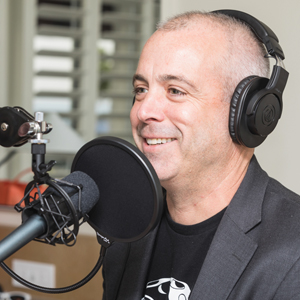
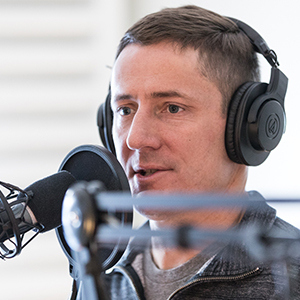
[00:00:02] Ad Read: This week's episode of Taste Radio is sponsored by Owen. A 100% plant-based protein drink with 20 grams of complete protein, Owen is made with only what you need and nothing you don't. Owen is gluten, nut, soy, egg, tree nut, and peanut free, and contains no sugar alcohols. So stop powering through your protein and start enjoying your wellness. Learn more at liveowen.com. That's L-I-V-E-O-W-Y-N.com. And now, Taste Radio. Hey, thanks for listening to BevNET's Taste Radio. I'm Ray Latif, and with me are John Craven, Mike Schneider, and Jon Landis. We're recording from BevNET headquarters here in Watertown, Mass. This week's episode features interviews with Revive Kombucha founder Sean Lovett and Doug Radi, who's the CEO of dairy alternative brand Good Karma. In this week's edition of Elevator Talk, we hear from Brittany Fuisz, the founder of portable meal company Malibu Meals. Just a reminder to our listeners, for questions, comments, ideas for future podcasts, please send an email to ask at Taste Radio. Ray, did you guys see what Repsly did?
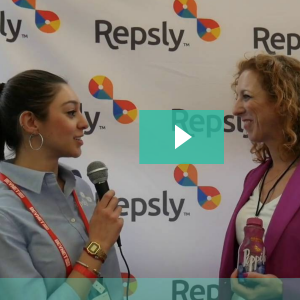
[00:01:17] John Craven: So we talk a lot about awareness, building awareness, and one way to do that is to sponsor an event, and another way to do it is to advertise, and things of that nature. And when you think about sponsorship and sponsoring an event, you need to make an impact. You want to do something that's going to be impactful before the event, during the event, and after the event, and our sponsor at BevNET Live, Repsly, They did something really cool. At their booth, they got founders of beverage companies to come and talk to them, and they did their own content series, and it's on their blog, and they've been promoting it throughout social media.
[00:01:51] Ad Read: Yeah, it was great to see that video. I think they did about 10 interviews with founders from small brands, from medium-sized brands to big brands. It was pretty interesting, and you got this good perspective of some of the cross-section of folks that came to BevNET Live.
[00:02:04] John Craven: Yeah. And they also, you know, they wanted to talk to all of them about, about their products. So there was a good value exchange there because the, you know, the founders of the company got some exposure through Repsly's content and Repsly got what they wanted, which was a conversation with that founder. So, and everybody felt good about it.
[00:02:19] Ad Read: Indeed. How can you watch the video, Mike? on Repsly's blog, we'll link it up on the episode page. I like it. I like it a lot. Well done. So it's a new year and with it, new opportunities, right? You know, like making your way to the Northeast for the usual fun, sun, and plethora of business opportunities that this region offers. That's why GE came here, right? Yeah, and supposedly Amazon too. Oh, outstanding. I'd love that. So, but whether you're planning a trip to the Boston area or if your helicopter simply needs to make an emergency landing, please make us a part of your visit Rep Your near-death experience, whatever works for you. There are so many things to see and do here at BevNET's global headquarters, like meet with the editorial team. You know, a lot of folks we see at shows like an Expo West or a Fancy Food Show or a Knacks, and we don't want that to be our only interaction with you. I mean, we want to learn more about your company, your brand, what you're doing, the folks behind your company. Come to our office. If you happen to be meeting with a distributor or a retailer, tell us about that. Tell us about new wins for your company. We want to write about success. We want to write about the interesting things that are going on with your brand, innovation, line extensions. Come see us. We'll write about you, hopefully. And we'll hang out at our bar.
[00:03:27] John Craven: And we got a lot of beer and kombucha and coffee. And yeah, you know, when we have people visit, it's so cool because there's like five or six people in the room all checking out the products and giving their feedback. And it's like this kind of brainstorm session where we can give you our ideas, just kind of off the cuff, you know, unfiltered, in person. And a lot of people tend to enjoy that. We enjoy it. And the free snacks and drinks. You sound like you were pitching like a rest area on the side of the highway for a second. It's like BevNET pilot. Stay awake, free coffee.
[00:03:59] Ad Read: There's no gasoline here, but everything else you need. Like a fine cigarette, we'll give you the unfiltered version. Oh, geez. In the land of vaping labs. Yes, exactly. I want an unfiltered vape. Oh, geez. I don't even know what that means.
[00:04:13] John Craven: There's all kinds of reasons to come and visit us. If you're interested in talking about building awareness within the industry, if you're looking for your next investor, your next partner, we can show you how to do that. Yeah, I mean, I think anyone, if you're an investor, distributor, just somebody even who's looking at the industry, we're happy to sit down and talk and get to know you. And it's great for us to get to meet people and hear their ideas. And well, we're desperate and lonely here in Watertown. That's a good point.
[00:04:43] Ad Read: You know, we have a lot of brands come, but we also have other folks. It's not always brands. It's true. And, uh, you know, as Landis mentioned, we have that wicked cool bar. We've got a beer, we've got kombucha, we've got coffee on draft. So if nothing else, come and hydrate. Yeah. Yeah. And a fridge full of all sorts of stuff. Indeed.
[00:05:00] John Craven: Craziness. You should have said we had Dunkin' Donuts on tap with that accent there.
[00:05:05] Ad Read: Well, if you can't swing by between now and Friday, don't worry. We're going to be in San Francisco this weekend and part of next week for the annual Winter Fancy Food Show. If you're attending the event, drop us a line. Let's plan a chat, a coffee, a cognac, perhaps all three. Cognac, that's a new one. I like cognac, why not? Coffee and cognac. Coffee and cognac. Do not go well together, but hey. You know what else I like? I like Revive Kombucha. Revive, they sent us some nice products. Speaking of folks, sending us nice things.
[00:05:34] John Craven: Yeah, one of those blew up all over my desk. Thanks a lot, Sean. What was your favorite? Rookie move. I'm a big fan of the yerba mate myself. I'm going for the original, which I think, is it called Boogie Down now? I think so, yeah. Not Boogie Down now. The OG. It's now called Boogie Down. Yeah, great stuff. I don't drink coffee, but I really love the flavor that they get through in their coffee kombucha. They've been nailing that formulation for a really long time, and if you haven't had it yet, please do yourself a favor.
[00:06:01] Ad Read: Yeah, props to Sean Lovett, who's the founder and CEO of Revive Kombucha. Revive is an organic kombucha brand that's based in Sonoma County, and we sat down with Sean at Bevanite Live Winter 2017, where he joined John Craven and Mike Schneider for a deep dive into Revive, including the key decision points behind its creation and efforts to build an enduring brand.
[00:06:25] John Craven: All right, so we are here at Bevanette Live Winter 2017 in Santa Monica in our fabulous Taste Radio studio. And our guest right now is Sean Lovett, who is the CEO of Revive Kombucha. Good to see you, Sean. Yeah, great to be here. Honored to be on the show. Yeah, to be on a podcast. That's cool. You said you didn't even know what a podcast is. So perfect. We'll teach you. We'll see if I make the cut actually. Let's see how I do. Joe, cut that part out. I'm just kidding. So let's give our listeners a little bit of background on Revive. You've been at this for a couple of years and maybe you can just kind of, you know, fill the listeners in on the story real quick. Yeah, it's been seven years now. I think we're coming up on You know, the whole story started when my wife handed me a bottle of GT's kombucha. This would have been in 2008 in Chicago. And she was taking a break from Whole Foods and hands me, I think it was a GT's original, and I nearly spit it out. I go, what Rep Your giving me? And at the time I had a serious Coke habit, but Coca-Cola habit. And she was really trying to get me off that. So, you know, and she just said, you know, drink this for two weeks and I promise you're going to kick the soda habit. And within three days I was hooked. You know, I think the beer side, the sommelier side of me, quickly understood what I was drinking once I started to really drink it. And then I felt the physical difference of it. So, you know, flash forward probably three months, I started to have these sort of entrepreneurial visions of, you know, creating the Coke of the kombucha world and this proposition that, you know, if we could create a really good tasting, organic, Health-Ade Kombucha that you could have with the steak or you could have with your boys with the pizza, the masses would drink it. So let's, I guess, dive in a little more into this journey. Like you went from, you know, guy in Chicago who drank a lot of Coke and spits out kombucha to, you know, ending up in Sonoma to being this guy who, you know, brews this phenomenal and I'll say phenomenally consistent kombucha product. So how did that all happen? Well, yeah, so that at the time when my wife handed me that kombucha, I was actually in between businesses. So when I exited my last business in 2008, end of 2007, my wife went to work at Whole Foods and gave me the time that a wonderful wife does to go figure out what the next entrepreneurial journey was going to be. I got some sommelier training, was really into wine and craft beer at the time. And we had property in India. So, you know, the idea came that, hey, well, let's go build a winery in India. And I'd read about this winemaker in Sonoma County who had developed a wine, Sula Wines, out of India. So I asked my wife if she would move to Sonoma County so I could study wine. Went and worked for one of the really wealthy winery families, Sonoma County sort of legacy wine grower families there, and quickly realized I did not have the money to go do what we were proposing to go do. It's like a 10-year project to go even considerably profitable in wine. So at the time, I started homebrewing kombucha, and that's really when I realized, all right, we could go build this beverage brand thing out of kombucha. And here we are. And you started out selling kombucha at farmers markets, if I remember. I think we were once talking about it. We met for beers at Russian River in Santa Rosa and you were like pointing out to the street of like, that's where I started, right? It was. Yeah. So, I mean, really, you know, if you go back to the, when I was still in Chicago, within three months, you know, I had this idea of building this kombucha company. But the winery thing was really what was in front of my mind. And I had a vision of what this kombucha should taste like. So once we were in Sonoma County and I realized the wine wasn't the thing to do, I started brewing kombucha with an idea of, I wanted it to taste a certain way. Like I had a clear idea in my head of what this should taste like. And the idea would be like a craft cola, right? That should replace that whole soda thing. So once I got that formulation right, took it to the farmer's market. And, you know, I probably changed my recipe 12 times within the first two months at farmer's market. Right. You know, you get like live feedback from people, people throwing it at you. Yeah. But what a scary moment that first day, you know, like unloading. And I was all in because I'm like, I'm going to go build a big brand. Right. This was it was I'm going to do it organically and locally through a farmer's market. But the vision was like, this is going to be the next Coke of the kombucha world. Right. And so I bought a Sprinter van and the tent and the whole thing. And that first moment, you're setting up and you're ready to go, it's 3.30 and people start showing up and you hand your first sample, you're like, all right, well, I'm on this journey now. So talk to us about the brand. You've built an iconic brand, or at least on its way to becoming an iconic brand. You've got the name Revive. The packaging is really well differentiated. Talk to us about how you got there. What was the journey like? Yeah, so 2009, I'm sitting down in front of my computer playing in Photoshop and Illustrator. You're doing this yourself? Yeah. In all my businesses prior to that, I designed the logos, at least sometimes with help as a designer, but I would always sit at the computer with the designer and be like, no, let's change this. So for me, it was really fun. I love that. I'm designing the label and I got to a certain point, this is prior to bottle exchange being an idea. And so I'm sitting there and I just go like, I looked out six years in my head and I said, what does this look like? All right, we're moving like truckloads of kombucha. I'm selling it at the store. You know, I've got tons of people like, do I like the people I'm working with? Do I like the brand that I've built? Am I proud of the product we're making? And so it was clear to me, we had to go build An ecosystem, we had to go build a culture behind this brand. There had to be more meaning to this brand than just like we're selling Coca-Cola, right? Because I can't imagine that really most people at Coca-Pepsi at this point are really happy with the product that they're selling. But they're probably proud of the brand, right? And sort of what it stands for and the whole thing. So for me, it was, let's go build a brand, an ecosystem that adds value to the community, add value to the people that are within the brand. And we offer value with the product we're doing, right? So it's creating a solution, right? our kombucha can get people off of soda, right? And that moment triggers a life-changing event for them to go get healthier, right? And that's what it did for me. Thanks to GT. Give him a little shout out. So here we are, you know, many years later, you know, you recently raised a round of money from a well-known investor, a strategic investor, that is. And, you know, you've got the brand at a point where it's national You've got your packaging dialed in. How would you describe kind of where you're at as well as, you know, what maybe the medium term future holds for Revive? Yeah, I think it's it's it's a wonderful place to be where we're at seven years later It's it's not at all what I imagined right if if I was to go back seven years ago I imagine you know, we would be you know, maybe this side or size or larger, you know I was that one of your breakouts yesterday and Brad Barnhorn it was on board communications and he said something about you know, I No one ever comes into this industry and doesn't think about selling their brand and I can legitimately say I never thought about Selling revive when I started it that was not part of the original vision. It was always to be an evergreen brand certainly along the way you make economic decisions or packaging choices or sustainability decisions bottle exchange, whatever it is that ultimately run you down a path where you have to make financial decisions, but I I think where we're at today is that we found a really good partner that I think overall we align with from a sort of strategic standpoint of the value that we bring as brands to consumers. So, you know, ultimately in the world of fundraising, in this event here, there's a lot of that sort of talk happening. You have to decide the path that you want to be on, right? And ultimately, a lot of people are focused on a destination like Chris from Chameleon, right? He sold his coffee company. Sure. Yeah, I remember four years ago sitting on the docks of green shoots with him and he was like, dude, I'm selling this thing. And it's like, I walked up to him yesterday, hugged him like you did it, dude. That's exactly what you wanted. So he knew what the journey and the destination look like. For me, you know, I think we obviously have to be open to all destinations at this point But I certainly want to know sort of a northern star where we're headed, right? And I want to make sure that this brand doesn't end up with some no-name You know acquire at some point right because you know, there's a value proposition that we get out of you know a transaction right but ultimately that may not be the best thing for everybody within or outside of the brand. So I have 50 families that depend on this brand, that's their livelihood, right? And I have people within the brand that have built their careers within Revive, right? And so to me, I want to be mindful of Everybody who's part of the brand, our current investors, the people within the brand, and the community that's been supporting us, right? Like from that farmer's market, right? Those customers, right? So to me, that's about building a brand that's like part of a larger ecosystem, right? That's enduring and lasting and evergreen. And it still can be a great financial outcome for everybody as part of that. Sean, one of the differentiators for Revive is flavor, and you're obviously a flavor guy. We talked about it before. Talk a little bit about the process for getting to a specific flavor. Yeah. Did you sign the non-disclosure agreement? Yeah, I think, you know, our whole brewing style is, you know, it comes from, I think, a totally different perspective than probably a lot of people in our category, right? So for us, we didn't want vinegar to be the star of the show, right? It was really about the ingredients being the star of the show. And I think if you think of the ethos of less is more, right? That's really our brewing style, right? So we have one, sort of core formulation or style that we do from the beginning. So our original brew or the OG or called Boogie Down now, right? That original brew, that format that we brew in and ferment and do everything, that's true to all of our brews. So it's been our core foundation from day one. And we just don't pivot off of that within our core line. And what it does is it forces a discipline around We're doing innovation as we speak. You know, my brewer brewmaster and I like we're testing stuff. I probably drank 15 different skews last week of innovation, right? It's nonstop, right? But what we do is we have this idea of less is more. So we're always trying to go back down to what is the simplest way we can go present these ingredients so that, you know, you really just get the taste of the ingredient. A great example to me is free ride, right? We're fermenting hibiscus flowers. We're brewing and fermenting hibiscus flowers and out comes this cherry flavor. It's incredible, right? Yeah, that's exactly the word. Yeah. So, you know, the category that you're in right now has had this, you know, crazy stretch of growth. It's had Revive and a handful of other brands that started up in a similar era that have kind of grown up and are really getting traction. How do you operate in a category where there's this probably constant pressure to accelerate and probably also this need of a more mature business to have a little more maybe patience than the old days where you could just kind of make whatever you want. What's it like now? Yeah, well, I mean, I would say that for the first five years or so of the business, that's why we didn't take any investment money, right? And there's just a wonderful freedom of being self-funded. And, you know, hearing Matt's story right from Brew Doctor, really proud of what he's done. And that's a really an incredible thing for him. You know, I think that it's tough balancing the pressures of wanting to go fast and slow. And I have this old racing adage, which is, you know, fast is slow, slow is fast, right? And I think the idea is, is that at times you can be running so fast that you don't even see the consequences of what you're doing. And then likewise, you can be going too slow in the market passes you by. So I don't think that there's a perfect answer there. What I will say is that we've learned some lessons, right? I mean, I remember Expo East sitting down in Park Slope at a German brew house after Expo East and I'm sitting there and I'm seeing a girl come down the street and she's got a bottle in her hand and I could tell it was a HealthAid bottle, right? And so I did the totally appropriate thing and I grabbed her and I was like, hey, can I see what's in your hand? And sure enough, it was a HealthAid bottle. And there I was like, damn it, right? Like HealthAid's already out in New York City. And at the time we're bottle exchange. There wasn't even an idea that we, I mean, there was no way we were gonna be able to go out there. Fast forward, we launch New York and May of last year, and we've got no route to market, you know, between GTs and HealthAid, they've put a full block on distribution out there. So, you know, it's tough. Sometimes you want to go fast. And, you know, in that case, had we had the packaging, we probably could have been in New York and, you know, maybe we would be seeing the growth that HealthAid is in that market. So despite there already being, you know, HealthAid and GTs and other brands in New York, you've still managed to get there. So how did you do that? Yeah, well, I would say it's been a knuckle grinding experience. You know, three Korean mafia distributors later, you know, we've landed with some partners that are doing really well. You know, we've got a small team out there and, you know, we're in it for the long haul. So I think New York, to me, is an influencer market. We have to succeed there over time. Ultimately, though, I just believe that Kombucha is It's an evergreen category. It's here for the long haul. So we can be patient where we need to be. And I believe in our brand. So we're not trying to like build something and be gone in two years, right? So I guess before we wrap up, you know, as we look at this whole kombucha category, which I think is really, first of all, neat as far as beverage categories go, you know, you were, you were talking about how you were excited to see, you know, GT Dave here and Matt Thomas and, you know, the folks from health aid, which most people in other categories are like, you know, want to maybe throw them off the balcony or something like that. But, you know, there is this kind of... I hugged two of those people. I've only shook Matt's hand, but we don't really know each other that well yet. Either way, you've got the, you know, point being, you know, you've got this community and there's the, you know, the KBI, the sort of category association. You know, it's a really unique category as far as non-alcoholic beverages go. So, you know, I guess I'm curious just as sort of a final question, you know, Give us a little kind of crystal ball action here of just where's this all going? Like, you know, we started out talking about you kicking your soda habit with kombucha. Like what's the sort of big picture vision? Is it a kumbaya continue? Is it a kumbaya category? Or what is, what's going to go on? Well, GT and I are going to go out to dinner after this and then we'll figure that out and I'll get back to you. No. I think that personally, I just believe if you look back at organic, the movement over organic and health food stores. I remember going back to health food stores in the 80s when I had food allergies and it's carob and all this stuff. Look at it now, right? Like health food, that's not even like an idea. That's what we eat. That's what it's at grocery stores. You got Karen from Safeway up there. you know, half of what they're trying to go sell is organic. So I think kombucha is just going to be, we're going to fast forward 30 years and soda will be a thing of the past. It'll be like some legacy thing, right? That's out there. Inside Revive Kombucha will be coming out of the plumbing in my house. Yeah, it'll be, there'll be some weird new tap system, you know, that that's happening and all the innovation that's going to happen around that. I think we Revive Kombucha to, I made a commitment to GT and HealthAid yesterday that we will talk positively about the category and the brands. We had a slide in one of our sales decks that was like a matrix of all brands. And I wouldn't say we said anything negative, but it certainly wasn't positive. It was to differentiate. And I've committed to both of them to take that out of our sales deck. And I think the idea is that ultimately, if we want this to grow, we have to take the cue from the craft beer. We have to go support each other. You know, we need good competition. I'm a racer. And the only time racing's fun is when you have good competition. You know what I mean? So like, we need healthy. I went up to Dinah and Vanessa yesterday and hugged them both and said, you guys are kicking ass. Like, you did amazing this year. Your growth was fantastic. And that's good. They're out there educating consumers for us right now, right? And as long as we're on that same road and we're doing our own thing in our own way, I believe that we'll provide a value to that core consumer that wants something beyond just a regular kombucha. Well, it also is, you know, just anecdotally pretty neat to see that, you know, you guys have all managed to craft your own sort of, you know, spin on kombucha, right? So, you know, you're more about different bases of tea. You know, someone else is about different, you know, fruit being added in or whatever it might be. And it is similar to craft beer in that you can, I can enjoy a Revive sometimes or a GT's or, whatever, but you're never really like replacing, you know, it's not like it's the only brand. And I wouldn't be offended if I saw you drinking, like, I know you love GTs as well, right? Like, I wouldn't be offended if I saw you drinking that. I mean, that, that just to me just means that you're liking kombucha, right? Well, I think your analogy to craft beer is the same thing. I mean, sometimes I want to, I don't know, an IPA from one brewery or a pale ale from another, whatever, you know. I just need to figure out how to make it like a kombucha Negroni for you. I know, please. Yes, so amazing. I'm anxiously awaiting. That's my dream, Negroni flavored everything. Well, hey, Sean, this has really been great. I'm really excited that we had a chance to sit down with you here at BevNET Live. And, you know, of course, thanks for coming to the conference as well. So I guess we'll talk again soon. Yeah, it's great to be here and honored to be on this podcast if I make the cut. You'll make the cut, don't worry.
[00:24:52] Carol Ortenberg: You've made it, you've made it already.
[00:24:53] John Craven: Four years and coming, so thanks so much. I love the BHAG here, the Big Hairy Audacious Goal, the vision to be the next Coke, you know, the next Coke of the kombucha world.
[00:25:06] Ad Read: I have never heard that phrase, BHAG before. You've never heard BHAG before? No.
[00:25:10] John Craven: Big Hairy Audacious Goal.
[00:25:11] Ad Read: Every company needs one.
[00:25:12] John Craven: It's that goal that you can never hit. You get out of bed every morning to achieve your BHAG. Wasn't that in the first meeting when you came in and did like a little consulting gig with us?
[00:25:21] Carol Ortenberg: I did.
[00:25:21] John Craven: Yeah, that was dope.
[00:25:22] Carol Ortenberg: That was pre-CMO. We had a good laugh after that.
[00:25:29] Ad Read: And today as well. Bring this guy in. He's a barrel of laughs. Hire him. He's laughing him all day. Sean was talking about early on trying to kick his Coke habit, Coca-Cola, as he mentioned a few times. But he wanted Revive to be the next Coke, the kombucha world. And I think if you're talking about mission and mission-driven and staying on point, a lot of their flavors, as we were talking about, have this soda-like approach. I mean, like they're really approachable flavors that in terms of consistency and carbonation have a very soda-like feel to them. And I think trying to get people off soda and into something healthier is a very worthwhile goal. That journey has to take into account the fact that folks aren't necessarily ready for kombucha straight up. They need that next sort of, I don't want to say training wheels, but they need something to help them get there.
[00:26:24] John Craven: Yeah I mean I think it's interesting you know he talked a lot about the category and competition and you know that goal that he has is something that he can't achieve without the competition right so it's really smart to see someone who's been in this category that went from sort of really being on the fringe to being out in all you know, the forefront in terms of up and coming categories. And, you know, he recognizes that these other companies are important to, you know, him achieving his goal too. So he said, I'm a racer and the only time racing is fun is when you have good competition. You know, so it's, it's a respect for the other drivers in the race and he definitely has that, that drive, but he's also super competitive.
[00:27:06] Ad Read: He wants to win the race, but he wants to beat the best when he's doing it. Yeah, and he talked about the parallels between craft beer and kombucha at this point. He said, we need to be more like craft beer. If we're going to truly be a category that is respected and embraced, we need to be on the same page in terms of how we market this stuff and how we're promoting our product. beverages, how we're promoting the liquid itself. And I think there's a lot to be said there. And I hope that Sean and the rest of the folks in the category are working together because I Revive Kombucha and I just want to see the entire category succeed and more people drink it, frankly. I think they're doing a great job in terms of accessibility.
[00:27:44] John Craven: And you talked a little bit before about the training wheels Inside Revive is, it's got great flavor, but it's also one of those where it's easy to pick up, take a look at it, drink it and enjoy it. I think Revive does a lot for the category in that experience. I just got to give a quick shout out to the team that Sean has built a little bit, because they're kind of the unsung heroes in all this. They're the ones who've really been putting Revive on the map from a sales perspective and getting the conversation going, and they've been killing it over there. I got to give a shout out to Sean for touching your hair at BevNET Live.
[00:28:16] Ad Read: God help the man. Is he still alive?
[00:28:19] Martín Caballero: He survived.
[00:28:20] Ad Read: Amazing. From one hot category to another, as I mentioned, Doug Radi is the CEO of Good Karma Foods, a maker of plant-based milks and yogurts. He's a longtime food and beverage executive and veteran of Legacy and Upstart companies alike. He's got experience at Horizon Organic, Rudy'Gluten Free Silk and Frito-Lay. And at Nosh Live Winter 2017, Doug sat down with Project Nosh editor Carol Ortenberg and BevNET Assistant Editor, Martín Caballero, and discuss the evolution of the packaged food and beverage industry over its nearly two decades in the space, and how Good Karma is innovating for the future.
[00:28:57] Martín Caballero: We are here at Nosh Live in sunny Santa Monica, and we're joined with Doug Radi, who is the CEO of Good Karma Foods. Doug, thanks so much for being with us.
[00:29:07] John Craven: Yeah, thank you very much. Really excited to be on Taste Radio today.
[00:29:12] Martín Caballero: Well, we're glad to have you. You've had such an interesting career. Can you kind of start by just walking us through how you got in the food industry and some of the roles and companies you've worked with?
[00:29:21] John Craven: Yeah, absolutely. I had a good friend in Boulder that's an icon that's been around a long time tell me that I was a hippie stuck in a suit. And that's actually a great classification for my career because I'm a very traditional MBA, CPG. You know, grew up in that area and went into big food and big CPG for about six and a half years. And interestingly, I've always been a little bit of a health nut. You know, my mom, I grew up eating close to the earth, so I've always been in this space personally. And out of the blue, I get this headhunter call and, you know, the conversation goes something like, hey, I've got this weird organic thing. up in Boulder, you've probably never heard about it. And this was in the early, early part of 03. And he says it's Horizon Organic. And I opened up my fridge, because at this point in time, we have two very young kids under two, and the refrigerator is full of Horizon Organic stuff. And that was really my transition to coming professionally, doing things that I'd been trained in big CPG, but doing it in a way that I loved personally the product categories in the food. And then over the last 15 years, I've realized I'm definitely more of that hippie entrepreneur stuck in a suit, because I've just been more interested and more passionate about growth startups than larger, more sophisticated companies and brands. So that's ultimately how I ended up at Good Karma Foods, which has been an absolute blast the last three years.
[00:30:46] Martín Caballero: I wanna touch on something you just said. You said you brought big CPG to these organic, smaller companies. Can you touch upon what that means exactly?
[00:30:55] John Craven: Yeah, I always say I've got this really interesting and this skillset that I love personally because I've got some of that big CPG background in the analytics and the strategy and the way I approach thinking and frameworks. But I do it, as I tell the team in Boulder, I do it with flip-flops on. And I just love the fact that I can use really what I call seasons, you know, polished skill sets, but do it in a way that's really fast, you know, not afraid to take risk, kind of using those skills to mitigate some of the big risk in a startup business, but not getting so marred down in bureaucracy and slow thinking that we can't move fast to meet consumers and to meet markets. And so it's this great combination that I've just grown really comfortable with and I love doing it.
[00:31:45] Martín Caballero: Well, speaking of meeting consumers and markets, you know, after you are at Horizon Organic, you went on to Silk Soymilk and then Rudy's and both of those companies, you were there right as the Gluten Free and sort of plant based dairy trends are really picking up steam, I think.
[00:32:03] John Craven: Right. Yeah. No, it's been awesome to be, you know, sometimes it's hard to time categories in your career. So one, being in the natural food space has been just such a blessing, but also just being on the forefront of categories and really helping them develop both not only the brands that you're building and managing, but also the category themselves and really framing that up. Especially with plant-based milks, you know, how do you feel out when to sort of push the innovation and push the accelerator forward? Because the plant-based movement, it seems like we're in the middle of it or it's ongoing, it's evolving. So how do you know sort of when to push it forward and be like, okay, let's go on to the next innovation here? Yeah, that's a great question. One, back to that sort of I'm part CPG, part entrepreneur, the entrepreneur in me says always. Just be, have that unending tireless passion to make the category what it's capable of and to really push that. So for the way I look at plant-based milks today, and back in the sort of early part of 2000, you had soy and soy's actually got a, You know, it was a dominant share of the category and it's got a pretty good nutritional profile, but that was before soy sort of lost its consumer luster and there was more negative news than positive and, you know, for all of its baggage. And the replacement to soy was nut milk and nut milk, you know, generally consumers think it's tastes great, but it doesn't have a lot of nutrition. So as entrepreneurs in the category, we gotta be Great Way pushing the envelope and really developing because in general, dairy is a very nutritionally dense product. I mean, calcium, vitamin D, vitamin A, protein, you know, so you really gotta be pushing the envelope. And anytime as an entrepreneur, you gotta look at where are those gaps and back to that frame of reference. I mean, as soy was losing its luster and sort of momentum in the category, nut was replacing it. Well, now we have a category with a predominant share of a form that has no protein in it, but our frame of reference is loaded with protein. So, you know, and I think you're starting to see great innovation, you know, from companies like Good Karma and others where you're starting to really push that nutritionally dense story that really services the needs of a lot of people. And I think that's gonna help broaden the categories we keep pushing it forward. So my short answer is never, I mean, never stop doing it, always be pushing the envelope, but then there's also tactical opportunities to do that. And, you know, yogurt's a great example historically. Plant-based yogurts been runny, off the spoon, ropey textures, you know, and no protein. And as we know what Greek has done to the protein story in yogurt, you know, we gotta be better as innovators on the plant-based side and start to drive that harder.
[00:34:45] Martín Caballero: Speaking of pushing the innovation forward, when you came to Good Karma, it was a very different company than where it is now. Can you take us through that journey a little bit of how you helped push the company forward and really go after this strong branded play?
[00:35:01] John Craven: I love our founder, he's become a really close friend of mine, Loren Wallace. He's a great innovator and plant-based, and he's been doing it a long time. But what Loren and his business partner, who was basically an operator, an operations person, what they didn't know was how to sort of construct the future strategy of a CPG company and really compete in the markets that we're in. And so when we started to get together on Good Karma, along with two ex-partners out of Chicago, we really started to look at, where do we want this brand to stand for within the category and to build it out? And then what do we need to do to do that? And one of the answers was, we probably need a team with a different skill set. And so part of that's from me. And then we've hired other people that are really great professionals in this space. And then, you know, really building some of the foundational elements. And we heard conversations yesterday in some of the Nosh presentations around this transition and finding and moving to different co-packers, because capabilities change and building different financial systems, because now it's more complicated and you got to manage through with all that. And we were very much in that sort of moving through phase one to that phase two of the company. And we actually called it Good Karma 2.0, that we were going to sort of build the next version of Good Karma, leveraging all the great assets and the foundational stuff that Lauren and his business partner created, but then building on that. And so from, you know, the brand refresh where we wanted the brand to be more approachable and friendly, I mean, essentially the company is about inspiring goodness. And that's true in everything we do, whether it's the way we work with our team or the way we work with our co-packers and finding win-win relationships. and the way we present the brand with a smiley face. And we always joke that Good Karma isn't necessarily this big over for my entire life, I've got a scorecard and I'm putting checks and minuses on. It's just the little things. It's the tiny but mighty little things that you can do in your life to really make other people's lives better. And so I use the door opening. It's so funny now in the day of technology and phones, how many people don't hold a door open for you? And it's because they're just in their own world. And I use that as like the most relevant example because when somebody opens a door for you and you're a door opener and holds a door open for you, you look at each other and we're in the same tribe. We get each other. We're about those little tiny but mighty moments of goodness. that's where we started, you know, that was the genesis of the company, but really starting to elevate that and build it in everything we do. And so back to the foundational elements, simple things like company policies. We have VTO, volunteer time off, and we pay employees a day, a quarter to go spend time in their communities giving back and just little simple things. So we haven't, thought about the company as some grandiose, we're gonna save the world. No, we're gonna take every day and every opportunity to make the world a little better place in everything we can do. And so for us, it's a journey. It's not the destination, because we can get better every day. I joke with the team that I have one of those old studio signs in my office. I don't, but I really need to buy one, because I use this story a lot. The old hold applause, you know, when you needed to be quiet. And the hold applause sign in my office is always lit. And that means that I don't want applause. Tomorrow I have another chance to be, you know, to inspire little moments of goodness. And I'm never, you know, I'm never as good as I could be tomorrow.
[00:38:32] Martín Caballero: So you've talked a lot about holes in the market. How do entrepreneurs figure out if there's a hole in the market and that's where they should be going, or there's a hole in the market because it's just not a good idea, or it's not possible, or just maybe is too far afield for the consumer?
[00:38:48] John Craven: Well, I think that's a complicated question because each company and each entrepreneur has to address that differently. And there was some themes on this yesterday about extending too far, too fast and getting spread thin.
[00:39:00] Martín Caballero: Exactly.
[00:39:01] John Craven: You know, so I think you have to address that cautiously. But there are plenty of examples where you thought your core business was one thing and it becomes another because you did find a hole in the market and you executed it better. So it's very complicated and a lot of entrepreneurs that, you know, whether I'm on an advisory board or just a mentor, you know, I think you have to approach it cautiously because the other theme that we talked about yesterday and I talk about all the time is you gotta have a core. The extensions into adjacencies never work unless your core is strong for the most part. So, you know, you have to build your brand and your business somewhere. and then really think strategically and cautiously, but with speed and ability to take some risks to move into those other markets. So, a good one I think is going on right now in plant-based is you look at the yogurt market. It's been a decent market, but it's only, it's less than 1% of total yogurt where plant-based milk's about 9% now. So, the one thing I love about that kind of situation is you have to just step back and say, why? Why is it? It doesn't make sense intuitively that if there's that many plant-based milk drinkers out there that plant-based yogurt isn't more popular. So why? And then address that why. And the great news about that is there's a lot of companies right now doing great innovation in plant-based yogurt and the category has... was growing at 20% and is now growing at 55, 60%. So we're starting to solve that need, and you can see that in the consumption data in the category. So I love stepping back and just saying why, and then the second question I love doing as an entrepreneur is, what do I have to believe I'm gonna be successful? And then do you have all the assets and the abilities to go deliver against that, what do I have to believe question? And if that's the case, then I think you can be really successful in extending into new market segments. Just following up on that, in terms of that why, I mean, just from a macro view and just your observations of the category, what is sort of maybe holding back that growth or what is sort of the main elements and factors that are going to be in play in terms of seeing if that grows and what level it can rise to? The first person that made milk alternatives look just like milk and put it right next to milk was the winner. Now, the same dynamic is true in yogurt. The why to me is, if you looked at most of the yogurts on the market, they fell short on one of three things, nutrition, taste, or texture. And if you think about yogurt, yogurt is a convenient, portable, great tasting, nutritionally dense protein source. you know, it's a seven, eight, $9 billion market. But if we're falling short on what I call the antis or the table stakes of the game, you're not gonna win. So I think all of the innovation you're now seeing in yogurt from the biggest brands all the way to, you know, emerging brands like us is you're starting to see products that deliver up against all those. So, you know, we talk about moundable, spoonable, you know, when you put the spoon into conventional yogurt, it kind of mounds up on the spoon and it doesn't run off. And you're starting to see those textures in plant-based. You're starting to see, you know, coconut's a great example. If you love coconut, you're gonna love coconut yogurt because it's coconut strawberry and coconut blueberry and coconut whatever. but not everybody loves coconut. So it serves more of a niche in the market. So, but who's gonna go do that plant-based that tastes like regular dairy and doesn't have those dominant flavor profiles like a nut or a soy or a coconut. And I think those are the brands that are gonna really help develop the category over time.
[00:42:36] Martín Caballero: It can be hard though for entrepreneurs to figure out where those table stakes are because I feel like they are shifting, right? You know, you talked about the first soy milk that looked like a milk carton, right? If you did that now, that is table stakes is that it just looks like a milk carton or, you know, now that you guys have made a yogurt that has the consistency of yogurt, what's the next thing that I have to do to get consumer attention? That can be a hard balance, I feel like, to meet while still being innovative.
[00:43:05] John Craven: Yeah, I agree. And, you know, I have a bias just from training that I like to, you know, it's the soccer example, go to where the ball's gonna be, not to where the ball is. And in very underdeveloped categories like yogurt, I think the first move has gotta be in plant-based, make it look like regular yogurt. And then I think there's other strategies to go beyond that. I look back at the organic yogurt market long ago in the eighties and Horizon Organic was actually the first company, one of the first companies in even before Stonyfield. But if you look at their product lineup, it was like chamomile, lavender, strawberry, and then Gary Hirsberg comes out with strawberry organic. It was kind of like, you got to teach organic and you got to teach about, you know, lavender or something or other. No, go telegraphically right to where the core of the category is. And that's typically a good winning move in the real nascent upcomers. But that's not to say that's the only strategy. I mean, you know, 10 years ago, you would never thought there would be all these unique jerky formats and other things. And they didn't go and make a clean version of Jack Links. They went and Crave did something very different with flavor. So I think there's multiple cards you can play and strategies on how to develop a category. But my bias is generally in something that's pretty nascent, make it that strong replica of the frame of reference with the added benefits of plant-based or whatever. And that typically is a good strategy as well. before any fragmentation happens.
[00:44:38] Martín Caballero: Thanks for making our listeners aware of all the interesting work that Good Karma is doing and how. you're shaping and changing the plant-based dairy industry. It was so great to have you on the podcast today.
[00:44:50] John Craven: Yeah, thanks. I enjoyed it and continue to do great work at Nosh because you guys are just a great beacon of news and information out there. And listeners, remember, hold the door the next time you go through. Yes. And give a wink.
[00:45:02] Martín Caballero: Make eye contact. Let's get that going. Give a wink.
[00:45:04] John Craven: Let's get that spread.
[00:45:04] Martín Caballero: Hashtag hold the door.
[00:45:05] John Craven: Thanks, gang. Thanks.
[00:45:09] Ad Read: All right, we're now joined by Carol Ortenberg and Martín Caballero. Guys, thanks so much for being with us. Thanks for having us on.
[00:45:15] Martín Caballero: Yeah, great to be here.
[00:45:16] Ad Read: And a great interview you guys had. You know, one of the things that definitely stood out for me in this was when Doug said, I'm never as good as I will be tomorrow. Pretty interesting stuff and pretty motivational stuff. I think it's a good way of looking at opportunity, really. You know, you always have tomorrow to get better and improve yourself and your brand and company.
[00:45:37] Martín Caballero: I think it's also that in speaking with him, he's such a humble CEO, and he's had such an amazing career in the industry, and that humility really speaks to who he is and why he's so successful with these companies, and it's something some entrepreneurs can take note of.
[00:45:57] John Craven: Well, I mean, I think just that aspirational attitude and that positivity and the humbleness, as you mentioned, just kind of fits in with when you're trying to sort of find the white space and sort of push a different opening in a different kind of category, as the company clearly has been doing. So it kind of fits right in with that, and it definitely comes across when you hear him talk in the interview.
[00:46:17] Ad Read: And as I mentioned, you know, GoodCommerce is doing quite a bit of innovation. Marty wrote about some of the things that are on the horizon, so to speak, for Good Karma?
[00:46:25] John Craven: Yep. The shelf stable line and also a couple of different package formats, including some smaller cartons. So sort of going after the kids beverage category with, you know, a lot of adults being now more health conscious about not just what they're consuming, but also what they're giving their kids and trying to make the best choices there. I think there's clearly a strategy to sort of touch on various different consumer categories and different retail channels, also in food service. As I mentioned before, I think they're really trying to push through this category and I think they're going about it in a very interesting way.
[00:47:00] Ad Read: The other thing is, with all the innovation that's happening, Doug mentioned that brands have to have a core. So you can innovate, you can expand, but you can't lose who you are and what your mission is and what you're all about.
[00:47:11] Martín Caballero: That's true, but I do think what Good Karma has done over the past years is expand what that core is and who they appeal to, whether that's through these innovative new products that Marty spoke to or just rebranding so that the products spoke to their core who maybe didn't realize they were their core a little bit better.
[00:47:32] John Craven: Indeed. With a lot of these, I think, plant-based companies that we're seeing now this category exploding in both food and beverage, it really confirms, as you're saying, sort of that belief. These guys have been ahead of the curve, and now it seems like the market and consumers are catching up. So kudos to them for sticking with it, and now I think we're going to continue to see this category move forward. It seems like that's like kind of the key to success for a lot of these small bleeding edge brands is you have to just stay alive long enough for the consumers in the market to catch up with what you're actually offering.
[00:48:07] Martín Caballero: That's a great point. And Doug has been very active in going to D.C. and lobbying for plant-based foods. Right now there's a debate about if you can call, you know, plant-based dairy, cheese or milk. And that's kind of the case of these cutting-edge categories when these statements of identity were made. They were made when plant-based foods didn't even exist. And Good Karma was very advanced, was forward-thinking, and now is trying to shape how the rest of the industry views these categories and catch up to them.
[00:48:40] Ad Read: Yeah. I mean, you know, the idea of a plant-based yogurt sounds almost like an oxymoron, you know, plant-based any dairy. I haven't tried the yogurt. I've tried plant-based yogurt before. Have you tried Good Karma?
[00:48:50] Martín Caballero: I have.
[00:48:51] Ad Read: Is it good?
[00:48:51] Martín Caballero: It's really good.
[00:48:52] Ad Read: Yeah. I'm curious about, you know, their product in particular. I mean, how similar is it to actual dairy-based yogurt?
[00:49:00] Martín Caballero: What they did that was really smart was realize that getting people to take a step from regular Yoplait Dannon yogurt to plant-based yogurt was already a step. But getting them to make that shift and also make the shift to like a Greek yogurt or an Australian yogurt was maybe one step too far. So the texture definitely resembles that of your traditional yogurt that you'd find on the shelf of any major supermarket. It has that sweetness. It has less of that tang than Greek yogurt. and definitely comes through with that fruit forward flavor.
[00:49:40] Ad Read: Well, you got my mouth watering. So Good Karma, folks. If you're listening, please send us product. I would love to try some. Carol, Marty, thank you so much for joining us. Great interview, as I mentioned. And yeah, let's talk again real soon. Thanks guys. See you next time.
[00:49:53] Martín Caballero: Thanks.
[00:49:54] Ad Read: Also at Nosh Live Winter 2017, we met up with Brittany Fuisz, who's the founder of Malibu Meals, which is an innovative food brand that markets organic, gluten-free, and dairy-free food blends that are packaged in convenient shelf-stable pouches. Pretty interesting stuff. We caught up with Brittany for this edition of Elevator Talk, where she shared her vision for the brand.
[00:50:20] Good Karma: It's time for our Elevator Talk, where we put a founder in an elevator with their dream investor. Let's hear what happens. What is your company's mission?
[00:50:29] Brittany Fuisz: Malibu Meals is a company that aims to feed people who are on the go while making the planet a better place.
[00:50:39] Good Karma: What is your product and how is it different?
[00:50:41] Brittany Fuisz: My product is an organic, pouched, plant-rich meal on the go for adults that is shelf-stable for up to a year. So you can throw it in your backpack, throw it in your purse, take it on a plane, and it's all vegetables, and it's really great for you. Who is your target audience, and how do you quantify the market opportunity? Target audience are people on the go, 25 to 40. active lifestyle, starting out with women, but I don't want to just target it to women, so I think it's a really huge opportunity. What stage of growth is your company in? Beginner. I'm very new, haven't launched yet. I do have a manufacturer and I'll be launching in a few months. What has been the biggest surprise since starting your company? I haven't launched, but there's still been a lot of surprises and it's just how many roadblocks, you know, you pass through one and then there's another one right in the face. So I have so much respect for entrepreneurs within this space and, you know, how far people have come.
[00:51:39] Good Karma: What do you need from a partner or an investor to go next level?
[00:51:42] Brittany Fuisz: Other than the obvious, money, I do need a partner. So I want an investor who can be a partner. I'm doing this all on my own. And I have a lot of great experience when it comes to food. I have a culinary degree. I have a lot of marketing experience. But I'm looking for someone who can come in with a lot of financial expertise and offer a lot of insight with regards to how to launch a product from a place that really makes sense financially. Why should I invest in you? I think you should invest in me because you aren't investing in the person. I work really hard. I come from a family of entrepreneurs. I love food. I think about it, dream about it. And this product is my passion and there's a real need in the market. There are no pouched organic meal replacements out there right now, believe it or not. So in a day where there is so much noise within most segments, this one's kind of new. So it's really exciting.
[00:52:36] John Craven: So Brittany actually has been working at Yelp for a long time with like the people that are most engaged in Yelp and organizing events and things like that. So obviously she's going to be using that to her advantage as a new business owner. And I'm really curious to see, you know, how she uses her knowledge and connections in influencer marketing for this brand.
[00:52:56] Ad Read: She's just going to give herself five stars like across the board. She's going to like change every star rating to five stars. I don't think that's how it works, but yeah, I don't know. I'm not an authority. Well, you're an authority on some things, Landis, and I appreciate you being here and being a host, so good stuff. Thank you. All right, that brings us to the end of episode 92. Thank you so much to our sponsor, Owen, the plant-based protein drink with 20 grams of complete protein. It's only what you need and nothing you don't. Thanks so much to our guests, Sean Lovett, Doug Radi, Carol Ortenberg, Martín Caballero, and Brittany Fuisz. Please send us an email to askatasteradio.com for questions, comments, ideas for future podcasts. On behalf of Jon Jon Landis Mike, I'm Ray. We'll talk to you next time. Ciao.