[00:00:04] Ray Latif: Hello and thanks for tuning in to episode 102 of Taste Radio Insider. I'm Ray Latif, the editor and producer of Taste Radio, and I'm with my BevNET and Nosh colleagues, Mike Schneider, Brad Avery, and Aaron Cabry. In this episode, we're joined by Nick Desai, the founder and CEO of Snack It Forward, the maker of innovative snack brand, Pito's. Just a reminder, if you like what you hear on Taste Radio, please share the podcast with friends and colleagues. And of course, we'd love it if you could review us on the Apple Podcasts app or your listening platform of choice. I am so sorry, listeners. I had to chuckle because I was thinking about something that Mike said before we started recording, which is that... He's still a fan of Skrillex and listens to a lot of dubstep, which is, I don't know how or why that came into the conversation, but it did.
[00:00:48] Nick Desai: I know why, Ray, because Joe has a remix of all your screw-ups to Skrillex. It's an awesome song that we bust out every BevNET happy hour.
[00:01:00] Ray Latif: We bust that out?
[00:01:03] Nick Desai: No. I made that up before the show, but everyone wanted to talk about it. I was saying I can't wait for like nostalgia to hit its 20 year cycle on dubstep and then you're going to have like bars doing dubstep night in like 2035 that you know they're going to be they're going to be pulling out the Skrillex again like it's 2012. I'm gonna be like, to my grandkids, I know the Skrillex! I was with it once. The way that it went down was that Erin is new to the show, and she's like, you're gonna screw up my name, Ray. You're gonna screw up my name, Ray. And we talked about how you screw up all the time, but the listeners don't know it because we have Joe, the awesome editor. This is true. And then I said, he has a remix to all of your screw-ups to Skrillex, and you guys started trolling me.
[00:01:50] Ray Latif: There are two truths there, Mike. Number one, I screw up a lot and people don't notice it because we do have some fantastic editing. Number two, this is Erin's first time on the podcast, Erin Cabry, who is an essential member of our editorial team working on both BevNET and Nosh. Erin, thank you so much for being on the show, number one.
[00:02:13] Dad Dub: Thanks for having me. I like that intro.
[00:02:15] Ray Latif: Very sweet. Well, you know, it's true. I only speak the truth. So how's it going? You've been with BevNET now for a year since January of 2019, right?
[00:02:26] Dad Dub: December 2018. Very close. So almost two years now, which is insane.
[00:02:32] Nick Desai: That is insane. That is insane. BevNET years are like dog years, though. It's like 14 years. I just realized next month will be four years for me. Oh, my gosh. 28 years of BevNET.
[00:02:45] Dad Dub: That's all.
[00:02:46] Ray Latif: Yeah, I'm not going to say how long I've been with DevNet, but you can look it up on LinkedIn. It's been a while.
[00:02:51] Nick Desai: 763 years.
[00:02:54] Ray Latif: Well, Erin, it's funny because you've joined us in a lot of videos, you've done a ton of live streaming, but surprisingly, this is your first time on the show. I assume you're a regular listener of Taste Radio.
[00:03:03] Dad Dub: Oh, yeah.
[00:03:06] Ray Latif: That sounded so convincing.
[00:03:09] Dad Dub: Of course I listen. What are you talking about? I remember listening to this when I was going into my interview for this job. Actually, I remember listening to Taste Radio.
[00:03:17] Ray Latif: There you go. See?
[00:03:19] Dad Dub: She hasn't since.
[00:03:21] Ray Latif: If you're ever applying for a job at BevNET or Nosh, make sure you're listening to some Taste Radio. You have a good chance of getting in if you can say something about the show. So there you go.
[00:03:31] Nick Desai: You got to know all the in-jokes and the references.
[00:03:35] Ray Latif: Exactly. Mike's Coffee, talk about Mike's Coffee preparation. You will be hired on the spot.
[00:03:39] Nick Desai: Yeah, I can't wait to try one of those cortados. Just say that, and Mike will instantly go to bat for you.
[00:03:46] Dad Dub: Yeah, you're just going to learn the key words in the mid-air.
[00:03:48] Nick Desai: Right. You just feel like, I want to meet Cortadinho.
[00:03:52] Ray Latif: Or talk about how you are an expert at cleaning coffee machines, especially high-end Italian ones. Mike will love you for that. Anyone who follows Mike on Instagram knows about his coffee habits. And, you know, Mike, I take a look at your Instagram stories all the time. I'm really, really surprised that you haven't recorded yourself riding a longboard, sipping on some cranberry juice and chilling a Fleetwood Mac. What is up with that? Like, especially because the first time you started working at BedNet, you were riding in on your longboard every morning. And so I figured this is like a perfect opportunity for you to replicate the viral video, as it were.
[00:04:31] Nick Desai: I'm not really a cranberry juice guy, Ray. I was drinking some hella bitters and soda on my loaded longboard, and I had a wipeout. There was blood everywhere. It got censored on Instagram. It was a mess.
[00:04:46] Ray Latif: That kind of stuff gets censored on Instagram? It's a joke, Ray. Oh, okay. I was going to say. Erin, are you on Instagram? I don't think I follow you on Instagram. Are you on the social?
[00:04:55] Dad Dub: I am. I am on the gram.
[00:04:58] Ray Latif: What's your handle, if you don't mind me asking?
[00:05:00] Dad Dub: Erin Cabry. Still on brand.
[00:05:07] Ray Latif: But for folks listening, Cabry, it's not as intuitive in terms of how you spell it. How do you spell your last name?
[00:05:14] Dad Dub: It's C-A-B-R-E-Y.
[00:05:16] Ray Latif: Okay. Erin, what's your social security number? Is it private? Are you private? Or can anyone look at your Instagram profile?
[00:05:25] Dad Dub: That's a good question. I think I'm public. I believe I am.
[00:05:28] Ray Latif: Okay, we're going to do this right now. I'm going to do this. I'm going to check you out here on Instagram.
[00:05:36] Nick Desai: You are opening up a can of worms for her. Why?
[00:05:42] Ray Latif: No, I see it. Okay, here we go. You are public. You're followed by Great White Moose, who is Aaron Willette, our amazing designer. Melissa Traverse, who is a former member of our team, moved on to greener pastures, so to speak. And Paige Roberts, who is another key member of our marketing team. Look at this. I don't see enough beverages or food, though. There's almost none.
[00:06:03] Dad Dub: Yes. I don't know. I'm not quite at the level of being a beverage influencer quite yet. Sometimes on the stories, you'll see stuff, but not on the grid.
[00:06:13] Ray Latif: Okay. Well, you know what? We'll work on that. Now that everyone knows who you are on Taste Creator, you're going to have at least 10,000, 15,000 new followers by next week. Just be ready for that.
[00:06:25] Nick Desai: Currently, you're going to have to drink Ocean Spray on a longboard.
[00:06:30] Ray Latif: That is a hell of a video. I mean, that thing, my goodness, that got some play. Brad, Erin, have you guys been back in the office of late? I know I've been working from home primarily, I'd say, I don't know, 95% of the time. But have you guys been back in?
[00:06:44] Dad Dub: I have not. I live in New Hampshire, which is like an hour from our office. So I've been pretty much kicking it at home.
[00:06:50] Ray Latif: Ah, bummer. Brad?
[00:06:53] Nick Desai: I've swung by a couple times, but mostly staying home, you know, working. I have my work desktop here that I've set up my lovely office space. When Brad comes to the office, he likes to work on the deck. We have a new deck in our new office, which we'd love to have people if there wasn't like some crazy virus out in the world right now. But Brad brings his whole desktop out and he sets up like cafe style on the deck. It looks pretty awesome.
[00:07:25] Ray Latif: It is. And hopefully when this is all said and done, Brad will be back out there Most of the time, because from what I understand, it's nice to be able to work out there.
[00:07:36] Nick Desai: It actually is. It's like a pretty nice little spot. So like so long as the weather's good, there's umbrellas, keep the sun out. Craven got him some umbrellas. Yeah, those giant, giant umbrellas. It's a good walk. I'm like a 10, 15 minute walk from the new office. So I'm right down the street. He's carrying his desktop from home on his back. It's like a Sherpa.
[00:07:58] Ray Latif: Well, in addition to the deck and umbrellas, there is another perk for coming into the office, and that's on-demand cold-press juice. This is another thing that's been on Mike and John Craven's Instagram profile for the past week, cranking out some immunity-boosting beverages. Do you guys make enough for everyone? Are you bottling this stuff, or is it just one cup at a time?
[00:08:19] Nick Desai: John Craven is on an absolute tear. We've got some serious good nature hardware here. We've got one that, you know, can really rip juice. You can make a lot Office Juice. And then you've got one that that's more for, I guess, you know, custom, a couple of glasses at a time, but yeah, he's on a tear.
[00:08:36] Ray Latif: Yes. Good nature, the maker of cold press juicing equipment. Great stuff. The new one that we have just looks, looks like a, like a missile. It's just like, it's like, you know, like, I don't know how it works, but it looks pretty cool. Well, I like a dash of CBD in my juice beverages, but there aren't many CBD-infused juice brands that I know of. Sparkling Water, on the other hand, there's more than a few. One of them is a brand called Sweet Reason, a brand founded by Hillary McCain, who we featured back in episode 78 of Taste Radio Insider. Brad, you've been keeping track of the company's progress and recently covered some news about it.
[00:09:11] Nick Desai: Yeah, just this week, they released a new line called Evening Blend. It is a fairly high dosage of CBD for the RTD market, 30 milligrams per 12-ounce bottle. And it's blended with a mix of adaptogens, such as L-theanine, and I believe there's some ashwagandha and ginseng in there. So basically, the The idea, as Hillary explained it to me, was that they wanna kinda go for an alcohol alternative use occasion that actually gives you some of the effects of alcohol without being intoxicating. So you get the actual feeling of relaxation, but without the sort of, it's a mocktail that just tastes like Hella Cocktail. Instead, you have this blend of flavors, and that is rich, nuanced, and actually should make you feel chill. Have you tried it yet? I haven't had a chance to try it yet, but I hope I do. I've, of course, had their core line, which they've also, you know, done some some work on their sparkling water line, which they've since, you know, over the past few months, upgraded every bottle to have 10 milligrams of CBD versus used to be, I believe, seven. And they've updated the packaging, too, in order to really just help the brand pop on shelf as they continue their retail expansion, largely on the coast.
[00:10:35] Office Juice: Guessing your margins? That's risky. Belay Financial gives CPG brands the clarity to scale smarter, faster, stronger. Get your free inventory ebook by texting TASTE to 55123 and start making data work for you. Vibrant Ingredients is the natural ingredient partner powering food and beverage innovation, delivering flavor, function, and protection through a science-backed portfolio. Vibrant delivers purpose-driven solutions that help brands create extraordinary experiences. Discover what's possible with Vibrant today. Visit vibrantingredients.com.
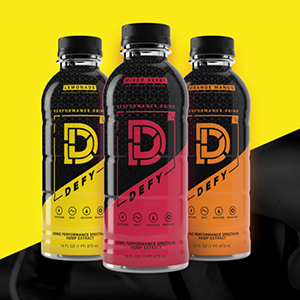
[00:11:22] Ray Latif: Keeping on the CBD track, Erin, you recently wrote an amazing article that examined how the ingredient is being incorporated into sports drinks, like a brand called Defy, which was co-founded by NFL legend Terrell Davis, who we interviewed in episode 218 of Taste Radio. Erin, just a really comprehensive look at what's happening in that space. Can you talk about the opportunity that entrepreneurs are seeing in that space?
[00:11:54] Dad Dub: Yeah, absolutely. So this story was a follow-up story to a story I wrote in my very early days of BevNET that was kind of looking at the entrepreneurial perspective of and a lot about DeFi. And so this one was kind of looking in at the trend as a whole, you know, what's driving the market, what channels are CBD sports beverages finding success in, also some of the science behind it and the cultural significance of it in the sports world. So obviously, you know, the big sports beverage players like Gary and Powerade are still super dominant, but these new brands and products are edging out space for themselves, you know, online with different form factors back in with Defy and also with some new brands that are coming out like Offield that does a really cool stick pack product and then Nanogaze which is doing smaller form shots.
[00:12:48] Ray Latif: Yeah, you know, when I spoke with Terrell for our podcast interview, he really talked about how much CBD is being embraced by professional athletes, particularly in the NFL. It'll be interesting to see if beverages are the medium by which CBD really gains widespread traction among athletes, professional or otherwise.
[00:13:08] Nick Desai: When I went longboarding with Terrell, we drank cranberry Ocean Spray. It's pretty awesome. It's interesting though, a day after Aaron's story published, I had a news item where I spoke to BioSteel Sports Nutrition, which is launching an RTD product and planning to, in their words, blanket the country in DSD. really go hard head-to-head with some of the leading sports drinks companies. But Canopy Growth Company has a 72% majority stake in BioSteel. And I know that I spoke with co-founder John Salenza for the story. And we did talk briefly that, look, CBD is a big plan down the line for this company. They're waiting until the regulation is clear. But you've got a brand that is going to really got a lot of money behind it and is really going hard for nationwide distribution, nationwide recognition that is eventually going to play in the CBD space once that market opens up.
[00:14:07] Ray Latif: So much information about CBD and even more information in our virtual event, CBD Today and Tomorrow, presented by Source Technology, that was actually held on October 15th. Explore the challenges and opportunities for CBD and other cannabinoids in food and beverage. If you missed it, don't fret. Subscribers to BevNET and Anosh have full access to watch every panel and presentation in their entirety. Content is required viewing for anyone interested in or working with CBD. Once again, you need to be a subscriber to watch that content, but it's pretty easy to do so. Go to the upper right-hand corner of BevNET or Anosh, look for that subscribe button, click on it, should take about three minutes, maybe less, and you'll be good to go.
[00:14:52] Nick Desai: I can just picture you at a trade show, Ray. I mean, when we used to have trade shows, someone coming up to you and go, Hey, have you, have you, have you done that required watching yet? I can't talk to you until you've done the required watching.
[00:15:04] Ray Latif: Well, you know, I mean, if you want to be informed and you want to know what you're doing and you want to be successful, that's a good start, I would say.
[00:15:12] Nick Desai: No, we have hours and hours and hours of great content. from the archives, from our education series, from all the great new content that we've been creating, office hours, Elevator Talk, product showcases, the supercharged D2C micro event, which happened a couple of weeks ago, but you can still catch. I mean, there's so much great content for subscribers on the site right now.
[00:15:35] Ray Latif: Totally. All right, before we sign off, just want to give a quick shout out to the folks from NOMZ, N-O-M-Z, the makers of Energy Bytes. They recently revamped their packaging and it looks amazing. Their products are made with organic ingredients, nuts, dates, coconut, cocoa, sea salt. They are pretty amazing and shout out to the founders. Jana, thank you so much for sending some samples. They are very helpful, particularly for my mornings.
[00:16:06] Nick Desai: Yeah, I'll give a shout out too. I'm actually working on a story right now that should be out by the time this episode publishes on sort of this rising kind of functional soda pop category that is emerging with brands like Olipop and Poppy and Health Aid Booch Pop. So I've been drinking a lot of those lately and got some samples in and been consuming a lot of that. So definitely check out that story, which should be available as you're listening to this.
[00:16:34] Ray Latif: Available on BevNET.com?
[00:16:36] Nick Desai: On BevNET.com, the one and only. The one and only, right on.
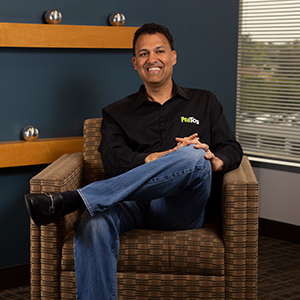
[00:16:41] Ray Latif: All right, it's time to get to our featured interview with Nick Desai, the creator of Pito's, a brand of pea-based snacks promoted as, quote, a one-of-a-kind junk food only without the junk. A lawyer-turned-food entrepreneur, Nick's mission to offer consumers better-for-you options in the salty snack aisle has meant taking the legacy brands head-on, calling them out by name, and making direct comparisons between their ingredient profiles and those of Pito'Wise Snacks. That's been the strategy since Petos launched in 2017, and if the brand's retail footprint, which includes nearly 5,000 locations, including those of Kroger, Safeway and Costco, and a recent $7 million funding round are any indication, it seems to be resonating with consumers and industry gatekeepers. In the following interview, I spoke with Nick about the origins of Petos, why he believes that he's doing the right thing regardless of the brand's chances for success, how to achieve meaningful scale amid consumer skepticism about healthy snacking, why he believes that the American dream is quote, still very much alive. Hey folks, it's Ray with Taste Radio. I'm gonna call right now with Nick Desai, the founder and CEO of Snack It Forward, the maker of pitos. Nick, how are you? I'm doing amazing, Ray. Thank you for having me on the show. Thanks so much for being with us today. Really appreciate it. Like a lot of parents these days, you have kids that are remote learning from home. I heard them in the background prior to us getting on this call. And it's interesting because I actually met your kids last October at the NAC show, the National Association of Convenience Stores show. They were helping you behind the booth, which was great. I love seeing that. Do you always bring your kids to trade shows and other business trips?
[00:18:22] Taste Radio: You know, I don't always get an opportunity to, but as they've gotten older, um, I have done that several times and it's, it's been really cool. It's something that my dad actually did for me and it taught me a ton. at the time you don't realize it, but it's one of those like kind of, you know, call it field trip learning that really teaches them a lot about the business community. And they've had a chance to get to know some of the members of our team. And also gives me a chance to spend time with them. Because as you know, as an entrepreneur, sometimes you don't get as much time to spend with with your family as you'd like with the late nights and at least before pre COVID, a lot of traveling.
[00:18:56] Ray Latif: For sure. I actually took many a business trip with my dad growing up. For folks who have listened to the podcast on a regular basis, you'll know that I loved going to the fancy food show with my dad growing up. It's a really meaningful experience and it just teaches them where I guess the money's coming from, the food on their table is coming from, so to speak. And it's important. And I still have the bag chip. I think that it was your daughter gave me and she's like, Hey, do you want the chip clip? Yeah. Yeah. The chip clip, excuse me, the chip clip, which is so nice. It's very helpful. Was your dad in the food business growing up? Did he take you on trips to, you know, similar conventions like Max?
[00:19:36] Taste Radio: You know what? He was not in the food business. He was an engineer, but he went into consulting and he was an entrepreneur. He started his own company early on in his career. and then went into management consulting. One of the most incredible things, he was an amazing business developer. He almost pioneered this concept of going to trade shows to pick up new customers. So he would basically go out and find all of these trade shows that were going on in different industries, like SEMA in the automotive industry, and CES in the computer industry, and even some of the food show, and then just go to them. That would be a great way for him to, and back then, no one else was doing this. And it was a great way to pick up new customers and learn about the industry in kind of one, you know, one place quickly. These are the trips that he would take us on a lot. So the whole notion of kind of going to trade shows as a way to not only pick up new customers, but also learn about the industry and keep up with the industry and see what the latest in trends are and all that kind of stuff is something that just was very ingrained in me and something that's why I think I enjoy doing it now. I take my kids to these things.
[00:20:40] Ray Latif: Yeah. Did your dad encourage you to become an engineer as well?
[00:20:44] Taste Radio: He did, he did not. He, I think they were, you know, they, I mean, they were, I came from India originally. My parents are, I was born in the United States, but they're from India. So it was a little bit more of that stereotypical engineer, a doctor or lawyer. But I chose, I chose a lawyer route. So I did at least, you know, fulfill one of their kind of requirements. How long were you involved in law? Uh, I was a lawyer for about two years. I was, I started my career as a lawyer for the MGM studios in the entertainment business and did that for about two years.
[00:21:16] Ray Latif: You later got into private equity. What drew you into that industry?
[00:21:20] Taste Radio: First from law, I went into investment banking and in the investment banking world, I got exposed to smaller businesses and to entrepreneurs and helping them raise money and also doing mergers and acquisitions. And it was a great experience, you know, seeing kind of how these companies are put together and how they're financed from a very high level and also how entrepreneurs are wired. And it was from that, that I kind of developed this passion for wanting to own my own company. And then when, when they, 2008 market crash occurred, it was a perfect opportunity. So that's when I kind of moved out of investment banking and into the private equity world.
[00:21:59] Ray Latif: Yeah, your private equity experience, as you mentioned, seemed to pave that path for your first acquisition, which was a company called Energy Club. Were you particularly interested in the food business or was the purchase of Energy Club just a good opportunity?
[00:22:17] Taste Radio: I was particularly interested in the food business. I had this idea. And for me, the only difference between I think a lot of entrepreneurs in the way typically they tend to approach things and how I kind of went about it was that instead of starting a company from scratch, I bought a company. in order to repurpose it to kind of what I wanted it to be. And the reason I did that was because I think having come from the investment banking world and having done mergers and acquisitions, I was more comfortable with the idea of buying something that was ongoing and then working on it as opposed to just starting from zero. That actually seemed more challenging to me. I think both have their pros and cons. So I was looking for something ideally in the snack food arena that I could build into the vision that I had. And ultimately, this opportunity came along.
[00:23:06] Ray Latif: So talk a bit about Energy Club. What are they selling? I think you described it as sort of a turnaround project.
[00:23:11] Taste Radio: it was a turnaround. So Energy Club at the time was selling nuts, trail mix, dried fruit, candy, those kinds of items. And if you ever go into those gas stations, and you see that big like rack of like bags that all look the same, like it's like the same color, the same branding, but they have everything from like pistachios to gummy bears. That's what the company did. And they would basically buy, you know, like, gummy bears and 2,000 pound totes, and then they would pack them into these smaller bags and market them. And it was losing money at the time. The company was losing money. And so I think there were a couple of dynamics going on in the marketplace that were causing it to be a challenging environment for the company. And that's when we came in and acquired it.
[00:23:54] Ray Latif: It sounds like it should be a profitable business. What went wrong or what was wrong with the company and how'd you fix it?
[00:24:00] Taste Radio: Well, a couple of things are wrong with the company. It could be profitable, but the problem is always how easy is something to do, right? Because the problem when something is profitable, but then it's also easy to do is that other people will start doing it. And then you have a ton of competition. And so you're like, what's the barrier to get into this? And if there's not a big barrier, then you have, you know, a ton of people doing it and that's going to drive the price down. And suddenly it's not so profitable anymore. And so a couple of things were happening that all kind of converged to make it a very challenging environment. One is that the company was buying these, call it, you know, commodity items like nuts and candies, and the price of a lot of these underlying commodities were going up. Like pistachios had risen like, you know, 60 percent. When the price of sugar rises, the price of candy rises, stuff like that. So if your costs are going to rise and you need to be able to pass along those cost increases to your customer and typically you can do that much better if you have a brand name as opposed to something where if you raise your price three cents and someone else can deliver pretty much the same item you know for two cents less you may lose that customer and that was the main problem with this company that they didn't have a a unique item and they didn't have a unique brand. So they had no true brand name per se, and the product was very commodity oriented. And so they had very little pricing power. And then when you combine that with the fact that a lot of their customers were these mom and pop distributors, and that whole world of distributors was being shaken up by these big broad line distributors like Cormark and McLean, that was another dynamic that was going on. And the convergence of those two things was just too much for this company to handle.
[00:25:36] Ray Latif: So what I'm hearing is that you learned the importance of a strong brand or at least a brand name that could differentiate a commodity item from anything else.
[00:25:48] Taste Radio: I think it's a combination of brand and product, right? Because you only get the strong brand name, I think, if you have a unique product. If you have like, if I try to take an item that like, you know, paperclips and there's 50 people making paperclips and my paperclip is the same as those other 50, I could potentially have a brand name in that, but it's going to be much harder. But if I have a combination, I think that's the most powerful scenario is when you have, okay, my, this paperclip has this special quality that no one else is able to quite figure out or have a patent on it. And then you add a brand name to it. Now you have a very powerful combination.
[00:26:20] Ray Latif: Well, this is a good segue because I think this is the overarching focus of Snack It Forward. How did Energy Club eventually become Snack It Forward?
[00:26:30] Taste Radio: I would call it a multi-year transition. There were many twists and turns along the way. The company at the time we acquired it was, as I said, manufacturing its own items and had 60,000 square foot plant here in Southern California. So one of the first things that happened is about two years into it, we went to a more of an outsourced operation and we decided not to be in the manufacturing business and really to focus on the brand building business. So we got into a license agreement with Sunkist, which is one of the largest produce brands in the world. The goal was to use the Sunkist license to develop a branded product in the Better For You nut and trail mix space. And so we developed two lines of products. One was a freeze-dried fruit product, which was basically, we called it fruit chips. And then the second was a line of premium trail mixes that were basically almond and premium fruits all mixed together. And we sold them under the Sunkist brand. And using that massive brand name, we were able to get the product into Kroger and Publix and ultimately Walmart nationwide. And that really propelled the growth of the company. Building a brand, which is what we're doing now, by the way, is expensive, time-consuming, and riskier. So initially, we adopted the strategy of licensing a brand. And that strategy worked really well. At that point, we said, hey, we want to increase our product offering. And instead of just being in this, call it, nut and sweet snack space, we want to be in the salty snack space. And that was really the original vision that I had for the company, which is one of the main reasons I acquired it. And so we came across a small brand called World Peas. that had been started by another entrepreneur in Texas. And that company had been around for about four years and it was doing well, but still, like a lot of small companies, having challenges really growing beyond a certain level. And they had two different types of products that were in the, what I call peas and legumes you know, lentils and that whole space, but within salty snacks. And they had developed a nice distribution in the natural channel. Growing up, I was an avid consumer of salty snacks. I didn't really like desserts very much ever. I ate Doritos for dessert. Your kids must love you. Yeah, exactly. Oh, they do. My wife hates me though. Cause I'm always feeding them chips. Um, so, so I love salty, crunchy fried stuff, you know, and, and there's a great book out there by a Harvard professor called salt, sugar, fat. And it talks about the genetic hardwiring we have for these college, you know, big ingredient classes. And I always thought it was really intriguing. If you look at like different cultures in different parts of the world and you're like, Oh my God, they're so different in so many different ways. And you look at their food, right? And you're like, okay, in India, they have this certain type of dessert, you know, and it's called gulab jamun. And then in the U.S., we have like cakes and pies. And in Mexico, you have flan, right? And they're all very different in some ways. But then you think about it and you're like, wait a minute, this is so eerie that it's so similar in the sense that after dinner, everyone wants to eat this sweet thing. What is really happening here? And what you discover, I think, is that there's this underlying, you know, craving that all humans have for a little bit of sugar, a sweet tooth, you know? And that's really what's driven these desserts. I mean, they actually are all sweet, right? They're all eaten after a meal. So there are actually more similarities between these than there are differences. And when you look at a category like salty snacks and you look behind what's on the surface, you look behind the Doritos or Cheetos or Lays, what you will discover is that it's really about satisfying this need, this urge that we have for salty, fatty stuff, which again is genetically hardwired into us, which is why I feel like junk food is not really going anywhere. But again, as we were talking earlier about how different cultures approach it differently, because again, because of my unique background of being, you know, both having a strong exposure to the American culture, having grown up here, but also traveling to India a lot as a child, having strong exposure to the Indian culture, I was exposed to the Indian world of salty, crunchy Wise Snacks. Now in India, the big difference is the base that they use to make the snacks, instead of being corn, is peas and lentils. They use legumes, they use pulses, which creates a slightly different nutrition profile. When you look at the salt levels, the sodium levels, and the fat levels between the two snacks, the Indian ones and the American ones, you see that they're actually very similar. Similar sodium and fat levels, which we get to go back to salt and fat, right? This human need for salt and fat, very similar levels in both. But the protein and fiber levels in the Indian snacks were significantly higher, like two to three times higher. And that was because they were using this different base. And they weren't using that base to try to make a healthier snack. They were using that base because in India, that turns out that that's like the local, you know, cheap crop. And it's used in a lot of other parts of the diet. And in fact, in India, plant-based protein, which is heavily present in these kinds of peas and legumes, is a major source of protein. And again, it's not because of health reasons, it's actually because of economic reasons. It's a cheaper source of protein. And so that was the ultimate kind of insight that drove the vision that I had. I looked at myself as an American, because I grew up here, I knew the American culture, I had American friends. And so I just, I'm like, if I love Doritos and Cheetos, but I also love these other Indian snacks, I bet you other people here would also love them. And because they have these qualities, like the higher protein, the higher fiber, It turns out that peas are naturally gluten-free and non-GMO. It turns out that they're more sustainably grown than corn. I'm like, there's got to be something here where there's going to be a strong interest in this whole style of snacks. And no one has really brought them here to the U.S. yet.
[00:32:11] Ocean Spray: Do you want more repeat buyers on Amazon? Well, this free resource in collaboration with Straight Up Growth will help your brand turn first-time buyers into long-term subscribers. Download Winning the Repeat Purchase Game on Amazon now at Taste Radio slash SUG. That's Taste Radio slash S-U-G to start building retention-driven growth for your brand on Amazon. Scaling a beverage brand into major retail comes down to operational readiness. From packaging lead times to co-manufacturing strategy, the details can make or break a launch. In a new e-book in collaboration with Octopi and Asahi Beer USA, industry leaders share what they've learned in helping brands scale. Download it now at Taste Radio slash octopi. Do you need to scale your team faster without compromising on talent? Join Oceans for a live webinar on April 20th and learn how leading companies are hiring top global professionals who are ready to grow with your business. Register for the webinar now at Taste Radio slash oceans. That's Taste Radio slash oceans.
[00:33:22] Ray Latif: Your approach to bringing this ethnic snack to the United States and hoping that it would achieve appeal among U.S. consumers was to name it similarly to a very well-known and beloved snack, which you mentioned is Cheetos. Your brand is called Pito's. You've made no secret of the fact that you're going right after Cheetos. The original label had an image of a cheetah that was made out of pito snacks. In press releases and interviews, you have taken dead aim at Frito-Lay and the Cheetos brand. So that's certainly one way to go about it. Why be so transparent as to, you know, taking aim and going after this huge brand?
[00:34:08] Taste Radio: Yeah, great question. So a few things there. The original idea actually wasn't that. So the original idea was actually, let's import these Indian snacks and market them here under a US brand name. And in fact, the brand that we had acquired, remember that company I mentioned to you earlier, was called World Peas. And that was the brand name. So we were going to market these Indian snacks under this World Peas brand name. And that was the original idea. Now, as we started to study the market, right, And we really started to understand it better. And we also learned some hard lessons from the days when we were building the Sunkist business about consumer behavior and how difficult it is to change and how long it takes and how expensive it can be. And then couple that with the fact that one of the early investors in the company was a guy named Carlos Barroso. And Carlos was a former head of global R&D for Frito-Lay. But he also happens to be an investor in our company. And in fact, he was an early board member in the company. So Carlos was the one that was during conversations with him where I learned a lot about the snack space in the U.S. and particularly the Frito-Lay style products. And what I discovered was fascinating, which is that The category of corn-based salty Wise Snacks in the U.S. really is dominated by one company to a level that I don't think most people even understand. It's a bigger monopoly than I've ever seen in my life in any category. And often you pick up the papers and you're like, the Congress is raving about how we need to break up, you know, Facebook or Google or Amazon because they're getting too big for their own good and they're controlling the market. Well, the market concentration of Amazon in e-commerce is like 39%. The market concentration of Facebook in digital advertising is about 55%. The market concentration of Frito-Lay and snacking is 65%. But that's just a stated concentration, you know, including a lot of kind of different categories coming together. I was having a conversation with a friend of mine who's at a major, you know, number two retailer in the country recently. And he said something to me that was staggering. He said that 90% of the salty snack volume that flows through this retailer is Frito-Lay brands. 90%. And if I give you a product like a subcategory, like let's say cheese puffs, right? Like orange cheese puffs. If I put an orange puffy looking thing on your desk, what are you going to call it? You won't call it, oh, why'd you bring the cheese puffs? You'll say, why'd you bring the Cheetos? In other words, this category is almost synonymous with this brand. It's kind of like Kleenex or Q-tips, right? I would challenge, do you, Ray, even know the number two player in the orange puffy snack space in the United States? Do you know?
[00:36:45] Ray Latif: Uh, I don't. I guess it's a generic brand.
[00:36:49] Taste Radio: It's a company called Wise Snacks with the cheese doodle. And it's more known in the East Coast. And the sales of cheese doodle in the United States are less than $100 million. Sales of Cheetos in the United States are $1.7 billion. That means number two is like a rounding error, right? So that's really not any real number two. That's just one guy. One person controls this market. You know, it's staggering when you think of the fact that the combined market sales of Cheetos and Doritos in the U.S. is bigger than the entire natural snacks category. You walk through that natural food expo and you're like, oh, my God, there's thousands of companies here with new products. When you take up the combined sales of all those companies, it doesn't even equal the sales of Cheetos and Doritos in the U.S. Ninety two percent of Americans know what Cheetos are. Ninety two percent. That's more than any A-list celebrity. I don't think 92 percent of Americans know who Harrison Ford is. And 48% household penetration. I mean, these numbers are staggering.
[00:37:46] Ray Latif: But I guess the big question here is, though, I mean, yes, these numbers are staggering. And they're staggering for a reason. Few companies have the distribution, marketing, retail power that PepsiCo does. PepsiCo, the owner of Frito-Lay, the Frito-Lay company. So I'm assuming you don't have $300 million in your pocket. So, you know, what made you think that you could go after that opportunity of being a number two player in the market?
[00:38:16] Taste Radio: Well, first, put aside whether we can do it or not, right? Put aside whether we're the right people, whether we have the right money. Let's start with the question of should it be done? Does it need to be done? Because that's the more important question first. And it absolutely needs to be done. There's no doubt about that, because you can't have one person with that kind of anomaly. It's not good for choice. It's not good for consumers. It's not good for retail partners. It's not good for anyone to have that kind of concentration in one hand. That's why we all repulse at the notion of of people having too much power and control. And it's just surprising to me that this particular scenario is not discussed more. So if you start with that, if you agree with that, that someone needs to do something about this, then it becomes who and what. Well, I mean, we're going to take a crack at it. We think we came up with an idea of how to do it. I mean, I think other people have tried, and they've tried it in different ways. But I think we have an approach that is really exciting and has a shot. That doesn't mean we're guaranteed success. In fact, it's more likely, if you look at it from the point of view of like Vegas odds, that we'll fail, that we'll succeed. But I'll tell you that we have the ingredients for success. And there was a day when you would have walked into a random garage in Silicon Valley, and you would have found a company that had very little resources and that was sitting around, you know, putting together some electronic components around a cardboard table. And that company ultimately went on to challenge IBM. that was at the time the biggest, you know, massive market power in the computer industry. And that company I'm talking about obviously is Apple. These things always start small. They don't start with someone who has, you know, half a billion dollars to challenge the big guy. And by the way, the guys who do have half a billion dollars to challenge the big guy, those are the guys who actually often fail. They actually, I know it's going to sound very strange to say this, they're more likely to fail than us, because those are the guys who are going to approach things in a more traditional way. And Frito-Lay's defense system is designed for the traditional approach. They're extremely savvy, obviously, to get to this point, right? And they built massive defenses, but their defenses are centered around the traditional approach. Where the companies like us can succeed is because we're not going to go at it from the traditional approach. We're going to go at it with guerrilla warfare. And that's what makes us so challenging and so difficult for them to contend with. They're a massive aircraft carrier and we're a little speedboat running around them. They can't even train their guns on us because they can't find us.
[00:40:40] Ray Latif: Well, going back to why you named it Pedos, you had to know that there's going to be a reaction from Frito-Lay, and there was. They sent you a cease and desist letter. I feel like this is something that a lot of entrepreneurs avoid because they know it's going to give them a headache and they know it's going to cause problems that they don't have the money to solve. So knowing all this, why do you continue to go down that path?
[00:41:04] Taste Radio: because our strategy from day one was that there's a lot of companies that are what I call played on the fringes, and they're like, oh yeah, we're gonna go after this space of Cheetos or Doritos by coming up with a better snack, a healthier snack, and we're gonna market it to the people who want healthier stuff, and we're gonna make kale chips here, and the people don't want Cheetos anymore, they can eat kale chips instead. And I think that that has attracted what I call a fringe audience, the fringe natural consumer that's on the sidelines. But it's really important to remember that Whole Foods, for example, a retailer that in the natural world we talk about a lot, or at least we used to, sells less than 3% of the country's groceries. Walmart sells 32% of the country's groceries. Kroger sells 10% of the country's groceries. Publix sells 6%. You never walk through the Natural Food Expo and anyone's even talking about Publix. They're talking about Whole Foods or Sprouts. There's a lot of companies that have gone about it from that point of view of going after the fringe consumer. Our approach is we're going after the Cheetos consumer, the Doritos consumer, and that market, we were giving retailers and channel partners an alternative to those massive brands because our entire company and strategy was built around those products. When we created a product, we were looking to mimic the Cheeto experience. We were looking to mimic the Dorito experience because, again, we look at it almost as a category, not even a brand. So we were looking to mimic that experience that people know and love already, but with two key pillars. One, we wanted to replace the underlying corn base with a more nutrient-dense pea and lentil base, thereby driving up the protein levels 2x, driving up the fiber levels 3x, making it non-GMO automatically, making it gluten-free, obviously, and other things like that. And then we wanted to make sure that the seasonings, which in the case of the traditional products, call it America's favorite brands, right? like Cheetos and Cheetos and Funyuns have a lot of artificial components in them. So we wanted to take that junk out of the junk food and replace it with more natural components, you know, natural colors, natural flavors and things like that. And therefore developed this whole class of what we call junk food without the junk. But the key was, We want to, in every other way, mimic the exciting element of eating those, call it devilish snacks, right? That devil on your shoulder is always saying, oh my God, yeah, I know we shouldn't be eating Cheetos, but God, they're so much fun to eat. They're crunchy, they're cheesy, they're salty, they're orange, and they look incredible. And so we want to mimic all of those different elements of the product. You were talking about the image earlier. The image we had on the product was not a cheetah, it was actually a tiger. So we were like, they have a cheetah, we're going to have an even bigger cat. So we had put a tiger on there using the product. Then what happened is one of our young marketing associates one day was just on Google randomly, and he discovered that tigers have a longer lifespan than cheetahs do in the wild. So it just became this really funny joke around the Office Juice, oh my God, tigers actually live longer than cheetahs. So then we were like you know these small companies act we don't sit in there and do millions of dollars of market research on is this the perfect tagline we thought it was amusing and we started putting it on the bag and so we put it on the bag and then we went and decided oh we should get a trademark on this you know and so we went and filed with the USPTO for a trademark And it was at that point that Frito-Lay, I think, got really annoyed. And they said, hey, we don't want these guys to have this trademark that says tigers live longer than cheetahs. So they were actually contesting our trademark. And that's how it all started. And then they send a cease and desist letter on a host of things, which we didn't feel like they had legitimate claims on. But they did. And look, at the end of the day, it doesn't matter who's right and who's wrong. What matters is we came to an amicable resolution. And as part of that resolution, you know, I actually can't, you know, go into the details of it because it's confidential, but the net net of it is that that Pito's is now, you know, registered trademark of Snack at Ford and it's not something that Frito-Lay can contest.
[00:44:57] Ray Latif: So going back to peas, you're saying that people should be eating pea-based snacks over corn-based snacks. You know, intuitively that sounds right. It sounds like peas are a healthier ingredient than corn, but there are a lot of people who are going to see that word pea PEA and walk away from anything having to do with your brand. So how do you achieve that meaningful scale that you're talking about when your key ingredient is divisive?
[00:45:27] Taste Radio: It's a great question. And we're not here, by the way, saying that corn is evil or corn is bad or you should never eat corn. We're not a company that really, you know, even talks like that. We don't say like, oh my God, never eat corn, always eat peas. What was key to us is at the end of the day, what matters is not what the product is made from, but how it tastes. Like if you eat a Cheeto, and this is why we were so confident that the strategy is going to work. If you eat a Cheeto, you're not eating corn. You're not even buying it because it's made from corn. In fact, most Americans don't even know Cheetos are made from corn. So the focus is not that this Cheetos is made from corn. The focus is that this Cheeto is crunchy, cheesy, and delivers this massive flavor explosion of cheese in my mouth, right? Does Frito-Lay ever market corn or do they market cheesy explosion? And so with Pitos, that's the same thing. When people eat the Pitos product, they're blown away. They're like, oh my god, this does not taste like peas at all. And there's used to so many snacks out there, by the way, and that's one of the things we grapple with the most, is that there's been a host of snacks before us in this better for you world, where the snack tastes like the ingredients it's supposed to be made from, which by the way, never tastes like junk food then. You know, when you make a kale chip and it tastes like kale, or you make a cauliflower puff and it tastes like cauliflower, if you make a pea-based puff, you know, Harvest Snaps has pea-based puffs. They taste like peas. and they market them as being peas, you know, like they want to market like a pea pod. That's not our product. Our product is a cheese puff. And when you eat our product, it's an explosion of cheese in your mouth, the same way when you eat Cheetos. And that's a very different thing. So the peas are just a conduit to get the nutrition profile, a method to get the base and that crunch and that nutrition profile instead of the corn. Now, yes, some people will be paranoid at first that, oh, my God, you know, this says peas, so maybe it's not going to taste good. But you know what? The fact is, the truth will always prevail. And the truth is, our product doesn't taste like peas. And that's the biggest comment we always get. It's a surprise factor when we're at these trade shows and other things. Oh, my God, this doesn't taste like it's made by peas at all. And so that ultimately will prevail in terms of the word of mouth spreading on that and enough people trying it to understand that this may be a product made from peas and called peatose, but it tastes nothing like peas.
[00:47:35] Ray Latif: Consumer dynamics are certainly changing. You know, people's preferences for food options and beverage options are changing. One other thing that people think is changing is the notion of the American Dream. And on LinkedIn recently, you wrote a post that led with, in capital letters, quote, the American Dream is very much alive, end quote. What was the purpose of that post?
[00:48:05] Taste Radio: You know, look, there's a lot going on right now, and it's been a very challenging year for a lot of us. This pandemic is something that no one has, in an entire lifetime, no one has dealt with anything like this. And there's so many things that we used to love to do that we can't do. Simple things like go to a movie or go hang out with our friends, you know, go have a drink at your local pub. I mean, so many things that we used to consider small, you know, small indulgences that we can't do now. And it's challenging. At the end of the day, I sometimes feel like there's this increasing sentiment that we're kind of down on America, right? Like, you know, we're horrible, we're racist, we're this, we're that. And put politics aside, put Republicans and Democrats aside, put all of this stuff aside for a second. You know, I'm an immigrant in the sense that my parents were born in a different country. And I've talked to a lot of immigrants about this because they have the benefit of having deep interactions with those original home countries. And I can tell you with confidence, not only by the way my parents from India, but I've had to travel around the world because India is literally on the other side of the world. So to even get there, you usually have to stop at two different countries. And I can tell you that America is still one of the most amazing places on the earth. It is still the only country that I would trust to be able to do something like I'm doing here. I wouldn't even dare dream of doing this in India. If I was in India, which is again, you know, my parents' home country, I would not try to take on the dominant force because I would have zero chance. I look here, I may have a small chance. I'm not saying I have a great chance. But here, people have done it. They've done it time and again, and they're still doing it. That's something that you don't take lightly. So I want people to understand that. I want my kids to understand that. I want everyone's kids to understand that, that this place, while it has its share of challenges, has opportunities that you're not going to get in so many other parts of the world. So don't take that for granted. And I think that's really important that we just don't get down on ourselves too much.
[00:49:56] Ray Latif: Well, Nick, thank you very much once again. I really enjoyed our conversation and I hope we can do it again soon. I appreciate that. Thank you very much, Ray. That brings us to the end of episode 102 of Taste Radio Insider. Thank you so much for listening. And thanks to our guest, Nick Desai. Please subscribe to Taste Radio on the Apple Podcasts app, Spotify, Stitcher, or Google Podcasts. As always, for questions, comments, ideas for future podcasts, please send us an email to ask at Taste Radio. On behalf of the entire Taste Radio team, thank you for listening, and we'll talk to you next time.