[00:00:04] Ray Latif: Hello, and thanks for tuning into episode 103 of Taste Radio Insider. I'm Ray Latif, the editor and producer of Taste Radio. I'm joined by my BevNET and Nosh colleagues, Mike Schneider and Jacqui Brugliera. In this episode, we're joined By Jing Gao, the founder and CEO of fast-growing Sichuan-inspired chili sauce, Fly By Jing. Just a reminder, if you like what you hear on Taste Radio, please share the podcast with friends and colleagues, and of course, we'd love it if you could review us on the Apple Podcasts app or your listening platform of choice. Now, some of you may be watching us on video. We are testing some new things out here on Taste Radio, incorporating more video into our content, beginning with our banter, banter in quotes. This is what we do at the start of every episode of Taste Radio Insider.
[00:00:47] Mike Schneider: I love when we talk about the format of the show on the show. It's so meta. It's my favorite thing.
[00:00:53] Ray Latif: Isn't it? It's so much fun hearing from us about, it's like a behind the scenes kind of thing.
[00:00:59] Mike Schneider: It just reminds me of my social media days when people would just write content about content about content about content. That's why I just get, I get triggered, right? I mean, I think it's good for people to know how we do the podcast.
[00:01:10] Ray Latif: Of course it is. Transparency is the foundation of everything we do. Jackie, thanks for being with us. Of course, you're on a different time zone. This is 8 a.m. for you. We record at 11 a.m.
[00:01:21] Jacqui Brugliera: Yeah, the sun is still coming up here, so sorry for the dim lighting, but everyone's waking up here over on The Best Coast.
[00:01:29] Ray Latif: No worries whatsoever. At least you have some sun. It's pretty cloudy here in the Boston area today.
[00:01:33] Mike Schneider: I mean, we might as well also talk about how Jackie discovered that there's a filter on Zoom that will blur her freckles. You didn't know that? Touch up my appearance. You've never seen that, Mike?
[00:01:42] Jacqui Brugliera: Yeah, I just found it.
[00:01:43] Mike Schneider: I want to see Jackie just like whip her head around so that her freckles go Johnny Cage style. I want to see that happen.
[00:01:49] Jacqui Brugliera: They're just going to go all over splattered on the wall, you know, replace them.
[00:01:53] Mike Schneider: Just like start throwing them at people.
[00:01:55] Ray Latif: Nice. Now what we need to do is do some of this banter during some champion league games. Right, Mike? I think that would be kind of fun where we have like one screen, being Manchester United with PSG.
[00:02:08] Mike Schneider: The other scream arsenal, not in the champions. Like I get where this is going, right?
[00:02:11] Ray Latif: Okay. Yeah.
[00:02:12] Mike Schneider: I see where this is going.
[00:02:13] Ray Latif: Nice.
[00:02:13] Mike Schneider: Yeah. You'll be wearing your zebra pajamas in the, in the champions league and we will be in the Europa league. I know I got it. Those jerseys look pretty good. I think.
[00:02:22] Ray Latif: Yes. Jackie, are you a fan of soccer?
[00:02:24] Jacqui Brugliera: I am not a huge fan of soccer. I think I've played every single sport possible, including like I found Gaelic football, which is actually really similar to football, uh, soccer or football.
[00:02:35] Mike Schneider: I think just call it football, Jackie.
[00:02:38] Jacqui Brugliera: It's a football. But yeah, I haven't really got into it. I'm definitely more into basketball and now Gaelic football.
[00:02:44] Ray Latif: You've won some pretty big tournaments in both basketball and Gaelic football, right? I mean, you were, well, tell folks, I mean, you were a star basketball player in college. And then out of nowhere, you became a star in Gaelic football.
[00:02:56] Mike Schneider: Jackie's a champion, not out of nowhere. She's a champion in basketball. She's a champion in Gaelic football. She's a champion in life.
[00:03:02] Jacqui Brugliera: I only do it one way. So I mean, I, in college, I went to Bentley university, um, B2 basketball school, and we won the national championship my senior year in 2014. So that was amazing undefeated season. And then when I moved to San Diego, I kind of fell into the Irish community. Thanks to one of our old coworkers Avril And they have a sport called Gaelic football. And they also have Komogi. And I started playing. I love the sport. It's kind of a combination of all the sports I love, including basketball, American football, soccer. It's really fun. We won the championship last year. So, the Junior B Women's Gaelic North American Football Championship. So, we won that last year.
[00:03:50] Mike Schneider: If you watch the videos of Bentley, she's like, she is a force. She's knocking people down. She's like kicking ass and taking names. Then on the Gaelic football pitch, what position do you think Jackie plays?
[00:04:03] Ray Latif: I don't even know what positions are available.
[00:04:05] Mike Schneider: They're the same as soccer, pretty much.
[00:04:07] Jacqui Brugliera: Yes, I'm half back.
[00:04:09] Mike Schneider: She's a center half. Okay.
[00:04:11] Jacqui Brugliera: Yes, pretty much I have the extendo arms, so any ball coming my way, I'm just grabbing it, running.
[00:04:17] Mike Schneider: grabbing it and then thrashing people.
[00:04:19] Jacqui Brugliera: Yeah, the great thing with gay football is you can grab the ball and run, which with soccer, you can't do.
[00:04:24] Ray Latif: Did you know that the two brothers who formed the band Oasis are both from Manchester? One loves Manchester United, one loves Manchester City. And in honor of the one who loves Manchester United, I've got my hair styled very much in the Oasis look. It is what it is, folks. I don't know what to tell you.
[00:04:42] Mike Schneider: In the pre-show race. I'm either a member of OASIS or a Romulan from Star Trek. What'd you call it, Romuloasis or something?
[00:04:51] Ray Latif: No, it's my Star Trek supernova look.
[00:04:54] Mike Schneider: Star Trek supernova.
[00:04:57] Ray Latif: Yeah These are things you can get on no other podcast Certainly not. No well, one other thing you can't get on any other podcast is Discussion about Bev net and nausea is Best Of awards which are coming up Best Of 2020 We are accepting nominations in a variety of categories for both food New Beverage exciting times Nominations are open And the deadline to submit those nominations is November 20th. So if you are interested in nominating someone for Person of the Year, Brand of the Year, Best Package Design, one of The Best new products of 2020, get on that. Just go to BevNET or Nosh.com. There's a lot of information about how to do so. And we're looking forward to receiving those nominations. Now, we're going to be announcing the winners of BevNET and Nosh's Best Of 2020 in a couple of months. Jackie, when is that happening?
[00:05:52] Jacqui Brugliera: December 17th is when we are announcing our Best Of awards. So that's exciting. We're going to be announcing BevNET, Nosh, and Brewbound Best Of awards.
[00:06:01] Mike Schneider: Outstanding. How's that going down Jackie?
[00:06:04] Jacqui Brugliera: How's that going down? So the way it works is you go to our sites for bed net and Nosh and you can submit a nomination so you can either submit your company for a category or you can submit a company that you think is fitting for the award. We're going to take all the nominations into consideration and then we will announce the finalists and full list of nominees followed by the winner show.
[00:06:29] Mike Schneider: Very cool. There's going to be a show.
[00:06:31] Jacqui Brugliera: Yeah, which, you know, is something a little bit different this year, since we are in a virtual world. We're going to try to bring the live event feature of The Best Of Awards to BevNET and Nosh, so we will have our fancy animation, have all of the winners. pop up in the animation and also have a live interview feature as part of The Best Of Awards show. So different components going on. I'm excited to see who we get as nominations and to share the winners.
[00:07:03] Ray Latif: The animation is no joke. Our superstar designer Aaron Willette let works on those every single year among a million other things that he's doing for our content. So that's always like a huge part of these live shows is when the lights go down and the animation comes up and the music starts pumping. Yeah it's a it's a really fun part. And I'm looking forward to doing that again when we announce the winners.
[00:07:24] Mike Schneider: It sounds weird, but I always get chills when I see those videos.
[00:07:28] Jacqui Brugliera: I love hearing the music start, because usually you pick something with like some strong bass line, like something a little more techno-y a little bit. You can hear it pumping from like the main room.
[00:07:40] Ray Latif: Yeah, people who are outside of the main room come rushing in when they hear it. They're like, oh, I almost cursed. Oh, snap.
[00:07:47] SPEAKER_??: Oh, snap.
[00:07:49] Mike Schneider: It's funny because Aaron Willette, great white moose on Instagram, is not somebody you'd expect to find at a rave. No.
[00:07:57] Jacqui Brugliera: Which is surprising considering his music choice.
[00:07:59] Mike Schneider: He is like the animal whisperer. He can sneak up on and touch a deer in the woods.
[00:08:07] Jacqui Brugliera: It's true.
[00:08:07] Mike Schneider: He's a really stealthy guy.
[00:08:08] Jacqui Brugliera: Seen it on Instagram.
[00:08:10] Ray Latif: Why would he touch a deer? Because he can. Just like pat it or touch it with his finger? Just like, hey, deer. Mike, you need more sleep. I'm just saying. As a friend, I'm telling you, I think this is probably something that would help in your daily and work life.
[00:08:30] Jing Gao: Guessing your margins? That's risky. Belay Financial gives CPG brands the clarity to scale smarter, faster, stronger. Get your free inventory ebook by texting TASTE to 55123 and start making data work for you. Vibrant Ingredients is the natural ingredient partner powering food New Beverage innovation, delivering flavor, function, and protection through a science-backed portfolio. Vibrant delivers purpose-driven solutions that help brands create extraordinary experiences. Discover what's possible with Vibrant today. Visit VibrantIngredients.com.
[00:09:17] Ray Latif: Switching gears to an interesting story in the news this past week on BevNET.com, we wrote about how Peloton, the fitness technology company known for its in-home bicycles, has filed a petition to cancel the trademark of Peloton, a maker of coffee fruit beverages founded by brothers Adam and David Jones. You might recall we met Adam Jones back in BevNET Live, summer 2018, where he participated in our New Beverage Showdown. Adam and David have launched a GoFundMe campaign that's attempting to raise $100,000 to help out with the legal fees that it's going to require to fight this attempt to cancel their trademark. And their trademark specifically relates to food New Beverage. I think we could have seen this coming, and I think this is something that came up in the New Bearwood showdown. Peloton, the bicycle company, was not going to allow another company called Peloton to exist on the market. It was going to happen.
[00:10:10] Mike Schneider: Yeah, aside from really liking New Beverage and noting that there was going to be some confusion because cascara is, you know, coffee fruit, a new thing that will require some education and saying, you know, maybe you should change from this vessel, which I think is a salad dressing bottle. We talked about, you know, Peloton being a hard word to own and I don't know, I think they should use the $100,000 if they raise $100,000 for rebrand and relaunch instead of
[00:10:40] Ray Latif: trying to fight it? It's going to be tough. I mean, you know, when people see Peloton's Cascara tea and Cascara and coffee fruit interchangeable here, you know, at a Whole Foods, I can see why Peloton, the bicycle company might think, OK, well, they're confusing people as to thinking this is our product. That being said, they did land the trademark fair and square. So they do have a right to defend it. You know, whether they're going to be successful in doing so and whether $100,000 is even enough to do so. you know, remains to be seen. Jackie, when you first encountered Peloton on stage at BevNET Live, I mean, were you a little confused?
[00:11:17] Jacqui Brugliera: I was definitely a little bit confused. I'm aware of the brand of Peloton and the exercise equipment. I think the demographic, too, overlaps a bunch. The people shopping at Whole Foods most likely have a Peloton bike at this point in quarantine. So I think, especially now, there's going to be even more brand recognition with Peloton, the brand as an exercise equipment. And there's going to be a lot of confusion. And then especially if they go into food New Beverage, I know that they have started to sell just a couple products in their shops, as far as food New Beverage, that's going to be even more confusing. And there's going to be more gray area.
[00:11:56] Ray Latif: Yeah well Best Of Adam and David. Hopefully you know you'll find some sort of solution that works for both companies. But as I mentioned you know it was great position.
[00:12:05] Mike Schneider: Excuse me.
[00:12:06] Ray Latif: Sorry. But as I mentioned it was great to see Adam back in the summer of 2018 or live summer of 2018 where he just participated in New Bedford Showdown 15. Speaking of the showdown time is running out to apply for the 20th edition. of the New Beverage showd 9th edition of nauseous The deadline for brands t fifth. That's uh what's
[00:12:34] Mike Schneider: And you've got like Jon Landis is just, he wants to talk to everybody right now, as soon as possible about getting you involved in the New Beverage Showdown. So if you have any questions about how to participate in New Beverage Showdown or in Pitch Slam, jlandis at BevNET.com, just, you know, go right to the man and he will chat with you about, you know, what it takes to be in the contest, how to prepare and how to prepare quickly.
[00:12:59] Ray Latif: For sure. I think we've seen at this point hundreds of brands between both competitions. I think in terms of brands, and we've talked about this in the podcast in the past, in terms of brands that are successful or at least make it to the finals in both competitions, a lot of it really does come down to presentation, in my opinion. The ones that can really communicate well to the judges, articulate, what they're selling, why they're differentiated on the market, and also taste really good, those are the ones that really have a chance of winning. So if you're thinking about participating, start preparing right now. Start thinking about your presentation and how you're going to convince judges that you belong not only in the competition, belong on shelf, potentially everywhere.
[00:13:41] Mike Schneider: There's plenty of time for you to prepare. You don't have to travel. You don't have to have a ticket. Just need to be a subscriber to BevNET and Nosh and you can participate in New Beverage Showdown and in our Pitch Slam.
[00:13:52] Ray Latif: Indeed. You know we never saw a brand called Honey Mama in the Pitch Slam but I think they launched prior to us launching a Pitch Slam competition. And Mike, as everyone knows, is a big fan. Mike lost his mind on Instagram this past week when he saw the rebrand of Honey Mama, which does look really good. And Honey Mama, for everyone who doesn't know, is a brand of cacao nectar bars, which taste really nice.
[00:14:15] Mike Schneider: Yeah, I think it's a cacao truffle bar now on the package. which I think is a pretty interesting addition to the package. I really like what they've done with this rebrand. They've also launched a new single-size package. Now, you may have said, oh, well, they had one at Trader Joe's. This is launching all of their SKUs into single-serve sizes. The new packaging has a really simple message. There's like that nice apothecary and look and feel to it. The call outs are really simple and easy to find, but I think they've done a really good job of changing the label hierarchy as well. The thing that I like about it is that you look at it and I think a lot of times in a rebrand, you'll say, Oh my God, why did they do that? And it takes a long time for people to really understand. Okay. why a rebrand happened and what it means. And oftentimes, you'll see a lot of people say, I don't really like it. But I think for honeymamas, what's going to happen is that people are going to see this and go, Oh, I totally get why they did this. It's a step function from where they were before, even though a lot of it is different. A lot of it is still the same. And they, you know, basically fix problems with the, with the previous brand and the packaging, and they've really stepped it up. I like what they've done a lot.
[00:15:31] Ray Latif: Yeah, that was pretty clear on Instagram. I think you had like the, one of those things like the stars going all around. Yeah, it was like a party.
[00:15:39] Mike Schneider: Exactly. What are you talking about? I don't know what you're talking about. I just took a picture of my face eating Honey Mama. Yes. Just because I saw unicorns. Oh wait, you saw the unicorns and rainbows too, right?
[00:15:49] Ray Latif: Yeah, I did.
[00:15:51] Mike Schneider: Was I not supposed to? Every time I take a bite, Ray, it's The Best thing you put in your mouth. I mean, that was like the original thing they told me. It was like, it's The Best thing you're going to put in your mouth all day. And I really think that that's a thing that they tell people, but they don't put into their brand. And it might be worth putting into at least the brand book somewhere because they pay it off. It's really a remarkable experience.
[00:16:14] Ray Latif: Now, folks know that John Craven, Mike Schneider and I all on our Instagram accounts are talking primarily about food New Beverage, a lot of new food New Beverage products. Jackie, I don't see a lot of new food New Beverage products on yours. You're often talking about travel on your Instagram account. And we talked about this with Aaron Cabry last week, our editorial staff member for Nosh. she also doesn't really get into the promotion or not promotion but talking about food New Beverage on her account. Are you attempting to get more into that.
[00:16:46] Jacqui Brugliera: Yeah I mean I think like during this time this year I think I've definitely dove into more like product discovery and I'm starting to do more. I think there's so many more tools that I'm using. And I know a lot of people are using as far as Amazon Fresh or e-commerce or going to retailers that I maybe wouldn't have gone to because of out of stock issues. And I think that's led to me finding a lot of new brands that I haven't seen before, a lot of local brands. So I think there'll be more from me as far as product discovery on my Instagram. But yeah, I think I'm finding more and more, especially as I'm cooking at home more, looking for, you know, easy things to eat and heat up and brands that I trust. So there'll be more.
[00:17:31] Ray Latif: That is true. You do post a lot of, uh, dinners and lunches and they all look amazing, especially ones. And that involves seafood. That was always like at my mouth's watering.
[00:17:40] Jacqui Brugliera: Yeah.
[00:17:41] Ray Latif: Uh, what is your Instagram handle just for folks who might want to follow?
[00:17:44] Jacqui Brugliera: Yeah. It's a J J B R U G L I E R a three, two,
[00:17:50] Ray Latif: Jacqui Brugliera or Jacqui Brugliera at 3-2. I assume the 3-2 is the number you wore in basketball.
[00:17:56] Jacqui Brugliera: Yeah.
[00:17:58] Ray Latif: There it is. Magic Johnson.
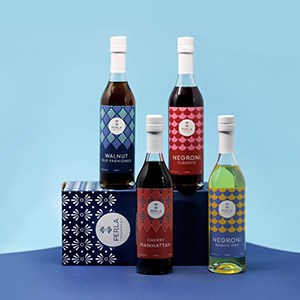
[00:18:00] Mike Schneider: Theo Walcott. So if you want to talk about just some amazing products that came into the office, right? Speaking of amazing, the Perla cocktail scent, this Ambrosia spritz that was made with Don Ciccio Fili Ambrosia liqueur and That blew my mind. We also got some Solento organic tequila in and it kind of looks like a big cologne bottle, but the packaging is stunning. I don't know if I'm going to open it because I just like the way that the light hits it and it makes it cool. It makes a cool color shadow, so I might have to enjoy that a little bit before I actually try the tequila, but we got three varieties of tequila into which thanks for that.
[00:18:42] Ray Latif: I believe they call them expressions. The silver, the reposado and then and Yeho.
[00:18:46] Mike Schneider: Do you think they care what I call them though?
[00:18:50] Ray Latif: Because we're drinking them? Fair point, fair point. Well, I happen to have on my desk here and people can't see my desk and my backdrop is pretty plain Jane, but my desk is a complete mess, which is why I didn't want anyone to see it. But this past weekend, I opened up this wonderful bag. I don't know, we might have to actually show a photo of this because the bag's all crunchy and crumbly right now. Of Sweet Chaos. which is a brand of handmade kettle corn. This is their vanilla chai variety, which right now, if I open up this part and just like, I could literally chug the whole thing. I'm not going to for a lot of different reasons, but pretty amazing stuff. They make these drizzled. It's like all the popcorn is all drizzled with these delicious flavors. And they make a bunch of seasonal varieties. This being one of them, again, their vanilla chai. Thank you so much for sending this. If you're interested in sending us some more products, just let us know, and we will happily accept as we always say we will happily accept.
[00:19:44] Mike Schneider: Of course. Again, Ray, speaking of awesome product that's coming to the office, Ray, you know that I'm big into the electrolytes that have been coming out. Noon has introduced a new, I'd just call it a new form factor. They've actually gone from into the powders now, so you've got the powder packs. They're calling it Noon Instant. Just like most of Noon products, it's quite tasty and effective.
[00:20:08] Ray Latif: Nice, nice. One other quick note, you know, I always talk about our t-shirts, how nice and soft and fun they are to wear. Mike has one.
[00:20:18] Jacqui Brugliera: T-shirt model.
[00:20:18] Ray Latif: T-shirt model. Well, I have one in my hand too. I'm not wearing it because no one would recognize me if I wasn't wearing a blue shirt. True. This is the T-shirt right here. If you're interested in getting one, it's pretty easy to do so. Just leave us a review on Apple Podcasts or your listening platform of choice. Take a snapshot of it or a screenshot of it. Send it to us with the address that you want your T-shirt sent to and the size that you want. We will get that out ASAP. Thanks to all who have done so to this point. I'm getting a lot of really good feedback about how soft and lovely this thing is.
[00:20:49] Mike Schneider: We'll send you a six-pack of T-shirts if you record Star Trek Supernova and send it to us.
[00:20:55] Ray Latif: Never going to live that down. All right, it's time to get to our featured interview for this episode. That's with Jing Gao, who, as I mentioned at the top of the show, is the founder and CEO of Fly By Jing, an innovative brand of Sichuan-inspired sauces and seasonings. Launched in 2018, Fly By Jing is lauded for its modern take on Chinese cuisine, one born out of its founders' desire to, quote, bring uncensored Chinese flavors to the table. An award-winning chef and former restaurant owner, Jing has overseen a massive spike in demand for the brand's chili crisp, dumpling sauce, and mala spice in recent months. The surge, partly driven by a New York Times article praising the versatility of the Chili Crisp, along with the brand's rabid fan base, led By Jing's over 25,000 Instagram followers, has put Jing in the enviable, albeit complex, position of managing a very fast-growing company. In the following interview, BevNET CMO Mike Schneider sat down with Jing for a conversation that explored the origins of her passion for Chinese food culture, why she set out to create a brand that could elevate consumers' expectations for the cuisine's flavors, and increase Americans' accessibility to high-quality Szechuan-inspired condiments. She also discussed the company's customer acquisition and marketing strategies, thought process behind and key elements of an upcoming rebrand, managing shortfalls in production, and how she addresses racist comments posted on the brand's Instagram page.
[00:22:25] Mike Schneider: This is Mike Schneider, and I'm here with founder of rising star, better for you Chinese food brand, Jing Gao, the founder of Fly By Jing. Welcome to the show. Thank you for having me. It's kind of an honor for me to sit with you and get a chance to talk about your background and the brand. So maybe just kick off there.
[00:22:53] By Jing: Awesome. Thank you so much for having me. It's an honor for me to be here. So I guess I'll start at the beginning. I was born in Chengdu, also known as the food capital of China. But I grew up moving around a lot with my dad's job. He was a professor and he was a nuclear physicist. We moved around to a different country almost every year until high school in Canada. I remember being seven years old in Europe where I was often the only non-Caucasian kid and being made fun of for my name, which they couldn't pronounce. My full name is Jing Xuan, which in Chinese is actually a homonym for string theory, which is my dad's field of study, kind of nerdy. But now, it seems pretty cool.
[00:23:41] Mike Schneider: That's so cool. Your name is Gao String Theory.
[00:23:45] By Jing: Exactly. But you know, at the time as a seven year old, it didn't seem so cool. And I was mortified that I did not fit in and I was different. So one day I announced that I was changing my name, and I picked the most innocuous sounding one that I could think of. And that's how I became Jenny for the next 25 years until very recently.
[00:24:08] Mike Schneider: So what, you were just watching TV one day, and you saw someone named Jenny, and you're like, hey, I'm Jenny now.
[00:24:13] By Jing: Honestly, I think that was what happened, exactly. I'm not proud of it, but that was my journey.
[00:24:21] Mike Schneider: I know a little bit about what it's like to try to speak a language that isn't your first language and to want to fit in immediately. As a Chinese speaker myself, I can empathize a bit, but what was it that made you think that this was going to change everything for you?
[00:24:40] By Jing: I think on the surface level, it was just to not stand out, right? It was just to kind of put up some kind of facade where someone, you know, wouldn't assume things of me that I'm not. I think even at that age, I kind of knew that people looked at me as like the other, and it was just a desire to fit in and feel a sense of belonging. And that seemed the easiest way to do that. And I had just moved to Austria after having lived in England. So it was like my way of being like, well, actually I'm English and this is my English name. So anyway, that's kind of how that happened.
[00:25:22] Mike Schneider: So you established yourself as Jenny Gao, which is kind of like establishing a brand because you're Gao Jingxuan and you, so you're now Jenny Gao.
[00:25:32] By Jing: So I went to business school and I started my career in marketing and tech at companies like P&G and Frog Design and that brought me to Asia where I lived for the last 10 years. Being in Asia for you know, in China, in Singapore, you know, for the first time as an adult, made me realize just how disconnected I had become from my heritage. And I just started to really reconnect with my roots and my sense of identity. And one of the ways that I was able to do that was through food. I started to delve really deep into Chinese food culture and all of its regional cuisines that were so varied and diverse that China felt more like a continent. And I was just shocked by the depth of this 5,000 year heritage that no one outside of China seemed to know about. So I started writing about Chinese food on a blog and for international publications, all kind of on the side of my day job. And then what started out as a personal quest to reconnect with my roots became this passion project to shine light on this cuisine and this culture.
[00:26:42] Mike Schneider: So you went back to China to rediscover your roots, and you started this passion project, and it actually led you into getting into food, and you opened some restaurants, didn't you?
[00:26:52] By Jing: Right, exactly. So eventually that side project, you know, really started to take off and I left my corporate job and I opened a restaurant in Shanghai. The restaurant was the first modern Chinese fast casual restaurant focused on sustainable and transparent sourcing, which I ran for two years before I sold it to some business partners.
[00:27:15] Mike Schneider: And of course, the experience running a restaurant prepared you 100% for everything you needed to know to start a CPG company, right?
[00:27:24] By Jing: Absolutely not. It was my first business, first venture in food, and I learned a lot of important lessons, including how not to pick business partners and also that you shouldn't open restaurants. I took that experience and I learned a ton, obviously, but I realized that what I loved about that experience was creating products, was telling stories, creating brands, and I wanted to reach even more people and I didn't want to operate restaurants. So I eventually sold the restaurant and I packed my bags and I went to my hometown, Chengdu. and I studied cooking there with one of the greatest culinary masters in Sichuan cuisine. And I was looking for the next thing for me to do. And this felt right. It felt like I was digging into the past to figure out the direction for my future. And so I was learning all about this rich heritage, all these techniques, ingredients. And so I began experimenting with my own very personal expressions of these traditional flavors based on my experience having lived in so many places. And I started this underground dining concept that I named Fly By Jing Gao an ode to Chengdu's famous fly restaurants, which is the term given to these hole-in-the-wall eateries that are so good that they attract people like flies. It's a really iconic part of the Chengdu's dining scene. And, you know, I named it Fly By Jing Gao as a nod to my birth name, which I was just then, you know, starting to try and reconnect with, but still uncomfortable responding to. And so through Fly By Jing, I did pop-ups and collaborations with chefs all over the world.
[00:29:21] Fly By: Do you want more repeat buyers on Amazon? Well, this free resource in collaboration with Straight Up Growth will help your brand turn first-time buyers into long-term subscribers. Download Winning the Repeat Purchase Game on Amazon now at Taste Radio.com slash SUG. That's Taste Radio.com slash S-U-G to start building retention-driven growth for your brand on Amazon. Scaling New Beverage brand into major retail comes down to operational readiness. From packaging lead times to co-manufacturing strategy, the details can make or break a launch. In a new e-book in collaboration with Octopi and Asahi Beer USA, industry leaders share what they've learned in helping brands scale. Download it now at Taste Radio.com slash octopi. Do you need to scale your team faster without compromising on talent? Join Oceans for a live webinar on April 20th and learn how leading companies are hiring top global professionals who are ready to grow with your business. Register for the webinar now at Taste Radio.com slash oceans. That's Taste Radio.com slash oceans.
[00:30:32] Mike Schneider: This is a really interesting way to get into CPG because you start off as a storyteller and not for nothing, you've become an extraordinary storyteller and you've used that to build your brand and you've used that to get a lot of great PR and we can talk about that in a bit. you've got this phenomenal experience, you know, in Shanghai with your restaurant. And then you have this opportunity to go on like the spiritual journey back to Chengdu to find your roots and begin this Fly By gin concept. So at what point do you say, where's the Eureka moment that says, Oh my gosh, I know what I need to do now. And how do you get to the point where you're bringing the company to life?
[00:31:15] By Jing: Yeah, so what was great about, you know, doing this, these pop ups was that I was getting in front of so many people, you know, in New York and LA, Tokyo, Sydney, Hong Kong, everywhere I was going, I was cooking these dinners and literally getting, you know, firsthand feedback right from diners that would come to my dinners. And I realized that these flavors had universal appeal, obviously. Sichuan is, within China, known as kind of the most flavorful or the most complex flavor profiles of any of the regions. And it's so celebrated within China. But most people outside of China were surprised that these nuanced flavors actually existed in Sichuan cuisine. Because as you probably know, you know, Sichuan food is often caricatured to be this insanely spicy thing and like nothing else. Also, many people had never even heard of some of these ingredients. So I realized that there was an opportunity here because people love these flavors. They just had no access to it. And I realized that The Best quality ingredients and flavors actually never made their way to The Best because there is so much demand domestically. And not only are people in The Best unaware of them, there's also been hundreds of years of active prejudice and bias against the cuisine and its people. If you think about it, manufacturers literally had zero incentive to export high-quality products when they're repeatedly told that no one would pay more than $2 for their products. So in 2018, I happened to be in California, and I heard about Expo West, and I decided to attend for the first time. And I walked around for several days, just overwhelmed. As one does. As one does. Overwhelmed with the sheer number of brands and flavors. And after walking around for days, I could probably recall only five Asian food brands. And I also noticed that there was very little diversity in the buyers and the retailers walking the halls as well, who arguably, I think, are the gatekeepers to healthy eating in America. And so it shocked me that, one, entire groups of people are being left out of healthy eating, but two, that there is such a massive missed opportunity because this is clearly not representative of what America looks like or wants. So when I went back to Shanghai, I decided to launch my business in the U.S. with some of the spices and sauces that I was creating in my kitchen and make these flavors more available and accessible to everyone. It can't be that easy though, Jing.
[00:34:00] Mike Schneider: I mean, you basically, if you go to, even here, if you go into the aisles or you go even to specialty stores, the chili oils like Lao Gan Ma, they seem kind of like commodities. There's not that many brands and it's really inexpensive. And you have an uphill battle here because yes, it's a simple concept, you know, better for you Chinese food, better for you Chinese condiments, Sichuan condiments. Chengdu style, but it's not that easy to just bring that to life. And it's certainly going to be difficult because better for you ingredients means higher price point. And people aren't used to that. So how do you take on a heritage category?
[00:34:43] By Jing: Yeah, you're absolutely right. I knew from the beginning that it was going to be an uphill battle. Firstly, against so many of the false narratives that existed about Chinese cuisine internationally. You know, people have very developed ideas in their minds as to what Chinese food should be, how much it should cost, what the quality is. And I also knew that I was potentially, through having brought these flavors to so many places, I knew that I was introducing some brand new flavor profiles and potentially new categories as well. But I knew that it was going to be worth it if we could take back this narrative and redefine it and show people just how high quality Chinese food can be. So to your point about the Sichuan Chili Crisp, that was our first product, which I launched on Kickstarter that summer. Sichuan chili crisp was actually a component of many of my dishes. It was the sauce that I was making as a flavor base to a lot of my dishes. I knew that it was naturally shelf-stable. It was a chili sauce that was preserved in oil. There was no moisture content in the product, so it didn't actually require preservatives. And it was different from every other product on the market because again, this was a personal expression of my story, right? And it used also the highest quality ingredients that I had found after years of sourcing and developing relationships with farmers that started from my restaurant days. And a lot of these ingredients I knew had never been exported before. And I was coaxing out the natural umami and deep flavors by highlighting the ingredients themselves. And that was all kind of making it into a really unique product that I didn't see on the shelves in China or anywhere else. And so it's not a so-called traditional recipe as well, because the world of chili oils and sauces in China is enormous. And, you know, that's a common misconception here. People may have gone to Chinatown or a supermarket somewhere and seen some of the mass-produced brands that come out of China and think that that fully encompasses the whole category.
[00:37:07] Mike Schneider: It looks like a commodity. It looks like there's a couple of brands. It doesn't look like a major industry, although we know better.
[00:37:14] By Jing: Right. I mean, Lagoma, for example, is one of the largest companies in China. It's got a billion dollar market cap. It's the most popular hot sauce in the country with the most people in the world. But at the same time, there are literally thousands of regional variations and home recipes that are, you know, individual expressions of the matriarchs and every family that makes them. And it's similar, you know, to the infinite, what seems like infinite variations of Kraft hot sauces in the US, right? Like these vinegar-based hot sauces. There's so many that there's like entire TV shows around it, right? And we don't think twice about that. But when we have little to no exposure to these products, We take one example and it's just easier for us to assume that that's representative of the whole, right? And so my recipe for Sichuan chili crisp was really the culmination of my education in Sichuan cooking, my experience living everywhere, the textures and flavor profiles that I personally enjoy eating, and the relationships with the farmers that I've built over the years. So much so that even my family in Sichuan would eat it and go, that tastes different.
[00:38:27] Mike Schneider: Was it good or bad when they said that?
[00:38:33] By Jing: Because they're just not used to it.
[00:38:36] Mike Schneider: They're your family, so they're not going to be polite, right? I mean, they're just going to tell you how it is.
[00:38:39] By Jing: Right. Well, the thing is, everyone is very attached to flavors that they grow up eating. And so I was putting together, there's over 15 ingredients. If you count the different variations of chilies, there's actually 18 ingredients in Sichuan Chili Crisp. And these are 18 ingredients that I know have never been put into one product before. And so in that sense, it's a deeply personal expression, just like, you know, a restaurant is personal to its chef. But what that meant was that the complexity and bringing that to life was enormous.
[00:39:17] Mike Schneider: Okay, so the story is telling itself here, Jing, because you've got this product that is something that people will recognize, but it's not really something that people will recognize. If you call it Sichuan chili oil or if you called it Sichuan chili crisp, people are going to have an expectation of what it's going to taste like. You said your family said, oh, that's different. Okay, so you know that's going to be a challenge. Also, you're going to launch this in the United States and you have obviously a highly addressable market in people who love Sichuan food, but also it's going to be at a different price point than they're used to. And so you have all these challenges. So audience-wise, who do you even target first? How do you launch this product?
[00:40:04] By Jing: Yeah, you're right that in China, this would be considered a heritage category, right? So if you are launching, people are going to draw a comparison immediately to something else. When we first launched in 2018 on Kickstarter, this wasn't the case in the US. So Chili Crisp as a term was really, if you kind of look at Google search trends, it actually spiked in 2018 when we launched our Kickstarter. Prior to that, it wasn't really in the kind of general consciousness. In a way, that was a good thing because we were able to tell a story our own way. And so I decided to launch on Kickstarter because I knew the built-in audience was receptive to new things. They're used to seeing, you know, exciting new innovations and things that, you know, they were willing to back even if they didn't know whether it was actually going to come to life or not. And I also leaned on my personal network in the US and in Canada, you know, people who I knew, like friends and people who I knew were kind of more trendsetters in their community that people trusted for advice on things like food and culture and travel. So that was a really great base to launch with because our Kickstarter actually started to go viral a little bit, and it became the highest funded craft food project on Kickstarter. We got some great press from it, New York Magazine, Sabor, and just, you know, the people that we wanted to see it, like the trendsetters in food, started to notice. And then when we launched our Shopify website in 2019, that initial 2,500 backers were instrumental in kind of getting us off the ground. And we grew largely through word of mouth and just referrals from the very beginning because of that.
[00:42:04] Mike Schneider: You also used your writing gifts and your ability to tell a story to do some good PR.
[00:42:10] By Jing: Yeah, so the media has been really amazing to us since the very beginning. We've been covered by pretty much all the major media outlets since our launch. And I think that was largely, you know, in the beginning it was literally me writing cold outreach emails to editors and writers who I knew might be interested in this topic. I think that they sensed that there was a real person and a real story and a real, you know, for me, there's something that's compelling me to do this, right? And it's a very personal story. And that, I think, has really helped us in terms of getting in front of press. So we've never paid for any placements. And, you know, all of the pieces that you've seen on us, including in the New York Times, you know, we're all organic.
[00:43:04] Mike Schneider: And your background in cooking and your background as a restaurateur has helped you as well because you're creating these recipes and you love to do it. The passion is there, obviously. So you've been able to use that to help you as well.
[00:43:19] By Jing: I think that a lot of people have seen themselves in my story as well. I think it's a very relatable tale of trying to find a sense of belonging and identity and expression. And I just happen to be doing it through food. Others can be artists and writers. And I think that that kind of authenticity in the journey is what is appealing to many people.
[00:43:46] Mike Schneider: The product launched purely as a direct-to-consumer product as well. Yes, correct. Talk to us a little bit about that decision and some of the things that you've learned about direct-to-consumer.
[00:43:57] By Jing: So launching on D2C was a necessity rather than a choice. The business was just me and I was running out of my savings. The Kickstarter was a much needed injection of funds and I had to use that to fund the production run and also move to the US. I moved to LA at the end of 2018. And the only viable channel that we could launch on was e-commerce. And I knew about Shopify. I'm Canadian, so some of my friends work for Shopify. And I knew that it was The Best e-commerce platform to launch on and just relied on some of the capital that we had built up through our previous events with By Jing and my own personal connections and social media to really drive awareness of the brand in the beginning. So, you know, we're completely bootstrapped and we have not to this day raised venture funding. And so that, you know, while it is challenging, it's also the constraints, you know, force you to think more creatively about how to grow. And I think we've been able to do really well with that. So I was a one person team for the first year and then started working with some contractors and Really, only in August of this year did we grow our team to four full-time members. But I think that that was kind of a blessing too, because launching on D2C, launching a new brand, you really want to shape the narrative and shape that customer experience. And I think we were able to do that because of our direct relationship with our customers.
[00:45:50] Mike Schneider: Now that you're growing and you've got more people on the payroll, how important has marketing become or brand awareness become and what are you doing to build the brand?
[00:46:00] By Jing: So brand has always been super important and I think that it's partly an injection of like my personal story and then also representation of like the heritage, right, being rooted in Citroën, but then also super modern because we're made for the way that we eat today. We're never prescriptive. We're never like, this is Sichuan food and you have to eat it like this and you can only, you know, put it in Mapo tofu and nothing else.
[00:46:29] Mike Schneider: I put it on ice cream. You told me to. It's good. I tried it on some ice cream.
[00:46:34] By Jing: Exactly.
[00:46:35] Mike Schneider: I would drink it though, Jing. I love Sichuan chili cures so much.
[00:46:41] By Jing: It's so good. That's an idea, chili crisps flavored soda. That's the brand. We're rooted in tradition, but we're personal and we're modern.
[00:46:55] Mike Schneider: You say traditional yet modern. How are you bringing that to life in the brand and the brand elements?
[00:47:02] By Jing: Yeah, so when we first launched, you know, as I said, it was super bootstrapped. And I had a friend who was a graphic designer design some labels for these jars. And my main MO there was really, let's just do something super modern and stop people in their tracks and have them question why they expect a Chinese food to look different. So eye catching, energetic, bold, which, you know, is the kind of ethos of our brand and will continue to be. But, you know, since we launched in 2018, we were one of the first contemporary Asian food brands in the US market. And, you know, we've really helped to shape the narrative around Chinese food. We have this very kind of bold and unapologetic approach to, you know, Chinese flavors. And I think, you know, the way that we are growing and with the potential of the brand, I think that the brand has evolved quite a lot since the beginning. And I started to think about how to express our story and who we are, our values, and where we're headed in something as small as a jar. Because we could create a whole brand world on our website, but once we start thinking about going into other channels and going into retail, I'm going to need for the product itself to tell that story and jump out at someone as they're walking down the aisle, instead of having them listen to a podcast or read an article to figure out what we're about. And I started to feel that the version 1.0 of the branding was no longer serving in telling the complete story. And so I decided to launch a rebrand, which is coming out at the end of October. And this is much more of a narrative kind of style. The jar is telling you a story. The web experience is going to be telling you a story. You're going to see what I mean when it launches, that it's deeply personal and it's rooted in my story. and in the heritage of this 5,000-year culinary history, but it's also extremely modern in its feel and in how approachable it is. It's not scary. It's completely approachable. It's meant for you to incorporate into the way that you're already eating and not change who you are. So I'm really excited to unveil the new rebrand, and that's coming out at the end of this month.
[00:49:40] Mike Schneider: I certainly can't wait to see that and hopefully some of you who are listening to this podcast have already had a chance to see it. Let's switch gears a little bit here and talk about being a Better For You Chinese food brand in times of COVID. How has that affected your business and what have you done to combat any of those challenges?
[00:50:03] By Jing: Wow, okay. Where to begin? At the beginning of COVID, I was quite concerned about what was going to happen. There was growing xenophobia, trade relations were souring between China and the US, and I do produce my products in China. I started to notice more overt racist comments on our social media, for example, as well. So there was a lot of uncertainty, I had no idea what to expect, and it was quite scary. But when quarantine was announced, sales started to blow up overnight. And that was a surprise and it was really heartening to see. And I think that a lot of the pre-work that we had been doing in the year prior, so the brand exposure, you know, ceding to influencers, some paid ads and stuff, they started to really return dividends because people were now stuck at home and considering how to cook for the first time. So prior to this point, there was a shocking statistic that I read about how 80% of Americans didn't know how to cook or hated to cook. But overnight, obviously, we saw so many people cooking for the first time and they started reaching for our condiments, which are really about simplifying the process of cooking by adding this instant, you know, complex umami flavors. just straight out of the jar. So it was really built for quarantine cooking. And so our social media mentions went through the roof. Celebrities were talking about it. A lot of media publications wrote about it. And we started getting so much mail from people writing to tell us how our products have given them comfort and have been a lifesaver in these dire times. And then in mid-April, the New York Times wrote about us. So Sam Sifton, the managing editor, he had been a longtime customer of ours, and he reached out because he was intrigued by how we were impacted by coronavirus. And so he wrote a feature, including a recipe that he developed using Sichuan chili crisp, which was published as a multi-page spread in the New York Times Sunday magazine. And I had no idea what the reach and impact of the times was going to be. So we ended up selling out of multiple months of inventory in about three days. At that time, I had just managed to place a new order in China because factories, they were closed in China for a while due to Chinese New Year, as well as COVID. But they had luckily in April in China, like started to kind of come back to life a little bit. And so factories were starting to reopen. But because of their resource constraints, they hadn't been producing for so long. They were so backed up that they couldn't produce my sauces. So I had to beg them to at least manufacture the sauce and ship it to me in bulk in the U.S. so I could figure out how to bottle it here because they just flat out refused to bottle it. They were so constrained. So that meant that I had to set up a whole new supply chain in the U.S. overnight I had to find co-packers, I had to find bottle manufacturers, label printers, everything. And meanwhile, we were getting more sales than we'd ever seen. So we started to take pre-orders because by my calculations, we were going to receive the product in the US in June, if nothing went wrong. But of course, things went wrong. So after the first three weeks of taking pre-orders, demand didn't slow down and I realized that the initial batch that I had already produced was already sold out, like will have been sold out by the time it arrived. So I had to place another order, but that actually forced me, you know, because of this experience forced me to diversify to a second manufacturer, which was a blessing because, you know, obviously learning the dangers of relying on just one. and this was a manufacturer that had also worked with previously, so they knew the process and they could also bottle, thank God. Then once the bulk sauces arrived in the US, it was selected for random custom inspection. I was told that could take between several days to several weeks, and by that point, customers were already expecting their orders, and the random inspection ended up taking over a month. By this point, it was still just me and one other employee helping with operations. And I was answering most of the customer service emails myself. And we quickly had to hire two more customer service staff. The team was working around the clock. We had, in the end, over 30,000 people on a pre-order. But people were extremely understanding because at every turn when something went wrong, I wrote you know, very kind of lengthy and detailed updates about exactly what was going on, completely transparent. You kept your customers in the loop. Yeah, yeah. And, you know, I think most of them really appreciated it. Some of them wrote in to say that it was the most thrilling updates they've been reading all during COVID. Because it was just insane, like the number of things that went wrong. It was a comedy of errors. Not only did we have this, you know, crazy delay with customs, we also then when we brought the sauces to the US co-packer, The day that we went to go bottle it, the sauce was so viscous that it instantly broke the machines. So the machines literally explode. And we're like, what do we do now? And they ended up having to hand bottle every single jar for over 30,000 jars. 30,000 jars hand bottled. So when I say everything that could have gone wrong went wrong, it did.
[00:56:02] Mike Schneider: So you basically just had a super kitchen at that point. Pretty much. Oh my goodness. So it's good to hear that you made your way through this. And let me rewind for a second here. I don't want to open wounds, but I think that if you would allow me to, you could help others out there who've experienced this. I mean, you said there were racist comments on your site, which is disgusting. And obviously, You're a very kind person who I've gotten a chance to know over the last year or so, and you make this great product, and you care a lot about the world, and nobody deserves that kind of treatment. How does that make you feel, and what do you do about it?
[00:56:43] By Jing: I think starting the company, I was aware that those were some of the things I was going to face. As I said earlier, I knew fully that there were hundreds of years of bias and prejudice against not just Chinese food and culture and its people, but many others. And so that was also the reason why I was doing this. Chinese food has traditionally ranked very low on what's known as the hierarchy of taste, which is kind of the ranking of like cuisines and how we attribute value to them. So what we're willing to pay for them is ranked low. Oh yeah, what we're willing to pay for Chinese cuisine is, you know, bottom of the basement compared to what's at the top, which is like French cuisine, Japanese cuisine. And there's a lot of studies about this and, you know, the general understanding is that the value that we attribute to a cuisine is actually the value that we attribute to the socioeconomic status of the immigrants from those cultures. So this is something that evolves as well because if you look at 100 years ago, Italian food was also considered low class and undesirable. But eventually that shifted and today you can pay $40 for a plate of pasta. and not think twice. So, you know, this is something that evolves and it evolves with people and with time and with, you know, young people really, like young people pushing the conversation forward. And I think that's what Fly By Jing is playing a role in doing. Since we launched, there have been multiple other Asian food New Beverage brands that have launched. It's amazing to see this acceptance for the diversity and the complexity and no longer looking at Asian culture as just this monolith. Accepting that there is so much diversity within this group and that we can all tell our stories and they're all worthy of being told. And so from day one, that's been, you know, I didn't know it at the time. It started as my personal quest to reconnect with my roots, but it really, 5xDream became a mission to celebrate the, you know, many layered stories of the diaspora that really deserve to be told. So for me, you know, when I see those comments, what I and my social media team has now started doing is we actually just like kind of hold up a mirror to the person writing those comments. We kind of question them as to why they think those things. So, you know, for example, a very common comment that we might get on our social ads is that they can find the exact same thing in their local Chinese grocery store for a dollar. Right? Our chili crisp is $15 for a jar. And that is a reflection of the quality of ingredients that go into it, the small batch production and technique that goes into it, which, you know, in contrast to the economies of scale that a billion dollar company can achieve, right? And then also paying our team, you know, living wages and making sure that no one in this chain, the supply chain is taken advantage of. So that's what the price means. That never happens at billion-dollar companies, though. So, you know, we sometimes get these comments and that's like the most frequent comment we get, right? And it's so unimaginative and it's always the same thing. And it's like, it ranges from like $3 and $5 to like a dollar. Or I've even seen someone say, I can do this for, I can make this myself for 25 cents. And it's, so we often just are like, well, why do you think that? And do you think that's because this is Chinese food and you don't think Chinese food is worth more, worth paying more for?
[01:00:50] Mike Schneider: You try to get to the heart of it.
[01:00:52] By Jing: Well, yeah. I mean, oftentimes it's just, you know, I remember being growing up in The Best and also thinking the same, like, you know, it's an, it's a common thing you hear from even your, you know, immigrant parents, which is like, if it's expensive, then it's not authentic. It's only good if it's cheap. But these are kind of age old kind of isms that are like knocked into our brains. But when you think about it, it's like, Why? Like, where does that come from? And that's actually a deeply internalized view that stems from the racism that has existed for so many years, right? And so we try not to preach, but we do hold up a mirror and just question some of these existing beliefs. And hopefully the viewer can become a bit more reflective and kind of draw their own conclusions from it.
[01:01:42] Mike Schneider: Do you ever turn haters into lovers?
[01:01:45] By Jing: All the time. It's actually pretty amazing to see because we often have these comments where they're like, well, what's the difference between this and Lao Gan Ma, right? Like drawing that comparison because that's the only other product they've ever seen. And, you know, well, we go into it. We say, well, like, you know, let's talk about all the ingredients. Let's talk about The fact that we come to these flavors through using, you know, coaxing out the natural beauty of these ingredients and how rare these ingredients are, the fact that it's small batch, the fact that we can't compete against, you know, a billion-dollar company, but that we can be proud of our craftsmanship, our, you know, paying our employees, you know, fair wage. And at the end of an engagement like that, the person usually is like, wow, I did not expect to receive this response from a social media person at a brand. Thank you for this information and taking this time and I'm going to check it out. What we really want is just for you to draw your own conclusions and expand your mind and palate to possibilities beyond just the limited exposure that we've had from other cultures.
[01:02:59] Mike Schneider: Jing, it's been great having you on the show. What's next for By Jing?
[01:03:03] By Jing: Well, when I started Flavijing, my vision was always to take it to becoming a household name. And I see, you know, brands like Huy Fong that have done that with sriracha, and I really admire that. But you know, it's been a couple decades since another Asian food brand has become a household name. So that's our ambition. We're starting by introducing these flavors through our condiments and hot sauces and really easy to use kind of spices that can be applicable to so many different foods. But then we want to venture into other categories like snacks and ready-to-eat foods and really just become a modern Chinese food brand that stands for quality and, you know, represents this incredibly rich culinary heritage, but looks forward and helps to evolve it even further by keeping it alive and keeping it in people's kitchen and on their palates. That's our goal. Yeah.
[01:04:15] Mike Schneider: Well, I can't wait to see it happen and thanks for being on Taste Radio.
[01:04:19] By Jing: Thank you so much for having me.
[01:04:23] Ray Latif: That brings us to the end of episode 103 of Taste Radio Insider. Thank you so much for listening, and thanks to our guest, Jing Gao. Please subscribe to Taste Radio on the Apple Podcasts app, Spotify, Stitcher, or Google Podcasts. As always, for questions, comments, ideas for future podcasts, please send us an email to ask at Taste Radio.com. On behalf of the entire Taste Radio team, thank you for listening, and we'll talk to you next time.
[01:04:50] SPEAKER_??: you