[00:00:05] Jon Landis: Hey Mike, before we start this episode of Taste Radio Insider, I just want to take a moment and thank everyone who turned out for our Winter 2018 events. We had such an amazing experience with you all and we're really looking forward to 2019. You know, when I got back, my inbox was just destroyed with messages from people who couldn't come to BevNET Live Winter 2018 because it was sold out.
[00:00:25] Mike Schneider: Yeah, Landison, for those of you who don't want to miss out and are planning ahead, double win here. Super early registration pricing is available now until January 11th. So visit bevnetlive.com and noshlive.com so you don't miss out. Register early and save. We look forward to seeing you there. And now Taste Radio.
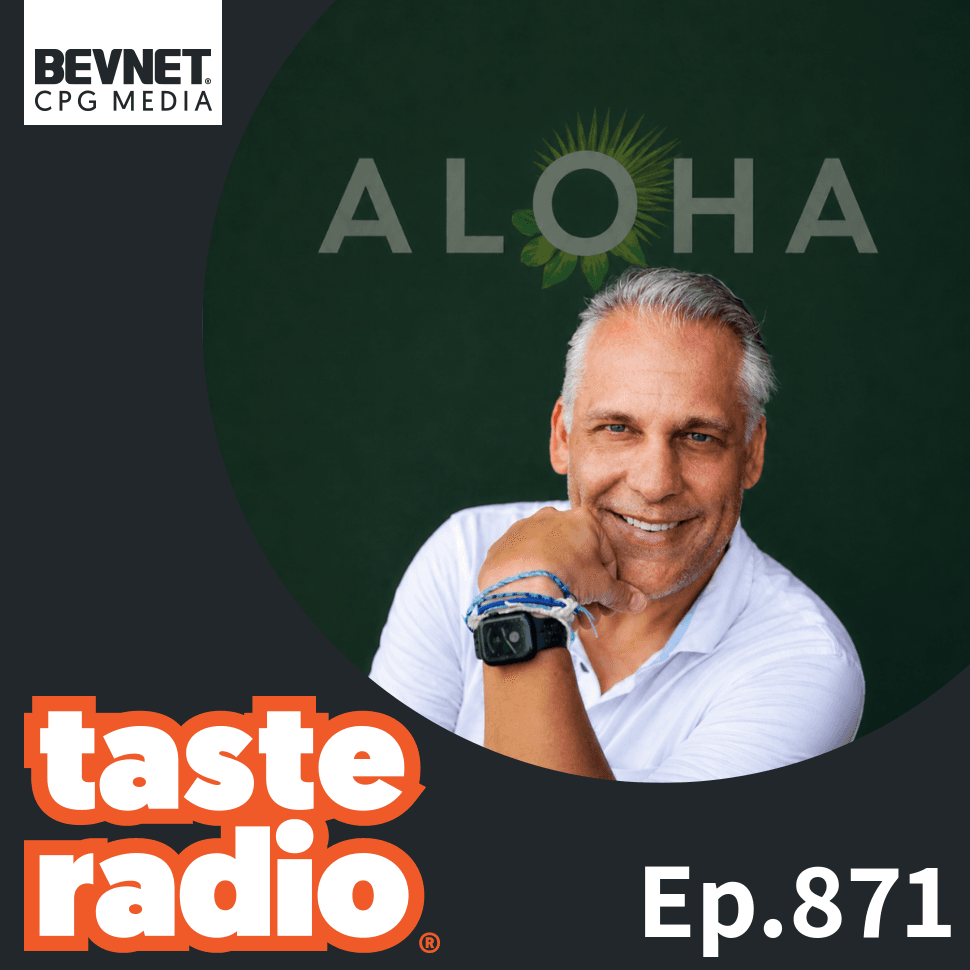
[00:00:53] Ray Latif: Hey folks, welcome to another edition of Taste Radio Insider. I'm Ray Latif, and with me are my BevNET colleagues, John Craven, Mike Schneider, and Jon Landis. This is episode 12 of Taste Radio Insider, and we're recording from our Taste Radio studio here at BevNET headquarters in Watertown, Mass. Where Ray is unusually peppy. In this episode, we feature an interview with Brad Charron, the CEO of plant-based protein company Aloha, who discussed his efforts to revitalize the brand. We also hear from Dean Eberhardt and Andrew Markley, the co-founders of Hop Tea, who were victorious in BevNET Live's New Beverage Showdown 16. Just a reminder to our listeners, if you like what you hear on Taste Radio, please share the podcast with friends and colleagues. And of course, we would love it if you could rate us on iTunes. Jon Landis, you're live.
[00:01:39] Jon Landis: Hello.
[00:01:40] Ray Latif: Have you recovered fully from your illness at the conferences or more specifically at BevNET live?
[00:01:46] Jon Landis: Yeah, I mean, I'm off the antibiotics, so that's a good thing. Are we on the Z-Pack or something? Augmentin? I don't know. Augmented reality? Looking back, I know exactly where I was when you guys recorded last week's episode. It was like the height of my illness.
[00:02:03] Mike Schneider: You know, Jon Landis Lives sick if he's missing BevNET live.
[00:02:05] Jon Landis: You guys know, I like this fish band and they had a festival in Watkins Glen this summer and we were set up at our campsite and then the festival got canceled after we were there for a couple hours. And I feel like a similar experience just happened to me with BevNetLive with the months of buildup. And then I was just like, Not there.
[00:02:25] Mike Schneider: I mean, you were there. You were like the ghost of the Tasmanian devil. Craven and I were waiting for an Uber and you come out and you're just like, your hood's over your face so we can only see your mouth and you were just pale. Stumbling down the street. And spinning around trying to get to urgent care. You're like, I'm going to urgent care.
[00:02:39] Jon Landis: Yeah, it was not a good time. And then Mike and I were like, oh, cool.
[00:02:43] Mike Schneider: Hey, want to go get beers?
[00:02:46] Jon Landis: They thought your appendix was going to blow up, right? Well, they didn't know what it was. And since I was flying in such a short period of time, the guy said, you know, you cannot fly unless we get this fully checked out and sent me to the ER and had a cat scan and all this stuff. It was really intense.
[00:03:01] Mike Schneider: We were, we were worried though. Mike was walking around for a little while with a little a soda can for a save Landis fun. I mean, I did have breakfast with Jason Cohen and, uh, and Ken said, asking, they were pretty worried about you, bro.
[00:03:15] Jon Landis: Thanks, man. Uh, thanks everybody. I got a lot of emails and texts and things like that too. I really appreciate all the listeners out there with all the support that you guys show us. And I mean, I did get to go to brew bound and Nosh and the cannabis forum. And I mean, brew bound, I thought was the best brew bound in recent memory for me, I really, really enjoyed that event. And Nosh had just such electricity in the air the entire time. I thought it was easily the best Nosh live we've ever produced. So I'm just working on the assumption that kind of Bev, that was the same thing from everything that I'm hearing.
[00:03:47] Ray Latif: We try to make each one better than the last. Yeah, exactly. Well, I mean, you were profusely vomiting on day one.
[00:03:53] Jon Landis: How was day two for you? I was basically bedridden until, you know, the very, very end and, you know, said hello to a handful of people as they were leaving. You saw the final round of the New Beverage showdown, didn't you? Yeah, I saw some of it. I saw a bit of it and I saw the winner and the winning announcement there.
[00:04:12] Ray Latif: Well, we're going to hear from those winners, the founders of HopTea later in this episode. John Craven, you were one of the judges for the final round of the New Beverage Showdown. It was a tough decision. The judges really thought long and hard about, you know, who deserved to win the $10,000 in prizes and the title of New Beverage Showdown winner. Why was it so challenging?
[00:04:37] Mike Schneider: Well, I think, you know, with any of these where it gets to be tough is when, you know, you're looking at these products that to some extent are like apples and oranges, right? I mean, we picked hop tea and we had, you know, Joybird, a CBD drink up there. We had Mother Matcha, which is obviously a matcha drink and a few others. And, you know, it's hard because you're looking at these things and, You know, if we had, I don't know, let's say just like a kombucha competition where we're kind of judging the same thing. Well, that first of all, sounds kind of good. We should do that. No, I mean, I think it's interesting trying to figure out which thing should win. And I think, you know, in the case of hop tea, you know, we ended up going with what, you know, seemed like a good balance of an innovative concept, market, you know, readiness, packaging, flavor. And, you know, I guess it's one of those things we're kind of bummed that we don't have maybe a second, third place or everybody gets a trophy sort of thing. But, you know, I think Hopte did a great job up there, too. So, you know, their presentation and, you know, how they did on stage definitely went into it as well.
[00:05:42] Ray Latif: Yeah, we also had Hubble, which is a brand of cold press juice that's infused with carbonation. We had Riff Cold Brew Coffee, a company that's based out of Bend, Oregon, and Zest Tea, a highly caffeinated, ready-to-drink tea product. I thought all the finalists did quite well. I think in the room, the judges really talked a lot about innovation and what was really going to sort of move the needle for New Beverage industry. And hop tea seemed to be a really different approach to the tea category. And also Jon Landis, you mentioned this the other day, is sort of straddling the lines of beer as well.
[00:06:18] Jon Landis: Yeah, and even Jerry Kermooch, when he reported on the winner here, that was his big takeaway is, you know, he's been seeing a lot of trends in non-alcoholic beer and, you know, non-alcoholic like mocktails and different types of use occasions for non-alcoholic beverages on premise. I think that the challenge with hop tea is that they don't have an identity yet. They don't know if they're a beer substitute. They don't know if they're a sparkling tea. They're trying to find that out, and only time will really tell. But that's definitely, you know, from my perspective, I see a lot of, hear a lot of people talking about non-alcoholic beer, and this seems like a really, really awesome beer substitute product. It's also worth noting that at Brewbound Live, we had rebranded the Startup Brewery Challenge to the Pitch Slam, included some, you know, not exactly beer products. We had a hard kombucha in there. We had a non-alcoholic beer, a functional beer. Yeah. And we had Willie's Super Brew, which is, you know, just a sugar-fermented ginger beer, essentially. Pomegranate acai is their second SKU, and that ended up taking the crown there. So I'm not pretending that, you know, these competitions are a true litmus test for everything, but it does say something that the beer and the non-alcoholic beverage industry seem to be taking cues from one another, whereas for years, they've been pretty split.
[00:07:39] Mike Schneider: Certainly what it shows is that, you know, people within the industry are excited about, you know, things that are blurring the lines and crossing over. You know, I think it is always, you know, interesting to look at all these products and, you know, I would just sort of caution that, you know, who wins these contests isn't necessarily doesn't mean that these things, these categories and concepts are like, you know, a lock, although, you know, I guess I'm speaking to the New Beverage Showdown. I think, you know, we had six finalists that You can definitely see a viable path for all of them that's not too far off from where they're at right now, which is great. In the semifinal round of the New Beverage Showdown, we tried to push the brands that we thought were most innovative, had the best formulation and the best package. But I think some of the semifinalists could have gone through to the next round. It was a really hard decision, a package tweak, a formulation tweak. We had a really great class this time.
[00:08:34] Jon Landis: I mean, it's really important for everyone listening to know that like these competitions are not us saying here is what is likely to be the most successful brand. Like this is a competition about entrepreneurship and innovation. I discussed this with a lot of people leading up to it. It's a weird pitch to make because it's not a pitch for money. It's not a pitch to buy my product. It's just a pitch to say, here's who I am and here's what I'm about. And. What do you guys think? And, you know, the winners are very subjectively selected as, you know, what is the most innovative thing? So it's a fun thing that we do. And certainly a lot of inferences can be drawn from it.
[00:09:16] Ray Latif: The presentations I thought for the finals in particular were quite good. I thought they were very polished and I think that the brands that were up there and the entrepreneurs that were up there have a great start and a really long runway for growth.
[00:09:30] Mike Schneider: These brands can make slides, man. The slideware was amazing. There's some good sort of money shots of the founder presenting with their product right behind them that Nate got. Nate's our photographer. That looks pretty awesome.
[00:09:42] Jon Landis: It's kind of a testament to our stage to seeing how much time and attention that these brands put into their presentations and preparing for them. So thank you guys. Thank you all. Everyone who's participated and applied and you know, we're going to be gearing up applications for the summer soon. So.
[00:09:58] Ray Latif: Well, on the Brewbound side, Justin and Chris, our Brewbound editors, talk a little bit about the Brewbound Pitch Slam. Check out their thoughts on the Brewbound podcast. We'll be talking about the Nosh Live Pitch Slam winner in next week's edition of Taste Radio Insider. Stay tuned for that. In the meantime, just a few final thoughts on all the competitions. 1,400 attendees across the board, over 800 attending BevNET Live, the 20th edition of BevNET Live. John Craven, you've built something that a lot of people are interested in, and kudos. There's so much excitement for the food New Beverage industry right now, and I feel like so much of it we see at these events and these conferences, and it was a really exciting week.
[00:10:43] Mike Schneider: Yeah, it's great to see certainly the industry support and, you know, I think all of the hard work that our team puts into these things and, you know, the great speakers that we get up on stage. So, you know, it's just awesome when I guess we're there and living it and great to look back at the pictures and start working on the next ones, you know. Totally. We also had our inaugural cannabis forum for food New Beverage, which I learned a lot. A lot more than I already learned from Landis. Was that the high for you, Mike? Well done. Sorry, just channeling my inner Jeffrey Klineman here. Nice, nice. Well, I did try the Kiva. I did try Kiva chocolate while I was there, but I had to go to a dispensary after the cannabis forum because we learned so much about, you know, cannabinoids and terpenes. And when I was there, I ran into the founders of Evo Hemp, who became my butt tenders. They were very happy to help. I felt like I walked into a European candy store, though. I couldn't grasp all the brands. There was so much there. I had no idea what I was looking at, so it was good to have somebody there who knew what they were doing. Was that the Rose Collective? Yeah, I went to the Rose Collective. It's a little overwhelming, those stores. Well, when you go in, they take your ID, they take your name, and then no pictures. Put that phone away. So that's why no one saw it on my Instagram stories.
[00:11:58] Ray Latif: Well, you know, as much excitement as there is in food New Beverage within the industry, there's a lot of excitement about cannabis and we're going to continue to follow and keep our finger on the pulse of what's going on in that business going forward. In the meantime, can we talk just for a second about John Craven, you busting that pinata at the BevNET Live after party?
[00:12:17] Mike Schneider: Oh yeah. Yeah. Thank you to Josh Juan for that one. You know, he, what's funny in hindsight is he, he asked me if I would take the first swing and I don't think I was supposed to take the thing down, but I kind of cheated though. It's like, you know, you just aim for the rope, hit the rope, the thing falls, it smashes.
[00:12:34] Ray Latif: Well, they lowered it a little bit. There's video of, I don't know. Did you see the video?
[00:12:37] Mike Schneider: Yeah, well, I mean, that's just how it goes. Like your first swing, they pull it up. And then the second swing, you probably hit something. So it's really like aggressive Mace Windu style. I mean, yeah, the purple lights. I pulled it up on my dinner and all just to ruin the pictures. But yeah, no, it's fun.
[00:12:50] Ray Latif: Is there is there a video of that anywhere that we can on the Internet? Yeah, it's on the force.
[00:12:54] Jon Landis: Friends blasted it out. It's on there.
[00:12:56] Mike Schneider: It's on their Instagram. So it'll live forever. But. No, the after party was a blast. I mean, it was great to see some of the spirits brands that were there, like Drinksmith and Bottle Service. Oh my God, so good. You know, people definitely were pretty in love with what those brands had to offer. It's nice to be able to get a decent drink at our after party. So the best part about that though, was, was they were trying to troll you. You know, they, the guy pulls the, he pulls on the rope and he tries to move it out of his way and Craven whiffs. And Josh, Juan's face is like the sun. And then he comes with the overhand and it just takes it down. And Josh one is like, Oh, it was so amazing. It was done. It was over before it began. And $2 bills in the pinata.
[00:13:39] Ray Latif: Yes, there were. There was a fight. We talked about that, yeah. Also great stuff from Might Be Sweet, which was offering desserts and some of their delicious nitro cold brew coffees and teas. That nitro tie.
[00:13:53] Mike Schneider: The nitro tie was next level stuff. That was really good.
[00:13:57] Jon Landis: Yeah, good stuff. Speaking of twos, that's how many liters of saline I got pumped into my arm while you guys were at this party.
[00:14:04] Constantin Bisanz: We miss you.
[00:14:05] Ray Latif: We definitely miss you. Speaking of indulgent and decadent, we had a visit from one of the co-founders of Coco Metro, which makes these delicious chocolate milk beverages, and they also make a drinking chocolate powder. Great stuff. Great to see Mike Dunford, who's one of the co-founders, stopping by BebNet headquarters.
[00:14:23] Mike Schneider: Great to have him come in and, you know, let us try his product and kick around the package a little bit. We were talking about the difference between Belgian, Belgian style and sort of some of the call-outs on the packaging. And it was, it was pretty fun time.
[00:14:35] Ray Latif: We also had a visit from Patrick Tannous, who's the co-founder and president of Tiesta Tea, which makes loose leaf tea and ready to drink tea. Great stuff. Great to see him. I actually recorded a podcast interview with him that will appear in a future episode of Taste Radio Insider. Stay tuned for that. Also of note, the latest edition of BevNET Magazine is out. We've got features on kombucha, hard cider, and dairy alternatives. You had me at kombucha. Yeah. It's on the internet. You know the internet? We have HealthAid on the cover.
[00:15:05] Mike Schneider: Mike just got so happy to hear that. I'm so happy. Just like Josh Wan John Craven took that first whiff. And Nate, our photographer, who was previously mentioned, his world debut as a hand model on the cover too.
[00:15:17] Ray Latif: Oh yeah. I was wondering who's hand that was. It's on the internet, you can go to BevNET.com slash magazine to read all about it. If you want a hard copy, a print subscription, you can get one of those too. Just go once again to BevNET.com slash magazine and fill out a couple of details. It's free. It'll be in the mail shortly thereafter. All right, let's get to our interview with Brad Charron, who, as I mentioned at the top of the show, is the CEO of Aloha, which markets organic plant-based protein bars and powders. Launched in 2014 by serial entrepreneur Constantin Bisanz, Aloha was initially positioned as a wellness-focused brand with grand aspirations to disrupt the way consumer goods are formulated, marketed, and sold. The company's direct-to-consumer platform featured a wide variety of products, including snack bars, elixirs, vitamin supplements, and teas. Although Aloha came out of the gate with considerable hype and funding, a number of missteps and stumbles stunted its development. Enter Sharon, who joined Aloha in 2017 and was tasked with revitalizing the company and brand. In the following interview, Sharon, whose career includes work with Under Armour, Chobani and Kind Snacks, discussed the challenges facing Aloha, mapping out the strategy for a company in turnaround, and why addressing issues with company culture was critical to his mission. All right, it's Ray Latif with Taste Radio, and I am on the mics in the Taste Radio studio with Brad Charron, the CEO of Aloha. Brad, thanks so much for being with me. Thank you, Ray. Or should I say Aloha? Aloha, indeed. What does Aloha mean? I think it has a couple of meanings, right?
[00:16:59] Although Aloha: Well, it means hello and goodbye. which is great, the opening and the beginning of a conversation or a moment. It's very personal in nature. I think the literal translation means breath of life.
[00:17:08] Ray Latif: Ah, that's nice.
[00:17:10] Although Aloha: Yeah. I didn't make it up. No, you didn't. No. So what brought you to Aloha, and what is Aloha? Aloha is really a pioneer of organic, clean, plant-based food. We were one of the original people, starting as a DTC company about three, four years ago, that had a vision to make just the best, most enjoyable lifestyle brand around. And brand was the key word. The company had a vision to be the Amazon equivalent of Thrive, which was a mixture with Sephora and Allbirds. It was literally a mishmash of something that would revitalize health and wellness that I know we all feel very strongly about.
[00:17:51] Ray Latif: That's a pretty ambitious goal for Bounty Company. I think you said Sephora, Amazon. Did you say eBay in there?
[00:17:58] Although Aloha: No, no, no eBay. No, no eBay. But, but if you would have suggested to them at the time, they would have said, sure. Yeah, absolutely. We can do that.
[00:18:05] Ray Latif: So, I mean, that might've been one of the reasons why you joined the company is to sort of, I guess, streamline the vision.
[00:18:11] Although Aloha: Yes. Streamline is a great word. I think the company, people think we're much bigger than we are. People feel something, not just think something about our brand. That provides you the potential to have a long-lasting, meaningful relationship with consumers. The challenge is if you try to bite off more than you can chew, if you aren't choiceful in the prioritization of your resources, you can very find yourself in a heap of trouble quickly. It sounds like you may have had these kinds of experiences before. I've been a part of some really great companies. I've been fortunate to learn from a number of founder entrepreneurs. You know, I started my career before I actually even knew I had a career. My father was a CPG executive at Procter & Gamble. He started Cheer. He was the first brand manager on Cheer, and I was born in Cincinnati, Ohio. I didn't know that I was going to spend my career or try to dedicate my career towards consumer goods. You weren't going to get into laundry detergent? My father gave me four words of advice after I graduated from Notre Dame. He said, don't go into retail. And so I did exactly that. And that was the challenge in terms of my career, is how do I live up to the potential of what I knew was possible, but carve my own path? And I did that through largely entrepreneurship. So after Frito-Lay, where I got great classical training, some of the best marketers I've ever met in my life, I was fortunate to learn from Kevin Plank in Under Armour, Hamdi Ulukaya at Chobani. I was an advisor to Kind Snacks with Daniel Lubetzky, one of the most successful stories of our recent food age and one of the best human beings I've ever met. So I've been lucky to learn from people in situations like that. So when I get into a situation like Aloha, and it's very lonely at the top, you try to do the best you can with the experiences you've been given.
[00:20:01] Ray Latif: You alluded to this a couple times now. I mean, Aloha, when it launched in 2014, grand vision and a lot of interest and hype around the brand. Three years later, there were some cracks in the foundation. What were some of the problems that Aloha was facing and, you know, how did you identify this opportunity to sort of fix them?
[00:20:22] Although Aloha: You know, coming into a company and not being the founder itself, but you know, Aloha really hadn't passed the point of proof of concept, in my opinion. Founderitis can happen where you think that the world is as you have it in your head, and then if the execution is there, you aren't able to... to really come to grasp with the prioritization, the realities you have to face. One of my favorite quotes is John Adams. He said, facts are stubborn things. I think in a startup mentality or startup environment, it's easy to get enamored with your potential, but potential only comes from your specific actions in terms of what you do to build a base. In Aloha's case, the brand was always awesome. Awesome. It was a lifestyle brand, not a life stage brand. And in the category of food or plant-based or nutrition or whatever we call ourselves in, organic, it's very easy to focus on a product or a function. And what consumers, in my opinion, usually gravitate towards is brands that convey emotion. They make you feel something, not just think something. They demand and create fanatical consumer loyalty. Aloha had that, but the execution of that across too many product lines, too many choices, not enough focus, and the normal supply chain, finance, people, culture issues that happen in some startup environments. And I had to fix all that. over the course of my last 13, 14 months to now allow Aloha the chance to make a big impact on the stage.
[00:21:52] Ray Latif: The amount of work that you had to do prior to actually doing the work that you're doing now entailed what exactly? What were the most pressing problems early on that you thought needed to be fixed, that needed to be addressed before you could do anything else?
[00:22:11] Although Aloha: You know, I thought the first thing that needed to be done was streamlining the product categories so that, one, every first experience, no matter whether a consumer came in from one SKU or the other, whether they came in via an e-commerce or a Target, it would be a great experience. That was the first introduction. That was the first date with the brand. In a world where the consumer has a multitude of choices from a multitude of venues with a multitude of messages, when she or he chooses my product, they've made that choice with their hard-earned cash. It has to be awesome. We can't do that as a startup, as a 10-person company. We can't do that across 50 SKUs. It ain't happening. So I focused on what we did best, powders and bars. And I reformulated those. I focused on the food design. I learned from a good friend of mine, John Heath, who is, in my mind, the biggest food guru around these days, and John and I were close partners at Chobani, how to make a food philosophy dynamic. how to create a value equation where taste, plus nutritional credentials, plus the certification of organic, which is the highest quality around, with great packaging, how does that mold into an experience the consumer really values? That was the first thing I did. The second thing was I had to scale the supply chain to be able to fulfill that, because if I couldn't supply orders, or the quality was gonna be crap, or the execution was gonna be flawed, it didn't matter what I did in the first part. And then the last thing, and the most important, and the most difficult, to be honest, was changing culture. It was changing from a founder-led company where, you know, really you're looking to one person for leadership. And what I tried to do is I tried to make it a team of equals, an Abraham Lincoln-type style, although I'm certainly nowhere near the leader of that. Did you just compare yourself to Abraham Lincoln? Yeah, I think I did. Well done. And no, that's not true. Erroneous. Erroneous on all counts. I award you no points. So it's a 10-person company. We're all equity holders. Everyone has equity in the company now. Before we launch a product, everyone has to agree. They don't have to all agree equally. Not all opinions are created equal, but they all have to be on board. From the 10th employee to the first employee? I'm the 10th employee, so I'm the last person. And honestly, it goes from R&D to operations to finance. When I have our finance guys try product, maybe I'm crazy. But I still think it's important. Everyone's got skin in the game. That's the culture that allows people to really build something. And throughout my entire career and what was attractive about Aloha more than any other thing was the opportunity to build something special in a category where the consumer was intrinsically interested and the opportunity to win and make an impact was there.
[00:24:50] Ray Latif: You said that you wanted to invest your time and focus your energy on the most successful products in your portfolio, which you identified as the plant-based protein bars and proteins. At the same time, you're looking at a lot of competition in both of those categories. Were you concerned that you might've been a little bit behind the eight ball on pushing those to the forefront?
[00:25:15] Although Aloha: I think great competition is awesome. Our job, and what I've told the team, is you need to create a brand and a product that if you didn't exist tomorrow, someone, someone would miss you. We spend a lot of time thinking about how to be different and special, and not for the sake of being different or special, but truly what does the consumer want? You know, the benefit of being a DTC company is that we got direct consumer feedback from the web, from our consumers, and they tell us what they like and they don't like, and not just flavor this and flavor that, but no, like this bar really is my weight management, my meal replacement, my workout, my this, my that, my snack. You know, I use it for this purpose. My husband likes it because of this, and I like it because of that. These are different marketing opportunities and communication hierarchies that allow you to react. We also learned about the, the trend of no stevia. We're big into no stevia because of the side effects of gastrointestinal distress, which no one likes, but mainly the taste stigma. And I believe food should taste good. So we don't do that. And it came directly from the web. Yeah, there's a ton of competition out there. There's a lot of plant washing going on. And I think just because you have a plant-based product, I mean, there's one product out there that says plant-based in the front. And if you look in the ingredients in the back and it has milk fats in it, I don't feel good about, you know, there's no standard identity for plant-based, you know, but I still think it's a trick. I think using Molotol and Erythritol and Xylitol and those kinds of sugar alcohols is kind of a trick. So we try to have the most authentic relationship with our consumer for our brand and just do what we do best. with the brand, with a great tasting product, with a nutritionally superior product, I think we have a chance to be in every equation. Now, does that mean we're going to win? No. But we are winning. And I think a lot of the reason why retailers and consumers are engaged with us is because of the holistic proposition that we have.
[00:27:08] Ray Latif: A big part of the business when you launched, when Aloha launched, was direct-to-consumer. In fact, when it did launch, it was a DTC brand, right? That's correct.
[00:27:17] Although Aloha: How much your business is focused on direct-to-consumer and e-com versus brick and mortar? You know, I'm comfortable with it being upwards of 35%, but I look at DTC as not just Aloha.com. I look at Amazon as a big, big part of that. I mean, our Amazon business in general is up 5x this year alone. We're putting more effort into understanding the algorithm for Amazon. we're spending more money and effort in terms of getting our message out. When people are searching on Amazon for organic or stevia-free or vegan or XYZ other descriptor, I don't want to change consumer behavior and force them to go someplace they don't want to go. I learned that at Frito-Lay. I learned that right away is that you want to go where the consumer is naturally more inclined to be and then have a strong message about why you belong there, why you're different, why you're special. And so Amazon and Aloha.com and Thrive Market and Lucky Vitamins and Kroger.com and you name it, if the consumer is shopping on e-commerce, I want to have a presence there and I'm comfortable with it being more than a third of my business.
[00:28:17] Ray Latif: But who is your consumer? I mean, I think that's also, you know, an important question that every entrepreneur asks themselves or should be asking themselves. I mean, is that even a valid question when you think about it? I mean, like, is there a target consumer? I mean, should every Brad Avery a target consumer? And if so, you know, what is Aloha's?
[00:28:33] Although Aloha: Yeah, it's a great question. You know, as a marketer, you're always trained to look at syndicated data to tell you who you're buying. I was listening to one of your early podcasts with Shane from Health Warrior, and I thought that was so impactful because he said that the data should say that it was a woman, an educated woman who worked out more than three times a week or something. like that, right? It was great. And he's so right. You could easily go back to your data and say, well, I'm for this person, and I'm for that person, and this is their demographics, and this is their affluence, and this is where they went to school, and yada, yada, yada. And I think that understanding your general categorization from a communications point of view is valid. At the same time, at the size of Bounty Company in our industry, I just want to design great food. If I can design great food that does lead to a better health and wellness opportunity, that provides vitality for people, I really shouldn't worry at this size about micro-segmenting who the target consumer is. I just got to focus on being a great brand with a great product that's accessible in a lot of different places at a price where normal people can afford it.
[00:29:36] Ray Latif: A lot of it sounds like it's just not getting left behind too. With the competition that's out there, all of them seem to have a sort of a head start because they've already established these strategies and these plans for growth that you've only put together over the past few months.
[00:29:55] Although Aloha: Maybe. It's not rocket science. This isn't curing cancer. I mean, I think there is, with a focused range of product means I have to do less messaging. I don't split my armies, right? I am launching new innovation in February. I'm happy to come talk to you about it then, which I think will be very accretive to the proposition for our consumer base. I read about that somewhere. You might have. And I will not talk about it today, but I will talk about it soon. Thank you. You're welcome.
[00:30:23] SPEAKER_??: Yeah.
[00:30:24] Although Aloha: I think it's great to have competition. We're not behind. If anything, we're just getting our wind underneath us. Winning a great account like Harris Teeter and across all of our product ranges, it's a perfect, perfect shopper for our brand. They're educated, they're savvy, they're connected. they understand in a lot of cases what better food means. One of my friends coined the term one better, one better across multiple aspects, you know, when it comes to nutritional credentials, which is three times as much protein as sugar, not using sugar alcohols. When it comes to USD organic as the highest sense of quality whatsoever. But what I think also is what we're not being left behind on is taste. And having been in food a bunch, I think the consumer, in some cases, is used to sacrificing for this category because of the healthiness of what it provides. And I don't think they want to. So if we can put a proposition that really delivers on taste, I think our loyalty will be very, very high, which allows the brand to have more of a relationship. And then I have a really talented chief marketing officer. She will be able to get the message out there in terms of who we're for and why we're better. But more importantly, how do we help push people forward in terms of living a healthy and happy life?
[00:31:36] Ray Latif: Let's talk a little bit about your team. You mentioned your CMO. She was formerly at Chobani with you, is that right?
[00:31:43] Although Aloha: That's right.
[00:31:44] Ray Latif: And so when you're taking over a team, I'm sure there's some folks who aren't really, how do I put this? Who aren't part of the next journey? Correct. Who aren't part of the next journey. How do you develop that team so that you're not creating a chaotic atmosphere when you come on board? How do you get everyone on the same page, those who came before you and those who are now with you?
[00:32:13] Although Aloha: It's the toughest thing you do, right? I was talking with Brett, and Brett was the CEO of Zarbis. He and I share a similar background. We were talking on Tuesday night. And he told me about when he came in to Zarbis to really make an impact, he moved very, very quickly when it came to team. And he brought in a lot of people that he'd worked with before. There were known entities. I tried to do that as well. And it wasn't about replacing people that were there before and bringing in my own folks, but it was about moving quickly. And within two to three weeks of me getting there, I had already identified who was going to stay and who was not going to be part of that next journey. And then I tried to augment that over time with new resources as the team turned over. And change is hard. Humans were ritualistic creatures, right? It is very difficult. Now we're at the point where the culture is set in terms of what we're trying to do as a team. I came in there thinking—I thought I knew what I wanted to do. And over the course of the three months, I had a lot of those theories validated and some of them disproven, and so I changed on those. And I think what you don't want to do in a startup situation is add a bunch of headcount or increase a bunch of churn and not have the ability to see it through. I think what I did is I just moved quickly. I identified a bunch of key areas that would help us on food design and food philosophy, and I went on the road to sell. Because as you grow top line revenue, it provides you the opportunity to do more and more things.
[00:33:44] Ray Latif: So there wasn't really a wrecking ball when you came in as much as there was a refining of the culture?
[00:33:50] Although Aloha: It depends on who you talk to. For some people, obviously, if they weren't, you know, it's a very human thing, right? If they weren't part of that next journey, it's easy to think that it was a total wrecking ball. There's no way that I can write that Mother Matcha try to be respectful and be very human about it. But, you know, our job and my job as a CEO is to make priorities and make decisions and then move forward.
[00:34:13] Ray Latif: So Brad, you mentioned you work with Hamdi Ulukaya at Chobani and Daniel Lubetzky at Kind. Hamdi imparted to you that food needs to taste good for people to want it and want to eat it on a regular basis. What did Daniel teach you?
[00:34:27] Although Aloha: Look, Daniel was probably one of the, I mean, a lawyer by trade, Stanford educated lawyer, who, if you haven't read his book, the man and the book match up nicely. It's a great book, it's a great read. He started his company on the philosophy that it was all about paying it forward. I watched Daniel in his office, walk around the office and genuinely be interested in what everyone else was working on. He brought out the best in the people because he gave them the opportunity to be heard. If you're young in your career and you have a bunch of impassion and excitement, and you have no one to listen to you, or a lot of the more traditional corporate environments where that's encouraged in principle, but then when you get to it, they tell you to fall in line, or that's not the way we do it here, or don't be a maverick, or yeah, you may not be a cultural fit. Probably all the things I've been told in my career. But at Kind and with Daniel, it was all genuine. And I'd watch the way he conducted a meeting. And it wasn't about him being heard and being obeyed and being listened to. It was about others being heard and listened to and their perspectives valued. And I tried to do that in my company. Because I've seen it done so well and I watch the way that junior and young employees who have the altruism of this generation and have the desire to make their communities better. And Daniel is an example of someone that fosters that environment totally and completely.
[00:36:03] Ray Latif: Brad, once again, really, really appreciate the time. Good luck with everything going on with Aloha. I know we'll be talking again really soon about everything that's going on with the brand in 2019 and beyond.
[00:36:15] Although Aloha: Thank you, Ray. All right.
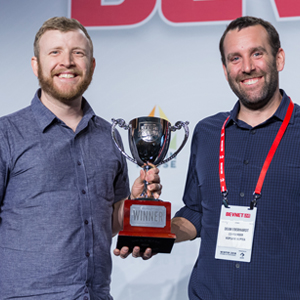
[00:36:18] Ray Latif: Now let's say aloha to Dean Eberhardt and Andrew Markley, who are the co-founders of Hoplark Hop Tea, a new brand of sparkling, non-alcoholic, hop-infused teas. HopTea claimed victory in BevNET Live's New Beverage Showdown 16, beating out 11 other early-stage brands over the two-day competition, which was held on December 3rd and 4th in Santa Monica. Shortly after their big win, Eberhardt and Markley sat down with BevNET CMO Mike Schneider and discussed the origins, formulation, and positioning of HopTea and what's next for the brand.
[00:36:52] Mike Schneider: Mike Schneider here with Dean Eberhardt and Andrew Markley, the co-founders of the winners of the New Beverage Showdown, Hoplark Hoptea. Guys, what's going through your heads right now? Oh man, so many things. It's so awesome. We're excited to be here and super grateful for the opportunity.
[00:37:08] Enter Brad: Yeah, it's been great.
[00:37:09] Mike Schneider: For the 10 people who don't know what hop tea is, why don't you tell us? Yeah. So hop tea is a sparkling tea, iced tea that is brewed like a beer. So we make tea, we cool it down and we dry hop it like beer, but there's so much more to it than that. Like what? That's the, we'd have to kill you part. So it's zero calories, zero alcohol, zero sugar, three ingredients, totally natural. And we brew it ourselves. Where does it fit in the store? I mean, is it a beer? Is it a tea? Is it a non-alcoholic beer or is it a hopped tea? We've had a lot of fun playing it as a tea. We think that it's expected to put it in the non-alcoholic beer section. So we love going against that and trying to put it in the tea aisle. The tea aisle is just a really connected use occasion for our customer. And then, you know, we also throw it in bars and restaurants and it works well there too. So you've started off with the tea use occasion, because for me, that's a little, I mean, I drank hop tea and I'm saying, okay. this is a beer with a tea backbone for me. And I liked it as a, okay, I've had a beer and I'm going to be the driver now. So I'd like to have a little more and I'm going to switch to hop tea and I won't, I won't miss a beat or, Hey, I want to have a beer at eight o'clock in the morning or maybe at noon, you know, during a meeting or what, or during lunch or a meeting and not get all banged up. So that's kind of where I felt it would sit. So it's one of those interesting products where This is something brand new. What do you think is really important as being a category creator and now a category leader? Well, so what's fun for us, watching people's responses this past couple of days and how this question has been challenging everyone, I think there's a huge opportunity to make a marketing play about it and just ask that question. Let's find out from our customers where they're using it and what they think. And maybe that challenge will spark some good conversation. Andrew, how did you and Dean meet and how did you get here?
[00:39:03] Enter Brad: We met in college, we were best friends from college, freshman year, basically first week, first couple days. We went off and did different things for a decade and a half or so. And then we got together a few years ago and wanted to make a change in our life and change careers. And we moved to Boulder and started thinking about this project.
[00:39:24] Mike Schneider: Well, you've won the New Beverage Showdown. Congratulations again. What's next? What's next for Hopsy? I heard you say you have to build a brewery. We have to build a brewery. Thus far, I have Keys. We launched that December 1st. We started our lease December 1st. It's now the 4th, and I haven't really been in there yet. We have about two weeks to do that. So we have a lot of work on our plates, but that's the kind of fun stuff for us. And then it's market growth. I mean, for us, it's all about getting the product into the hands of the customer. We've had so much response online from people that are wanting to get it in Delaware and New Jersey. and California and the Pacific Northwest. How long have you been in market? We launched in May. And what have you learned about the consumer? I mean, at least from a demographic perspective. Demographic is, it's really anyone. It's fun to watch people that we don't, individuals don't expect to love the product, loving it, but it really gears toward millennial and foodie because of the sparkling water, the lack of sugar in that product, has set that demographic to really expect hop tea to be awesome. And their palate, it makes sense on their palate. This is a brand new product. It's an innovation. Talk to me a little bit about some of the struggles getting it to market. Yeah. I mean, it took us 18 months to figure out how to make it. It's really very difficult to make it right. And we actually took a six month break on the project about a year and a half ago because we were just frustrated with the status of it. And we said, okay, once we figure this out, this is the best idea we have right now, a hundred percent. And we're going to go full force on it. But during that six month break, mostly I got frustrated and walked away. And Andrew stayed in the brewery and he figured it out, which was incredible. And he came to me about a year ago, like, this works now. And we've been full speed ahead since then. I picture you in a lab coat and big amplifiers everywhere and beakers and bubbling and things exploding.
[00:41:20] Enter Brad: Yeah. I mean, yeah, I'm a chemist. I'm a PhD in biochemistry. So I've worn a lot of lab coats in my day.
[00:41:27] Mike Schneider: And I don't think we mentioned where hop tea originates. Yeah, so we're out of Boulder, Colorado and my garage. Is that where you went to school? No, no. I was drawn there. I had a major life change about two years ago and woke up one day and just realized I was kind of miserable in the suburbs of Chicago and looking for a change. Moved to Boulder, lost 50 pounds within about a year. And yeah, it was in my garage. We still have the remnants of it. Well, another great innovation out of Boulder. Thanks a lot, Dean. Thanks a lot, Andrew. And congratulations again on your big win. Thanks, Mike. We appreciate it. Thank you.
[00:42:03] Ray Latif: That brings us to the end of episode 12 of Taste Radio Insider. Thank you so much for listening, and thanks for our guests, Brad Charron, Dean Eberhardt and Andrew Markley. Tune in next week for episode 142 of the flagship Taste Radio podcast, where we're joined by Jamie Danik, the co-founder and CEO of Hum Kombucha. Please subscribe to Taste Radio Insider on iTunes, Spotify, Stitcher, SoundCloud, or Google Play. As always, for questions, comments, ideas for future podcasts, please send us an email to ask at Taste Radio. On behalf of the entire Taste Radio team, thank you for listening, and we'll talk to you next time.