[00:00:00] Steven Rannekleiv: All right. Ready? Joe, start the clock now. Mike, what are you doing? What's that noise? It's a stopwatch. We're promoting our 30 second pre-roll ads and now available for Taste Radio and Taste Radio insider. I thought we could try and see how much information we could pack in 30 seconds. Can I ask you a question? Sure.
[00:00:15] Phil Kafarakis: Can you list all the things that BevNET offers for free? snack guide. We have our podcast. Now we have three weekly podcasts with the Brewbound, Taste Radio, Insider, all this stuff. Oh, my God. Those are available every week for free. What about our YouTube channels? Go, go, go. YouTube channels, three YouTube channels, hundreds of hours of videos. It's kind of crazy. All of our newsletters are free. Livestream broadcasts of the conferences. Don't forget those. Yeah. Why would you not watch the free live stream broadcast? You could apply for all these jobs on our website. There's no cost to do any of that. Oh, by the way, the whole editorial process, that's free. I mean, we don't charge to write about you. Just reach out with your news. That's, I mean, what more do you want?
[00:01:05] Steven Rannekleiv: I don't think I thought this through man. Your 30 seconds are up. Oh, man. Well, we give a lot of stuff away. That we do. And if you want to share with our audience what you have to offer, we now have Taste Radio ad packages available. Email sales at BevNET.com to learn more. We'd love to hear from you.
[00:01:19] Phil Kafarakis: Can I do the thing?
[00:01:20] Steven Rannekleiv: Yeah, of course. And now, Taste Radio.
[00:01:32] Ray Latif: Hey, everyone. Thanks for listening to Episode 17 of Taste Radio Insider. I'm Ray Latif and with me are my BevNET colleagues, John Craven, Mike Schneider and Jon Landis. We're recording from the Press Lounge here at the 2019 Winter Fancy Food Show in San Francisco, California. Lounging about. Lounging about. In this episode, we feature an interview with Steven Rannekleiv, the Global Sector strategist for beverages at Rabobank, talking trends in the alcoholic beverage category, specifically with spirits, CBD and the like. We're also covering news, innovation and trends from this Winter Fancy Food Show with Phil Kafarakis, the president of the Specialty Food Association, which organizes this event. Gentlemen, aside from all of you looking and feeling completely exhausted, how are things? I would like some alcohol. Alcohol?
[00:02:25] Phil Kafarakis: Okay.
[00:02:25] Ray Latif: Yeah, you just said alcohol.
[00:02:27] Phil Kafarakis: It feels good to get off my feet for just a minute or two here.
[00:02:31] Ray Latif: Yeah, we've been walking a lot for the last two days, quite a bit to see at this show. I think I covered every single floor and every single aisle still didn't get to see everything. But this feels like it was one of the bigger Winter Fancy Food Shows that I've been to. And maybe that's just because I'm looking at more food than I ever have in the past.
[00:02:48] Phil Kafarakis: I think the renovation of the convention center has something to do with it. To me, it's like
[00:02:53] Ray Latif: home renovation show happened here on a convention scale like let's break down these walls and make it more open and like you know i think that they did a really good job with it and everything kind of flows now indeed for the time being however uh it was really great to see a bunch of you know the usual folks you see at these trade shows and a few of the new ones as well we went instagram live at the new brands on the shelf section of the show which was really uh eye-opening and fun You also saw a ton of new products at the Incubator Village section of the show as well, represented by incubators across the country, including Chobani Incubator, Kitchen Town. And that's something I really enjoyed about the Fancy Food Show and continue to enjoy about this show, is their support of commercial kitchens, incubators, each of them supporting local emerging brands and innovative trends.
[00:03:44] Specialty Food: Yeah, I think that's a really neat area just to see the brands, you know, actually with the incubator that they worked with, which sometimes when you walk around these shows, you kind of forget, you know, the origins of some of these startups. But yeah, it's really neat. I think they, you know, did that. in the summer at the New York Fancy Food Show. So it was kind of cool to see that be a part of the show here.
[00:04:07] Phil Kafarakis: It's really smart for the Specialty Food Association. They're finding ways in getting some of these smaller brands involved. Probably couldn't afford a booth in the main floor and helping these incubators with their mandates, you know, by giving them an outlet and making it available. So I think it's really, really smart.
[00:04:25] Steven Rannekleiv: It was great to catch up with some of the operators of the incubators. We caught up with Sarah from Chobani who talked to us about what was in the Chobani incubator and then also showed us some of the other innovations from some of the other incubators because she's just so interested in innovation. Speaking of Chobani incubator. Applications, come and do pretty soon.
[00:04:45] Phil Kafarakis: January 31st. January 31st.
[00:04:47] Steven Rannekleiv: In the Kitchen Town incubator, it was really cool to meet Lauren from Loca Food. So basically she has a potato queso, but you wouldn't be able to tell that it was made out of potatoes. Pretty awesome to talk to her. The company is only a month old, so we're really getting to try some cutting edge stuff. Nicole Dawes from Late July was hanging out at the incubator and she had us try Soniar chips, which are another cassava chip, maybe competitive Siete Foods.
[00:05:12] Phil Kafarakis: Yeah, actually, they were started by Pete Brennan, who we know was working at Zola for a long time running their marketing. And he comes from like big CPG. So he's starting his own brand with his wife. They're putting together a really interesting brand. They have a lot of story behind it. They're giving back. I think they are giving back 1% of net sales instead of profits, which, you know, is always really nice. to see someone who understands how it works.
[00:05:39] Ray Latif: Yeah, totally. I mean, social mission was embedded in a few brands that we saw. I had an opportunity to sit down with the folks from Pulp Pantry, which makes this great grain-free chip made out of the pulp from cold-pressed juice.
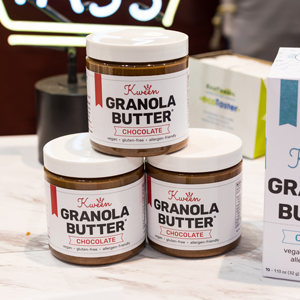
[00:05:53] Steven Rannekleiv: we caught up with some alum of the springboard incubator as well. Cleveland crowd was here. Um, their crowd is like next level stuff. They're obviously involved in the fermentation trend and, and trying to, you know, lead the charge there. We also caught up with a VN from a yo-yo was here also from, uh, they, they had good things to say about their experience in the, you know, first class of the incubator. I mean, there's a lot of incubator happening out there. We saw Nadine from Bahama who is, you know, in the Pepsi incubator right now, and she was talking about how great that experience has been for them. So it's really cool to see what I've seen for years in the tech space happening now in food and beverage. As Ray was saying earlier, we did a few Instagram live sessions as well. That was pretty neat to just kind of go through the California section. And there was a couple of, um, you know, notable ones. Avo Queen was there with the granola butter. We also saw Tea Crush and Kyusu, both interesting new tea tonics. Kind of not kombucha, not ACV, something different, you know.
[00:06:49] Phil Kafarakis: Interesting. I spend so much of this time just catching up with people that I know, you know, it was so good to see like the 1821 bidders, uh, folks I've been hanging out with them and, you know, I haven't, I feel like I haven't talked to them in so long. So we had a lot of shrubs. Did you try the shrub? Yeah. So good. Or their soda. Yeah. And we, and, and I, Missy and I went around the corner and found this booth that is aging maple syrup and Pappy Van Winkle barrels. So they have barrel age. And they also have a bitter milk ready to mix old fashioned syrup. That's also aged in Pappy Van Winkle barrels. So you can just make like a happy Van Winkle aged old fashioned really easy. Yeah.
[00:07:27] Steven Rannekleiv: You know who else we caught up with was Henry Lovejoy from a freshie, the tuna guys. And he said that he told me that the packaging was not actually inspired by his grandmother's wallpaper. It was great to catch up with them that that project, we got to learn a little bit more about the project. And basically, they've been working on this for four years. And they, you know, they go back and forth from New Hampshire to Portugal to get this rough life. Yeah, yeah, to get their tuna package. And that stuff is phenomenal. Yeah.
[00:07:56] Ray Latif: Yeah. Yep. A couple of the quick brands of note or brands that I saw at the show. Perky Jerky came out with a new Wagyu beef jerky. I thought it was pretty outstanding stuff. Good catching up with Zach. As well as the folks from Blue Bottle Coffee did a great interview with Brian Meehan, the CEO, which is coming out in a future episode of Taste Radio Insider. Really interesting to hear his comments on the future of the coffee category. We're sitting next to the great Joe Creech and the great Joshua Pratt, who are technical team, our AV team behind the podcast and all the video stuff that we do. Totally indebted to these guys for all their hard work. This podcast would not nearly sound like it does without their help and sound like the imbeciles that we are. Correct. Correct. Amundo. So thank you, Joe. Thank you, Josh. All right, let's transition from the business of artisanal foods to that of artisanal distilled spirits, aka craft spirits. As I noted at the top of the show, Stephen Ranicleave is the Global Sector strategist for beverages at global financial services firm Rabobank. Stephen has covered the alcoholic beverage industry for over a decade. And in our conversation, we explore the emerging market for craft spirits, including the parallels and differences in the development of the craft beer category, how the investment community is evaluating craft distilling companies, and how growing consumer demand for cannabis products is affecting alcoholic beverage categories. It might not be what you think. All right, it's Ray, and I am on a call with Stephen Ranicleave, who's the global beverages strategist for Rabobank and a host of the Rabobank podcast, Liquid Assets. Stephen, thank you so much for being with me. Thanks for having me on, Ray. Much appreciated.
[00:09:38] Summer Fancy: You're calling in from New York, yes? Absolutely. Looking out over the skyline of Manhattan, midtown.
[00:09:43] Ray Latif: I'm looking at a parking lot. That's the window outside the Taste Radio studio. We don't have much of a skyline here, but... But it's a great neighborhood. I've been to your offices. That's a great neighborhood. It is. You know, there's a lot to like. You know, parts of it are still stuck in 1983, but, you know, there's some advancement. Things are changing. We're getting, I think we're getting... It's got charm. Yeah, we're getting a new supermarket coming in any day now. Ooh. Yeah, exactly. So for our listeners at home, in their office, in their cars, who aren't familiar with Rabobank, what do you guys do?
[00:10:18] Summer Fancy: So Rabobank is a Dutch cooperative financial service provider. It's been around for over 125 years, very active in the food and agribusiness space. And so one of the things that the bank does to compete more effectively is to maintain a core of research analysts around the world studying these sectors and trying to gain understanding as analysts, not in the traditional way of an equities analyst trying to figure out where stock prices are going, but really more trying to understand what's happening in these industries to provide insights to our clients. So it's really a bit of a different focus from a traditional analyst.
[00:10:56] Ray Latif: Yeah, I mean, the reports that you guys put out have a lot of value as a whole. Similar to that of your podcast, Liquid Assets, as I mentioned, you guys launched it in April 2018. What was the genesis of the podcast and what do you guys talk about on the show?
[00:11:13] Summer Fancy: Well, you know, it's a really good question. We've, as I think you rightly pointed out, we've been doing research for a long time, putting it out kind of in traditional channels of, you know, publishing either, you know, digitally or or in print. And, you know, at the end of last year, we brought on a new analyst, a young guy who's who's at my side right now, Burkhard Nessen, who had the idea of saying, hey, you know, we should think about new channels for putting this research out there that, you know, we're already doing it, you know, take the next step. And so that was kind of the nexus of us getting into producing podcasts. And it's been exceptionally well-received. We've been really pleased with the results. And, you know, the nice thing about it is that it allows us to take the research that we're already doing and delve into some of these issues in more detail or from different perspectives than what we're able to do. in print, right? When it's more of a monologue, right? When you have a dialogue or it allows you to do different things. And it also, it's also allowed us to bring in outside voices, voices from the industry to talk about things that we think are relevant. So it's been a lot of fun and it's been really successful. We've been really pleased with the results. Any favorite episodes? Gosh, you know, there's so much to unpack. And, you know, for me, I think I look back, what was really successful, one of my favorite episodes was the one with, there were two with Wayne Duan from Constellation Brands. We had put out a note on e-commerce and how it was changing. Beverage Alcohol and Wayne Duan came on and talked from the perspective of both suppliers and retailers about how that's affecting, because there's so much change going on. Everyone's trying to figure this out, both retailers and suppliers. There's so much disruption happening right now. And he did a great job of providing really worthwhile and valuable insights that I think really helped put the podcast on the map, because everyone was really hungry for those kinds of insights.
[00:13:15] Ray Latif: Well, let's put Taste Radio Insider on the map with regard to the alcoholic beverage industry, which we don't cover too, too often. But when we do, we try to take a deep dive in what's happening and who better to speak with than you. You've been covering this sector for how long now? 12 years. Wow. Okay. So you're definitely the right guy to talk to.
[00:13:37] Summer Fancy: I consider myself the gum stuck to the bottom of RoboBank's shoe. They don't seem to be able to get rid of me.
[00:13:43] Ray Latif: That's one way to look at it, I guess. Yeah, I mean, you know, more specifically, you know, for today's conversation, I'd love to talk a little bit about the emergence of the craft spirits market or what some people might call the micro spirits market. Is that how you refer to it?
[00:14:06] Summer Fancy: Yeah, we are. It's micro distillers sometimes. Yeah. Sometimes we talk about micro spirits companies, micro distillers, whatever you want to call them. Just sometimes this idea of craft, the word is a little bit abused. And, and we also have large distillers that take offense to small distillers being the only ones being considered craft. If you are the sixth generation head distiller, at a large company, you know, one of these large distillers, you've grown up doing this your whole life. Suddenly you're not a craftsman, but some guy who was, you know, maybe a lawyer last week and has a small still in his garage, he's the craftsman. So that, you know, there's elements of craft that we'd kind of rather stay away from and say, yeah, there's these micro distilleries or craft, whatever you want to call it, but, you know, we try to differentiate it in a different way.
[00:14:55] Ray Latif: Let's take a look at the craft spirits market through the lens of perhaps one of the sexiest industries over the last decade, which is craft beer. You know, do you see any parallels to the development of the craft spirits category as it relates to craft beer?
[00:15:11] Summer Fancy: Yeah, I think it's it's impossible to look at what's happening in craft spirits today and and not compare it to what's happened in craft beer. And there are obviously a lot of similarities. I think they're both drawing on the same consumer trends. They're drawing on the interest in consumers and smaller brands, the interest in engaging with brands in their local community, that sort of thing. And so there's those obvious similarities. And then you look at where Craft Spirits is today, kind of the growth trajectories look very similar to what you saw in the early stages of craft beer. That said, we also see a number of differences.
[00:15:52] Ray Latif: So let's talk about those differences. Where do you see craft spirits in its life cycle? First of all, because craft beer seems to be sort of leveling out, plateauing in terms of its growth, no?
[00:16:03] Summer Fancy: Yeah, clearly it's craft beers entering a phase, you know, maybe more of a mature phase and craft spirits is earlier innings. Let's say, right, it's, it's still maybe second or third inning for craft spirits. Some would say first or second. And I guess that's where, where we see the big difference. I, you know, I think that the same way that you see craft beer starting to move into a more of a mature phase, that will eventually happen with craft spirits. But we kind of think that it's going to happen earlier in the process, just because of the differences that we see. And those include kind of the competitive environment. We see different tax environment and we see kind of a very different regulatory environment facing craft spirits. So we think the development is going to be, you know, quite a bit different.
[00:16:52] Ray Latif: But based on your analysis, how many Craft Spirits producers are there in the U.S. right now?
[00:16:56] Summer Fancy: Well, I think, you know, WSWA and ACSA and I think it's Park Street, they came out with the Craft Spirits data project. Off the top of my head, I want to say there were something like 1,800. But of those, it's a very short list of those that have kind of broken out and are kind of above 10,000 cases, let's say.
[00:17:19] Ray Latif: And so is the rate of new distilleries opening similar to that of craft beer?
[00:17:25] Summer Fancy: It's gaining momentum for sure. Lots of new entrants coming into the category. I want to say, you know, sales growing at a 20 plus percent growth rate, very healthy growth in craft spirits. And, you know, it does. It brings you back to the early stages, what you saw in craft beer in the early days, that kind of really robust growth rates, lots of excitement, lots of new entrants coming in, lots of innovation.
[00:17:55] Ray Latif: One of the biggest fears of the craft beer industry with regard to new breweries opening was quality. Could these brewers actually produce good beer? Are we seeing the same hesitation or concern on the craft spirit side?
[00:18:12] Summer Fancy: Absolutely. And I would say at some level, I've perceived some improvement, some real marked improvement within the craft spirits industry, but it was and continues to be. It was in the early stages of craft spirits, there were an awful lot of the craft spirits that you would try that were, let's say, not very approachable. they struggled to get quality right. And if you think about it, to become a really good craft distiller, first you have to become a good craft brewer and you know what that looks like and the challenges that that can come around with that. But then you have to then kind of move into the whole extra issue of aging and so forth in a lot of these cases. So you have the same challenges around quality, but then magnified to a whole new level. And with that, you have all kinds of funding issues, you know, financing issues. for aging requirements and so forth. There's just a whole nother level of complexity around aging spirits that, you know, you don't have when you're producing craft beer.
[00:19:14] Ray Latif: Totally. And I like the way you put that. You've perceived a change in quality. So what you're saying is you've sampled a few of these products.
[00:19:21] Summer Fancy: I've been known to sample for sure. And there's some good stuff out there and people that are doing really interesting, exciting things. But there's also a lot of people that struggle to get something that probably meets the requirements of what would be a premium spirit. But they continue to charge premium prices, and they have to, right? I mean, you have a small batch. You have to charge premium pricing. And that's one of the challenges that you kind of see out there, that for the craft spirits industry, how long will the consumer continue to pay a real marked increase, a pricing A pricing premium. Thank you. How long will the consumer continue to pay a pricing premium on these products when the quality is, let's say, questionable? And, you know, part of that pricing premium is driven by the differences in tax rates between, you know, the craft brewers get some advantages that craft distillers don't get. You know, there is that pricing gap, and it is a hurdle for these guys.
[00:20:30] Ray Latif: It sounds like it, and it seems like some of the expertise is missing, and you see some distillers, or at least locally I've seen some distillers go out and spend the money to hire experienced folks from around the world who know how to make good whiskey or gin or vodka, but that comes at a price. And to fund these new initiatives, to hire these folks takes money. And I want to ask you about sort of the funding environment for Craft Spirits. What does the investment community look at? I mean, how are they analyzing and evaluating these distillers?
[00:21:12] Summer Fancy: That's a really good point. First, I want to say you're absolutely right. There is a lot of good talent coming into the craft scene today, but it is, you're right. It is one more area of investment. And I would argue that, you know, that's one piece of it. The piece that people don't think of as much, and we'll get into this, but you know, there's the whole marketing side. Everyone puts a lot of emphasis on the production side and, you know, the investments that are required there, but that's often a smaller piece compared to what you really need to be thinking about in marketing. But in terms of the investment community, everyone's kind of looking, you know, when we've had discussions with PE or the corporates and so forth, there's a lot of similar things that people are looking for. You know, what does the brand look like? You know, what is the concept there? Does the concept work? Are you seeing velocity in your local market, right? It's not just about what are your sales looks like? Are you getting sell-through? Are you generating good sell-through in the accounts that you're in? That's a much bigger issue for a lot of these guys than just what are your sales volumes look like.
[00:22:19] Ray Latif: So there are some similarities to the non-alcoholic beverage industry and the food industry as well. It sounds like velocity is such an important concept and such an important statistic in all those cases.
[00:22:31] Summer Fancy: Absolutely. I think everyone's looking at the same thing because you can go out there and start to sell. You can start putting this stuff out there and you can get it onto the shelf the first time. But if you haven't built that rapport with the consumer, you don't get that sell through and those things tend to fall apart really quickly and a large supplier or anyone else who's ultimately going to take that, that's going to want to scale that up. They want to see that, you know, these brands can can go outside their home market. They want to see that there is a good story that these brands have to tell and that they can generate, they can scale these things up appropriately. And that's why I think it's so important. Again, going back to the statement I made, we put all this focus on getting, investing in and getting the juice right, and that's great. It's a necessary component, but the marketing side is always kind of an afterthought. And so, you know, I just kind of look at it and say, well, yeah, it's kind of like trying to push a piece of string, right? You've got all this product, but you haven't thought about how are you going to market it? You haven't thought through your distribution, your route to market. What do you stand for? How are you going to communicate and build that brand with the consumer? When it's a production-led process, it eventually, you know, it's almost always going to run into problems.
[00:23:48] Ray Latif: The big strategics, I mean, their approach to investment seems to be twofold. One, they're making outright investments or acquiring companies, and then They also have incubation and venture capital arms. I'm thinking about distilled ventures with Diageo and Constellation Ventures, the VC arm of Constellation Brands. Based on your experience, what are these strategics looking for when it comes to small distilleries? You know, what interests them most? Is it the quality of the product? Is it the marketing? Is it the branding? Is it the velocity that we talked about? What are they most excited about?
[00:24:29] Summer Fancy: Yeah, I mean, two things from what I hear talking to some of the large strategics and companies that have talked to them, you know, they want to see a good brand story. They want to see the velocity, the strength that you can generate in your in your local market and your ability to kind of resonate with consumers. That's critical, right? You want to show that you have a strong brand. But then, you know, some of these things have also fallen apart because these brands have, you know, you can create a good brand that resonates in your local market, but there's really no way to scale it up, right? It's not so easy to take some of these You know, the way that some of these are structured when you haven't given thought on the production side to, you know, how are you going to get from 2,000 to 5,000 to 10,000 to 100,000? You know, do you have that capacity to scale up? Because, you know, the large corporates, when they're thinking about these things, they're saying, you know, if it's going to stay a 20,000 case brand, it's not very interesting for them. Some of these discussions fall apart because they're just not scalable.
[00:25:33] Ray Latif: Indeed. There also seems to be some growing interest in specific spirit categories. The strategics seem to be interested in things as I guess what was once sort of an esoteric drink for mainstream America, that's brandy, but Constellation Brands took a stake in a company called Copper and Kings.
[00:25:54] Summer Fancy: Copper and Kings, yeah, Joe Heron down in Louisville.
[00:25:56] Ray Latif: Yeah, they bought a stake in January of 2018. And I wanted to ask you, in general, where is the most interest among spirits categories and is it aligned with what we're seeing in terms of the development of craft distilleries in this country?
[00:26:14] Summer Fancy: Yeah. I mean, if you look out in the market, it's, it's no secret. Bourbon is hot. Cognac is hot and, and tequila are hot. And so those were the first steps that a lot of the large strategics took and everyone has their stakes. Pretty much all these players have their stakes in, in a bourbon brand today. They've, you know, they all have a craft bourbon that they've invested in or, or, you know, several. So then you start looking at another, you know, they all have some, some investments in tequila. Mescal seems to be popping up, you know, more and more kind of garnering interest. That's been a hot category as well. But, you know, we, we took a look at the brandy category a few years back and really see some opportunities there as well. We think that, you know, at some point that seems to be a category that's poised for growth that kind of. It ticks a lot of the same boxes as bourbon being very approachable, flavor profile, mixable in cocktails, some good stories you can create behind it, and a lot of things that you can do to play around with grape varietals and so forth. You know, it's a category that hasn't really received the attention of the large players. It's a category that hasn't really gone through the premiumization process. And so a lot of where Brandy plays tends to be at the lower price points. And we think that there's a an opportunity to bring that up into higher price points. And we're seeing more and more kind of craft distillers get into that space because it is a big white space in the market today. It's hard to go in and compete as another one more craft bourbon. But if you've got a craft brandy, there's an interesting story to tell.
[00:27:56] Ray Latif: Constellation made a really big investment into the cannabis space a little while ago. Really? I hadn't heard about that. Yeah, yeah. This tiny little company in Canada that people are talking about. And as much interest as there is in Craft Spirits, there seems to be, well, a lot of interest in the cannabis space. I'd love to get your take on what threats consumer interest in cannabis has on the alcoholic beverage industry and what segments and categories are most affected.
[00:28:31] Summer Fancy: Yeah, it's been really interesting to watch the shift in consumer perceptions of alcohol and cannabis, where cannabis is increasingly viewed as less dangerous than it had been perceived earlier, maybe that's a way to say it, where particularly excessive drinking is seen more negatively. So there's this shift in which is in favor in some ways and cannabis seems to be gaining an incredible amount of momentum. And, you know, I think everyone everyone's looking to see who's going to be most affected. There's a strong argument to be made that, you know, beer is the most obvious, you know, the most obvious target for cannabis to come in and take market share, because when you look at where things are today, It's, you know, the cannabis consumer, the marijuana consumer looks an awful lot like the beer consumer. But, you know, as we've kind of stepped back, we think that there's an argument to be made that, you know, it might be the wine consumer. Why do you say that? Well, you know, when you look at, we always kind of look at, okay, who is the cannabis consumer today? And the demographics are the beer consumer. But then when you start looking out at, you know, who says they are most likely to increase cannabis consumption, if it's legalized, it tends to skew. The biggest growth comes from more affluent, more educated and women, right? And to me, that's a profile of the wine consumer. And, you know, we always kind of say, OK, but we think that that's true. There's there's some opportunity for cannabis to take share of wine consumption occasions, but it's not every occasion, right? I mean, we don't think that people are going to go out to Ruth's Chris steakhouse and replace their glass of cab with bong hits to go along with, you know, their, their prime rib or, you know, their filet mignon, right? There are occasions that, that wine, I think doesn't lose, but you think of a soccer mom coming home and having a glass of wine to take the edge off at the end of the day. you know, maybe something that doesn't have any calories, that sort of thing is potentially a bit more attractive. And, you know, or the, you know, the book club or whatever it is, there are occasions that could be attractive for cannabis to come in and steal some share.
[00:30:53] Ray Latif: Great stuff, Steven. I've really enjoyed our conversation, and you and I have talked in the past for different magazine stories that I've written, and as you mentioned, you've been to the office. Thank you so much for taking the time. You strike me as a brown spirits guy. I need to send you something. Are you a bourbon whiskey kind of guy?
[00:31:11] Summer Fancy: I'm a bourbon guy. Okay. Yeah, absolutely. Absolutely. You can hear it in my voice, huh? I can. I can hear you. You sound thirsty. I always am.
[00:31:23] Ray Latif: Fantastic stuff. Again, Steven, really appreciate the time. Congrats on Liquid Assets. It's a great podcast for our listeners at home. Definitely take a look, listen, some fantastic information on that podcast. Once again, that was Steven ran a cleave. It still is. Steven ran a cleave from Bravo bank.
[00:31:43] Summer Fancy: Still is. Still is. Hope to talk to again really soon. Well, thank you, Ray. Thank you so much for having me on today. This was, this was a blast. Of course.
[00:31:53] Ray Latif: Let's now head back to the Fancy Food Show, where I recently sat down with Phil Kafarakis, who is the president of the Specialty Food Association. Phil and his team organize the biannual Fancy Food trade shows, and in our discussion he discussed the evolution of the winter event and the meaning of the term Specialty Food. He also spoke about the ingredients and the formulations that are shaping the future of the industry, how legacy Specialty Food and beverage categories like cocktail mixers and charcuterie fit into the development of the space, and the Specialty Food Association's work with international food and beverage producers. All right, it's Ray with Taste Radio, and I am at the Moscone Center in San Francisco, California. I'm here for the Winter Fancy Food Show, the 2019 Winter Fancy Food Show, and in front of me is Phil Kafarakis, the president of the Specialty Food Association, which puts on this wonderful show. Phil, thanks so much for being with me. Oh, Ray, I'm so glad you guys are here again. Yeah, we have been coming pretty strong to this show for a while, and every time we come here, there's more and more of us coming. It's awesome.
[00:32:56] Food Show: We want everybody to know that we've really been evolving. It's our 44th year, so it's pretty exciting, and San Francisco is a great place, and we love calling it our West Coast home.
[00:33:04] Ray Latif: Nice. I mean, this show, just walking in this morning, looks different than it did last year. It's big, it's beautiful, it seems bigger. What's changed about this show since last year or in years past?
[00:33:16] Food Show: Yeah, I think the greatest change, well, first of all, the square footage is up, you know, we're way over 230,000 square feet. which is a little more than last year, we were closer to 210, but the facility has been going through an expansion for the last three years. So Moscone looks beautiful because it's not as chopped up as it used to be. So the South and North Halls now connect, so it's one huge massive space, and the South area provides the light that traditionally they didn't have here with that open atrium with the, I think there's four or five different escalators that take you down. So that creates this open environment, and we've maintained a very crisp look as we transition into some new branding that'll come down the pike. But it looks shiny and new because it really is shiny and new.
[00:33:59] Ray Latif: And it gives you some more space to do some of the things like your education platform, Incubator Village, which I love. a space where you could... How many participants are in that program?
[00:34:08] Food Show: Yeah, so beyond the close to 1,450 exhibitors that are physically on the floor that we don't mess with because the floor is the dynamics and the heart and soul of what we've been doing, we've now created these attractions. And Incubator Village was something we evolved from Incubator Village. It's a village because in New York in particular, we had more than 35 different incubators and we were starting to figure out how to put them together. Here, I believe there's only maybe 12.
[00:34:35] Ray Latif: And they're from all over the country though.
[00:34:37] Food Show: Yes, yes. So clearly our community has really become much more segment when you think about the early startups. We call them seeds. They're really in that early stage. They understand what they want to do. They maybe don't have a prototype. They're into the incubator community, the kitchens. So we want to work with them. to bring them along. And then there's a whole other side of startups. And then there's a whole other side to scale ups is what we talk about. So Incubator Village is going to become a bigger, more exciting experience for our buyer attendees.
[00:35:07] Ray Latif: Very cool. So as the Specialty Food Association has evolved, well, so is the industry. What is the meaning of Specialty Food Show do you guys define Specialty Food at this point?
[00:35:16] Food Show: Yeah, for us, you know, all these many, many years, there's a crisp, I think like six paragraph definition in our charter that goes back to 1952, which includes Greek food. But Specialty Food for us as we start to evolve, not only is connected to 39 different categories that are part of our research with Mentel, but there's four real classic characteristics that we talk about at a very high level. Particularly these days, it's the authenticity, of the ingredient. So when you talk to people about cacao, people will tell you where the bean came from, what corner of the Amazon, what part of the world, how it was harvested, how it was grown. So that's important, that story. Then the integrity that goes into the processing of the product itself. So we're not about, high-speed lines. You know, we're about handcrafted, artesian. Those processes are important and again, they tell the story. The third characteristic is built around the packaging, the flexibility of the packaging to meet different channel needs, but also biodegradable packaging, sustainable packaging. You know, if you think about plastic and what's happening in the world around us today, our community is very sensitive to how it'll impact your experience with their products, the community around you, how it's going to affect the world we live in. And then the last characteristic really brings it home. Our members in particular have this ethos, these values that are really important to them, and they're embodied in their product. So how they run their business, how they take care of their people, their community. You know, the things are involved in their passions, their values come through in the product. So those four high level characteristics drive us as a community. And now that we're growing across these categories so rapidly, we've gone basically mainstream when you look at the data.
[00:37:01] Ray Latif: Yeah, it does feel really mainstream. So how can you be specialty when you're mainstream?
[00:37:05] Food Show: You can be mainstream, but the specialty aspect of it is when you're driving into these categories, when you think about what people were saying about GMO, what people were talking about, you know, back in the day when everybody was worried about sugar. And now you're talking about gluten-free and you're talking about vegan foods, those kinds of small, nichey things that a small group of consumers were attracted to have now become a bigger part of mainstream. So there's still specialty in a sense. I mean, we got people that are in the beverage business, functional beverages. They're not as big as Coke or Pepsi, but they're becoming Part of that set in a store or part of the community and food service so you can still be Specialty Food have a mainstream You know audience and and be a preferred product Competing with the big brands and that's been the success of our community. They're kicking big brands in the ass
[00:38:00] Ray Latif: I've heard that, yes. And one of the ways they're doing it is incorporating new relevant ingredients, formulations that are in demand, better for you, healthy, et cetera. What are some of those ingredient trends that you're seeing as being really important for the future of this industry?
[00:38:17] Food Show: Yeah, as much as everybody talks about the plant-based foods, which is something that's been going on in our community for the last five years, lab meat, which has been going on for years, the varietals of proteins, when you think about insects and functional beverages. At a very high level, those categories have been emerging, but now they actually fit into the lifestyles of our consumers who are drawn to them. So, as we look at that, then we go down, and every year you see, so, cassava is gonna be a big thing here. Kale chips used to be a big thing here. You know, all things cauliflower are a big thing here. So, it's the evolution of some of these small, simple ingredients that have now started to take over. We have a Trendspotters panel that does amazing work, and we just put out our 2019 trends that get into the categories in a more specific way.
[00:39:13] Ray Latif: If someone wants to go see those, what's the website?
[00:39:15] Food Show: It's Specialty Food, and then they'll just go right into the research tab. We also feature them here at the show, so if they go inside any one of the shows, Winter and Summer, they could look at the research roundtable, which was featured this morning. That's how we open the show. A lot of that is in there, and it's the Mintel work. Very interesting.
[00:39:36] Ray Latif: So for some of the food and beverage categories that have been sort of the bread and butter of the Fancy Food Show for many years, i.e. cocktail mixers, charcuterie, things like that, how do they fit into the evolution of the space?
[00:39:49] Food Show: Well, they continue to grow in acceptance. So when you talk about charcuterie and you talk about an Italian antipasta and meal environment, more consumers are figuring out what that means. You know, hard salami and what real prosciutto is has really become a norm as it relates to consumers experiencing these foods because they went on vacation or they heard them someplace. So now they're gravitating to them. This whole notion of olive oil and what is really olive oil, consumers are educated to the point where they start to understand what cold press means, what the varieties are. Why am I getting that burning sensation in the back of my throat? Is that the virgin olive oil component? It's an education process that consumers are much more in demand for, they seek, but they're experiencing these things in their everyday life, where maybe in the past they were just some things they did every once in a while, and they were exposed to these products. Now they're becoming a part of their daily lifestyle.
[00:40:43] Ray Latif: So for young entrepreneurs who are interested in coming to this show, exhibiting at this show, getting more involved in Specialty Food Association, I mean, I see on the cover of your magazine, your most recent issue, you have Lisa Curtis, who's the founder and CEO of Cooley Cooley, great brand, great entrepreneur. She's actually also been on the podcast. We interviewed her here last year.
[00:41:01] Food Show: She's terrific, and tonight she's getting a leadership award.
[00:41:02] Ray Latif: Well, there you go. You know, how do you advise young entrepreneurs when they're getting started? How do they navigate this channel, the Specialty Food channel, in a way that's going to be supportive of their growth?
[00:41:14] Food Show: Yeah, the advice we give, particularly early startup seeds, is that they've really got to get their hand around who they are. How are they going to run this brand that they just created or this product line? Is this a lifestyle for them? Is this going to be them and their wives or their sister and their brother? Is this something they want to scale up? Is this something they're going to flip? They've got to understand, like, who they are. figure that one out. I mean, they're figuring out what the product needs are as it relates to consumer acceptance, but the most important thing is understand what you're going to be. Because as you bring this thing to the marketplace, it's gonna require you partnering with other people. And there's this, again, I talk about the ethos and the values of the people that create these products in an unconventional kind of way. So once you have that figured out, then it's really important to seek out as much information as possible in running your business, from research to trends, to being inside peer-to-peer environments like ours. Our association is open to all that. We're getting ready to change our membership requirements to make it easier for early seeds to come into the community. Most people would not even know who the Specialty Food Association is. They just know about the Fancy Food Show.
[00:42:22] Ray Latif: One of the most defining qualities of the Fancy Food Show is its ability to bring so many international food producers under one roof. It's been a hallmark of all your shows. And I'm wondering how the international part of what you do is evolving. We often hear from international producers that they want to break into the United States, they want to sell more CPG products in the United States, and in some cases vice versa. So how has that part of the business changed?
[00:42:51] Food Show: Yeah, and actually a lot of people don't know this, but the roots of the Specialty Food Association, back when it was NASFT, it was a bunch of importers that started this. It was all about ethnic food coming to the U.S. in the 50s with the immigration trends and the expansion of America, right? The cultural diversity of this great country, which brought these Greeks and Italians, you know, and the Japanese and the Germans and the European, everybody needed their food because they left it home. So a bunch of pioneers who started our association, Couldn't get retailers to pay attention to them. So they went to the Waldorf Astoria they got the ballroom and they put up tables and They showed the country's food products and invited retailers to attend and that was the beginning of our legacy So it's been international forever. It'll continue to be international. We're doing everything we possibly can to welcome them in they work with us to prepare for the show what we're trying to do is help them be smart and be ready and A lot of them come to the country and maybe their products are not ready to go. They're not meeting certifications. Maybe they're not meeting standards. Maybe they're having trouble with their supply chains. So we're helping them from an education platform. But it'll always be a fabric. They, too, want to break into the US. But they're seeing the dynamic consumer change. And what we're trying to do is take them and expand that footprint while at the same time showing off our own innovation. So as the facilities expand, Here Moscone's done and we've got another level that we can work with and then in New York the course of the next two years There'll be some expansion. We'll be able to bring and continue to bring International products that have an ability to be imported that are innovative and you know part of these categories Maybe you just get them on vacation. Mm-hmm, but they find their way into Mainstream, right? Yeah, we're excited about that
[00:44:40] Ray Latif: I gotta figure some of that's also coming from food TV and just so much more interest in food blogging and things like that.
[00:44:46] Food Show: No question. And you see what's going on in the media environment. It goes right back to what we talked about, the characteristics of Specialty Food products. When you think about pasta and the ingredients and where they come from, and you talk to an Italian, you're going to cry with the way you describe where they get the grain and how it comes over the, you know, the moisture of the Valley and what goes on in Parma and why God blessed Parma and those, you know, that region produces, it's part of the story, but it is, it's part of the lifestyle too. Mediterranean diet is what creeps into then mainstream. So I think it's a big part of it. If we didn't have that, I think we would be missing a piece because we're very proud to say we're the only place in the U.S., when it comes to U.S. food, where you can see the international pavilions and experience the international food that we're so blessed to see all over the world.
[00:45:37] Ray Latif: Phil, thank you so much for sitting down with me. Really, really appreciate it. And really excited to see what's next for Specialty Food. Great, Ray. You guys are always welcome here. Outstanding. Thanks. Thank you. That brings us to the end of episode 17 of Taste Radio Insider. Thank you so much for listening, and thanks for our guests, Steven Rannekleiv and Phil Kafarakis. Please subscribe to Taste Radio Insider on iTunes, Spotify, Stitcher, SoundCloud, or Google Play. As always, for questions, comments, ideas for future podcasts, please send us an email to askatasteradio.com. On behalf of the entire Taste Radio team, thank you for listening, and we'll talk to you next time.
[00:46:22] SPEAKER_??: you