[00:00:05] Ad Read: This week's episode is brought to you by the Justin's brand. Justin wanted to read this himself, but said he is horrible at keeping secrets, and since this is an announcement that his latest, greatest, and possibly tastiest snacking innovation ever will be at Expo West, he didn't trust himself not to spill the beans. He then proceeded to tell me what it is and make me pinky swear I wouldn't tell you. He also wanted to clarify that Spill the Beans is a figure of speech and just like the rest of what Justin's has pioneered, this snacking innovation will be delicious and nut buttery, but definitely not beans. Come see for yourself at Expo West, booth 1437. And now, Taste Radio Insider.
[00:00:48] Ray Latif: Hey everyone, I'm Ray Latif, and you're listening to episode 23 of Taste Radio Insider. I'm here at BevNET headquarters in Watertown, Mass. And with me are my BevNET colleagues, John Craven, Mike Schneider, and Jon Landis. In this episode, we feature an interview with Ryan Lewendon, a partner with influential CPG law firm, The Giannuzzi Group, who shared insights and advice based on over a dozen years working with high-profile food and beverage brands. We also sit down with BevNET's Martín Caballero and Brad Avery, who take us Inside The Latest Issue of BevNET Magazine. Just a reminder to our listeners, if you like what you hear on Taste Radio Insider, please share the podcast with friends and colleagues. And of course, we'd love it if you could rate us on iTunes. Exciting news, exciting news. We've announced the date and location for our Cannabis Forum for Food and Beverage Summer 2019. It will be hosted on Friday, June 14th in New York City, following Nosh Live and BevNET Live. Mike, you look like you're about to jump out of the building. I am. I'm really excited about this event. I mean, we get questions about cannabis every day. You know, how do I get this into my food and beverage? And I can't wait to get back to the Cannabis Forum to talk about this. Indeed. Jon Landis, how does one get to the Cannabis Forum?
[00:01:58] Ryan Lewendon: Well, first you should probably get a ticket to BevNET live and or Nosh live. If you do, the cannabis forum is only $4.99. Otherwise it's a one day event, $9.99 ticket. Tickets are available online right now. It's going to be a week long of a lot of information, a lot of networking. So put it on your calendar. You know, make sure you set your out-of-office email. You don't want to be distracted during these events.
[00:02:21] Ray Latif: Bring your toughest questions, the ones that are keeping you up at night. There's going to be suppliers, service providers, investors there ready to talk to you and help you get to the next level. Indeed. John Craven, what excites you most about this Cannabis Forum? Jesus, I have to go last.
[00:02:36] The Giannuzzi: Just making it hard on me.
[00:02:37] Ray Latif: No, I think Mike Jon Landis summed it up pretty nicely. And I think it'll be fun to have a whole week long, I guess I say fun, maybe it won't be fun for us.
[00:02:49] Ryan Lewendon: It's a lot of work for us, but. I need a nap just thinking about it.
[00:02:51] Ray Latif: Yeah, I mean, I think it's fun. It'll certainly be a fun week in New York. I think, you know, it's always awesome. I think we've talked about this before. It's awesome to see our attendees go through this experience of like, you know, getting there and the excitement. And then you talk to them at the end and just the knowledge and the connections that they've made. And, you know, I think it's, it's going to be a blast to, you know, add a cannabis form onto the end of that. So nightcap. Well, we'll have some nightcaps after that. I mean, for those of you who weren't at the first Cannabis Forum, it's really the collision of cannabis, food and beverage. It's, you know, cannabis powered by food and beverage powered by cannabis. What's that industry going to look like? What's it look like from a regulatory perspective? How do you get cannabis into your food and beverage? I mean, we cover a lot of topics. We cover a lot of ground in this event. And the business opportunity of all of it, for sure.
[00:03:43] Ad Read: Exactly.
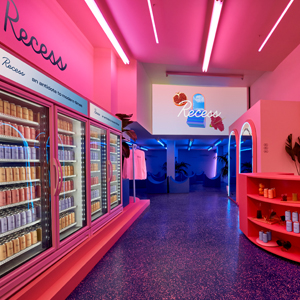
[00:03:44] Ray Latif: Certainly what most people are excited about. We had some great data last time. Yeah. Well, if you're interested in attending Nosh Live or BevNET Live or the Cannabis Forum or all three, learn more and register for the events at BevNET.com slash events. As I mentioned, all this is happening in New York City in June. I was recently in New York City last week, recording some podcast interviews and meeting with some interesting folks. I actually made it down to the recess pop-up Recess is a CBD-infused sparkling water brand, captured the attention of many in the food and beverage industry, launched out of the gate with a ton of hype. It's been featured in over a dozen mainstream publications. Earlier this month, the company launched Recess IRL, which is a pop-up shop. Pretty interesting place. I just saw that someone labeled it the most Instagrammable place right now. Yes, indeed. There's a quote on the website. It's designed to, quote, take all the ideas, feelings, and experiences that we've created online and put them back into the real world. Yet it's designed to be Instagrammable. I mean, so when you walk in there, it's got this aura that's like Miami Vice cool. It's these mood changing lighting, mirrored walls, and like this custom seating. It's hard to describe what this custom seating looks like. It's almost like the bottom of a tanning bed. is if it was, but it's a seat. It's like kind of strange. So you know that tanning bed well, Ray, huh? I don't mind like a good tanning bed. Serious question though. Do they pump like CBD into the air in there or what like is going on? Essential oils or something? It's such a, like, there's definitely an R. Remember like that Dave Chappelle skit where like, you know, Charlie Murphy was talking about, he was talking about first meeting Rick James and he said, Rick James had the oil. Like it's got that, you know, walking in this place, it's like, there's this aura there. I can't really describe it. Yeah. Amazing. Yeah. It's a pretty cool place. Pretty cool to check out. They've got a ton of recess, obviously, to purchase. And you just go there, you have a drink and you hang out. And you grind your feet into their tanning beds. Oh, I choked right there. Well done, Jon Landis. Wow. So they're basically bringing the packaging to life, the experience of recess to life. I love that. I love the color palette. I love the subtlety of the packaging. It's totally an experiential kind of place. I mean, people go there. I asked, you know, when do people most often go there? And they said, you know, after work, it's sort of a meeting place, a gathering place. They also do things like guided acupuncture sessions, wellness discussions, community classes. It's going to be open through March. Pretty interesting place if you're in the New York City area, you should check it out. It's down on Broadway, I think in Greenwich Village. Along with checking out the place, I actually interviewed the founder and CEO of Recess, Benjamin Witte. Our conversation is gonna be featured in next week's episode of Taste Radio Insider. Don't miss it. Also visited with Charles Gibb, who's the CEO Fever-Tree North America. Catch our discussion in episode 151 of Taste Radio, which was published earlier this week. I also met with Chieh Huang, who's the co-founder and CEO of Box, which is a fast-growing online retailer that sells popular CPG products in bulk. companies often described as a Costco for millennials. That interview will be included in Taste Radio episode 152. Catch it on Tuesday, March 5th. And I also caught up with Ryan Lewendon. You'll hear our conversation later in this episode. Don't miss it, especially if you're heading to Expo West next week. You're busy, man. 36 hours, I think I was there. I caught a lot in New York. Now, John Craven, you were not in New York city. You were on the other side of the country and then you were out of the country last week. Where were you up to? Well, I was in Mexico. It was national margarita day on Friday. So no, it was a, you don't strike me as a margarita kind of person. Well, I mean, if you're in Rome, if you're in Cabo, your choices are basically a tequila, margarita, Corona light, Corona heavy.
[00:07:39] The Giannuzzi: You know, it's, you gotta go for the margarita, I guess. Anyway, yeah, also was in LA and San Diego for a little bit before that. And, you know, got to catch up with our folks in our San Diego office and also got to visit some of the hard kombucha that's going on down there. Went to Jun Shine, which has a hard kombucha tasting room. It's pretty cool if you get to San Diego. And also got to catch up with Tiago from Novo Brazil, their brewery that also has hard kombucha.
[00:08:11] Ryan Lewendon: And they won our startup brewery challenge two years ago, right?
[00:08:14] Ray Latif: For their beer. So it's pretty neat to see how they're trying to get into the hard kombucha space, which is, you know, pretty neat space. Lots of stuff going on there on our brew bound site.
[00:08:24] Ryan Lewendon: Just covered a fundraise for June shine. Is this like peak SoCal hard kombucha?
[00:08:30] Ray Latif: I mean, it definitely the hard kombucha tap room feels like something that, you know, would work well in San Diego and they're, I think, expanding to LA. So, but it for sure seems pretty bleeding edge from, you know, probably what most consumers around the country are used to, but a lot of credit for, you know, something that's different than, you know, San Diego has so many brewery tap rooms.
[00:08:55] The Giannuzzi: So it's kind of neat to see somebody trying to innovate on that.
[00:08:58] Ray Latif: Yeah, I mean, the amount of innovation or the amount of brands that are launching in San Diego or launching hardcore butcher brands in San Diego, obviously, you mentioned June Shine and Novo Brazil. Boochcraft has been established there for a bit. And then there's a new brand called Luna Bay that just launched in the area as well. We'll keep our eye on that for sure. Speaking of innovation, some interesting stuff on the Nosh.com. There were two new rice products. One was a new rice brand. One was a new rice product that launched last week. Right Rice is a new brand of vegetable-based rice products. And Bonza, the chickpea pasta brand, launched a new legume-based rice. Interesting stuff. You can read all about it on Nosh.com. You think we're going to be seeing a lot of rice at Expo West? I would think so. Yeah. I mean, rice is a pretty ubiquitous product that people eat. It's the reinvention of rice. I don't think we're going to see a lot of it at Expo.
[00:09:58] Ryan Lewendon: People don't eat rice anymore. Americans don't eat rice. It's crazy. You know, like they don't want. We don't. Well, I mean, I... Speak for yourself. I guess so. I'm just seeing like all this war on carbs and everything and these keto diets and everyone wanting to eat foods that make them comfortable, but they don't want to eat gluten and stuff.
[00:10:18] Ray Latif: Rice cauliflower is really popular with, at least with the influencer set. You see it on Instagram all the time. And I think people are trying to capitalize on that trend by rice. Everything's rice now. Yeah. Well, you mentioned two things there. You mentioned Expo West, Instagram. And we're all heading to Expo West next week. And for folks listening to this podcast, you're probably heading to Expo West. Well, a lot of you are. And, you know, people always ask us, they're like, what are you seeing at Expo? Like, what are some interesting things? What are some interesting products and brands? I mean, the best way to keep an eye on what we're seeing is John Craven. Uh, is Instagram or excuse me, should I say what is Instagram rank? Check out our Instagram account. That is the correct answer. I mean, you're going to be at your booth. Even people at Expo West, we know have FOMO because there's so much going on. So, you know, one thing you can do while you're at your booth, there's a little bit of a lull is check out, you know, check out the BevNET Instagram account, check out Nosh.com Instagram, check out, you know, BevTrade or BevNET Craven or Jon Landis or BevNET Mike or Modern Foodist. She has all All kinds of cool stuff. She'll find all the stuff. Bevanette Taste Radio. Bevanette Taste Radio. Oh, yeah. I forgot about that one. How did you forget about that one?
[00:11:31] Krave Jerky: I'm just going to be posting weird stuff, cocktails, and probably making fun of Mike and Ray the whole time. So if that's your jam, you can follow me. People love that stuff, probably.
[00:11:41] Ryan Lewendon: I'm going to second that plug for Carol's Instagram at Modern Foodist. She's all over the place at Expo and is going to be posting all sorts of stuff.
[00:11:50] Ray Latif: Well, if you really want to follow the most comprehensive, in addition to following Carol's Instagram account, mine, John Craven's, Mike Schneider's, and Jon Landis's, most comprehensive information is going to be on at BevNET at Nosh.com and at BevNET Taste Radio. Follow all those accounts. If you can, we'll be posting pics of new products and live streaming throughout the show. We're bringing an additional crew to get We've got a bigger team going out this year. We do. We do.
[00:12:18] Ryan Lewendon: Landis has a couple of new folks coming. We have, I think close to two dozen people all said and done. But yeah, I actually have to say this is maybe the first time I'm excited for Expo West since my first time going to Expo West. Ever since I've known what I've been getting myself into at this event, it's just kind of exhausting to think about. But we got Andrew Brayton and Melissa Traverse. They just joined the team here. We're really, really excited to keep an eye out for them. They're going to be all over the show floor, hopefully swinging by all your booths for all the folks out there listening.
[00:12:54] Ray Latif: Indeed, Jessica Infante, who's one of our marketing coordinators, she'll be out for her first Expo West. You probably won't be able to miss her. She's got violet hair. I think she's gone purple. She's gone purple. I mean, you already know Jessica by her content because she's famously the one behind many of our Instagram accounts, but now you get to meet her in person. And she's the one who's probably been chatting you up from time to time, talking to you about new products, samples, things of that nature. So she can't wait to meet you. Indeed. And of course, we're going to have Jackie out there doing elevator talks. Can't forget about Jackie.
[00:13:28] Ryan Lewendon: It's a big team that's heading out there for sure. Josh and Nate will have cameras. So, you know, if you see our people with their cameras stopping by your booth, make sure to shake their hand and be nice.
[00:13:40] Ray Latif: Now on the bed net side of things. No, you just kick them right out of your booth, smash them up. On the BevNET side of things, we're going to be publishing a show planner, help you navigate the booze, all the beverage booze at the show. We're going to be posting that on BevNET.com on Monday, March 4th. Download it and make your life easier. All right, let's get to our interview with Ryan Lewendon, who, as I mentioned, is a partner with The Giannuzzi Group, a New York-based law firm focused on legal representation for entrepreneurial CPG companies, particularly in food and beverage. The firm has worked with some of the most successful companies launched in recent years, including Vitamin Water, Krave Jerky, Vitacoco, Body Armor, and HealthAid Kombucha. Ryan, who has been with the firm since its inception, has helped hundreds of companies navigate growth at every stage of their development and advised entrepreneurs from initial launch through to multi-million dollar exits. In our conversation, Ryan discussed insights and lessons from his work with CPG brands, including some of the early mistakes that can haunt entrepreneurs as their brands grow. He also spoke about the keys to effective networking, how to Inside The valuation of your company, working with celebrities, and why next year might be the wrong time to launch a food or beverage company. All right, folks, I'm in the Meatpacking District of New York City. I'm at the offices of The Giannuzzi Group, and in front of me is Ryan Lewendon, who's a partner with the firm here. Ryan, thanks so much for being with me.
[00:15:03] Vita Coco: Red, thank you so much for having me. Glad to be here.
[00:15:06] Ray Latif: I'm just glad that it's beautiful and sunny because it was sleeting and disgusting this morning.
[00:15:11] Vita Coco: That makes two of us. Yes, indeed. How long have you lived in New York City? I've been in New York about, I think about 14 years now. So, you know, truly consider myself a New Yorker.
[00:15:21] Ray Latif: Not a native New Yorker, but a New Yorker.
[00:15:23] Vita Coco: Not a native New Yorker. I grew up in Connecticut and then I went to school in New Orleans and moved up here after that. Did you get your law degree in New Orleans? I got it here in Brooklyn, Brooklyn Law School. Yeah.
[00:15:32] Ray Latif: Very cool. Yeah. So how'd you get involved in the food and beverage industry? Did you come, when you finished college, did you come right to New York, start working for G Newsy or how'd that work?
[00:15:41] Vita Coco: Yeah, I did. So in college, I ran a bar down in New Orleans, and that was sort of my first experience in like hospitality and food and beverage. And that's sort of where I started to get an interest in sort of the entrepreneurship of, you know, food and beverage, seeing some of the sort of local distillers and beer people come in through the bars and sell their wares there. How many Mardi Gras did you make it through? Man, I'm going down in two weeks. I think maybe, suppose I make it through that one, 20.
[00:16:10] Ray Latif: What?
[00:16:10] Vita Coco: Yeah.
[00:16:11] Ray Latif: Wow.
[00:16:11] Vita Coco: Yeah.
[00:16:12] Ray Latif: I mean, I went to one and yeah, that was, it was the year 2000 though. So it was, it was, it was a pretty nutty.
[00:16:18] Vita Coco: Okay.
[00:16:18] Ray Latif: I mean, we probably saw each other, but didn't really see each other.
[00:16:21] Vita Coco: Yeah, yeah, exactly. Special City got a special place in my heart. I love going back there. But when I moved up to New York to start law school, I knew I wanted to do something with entrepreneurship. I wanted to do something with sort of growing businesses. And I happened to get an internship at Nick Genuzzi's old firm. And at the time, that company did sort of financing. It sort of did everything, real estate. It had a corporate department, which Nick was head of. And, you know, they had a couple of clients and one of them was Vitamin Water, which was sort of a really great, unique branded product. They were sort of on the forefront of the sort of celebrity partnerships and everything. So I basically hounded Nick as an intern until he gave me a little bit of work. And we sort of developed a really good working relationship from there. You know, after Vitamin Water sold in 2008, You know, for four and a half billion dollars, we really started to see that there was a huge white space for representation of entrepreneurs and representation of brands. There's always been adequate sort of service providers and representation for the Cokes and the Pepsis and the Unilevers of the world. you know, the investment vehicles and whatnot. But nobody really wanted to work with the sort of, you know, the poor companies that were growing. And we not only had experience doing that, but we really had an aptitude to do that because, you know, we liked that. It was exciting. It was the growing side of it. It was the being the David and the Goliath situation. And about four years in to doing that, Nick gave me a really great opportunity to partner up with him and move down here and start the Gene Easy Group with Nick and Anthony Eusalino, who's now a partner as well. So there were sort of three of us and about 30 clients maybe. And, you know, today we've sort of grown that to about 20 lawyers and close to a thousand clients and soon to be two offices. We're opening up our Santa Monica office in, I think, the week of Expo West. So two weeks from now. It's been a great ride and it's been a great experience. And, you know, I consider myself very, very lucky to sort of work in this industry. And yeah, it's awesome.
[00:18:21] Ray Latif: You have a thousand clients?
[00:18:23] Vita Coco: Close to it, give or take. Yeah.
[00:18:25] Ray Latif: So if I'm doing the math right, that's about 50 clients per lawyer. Yes.
[00:18:29] Vita Coco: Yeah. I mean, sort of our clients on purpose by design range sizes, right? So we've got a really sort of bigger companies like our body armors and Vitacoco and Suja. And then, you know, we've got sort of the mid-stage companies. We've got a lot of sort of new companies from you know, the ideation stage to, you know, a million dollars in revenue. And, you know, our business model is to get fired every year. You know, I think we sold about maybe 10 companies through this firm last year. And so we got fired by 10 of our really good clients. So for a business model, it's, you know, when we get fired by some great clients, it's hopefully some of our other clients sort of grow into those roles as well. So, it's sort of a constantly evolving stream. And, you know, the littler clients, we work with them in sort of a different way than the bigger ones, because the bigger ones oftentimes need us to work with them sort of every day, all day. They just have more needs and they need more touches. And quite frankly, they can afford them as well. The younger ones, we sort of try and, you know, treat a little bit like a hot stove sometimes, you know. Deal with them just enough to keep them from sort of making really bad mistakes, but not charge them to death with legal fees.
[00:19:36] Ray Latif: So you've seen plenty of brands launch. Some have had better launches than others. What are some of the mistakes that you've seen some brands make that are fatal, that are really difficult to come back from? And what are some of the mistakes that aren't the end of the world?
[00:19:54] Vita Coco: Yeah. So I'd say the most damaging mistakes you can make as a founder when you're coming out are either one, building the company on sort of an unsound foundation. What I mean from that is Maybe you set up a partnership and you're not sure, but you don't own the formula or the specifications, you know, and you don't have that set from the get-go. Or maybe you pick a really great name for the brand and you put it out there and people really sort of, you know, find an affinity for it, but you can't get a trademark for it. You know, it's sort of setting out that foundation because later on those mistakes will compound. And if it doesn't mean the end of the company, it is something sort of investors will knock you for and will sort of hurt your valuation for. And you'll have a harder time getting the sort of good money and the good partners put around you. In addition to that, I'd say one mistake that really founders make a lot when they're getting going is they treat equity as too much of a currency. Right. I mean, most companies, when they're starting, they are cash strapped and they are cash poor. And it's kind of easier to give away equity than cash because, you know, equity is a sort of amorphous thing at that point. That's in a little bit ways made up. But you oftentimes can't get that back. And oftentimes the people you meet sort of when you're really, really early on, they either over promise and under deliver, or for no fault of anybody, they find out it's not the right fit, right? And so if you take on a a salesperson from who has really, really big company experience and, you know, has lots of great connections and is, you know, overseeing the continent of Asia, you know, in terms of sales and comes and wants to help your sort of fledgling CBD brand. And, you know, they were used to making $500,000 a year and, you know, they'll work for 100,000, but they need 5% of the company. And people cut that deal more often than you think. Oftentimes you find out that sort of what's being promised can't be delivered, you know, until 10 years from now in the company's growth cycle or can't be delivered without sort of a, you know, a staff of other employees, you know, that you can't afford. And when those breakups happen, oftentimes that equity just either can't be reclaimed or you have to cut it. And that equity is the most expensive at that point. You know, it's also I see lots of people sort of partner up with, you know, four founders. They all kind of throw in and everybody's kind of got equal stake and nobody makes sort of any provisions for what happens if somebody decides to leave the business or somebody doesn't hold up their end of the bargain. And, you know, when you split up equity sort of four ways and then either You know, 25% of it or 50% of it isn't holding up the end of the deal. At that point, you find yourself in a situation where there's just not enough equity to go around, especially when you consider dilution in there. So it's sort of cutting bad equity deals from the early stages, especially on the sweat equity side, that I see really sort of hamstring founders. And maybe it's not the end of the company, but it really does hurt their sort of future earning potential in terms of what they're personally going to take home.
[00:23:02] Krave Jerky: Kombucha, but freaking awesome? Unmistakably so. Crisp, authentic, and absolutely delicious booch? Oh, you know it.
[00:23:10] The Giannuzzi: From the Bay Area and hella proud. Clearly kombucha's one hella good kombucha. Grab Once Upon us at Expo West, North Hall, booth 240.
[00:23:20] Ray Latif: This is great advice. And you have done a great job of making yourself available to early stage entrepreneurs. And you seem to continually network. You're out there, not just necessarily talking about the GNUsy group and your job and what you can do for clients. It's more so just getting a feel for the food and beverage community. At least that's the way it feels like to me. So, I mean, you know, what's your secret? How do you become an effective networker?
[00:23:45] Vita Coco: Yeah. To me, networking is more about establishing relationships than it is about getting something tangible in return. So, you know, I think the most effective networking happens when you're doing something you enjoy with people you enjoy. And I think I've been successful at it in this industry in part because this industry, I think, is generally full of, like, really positive, great people, and it's very collaborative. And, you know, they're people generally that I want to be around. But I do find sort of, if you go into networking or a situation where you're going to network, without an agenda, without looking for some immediate sort of benefit, and just getting to know the person, getting to know who they are, what type of person they are, and finding a little bit more about them, you oftentimes find some better synergies than what was immediately apparent on the face, and that's what allows you to develop a deeper sort of connection and relationship. I find if you sort of go in with a real set goal of, hey, I'm gonna get three sales leads, or I'm gonna, meet three investors who are interested, you kind of spend the whole time like you're pitching people and they don't open up to you that way. And you don't get that sort of more lasting connection. So I think engaging in, you know, activities that you like doing, whether it's sort of like group workouts or something like that with, you know, a group of people, rather than maybe just going to a bar and having a bunch of drinks where there's sort of less meaningful conversation, sort of leads to sort of deeper connections and then overall more effective networking.
[00:25:17] Ray Latif: Oftentimes, people email someone in our company and say, hey, I'd love to get a drink with you. Oftentimes, it's around a big event like an Expo West, and it's just crazy. It's very difficult to do those kinds of meetings, to have those kinds of meetings. What's been an effective approach from an entrepreneur who wants to get to know you and says, hey, I want to take you out for a beer? Do you accept that invitation, or how do you respond?
[00:25:37] Vita Coco: Yeah, I mean, oftentimes I will, but like you said, I think around like the big shows like Expo West is not the time to try and schedule generally a one-on-one. I mean, if anything, it's time to, hey, let's link up, let's walk the show a little bit. Or, you know, I'll meet you at sort of Ryan, your event on Thursday night. And, you know, we'll chat for a little while. Those times aren't the times to like kind of cordon someone off and have a deep meeting. Just because there's so much going on, there's so many people to see. So I think if you're trying to approach someone and get some real meaningful time for them, do it after the show. Do it two weeks after the show if you're in the same city. Or just email them and say, hey, listen, I live in Wisconsin, but next time I'm in New York or LA, I'd love to set something up and say hi. That you're going to find a lot more receptiveness to and a lot more willingness to carve out some time for someone.
[00:26:34] Ray Latif: You're also pretty active on Instagram, and I know John Craven, our CEO and founder, you guys chat on Instagram.
[00:26:41] Vita Coco: Yeah, we do.
[00:26:42] Ray Latif: Probably more than you do over the phone or over email.
[00:26:45] Vita Coco: That's definitely true.
[00:26:46] Ray Latif: What do you guys usually talk about?
[00:26:47] Vita Coco: Those great drinks that he's making.
[00:26:50] Ray Latif: Mr. Cocktail himself. Have you found Instagram to be an effective platform for having, well, professional and those, I guess that thin line between professional and personal?
[00:27:01] Vita Coco: I do, I do, but you know, I see sort of, if you looked at like Instagram versus LinkedIn, right? I think LinkedIn is 100% professional. The only connections you should have on there are professional. The only real communications you should have on there are professional. You shouldn't be sort of posting your vacation pics or birthday pics on there. And the stories that you're talking about should generally be all work-related. Instagram, I think, is a little different. I mean, Instagram, I see, is much more personal. And I think Instagram is a good sort of opportunity to let people know a little bit about you and who you are, maybe outside of your purely professional role. I treat my Instagram very much like, and it is a personal Instagram, but there's also sort of, in my life, not much of a difference between my work life and my personal life. You know, I mean, my clients are also my friends. You know, my friends are also my clients. And you'll see sort of a little bit of my work on there, but a little bit of my personal life as well. And I think actually in today, in our industry, in this sort of fast growing CPG world, You know, that's how everybody is. There's very little sort of, you know, disconnect between your professional life and your personal life. I mean, most people sort of in the industry are also friends, but also colleagues. You know, Instagram is the place to give somebody an insight into maybe not what they would know exactly from your website or your LinkedIn page.
[00:28:30] Ray Latif: Doesn't that open you up to maybe some uncomfortable situations where you know, a personal relationship has to be professional, and one party can't understand why it isn't.
[00:28:41] Vita Coco: Yeah, I guess that's certainly a danger, right? But I personally haven't had many issues with it. You know, you just have to be clear when there's a delineation, right? You know, whether or not you had drinks with someone the night before, when you're talking about their services contract or their broker contract, you know, with one of your clients the next day, I mean, it's a different conversation, right? And vice versa. I mean, there is certainly a line and a confidentiality for what I do and with the clients I work with that you don't cross regardless of what situation it's in, you know, or how many drinks you've had or how close you are. Look, I think you're 100% right. It lends to a fuzziness, but I also think the realities of sort of life these days are we live in sort of a fuzzy industry and there's no use in really fighting that.
[00:29:32] Ray Latif: So when you do meet some of these entrepreneurs, can you tell right off the bat if they're going to be successful? Can you tell which entrepreneurs are going to make it and which, well, may not make it?
[00:29:43] Vita Coco: I'd like to think I can, but, you know, batting average is not perfect. But there are definitely qualities that I look for in an entrepreneur. And as a client or as an investment or whatever, I mean, I think when I'm taking on a new client, when I'm meeting someone, I'm thinking about them as if I was investing in them. Because I am to some extent. When I'm taking on a client, I'm saying, listen, I'm not doing one job or some one-off thing for you. I'm looking at taking you on, doing sort of everything for you for five or seven years up and down the line through sort of every fight and battle that you have. And are you someone that, one, I want to be in the trenches with? And are you someone that I think can be successful there? And some of the qualities that really make a difference in entrepreneurs are, one, Can you execute, right? Can you get done what you say you're going to get done? And I think it's the really, really successful entrepreneurs that I've seen and that I'm working with now who are coming up kind of have that intangible it factor. They say they're going to do it and they get it done. And maybe it's not exactly how they said they were going to do it, but they get there anyways, whether it's through determination or drive or wits or beguiling, but they get there.
[00:31:03] Ray Latif: Can you give me an example?
[00:31:05] Vita Coco: I will say sort of one of the entrepreneurs that I think is strongest in this is, you know, Mike Rapoli from Vitamin Water and Body Armor and, you know, who's one of the first entrepreneurs that I ever worked with. But Mike invited Nick and I out to Whitestone Queens maybe four years ago and sat us down in a conference room and sort of pitched us on a business plan for Body Armor in terms of like what they were going to do. how they were going to take their route to market, what products they were going to come out with, their whole strategy. And, you know, Nick and I spent maybe four hours there sort of going through it. And Mike led us through with Tom Hadley, their CFO. And four years later, he did every single thing he said he was going to do. You know, I mean, things might have changed here or there, but he got everything he said he was going to do done. And I mean, you do rarely see that.
[00:31:57] Ray Latif: Did you listen to our podcast episode with Kobe Bryant? Don't worry if you haven't. I haven't heard that one yet. He pretty much said word for word what you just said where he said Mike sat us down, sat me down, said, I'm gonna do this. Four years later, he did this.
[00:32:15] Vita Coco: Wow. Great minds think alike, I guess. But I'll give you a smaller example. Josh Zad, who founded Cali Calidad Beer, which is a beer launching right now. And he's also the founder of Alfred Coffee and Tea Shops out in LA. He decided he wanted to launch Cali Calidad Beer maybe 18 months ago, right? And he kind of came to me with a business plan you know, a short, simple business plan, and he's like, I'm thinking about launching it. What do you think? And we talked about it and said, you know, he hadn't raised money before. He hasn't raised money for Alfred, who's gonna be, you know, one of those first times raising money for a brand. And, you know, he's deciding whether he wanted to do it or fund it himself. And, you know, he's decided to raise the money, but he went out, he took from his business plan, in the course of like nine months, he raised the money, he formulated the product, he did the branding, he put out the merchandise, and he got the product on shelves in like nine months. I mean, almost nobody does that. And in terms of being an entrepreneur, he set himself up for success so exponentially more because, you know, from the time the money went in from the round, you know, he actually had product on shelf and he had sell through and he's going to have data. And, you know, if he goes to raise more money, he's going to have a real story that he's able to tell. And because of that, the company is going to benefit so much more because, you know, in the valuation. So, you know, even from a very early stage, just being able to accomplish those things, just being able to sort of definitively get something out, put it in market, decide exactly how you want to look and put it in people's hands, I mean, is so exponentially valuable. And a lot of entrepreneurs, for better or for worse, these companies are their babies, right? And you do see a lot of perfectionism in there. And you do see a lot of people that sort of toil in R&D or sort of toil in sort of design to their detriment sometimes. And I think people who can sort of sometimes separate themselves from that with still maintaining a passion for the brand, a connection to the brand, put themselves in another class in terms of probability of success.
[00:34:22] Ray Latif: You said the word valuation. I'm going to jump all over it. Valuation is one of those things that feels like it's so hard to determine, to define. And you're an attorney, you're an investor. You know, what advice do you have for entrepreneurs that are trying to figure out their valuation? Is it simple math these days? Is it based on proprietary information, IP?
[00:34:46] Vita Coco: You know, it sort of depends on where you're talking about in the company's lifecycle. Like the later on, the more mature the company is, the easier it is in a lot of ways to determine valuation, because you have sales data, and you sort of have a real trend. Or you have no sales data. That's true. Hopefully you have a lot of sales data. But you know, a mature company, it's easier to value. The real tough stuff is at the beginning, you know, where either You have no sales data, or you have little sales data, right? And, you know, at that point, it's a lot of the intangibles. It's upside, it's team, it's the founder and the founding team that people are investing in, and that's what's really driving valuation. But what I tell entrepreneurs is, look, don't look for a magic formula for valuation, because there is none, regardless of what anyone tells you early on. What you need to do is you need to do two things. One, you need to set yourself up so that you're not giving up too much equity, so that you have some to dilute yourself through the later rounds. But two, you also can't put yourself in such a great position in this round that you sort of win the battle and lose the war, you know, because you got somebody invested you at an $80 million valuation, you know, pre-revenue. And, you know, by the time you spend the million bucks you raised, you know, you're hardly in the market. And the next round just can't support that. So you want to sort of toe that line between sort of aspirational and realistic and say, listen, if this round And you want to do a little forecasting. If this round I'm looking for $5 million valuation, I want to put myself and my investors in a position where my next round's at a $10 million valuation, right, so that everybody wins. And if you can find the way to do that, whether it's, hey, I'm going to get there in sales, or, hey, I'm going to have some benchmarks, I'm going to achieve some sort of internal things that are going to create a competitive moat vis-a-vis other products that have value. You know, whatever that is, you know, that's the story you want to go tell. And that's kind of what you want to sell into. And that's what you want to get an investment group behind.
[00:36:48] Ray Latif: You're an investor in a brand called Bear Brands.
[00:36:52] Vita Coco: Yeah.
[00:36:53] Ray Latif: Bear Brands, a winner of New Beverage Showdown 12. One of the things that was most striking to the judges, and I think the audience, was the sort of super team that Max Bauman and B.J. McCaslin, the founders, put together, again, including yourself. You know, what did you see in that company that compelled you to invest?
[00:37:10] Vita Coco: Yeah, a little bit of just what you said. One, the super team. They had Adam Malonis from Chu on the formulation side and Blake Mitchell from Interact on the branding. You know, Max himself, I mean, from Bassmakers and Just Chill, I know him personally, and BJ from the Vita Coco SKU. Cocoa Cafe. Cocoa Cafe, that's right, is alluding me. But all great people, right, and all really driven people that you want to get behind. So that was one part. The other part was really sort of the product proposition. You're looking at a keto meal replacement. That was something people were sort of looking for. And also the route to market, sort of the direct-to-consumer channel. The delivery was, you know, in powder instead of water. cheaper shipping rates, easier to go with. You can take it through TSA, as they like to say, you know. So there were a number of factors that really attracted me to that. You know, the team, product proposition, sort of route to market. And then just, in addition, the ability to sort of circle additional investment and take it from there.
[00:38:09] Ray Latif: Do you have to be a user of the product or at least a potential user of the product to invest?
[00:38:13] Vita Coco: Yes. Yeah. From a personal perspective, I do. Look, I mean, if you're investing in something, you should understand it, you know, and you're not really going to fully understand it unless you're also a user.
[00:38:25] Ray Latif: Sort of like the CBD dog food that you were talking about before we got on the mics.
[00:38:29] Vita Coco: Yeah, exactly. Exactly. Well, it's my dog that's the user. I don't want people thinking my eating habits are that weird. Indirect investor.
[00:38:38] Ray Latif: Yeah, yeah. Yeah. Excuse me, indirect user.
[00:38:40] Vita Coco: Yeah, exactly.
[00:38:42] Ray Latif: I mentioned Kobe Bryant and you have plenty of experience. You just took a sip of smart water, plenty of experience with celebrities and celebrity investment, endorsement and brands. I asked Kobe this, you know, what's the best way to get a celebrity on board? I mean, how do you talk to celebrities if you're an early stage brand, mid stage brand?
[00:39:00] Vita Coco: Yeah, I mean, I think the celebrity world in terms of brands and celebrity partnerships has really sort of changed, you know, from the days in Vitamin Water. You know, it kind of went from, hey, you could be a celebrity partner or paid endorser to, you know, today where I think I think the public is a little sort of nose blind at this point to that and they're really looking for more genuine organic connections. So I think in terms of celebrities now it's either sort of start a brand with a celebrity like what Once Upon a Farm is doing and Foodsters. to a lesser extent, Body Armor, because they were kind of already up in there, but Kobe came in as a true partner, right? A board member, true partner of the brand. Or, you know, what you do is you sort of either get a celeb investment, right? They kind of put the real skin in the game. You know, you don't do a normal sort of sponsorship partnership where they're doing sort of production days and you're putting them on billboards. You sort of get them to invest and they organically promote it. Maybe they promote it a lot, maybe they promote it a little. There's no sort of real requirements. I think those are the things that really resonate with people today. I just think people can tell when someone's putting something on their Instagram or their social media or talking about it and they don't really believe in it and they don't really use it.
[00:40:25] Ray Latif: I'm going to ask you a wide open question to end our conversation here, and it's about the future of the food and beverage industry. It's been growing so fast, as you talked about. So much change has happened in so short a period of time. You know, at what point do you see growth slowing down? At what point do you see things leveling out? Is it all tied to the economy? I mean, where do we go from here?
[00:40:48] Vita Coco: Yeah, so that's something I've definitely been thinking a lot about and talking a lot about. And it sort of brings me back a little bit in my career because, you know, I started in this industry in sort of the middle of the financial downturn and, you know, the mid-2000s, right? And, you know, a lot of people are saying that, you know, midway through 2020 is going to be potential downturn again. I will say there's going to be, if that happens, there's certainly going to be some adjustments in our industry, but it's not going to stop, right? I think what will happen is some of the younger brands, the startup brands, will have trouble getting that sort of initial angel seed friends and family rounds of financing just because there will be less people with sort of loose cash out there. But in terms of the more systemic money that's in this industry now, over the last eight years, there's been a trend towards people investing earlier and earlier and earlier in brands in a more sophisticated way. And that's not necessarily going to go away. The conglomerate sort of investment arms that they built that are investing in brands when they're doing $5 million or $3 million in revenues, that's not necessarily going to dry up because that portion of the budget's kind of a rounding error for them. So I think the fact that we're having more sophisticated earlier stage money is going to sort of help bolster the food and beverage industry. I think the really good brands out there are going to continue to be funded, continue to grow. And, you know, the Pepsis and the Cokes of the world are still going to need to replace that top line revenue that's slowly declining as people are drinking less Coke and Pepsi. So not total doom and gloom. I'm pretty positive about it. We built this business in the last recession because people were still buying and growing, you know, consumer products brands. And I still think that's going to continue. And I think it's there's almost no end to it. But I do think that, you know, if you're thinking about starting a food and beverage company now, do it now. Don't wait till next year. Get out there and get out the door right now.
[00:42:51] Ray Latif: Solid advice. I mentioned your Instagram account. Do you want to give away your Instagram handle in case people want to get in touch with you?
[00:42:57] Vita Coco: Sure. It's Ryan Lewendon. Pretty simple.
[00:43:01] Ray Latif: L-E-W-E-N-D-O-N.
[00:43:03] Vita Coco: Yes, sir.
[00:43:03] Ray Latif: All right. Ryan, fantastic stuff. Thank you so much for taking the time to be with me. I hope to catch up with you soon and good luck with everything going forward here.
[00:43:11] Vita Coco: Yeah, thanks. Great to be here. Appreciate it. All right.
[00:43:16] Krave Jerky: Brewed with whole leaf green tea and cold filtered for clarity and taste, clearly kombucha combines healthy and tasty into one booch. We'll be at Expo West booth 240 and would love to have you over for a few sips and share why this amazing booch is one hella awesome experience. Clearly kombucha, clearly ever after.
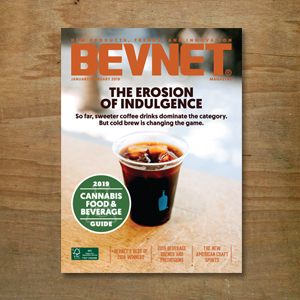
[00:43:34] Ray Latif: All right, I'm now with BevNET Managing Editor, Martín Caballero and Brad reporter, Brad Avery. Guys, thanks so much for being with me. Thanks for having us, Ray. Yeah, thanks. So it's been a little bit of time since we've had you guys in the studio. I felt like this is a good opportunity to invite you guys back because the latest edition of BevNET Magazine is out, the January, February 2019 issue. And you guys penned some pretty great stories in the issue. Brad, you were covering the coffee category for the magazine. What'd you write about? So every day we kind of hear a lot about cold brew coffee, but it remains this small, but also the fastest growing segment of Alfred Coffee. And so what I was interested in is you have this $2.44 billion space Alfred Coffee that is largely dominated by mainstream indulgent brands, many of which are iced coffee and not even cold brew. And so I wanted to kind of take a look at how the market is changing and what that change really looks like in practice.
[00:44:32] Ad Read: you see some of the larger strategics like Coca-Cola hitching their wagons to brands like Dunkin' Donuts and McCafe that have high name recognition but are also indulgent upwards of 300 calories a bottle. But you also have these insurgent smaller brands. And so it's pretty interesting to look at and speak to some of the analysts to get their sense of how is this change occurring and at what rate are we seeing it?
[00:44:58] Ray Latif: Because as it stands,
[00:45:00] Ad Read: You know, Starbucks alone is still the bulk of the category at $1.89 billion in Alfred Coffee.
[00:45:07] Ray Latif: So where does the shift occur? And for some of the smaller players right now, I mean, they're fighting for shelf space, but they're also attracting some of the attention of strategics, as shown by Chameleon being acquired by Nestle in 2017. So, you know, what are they doing to stand out at this point? How are they proving themselves from an innovation standpoint?
[00:45:28] Ad Read: Well, it really depends on what the company is. And you know, for a lot of the smaller brands that are trying to break out there, the startups, you know, that might be nitro, that might be doing something like a brand like key to life, which is featured in the article using MCT oil and additional types of functions. You know, CBD coffee, for example, a lot of brands are getting started that way for brands that are a little more established. Some of them, you know, have different approaches. a brand like La Colombe or Calafia Farms, they both have indulgence skews. And that's actually a lot of what you see on the shelf is, you know, La Colombe's draft lattes or Calafia Farms almond milk products. And so they're all kind of differentiating in different ways.
[00:46:10] Ray Latif: I think one thing though, that is changing is the move away from indulgence in general. It's just a slow, but very much a powerful force that is happening. And that changes, you know, when I say slow, it's going to creep up on you faster than you think. One might call it an erosion? Yes, as the name of the article suggests. Well done. Marty, Brad mentioned MCT oil, CBD. One would call these a functional ingredients, yes?
[00:46:38] The Giannuzzi: Yes, I would say so. So for my story, I got a chance to do, well, in every year for this issue, we do our sort of annual beverage trends and predictions. Which is always fun for me, I get to chance to reach out to a lot of different people who sort of work on that side of things and sort of pick their brain and get their thoughts about what to expect for the coming year. And yes, CBD is clearly top of mind for a lot of these companies, over $500 million market just in the US just for this year. But I think in general, the, you know, under the, you know, CBD kind of fits under this just natural functionality, both as independent and together natural ingredients that provide some functionality. That's probably the biggest trend driving ingredients and flavors for this year, I would say.
[00:47:20] Ray Latif: Now, in terms of that natural functionality, you know, what are these things doing? Like what are consumers asking for and how are these brands delivering?
[00:47:29] The Giannuzzi: There are certain things that I think consumers have an uptick in demand for that I noted in the article, things like sleep, things like anti-inflammation, things like anxiety relief. But I think really my main takeaway was they're not necessarily focused on one specific function as much as they're looking for ingredients that have a versatile profile that can sort of have multiple functions. and just kind of fit into a general health and wellness lifestyle. I think that's, you know, one of the qualities of CBD for sure is that has a lot of different sort of, you know, things that it can, you know, relieve or be applied for, but it really is something that fits into a general, holistic, healthy lifestyle, you know, on a sort of day-to-day basis. So there's a lot of stuff like that. I mean, things we've seen before, certainly, you know, ginger, turmeric, apple cider vinegar. Again, things that sort of you can incorporate in a lot of different products and food and beverage and can sort of be something that's like a daily consumption part of a lifestyle.
[00:48:25] Ray Latif: On the flavor side of your story, it was interesting to read about bitters and cocktail inspired flavors as feeding into consumer demand for lower alcohol products, alcohol free products. What's happening there?
[00:48:38] The Giannuzzi: Well, I think it's just super cool because I think consumers and companies and people in the space are just having a more open mind about stuff. I mean, again, the health and wellness trend is certainly, I think, having an effect on people's alcohol consumption. But, you know, as we've seen social drinking, people still want to have, you know, sophisticated experiences. People want to sort of replicate cocktails, you know, in a non-alcoholic version, but, you know, with somewhat elevated So I think yeah, there's a lot of crossover there again, health and wellness really driving a lot of these trends and sort of how can we make different categories, you know, a little bit healthier, a little bit more in tune with that. Certainly, you know, incorporating bitters and sort of cocktail inspired stuff into non-alcoholic products is certainly a way to do that.
[00:49:20] Ray Latif: Yeah, there's still nothing wrong with a good old fashioned cocktail once in a while, right? You can't beat the original, you know. Well, it's interesting to hear about what's going on in the spirits category, the spirits industry. There's a great story by Jeff Cioletti about the diversity of products in that space and where certain spirits are growing and taking some share from others. So check that out. Best way to read this if you're online, BevNET.com slash magazine. You can also order your free subscription at that URL as well, BevNET.com slash magazine. Gents, outstanding stuff. Thank you so much for being with me on Taste Radio and keep up the good work. All right. See you next time. See you later. That brings us to the end of episode 23 of Taste Radio Insider. Thank you so much for listening, and thanks to our guests, Ryan Lewendon, Martín Caballero and Brad Avery. Please subscribe to Taste Radio Insider on iTunes, Spotify, Stitcher, SoundCloud, or Google Play. As always, for questions, comments, ideas for future podcasts, please send us an email to askattasteradio.com. On behalf of the entire Taste Radio team, thank you for listening, and we'll talk to you next time.
[00:50:30] SPEAKER_??: you