[00:00:05] Ray Latif: Every week, thousands of people tune into Taste Radio and Taste Radio Insider for insights and advice that will help them succeed.
[00:00:12] John Craven: Our audience represents decision makers at emerging and established food and beverage companies.
[00:00:17] Ray Latif: Advertising on the podcast puts your company's name in the ears of veteran executives, industry gatekeepers, and tomorrow's leaders.
[00:00:24] John Craven: This is an opportunity to speak with the best in the business. Sponsoring Taste Radio will drive awareness of your company, open doors, and generate high-quality, business-oriented conversations. Email us at sales at BevNET.com to learn more. And now, Taste Radio.
[00:00:48] Ray Latif: Hello everyone, I'm Ray Latif and you're listening to episode 33 of Taste Radio Insider. I'm with my BevNET colleagues John Craven, Mike Schneider, and Jon Landis. We're recording from the Taste Radio studio in Watertown, Mass. And in this episode, we explore the mission and purpose of Patagonia Provisions. which is the food business arm of the outdoor apparel giant, in an interview with Managing Director Birgit Cameron. Just a reminder to our listeners, if you like what you hear on Taste Radio Insider, please share the podcast with friends and colleagues. Of course, we'd love it if you could rate us on iTunes or your listening platform of choice. If you haven't already, please do. What's Landis doing?
[00:01:24] John Craven: He's holding a meat stick cigar.
[00:01:25] Ray Latif: It's time for a meat stick. You look like you're smoking a meat stogie. What kind of meat stick is that? Nick's sticks.
[00:01:32] Jon Landis: Nick's sticks. Free range turkey snack sticks, and they're spicy. Oh, I've had those. Yeah. There's two in a package, which I really like. I like that too. Those are tasty.
[00:01:40] Ray Latif: This is nice. You've got a whole range of products in front of you. It's a banner day for the podcast.
[00:01:46] John Craven: I pulled them out of your box. It's a buffet. It's a buffet. Oh, you know what we have in front of me? There's those Smart Alex chips. I was emailing with the founder and I called him Alex. His name's Bruce. Bruce. Yeah. Sorry, Bruce. Bruce again. I'm sorry about that.
[00:02:01] Ray Latif: That's interesting. I like the snacks. They're tasty. Yeah. Well, I just came back from San Diego. I was out there visiting the West Coast office and recording a couple of podcast interviews. I met with Janie Hoffman, the founder and CEO of Mamma Chia, who was featured in episode 161 of Taste Radio. Check it out. Yeah, I also got to visit Boochcraft, which is a high alcohol kombucha brand. They just opened up a new 18,000 square foot facility. Sat down with Adam Hiner, who's the CMO and co-founder of Boochcraft. for a podcast interview that's coming out next week. Check it out. Really interesting brand. John Craven, did you get to go out to Boochcraft when you were out in San Diego? I did not.
[00:02:41] John Craven: I went to Junshan, but I guess the fact that you're even asking that, you know, San Diego is sort of like this little hub for alcoholic kombucha, which is pretty neat.
[00:02:51] Ray Latif: Yeah, I saw a lot of those. I went into a random grocery store and they were selling alcoholic beverages and I was pretty surprised. I think I saw five alcoholic kombucha brands on shelf, which was pretty nuts.
[00:03:02] John Craven: Ray, I'm curious, because this is something that won't come through in the interview probably. You've been to many kombucha breweries. How does it smell in an alcohol kombucha brewery? Does it smell the same? Do you smell the SCOBY? Do you smell like that twisted, fermented smell?
[00:03:14] Ray Latif: I think probably the Babe Kombucha facilities don't really have that SCOBY aroma, for lack of a better phrase. But no, this one was brand new. It was almost sparkling. I mean, it looked really clean. The fermenters and the bright tanks were pretty... They looked like they were just recently shined themselves.
[00:03:32] John Craven: Maybe I'm sensitive having been to a couple myself. I mean, I definitely noticed the smell of kombucha at, you know, health aid, GTs, you know, there's definitely- They have the vinegar room.
[00:03:44] Jon Landis: Where you walk in and you can just feel it seeping into your pores.
[00:03:47] John Craven: It's so good.
[00:03:49] Ray Latif: Well, I tried another kombucha brand when it was out there. I hadn't seen this before. It's called Babe Kombucha. It's a San Diego-based brand. The variety I had was called Maui Waui. That's made with strawberry, coconut, and banana. I'd never had banana flavor in Babe Kombucha, and this one was delicious. How was it? It was really, really good.
[00:04:05] John Craven: I would imagine that's difficult, because we haven't seen a lot of it.
[00:04:09] Ray Latif: Well, strawberry and banana is a classic combination. I mean, that's been going on since the days of, well, when John Craven first started BevNET, right? Oh, yes. So many strawberry and banana smoothies.
[00:04:18] John Craven: Not, not kombucha though. So much fresh Samantha.
[00:04:21] Jon Landis: Maui Waui is also a classic THC strain. Ah, see? Have you never seen the movie Half-Baked? Oh man.
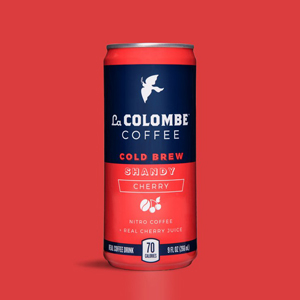
[00:04:31] Ray Latif: I have tried it. I also tried Seven Cold Brew Coffee, which is also a local cold brew brand in San Diego. They actually had this on tap at the Mamachi office. Really good stuff. So many cold brews. So many cold brews. Everywhere you go, you can get a local one. It's pretty neat. Yes. I have one in front of me right now. This is La Colombe's cold brew. That's not a local one, but it's a good one. Oh, I'm sorry. Yeah, this is a really good one. This is from Cherry Shandy line. This is made with real cherry juice. I love this product.
[00:04:59] John Craven: That is really testing the limits of what my palate would consider a cold brew. Pretty unique experience there. There's a lot of education that has to happen with that. We've talked about some of their shanties before and definitely pushes the bounds of what a cold brew is, but it also has so much education with it. And you know, La Colombe is a brand that has a lot of brand equity, so they can kind of get away with this stuff. They have the power to educate This is one of those where when people would walk into La Colombe's at first, I talked to some of the baristas and then I asked them, you know, do people think that this is alcohol because it's shandy? Of course they did, yeah.
[00:05:32] Ray Latif: Because Cherry Shandy is typically beer and lemonade.
[00:05:35] John Craven: Exactly, exactly. And now they've learned. This is a different kind of shandy, but that's hard. It's hard to get somebody to understand that.
[00:05:42] Jon Landis: for sure. Craven, to your point of cold brew regionality, we had our friend Andrew Elkins from DWS printing. They make high quality labels for beverages and beer and all sorts of good stuff. Family owned business down in Long Island, check them out. But he was telling us they're making all these great labels for all these upstart regional cold brew brands that are coming out seemingly out of the woodworks and flooding the market right now. I know from my personal experience that we've had several like regional specialty coffee roasters attend BevNET Live as part of like a due diligence fact-finding type of a mission because they got a lot of pressure from their retail partners to develop RTD Cold Brews and they want to know what it's all about. So it's not kind of surprising for me to hear that this is happening. A lot of the times the suppliers take a long time to evolve and be able to provide the types of capacity that these entrepreneurs are looking for and the capabilities that these entrepreneurs are looking for.
[00:06:44] Ray Latif: Landis, you mentioned BevNET Live. We are what? Yeah, I wanted a couple days away.
[00:06:49] Jon Landis: I wanted to say, cause I listened back and I was, I was listening to us talk about the deal horn and I want to put the deal horn in context for our listeners. Okay. Because DevNet live and Nosh live, these events are only made by the people who attend them. Every time someone buys a ticket, it makes the event greater. And we have a celebration here in the office for every single one of you who is going to join us. So it really means a lot to us that the community comes together around our content and around our events. We are very, very excited and have tons of people already committed to joining us. It's around the corner at this point. So if you're on the fence, give us a call. We'll talk to you. And I promise I'm not going to push you to do it. We do these things every six months. We're here. We're here for you. We can't wait to see you. Hopefully everyone can make it.
[00:07:37] John Craven: Operators are standing by.
[00:07:38] Jon Landis: Operators are standing by.
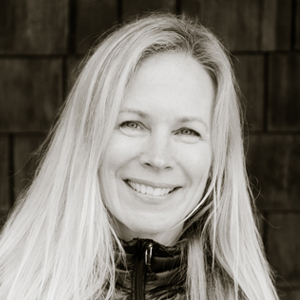
[00:07:40] Ray Latif: Well, if you need a push, listen to episode 161 of Taste Radio with Janie Hoffman. She's been to several BevNET Lives and she talks about exactly why it is the event to attend, especially for early stage brands and those focused on natural and organic products. So that's a plug for both BevNET Live and Taste Radio. Well done. Well done, Mark. See you in New York. All right, let's get to our interview with Birgit Cameron, who, as I mentioned at the top of the show, is a Managing Director with Patagonia Provisions. Burgett met up with BebNet editor-in-chief Jeffrey Klineman and Nosh editor Carol Ortenberg at Expo West 2019, where they discussed the origins and development of the brand, a food and beverage offshoot of Patagonia. Burgett also spoke about the opportunities and challenges derived from the brand's alignment with the apparel company and why its uncommon innovation strategy is critical to the company's overarching mission.
[00:08:36] in chief: Hi, I'm Jeffrey Klineman, the editor-in-chief of BevNET, here with my co-host Carol Ortenberg for Taste Radio. And we're here to speak with Birgit Cameron, who is basically the founder of Patagonia Provisions and runs that division for that massive clothing and outdoor equipment company. And we are really interested in hearing from you just how long and why Patagonia decided that food and beverage were outdoor equipment?
[00:09:17] Carol Ortenberg: Well, that's a great question. Thank you for having me here. It's great to be here. I think when you have been in business, if you think of Patagonia as this sort of overarching environmental company, that's been dealing with agriculture for many, many years through cotton, eulex, hemp, wool, all of those things. It just felt like such a no-brainer for us to actually expand our realm because agriculture as it relates to food is the biggest contributor to climate change or one of the, right? So we couldn't stay away from that. It's something that just felt like a natural segue to say, We know what we know on the apparel side, you know, what are the other things that we can do to really shift the supply chain, shift the thinking around climate issues and agriculture and food was such a natural progression for us. So for beverage, it ended up being
[00:10:13] in chief: beer.
[00:10:13] Carol Ortenberg: Kernza, and making a beer out of that. Longroot ale to begin with, and then longroot wit, which we're just launching now. And on the food side, it is, you know, everything from salmon to bison jerky to fruits and veg.
[00:10:31] Birgit Cameron: But it's also a natural progression for you that you've started this division of Patagonia as well. Yes.
[00:10:39] Carol Ortenberg: Well, Ivan has been thinking about food for many years. And so, you know, he has these seeds in his head and they kind of mull over and being the entrepreneurial guy that he is, he decided that maybe now is the time or a few years ago, I guess 2013 was when we launched our first product. So, you know, together with him and Rosemary Cario, our CEO of all of Patagonia, we really hatched the plan. What would a food company look like for Patagonia? It also meant that we needed to have a really diverse array of product going into a variety of categories to really drive the mission forward.
[00:11:20] Birgit Cameron: And you had grown up in the food industry, I think we had talked about before.
[00:11:24] Carol Ortenberg: Yeah, so my grandfather was in coffee. My father was in global import, export business. My brother's taken that over. My siblings are all in food of some sort. So it just felt like a natural progression for me, even though I went through this circuitous route of you know, branding and design and architecture, you know, it circled back to food. And so for me, it felt like all the things that I learned across all of those different things just came together to be able to put this next challenge together, which is enormous and exciting. really game-changing, I think.
[00:12:02] in chief: Now, Patagonia is such a meaningful master brand, and I recognize this sort of from-the-earth agricultural connection between some of the clothing and food, and yet... I think a lot of people initially felt there was a dalliance aspect to it, that you have such a powerful brand in clothing and in equipment that the notion of, you know, just selling a little jerky seemed like something that was an experiment. So, I guess the question here is, how do you get people to take it seriously?
[00:12:45] Carol Ortenberg: That's a good question. And a lot of people do say, why food? Right. Why are you going down this road? You know, billion dollar company making clothing and now you're going into food. So you have to start somewhere. And, you know, the past few years have been about what would a food company look like under the Patagonia brand? And so we really went deep and we built out the food line. We created a beer from Kernza. We've got 23 different SKUs approaching 30 across a number of categories now. So I think the time is now, and we've tested it out in the marketplace, there is now a transition happening, really taking it from an idea and an experiment. As Ivan even says in Unbroken Ground, this is an experiment, but you know, a really exciting one. It's now really gaining traction. So I think the proof is in the fact that people are buying it. We're growing like crazy. We're doubling our business. We're getting out in the world a little bit further and a little bit deeper. And so We're now ready to really drive it to that comparable size if, you know, if we can.
[00:14:06] in chief: So you've been incubating within the company.
[00:14:09] Carol Ortenberg: It is.
[00:14:10] in chief: And are you in sort of more traditional retail yet or is it more the sort of REIs and other outdoors and D2Cs where Patagonia is typically thrived?
[00:14:22] Carol Ortenberg: Yeah, it's kind of all of those, a multi-pronged approach. So we started within our own space, Patagonia Stores, and created our own Patagonia Provisions.com. That really took to the public. There was a lot of traction in that. We started to open up to grocery and experimented in grocery. And then we went to the easy place for us, which is outdoor. So REI, it's going to be in all REI stores. It's been in there for a little while in some stores as a test. So it's really a progression. out into a bigger way. We're moving slowly and methodically, making sure that along the way we're building it with the same ethos, same principles as Yvonne did on the other side, the apparel side.
[00:15:06] Birgit Cameron: I'm sure with this line, the goal is to make as big an impact as you can in the food system. How does that play out when you're developing the products themselves? Because I'd say that, you know, although they are delicious, buffalo jerky and tinned mussels are probably not two of the biggest categories on store shelves. So you kind of are taking an additional task upon yourself where you're educating people about why should you have a premium product, pay a little bit more, learn about the brand, but also try these new products that, you know, Americans at least are not as necessarily well versed in.
[00:15:44] Carol Ortenberg: Yeah, the way we approach all of our products is, and that's why I say we, everything we make, it has a really deep reason for being. We build product not for trend, but we build it to solve a problem. So if we see a problem in the way salmon is being harvested, We actually, I put together a whole advisory, all these, you know, people in the industry, scientists, created an advisory, figured out the best path forward for catching salmon, and then brought a product to market to tell that story. Same thing with Kernza, Wes Jackson, you know, if that science was left in the institutions, it's just gonna sit there, and Wes was like, oh, it's 20 years out, and we said, no, no, no, let's talk about it, let's bring it out to market. So we kind of approach things from a different, sort of a backwards way of doing things. And I feel like because of this common knowledge that we all have now and education that's happening around environmental moves that we have to make, people are far more educated. We're hoping to sort of have them come on board, not only through delicious and nutritious aspects, but because of the game changer that some of these products are depicting, are presenting out there. So, buffalo jerky is about preserving the Great Plains and telling people, educating them on the fact that the prairie is as important as the rainforest, right? So, buffalo are the keystone species to that. We create a product to talk about that. So, it's less about what's on trend and more about defining paths forward that are better, healthier for the planet, for people, for wildlife, for our future, for our children. It's a different kind of approach than the usual.
[00:17:32] Birgit Cameron: You're right. There are much more educated consumers. And in some of the stores you've been in, you're able to have more of that discussion with them on the shelf. But as you move the company forward and it's gaining those larger accounts and more mass distribution, do you think you'll have to change strategy in terms of marketing or presence? Because it's a lot more crowded on the shelf of a Whole Foods or a Target than the food section of an REI. It's true.
[00:17:58] Carol Ortenberg: And there are certain products that will do well in grocery and compete nicely with what is on those shelves. Food for outdoor might be different. We may actually make things specifically just for outdoor. We might say, well, this other one lives really well in grocery, but it's not quite meant for that outdoor space. So I think really understanding the line, how it's behaving out there, what is that reaction and adoptability of these products, and then pivoting to accommodate which ones are working in what segment. We have the direct, we've got outdoor, and then we've got the grocery.
[00:18:36] in chief: Do you find the brand is a help or a hindrance when you label something like Patagonia on a new food line? I mean, that's a heavy thing to carry.
[00:18:50] Carol Ortenberg: It is, and it represents a very high bar. And with a mission statement like ours now, we're in business to save our home planet. You can't help but approach everything from a very different point of view. It's in some ways difficult in that it means we really need to go super deep and surround ourselves with the right like-minded thinkers. It's a great halo in terms of the brand recognition. I think, of course, people then slot it into only outdoor. And so that's where it becomes a negative thing that people, you know, kind of need to realize that this is just really good food and you can happen to take it outdoors. But, you know, it is something you can stock your pantry with every day. But that has to come from tasting it and recognizing that on their own.
[00:19:39] in chief: Now, were you developing new supply chain methodologies or was it sort of out of the Patagonia kit for developing new suppliers?
[00:19:51] Carol Ortenberg: Well, it's a little bit different for apparel versus food. We are working with partners like Steve Jones at the Bread Lab, WSU, who has over 40,000 different alternative grains. They do good work. They do excellent work, right? And so, you know, it's really finding the people that are in the food arena and bringing them in similar to the way that the apparel side does on who's doing what the best way in, say, growing organic cotton and whatnot. Now, we do have some interesting crossover happening, which is really great with our organic cotton farmers in India, for instance, who are now adopting regenerative practices. By doing that, they're growing food. to be in those interim moments and crop rotations. And so that then opens up a whole new market for the food side and for the farmer then to have an added revenue stream. So we see crossover, but the basic thing is the ethos of the company, right? If you apply it to food, it's not very different. The way we look at things on the apparel side and the way we look at things on the food side. It's really about that question, what would we do if we were in business to save our home planet?
[00:21:20] in chief: Terrific. I think that answers my question beautifully. I think the framework is there. Some of the processes are very similar and some of them are, in fact, furthering the mission on the clothing Mike and Jon the food side as you develop new ones.
[00:21:39] Carol Ortenberg: Right. We have, you know, hemp is another product. We've come out with savory seeds, which is hemp, roasted hemp, buckwheat. These are indicators of... It's cover crops, basically, that we seasoned, put them together in a little mix. On the apparel side as well, we have hemp products in our workwear line and whatnot. And then sometimes there's crossover with who's growing what.
[00:22:01] in chief: You have CBD-infused clothing?
[00:22:04] Carol Ortenberg: You never know.
[00:22:08] Birgit Cameron: We are a center for innovation.
[00:22:10] in chief: Absolutely.
[00:22:10] Birgit Cameron: Who knows what's next? You mentioned surrounding yourselves with like-minded individuals. How do you get the people who aren't like-minded individuals to buy into the line and to understand what you're doing and to support what you're doing? How do you cast the net wider and really Jon Landis together with everyone?
[00:22:30] Carol Ortenberg: From a consumer point of view?
[00:22:31] Birgit Cameron: Yeah.
[00:22:32] Carol Ortenberg: Yeah. I think it's really, it's about driving home common concerns and answers to common concerns. Number one, like I said, it has to be delicious. Number two, it has to solve a nutritional concern. You know, are we getting enough omega-3s? Protein, if I'm not eating animal protein, I need plant protein. So making sure we are offering those things that consumers are looking for. And then the third thing along the way is to be able to put little morsels out there as to the other benefits of why we're approaching our supply chain the way we do in terms of the environment. So it's an evolutionary process with the customer. Some people are already there. Some people, you know, might have a penny drop moment along the way to say, wow, that's really incredible that we're being connected to the farmers or that farmers can save money because with these practices, they're using less water or they're not getting sick or our food is healthier because we don't have pesticides in it. Right? I mean, talk about beer lately, right? That's coming out of glyphosate and beer. Our beer has no glyphosate. We've tested it because we're working with these practices. That, as a consumer, that makes me feel pretty darn good that a company can say, yep, we've tested it. We're clear. Nothing there, folks. So I think maybe those are the entry points, the gateways to
[00:24:04] in chief: Or it would just never enter our ecosystem even. You know, it's not even we're clear. It's just that's not part of it because that's not how we built it.
[00:24:14] Carol Ortenberg: Right, exactly. That's an important part of the whole thing. It starts at organic and then everything goes to, you know, regenerative practices on top of that, which leads to the ultimate and healthy for farmers, workers, animals. It's sort of a no-brainer to go down that road.
[00:24:34] Birgit Cameron: In terms of entry point and one way that you are sort of connecting with consumers, you've done amazing work with documentary filmmakers and photographers. How does that art form play a role in a food company and how did this come about?
[00:24:51] Carol Ortenberg: I'm glad you brought that up because I think the biggest piece of that is connecting people to where their food is coming from. So you can see the fishermen, you can see the farmer and understand that farmer's point of view. To us, it's really important to make sure the people who are making our food, harvesting our food, creating our food, are part of the dialogue. And there's nothing better than telling those stories, which are so enriching, and very deep thinkers out there who care so much about the planet and the future generations that they're doing what they're doing for. Yeah, I think there's nothing like that visual language and the voice of the people who are responsible for our food ultimately. We can put it in a package and create a beautiful product, but they're the most important people in the whole supply chain.
[00:25:50] Birgit Cameron: Well, thank you so much for sharing your voice with us. It was really wonderful to have you join us here on Taste Radio and hope you have a very successful Expo West.
[00:25:58] Carol Ortenberg: Thank you so much. It's such a pleasure to be here.
[00:26:04] Ray Latif: That brings us to the end of episode 33 of Taste Radio Insider. Thank you so much for listening, and thanks to our guest, Birgit Cameron. Please subscribe to Taste Radio Insider on iTunes, Spotify, Stitcher, SoundCloud, and Google Play. As always, for questions, comments, ideas for future podcasts, please send us an email to ask at Taste Radio. On behalf of the entire Taste Radio team, thank you for listening, and we'll talk to you next time.
[00:26:32] SPEAKER_??: you