[00:00:05] Ray Latif: Natural food and beverage companies find their next great employees using the BevNET and Nosh job boards.
[00:00:10] John Craven: Our job boards reach industry pros actively seeking a new opportunity, as well as those setting up alerts for their dream job. Placing a single job on our site and in our newsletter is simple. If you have a more ambitious plan, you can save time and hiring budget with a 10-pack.
[00:00:25] Ray Latif: To learn more and post a role, visit BevNET.com slash jobs or Nosh.com slash jobs. And now, Taste Radio. Hey everyone, I'm Ray Latif, and you're listening to episode 34 of Taste Radio Insider. I'm with my BevNET colleagues, John Craven, Mike Schneider, and Jon Landis. We're recording from the Taste Radio studio The Watertown, Mass. And in this episode, we explore the mission and business strategy of trend-setting tea company, Smith Teamaker. Darren Marshall, the CEO of Smith Teamaker, and Ravi Kroesen, the company's head tea maker, join us for an intriguing discussion about the influence that one small company can have on an entire industry. Just a reminder to our listeners, if you like what you hear on Taste Radio Insider, please share the podcast with friends and colleagues. And of course, we'd love it if you could rate us on iTunes or your listening platform of choice.
[00:01:18] Jon Landis: Smith Teamaker, Head Teamaker?
[00:01:21] Ray Latif: Yes, that's Ravi Kroesen's position.
[00:01:24] Jon Landis: It's too bad his last name is not TeamMaker. Do we have one of those? Yeah. We just did it.
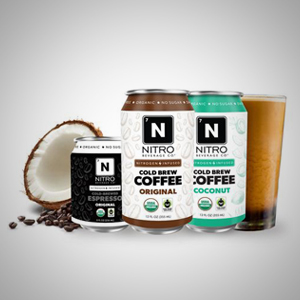
[00:01:31] Ray Latif: We'll use that awkward silence. We'll use that. We had crickets and tumbleweeds. We have. We've also had, it feels like it's been Grand Central Station here at BevNET headquarters over the past week. We've had visitors from all over the country come out and see us, which we love. Last week, we had the folks from Nitro Beverage Company visit, the co-founders, Ali Mohammed, Kareem Al-Hamasy, and Mike D'Amico dropped by and dropped off bunch of stuff that they make, including their cold brew coffee, their original, they have a toasted almond variety, their coconut variety, which is awesome. I really like that product. And they have an espresso cold brew as well, which was great.
[00:02:08] John Craven: It was good to see those guys. And they came out and talked to the edit team about the Rainforest News. You can read about it on BevNET.
[00:02:14] Ray Latif: Yes, they recently signed a deal with Rainforest Distribution for distribution in Metro New York. Indeed, it's on BevNET.com if you want to check it out. Also, I saw Matt Weiss who came into town. He's the founder of RIND, a maker of dried fruit products that have the peel on them. These are great. I love this product.
[00:02:35] John Craven: I love when Matt comes out and also the Nitro Beverage guys come out because they like to talk to us about their next levels of innovation. That's like my favorite thing about working here is when, you know, someone comes in and they just want to kick it and tell you about what they're thinking about their plans for the future.
[00:02:50] Jon Landis: It's funny, too, because Matt has a full-time job, and the Nitro Beverage guys have that, like, head shop and CBD smoke shop or whatever they got in New Jersey. But they all got, like, these other things on the side that it seems crazy. It seems, like, really counterintuitive, because there's so much to do with running a business. But when you have other things, you have something outside your life going on, it kind of forces you to slow down. And in some ways, that can really be a very, very good thing for an entrepreneur.
[00:03:20] John Craven: But you're also hearing these guys go, you know, when's the time? When's the time to cut over? When's the time to make it the focus? Because they want to go next level with these things. And you're always going to be asking yourself that. Plus, you're kind of perpetuating the whole, the hustle culture is the way. And I believe in these side hustles. At some point, you have to focus and go all in if you want to achieve the goal of being national brand, lifestyle brand, whatever your goal happens to be, it takes a lot of focus. And we see a lot of entrepreneurs out there on their Instagrams, hustle, hustle, hustle, hustle, you know, working all the time around the clock. And we also see, you know, in the news, you see stories about entrepreneurs who just are, you know, having breakdowns. And I don't know how long this whole hustle culture thing can last.
[00:04:03] Jon Landis: I think in the case of Ryan and Nitro, all the owners here really believe in what they're doing. They're very passionate about it. And when that happens, you know, it's like, okay, so these opportunities that exist today, they should exist six months from now, two years from now. Like, you know, if someone loves this product today, are they going to fall out of love with it? It's not something that's, you know, dried fruit and coffee aren't some like super flash in the pan trending things that, you know, if they are strategic about it. And when you're, this is kind of where we were talking with Matt, when you're forced to only put X amount of hours a week into it, you're forced to say no to a lot of stuff. And for entrepreneurs saying no is often one of the hardest things. So it, again, sounds counterintuitive, but it actually tends to work in their favor, at least at these early grassroots stages.
[00:04:57] John Craven: Look at these products too, though, Landis. I mean, the products, the packaging, they're pretty mature. They're good products inside. You know, we've seen a lot of people go all in with less.
[00:05:07] Smith Teamaker: Well, also, I think, you know, in some cases there, what you're perceiving is not being all in. I mean, I think it's actually, you know, a good thing that people have some diversity of what they're, you know, focusing their mind on. I mean, I think some sort of entrepreneurs and to your point of, you know, this hustle culture that are just totally all in on one thing. I mean, every company and everything you do has its sort of ups and downs. And if that's all you have, then, you know, those highs are high and the lows are pretty low. You know, some people might, I don't know, go out and golf or meditate or whatever they do and other people might have a second, you know, job or company that they're working on. So I don't think it's, you know, unhealthy. Obviously, the challenge is just, you know, to your point of focus and how much time it takes to really incubate any company and get it off the ground, you know, balancing all of that is for sure challenging.
[00:06:04] John Craven: I totally agree with you on the whole point of making sure that you have other things to focus your mind on because if you're constantly focusing on work, You know, if you're in that 24-7 work all the time lifestyle and you're pushing others into that lifestyle, first of all, your employees don't always have the same skin in the game as you do and expecting them to work as hard as you do, that's a tough thing. And, you know, then you start to just become sort of single-sided and you can't see the forest for the trees. I'm sorry to use the, you know, the cliche there. I was giving a reference this week for someone in the tech space, and one of the questions was, can they handle the hustle culture? Can they handle the tech world? And I was like, you know, I'm not going to say whether or not they can do that. You should ask them whether they can handle it. And I'm also not going to sit here and perpetuate the hustle culture either. I think this is a person that works really smart. And you can get a lot out of that person if you let them work that way, the way that they're used to working. If you push somebody way too hard, you're not going to get the best work out of them. You have to kind of think about our employees and their lifestyles and let them have a life outside of work.
[00:07:09] Ray Latif: It reminds me of the line in the TV show, The Wire, when one of the cops said to Jimmy McNulty, who's one of the protagonists on the show, the job will not save you. It won't make you whole. You've got to have something else in this life beyond just the job.
[00:07:24] John Craven: How bad do you want it? You willing to put in 24-7, Ray Latif?
[00:07:27] Ray Latif: Well, I mean, on the flip side... That's a no. We're just going to ignore that. Well, on the flip side, you know, in episode 149 of Taste Radio, our flagship Taste Radio podcast, we had Pete Lesko, who's the founder of Food Should Taste Good. And in that episode, in that interview, he'd said, look, you know, if you spend two years of your life committed to the job, committed to your brand, and hustling and pushing every single day, you know, two years isn't really the longest time in the world. And hey, that's coming from a very successful founder of a very successful brand.
[00:08:01] Jon Landis: Yeah, these things aren't like one size fits all. You gotta figure out what kind of works for you and what works for your situation in life and for your significant other and your family and all this stuff. So, I mean, some people are, you know, they thrive when they throw themselves. No, not talking about me. Some people thrive when they just throw themselves all into these types of things. And you just, it's about self-awareness and recognizing, you know, what you could best bring to the table. How do you, I've seen some people with employment situations where they're just worn down to the bone and, you know, they're really talented and excellent individuals that, you know, you're not going to get anything out of them if they can't sleep at night because you're beating them up.
[00:08:46] Ray Latif: Can we talk about something else that's on the table here, not to completely just take a A 180? Yeah, let's take a 180 here. A hard right-hand turn here.
[00:08:55] John Craven: Thanks to the Nitro Beverage guys and to Matt for provoking some interesting convo here.
[00:08:59] Ray Latif: And thanks to the Nitro Beverage guys for dropping off some nice beer and alcohol from the state of New Jersey as well. Always accept that. those kinds of products as well. I'm holding in my hand this flask of a cocktail mixture called Proposition and I'm looking at it and I'm like, this has John Craven written all over it because it's in a cool bottle, it's in a flask. This particular variety is made with turmeric and ginger and oh, lo and behold. CBD. It's got 15 milligrams of CBD in it. John Craven, I mean, I feel like you'd guzzle this without the alcohol.
[00:09:34] Smith Teamaker: I tried it. Oh, geez. Without alcohol. I tasted it. It needs a little work, I would say. But that's also not probably the type of mixer I would use in a cocktail. But it's interesting. I mean, the packaging for sure catches the eye. I didn't actually notice the CBD on first glance, you know, and only until I picked it up and looked closer. But it's it's a pretty it says on it that it's ready to drink. That's the reason I gave it a try.
[00:10:04] Jon Landis: This is only one serving.
[00:10:06] Smith Teamaker: Because most mixers probably don't taste so good from the bottle. And this one, I think it needs something. I wouldn't drink that straight.
[00:10:13] Ray Latif: Yeah, it's interesting. It says non-intoxicating and ready to drink. I guess that's an important call out for folks who don't know what CBD is.
[00:10:20] John Craven: Well, we've got a couple of products in the product cave that are ready to drink shots. So I think it is an important call out. I mean, they say shots.
[00:10:28] Ray Latif: They're ready to go. You make the cave sound as like it's some strange place in the darkness and in a cold, dark place. Where we chain you and land us up a night That's terrible. It's just a room that used to hold our servers before we moved to the cloud used to be the server room now It's the product room.
[00:10:45] Smith Teamaker: Yeah a nice fridge the good old days. I'm needing a server room When did you stop when we stop using a server?
[00:10:50] Jon Landis: She's I don't know in Three years, there's still some like beat computer bolted to the ground in there. Oh
[00:10:58] Smith Teamaker: No, that's just like a desktop hanging out. That's kind of like the boneyard junkyard, just in case.
[00:11:04] Ray Latif: I remember when it used to get really hot in there, because of all the CPUs moving at one time, and you'd have fans blowing like crazy.
[00:11:09] Smith Teamaker: Oh, it would be like deafening. Yes. Yeah, for sure. And basically something would crash, and you might as well go home. You just can't do anything. And then the internet would lose Nitro Beverage database. Air conditioning. Well, we never ever. never hosted the website. Ah, okay.
[00:11:26] John Craven: That's, uh... Well, that was co-located. Don't you know about co-location?
[00:11:30] Smith Teamaker: No.
[00:11:30] John Craven: Good. You don't need to know about co-location. Yeah, that was fun. Yeah, that's like when you basically you build your infrastructure and you take and you put it on a computer and you send it somewhere and just hope someone plugs it in the right way.
[00:11:43] Smith Teamaker: Or old days of BevNET, you like buy some beat Dell server and then you put your stuff on it and then you put said Dell server like in your car and drive it somewhere and Yeah, when it breaks, it's like you're calling some phone number to get some curmudgeon-y fellow who works in a bunker to go like press some buttons on it.
[00:12:02] John Craven: Yay cloud. And speaking of yay cloud, isn't Amazon speaking at WebNet Live?
[00:12:07] Ray Latif: How about that segue? Mike Schneider, give yourself a gold star. I love how he's questioning this despite being in charge of all the marketing for the damn event.
[00:12:16] John Craven: Isn't it true, Ray?
[00:12:18] Smith Teamaker: He's like the Ron Burgundy. There was a question mark on the teleprompter, and he just had to read it. Exactly.
[00:12:24] Ray Latif: Well, Mike, you are correct. Kyle Walker, who's Amazon's head of new business strategy, will be speaking at BevNET Live summer 2019. Tickets are rapidly disappearing. It's a race to the finish, honestly. Jon Landis I think tickets are going to sell out pretty soon is I mean within the next two weeks or so.
[00:12:41] Jon Landis: I mean today is the we're wrapping up the applications for our competitions and you know I kind of got my head buried in that at the moment. But yeah we only got a few weeks left before these events and we're not going to have space for everybody. I don't think so. If you're coming just get your tickets. It's really exciting when, you know, I got to keep saying this when people are signing up because this community is coming together and we're watching it happen in real time. And we're having a celebration for everyone when you guys get your tickets.
[00:13:11] Ray Latif: And frankly, I want to meet all of our listeners. I love going to trade shows and our conferences and meeting folks who are listeners of Taste Radio and like, Oh, I really like that episode or really like what you guys are doing. Also, if you think we suck, if you think there's something we're doing completely wrong, I want to hear that too. So feel free to give us any feedback.
[00:13:32] John Craven: We welcome it all. Maybe don't tell us directly, like if I sucked, tell Landis.
[00:13:38] Jon Landis: What the heck is going on? It's a celebration. Oh, I see. Cool the gang. All right.
[00:13:43] Smith Teamaker: We've got some tickets going out the door. Better get a license for that, right?
[00:13:49] Ray Latif: Nice. Nice. All right, I think it's time we get to our interview with Darren Marshall and Ravi Kroesen, who, as I mentioned at the top of the show, are the CEO and Head Teamaker, respectively, of high-end tea brand Smith Teamaker. Our conversation, recorded in Boston at the 2019 Speciality Coffee Association Expo, examines the mission and influence of Smith Teamaker Maker, which is renowned for its expertise in blending and commitment to high-quality sourcing. We also discuss the backgrounds of Darren and Ravi and their roles as stewards of the company, which was founded by the late Steven Smith, a legendary figure in the tea world, perhaps best known as the creator of the Tazo brand. Darren and Ravi also explain how the brand takes a patient approach to growth, why becoming a billion-dollar company is not in their plans. All right, folks, it's Ray with Taste Radio. I'm at the Boston Convention Center. I'm at the Speciality Coffee Association Expo, and sitting with me are two fine folks from Smith'Smith Teamaker, CEO Darren Marshall and Ravi Kroesen, who's the Head Teamaker for the company. Gentlemen, thank you so much for being with me.
[00:14:52] Darren Marshall: Thank you for having us.
[00:14:53] Ray Latif: So Smith Teamaker, you guys are based in Portland. I actually was out in Portland about three weeks ago and I visited your company store, beautiful place. I wanted to stay there for like three, four hours. It feels like a very, very comfortable place. You go and you sit down, it's a cafe and behind a big glass window is a lot of your manufacturing operations. And there's something about Smith Teamaker maker that's, I don't know, such an experiential kind of thing and a feeling. And a lot of that revolves around the gentleman who started the company, Steven Smith, a inspirational leading figure, one of the towering figures of tea, the creator of Tazo. And, you know, one of the things that you guys are doing is sort of carrying on the legacy. Steven Smith passed away about four years ago, and it's great to see that his legacy is being carried on by the company right now. And I'm curious, you know, how did you guys come to Smith? Darren, I know you have a lot of experience in the beverage industry, having worked with Coke for many years. You know, what's your background? How do you, how'd you come to Smith?
[00:15:51] Darren Marshall: It's interesting, I remember when I was in high school on the way to college, I was packing, getting ready, and my most important trip before heading off to college was going to the tea store to be able to get a pound of my favorite teas. Where were you living at the time? I grew up in Canada, in Winnipeg. So through my college days and as my childhood, I just grew up with tea. It was part of what I did and what I experienced, part of my lifestyle. I had the opportunity and privilege to work in the packaged goods industry in a few interesting places. I grew up in Canada from a professional perspective, but then worked in the United States, in Malaysia, in Singapore, in Thailand, in China, and then in the U.S. again. And through that process, I learned a lot about the beverage industry. I worked at Coke for a long time in a range of different roles. I had an opportunity to work in the luxury space for a few years, which was really eye-opening in many ways about how to really create and provide elevated experiences for people. And Smith was very much the confluence of both of those worlds. Ours is a product that is really elevated and pristine. In many ways, it's a beverage that has an international footprint, and it's a very luxurious experience. And so all of my experiences, I think, have come together in a great environment at Smith, and I'm really pleased to be here.
[00:17:23] Ray Latif: Certainly sounds like it. Ravi. You have a different kind of path to Smith. I heard that you were a DJ at one time?
[00:17:32] Ravi Kroesen: Yeah, for about 15 years in Portland, Oregon.
[00:17:34] Ray Latif: What kind of a DJ were you?
[00:17:36] Ravi Kroesen: Underground music, so generally raves, nightclubs, one-off events that were just more geared towards underground electronic music of various different genres. So anything from down-tempo to more up-tempo stuff on the house techno. I guess somewhat pseudo-trance sort of genres, I would be DJing those kind of events.
[00:17:55] Ray Latif: you know, techno, tea, it's all sort of the same thing at this point, right? DJ, for 15 years, how'd you get into tea?
[00:18:02] Ravi Kroesen: Purely by mistake. It really wasn't something that I had planned. Grew up drinking chai, lived in India for about seven years, and chai was a daily part of our experience, both in the morning and in the afternoon. But my brother actually was working for a tea company in Portland in 2000 and asked if I wanted a job. So it was a warehouse space with one working light and about 20,000 square foot of space.
[00:18:25] Ray Latif: You're like, this is a great place to hold a rave, right?
[00:18:26] Ravi Kroesen: I was like, that was my whole angle. I'm like, you know, this could be an opportunity here, but it changed to a different one. And the space itself was boxes strewn about. So organize the space and they need someone to manage it afterwards. And I asked if I would, and I said, sure. But really what changed was after about two months of managing this warehouse space, the owner for the Dow of T brought in all his teas. So there's about 200 teas down there. And so every morning I would try a different tea. And about a quarter of the way through, I ended up coming across this oolong from China called Mi Lan Xiang, which translates to honey orchid fragrance. And it's this Phoenix oolong that just had these stone fruit notes, honey, and a slight orchid fragrance to it as well in its name. And it just blew my mind. I was like, I had no idea tea could taste like this, so.
[00:19:11] Ray Latif: It feels very much like in the wine world, when a lot of people, they come across that first glass of wine that they're like, wow, I never knew wine could taste like this. It feels like that kind of experience for you. Exactly. So I mentioned Steven Smith, you know, let's back up for a second, talk a little bit about the history of Smith Teamaker. The company's been in business for about 10 years now?
[00:19:27] Darren Marshall: About 10 years, yeah. Stephen was a remarkable fellow. The New York Times, in his obituary, said that no single person has impacted the American tea industry more since the Boston Tea Party, apt where we are today, than Steven Smith. Stephen came back from his military service in the early 70s and was working at a health food store in Portland. And the owner had overbought peppermint, so he had a pallet of excess peppermint in the back. And so Stephen, at the start of his entrepreneurial journey, said, hey, I'll take that pallet. So he filled up his VW bus with this extra peppermint and started driving up and down the West Coast selling peppermint to whoever would buy it. And in the process, he and a few others said, you know, there's this Tetley stuff and there's this Lipton stuff and there's this Red Rose stuff, all of which is, you know, not optimal. We could actually create something that's far more different. And so they created Stash, the first specialty tea brand in the US in 1972. Grew that for the next 20 years, sold it to a Japanese conglomerate and thought they were done. But then Steve got bored and he thought to himself, You know, what the world needs is a really interesting brand in the tea space. So he said to himself, what if Merlin the Magician were to meet Marco Polo? What would they create? And that was literally the brief for Tazo. And he and a few other folks then created Tazo in 1993, which grew and then was acquired by Starbucks and grew even more and grew to become the world's largest specialty tea brand. He then stayed actually with the business for quite a few years after that, retired a second time in 2008. And he and his family spent the next year or so in the south of France and they wanted to live the high life for a while and relax and enjoy. You imagine the scent of lavender coming off the fields. And one of the things he noticed was there was always a line outside the boulangerie and there was this artisanal baker who every morning would really impact every family's life with this amazing baguette that was perfectly chewy and crunchy and always the right dimensions and fragrances. And he said, you know, he's an artist, he's an artisanal maker, and what the world needs is that same sort of artisanal approach in tea. And so in 2009, he and his wife, Kim, created Smith Teamaker, his namesake brand, his legacy, if you will. And that's how it all began. The first American super premium tea producer that has created really amazing artisanal blends since.
[00:22:24] Ray Latif: Again, we're here at the Speciality Coffee Association. It feels like downstairs on the show floor is just packed with people that are looking to give an elevated experience. So how does Smith try to differentiate itself, you know, given that we are in a crowded space or an increasingly crowded space for specialty and super premium tea?
[00:22:45] Ravi Kroesen: Basically, if you look at what Steven Smith's established since day one is the attention to craft. There's a focus on creativity and also origin. So with those three elements, that's the sort of nucleus, if you will, of Steven Smith Teamaker maker. And if you take, for instance, our British brunch, which we're drinking right now, this tea, compromises of three separate teas, an Assam, a Ceylon, and a Kimon. However, we're using probably five different gardens, lots from Assam, three of Ceylon, and two from Kimon. That unto itself is not done in the industry. There's an approach to craft in terms of making the tea stand out time after time, lot after lot. We have samples of every single lot we've created since day one, so 10 years of tea making in our warehouse for storage to reference back to. We're always referencing from the lot we're currently making. It might be about 1,000 pounds that we'll be blending, and we're referencing the last lot we made a month before. We have two other lots that are in our lab for ready access right away. So this craft that we constantly are pushing and approaching, never compromising on quality. We do buy from the best gardens around the world, and every year we're sent hundreds of samples from all these different gardens. We cup through those rigorously to find those best lots, and they may change from garden to garden depending upon the weather and a lot of other aspects that go into the outcome of that cup, if you will.
[00:24:14] Ray Latif: So Ravi, do you Steven Smith Teamaker as not just providing an experience to the consumer, but being the sort of trailblazer for the tea industry in that you are taking such a disciplined and specific and specialized approach to what you're selling and how you're sourcing?
[00:24:32] Ravi Kroesen: Absolutely. I've been involved since, as I mentioned earlier, since 2000. And I've seen a lot of tea blending through that time. And I can speak with authority and knowledge saying that I've never seen something at such high level since being at Steven Smith Teamaker. And the attention that we take to every detail is the pinnacle of tea making at this current time.
[00:24:53] Darren Marshall: When you look at the broader tea industry, there's a lot of change which is happening. There is a ton of fragmentation across every category that I'm sure that you see and your listeners see. Within the tea industry, and certainly in the mass market environment, there's a lot more functional types of products which are available. the mass market taste oriented products are shrinking. People are seeking out either a functionality on one hand or a super premium proposition on the other hand. And so we're not inspired necessarily by supermarket brands. We are inspired by specialty brands from Europe or Asia that are doing really interesting, really different, very craft oriented types of propositions. We want to be able to provide for consumers something that's special and unique and that's handmade and tastes like it's handmade as well.
[00:25:51] Ravi Kroesen: We look outside of the tea world for a lot of inspiration. Most of our inspiration comes from restaurateurs and chefs that are really trailblazing. And it's really about the creation of flavor based on using various ingredients. And you'll find that, you know, if you look inwards too much, you know, you tend to start copying and creating the same things. But if you look at a lot of the new blends that we put out onto the market, our Portland Breakfast, our Rose City Genmaicha, as long as some of the stuff that we're doing on more seasonal, newer items, they're very much taking this this inspiration from a farmer or from chefs. You'll see that too with our standard signature line where it's almost like reinterpreting like classic French cuisine. All of our blends may seem like our British brunch, you'll be like, oh, that's English breakfast. What's so special about it? But, you know, talking about it before, taking all these different lots of teas to create this fantastic balanced beverage, time in and time out, takes a lot of effort and energy. And a lot of people are just generally just look at a recipe and they're just weighing that out and throwing it into a blender and it's done. rather than, you know, cupping every result, making sure that if it needs to be tweaked, if we need to add, say, 2% more of a psalm in that blend of a specific garden, we'll make sure that's happening, so.
[00:27:01] Darren Marshall: Commercially, what that means from an implication perspective is that we're not competing on price. If there is a customer who's looking for a cheap tea solution, then we'd be happy to guide them in that direction, but it's not something that we can provide. But for someone who truly wants to create and offer a elevated true tea experience, then that's something that we can engage in. So we have no intention of becoming a billion-dollar business. We do strive to be able to craft exceptional tea experiences for those who appreciate them any day of the week.
[00:27:36] Ray Latif: Very few times do I hear our entrepreneurs or executives talk about not wanting to be a billion-dollar company, especially someone who used to work at Venturing and Emerging Brands. the incubation arm of Coca-Cola, as you did, Darren. So what's that transition been like? You know, coming from one of the biggest beverage companies in the world, coming from the biggest beverage company in the world, where everything is focused on becoming the next billion dollar something, or maintaining the current billion dollar structure, to a role where you have defined terms that limit, you know, how big you can become. Yeah.
[00:28:12] Darren Marshall: We all want to become successful. There are different ways to be successful, both as a business and as an entrepreneur or as a leader. There's a role for mass market brands and a mass market community, but there's also a role for things that are a little different and things that provide an experience, a healthy experience, provide something which is stimulating both sensorially and emotionally. And that doesn't mean that we don't want to be successful financially. We're growing very rapidly and we have an exciting story to share with an awful lot of folks. So we're very much investing in our business to be able to move that forward. This brand, like a Porsche, is not a mass market vehicle. It's not a brand for everyone. But within the Porsche family, there may be other brands that do appeal to a broader audience, a Volkswagen of some form or an Audi. And so similar with us, Brandsmith isn't intended to be a billion dollar business, but other brands within our portfolio over time may be.
[00:29:21] Ray Latif: So how do you tell the story? I mean, what is the consumer education strategy for a Smith Teamaker maker to a consumer who's interested in this particular segment of the industry?
[00:29:31] Ravi Kroesen: Well, it's multi-tiered. We have your signature blend line, which is probably the most well-known part of our brand, which makes up a total of 15 different teas. And then you have about 25 other teas that are single-origin varieties that come from all over the world that speak to someone that's looking for that kind of thing, where they go past. People often start by getting into tea through tea blends, whether it's Earl Grey or a breakfast or a chai or an herbal blend of some sort. Some people after a while start to want to explore further and they end up going into the variety segment. And so we have that as an option as well. So there are different ways to appeal to those two different types of customers or multiple customers. And there are people that really just don't want to go past that sort of comfort food, if you will, the English breakfast, the Earl Grey. So for that, it's really speaking to consistency. It's talking about, again, the quality of the craft. that we create and for the varieties it's about origin. It's connecting our customer to the farmer, connecting them with the cultivars, the elevation, the time of year that the tea was harvested. All that information is just as important and you see that in coffee right now where everyone wants to know as much information as possible about that coffee that they're drinking and you're starting to see that in tea.
[00:30:43] Ray Latif: That's still got to be a pretty small set of your consumer base though, right? I mean, who really cares that deeply about origin, year grown, et cetera. Correct.
[00:30:53] Ravi Kroesen: But it's a growing group of people and it's being true to the passion and the mission of Steven Smith Teamaker. From day one, there's been a traceability component. with every single box. You can take a box of our tea and on the bottom is a batch number that you can look up online and it will tell you the date it was packed. It will tell you all the ingredients that are in there and who they come from. So this extends well, not only to our varieties, but also into the signature line.
[00:31:21] Darren Marshall: It's part of our story and story is just so important, we believe. We provide experiences that are authentic and real and meaningful. Bringing those to life, there's a hierarchy, if you will, of the products and the story that's associated. But then there's a life cycle in terms of how one might experience those. So our story often begins in places like this. your listeners may hear about our story and want to dig in a little bit more. We put a lot of time into curating our social media that really helps to bring the beauty and the craft of what we do to life in a very impactful way. We work with some of the best hotels, restaurants, and cafes across the world to be able to provide them with experiences that they can share with their guests. and there's nothing better than experiencing and discovering our brand in a special environment when I'm on vacation or on a trip or just having my morning break. We would love to be able to invite those people then further into the brand and whether that is through our direct-to-consumer channels online at smithtea.com or whether it's into one of our tasting rooms. Ray discovered in Portland, which what we're trying to create there is an environment where people can truly discover, where they can relax, they can enjoy, they can not only see exactly where their product is being made, it's the main show. but then to be able to speak with one of our baristas who may provide them a vertical tasting of oolongs in a traditional Gaiwan service. Or they may just have a matcha latte because that's the kick that they need in the afternoon. But in any case, it's an opportunity to sit beside the fireplace and read the New York Times or listen to my favorite podcast. It's those environments that allow us to get into people's homes as well. Again, it's a life cycle. People start to learn about our brand and they start to try our brand. We get invited into their home and that's where it all begins.
[00:33:33] Ray Latif: As a trendsetter, do you see part of the role of Smith Teamaker to influence the broader market for tea? You know, Tazo, for example, owned by Starbucks. I mean, Honest Tea, owned by Coca-Cola. What role does your company have in influencing how they think about their innovation strategies?
[00:33:53] Darren Marshall: I think as a small business, we have not only an opportunity but an obligation to push the envelope and to create things that others might not have the opportunity or ability to do. It's interesting, you asked about my time in the large international beverage industry. And it's interesting, I saw something that had been launched by my former company this year that we had pitched and developed 10 years ago. And it was deemed too risky for the brand. So it's been sitting on a shelf for 10 years. Nimble they are not. Which in an entrepreneurial environment like ours, where we make everything in-house by hand in small batches, if we want to experiment, then the downside to us is very minimal. And so we have an ecosystem and an infrastructure where we can play and we can innovate and we can do some really cool stuff. And if it sticks, great. And if it doesn't, then let's move on to the next thing. But it's our place in the hierarchy of needs or the food chain, as it were, to be able to push the envelope. And having worked on both sides of this fence, I know how that there's a great opportunity to scale things, but you lose a lot when you scale things. Authenticity, quality, all of those sorts of things. In a small, nimble, entrepreneurial business that is focused absolutely on craft, then you can do some pretty cool stuff.
[00:35:30] Ray Latif: Now, when I was at your tasting room in Portland, I saw that you were canning some nitro tea there. I'm so embarrassed, because I bought one, and then I forgot that it was in my bag when I went to the airport, and they took it.
[00:35:44] Ravi Kroesen: Oh, no. Oh, no.
[00:35:45] Ray Latif: I have to go back. out of Portland tasting room to go pick up another because when I saw it being poured, I'm like, Oh man, this looks so good. And then just like head of my hotel room. Anyway, it's interesting because nitro has been a relatively recent innovation in the coffee and tea world, much more recent in tea. And I thought it'd be kind of interesting to play the word Association Expo don't have to do a one-to-one, but I'd like to see what your thoughts are on some of the things that are happening sort of or bleeding into the mainstream at this point. So let's start with cold brew.
[00:36:13] Ravi Kroesen: Cold brew. Cold brew is a great way for tea to maximize its flavor and you minimize astringency and bitterness. So you're getting a lot of the sweeter, more flavor-y aspects of the tea without the harshness.
[00:36:25] Ray Latif: What's your take? What do you see as the future? What do you see as Cold Brew's future in the tea industry?
[00:36:32] Ravi Kroesen: I think if we're able to find a shelf-stable way to maintain that, and there are a few people on the market that have claimed to do that without adding any preservatives, I think you'll have something that we can really run with. And we're on the cusp of doing a few things right now, working with a coffee company to do some really innovative things, doing a coffee tea blend and whatnot that's Cold Brewed. That could be really, really special.
[00:36:54] Ray Latif: coffee and tea blend. I've seen a couple of those. Yeah. Yeah. That's pretty interesting. All right. So how about nitro?
[00:37:01] Darren Marshall: Nitro is really cool. Ravi has just created with Chris Constantino, who's a James Beard award-winning chef, a nitro matcha, which is really quite cool. So matcha, of course, is an amazing new trend, relatively new trend, thousand-year-old proposition, but bringing that to life in a cold format, cut with a little bit of sencha, and adding just that effervescence and smoothness of nitro, really create something quite interesting. So the idea of Nitro, really exciting. How to commercialize that at scale, a little less exciting.
[00:37:39] Ray Latif: Tea ceremonies are becoming a little bit more of a millennial thing. They probably want that experience. They want to sit down and see something that they can Instagram and let their friends know they're doing something interesting. Do you see tea ceremonies as becoming a little bit more mainstream?
[00:37:54] Ravi Kroesen: Absolutely, but there are several different types. So you have the Japanese tea ceremony, Chinoyu, and there's different types of that even, and that's very formal. It's almost not about the tea, it's more about the entire process, and it's really the experience and showing how much care goes into every single moment in that ceremony. You look at the quote-unquote Chinese tea ceremony, which really is a development of Taiwanese tea ceremony, and Gong Fu Cha, which was developed in Guangdong and Chaozhou. And so you have, sorry to get all these Chinese names all back-to-back, but... I'm loving listening to it, so please, go ahead. And it's really more of a modern thing. So Chinese tea has been consumed in multiple different ways from World War II through till very recent. Often it was just consumed in a jar or a glass with filling up hot water, often green tea. So adding this element of using a small vessel that you overpack with leaf to your ratio of leaf to water is much more skewed towards higher leaf amount to water. And doing multiple flash steeps and serving it to multiple people around a table brings people together. it gives you an opportunity to talk. And you'll notice whenever you do this type of tea ceremony, if you will, it's very informal compared to say the Chonoyu, the Japanese tea ceremony, but it brings people together. The elevation of the mood, it slowly is ratcheted up with each successive steep. And by the end, you know, you can just, there's this joy and this happiness and camaraderie that kind of permeates the group. That's really beautiful. And you don't see it in any other beverage to take that time. So I think it's very much a thing of the future.
[00:39:23] Darren Marshall: It's fascinating how in China, and Ravi and I have both spent quite a bit of time in that part of the world, in China, hotels, often Chinese hotels, don't have bars, but they have tea rooms. And so if you're at a business meeting, you're not going to meet at the bar, you're going to meet in a tea ceremony, and that's a really cultured way of connecting. It's interesting in Japan, I was there recently and a modern take on that tea service is a very cool experience. And not only in an elevated tea room type of setting, but then in cocktail lounges that just do tea cocktails. So being able to take that same very traditional experience, but then push it forward with a lot of creativity and a touch of alcohol is a really interesting way to push it forward.
[00:40:15] Ray Latif: This is great stuff and I'm really enjoying having this opportunity to speak with you guys. Obviously, knowing yourselves, knowing your mission, knowing what the company stands for is critical. You got to continue to grow though. I mean, it's just the nature of business. It's the nature of capitalism. How do you grow in a way that is consistent with the values and mission of Steven Smith and Smith Teamaker as a company?
[00:40:43] Darren Marshall: Thanks, Ravi.
[00:40:44] Ravi Kroesen: Robbie just passed that over to Terry. He's going to knock that one out of the park.
[00:40:52] Darren Marshall: So we've been very fortunate in that we've been gifted with an amazing product, an amazing story, an amazing brand. And it is our responsibility to grow that brand and that business in the most astute way possible. And so when we look at the past 12 months, we've been growing at almost 10 times the market, which is great. And it's really about taking that story and that product and sharing it with more people. One of the things that we've tried to stay away from is over commercializing our product. And it's really interesting to see some of our friends and neighbors and customers who have overextended and become too mainstream too quickly and have lost the soul and the specialness of what their brand is. And so for us, we want to really be able to bring that journey that I was talking about earlier to life. We want people to learn and discover our brand. We want for them to see and experience tea in a new way. And the best place to do that is in a food service type of setting. I don't want to be able to be forced into a situation where I've got to drop my price by 30% and my profitability by more than that by overexposing myself in Safeway. It's not fair to the brand, it's not fair to the consumers, and it's not fair to the experience and the legacy that we're trying to grow. So being really disciplined, of course we want to grow and we are growing in a very assertive way, but we're doing that in the right channels, in the right regions, with the right people and the right customers.
[00:42:36] Ray Latif: Do you see the biggest area for growth in the loose leaf business? Is it in cafes? Darren, you mentioned food service. Is it RTD? I mean, you mentioned a coffee and tea cold brew blend in the future. You know, where do you see the biggest opportunity for growth at this point?
[00:42:52] Darren Marshall: You're right, there's a ton of opportunities for us. So in North America, the tea industry is a $10 billion business. Half of that is RTD, half of that is brewed. Of that half that's brewed, half is cold and half is hot. And it goes across multiple different channels. We also think about the world and not just America. And if we can look at people who are really interested in tea culture and where they might be and how can we serve them something which is truly unique and elevated, And so we're thinking about what we are really good at and how can we expand to those people that know and appreciate what we're really good at no matter where they might be. And so for us, growth is very much focused on our sweet spot. We do brewed teas really well, whether they're hot or cold, and we want to be able to get our products into the hands of people who really appreciate them. And we've isolated really specific cities, channels, and countries that make a lot of sense for us. And so we're being very focused at where that growth comes from. Into the future, there's a ton of opportunity. RTD, we know a little bit about RTD, and we can do some really kick-ass stuff in that space. It may be with a different brand, it may be with other technologies.
[00:44:12] Ray Latif: You know who your consumer is and you know where to find them. How do you build upon that relationship so that the consumer is buying more from you? Data.
[00:44:22] Darren Marshall: I mean, when you think about direct-to-consumer businesses and whether they're Allbirds shoes or Everlane sweaters or whatever.
[00:44:28] Ray Latif: And how much of your business is direct-to-consumer at this point?
[00:44:31] Darren Marshall: About a quarter. Okay. Yeah. But a very profitable quarter for us and growing very rapidly. And so if we're to be able to expand that business, the benefit of that is not only do we have better margins, but we have a better understanding of who our consumers are. What we know is that coffee is to dogs as tea is to cats. And what I mean by that is dogs want the same thing all the time. They want habit, they want routine, they want steady, consistent predictability. Whereas tea is to cats. Cats are always looking for something new and interesting. And what I want to be able to do is make sure that we are proactively sharing great innovation with those consumers. And being able to do that through direct-to-consumer channels allows us to be able to understand, Ray, who you and your family are and what is interesting to them and how that might be different from Ravi or I. And that then allows us to curate something that's very personal and very special for you. And if we can get on top of that, all the better.
[00:45:33] Ray Latif: Outstanding. Guys, this has been fantastic. I'm just so happy that I had the opportunity to sit down with you. Thank you so much for coming to Boston. Thank you, Ray. I hope you enjoy the rest of your stay here. And thank you so much for sitting down with me. I know our listeners are going to really enjoy this conversation. So thank you again. Thank you. Pleasure. All right. That brings us to the end of episode 34 of Taste Radio Insider. Thank you so much for listening, and thanks to our guests, Darren Marshall and Ravi Kroesen. Please subscribe to Taste Radio Insider on iTunes, Spotify, Stitcher, SoundCloud, and Google Play. As always, for questions, comments, ideas for future podcasts, please send us an email to ask at Taste Radio.com. On behalf of the entire Taste Radio team, thank you for listening, and we'll talk to you next time.
[00:46:22] SPEAKER_??: you